Which City Has The Most Billionaires In 2024?

Which City Has The Most Billionaires In 2024?

Some cities seem to attract the rich. Take New York City for example, which has 340,000 high-net-worth residents with investable assets of more than $1 million.

But there’s a vast difference between being a millionaire and a billionaire. So where do the richest of them all live?

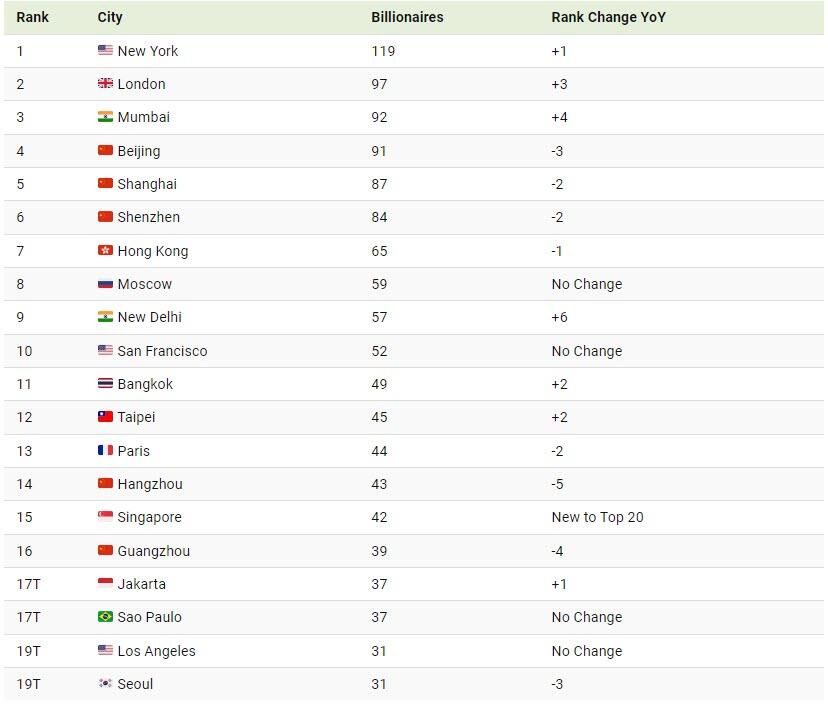
Using data from the Hurun Global Rich List 2024, Visual Capitalist’s Pallavi Rao ranks the top 20 cities with the highest number of billionaires in 2024.

A caveat to these rich lists: sources often vary on figures and exact rankings. For example, in last year’s reports, Forbes had New York as the city with the most billionaires, while the Hurun Global Rich List placed Beijing at the top spot.

Ranked: Top 20 Cities with the Most Billionaires in 2024

The Chinese economy’s doldrums over the course of the past year have affected its ultra-wealthy residents in key cities.

Beijing, the city with the most billionaires in 2023, has not only ceded its spot to New York, but has dropped to #4, overtaken by London and Mumbai.

In fact all Chinese cities on the top 20 list have lost billionaires between 2023–24. Consequently, they’ve all lost ranking spots as well, with Hangzhou seeing the biggest slide (-5) in the top 20.

Where China lost, all other Asian cities—except Seoul—in the top 20 have gained ranks. Indian cities lead the way, with New Delhi (+6) and Mumbai (+3) having climbed the most.

At a country level, China and the U.S combine to make up half of the cities in the top 20. They are also home to about half of the world’s 3,200 billionaire population.

In other news of note: Hurun officially counts Taylor Swift as a billionaire, estimating her net worth at $1.2 billion.

Tyler Durden
Sat, 04/27/2024 – 19:15

via ZeroHedge News https://ift.tt/0VN1FrL Tyler Durden

Chinese Nationals Charged With Conspiracy to Export US Technology

Chinese Nationals Charged With Conspiracy to Export US Technology

Authored by Matt McGregor via The Epoch Times,

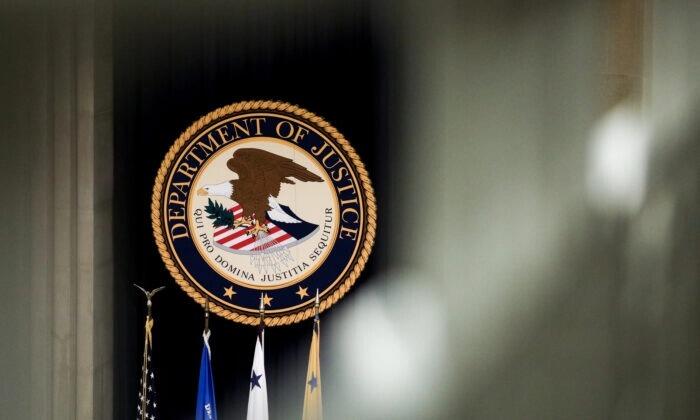
The Department of Justice has arrested two Chinese nationals who allegedly plotted to export U.S. technology to advance the People’s Republic of China’s military operations.

Han Li, 44, and Lin Chen, 64, have been charged with several counts of conspiracy to violate the International Emergency Economic Powers Act (IEEPA), in addition to the Export Administration Regulations (EAR), for attempting to export a machine used to process silicon microchips.

“The export restrictions at issue in this case were put in place to prevent the illicit procurement of commodities and technologies for unauthorized military end use in the People’s Republic of China,” U.S. Attorney for the Northern District of California Ismail Ramsey said in a press release on the arrests.

“This office will continue to vigorously enforce the nation’s export laws, including those pertaining to advanced technologies, to protect our national security.”

Assistant Attorney General Matthew Olson explained that the defendants “sought to evade export controls to obtain U.S. semiconductors” that they were then going to ship to a Chinese company.

In 2014, the Department of Commerce placed restrictions on the Chengdu GaStone Technology Company (CGTC) based in China, which made it “ineligible to receive exports of certain U.S. technologies and services.”

“As alleged in the indictment, between at least May 2015 and August 2018, Li and Chen conspired to evade the export restrictions imposed by the Department of Commerce on CGTC by using intermediary companies,” the DOJ said.

“Specifically, the defendants sought to illegally obtain for CGTC a DTX-150 Automatic Diamond Scriber Breaker machine from Dynatex International, a Santa Rosa, California company.”

The DOJ said the defendants purposefully avoided getting the Department of Commerce’s authorization to export the CGTC, the DOJ said.

“The defendants sought to obtain the machine through an intermediary company called Jiangsu Hantang International (JHI), which they fraudulently represented as the purchaser and end user, a proxy they fraudulently represented as the purchaser and end user,” the DOJ said.

“To avoid detection, Li and Chen instructed Dynatex International to ensure that the export information associated with the sale did not list CGTC as the ultimate consignee of the shipment.”

Li, the DOJ said, is suspected to be in China.

Both Li and Chen are charged with counts of conspiracy to violate IEEPA, which carries a sentence of up to 20 years in prison and a $1 million fine, and a count of false electronic export information activities, which carries a sentence of up to five years in prison and a $250,000 fine. They are also charged on a count of smuggling, which carries a sentence of up to 10 years in prison and a $250,000 fine, and IEEPA violations, which carry a sentence of up to 20 years in prison and a $1 million fine.

The U.S. Attorney’s Office for the Northern District of California and the DOJ’s National Security Division’s Counterintelligence and Export Control department will prosecute the case.

“This arrest highlights the importance of interagency collaboration in preventing illegal exports that could compromise sensitive technologies and our national security as well as undermine our American economy,” said Homeland Security Investigations Special Agent in Charge Tatum King.  

Brent Burmester, a special agent in charge with the Department of Commerce, said stopping “the flow of U.S. semiconductor technology” that goes to advance the People’s Republic of China’s “military modernization efforts” is key to protecting the country’s national security.

FBI Special Agent in Charge Robert Tripp suggested that businesses in the U.S. should establish a relationship with their local FBI field office “to help protect against the pervasive threat of criminals looking to steal American technology.”

“We will aggressively pursue anyone who violates export control laws designed to protect our national and economic security,” Mr. Tripp said.

In a 2023 report on FBI Director Christopher Wray’s roundtable discussion on CBS News, Mr. Wray called the Chinese Communist Party “the defining threat of this generation.”

He said in the discussion that the FBI has 2,000 active investigations “just related to the Chinese government’s effort to steal information.”

“There is no country that presents a broader, more comprehensive threat to our ideas, our innovation, our economic security, and ultimately our national security,” he said.

Tyler Durden
Sat, 04/27/2024 – 18:40

via ZeroHedge News https://ift.tt/wCAHrsP Tyler Durden

These Are The Countries That Have Become ‘Sadder’ Since 2010

These Are The Countries That Have Become ‘Sadder’ Since 2010

Can happiness be quantified?

Some approaches that try to answer this question make a distinction between two differing components of happiness: a daily experience part, and a more general life evaluation (which includes how people think about their life as a whole).

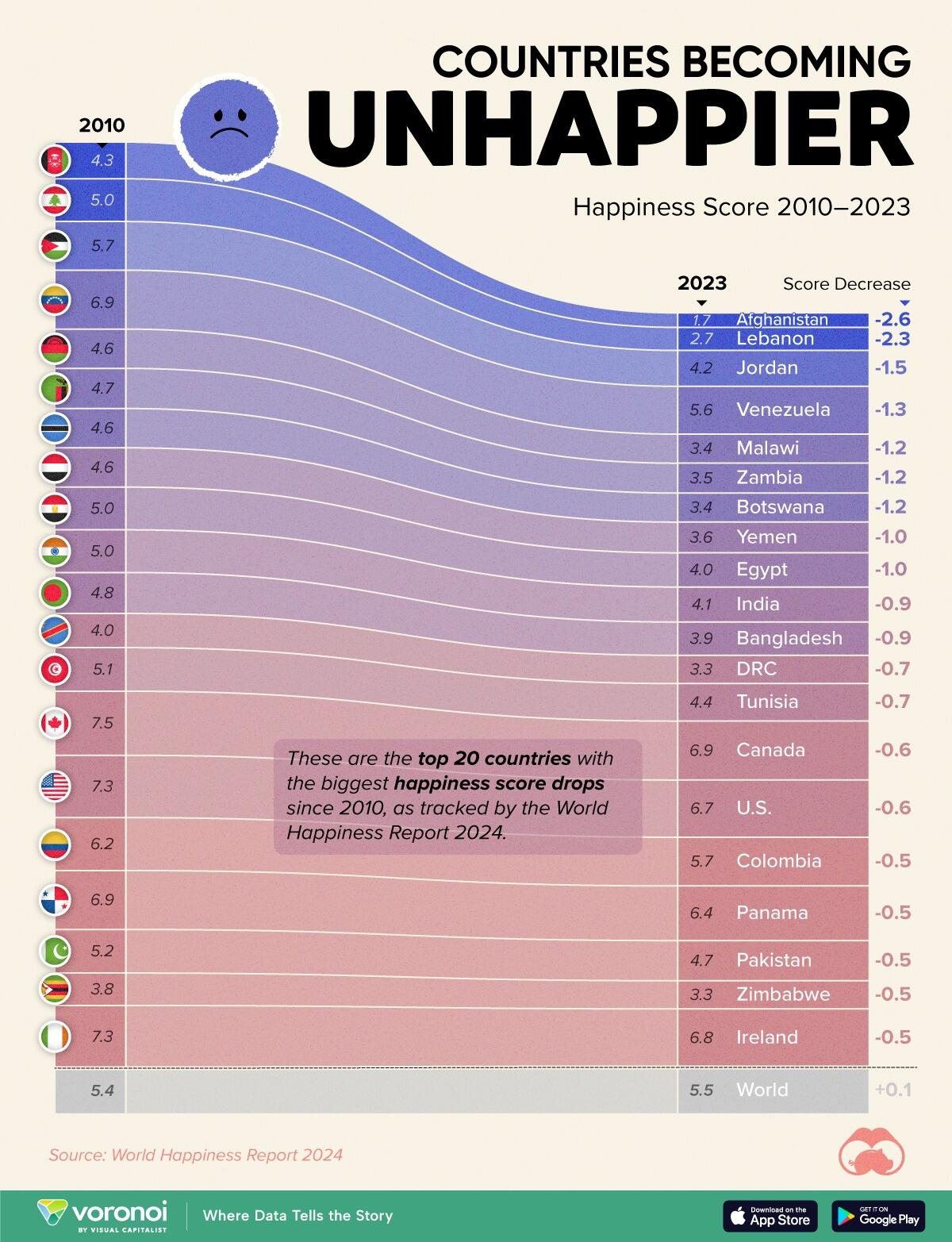
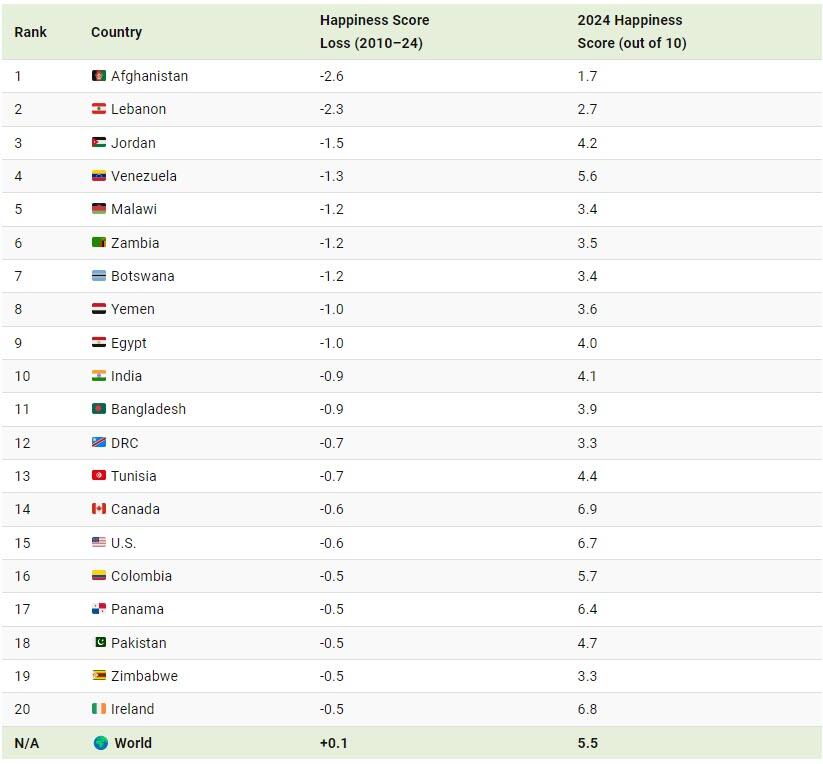
The World Happiness Report – first launched in 2012 – has been making a serious go at quantifying happiness, by examining Gallup poll data that asks respondents in nearly every country to evaluate their life on a 0–10 scale. From this they extrapolate a single “happiness score” out of 10 to compare how happy (or unhappy) countries are.

More than a decade later, the 2024 World Happiness Report continues the mission, and Visual Capitalist’s Pallavi Rao visualizes the latest findings below to show which countries have become sadder in the intervening years.

Which Countries Have Become Unhappier Since 2010?

Afghanistan is the unhappiest country in the world right now, and is also 60% unhappier than over a decade ago, indicating how much life has worsened since 2010.

In 2021, the Taliban officially returned to power in Afghanistan, after nearly two decades of American occupation in the country. The Islamic fundamentalist group has made life harder, especially for women, who are restricted from pursuing higher education, travel, and work.

On a broader scale, the Afghan economy has suffered post-Taliban takeover, with various consequent effects: mass unemployment, a drop in income, malnutrition, and a crumbling healthcare system.

Nine countries in total saw their happiness score drop by a full point or more, on the 0–10 scale.

Noticeably, many of them have seen years of social and economic upheaval. Lebanon, for example, has been grappling with decades of corruption, and a severe liquidity crisis since 2019 that has resulted in a banking system collapse, sending poverty levels skyrocketing.

In Jordan, unprecedented population growth—from refugees leaving Iraq and Syria—has aggravated unemployment rates. A somewhat abrupt change in the line of succession has also raised concerns about political stability in the country.

Tyler Durden
Sat, 04/27/2024 – 18:05

via ZeroHedge News https://ift.tt/cuJO9k5 Tyler Durden

Office Market Availability Rate Hits Record High In San Francisco

Office Market Availability Rate Hits Record High In San Francisco

Authored by Travis Gillmore via The Epoch Times,

A confluence of factors continues to impact San Francisco’s office market, with vacancy and availability rates reaching record highs in the first quarter of 2024, according to commercial real estate analysts at global companies Avison Young and CBRE.

Availability – the combination of vacancy and sublease opportunities in the market – reached 36.7 percent of all office square footage from January to April, according to recently released market analyses from the leading commercial real estate firms.

“We’re at mostly record levels, and I say that kind of cautiously optimistic,” Dina Gouveia, west region market intelligence manager for Avison Young, told The Epoch Times April 25.

According to Ms. Gouveia vacancies only saw a “slight uptick” during the first quarter which might mean such is slowing.

“[I]f we can continue that slower velocity of additional vacancies … then it would be a very good indicator of us being near a bottom,” she said.

Much of the issue, experts say, is the city’s reliance on the tech industry, with more than 44 percent of its office space housing technology companies.

Additionally, tech firms lead the list of upcoming lease expirations—accounting for 45.8 percent, according to Avison Young.

San Francisco’s office market was deeply affected as the number of work-from-home employees skyrocketed during the pandemic, though recent trends show a slight return to the office.

Remote job postings fell more than 5 percent to 22.2 percent in the first quarter compared to the end of last year, according to the Avison Young report.

Job postings increased 22.7 percent in the first quarter following seven consecutive quarters of decline. The listings were led by legal services, engineering, consulting, research, accounting, and recruiting companies. Media and tech industries, however, both experienced declines, according to the report.

Unemployment, however, ticked up to 4.4 percent in the first quarter, a sharp increase from its low of 2.3 percent in June 2022.

According to the report, slightly less than 1 million total square footage was leased in the first quarter—a 63.3 percent drop from the five-year pre-pandemic average.

Analysts noted signs they deemed optimistic, including Netherlands-based payment company Adyen’s sublease of space at 505 Brannan Street—in the city’s South of Market district—and multinational accounting company KPMG’s lease renewal at 55 2nd Street, in the city’s financial district. Combined, those leases total 300,000 square feet, experts said.

Sublease opportunities offer lower rents than signing new leases that require build outs and significant capital to develop properties, which is spurring the sector of the market, while also allowing businesses with existing leases to rent out some of their vacant space.

“The amount of sublease activity that we’ve seen has increased a lot because tenants are looking for plug-and-play opportunities,” Ms. Gouveia said. “A lot more activity is happening because tenants … want to take advantage of pre-built spaces and lower rents.”

High interest rates are making it harder for companies with limited cash to refinance loans. At the same time, rates are also slowing down new purchases, according to analysts.

With an uncertain market—in part due to conflicting signals from the Federal Reserve about the future of interest rates—prospective tenants are seeking flexibility when looking to renew leases or relocate.

“Interest rates are a huge catalyst,” Ms. Gouveia said. “We’re hearing a little bit of two different stories that interest rates are going down and then they’re not. If the interest rates do come down … that will stimulate the commercial market quite a bit.”

In response, the highest quality properties have seen lease term lengths decrease from quarter-to-quarter to make them less risky.

Such wariness from tenants is forcing some landlords to lower rents and offer concession packages to attract business, though a disparity still remains between what tenants want to pay and what landlords can offer given their current debt load.

Many landlords are working with their lenders to restructure debt before loans come due, and analysts expect rent prices to become more favorable for tenants once such is realized.

“Rents will definitely come down,” Ms. Gouveia said. “And once that debt workout happens, there’s going to be a larger reset.”

Distressed properties at risk of default are creating buying opportunities of which private buyers are increasingly taking advantage. Industrial investors and real estate investment trusts, however, are on the sidelines, with 100 percent of all investment activity coming from private buyers in the first quarter, according to the report.

On the other hand, the percentage of private sellers also increased to begin the year compared to prior years, with analysts pointing to uncertainty that their debt can be restructured due to high interest rates and limited financing opportunities.

Refinancing has proven challenging because lenders are reluctant to write loans for office buildings because defaults are looming and valuations are plummeting, with true market values unclear, according to analysts.

A pending election is also slowing activity, as many firms want more certainty before making large capital decisions.

“Because we’re coming up on an election year, a lot of companies go dormant on their expansion plans, and servicers are also in that wait-and-see mode,” Ms. Gouveia said.

Another global commercial real estate leader, CBRE, found that San Francisco’s office market is facing unique challenges given crime and homelessness impacting the city.

According to Colin Yasukochi, executive director of CBRE’s Tech Insights Center, more office tenants are signing new leases, showing a willingness to recommit to the city, but are still somewhat tentative when doing so.

“This dynamic is still somewhat tenuous as employers and their employees still have concerns about public safety and the cost of doing business,” he told The Epoch Times by email.

Noting that some workers are returning to the office for more days a week he suggested such is not enough for a recovery, which, he said, will require a desire to compete in a robust economic environment.

“Additional mandates are unlikely to increase office attendance materially at this point, but rather a booming economy will compel more people to want to be in the office and be better connected to the next growth cycle,” Mr. Yasukochi said.

While artificial intelligence could play a significant role in buoying the tech sector that the city relies on, a fast recovery, he said, is not anticipated.

“The San Francisco office market is beginning to transition out of its four-year downturn,” Mr. Yasukochi said. “While it will take many years to rebalance supply and demand, we are starting to see positive signs.”

Tyler Durden
Sat, 04/27/2024 – 17:30

via ZeroHedge News https://ift.tt/qShLCQs Tyler Durden

Putin Did Not Order Alexei Navalny’s Death, US Intelligence Finds

Putin Did Not Order Alexei Navalny’s Death, US Intelligence Finds

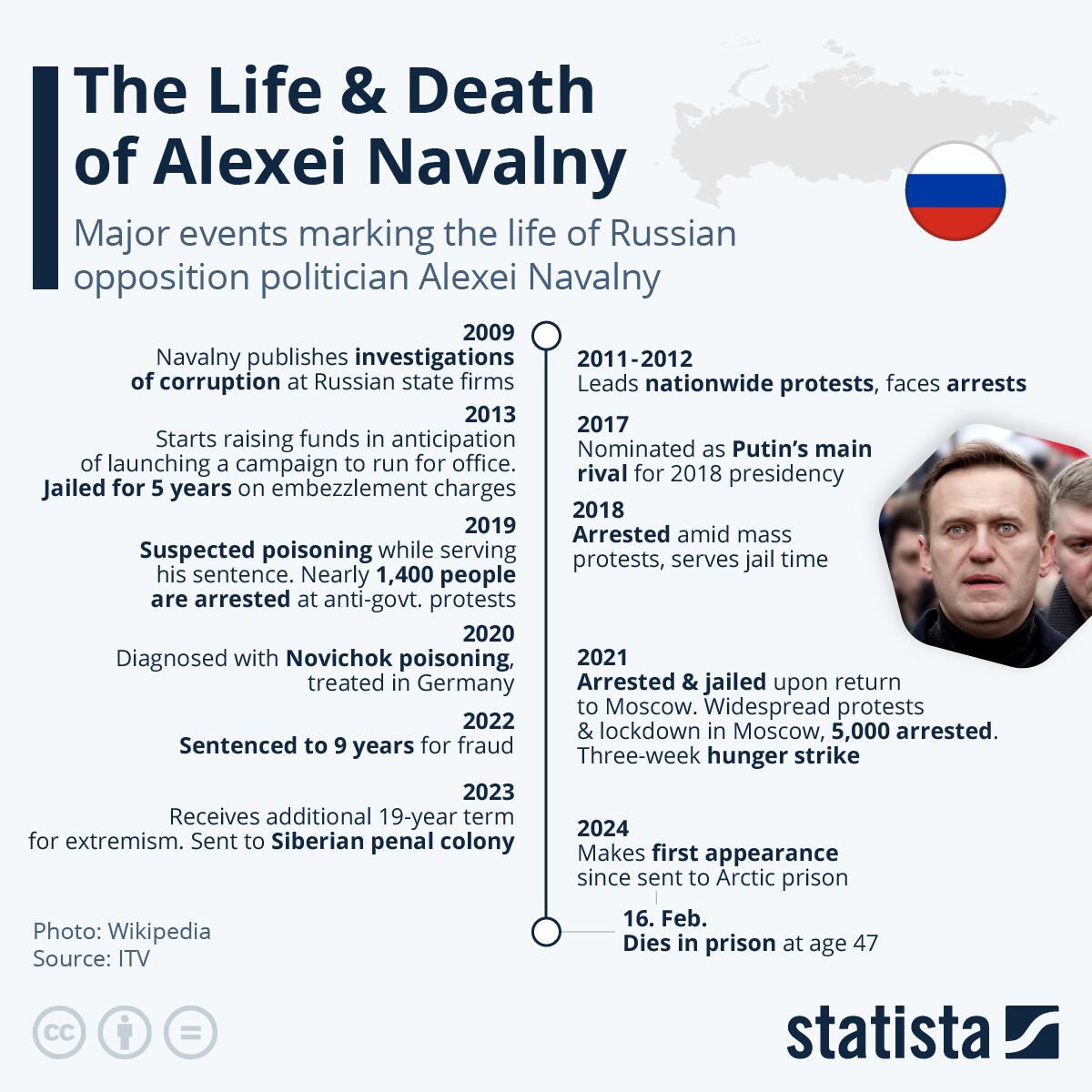
In a surprising turn, The Wall Street Journal has issued a new weekend report saying that US intelligence agencies do not believe that Russian President Vladimir Putin planned or ordered the death of opposition activist and politician Alexei Navalny.

“U.S. intelligence agencies have determined that Putin likely didn’t order Navalny to be killed at the notoriously brutal prison camp in February, people familiar with the matter said, a finding that deepens the mystery about the circumstances of his death,” writes the Journal.

Via Associated Press

“The assessment doesn’t dispute Putin’s culpability for Navalny’s death, but rather finds he probably didn’t order it at that moment,” WSJ continues. “The finding is broadly accepted within the intelligence community and shared by several agencies, including the Central Intelligence Agency, the Office of the Director of National Intelligence, and the State Department’s intelligence unit, the people said.”

And yet it must be recalled that Western officials and media pundits alike had immediately upon reports of the 47-year old Navalny’s death rushed to declare that he had been ‘assassinated’ by Russian authorities upon Putin’s order.

This led to a new wave of US-led sanctions on Russia, and even disrupted momentum toward a hoped-for prisoner swap between Moscow and Kiev at the time.

President Biden had asserted in a statement issued on the very day of his Feb.16 death that “Putin is responsible for Navalny’s death” and that it was “proof of Putin’s Brutality” – but ultimately that the ‘democratic future’ Navalny believed in was worth “dying for” – according to the president’s words at the time.

Russian prison authorities had officially listed his demise as from “sudden death syndrome,” which is how natural causes such as heart attacks are typically described.

Navalny’s team is not happy with the fresh WSJ report which is being seen as essentially an exoneration of Putin:

In a statement to the Journal, Leonid Volkov, a longtime Navalny ally, rejected the U.S. intelligence assessment and said those who assert that Putin wasn’t aware of Navalny’s death “clearly do not understand anything about how modern day Russia runs.”

“The idea of Putin being not informed and not approving killing Navalny is ridiculous,” he said.

You will find more infographics at Statista

Below, journalist and geopolitical commentator Aaron Maté explains that despite news of Navalny’s life and death having driven world headlines, he was still largely an unknown within broader Russian politics and society especially on a national level [emphasis ZH].

* * *

Navalny was a marginal opposition figure who polled at around 2%Putin didn’t fear him; it served Putin to have him seen in the West as his main opposition.

The Russian gov’t meanwhile has just barred anti-war candidate Boris Nadezhdin. A Russian court has also issued a draconian prison sentence to anti-war sociologist Boris Kagarlitsky. We don’t hear about people like Nadezhdin and Kagarlitsky in the West nearly as much for one reason: unlike Navalny, they don’t collaborate with Western governments.

Navalny worked with NATO intel cutout Bellingcat and went through the “Yale World Fellow” program, a regime change training ground. For this reason, we also don’t hear that Navalny was an unrepentant xenophobe who compared Muslim immigrants to cockroaches and rotten teeth. 

His death is a tragedy. He was undoubtedly mistreated. But because he served US interests, US state media will make him into someone he was not. And just compare their fawning coverage to their silence on, or even support for, the ongoing persecution of Julian Assange. Or their complete silence on the mistreatment and death of US citizen Gonzalo Lira in Ukrainian custody — universally ignored in US media.

Tyler Durden
Sat, 04/27/2024 – 16:55

via ZeroHedge News https://ift.tt/WHODST8 Tyler Durden

From Bird Flu To Climate Snakes

From Bird Flu To Climate Snakes

Authored by Breeauna Sagdal via The Brownstone Institute,

Seasoned veterinarians and livestock producers alike have been scratching their heads trying to understand the media’s response to the avian flu.

Headlines across every major news outlet warn of humans becoming infected with the “deadly” bird flu after one reported case of pink-eye in a human. 

The entire narrative is predicated upon a long-disputed claim that Covid-19 was the result of a zoonotic jump—the famed Wuhan bat wet-market theory. 

While the source of Covid is hotly contested within the scientific community, the policy vehicle at the center of this dialectic began years prior to Sars-CoV-2 and is quite resolute in force and effect. 

In 2016, the Gates Foundation donated to the World Health Organization to create the OneHealth Initiative. Since 2020, the CDC has adopted and implemented the OneHealth Initiative to build a “collaborative, multisectoral, and transdisciplinary approach—working at the local, regional, national, and global levels—with the goal of achieving optimal health outcomes recognizing the interconnection between people, animals, plants, and their shared environment.”

In the aftermath of Covid-19, the OneHealth Initiative began taking shape, due largely in part to millions of tax dollars appropriated through ARP (American Rescue Plan) funding. 

Through its APHIS (Animal and Plant Health Investigation System) the USDA (United States Department of Agriculture) was given $300 million in 2021 to begin implementing “a risk-based, comprehensive, integrated disease monitoring and surveillance system domestically…to build additional capacity for zoonotic disease surveillance and prevention,” globally. 

“The One Health concept recognizes that the health of people, animals, and the environment are all linked,” said USDA Under Secretary for Marketing and Regulatory Programs Jenny Lester Moffitt. 

According to the USDA’s press release, the Biden-Harris administration’s OneHealth approach will also help to ensure “new markets and streams of income for farmers and producers using climate smart food and forestry practices,” by “making historic investments in infrastructure and clean energy capabilities in rural America.” 

In other words, the federal government is using regulatory enforcement to intervene in the marketplace, in addition to subsidizing corporations with tax dollars to direct a planned economic outcome—ending meat consumption. 

Climate-Smart Commodities – Planning the Economy through Subsidized Intervention

Under the recently announced Climate-Smart Commodities program, the USDA has appropriated $3.1 billion in tax subsidies to one hundred and forty-one new private Climate-Smart projects, ranging from carbon sequestration to Climate-Smart meat and forestry practices.

Private investors such as Amazon founder Jeff Bezos – who just committed $1 billion to the development of lab cultured meat-like molds, and meat grown in petri dishes, to

Ballpark, formerly known for its hot dogs but is now harvesting python meat, is rushing to cash in on this new industry, and the OneHealth/USDA certification program. 

Culling The Herd – Regulatory Intervention in the Marketplace 

Meanwhile, the last vestiges of America’s food freedom and decentralized food sources are quietly being targeted by the full force of the federal government. 

The once voluntary APHIS System is poised to become the mandatory APHIS-15, which among many other changes, “the system will be renamed Animal Health, Disease, and Pest Surveillance and Management System, USDA/APHIS-15. This system is used by APHIS to collect, manage, and evaluate animal health data for disease and pest control and surveillance programs.”

Among those “many changes” that APHIS-15 is undergoing, one should be of particular interest to the public—the removal of all references to the voluntary* Bovine Johne’s Disease Control Program. 

“Updating the authority for maintenance of the system to remove reference to the Bovine Johne’s Disease Control Program.” 

In addition to removing references to the once-voluntary herd culling program, the USDA is also implementing mandatory RFID ear tags in cattle and bison.

According to the USDA/APHIS-15, expanded authority places disease tracing in their jurisdiction and the radio frequency ear tags are necessary for the “rapid and accurate recordkeeping for this volume of animals and movement,” which they say “is not achievable without electronic systems.”

The notice clearly spells out that RFID tags “may be read without restraint as the animal goes past an electronic reader.” 

“Once the reader scans the tag, the electronically collected tag number can be rapidly and accurately transmitted from the reader to a connected electronic database.”

However, industry leaders and lawmakers alike have said the database will be used to track vaccination history and movement, and that this data may be used to impact the market rate of cattle and bison at the time of processing. 

Centralized Control of Processing/Production via Public-Private Partnership Agreements

In addition to the vast new authority of the USDA funded through the OneHealth Initiative, and the ARP, the EPA has also created its own unique set of regulatory burdens upon the entire meat industry. 

On March 25, 2024, the EPA finalized a new set of Clean Water Act rule changes to limit nitrogen and phosphorus “pollutants” in downstream water treatment facilities from processing facilities. While the EPA’s interpretation of authority and jurisdiction over wastewater is concerning long-term, the broader context of consolidated processing under four multinational meat-packing companies is of much greater concern for the immediate future. 

With few exceptions, in the United States it is illegal to sell meat without a USDA certification. Currently, the only way to access USDA certification is through a USDA-certified processing facility. 

According to the EPA, the new rules will impact up to 845 processing facilities nationwide, unless facilities drastically limit the amount of meat they process each year. 

With processing capabilities being the number one barrier to market for livestock producers, and billions of dollars in grants being awarded to Climate-Smart food substitutes, the amount of government intervention into the marketplace becomes very clear. 

The Rise of Authoritarianism and Economic Fascism – Control the Supply

The United States, once a consumer-demand free market society, is currently witnessing the use of government force, and intervention tactics to steer and manipulate the marketplace. Similar to 1930’s Italy, this is being achieved by the state within the state, through the use of selectionism, protectionism, and economic planning between public-private partnership agreements. 

The long-term and unavoidable problem with economic fascism is that it leads to authoritarian and centralized control, from which escape is impossible. 

As each industry becomes centralized and consolidated under the few, consumer choice simultaneously disappears. As choice disappears, so does the ability of the individual to meet their specific and unique needs. 

Eventually, the individual no longer serves a role outside of its usefulness to the state—the final exhale before the last python squeeze. 

Tyler Durden
Sat, 04/27/2024 – 16:20

via ZeroHedge News https://ift.tt/mZYvrPk Tyler Durden

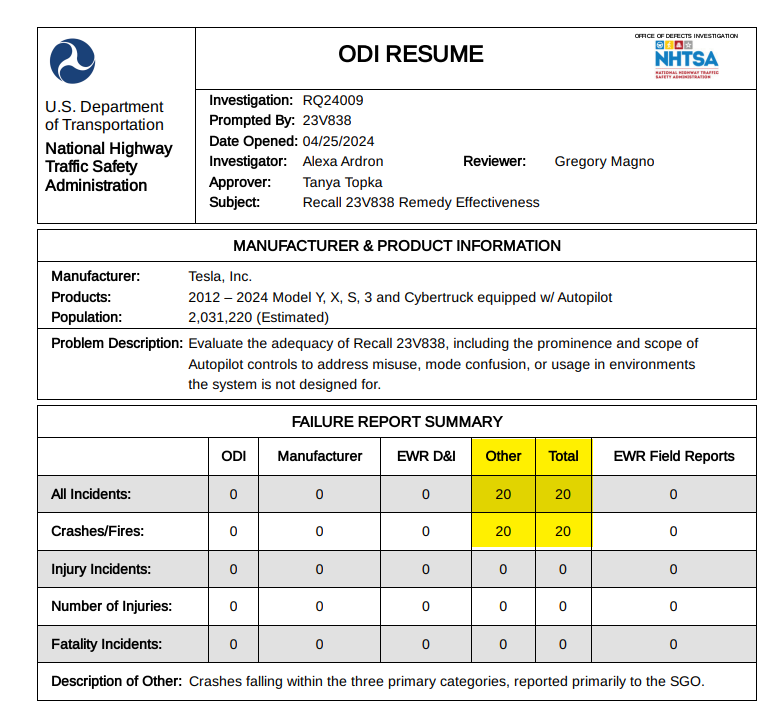
NHTSA Probes Tesla Autopilot Again After 20 Crashes Since Update Remedy

NHTSA Probes Tesla Autopilot Again After 20 Crashes Since Update Remedy

The National Highway Traffic Safety Administration (NHTSA) is investigating Tesla’s Autopilot (again) to determine if the over-the-air update to the automated driving system was enough to keep drivers on the road. 

The new probe comes after the NHTSA closed a multi-year investigation into Autopilot. The prior report found evidence that “Tesla’s weak driver engagement system was not appropriate for Autopilot’s permissive operating capabilities,” which resulted in a “critical safety gap.”

On Friday, NHTSA said the original Autopilot investigation was opened to see if “Tesla’s Autopilot contained a defect that created an unreasonable risk to motor vehicle safety,” adding that it discovered similar findings with Tesla’s voluntary recall (Recall 23V838). 

The initial investigation found at least 13 crashes involving one or more fatalities, many more involving severe injuries, in which “foreseeable driver misuse played an apparent role,” NHTSA said. 

The new investigation covers two million Model Y, X, S, 3, and Cybertruck vehicles equipped with Autopilot produced between 2012 and 2024. 

The federal agency is concerned about whether the company’s remedy was enough, partly because 20 crashes have occurred since the over-the-air software update earlier this year. 

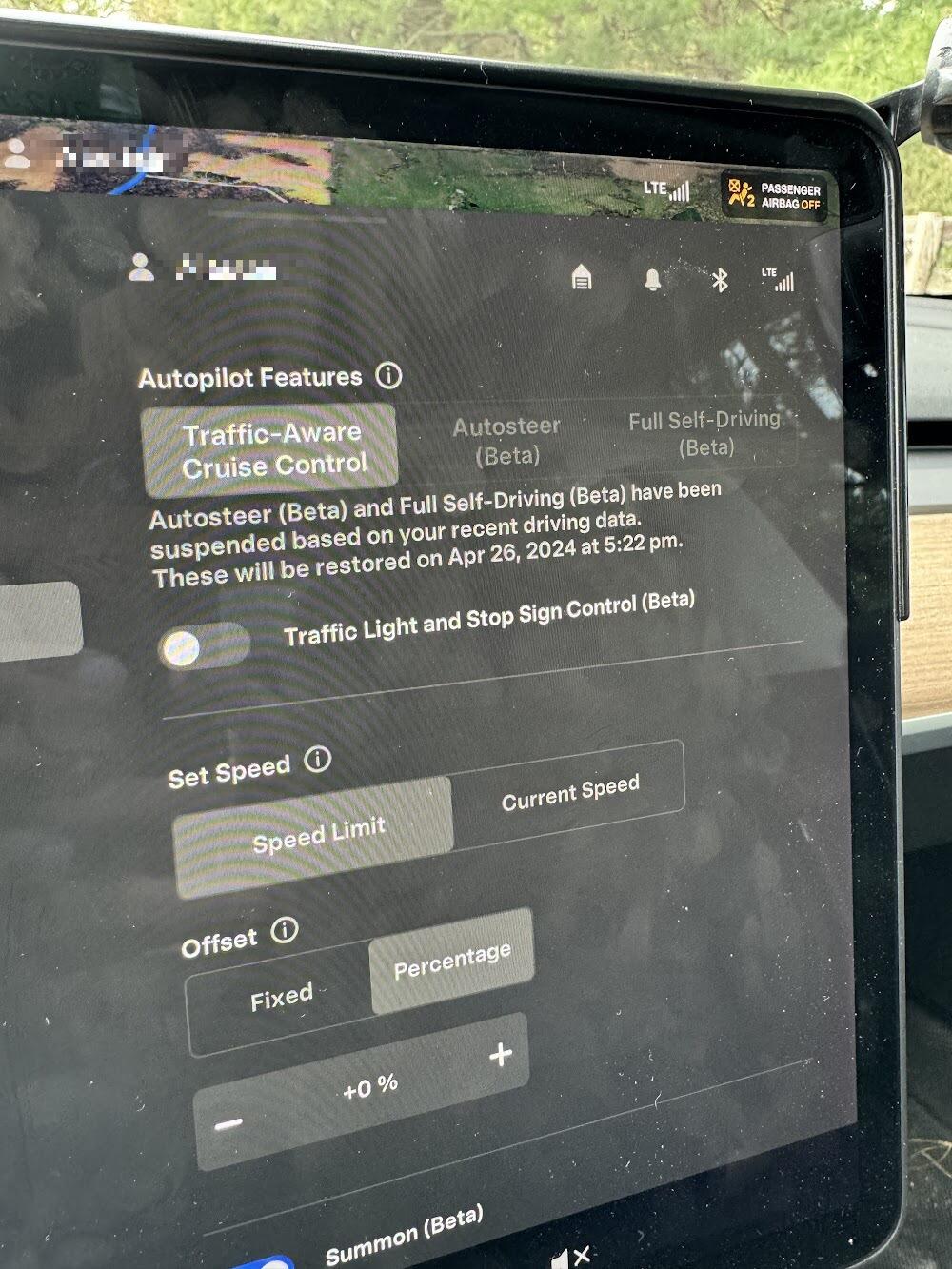
One ZH reader reached out to us about Autopilot, explaining that the automated driving system has become increasingly aggressive in making sure the operator is paying attention since the update. The individual told us he was suspended from using Autopilot earlier this week for what he says were ‘minor’ distractions while driving, adding that the warning system is getting more strict by the update. 

During a call with investors earlier this week, Elon Musk said, “I actually do not think that there will be significant regulatory barriers, provided there is conclusive data that the autonomous car is safer than a human-driven car,” adding that those who doubt Tesla’s ability to “solve” autonomy shouldn’t invest in the company. 

Meanwhile, the Biden administration has weaponized federal agencies against Musk’s companies, such as SpaceX and Tesla. This is mainly over Musk’s ‘free speech’ platform, “X,” which the Biden administration despised because it has been unable to suppress the First Amendment on the platform through the censorship-industrial complex. 

Tyler Durden
Sat, 04/27/2024 – 15:45

via ZeroHedge News https://ift.tt/cMra71b Tyler Durden

DOJ Continues To Refuse Handing Over Audio Recording Of Special Counsel’s Interview With Biden

DOJ Continues To Refuse Handing Over Audio Recording Of Special Counsel’s Interview With Biden

Authored by Matt McGregor via The Epoch Times,

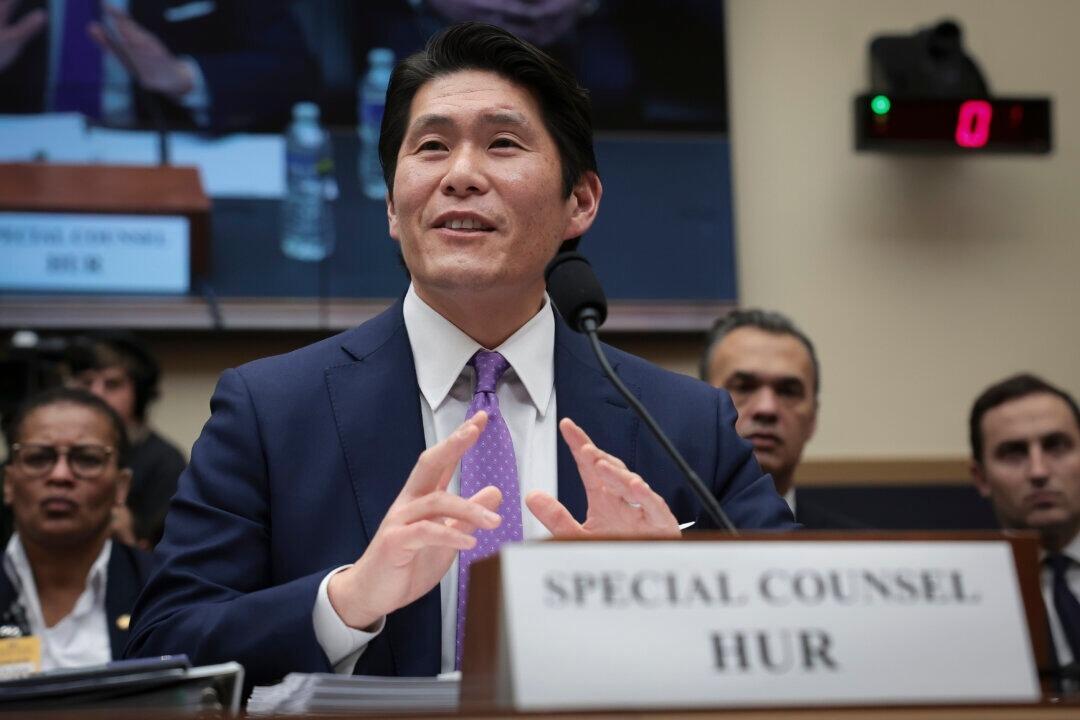
The Department of Justice (DOJ) stands its ground on its refusal to surrender the audio recording of Special Counsel Robert Hur’s interview with President Joe Biden to the House Oversight Committee.

Reps. Jim Jordan (R-Ohio) and James Comer (R-Ky.), chairmen of the House Judiciary and Oversight Accountability committees, warned Attorney General Merrick Garland that he would hold him in contempt of Congress unless he handed over the recording of Mr. Hur’s interview stemming from a probe into President Biden’s alleged mishandling of classified information.

In the letter, signed on April 25, Assistant Attorney General Carlos Felipe Uriarte told Mr. Jordan and Mr. Comer that despite the committees’ threats of contempt proceedings, the DOJ has adequately responded and sees no reason to give the audio to the committees.

“We have repeatedly invited the Committees to identify how these audio recordings from law enforcement files would serve the purposes for which you say you want them,” the letter stated.

“We have also repeatedly urged the Committees to avoid unnecessary conflict and to respect the public interest in the Department’s ability to conduct effective investigations by protecting sensitive law enforcement files.”

Mr. Uriarte said the DOJ has already complied with the committees’ request by providing Mr. Hur’s report and testimony in addition to transcripts of the interview.

“This is consistent with our strong record of cooperation this Congress,” Mr. Uriarte said.

The committees have failed to articulate “a legitimate congressional need” for the audio recordings, which Mr. Uriarte said the DOJ is withholding to protect “the confidentiality of law enforcement files.”

“The Department will continue to cooperate reasonably and appropriately, but we will not risk the long-term integrity of our law enforcement work,” Mr. Uriarte said.

Mr. Uriarte elaborated on Mr. Jordan’s and Mr. Comer’s request for the audio recording by questioning the necessity.

Among the committees’ expressed concerns as reviewed by Mr. Uriarte are whether President Biden is linked to “troublesome foreign payments,” whether he “retained sensitive documents related to specific countries involved in his family’s foreign business dealings,” and whether the DOJ has acted impartially by avoiding prosecuting President Biden while targeting former President Donald Trump.

Mr. Uriarte said there’s no evidence found in the transcripts that suggests discussions of these issues will be revealed in the audio recording.

‘Severely Chilling’

“You have offered no explanation of how these specific files would provide any information pertinent to the Committees’ stated purposes,” Mr. Uriarte said. “And even if they did have pertinent information, you have not explained how that information isn’t already available from the transcripts we produced as an extraordinary accommodation to the Committees.”

Mr. Uriarte classified the audio as “sensitive law enforcement information” that, if made public, would send a message “to the public that the Department cannot be trusted to keep law enforcement files confidential.”

“It would be severely chilling if the decision to cooperate with a law enforcement investigation required individuals to submit themselves to public inquest by politicians, particularly because congressional investigations are not subject to the same standards and checks as the Department’s,” he said. “Indeed, the Committees have frequently objected to even the suggestion that your investigative powers are subject to any requirement to justify your requests according to objective standards or limit your demands to avoid harming other values and interests.”

Mr. Uriarte added that the threat of contempt proceedings is “unjustifiable” considering the DOJ’s past cooperation with the committees’ investigations.

“We urge the Committees to deescalate and to work with the Department in the same mode of cooperation and respect that we have shown Congress for over a year,” he said. “Furthermore, the Department is eager to make good use of the remaining time in this Congress, such as by working together with the Committees on legislative priorities that can make real, tangible progress for the American people.”

The committees issued the first subpoenas on Feb. 27 requesting notes, audio files, video, and transcripts related to Mr. Hur’s investigation.

The DOJ responded by providing transcripts, but no recordings.

After his probe into President Biden’s handling of classified documents spanning his over four decades in politics, Mr. Hur said in February that President Biden would not be charged and that a jury would probably not convict him partially due to his cognitive decline.

“We have also considered that, at trial, Mr. Biden would likely present himself to a jury, as he did during our interview of him, as a sympathetic, well-meaning, elderly man with a poor memory,” Mr. Hur wrote.

‘With Respect to National Security’

In an April 16 testimony before the House Appropriations Committee on the DOJ’s 2025 budget request, Mr. Garland echoed Mr. Uriarte, stating that the reasons for not giving the audio was due to “privileges with respect to national security.”

When asked about Mr. Hur’s observations of President Biden being an “elderly man with a poor memory,” Mr. Garland said he has “complete confidence” in the president based on his own observations.

“I have watched him expertly guide meetings of staff and Cabinet members on issues of foreign affairs and military strategy and policy in this incredibly complex world in which we now face, and in which he has been decisive—decisive in instructions to the staff, and decisive in making the decisions necessary to protect the country,” Mr. Garland said.

The Epoch Times has contacted the subcommittees for comment.

Tyler Durden
Sat, 04/27/2024 – 15:10

via ZeroHedge News https://ift.tt/43dwQHM Tyler Durden

White House Uses “Walkers” To Conceal Biden’s Old-Man Shuffle

White House Uses “Walkers” To Conceal Biden’s Old-Man Shuffle

With the presidential election still more than six months away, President Biden’s handlers are under increasing pressure to divert Americans’ eyes from his obvious and accelerating mental and physical decline. 

Where his deteriorating mental abilities are concerned, we’ve already seen them using tactics like drastically minimizing his spontaneous interactions with reporters and excessively stage-managing his rare press conferences — down to furnishing him with answers to questions submitted in advance. 

A Biden cheat sheet tells him which reporters to call on and what exactly they will ask him 

Now comes news that Team Biden’s latest stage-management innovation is focused on obscuring his frailty: Uncomfortable with the way Biden looks as he unsteadily shuffles across the White House lawn, one or more staffers now walk at his side, helping to prevent close scrutiny of his gait. 

Biden formerly walked to and from Marine One solo, but here he’s flanked by six staffers (New York Post via AFP and Getty Images)

Biden advisors have told Axios they’re uneasy about how he looks when walking and shuffling by himself, particularly across the White House lawn. The outlet analyzed video of Biden’s navigation to Marine One helicopters and pegged when the new hide-the-invalid routine started:

  • In March, Biden’s five walks shuffles to Marine One were by himself or family members only
  • After April 16, nine of his 10 treacherous traverses of the lawn had him obscured by accompanying staffers or legislators

In addition to acting as visual screeners, the aides might also be beneficial in grabbing him if he starts falling to the ground. Biden’s advisors and doctors have had him embrace other tools and techniques to minimize physical disasters like his falls on the Air Force One stairs…

…and this wipeout at last spring’s Air Force Academy graduation: 

The extra measures include wearing black sneakers instead of business shoes, and now walking up a shorter set of stairs to board Air Force One.  The mental side of the ledger is constantly being filled with new debit entries. The latest came this week, when — not for the first time — Biden read his stage directions off the teleprompter. In a Wednesday speech to North America’s Building Trades Unions, he weakly delivered a line meant to draw applause, then read the word “PAUSE” off the prompter:  

As we detailed Friday, Biden’s latest approval rating is the worst for any president at this point in a term in 70 years. Just 38.7% of Americans approve of his performance, according to Gallup. A February poll found 76% of Americans have moderate or major concerns about Biden’s mental and physical fitness to advance to a second term. 

Another Biden cheat sheet tells the man who controls nuclear weapons “YOU enter the Roosevelt room and say hello”…”YOU take YOUR seat”

One thing’s for sure: Biden’s handlers are in for an agonizingly tense time as the remaining 191 days until the Nov. 5 general election slowly grind away.  

Tyler Durden
Sat, 04/27/2024 – 14:35

via ZeroHedge News https://ift.tt/1AQZkrj Tyler Durden

US Should Adopt UK’s ‘Rwanda Plan’ To Address Illegal Immigration

US Should Adopt UK’s ‘Rwanda Plan’ To Address Illegal Immigration

Authored by Simon Hankinson via The Epoch Times,

After nearly two years of legal and political challenges, Britain’s parliament has finally passed a law confirming that Rwanda is a safe place to send people who arrive in the UK illegally by sea. This is a major policy win for the Conservative government of Prime Minister Rishi Sunak and a victory for common sense. Britain, like the United States and Europe, is experiencing mass illegal migration in the guise of asylum claims. The British devised the Rwanda plan in response, but the U.S. already has successful equivalents that can be resurrected when there is a will to once again control America’s borders.

Like those coming to the United States by land, most people illegally arriving in Britain by boat are economic migrants. Britain’s asylum system has been swamped by growing demand, and backlogs for processing cases stretch into years.

In 2018, only 300 people arrived illegally in the UK by small boat from France across the English Channel. In 2022, it was more than 45,000. And in August 2023, the UK received its 100,000th illegal boat-borne immigrant, one of 700 who arrived each day. Nearly all of the 100,000 are still in Britain, joined by ever-increasing numbers.

From Jan. 1 to April 21 this year, 6,265 small boats arrived in the UK carrying illegal immigrants, with the largest numbers being from Afghanistan and Vietnam.

Having left the European Union, the British are unable to return asylum-seekers to the first safe country in the EU under what are called the Dublin Regulations. By mid-2023, 96 percent of asylum-seekers who arrived in 2021 had not received final decisions in their cases, and around 50,000 were being housed in hotels, costing the United Kingdom the equivalent of more than $8.8 million U.S. a day. The limitless liability of illegal immigration to the UK is an important electoral issue for Conservative Party voters.

Sound familiar?

In August 2023, Sunak’s government passed an Illegal Migration Act that barred people who entered illegally by sea from applying for asylum. The act requires British officials to return inadmissible aliens—without appeal—back to their birth country, if possible, or if not, to a safe third country.

To implement the act, Britain needed a safe third country to house putative asylum-seekers pending case processing. Britain does not have any developing-country neighbors, so they struck a deal with Rwanda in 2022 in which that Central African country would be compensated to take up to 1,000 putative asylum applicants over five years.

Anyone sent to Rwanda could opt at any time to return to their home country or to be resettled in Rwanda as refugees, but they could not return to Britain. The British government fought a series of legal challenges to its policy, but passage of the new law should clear the way for removal flights to Rwanda within weeks from now.

Sunak says he means business. “The only way to stop the boats is to eliminate the incentive to come, by making it clear that if you are here illegally, you will not be able to stay,” he said at a press conference. “We are ready. The plans are in place.”

The government has also set aside judges and courts on standby to handle the inevitable legal challenges.

The Rwanda plan is Britain’s attempt to regain control over its borders and national sovereignty.

The goal is to cut off the possibility of asylum from boat arrivals, thus both destroying the business model of maritime smugglers and saving lives. This past week, five people died when over 100 illegal migrants attempted to cross the English Channel in an overcrowded boat.

The Rwanda plan has many opponents. The United Nations High Commission for Refugees argues that if the UK is successful, it will set a “worrying precedent for dismantling asylum-related obligations that other countries, including in Europe, may be tempted to follow …” Perhaps so, but the alternative is to cede control over immigration to foreign actors in perpetuity.

The British hope to emulate the success of Australia, which in 2001, started turning back boats carrying illegal migrants. The idea was to give “no advantage” to asylum applicants arriving illegally by boat over those arriving by air.

Australia set up detention and asylum processing centers on the island nation of Nauru, and on Manus Island in Papua New Guinea. Eventually, Australia adopted a strict rule that no asylum-seeker arriving by boat and processed offshore would ever be resettled in Australia. The policy faced considerable political opposition but was highly effective in reducing demand.

The message was quickly understood by would-be boat migrants and migrant traffickers across Southeast Asia. “Arrival numbers went off a cliff once the Australians started to deport … because ‘news spreads like wildfire among refugees,’” wrote Matthew Paris in the Spectator.

When a later Australian government closed the Manus and Nauru centers, illegal migration soared again. In 2012, more than 600 people drowned when boats carrying illegal migrants capsized. In response, Australia reopened the offshore centers and resumed sending back all illegal aliens who arrived or attempted to arrive in Australia by sea.

As before, the putative asylum applicants remained in the offshore centers for the entire time, pending the adjudication of their cases. The offshoring policy and an unbending Australian government destroyed the market for maritime migrant smugglers. For example, in 2014, only a single boat carrying migrants made it to Australia.

At its peak in 2014, Nauru’s camp had 1,233 asylum applicants living there. By June 2023, only three remained. Though the boat-borne illegal migration virtually stopped, a credible ability to restart offshore processing is vital to Australia maintaining its current control over seaborne illegal immigration. Therefore, Australia is paying the equivalent of $288,000 U.S. a year to Nauru to keep the detention/processing option open in reserve.

The United States does not have the advantage of being an island. But as recently as the Trump administration, we had Safe Third Country agreements in place with Central American countries and the Migrant Protection Protocols with Mexico. Under these agreements, any asylum applicant coming to the U.S. and first passing through a third safe country to get here would be sent back to that country if he or she had not applied for asylum in that country. For example, all those who crossed illegally into the U.S. from Mexico were returned there pending their case adjudication.

The United States needs to use all the economic and diplomatic leverage at our disposal to revive those agreements. Meanwhile, similar to the UK and Australia, we should prohibit asylum applications from those illegally crossing between ports of entry to discourage frivolous and fraudulent asylum claims.

*  *  *

Reprinted by permission from The Daily Signal, a publication of The Heritage Foundation.

Tyler Durden
Sat, 04/27/2024 – 14:00

via ZeroHedge News https://ift.tt/prCZa2A Tyler Durden