Tennessee Lawmakers Pass Bill Targeting mRNA Vaccines In Food
Following concerns over research to embed vaccines in produce, the Tennessee Senate has passed a bill which would require any food containing vaccines or vaccine materials to be labeled as pharmaceutical drugs.
The bill, HB 1894, was passed by the Senate in a 23-6 vote on March 28 after the state House passed it 73-22 on March 4. It awaits the governor’s signature.
The bill comes in response to a University of California-Riverside research project looking into whether mRNA which targets pathogens could be implanted into edible plants, which would then be consumed. The research was funded by a $500,000 grant from the National Science Foundation.
“You would have to get a prescription for that to make sure that we know how much of the lettuce you have to eat based off of your body type so we don’t under-vaccinate you, which leads to the possibility of the efficacy of the drug being compromised, or we overdose you based off how much lettuce is [eaten],” said Republican state Rep. Scott Cepicky during a House committee meeting in February, WKRN-TV reports.
Cepicky said that the bill, which local media described as a move targeting “vaccine lettuce,” would classify foods modified to act as vaccines, as pharmaceuticals.
“So if you want to consume them you would go to your doctor and get a prescription,” he said.
In a 2021 press release, UC Riverside associate professor of Botany and Plant Sciences, Juan Pablo, said “We are testing this approach with spinach and lettuce and have long-term goals of people growing it in their own gardens,” adding “Farmers could also eventually grow entire fields of it.”
According to Pablo, “Ideally, a single plant would produce enough mRNA to vaccinate a single person.“
Another researcher, Nicole Steinmetz, said in the same release that they planned to use nanoparticles or “plant viruses, for gene delivery to plants.”
When asked by WKRN-TV about the status of the research, a UC Riverside spokesperson said that the project is not yet complete.
“Research into the process of having plant chloroplasts express vaccine chemistry is ongoing. There are no definitive results to report,” said Jules Berinstein after the Tennessee bill was passed.
Democrat Senators oppose
During the debate on the Tennessee Senate Floor, some lawmakers questioned the need for the bill.
“Does the sponsor know of any instances of there being food offered in the state of Tennessee that contains vaccines in some kind of a retail or public forum?” asked state Sen. Heidi Campbell.
Rep. Cepicky hit back, highlighting in February that a Kentucky company has already been “infecting growing tobacco plants with a genetically modified coronavirus” to see if it can produce antibodies for a potential vaccine, adding that the company “can already do this right now.”
Massie sounds the alarm
In 2023, US Rep. Thomas Massie (R-KY) raised concerns over the use of federal money to create “transgenic edible vaccines,” which would transform edible plants such as spinach and lettuce into mRNA vaccine delivery vehicles.
Rep. Massie: “I Think It’s Dangerous to Play God with Our Food” 9/27/2023
There’s a push to create edible vaccines—food products like tomatoes, lettuce, or milk that are genetically modified to have the effects of a vaccination when someone consumes them.
Rep. Thomas Massie… pic.twitter.com/saA0JxZQfB
In September 2023 during a debate over an appropriations bill, Massie highlighted an incident in which an edible vaccine was introduced into a corn crop used to feed pigs in order to mitigate diarrhea. The corn crop, however, became commingled with a soybean crop – contaminating 500,000 bushels that had to be recalled.
“Do we want humans eating vaccines that were grown in corn meant to stop pigs from getting diarrhea? I don’t think we want that to happen. Yet that almost happened, and it could happen,” said Massie. “There is another case where the pollen cross-contaminated another crop of corn, and 155 acres of corn had to be burned. What are the cases where we’re not discovering this? I think it’s dangerous to play God with our food.”
The middle class today isn’t what it was even as recently as just a few years ago. After the highest inflation breakout in nearly 50 years, many middle-class families have been priced out of the standard of living that most Americans took for granted not that long ago.
The raging effects of inflation aren’t limited to consumer goods and services but to asset prices as well. In recent years, a growing chorus of politicians and pundits appeared to conclude that homeownership—one of the pillars of the American Dream—is no longer within reach for regular Americans.
To put that theory to the test, Creditnews Research studied the relationship between income distribution and housing costs across the 100 most populous metropolitan areas in the United States.
What we discovered reveals the story of two Americas: one where middle-class families can still qualify for an average home and one where they’ve been priced out entirely.
The good news is there are still pockets of affordability across the country. The bad news is that affordable metros are declining rapidly.
Key findings
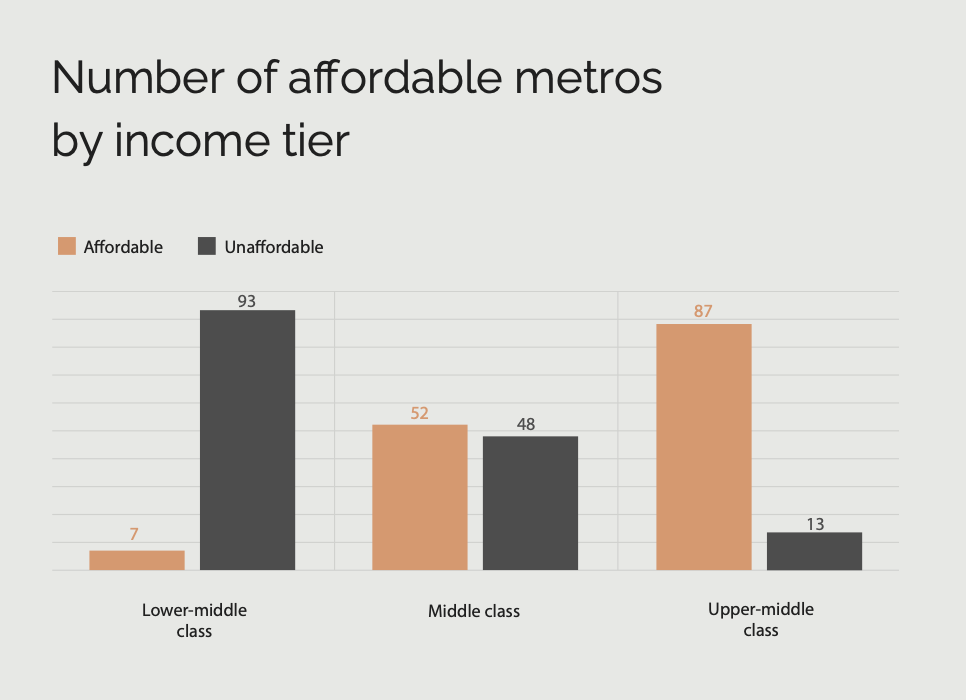
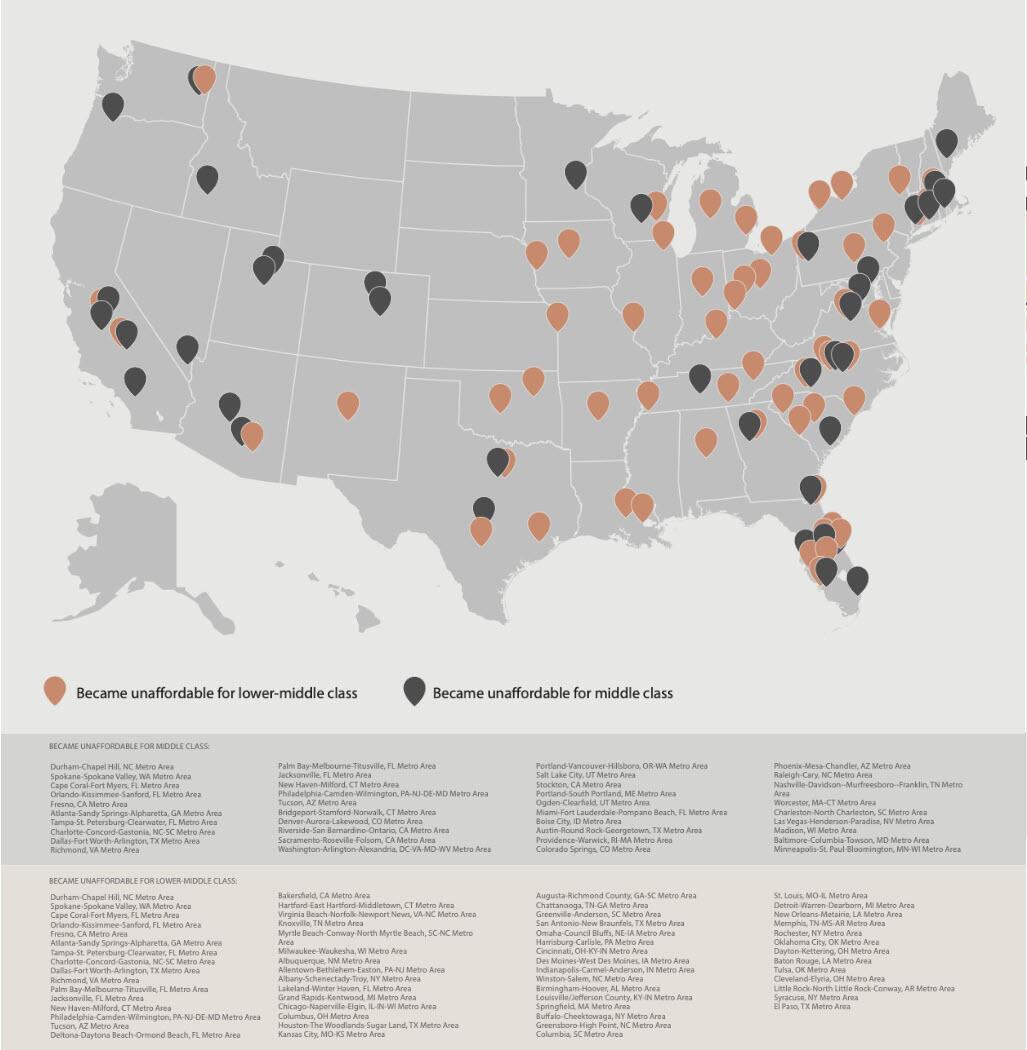
In 2024, the middle class can afford an average home in just 52 of the top 100 metro areas in the United States—a decline from 91 in 2019;
Those in the lower-middle class are priced out of 93 of the top 100 metro areas, up from just 33 in 2019;
The most affordable metros for middle-class families are mainly located in the Midwest, Rust Belt, and parts of Texas. The most affordable metros in 2024 are Youngstown, OH; Toledo, OH; McAllen, TX; Scranton, PA; and Wichita, KS;
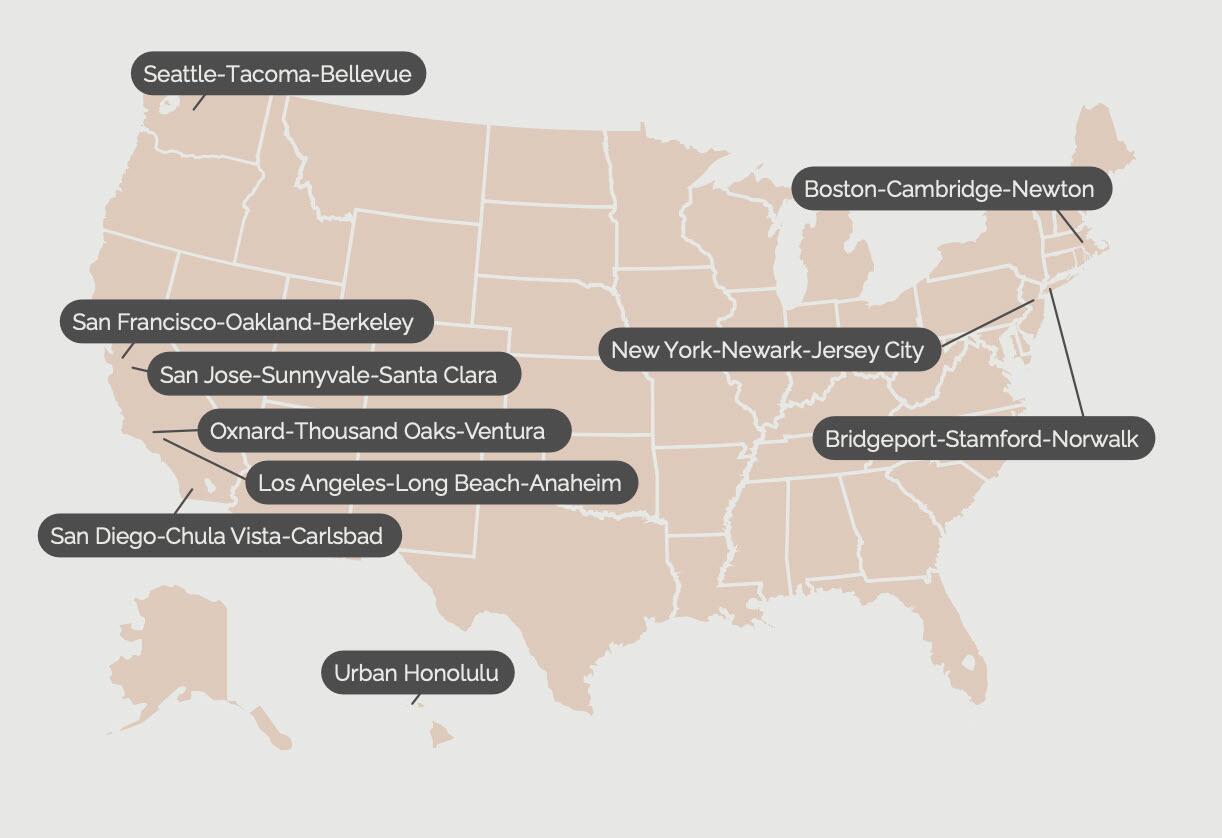
The most unaffordable metros for the middle class are mainly concentrated in California and the Tri-State Area—they are San Jose, CA; San Francisco, CA; Los Angeles, CA; San Diego, CA; and Honolulu, HI;
The top five metros that, since Covid, have seen the largest increase in housing costs are all in California; they include San Jose, CA; San Diego, CA; Los Angeles, CA; San Francisco, CA; and Oxnard, CA.
Metros that are affordable for middle-class families are in rapid decline. 39 of the 100 most populous metros became unaffordable since Covid alone.
Housing affordability by income tier
There’s no single definition of the middle class, but one of the most go-to benchmarks is Pew Research’s household income percentile ranges for economic classes, which go as follows:
Lower-middle class: 20th – 40th percentile
Middle class: 40th – 60th percentile
Upper-middle class: 60th – 80th percentile
Based on these percentile ranges, America’s “middle class” households fall into three main income tiers:
Lower-middle class: $30,001—$58,020
Middle class: $58,021—$94,000
Upper-middle class: $94,001—$153,000
Affordability is another variable that carries many assumptions and could be approached in multiple ways.
For this particular study, Creditnews Research assessed affordability by calculating the minimum annual income households need to qualify for a mortgage on a typical home in each metro. A home is considered affordable if the monthly mortgage and housing payment doesn’t exceed 28% of a household’s gross income.
Although a middle-class income is essential to broadening one’s access to home financing, it’s not enough to close the gap in the country’s largest markets.
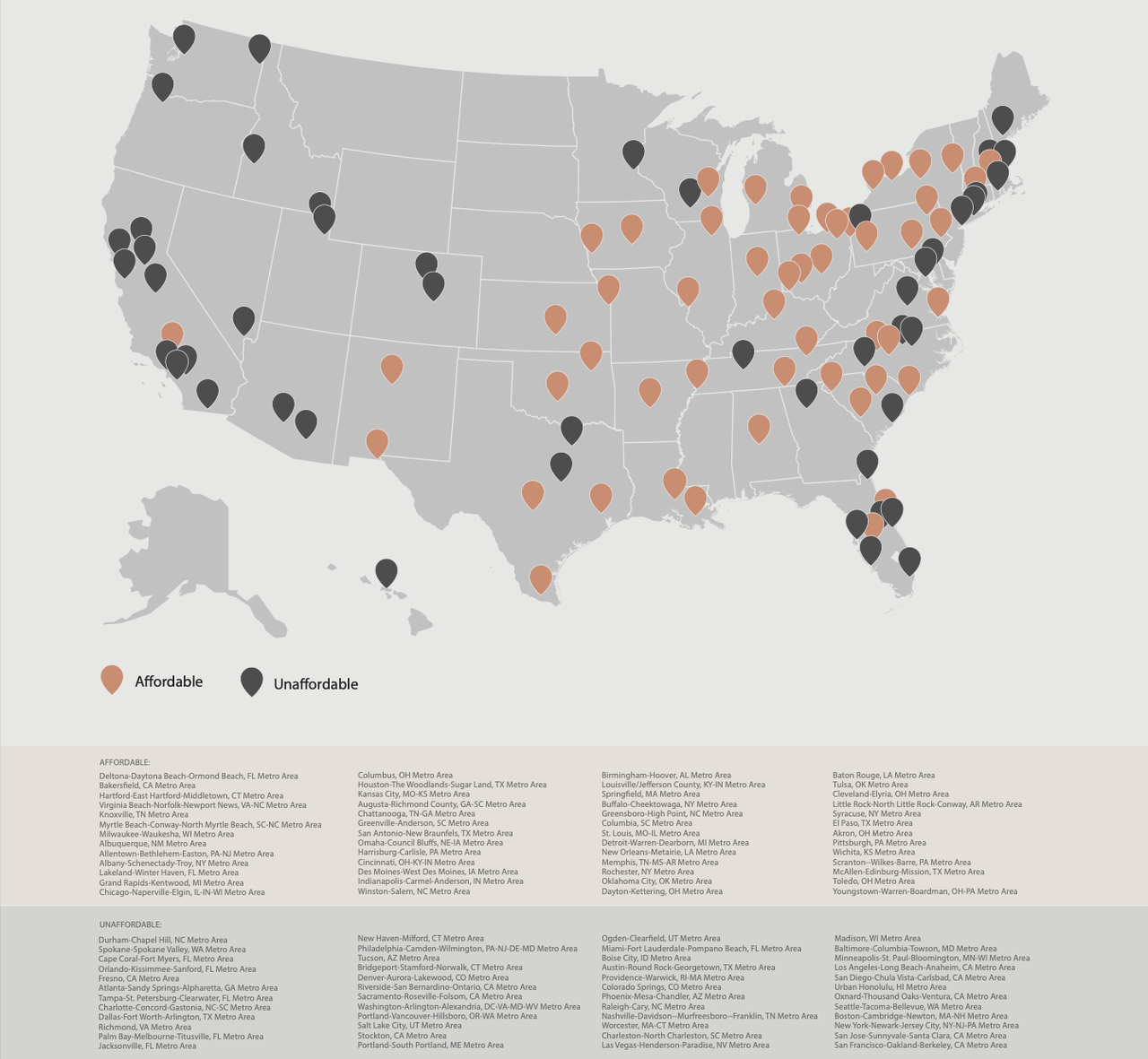
Based on the above criteria, middle-class households can afford an average home in just 52 out of the 100 top metros in 2024.
These 52 metros represent a diverse cross-section of America but are mainly located in the Midwest, Rust Belt, Appalachia, and parts of Texas.
For the lower-middle class, there are only seven affordable housing metros in the top 100—while the upper-middle class can afford homeownership in 87 of the top 100 metros.
As one might expect, the qualifying income and monthly housing costs vary dramatically by city.
In the most affordable cities across the Midwest and Rust Belt, a household income of below $70,000 is more than enough to qualify for a home. But that’s nowhere near enough along the Pacific Coast, Northeast, the Tri-State Area, and even parts of Florida.
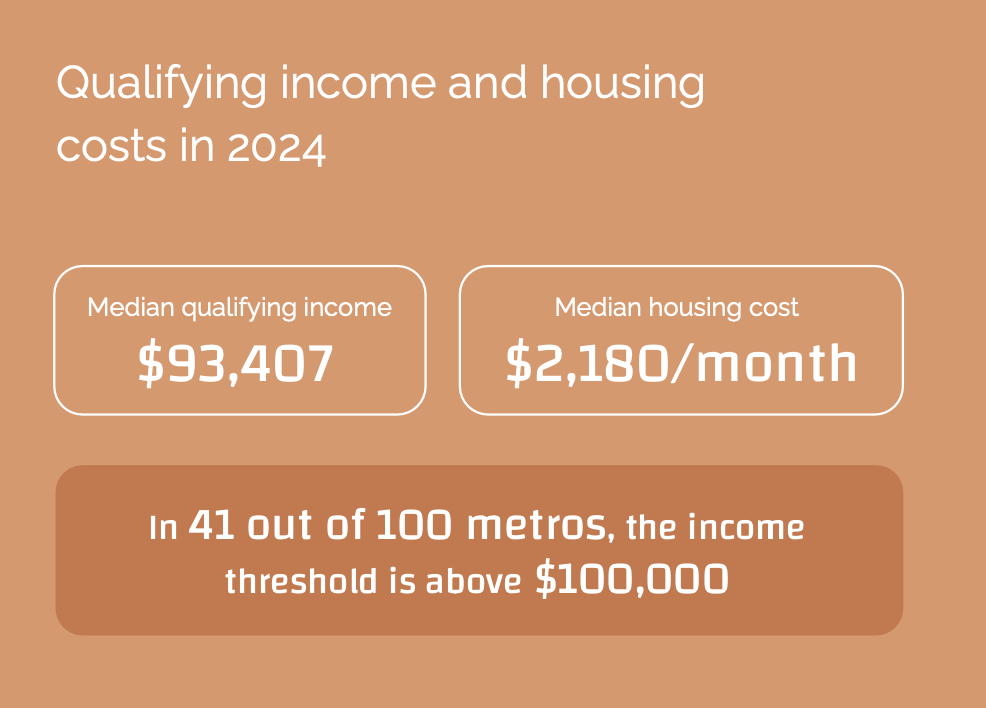
In total, 41 out of the 100 metros in the study require a gross annual income of at least $100,000 to qualify for an average home. Most of these areas are accessible to the upper-middle class. But not all. Thirteen metros require a household income of more than $155,000.
The average monthly housing cost across the 100 metros amounts to $2,180, but again, there’s a huge variance between the lower and upper end of the range.
In the most affordable city, homebuyers can expect to pay a mere $942 a month for their mortgage and related costs. On the flip side, the most expensive metro could set you back an eye-popping $9,931.
Two Americas
Today’s housing market is really a tale of two Americas.
The Midwest and parts of the South continue to offer affordable options even for middle class households, whereas the ultra-desirable coastal cities are out of reach even for affluent buyers.
The root cause of this divide is rather straightforward: in large coastal cities, the supply of housing hasn’t kept up with demand as more people flock to those places for work or lifestyle.
In recent years, Americans have been stymied by the largest housing supply shortage in history—a well-documented contributor to record home prices.
That’s on top of a generational spike in mortgage rates, which has priced many average Americans out of the threshold.
Overall, middle-class households have 52 metros in the top 100 to choose from if they are looking for a home priced within their means. The question is whether they’re prepared to move or put down roots in those regions.
Many Americans bemoan the idea of living in the Midwest or smaller southern cities and would prefer the bright lights of San Francisco, Los Angeles, New York, or Boston.
Unfortunately, these metros are the last places middle-class Americans should be going to buy a home. In fact, the same is even becoming true for the upper-middle class.
As Creditnews Research found, a total of 11 metros have become unaffordable even for upper middle-class households since Covid. Six of those metros are located on the Pacific Coast and three on the East Coast.
The most affordable metro areas
With few exceptions, the majority of middle-class households (including lower-middle-class families) can decidedly qualify for a home in America’s 10 most affordable metro areas.
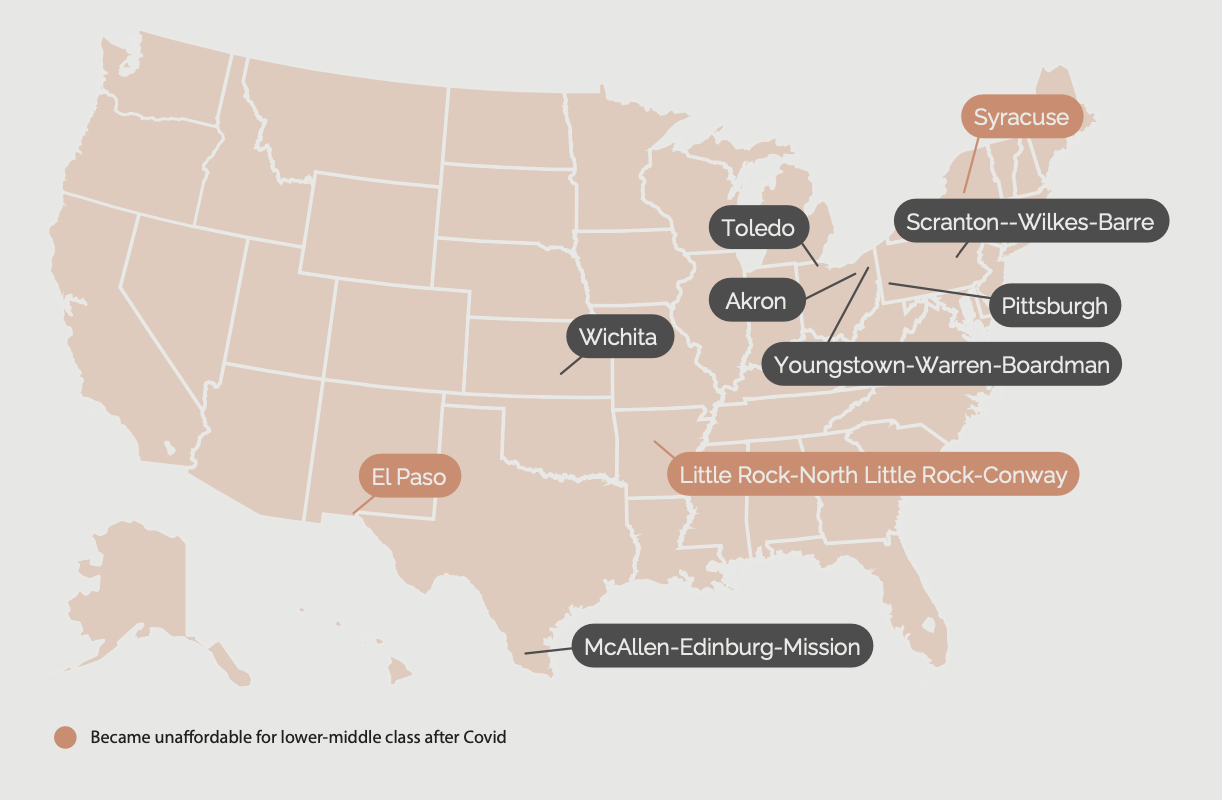
Apart from El Paso, Syracuse, and Little Rock—which became out of reach for the lower-middle class—the following metros have held their own on affordability over the past half-decade.
One state that makes several appearances on our most affordable list is Ohio.
This is due in part to the state’s generous homeowner subsidies in the form of grants and tax credits, coupled with ongoing investments in home construction and affordable housing.
Another catalyst has been the low down payment threshold throughout the Buckeye State, which, at $35,250, is outdone only by Iowa and Mississippi.
Gary Painter, Ph.D, real estate professor at Carl H. Lindner College of Business, stated: “Given the relatively robust economy, a young household’s ability to afford a down payment in Cincinnati and other Ohio cities is quite high relative to regions of similar size across the United States.”
The following cities represent the 10 most affordable metros in America, starting on the low end.
Youngstown-Warren-Boardman, OH-PA: Youngstown shows up first in our rankings, with a monthly payment below $1,000 ($942) in 2024. To qualify for a typical home, buyers need an income of just over $40,000—well within the range of lower-middle-class and middle-class households. Youngstown’s population has fallen in recent decades but appears to have stabilized; the drop hasn’t been as drastic as peer cities Flint, Michigan, and Gary, Indiana. Housing prices are rising, but poverty in this city surpasses that of the state of Ohio.
Toledo, OH: Ohio reappears in our rankings with the Toledo metro claiming the No. 2 spot. With an average monthly payment of $1,130, Toledo’s qualifying income for an average home jumps 20% from Youngstown to roughly $48,500. Average monthly housing costs in this metro soared 78% from pre-Covid (2019) levels of $635 to $1,130 in 2024. Even so, all segments of the middle class should be able to afford a house in this area. Catalysts driving Toledo’s real estate market include reasonable prices and a wide range of job opportunities across manufacturing, healthcare, education, and the public sector.
McAllen-Edinburg-Mission, TX: Rounding out the three most affordable metros is McAllen, where residents must earn just below $50,000 in income to qualify for an average home without stressing their budgets. Qualifying income has roughly doubled since 2019 when it was below $25,000. So has the average monthly payment, hitting $1,156 in that stretch. McAllen’s close proximity to the Gulf of Mexico makes it a less expensive alternative for families who prefer to live by the water. McAllen has come a long way from its beginnings as a private ranch in the late 1800s to a standout economy in the Rio Grande Valley. In a speech given in McAllen in 2023, Texas Governor Greg Abbott touted the state’s massive property tax cuts, which have helped to propel economic development in the region.
Scranton-Wilkes-Barre, PA: Scranton takes the fourth spot in our rankings, representing Pennsylvania’s debut on our list. Households must earn a qualifying income of just over $52,000 to afford an average home in this metro and keep costs at 28% of earnings. Monthly housing expenses in 2024 hover at $1,215, a massive 80% jump versus 2019 when they were below $700. But the entire middle class should still be able to afford a house in this metro. Scranton’s housing market has become more competitive of late, with home prices climbing 4% in Q1 2023. Scranton’s population currently hovers at approximately 376,000 but is projected to reach nearly 400,000 by 2031 despite rising property taxes. Scranton is considered among the top metros in the country for economic development in its comp set and has gained a reputation as one of the best places in the U.S. to retire, owing in part to housing options.
Wichita, KS: Kansas enters the most affordable housing fray thanks to Wichita, which claims the No. 5 spot. Given Wichita’s qualifying income of $55,243, middle-class households can afford this metro without breaking the bank with monthly payments of roughly $1,300 in 2024. But it’s a far cry from 2019’s qualifying income of below $23,000 and monthly housing costs of only $532. Wichita hasn’t been able to escape the real estate market headwinds of late, which has weighed on deal activity, but economic activity in the state has been growing hand over fist. In Q3 2023, Kansas’s GDP grew by nearly 10%, fueled by a booming farming community.
Pittsburgh, PA: The northeast revisits our rankings with Pittsburgh in the No. 6 spot. Pittsburgh’s qualifying income of $55,457 for an average home places it in the same ballpark as the Wichita metro. With a monthly payment of slightly below $1,300, the entire middle class should be able to afford a home in this area. But that doesn’t mean affordability hasn’t deteriorated over the years. Monthly housing costs have soared 66% since 2019 when they were below $800. With approximately 303,000 residents, Pittsburgh’s population is about half of where it was in the 1950s, the collapse of which is aligned with the decline of the country’s steel industry. Home sales in Allegheny County, where Pittsburgh is located, sank 25% between 2021 and 2023 to an all-time low amid the high interest rate and low inventory environments.
Akron, OH: Demonstrating its prominence among the most affordable cities, Ohio is back with Akron—the Rubber Capital of the World—snagging the No. 7 spot. Households must earn a qualifying income of $56,743 to afford an average home in this metro, a 44% jump compared with 2019 levels. But with an average monthly payment of just over $1,300, the middle class wouldn’t feel cash strapped owning a home in this area. Akron’s housing demand remained strong even throughout the latest industry downturn, buoyed by an emerging tech hub that makes the city an attractive destination for jobs.
El Paso, TX: El Paso lassoed the No. 8 spot in our rankings, strengthening the Southwest’s grip among the most affordable metros. As the first metro in our rankings to exclude the lower-middle class, El Paso’s affordability has been slipping away since Covid. The city’s qualifying income and monthly housing costs have roughly doubled to $58,114 and $1,356, respectively, since the pandemic, making it increasingly difficult to afford. El Paso’s per capita income has been on the rise, a trend that is expected to persist into 2025, with a housing market that’s been fueled of late by out-of-state buyers hunting a bargain of late.
Syracuse, NY: As the first metro to represent New York, Syracuse claims the No. 9 spot in our rankings. Syracuse joins El Paso as the second metro where the lower-middle class was priced out since Covid, with the qualifying income soaring from $30,228 to $58,157 in that period. Similarly, the average monthly payment has nearly doubled from about $700 to $1,357 since 2019. But Syracuse’s days among the most affordable metros are probably limited as the housing market continues to draw comparisons to Manhattan and San Francisco. The city has become a hotbed for tech startups and jobs, including the rise of Micron Technology’s semiconductor plant in nearby Clay, NY that’s projected to create 50,000 jobs.
Little Rock-North Little Rock-Conway, AR: Rounding out the top 10 most affordable metros is Little Rock, where once again the middle class is getting squeezed. Residents must earn a qualifying income of $58,286 to comfortably afford a home in this area, a whopping 41% increase compared with 2019. Monthly costs have jumped a steeper 69% to $1,360. Even with that sharp rise, Little Rock is affordable enough to make it into the top 10. While affordability has been waning in this metro, the economy is buzzing with job growth as of Q4 2023 exceeding pre-pandemic levels.
The least affordable metro areas
America’s least affordable metro areas won’t come as too much of a shock, with luxurious Pacific Coast metros dominating the rankings.
Half of the metros in this category are located in the state of California. Not to be outdone, Hawaii also makes an appearance, along with a trio of metros on the Eastern seaboard.
America’s middle class is priced completely out of each of these metro areas, including the upper end of the income range at $153,000.
San Jose-Sunnyvale-Santa Clara, CA: San Jose takes first place with a qualifying income of $425,614 just to afford an average home. With an average home price of $1.5 million, the San Jose metro could see some relief from dwindling land on which to build. Surrounded by Silicon Valley, this metro area has been hit by a slow return to offices at tech companies like Zoom, PayPal, and X Corp, threatening to trigger a wave of out-migration and create what’s known as a “donut city” where residents and businesses relocate to the suburbs.
San Francisco-Oakland-Berkeley, CA: It comes as no surprise that the tech capital of California is the country’s second least affordable metro for the middle class. With an average home price of $1.1 million, average monthly payments are just over $7,200, up from $4,679 five years ago. As part of California’s Bay Area, San Francisco has a reputation as one of the country’s most expensive real estate markets. Billions of dollars in investment continue to pour into this high-tech region, making it unlikely that housing prices will retreat anytime soon.
Los Angeles-Long Beach-Anaheim, CA: Continuing with the California trend, Los Angeles rounds up to the top three least affordable metros. LA is the first city on our list to become unaffordable to the upper-middle class since Covid, with a $112,329 increase in qualifying income to $256,286. LA’s average home price hovers at $935,800, resulting in monthly housing costs of nearly $6,000. LA’s financial district is transforming into high-end apartments due to waning demand for offices.
San Diego-Chula Vista-Carlsbad, CA: With an average home price of $924,365, San Diego is out of reach for every segment of the middle class, including the upper-middle class. Monthly payments for an average home are more than $5,900. Market dynamics don’t appear to be improving. San Diego led the nearly two-dozen cities tracked in the latest Case Shiller rankings, owing to an 11.2% increase in housing prices in the 12-month period ending in January 2024. Despite having a vibrant economy and a pristine climate, the vast majority of families couldn’t make it here.
Urban Honolulu, HI: Honolulu rounds out the top five, joining the list of cities that have become too pricey for the upper-middle class. With an average home price of approximately $860,000, very few households outside of the wealthy can afford property here. A one-two punch of a tourism slowdown and recent wildfires have contributed to slower economic growth in Hawaii. But that hasn’t kept real estate values from rising amid strong demand for Honolulu’s beaches, rainforests, and spectacular views.
Oxnard-Thousand Oaks-Ventura, CA: Located in California’s Ventura County, Oxnard takes the No. 6 spot in our rankings. With an average home price of nearly $850,000, monthly payments have soared 77% since 2019 to $5,425. Ventura County has strict land-use rules, pressuring inventory and resulting in a shrinking population, including Oxnard’s middle class, a trend that’s forecast to persist in the coming years.
Seattle-Tacoma-Bellevue, WA: Representing Puget Sound in the Pacific Northwest, Seattle claims the No. 7 spot in our rankings. This metro’s qualifying income has more than doubled over the past decade and is no longer affordable to the upper-middle class. For everyone else in the middle class, Seattle is simply too rich for household budgets. With an average home price of $719,217, monthly payments are almost $4,600. New residents have been flocking to Seattle—the location of e-commerce giant Amazon’s corporate headquarters—for employment opportunities and income growth.
Boston-Cambridge-Newton, MA-NH: The Northeastern city of Boston ranks eighth on our list. Boston’s qualifying income of $181,971 reflects an increase of nearly $80,000 since the pandemic, reserving this metro for high-income households. With an average property price of $664,491, monthly housing costs are now about $4,246, up 77% since 2019. The Boston metro, which extends to Massachusetts cities Cambridge and Newton, plus the neighboring state of New Hampshire, boasts one of the highest in-migration rates among Gen Zers in the country.
New York-Newark-Jersey City, NY-NJ-PA: The New York, New Jersey, and Pennsylvania metros make the cut as the least affordable areas. With a qualifying income of $173,786, New York became out of reach for even the upper-middle class after the pandemic. With an average home price of $634,651, monthly housing costs have climbed 65% higher since 2019 to $4,055. New York Mayor Eric Adams has made affordable housing a priority in the city, increasing financing for new construction and the preservation of affordable homes by 80% in 2023 year-over-year.
Bridgeport-Stamford-Norwalk, CT: Rounding out our top 10 least affordable metros is Bridgeport, CT. This metro, which also extends to Stamford and Norwalk, has a qualifying income of $163,371. With an average home price of almost $600,000, monthly housing costs hover at $3,812. Connecticut has been on the receiving end of an in-migration trend, adding 81,000 residents in 2022. With Connecticut Governor Ned Lamont implementing the biggest income tax deduction that the state has ever seen and lifting a tax credit for low-income workers, the trend is unlikely to reverse anytime soon.
Housing affordability: Pre-Covid vs. 2024
The fact that housing became more expensive after Covid is hardly breaking news. The question is, by how much?
Our analysis shows that average Americans have to earn almost twice as much today compared to pre-Covid to qualify for an average home.
Thanks to the doubling of qualifying income thresholds, 39 out of 100 of America’s most populous metros dropped out of middle-class affordability.
Taking into account lower-middle-class families, that figure balloons to a staggering 60 metro areas.
Perhaps predictably, the metropolitan areas witnessing the sharpest increases in income thresholds and housing expenses since Covid eerily match the 10 most unaffordable metros in 2024.
San Jose-Sunnyvale-Santa Clara, CA: In addition to being the most unaffordable metro in the country for the middle class, San Jose real estate has seen the largest increase since pre-Covid times. Home prices are up a whopping 73% versus 2019 levels. Average monthly payments in this metro are unnervingly close to $10,000 compared with pre-Covid levels of $5,716.
San Diego-Chula Vista-Carlsbad, CA: Not only does San Diego make the top four least affordable metro areas, but it’s also seen one of the biggest spikes since the pandemic. San Diego has experienced a 95% increase in qualifying income since 2019 to $253,157.
Los Angeles-Long Beach-Anaheim, CA: While Los Angeles was never really affordable for the middle class, since Covid, housing affordability has gone off the deep end. Between 2019 and 2024, housing costs in LA have soared by $112,329. Over that period, average monthly payments have increased by a staggering 78%.
San Francisco-Oakland-Berkeley, CA: San Francisco joins the other major California metros with a massive spike in qualifying income standards since Covid, rising $109,492 since 2019 to $310,000 in 2024. But although residents here command a high income, even the upper-middle class doesn’t make enough to afford the average home.
Oxnard-Thousand Oaks-Ventura, CA: Oxnard is one of several California metros that have become out of reach for even the upper-middle class after Covid. Since the pandemic, qualifying income in this metro has soared almost $101,200, making it unaffordable even for those earning above $150,000.
Urban Honolulu, HI: This Hawaii metro experienced a 64% jump in qualifying income since 2019 to $235,543. Over the past half-decade, Honolulu real estate has priced out even the upper-middle class with monthly payments nearing $5,500.
Seattle-Tacoma-Bellevue, WA: Since the pandemic, this metro’s qualifying income has increased by $88,253 to $196,971, pricing America’s entire middle class out of the Seattle market.
Boston-Cambridge-Newton, MA-NH: Known for its red-hot housing market, this New England city has become unaffordable for the middle-class homebuyer. In fact, even the upper-middle class has been priced out since Covid. Since the pandemic, Boston’s qualifying income has increased by $88,253 to $196,971.
Bridgeport-Stamford-Norwalk, CT: Bridgeport doesn’t have the name recognition as other major metros on the list, but its affordability crisis has worsened since Covid. The qualifying income for an average home has increased by more than $77,400 since 2019. Monthly housing costs are up a massive 90% from pre-Covid levels.
Riverside-San Bernardino-Ontario, CA: Due to large population growth and close proximity to LA, Riverside’s housing market has soared over the past half-decade. Since 2019, buyers need to earn $75,114 more to qualify for an average home in this metro.
Can homeownership become more attainable?
This study serves as yet another piece of evidence that America’s middle class isn’t what it once was—certainly from a homeownership point of view.
In previous generations, being able to own a home was almost taken for granted. Not anymore. And considering the steep drop in affordability since Covid alone, housing is unlikely to become more attainable anytime soon.
The good news is that the housing affordability crisis hasn’t gone unnoticed.
The issue is top of mind at the White House, with the Biden administration proposing tax credits and other home buying initiatives to make it easier for the middle class to enter the market.
Some builders are also set to convert empty office space into residential units—a promising, albeit limited, plan to improve housing access.
In the meantime, a growing number of metro areas are becoming out of reach for middle-class homeowners—thanks to elevated mortgage rates, sky-high house prices, and scarce inventory.
When, or if, housing could become more attainable is yet to be seen.
Russia Probes ‘Ukraine, US Ties’ To Terror Attack As Putin Says Gunmen Did It “For Money”
Russia is continuing to make arrests of alleged conspirators involved in the March 22 terror attack on Crocus City Hall in a Moscow suburb which left at least 140 dead and hundreds injured and wounded.
In addition to the four gunmen who were quickly detained, dozens of other alleged plotters have been rounded up amid an ongoing investigation. The Kremlin says it is probing Ukrainian and potential US links to the deadly attack.
Moscow previously announced “substantial evidence” of the attackers’ financial links to Ukraine involving cryptocurrency transfers. President Putin has acknowledged that ‘Islamic extremists’ were behind it, yet said some other entity or even state was likely directing them.
In fresh statements translated to English in Russian state media, Putin said of the terrorists, “They’re doing anything for money, not guided by any religious or political considerations, only financial ones.” He added that “any information can be easily bought and sold” in such a market. He vowed “We will definitely get them” — in apparent reference to those who ultimately masterminded the plot.
Washington has vehemently rejected any accusations against either Ukraine or the US or Western governments. Instead, it says the Biden White House tried to warn Russian authorities.
However, on Tuesday Russia’s spy chief, FSB head Sergei Naryshkin stated that US warnings were too broad and ambiguous. There wasn’t enough info to prevent any attack, he said.
“The Federal Security Service [FSB] received some information from the U.S. intelligence services that such a thing was unfortunately possible,” Naryshkin told a press briefing. “But as our Russian colleagues said, the information was too general and did not allow us to fully identify those who committed this terrible crime,” he was cited by Interfax as saying.
Putin in his Tuesday comments also referenced the “mercenary terrorist attacks” which are “a weapon that is being used against Russia” but that in the end it will be a “double-edged weapon” blowing back on those who use it.
This is really worth sharing: a top Chinese international relations scholar (Ma Xiaolin, director of the Institute for Mediterranean Studies at Zhejiang International Studies University) shares his view on why ISIS is now targeting geopolitical enemies of the West.
The White House meanwhile is not buying any of this. Last week the Biden administration rejected these Russian claims as “nonsense” and said it was clear that the Islamic State was “solely responsible”. White House national security spokesperson John Kirby in a Thursday briefing reiterated that Washington had passed info on to Moscow that a terror attack was imminent. Kirby described this as delivered in the form of a “written warning”. The US Embassy in Moscow also issued a public alert calling on Americans to avoid large public venues and gatherings.
“It is abundantly clear that ISIS (Islamic State) was solely responsible for the horrific attack in Moscow last week. In fact, the United States tried to help prevent this terrorist attack and the Kremlin knows this,” Kirby said. But this is what the Kremlin is now dismissing as too vague.
Wealth in a free society is a rough tallying score of how much economic value someone has provided to the rest of us. A rich person’s wealth — bar inheritance and cronyism — is a testament to how much they enriched us…
If anything remains of the revenue when employees, suppliers and lenders have been paid for their efforts, it is called ‘profit’ and we are very angry when it’s a large sum. In fact, we should be happier the bigger it is,because it shows that everyone else in the chain has been paid first and that the company has still succeeded in its ambition to transform time and resources into something we value.
Billionaires aren’t policy failures, but clear indications of (distributed) value created: jobs and incomes, improved goods and services, and a better standard of living. “Capitalism,” said the Austrian economist Ludwig von Mises in a Mont Pelerin lecture in 1958, “is not simply mass production, but mass production tosatisfy the needs of the masses.”
But the rich don’t pay their fair share, you might say. On the contrary, any serious investigation reveals that they pay everyone’s share. Some one-fifth of federal tax revenue already comes directly from the incomes of the richest one million American households. The incomes of the highest-earning 20 percent of households more or less bankroll the federal government. The Congressional Budget Office in its “The Distribution of Household Income” report notes:
High-income households generally pay a larger share of federal taxes. In 2020, for example, households in the highest income quintile received about 56 percent of all income and paid 81 percent of federal taxes.
But income inequality is a runaway train, you might say. On the contrary, any serious investigation shows that the pre-tax income of the top 1 percent in America has been roughly flat for twenty years. Counting after-tax income instead, as a share of total income the super-rich today lay claim to about the same share (9 percent) they did in the 1960s. In the UK, income inequality is the same today as when Thatcher left office, and globally speaking inequality is probably lower than it’s been in 150 years.
But for whatever ideological reason, maybe you want the rich to be eaten. Well, the hungry behemoth that is the US federal government is already eating the rich, yet its stewards and proponents want ever more. It’s not just that government spending has exploded out of control at least since the pandemic, but in the last five years tax revenue as a share of GDP has increased in almost all rich countries, from France and the UK to South Korea and the US. And the American tax system is already almost unbelievably progressive.
Like an unstoppable Pacman, the world’s governments keep eating.
It’s not even that easy to (painlessly!) commandeer the abundant wealth the rich supposedly have.
Even If You Want It, The Rich Don’t Have Your Money
The rich aren’t rich because they stole your stuff and hoarded it, like some mythical dragon. Mostly, they’re rich because they built a thriving business that made all (or at least a lot) of us better off, and we, in the form of market returns, rewarded them handsomely for that creation. In Bureaucracy, one of Mises’ lesser-known works, the roles of consumers and entrepreneurs are quite clear: “the real bosses, in the capitalist system of market economy, are the consumers.” By their very actions of buying certain goods over others, consumers “decide who should own the capital and run the plants.”
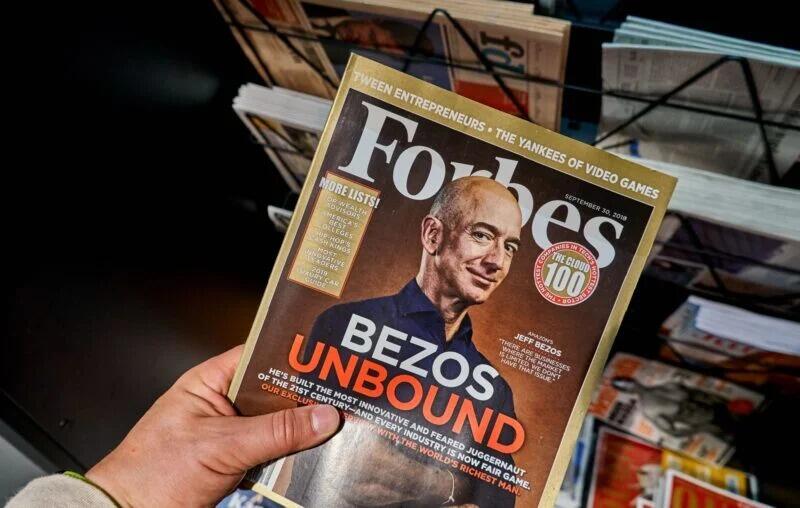
Jeff Bezos or Elon Musk aren’t ultrarich because theychose to be (though they may have), worked hard (which they verifiably did), or stole their wealth from someone else (which they didn’t). They’re rich because consumers rewarded them with purchases and because financial markets priced their respective company shares accordingly.
Whatever your opinion on Amazon’s effect on local commerce or its labor conditions — to say nothing of Tesla’s pretty ruthless use of taxpayer subsidies — it’s undeniable that their companies have provided cheaper and better goods to many, many people.
Most people in my generation think about wealth as a pile of money, stashed away in a bank vault or the basement of someoutrageous mansion. Instead, wealth largely consists of ownership in productive businesses that make the world run(and, overwhelmingly, real estate, which is even more hopeless to expropriate and redistribute).
And it’s not that easy to just “take it,” even abstracting away all the political or legal hurdles to expropriating Americans’ private property.
Dismantling companies to give their “value” back to the deserving poor — many of whom will lose their jobs in said companies in the process — seems like a bad idea, since you’ll destroy that value. For large, publicly traded companies, we do have some neatly divisible spoils in the form of shares. Per the SEC, Bezos owns some nine percent of Amazon, or 938,251,817 shares in total.
Nobody needs that much, say the billionaires’ critics confidently, so we righteously confiscate 900 million of those, worth about $158 billion at the time of writing. 166 days into this Fiscal Year, the Treasury has spent 2,684,154,624,114 dollars — almost 3 trillion, comfortably on its way to a proposed $7.2trillion for the year — a neat $23 billion a day. At face market value, Bezos’ great fortune would finance the government for… less than a week.
Except that it won’t even do that.
The minute we announce this expropriation, the price of AMZN — and all other similar companies we may or may not confiscate in the future — falls like a rock. No buyers. What we’ll raise from this insane play amounts to much less than the face value of the stocks the day before.
Let’s keep making fantastical wishes and assume that it didn’t — maybe all investors agree that this policy is necessary, and nobody is troubled by it — as we sell the shares to finance spending (or hand them out to the 100 million or so poorest Americans who, in turn, sell them instead), we’re mechanically crashing the price of AMZN shares. Ordinarily, Nasdaq trades about 46 million Amazon shares a day and since only a small portion of that is net buying (index funds, brokers, intraday trading etc), it would take us months to offload our 900 million in spoils. Realistically, we’d net a much smaller amount from our sophisticated heist.
If we do this bright and early on a Monday morning, when Sunday comes around we’re once again broke, assuming of course that we acquired the full market value. Does anyone think we can repeat the trick next week? Surely, all the other potential targets saw what we just did, and have been busy moving to Singapore or London or the Bahamas, transferring their ownership to offshore entities, or otherwise shielding them in nonprofits or any number of other defensive measures to ensure that the proceeds from the next billionaire we go after will be much, much lower.
We expropriated (“ate”) the top-2 richest American and aside from financial market chaos, all we got for it was financial support for the bottom third of Americans equivalent to one round of stimmies — plus a whole lot of disincentives to live, work, create, invest, or incorporate in America. What we achieve is a one-time transfer from the ultrarich to the poor, and permanent damage to the very economic goose that laid America’s abundance of golden eggs.
So…Don’t Take It?
If the rich are rich because they provided the rest of us with a lot of value through the businesses they built, we want the rich to be richer still — not poorer. The rich aren’t rich enough.
If we wish to expropriate their riches for our allegedly benevolent ends, we’ll need much more than their current riches to move the needle. The rich aren’t rich enough.
Taxing the rich truly is a lunatic’s solution to our fiscal headaches — a nightmarish one at that.
Instead of trying to orchestrate a costly and not-that-fruitful reshuffling of the pie, perhaps we should just leave the rich to keep expanding it — for their sake, for our sake, and ultimately for the peace of the republic.
Or, formulated as the “Bourgeois Deal” by Deirdre McCloskey’s and Art Carden’s condensed version of McCloskey’s three-part Bourgeois masterpiece — Leave me alone and I’ll make you rich.
The allegations happen year after year at Chicago Public Schools. The list of abuses and complaints is long, according to the most recent report by the Chicago Board of Education’s Office of the Inspector General.
Start with these three cases:
Case No. 20-01345. “A security guard sexually abused a 16-year-old student for approximately five months. In his capacity as a security guard, he pulled the student out of class to have sex in various locations in the school, such as storage rooms and janitor closets. He also sexually assaulted the student in his car and his home.”
Case No. 20-01530.“An intoxicated teacher groped an eleventh-grade student twice on the buttocks while at the school’s graduation. The student disclosed the teacher’s conduct to a staff member, who notified DCFS and the school’s then-principal. However, the principal failed to notify the Law Department of the allegations as required.”
Case No. 21-00326. “An employee of a vendor after-school program sexually assaulted an elementary school student at the student’s school on multiple occasions between 2014 and 2017, when the student was seven to ten years old. The student disclosed three separate incidents: one in which the vendor employee touched and rubbed the student’s genitals under their clothes, and two in which the vendor employee touched and rubbed the student’s buttocks under their clothes. The abuse took place in the school’s gym and cafeteria.”
Those are but a few of the 446 cases the Inspector General detailed in his 2024 report, ranging from misconduct and sexual harassment to nonsexual conduct that raises “the appearance of impropriety or possible grooming concerns.” The total was similar in number to the 470 complaints the OIG revealed in his 2023 report.
With the amount of abuse that continues to occur since the Chicago Tribune first exposed the depth of the district’s crisis in 2018, CPS should be under the same extreme public pressure as the Catholic Church was when its own sex abuse scandals broke.
There should be firings. A strict one-strike-and-you’re-out policy. A public website that lists all CPS offenders, their histories, their whereabouts. A new rigorous screening process obsessed with a hiree’s character. A new set of mandatory “safe environment” training for all employees and vendors.
That’s just some of what the Chicago Archdiocese implemented in response to their own scandal. In contrast, CPS hasn’t implemented protections like those.
More cases continue to be reported every year as a result. The full list for 2023 is buried in the OIG’s 133-page report, so nobody sees them. We’ve broken a majority of them out, in short snippets, one by one. If you want the full story for each case, check out the OIG’s 2024 Report.
It’s bad enough that CPS doesn’t teach children how to read. What’s worse is that many also end up as victims of sexual abuse or grooming.
********************************
Cases Involving Sexual Acts
Case No. 21-00528: Elementary school teacher sexually assaulted a 12-year-old child in Indiana, and a child between the ages of 12 and 16 in Illinois, and was arrested in Indiana and sentenced to 50 years’ imprisonment.
Case No. 20-00580: Vendor employee of an outreach program had sexual intercourse with an eighth-grade student and communicated with them on social media and by cell phone.
Case No. 21-00326: Teacher groomed and sexually abused a 17-year-old student for a year.
Case No. 21- 00346: Vendor employee of after-school program sexually assaulted a 7-year old student on multiple occasions for three years.
Case No. 20-01530: Intoxicated teacher groped an eleventh-grade student at graduation. Principal failed to notify the law department.
Case No. 21-01132: Teacher confesses she engaged in sexual touching and other inappropriate behaviors with a 15-year–old student.
Case No. 20-01345: Security guard sexually abused a 16-year-old student for approximately five months. In his capacity as a security guard, he pulled the student out of class to have sex in various locations in the school, such as storage rooms and janitor closets.
Case No. 21-00155: High school cafeteria employee was indicted for sexually abusing a child, and stared at CPS students in an inappropriate manner.
Cases Involving Other Sexual Misconduct
Case No. 19-02019: High school coach sent 757 text messages to an 11th-grade student, including sexually explicit messages and a video of his genitals. Cook County State’s Attorney’s Office rejected charges.
Case No. 20-01232: Lunchroom employee sent a picture of his penis to a High School student.
Case No. 19-01109: Vendor employee sent sexually explicit Facebook messages to a 13-year-old.
Case No. 20-00400: Guest speaker encouraged students to contact him on Instagram and subsequently initiated sexual conversations.
Case No. 19-02541: Elementary school volunteer coach groomed eighth-grade student for sexual abuse, texting them late at night and encouraging the student to lie to their parents regarding their relationship.
Case No. 20-00234: Elementary teacher persistently touched female students on various parts of their bodies.
Case No. 22-00287: Staff member groomed a 16-year-old student with over 14,000 electronic messages.
Case No. 20- 00377: Security officer made inappropriate sexual comments to multiple female students.
Case No. 22-01106: Intoxicated vendor employee with long criminal history, who never went through a background check, made sexual advances towards a student
Case No. 21-01257: Substitute teacher engaged in sexual text message and snapchat conversations with a student.
Case No. 20-01455: Unvetted volunteer coach sent flirtatious social media messages and socialized outside of school with students
Case No. 20-00542: Teacher communicated that he “always had the biggest crush” to a twelfth-grade student.
Case No. 22- 00424: Vendor employee sent sexual text messages to high school students and subsequently threatened them by text.
Case No. 20-00289: Teacher sent sexually suggestive messages to “do him” to a tenth-grade student and engaged in extensive electronic communications with another student.
Case No. 22-00211: Security guard watched pornography on his phone in the cafeteria in full view of students.
Case No. 22-00766: Staff member engaged in sexual communications with an eleventh-grade student and exchanged 23 phone calls over three months.
Case No. 21-01161: Staff member posted explicit sexual jokes about oral sex on a student’s Facebook page.
Case No. 21-00320: Athletic coach asked a student for a kiss while driving them home and touched student-athletes gratuitously.
Case No. 19-00022: A vendor employee who mentored high school students engaged in prohibited conduct of a sexual nature with a 16-year-old student.
Other Serious Policy Violations
Case No. 22-01793: An IT vendor employee watched pornography on his cell phone while in the school’s computer room, plainly visible to students.
Case No. 22-01944: On school picture day, a student reported being uncomfortable by the employee of a photography company who touched a student’s neckline and told the student that their photos were “sexy as always,” and asked them for a hug.
Case No. 21-01141: A vendor security guard at a charter school made sexual comments to a tenth-grade student, including discussing male and female genitalia, condoms, and telling the student that they needed to be with a “grown man.”
Case No. 19-01300: A high school vendor employee engaged in sexual acts with a 19-year-old student and, once the allegations were reported, instructed the student to delete all communications between them.
Case No. 20-01325: A high school Special Education Classroom Assistant engaged in more than 6,000 phone communications with a high school senior, allowed the student to drive her car, and transferred money to the student.
Case No. 21-00996: Elementary school Special Education Classroom Assistant communicated with a student by cell phone, sent pictures of herself, called him “son,” and gave him $40 as a birthday gift.
Case No. 21-00485: High school teacher engaged in over 1,400 electronic communications with a tenth-grade student during a six-week period.
Case No. 20-00385: Volunteer high school athletic coach messaged students on Facebook and discussed his marital issues, then asked another student to delete their communications.
Case No. 21-00381: Elementary school staff member called and messaged a seventh-grade student late at night.
Case No. 20-01434: High school teacher exchanged hundreds of text messages with one student, exchanged non-school-related messages with students on a CPS app; the administration failed to report an allegation against the teacher.
Case No. 18-01645: Teacher communicated with a seventh-grade student via snapchat and cell phone and stored the student’s phone number under a false name.
Case No. 21-00160: High school Special Education Classroom Assistant exchanged dozens of calls and text messages with a student.
Case No. 21-00670: High school staff member made comments about a student’s appearance and clothing.
Case No. 19-02517: High school teacher stared at students and made comments about their appearance; touched students on the shoulder.
Case No. 19-01288: Elementary school substitute teacher entered girls’ restroom knowing that female students were inside.
Case No. 20-00321: Elementary school teacher touched students’ shoulders, backs, and legs to get their attention.
Case No. 21-01142: Special Education Classroom Assistant told a student that she looked like a model and asked her age.
Case No. 21-00898: Teacher recommended for training after students reported being uncomfortable by his touching them on the backs and shoulders.
Case No. 19-02330: Security guard reprimanded for commenting about a student’s body.
Case No. 21-00141: Teacher followed a CPS student on social media, sent her messages on Instagram, and “Liked” her pictures.
Case No. 22-0758: Security officer pursued a student on social media.
Case No. 21-00484: Teacher texted with students and self-reported her conduct after a student sent her a picture of a penis.
Case No. 19-01383: Teacher texted with a student over a six-month period, referred to herself as a “third parent” to the student.
Case No. 22-01126: Substitute teacher crossed boundaries by texting with a student about the student’s dating life.
Case No. 22-01588: Teacher repeatedly lied to investigators about his dating relationship with a former student.
Case No. 22-02149: Staff member took a four-year-old student to a coffee shop during school hours and told her not to tell anyone.
Case No. 20-00803: Elementary teacher stared at female students’ chests and buttocks.
Case No. 22-00952: Teacher violated boundaries by having a student at her home.
Case No. 21-01153: Teacher made an ambiguous, potentially sexual joke and engaged in various other boundary-crossing behaviors with female students.
Case No. 21-00702: Teacher/coach’s comments to students and boundary-crossing misconduct violated CPS guidelines.
Case No. 22-01685: Elementary substitute teacher touched students’ arms and shoulders, making them uncomfortable.
Case No. 18-01673: Staff members failed to properly report sexual misconduct allegations against an employee who was eventually criminally charged for the conduct.
Case No. 21-00480: Security officer crossed CPS boundaries with students during conversations with them.
Case No. 21-01168: Teacher engaged in a pattern of making unprofessional comments to students; his comments particularly harassed female students.
WTI Extends Gains After API Reports Inventory Draws Across The Board
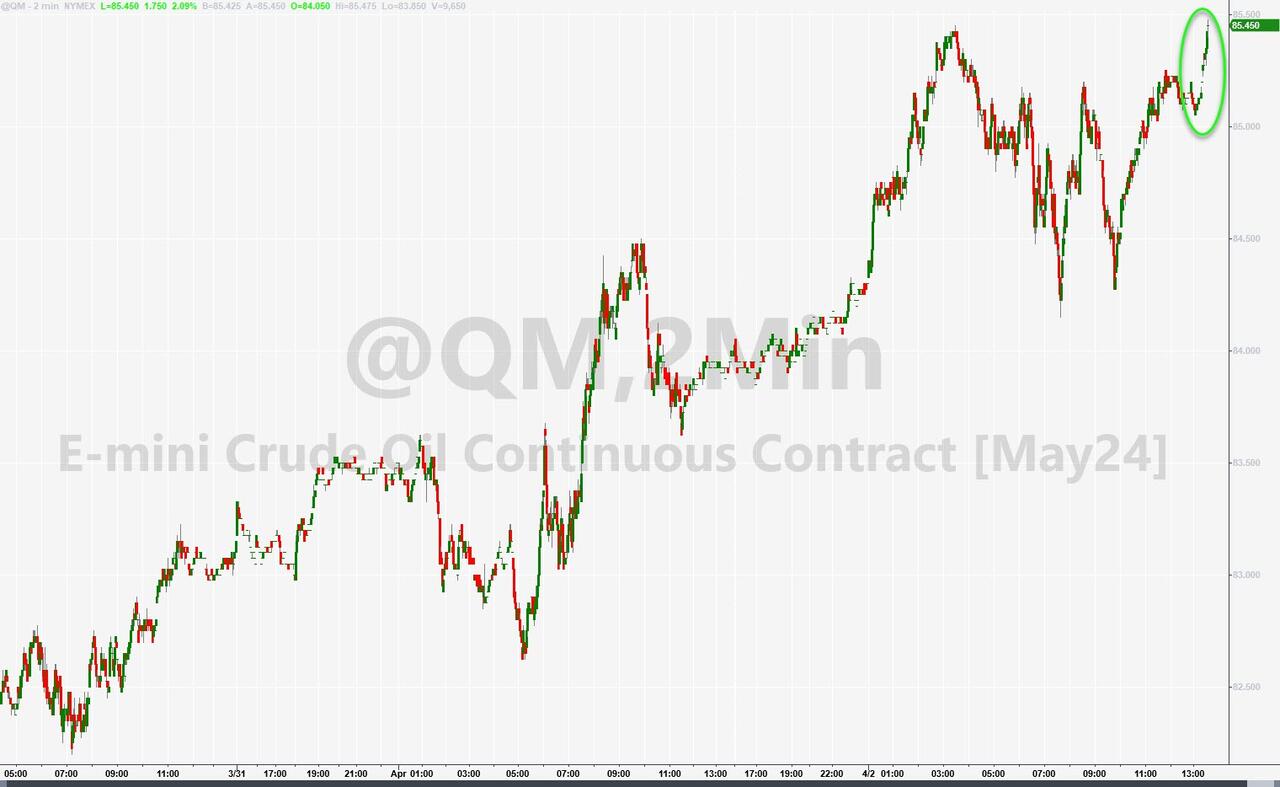
US crude futures pierced $85 for the first time since October, the latest milestone in a rally driven by OPEC+ production cuts, strong demand and heightened geopolitical risks.
As Bloomberg reports, oil has jumped this week as tensions rise in the Middle East, with Iran vowing revenge on Israel for an airstrike on its embassy in Syria that killed a top military commander.
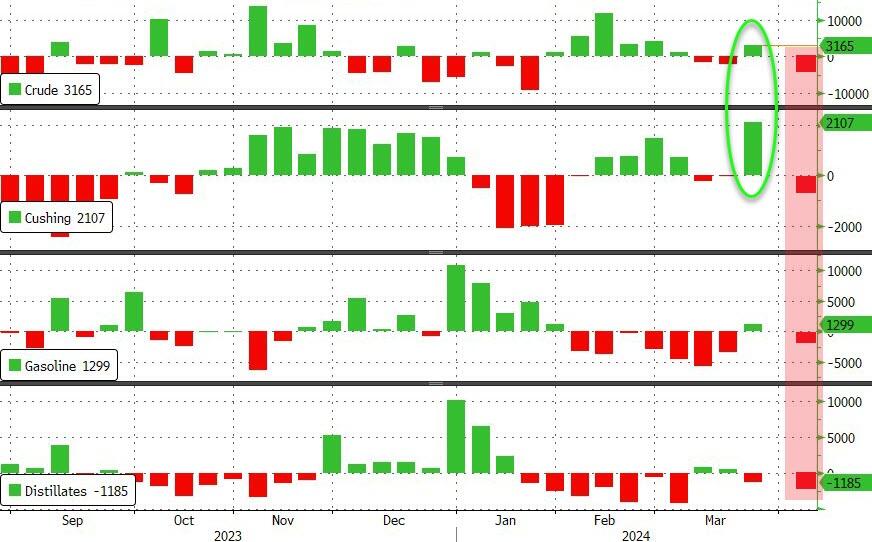
After last week’s surprise crude build and big jump in stocks at the Cushing hub, traders were looking for a slowing build…
API
Crude -2.29mm
Cushing -751k
Gasoline -1.46mm
Distillates -2.55mm
Inventory draws across the board with Distillates and crude stocks falling most…
Source: Bloomberg
WTI was just above $85 ahead of the API data and extended gains after…
The market’s strength has also been reflected throughout the oil market curve.
“An escalation in tension in the Middle East has coincided with firmer oil fundamentals,” said Warren Patterson, head of commodities strategy for ING Groep NV.
“The market is tightening thanks to OPEC+ supply cuts, which is evident with the strength we have seen in timespreads.”
The US benchmark’s prompt spread has widened near $1 in backwardation, compared with as low as 54 cents three sessions ago. Meanwhile, the oil options market has flipped to a call skew, underscoring the magnitude of bullish sentiment for crude.
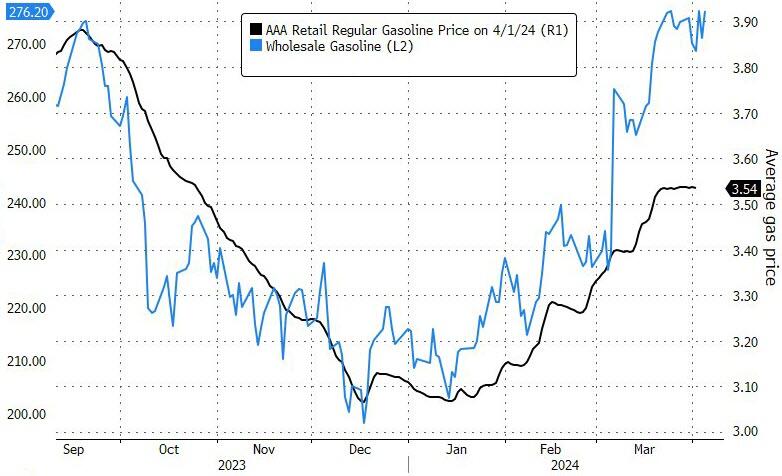
Meanwhile, pump prices remain near six-month highs as wholesale prices put increasing pressure to the upside…
It’s been a little over a week since “Climate: The Movie,” a documentary produced by Thomas Nelson and directed by Martin Durkin, was released on Vimeo, YouTube, Rumble, and other platforms. And already, it’s garnered millions of views and thousands of reviews.
“Watch this documentary to understand the lies, the pseudoscience, but also the self-interest of government-funded parasites pushing climate alarmism,” Maxime Bernier, the founder and leader of the People’s Party of Canada, posted on X, formerly known as Twitter, about the film that details how “an eccentric environmental scare grew into a powerful global industry.”
“The final nail in the coffin for the ‘human-induced climate change’ scam. An absolute MUST-WATCH!” Wide Awake Media posted on X while linking to the movie, which features an elite list of scientists, including Nobel Laureate John Clauser, Richard Lindzen, emeritus professor of meteorology at MIT, and Steven Koonin, a theoretical physicist and professor at NYU’s Tandon School of Engineering.
“I’m a Dutch science journalist, and I watched [Climate: The Movie],” Maarten Keulemans posted on X. “It’s full of crap.”
Some reviewers went so far as to call for censorship.
“I’m thinking we can get 10,000 people to report ‘Climate: The Movie’ on YouTube as having harmful and misleading content,” Eliot Jacobson, a retired mathematics and computer science professor, posted on X on March 23.
Following Mr. Jacobson’s call, Vimeo removed the video from its platform on March 24, citing a “violation of Vimeo’s Terms of Service and/or Guidelines.”
“The [V]imeo link to ‘Climate the Movie’ I shared two days ago has been censored!” Nir Shaviv, a physics professor at the Hebrew University of Jerusalem who appeared in the film, posted on X. “Fully removed beyond the mere shadow blocking [YouTube] has.”
Neither Mr. Durkin nor Mr. Nelson were surprised.
“There’s something bigger going on behind the climate thing, beyond the narrow arguments about whether it’s true that [carbon dioxide] causes all this stuff—which, of course, it doesn’t,” Mr. Durkin told The Epoch Times. “There’s almost a blanket ban on skepticism on mainstream television.
“It’s a kind of Marxism, I suppose. There’s an entire class of people who have an interest in high levels of taxation and high levels of regulation, in what might broadly be termed the ‘publicly funded establishment’ and the ‘education establishment.’”
Mr. Nelson concurred. “There’s a big difference between the climate realists and the other side,” he told The Epoch Times. “[Climate alarmists] are constantly reporting us and tattle-telling on people that don’t agree with them.
“I never see [climate realists] saying, ‘let’s report people from the other side, and let’s take down their videos, let’s censor them.’ All the censorship is coming from one side, and all the free speech and ‘let’s debate’ is coming from our side. We want to talk about it because we’re confident with our evidence.”
Censorship Unchecked
Immediately after Vimeo removed Mr. Durkin’s film, he reached out to the platform, “You know, I’m a reasonably well-known, veteran filmmaker, award-winning,” he said. “And I told them [via an electronic form], ‘Look, all the archive and music is cleared. We see absolutely no reason whatsoever why this was suspended. We’ve got a lot of good scientists in it.”
Mr. Nelson posted to X, “Hey @Vimeo: Specifically what is your justification for censoring ‘Climate: The Movie’?”
“A lot of people said they couldn’t believe it was being censored,” Mr. Nelson said. “But I never got an official response from anybody.”
Mr. Durkin didn’t get a response, either. “About 12 hours after I reached out, it went back up again. But we don’t know why. I presume that some ‘greens’ complained about it and that they automatically took it down. Fair dues to Vimeo that they put it back up, though, that was good.”
Vimeo wasn’t the only platform to take action against “Climate: The Movie.” On March 22, Food Lies, which has 44,000 subscribers, reported that when they first shared the movie on their channel, YouTube “immediately” removed it, and Food Lies had to seek special permission to repost.
When the report was granted, YouTube added the following contextual warming, “Climate change refers to long-term shifts in temperatures and weather patterns. Human activities have been the main driver of climate change, primarily due to the burning of fossil fuels like coal, oil, and gas,” and included a link to the United Nations’ “What is Climate Change?” website.
Further, Mr. Nelson said he believes Google is censoring the movie’s website. “We may have been shadow-banned, but we can’t prove it either way,” he said. “I don’t think Google wants to direct people to our site.”
However, Mr. Nelson and Mr. Durkin agree that the purchase of Twitter by Elon Musk in 2022 changed the social media censorship game.
“I love the fact that X is open right now, and we’re able to talk freely on X,” Mr. Nelson said. “Because just two years ago, if this had come out when we were all suppressed, it would have made a big difference.”
“[Social media] is not so much a problem,” Mr. Durkin said. “Social media is leaky enough now that it gets out there.
“The bigger point is that I pitched this idea to the BBC and Channel Four about a year before I [was on Tom Nelson’s podcast]. Why, I have no idea. I knew they’d say no, but I think I wanted to satisfy myself. And, of course, they did say no.”
Mr. Durkin said that even if a station wanted to air a story expressing skepticism about the “climate crisis,” broadcast regulators in Canada, and the UK can destroy that station.
“In effect, they’re saying, ‘If you put out skeptical views, you’ll be sanctioned.’ And that can go as far as to have your broadcasting license revoked,” Mr. Durkin said. “So, you know, this is full-scale state censorship on mainstream media, and [the general public isn’t] making a fuss. We’re just sort of accepting that this is the case.”
Paying the Social Cost
When asked why “Climate: The Movie” has received such pushback, Mr. Durkin said it boils down to what he terms the “New Class.”
“Many of these characters have built their careers on the climate scam,” he said. “I mean, their reputations, their livelihoods, everything depends on it, and so they feel enormously threatened.
“But beyond that, there’s this kind of political-ideological movement; it’s not just about the weather. And the people who promote it—most of science is publicly funded, and lots of scientists are involved directly with publicly funded institutes—are part of that publicly funded establishment, so they have that worldview.
“You know, if you look at the political analysis of people in universities, they are 99 percent Democrats, or left-wing even.
“And it’s now de rigueur in those circles to hate Trump, to believe that more regulation is a civilized thing, to think that public backing for the arts, is a good thing, and so on and so forth. And when you come out and say that you don’t think the climate thing is true, you’re not just making a narrow point about the medieval warm period, or the geological record, on temperature, you’re saying something much bigger, ideologically.
“You’re saying that maybe Trump’s not so bad. And the Second Amendment is a good idea. And you’re suddenly lumping yourself in with the deplorables and people in pickup trucks. And if you’re in Britain with Brexiteers. You’re putting yourself in a whole other social caste, as it were.”
Mr. Durkin said that before the release of the film “The Great Global Warming Swindle,” in 2007, which the head of science at Channel Four asked him to make, he was considered to be one of the “hottest science documentary producers around,” and was regularly tasked by Channel Four to produce films. But after that film’s release, it took three years before Channel Four asked him back.
He said the regular invites to dinner parties and social gatherings in London“media and academic types” dried up.
“My wife was extremely cross. There was a huge backlash, and she has really bad memories of the immediate aftermath of putting ‘Swindle’ out, and that’s why she was very, very reluctant to have me make another film,” Mr. Durkin said.
“So that part of the film, where we talked about the social cost of coming out against climate in terms of ostracism from a particular social class, the New Class, that was personal.”
The New Class
Mr. Durkin, who is publishing a book that takes a deep dive into the “New Class,” said one of the characteristics of that group is they consider themselves to be part of the intelligentsia. By that, he means those who have a university degree that has “very little application in the real world.”
“They hate capitalism because capitalism hates them, and the market hates them,” he said. “If you do a degree in sociology, what use are you to man or beast? If I’m running a lawnmower company, I do not need anyone with a degree in sociology.
“So, they resent that they’re not well received in the marketplace. And historically, they’ve embraced the state because it provides them with an income and a gratifying grand title if they’re working for some big government agency or forum: for the U.N., or an NGO, or for NOAA, or whatever.”
Mr. Durkin said the class is at odds with the working class and is “enormously powerful” because it’s part of the publicly funded establishment.
“Until we understand that they are a particular group, they have a particular set of interests, and those interests involve taking away our money and taking away our freedom, then we’re in trouble,” he said.
“I keep telling people, incredibly, in the US and the UK, more than twice as many people work in government as work in manufacturing.
“If you told some American in the early part of the 19th century that that could ever happen, they would have thought you were absolutely nuts.”
Gold Hits Another New Record High But Bonds, Stocks, & Bitcoin Battered On ‘Good’ News
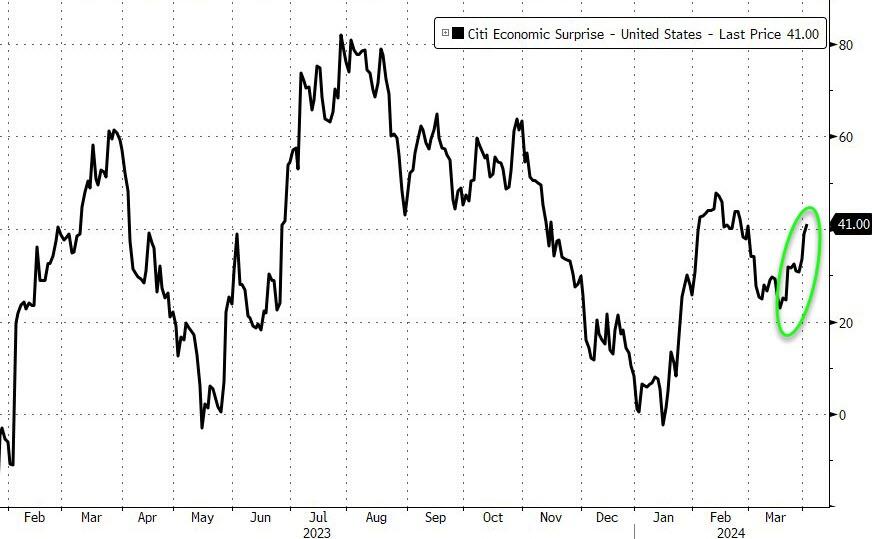
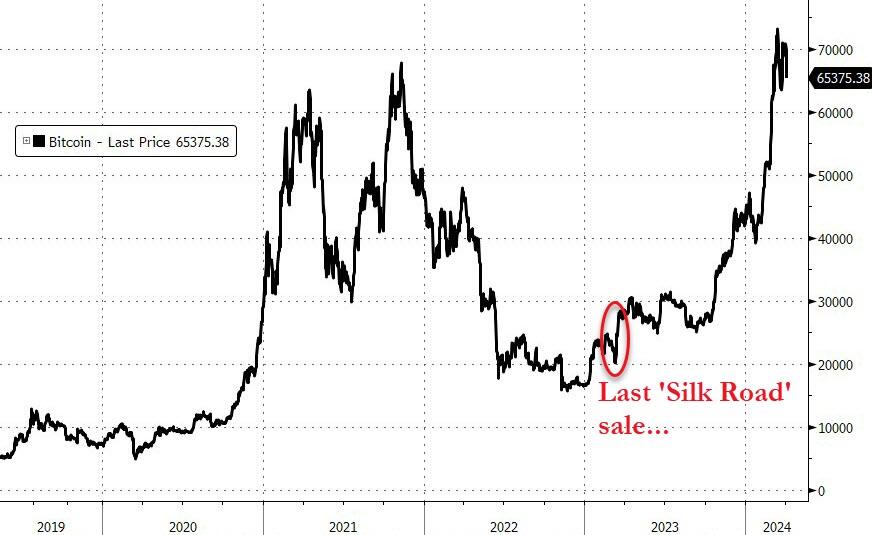
Mixed (well good) data this morning – in-line JOLTS (labor market shows no signs of cracking), stronger than expected Factory orders, but weaker than expected durable goods (final) and shipments data actually shrank in Feb (bad for GDP) – had no major impact on rate-cut expectations (which remain low – 67bps total cuts in 2024, 50% odds of June cut). US macro surprise data is picking up (and overnight saw European PMIs better than expected)…
Source: Bloomberg
But Fed’s Mester sung from the same hymn-sheet as Waller and Bostic, saying that The Fed needs more time to make the ‘cut’ call:
“But I need to see more data to raise my confidence,” Mester said Tuesday in prepared remarks for an event at the Cleveland Fed.
“Some further monthly readings will give us a better sense of whether the disinflation process is stalling out or whether the start-of-the-year readings reflect a temporary detour on the downward path back to price stability.”
And then she explained her view of Fed asymmetry:
“At this point, I think the bigger risk would be to begin reducing the funds rate too early,” Mester said.
“And with labor markets and economic growth both being very solid, we do not need to take that risk.”
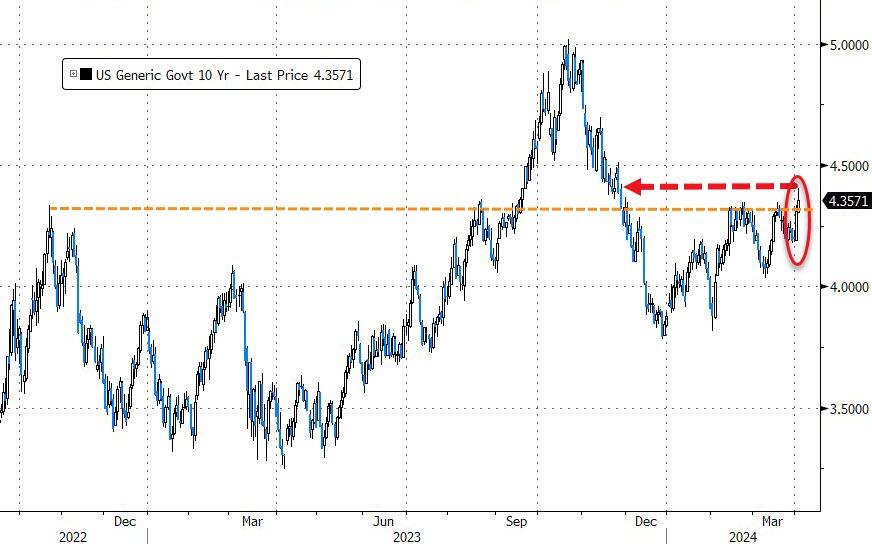
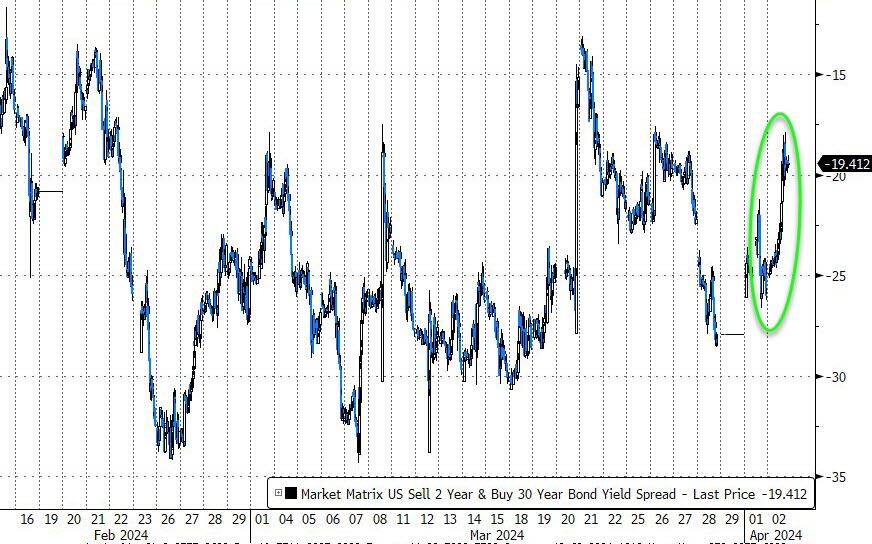
And while Mester’s comments did not seem to be an immediate catalyst, yields kept rising overnight (on stronger EU PMIs?), especially at the long-end (2Y unch, 30Y +6bps) extending yesterday’s bloodbathery…
Source: Bloomberg
The 10Y broke above its YTD highs to its highest since Nov 2023 (2nd biggest 2-day jump in yields since October)
Source: Bloomberg
…and steepening the yield curve (2s30s) significantly…
Source: Bloomberg
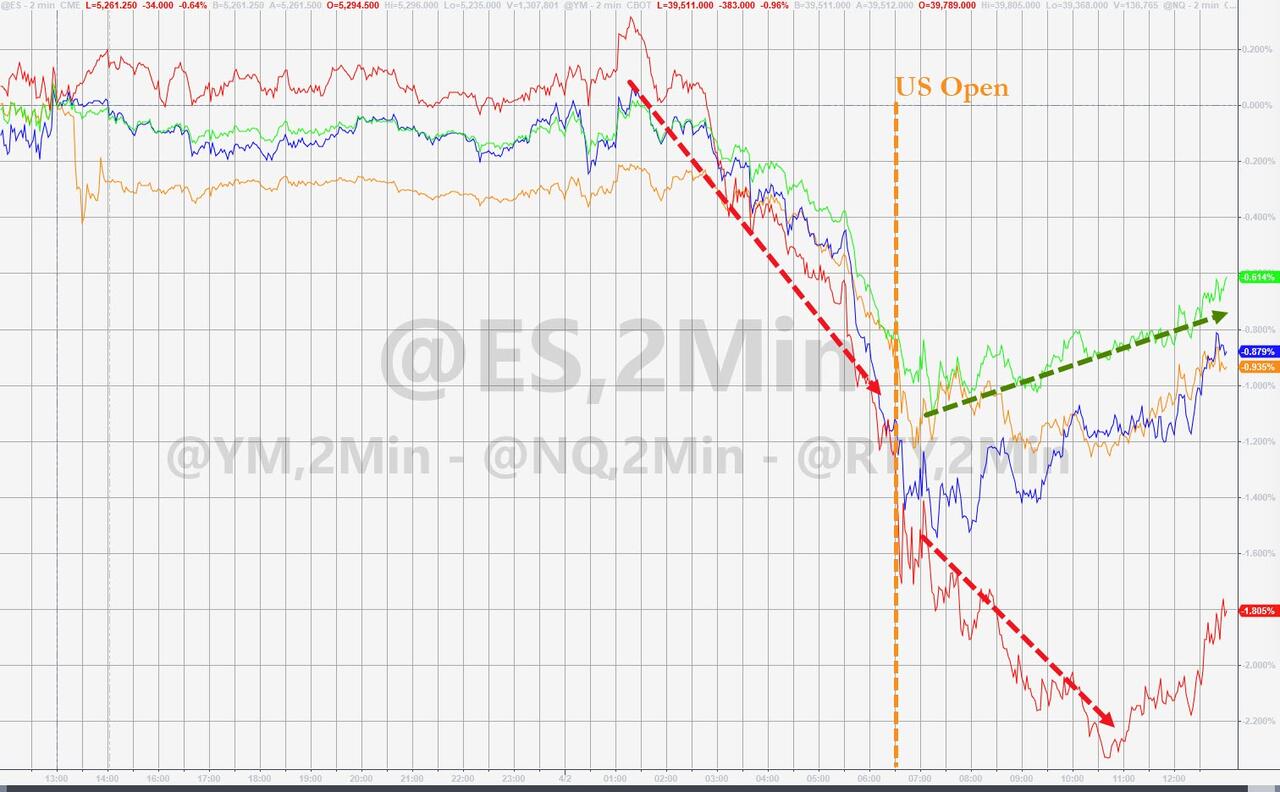
And stocks appeared to run out of momentum again overnight as yields rose during the European session with Small Caps extending losses in the US session. The last hour saw a mini buying spree which put a little lipstick on the day’s pig. Small Caps were the biggest losers…
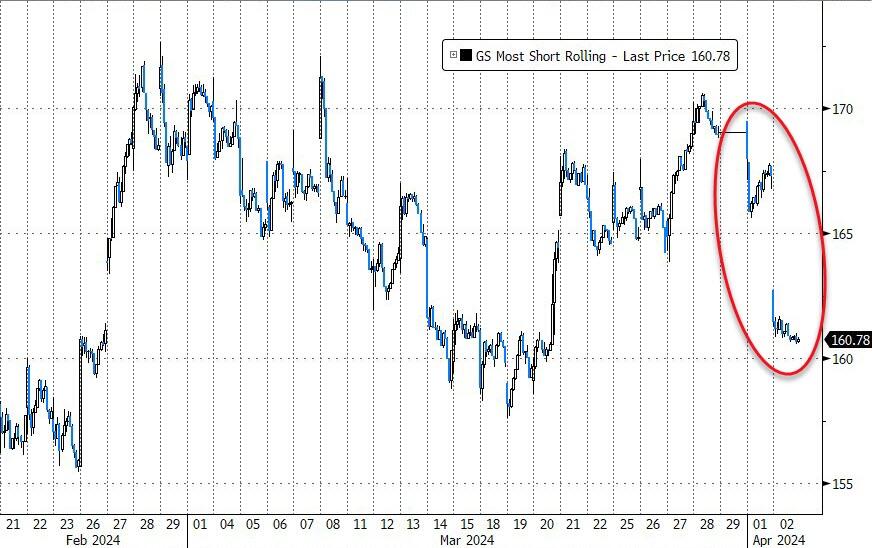
‘Most Shorted’ stocks were clubbed like a baby seal for the second day in a row… the biggest 2-day drop in the shortest stocks since November…
Source: Bloomberg
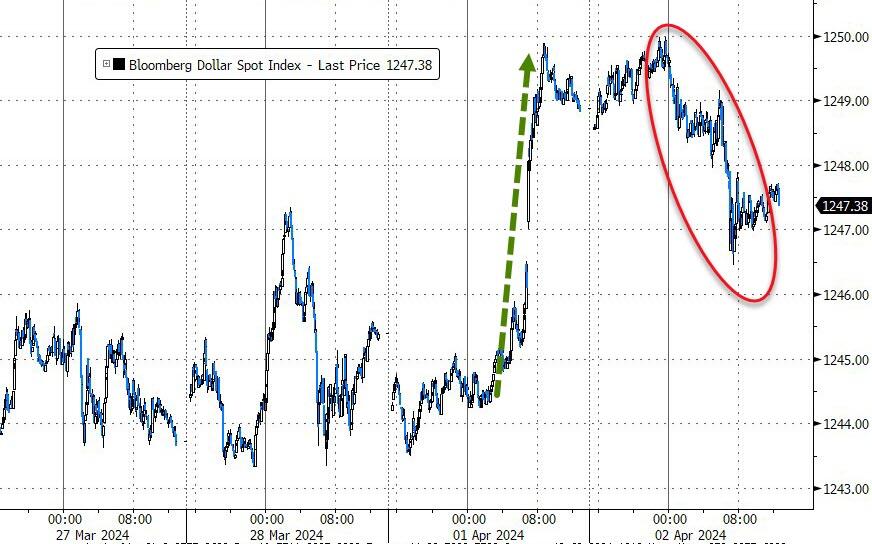
The dollar tumbled, erasing most of yesterday’s gains…
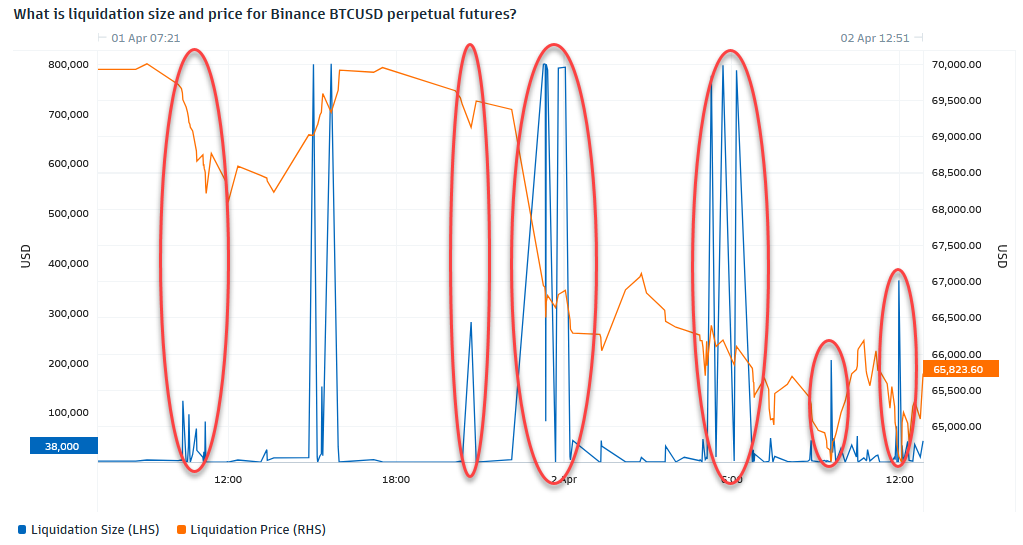
Also of note, the players in the perp futs market have been very active the last couple of days (all but one of the heavy volume surges were sells)…
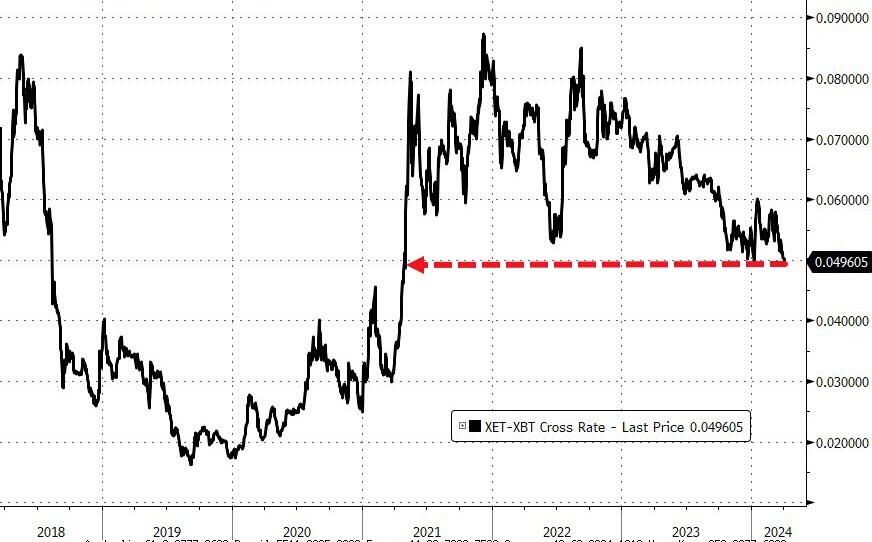
Ethereum was worse… taking the ETH/BTC ratio down to its lowest since April 2021…
Source: Bloomberg
But while one ‘alternative’ currency is tumbling, another (older one) is rallying to new record highs… Spot Gold hit $2277 intraday – a new record high….
Source: Bloomberg
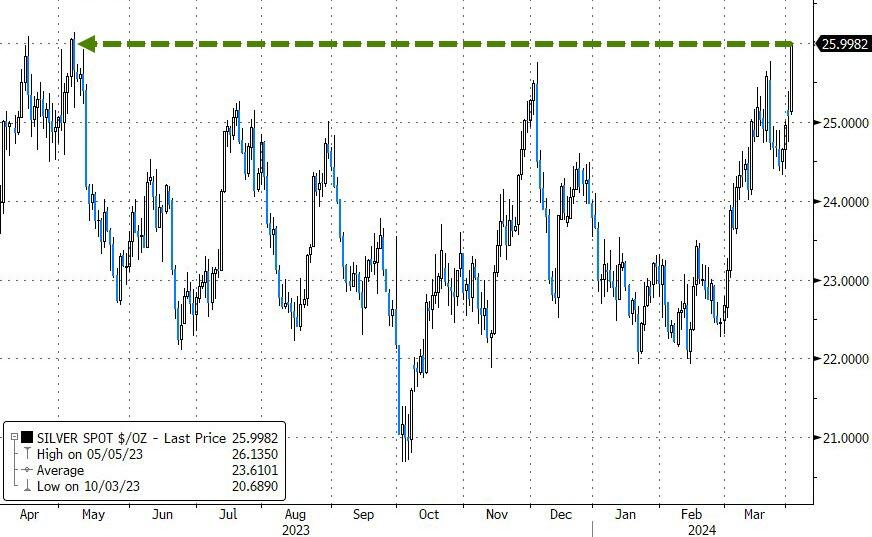
For a change, Silver outperformed gold today, with spot prices surging up to $26 for the first time since May 2023…
Source: Bloomberg
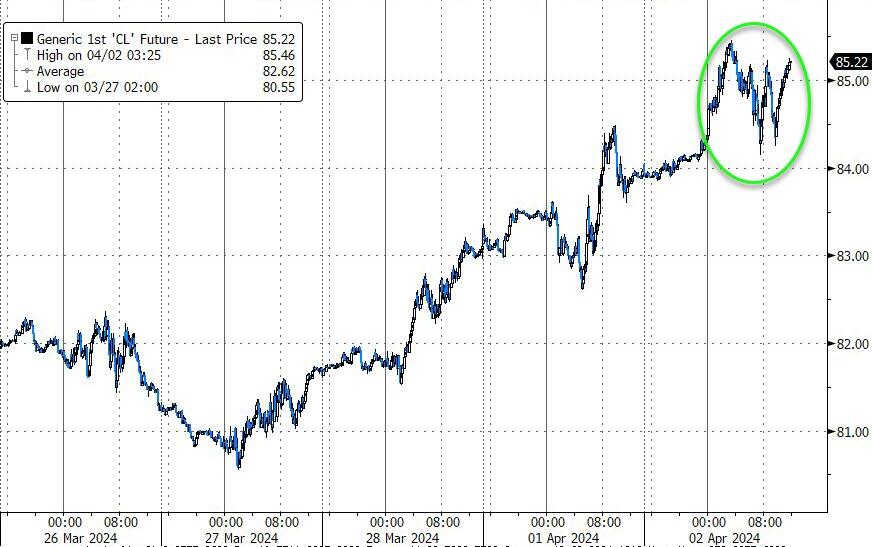
And Black Gold also surged up above $85 (WTI) – the highest since Oct 2023…
Source: Bloomberg
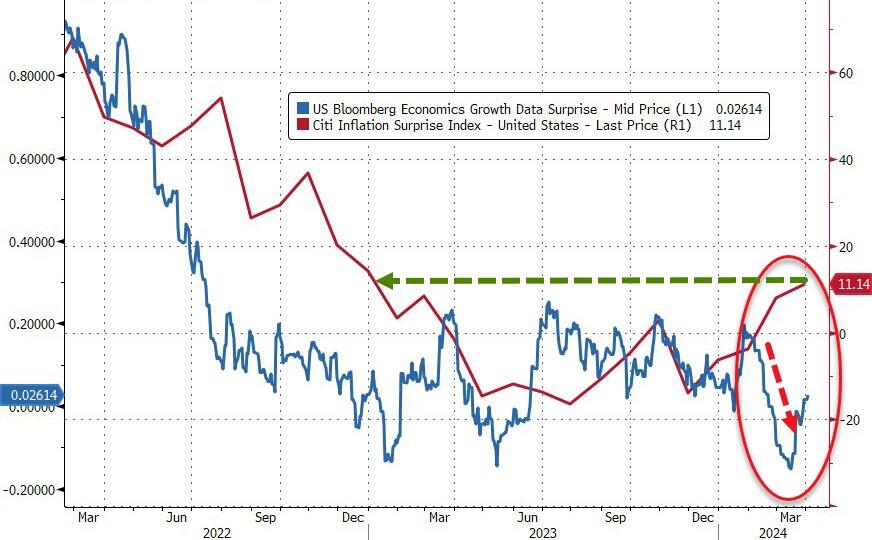
Finally, as growth expectations have stagnated somewhat over the past year (though the last week has seen some positive surprises), Citi’s inflation-suprise index has resurged back to its highest since Dec 2022…
Source: Bloomberg
…we love the smell of stagflation in the morning… and gold is rising along with Fed policy-error-risk.
Iran’s Khamenei Promises Revenge Against Israel Over Strike On Embassy
For those wondering whether or not the war in Gaza would expand into multiple fronts, it looks like that question has now been answered. And, unless Iran’s “Supreme Leader” Ayatollah Ali Khamenei is engaging in a dramatic bluff, it appears that the nation is about to enter the conflict.
Khamenei declared on Tuesday that “Israel will be punished” for the attack the previous day that killed members of the Revolutionary Guard, including two generals, at the Iranian embassy compound in Damascus.
“The evil Zionist regime will be punished at the hands of our brave men. We will make them regret this crime and the other ones,” Khamenei said in a message published on his official website.
Iranian President Ebrahim Raisi declared that the “cowardly crime will not go unanswered.”
It’s important to note that Israel and Iran have already been engaged in a proxy war, with Iranian supported Hezbollah soldiers exchanging fire with Israeli troops on the border of Lebanon since the beginning of the fighting in Gaza. Theories abound on the purpose of the embassy attack, including the claim that Israel intends to bring the US into the war by triggering open Iranian involvement.
Under the Biden Administration US entry into the conflict is almost assured if a front is opened with Iran. The saber rattling has been mounting since at least January when militants allegedly armed with Iranian weapons attacked an outpost along the Syrian/Jordanian border killing three US soldiers.
The obvious question is why are US troops still in Syria? There are two equally compelling answers – First, they are there to oversee and protect the revamping of Syrian oil fields to secure American energy interests. Second, they are there exactly because both Iran and Russia have operations in the region and the powers-that-be want the option to use those soldiers as fodder to start a wider war.
American oil concerns are generally non-negotiable when it comes to foreign entanglements and any major threat to exports out of the Middle East is going to inspire a US military response (Iran’s first action may be to close the Strait of Hormuz to western oil tankers). Joe Biden has essentially guaranteed this outcome after he drained US strategic oil reserves in a bid to keep inflation down and has consistently interfered with oil resource expansion stateside. One would think if a US president is going to sanction Russia and remove a large portion of the global oil supply from the market that he would try to open the path for more production domestically. But not Biden…he’s worried about “global warming.”
The idea that an all encompassing war in the Middle East is part of the plan is not far fetched. There are interests among the far-left and the Neo-Conservatives that have desired this for decades. If Iran engages with Israel directly, the warhawks are going to get what they want. As far as the western populace is concerned, get ready for higher gas prices this summer (now they can blame war instead of taking responsibility for inflation), an increasing potential for terror attacks along with more marches and riots by leftist activists wanting to attach their bizarre movement to the causes of the Islamic world.
The mighty Rio Grande has become a river of misery for Eagle Pass Fire Chief Manuel Mello III and his 52 first responders.
His medics sometimes confide: “Chief, I’m sick and tired of going out to the river and pulling bodies out,” Chief Mello told The Epoch Times, as he described how much the border crisis is affecting his department’s rescue workers.
They are grappling with record numbers of drowned men, women, and children who perish while crossing the river from Mexico into the United States.
The chief’s crews are risking their lives in nightmarish scenarios with unidentified people who are sick, hurt, or dead—not just along the river, but also on nearby roads, ranches, and railways.
They are responding to immigration-related emergencies so frequently that legal residents of their own community may be left waiting for medical care.
“There are days it seems that the ambulance wails never stop,” the chief told a congressional committee recently, noting that many of those ambulances are headed toward the Rio Grande and its surrounding area.
People in the community hear those sirens. Some see the bodies washed up along the riverbank. And they feel the impact.
“It breaks my heart to know that there are children drowning in the river; there are people on the way over here being raped and being robbed,” Eagle Pass resident Ruben Camarillo, a 35-year-old father of a 9-year-old son, said.
As he stood on a city street corner in support of former President Donald Trump’s recent border-focused visit to Eagle Pass, Mr. Camarillo told The Epoch Times that illegal immigration is “causing so much death and destruction … and we’re experiencing that firsthand.”
Rescuers Need Assistance
The Eagle Pass Fire Department is getting little, if any, help from the federal government to ease burdens stemming from the nation’s border crisis, Chief Mello said.
He’s seeking funds to cover costs from hundreds of ambulance runs carrying illegal aliens. He also is trying to secure counseling for first responders who are coping with stress and trauma that linger long after they go off duty.
While dealing with death is an accepted part of an emergency responder’s job, Eagle Pass medics are overdosing on gruesome encounters that are rare occurrences elsewhere—such as drowned children.
“The mental impact will take a long time to heal if we do not get help for them soon,” the chief told federal lawmakers.
Above all, Chief Mello would like to see U.S. leaders stem the tide of illegal immigrants. That would be much better than throwing money at the consequences, he said.
“There needs to be some unity within the federal government so we can actually stop it,” the chief said.
In hopes that the right people finally hear—and heed—his pleas, Chief Mello shared his story with Congress in brief testimony earlier this year. He also gave a two-hour interview to The Epoch Times about the challenges that his department faces.
But the chief also emphasized that the problems extend beyond Eagle Pass. “It’s not just me with this issue,” Chief Mello said. “It’s every single fire department along the border.”
‘Epicenter’ of Crisis
Still, Eagle Pass arguably has been affected more than the average border town.
“At points, we have had 1,500 people crossing [the Rio Grande] at one time,” Chief Mello said. One evening, 2,000 people were lined up, waiting to be transferred to a U.S. Border Patrol processing station; by the next morning, the line had grown to 4,000.
That influx fits into a larger picture. Since taking office in 2021, President Joe Biden has enacted more than 500 immigration policies, many of them reversing or rolling back measures enacted by his predecessor, President Trump.
Illegal border crossings during the Biden administration have surpassed the 9 million mark, mostly at the U.S.–Mexico border, according to Customs and Border Protection data.
Because of the recent surges, Eagle Pass has been in the national spotlight frequently.
Sometimes called “the epicenter of the border crisis,” the city has been the site of a standoff between state and federal government agencies. They are clashing over approaches to illegal immigration, just as the two leading presidential candidates do.
While President Trump advocates a crackdown on illegal immigration, President Biden has embraced a more “welcoming” approach and loosened restrictions.
But the crisis has escalated so much that “even some of Biden’s fellow Democrats have begun advocating for more stringent border control,” the Migration Policy Institute noted.
One Month, 17 Drownings
When Chief Mello first joined the fire department in 1992, the Rio Grande’s strong currents would snatch about six lives a year.
But the department recently recovered 17 victims drowned in a single month, the chief said, citing figures from Jan. 20 to Feb. 19.
That’s a record high during Chief Mello’s 32-year career, which includes a decade as chief. And it excludes drowning victims that the Border Patrol or other agencies picked up.
“These past couple of years, we have been going to the river, basically almost every day—sometimes three, four times a day—for drownings; for body recovery,” Chief Mello said.
The casualty count has fluctuated over the years, but before 2021, the annual number of drownings was a dozen or fewer.
However, according to Chief Mello, in 2023, his crews retrieved 43 bodies from the Rio Grande; the youngest was a 2-month-old infant.
“I’ve seen 5-year-olds, 10-year-olds, when they’re pulled out of the river, their lifeless bodies,” the chief said, his brow furrowing.
Those images are seared in his mind. “It’s something that never goes away,” he said.
Most first responders in his department are “young guys,” many of whom are fathers of children who are about the same ages as the drowning victims, Chief Mello said.
Picturing their own children as they attend to the deceased or imperiled youngsters, these tough men are sometimes reduced to tears. The chief, too, has wept. A mixture of sadness and anger spills out.
“You get sad because of what they’ve been through,” he said, “but you also go through the anger.”
That’s because, encouraged by some government leaders, the illegal immigrants keep coming despite the risks to them and their children.
Sometimes crews spot migrants preparing to cross the river and shout warnings from the riverbank. “You’re telling them, ‘Go back, go back,’ because we know that it’s dangerous,” Chief Mello said. “But then you see them tying their children down.”
Shaking his head at the thought, the chief said he has seen adults strap children onto them, using ropes or rags, “and then they walk into the river.”
“Then you can see that little baby, going up and down, bobbing for air every time they go up and down,” he said. “And that’s very sad.”
For those who survive crossing the Rio Grande, “You see the mom and dad crying, because they’ve made that trek and now that they’re on U.S. soil,” the chief said.