Missouri Bill Would Ban CBDCs, Make Gold & Silver Legal Tender

Missouri Bill Would Ban CBDCs, Make Gold & Silver Legal Tender

Authored by Derek Andersen via CoinTelegraph.com,

Attempts continue in the US state of Missouri to prohibit the potential use of central bank digital currencies (CBDCs).

The state has seen several bills this year to stave off the digital currency, which does not currently exist in the United States.

Bullion yes, CBDC no

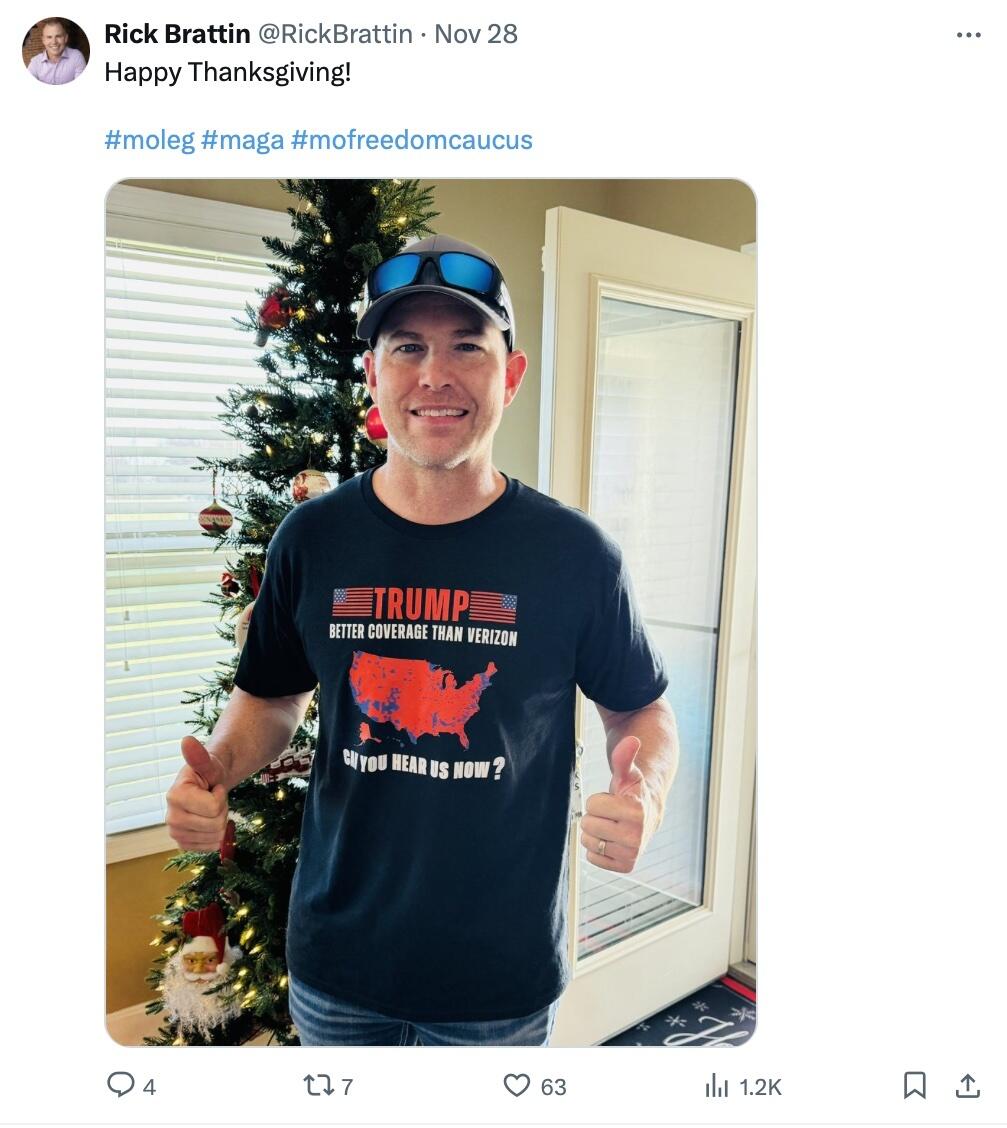
Republican Senator Rick Brattin pre-filed Senate Bill (SB) 194 on Dec. 1. The bill introduces changes to state law that would prohibit public entities from accepting a CBDC or participating in any testing of a CBDC. It also changes the definition of money in the state’s Uniform Commercial Code (UCC) to exclude CBDCs.

In addition to the provisions on CBDCs, the bill would require the state treasurer to keep at least 1% of state funds in gold and silver. It would also exempt the sale or exchange of gold and silver from the state capital gains tax and make gold and silver legal tender:

“The act declares that gold and silver shall be accepted as legal tender at their spot price plus market premium […] in the state of Missouri. Costs incurred in the course of verification of the weight and purity of any gold or silver […] shall be borne by the receiving entity.”

Massive legislative anti-CBDC push

The bill’s provisions on CBDC are similar or identical to those in other bills introduced in Missouri earlier this year.

Source: Rick Brattin

SB 1352 would make numerous changes to the state UCC, including a prohibition on CBDC. It is still in committee. House Bill 2780 would also ban CBDC and affect a variety of commercial transactions. It passed a House vote and has been forwarded to the state Senate.

SB 826 concerned CBDC alone and failed to pass. SB 736 and its companion bill in the state House of Representatives concerned CBDC and gold and silver and failed to pass. Brattin had previously introduced SB 866, which contained substantially identical provisions with differences in wording. It died in committee.

Anti-CBDC legislation is being passed in an increasing number of US states. Louisiana and North Carolina have passed laws to that effect in recent months.

The struggle against CBDC has been taken up on the national level as well. The US House of Representatives passed the CBDC Anti-Surveillance State Act on May 23.

Tyler Durden
Thu, 12/05/2024 – 07:20

via ZeroHedge News https://ift.tt/15ugEN7 Tyler Durden

Chinese Illegal Immigrant Shipped Weapons From California To North Korea: DOJ

Chinese Illegal Immigrant Shipped Weapons From California To North Korea: DOJ

Authored by Ilene Eng via The Epoch Times (emphasis ours),

A Chinese national illegally residing in Southern California was arrested on Dec. 3 for allegedly exporting firearms, ammunition, and other military items to North Korea.

Some of the devices DOJ says Shenghua Wen intended to smuggle to North Korea from Long Beach, Calif. DOJ

According to the U.S. Department of Justice (DOJ), 41-year-old Shenghua Wen and his co-conspirators allegedly sent at least two shipments of the weapons inside shipping containers from Long Beach through Hong Kong to North Korea.

During a series of Mirandized interviews, Wen admitted to exporting firearms and ammunition to North Korea at the direction of the North Korean government,” according to the affidavit filed on Nov. 26.

Wen, who arrived in the United States in 2012, has been living here illegally since overstaying his student visa, and is therefore prohibited from possessing any firearms or ammunition, according to court documents.

Law enforcement searched his home in Ontario, California, on Aug. 14 and seized two devices they say Wen had admitted were to be used militarily by North Korea, “a chemical threat identification device and a hand-held broadband receiver that detects eavesdropping devices.” On Sept. 6, authorities also seized about 50,000 rounds of 9mm ammunition that they alleged Wen intended to send to North Korea.

Authorities conducted the search after reviewing Wen’s iPhone with messages about the smuggling in December 2023. They said the messages revealed conversations between Wen and his co-conspirators about shipping military-grade equipment to North Korea and included photos of the items. Between January and April this year, Wen allegedly sent emails and text messages to a broker in the United States about negotiating a price to obtain a civilian airplane engine.

In an interview on Sept. 6, according to an affidavit, Wen said that before he came to the United States, he met with North Korean officials at two separate North Korean Consulates in China. He said he was instructed to procure the goods on behalf of the North Korean regime and that he was likely selected because he was good at smuggling. Wen said he believed the regime wanted the weapons to prepare for an attack against South Korea.

“He also explained that the North Korean government wanted [him] to obtain military uniforms for the North Korean government, which would subsequently be used by the North Korean military to disguise their soldiers to conduct a surprise attack on South Korea,” the affidavit states.

During the Aug. 14 interview, Wen admitted to shipping two containers of firearms from Long Beach to North Korea in October and December 2023, according to the affidavit. The North Korean regime provided money for the containers and shipping fees and about $2 million to buy firearms and other products.

In a Sept. 11 interview, Wen said he purchased many of the firearms in Texas and drove them to California in three separate trips, according to the affidavit. The North Korean regime also allegedly instructed him to purchase civilian airplane engines for their military drone program.

Wen is charged with conspiracy to violate the International Emergency Economic Powers Act, which carries a statutory maximum penalty of 20 years in federal prison,” according to the DOJ.

The case is currently under investigation.

Wen’s initial appearance is scheduled for the afternoon of Dec. 3, a DOJ spokesperson told The Epoch Times in an emailed statement. He was ordered to go to jail without bond with an arraignment scheduled for Jan. 7, 2025, at 11 a.m.

The Epoch Times reached out to Wen’s attorney for comment and did not hear back by publication time.

Tyler Durden
Thu, 12/05/2024 – 06:55

via ZeroHedge News https://ift.tt/MlDrzde Tyler Durden

Impoundment, For Lack Of A Better Word, Is Good

Impoundment, For Lack Of A Better Word, Is Good

Via the Issues & Insights Editorial Board,

If you’ve never heard the word “impoundment” before, you will – often – next year. And for good reason. Because this battle will determine whether government spending can ever be brought under control.

Last year, President-elect Donald Trump said that “For 200 years under our system of government, it was undisputed that the president had the constitutional power to stop unnecessary spending through what is known as impoundment.”

Since he’s been elected, he’s given every indication that he intends to reclaim this power. Indeed, the success of his “Department of Government Efficiency” run by Elon Musk and Vivek Ramaswamy depends heavily on Trump being able to spend less than Congress appropriates.

This, of course, has the left freaking out. The grumblers say that Trump’s refusing to spend money Congress has authorized would be “unprecedented” and “a devastating power grab” that would “flip the power of the purse” and give Trump “authoritarian control” over the government.

There are just two big problems with these assertions. The first is that presidential impoundment dates back to the very beginnings of the nation. The second is that letting presidents impound funds appears to have been an effective tool for keeping federal spending under control.

Impoundment is just a jargony word for instances where Congress appropriates a certain amount of money for a program in a given year, and the president refuses to spend all of it.

A research paper published by the Center for Renewing America (CRA) provides a long and detailed historical account of impoundment, including its roots in English law and its use by presidents – Democrats and Republicans – throughout the nation’s history.  

Thomas Jefferson impounded funds. So did Madison, Buchanan, and Grant.

Herbert Hoover, the CRA paper notes, “vigorously employed the impoundment power to decrease government spending in the midst of the Great Depression.” FDR “refused to spend more than $500 million in public works funds on policy grounds.” Lyndon Johnson would “withhold appropriations that exceeded the president’s budget.”

Even Trump-hating CNN admits that impoundment “occurred frequently in U.S. history, beginning in 1803 when Thomas Jefferson declined to buy gunboats to patrol the Mississippi as he negotiated the Louisiana Purchase with France.”

While the Constitution forbids the president from spending more money than Congress has appropriated, there’s nothing in the Constitution that forbids the president from spending less.

And lo and behold, the nation survived and thrived for nearly 200 years while the president had this authority.

It wasn’t until 1974 that Congress stripped the president’s ability to impound funds. That year, lawmakers used the Watergate scandal and President Richard Nixon’s aggressive use of impoundment as an excuse to pass the Impoundment Control Act. The law also created the Congressional Budget Office and the budget committees in the House and Senate, and “reasserted Congress’ power of the purse,” according to Democrats on the House Budget Committee.

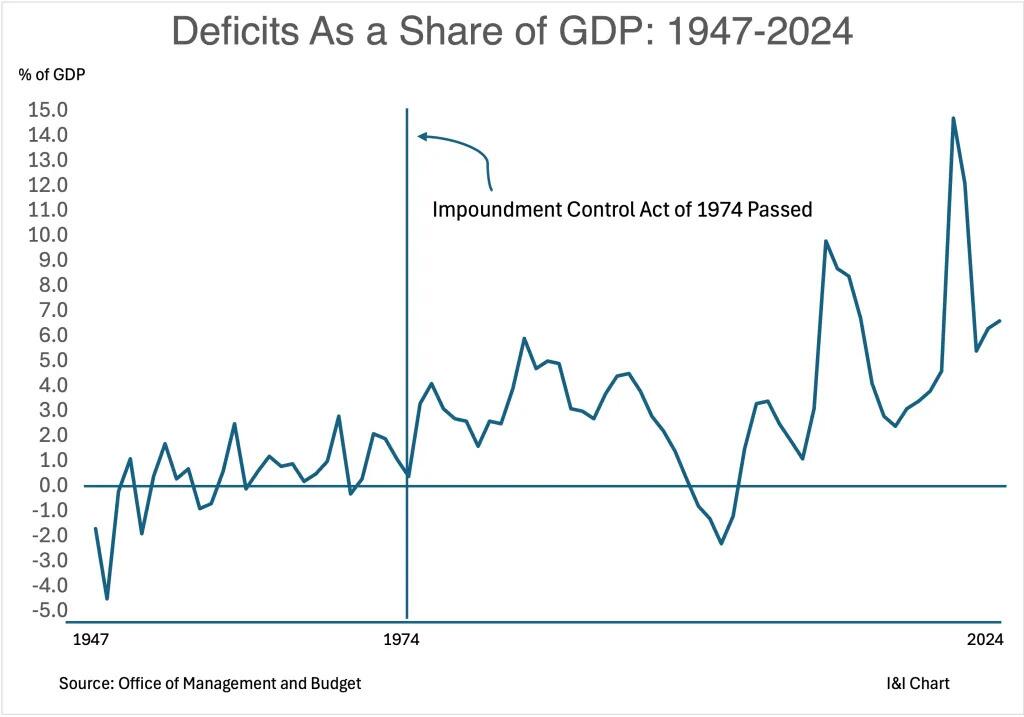
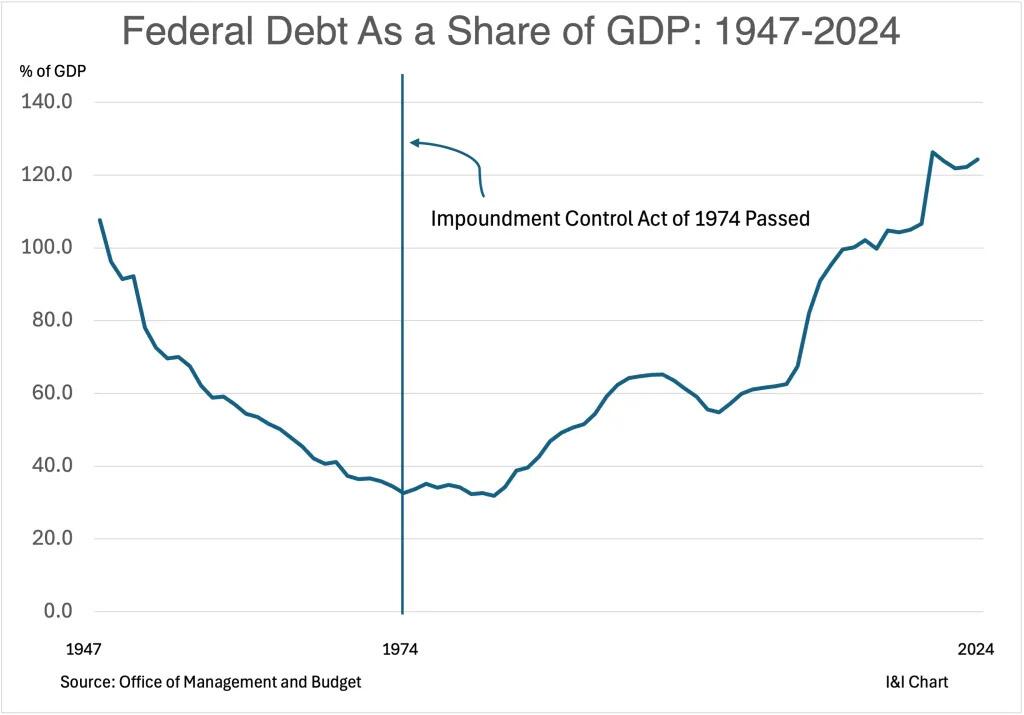
Well, what happened after Congress reasserted its power? Look at the two charts below.

The first shows annual budget deficits as a share of GDP. The second shows the national debt as a share of GDP.

What do you see? In 1974, significant annual deficits became the norm. From 1947 to 1974, the federal deficit averaged 0.4% of GDP. Since 1974, deficits have averaged 3.8% of GDP. They’ve been close to 6% for President Joe Biden’s entire time in office. (Negative numbers in the chart are years when the government ran a surplus.)

The nation’s debt, which had been trending downward as World War II debts were paid off, suddenly stopped declining in 1974. It’s been climbing fairly steadily ever since.

Trump is likely to challenge the Impoundment Control Act as unconstitutional. We hope he does, and that he succeeds, or at the very least forces Congress to fix that law.

Because letting Congress have unlimited authority to set a floor on spending has been a fiscal disaster.

— Written by the I&I Editorial Board

If you like what you see, feel free to visit our Donations Page by clicking here. And be sure to tell your friends!

Tyler Durden
Thu, 12/05/2024 – 06:30

via ZeroHedge News https://ift.tt/U3zCivZ Tyler Durden

Where US Troops Are Based Around The World

Where US Troops Are Based Around The World

It remains unclear what last night’s political upheaval in South Korea will mean for the country and region. Six opposition parties have submitted a motion to impeach President Yoon Suk Yeol after he called for martial law and then rescinded the order. According to the Washington Post, Yoon’s televised announcement came as a surprise to the U.S. administration, with the Pentagon having since declared that it “had nothing to do with events there.”

The U.S. has a heavy military presence in South Korea, including both personnel and weapons. The base is considered tactically important, both from the U.S. side, as it gives the country influence in the region, as well as for Korea, in terms of having a strong deterrence to nuclear-armed North Korea.

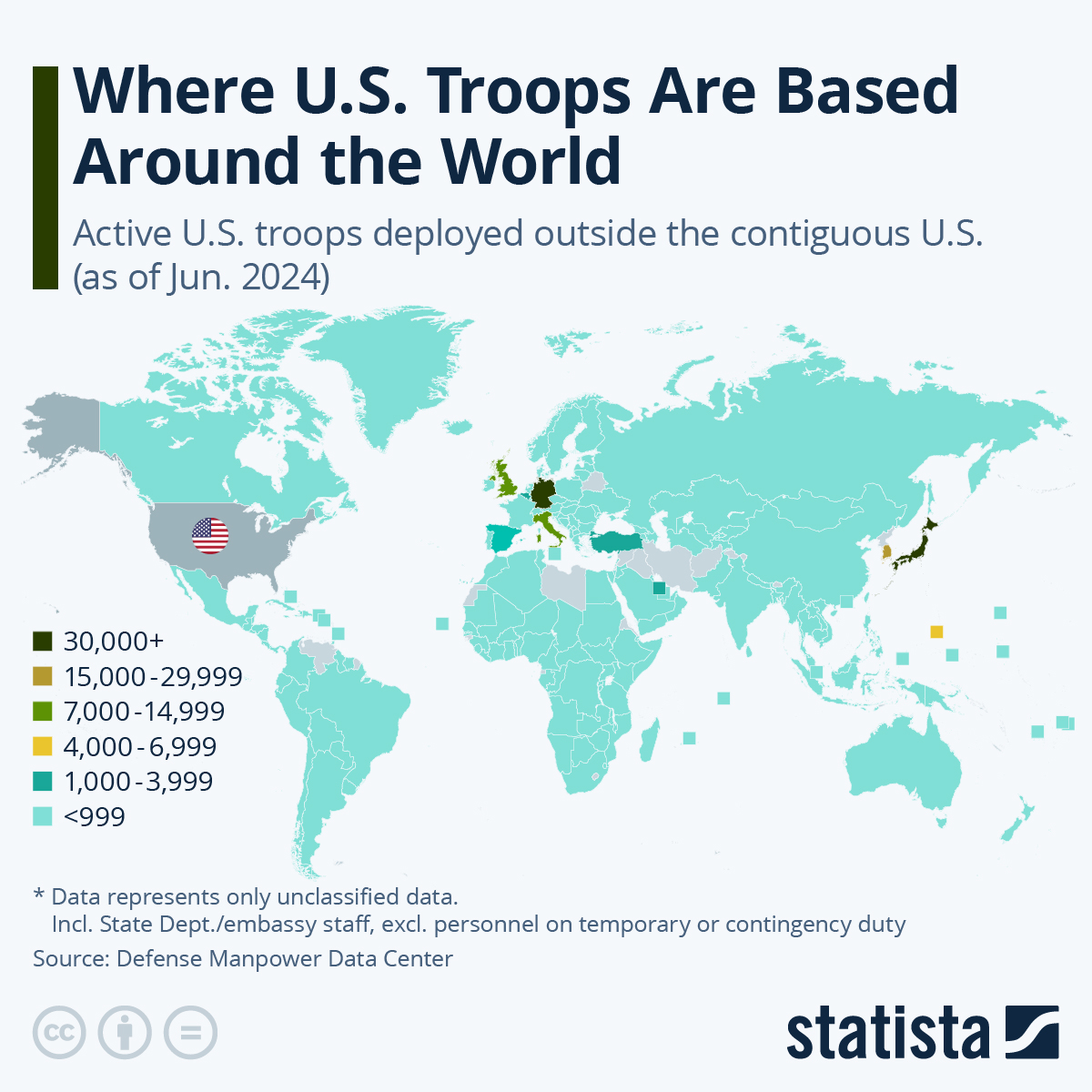
According to data from the Defense Manpower Data Center, South Korea has the third highest number of active U.S. troops deployed of any country outside of the contiguous U.S., at over 23,000 personnel.

It follows only after Japan (52,852) and Germany (34,894). As of June 2024, there are 165,830 active personnel overseas, rising to 1,294,191 active personnel when including those in the U.S.

This latter figure includes the Army, Navy, Marine Corps, Air Force, Space Force and Coast Guard. It also includes personnel who are assigned to the State Department and embassies overseas, while it excludes personnel on temporary duty and those deployed in support of contingency operations.

As Statista’s Anna Fleck shows in the infographic below, when every single country with some kind of U.S military presence is taken into account, nearly every nation on the map needs to be highlighted.

In 140 of the 170 countries marked here though, there are between one and 100 active personnel listed.

Infographic: Where U.S. Troops Are Based Around The World | Statista

You will find more infographics at Statista

According to Global Fire Power, the U.S. has the third largest number of active-duty troops (1.3 million) of any military worldwide in 2024, trailing China (2 million) and India (1.5 million).

Tyler Durden
Thu, 12/05/2024 – 05:45

via ZeroHedge News https://ift.tt/uhbd5xy Tyler Durden

UK Podcaster Faces Prison For Saying “Young White Girls Are Being Raped by These Grooming Gangs”

UK Podcaster Faces Prison For Saying “Young White Girls Are Being Raped by These Grooming Gangs”

Authored by Paul Joseph Watson via Modernity.news,

A podcaster in the UK faces potential prison time after being charged for making “grossly offensive comments” in a YouTube video in which he stated, “Young white girls are being raped by these grooming gangs.”

Yes, really.

Carlisle Crown Court heard that 41-year-old Derek Heggie made the comments in two YouTube videos in early August during the rioting and unrest that took place across numerous cities in the aftermath of the Southport murders.

Heggie had been set to stand trial on a charge under the Malicious Communications Act, but instead “pleaded guilty to sending communication of an offensive nature.”

Prosecutors said Heggie’s comments were “particularly inflammatory” in the context of the riots and he is still being remanded in custody as he awaits sentencing later this month.

While Heggie may have made other comments that were deemed ‘inflammatory’, the only example cited in a BBC News report is him saying, “Young white girls are being raped by these grooming gangs.”

One wonders why the former boxer pled guilty given that this is a statement of fact.

As Sky News previously reported, “In a number of cities across the UK, gangs of predominantly British Pakistani men have been convicted for targeting vulnerable white young women and girls.”

If stating this fact is now a crime, one wonders when they’re going to start locking up journalists and researchers who publish statistics based on independently verifiable crime figures.

A report by the Quilliam Foundation published in 2017 found that, “264 people have been convicted for the specific crime of gang grooming since 2005, and of those offenders 222 or 84% were Asian.”

I guess we had better lock them up too.

Heggie’s treatment is another reminder of how people in the UK are being charged and thrown in prison for what amounts to thought crime.

As we previously highlighted, a 40-year-old man was arrested and sentenced to three years in prison for social media posts that contained “anti-establishment rhetoric.”

A 61-year-old man was also jailed for 18 months for chanting “who the fuck is Allah” and telling police officers “you’re not English anymore” during a protest outside Downing Street.

*  *  *

Your support is crucial in helping us defeat mass censorship. Please consider donating via Locals or check out our unique merch. Follow us on X @ModernityNews.

Tyler Durden
Thu, 12/05/2024 – 05:00

via ZeroHedge News https://ift.tt/UPW5uCO Tyler Durden

Visualizing The Growth Of The Weight-Loss-Drug Market

Visualizing The Growth Of The Weight-Loss-Drug Market

Think everyone and their cousin is already on Ozempic? And surely everyone can stop talking about it now?

Think again.

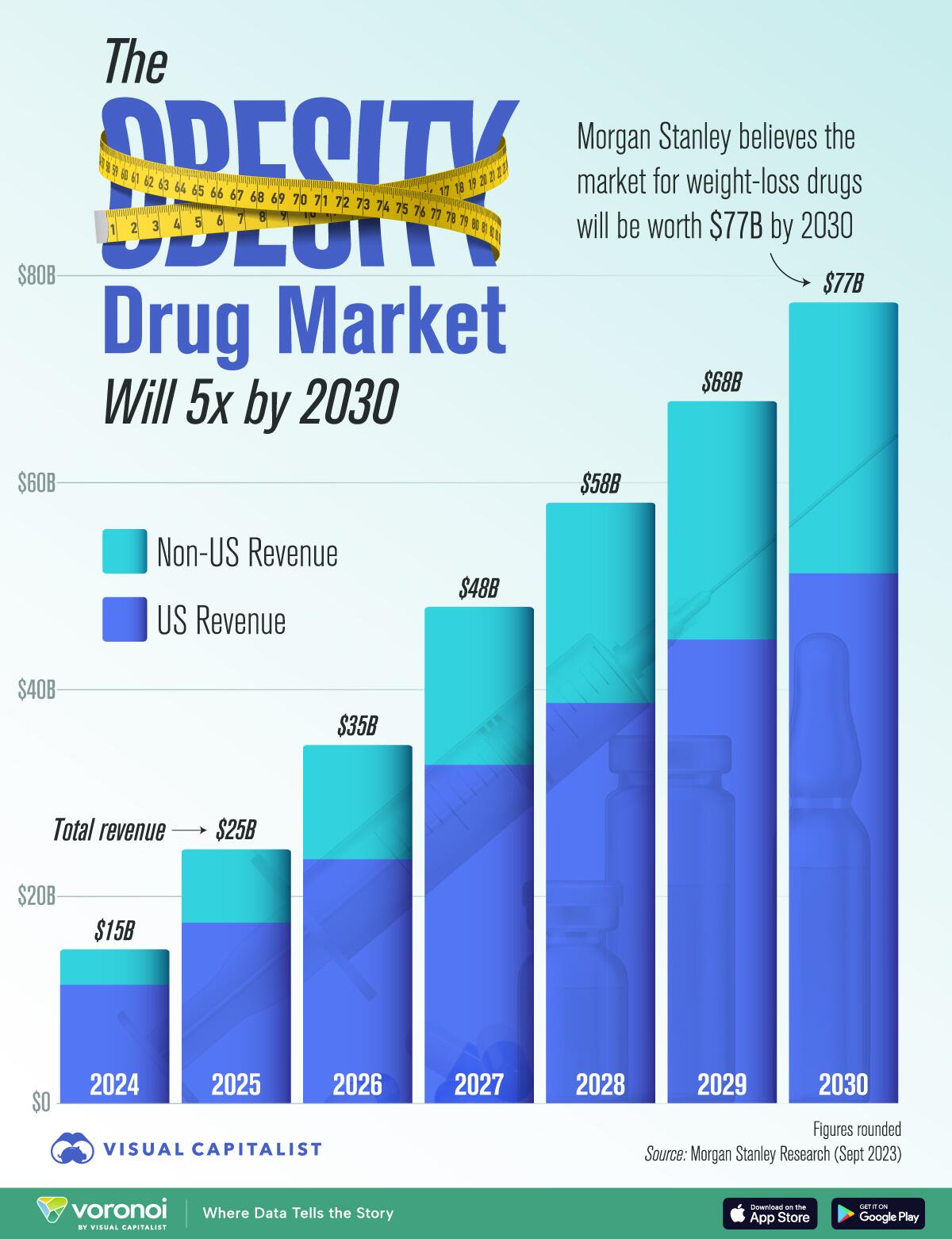
The weight-loss drug market still has a lot of room to grow, according to latest estimates by Morgan Stanley Research.

Visual Capitalits’s Marcus Lu visualizes their forecasted value of the global obesity drug market till 2030 and go into a few reasons to explain why it’s trending upwards.

A Tide of Weight Management Drugs Are Coming

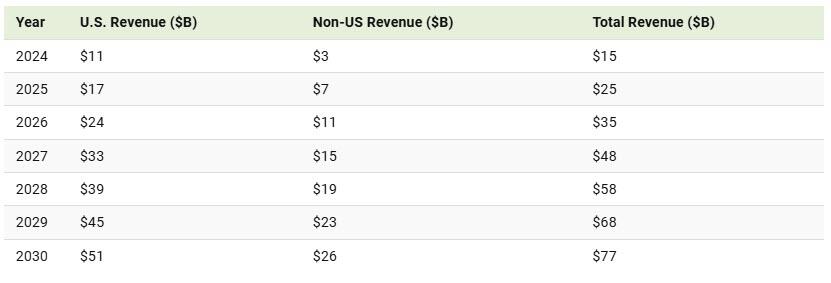
Morgan Stanley expects the weight-loss drug market to be worth $77 billion by 2030, more than 5x what it is in 2024.

A key part of this is the broadening utility of these medicines. After all, semaglutide, the key ingredient in drugs like Ozempic, WeGovy and Rybelsus was initially developed for diabetes management.

Its appetite suppressant abilities put it on the weight-loss market. But weight management also lowers the risk of heart attacks and strokes, it could be prescribed for many related issues.

Meanwhile, viral social media promotion of before-and-after results creates a feedback loop, in turn increasing demand. And finally in the U.S., there is a concerted push to expand coverage for these drugs which can cost upwards of $900 a dose without insurance.

In fact, Morgan Stanley estimates that the current market value is restrained by supply, and as new players enter and regulations change, it will be able to grow to keep pace with demand.

The majority of obesity management drug revenue comes from the U.S., though its share of the global total is expected to decrease throughout this decade to 66% in 2030.

Currently the WHO estimates obesity causes 5% of deaths every year, and afflicts close to 750 million people, or about 9% of the world’s population.

Wondering why American demand for obesity drugs is so high? Check out Mapped: Countries with the Highest Obesity Rates to find out.

Tyler Durden
Thu, 12/05/2024 – 04:15

via ZeroHedge News https://ift.tt/vwcIG3U Tyler Durden

A Tale Of Two Countries

A Tale Of Two Countries

Authored by Eldar Vakhitov via BondVigilantes.com,

A few days ago, Bulgaria finally reached an agreement with Austria, removing the last hurdle that blocked its entry to the Schengen area. The EU council is now expected to approve the country joining the passport-free travel area in early December. This clearly represents a milestone in Bulgaria’s integration process into the EU and should help cross-border trade and investment. Meanwhile, a much more impactful achievement for the country’s economy – joining the euro area – remains elusive at the moment.

Back in July 2020, Bulgaria and Croatia joined the ERM II mechanism, marking an important formal step towards euro adoption. Since then, the seemingly similar economic fates of the two countries have diverged significantly.

In Croatia, the authorities were determined to join the euro area as soon as possible. After the minimum required two-year period in the ERM II mechanism, the European Commission assessed in its June 2022 convergence report that Croatia fulfilled all the required criteria, allowing the country to adopt the euro in January 2023. At the same time, Croatia also joined the Schengen area. Somewhat surprisingly, political stability proved to be the crucial element in the process. The Croatian Democratic Union has ruled the country since 2016, winning three consecutive parliamentary elections, with prime minister Plenkovic becoming the longest-serving prime minister in Croatia’s history. This stability allowed the authorities to consistently push through the necessary legislation and ensure continuous cooperation with the EU institutions.

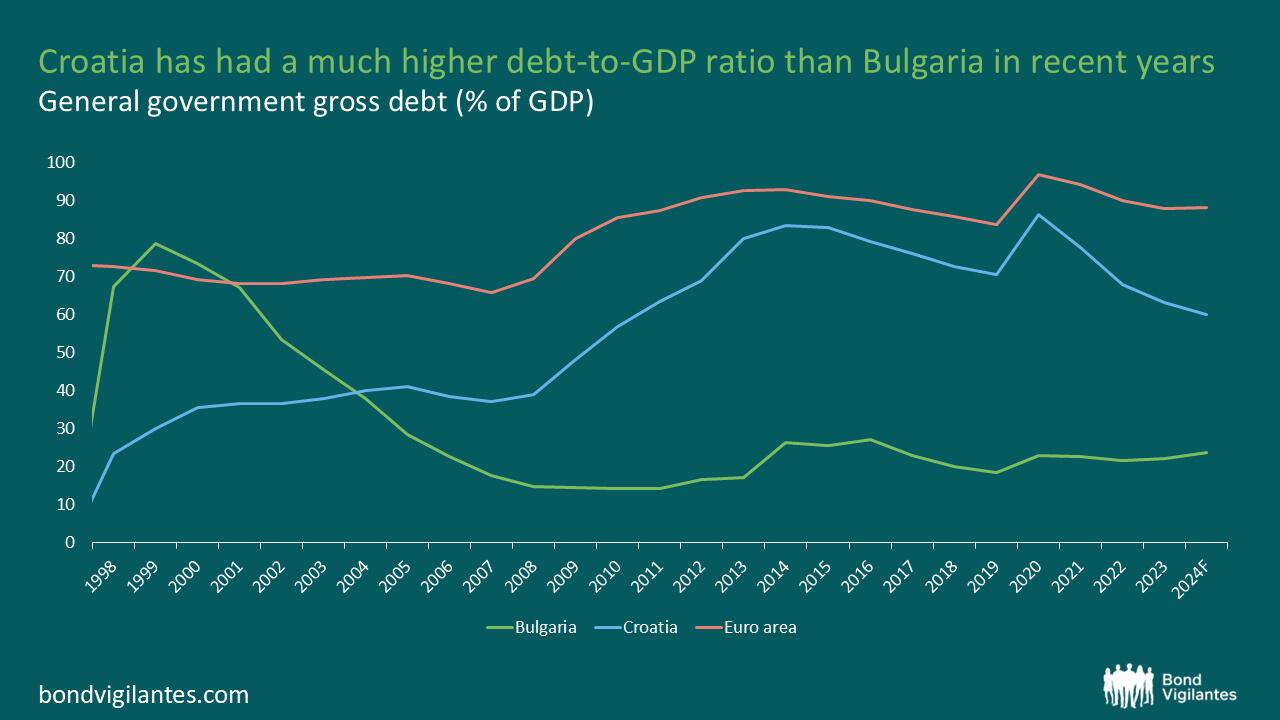
Consequently, the European Commission and the European Central Bank (ECB) were ready to somewhat soften their usually firm stance with regards to meeting the stringent requirements for euro adoption. In particular, the inflation criterion was deemed to be met despite the fact that Croatia’s inflation was likely to exceed the reference rate due to the global commodity price shock in 2022. Furthermore, the sizeable decline in public debt was deemed sufficient to outweigh the fact that it still significantly exceeded the 60% of GDP threshold at the time of the European Commission’s assessment. In the end, the EU institutions had full confidence that Croatia would meet the criteria anyway due to the government’s unwavering commitment to solid policies, so delaying euro adoption was not deemed necessary. And Croatia did deliver – current inflation is roughly equal to the euro area’s average, while public debt is expected to finally decline below 60% of GDP this year.

Source: IMF, M&G (December 2024)

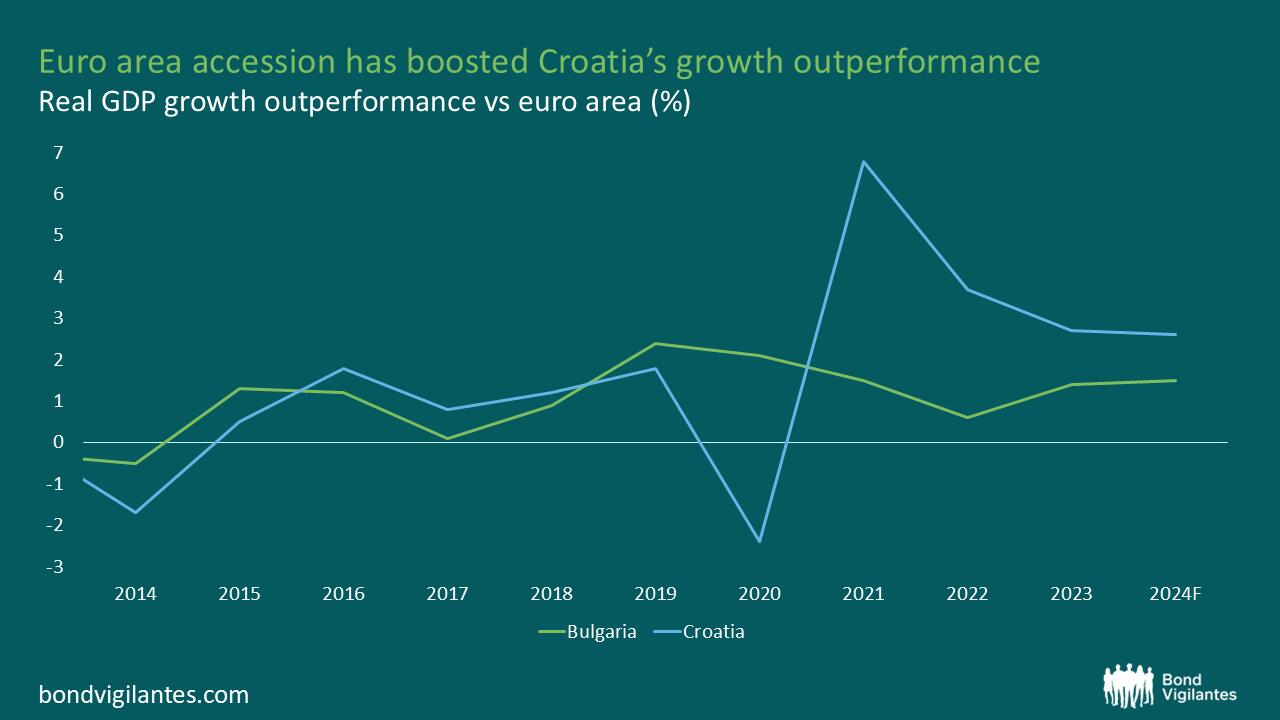
Almost two years later, it is clear that adopting the euro has delivered significant benefits to Croatia. To start with, it has eliminated the foreign exchange risk in the economy, as significant euro-denominated government and private sector liabilities were ‘converted’ to local currency overnight. Euro adoption has also boosted trade, investment, and particularly tourism, which represents at least 20% of Croatia’s GDP. Since Croatia joined the EU in 2013, its real GDP growth was only slightly outperforming the euro area average. However, in the last three years, the outperformance has widened to 3 percentage points. This has allowed the country to accelerate its income convergence with more advanced euro area peers. Croatia’s GDP per capita (PPP) is expected to reach 78% of EU’s average this year, up from 71% in 2021.

Most importantly, euro area adoption has greatly reduced Croatia’s cost of financing. The speed of the country’s credit rating upgrades has been quite remarkable, perhaps even unprecedented in recent history – less than three years ago, Croatia wasn’t even a full investment grade-rated country with a Ba1 rating from Moody’s. Meanwhile, this autumn’s upgrades allowed the country to join an elite club of about a dozen other emerging market economies that are A-rated by all three main rating agencies. In line with this, the spread of Croatian government bonds over German government bonds has tightened from about 150bp in late 2021 to about 70-80bp now.

Croatia’s success story only highlights Bulgaria’s lack of progress in the past few years. As a reminder, both countries joined the ERM II mechanism at the same time, making January 2023 the earliest possible date for euro adoption for Bulgaria as well. Almost two years later, there is still no scheduled date for this to happen. The delay looks even longer considering the fact that Bulgaria joined the EU in 2007 – if it had managed to match Croatia’s speed of progress, it could have adopted the euro back in 2017.

Source: IMF, M&G (December 2024)

At first glance, the lack of progress looks even more surprising given that Bulgaria has never had a problem with meeting the (arguably most important) fiscal criteria for joining the euro area. In the past decade, budget deficits were consistently around 3% of GDP or below, even in 2020 when for most countries they skyrocketed due to the COVID pandemic. Due to robust budget policies Bulgaria has enjoyed one of the lowest public debt levels in Europe – during the past twenty years, it has never exceeded 30% of GDP. This is in stark contrast with Croatia’s somewhat volatile public debt path, which peaked at 86% of GDP in 2020. On the monetary policy front, Bulgaria has had a fixed exchange to the euro (and previously Deutsche Mark) since 1997, meaning it could have potentially joined the ERM II mechanism much earlier than 2020. Inflation has not been a problem either, staying below 3% (annual average) in the past decade apart from the 2022-23 global commodity price shock.

With economic criteria comfortably met, the reasons for long delays to the euro adoption lie in political and governance issues. According to the Worldwide Governance Indicators, Bulgaria has consistently scored well below Croatia (and most other EU members) in the past decade. In fact, its score notably deteriorated since 2019 due to weaker government effectiveness, regulatory quality and political stability. Since 2021, the country has been subject to a multi-year election cycle, with seven parliamentary elections happening in less than four years. The reason is that none of the elections has been able to produce a stable government due to a high degree of political polarisation, with coalitions between different parties proving to be short-lived. Needless to say, passing the necessary legislation required for the euro adoption and improving the country’s institutions has been slow in such circumstances. The latest election in October has so far failed to break the negative trend, with the largest party winning less than 30% of parliamentary seats and other parties not willing to cooperate with it or each other. This has already raised the likelihood of yet another election next spring.

Source: Bloomberg, M&G (December 2024)

According to the European Commission’s June convergence report, Bulgaria has met all euro adoption criteria except for inflation. However, inflation was temporarily high only due to a global commodity price shock and has in fact already declined below the euro area average in recent months (the European Commission’s assessment takes into account the average inflation in the past year). As Croatia’s example shows, perhaps the inflation criterion could have been softened by the EU institutions – if there had been a stable government to negotiate with. Unsurprisingly, the delay in euro adoption has been costly for the Bulgarian economy, which has witnessed lower real GDP growth and slower income convergence with the EU compared to Croatia.

Back in 2020, Bulgaria was rated higher than Croatia by all three main rating agencies – now it is rated one to two notches lower, having not seen any upgrades since 2020. The most vivid illustration is the relative yields of the two countries – in late 2021, Bulgaria was trading about 60bp tighter than Croatia; now it is trading 20bp wider. A January 2026 euro adoption target is still within reach for Bulgaria, but for that to be achieved, the political parties perhaps need to put their country’s interests first.

Tyler Durden
Thu, 12/05/2024 – 03:30

via ZeroHedge News https://ift.tt/Ji71YQv Tyler Durden

What Is A Healthy Life Expectancy After Retirement In Europe?

What Is A Healthy Life Expectancy After Retirement In Europe?

How many years can we expect to enjoy our retirement in good health?

According to calculations by Statista’s Anna Fleck, Europeans could expect to have around 12 healthy years after their retirement, as of 2022 (EU-27: 11.7 years), with the average effective age of exit from the labour market 63. 

Infographic: What Is the Healthy Life Expectancy After Retirement? | Statista

You will find more infographics at Statista

Pensioners living in Norway, Slovenia and Luxembourg are estimated to have 15 to 16 healthy years after retirement, while the Maltese, Belgians, French and Swedes were also above the European average (14 to 15 years).

Indicators such as the average exit age from the labor market also influence the number of expected “good years” after retirement. For example, Luxembourg and Slovenia have the lowest effective average exit age from the labour market (around 60).

Those living in the Baltic States, Portugal and Romania are at the other end of the spectrum, with a healthy life expectancy of less than 10 years.

It drops to under seven years in Estonia and five years in Romania. These national averages are the result of a combination of a late average retirement age (65 or over) and poor health indicators within the population.

It is important to note that these are averages across countries, and that durations vary according to occupational categories and standards of living.

Tyler Durden
Thu, 12/05/2024 – 02:45

via ZeroHedge News https://ift.tt/rOzM2x5 Tyler Durden

Here’s Why Georgia Chose Russia Over The EU

Here’s Why Georgia Chose Russia Over The EU

Via Remix News,

Bordered by Russia to the north and Turkey, Armenia and Azerbaijan to the south, Georgia is taking a sharp turn towards Russia. The government suspended talks on accession to the European Union after the European Parliament resolution on Georgian election fraud. Georgians took to the streets and fierce protests are ongoing; however, looking at the results of the Georgian economy, many things become clear.

The Georgian Dream party has been ruling Georgia almost independently since 2016, although it has been involved in government since 2012, but then as part of a coalition. It is now facing strong unrest in the country after elections that have been allegedly rigged, at least according to the European Parliament. In response, the Georgian government has suspended the accession process to the European Union for four years 

The sixth-highest economic growth in the world

Looking at the economic results, it must be admitted that during the Georgian Dream government, the country developed economically at a very high rate, one of the highest in the world. This year, according to the IMF’s October forecasts, it will see 7.6 percent GDP growth, which is the sixth-highest growth in the world. In 2023, only 11 countries developed faster than Georgia, including Georgia’s neighbor Armenia.

Since 2016, Georgia has moved from 95th to 75th place in the world in terms of national income per capita, calculated according to purchasing power parity (PPP). Poland is in 42nd place in this ranking.

While in 2016 GDP per capita according to PPP in Georgia amounted to 46 percent of that in Poland, this year it is to be 53 percent. Georgia is quickly catching up with us, although Poland is one of the fastest developing countries in the European Union.

Compared to Russia, this is a jump from 51 to 58 percent, and IMF forecasts say that next year it will exceed 60 percent. The level of Chinese GDP per capita was exceeded by Georgia in 2022, and this year Georgians are expected to exceed 104 percent. With Georgians able to boast about faster development than China, it is certainly a reason for satisfaction among the Georgian population

Their standard of living is improving quite rapidly, but what is driving this improvement? The economy is a good explanation for why the Georgian government chose Russia over the West.

Tourism and new technologies

The fastest growing sector in Georgia is the information and communications sector, which has grown by 260 percent since 2016 in current prices and accounted for 4.1 percent of GDP last year. This year, it grew by 19.8 percent in the second quarter. The growth of this sector in the Georgian economy was clearly helped by emigration from Russia immediately after the outbreak of the full-scale war between Russia and Ukraine. In 2022, the first year of the conflict, the dynamics of this sector amounted to almost 64 percent.

The entertainment and leisure sector, i.e., tourism, is also developing rapidly, with gross income increasing by 176 percent in current prices since 2016; this year it grew by 17.3 percent year-over-year and currently generates 3.5 percent of GDP.

The trade sector is also very dynamic, with a 157 percent increase since 2016 and 8.1 percent this year, which is 12.4 percent of GDP. This is related to the development of tourism and the increase in the wealth of society.

The most important segment in Georgian GDP is still industry, which has grown by 106 percent since 2016, and in the second quarter of this year by 15.9 percent y/y in current prices. It currently accounts for 15.9 percent of GDP.

Based on this data, from the economic perspective, it is industry and its export capabilities that are another reason for the Georgian government to shift its emphasis from the EU to Russia.

Collapse of exports to the EU

With the Covid-19 break in 2020, Georgia’s exports in dollars have been growing steadily. In 2022, they will grow by 31.6 percent y/y to $5.6 billion, and last year they will reach $6.1 billion (+9 percent y/y). However, the growth rate has fallen this year to +5.3 percent y/y, for the 12 months ending in October.

And it fell as a result of the collapse in exports to the EU market, while exports to Russia, despite the weakness of the ruble, grew in dollar terms in 2023 by another 2.3 percent to $657 million. Meanwhile, those to EU countries fell by as much as 18.3 percent to $704 million. In 2024, it looks even worse, with exports to the EU falling by as much as 27.7 percent y/y to $549 million in the 12 months ending in October, while exports to Russia, although they also fell, decreased by only 0.3 percent to $678 million.

Russia has become a more important market for Georgia than the EU, and a place where Russian tourists spend their money. The economic choice for Georgia is quite obvious at the moment.

Even neighboring countries are now larger recipients of Georgian goods than the EU: Azerbaijan ($759 million for the 12 months to October) and Armenia ($641 million). Georgia exports slightly less to Turkey ($475 million). The country’s economic interests are closely linked to the nearby geographical region, not the more distant EU.

Not wine, but KAZ trucks

At the same time, Georgia’s most important export is not the famous Georgian wines, but transport equipment. Its foreign sales increased since 2016 from $151 million per year to $872 million in 2023. What’s more, counting the 12 months to the end of October 2024, it is already as much as $2.5 billion, or as much as 36.4 percent of Georgian exports — according to data from the Georgian Statistical Office.

Of this, as much as $974 million went to Kyrgyzstan this year, and €625 million to Kazakhstan. The surge in exports of transport equipment to these two countries has occurred since 2022, and it is hard not to link this to Russia’s aggression against Ukraine.

In 2021, exports of transport equipment from Georgia to Kazakhstan amounted to $24 million, a year later to $108 million, and this year to October to $625 million. 

To Kyrgyzstan, exports of transport equipment amounted to $2.2 million in 2021, $5.8 million a year later, $66.2 million in 2023, and $127 million in the first 10 months of 2024. It seems that the Georgian economy has been harnessed into Russia’s war machine, and it is benefiting from it.

The largest transport equipment company in Georgia is the Kutaisi-based KAZ truck manufacturer, part of the Georgian Industrial Group holding. This company was founded and is currently headed by David Bezhuashvili (30 percent of shares), a Georgian parliamentarian until 2016, whose brother Gela was even the country’s foreign minister.

Georgian wine is bought by Russians and Poles

When it comes to wine, Russia is also the largest recipient. In the 10 months of this year, out of the $237 million of wine exports, Russians bought $161 million. Interestingly, Poland is the second-largest recipient, but this means imports amounting to only $13 million.

As can be seen from the above, Georgia’s economy benefits from contacts with Russia. Economic links with the European Union are much smaller. At the same time, the data suggests that Georgia is making money from the war in Ukraine, fueling one of the highest economic growth rates in the world. A possible redirection of economic preferences could probably only occur after Turkey’s admission to the EU, which does not seem to be the case in the coming years.

Read more here….

Tyler Durden
Thu, 12/05/2024 – 02:00

via ZeroHedge News https://ift.tt/fPq6IzG Tyler Durden

You’d Better Watch Out: The Surveillance State Is Making A List, And You’re On It

You’d Better Watch Out: The Surveillance State Is Making A List, And You’re On It

Authored by John & Nisha Whitehead via The Rutherford Institute,

“He sees you when you’re sleeping

He knows when you’re awake

He knows when you’ve been bad or good

So be good for goodness’ sake!”

—“Santa Claus Is Coming to Town”

You’d better watch out—you’d better not pout—you’d better not cry—‘cos I’m telling you why: this Christmas, it’s the Surveillance State that’s making a list and checking it twice, and it won’t matter whether you’ve been bad or good.

You’ll be on this list whether you like it or not.

Mass surveillance is the Deep State’s version of a “gift” that keeps on giving…back to the Deep State.

Geofencing dragnets. Fusion centers. Smart devices. Behavioral threat assessments. Terror watch lists. Facial recognition. Snitch tip lines. Biometric scanners. Pre-crime. DNA databases. Data mining. Precognitive technology. Drones. Contact tracing apps. License plate readers. Social media vettingSurveillance towers.

What these add up to is a world in which, on any given day, the average person is now monitored, surveilled, spied on and tracked in more than 20 different ways by both government and corporate eyes and ears.

Big Tech wedded to Big Government has become Big Brother.

Every second of every day, the American people are being spied on by a vast network of digital Peeping Toms, electronic eavesdroppers and robotic snoops.

This creepy new era of government/corporate spying—in which we’re being listened to, watched, tracked, followed, mapped, bought, sold and targeted—has been made possible by a global army of techno-tyrants, fusion centers and Peeping Toms.

Consider just a small sampling of the tools being used to track our movements, monitor our spending, and sniff out all the ways in which our thoughts, actions and social circles might land us on the government’s naughty list, whether or not you’ve done anything wrong.

Tracking you based on your phone and movements: Cell phones have become de facto snitches, offering up a steady stream of digital location data on users’ movements and travels. For instance, the FBI was able to use geofence data to identify more than 5,000 mobile devices (and their owners) in a 4-acre area around the Capitol on January 6. This latest surveillance tactic could land you in jail for being in the “wrong place and time.” Police are also using cell-site simulators to carry out mass surveillance of protests without the need for a warrant. Moreover, federal agents can now employ a number of hacking methods in order to gain access to your computer activities and “see” whatever you’re seeing on your monitor. Malicious hacking software can also be used to remotely activate cameras and microphones, offering another means of glimpsing into the personal business of a target.

Tracking you based on your DNA. DNA technology in the hands of government officials completes our transition to a Surveillance State. If you have the misfortune to leave your DNA traces anywhere a crime has been committed, you’ve already got a file somewhere in some state or federal database—albeit it may be a file without a name. By accessing your DNA, the government will soon know everything else about you that they don’t already know: your family chart, your ancestry, what you look like, your health history, your inclination to follow orders or chart your own course, etc. After all, a DNA print reveals everything about “who we are, where we come from, and who we will be.” It can also be used to predict the physical appearance of potential suspects. It’s only a matter of time before the police state’s pursuit of criminals expands into genetic profiling and a preemptive hunt for criminals of the future.

Tracking you based on your face: Facial recognition software aims to create a society in which every individual who steps out into public is tracked and recorded as they go about their daily business. Coupled with surveillance cameras that blanket the country, facial recognition technology allows the government and its corporate partners to identify and track someone’s movements in real-time. One particularly controversial software program created by Clearview AI has been used by police, the FBI and the Department of Homeland Security to collect photos on social media sites for inclusion in a massive facial recognition database. Similarly, biometric software, which relies on one’s unique identifiers (fingerprints, irises, voice prints), is becoming the standard for navigating security lines, as well as bypassing digital locks and gaining access to phones, computers, office buildings, etc. In fact, greater numbers of travelers are opting into programs that rely on their biometrics in order to avoid long waits at airport security. Scientists are also developing lasers that can identify and surveil individuals based on their heartbeats, scent and microbiome.

Tracking you based on your behavior: Rapid advances in behavioral surveillance are not only making it possible for individuals to be monitored and tracked based on their patterns of movement or behavior, including gait recognition (the way one walks), but have given rise to whole industries that revolve around predicting one’s behavior based on data and surveillance patterns and are also shaping the behaviors of whole populations. One smart “anti-riot” surveillance system purports to predict mass riots and unauthorized public events by using artificial intelligence to analyze social media, news sources, surveillance video feeds and public transportation data.

Tracking you based on your spending and consumer activities: With every smartphone we buy, every GPS device we install, every X/Twitter, Facebook, and Google account we open, every frequent buyer card we use for purchases—whether at the grocer’s, the yogurt shop, the airlines or the department store—and every credit and debit card we use to pay for our transactions, we’re helping Corporate America build a dossier for its government counterparts on who we know, what we think, how we spend our money, and how we spend our time. Consumer surveillance, by which your activities and data in the physical and online realms are tracked and shared with advertisers, has become big business, a $300 billion industry that routinely harvests your data for profit. Corporations such as Target have not only been tracking and assessing the behavior of their customers, particularly their purchasing patterns, for years, but the retailer has also funded major surveillance in cities across the country and developed behavioral surveillance algorithms that can determine whether someone’s mannerisms might fit the profile of a thief.

Tracking you based on your public activities: Private corporations in conjunction with police agencies throughout the country have created a web of surveillance that encompasses all major cities in order to monitor large groups of people seamlessly, as in the case of protests and rallies. They are also engaging in extensive online surveillance, looking for any hints of “large public events, social unrest, gang communications, and criminally predicated individuals.” Defense contractors have been at the forefront of this lucrative market. Fusion centers, $330 million-a-year, information-sharing hubs for federal, state and law enforcement agencies, monitor and report such “suspicious” behavior as people buying pallets of bottled water, photographing government buildings, and applying for a pilot’s license as “suspicious activity.”

Tracking you based on your social media activities: Every move you make, especially on social media, is monitored, mined for data, crunched, and tabulated in order to form a picture of who you are, what makes you tick, and how best to control you when and if it becomes necessary to bring you in line. As The Intercept reported, the FBI, CIA, NSA and other government agencies are increasingly investing in and relying on corporate surveillance technologies that can mine constitutionally protected speech on social media platforms such as Facebook, Twitter and Instagram in order to identify potential extremists and predict who might engage in future acts of anti-government behavior. This obsession with social media as a form of surveillance will have some frightening consequences in coming years. As Helen A.S. Popkin, writing for NBC News, observed, “We may very well face a future where algorithms bust people en masse for referencing illegal ‘Game of Thrones’ downloads… the new software has the potential to roll, Terminator-style, targeting every social media user with a shameful confession or questionable sense of humor.”

Tracking you based on your social network: Not content to merely spy on individuals through their online activity, government agencies are now using surveillance technology to track one’s social network, the people you might connect with by phone, text message, email or through social message, in order to ferret out possible criminals. An FBI document obtained by Rolling Stone speaks to the ease with which agents are able to access address book data from Facebook’s WhatsApp and Apple’s iMessage services from the accounts of targeted individuals and individuals not under investigation who might have a targeted individual within their network. What this creates is a “guilt by association” society in which we are all as guilty as the most culpable person in our address book.

Tracking you based on your car: License plate readers are mass surveillance tools that can photograph over 1,800 license tag numbers per minute, take a picture of every passing license tag number and store the tag number and the date, time, and location of the picture in a searchable database, then share the data with law enforcement, fusion centers and private companies to track the movements of persons in their cars. With tens of thousands of these license plate readers now in operation throughout the country, affixed to overpasses, cop cars and throughout business sectors and residential neighborhoods, it allows police to track vehicles and run the plates through law enforcement databases for abducted children, stolen cars, missing people and wanted fugitives. Of course, the technology is not infallible: there have been numerous incidents in which police have mistakenly relied on license plate data to capture out suspects only to end up detaining innocent people at gunpoint.

Tracking you based on your mail: Just about every branch of the government—from the Postal Service to the Treasury Department and every agency in between—now has its own surveillance sector, authorized to spy on the American people. For instance, the U.S. Postal Service, which has been photographing the exterior of every piece of paper mail for the past 20 years, is also spying on Americans’ texts, emails and social media posts. Headed up by the Postal Service’s law enforcement division, the Internet Covert Operations Program (iCOP) is reportedly using facial recognition technology, combined with fake online identities, to ferret out potential troublemakers with “inflammatory” posts. The agency claims the online surveillance, which falls outside its conventional job scope of processing and delivering paper mail, is necessary to help postal workers avoid “potentially volatile situations.”

Now the government wants us to believe that we have nothing to fear from these mass spying programs as long as we’ve done nothing wrong.

Don’t believe it.

The government’s definition of a “bad” guy is extraordinarily broad, and it results in the warrantless surveillance of innocent, law-abiding Americans on a staggering scale.

As I make clear in my book Battlefield America: The War on the American People and in its fictional counterpart The Erik Blair Diaries, surveillance, digital stalking and the data mining of the American people—weapons of compliance and control in the government’s hands—haven’t made America any safer. And they certainly aren’t helping to preserve our freedoms.

Indeed, America will never be safe as long as the U.S. government is allowed to shred the Constitution.

Tyler Durden
Wed, 12/04/2024 – 23:25

via ZeroHedge News https://ift.tt/aJPlIUV Tyler Durden