Pakistan: Slow Motion Train Wreck

Pakistan: Slow Motion Train Wreck

Authored by Eric Margolis via EricMargolis.com,

Pakistan is the world’s most important Muslim nation. It has 251 million people, nuclear weapons, the world’s sixth largest armed forces, intelligent, capable people, vast lands and major sources of water.

Yet Pakistan is a giant mess. Its current politics are a form of tribal warfare. Corruption engulfs almost everything. Disease, particularly diabetes, afflicts its long-suffering people. Polio is making return.

In recent years, Pakistan has suffered vast floods that have ravaged this nation. Equally menacing, next-door India remains an ever-present danger. Far-right Hindu extremists who are heavily represented in the current Modi government, keep talking about ‘reabsorbing’ Pakistan into ‘Mother India.’ This would have happened long ago except for Pakistan’s important nuclear arsenal and delivery systems.
Via Reuters

India has also built an extensive nuclear arsenal, including three new submarines armed with intermediate-ranged nuclear missiles. This while people in India and Pakistan starve in the streets. And 60% of homes in India lack indoor plumbing.

The only institution in Pakistan that really works well is the armed forces. I have met many of its generals: most of them are intelligent, combat-ready officers. I knew Gen. Akhtar Abdur Rahman Khan, the ferocious chief of ISI intelligence service who led the anti-Soviet war in Afghanistan. He was murdered with the tough tank general Zia ul Haq who ruled Pakistan until his aircraft was sabotaged in 1988. Zia was a great Islamic warrior and man of steel. Many Pakistanis still believe he was assassinated by the US though there is no direct evidence.

I was friends with the late Benazir Bhutto, a fascinating and alluring woman who was murdered in 2007. I interviewed Gen. Pervez Musharraf in 1999, a man who seemed insignificant compared to Gen. Zia.

Benazir Bhutto, whose father Zulfikar was ordered hanged by Zia, used to tease me, ‘oh Eric, you love your Pakistani generals.’ I did. Most were fierce Pashtuns from the NW Frontier, born warriors. They first defeated the Soviet Union, then the mighty USA.

I also took to some of the Indian generals that I met. They and their Pakistani counterparts had none of the slipperiness and deceit of most politicians.

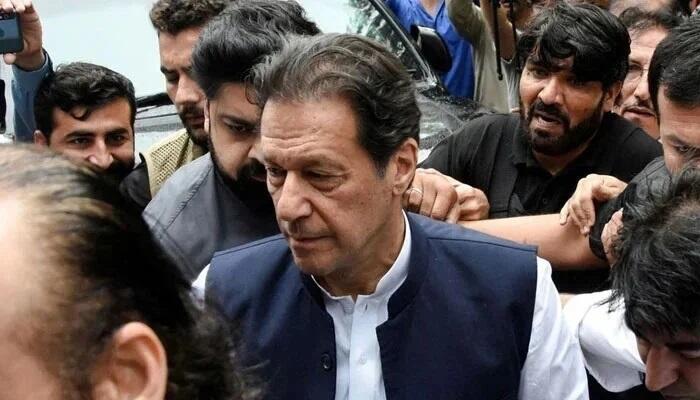
This brings me to the jailed, 51-year-old former cricket star, Imran Khan, Pakistan’s most popular political figure. Khan was jailed on fake charges over receiving gifts, when the ruling oligarchy feared Khan would win a landslide in elections. His wife was also thrown into prison.

Imran Khan’s chief enemies were the Sharif brothers, Shebhaz and Nawaz. Both were rich Punjabi industrialists often accused of egregious corruption. I came out of war-torn Afghanistan to interview Nawaz. He left me unimpressed, particularly after the time I spent with the fiery General Zia.

The United States and Britain, vocal champions of democracy, had nothing to say about the illegal imprisonment of Pakistan’s most popular democratic politician. It was clear they were supporting the Sharif brothers who were more amenable to America’s wishes and anti-Islamic policies. Pakistan’s influential army appears to be backing the Sharif regime.

This is interesting. Washington, which makes so much noise about democracy, is now supporting undemocratic regimes in Morocco, Tunisia, totalitarian Egypt, Jordan, Oman, Iraq, Saudi Arabia, Pakistan, and the Gulf, not to mention Africa and Latin America. The CIA installed the current Ukrainian regimes. Efforts are again afoot to overthrow the Assad regime in Syria and, of course, to crush the life out of Palestinians.

What Washington really wants around the globe is total obedience, not real democracy.

Pakistan is a sad example. President Pervez Musharraf told me that a senior State Department official warned him that if Pakistan did not allow US troops to use his nation to attack Taliban-ruled Afghanistan ‘we will bomb you back to the Stone Age.’

Great powers want to have their way. Democracy and common sense too often do not stand in the way. At least the new Trump administration in Washington is being brutally frank about its wants and needs unlike the honey-tongued hypocrites of the Biden years.

Tyler Durden
Mon, 12/02/2024 – 21:45

via ZeroHedge News https://ift.tt/ozAXtRT Tyler Durden
NATO Chief Warned Trump ‘Bad’ Ukraine Peace Deal Is A ‘Dire Threat’ To US, Europe

NATO Chief Warned Trump ‘Bad’ Ukraine Peace Deal Is A ‘Dire Threat’ To US, Europe

NATO’s new secretary-general is trying to talk tough ahead of Donald Trump taking office. Surely he knows Brussels is in for a rough ride, given that during the first Trump administration the president (rightly) ripped NATO member states for not paying their fair share in defense spending, while relying on Washington to shoulder the burden.

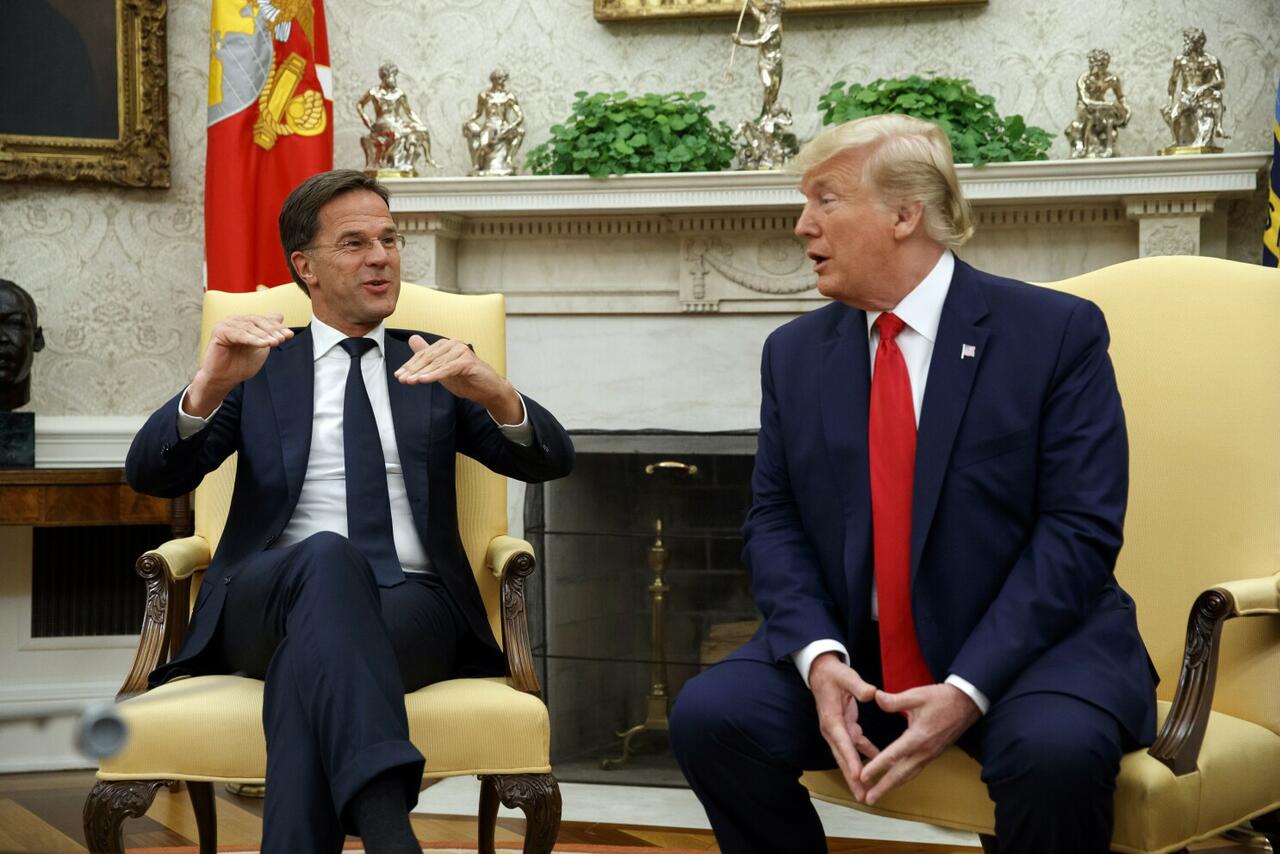
Mark Rutte has warned Trump in a Financial Times interview that if Ukraine is pressured into a ‘bad’ peace deal which is favorable to Moscow, then the United States and Europe would face a “dire threat” from Iran, China, and North Korea.

Via Associated Press

All of these ‘rogue’ states (in the lexicon of some Western leaders) have deepened their relations with Russia throughout the course of the nearly three-year long war in Ukraine. North Korea and Russia in particular even signed a defense pact last summer, resulting in some 10,000 North Korean soldiers being deployed to support the Russian side. All are also coordinating on circumventing US-led sanctions.

Like some pundits at hawkish US think tanks, Rutte tried to frame to outcome of the Ukraine war as of dire importance for Taiwan’s freedom. According to FT:

Rutte noted the risks from Russia supplying missile technology to North Korea and cash to Iran. In an apparent reference to Taiwan, he said that Chinese President Xi Jinping “might get thoughts about something else in the future if there is not a good deal [for Ukraine]”.

“We cannot have a situation where we have [North Korean leader] Kim Jong Un and the Russian leader and Xi Jinping and Iran high-fiving because we came to a deal which is not good for Ukraine, because long-term that will be a dire security threat not only to Europe but also to the US,” Rutte told the FT in his first interview as head of the western military alliance.

Rutte had met with Trump a week-and-a-half ago at his Mar-a-Lago estate in Florida. It was their first such meeting since Trump won the election on November 5.

Clearly the NATO chief tried to persuade Trump to essentially keep up the same muscular stance on Moscow as the Biden administration. It seems he tried to present the same ‘domino’ effect argument which hearkens back to the Cold War – which goes something like if ‘X enemy is not stopped here, then Y enemy will also feel emboldened and seek military conquest’ etc.

“Look at the missile technology which is now being sent from Russia into North Korea, which is posing a dire threat not only to South Korea, Japan, but also to the US mainland,” Rutte said he told Trump, as quoted in FT.

“Iran is getting money from Russia in return for, for example, missiles, but also drone technology. And the money is being used to prop up Hizbollah and Hamas, but also steering conflict beyond the region,” he had claimed.

“So the fact that Iran, North Korea, China and Russia are working so closely together . . . [means] these various parts of the world where conflict is, and have to be managed by politicians, are more and more getting connected,” explained Rutte.

“And there is one Xi Jinping watching very carefully what comes out of this,” he added, in apparent reference to Taiwan. “These were the points I made,” the NTO leader stressed.

But we doubt that that Ukrainians young and old, tragically dying along the front lines in this horrific war of attrition, will care much about NATO and Western grand strategy regarding far-flung places like China or North Korea.

Tyler Durden
Mon, 12/02/2024 – 21:20

via ZeroHedge News https://ift.tt/O2F8oLx Tyler Durden

De Beers Pulls “Last Resort” Price Cut As Diamond Price-Floor Crumbles 

De Beers Pulls “Last Resort” Price Cut As Diamond Price-Floor Crumbles 

A new report says the collapse in rough diamond prices has prompted the world’s largest producer to implement broad price cuts. 

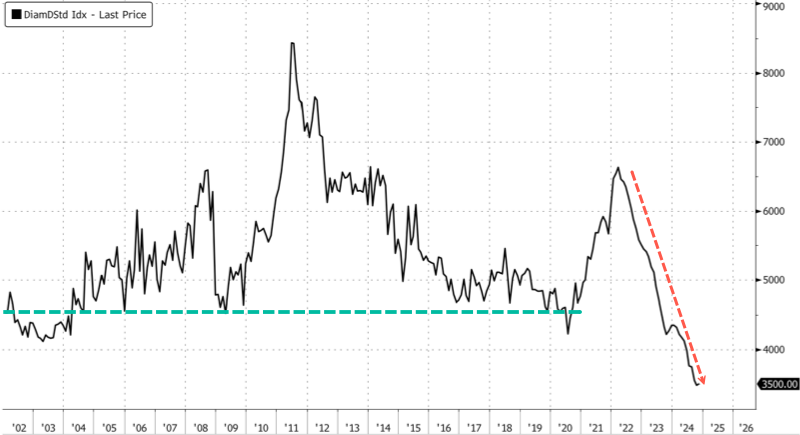
Bloomberg reports that De Beers’ final sale of rough diamond stones on the secondary market was led by a 10% to 15% price cut amid a slumping market pressured by the proliferation of artificial diamonds and sliding demand across the West and China. 

Yet on Monday, the company capitulated on that position at its final sale of the year. De Beers cut prices by 10% to 15% for most of the goods it sells, according to people familiar with the situation. That’s the first major price cut since the start of the year and a historically large reduction.-BBG

Price cuts at Anglo American’s De Beers come as the Diamond Standard Index, which dates back to early 2022, has plunged to record low levels

Here’s more from the report:

De Beers wields considerable power in the rough-diamond market. It holds 10 sales each year in which the buyers — known as sightholders — generally have to accept the price and the quantities offered.

Still, even after the steep cut in prices today, the company’s stones are still more expensive than the going rate in the secondary market, the people said, asking not to be identified as the matter is private. The company also removed some of the flexibility it had offered at previous sales.

De Beers typically reserves aggressive price cuts as a last resort. While it keeps pricing secret, the across-the-board cut this month is hefty.

So much for the diamond giant putting a floor under prices… 

Take a look at our prior note titled “Diamond Prices Crash To Multi-Decade Lows As Art, Wine, & Rolex Markets Sour.” 

Tyler Durden
Mon, 12/02/2024 – 20:30

via ZeroHedge News https://ift.tt/0UHzvQa Tyler Durden

The Failure Of COP29: Does The “Green Agenda” Have A Future?

The Failure Of COP29: Does The “Green Agenda” Have A Future?

Authored by Raphael Machado,

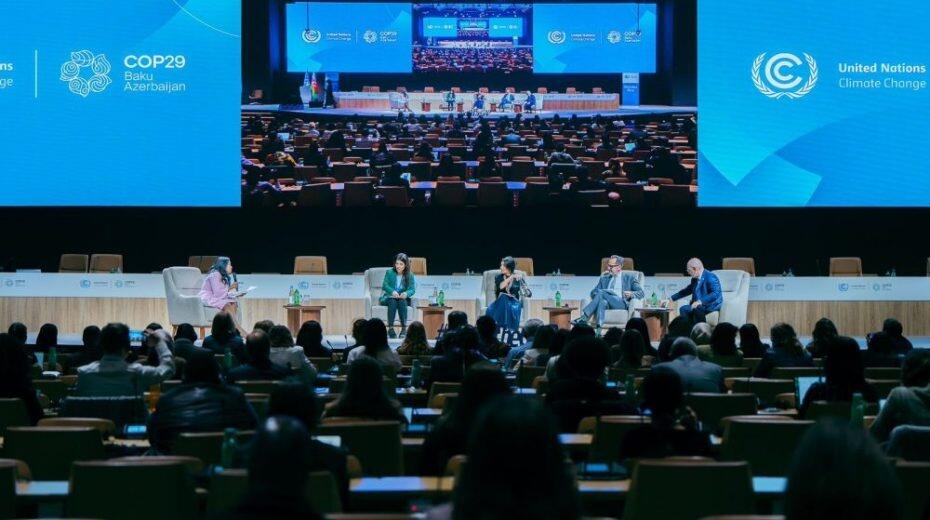
Following the conclusion of the multilateral climate conference COP29, held in Baku, Azerbaijan, the atmosphere is one of defeat.

Nearly an entire week of speeches and endless meetings did not suffice to reach a reasonable consensus on a series of practical measures that had been anticipated.

Specifically, the debate on funding climate policies sank.

The so-called “developing countries” had expected an annual grant policy exceeding $1 trillion for energy transition and climate change mitigation policies, but only $300 billion per year will be allocated—optimistically.

Moreover, this sum will not necessarily be in the form of grants but may include loans and other financing mechanisms that bring interest and debt.

India denounced the final result of COP29, supported by Bolivia, Cuba, and Nigeria, as a farce and an insult from developed countries to developing nations.

This financing debate will now be deferred to COP30, scheduled to take place in Brazil in 2025. However, the chances of COP30 succeeding where COP29 failed seem very slim.

While climate alarmism and eco-globalism are now part of Brazil’s official ideology, in the rest of the world, these postmodern beliefs are losing momentum.

Take, for example, the reasons why expanding funding for the “Green Agenda” has been impossible in “developed countries.” Observing European governments’ behavior since the beginning of Russia’s special military operation in Ukraine, one can see increasing difficulty in advancing energy transition and net-zero carbon policies.

Germany, for instance, was once one of the main drivers of climate alarmism worldwide, even closing its nuclear power plants “for the environment” (despite nuclear plants being far less polluting than most other energy sources). Yet today, facing an energy crisis caused by the NordStream’s destruction, Germany is reopening its coal-fired power plants.

Sweden, long a leader in international climate activism, has reversed many of its previous environmental measures. The Ministry of the Environment has been dismantled, and the government now prioritizes ensuring cheap fuel.

Meanwhile, in the United Kingdom, the previous administration of Prime Minister Rishi Sunak suspended the ban on diesel car sales and decided to stop promoting the replacement of gas heaters. Similar examples can be found in several other countries.

Clearly, sanctions and the NordStream’s destruction have made Europe’s energy situation difficult enough to raise living costs, convincing European governments to roll back at least some environmental measures and dampen their enthusiasm for promoting global climate alarmism.

This retreat by European nations will be compounded by the fact that, starting in 2025, the United States will likely be governed by Donald Trump, who holds a critical stance toward climate alarmism and promises to intensify fracking for hydrocarbon extraction in the country. This is corroborated by the nominations of Chris Wright as Secretary of Energy and Lee Zeldin to the U.S. Environmental Protection Agency.

In Brazil, the media has revealed that Lula’s administration fears a lackluster COP30 in the Amazon region in 2025, with the U.S. under Trump’s administration. Naturally, for Brazilian patriots focused on safeguarding national sovereignty over the Amazon and exploring oil in the Equatorial Margin, this is good news.

Indeed, Brazil’s insistence on adhering to the “Green Agenda” is puzzling, considering it often serves as a geopolitical control tool favoring major powers at the expense of developing nations. The climate agenda frequently imposes disproportionate obligations on Brazil relative to its actual contribution to global greenhouse gas emissions, which are significantly lower than those of more industrialized economies.

With a predominantly renewable energy matrix, Brazil is already an example of sustainability and energy efficiency worldwide. Approximately 84% of Brazil’s electricity is generated from clean sources, such as hydropower, wind, solar, and biomass—a level that countries like the United States and Germany have yet to achieve, despite leading global climate discourse.

Meanwhile, developed countries that built their wealth through the indiscriminate exploitation of natural resources and environmental pollution now advocate environmental restrictions designed to limit the growth of emerging economies like Brazil. These impositions often harm strategic sectors such as oil and gas exploration, mining, and agribusiness, which are vital to national development and sovereignty.

In practice, we appear to be witnessing the crisis of the “Green Agenda” that has dominated global politics for years. Yet some countries still seem unaware that this entire agenda has never been more than a new strategy by global elites to accumulate capital and impose new forms of social control.

Tyler Durden
Mon, 12/02/2024 – 20:05

via ZeroHedge News https://ift.tt/R75b2eY Tyler Durden

Education: The Global Challenges Facing Schools

Education: The Global Challenges Facing Schools

A new report by Ipsos on global attitudes towards education and schools has highlighted the breadth of issues that affect different systems around the world.

More than 1,000 respondents took part in each of the 30 countries surveyed between June 21 and July 5, 2024.

As Statista’s Anna Fleck shows in the chart below, a third of respondents in the U.S. say that political or ideological bias is the greatest challenge facing their country’s educational system today. Similarly, 30 percent of adults in Hungary and Poland felt the same.

Infographic: Education: The Global Challenges Facing Schools | Statista

You will find more infographics at Statista

Worry over their children’s safety was the second most commonly picked concern in the U.S. at 31 percent.

It was also a main concern in France (30 percent), India, Mexico and Brazil (24 percent each).

In Indonesia, six in ten respondents stated that unequal access to education was the greatest issue troubling the schooling system, with the next two most commonly selected answers inadequate infrastructure (36 percent) and insufficient usage of technology (30 percent).

Meanwhile, in the UK, a lack of public funding was cited by 40 percent of respondents, marking the largest share of the 30 countries polled, followed by several South American nations (Colombia at 37 percent, Chile at 36 percent and Brazil at 35 percent).

The survey also found that the most positive perceptions of education systems were primarily in Asia.

Adults in several countries across the region were also more likely to say that they thought the education system in their country is contributing to reducing social inequalities.

For example, the vast majority of respondents in India (72 percent) agreed with this statement, as well as Singapore (68 percent), Thailand (66 percent), Indonesia (64 percent) and Malaysia (63 percent).

At the other end of the spectrum of 30 countries were Turkey (34 percent) and Hungary (30 percent).

Tyler Durden
Mon, 12/02/2024 – 19:40

via ZeroHedge News https://ift.tt/4tCNKZb Tyler Durden

Biden-Linked Delaware Judge Rejects (Again) Musk’s ‘70%-Shareholder-Approved’ $56 Billion Pay-Package

Biden-Linked Delaware Judge Rejects (Again) Musk’s ‘70%-Shareholder-Approved’ $56 Billion Pay-Package

Delaware Judge Kathaleen McCormick has once again sided against Elon Musk…

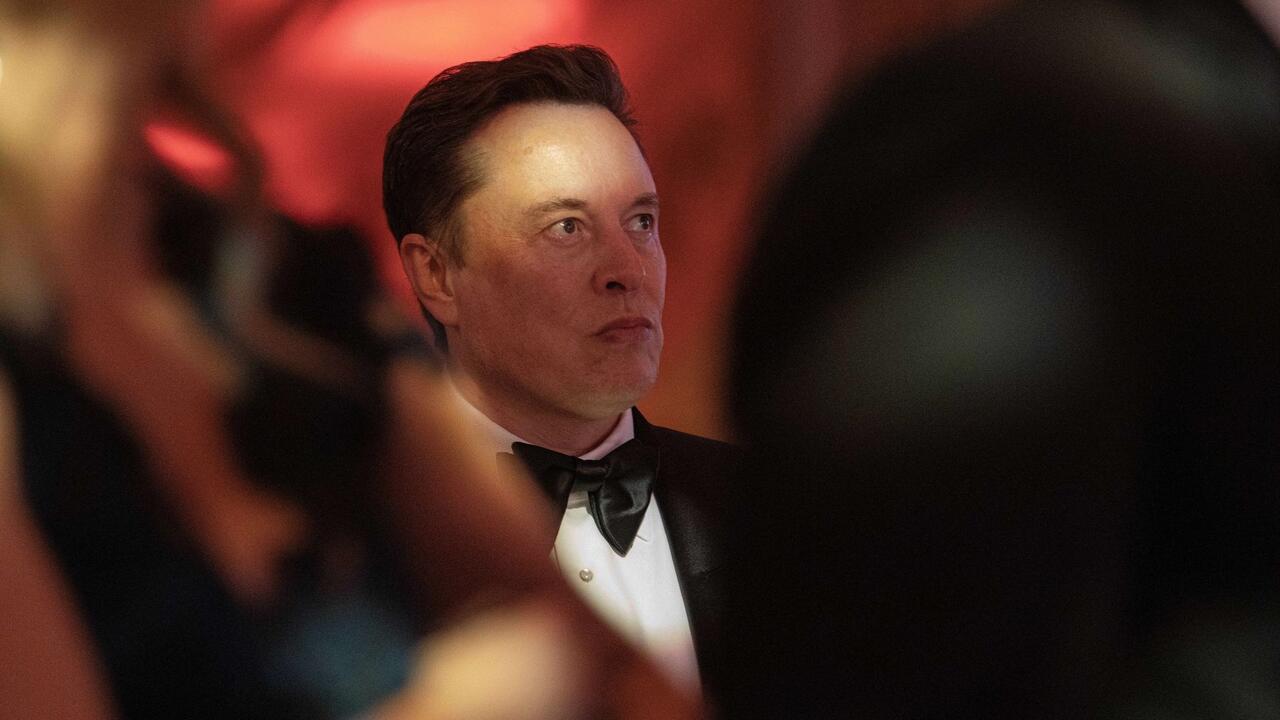
After ruling against the billionaire in July 2022 when he tried to break his $44 billion contract to buy Twitter, and again in January 2024 when she initially rescinded Musk’s record (but “deeply flawed” according to her) $56 billion performance-based compensation package (determining that Tesla deceived shareholders when the all stock compensation was approved in 2018), she has once again ruled that pay package.

Musk’s legal team argued that McCormick should reverse her earlier decision because Tesla had conducted a shareholder vote to “ratify” the 2018 pay plan at the company’s annual shareholder meeting in June, per CNBC.

In fact, 72% of Tesla shareholders voted in June to approve the company’s CEO’s pay package.

The judge said Musk’s attorneys made an argument with multiple “fatal flaws,” including their argument that the shareholder vote was enough to validate the pay package after the fact.

“The large and talented group of defense firms got creative with the ratification argument, but their unprecedented theories go against multiple strains of settled law,” McCormick said in her ruling.

McCormick ruled that the vote on the payment package did not have a “ratifying effect” on the current case, because shareholders had not ratified the payment plan prior to her ruling.

“Were the court to condone the practice of allowing defeated parties to create new facts for the purpose of revising judgments, lawsuits would become interminable,” she wrote.

In addition to rejecting the revisions, Quartz reports that Monday’s decision granted $345 million in attorney fees to the lawyers who successfully challenged Musk’s pay plan on behalf of Tesla shareholders.

The court deemed this amount an “appropriate sum to reward a total victory.”

Tesla has the option to pay this fee in either cash or by issuing stock that can be sold on the open market.

While Musk could appeal the decision to the Delaware Supreme Court, this ruling could have broader implications for how companies structure executive compensation and the role of shareholder votes in such decisions.

Finally, the judge has some interesting ‘friends’…

“Before becoming the head of the Delaware Chancery Court, McCormick worked at a Delaware law firm called Young Conaway.

This firm and its employees have been major donors to President Joe Biden for decades.

In 2016, Hunter Biden hosted a gubernatorial campaign event for Congressman John Carney, with then-Vice President Joe Biden as the guest speaker.

This event took place at the Law Offices of Young Conaway in Wilmington, Delaware.

Carney, a close friend of Joe Biden for the last four decades, later became governor and nominated Kathaleen McCormick, a partner at Young Conaway, to her position on the Delaware Chancery Court.

In a March 2018 email, Hunter Biden claimed to personally know every judge on the Delaware Chancery Court while threatening legal action against his Chinese business partners.

“I will bring the suit in the Chancery court in Delaware – which as you know is my home state and I am privileged to have worked with and know every judge on the chancery court.

… another clear example of the Biden administration and its allies weaponizing the American legal system against their political opponents.”

Tesla issued a statement on X shortly after the decision, confirming that it will appeal her decision….

There is also the fact that Musk’s move to relocate his business to Texas (after telling people on X after the original ruling that “companies should get the hell out of Delaware”) which could change things, but it is is unclear how this will proceed for now.

Tyler Durden
Mon, 12/02/2024 – 19:15

via ZeroHedge News https://ift.tt/P4w6Zuj Tyler Durden

Nearly One In Five US Teens Experienced Depression Last Year

Nearly One In Five US Teens Experienced Depression Last Year

One of the reasons governments are moving to restrict teenagers’ access to social media is the fear of its harm to mental health.

As Statista’s Anna Fleck reports, the topic has been reignited by the release of a new book titled The Anxious Generation, by New York University social psychologist Jonathan Haidt, who links the rise in mental health illness directly to the proliferation of social networks and smartphones.

While Haidt writes that social media and smartphones are not the only causes of the mental health epidemic seen in several countries, he points to how such technologies are hindering children’s healthy development by reducing their time spent playing with friends in real life, eating into time for sleeping, as well as corroding their self esteem. Even children who do not use social media are struggling, he argues, due to the changes brought about to social life. Critics say, however, that correlation is not the same as causation and that the data does not show a complete picture.

As the following chart shows, the share of U.S. 12-17 year olds having experienced a depressive episode in the past year has risen from 7.9 percent in 2006 to 18.1 percent in 2023.

Infographic: Nearly One in Five U.S. Teens Experienced Depression in 2023 | Statista

You will find more infographics at Statista

While the figure has come down from the pandemic high of 20.1 percent in 2021, it is still above that of 2019 and 2020.

This is according to data from the U.S. Substance Abuse and Mental Health Services Administration. The source classifies a major depressive episode in the past 12 months if a respondent has had at least one period of two weeks or longer when they felt depressed or lost interest or pleasure in daily activities for most of the day nearly every day. Depressive symptoms include problems with sleeping, eating, energy, concentration, self-worth, or having recurrent thoughts of death or recurrent suicidal ideation.

The share of teens who had reported a major depressive episode was particularly high among Multiracial (24.4 percent) respondents in 2023, followed by white adolescents (19.6), Asian (13.7 percent) and Black teens (13.3 percent).

There was insufficient data for calculating the Native Hawaiian or Other Pacific Islander teenagers.

Tyler Durden
Mon, 12/02/2024 – 18:50

via ZeroHedge News https://ift.tt/BsOTY5K Tyler Durden

What Is The Administrative State?

What Is The Administrative State?

Authored by Roger Kimball via American Greatness,

Last week in this virtual space, I wrote that Donald Trump would make a renewed effort during his second term to dismantle “the administrative state.” As in his first term, he would employ various strategies to blunt the effects of the administrative apparatus that governs us. He would, for example, disperse some parts of the government outside the overwhelmingly left-progressive swamp of Washington, D.C.

As an aside, I should note that I regard the persistence of Washington as the seat of our government as a serious impediment to the goal of “deconstructing” the administrative state. “It has,” I wrote back in 2022, “long been obvious to candid observers that there is something deeply dysfunctional about that overwhelmingly Democratic, welfare-addicted city.”

It is a partisan sinkhole. Jefferson wanted the capital moved from New York to Washington in part to bring it closer to the South, but also to place it in a locality that was officially neutral. There is nothing neutral about Washington today. The city has some impressive architecture and urban vistas. They should be preserved and staffed as tourist attractions. But the reins of power should be relocated.

I doubt that will happen. Which means that the eternal vigilance that MAGA must maintain around its enemies will have to be redoubled. Trump attempting to govern from Washington will be like Ike trying to undertake the Normandy invasion with half his planners on loan from the German general staff.

Still, there are some symbolic gestures that he and his aides might consider. I have long suggested that the inauguration be held somewhere other than Washington, D.C. There is nothing in the Constitution that requires the inauguration be in Washington. LBJ, remember, was sworn in on Air Force One just a couple of hours after Kennedy was assassinated. When Warren Harding died, Calvin Coolidge was visiting the family homestead in Vermont. His father, a justice of the peace, administered the oath of office in the parlor. I think the next inauguration should be well away from the swamp of Washington. Mar-a-Lago in Palm Beach is one venue that springs to mind, but I am sure there are other attractive spots. At a minimum, I hope the inauguration committee will consider having some of the parties elsewhere. A ball in Butler, PA, for example, would not only be celebratory but also serve as a useful reminder of how close Trump came to a fatal encounter with an assassin’s bullet.

But the trouble with “Washington”—I use scare quotes to indicate that we are dealing with spiritual as well as geographical dispensation—is not only its partisan nature. There is also its apparently unstoppably expansionist character. No matter which party is in power, the business of Washington is to make government bigger—forever. Republicans talk about “limited government.” They then sign on to nearly every scheme to make government bigger and more intrusive. Democrats do the same, of course, but they generally skip the rhetorical foreplay about making government smaller.

One huge difference this time around will be the Department of Government Efficiency, DOGE for short, an ad hoc executive initiative that will be overseen by Elon Musk and Vivek Ramaswamy. They outlined their bold plan in an op-ed for The Wall Street Journal last week. “Unlike government commissions or advisory committees,” they noted, “we won’t just write reports or cut ribbons. We’ll cut costs.” Will they? It would be pretty to think so. Musk has said that he wants to cut government expenditures by $2 trillion. If he could manage even a quarter of that amount, it would be something to write home about. It may seem utopian. But remember, Musk bought Twitter and instantly cut the workforce by 80 percent. He vastly improved the platform, salvaged free speech, and transformed a dying company into a dynamic one.

As usual, the devil will be in the details. Musk and Ramaswamy may identify the ideal candidates for downsizing or elimination. Exactly how will they move from pen to scissors is the $64,000—or rather, the $2 trillion—question. I take solace from the thought that if anyone can do it, the triumvirate of Trump, Musk, and Ramaswamy can. Naturally, opposition will be ferocious. Will it also be effective? Time will tell.

I have not yet answered the question posed in my title: “What is the administrative state?” A friend asked me that in the course of our conversation about my column last week. Isn’t it possible, he asked, that “administrative state,” like its scarier sounding cousin, “deep state” is just a polysyllabic synonym for “state,” for the complex activities of government in a complex, technologically advanced polity? Maybe “administrative state” is just an invention of right-wing “conspiracy theorists” who find goblins where there are only harmless bureaucrats?

I nattered on about the growth of the regulatory state, the battalions of unelected and unaccountable bureaucrats who govern us from their perches in the alphabet soup of modern, Kafkaesque governance, and put in a plug for Tocqueville’s analysis of “democratic despotism.” I also noted that the phrase “conspiracy theorist” is generally used in a prophylactic, not a descriptive sense. That is, it is a phrase that is wheeled out when the aim is to end, not further, the conversation. The problem is not conspiracy theories, but conspiracies in fact.

One example.  When revelation of the contents of Hunter Biden’s “laptop from hell” threatened to upend Joe Biden’s 2020 presidential campaign, Anthony Blinken asked acting CIA director Michael Morell to organize a letter signed by 51 former intelligence officers stating that the laptop bore all the signs of “Russian disinformation.” Morell did this, he said,  in order to give Biden a “talking point” for his forthcoming debate with Donald Trump. The public did not know this at the time. When the truth leaked out, the establishment claimed it was only a “conspiracy theory” put about by Trump supporters. But it wasn’t a conspiracy theory. It was a conspiracy in fact. 

I stand by everything I said, but I did not say enough, and what I did say was not precise enough. Formulating definitions is often a mug’s game. This is because, for any important matter, a definition that is true will also have to be so general as to be vacuous or at least unilluminating. What is love? What is virtue? What is knowledge? In everyday life, these chestnuts from the philosophy seminar tend to get assimilated to the indefinite definition Justice Potter Stewart offered for “obscenity”: “I know it when I see it.”

Still, there’s something to be said for making the effort. So here goes. “‘The administrative state’ is that quota of political power that covertly fills the vacuum left by the failure of the legislative branch to discharge its obligations.”

Two things are critical.

  • One is the displacement of sovereignty. No longer are the people sovereign. The bureaucracy is.

  • The second critical thing is the covert nature of the enterprise.

The question “What is the administrative state?” can seem difficult to answer because it is not supposed to exist in the first place. You know it only by its actions. You cannot look it up in the statute book, much less in the Constitution. Indeed, the very fact of the administrative state violates any number of Constitutional norms, not least its being a sort of “fourth branch” of government when the Constitution provides for only three.

Edmund Burke touched on an essential aspect of this process in Thoughts on the Cause of the Present Discontents (1770). Criticizing the Court of George III for circumventing Parliament and establishing by stealth what amounted to a new regime of royal prerogative and influence-peddling, Burke saw how George and his courtiers maintained the appearance of parliamentary supremacy while simultaneously undermining it. “It was soon discovered,” Burke wrote with sly understatement, “that the forms of a free, and the ends of an arbitrary Government, were things not altogether incompatible.” That malign co-habitation stands behind the growth of the administrative state. We still vote. We still have a bicameral legislature. But behind these forms of a free government, the essentially undemocratic activities of an increasingly arbitrary and unaccountable regime pursue an expansionist agenda that threatens liberty in the most comprehensive way, by circumventing the law. 

The shadowy nature of the administrative state helps to explain why it is so hostile to free speech and, by the same token, why it tends to be receptive to the deployment of censorship and police power to achieve its ends and stymie the ends of its critics. That is why the rise of the administrative state goes hand in hand with the loss of public confidence in society’s guiding institutions. Talk of “democracy” and “our democracy” is ever on their lips. SWAT teams, prosecutorial abuse, and lawfare are out on the street for all to see. Bottom line: The age of the administrative state is at the same time an age of declining legitimacy in the foundational institutions of civil society.

Officially, the administrative state is not supposed to exist.  Having people talk about the fact that it does exist and that it often pursues ends that are contrary to the ends of the people outside its magic circle of custodians means that by definition free inquiry is a threat to its perpetuation. That is one reason that the administrative state is so hostile to democracy. It is also an important reason why it must be dismantled and returned to the graveyard of rebarbative systems of political obfuscation and bureaucratic tyranny. 

Tyler Durden
Mon, 12/02/2024 – 18:25

via ZeroHedge News https://ift.tt/oFCPQh1 Tyler Durden

Enron Is Not “Back”

Enron Is Not “Back”

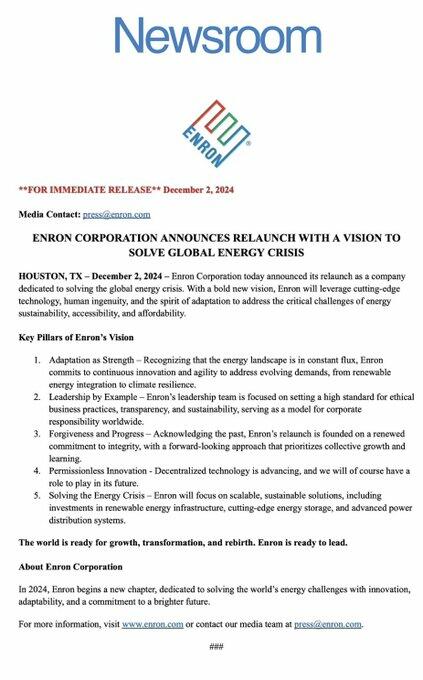
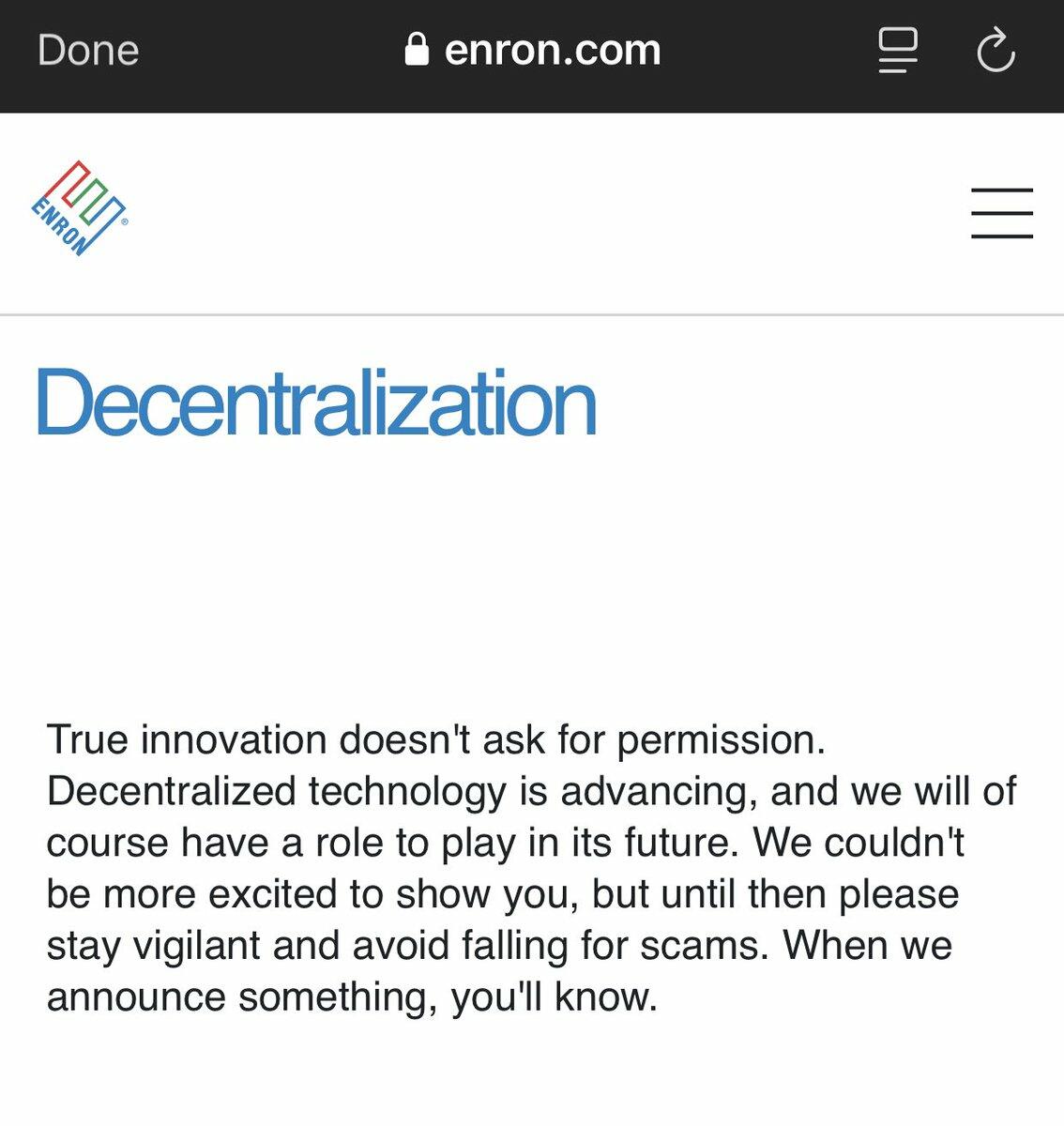
There was a lot of chatter on Monday morning about defunct Enron rising from the ashes after an X account named “Enron” posted, “We’re back. Can we talk?”

On its website, “Enron.com,” the company, supposedly operating as “Enron Corporation,” published what could be described as one of the laziest press releases imaginable, with formatting that resembles something generated by ChatGPT… 

Buried in the “Terms of Use and Conditions of Sale” section of the website, Enron states: “THE INFORMATION ON THE WEBSITE IS FIRST AMENDMENT PROTECTED PARODY, REPRESENTS PERFORMANCE ART, AND IS FOR ENTERTAINMENT PURPOSES ONLY.”

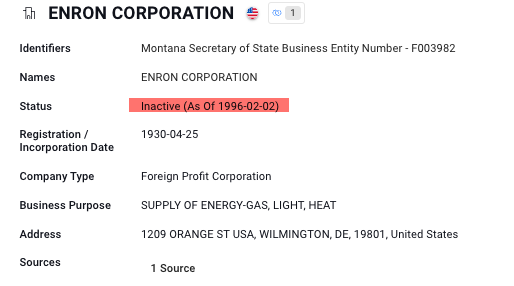
Public records forensic analysis via the platform Sayari shows “Enron Corporation” has been “Inactive” for years. In other words, the website has nothing to do with defunct Enron.

No @Enron is not back… Original IP is DEAD and some clever people registered it earlier this year… Caveat emptor,” one X user said. 

Exactly. 

And trademarks?

Take a look at the alleged Enron team. Whoever built the website just used iStock models with a focus on diversity.

Not believable. 

More LoL from the website. 

Selling merchandise is the goal? 

Possibly, but this might be tied to a crypto pump-and-dump scheme.

Not sure if this coin is related.

Caveat emptor. 

Tyler Durden
Mon, 12/02/2024 – 18:00

via ZeroHedge News https://ift.tt/NvtGJA7 Tyler Durden

Debanked: The Financial Suppression Of Bitcoin Businesses Must End

Debanked: The Financial Suppression Of Bitcoin Businesses Must End

Authored by Colin Crossman via BitcoinMagazine.com,

“We can’t live in a world where somebody starts a company that’s a completely legal thing, and then they literally [] get sanctioned [] and embargoed by the United States government through a completely unaccountable [process] by the way. No due process. None of this is written down. There’s no rules. There’s no court, there’s no decision process. There’s no appeal. Who do you appeal to, right? [] Who do you go to to get your bank account back?”

– Marc Andreessen, speaking to Joe Rogan, published on 11/26/2024

In yet another troubling manifestation of “Chokepoint 2.0,” a Wyoming company was summarily debanked in early November, 2024, by Mercury, a banking platform operated with Evolve Bank (and other banking partners). After years of seamless operations and exemplary service, Mercury abruptly terminated the account without clear cause. The excuse? A vague nod to “internal factors” that remain as opaque as the regulatory pressures likely behind them.

Let’s be clear: The company’s banking activity was uncontroversial. The only potential offense is that the company accepts a sizable portion of its customer payments in Bitcoin. Aside from monthly wires from Kraken (a regulated crypto exchange), its transactions included rent, utility payments, hardware store purchases, and subcontractor invoices.

The termination couldn’t have had anything to do with risky behavior or financial misconduct. Instead, the closure is emblematic of a systemic effort to hobble Bitcoin businesses by exploiting the centralized banking choke points regulators have turned into tools of suppression.

This is Chokepoint 2.0 in action. Regulators have found new ways to suppress industries they disfavor—this time, targeting Bitcoin miners and businesses. Instead of legislative debate or due process, unelected bureaucrats leverage their oversight of banks to nudge them into “de-risking” clients that engage in entirely legal activities. The company was simply collateral damage in the campaign to isolate Bitcoin from the traditional financial system.

This is a chilling echo of Operation Chokepoint 1.0, where federal regulators illegally pressured banks to cut off services to lawful but disfavored industries, such as firearms dealers and payday lenders. That campaign ended in disgrace when the FDIC was forced to settle a lawsuit in 2019. The settlement affirmed what should have been obvious: weaponizing the financial system against legal businesses is unconstitutional. Regulators know this—and yet here we are again.

Why This Matters

Debanking isn’t just an inconvenience. For businesses, it’s existential. Operating without a reliable banking partner in today’s economy is like trying to breathe without air. When banks are coerced into severing ties with Bitcoin-related companies, it sends a chilling message: engage in this industry at your peril. It also stifles innovation, a dangerous precedent for a country founded on economic freedom.

Moreover, this practice undermines the core tenet of fairness in financial services. The American banking system isn’t a private fiefdom. It operates under public charters and with public trust, and its gatekeepers should not act as arbiters of political or ideological purity.

The harm extends beyond Bitcoin. If regulators can throttle this industry, what stops them from targeting others? What happens when innovation, dissent, or inconvenient truths are deemed “too risky” for the comfort of entrenched powers? This is about more than Bitcoin—it’s about the integrity of the financial system and the preservation of free markets.

A Call to Action: Accountability for Regulators

The new Congress and Trump administration must seize this moment to hold the architects of Chokepoint 2.0 accountable. This isn’t a partisan issue; it’s a constitutional one. Regulators acting as de facto lawmakers, imposing policies that would never survive public scrutiny, must be reigned in.

1. Investigations into Regulatory Overreach

Congress must launch comprehensive investigations into the agencies pressuring banks to sever ties with Bitcoin businesses. Who issued these directives? Under what authority? The American people deserve answers, and the offending parties deserve consequences.

2. Personal Accountability for Regulators

Bureaucrats who abuse their power should not be shielded by the anonymity of the regulatory machine. Those responsible for weaponizing the financial system against lawful businesses must be named, shamed, and removed from their positions, permanently lose any security clearances they may have, and potentially lose their government pensions and retirement benefits.

3. Restoration of Due Process

Any decisions to restrict banking access should require clear, codified standards and a transparent appeals process. No more shadow rules. If a business is to be debanked, the reasons should be public, defensible, clearly articulated & defined, grounded in law, and appealable.

4. Legislation to Protect Financial Access

Congress should pass laws prohibiting banks from discriminating against lawful industries based on political or ideological reasons. The free market thrives on neutrality; it withers under bias.

5. Decentralization of Financial Systems

Bitcoin exists as a hedge against precisely this kind of overreach. Policymakers should embrace and encourage its growth, not fight it. America cannot afford to fall behind in the global race for financial innovation.

Much of the above could be addressed through Section 10 of the SAFER Banking Act, which directly limits undue regulatory influence over banking services. Specifically, it prohibits federal banking agencies from pressuring financial institutions to terminate relationships with lawful businesses, including those in the Bitcoin and cryptocurrency industry, based on reputational risks or political motivations. This provision reinforces the principle that decisions about financial services should rely on risk-based analysis of individual accounts rather than blanket biases against entire industries. By codifying such protections, the SAFER Banking Act would promote fairness and transparency in financial services, ensuring that regulators adhere to their duties of impartial oversight while respecting the rights of businesses operating legally under state or federal law.

In addition to legislative solutions, the presence of even one bank with the willingness and capability to resist undue regulatory pressure could dramatically reshape the financial landscape for Bitcoin businesses. Caitlin Long’s Custodia Bank, based in Wyoming, exemplifies this potential. Custodia has consistently demonstrated its commitment to operating within the law while challenging the overreach of federal regulators, as seen in its lawsuit against the Federal Reserve.

A bank with this level of resolve, direct access to the Federal Reserve itself, and a proven track record of standing up to regulators will provide a lifeline for Bitcoin (and other) businesses seeking reliable financial services. By fostering an ecosystem where lawful businesses can thrive without fear of arbitrary debanking, Custodia Bank offers a template for how other institutions might follow suit, ensuring that innovation and economic freedom remain protected.1

Taken together, the SAFER Banking Act and the perseverance of institutions like Custodia Bank represent two critical fronts in the fight against financial discrimination. While the SAFER Act provides a legislative framework to curtail regulatory overreach and protect lawful businesses from debanking, it has faced significant resistance, having been introduced multiple times in Congress only to be repeatedly blocked. Meanwhile, Custodia Bank’s struggle underscores the severity of institutional hostility; the Federal Reserve’s refusal to grant Custodia access to the banking system forced the bank to file a federal lawsuit just to claim its rightful place in the financial ecosystem. These challenges highlight the entrenched opposition to reform, but they also emphasize the urgent need for a multi-pronged strategy—legislative, judicial, and entrepreneurial—to ensure fair and impartial access to banking services for all lawful businesses.

Bitcoiners: The Frontline of Freedom

Bitcoin isn’t just money; it’s an idea—an idea that money and power belong to the people, not the state. This is why we’re here. This is why Bitcoin exists. The legacy financial system is crumbling under its own corruption, and every act of suppression only underscores the need for decentralized alternatives.

To be clear, I don’t fully blame Mercury and Evolve for this. They’re likely being forced into it by their regulators.2 Indeed, due to the Orwellian Bank Secrecy Act, the banks aren’t allowed to disclose the reasons for these matters to the affected customers. Banks like Mercury, and any others who have willingly cooperated with Chokepoint 2.0 should be subject to Congressional Subpoenas to explain themselves, and also name-and-shame the regulators who coopted them.

The future of Bitcoin—and America’s role as a leader in innovation—depends on exposing and dismantling Chokepoint 2.0, and holding all those who participated in it accountable.

Tyler Durden
Mon, 12/02/2024 – 17:40

via ZeroHedge News https://ift.tt/06lGnKP Tyler Durden