Stolen Valor Bills Seek Harsher Penalties For Falsified Military Service

Stolen Valor Bills Seek Harsher Penalties For Falsified Military Service

Authored by Allan Stein via The Epoch Times (emphasis ours),

PHOENIX—Of all the schemes and scams that U.S. Air Force veteran Bob Dalpe is aware of, stolen valor stands out as one of the most reprehensible.

Stolen valor is defined as when a person falsely claims to have served in the military, pretends to have made sacrifices in combat, and may even wear a fake uniform adorned with counterfeit medals.
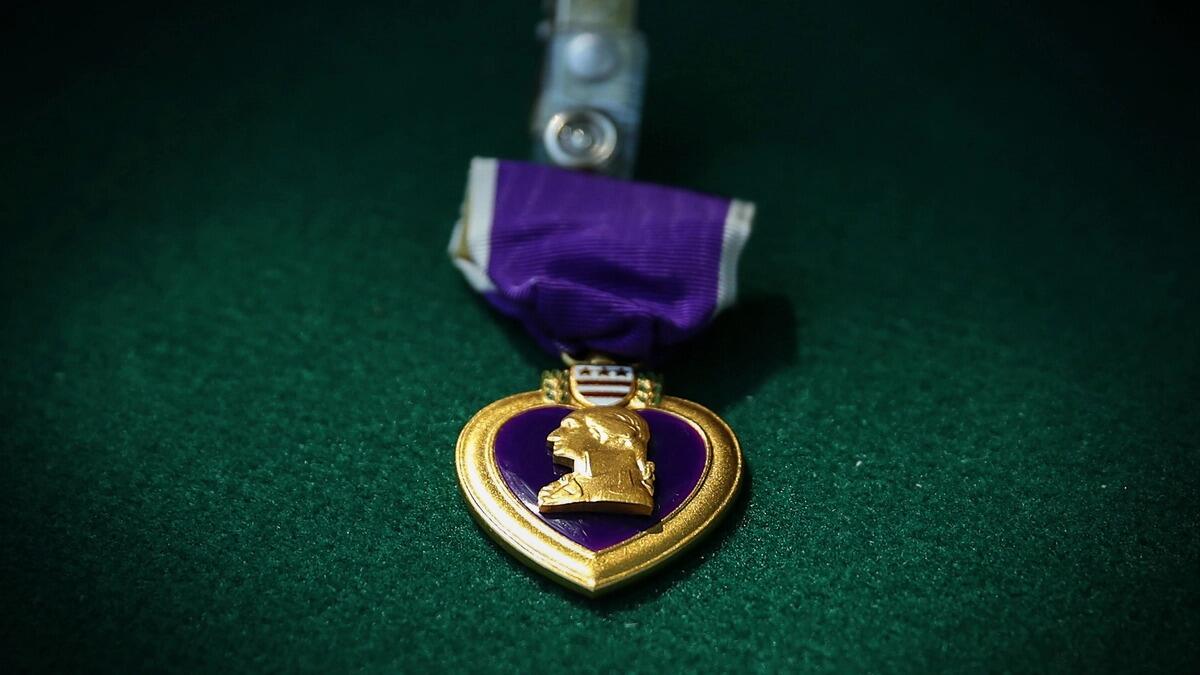
A Purple Heart medal is displayed during a Purple Heart ceremony at George Washington’s Mount Vernon in Mount Vernon, Va., on June 9, 2015. Alex Wong/Getty Images

Dalpe said some veterans also misrepresent their rank and service to obtain additional benefits and recognition.

It’s very frustrating to deal with them because you know their integrity is in question,” he said. “It hurts everybody around you. It devalues their service.

Dalpe and other veterans attended a press conference in Phoenix recently for the official unveiling of a bill that would penalize anyone found guilty of stolen valor in Arizona.

The bill applies to anyone who uses stolen valor to gain benefits intended for veterans, falsifies related documents, or falsely claims to be a veteran when running for office or in business transactions.

Arizona’s proposed legislation builds on the federal Stolen Valor Act of 2013, making stealing valor a felony crime while implementing stricter enforcement and penalties, according to Arizona state Rep. Walter Blackman, the bill’s primary sponsor.

“It embodies the values that we hold dear as veterans. We need to send a strong message to people that want to steal our valor,” Blackman, a Republican, said during the conference.

Blackman said stolen valor isn’t a new phenomenon, but its impact runs deep and it diminishes the value of military service.

We’ve had a number of stolen valor cases in this state that caused Arizona upwards to $40 million … through veterans benefits, contracts, job placement, and so on,” said Blackman.

This is a push to hold those people accountable. If they have to go to jail because of it, they will go to jail,” he said.

Stolen valor is “essentially a lie,” according to the Armed Forces Benefit Association (AFBA).

While it is not technically illegal to make things up to impress friends at a party, the AFBA clarifies that “stolen valor is more complicated than that, which is why it is considered a crime.”
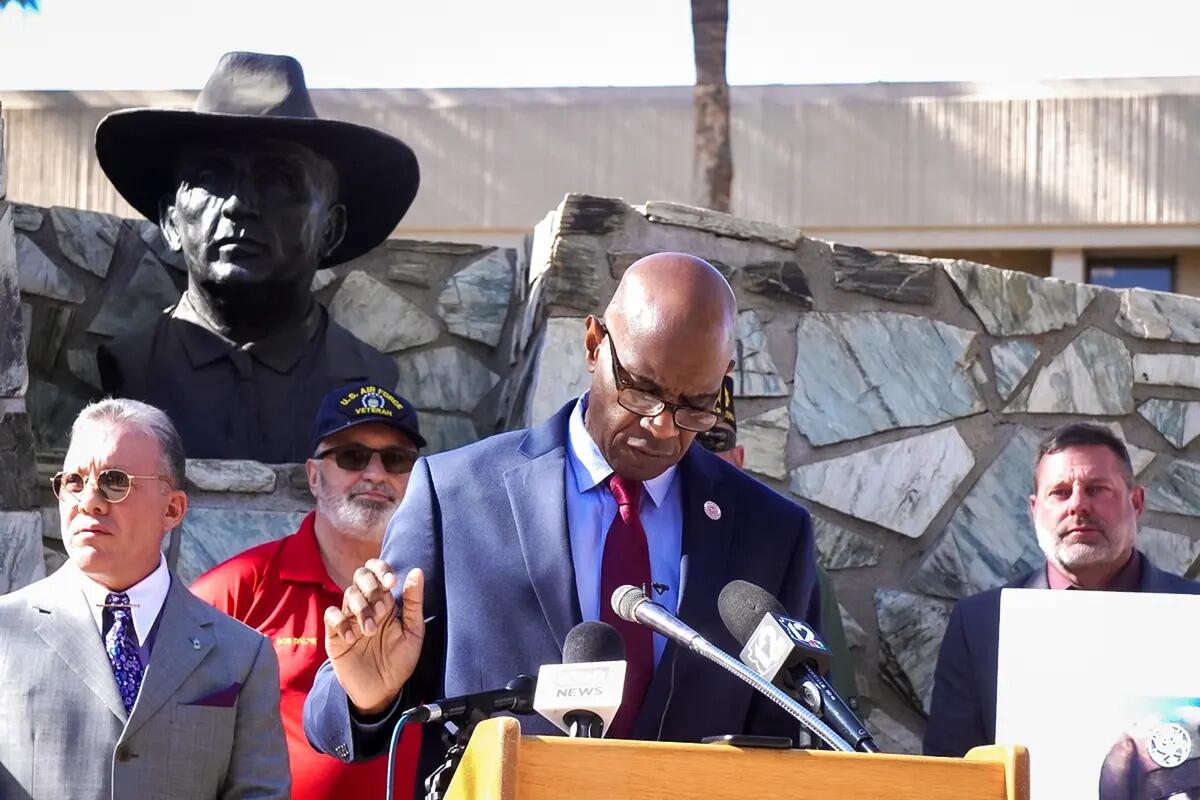
Arizona Rep. Walter Blackman addresses the media about the bill he’s sponsoring that would make faking military service for material gain a crime in the state, in Phoenix on Jan. 15, 2025. Allan Stein/The Epoch Times

Military impersonation is a similar offense, committed willfully and wrongfully, with or without the intent to defraud, the organization states on its website.

Several states already have laws that penalize stolen valor.

For example, the California Stolen Valor Act makes it a misdemeanor for a person to falsely claim to be a veteran or a former member of any branch of the military.

It includes anyone who pretends to be a veteran, whether through verbal statements or written claims, as well as those who wear military decorations to deceive others.

In Florida, soliciting charitable contributions or other benefits while falsely claiming to be a veteran is a felony.

Under the New Jersey Stolen Valor Act, it is a crime for someone to falsely claim they have received a military decoration or medal.

In July 2024, Rep. Beth Van Duyne (R-Texas) reintroduced the Valor Earned Not Stolen Act, after the original bill failed in 2021.

The legislation seeks to increase the maximum penalty for stolen valor from one year to three years in prison, aligning it with the penalty for impersonating a public official.

Additionally, the bill requires a study and report by the U.S. attorney general and the Inspector General of Veterans Affairs.

This report will identify any financial or government benefits received due to the falsification of military decorations or medals.

It will also provide recommendations on how to prevent stolen valor in the future.

The recognition and honors our veterans have earned are hallowed and, unfortunately, there have been too many instances of stolen valor resulting in stolen government benefits,” Van Duyne said in a statement.

A military aide holds the Medal of Honor during a presentation ceremony in the East Room of the White House on July 18, 2016. Mandel Ngan/AFP via Getty Images

“The government must ensure all taxpayer money allocated to our veterans is going to those veterans who have earned it.

“Punishments should be stiff for those who defraud the government and disrespect the service of our men and women in uniform.”

Stricter Penalties

The proposed Arizona legislation, known as HB2030, establishes strict measures to deter the impersonation of veterans and combat fraudulent activities, as outlined in the law.

This legislation targets anyone who falsely claims military service or awards to obtain employment, government contracts, or veteran benefits.

It also addresses individuals who use a false veteran status to gain votes, campaign contributions, or political advantages, as well as those who falsify or alter military documents, combat-related badges, or awards.

Penalties for these offenses can range from a Class 4 felony to a Class 2 felony, particularly in cases involving high-value benefits. Furthermore, the bill mandates the removal of any public officials convicted under this law.

Blackman said it is classified as a Class 3 felony if the violation involved a benefit valued between $5,000 and $10,000, and as a Class 2 felony if the benefit was at least $50,000.

“This legislation sends a clear message that Arizona will not tolerate stolen valor in any form,” Blackman said in a statement.

By holding individuals accountable for misrepresenting their military status for personal, political, or financial gain, we uphold the integrity of our veterans’ contributions and the trust of our citizens.”

The federal Stolen Valor Act of 2005 made it a misdemeanor to falsely claim that one has received any military medal or honor.

However, the U.S. Supreme Court ruled the law unconstitutional, as it infringed upon the First Amendment right to free speech.

Read the rest here…

Tyler Durden
Wed, 01/29/2025 – 21:45

via ZeroHedge News https://ift.tt/bR9oa1X Tyler Durden
New White House Press Rules Will Expand Access For ‘New Media Voices’

New White House Press Rules Will Expand Access For ‘New Media Voices’

Authored by Travis Gillmore via The Epoch Times (emphasis ours),

White House press secretary Karoline Leavitt announced on Jan. 28 new guidelines for media access aimed at allowing more independent journalists and content creators into media events.

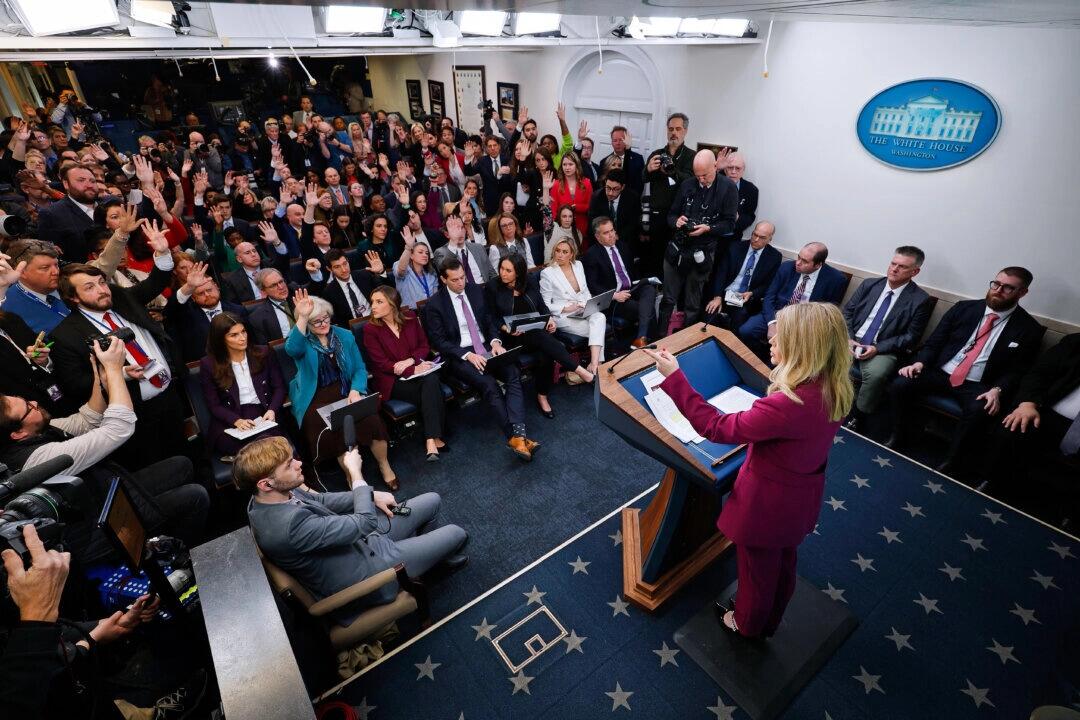
White House Press Secretary Karoline Leavitt takes questions during the daily briefing in the Brady Briefing Room of the White House on Jan. 28, 2025. Chip Somodevilla/Getty Images

Describing President Donald Trump as the “most accessible” commander-in-chief in the nation’s history, she said the administration is open for communication with all types of news outlets.

“The Trump White House will speak with all media outlets and personalities, not just the legacy media who are seated in this room,” Leavitt said.

She made the remarks during her first press conference at the executive mansion in Washington since Trump entered office for his second term.

The president has repeatedly criticized mainstream media, calling some narratives “fake news” and criticizing what he described as organized partisan attacks coming from certain news outlets.

Allowing more independent journalists and representatives from smaller organizations is meant to democratize admittance to White House events, according to the press secretary.

She cited statistics from Gallup that show that the public’s trust in traditional media sources is at record lows, noting that many news consumers are now seeking out podcasts, blogs, and other media.

“It’s essential to our team that we share President Trump’s message everywhere and adapt this White House to the new media landscape in 2025,” Leavitt said.

“It is a priority of this White House to honor the First Amendment … and as the youngest press secretary in history thanks to President Trump, I take great pride in opening up this room to new media voices to share the president’s message with as many Americans as possible.”

A seat previously reserved for the press secretary’s staff will now be used to host a new journalist who may have never been inside the historic James Brady briefing room.

Constructed between 1969 and 1970, the room is cramped, with about 49 seats and a standing-room-only crowd. Hundreds of journalists from media outlets around the world typically vie for permission to attend media briefings.

Under the Biden administration, media access was restricted, and approximately 440 journalists had their passes revoked or were denied entrance after regulations were tightened, said Leavitt.

She said the current administration is in the process of returning access to those affected by this move.

Leavitt encouraged independent journalists who do not work for an outlet that already has a seat at press briefings, are willing to pay for their own travel, and are producing content related to the administration, to submit their information for consideration.

The White House has launched a website where those interested in access can apply.

Tyler Durden
Wed, 01/29/2025 – 20:55

via ZeroHedge News https://ift.tt/yH8ENtf Tyler Durden

Trump Plans To Finally Withdraw US Troops From Syria, Israelis Say

Trump Plans To Finally Withdraw US Troops From Syria, Israelis Say

Israel and Turkish media reports say that President Donald Trump is planning to finally pull American occupying forces out of Syria. The statements began with a report this week by Israel’s official public broadcasting Kan. However, the Trump White House itself has yet to confirm this, but is likely in talks with regional states, particularly Turkey and close Washington ally Israel, about such a potential move.

Kan reported Tuesday that “senior White House officials conveyed a message to their Israeli counterparts indicating that President Trump intends to pull thousands of US troops from Syria.”

AFP/Getty Images

The Israeli reported added that “the withdrawal of American forces from Syria will raise significant concerns in Tel Aviv.” Israeli leaders see the US presence in northeast Syria as a stabilizing factor. Special forces, among some 2000 total troops have been advising and supporting the Syrian Kurds (SDF/YPG) for several years.

Just prior to Trump taking office, Biden’s Defense Secretary Lloyd Austin defended the US presence there as part of the ‘counter ISIS’ mission. US defense leaders have constantly argued over the years that the Islamic State could be resurgent if the Pentagon leaves.

But others would argue that Washington was among the biggest facilitators in the rise of ISIS, given that John Kerry once admitted that the US was trying to ‘manage’ ISIS in order to pressure Assad out.

Israeli Defense Minister Israel Katz has said in the wake of Assad’s shock ouster in early December, “We will not allow hostile forces to establish a foothold in the security zone south of Syria, from here to the Sweida-Damascus axis. We will act against any threat.”

Trump stretching back to his first administration had been more brutally honest about what American forces are really doing there, to the embarrassment of US intelligence and defense leaders, and deep state insiders. For example here’s what Trump told FOX years ago:

“I left troops [in Syria] to take the oil. I took the oil. The only troops I have are taking the oil. They’re protecting the oil. I took over the oil“. -Trump on Fox News

This in turn was used as an economic noose against Assad, but in reality it has been strangling the common populace of Syria, who might see one hour of electricity a day during winter conditions.

During Trump’s first term he signaled the we wanted the US out of Syria, but many reports said at the time he was stymied by more hawkish officials within his administration.

Time will tell whether he finally pulls American forces, also given the supposed ‘Iran threat’ is no longer a reality in HTS-ruled Syria. Even Russia is fast pulling its forces from military bases on the coast, with much gear being reportedly relocated to eastern Libya.

Tyler Durden
Wed, 01/29/2025 – 20:30

via ZeroHedge News https://ift.tt/WhsgQ0k Tyler Durden

L.A. Times Columnist Renews Attacks On ‘Lab-Leak Theory’ While Dismissing Criticism Of China

L.A. Times Columnist Renews Attacks On ‘Lab-Leak Theory’ While Dismissing Criticism Of China

Authored by Jonathan Turley,

After years of the media demonizing and attacking any scientists supporting the lab theory of COVID-19, agencies like the FBI have concluded that it is the most likely scenario.  Even the Washington Post and other long antagonistic media outlets have come to admit that the theory is credible.  None of that has apparently changed minds over at the Los Angeles Times, which helped lead the media mob against dissenting scientists. That includes the L.A. Times science columnist Michael Hiltzik, who is often cited as an example of the unrelenting and aggressive campaign to cancel those scientists who challenged the natural origins theory. Hiltzik and the L.A. Times just ran a column renewing attacks on those who support this theory, a column that continues to omit key countervailing information from the readers.

The L.A. Times appears to be the last dog in this fight.

As discussed in my recent column, media outlets that ridiculed or ravaged scientists over the theory have acknowledged that it is indeed plausible.

For example, in 2021, New York Times science and health reporter Apoorva Mandavilli was still calling on reporters not to mention the “racist” lab theory.

Likewise, the Washington Post denounced Sen. Tom Cotton (R-Ark) when he raised the theory for “repeat[ing] a fringe theory suggesting that the ongoing spread of a coronavirus is connected to research in the disease-ravaged epicenter of Wuhan, China.”

After Sen. Ted Cruz (R-Texas) mentioned the lab theory, Post Fact Checker Glenn Kessler mocked him: “I fear @tedcruz missed the scientific animation in the video that shows how it is virtually impossible for this virus to jump from the lab. Or the many interviews with actual scientists. We deal in facts, and viewers can judge for themselves.”

Then, as more government reports indicated that the theory could be correct, the Post shrugged, and Kessler wrote that the lab theory was “suddenly credible.”

Most recently, newly-confirmed CIA Director John Ratcliffe released the CIA report, which details how it views the lab theory as the most likely explanation for the virus, though assigning a “low confidence” finding.

The Wall Street JournalNew York Times, and other news outlets reported on the finding that the lab theory was the most likely. The BBC reported that “the CIA on Saturday offered a new assessment on the origin of the Covid outbreak, saying the coronavirus is ‘more likely’ to have leaked from a Chinese lab than to have come from animals. But the intelligence agency cautioned it had ‘low confidence’ in this determination.”

I noted in the column that the finding does not resolve the debate, which will continue. The point was that there can now be a debate.  The CIA did not reject the lab theory over the natural origins theory despite the overwhelming message that was sent by the L.A. Times in treating the theory as racist or looney.

Hiltzik discusses my column while objecting that I added a link to the CIA definition of “low confidence” not long after the blog posting (Such additions are common on this blog and other blogs. I often note such changes, but there was no material change in the point of the column which focused on the free speech issue). The point is not that the recommendation was made with low confidence, but that the theory was found to be plausible.

Hiltzik criticizes my column and others for highlighting the most recent disclosure. However, he omits that this follows even stronger findings from agencies like the FBI and evidence (as discussed in my column) that government scientists found the theory credible.

He also omits any mention of the fact that he is widely cited as one of the most aggressive voices seeking to cancel scientists who voiced support for the theory. While arguing that scientific journals have not embraced the theory, he leaves out that he targeted schools that sought to allow academic discussions of the theory.

Hiltzik decried an event associated with Bhattacharya, writing that “we’re living in an upside-down world” because Stanford University allowed dissenting scientists to speak at a scientific forum. Hiltzik also wrote a column titled The COVID lab leak claim isn’t just an attack on science, but a threat to public health.”

Instead, Hiltzik defends China in the column against claims that it was not forthcoming in the investigations into the virus:

“The Chinese government has been accused, mostly by the lab-leak camp, of suppressing evidence of the role of the Wuhan lab out of embarrassment or fear of international repercussions. But that’s highly misleading. The truth is that China is no happier about evidence that the pandemic originated in one of its wildlife markets.”

News organizations reported how China shut down contacts with scientists and closed off access to the lab, including refusing to give data to WHO.

Even NBC, which once piled on the attacks on dissenting scientists, has noted that China has steadfastly fought disclosures and only released information that was going to be made public.

As Hiltzik notes, even the World Health Organization (WHO) denounced China for its lack of transparency. WHO has long been accused of being dominated by China, particularly in its initial investigations into the virus.

The L.A. Times, however, is still downplaying such complaints and attributing them to fringe writers. Hiltzik portrays the criticism as mostly the ravings of “the lab-leak camp” and says the accusations are “misleading.”

He also does not discuss the findings of other federal and congressional reports.

He focuses instead on the lack of “peer-reviewed journals” supporting the theory. It is an ironic point from a writer who attacked Stanford for even allowing scientists to share their work in an academic setting.

Once again, however, none of these reports are dispositive either way. That is the point. The debate that figures like Hiltzik fought to prevent can finally occur.

However, the L.A. Times is still trying to chill that debate by portraying anyone supporting the theory as purveyors of “disinformation.” Hiltzik writes:

“The uncritical retailing of the CIA assessment underscores the perils of scientific misinformation and disinformation for public health. The Trump administration’s evidence-free focus on the Chinese laboratories ranks as anti-science propaganda.

Even though agencies like the FBI are giving more credence to the lab theory, the L.A. Times is still portraying the position as dangerous disinformation.

It takes an element of rage to maintain this dwindling position. Many of the experts who were once ridiculed for questioning the efficacy of masks, the six-foot rulenatural immunities, and school closures have been supported in recent reports. There is growing support for the view, for example, that our closure of schools did not have a meaningful impact on the transmission rate of the virus. Yet, that was another debate that was snuffed out under the attacks over spreading disinformation. (Notably, Hiltzik also supported closing schools and has rejected claims that it was a mistake).

I value writers like Hiltzik for challenging scientists on issues like the lab theory. For those of us with little scientific knowledge, such debates among knowledgeable people are essential. Most of us are open to either theory. However, figures like Hiltzik actively sought to curtail that debate when it was most needed. He portrayed the very discussion of the theory as a public health danger and now continues to invoke the catch-all “disinformation” label to dismiss countervailing views.

It is a particularly ironic moment when L.A. Times owner Patrick Soon-Shiong is promising to restore objectivity to the newspaper and even posting a “bias meter” for readers to be warned about slanted material.

The L.A. Times and Hiltzik are obviously and heavily invested in the rejection of the lab theory. However, when you are dismissing Chinese obstruction, the burden on the newspaper is becoming not just crushing but embarrassing. There is an alternative. The L.A. Times could admit that it was wrong in demonizing scientists and that both of these theories are plausible.

Most importantly, it could embrace the need for an open and civil debate on the question. As the leading newspaper in the state with the greatest concentration of academic and research facilities, the L.A. Times owes it to its readers to be honest and open with both sides of the origins debate.

*  *  *

Jonathan Turley is the Shapiro professor of public interest law at George Washington University and the author of “The Indispensable Right: Free Speech in an Age of Rage.”

Tyler Durden
Wed, 01/29/2025 – 20:05

via ZeroHedge News https://ift.tt/74WOizJ Tyler Durden

Trump Is “Dangerous” & Racist To Keep Men Out Of Women’s Prisons, Professor Says

Trump Is “Dangerous” & Racist To Keep Men Out Of Women’s Prisons, Professor Says

Authored by Matt Lamb via The College Fix,

Trump’s executive order is about keeping women ‘pure,’ professor says…

President Donald Trump’s executive order to keep men who claim to be women out of female prisons is “dangerous” and hints of racism, according to an anthropologist.

Kate Clancy, a professor at the University of Illinois at Urbana-Champaign, analyzed the president’s directive that the federal government define sex on biological terms.

He also said prisons should not house men who claim to be transgender with women. The administration has also frozen people from requesting an “X” gender marker, for “nonbinary,” on their passports.

The order is “stupid” and “dangerous,” Clancy told LGBTQ Nation. Clancy disputed the idea that sex is biologically determinable. However, biology experts have affirmed there are only two sexes and it is not possible to change one’s sex.

“I think Trump, in whatever terrible language is available to him, is trying to control women and control people he perceives to be in the woman category,” Clancy told the news outlet.

“A lot of this is keeping the category of women pure—and also, obviously, about doing immense harm to trans people.”

But she also finds a racial element in the executive order.

She stated:

There’s also a very racial, white supremacist thing going on here with this “defending women.”

It’s a very old idea—it appears in travelogs, early writings of Europeans, as well as in the United States when they started encountering North American indigenous folks, and the way that they thought about enslaved peoples.

There was this belief that in the “lower races,” men and women were less different and that in the “higher races,” there were more differences between women and men.

This was about saying men and women are differentiated, clear, non-overlapping categories because that makes us a more evolved people.

Clancy also said “sex is also socially constructed.”

“We’re seeing it take place right now with these executive orders, where they are trying to impose their own definition—an ahistorical, a-scientific definition of supposedly a scientific phenomenon,” she said.

She again called it “stupid” when asked about the executive order another time during the interview. The directive has also left the professor in “incredible distress.”

Trump is “signaling particular things” with his order, the professor said. This includes “protecting the purity of the female category and trying to lay claim to personhood and sex as early in the existence of a human as possible.”

That really says something about how big a step this executive order is trying to take—they’re trying to make it as all-encompassing and as absolutely draconian as possible,” according to Clancy.

The anthropologist has previously launched a research project on why women, or as she calls them, “menstruators,” were facing problems following vaccination against COVID-19.

Tyler Durden
Wed, 01/29/2025 – 19:15

via ZeroHedge News https://ift.tt/sUa7PYf Tyler Durden

ETF Expert: Why This SEC Approval Would Be A ‘Game Changer’ For Bitcoin

ETF Expert: Why This SEC Approval Would Be A ‘Game Changer’ For Bitcoin

The way U.S. financial institutions interact with Bitcoin may be on the brink of a major shift, according to a leading ETF expert. Nate Geraci, founder of the ETF Store, shared with The Thinking Crypto podcast host Tony Edward that if the SEC approves BlackRock’s iShares Bitcoin Trust (IBIT) proposal for “in-kind” Bitcoin redemptions, it would be a “game changer,” as the move would not only provide much-needed regulatory clarity, but also open the door for financial institutions to confidently hold and transact in Bitcoin, Geraci said. 

TONY EDWARD: Last week, Nate, we saw a flurry of ETF applications on Friday, of all days. But the big one I wanted to get your expertise on is the in-kind creation and redemption for the BlackRock iShares Bitcoin Trust. Can you tell us about this and why you think the timing happened now?

NATE GERACI: Yeah, so I think this would be a bigger deal optically than it would actually be for the ETFs themselves. What I mean by that, Tony, is that there’s no question in-kind creation and redemption would make the ETFs a little more efficient. The ETFs would probably track Bitcoin’s price more closely, and you’d likely see slightly tighter trading spreads, maybe a little better overall performance. But these ETFs are already operating with very small premiums and discounts. They trade with tight spreads and track Bitcoin’s price extremely well. So, any improvements operationally would be marginal.

The big story here is that if this is approved, it would essentially be the SEC giving the okay for market makers and authorized participants to hold and transact in Bitcoin. Right now, there’s no regulatory clarity for market makers. If this gets approved, that clarity would likely come along with it. I think that’s the real game changer. And this also ties into the SEC rescinding SAB 121, which will allow financial institutions with market-making businesses to hold Bitcoin. So, I think these two developments are closely tied together.

TONY EDWARD: That was going to be my next question—Is this because of SAB 121 getting repealed? I’m assuming it is, because now the banks and institutions don’t have to look over their shoulder. They can hold these assets directly on their balance sheet without it being treated as a liability.

And just for the folks who may not be familiar with this, “in-kind” means they can redeem in actual Bitcoin versus cash, right?

NATE GERACI: Yeah, but there’s a very important distinction here. So, that’s not at the individual investor level. This is at what’s called the authorized participant level. These are big financial institutions that help keep the share price of an ETF aligned with the price of the underlying asset. And we’re talking about transacting in units of, say, 10,000 shares. Here’s how I like to break this down, Tony, to simplify it. I always describe an ETF as a warehouse—it’s just a vehicle that holds assets, similar to how a warehouse might hold goods. Let’s take gold as an example, even though we’re talking crypto here. I think it’s easier to conceptualize.

So imagine someone puts gold into a warehouse, and in return, they get a receipt that says they own a certain amount of gold stored there. That person can then trade that receipt back and forth without the gold ever leaving the warehouse. And if they want, they can present the receipt back to the warehouse and get the gold back. That’s basically how an ETF works. For example, with a gold ETF, gold is delivered into a trust, and the ETF shares represent ownership in that trust. Those shares can be traded back and forth.

What’s happening with spot Bitcoin ETFs right now is that instead of delivering Bitcoin directly into the trust or the warehouse in my example, market makers have to give cash to the warehouse to buy the Bitcoin. It’s just not as efficient. But going back to the authorized participants—hopefully, I’m not losing people here—they’re the party that actually transacts with the warehouse. They facilitate the creation and redemption of those receipts or ETF shares.

Tyler Durden
Wed, 01/29/2025 – 18:50

via ZeroHedge News https://ift.tt/GP5VovN Tyler Durden

DeepSeek: Is This Jevon’s Cope?

DeepSeek: Is This Jevon’s Cope?

Authored by Doug O’Laughlan via ‘Fabricated Knowledge’ substack,

One of my favorite market sayings is that “narrative follows price.” In the case of DeepSeek, this has never been truer. I’ll summarize the high-level points of DeepSeek and, importantly, discuss where we are in the vibes cycle.

DeepSeek is hilarious to me because of how it contrasts with literally one month ago.

One month ago, around the time of Neurips, the prevailing narrative was that pretraining scaling laws were slowing.

Therefore, continued investment in AI infrastructure would slow down as incremental spending on new equipment wouldn’t justify the return.

SemiAnalysis did a fantastic job explaining why that wouldn’t be the case. Ironically, Reinforcement learning and continued architectural progress were some of the main reasons. Pretraining was slowing down, and thus, GPU demand was “over.”

Now fast forward to DeepSeek, which released their reasoning model a week ago, on January 20th, 2025, and v3, their much smaller model, on December 26th, 2024. For those closely watching, I believe that X was all over the concept of “intelligence too cheap to meter,” but then the narrative took a turn for the wilder on Friday and into the weekend.

What is so startling here is how both are perceived as bad for infrastructure spending, yet the latter refutes the former. Now, algorithmic progress is so significant that we will not need to build any new infrastructure. Technology has improved, but demand is impaired. The reality, of course, is somewhere between these two extremes because they both cannot be accurate and are inadequate for GPU demand. You can’t tell me an algorithmic improvement from a Chinese company that the market was begging for last quarter is now doomed.

The reality is that this market is heated and is looking for a reason to sneeze. I hate to be cliche and call Mr. Market bipolar, but it truly is. This is just the latest wall of worry for AI companies to climb. Let’s discuss the bull and the bear debate, and then I’ll discuss where I think it’s going.

Jevons Paradox (Bull Case)

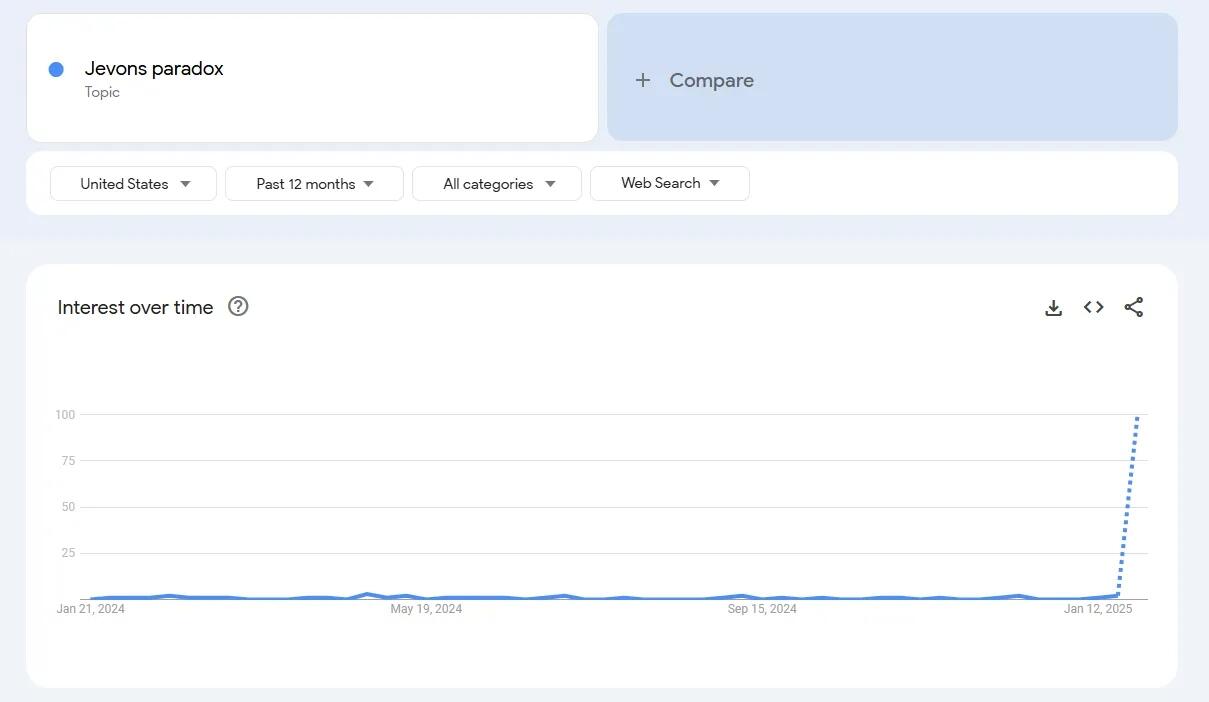
This phrase might be new to you, but I think today is the day it crosses over into the mainstream lexicon. Just look at search interest right now. I believe Cathie of Arkk Invest made it popular, but today, it’s the rallying cry of bulls.

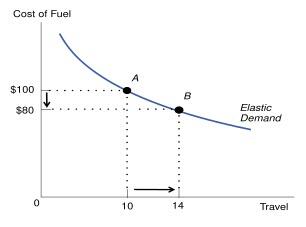
So what is the Jevons Paradox? It’s pretty much the observation that technology does make a good cheaper; what happens is that the demand for the good paradoxically increases. There are a few notable examples, and my favorite one, of course, is transistors. Transistors got cheaper every year for 50 years, and ironically, instead of needing less every year, we used much more, even accounting for shrink. If the price of a flight dropped from 1000s to 10s of dollars, I would probably fly more.

Think of it this way: if it’s cheaper, you’d use more of it, which is the definition of elastic demand and a good candidate for the Jevon Paradox.

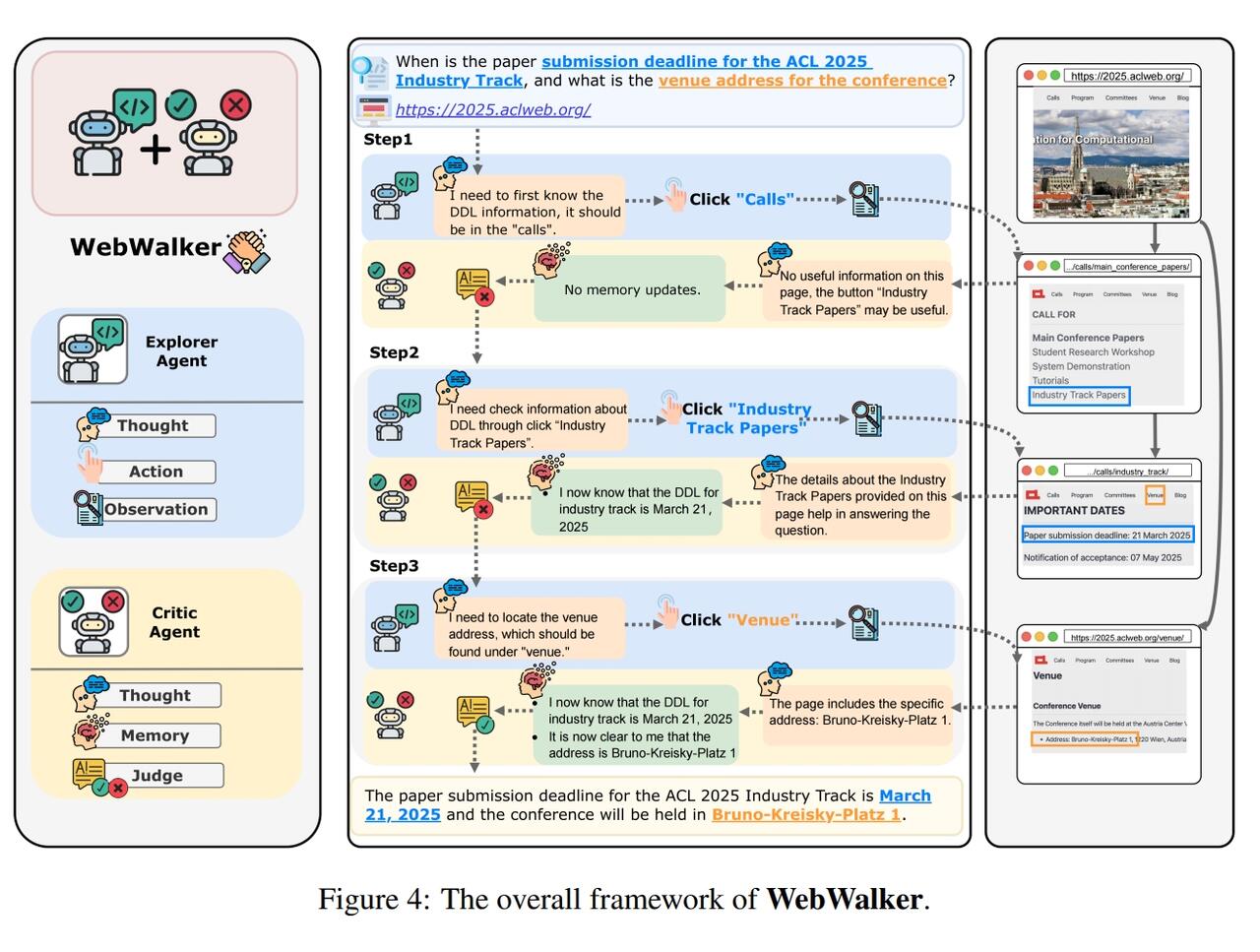
Now, let’s use the context of AI. This is WebwalkerQA (this is not even a useful paper), but I was looking at WebWalkerQA, and they gave an example of two agentic AIs that searched websites together to provide better information.

If the cost of agents was lower, why stop at two? A friend remarked that your intelligent coffee machine could have a million Einsteins working on making the best cup of coffee every day. As intelligence gets cheaper, we will throw more brute-force intelligence at every one of the world’s key problems. In a world with massively lower costs, instead of becoming more efficient, we often throw more resources at the problem.

This is the thrust of the Jevons Paradox as a bull case and what will almost assuredly happen in the long run. It took ~16,000 transistors to get a rocket on the moon. Now, ~16,000 transistors probably could run any modern application. What becomes cheaper gets used more, and ironically, demand explodes.

Supply Overshoots Demand and Timeline

There is one little problem – and one I’ve been writing about in my recent piece on capital cycles. Lead and lagging times can create kinks, producing very drastic scenarios. Maybe the Jevon paradox is correct, but the issue is not if we will use more, but a bit about timing.

What happens if the deflator of 90% better models massively outweighs the increased usage? There’s a pertinent case study: DWDM (Dense wavelength-division multiplexing) massively increases the fiber supply. And so, while the Jevons paradox case was 100% correct in the long run, 97% of the fiber laid in 2001 was unlit. Most of that fiber is now lit today, but Jevons paradox can be long run right and in the short run the companies are entirely divorced from reality.

That is an example of a supply-and-demand overshoot that the market is quickly contemplating. The terminal value is acceptable for everyone involved, but the pesky short run escapes us.

In this case, the bear case is that yes, Jevons happens, but supply overwhelms demand so much in the short term that the rapid addition of supply overwhelms the long-term demand.

The reality is likely never as bad as feared and never as good as dreamed.

Tyler Durden
Wed, 01/29/2025 – 18:25

via ZeroHedge News https://ift.tt/haUs5bg Tyler Durden

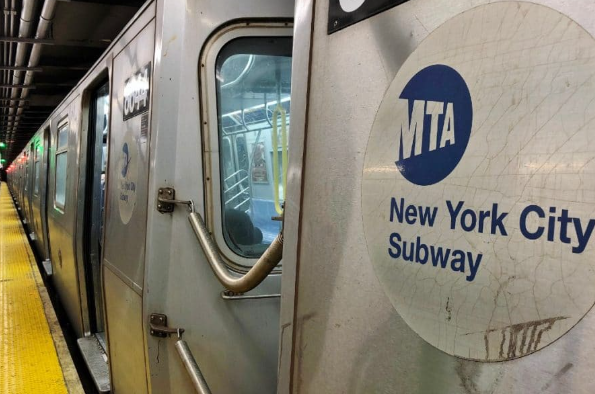
“Potential For Collapse”: MTA Operates On “Rusty, Corroding” Infrastructure, Report Highlights

“Potential For Collapse”: MTA Operates On “Rusty, Corroding” Infrastructure, Report Highlights

MTA’s infrastructure is crumbling, despite the agency’s incessant appetite for new cash. 

The 110-year-old Grand Central train shed, vital for 200,000 daily riders, is in poor condition, with 95% of its support beams deemed “poor or marginal”, according to Gothamist.

Built to support horse-drawn carts, it now struggles with modern trucks and constant water leaks that corrode its steel columns.

The Gothamist report said that MTA plans to spend $1.7 billion on its renovation as part of a $65 billion five-year plan, which also includes repairing over 150 subway stations, elevated tracks, and outdated equipment.

Delaying repairs will worsen conditions and increase costs, warned MTA officials, who are asking state lawmakers for funding. Riders remain skeptical about the agency’s ability to deliver, preferring reliable service over cosmetic improvements. “We want strong service, not pretty stations,” said Malcolm Green, a commuter from the Bronx.

Talking about the infrastructure near Grand Central Station, MTA construction chief Jamie Torres-Springer said: “The condition of this artery continues to deteriorate in very significant ways. The worst thing that can happen if you don’t deal with that is you have the potential for a collapse.”

Recall, MTA is once again at the ‘cash grab’ machine, even with NYC’s most recent congestion tolls going into place. 

The MTA approved a $1.27 billion order for 435 new subway cars, including 80 open-gangway models, and outlined plans to raise subway and bus fares to $3 per ride. Chairman Janno Lieber noted the fare increase, expected by late 2025, requires formal board approval next year.

Lieber said this week: “This is a good deal. We are way cheaper than other major world cities.” But the Post wrote days ago that critics slammed the fare hikes and new $9 Manhattan congestion toll that started Jan. 5, pointing to high spending.

The MTA’s plan includes 4% fare increases in 2025 and 2027, potentially raising fares to $3.14, with congestion tolls rising to $15 over time.

And we wrote just days ago how train delays caused by faulty infrastructure surged 46% last year compared to 2021, and major incidents delaying 50 or more trains hit their highest level since 2018, according to MTA data.

Another Gothamist investigation revealed the crumbling state of the system through tours of restricted transit facilities and interviews with over 100 riders from nearly every subway line.

MTA records reveal service breakdowns could surpass those of the 2017 “summer of hell,” when subway reliability hit record lows. Officials blame decades of deferred maintenance, keeping outdated equipment in use. Experts warn similar failures are imminent, risking widespread system disruptions.

The MTA has long been criticized for underfunding its infrastructure, a problem worsened by reduced maintenance during the 1970s financial crisis and massive debt from state funding cuts in the 1990s.

Tyler Durden
Wed, 01/29/2025 – 18:00

via ZeroHedge News https://ift.tt/lisHDAP Tyler Durden

Jim Bovard: Trump Freezes Foreign Aid Frauds

Jim Bovard: Trump Freezes Foreign Aid Frauds

Authored by Jim Bovard via The Libertarian Institute,

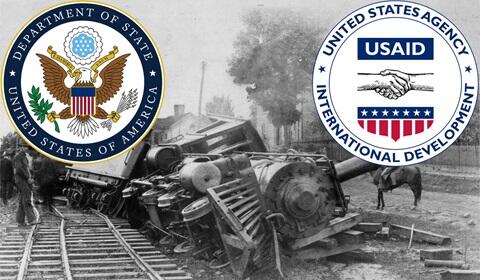
The Donald Trump administration suspended top officials at the U.S. Agency for International Development earlier this week. The move, labeled a “Monday afternoon massacre,” was spurred by allegations that top USAID officials were circumventing President Trump’s ninety day freeze on foreign aid disbursements. Rep. Gregory Meeks (D-NY) howled on Twitter that “Trump decimating USAID’s leadership without cause is all harm & no benefit for our national security.” But the sordid record of failed aid programs doesn’t support his caterwauling.

Foreign aid has long been the incarnation of American benevolence—at least according to the Washington elite. But presidents have sporadically conceded otherwise for more than sixty years. President John F. Kennedy promised “a dramatic turning point in the troubled history of foreign aid” in 1961. Didn’t happen. Twenty years later, President Ronald Reagan declared, “Unless a nation puts its own financial and economic house in order, no amount of aid will produce progress.” I bashed Reagan’s failed policies in a 1986 New York Times piece that labeled foreign aid “the opiate of the Third World.” In 1989, an USAID report conceded that foreign aid had been a dismal failure and urged a “radical reshaping” of U.S. assistance. No such luck.

In a 2010 United Nations speech, President Barack Obama promised to “change the way we do business” with foreign aid, pledging to judge aid programs and budgets “based not on dollars spent, but on outcomes achieved.” The Los Angeles Times noted that Obama’s “aides said the United States in the past has often seemed to just throw money at problems.” The following year, USAID ballyhooed a new evaluation policy for a “transformation based on absolute demand for results.”

But any “absolute demand for results” was obliterated by Obama’s 2008 campaign pledge to double foreign aid. As the The Christian Science Monitor noted, USAID “created an atmosphere of frantic urgency about the ‘burn rate’—a measure of how quickly money is spent. Emphasis gets put on spending fast to make room for the next batch from Congress.” Martine van Bijlert of the nonprofit Afghanistan Analysts Network commented, “As long as you spend money and you can provide a paper trail, that’s a job well done. It’s a perverse system, and there seems to be no intention to change it.” Rep. Raul Labrador (R-ID) was chagrined in 2011 when he visited Afghanistan and spoke to USAID officials: “When we asked what were your results, the answer was the result was we spent X amount of money. That is all they knew, how much money had actually been spent.”

One American contractor received $35 million to promote the rule of law in Afghanistan in part by distributing kites and comic books to kids. The New York Times reported that the contractor “arranged an event to hand out kites and comic books to children. The kites were festooned with slogans about gender equality and rule of law that most of the attendees could not read. Police officers guarding the event stole many of the kites, beating some of the children, while fathers snatched kites from their girls to give to the boys.” A 2015 report by the Special Inspector General for Afghanistan Reconstruction (SIGAR) report found that the billion dollars the U.S. government spent on “rule of law” and justice reform programs in Afghanistan had been an utter failure. The “burn rate” fixation produced endless absurdities, including collapsing schools, impassable roads, failed electrification projects, and non-existent phantom health clinics aside from the revival of the Taliban.

“Fail-and-repeat” was also USAID’s motto in Iraq. After the 2003 invasion, USAID and the Pentagon paired up to spend $60 billion to rebuild Iraq. As long as projects looked vaguely impressive at ribbon-cutting ceremonies, USAID declared victory. Rep. Jason Chaffetz (R-UT) listed some of the agency’s farcical Iraq success claims at a 2011 hearing: “262,482 individuals reportedly benefited from medical supplies that were purchased to treat only 100 victims of a specific attack; 22 individuals attended a 5-day mental health course, yet 1.5 million were reported as beneficiaries…and 280,000 were reported as benefiting from $14,246 spent to rehabilitate a morgue.” Ali Ghalib Baban, Iraq’s minister of planning, denied in 2009 that U.S. aid for relief and reconstruction had benefited his country: “Maybe they spent it, but Iraq doesn’t feel it.” The Center for Public Integrity reported that, according to top Iraqi officials, the biggest impact of U.S. aid was “more corruption and widespread money-laundering.” Unfortunately, corruption has long plagued foreign aid around the globe.

Some foreign aid programs are designed almost solely for bragging rights. The United States launched the Food for Peace program during the Dwight Eisenhower administration largely to dispose of embarrassing crop surpluses spurred by lavish subsidies. In the 1950s and 1960s, massive U.S. wheat dumping in India disrupted India’s agricultural market and bankrupted thousands of Indian farmers. In 1984, George Dunlop, chief of staff of the Senate Agriculture Committee, told me that American food aid may have been responsible for the starvation of millions of Indians. The U.S. government was often angry at the Indian government because of its pro-Soviet leanings in the Cold War. In a secret White House tape in 1971, President Richard Nixon declared that “the Indians need—what they really need is a mass famine.”

After President Bill Clinton sent U.S. troops to re-install Jean-Bertrand Aristide as Haiti’s ruler, Aristide agreed to end Haitian tariffs on rice imports. Heavily subsidized U.S. rice soon flooded the country and bankrupted legions of Haitian farmers. In 2010, Clinton publicly apologized for the devastating impact: “I have to live every day with the consequences of the lost capacity to produce a rice crop in Haiti to feed those people, because of what I did.” After a 2010 earthquake, the United States and other nations deluged the island with free food, profoundly disrupting local farm markets. Two months after the earthquake, Haiti’s President Rene Preval pleaded to the U.S. government to “stop sending food aid, so that our economy can recover and create jobs.” (The U.S. refused to stop.)

In 2016, the United States dumped more than a million pounds of surplus peanuts on the island, threatening the livelihoods of a 150,000 Haitian peanut farmers. Sixty humanitarian and activist organizations warned that of “a series of devastating consequences,” an Haiti’s largest rural organization denounced the peanut donation as “a plan of death” for the country’s farmers. Raymond Offenheiser, the president of Oxfam America, complained, “USDA has not done any market analysis in Haiti to ensure that this project does not interfere with local markets.” Protests did not deter USDA’s peanut deluge.

Foreign aid bureaucrats apparently vow to never learn from mistakes. SIGAR “found a USAID lessons-learned report from the 1980s on Afghan reconstruction but nobody at AID had read it” after the 2001 invasion. In 1982, USAID’s incorrigibility spurred a sardonic GAO report title: “Experience—A Potential Tool for Improving U.S. Assistance Abroad.” A 2009 USAID report found that evaluation of U.S. foreign aid programs “rarely assesses impact, lacks sufficient rigor, and does not produce the necessary analysis to inform strategic decision making.” A 2013 Congressional Research Service report lamented that many USAID staffers “are reportedly defensive about evaluation, concerned that evaluations identifying poor program results may have personal career implications, such as loss of control over a project, damage to professional reputation, budget cuts, or other potential career repercussions.” One USAID bureaucrat bluntly admitted, “If you don’t ask [about results], you don’t fail, and your budget isn’t cut.”

Foreign aid has been incorrigible since long before most of the readers of this article were born. Happily, the Trump administration is not repeating the “free market pipe dreams” used to justify foreign aid handouts in prior Republican administrations. Both the Reagan and the George W. Bush administration pretended that they could bribe foreign governments to reduce their idiotic economic policies. Foreign aid is failing in our times for the same reasons that I laid out almost forty years ago in The New York Times:

“Every time a third world politician says something nice about free enterprise, it seems to cost American taxpayers another $10 million in foreign aid. We are squandering billions annually, and often do more harm than good to the world’s poorest. Some countries simply refuse to tell us how our foreign aid donations are used—yet keep getting more money or free food year after year. A country virtually has to declare war on America to  be declared ineligible for more aid.

The vast majority of foreign aid goes to foreign governments. Yet, strong, arbitrary and interventionist governments are the third world’s largest curse. Third world governments could not have become so strong without foreign aid—and could not maintain their stranglehold over the economy without constant injections of further aid.        

If governments were following sound economic policies, they could readily attract foreign investment and loans. If they are busy scuttling their own economies, no amount of handouts will save the day.”

Hopefully the Trump administration will extend the ninety day freeze on foreign aid disbursements until the end of his presidency. American taxpayers should no longer be vexed to pay for boondoggles anywhere on earth. Ending foreign aid will also be a huge step to curbing American meddling around the globe.

Tyler Durden
Wed, 01/29/2025 – 17:40

via ZeroHedge News https://ift.tt/p9JmvaL Tyler Durden

Are Sh*tposting Fed Workers With ‘TDS’ On Reddit In Violation Of Hatch Act?

Are Sh*tposting Fed Workers With ‘TDS’ On Reddit In Violation Of Hatch Act?

The Trump administration has just offered millions of unproductive federal workers buyouts through a government-wide “deferred resignation” program to push efficiency and trim costs in a major restructuring effort to paralyze the ‘Deep State’. 

One pathway the Trump team could take to cut federal workers is this… 

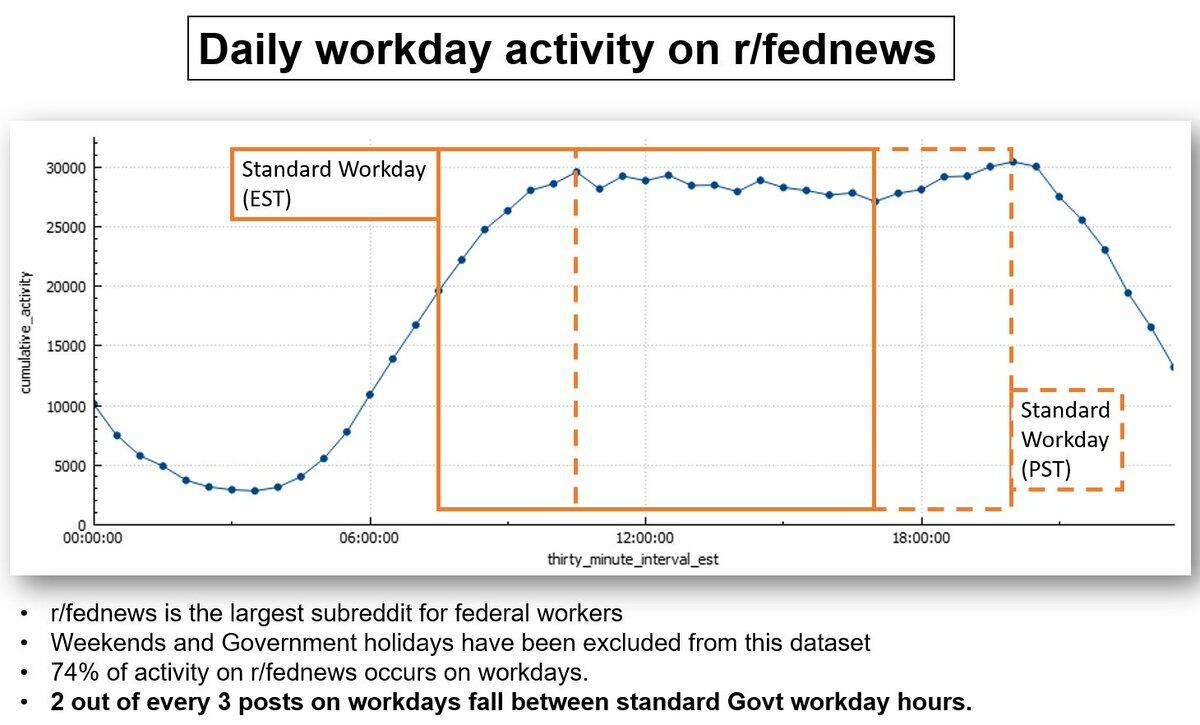
X user Reddit Lies posted what appears to be user data from Reddit’s r/fednews, the largest subreddit for federal workers, showing that thousands—if not more—are spending much of the standard working day shitposting, sharing, and liking one-sided political rhetoric, potentially in violation of the Hatch Act.

Here are the major findings:

  • r/fednews is the largest subreddit for federal workers

  • Weekends and Government holidays have been excluded from this dataset

  • 74% of activity on r/fednews occurs on workdays.

  • 2 out of every 3 posts on workdays fall between standard Govt workday hours.

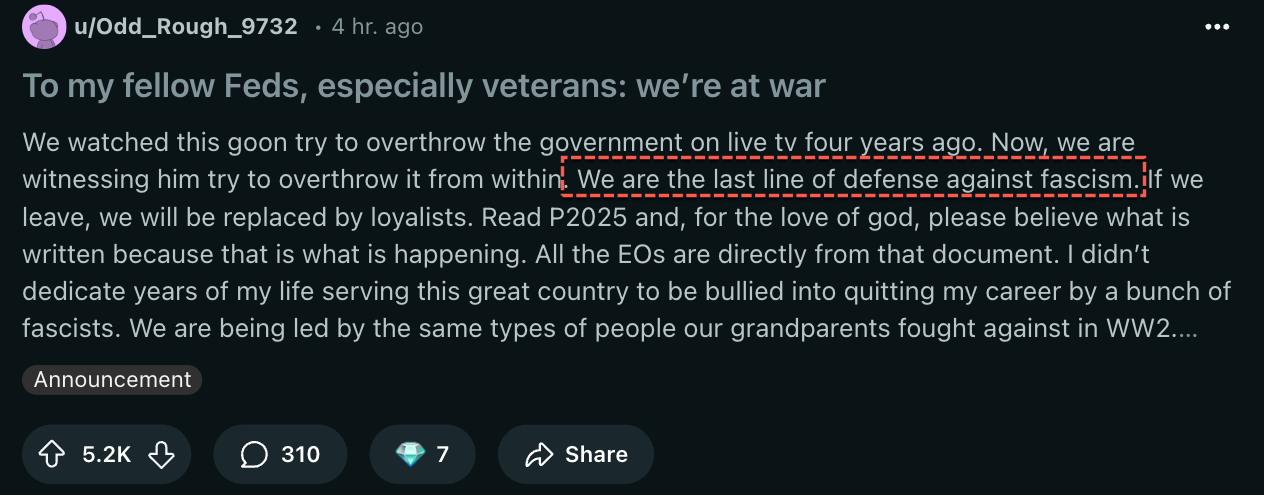
The latest one-sided political rhetoric from the subreddit feed of more than 234k federal employees comes from user u/Odd_Rough_9732: “We are the last line of defense against fascism.” 

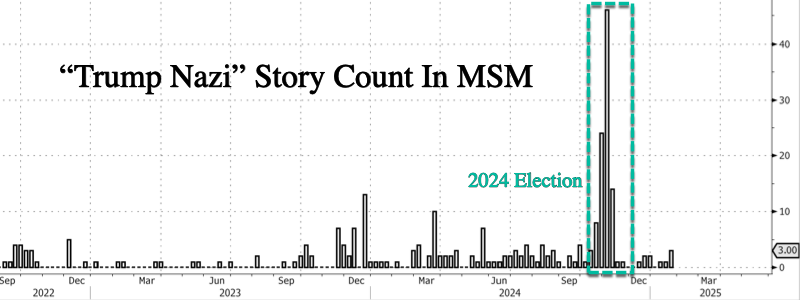
Recall that Democrats used “fascist” or “Nazi” rhetoric against Trump in the prior election cycle.

Remember when leftist corporate media called Trump a “Nazi” non-stop right before election day?

“We just had a meeting about employees posting memos and meeting topics on Reddit and were told to stop “leaking” information. DONT STOP, the people deserve to know the information,” another user said. 

Fed workers engaging in shitposting, liking, and reposting one-sided political viewpoints—some displaying signs of ‘TDS’—should be investigated for potential Hatch Act violations.

The federal workers on r/fednews who suffer from TDS are part of the administrative state, and judging by the content of their posts, they’re terrified about “change” after years of being in their cozy ivory tower.

The data from Reddit Lies also highlights the extent of unproductivity among some federal employees.

Tyler Durden
Wed, 01/29/2025 – 17:20

via ZeroHedge News https://ift.tt/w6lmPWZ Tyler Durden