Escobar: What Sultan Erdogan Is Really Up To

Escobar: What Sultan Erdogan Is Really Up To

On the table from Pepe Escobar, a geopolitical banquet – served by some of the best independent analytical minds from Bursa to Diyarbakir.

ISTANBUL – The scene is a Circassian restaurant off fabled Istiklal street in historic Beyoglu. On the table, a geopolitical banquet – served by some of the best independent analytical minds from Bursa to Diyarbakir. The menu, apart from a meze feast, is simple: only two broad questions about Sultan Erdogan’s approach to BRICS and to Syria.

Here’s a concise synopsis of our dinner – more relevant than a torrent of Western-manufactured word salads. Enjoy it with a hefty dose of the best arak. And let the table have the first – and last – word.

On BRICS:

“Türkiye feels itself as part of the West. If we look at our political party leaderships and Turkish elites, right-wing or left-wing, there’s no difference. Maybe a little bit part of the East… Ankara is using its membership in BRICS as a bargaining chip against the West.”

Türkiye simultaneously could be a member of BRICS and NATO?

“Erdogan has no clear future plans. After Erdogan there’s no clear answer for the future of the AKP party. They could not establish a normal, permanent system. We have a governmental system just for Erdogan. We are receiving gas from Russia. We buy materials from China, assembling them in Turkish factories and selling them to Europe and the U.S. We have advantages in foreign trade compared to the EU, according to statistics published by the Turkish government. The biggest trade deficit is against Russia – and then China. This is our special position – and explains why Ankara does not want to lose the Eastern option. And at the same time we depend on the West to defend ourselves. All that explains our unique foreign policy behavior.”

So there’s no guarantee Ankara will agree to become a BRICS partner?

“No. But Ankara will not completely close the door to BRICS. Türkiye knows the West is losing its power. There are new dynamics, rising powers, but at the same time we are not a completely independent power.”

On the three pillars of Turkish society: 

“You can’t think about geopolitics without ideology. Erdogan and the AKP decided that it’s only possible to integrate Türkiye with a liberal-Islamist project. Almost two generations have grown with them – and they don’t know what happened before. They are neo-Ottomans, Islamists, pro-Arabization guys. In Türkiye, if someone openly supports Islamism, he is Arabized, ideologically. Here we have three pillars. The first one is a nationalist view – we have right Kemalism and left Kemalism. The other one is a Western perspective. And the third one is Islamist, also divided in two factions; one is nationalist and the other is liberal Islamist, integrated with Western institutions, NGOs and capital. That’s why we can say that wokeism and Islamism are different sides of the same coin. These guys are using the Turkish state to maneuver in the broader Middle Eastern geography – but in fact they are focused on Western-minded neoliberal economy, politics, society.”

Neo-Ottomanism, revived:

“The West planned Syria together with them – the neo-Ottomans. During the Gaza war they kept sending oil to Israel, it was a P.R. thing for Erdogan, he needs to give this message to the grassroots anti-imperialist, Islamist part of Turkish society. The problem for Erdogan is that Türkiye is different from Arab countries, while Turkish capital is connected to the West, some of it connected with Russia, and Türkiye is dependent as much as 40% on Russian energy. Ankara needs to act in a balanced way, but that does not change the whole picture: Capital that supports Erdogan, and benefits from Erdogan, including 40% of the Turkish exports going to Europe. When it comes to BRICS, they can try to manage the relationship but they will never agree to join the BRICS directly.”

The Sultan never sleeps:

“Erdogan is a pragmatist. Ideological. He can sell out the Palestinians – easily. He may be very powerful, and grasp how the state system works, but he does not enjoy total obedience from society to rule. That’s why he’s always aiming for some sort of balance.”

Can we say that with Greater Idlibistan under the control of Türkiye’s MIT – with Jolani as one of their main assets, if not the top asset – the MIT knew about the capabilities of HTS, and they knew this would stop in Aleppo?

“Not all the way to Damascus. That was the original plan. The aim of the operation was attacking the regime, The aim was not the conquest of Damascus. This was the best unexpected result of the attack. The military leadership of HTS said, “we lost our best warriors in the first moments of the operation”. But then came the collapse of the Syrian Army.”

So what does Erdogan really want? Rule over Aleppo or over the whole of Western Syria?

“Syria was part of the Ottoman empire. In his dreams, this is still the Ottoman empire. But he knows Türkiye’s limits in trying to rule over Syria – and the Arab world, enraged, could align against Türkiye. It’s possible – partly – to have a proxy government in Damascus. This is what Erdogan wanted from the Assad government only six months ago. Erdogan was begging to Assad, ‘please come to the table’. It turned out that he was actually sincere. Jolani said “we were really anxious that Assad would accept the offer by Erdogan’. This was the Assad government’s big mistake. Assad had already lost the ability to rule the country. Ankara never wanted the sudden collapse of the Assad government. To rule this chaos is not easy. And Türkiye does not have the military capacity to do it. HTS also does not. And without Türkiye HTS cannot survive.”

So Syria as a province of neo-Ottomanism is not gonna happen?

“This is not just Türkiye’s strategy. This is American and Israeli strategy – to cantonize Syria. So they achieved something, but it’s not finished. We don’t know what’s gonna happen. Remember before October 7, geopolitically no one could foresee what happened in Gaza. In Turkey’s case, this was a joint project. It began in 2011. The main goal was so obvious, to integrate Syria into the Western world. That failed, but the Americans stayed there, because they created a brand called ‘ISIS’, American investment in the Kurds, and in the end Türkiye, what they got was Idlib; it was necessary at the time, because Syria, Russia, Iran, they are not like the Americans or American-connected Islamists, they are not a destructive power. Step by step they wanted to “earn” Türkiye, with the Astana process. Türkiye in the end stuck with the American policy, they waited and waited and waited, and now they have something other than what they wanted. And that’s an alarming situation for Türkiye – because they don’t want Syria to be partitioned. It’s not even certain that the Americans will let Türkiye train the new Syrian army. The West now has total economic leverage.”

Tyler Durden
Thu, 01/30/2025 – 05:00

via ZeroHedge News https://ift.tt/hKr4qym Tyler Durden

Visualizing How Americans Spend Their Money

Visualizing How Americans Spend Their Money

Today, consumer spending represents 68% of U.S. GDP, with much of this used for housing, transportation, and healthcare costs.

More than ever, Americans are using debt and credit cards to fund these purchases. In the second half of 2024, household debt hit a record $17.9 trillion. At the same time, credit card debt surpassed a historic $1 trillion, climbing by 8.3% over the time period.

This graphic, via Visual Capitalist’s Dorothy Neufeld, shows the average annual expenditures of Americans, based on data from the Consumer Expenditures Survey 2023 by the Bureau of Labor Statistics.

Breaking Down the Annual Expenditures of Americans

Below, we show the average annual spending patterns of Americans in 2023, using the latest available data:

Nearly half of American consumer spending goes toward housing and transportation, with housing costs increasing 12.4% since 2021, slightly outpacing inflation.

Even as U.S. home prices hit record levels, debt service payments as a percentage of disposable income stood below the 2007-2008 peak. Part of this is due to rising salaries, as average annual incomes jumped from $87,432 to $101,805 in two years.

For food, Americans spend approximately $10,000 annually on groceries and dining out, growing by 20.5% since 2021. As food price inflation has surged above both wage inflation and overall inflation, select food and beverage retailers surveyed by the Census saw operating profits increase 79% between 2019 and 2023.

Overall, spending on food away from home outpaced food at home expenditures in 2023, increasing by 8.1% and 6.1%, respectively.

Meanwhile, healthcare spending rose 5.3% over the year, reaching $6,159 on average. As a whole, healthcare spending in 2023 reached $4.8 trillion, with Americans spending more on healthcare than any other G20 nation.

Looking ahead, healthcare costs are projected to rise up to 8% in 2025, driven by demand for costly GPL-1 drugs and an aging population. Adding to this, many common prescription drugs are forecast to rise in price this year.

Finally, as one of the fastest-rising categories, educational spending jumped 24% in 2023. In particular, elementary and high school tuition soared 39.2% while school supplies followed closely behind at 38.6%.

To learn more about this topic from a budgeting perspective, check out this graphic on the average monthly household budget in America.

Tyler Durden
Thu, 01/30/2025 – 04:15

via ZeroHedge News https://ift.tt/JaKY3By Tyler Durden

Germany’s AfD Soars To 23% (Greens & SPD Crater) In Aftermath of Aschaffenburg Attack

Germany’s AfD Soars To 23% (Greens & SPD Crater) In Aftermath of Aschaffenburg Attack

Via Remix News,

The Alternative for Germany (AfD) has jumped a massive four points and hit 23 percent following the Aschaffenburg attack, which saw yet another foreigner go on a murder spree, this time resulting in the murder of a 2-year-old child and a 41-year-old man.

The new poll, from YouGov, shows not only the AfD soaring higher, but also the two main left-liberal parties, the Social Democrats and Greens, dropping by a huge margin. The SPD lost four points to fall to 15 percent while the Greens dropped two points to 13 percent.

Notably, following the attack in Aschaffenburg, the Greens actually called to accelerate immigration by liberalizing family reunification laws. They also rejected calls to secure the border.

The new poll not only shows the strength of the AfD following a wave of high-profile terror attacks and everyday crime from Germany’s expanding migrant population, but it also threatens a potential coalition of the Christian Democrats (CDU) and the SPD following the election. If the election were to run today, the CDU, which has 29 percent, would not have enough support to form a majority with the SPD at 15 percent.

However, much depends on how many parties enter parliament and the allocation of seats. The latest poll shows the FDP crashing entirely out of government with only 3 percent of the vote. The BSW would enter government along with the Left Party, both at 6 and 5 percent, respectively. Commentators have considered a possible CDU, SPD, and FDP government, but with no FDP, this would not be possible.

The worst-case scenario for the establishment parties is if the AfD continues to grow in support.

Some polls have put their voter potential slightly higher than 30 percent, but it remains to be seen whether they can grow their lead.

The AfD is taking a victory lap after the poll, with AfD politician Martin Hess writing on X:

“The gap to the Union is shrinking. We know: There is still more we can do! Therefore vote AfD on February 23rd.”

The AfD is pushing for the CDU to join them in a coalition, a move that has so far been completely ruled out by CDU leader Friedrich Merz. However, such a vow was also recently made in Austria, which quickly collapsed when the center-right ÖVP was unable to form a coalition without the right-wing FPÖ. Now, the FPÖ is in negotiations to form a new government, including with a potential FPÖ chancellor, Herbert Kickl.

Read more here…

Tyler Durden
Thu, 01/30/2025 – 03:30

via ZeroHedge News https://ift.tt/6RIcC90 Tyler Durden

Chevron And GE Vernova Teaming Up To Build Nat Gas Plants To Power Data Centers

Chevron And GE Vernova Teaming Up To Build Nat Gas Plants To Power Data Centers

Despite the market scare about data centers and AI offered up by Deepseek this week, U.S. based energy companies don’t seem phased. 

The latest example? Chevron, Engine No. 1, and GE Vernova are teaming up to build natural gas power plants in the U.S., co-located with data centers to meet growing electricity demands driven by AI development, according to Yahoo Finance.

Chris James, founder and chief investment officer of investment firm Engine No. 1 commented: “Energy is the key to America’s AI dominance. By using abundant domestic natural gas to generate electricity directly connected to data centers, we can secure AI leadership, drive productivity gains across our economy and restore America’s standing as an industrial superpower.”

He continued: “This partnership with Chevron and GE Vernova addresses the biggest energy challenge we face.”

The project aims for a multi-gigawatt scale.

Yahoo Finance wrote that separately, Chevron, Engine No. 1, and GE Vernova unveiled plans for “power foundries,” natural gas-based projects delivering up to 4 GW to co-located data centers across the U.S., avoiding strain on the existing grid. Completion is expected by 2027, with future expansions planned.

Chinese startup DeepSeek’s new AI chatbot has intensified the U.S.-China AI rivalry, drawing comparisons to OpenAI’s ChatGPT. Its launch caused tech and energy stocks to fall, with analysts speculating whether DeepSeek offers comparable performance at a lower cost.

In response, President Trump signed an executive order removing barriers to U.S. AI innovation and announced a $500 billion infrastructure investment plan by OpenAI, Oracle, and SoftBank under a new venture, Stargate. With an initial $100 billion investment, Stargate aims to build data centers and power facilities, starting in Texas.

Tyler Durden
Thu, 01/30/2025 – 02:45

via ZeroHedge News https://ift.tt/0Za1A5p Tyler Durden

“Ukraine Is Running Out Of Time” – Austrian Armed Forces Colonel Issues New Warning

“Ukraine Is Running Out Of Time” – Austrian Armed Forces Colonel Issues New Warning

Authored by Liz Heflin via Remix News,

Markus Reisner, colonel of the Austrian Armed Forces and Head of the Theresianum Military Academy’s Officer Basic Training Institute, answers questions from ZDF viewers several times a week regarding the war in Ukraine, writes Mandiner, and this past Saturday, he responded to viewers asking about the impact of Donald Trump’s inauguration on the war.

“Not once did the word ‘Ukraine’ or ‘Europe’ appear. This is a clear indication of the direction things could take,” Resner said, adding that it appears “the U.S. will no longer support Ukraine with the same intensity as before.”

The colonel said that “Russia sees itself on the path to victory,” so he does not necessarily think there is any reason to change its strategy or negotiate in terms of a possible Trump/Putin meeting and possible U.S. sanctions.

“Ukraine is running out of time. Ukraine is losing this war right now. We must be aware of this. The images from the front are absolutely clear,” he continued.

Reisner specifically indicated that Ukraine’s main problem is the lack of boots on the ground, saying that current Ukrainian units are “sparse, often at 40-50% capacity on the front.”

Read more here…

Tyler Durden
Thu, 01/30/2025 – 02:00

via ZeroHedge News https://ift.tt/2CP3ubr Tyler Durden

Is Trump Positioning For A “No-Deal” With Russia?

Is Trump Positioning For A “No-Deal” With Russia?

Authored by Alastair Crooke,

Trump’s rhetoric about Russia having lost 1 million men in the Ukraine conflict is not just nonsense (the real number not even reaching 100,000), but his resort to it underlines that the usual meme of Trump being just woefully misinformed is looking less and less plausible.

After touting the 1 million Russian deaths, Trump then suggests that Putin is destroying Russia by not making a deal. Adding (seemingly as an aside), that Putin may have already made up his mind ‘not to make a deal’.

Instead, in a curiously disinterested way, Trump remarks that negotiations would depend entirely on whether Putin is interested or not. He further claims that Russia’s economy is in ruins, and most notably says that he would consider sanctioning or tariffing Russia, if Putin does not make a deal. In a subsequent Truth Social post, Trump writes, “I’m going to do Russia, whose Economy is failing, and President Putin, a very big FAVOR”.

This – plainly said – is a narrative of an entirely different order: No longer is it his Envoy Kellogg or another team member saying it; it is Trump’s own words as President. Trump answers a journalist’s question ‘Would [he] sanction Russia’ should Putin not come to the negotiating table? To which he responds, “that sounds likely”.

What, we might ask, is Trump’s strategy? It seems more as though it is Trump that is preparing for a ‘no deal’. He must be aware that Putin repeatedly has made plain that he is both interested and open to talks with Trump. There is no doubt about that.

Yet Trump subsequently contradicts the ‘loser discourse’ in yet another apparent after-thought: “I mean  it’s a big machine so, eventually things will happen …”.

Here he appears to be saying that the Russian ‘big machine’ ultimately will win. Russia will be a winner – and not a loser.

Maybe Trump is thinking simply to let the dynamics of the military ‘trial of strength’ play out. (If that is his thinking, he cannot utter such sentiment out loud – explicitly – as the Euro-élites would sink even further into a pathological tailspin).

Alternatively, were Trump to be seriously seeking productive negotiations with Putin, it is certainly not a good way to start by being deeply disrespectful towards the Russian people – depicting them and President Putin as ‘losers’ who desperately need a deal; whereas the reality was that it was Trump who earlier had touted getting a deal within 24 hours. His disrespect will rankle – not just with Putin – but for most Russians.

The ‘loser narrative’ simply will stiffen Russian opposition to a Ukraine compromise.

The backdrop is that Russia in any case collectively eschews the idea of any compromise that “boils down to freezing the conflict along the line of engagement: that will give time to rearm the remnants of the Ukrainian army, and then start a new round of hostilities. So, that we have to fight again, but this time from less advantageous political positions”, as Professor Sergei Karaganov has noted.

Moreover, “the Trump administration has no reason to negotiate with us on the terms we [Russia] have set. The war is economically beneficial to the U.S.  and [possibly] also to removing Russia as the powerful strategic support of America’s main competitor ? China”.

Professor Dmitri Trenin similarly predicts that,

“Trump’s bid to secure a ceasefire along Ukraine’s battle lines will fail. The American plan ignores Russia’s security concerns and disregards the root causes of the conflict. Meanwhile, Moscow’s conditions will remain unacceptable to Washington, as they would effectively mean Kiev’s capitulation and the West’s strategic defeat. In response Trump will impose additional sanctions on Moscow. Despite strong anti-Russian rhetoric, U.S. aid to Ukraine will decrease, shifting much of the burden onto Western European nations”.

So why cast Russia as contemptible ‘losers’, unless this forms Trump’s strategy for walking away from the Ukraine issue? If a clear-cut U.S. ‘victory narrative’ seems beyond reach, then why not invert the narrative?‘Mission accomplished’ being obstructed solely by Russia’s ‘loser streak’.

This inevitably leads to the question of what is the meaning – exactly – of the return of America’s “most famous criminal defendant to the White House”, and his promise of a “revolution of common sense”?

“There is no doubt that it is revolutionary”, Matt Taibbi argues:

Trump galvanized [income mal-distribution] resentment, creating a political Sherman’s march that left institutional America smouldering. The corporate press is dead. The Democratic Party is in schism. Academia is about to swallow a giant bottle of bitter pills, and after the executive orders signed Monday: a lot of DEI instructors will have to learn to code” [i.e., will be unemployed].

Yes, Taibbi observes,

it makes me nervous to see a murderer’s row of censorious CEOs (particularly Bezos, Pinchai, and the repulsive Cook) sitting in front of Trump, together with other Wall Street luminaries  nonetheless, if the deal was support for Trump in exchange for platforms going back to being merely self-interested profit-gobblers, I’ll take it over the previous cabal. The Wall Street Journal was probably closest to capturing the essence of that idea of the event with yesterday’s header, “The New Oligarchy is a Vast Improvement on the Old””.

Yet to many Russians, however, the impression left by Trump’s ‘loser’ discourse is that ‘nothing changes’ – the idea of inflicting ‘strategic defeats’ on Russia has been a cornerstone of U.S. policy for so long a time that it transcends party lines and is implemented regardless of which administration occupies the White House.

And today, a new impetus is apparent – as Nikolai Patrushev warns, Moscow expects Washington artificially to foment friction between Russia and China.

Steve Bannon however, in his usual florid language, goes some way to explain the conundrum of a revolutionary Trump and his disappointing ‘loser discourse’.

Bannon warns that Ukraine risks becoming ‘Trump’s Vietnam’, should Trump fail to make a ‘clean break’, and allow himself to be sucked deeper into the Ukraine war.

“That’s what happened to Richard Nixon. He ended up owning the war and it went down as his war – not Lyndon Johnson’s”, Bannon noted.

Bannon “advocates ending America’s all-important military aid to Kyiv, but fears his old boss is going to fall into a trap being set by an unlikely alliance of the U.S. defence industry, the Europeans and even some of Bannon’s own friends, whom he argues are now misguided”.

Bannon’s underpinning premise was made clear during his Zoom call with Alex Krainer. He confirmed that Trump and his team will go on the offensive from day one in office: “The days of thunder begin on Monday”. Bannon wasn’t talking about Trump going on the offensive against the Chinese, Iranians or the Russians, however. Trump and his team are preparing to take on the “they””.

They”, in Bannon’s words, “are the people who control the world’s most powerful empire and, elections or no elections, democracy or no democracy, they will not voluntarily relinquish their privileges and the control: there will be a fight”.

Yes, the ‘real war’ is the domestic one — not that against Russia, China or Iran, which could become diversions from the main battle.

For comparative purposes, were Trump’s aim truly to agree a negotiated Ukraine ‘compromise’, we need to contrast his rhetorical blatant ‘loser’ jibe with that of John F. Kennedy’s attempt, 59 years ago, to break the cycle of mutual antipathy that had frozen relations between East and West since 1945. Stung by the Cuban Missile Crisis in 1962, Kennedy wanted to break an ossified paradigm. Kennedy – like Trump – sought to ‘End Wars’; to be recorded in history as a ‘peace-maker’.

In a speech at the American University in Washington on 10 June, 1963, JFK praised the Russians. He spoke of their achievements in science, the arts and industry; he saluted their sacrifices in the Second World War where they lost 25 million people, one-third of their territory and two-thirds of their economy.

It was no exercise in empty rhetoric.

Kennedy proposed the Limited Nuclear Test Ban Treaty – the first of the arms-control agreements of the 1960s and 1970s.

Well, there may be inklings of a Bannon-inspired tentative ‘clean break’ beginning – as Larry Johnson notes:

“The Pentagon reportedly has fired or suspended all personnel directly responsible for managing military assistance to Ukraine. They will all face an investigation into the use of U.S. budget money.

“Laura Cooper, the Pentagon’s Deputy Assistant Secretary for Russia, Ukraine, and Eurasia, has already resigned, marking the beginning of what some see as a strategic pivot. Cooper was a key figure in overseeing $126 billion in military aid to Ukraine. Her departure, coupled with what appears to be a housecleaning of Pentagon staff tied to Kiev’s war effort, casts doubt on whether Ukraine will continue to enjoy the open spigot of U.S. weapons and funding it received under Biden.

“The restructuring also casts a shadow over the Ukraine Defence Contact Group, which under Lloyd Austin had expanded into a 50-nation coalition supporting Kiev”.

The U.S. has reportedly withdrawn all applications to contractors for logistics through Rzeszow, Constanta and Varna. At NATO bases in Europe, all shipments to Ukraine have been suspended and closed. This falls under Trump’s Executive Order halting global U.S. assistance for 90 days – pending an audit and cost-benefit analysis.

Meanwhile, Moscow and China are duly preparing against the prospect of diplomatic re-engagement with the now President Trump. Xi and Putin held a 95 minute video call a few hours after Trump’s impromptu news conference in the Oval Office – Xi gave Putin the details of his conversation with Trump (which was not timed to coincide with Trump’s inauguration, but rather had been scheduled in December).

Both leaders appear to be sending a common message to Trump — i.e., the alliance between China and Russia is not ephemeral. They are united in common cause to work jointly to assert their respective national interests. They are willing to talk to Trump and engage in serious negotiations. Yet, they refuse to be bullied or threatened.

Nikolai Patrushev, Adviser to Putin and member of Russia’s Security Council, gave the Russian context to this video call between the two leaders:

“For the Biden administration, Ukraine was an unconditional priority. It is clear, [Patrushev says], that the relationship between Trump and Biden is antagonistic. Therefore, Ukraine will not be among Trump’s priorities. He cares more about China”.

Pointedly, Patrushev warned:

“I think Washington’s disagreements with Beijing will worsen, and the Americans will inflate them, including artificially. For us, China has been and remains the most important partner with whom we are connected by relations of privileged strategic cooperation”.

“As for the Russian line in relation to Ukraine, it remains unchanged. It is important for us that the tasks of the Special Operation are solved. They are known and have not changed. I believe that negotiations on Ukraine should be conducted between Russia and the United States without the participation of other Western countries”.

“I want to emphasize once again that the Ukrainian people remain close to us: brotherly and bound by centuries-old ties with Russia, no matter how much Kiev propagandists obsess with ‘Ukrainianness’ claim to the contrary. We care about what is happening in Ukraine. It is especially disturbing [therefore] that violent coercion to neo-Nazi ideology and ardent Russophobia destroy the once prosperous cities of Ukraine, including Kharkiv, Odessa, Nikolaev, Dnipropetrovsk”.

“It is possible that in the coming year Ukraine will cease to exist altogether”.

Tyler Durden
Wed, 01/29/2025 – 23:25

via ZeroHedge News https://ift.tt/S4lVUBT Tyler Durden

These Are The Best US Cities To Flip Houses In 2025

These Are The Best US Cities To Flip Houses In 2025

For those looking to flip houses in the upcoming year, a recent ViewHomes Team study analyzed U.S. cities based on prices, demand, market activity, and inventory to guide investors.

House flipping continues to be a profitable venture, but location remains the key to success. A recent study identified the top U.S. cities for investors looking to maximize returns in 2025, balancing affordability, demand, and market stability.

New York City takes the top spot despite its high median listing price of $762,375. The city’s relentless demand, with over 35,000 active listings and 408 price increases, ensures a steady stream of buyers eager for renovated homes.

Similarly, Houston, Texas, offers strong opportunities with over 27,000 active listings and a median price of $369,450. The city’s steady price trends and high pending listings indicate a consistent demand for flipped properties.

For those seeking a more affordable entry into house flipping, Clarksdale, Mississippi, presents a compelling option, the recent study by ViewHomes Team revealed. With a median listing price of just $149,500, it offers budget-conscious investors a chance to profit from a growing market.

Meanwhile, Rochester, New York, provides a stable and predictable environment for flippers, boasting a median price of $277,450, over 1,000 active listings, and slight but steady price growth.

Arlington, Virginia, stands out for its fast turnaround time, with homes spending a median of just 34 days on the market. With a median listing price of $599,781 and over 10,600 active listings, flippers can expect quick sales and solid returns. Atlanta, Georgia, continues to attract investors with its blend of affordability and strong buyer interest. Though the median listing price is $410,000, the city maintains steady demand, as reflected in its 8,626 pending listings.

Hobbs, New Mexico, is an emerging market with relatively low competition but strong demand. With only 92 active listings and a median price of $281,125, the city’s increasing price per square foot makes it a promising option for flippers looking for a less crowded market.

Meanwhile, Miami, Florida, remains a competitive but profitable market with over 41,500 active listings and one of the highest price-per-square-foot rates ($370). Despite a slight price decline, its median listing price of $525,000 and continued buyer demand make it a hotspot for investors.

The study revealed that Philadelphia, Pennsylvania, offers a balanced mix of affordability and opportunity, with a median listing price of $376,500 and over 10,800 active listings. The city’s steady growth and strong pending ratio (0.75%) indicate consistent buyer interest.

Lastly, Chicago, Illinois, rounds out the top markets with 17,400 active listings and a median price of $369,000. With a stable market and strong buyer engagement, Chicago presents opportunities for investors at all experience levels.

These cities provide a diverse range of flipping opportunities, from high-end urban markets to affordable, emerging areas. Whether seeking quick turnarounds or long-term stability, house flippers in 2025 have promising options to explore.

“These findings highlight the crucial role location plays in the success of house flipping. While renovating a property is important, the ultimate profitability hinges on finding the right market, one with strong demand, quick turnover, and a pool of eager buyers,” said Liam Cope, a real estate broker from ViewHomes Team.

“New York City, with its high demand and strong buyer interest, clearly stands out as a prime location for investors. However, what’s really exciting is the variety of cities that offer great opportunities. From affordable options like Clarksdale, Mississippi, to bustling markets like Miami and Chicago, house flippers now have a wide range of choices depending on their investment strategy and budget,” he continued.

“Whether you’re looking for a competitive, high-demand market or a smaller, more affordable one with growth potential, these cities provide ample opportunities to maximize your return on investment. It’s clear that the market is evolving, and for investors willing to do their research and think strategically, the rewards are there for the taking.”

Tyler Durden
Wed, 01/29/2025 – 23:00

via ZeroHedge News https://ift.tt/mjcVHqZ Tyler Durden

Lithium-Ion Batteries, Melted EVs Create New Hazards In SoCal Fire Zones

Lithium-Ion Batteries, Melted EVs Create New Hazards In SoCal Fire Zones

Authored by Jill McLaughlin via The Epoch Times (emphasis ours),

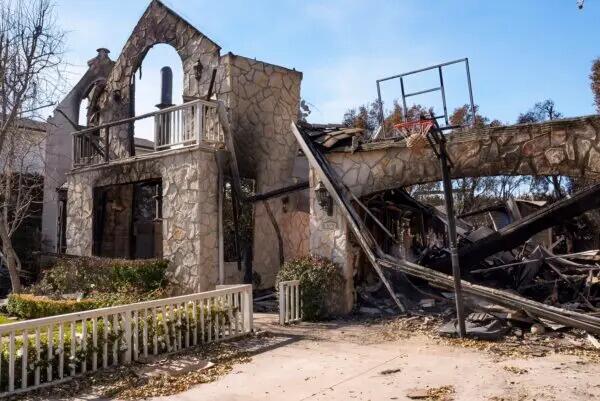
This month’s deadly and destructive Los Angeles fires that claimed 28 lives burned with such intensity that electric vehicles and lithium-ion batteries melted to the ground, creating hazardous conditions as residents began returning to their communities Jan. 28.

The devastation of the Palisades Fire is seen at sunset in the Pacific Palisades neighborhood of Los Angeles on Jan. 14. Ethan Swope/AP Photo

Specialists with the federal Environmental Protection Agency (EPA) were leading the large-scale cleanup of the batteries Tuesday.

The Palisades Fire burned more than 36 square miles and tore through neighborhoods full of electric vehicles and solar panels after years of state-sponsored green-energy policies.

The size of the Palisades fire and number of lithium-ion batteries left behind make it one of the largest hazardous-materials cleanups that local first responders have seen, according to Los Angeles Fire Department spokesman Adam VanGerpen.

“We’ve never seen it on this scale,” VanGerpen told The Epoch Times. “We are talking a very large scale.”

Lithium-ion batteries are used in cellphones, tablets, laptops, wireless headphones, electric cars, and solar panel storage.

Many of the batteries and electric vehicles melted after they were abandoned by fleeing residents starting Jan. 7, VanGerpen said.

We have to remove the entire vehicle,” he added.

Actor and Pacific Palisades homeowner James Woods said in a post on social media platform X Monday that the melted electric cars were “creating a real problem for safe debris removal.”

“While I am grateful to have President Trump in charge of the federal assistance so desperately needed, we can’t ignore that the electric cars have literally melted into the earth where they stood,” Woods wrote.

LAFD hazmat crews have surveyed the fire zone, searching through 6,837 destroyed homes and buildings, and 12,317 others that were damaged, according to numbers issued Tuesday by the California Department of Forestry and Fire Protection (Cal Fire).

The teams used software to locate and flag the zone’s lithium-ion batteries, according to VanGerpen.

Cars and homes destroyed by the Eaton Fire in Altadena, Calif., on Jan. 9. Zoë Meyers/AFP via Getty Images

Some batteries appear intact and untouched but could still produce toxic gases, reignite, or explode, making them the first priority for cleanup crews, he said.

All new homes built in California since Jan. 1, 2020, are required to have solar panels, which also require the installation of lithium-ion batteries.

Pacific Palisades Charter High School, which was destroyed in the fire, was in the process of adding solar panels to its buildings before the disaster.

Local officials lifted the last of the evacuation orders Monday, allowing residents back into the Palisades and Eaton fire zones. Most areas are open only for residents, who are allowed to return during non-curfew hours between 6 a.m. and 6 p.m. after getting an entry pass.

On Jan. 12, Gov. Gavin Newsom issued an executive order to direct fast debris removal in the fire zones. He reiterated his push to speed up the recovery during a news conference Tuesday.

California joined with the Federal Emergency Management Agency to send a letter Monday to the EPA telling the agency they needed debris removed within the next 30 days, according to Newsom.

Nearly 2,000 California National Guard troops were still assigned to the fire zones to help with removing debris. “We will do whatever it takes to provide that support for the EPA,” Newsom said.

The EPA received Newsom’s letter and started cleaning hazardous debris Monday, according to spokeswoman Anna Drabek.

The agency has set up a hazardous debris collection site in each of the Palisades and Eaton fire zones.

“We’ve been preparing [the sites] to start receiving the materials, which started yesterday in both locations,” Drabek told The Epoch Times.

Many homes have damaged or destroyed lithium-ion batteries, battery energy storage systems, and electric or hybrid vehicles, she said.

The batteries should be considered “extremely dangerous, even if they look intact,” according the agency’s news release Tuesday.

The agency can’t tell residents not to return to their property, even if toxic or hazardous debris still exists, but is encouraging residents to be cautious about the danger, she added.

“We just want folks to be aware of the risks they may be taking,” Drabek said.

The EPA encouraged residents to exercise extreme caution when returning to their properties and call their hotline at 1-833-798-7372 if they encounter a lithium-ion battery.

The agency was given $175 million for debris removal and a 60-day timeline to remove toxic and hazardous waste, according to Newsom.

The EPA plans to create a lithium-ion battery de-energizing and staging area, similar to what was created after the 2023 Maui wildfire.

A basketball is stuck in the net outside a home destroyed by the Palisades Fire in the Pacific Palisades neighborhood of Los Angeles on Jan. 24. Damian Dovarganes/AP Photo

“As part of the hazardous material removal work, U.S. EPA has also been tasked to safely remove batteries from electric and hybrid vehicles and home backup power supplies,” the agency wrote on a page dedicated to the L.A. fires.

The EPA is working with California’s Department of Toxic Substances Control to develop a full inventory of properties that need hazardous material removal.

Other hazardous materials burned in the blaze include paints, cleaners, solvents, oils, herbicides, and pesticides, according to the EPA. Pressurized fuel cylinders, like propane tanks, could also pose a threat and will be removed by cleanup crews, the agency said.

Once these materials have been cleared on a property, the EPA will place a sign on the site indicating it is safe to enter.

Tyler Durden
Wed, 01/29/2025 – 22:35

via ZeroHedge News https://ift.tt/j49xqhs Tyler Durden

Black Hawk Helicopter Collides With Jet Near Reagan National Airport, Explosion Caught On Camera

Black Hawk Helicopter Collides With Jet Near Reagan National Airport, Explosion Caught On Camera

A mid-air collision between a Black Hawk helicopter and a regional jet near Reagan International Airport in DC was caught on camera from the Kennedy Center Wednesday night, prompting a massive response from fire, EMS, and police.

White House press secretary Karoline Leavitt told Fox News that President Trump is aware of the situation, adding that it “tragically appears a military helicopter collided with a regional jet.”

In response to the incident, nearby Ronald Reagan Washington National Airport halted all takeoffs and landings as emergency personnel responded do an “aircraft incident on the airfield.”

DC Fire and Emergency Medical Services posted to X shortly after 9 p.m. that a small aircraft was down in the Potomac River near the airport, and that boats managed by the fire department were on the scene.

Unconfirmed reports are saying that the plane was a CRJ-700 commercial airliner capable of carrying up to 70 passengers.

In a post to X, Sen. Roger Marshall (R-KS) said he had seen reports of a collision with a DC helicopter and a flight that was inbound from Wichita, Kansas.

“We are in contact with authorities working to get answers,” Marshall wrote. “We ask you to join us in prayer for every single passenger and their families.”

Developing…

Tyler Durden
Wed, 01/29/2025 – 22:11

via ZeroHedge News https://ift.tt/WC8DShT Tyler Durden

“Hope For The Future”: Newly Discovered ‘Super Earth’ Could Reveal Existence Of Extraterrestrials

“Hope For The Future”: Newly Discovered ‘Super Earth’ Could Reveal Existence Of Extraterrestrials

Despite over 7,000 exoplanets being discovered, the search for extraterrestrial life continues.

But now, a nearby “super Earth”, located about 20 light years away could be that home to extraterrestrial beings, according a new report from the NY Post, citing Astronomy & Astrophysics

Dr. Michael Cretignier, scientist with Oxford University, commented: “I’m now very enthusiastic to hear what other scientists can tell us about this newly discovered planet.”

“Excitingly, its proximity with us – only 20 light-years – means there is hope for future space missions to obtain an image of it,” he continued.

UK researchers confirmed the “super-Earth” and an international team analyzed two decades of precise data from Chile’s HARPS and ESPRESSO spectrographs, verifying the object as an exoplanet.

Scientists are intrigued by HD 20794 d – it is six times Earth’s size and it orbits in a habitable zone where liquid water could exist. It circles a sun-like G-star in 647 days, slightly less than Mars’ orbit.

“It is among the closest Earth analogues we know about and given its peculiar orbit,” Cretignier added. 

The NY Post report said that HD 20794 d follows an eccentric orbit, drifting in and out of the habitable zone, causing any water to freeze or melt depending on its position. This unique trait helps scientists refine models of planetary habitability.

At just 19.7 light-years away, its proximity makes it easier to study, with strong light signals ideal for future telescopes analyzing exoplanet atmospheres.

Despite its location in the habitable zone, whether it can support life remains uncertain. Scientists still need to determine if it has an atmosphere or surface water.

Tyler Durden
Wed, 01/29/2025 – 22:10

via ZeroHedge News https://ift.tt/ywEhfmT Tyler Durden