Hormuz Traffic At Standstill After US Ship Seizure
Confirming the Schrodinger nature of the notorious waterway, the Strait of Hormuz is now just closed even more than before Iran and the US said the vital oil channel had been reopened.
Traffic through the strait on Sunday and Monday was reduced to a trickle following a Saturday surge, after Tehran rejected a continuing US naval blockade and moved to seal the waterway again. The reduced movement underscores just how quickly hopes unraveled that cargoes could once again resume.
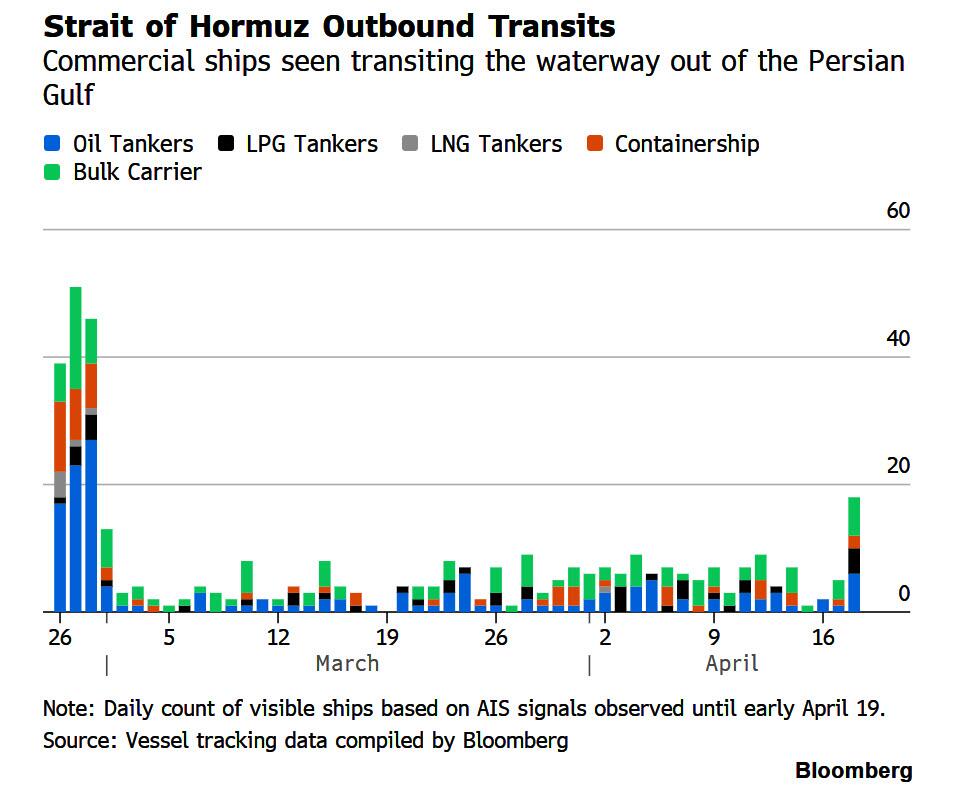
On Friday, Iran’s Foreign Minister Abbas Araghchi said the strait was “completely open” for commercial shipping, while US President Donald Trump said Iran was removing sea mines from the waterway. That prompted oil prices to plunge and dozens of tankers to race toward the strait at the mouth of the Persian Gulf. But Iran quickly declared that the passage was closed again as it emerged that the US operation in place since April 13 would not be lifted.
And rejected: the two tankers taking the neutral route, Minerva Evropi and Nissos Keros, have turned around; the Sanmar Herald which appears to be taking the Iran-sanctioned Larak island route is proceeding. https://t.co/aceBI7ki0B pic.twitter.com/gmkM37iA1U
— zerohedge (@zerohedge) April 18, 2026
The Hormuz crisis flared again over the weekend after the US Navy seized an Iranian vessel, during a turbulent period marked by Iranian forces firing at ships and reimposing controls across the strait. The developments pushed oil and natural gas prices higher after Friday’s big declines, reflecting fears of prolonged supply constraints.
The chaotic, start-stop nature of ship traffic through the strait underscores just how difficult it will be to fully restore oil and gas flows that are vital to the global economy, where energy producers need to have visibility months in advance before restarting production.
According to Bloomberg, just two liquefied petroleum gas carriers and two oil product tankers moved through the strait in both directions on Monday. The previous day, two LPG vessels and a cruise liner sailed out of the gulf, while no inbound transits were seen.
The Gas Harmony, an LPG carrier, went dark inside the gulf on Saturday morning but reappeared off the coast of Oman on Monday, indicating that the vessel transited the strait in the interim. The Liberia-flagged ship is owned and managed by Athens-based Gas Harmony Shipping Ltd., according to maritime database Equasis.
Greek and Iranian LPG ships departed the gulf on Sunday along with the European passenger liner, not listed in the charts. Subsequent observations until Monday afternoon, London time, identified further outbound movement by an Iranian product tanker and a second LPG ship.
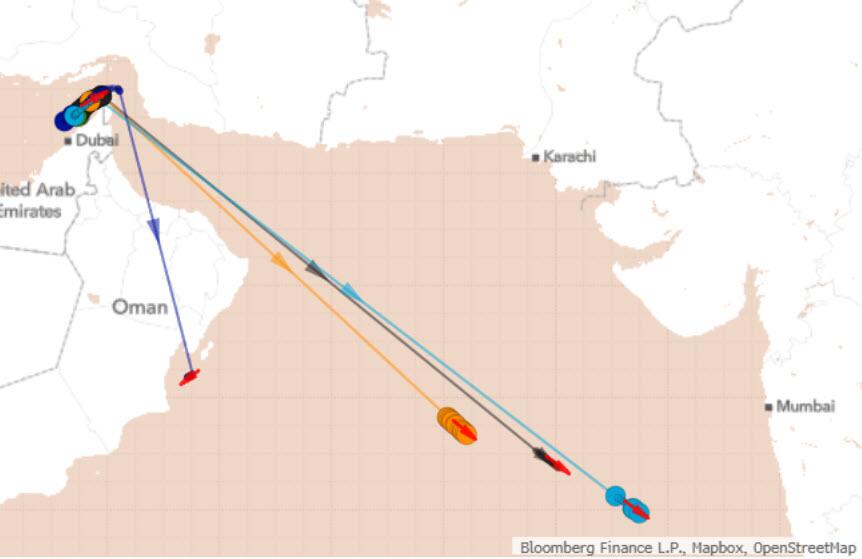
At least three Mediterranean Shipping Co. containerships and a MSC cruise liner, along with a handful of other passenger vessels, appeared to have exited the gulf on Saturday, hugging the Omani coastline. That was a deviation from the corridor approved by Iran during the short-lived opening of the waterway. Another MSC containership remains off-grid after it stopped signaling inside the gulf. The company didn’t respond to a request for comment.
Six cruise ships clear Strait of Hormuz during brief reopening
A flotilla of cruise ships stranded in Gulf ports since late February has now cleared the Strait of Hormuz, taking advantage of a brief reopening of the waterway before tighter controls returned.
According to… pic.twitter.com/nvnhG4JrkW
— MarineTraffic (@MarineTraffic) April 20, 2026
Diplomatic momentum has wavered after Tehran signaled hesitation regarding a second round of talks in Pakistan, amid the ongoing American blockade of Iranian traffic and the vessel seizure.
The commercial vessels entering Hormuz with active AIS signals during the past day were confined to a narrow northern lane near the Iranian islands of Larak and Qeshm, the route approved by Tehran.
The inbound transits on Monday included an Iranian LPG ship and a fuel tanker.
Tyler Durden
Mon, 04/20/2026 – 15:20
via ZeroHedge News https://ift.tt/r9oiude Tyler Durden