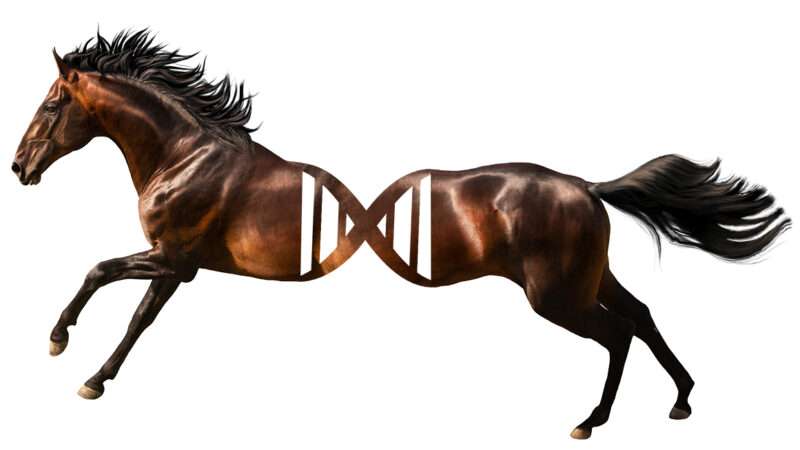
“Gene doping represents a threat to the integrity of sport,” asserts the World Anti-Doping Agency, which prohibits athletes from “the non-therapeutic use of genes, genetic elements and/or cells that have the capacity to enhance athletic performance.” The agency also bans gene editing.
Even if genetic enhancements remain unjustifiably prohibited to elite human athletes, should a ban on gene doping also apply to animals that compete in sports? The International Equestrian Federation says yes. “The use on, or administration or application to, any Horse of Gene Editing or Genome Editing is prohibited at all times.”
The Argentine Polo Association (APA) agrees: It has imposed a ban on the world’s first genetically enhanced polo ponies. “The use of genetically manipulated or edited horses will not be permitted by the APA for polo, in any official or unofficial tournament,” declared the organization.
The banned horses were bred by Buenos Aires–based Kheiron Biotech, a leader in horse cloning that produced about 400 clones in 2025. Researchers at the company edited five clones of the award-winning mare Polo Pureza (“Polo Purity” in English) to suppress the myostatin gene, which normally limits muscle growth. The goal was to breed horses with stronger muscles and more explosive speed.
“This takes away the charm, this takes away the magic of breeding,” APA President Benjamin Araya told Reuters. Yet biotech has been shaping the breeding “magic” of Argentine polo ponies for years. More than 60 percent of Argentine polo horses are now produced by embryo transfer, in which embryos are flushed from high-value mares and implanted in surrogate broodmares. This process enables mares to keep competing while producing multiple foals each year without carrying the pregnancy themselves.
As a result of this artificial fecundity, sought-after Argentine polo horses are widely exported, with around 2,400 sold abroad last year.
In 2012, the International Equestrian Federation lifted its ban on cloned horses and their offspring in sanctioned competitions. Argentine polo legend Adolfo Cambiaso was among the first to take advantage of this technology; his team famously won a match in which he rode six different clones of his favorite mare, Dolfina Cuartetera.
Evidently, cloning poses no threat to the integrity of polo.
Sports rules are ultimately arbitrary and can be adjusted to accommodate scientific advances while maintaining transparency and fair play. The Argentine Polo Pony Breeders Association plans to monitor the progress of enhanced clones for the next four or five years before deciding whether they can be officially registered as polo ponies.
The best way for sports officials to reduce potential harm—to humans or to horses—from using enhancements is to bring their use out of the shadows, allowing them to occur with medical oversight and sound research.
The post Polo Officials Ban Genetically Enhanced Ponies To Save 'the Magic of Breeding' appeared first on Reason.com.
from Latest – Reason.com https://ift.tt/a3GPIJd
via IFTTT