How U.S. Retailers Are Absorbing The Fuel-Price Shock
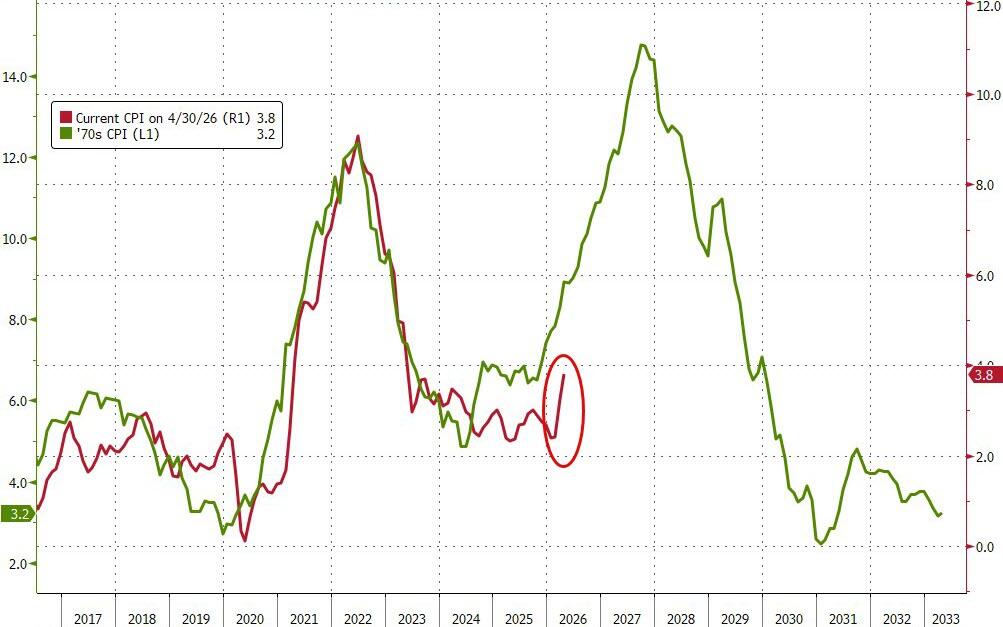
We have diligently tracked the Gulf-related fuel-price shock hitting the American consumer, with prices rising at the fastest rate in three years, personal savings depleted, and spending still running hot, a trend Goldman flags as increasingly troubling for the broader economy. This cocktail has revived uncomfortable memories of the 1970s: higher energy costs, squeezed households, and a consumer still spending into weakness.
But another important area of coverage is how companies are faring as freight, fuel, and supplier costs, along with tariff pressures, bleed through supply chains.
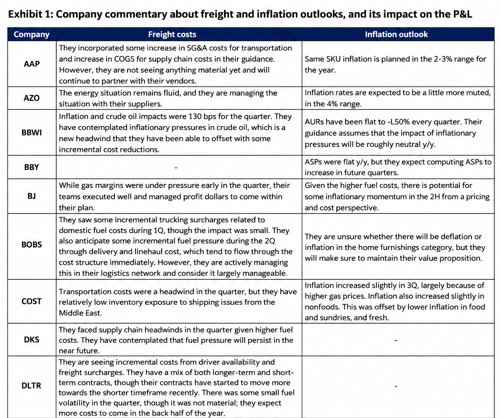
Early read-throughs from Goldman analysts led by Kate McShane indicate that management teams at major retailers are absorbing higher logistics costs today, but the real risk is that a sustained fuel price shock in the back half of the year could begin to deteriorate margins.
McShane and her team spoke with the IR and management teams of AutoZone, Bath & Body Works, Best Buy, Costco Wholesale, Dick’s Sporting Goods, Dollar Tree, and Walmart, focusing on commentary on freight and inflation.
The key read-through is that most of these retailers have so far absorbed higher oil prices, domestic trucking surcharges, ocean freight costs, and supplier cost pressures without a major P&L shock.
However, the warning from several management teams is clear: if elevated costs persist into the back half of the year, the ability to offset them through vendor negotiations, logistics efficiencies, or other creative ways becomes increasingly difficult.
At that point, the risk shifts from manageable cost pressure to margin deterioration, and potentially another round of retail price increases.
Here is McShane’s cheat sheet on retailer commentary on freight and inflation:
As oil prices continue to rise and the macro environment remains volatile, we are monitoring 1Q26 earnings for any company commentary on freight and inflation.
Specifically, we are watching for commentary on incremental freight costs and its impact on the P&L, and the company’s inflation outlook, and its impact on ticket.
Each week, we will update this chart as companies in our coverage continue to report.
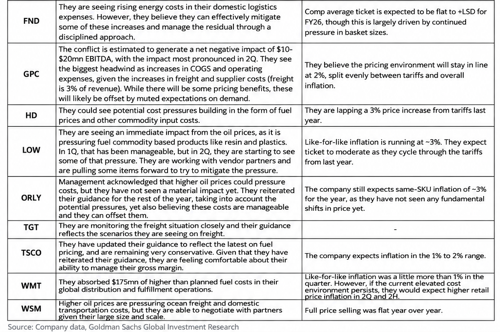
The takeaway is that management teams are still largely framing the energy shock as manageable for now. The next big concern is that elevated fuel and logistics costs through the summer would make it increasingly difficult to absorb and offset costs, likely resulting in either margin pressure or another round of price hikes on consumer-facing goods later this year.
Professional subscribers can read the full Americas Retailer note here at our new Marketdesk.ai portal.
Tyler Durden
Mon, 06/01/2026 – 20:30
via ZeroHedge News https://ift.tt/JTy6d5I Tyler Durden