‘Chat Is Dead’: OpenAI’s Pre-IPO Makeover Into A “Superapp”
The year the private-AI complex finally has to show its work has arrived, and ChatGPT maker OpenAI is about to add some major garnishing to the prospectus before their upcoming IPO – in what FT is calling the “biggest overhaul of ChatGPT since launch.”
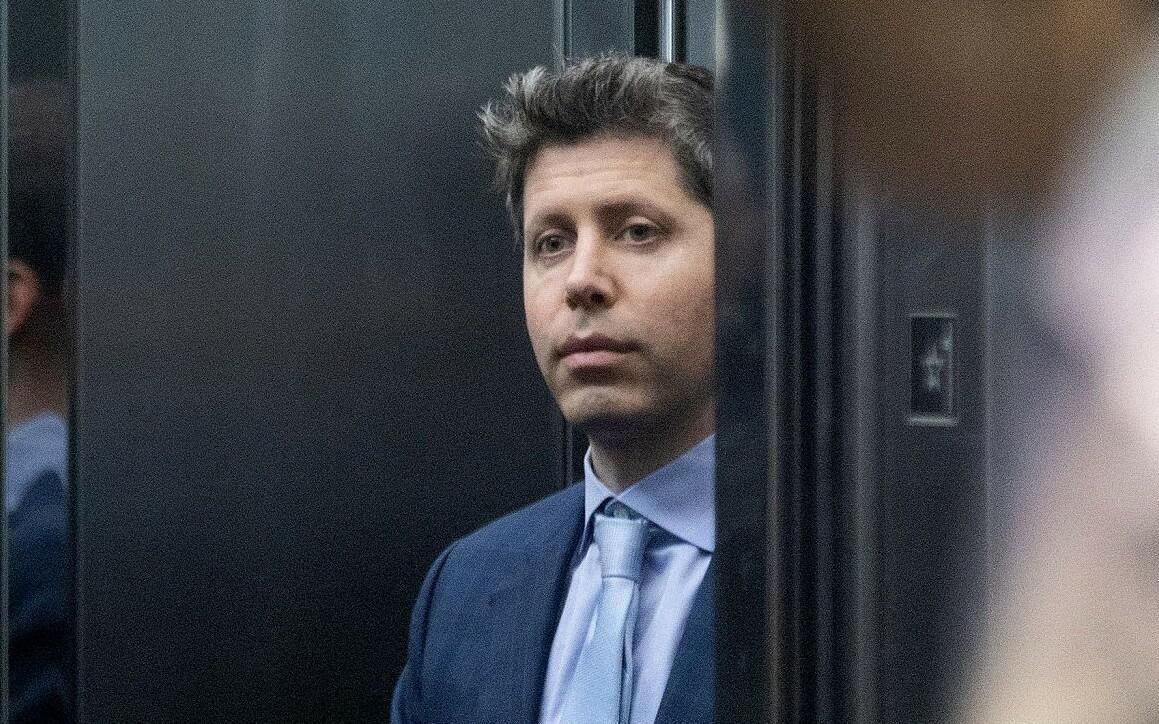
“It will transcend the actual surface . . . what we’re building towards is where you have your own personal agent that is capable of helping you . . . across everything in your life, be it personally or at work,” said Thibault Sottiaux, who previously ran Codex and now leads all of OpenAI’s core product and platform.
Context: Over the last three weeks, the three most valuable private companies in the space announced IPOs. SpaceX filed its S-1 in May, months after folding xAI into itself. Anthropic filed a confidential draft S-1 on June 1, reportedly targeting an October listing. And OpenAI filed its own confidential draft around May 22, aiming for a debut as soon as September at a private valuation of roughly $730 billion to $850 billion, with IPO chatter pushing toward $1 trillion. The back half of 2026 is now the first real test of whether public investors will pay the prices private rounds have set.
“Chat Is Dead”
“Chat is dead,” one senior OpenAI employee told the FT – which is a crazy thing to hear given that ChatGPT is what brought us here, and still has nearly a billion users. The obvious interpretation: OpenAI is moving away from chat because chat does not pay, at least not quickly enough to support a near-trillion-dollar valuation.
Adoption was never the problem. ChatGPT has nearly a billion users, most of them on the free tier. The problem is that the flagship product remains a low-margin consumer chatbot while the company burns roughly $14 billion a year against revenue that crossed $20 billion by the end of 2025. Depending on how that revenue is annualized and what multiple investors apply, OpenAI’s valuation range implies a price-to-sales multiple from the mid-30s to the low 60s. Walking into a roadshow near $1 trillion while presenting the golden goose as a beloved money-loser is not a viable option.
The company has also reorganized. ChatGPT, Codex, and other product teams have been consolidated under a single leader, Sottiaux, while several senior executives – including former product head Kevin Weil – have departed. Key-person churn in the weeks before an S-1 filing is, notable.
According to FT and other reporting, here’s what’s new:
- ChatGPT is being redesigned from a standalone chatbot into a gateway for higher-value products. The website and mobile apps are expected to be reworked so users are pushed toward coding tools, image generation, AI agents, and partner-built applications rather than simply returning to a general-purpose chat interface.
- OpenAI is adding prompts and interface features that steer users toward monetizable use cases. The company is expected to add new surfaces inside ChatGPT that direct users toward Codex, image tools, and apps from partners such as Canva and Booking.com. The partners themselves are not new; their more prominent placement inside the ChatGPT flow is.
- The company plans to remove that scaffolding over time. The longer-term goal is for OpenAI’s models to infer what users want without requiring explicit prompts, buttons, or routing cues. That roadmap detail appears to be one of the more specific new elements in the report.
- The “superapp” framing is being elevated as the new investor-facing story. OpenAI is increasingly presenting ChatGPT as a single interface that can absorb chat, coding, agents, search-like tasks, image generation, and third-party services. The underlying components have existed in pieces, but the report frames them as one consolidated product thesis.
- Codex is being pushed closer to the center of ChatGPT. OpenAI’s coding product is receiving greater prominence and resources as the company shifts attention toward products with clearer paid usage and enterprise demand. The Codex push was already underway, but the report makes it central to the ChatGPT overhaul.
- The personal-agent vision is being packaged as the next version of ChatGPT. OpenAI is positioning the product around a single assistant that can help across personal and work tasks, reachable through mobile, desktop, web, and voice. The company has been moving toward agents for some time; what is newly elevated is the idea that this agent becomes the primary ChatGPT experience.
- The enterprise pivot is being tied directly to the ChatGPT redesign. OpenAI’s push toward business customers and competition with Anthropic is not new. What is newly emphasized is the way the consumer interface is being reshaped to support that shift, turning ChatGPT into a funnel for higher-value, work-oriented products.
The revamp is expected to begin rolling out in the coming weeks – right inside the IPO window, when every interface change, resource shift, and product decision doubles as investor messaging meant to burnish the prospectus.
One issue with a ‘superapp’: structural coherence. A consumer funnel that routes users to third-party apps like Canva and Booking.com, an enterprise business built around Codex, and a long-horizon AGI bet are three different businesses with three different margin profiles, customer-acquisition dynamics, and capital requirements. OpenAI is now trying to staple them together within an agentic ecosystem – something that was always going to happen.
So OpenAI is building the only story that can survive diligence: enterprise seats, Codex, and agents that perform billable work. Codex’s weekly active users have grown sixfold to more than five million since the February desktop launch, with the majority of users paying. Enterprise already accounts for around 40 percent of revenue and is expected to reach 50 percent by year-end. That sequencing is, almost line for line, the “make money first” approach Anthropic has followed for years. The convergence is no longer subtle.
That said, the revamp does not amount to panic. Agents and coding tools really are where the technical and commercial frontier is moving anyway. Codex’s growth trajectory is real, and a majority-paying user mix is what you want going into an IPO.
Meanwhile, what’s Dario gonna do? Anthropic also burns substantial cash and has told investors it may not reach break-even until 2028. Both companies are walking into the same public-market daylight this year.
Tyler Durden
Mon, 06/08/2026 – 15:40
via ZeroHedge News https://ift.tt/a7kxjyp Tyler Durden