Chinese Firm To Deploy 100 Humanoid Robots To Households For Daily Chores
Authored by Kaif Shaikh via Interesting Engineering,
A Chinese robotics company has begun placing its humanoid robots inside real homes, marking a significant step in the race to develop machines capable of performing everyday household tasks.
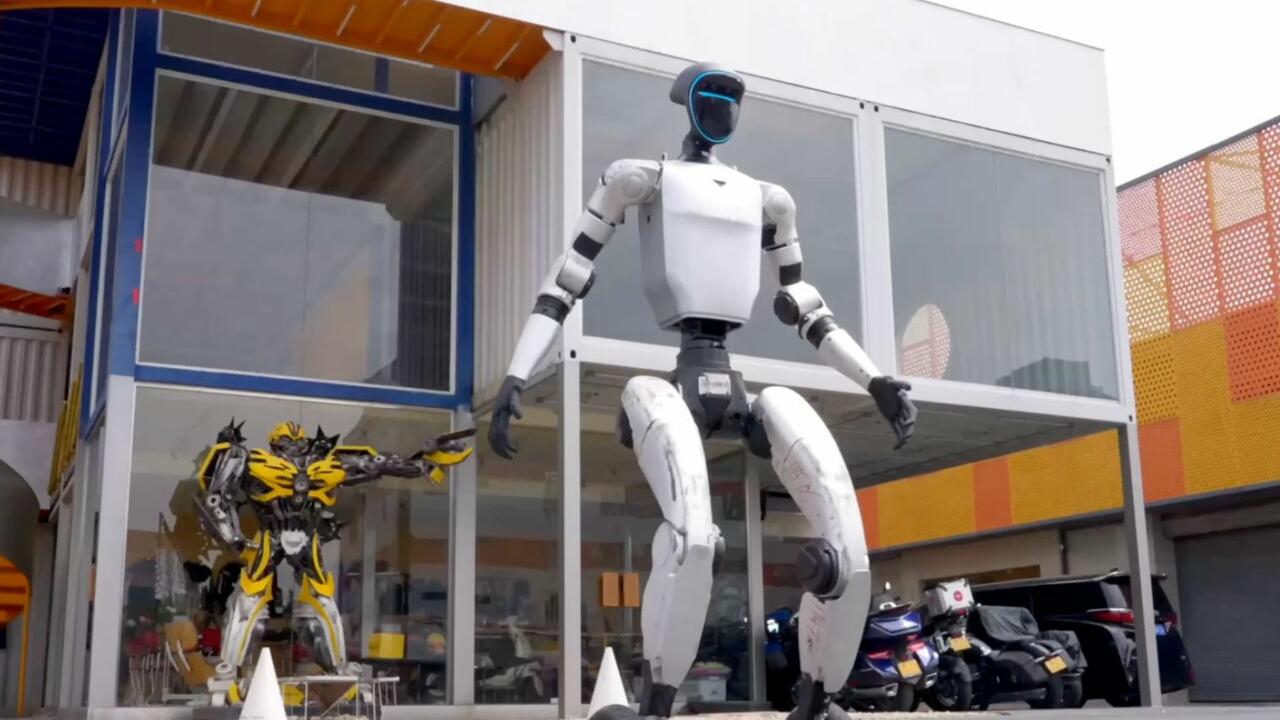
Wuhan-based GigaAI recently deployed the first batch of 100 SeeLight S1 humanoid robots for household testing, according to reports from China. The trial is being positioned as China’s first large-scale real-home test of a general-purpose humanoid robot designed for domestic use.
While humanoid robots have become increasingly adept at performing carefully choreographed demonstrations, researchers say the real challenge lies in operating inside unpredictable human environments.
From Robot Demos To Real Household Work
In a demonstration apartment in Wuhan, two SeeLight S1 robots carried out a variety of household chores. According to Global Times and China Daily reports, one robot prepared breakfast by retrieving food items, heating chicken in a microwave, clearing dishes, and loading a dishwasher. Another removed laundry from a dryer, folded clothes, and organized them in a wardrobe.
According to GigaAI, the robots learned these tasks through less than a month of on-site training. The company’s executives argue that household robotics represents a fundamentally different challenge from the acrobatic robot videos that often dominate social media.
“Tasks such as dancing or performing flips mainly rely on what we can call the robot’s cerebellum,” GigaAI co-founder and chief scientist Zhu Zheng told Global Times. “Household robots, however, depend on the brain.”
That distinction reflects a broader challenge in robotics known as embodied AI, where machines must perceive their surroundings, understand spoken instructions, plan actions, and adapt to constantly changing environments.
Check out China’s SeeLight S1, a household humanoid robot capable of cooking, doing laundry, folding clothes, and organizing spaces pic.twitter.com/oHqbb0B6oZ
— Shenzhen Channel (@sz_mediagroup) May 22, 2026
Why Are Homes Harder Than Factories?
Factories are structured and predictable. Homes are not. Furniture gets moved, objects are left in unexpected places, lighting conditions change throughout the day, and every household follows different routines.
Researchers often point to Moravec’s paradox, a long-observed phenomenon in artificial intelligence where tasks humans consider difficult, such as advanced mathematics or strategic games, can be easier for machines than seemingly simple activities like folding clothes, grasping objects, or navigating cluttered rooms.
The SeeLight S1 attempts to address this challenge through what GigaAI describes as an embodied foundation model. Rather than following pre-programmed action sequences, the system is designed to process natural-language instructions, interpret its surroundings, create a plan, and execute tasks autonomously. According to the company, the robot can also adapt when furniture layouts change and continue operating even when interrupted during a task.
Still Far From A Robotic Maid
Despite the impressive demonstrations, reports from users and observers suggest there is still considerable room for improvement.
According to Global Times, some household tasks remain slow. Organizing a few books can take several minutes, while folding a single piece of clothing may require more than ten minutes. The robot has also reportedly struggled with tasks such as handling cups without spilling liquids.
Those limitations highlight the gap that still exists between controlled demonstrations and practical household automation. The current SeeLight S1 is therefore less a finished consumer product and more a data-collection platform designed to learn from real-world environments.
GigaAI plans to launch an upgraded SeeLight S2 later this year with a smaller chassis, longer battery life, improved arm reach, and more advanced AI algorithms. The company also intends to expand testing into homes with elderly residents, children, and various living arrangements to expose the robots to a wider range of real-world scenarios.
While humanoid assistants capable of seamlessly handling household chores remain a work in progress, the deployment of 100 robots into actual homes represents an important experiment. The question is no longer whether robots can perform tasks in carefully staged demonstrations. It is whether they can cope with the messy, unpredictable reality of everyday life.
Tyler Durden
Wed, 06/10/2026 – 06:30
via ZeroHedge News https://ift.tt/xgWQk5n Tyler Durden