China Is Learning To Use Less Oil, And That’s A Bigger Deal Than It Sounds
By Julianne Geiger of OilPrice.com
Three months into the biggest oil supply disruption in modern history, China appears to have discovered something that should make oil bulls at least a little uncomfortable.
It can get by on less fuel than anyone thought.
China’s gasoline and diesel demand has been falling for years as electric vehicles gained market share and economic growth slowed. But the latest drop has surprised even seasoned observers.
According to Reuters, gasoline sales at Sinopec, China’s largest refiner and fuel retailer, fell 8% year over year in April, while diesel sales dropped 6%. Goldman Sachs estimates that consumption of gasoline and related products may have fallen by as much as 20%.
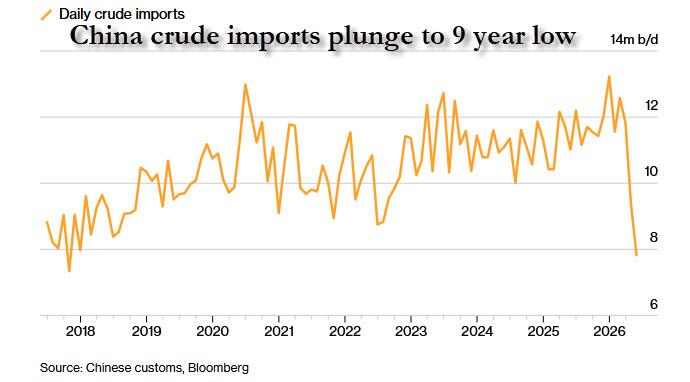
China has slashed crude imports since the Iran war began, with May imports plunging 29% to 7.8 million barrels per day—the lowest level in eight years. Until recently, many analysts viewed those cuts primarily as a function of China’s enormous oil stockpile and high crude prices.
Now another explanation is emerging: China may simply need less fuel.
Rail travel rose roughly 10% in March and April. Subway ridership continues to climb. Electric taxis are becoming increasingly common. Most notably, EV charging volumes surged 69% from a year earlier to a record high in April, according to the China Charging Alliance.
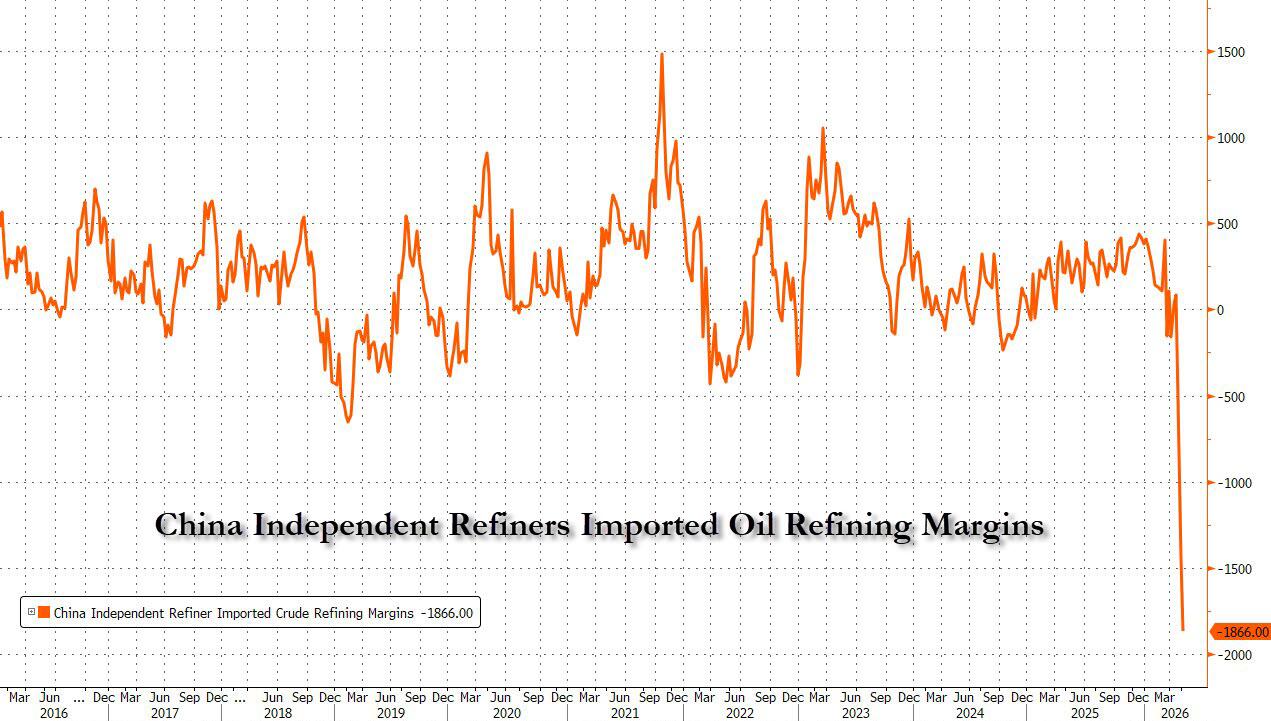
That shift comes as China’s refiners are already grappling with weaker economics. Sinopec cut refining runs earlier this year as Middle Eastern supply disruptions squeezed crude availability, while Beijing has sharply reduced fuel exports to preserve domestic supplies.
The property downturn isn’t helping either. Diesel demand from construction, long one of China’s most reliable sources of consumption growth, continues to weaken as projects stall and budgets tighten.
The question now is whether the trend sticks.
China’s refiners can only draw on inventories for so long. The country still maintains one of the world’s largest crude stockpiles, but even a billion barrels eventually run out. At some point, imports will need to recover.
What remains unclear is whether gasoline demand will recover with them.
For decades, China’s economic growth was one of the oil market’s most dependable bullish arguments. Today’s reports may have some rethinking the strength of that argument.
Tyler Durden
Fri, 06/12/2026 – 06:30
via ZeroHedge News https://ift.tt/KSzv7g9 Tyler Durden