FundStrat’s Newton: Why Not Replace The FOMC With AI?
Short of abolishing the Fed (much preferred), would automating the Fed make more sense than the current system? Should we trust Kevin Warsh, Jerome Powell, and Lisa Cook to read the tea leaves each month and decree rate changes for us commoners?
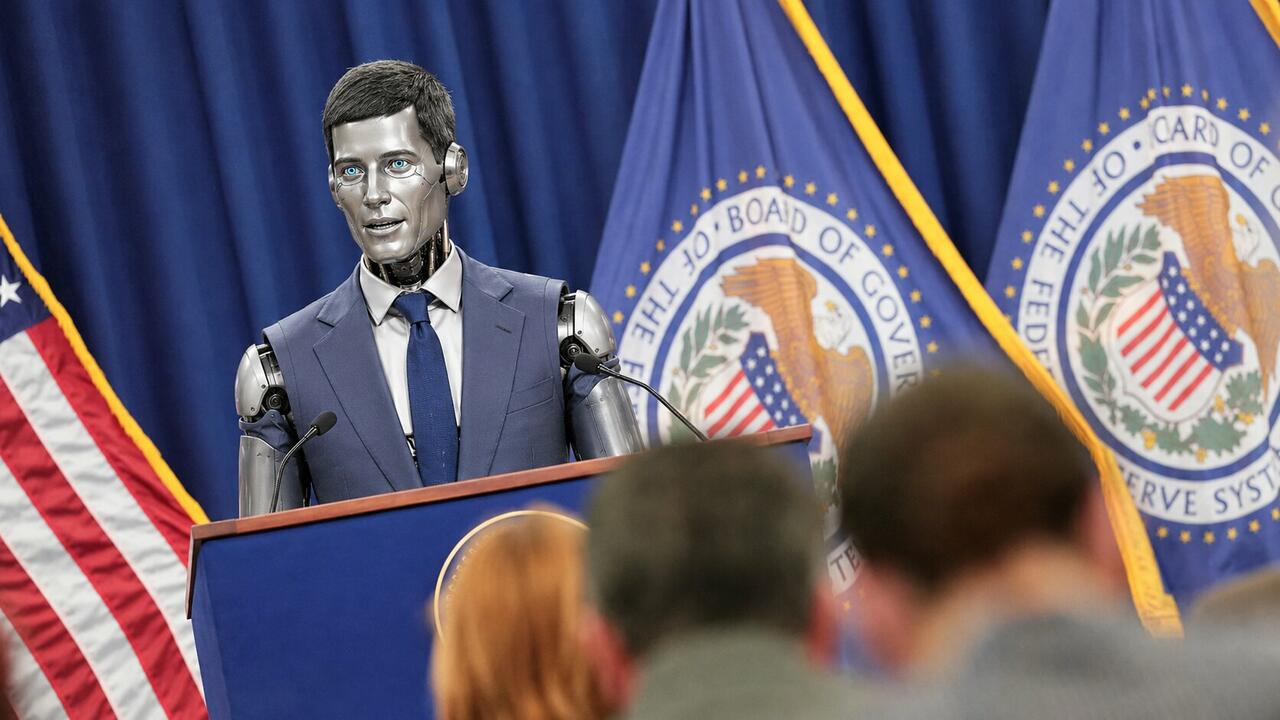
That was Fundstrat’s Mark Newton’s suggestion during last night’s ZeroHedge debate on his H2 market outlook. He pointed out the new chair’s plan to eliminate “forward guidance”, a term invented under the previous chair Powell in which the Fed strategically signals its plans on rate changes so that those signals themselves might change rates organically by market forces.
It’s all a big mess… but Newton and BTIG’s Jonathan Krinsky also debated whether the AI trade is in a bubble and which sectors look like attractive investment opportunities. Here were Newton’s remarks on the Fed and other highlights, though we recommend watching the full debate at the end:
Automate The Fed
Fundstrat’s Mark Newton believes incoming Fed Chair Kevin Warsh could face a difficult balancing act from day one.
“I think he’s got his work cut out for him,” Newton said, noting that Warsh will be speaking for a Federal Reserve committee that has “turned clearly hawkish” while simultaneously facing pressure from an administration that “almost always wants to cut rates to juice the economy.”
Rather than focusing on rate cuts themselves, Newton argued the biggest change under Warsh may be how the Fed communicates. “My take is that there’s gonna be far less forward guidance or even a dot plot under Warsh, less communication,” he said. Markets have become accustomed to a steady stream of comments from Fed officials, and Newton warned that the transition could create volatility as investors try to recalibrate.
WARSH: I THINK THAT MARKETS PERFORM BEST WHEN REACTING TO INCOMING DATA, THEY WORK LESS EFFICIENTLY WHEN THEY ASK HOW WILL THE FED REACT TO THAT INCOMING INFORMATION
Finally, the 4th wall falls
— zerohedge (@zerohedge) June 17, 2026
Newton also mused about automating the entire FOMC, questioning the dated practice of a council of economists working with clunky tools to periodically tinker with the entire nation’s (and world’s) economy.
“If there’s one area that’s ripe for regime change by AI completely, it’s the Federal Reserve,” he said. “They’re looking at data going back over the last few years to try to make decisions on whether to cut interest rates, which will take twelve to eighteen months to materialize in the economy. That does not make any sense in 2026.”
— ZeroHedge Debates (@zerohedgeDebate) June 19, 2026
“The AI trade will continue into 2028”
Where many see a bubble, Fundstrat’s Mark Newton sees an opportunity.
“I do not see a bear market in technology,” he said, arguing that the sector is likely headed for a period of consolidation rather than a major decline. Semiconductors may need to “back and fill” after their recent run, according to Newton.
He remains bullish on the longer-term AI story but did say there are signs that it’s overbought near-term. Newton highlighted the Relative Strength Index (RSI) on the highly-watched Invesco Equal Weight Tech ETF.
“That’s all a good thing for tech. It’s just that when an RSI level of 78 on equal-weighted technology, it’s not the best risk reward for me over the next three to six months.”
On banks, REITs, travel, consumer discretionary, and healthcare sectors, Newton sees improving momentum, noting that “most European and also U.S. commercial banks have been showing very good strength” while REIT ETFs are “breaking out to multi-year highs.”
“Consumers snapping back over the next couple months” following a ceasefire success, he said, would benefit airlines, hotels, and beaten-down discretionary names. Newton specifically likes Delta, Marriott, booking companies, and apparel Ralph Lauren.
— ZeroHedge Debates (@zerohedgeDebate) June 19, 2026
Watch the full debate below, watch on Adam Taggart’s Thoughtful Money channel, or listen on Spotify.
— zerohedge (@zerohedge) June 18, 2026
Tyler Durden
Fri, 06/19/2026 – 13:45
via ZeroHedge News https://ift.tt/7S9rkjf Tyler Durden