Study Finds Self-Driving Cars Crash More Often, But Cause Far Fewer Injuries
Self-driving cars may be involved in more crashes than human drivers on a per-mile basis, but the evidence suggests those accidents are generally far less likely to result in serious injuries or fatalities, according to Aulsbrook Car & Truck Lawyers.
A review of autonomous vehicle safety data found self-driving vehicles are involved in about 9.1 crashes per million miles traveled, compared with roughly 4.1 for human-driven vehicles. However, the report found autonomous vehicle crashes are typically much less severe, with significantly fewer injuries and no recorded fatalities in several major datasets.
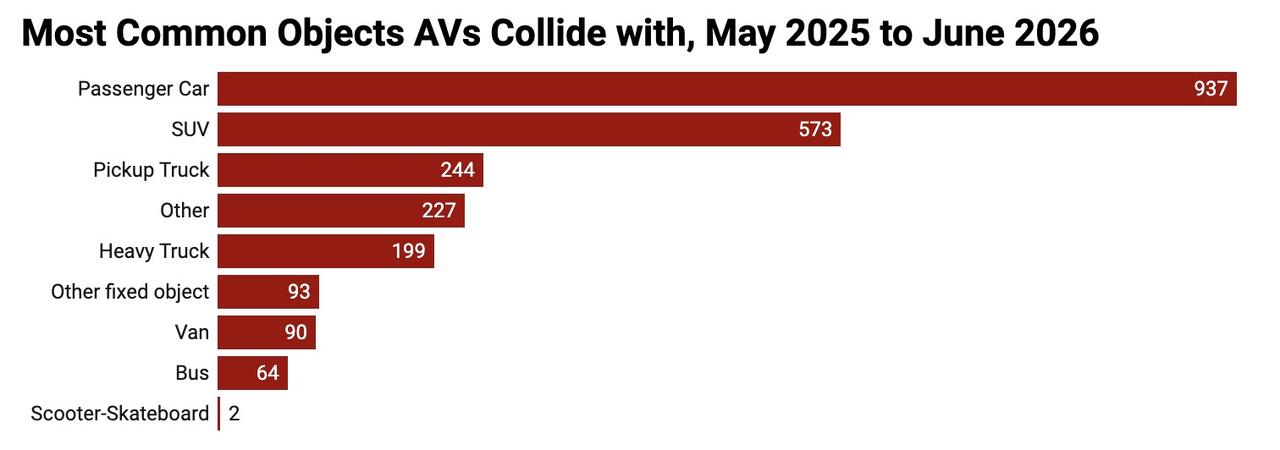
The contrast is especially clear in Austin, Texas, where about 12,000 traffic crashes occurred in 2025. Just 85 involved autonomous vehicles, resulting in eight injuries and no deaths. By comparison, crashes involving human drivers caused roughly 8,000 injuries and 99 fatalities.
Several studies cited in the report reached similar conclusions. One analysis covering more than 7 million autonomous miles found self-driving systems reduced injury-related crashes by 85% compared with human drivers. Waymo separately reported major reductions in injury crashes, airbag deployments, and collisions involving pedestrians and cyclists when compared with human-operated vehicles traveling the same roads.
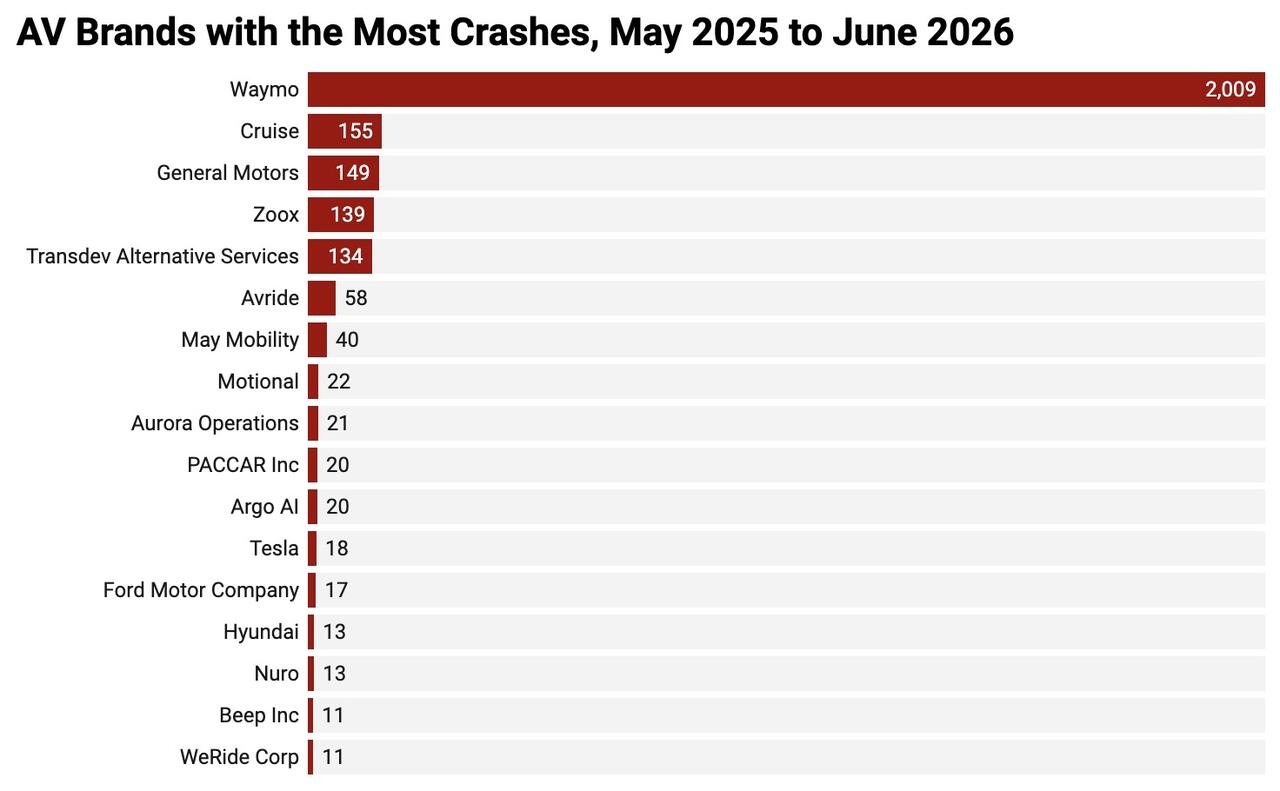
The study says that autonomous vehicles are rarely blamed for the crashes they are involved in. According to NHTSA data, automated driving systems were considered at fault in only about 4% of reported incidents, with fewer than 8% of those cases attributed to software or hardware failures. Most crashes instead involved human-driven vehicles striking robotaxis.
Still, the technology is far from perfect. Tesla’s driver-assistance systems have been linked to thousands of reported crashes and dozens of fatalities, while Waymo has faced regulatory scrutiny over incidents involving school buses, flooding, and other edge-case scenarios. The report also notes concerns about cybersecurity, battery fires, and the gap in safety performance between fully autonomous vehicles and partially automated driver-assistance systems.
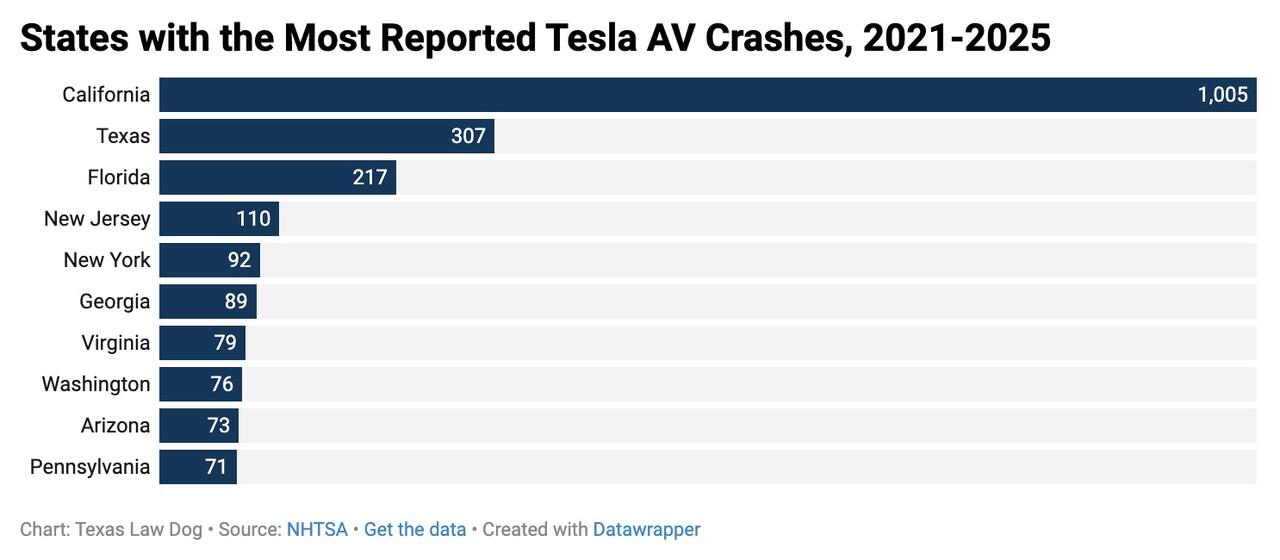
Texas has become one of the nation’s largest testing grounds for autonomous vehicles, ranking among the states with the highest number of reported AV crashes because of its rapid robotaxi expansion and permissive regulatory environment. As autonomous fleets continue to grow, regulators will face increasing pressure to refine liability rules, improve emergency response procedures, and ensure the technology can safely coexist with human drivers.
Tyler Durden
Thu, 07/09/2026 – 04:15
via ZeroHedge News https://ift.tt/Pa5DiAF Tyler Durden