ASP Isotopes Subsidiary Signs MOU With European Nuclear Technology Company For Fuel Supply
ASP Isotopes said its subsidiary Quantum Leap Energy LLC has signed a non-binding memorandum of understanding with an unnamed European nuclear technology company to explore a potential long-term partnership to supply fuel for advanced nuclear reactors, according to a company press release Monday morning.
The agreement focuses on high-assay low-enriched uranium (HALEU), a type of nuclear fuel enriched to more than 10% uranium-235 that is expected to play a key role in powering next-generation reactors. Under the proposed arrangement, the European company would provide uranium feedstock to Quantum Leap Energy’s planned conversion and enrichment facilities, where it would be processed into HALEU and potentially deconverted before being delivered back to the partner.
The PR says that the companies said they will conduct technical and economic assessments to determine whether a long-term commercial partnership is viable. Those evaluations will examine production scalability, operational requirements, costs, and potential business models.
The memorandum runs through Dec. 31, 2030, though either party can terminate it earlier. It also includes preliminary estimates for HALEU supply volumes, with potential deliveries beginning in 2028 and increasing through 2036 in line with the European company’s reactor development schedule.
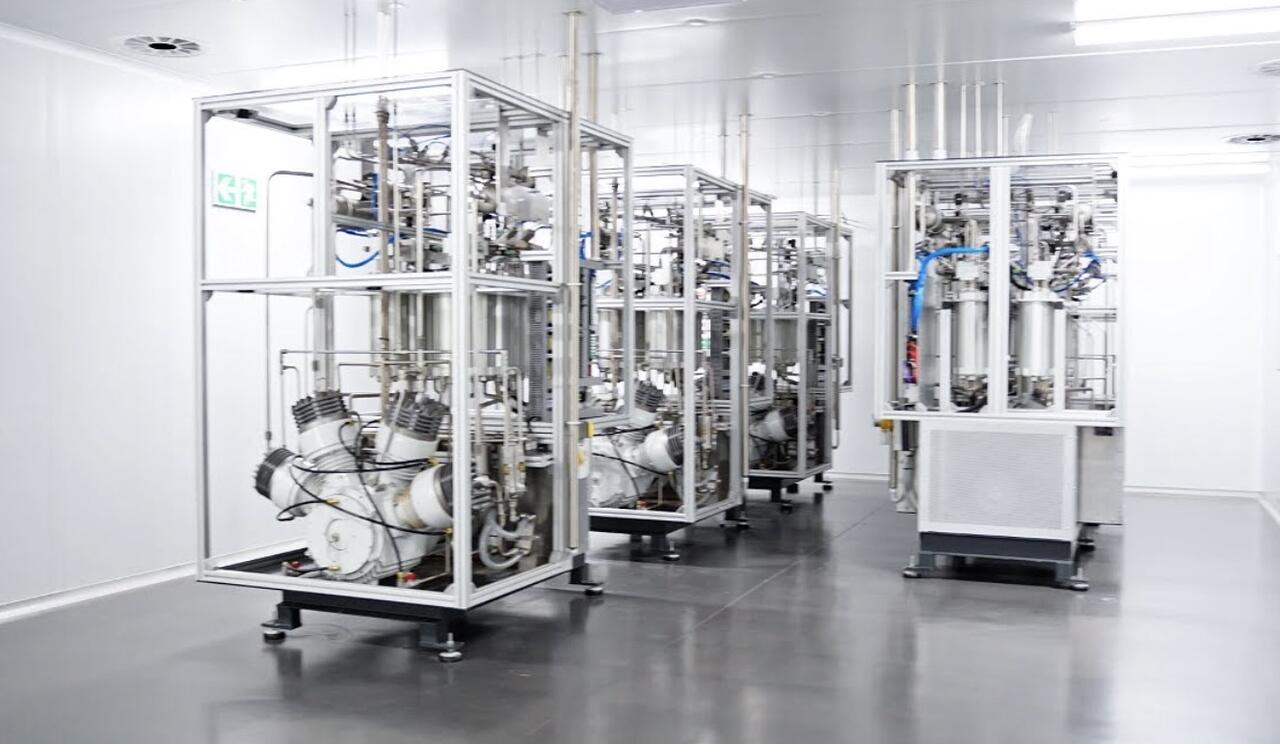
The deal comes as governments and nuclear developers race to secure new sources of HALEU amid concerns over limited global supply and geopolitical risks tied to existing nuclear fuel supply chains. Industry leaders have warned that expanding enrichment capacity — particularly in the U.S. and allied markets — will be critical to supporting the rollout of advanced nuclear technologies.
Recall we wrote last month that ASPI was working to provide timely relief for the global helium shortage.
In a research note from Canaccord Genuity analyst George Gianarikas last month, he highlighted the company’s Virginia Gas Project in South Africa as a potential new source of supply just as Qatar’s helium exports face major disruption.
The warning came shortly after we reported on Qatar’s Ras Laffan complex damage and the closure of the Strait of Hormuz, which together threaten roughly one-third of global helium output. Helium remains essential for semiconductor manufacturing, MRI machines, aerospace systems, and quantum computing. It has no practical substitute in chip fabrication, where it cools wafers and detects microscopic leaks.
ASP Isotopes’ Virginia Gas Project stands out because of its unusually high helium concentrations. The 1,870 sq. km deposit averages 3.4% helium, with peaks reaching 12%. That compares with Qatar’s typical 0.01% and the U.S. average of 0.35%.
As we discussed last month, Phase 1 drilling wrapped up four months ahead of schedule in March 2026. Production is scheduled to begin in late 2026, delivering 58 MCF per day of helium alongside LNG.

Phase 2, targeted for completion around 2030, would scale output to 895 MCF per day. Using conservative pricing of $380 per MCF, Canaccord estimates Phase 1 revenue near $20 million annually and Phase 2 above $285 million.
The project benefits from U.S. International Development Finance Corporation backing and is located in a geopolitically neutral jurisdiction.
ASP Isotopes now faces the standard execution challenges of moving from drilling to full commercial output, but the asset positions the company as one of the few near-term Western-aligned sources capable of adding meaningful new supply.
Tyler Durden
Mon, 05/11/2026 – 12:05
via ZeroHedge News https://ift.tt/nwztvQF Tyler Durden