Leaking Las Vegas: Lake Mead Plunges To Record Low Amid Drought-pocalypse

Leaking Las Vegas: Lake Mead Plunges To Record Low Amid Drought-pocalypse

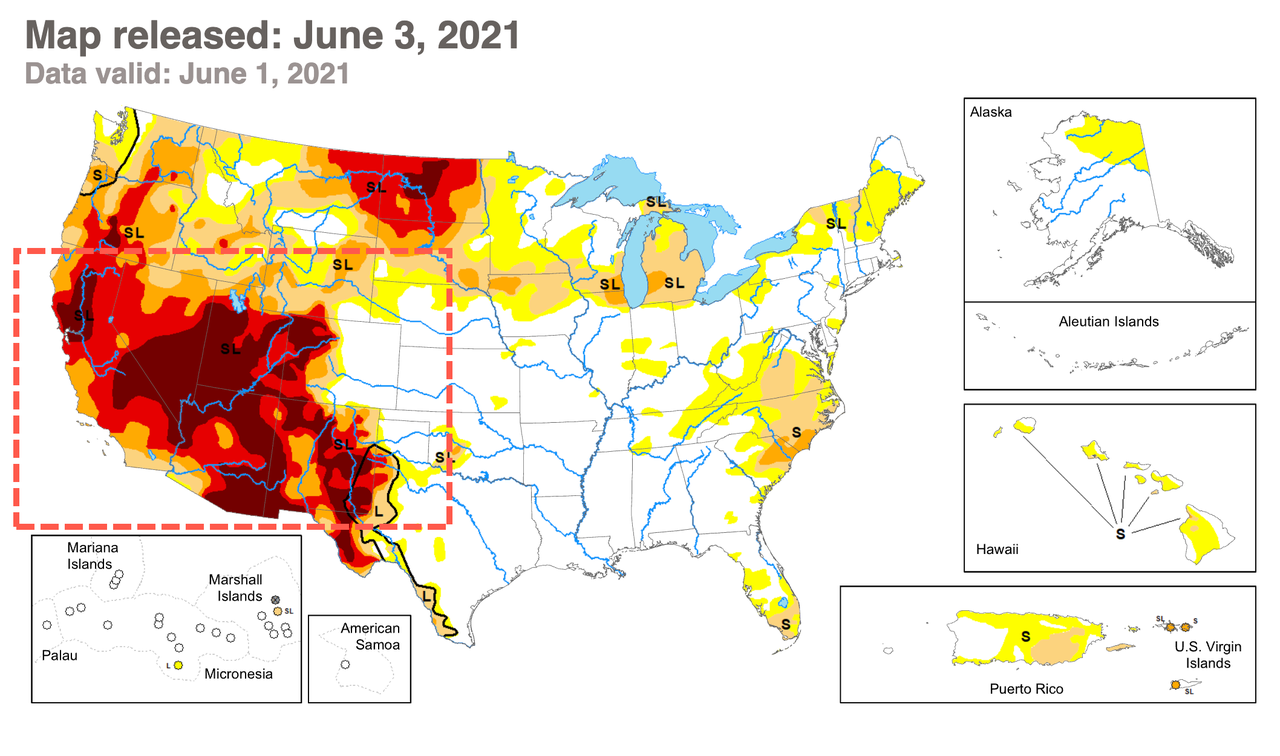
Much of the Western half of the US is in a severe drought, and parts of the Southwest are “exceptionally dry,” the worst category, according to US Drought Monitor. Taking this into account, the iconic Hoover Dam has just recorded the smallest amount of water inside Lake Mead since the 1930s. 
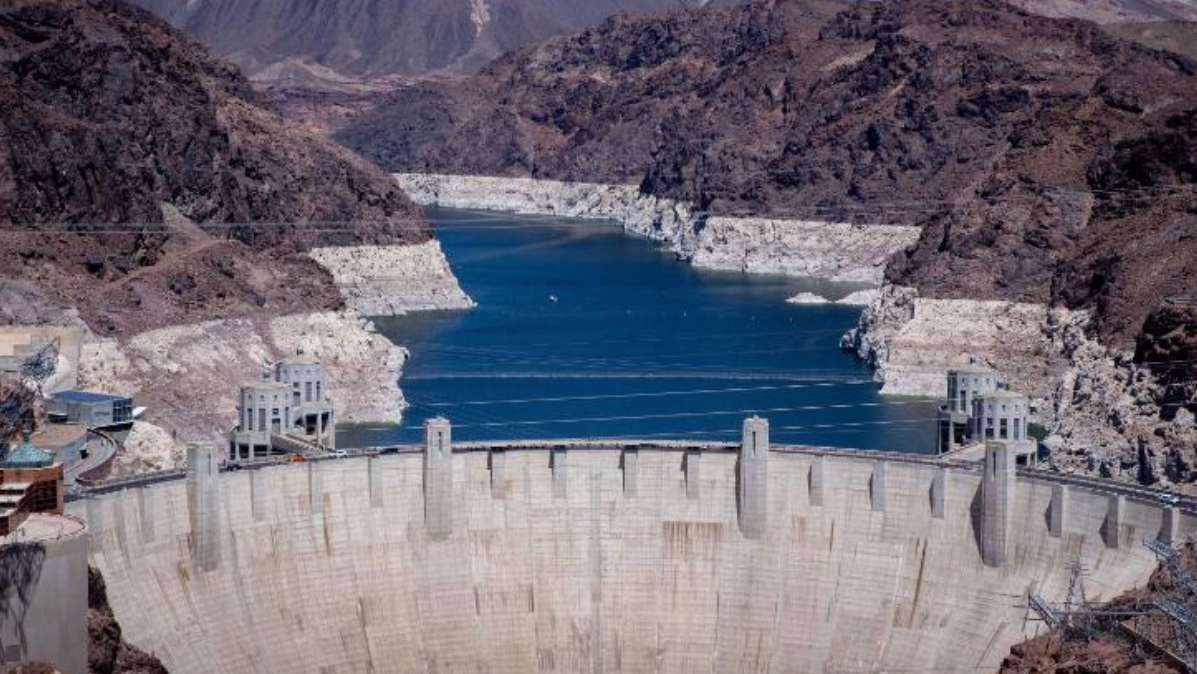
The damming of the Colorado River at the Nevada-Arizona border created Lake Mead and supplies water to 25 million people, including in the cities of Las Vegas, Phoenix, Tucson, Los Angeles, and San Diego. 

We’ve explained in the past if Lake Mead drops to dangerously low levels, the entire town of Las Vegas is absolutely screwed because two pipes, known as straws, are at elevation 1,050 feet and 1,000 feet. However, a third straw was recently constructed at 860 feet just in case the water level continued to drop. For Vegas to prevent a total collapse if Lake Mead continues to drop, it will have to continue constructing straws at lower and lower depths. 

Tim Barnett, a climate scientist at the Scripps Institution of Oceanography, wrote back in 2014 that Lake Mead wasn’t able to supply Vegas with water, “it’s just going to be screwed. And relatively quickly. Unless it can find a way to get more water from somewhere, Las Vegas is out of business. Yet they’re still building, which is stupid.” 

… and this quote was over seven years ago, and the water situation has dramatically worsened. 

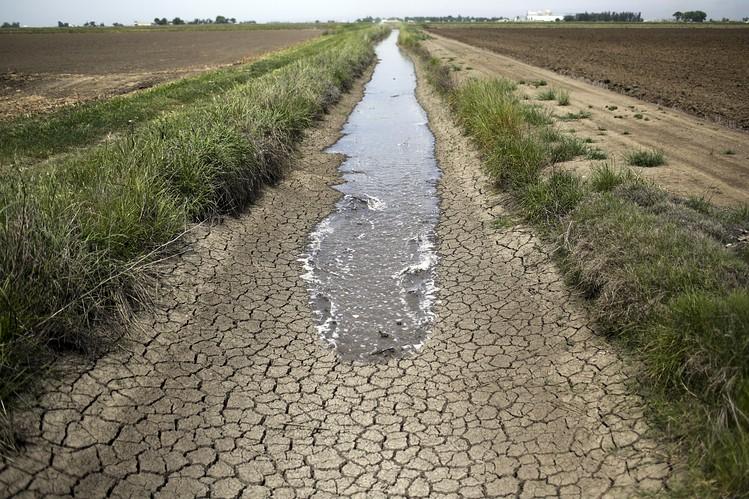
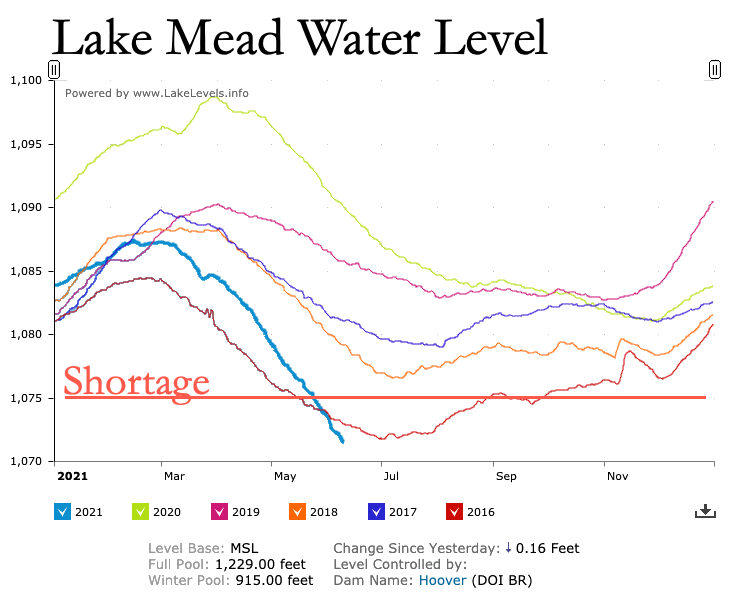
As of Wednesday, the lake’s water level sank to 1,071.56 feet above sea level and broke the record low in July 2016. Since the early 2000s, the water level has plunged 140 feet due to years of drought that has gripped the region. 
“Some states, especially parts of California and parts of the southwest, it’s really quite extreme drought conditions,” Ben Cook, a climate scientist at NASA’s Goddard Institute for Space Studies, told Reuters. Here’s a map (as of June 3) of the drought situation, which is extremely severe. 
Artificial lakes, such as Lake Mead, is no match for Mother Nature, and the latest drop in water level could force state governments (Arizona, California, Colorado, Nevada, New Mexico, Utah, and Wyoming) to pass a water shortage declaration sometime this summer.

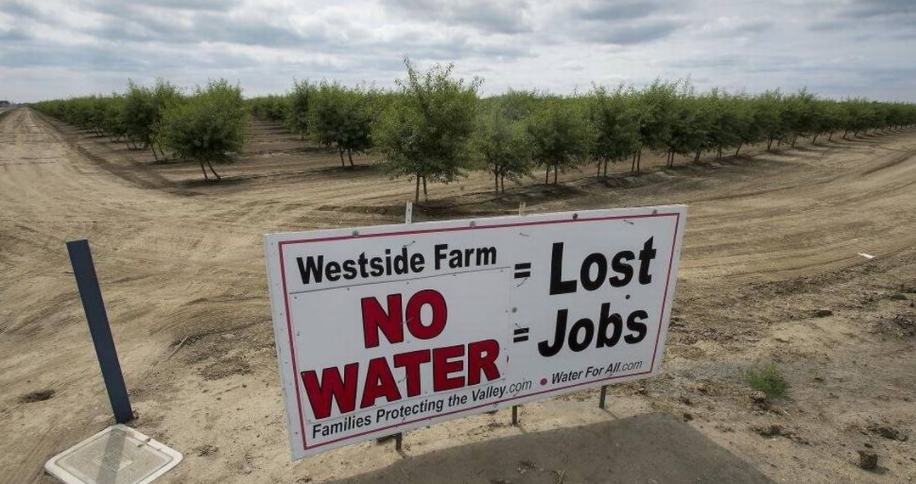
The demand for water downstream from Hoover Dam continues to increase. Farmers in the Southwest are itching for Lake Mead’s water to irrigate their crops as their land becomes fallow

Over the past year, the lake has declined by more than 16 feet and is projected to fall nine more feet by the end of 2021. The lake’s trigger point for a “shortage,” declared by the government, is 1,075 feet, which has already been broken. 

Lake Mead’s downward spiral has also reduced Hoover Dam’s hydropower output by 25%. At some point, the dam could stop producing electricity. 

“Our previous number [for cutoff] was at elevation 1,050, and now we’ve lowered that number to 950,” Hoover Dam, facility manager Mark Cook told CBS News. “So, we bought ourselves 100 feet.”

For more than a half-decade (see: here & here), we have the ongoing problems of Lake Mead and how it could impact the water supply of tens of millions of people. Now that the lake is at levels not seen since it was filled in the 1930s, and below levels for an official “shortage.” This means an emergency declaration of water shortage could be seen sometime this summer. 

The drought is so severe that the governor of Utah is urging people to pray for rain. 

Tyler Durden
Thu, 06/10/2021 – 18:50

via ZeroHedge News https://ift.tt/3iz2chK Tyler Durden

5 Signs That America’s Raging Inflation Crisis Is Accelerating

5 Signs That America’s Raging Inflation Crisis Is Accelerating

Authored by Michael Snyder via The Economic Collapse blog,

The pace at which conditions are changing is catching a lot of people off guard.  Here in the United States, we have been in a low inflation environment for most of the past four decades, and so many Americans don’t even have a frame of reference for what a highly inflationary environment looks like.  But now we are facing an inflation crisis that is unlike anything that we have seen since the Jimmy Carter era in the 1970s.  In response to the COVID pandemic, governments around the world have been borrowing and spending colossal mountains of money, and global central banks have been absolutely flooding their respective financial systems with new cash.  These measures were taken to stimulate the worldwide economy, but in the process a horrific inflation monster has been created, and it will not be tamed easily.  In fact, national governments and global central banks continue to do the very same things that created the horrific inflation monster in the first place.

Moving forward, things look very bleak. 

The following are 5 signs that America’s raging inflation crisis is accelerating…

#1 Inflation tends to hit those at the bottom of the economic food chain the hardest, but at this point even most millionaires say that they are “concerned about inflation”

This is a major worry for most wealthy investors, according to CNBC’s latest millionaire survey. As many as 65% of millionaires are concerned about inflation caused by recent government spending, according to the report. Of those, 34% said they were very concerned.

The survey, conducted online in April and May by Spectrum Group on CNBC’s behalf, had 750 respondents with investable assets of $1 million or more.

#2 The biggest banks in the world are now sounding the alarm about the inflation crisis.  This week, a team of analysts from Deutsche Bank warned that “neglecting inflation leaves global economies sitting on a time bomb”

We worry that inflation will make a comeback. Few still remember how our societies and economies were threatened by high inflation 50 years ago. The most basic laws of economics, the ones that have stood the test of time over a millennium, have not been suspended. An explosive growth in debt financed largely by central banks is likely to lead to higher inflation. We worry that the painful lessons of an inflationary past are being ignored by central bankers, either because they really believe that this time is different, or they have bought into a new paradigm that low interest rates are here to stay, or they are protecting their institutions by not trying to hold back a political steam roller. Whatever the reason, we expect inflationary pressures to re-emerge as the Fed continues with its policy of patience and its stated belief that current pressures are largely transitory. It may take a year longer until 2023 but inflation will re-emerge. And while it is admirable that this patience is due to the fact that the Fed’s priorities are shifting towards social goals, neglecting inflation leaves global economies sitting on a time bomb.

#3 Housing prices continue to soar into the stratosphere in the United States.  These days, investment funds, wealthy individuals and foreigners are all gobbling up homes in anticipation of making huge profits, and this is making things extremely difficult for ordinary home buyers.  Earlier, I found the following message from one exasperated home shopper on a popular discussion forum

It’s crazy. Soon as it hits the market tons of offers.

Mostly Investors and flippers.

Real estate Agent’s telling me things like.

“We’ve got Rich guys as far out as Hawaii buying houses sight unseen. They’ll even buy them in bulk. Anything from dumps to mansions.’

We’ve got Chinese snatching up properties, Bill Gates, Businesses, and like I said flippers. It’s Impossible!

Auction sites along with gov seized properties are flooded with the same types.

Can not compete you’ll be outbid by thousands upon thousand of dollars way above market value.

Any tricks or strategies to buy a house? Anything that may not have all the greedy bastards swarming over them?

A family seriously needing to actually live in a place seems completely s.o.l

It’s not just my area that’s hot right now its everywhere.

Please if anyone has good advice would be appreciated. Thanks

#4 Used car prices have now officially entered “absurd” territory.  This week, we learned that the Used Vehicle Value Index has shot up by 26 percent so far in 2021…

Prices of used vehicles sold at auctions around the US in May spiked by 4.6% from April, by 26% year-to-date, and by 45% from April 2019, according to the Used Vehicle Value Index released today by Manheim, the largest auto auction operator in the US and a unit of Cox Automotive.

I used to recommend buying used vehicles to people because I thought that most of the time you could get a better value, but at this point I am reversing my recommendation.

In this environment, I would strongly encourage everyone to consider buying new vehicles because used vehicles have become so ridiculously expensive.

#5 Food prices continue to surge higher, and I continue to see reports of intermittent shortages around the nation.

Down in Florida, Papa Bee’s Owner Lorie Hamm says that only a limited number of cases of chicken wings are being made available to restaurants in her area, and she also says that the price for such cases has nearly doubled since the start of 2021…

“There’s 300 cases that are allocated for two counties I believe, they were gone in two minutes,” Hamm said.

At the beginning of the year, a case of wings sold for $70-90 a case. Now they are about $150 a case.

When you begin to wildly create new money, this is what happens.  Prices go haywire and shortages tend to occur.

Unfortunately, our leaders don’t seem to have even a basic understanding of the laws of economics, and the pain that we have experienced so far is just the tip of the iceberg.

If they were smart, global authorities would be taking emergency measures to get inflation under control before it is too late.

Of course that is not happening.  Instead, they just continue to feed the monster.

This crisis is going to go from bad to worse, and you should prepare accordingly.

*  *  *

Michael’s new book entitled “Lost Prophecies Of The Future Of America” is now available in paperback and for the Kindle on Amazon.

Tyler Durden
Thu, 06/10/2021 – 18:30

via ZeroHedge News https://ift.tt/3w8w3BL Tyler Durden

“A Dangerous Precedent” – 3rd FDA Advisor Quits After Controversial Alzheimer’s Drug Approval

“A Dangerous Precedent” – 3rd FDA Advisor Quits After Controversial Alzheimer’s Drug Approval

While the mainstream media focused on the hope-filled headlines that, for the first time since 2003, the FDA approved Biogen’s Aduhelm treatment for Alzheimer’s Disease; few, if any, were fully aware of the levels of controversy behind the scenes.

Aside from the scientific uncertainty over whether amyloid plaque treatments are an approach worth continuing…

Despite the dominance of the amyloid hypothesis over the past few decades, evidence that links reductions in plaque levels to improvements in cognition is “thin, at best”, says Jason Karlawish, a geriatrician and co-director of the Penn Memory Center in Philadelphia, Pennsylvania.

“Desperation should drive the funding of science, not drive the way we interpret the science,” he says.

It turns out that despite the fact that not one member of the FDA Advisory Committee voted to approve Aduhelm, the FDA recently approved this Alzheimer therapy anyway, relying on an alternative measure of activity.

As Statnews reports, since the FDA’s decision, three members of that FDA Advisory Panel have quit.

1. Neurologist J.Perlmutter, a member of the FDA’s expert panel said he quit the committee “due to this ruling by FDA without further discuss with our advisory committee.”

2. Neurologist David Knopman of the Mayo Clinic.

3. Dr. Aaron Kesselheim, director of Brigham and Women’s Hospital’s Program on Regulation, Therapeutics, and Law, said Aduhelm’s approval didn’t just set “a dangerous precedent” for what kind of evidence an Alzheimer’s therapy would need to show to get the green light, “but even more broadly for the idea that a company can turn around and at the last minute seek [accelerated approval] when their primary clinical endpoints in their trials don’t reach the level needed for FDA approval,” he told STAT in an email.

In his letter of resignation to the FDA, Kesselheim said Biogen’s Aduhelm “was probably the worst drug approval decision in recent U.S. history.”

Both Perlmutter and Kesselheim voted against the drug, while Knopman was recused from the November hearing as he had already staked out a public position critical of the drug’s trial results.

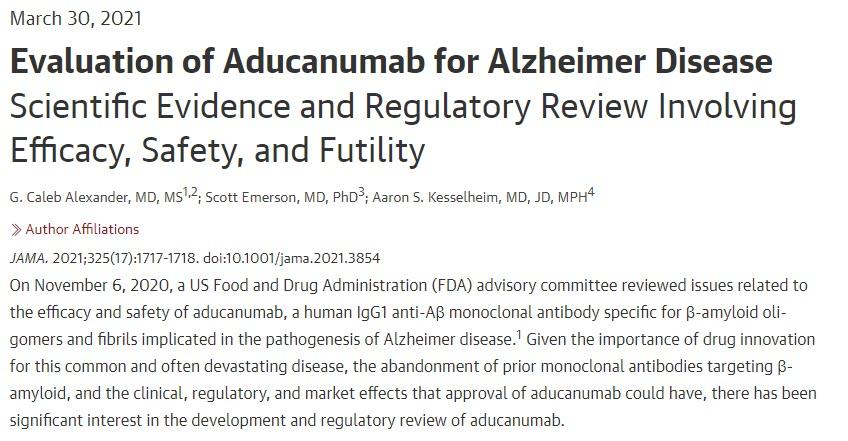
Earlier this year, Kesselheim, and two other panelists published a paper in JAMA outlining what they saw as the flaws of the therapy.

As Nature.com reports, others worry that drug developers might abandon other targets. If demonstrating that amyloid-lowering activity is enough to win regulatory approval, it might discourage developers from focusing on treatments with the big cognitive benefits that patients need, say some scientists.

“This is going to set the research community back 10–20 years,” says George Perry, a neurobiologist at the University of Texas at San Antonio and a sceptic of the amyloid hypothesis.

But hey, if there’s $56,000 per year per customer patient to be made, the “science” can always be adjusted.

So much for science… again!

Tyler Durden
Thu, 06/10/2021 – 18:10

via ZeroHedge News https://ift.tt/2Srq9Nl Tyler Durden

Daily Briefing: Inflation Reaches 13-Year High – What’s the Trade?

Daily Briefing: Inflation Reaches 13-Year High – What’s the Trade?

Real Vision managing editor Ed Harrison welcomes Dave Floyd, founder of Aspen Trading, to break down the implications of today’s Consumer Price Index (CPI) print, which reached a 13-year high of 5.0% in yearly change. As concerns of inflation continue to apply pressure on the U.S. economy and markets, Floyd will be considering how this impacts bonds, equities, and currencies.

Tyler Durden
Thu, 06/10/2021 – 13:44

via ZeroHedge News https://ift.tt/2Tkl6hM Tyler Durden

Medical Journal Describes “Whiteness” As A Parasitic Pathology That Has No Cure

Medical Journal Describes “Whiteness” As A Parasitic Pathology That Has No Cure

Authored by Paul Joseph Watson via Summit News,

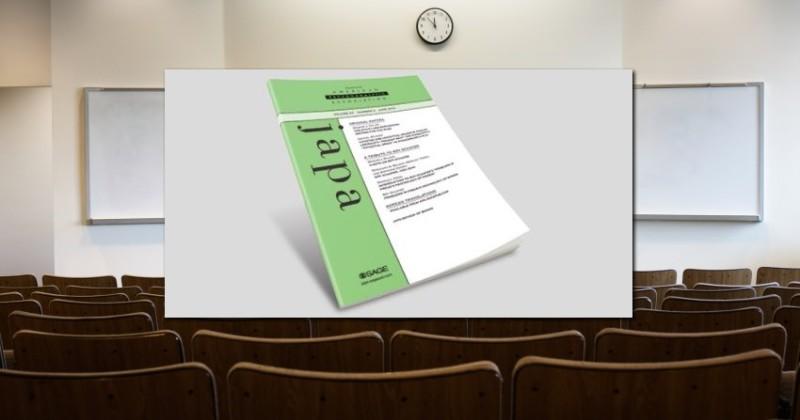
A research study published in the Journal of the American Psychoanalytic Association describes “whiteness” as a parasitic pathology that has no cure.

Yes, really.

The article, which is entitled ‘On Having Whiteness’, was written by Dr. Donald Moss (who is white), a faculty member of both the New York Psychoanalytic Institute and the San Francisco Center for Psychoanalysis.

Moss asserts that white people have a “particular susceptibility” to the “parasitic” condition, which he says “renders its hosts’ appetites voracious, insatiable, and perverse” and leads them to “terrorize” non-whites.

The nutty academic then frames “whiteness” as a malignant disease that can only be prevented via massive programs of re-education.

“Effective treatment consists of a combination of psychic and social-historical interventions. Such interventions can reasonably aim only to reshape Whiteness’s infiltrated appetites—to reduce their intensity, redistribute their aims, and occasionally turn those aims toward the work of reparation,” he writes.

Even then, Moss laments that there “is no guarantee against regression” and “[t]here is not yet a permanent cure.”

This kind unhinged rhetoric is also being spewed by Moss’ teaching colleagues in schools and universities across American under the guise of Critical Race Theory.

The article once again underscores how the only form of allowed “systemic racism” and discrimination that exists in the west is against white people.

When literally every major cultural institution, government entity, the entertainment industry, academia and the media amplifies this kind of bile, the notion of “white privilege” is laughable.

*  *  *

Brand new merch now available! Get it at https://www.pjwshop.com/

*  *  *

In the age of mass Silicon Valley censorship It is crucial that we stay in touch. I need you to sign up for my free newsletter here. Support my sponsor – Turbo Force – a supercharged boost of clean energy without the comedown. Also, I urgently need your financial support here.

Tyler Durden
Thu, 06/10/2021 – 17:50

via ZeroHedge News https://ift.tt/3gtiru6 Tyler Durden

BofA Just Threw Up All Over The Fed’s “Transitory” Argument: Here’s Why

BofA Just Threw Up All Over The Fed’s “Transitory” Argument: Here’s Why

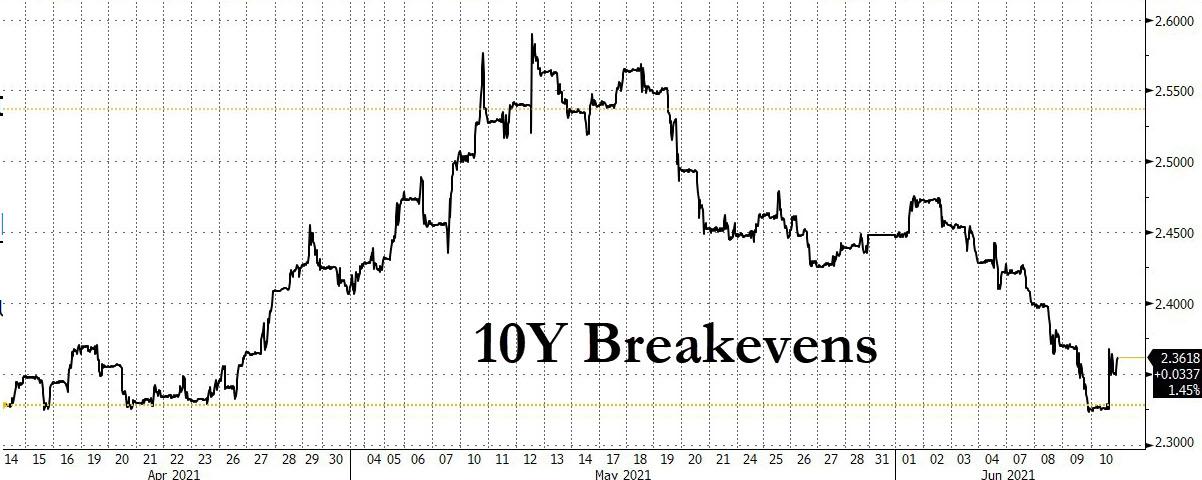
One look at the recent collapse in 10Y breakeven rates, which have tumbled 24 bps to 2.37% since their May 12 peak despite today’s red hot CPI print…

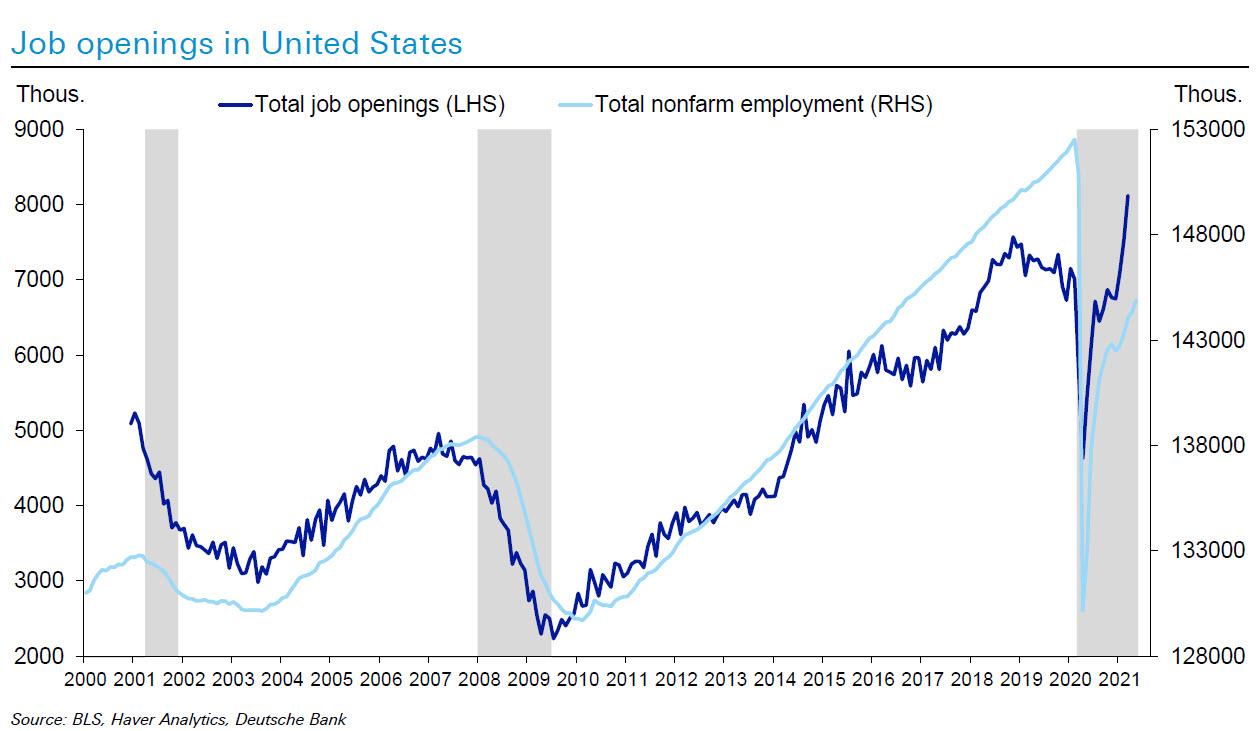
… could convince even the most hard-core bond bears that investors have likely committed to the Fed’s “transitory” inflation narrative, and now subscribe to Powell’s labor market maxim, that a recovery in American jobs is more important than inflation concerns right now (even if other labor market indicators such as job openings hints at much tighter conditions) and that no hikes are coming for a long, long time.

And yet, the evidence of shortages and inflation continues to grow with every passing day, as does the list of reasons to dismiss the problem as purely temporary, although as even BofA economists note in their daily note, “judging from the non-reaction of markets— with 10-year yields dipping back below 1.5% and the stock market near record highs— those arguments are winning the day.”

BofA’s response was simple: as the bank’s chief economist Michelle Meyer said “we don’t buy it”, noting that as signs of shortages and inflation continue to arrive, including several warnings this week, “individually the arguments for complacency make sense; collectively they are becoming increasingly unconvincing”; it’s also why Meyer continues to believe that “the groundwork for more sustained inflation down the road is building.”

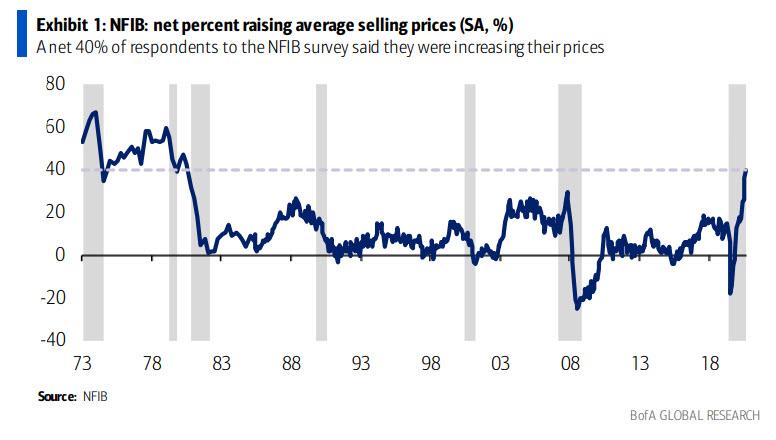
She does have a point – after all, just this week, we found that both the small business survey and the “JOLTS” data showed a significant escalation of the shortage problem in May. All of the small business questions around prices, wages and shortages worsened on the month. For example, a net 40% of respondents said they were increasing their prices, marking the highest reading since 1981

Similarly, the JOLTS data lived up to its name, as the job opening rate surged 0.6%, moving further into record territory while a record number of Americans quit their jobs.

But instead of highlighting the inflationary dangers signaled by these indicators, when digging around in the business press, we instead find a growing list of excuses for the shortages and signs of inflation. As you skim through the list below, keep in mind not only the evidence of shortages, but also the fact that average hourly earnings have risen at 7.4% annualized rate in April and May and core CPI inflation is likely even higher. Here, courtesy of Meyer, is the laundry list:

  1. Labor shortages will vanish in the fall when unemployment benefits drop, childcare becomes more available and fear of getting COVID on the job fades.
  2. Bottlenecks in goods production are due to idiosyncratic shocks. They will fade as production picks up and as demand shifts from goods to services.
  3. Bottlenecks in trade will also ease as the impact of past disruptions fades, labor shortages ease and demand for goods stops growing so fast.
  4. The rise in prices is purely temporary and sector specific. It will go away as supply picks up.
  5. Any pick-up in price inflation is by definition temporary because there is still an output gap and sustained price pressure requires closing the gap.
  6. The rise in wages is mainly in low-wage jobs. That is a good thing because it helps close some of the income gap.
  7. The link between wage and price inflation has weakened in recent years. Again, we should celebrate not bemoan the rise in wages.
  8. Any increase in wage growth is by definition temporary because the unemployment rate is still too high to generate sustained wage pressure.
  9. The Michigan measure of inflation expectations has surged, but that is an overreaction to highly visible food and energy price increases and will fade when they fade.
  10. Historically, inflation expectations only rise after there is a sustained period of high actual inflation. The recent rise must be a fluke.
  11. Inflation breakevens have only risen modestly and if there was a real inflation problem the bond market would tell us.
  12. Ignore these rough survey measures of inflation expectations. Surveys of professional economists still see inflation meeting the Fed’s target in the long run.

And then, Meyer points out the coup de grace: “don’t worry about inflation getting too high, the Fed can raise interest rates as much as needed to cool inflation.” Sure it can… It can also crash the precious stock market in 15 minutes.

So why is Bank of America worried?

Because, as Meyer correctly notes, there is some truth to all of these arguments, but it is implausible to argue that all of the recent inflation problems are temporary, and most important these “temporary” pressures will probably persist for many months and could become embedded in inflation psychology. This is particularly likely given that monetary and fiscal authorities have demonstrated in word and action that they want a red hot economy and rising inflation in the next few years.

Meyer also disagrees that the Fed can easily put the inflation genie back in the bottle: “we haven’t had sustained high inflation in recent decades, but older history shows that once it gets going it is hard to contain without triggering a recession.”

Moreover, the Fed’s current policy strategy makes it even harder, as they are promising to tighten later than normal and only when they are convinced that higher inflation is embedded in the economy.

Meyer’s conclusion: while investors fear the day that the Fed signals rate hikes ahead, ironically it would be better for the sustainability of the expansion – not to mention risk assets – if that signal comes a lot earlier than the Fed is currently suggesting, at which point it will be too late…

Tyler Durden
Thu, 06/10/2021 – 17:30

via ZeroHedge News https://ift.tt/3g8Dfbw Tyler Durden

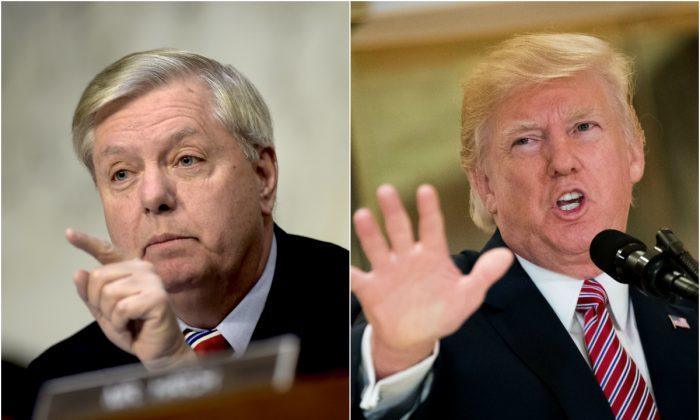
Sen. Lindsey Graham: Trump Would Have Won 2020 Election If Wuhan Lab Leak Theory Was Proven

Sen. Lindsey Graham: Trump Would Have Won 2020 Election If Wuhan Lab Leak Theory Was Proven

Authored by Jack Phillips via The Epoch Times,

Sen. Lindsey Graham (R-S.C.) said former President Donald Trump would have won the 2020 election if investigations into the origin of COVID-19 and whether it escaped from a laboratory in Wuhan, China, were not politicized.

“If COVID-19 had come about due to a Chinese lab leak, the top question on voters’ minds in the 2020 election would have become who was going to stand up to China. Which candidate would hold the Chinese accountable for unleashing the COVID-19 plague on the world?” wrote Graham for Fox News on Thursday.

As a result, Graham argued, “Americans would have demanded a tougher line against the Chinese communist regime and would have been looking for a Commander in Chief to lead the charge,” and  “there is no doubt in my mind this would have benefitted President Trump much more than Joe Biden.”

Trump early on began saying that COVID-19 “came from China” and sometimes called it the “Chinese virus” while highlighting how the virus emerged near the laboratory in Wuhan.

“However, instead of validating President Trump’s concerns, the scientists’ early dismissal created a narrative that President Trump was out of touch and spreading right-wing conspiracy theories,” said Graham.

“It was narrative that the elite media, who hated President Trump with a burning passion, was only too happy to help spread.”

Trump’s handling of the CCP (Chinese Communist Party) virus pandemic was the subject of scrutiny and controversy during the 2020 campaign, with media outlets repeatedly highlighting the number of virus deaths and cases reported each day.

The P4 laboratory on the campus of the Wuhan Institute of Virology in Wuhan, in China’s central Hubei Province, on May 27, 2020. (Hector Retamal/AFP via Getty Images)

“If it were known in February that Trump was right [in] 2020, I think he’d be president today,” Graham told Fox News on Wednesday night.

In recent days, however, U.S. intelligence officials have increasingly signaled that they support the theory that the virus emerged from the Wuhan Institute of Virology, the only P-4 lab in China. Researchers at the facility had long studied coronaviruses, including ones from bats.

Former Secretary of State Mike Pompeo confirmed to The Epoch Times on June 3 that when he attempted to launch an investigation into the origins of the CCP virus and how it spread from China to the United States, he was met with significant opposition from within the federal government.

“I became aware at the end of 2020 that we now had an increased level of confidence in the datapoints that supported what we put out in the middle of January. The clock was clearly running, and I was fighting very hard inside the State Department and even more broadly,” Pompeo said.

But he said that intelligence agencies at the time held evidence from him.

“There were places outside of the State Department that owned the dataset inside the intelligence community, so we were banging away to get them to give us as much space to write as much as we possibly could,” Pompeo continued. “We were drafting language that protected classified things that needed to be protected but we wanted to make sure that we got this information out in the public space.”

Tyler Durden
Thu, 06/10/2021 – 17:10

via ZeroHedge News https://ift.tt/3xdDYxL Tyler Durden

Public Health Officials Stumped As Southern States’ Vaccination Rate Continues To Drag

Public Health Officials Stumped As Southern States’ Vaccination Rate Continues To Drag

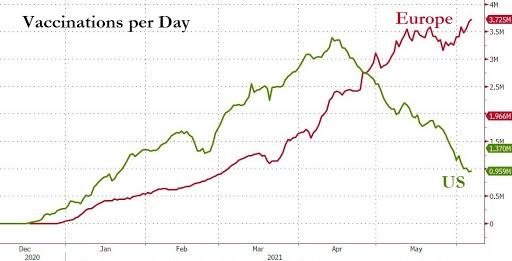
Less than a week ago, we reported that the US COVID-19 vaccination scheme had fallen dramatically in recent weeks, likely a factor of a drop in new cases combined with an easing of facemask requirements.

And as President Biden scrambles to hit his July 4 target to vaccinate more than 70% of adults, a goal that’s looking increasingly remote every day, the NYT reported Thursday morning that there’s one region of the country that’s seeing vaccination demand fall more sharply than the others: And that’s the deep south. It shouldn’t come as a surprise. But what’s even more surprising according to the NYT’s latest reporting, is that public health departments across the region have tried everything they can think of – public health meetings, church clinics, going door-to-door. In the spirit of offering raffle prizes to those who get vaccinated, one state even offered winners of one a spin around a NASCAR track.

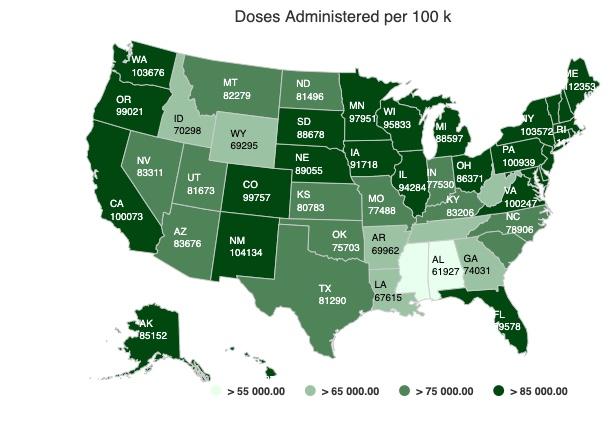
But doctors who spoke to the NYT from states like Alabama, Louisiana and Mississippi (all states where fewer than half of adults have gotten even their first jab), warned that the sense of victory that’s settled in across the region is premature.

“A lot of people have the sense, ‘Oh, dodged that bullet,’” said Dr. Jeanne Marrazzo, the director of the Division of Infectious Diseases at the University of Alabama at Birmingham. She added, “I don’t think people appreciate that if we let up on the vaccine efforts, we could be right back where we started.”

As of last night, the South is home to 8 of the 10 states with the lowest vaccination rates. Several theories have emerged to try and explain this: hesitancy from conservative white people, concerns among some Black residents, longstanding challenges when it comes to health care access and transportation.

“It’s kind of a complex brew, and we’re teasing apart the individual pieces,” said Dr. W. Mark Horne, president of the Mississippi State Medical Association. He added: “There’s no magic bullet. There’s no perfect solution. There’s no pixie dust we can sprinkle on it.”

Currently in the US, everyone over the age of 12 is eligible to be vaccinated. Daily, vaccinations are down to about 1.1MM doses from a peak of more than 3.3MM doses a day in mid-April. Unless the US see a sharp uptick in jabs, Biden is on track to miss his July 4 goal of getting 70% of Americans vaccinated by July 4.

In some parts of the south, it’s unclear if that threshold will ever be attainable.

“I certainly don’t expect us to get to 70 percent by Fourth of July. I don’t know that we’ll get to 70 percent in Alabama,” said Dr. Karen Landers, Alabama’s assistant state health officer. “We just have a certain group of people, of all walks of life, that just aren’t going to get vaccinated.”

Unfortunately for countries that are desperate for more jabs, vaccines have a short shelf-life, with a three-month shelf life at refrigeration temperatures, millions of doses of the Johnson & Johnson vaccine are set to expire nationwide this month, prompting some governors to urgently plead that health providers use them soon.

In Alabama, Nick Saban, the championship-winning football coach, urged fans to get vaccinated so they could attend games safely this fa

Across much of the South, vaccine skepticism is pervasive. In Jackson, Miss., Felix Bell Sr., a warehouse supervisor, expressed concern about how quickly the vaccines were developed. He did not plan to get a shot. “At first they said it’s going to take several years,” said Mr. Bell, who said he had previously recovered from Covid-19. “And then all of a sudden, it was ‘Boom.’” He added, “They’ve got to get more information about what happens down the line.”

The big worry right now is that mutant COVID-19 strain’s like the fearsome “Delta” mutant first discovered in India could spark another vaccine-resistant strain to take hold and essentially restart thee outbreak.

“If we don’t get our numbers up, we could be where we were last year, sheltering in place,” said William Parker, the president of the Birmingham City Council, who has proposed spending millions of dollars on vaccine incentives and who answered questions about vaccines on Monday as part of an online forum for residents.

Doctors have warned that the low vaccination numbers could make the South vulnerable to another wave of infections. Some polls have suggested that reluctance to accept the vaccine is linked to political affiliation, as Republican voters are more personally resistant to the jab than Democrats. But the big “unknown” right now is whether all this worrying might be for naught. Because as disagreements among doctors have shown, some believe that  antibodies produced by those who have already been infected (which have been found to last longer than earlier studies had suggested) might mean the US has already passed its “herd immunity” threshold.

But there’s no way to know for certain until the fall arrives.

Tyler Durden
Thu, 06/10/2021 – 16:51

via ZeroHedge News https://ift.tt/2SsH2Yb Tyler Durden

Guatemala’s President Says Biden Admin’s Unclear Messaging On Illegal Immigration Fueled Border Surge

Guatemala’s President Says Biden Admin’s Unclear Messaging On Illegal Immigration Fueled Border Surge

Authored by Tom Ozimek via The Epoch Times,

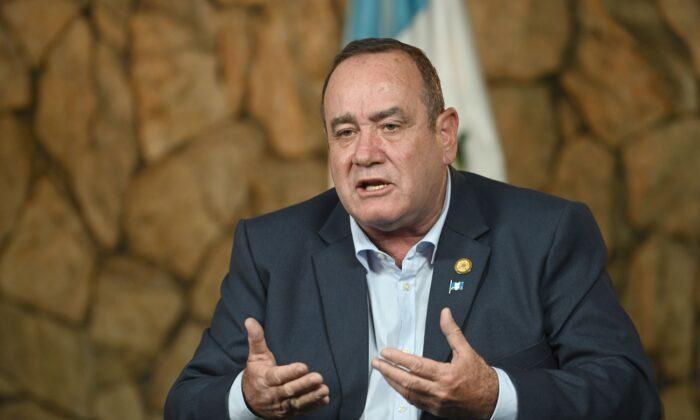
Guatemalan President Alejandro Giammattei criticized the Biden administration for unclear messaging on immigration that he said contributed to the border surge.

Then President-elect Alejandro Giammattei speaks during a interview with AFP in Guatemala City, Guatemala, on Aug. 12, 2019. (Johan Ordonez/AFP via Getty Images)

Giammattei told Fox News that, “You can see that humanitarian messages were used here by the coyotes in a distorted manner,” with “coyotes” a term for human smugglers.

“They said that they were going to support family reunification,” Giammattei said, referring to the Biden administration’s policy of allowing unaccompanied minors to enter the United States on humanitarian grounds and of seeking to unite them with family members in the United States.

“So the coyotes came and took the children and teenagers to the United States,” he said.

“And the border filled up. Not only with people from Guatemala, but lots of people.”

“That’s why we have suggested that the messaging be clear,” Giammattei added.

The surge of people migrating from Central American countries has become one of the biggest political challenges to the Biden administration, with Republicans blaming the wave of illegal border crossings on a rollback of Trump-era immigration policies and on messaging that many would-be migrants and human traffickers are interpreting as an invitation to come to the United States.

Border Patrol apprehends illegal immigrants at Penitas, Texas, on May 10, 2021. (Charlotte Cuthbertson/The Epoch Times)

Reuters interviews in April with nearly two dozen migrants and more than a dozen people identifying themselves as smugglers, as well as an examination of hundreds of posts in closed Facebook groups where smugglers advertise their services, shows that many would-be migrants believe that they are welcome to cross the border.

“There’s 100 days of free passage across the border,” a Guatemalan smuggler told Reuters, referring to one prevailing perception.

“Supposedly the president is letting children in,” another told the outlet.

In dozens of interviews with The Associated Press around the same time, migrants said President Joe Biden’s relatively pro-immigration positions influenced their decision to leave their homes and seek entry into the United States.

Human smugglers along the border continue to openly advertise their services on social media, with a recent report from The Epoch Times detailing a number of such ads.

“We have crossings through Lomas de Arena, Chihuahua. We offer camouflage, backpack with food. I’m currently in Chihuahua. Send me [a message to my] inbox or call me at [redacted by The Epoch Times],” one Facebook post said.

Border Patrol apprehends illegal immigrants at Penitas, Texas, on May 10, 2021. (Charlotte Cuthbertson/The Epoch Times)

While the Biden administration has said the border isn’t open and that most asylum-seekers are being turned away at the border, the administration is allowing unaccompanied minors into the country, a policy that may be contributing to the sharp rise in children traveling alone at the border. In March, border agents encountered 18,951 unaccompanied minors, the largest number recorded in a single month since U.S. Customs and Border Protection started publishing the figures in 2009. That number dropped slightly in April to 17,148, and again in May to 14,158.

In his interview on Fox News, which came as Vice President Kamala Harris visited Guatemala to address the “root causes” of migration, Giammattei praised Harris for a speech that warned would-be illegal immigrants not to seek entry into the United States, or they would be turned back at the border.

“The vice president yesterday sent a very clear message because she said, ‘Do not come because we won’t let you in,’” he said, adding, “That’s a clear message.”

“But if you have a lukewarm message, it opens up the possibility that there’s a bad interpretation of it,” he said. “You can say it in good faith. But there are people who will misinterpret it.”

In a separate interview with CBS, Giammattei said he would like to see the United States impose stronger penalties on human smugglers and that he’s ready to extradite “coyotes” to the United States to face charges.

Customs and Border Protection apprehended 180,034 individuals illegally entering the United States in May, slightly higher than the April number.

Tyler Durden
Thu, 06/10/2021 – 16:36

via ZeroHedge News https://ift.tt/3ge45PD Tyler Durden

Paul Krugman’s 10-Year History of Being Wrong About Bitcoin


thumb

Nobel Prize–winning economist Paul Krugman is one of the most influential individuals in his field, which means people listen when he talks about bitcoin. Unfortunately, most of what he has had to say about the cryptocurrency over the years has been misguided, uninformed, or just plain wrong.

It’s sometimes difficult for the average person to understand what economists and politicians are talking about when they debate policy, but the value proposition of bitcoin can be easily understood by anyone through its NgU technology (NgU is an abbreviation of Number Go Up and is a meme based around bitcoin’s deflationary monetary policy). While Krugman has stated that his 1998 prediction that “the Internet’s impact on the economy [would be] no greater than the fax machine’s” was supposed to be a fun and provocative thought experiment, it may be much more difficult to explain away his many confused and oftentimes arrogant takes on bitcoin over the past ten years.

Krugman first wrote about bitcoin in The New York Times back in September 2011. In this post, Krugman mainly compared bitcoin to gold in a rather negative light. “To the extent that the [bitcoin] experiment tells us anything about monetary regimes,” he wrote, “it reinforces the case against anything like a new gold standard—because it shows just how vulnerable such a standard would be to money-hoarding, deflation, and depression.”

In other words, Krugman made a moral case against the adoption of bitcoin as money. In Krugman’s telling, a bitcoin standard would make the world much worse off because bitcoin has a fixed supply and central bankers would not be able to increase the money supply to stimulate the economy during economic recessions.

Even if you accept the idea that the world would be much better off under a more inflationary monetary system where central bankers have the power to stabilize the economy (I don’t), individuals tend to respond to incentives related to the betterment of their own lives, not necessarily the greater good of society. If holding bitcoin theoretically makes the world as a whole a bit worse off but acts as a better form of savings for an individual, is the average person going to choose to put his savings in fiat currencies that lose value over time out of the kindness of his own heart, or will he choose to just hold bitcoin? It’s also important to remember that the entire point of bitcoin is to persist in the face of governments that try to force their citizens into only using the government-approved form of money.

In April 2013, Krugman invoked Adam Smith to make another moral case against bitcoin, this time claiming that the use of gold, silver, or bitcoin as money was a waste of resources. “Smith actually wrote eloquently about the fundamental foolishness of relying on gold and silver currency, which— as he pointed out—serve only a symbolic function, yet absorbed real resources in their production, and why it would be smart to replace them with paper currency,” Krugman wrote. “And now here we are in a world of high information technology—and people think it’s smart, nay cutting-edge, to create a sort of virtual currency whose creation requires wasting real resources in a way Adam Smith considered foolish and outmoded in 1776.”

This was an early version of the energy and climate change–based arguments being made against bitcoin today. This is a faulty argument, however, because it assumes there is no difference between bitcoin and traditional bank accounts. The entire point of bitcoin as an asset is that, unlike Venmo or traditional bank accounts, users can retain full control over their digital money and are not simply holding IOUs. Claiming that this is a waste of resources is a subjective argument. It is no different from saying automobiles or YouTube are wasteful due to the amount of energy that is used to power them. People use bitcoin because it provides value for them, so the resources expended to make bitcoin possible aren’t a waste.

Later in 2013, Krugman simply declared that “Bitcoin Is Evil” because, as science-fiction writer Charlie Stross put it, “BitCoin looks like it was designed as a weapon intended to damage central banking and money issuing banks, with a Libertarian political agenda in mind—to damage states ability to collect tax and monitor their citizens financial transactions.” That said, Krugman did at least go into the argument that bitcoin lacked any sort of fundamental price floor and contrasted that characterization with gold’s use in jewelry and the U.S. dollar’s use for paying taxes.

Krugman would go on to use bitcoin’s lack of a price floor mechanism as his key argument against the cryptocurrency for many years to come. For example, as he argued in a 2015 interview, bitcoin “is a technically sweet solution to a problem, but it’s not clear that problem is one that has much economic relevance. It’s certainly not a reason to hold that currency.…If you’re looking for the idea that a currency doesn’t really have to be something physical, it can be something that is virtual, that’s the system we already have.”

But this misses the point of bitcoin, which is actually nothing like the monetary system we currently have. For one, bitcoin’s long-term monetary policy was “set in stone” when the network launched in January 2009, and it is not subject to changes by a trusted third party such as a central bank. Additionally, bitcoin solves the problem of centralization that is found in the digital equivalents of both the gold and fiat-based currency systems. Bitcoin users are able to retain full ownership over their coins with no counterparty risk; a bitcoin is not an IOU. Further, due to the censorship-resistant nature of the bitcoin network, a new financial system can be built on top of the bitcoin blockchain through the use of smart contracts to enable a greater degree of user privacy for a wide variety of activities, operating in a manner that contrasts the current surveillance state.

In addition to calling bitcoin evil, Krugman has also dismissed it as “libertarian derp” on multiple occasions. He even took pleasure in the crashing bitcoin price in early 2018. Notably, some of Krugman’s negative comments toward bitcoin popped up around the absolute bottoms of two consecutive cryptocurrency bear markets. In other words, it may be a good time to buy bitcoin whenever you see Krugman taking a victory lap.

Unfortunately for Krugman, the “libertarian derp” cryptocurrency hit a new all-time high once again in 2021, 10 years after his initial criticisms of the crypto asset were first published in The New York Times. Instead of acknowledging the reasons for bitcoin’s staying power, however, it appears that Krugman will continue to claim there is no utility for this technology and keep dismissing bitcoin as a cult that can survive indefinitely.

Fortunately for bitcoin, it can rebut Krugman by simply continuing to exist and thrive in the marketplace.

from Latest – Reason.com https://ift.tt/3gcrNf6
via IFTTT