TC Energy Cancels Keystone XL Pipeline For Good

TC Energy Cancels Keystone XL Pipeline For Good

By OilPrice.com

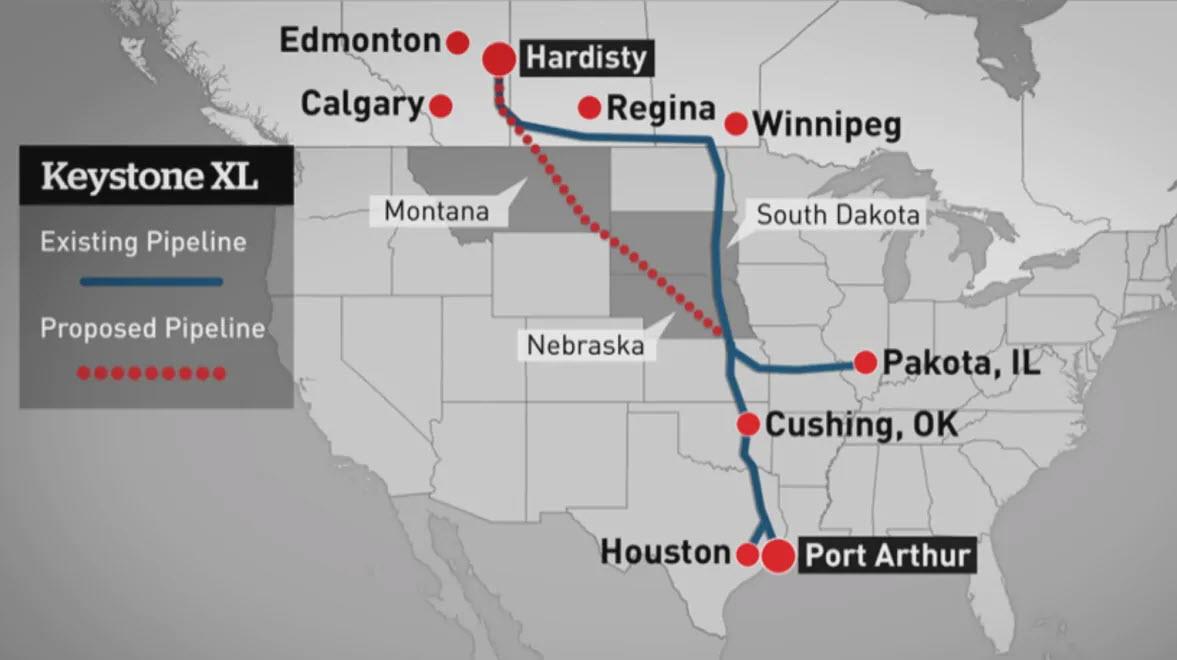
The Keystone XL pipeline project’s owner, TC Energy, said on Wednesday that it has terminated the controversial pipeline project that would have served as a lifeline to Canadian oilsands producers looking for more takeaway capacity.

TC Energy Corporation confirmed Wednesday that after careful review of the available options and after consulting with the Government of Alberta, it has officially canceled the Keystone XL.

Construction activities were stopped back in January.

The project’s cancellation comes several months after President Joe Biden revoked the Presidential Permit for the pipeline on January 20 of this year, in what was mostly seen as a death blow for the pipeline.

TC Energy will now set to work on how it will wind everything down while continuing to meet its environmental and regulatory commitments.

Canada had previously warned the United States that scrapping the vital oil pipeline would weaken relationships between the two countries.

Proponents of the Keystone XL project have argued that scrapping the Keystone XL would not diminish the demand for the heavy crude oil that the pipeline would have carried to U.S. refineries. Instead, it would merely raise the United States’ dependence on crude oil from OPEC countries. An argument has been made that it would also kill jobs on both sides of the border.

It was suggested back in January that if TC Energy did not challenge the permit rescission in court or through NAFTA, it might sell some of the pipes from the project to offset some of what has been invested so far.

As of February, Alberta had spent $1.2 billion on the project so far.

The Keystone XL would have carried 800,000 bpd of oil per day from Canada to the United States.

Tyler Durden
Wed, 06/09/2021 – 22:44

via ZeroHedge News https://ift.tt/3is3FXi Tyler Durden

Goldman Explains Why The Economy Won’t Overheat, No Matter What Tomorrow’s CPI Shows

Goldman Explains Why The Economy Won’t Overheat, No Matter What Tomorrow’s CPI Shows

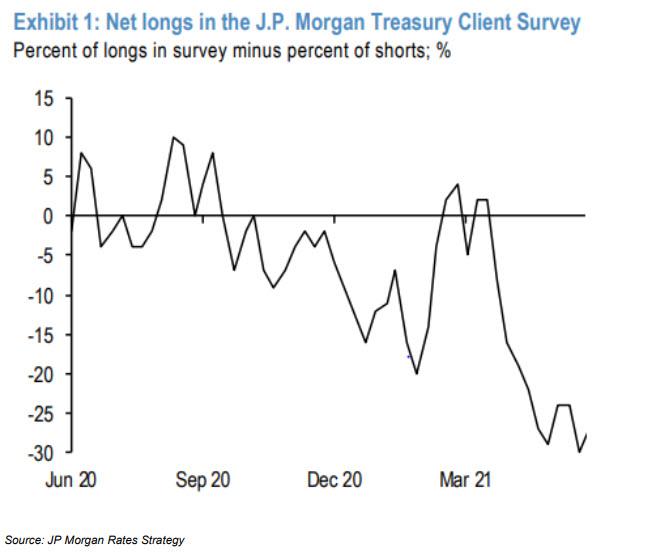
Yields on 10-year Treasuries dipped below 1.50% today for the first time since early March amid a furious short squeeze discussed earlier

… and as post-pandemic inflation concerns appear to be waning as quickly as they flared up.

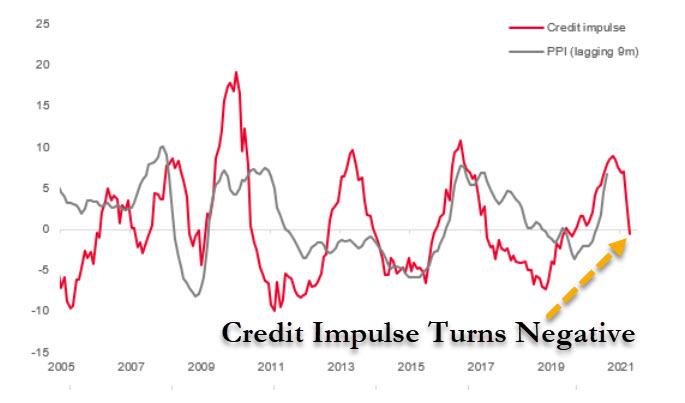
This is a point we first brought up last month when observing the collapse in China’s credit impulse, arguably the most important variable for the entire global reflationary narrative (see “China’s Credit Impulse Just Turned Negative, Unleashing Global Deflationary Shockwave“)…

… and it’s a point that Goldman’s chief economist Jan Hatzius reiterated in a note published on Tuesday titled simply “Why the Economy Won’t Overheat,” in which he argues – the same as the Fed – that the inflation we are seeing so far is likely to be temporary and prices will normalize again as we leg further away from unprecedented pandemic activity curtailments.

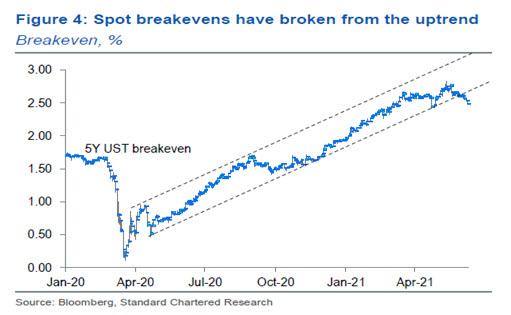
While we disagree – and so does Deutsche Bank, which sees nothing short of Weimar hyperinflation being unleashed by the Fed soon, something we first predicted in March 2009 as the ultimate endgame –  it is interesting that today, at least, markets appear to be adopting this view judging by the collapse in 10Y nominal rates and the recent breach of the upward trendline in breakevens…

… this even as China’s PPI printed at a Lehman Sept 2008 high of 9.0% overnight.

So what, according to Goldman is the reason for receding inflation fears? As Hatzius and strategist Chris Hussey explain, the past 2 payrolls reports have been underwhelming as the rush back to work “is being slowed by generous stimulus as well as an inability — perhaps — to simply process so many new workers. On the one hand, fewer available workers should push up wages as companies compete to attract new workers. But a more orderly stream of employment in the post-pandemic recovery may also allow for a more extended reopening period and perhaps a bit less top-line pressure on prices.”

Another reason for receding inflation fears may also simply be time. According to Goldman, as Americans become more accustomed to getting back to their daily routines, the strangeness of such activity recedes. And it is perhaps easier for investors to envision what‘normal’ will look like.  And perhaps that vision is collectively coalescing around a‘new normal’ that looks surprisingly similiar to the pre-pandemic ‘old normal’.

Hatzius then elaborates why the recent inflation pickup will remain transitory: “On the wage side, labor supply should increase dramatically over the next 3-6 months as fear of the virus diminishes further and the $300/week benefit top-up expires—over the next few weeks in most Republican-controlled states and on September 6 in the remaining states.” 

In other words, employers will likely hold out another 3 months until the end of emergency benefits expire at which point they expect a flood of workers to reverse the calculus in the labor market, from one of no labor supply to a flood of supply.

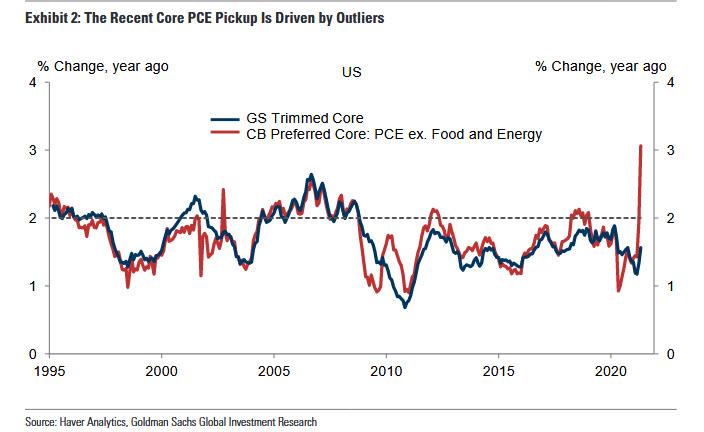
On the price side, Goldman’s trimmed core PCE—which excludes the 30% most extreme month-to-month price changes, and as a reminder the surge in inflation last month was largely driven by soaring used car prices and transportation services, or as Goldman puts it “outliers” — remains at just 1.56% year-on-year, half the standard core PCE rate.  This gap illustrates the unprecedented role of outliers in the recent inflation pickup.

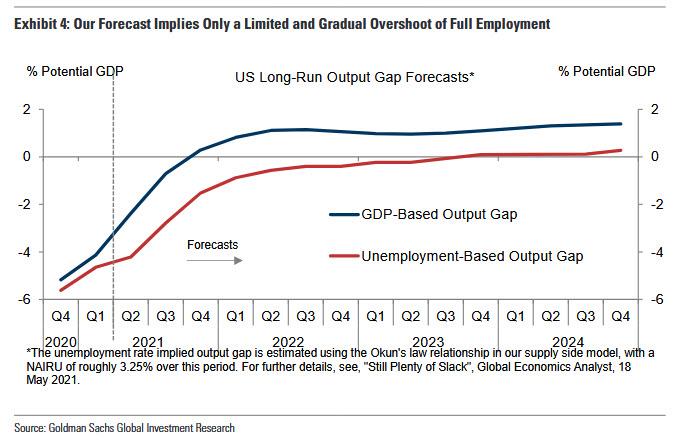
Ultimately, to Goldman, the biggest question in the overheating debate remains whether US output and employment will rise sharply above potential in the next few years. If the answer is yes, then inflation could indeed climb to undesirable levels on a more permanent basis. Predictably, Goldman’s answer continues to be no, and here’s why: “Even though real GDP is nearly back to the pre-pandemic level, we still see significant slack in the economy based on the remaining jobs shortfall of nearly 8 million and the pandemic-driven productivity gain of 4.1% year-on-year in Q1. Moreover, we think sequential GDP growth has probably already peaked in monthly terms and will trend down from here as the fiscal impulse wanes, modestly at first and then more sharply in late 2021 and 2022.”

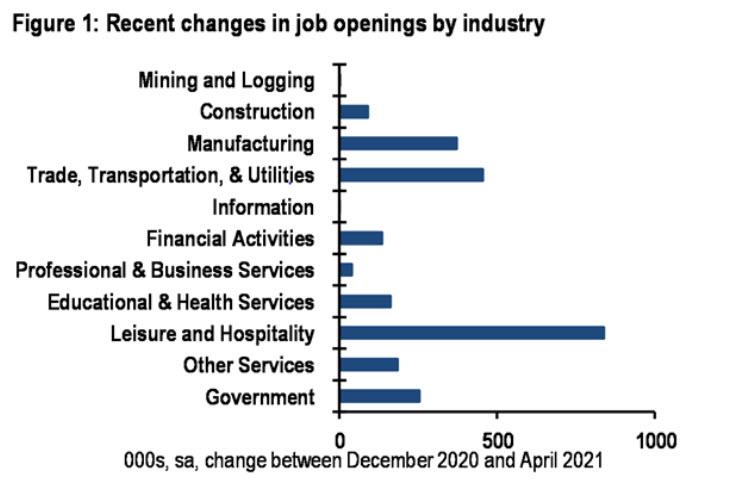
Here JPMorgan also chimes in and in a recent note from economist Dan Silver writes that as we prepare for the CPI print, it is worthwhile to consider the impacts of the removal of federal unemployment benefits and increasing hourly wages. In Silver’s note, he illustrates the growth in job openings among low-income jobs.

JPM then asks the right question: “will wage increases remain durable if business owners know that supply is coming back online?” A question we have asked previously, and the answer is a decisive not. To JPM, if the answer is indeed no, “we see a quicker than expected deceleration in wage growth, spending, and CPI.” Although, alternatively, it seems more likely that we will also see a surge in jobs taken and potentially another leg higher in absolute macro data.

With that in mind, what’s next on the inflation catalyst front and what will tomorrow’s critical CPI print show?  Here, Goldman estimates a 0.50% increase in May core CPI (in line with consensus), which will boost the year-on-year rate by six tenths to 3.55%, up from 3.0% which however is largely impacted by the base effect collapse of last year. Goldman’s monthly core inflation forecast “reflects reopening-driven strength in airfares, hotel prices, and recreation prices.” Additionally, Goldman expects strong monthly readings in used cars (+6%) and new cars (+0.5%), reflecting “one-time” supply chain disruptions and microchip shortages.

And while the Fed is more concerned with PCE inflation rather than CPI, Goldman concludes that even though the inflation burst is transitory, “it will be interesting to see how markets react to a 3.5%+ inflation report in a monetary regime that presumably is focused on keeping inflation around 2%.”

Tyler Durden
Wed, 06/09/2021 – 22:35

via ZeroHedge News https://ift.tt/3gaSSPP Tyler Durden

LA Sheriff Attributes Crime Surge To Soros-Backed DA Gascón, Supports Recall

LA Sheriff Attributes Crime Surge To Soros-Backed DA Gascón, Supports Recall

Authored by Chris Karr via The Epoch Times,

The city of Los Angeles saw a sharp 36 percent increase in homicides in 2020—but the L.A. County sheriff said this year is looking even more grim, and he’s blaming the widespread uptick in crime on District Attorney George Gascón.

“In 2021, that 36 percent has now become 92 percent, which is a huge statistical jump,” Sheriff Alex Villanueva told The Epoch Times.

“We’re seeing increases in all the categories – assault with a deadly weapon, arson, rape…  these things are continuing upward unabated.”

The widespread uptick in crime is the direct result of Gascón’s election as DA of L.A. County and his failure to prosecute offenses, according to Villanueva. Since Gascón took office, 2,690 cases—about 30 percent—“that normally would have gone through were rejected,” he said.

Los Angeles County Sheriff Alex Villanueva sits for an interview for The Epoch Times program “California Insider,” in Irvine, Calif., on May 27, 2021. (John Fredricks/The Epoch Times)

While Gascón has defended his reform policies, criminals in prison are toasting the DA to celebrate their early release, according to officials—and the sheriff said the DA’s policies are making it more difficult for him to do his job.

“You’re supposed to have a district attorney who represents the people …  but [he’s] acting like a public defender,” Villanueva said.

“There’s no one left representing the people. I need to work in partnership with the person who’s representing the people. I don’t have that right now.”

Impacting Public Safety

Gascón’s attempt to “reimagine public safety” with a series of new policies, or directives, has been widely criticized by deputy district attorneys, lawyers, current and former officials, and families of victims. Now, the DA is facing a recall.

“Had he campaigned on what he did once he took office and established those special directives … he’d have lost in a landslide. This is a classic example of bait-and-switch,” said Villanueva.

New San Francisco Police Chief George Gascón fields a question during a news conference at the Hall of Justice in San Francisco on Aug. 11, 2009. (Justin Sullivan/Getty Images)

In his view, those directives—which include eliminating the death penalty, abolishing sentencing enhancements like the Three Strikes law, and refusing to prosecute older juvenile offenders as adults for violent crimes—are having a major impact on public safety.

“It’s just gonna make a very, very dangerous place a lot more unlivable,” said Villanueva, adding that African-American and Latino communities are going to be impacted the most—the same communities that Gascón’s reforms aim to protect.

“It’s not going to impact the Gascóns of the world and their supporters, their campaign contributors … the people that live behind their mansions where they have their private security—no, no, no,” Villanueva said. “Those poorest neighborhoods [with] the highest crime rate, they’re gonna see [the impact] immediately. In fact, they already are.”

Los Angeles County Sheriff Alex Villanueva (C) attends an annual service honoring fallen peace officers in Tustin, Calif., on May 27, 2021. (John Fredricks/The Epoch Times)

‘That’s How Bad the Situation Currently Is’

Gascón maintains that his policies have produced the results he intended.

“I have instituted a series of reforms based on data and science that will enhance safety while reducing racial disparities and the misuse of incarceration. Our efforts to transform a dated approach that creates more crimes, victims and inequities are just beginning,” he wrote in a March 17 press release that reflected upon his first 100 days in office.

“We are doing all of this because the science and data tell us so. We can truly enhance public safety, increase equity, expand victim services and strengthen police accountability.”

Villanueva dismissed Gascon’s claims as “hogwash.”

“He believes, bizarrely, that somehow by letting people out, it’s going to improve or lower recidivism, [and] that keeping people locked up longer increases recidivism. And I’d say he has no facts to support that at all. No science is going to back that,” Villanueva said.

“They’re claiming that victims of violent crime want to see more rehabilitation and less consequences in terms of incarceration, and that’s news to me. … Every single victim of violent crime—parents of murdered kids, for example—that’s not what they’re saying at all.”

In his press release, Gascón cited a survey conducted by Californians for Safety and Justice that reported “strong majorities of Californian crime survivors support changes to the justice system that would increase rehabilitation and reduce mandated sentences.”

But Villanueva said this approach overlooks the “noble fallacy that somehow everyone is redeemable.”

“There are people that are not,” he added.

Furthermore, the elimination of strict legal repercussions is sending the wrong message to perpetrators, Villanueva said.

“Mr. Gascón is telling the criminal community it’s OK to commit violent crime because you will not face the same consequences in the past,” he said. “Right now, they’re toasting Gascón in the state prison for a reason.”

The L.A. sheriff pointed to a video of Phillip Dorsett, an inmate at New Folsom State Prison sentenced to 40 years to life for murdering a rival gang member in 2005.

“Right here with my cellie. … Celebrating us going home on this Gascón directive. Whoop!” Dorsett said, toasting with prison moonshine known as “white lightning.”

Greg Totten, CEO of the California District Attorneys Association, which made the video public in March, said the footage offers “compelling proof that violent criminals, not victims, will be the beneficiaries of [Gascón’s] radical policies.”

Added Villanueva, “Imagine we’re flooded with a bunch of newly released inmates from the state prison system—who are still in the prime of their crime-prone years—and they come back to L.A. That’s how bad the situation currently is.”

Recall Effort Ramps Up

If the families of violent-crime victims have their say, Gascón will face a recall in 2022.

“He clearly is not here for the victims. He’s here for the suspects,” Tania Owen, co-chair of the recall campaign, told The Epoch Times.

For Owen, a 32-year veteran of the L.A. County Sheriff’s Department, the consequences of Gascón’s reforms hit close to home. Her husband, Sgt. Steve Owen, was murdered in the line of duty in Lancaster on Oct. 5, 2016. The man who shot him, Trenton Trevon Lovell, originally faced life in prison without parole, or the death penalty.

Gascón’s reforms would have taken those options off the table, allowing Lovell to serve 20 to 25 years before being released. Last month, however, Lovell surprised Owen by pleading guilty to all charges, including the sentencing enhancements.

“It’s interesting to me because he could have very easily fought this and gone to court and likely received less time,” Owen said.

“But he took the maximum, which effectively means he is going to die in prison. At least he, the murderer, had more empathy for my family than the district attorney, who should be the one protecting us.”

While Owen has seen justice in her case, her fight for the families of other victims continues. That’s why she’s helping spearhead the effort to Recall George Gascón, alongside Villanueva, former L.A. DA Steve Cooley, former L.A. County Supervisor Mike Antonovich, and 14 cities that have issued no-confidence resolutions against Gascón.

“He is not following the law, and we want accountability,” Owen said.

“Crime in Los Angeles has skyrocketed in the very short amount of time that he has been here. There has been more aggression towards law enforcement because criminals know that they’re going to have it easy.”

In response, Gascón has defended his policies. In a tweet, he called opposition to them “backlash against reform fueled by conservative media, law enforcement unions & other ‘tough-on-crime’ types.’”

“From fear mongering to scare tactics, we are watching history repeat itself. But this time, reform will prevail,” he stated.

But Villanueva indicated the movement against Gascón is growing.

“If [the recall] doesn’t go through, you’re going to have a lot more angry residents building up, day in and day out,” he said, adding that he expects to see more cities issuing no-confidence resolutions in the near future.

Recall campaign organizers have until Oct. 27 to collect 580,000 qualified signatures—about 10 percent of L.A. County’s voters. They’re aiming to gather over 800,000, in case some are invalidated.

Gascón received $2 million in campaign funding from billionaire George Soros, who is known for bankrolling leftist politicians and organizations.

Gascón’s Office did not reply to questions submitted by The Epoch Times prior to publication.
Tyler Durden
Wed, 06/09/2021 – 22:10

via ZeroHedge News https://ift.tt/353jFHt Tyler Durden

Mongolia Reports Fresh COVID Outbreak Despite High Vaccination Rates

Mongolia Reports Fresh COVID Outbreak Despite High Vaccination Rates

For weeks now, Mongolia has been touted as an unexpected success story in the international vaccination project: the poor, mostly rural country lies between northeastern China and Russia’s resource-rich east.

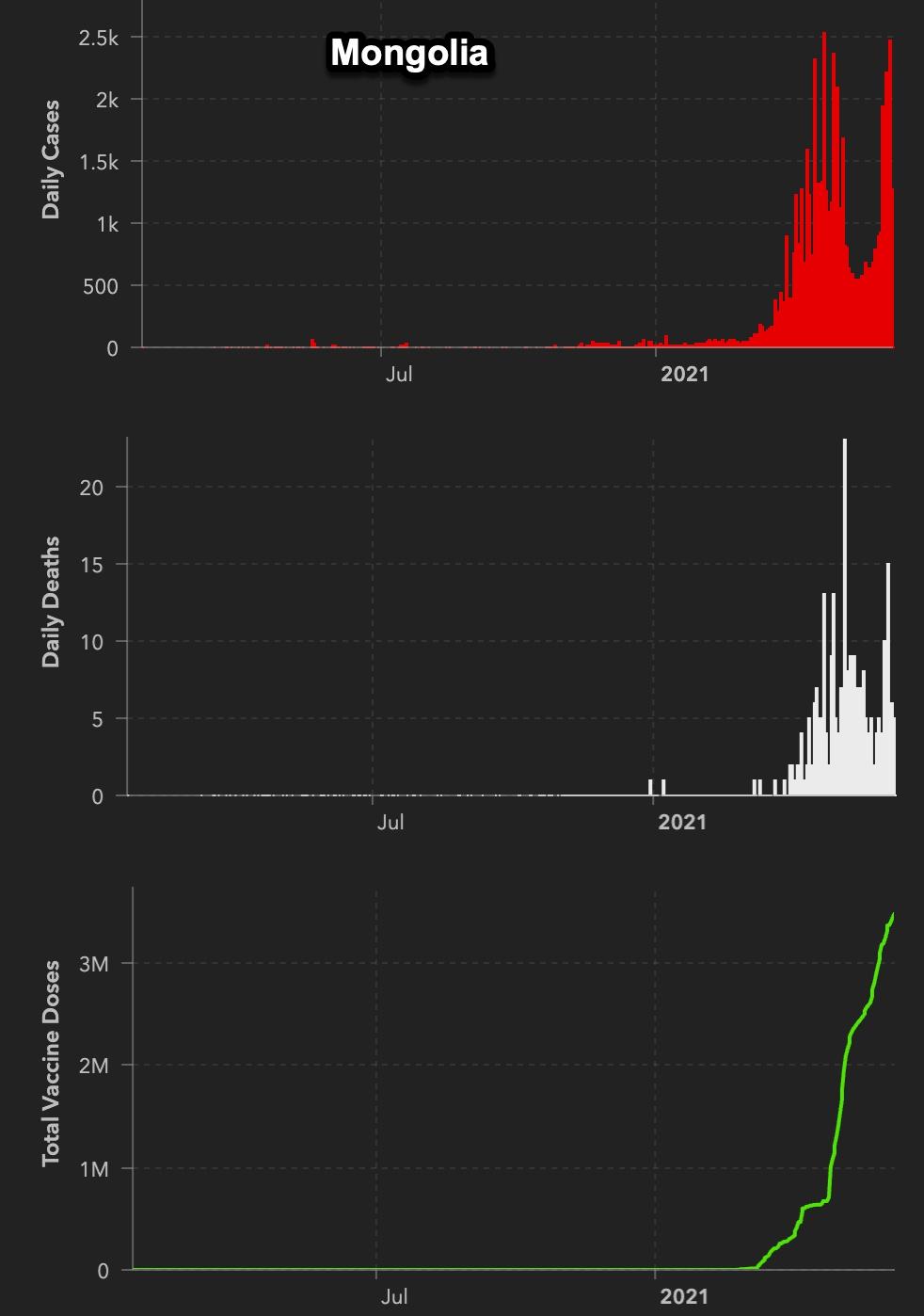
The country, which struck deals with its neighbors to stock its vaccine coffers months ago, drew attention due to its climbing international vaccination rate. But in recent days, Mongolia’s COVID-19 rate has surged, raising questions about the efficacy of China’s vaccines.

More than half of Mongolia’s population has been fully vaccinated. But despite this, the country reported 1,312 new cases of the coronavirus on Wednesday as the country’s total infections neared 70K, with almost all of those recorded since January. New daily infections have risen more than 70% in the past two weeks, according to a New York Times database.

The landlocked nation has easily secured enough doses of the vaccine from Russia and China. And as its case numbers rise, Sinopharm’s vaccine has come under scrutiny because of a lack of transparency in its late-stage trial data. The vaccine faced more questions after the island nation of the Seychelles, which relied heavily on Sinopharm to inoculate its population, also saw a spike in cases, although most people did not become seriously ill. “Inactivated vaccines like Sinovac and Sinopharm are not as effective against infection but very effective against severe disease,” said Ben Cowling, an epidemiologist and biostatistician at the University of Hong Kong School of Public Health. “Although Mongolia seems to be having a spike in infections and cases, my expectation is that there won’t be large number of hospitalizations,” he added.

Doubts about the efficacy of China’s Sinopharm jab have been spreading for months, as the vaccine was repeatedly shown to be less effective than the new mRNA jabs from Pfizer and Moderna-BioNTech.

In some areas, mutant strains may be spreading fast enough to cause concern even in countries where much of the population has vaccinations effective against them: Britain is dealing with a rise in cases linked to the Delta variant, despite having more than half of its adult population fully vaccinated, largely with shots from AstraZeneca and Pfizer. Still, the wave of infections has raised questions in Mongolia over why the government relied on the Sinopharm shots instead of a vaccine proven to be more effective. It came as Mongolians headed to the polls on Wednesday to vote for president, the first election since the constitution was amended to limit the president to one six-year term. The prime minister is the head of government and holds executive power.

A year ago, Mongolia was among the few countries in the world that boasted no local coronavirus cases, but an outbreak in November changed that. A political crisis ensued and protests over perceived mishandling of the outbreak led the prime minister to resign in January.

The new prime minister, Oyun-Erdene Luvsannamsrai, has promised to revive Mongolia’s lagging economy and end social distancing restrictions that have hurt businesses. A fresh wave of cases could threaten this pledge.

Tyler Durden
Wed, 06/09/2021 – 21:50

via ZeroHedge News https://ift.tt/3gaOEaV Tyler Durden

Here We Go Again: JBS “Paid” “Russian” “Hackers” $11 Million In Bitcoin To Resolve “Ransomware” Attack

Here We Go Again: JBS “Paid” “Russian” “Hackers” $11 Million In Bitcoin To Resolve “Ransomware” Attack

There was a moment of sheer hilarity earlier today when during a Congressional Hearing, the CEO of Colonial Pipeline Joseph Blount took the merely farcical episode of the Colonial Pipeline ransomware hack – when, as a reminder, a ragtag band of elite “Russian” hackers somehow managed to penetrate the company’s cyberdefenses but was so stupid it left most if not all of the $4.4 million bitcoins it demanded in ransom in an easily traceable address for the FBI to track down and magically confiscate (it is still unclear how the Feds got the private key to access the “hackers” digital wallet) in days if not hours – and elevated it to a level of farcical level of sheer absurdity when he told Congress that he didn’t consult the FBI before paying the ransom.

This, pardon the parlance of our times, is complete bullshit: either the CEO is lying or, worse, he is telling the truth and as some have speculate, he, the FBI and the “hackers” are all in on this so-called ransomware breach…

… a scenario which for now is yet another “conspiracy theory” and which we expect will become proven fact in the usual 6-9 months.

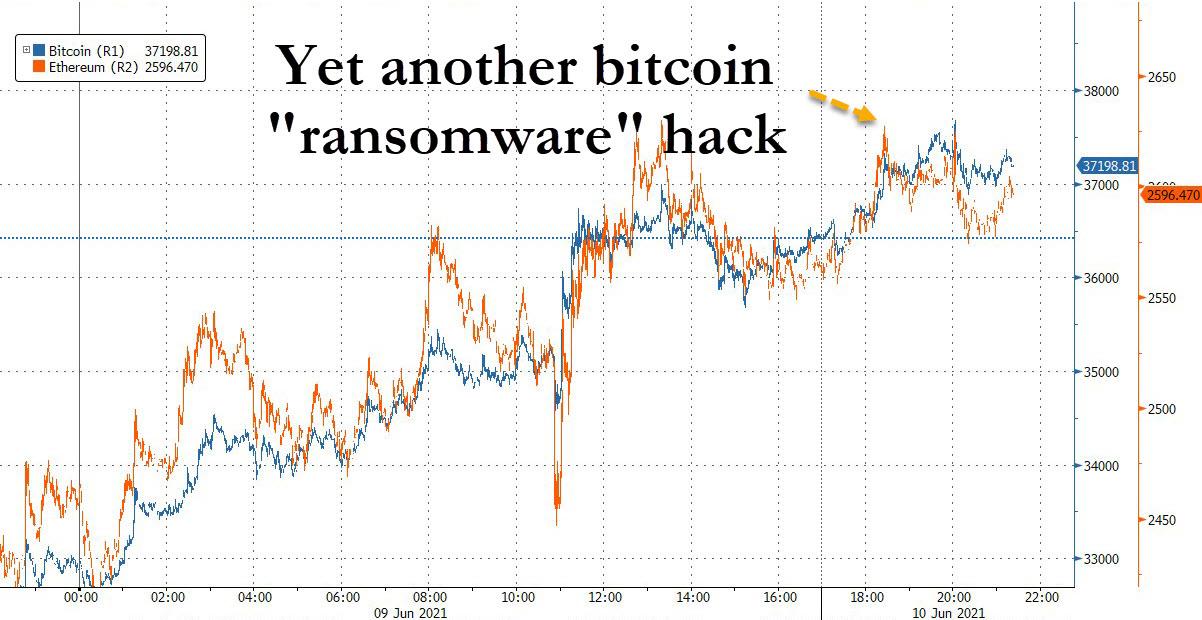
Yet just a few hours later, the exact same ridiculous narrative meant to achieve just one thing – tarnish the reputation of bitcoin further to the point where the US has to ban it – has struck again, and according to the WSJ last week’s big hack, that of giant steel producer JBS, was also resolved when the company paid $11 million – in bitcoin of course, because in this day and age one can’t simply dump a suitcase full of cash or send a wire transfer to an incognito account – as ransom to the criminals (who will naturally soon be unveiled as Russians because of course) responsible for the cyberattack that halted the company’s operations.

Yes, if this story seems identical to that of Colonial Pipeline, up to and almost matching the demanded ransom amount, it’s because it is: so barren is the imagination of the administration’s narrative writers that they can only regurgitate the same old story over and over.

Naturally, and just like in the Colonial “hack”, the ransom payment, in bitcoin, was made to shield JBS meat plants from further disruption and to limit the potential impact on restaurants, grocery stores and farmers that rely on JBS, said Andre Nogueira, chief executive of Brazilian meat company JBS SA’s U.S. division.

“It was very painful to pay the criminals, but we did the right thing for our customers,“ Nogueira said Wednesday. It remains to be seen if the JDS CEO, like his Colonial colleague, promptly transferred the bitcoin to the FBI’s hackers’ digital wallet without advising the FBI (first for the simple reason that the FBI already knew the crypto was inbound?)

The latest “shocking” attack on JBS has been part of a wave of bizarre incursions using ransomware, in which companies are hit with demands for multimillion-dollar payments to regain control of their operating systems. Some questions that remain unanswered is how the hell do these multi-billion dollar companies not have the most basic virus/malware protection to prevent some outsider, be it a 13 year old kid living in his mom’s basement, some Ukrainian hacker, or the FBI, from getting access to the company’s entire infrastructure and locking out the company itself.  And then, this genius mastermind(s) is so stupid, they have no idea how to cover up their traces and promptly hand over the cash to the Feds.

Even more grotesque is that, as the WSJ notes, the attacks show how hackers have shifted from targeting data-rich companies such as retailers, banks and insurers to essential-service providers such as hospitals, transport operators and food companies. Because apparently instead of spending $29.95 on an anti-virus program, these various companies used the cash to buyback stonk.

According to the WSJ, the FBI last week attributed the JBS attack to REvil, a criminal ransomware gang, which of course comes from Russia, because – again – of course. Nogueira said that JBS and outside firms are conducting forensic analyses of its information-technology systems, and that it isn’t yet clear how the attackers accessed JBS’s systems.

What is clear is that in just a few days these crack Russian cybercommandos will have a few dozen bitcoins less when the FBI which organized the entire farcical affair confiscates it all.

And speaking of farcical, it gets even worse, because unlike the Colonial “hack” where the company lost all control over its infrastructure, in the case of the JBS hack, Nogueira said that the company maintains secondary backups of all its data, which are encrypted. Here things get downright surreal: according to the official narrative, the company brought back operations at its plants using those backup systems, but “JBS’s technology experts cautioned the company that there was no guarantee that the hackers wouldn’t find another way to strike, and JBS’s consultants continued negotiating with the attackers.”

So even though the company had regained control, it decided to… pay the hackers?

“We didn’t think we could take this type of risk that something could go wrong in our recovery process,” Nogueira said of the decision to pay the attackers. “It was insurance to protect our customers.”

Ah, yes. All for the customers.

Meanwhile here comes yet another hearing led by that crusader for governmental uber-regulation of everything, Liz Warren, who will demand even more crackdown on bitcoin because – you see – none of this would have happened if bitcoin did not exist.

Though maybe this idiotic narrative, which is so transparent those who conceived it shoudl be ashamed, is no longer working because unlike in the case of the Colonial pipeline when news of the ransomware hack spread hammered bitcoin over fears of reprisals, this time the crytpo sector has barely budged as even the weakest hands can’t believe just how stupid the official government narrative has become.

To this the only possible conclusion is that yes, they really do think you are that stupid.

Tyler Durden
Wed, 06/09/2021 – 21:26

via ZeroHedge News https://ift.tt/2RE79Ld Tyler Durden

Largest Drug Bust In LA Sheriff’s History, After Raid On Cartel-Operated Marijuana Farm

Largest Drug Bust In LA Sheriff’s History, After Raid On Cartel-Operated Marijuana Farm

The Los Angeles County Sheriff’s Department (LASD) has uncovered the largest drug bust in its history Tuesday, and officials allege cartels are to blame. LASD seized tens of millions of dollars worth of illegal marijuana growing in dozens of greenhouses in Southern California, according to local news KTLA

Twenty-three people were arrested in a massive raid across the Antelope Valley, about 70 miles north of Los Angeles. Officials are currently bulldozing multiple illegal growing sites this week. 

Recreational marijuana became legal in California in 2018, but it has opened up a black market for Mexican drug cartels. 

Tuesday’s bust follows Antelope Valley residents complaining to local authorities about illegal growing operations stealing the area’s water supply, Los Angeles County Sheriff Alex Villanueva said during a news conference. The largest bust yesterday was a 10-acre plot housing more than 70 greenhouses, with an estimated $50 worth of marijuana. 

Los Angeles County Supervisor Kathryn Barger tweeted images of one of the growing operations from a helicopter. The view is absolutely astonishing, with row after row of greenhouses filled with marijuana. 

Villanueva has yet to assess the total amount of illegal marijuana seized Tuesday, but he said officials measure it in tons. Lancaster Mayor R. Rex Parris said the operation of 500 LASD deputies and DEA agents found $380 million worth of infrastructure and marijuana. 

The sheriff said some of the grow operations had unspecified cartels operating the sites and stealing millions of gallons of water from the arid region, currently experiencing an extreme drought. He said these illegal growing operations are dangerous for Antelope Valley’s community as it has led to a surge in violent crime. 

“We’re 300 miles away from the border and we have one of the largest illegal drug operations happening in the backyard of the high deserts of Los Angeles,” said Congressman Mike Garcia, R-Santa Clarita. 

Local officials urged the Biden administration to secure the border and contribute necessary funding for police as cartels run wildly on either side. 

President Biden’s disastrous border policies are chipping away at America’s law and order, and securing the border needs to happen quickly before it’s too late. 

Tyler Durden
Wed, 06/09/2021 – 21:10

via ZeroHedge News https://ift.tt/3v8MsF8 Tyler Durden

The Coming Biden/Putin Train-Wreck Summit

The Coming Biden/Putin Train-Wreck Summit

Authored by Ron Paul via The Ron Paul Institute for Peace & Prosperity,

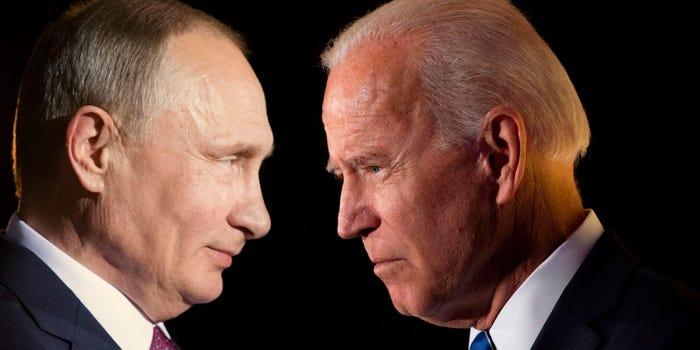
I have my doubts whether the Putin-Biden summit in Geneva will take place later this month, but even if somehow it is pulled off, recent Biden Administration blunders mean the chance anything of substance will be achieved is virtually nil.

The Biden Administration was supposed to signal a return of the “adults” to the room. No more bully Trump telling NATO it’s useless, ripping up international climate treaties, and threatening to remove troops from the Middle East and beyond. US foreign policy would again flourish under the steady, practiced hands of the experts.

Then Biden blurted out in a television interview that President Putin was a killer with no soul. Then US Secretary of State Antony Blinken discovered the hard way that his Chinese counterparts were in no mood to be lectured on an “international rules-based order” that is routinely flouted by Washington.

It’s going to be a rough ten days for President Biden. Just as news breaks that under the Obama/Biden Administration the US was routinely and illegally spying on its European allies, he is preparing to meet those same allies, first at the G7 summit in England on June 11-13 and then at the June 14th NATO meeting in Brussels.

Make no mistake, Joe Biden is up to his eyeballs in this scandal. Ed Snowden Tweeted late last month when news broke that the US teamed up with the Danes to spy on the rest of Europe, that “Biden is well-prepared to answer for this when he soon visits Europe since, of course, he was deeply involved in this scandal the first time around.”

Though Germany’s Merkel and France’s Macron have been loyal US lapdogs, the revelation of how Washington treats its allies has put them in the rare position of having to criticize Washington. “Outrageous” and “unacceptable” are how they responded to the news.

Russia has been routinely accused (without evidence) of malign conduct and interference in internal US affairs, but it turns out that the country actually doing the spying and meddling was the US all along – and against its own allies!

Surely this irony is not lost on Putin.

Biden has bragged in the US media that he would be taking Putin to task for Russia’s treatment of political dissidents like Alexei Navalny. Biden wrote recently in the Washington Post, that when he meets Putin, “I will again underscore the commitment of the United States, Europe and like-minded democracies to stand up for human rights and dignity.”

Perhaps President Putin will remind him of how the Biden Administration continues the slow-motion murder of Julian Assange for the non-crime of being a journalist exposing government misdeeds.

Perhaps Putin will remind Biden of how US political dissidents are being treated, such as the hundreds arrested for what the Democrats and the mainstream media laughably call the “January 6th Insurrection.”

Many of these non-violent and unarmed protesters have been held in solitary confinement with no chance of bail, even though they have no prior arrests or convictions. Most await trial on minor charges that may not even take place until next year.

The Washington foreign policy establishment is hopelessly corrupt. The weaponization of the US dollar to bring the rest of the world to heel is backfiring. Only a serious change in course – toward non-interventionism and non-aggression – can avert a disaster. Time is running out.

Tyler Durden
Wed, 06/09/2021 – 20:50

via ZeroHedge News https://ift.tt/355zVHQ Tyler Durden

“Pinching At The Supply” – Delaware Restaurants Clawed By Crab Meat Shortage  

“Pinching At The Supply” – Delaware Restaurants Clawed By Crab Meat Shortage  

People on holiday are getting crabby in southern Deleware, right down the street from President Joe Biden’s vacation home, where a crab shortage has hit many popular restaurants. 

Crab processing plants on the Delmarva Peninsula to Gulf Coast states operate at a fraction of the output due to labor shortages. Crabs coming from Indonesia, the Philippines, and or India have seen shipment delays due to West Coast port congestion. 

This is a perfect storm that started well before the virus pandemic when the Trump administration put a cap on the amount of H-2B workers. Then the virus pandemic hit, and borders closed, limiting the travel of H-2B workers. On top of this, domestic workers have been paid more with Trump and Biden checks to stay home than work.

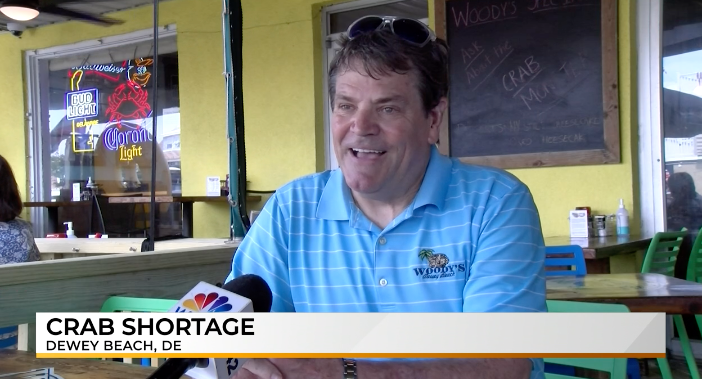
Rippling down the chain, Dewey Beach’s Woody’s crab house, located not too far away from Biden’s Rehoboth Beach-area home, is weeks away from running out of crab meat because of supply constraints mentioned above, according to WRDE‘s Mallory Metzner, who said this is all “pinching at the supply.” 

Woody’s owner Jimmy O’Conor is absolutely “heartbroken” about the shortage that has forced him to cut platters down from two crab cakes and eliminate takeout. The eatery’s crabcakes are famous enough that people from out of state would order them through the mail. 

Now O’Conor faces crabby customers as his supplies of crab meat dwindles as suppliers can barely keep up with his weekly orders. 

“It’s not like I need ten cases, I need 100 cases and it’s just not available, O’Conor said. “People aren’t picking crabs down on the Eastern Shore, Virginia, all of the crab houses are at a fraction of what they usually do.”

According to Philadelphia-based Samuels & Son Seafood Co Inc CEO Sam D’Angelo, “the shortage has been going on since before the coronavirus, but it was accentuated with the demand that all of a sudden took place combined with the shortage of shipping lines and shipping containers and people picking crabs, whether it’s in Indonesia, Philippines or India, it’s a combined situation where everything came together in a perfect storm.”

D’Angelo said seafood supply chains might not normalize until the end of summer when the demand for crabs resides. 

O’Conor said if his crab meat runs out, crab cakes might be off the menu for the rest of the summer. At the moment, his wholesale costs for crab meat are more than doubled from last year, and the restaurant is forced to pass along the costs to customers to survive. 

Tyler Durden
Wed, 06/09/2021 – 20:30

via ZeroHedge News https://ift.tt/3xc2780 Tyler Durden

How Will Investors Know If Inflation Is Transitory Or Permanent

How Will Investors Know If Inflation Is Transitory Or Permanent

By Steven Englander and John Davies, FX and Rates strategists at Standard Chartered Bank

The Fed has indicated that it does not see its expected inflation surge in the coming months as pointing to longer-term pressures. Many investors are sceptical, but do not have a framework from which to push back against the Fed’s optimism that it can manage a “gentle inflation overshoot.”

Here we argue that looking at trimmed mean inflation is a straightforward way of assessing whether an inflation surge is broad-based or narrow. So far, we find small indications that these broad-based inflation indicators are rising, but nothing conclusive. This assessment could change in the coming months.

We do not expect fixed income investors to challenge the Fed while evidence on inflation is inconclusive. Yields may rise modestly if it looks as if growth will support the start of tapering in 2022, but a steep backup of yields likely requires either significantly increased inflation concerns or growth optimism, neither of which is now visible.

We also watch forward inflation breakevens, to see if they rise above 2.3%, and econometrically derived underlying inflation calculations from the Fed. Breakevens are calculated on a CPI basis; 2.3% would correspond to 2% on a PCE basis. This is a bit of a Rubicon for the Fed, which emphasises its commitment to maintaining stable long-term inflation expectations. Forward breakevens have poked above 2.3%, but have not been able to stay above for any length of time.

The case for looking at trimmed means is that inflation is usually a broad-based phenomenon. It is not just one or two items that go up in price but an environment of general price increases. Trimmed means take out the extremes of sharply rising and sharply dropping prices, and are preferable to core inflation measures that remove food and energy only but include temporarily volatile items. The fastest-rising prices likely reflect a surge of reopening demand or supply-chain constraints. But these price pressures should emerge in a small set of industries where activity has been limited, not across the board. The Fed could argue that a broad-based increase in prices can also be transitory, but that is a hard argument to make when much of their research associates the common element of inflation with underlying inflation trends.

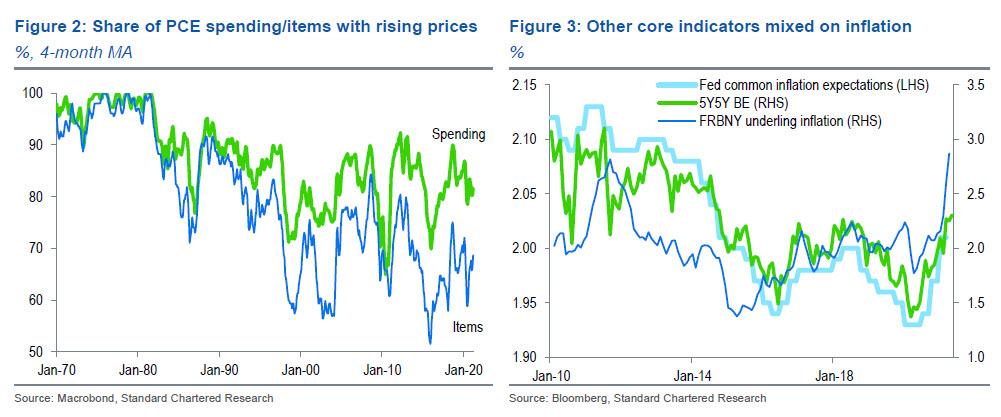
None of the Fed trimmed mean measures are signalling a breakout from past inflation norms (Figure 1). All are well below mid-1990s and 2008-09 global financial crisis levels, let alone 1980s or 1970s levels, so there is no signal of an inflation surge. However, these trimmed means are now close to pre-COVID levels, so further backing up could signal an exit from the ultra-low inflation norms of the previous decade. These readings would probably need to be 0.5-1.0% higher to signal a risk that broader inflation would be above 2.5%. The San Francisco Fed’s calculation of the share of PCE spending and items with rising prices is similarly in line with the past 10 years and well below 1970-2000 levels (Figure 2).

A second approach estimates the common inflation component using econometric methods to identify and weight prices that have the most movements in common. The New York Fed’s underlying inflation gauge based on CPI prices is showing clear acceleration and is at the highest level since 2008 (Figure 3). What this means is that the CPI components with the greatest common movements are going up in price relatively quickly.

By contrast, a quarterly index put together by Federal Reserve Board staff to extract the common movement in inflation expectations (presumably more forward-looking) showed modest increases through Q1-2021. This index is a mixture of inflation expectations at various tenors and has paralleled 5Y5Y UST inflation breakevens (BE) recently, so it looks likely to accelerate in Q2 (Figure 3). However, it has a very low amplitude, even compared to a 10-year average of core PCE or 30Y UST inflation BEs, so modest moves may be a much bigger signal than appears at first glance.

Fed Vice-Chair Clarida has referred to this index several times as a guide to whether inflation expectations are anchored, but the outcome is so stable it is unclear how it should be interpreted. The series begins in 1999, the low is 1.93%, the high is 2.15% and the series has rarely gone above 2.1%, so moving beyond these levels should probably be a yellow flag on the inflation front.

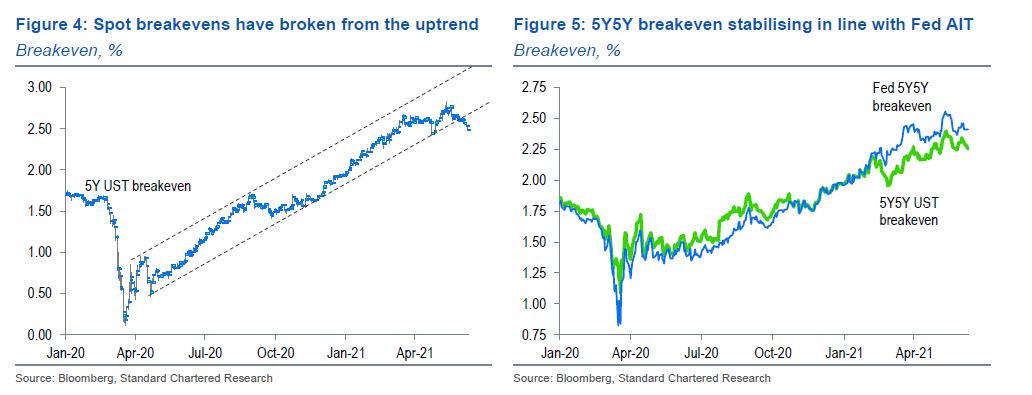
The recent pull-back in breakeven spreads suggests the market has become more prepared to give the Fed the benefit of the doubt regarding its view that near-term upside inflation pressure will prove transitory. During Q1, the volatility in real yields and rise in rate hike expectations suggested the market was ready to challenge the Fed on its own forward guidance on policy. A steady flow of dovish rhetoric, from Chair Powell in particular, capped the Q1 curve steepening but breakeven spreads continued to rise through mid-May. At levels around 2.75-2.85% for 3Y-5Y breakevens, the market appeared to be questioning whether inflation would prove as transitory as the Fed expected. However, the rise in 5Y5Y and 30Y breakevens was more contained and, in our view, implied the market was broadly pricing for the Fed to achieve its average inflation target (AIT) over the longer term.

In recent days, spot breakevens across the entire curve have broken below their uptrend channels from April 2020. In the process, the breakeven curve has seen some disinversion, meaning that the move in the 5Y5Y forward breakeven has been more modest than the move in spot breakevens. This makes sense, in our view – while breakevens reflecting the near-term inflation outlook ebb and flow as the pace of re-opening and recovery plays out, the market’s longer-term inflation view should become more steadily aligned with the Fed’s 2% AIT framework. The upcoming CPI report may prove crucial in determining whether this move can extend further near-term. Given how well the market digested the April CPI and PCE data, we suspect that only an overshoot on core CPI above the higher end (3.7-3.8% y/y) of the estimate range within the consensus survey would be likely to reverse the recent breakeven decline.

Tyler Durden
Wed, 06/09/2021 – 20:10

via ZeroHedge News https://ift.tt/3iwdSlm Tyler Durden

“We’re On Fire”: Amidst NYC Exodus, Demand For Commercial Office Space In Palm Beach Is Off The Charts

“We’re On Fire”: Amidst NYC Exodus, Demand For Commercial Office Space In Palm Beach Is Off The Charts

With Wall Street firms tripping hand over foot to get out of New York, where taxes and crime are both on the rise, places like Palm Beach, Florida, are the beneficiaries. We have noted numerous firms, including names like Point 72 and Goldman Sachs, branching out and/or leaving New York altogether in favor of greener pastures in Florida, since the pandemic started.

Amidst the Wall Street exodus, Palm Beach office space demand is off the charges. The city has officially become a “hot market” for commercial real estate, according to a new report from BNN Bloomberg. As a result of the boom, Manhattan developer Related Cos. “has been accelerating investments in West Palm Beach and now controls about a third of its downtown office stock,” the report notes. Related is the company behind NYC developments Hudson Yards and the Columbus Circle tower.

Now, the company is betting on a continued boom in South Florida even after Covid restrictions are lifted. 

Kelly Smallridge, president of the Business Development Board of Palm Beach County, told BNN: “The pandemic has really showed executives that they could do business anywhere, Developers are at the drawing board right now to develop more space to accommodate all of this growth. We’re on fire.”

Related has bought three buildings in West Palm Beach this year, including one that will house Point 72. It’ll now own 1.6 million square feet (149,000 square meters) of offices in the area. 

New York-based Cohen Brothers Realty has also proposed a 400,000 square foot office tower in West Palm, the report notes. Developer Jeff Green has a mixed use project called One West Palm currently under construction, as well. 

Gopal Rajegowda, a partner at Related Southeast, said: “We feel West Palm is one of the fastest-growing commercial markets. With more people thinking about lifestyle now, a lot of these companies say, ‘hey, we want to be in South Florida, so why don’t we put a stake in the ground now?’”

BNN estimates that about 59,000 people from the New York area spent “at least eight weeks” in Southeast Florida last year. 42% of those went to Palm Beach County, which gained 11,000 new residents during 2020.

The city’s 360 Rosemary tower is now more than 95% leased, compared to 30% six months ago. Mark Pateman, managing principal with Cushman & Wakefield Plc’s West Palm Beach and Boca Raton offices, said: “It would normally take way longer to lease. I am seeing a lot of non-local brokers walking through our buildings dragging Florida brokers in tow.”

One of the reasons Palm Beach is filling up so quickly is because of its small size. It has about 2.9 million square feet of office space, compared to 253 million square feet in Midtown Manhattan. Because of its small size, it’s also tough to consider West Palm’s boon as a major sea change. 

Pateman concluded: “We’ve got a good run here, we have another two years of tailwinds from Covid, but is New York going away? Absolutely not. It’s overstated to say this is a paradigm shift.”

Tyler Durden
Wed, 06/09/2021 – 19:50

via ZeroHedge News https://ift.tt/3ziu8fI Tyler Durden