Negative Interest Rates Spread To Mortgage Bonds

Authored by John Rubino via DollarCollapse.com,

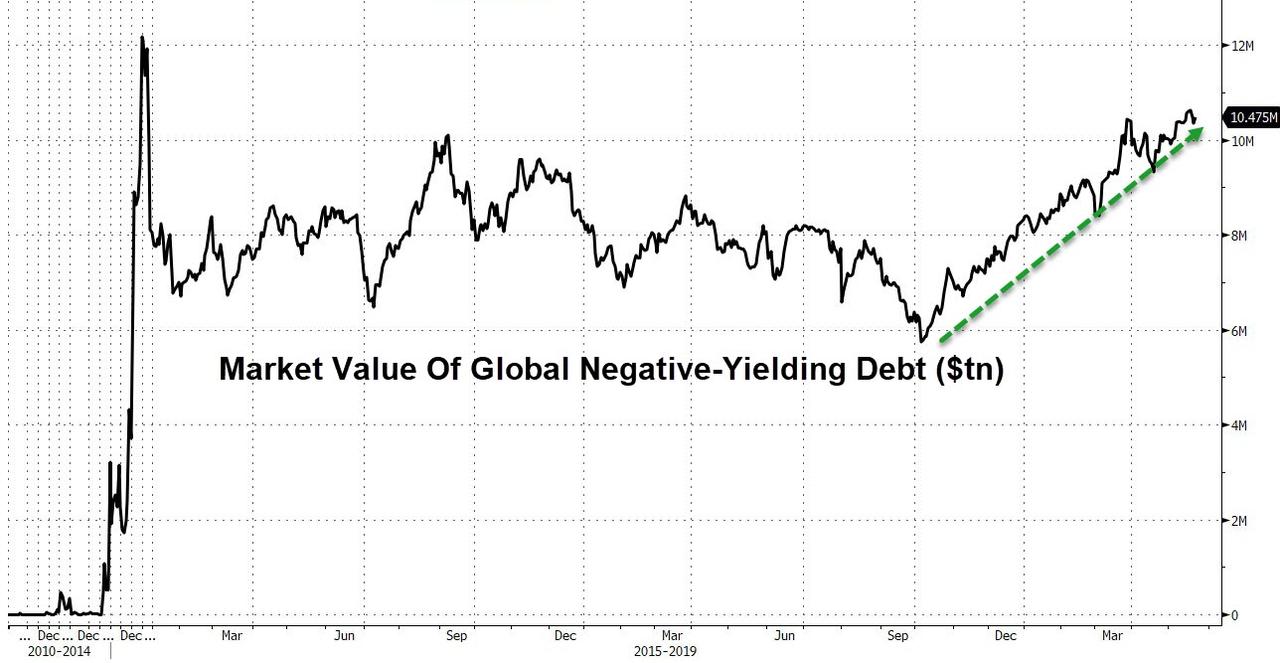
There are trillions of dollars of bonds in the world with negative yields – a fact with which future historians will find baffling.

Until now those negative yields have been limited to the safest types of bonds issued by governments and major corporations. But this week a new category of negative-yielding paper joined the party: mortgage-backed bonds.

Bankers Stunned as Negative Rates Sweep Across Danish Mortgages

(Investing.com) – At the biggest mortgage bank in the world’s largest covered-bond market, a banker took a few steps away from his desk this week to make sure his eyes weren’t deceiving him.

As mortgage-bond refinancing auctions came to a close in Denmark, it was clear that homeowners in the country were about to get negative interest rates on their loans for all maturities through to five years, representing multiple all-time lows for borrowing costs.

“During this week’s auctions, there were three times when I had to stand back a little from the screen and raise my eyebrows somewhat,” said Jeppe Borre, who analyzes the mortgage-bond market from a unit of the Nykredit group that dominates Denmark’s $450 billion home-loan industry.

For one-year adjustable-rate mortgage bonds, Nykredit’s refinancing auctions resulted in a negative rate of 0.23%. The three-year rate was minus 0.28%, while the five-year rate was minus 0.04%.

The record-low mortgage rates, which don’t take into account the fees that homeowners pay their banks, are the latest reflection of the global shift in the monetary environment as central banks delay plans to remove stimulus amid concerns about economic growth.

Denmark has had negative rates longer than any other country. The central bank in Copenhagen first pushed its main rate below zero in the middle of 2012, in an effort to defend the krone’s peg to the euro. The ultra-low rate environment has dragged down the entire Danish yield curve, with households in the country paying as little as 1% to borrow for 30 years. That’s considerably less than the U.S. government.

The spread of negative yields to mortgage-backed bonds is both inevitable and ominous. Inevitable because the current amount of negative-yielding debt has not ignited the kind of rip-roaring boom that overindebted countries think they need, which, since interest rates are just about their only remaining stimulus tool, requires them to find other kinds of debt to push into negative territory. Ominous because, as the world discovered in the 2000s, mortgages are a cyclical instrument, doing well in good times and defaulting spectacularly in bad. Giving bonds based on this kind of paper a negative yield appears to guarantee massive losses in the next housing bust.

Meanwhile, this is year ten of an expansion – which means the next recession is coming fairly soon. During recessions, the US Fed, for instance, tends to cut short-term rates by about 5 percentage points to counter the slowdown in growth.

With Europe and much of the rest of the world already awash in negative-yielding debt

… this imminent slide in interest rates will turn the rest of the global financial system Danish, giving us bank accounts and bond funds that charge rather than pay, and very possibly mortgages that pay rather than charge.

Anyone who claims to know how this turns out is delusional.

via ZeroHedge News http://bit.ly/2YV4YBd Tyler Durden
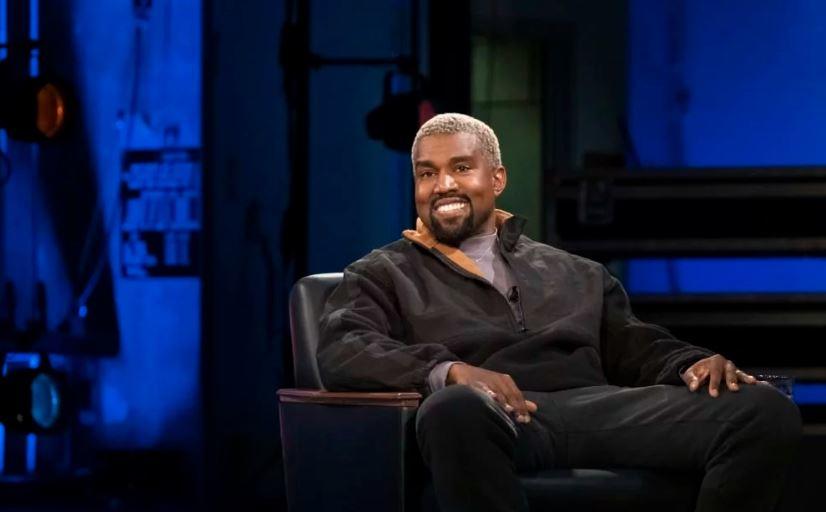
Kanye West: “Liberals Bully People Who Are Trump Supporters”

Sounding far more cogent – and more restrained – than he did during that impromptu White House press conference, Kanye West sat down for an hour-long interview with David Letterman for one of the opening episodes of the second season of Letterman’s Netflix show: “My Next Guest Needs No Introduction.”

Now, the new season isn’t slated for release until next week. But in a preview, the Daily Beast essentially recounts the highlights from the interview, including a statement volunteered by Kanye – because Letterman has opted not to bring up President Trump during these interviews.

Kanye

Kanye said his decision to wear a ‘Make America Great Again’ hat isn’t about politics – it’s about “breaking the stigma” surrounding showing support for the president.

Then, of course, there is Kanye’s bizarre love affair with President Donald Trump. When Letterman had Obama on his show last year, he pointedly did not ask him to address his successor directly and again here he does not bring up Trump. But thankfully, Kanye does it for him.

In the midst of a somewhat confusing argument about his “fear” as a man during the #MeToo movement, Kanye says, “This is like my thing with Trump – we don’t have to feel the same way, but we have the right to feel what we feel.”

When he wears his “Make America Great Again” hat, he says it’s “not about politics” but rather an attempt to break the stigma around showing support for Trump.

Letterman follows up by asking Kanye if he voted for President Trump, to which Kanye replied: “I’ve never voted in my life.”

“Did you vote for Trump?” Letterman asks him.

“I’ve never voted in my life,” Kanye answers.

“Then you don’t have a say in this,” Letterman shoots back to cheers from the audience.

Letterman then tries to steer the conversation toward Republican ‘voter suppression’ tactics, but Kanye clearly isn’t having it; instead, he launches into a tangent comparing Liberals to high school bullies.

From there, Letterman tries to get Kanye to condemn the Republican-led voter suppression efforts during the most recent midterm elections. “So if I see a person that I admire talking about Donald Trump can think whatever he does,” he says, “I wonder if those thoughts, indirectly, aren’t hurting people who are already being hurt.”

Instead of addressing Letterman’s point, Kanye turns around and expresses sympathy for Trump voters who are “treated like enemies of America because that’s what they felt.” After Letterman makes his forceful case against the idea that Trump is some sort of savior to those who voted for him, Kanye takes a long pause.

“Have you ever been beat up in your high school for wearing the wrong hat?” he asks eventually. Asked who is doing the bulk of the bullying in America right now, he replies, “Liberals bully people who are Trump supporters!”

That’s a comment that will almost inevitably inspire mobs of liberals to bully Kanye on Twitter.

Watch a preview for the season below:

via ZeroHedge News http://bit.ly/2VPe5Bs Tyler Durden

UN Arms Chief Warns: Nuclear War Is Closer Than Its Ever Been Since WW2

Authored by Mac Slavo via SHTFplan.com,

A United Nations arms official has declared nuclear war to be closer than it has ever been since World War II. The geopolitical climate is so divisive and disturbing right now, that globalists are actually telling us a nuclear war could be coming.

The head of the United Nations’ Institute for Disarmament Research (UNIDIR) Director Renata Dwan said in an interview that the use of nuclear weapons is more likely today than any time since the U.S. bombings of Hiroshima and Nagasaki in Japan in 1945, adding that the use of such weapons today carried a greater risk than ever, according to Reuters.

“I think that it’s genuinely a call to recognize – and this has been somewhat missing in the media coverage of the issues – that the risks of nuclear war are particularly high now, and the risks of the use of nuclear weapons, for some of the factors I pointed out, are higher now than at any time since World War II,” she told the news service, speaking about a call from 122 nations to ban such weapons entirely. Dawn says that the UN should be doing more to ban nuclear weapons.

“How we think about that, and how we act on that risk and the management of that risk, seems to me a pretty significant and urgent question that isn’t reflected fully in the (U.N.) Security Council,” she told Reuters according to The Hill.

Of course, a ban only works if countries are going to obey. Should nations defy a UN nuclear weapons ban, there is literally nothing the UN can do about it. There are far too many nukes out there for the UN’s words to matter. The Treaty for the Prohibition of Nuclear Weapons, which is backed by a group that won the Nobel Peace Prize in 2017, is currently supported by more than 100 nations, most of which do not have any nuclear weapons anyway. It has been ratified by 23 countries out of the 50 it requires to take effect. Again, even if it “takes effect,” large players such as the United States, Russia, and China could defy the ban and still start a nuclear war.

The U.S., which has advocated against the proliferation of nuclear weapons around the world, has opposed the treaty, as do other nuclear powers such as Russia and China. And that’s all it would take to negate any kind of ban.

Hopefully, politicians all over the world can refrain from starting a nuclear war.  But if they can’t, know how to protect yourself the best you can.

via ZeroHedge News http://bit.ly/2M96rly Tyler Durden

Trump Opens State Visit With ‘Joke’ About Japan’s “Substantial” Trade Advantage

President Trump’s visit to Japan may not be the “biggest thing to happen there in 200 years” as the president was misquoted as saying by certain media outlets earlier this week, but that won’t stop traders from paying rapt attention to everything he does or says, as the prospect for more pulse-quickening trade headlines looms over the long holiday weekend.

Trump

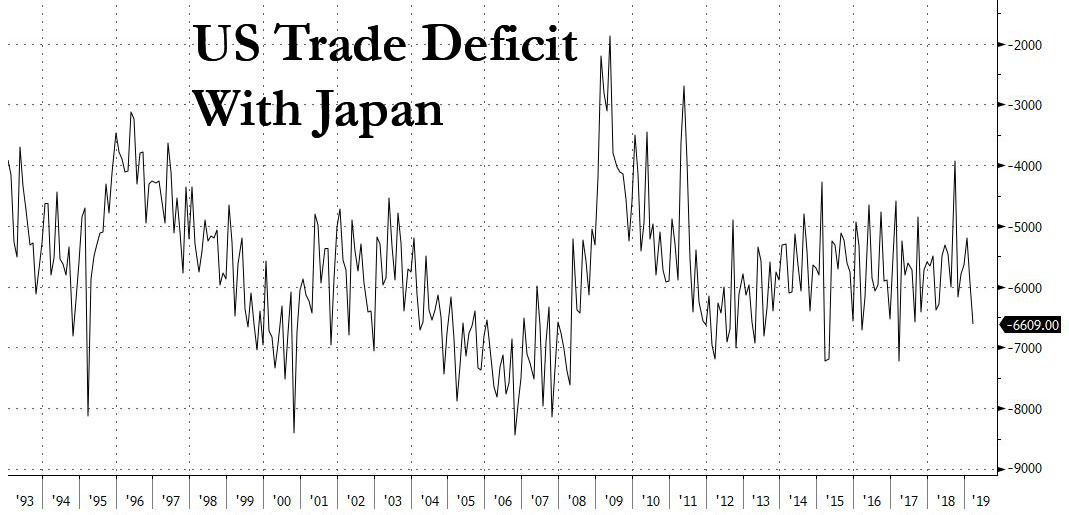
In that regard, the president’s planned four-day visit isn’t off to a great start: The Associated Press reports that Trump opened his state visit by “needling” Japan over its trade imbalance with the US. “I would say that Japan has had a substantial edge for many, many years, but that’s OK,” Trump said, joking that “maybe that’s why you like me so much.”

If it weren’t for the trade standoff with China, this jab would have slid under the radar as an otherwise innocuous joke. But given the administration’s rhetoric about auto tariffs, many remain anxious.

Like with China, the US has for decades registered a sizable trade deficit with Japan, something that was at the root of several trade skirmishes that unfolded during the Reagan years, where the Gipper won huge concessions (for more background on that, see this WSJ Saturday Essay from December).

Trade

In what could be characterized as an attempt to pick up where Reagan left off, Trump has threatened Japan and the EU with “potentially devastating” tariffs on autos and auto parts, and has hinted that his administration will move forward with the trade penalties if US Trade Rep Robert Lighthizer fails to win concessions. Although the administration announced last week that a final decision on auto tariffs won’t be made for another six months, with Trump, there’s always the chance of an off-the-cuff remark provoking a market panic.

To mitigate this risk, Japanese Prime Minister Shinzo Abe has reportedly planned the trip explicitly to flatter Trump, which has worked for Abe in the past. Trump will be the first foreign leader to meet the new emperor following the first abdication in 200 years. He will also present a trophy at a Sumo Wrestling championship that Trump boasted was “bigger than the Superbowl.” The two leaders are also planning to hit the links, and Trump will be the guest of honor at a state dinner presided over by Naruhito, the new emperor. Furthermore, a handful of Japanese companies have already said they plan to cut ties with Huawei, a sign that Japan is siding with the US in its trade war against China – something that has evidently engendered some bitterness in Beijing, as evidenced by the following tweet:

As the Washington Post reports, if Abe’s goal was to preserve the bilateral alliance through flattery, he appears to have succeeded:

Yet if Abe’s goal was to use the emperor’s succession to flatter Trump in service of preserving the bilateral alliance, it appeared to be paying dividends. During an impromptu question-and-answer session with reporters in the Roosevelt Room on Thursday, Trump was asked whether the United States and Japan could reach a trade deal to avoid tariffs on Japanese automobiles that the president has threatened to enact in six months.

Instead of responding directly, Trump pivoted to boast again about the “very big thing going on with the emperor” and then, perhaps, revealed the real reason he is so enthusiastic.

“I am the guest, meaning the United States is the guest, but Prime Minister Abe said to me, very specifically, ‘You are the guest of honor. There’s only one guest of honor,'” Trump said. “I represent the country. Of all the countries in the world, I’m the guest of honor at the biggest event they’ve had in over 200 years.”

In other words: If Trump doesn’t open up another front in the trade war this weekend, traders will have Abe to thank.

via ZeroHedge News http://bit.ly/2WqA7yC Tyler Durden

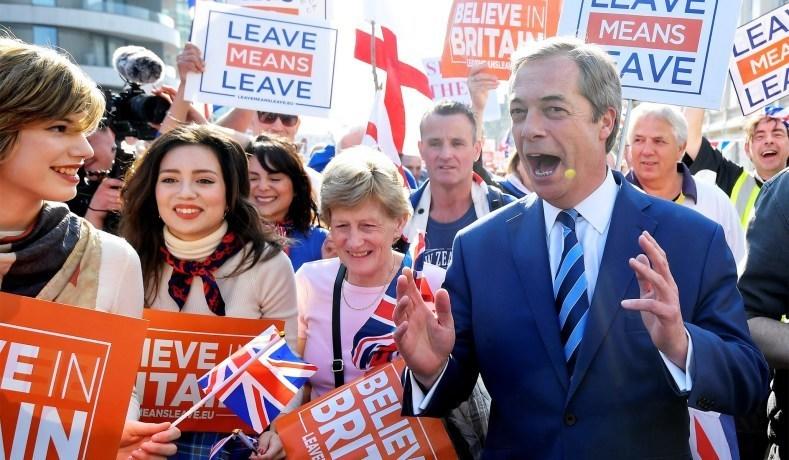
Nigel Farage Takes Down Another Tory Government, Bye Bye Theresa May

Authored by Tom Luongo,

Nigel Farage is the single most influential politician of the 21st century. And before he’s done he will have remade British, and by extension, European politics for the next century.

The resignation of Theresa May marks the second Tory Prime Minister to fall because of Farage’s steadfast support of an independent and sovereign United Kingdom.

Farage understood from the moment he entered politics that destroying the European Union was the ultimate goal. He knew that Britain had been completely betrayed by its entrenched and entitled political and aristocratic classes.

He knew they cared nothing for the people they Lord over as they cling to outdated ideals of their own inherent superiority.

So, watching the collapse of the system of pelf and privilege that has paralyzed the recovery of the U.K. since the end of World War II brought about, in part, by Farage’s uncanny political instincts has been one of the great pleasures of the last ten years.

People like David Cameron and Theresa May deserve their fates. The Eurocrats in parliament like the odious Dominic Grieve will continue to prattle on about how they just know what’s best for Britain, how a united Europe is their future.

But it isn’t. A now not-so-silent majority of Europeans have come to realize that the EU they were sold is not the EU they have. In fact it is the ultimate in anti-democratic institutions designed as nothing more than to be a permanent, unelected superstructure to ensure the power of those who erected it.

And people like Cameron, May, Grieve, Olly Robbins and Tony Blair are simply the middle managers of this corporatist nightmare, having been paid handsomely to betray every oath in service of a dream for them and a nightmare for everyone else.

Nigel Farage will go from his win this weekend in the European Parliamentary elections to the next step in his quest to remake Europe, the inevitable general election.

As I discuss in the video below (small NSFW moments here, be careful), the Eurocrats will push Labour leader Jeremy Corbyn to a no-confidence vote in the current government to capitalize on the current polling inertia.

The longer Farage’s Brexit party is on the scene, pulling patriots from across the political spectrum, the lower the probability Corbyn and the Remainer crowd can get control of Parliament and push through a Withdrawal Treaty that an inevitable Farage-led government will have to deal with as the ultimate poison pill.

The Tories have betrayed the public trust at a deep level. Trust takes a lifetime to build and a minute to lose. Once gone it will never return. The markets are in denial today. It won’t last into next week.

The next one to learn this lesson will be Donald Trump.

And it was the policy of the Eurocrats in Brussels to do just that, create chaos in British politics. In their arrogance they believe the structure of the EU to be so powerful it can withstand an all-out assault on the political stability of one of its biggest member states as a warning to anyone else who gets uppity enough to also think about leaving.

The policy of openly punishing the British for voting for Brexit, which was supported all the way down the line by her Prime Minister, will result in a complete wipeout this weekend.

But that loss of trust is not confined to the ballot box anymore. Now that President Donald “Stable Genius” Trump has launched an ill-advised financial and political war on no less than 12 fronts, a clear message has been given to business and political leaders around the world.

This is a lesson for politicians as well as husbands, entrepreneurs and would-be oligarchs. The mask on the EU has slipped. Juncker, Tusk and the rest have been revealed to revile the people they rule.

Farage is now hitting cleanup in the Euroskeptic movement. Orban, Le Pen, Salvini have all had their say. And Farage has stolen all their signals.

*  *  *

Support for Gold Goats ‘n Guns can happen in a variety of ways if you are so inclined. From Patreon to Paypal or soon SubscribeStar or by your browsing habits through the Brave browser where you can tip your favorite websites (like this one) for the work they provide.

via ZeroHedge News http://bit.ly/2HXAreU Tyler Durden

Iran Touts “Secret Weapons” Able To “Sink US Warships” In Reaction To Troop Deployment

Iranian leaders have reacted to Friday’s US announcement for a planned new deployment of 1,500 troops to the Middle East to monitor threats from Iran after the Pentagon specifically blamed Tehran for ordering attacks on a Saudi oil pipeline and four tankers near the Strait of Hormuz — an order which US officials said came from “the highest level”.

Foreign Minister Mohammad Javad Zarif on Saturday slammed the new deployment as “extremely dangerous… for international peace,” according to state news agency IRNA . “Increased U.S. presence in our region is extremely dangerous and it threatens international peace and security, and this should be addressed,” Zarif said. 

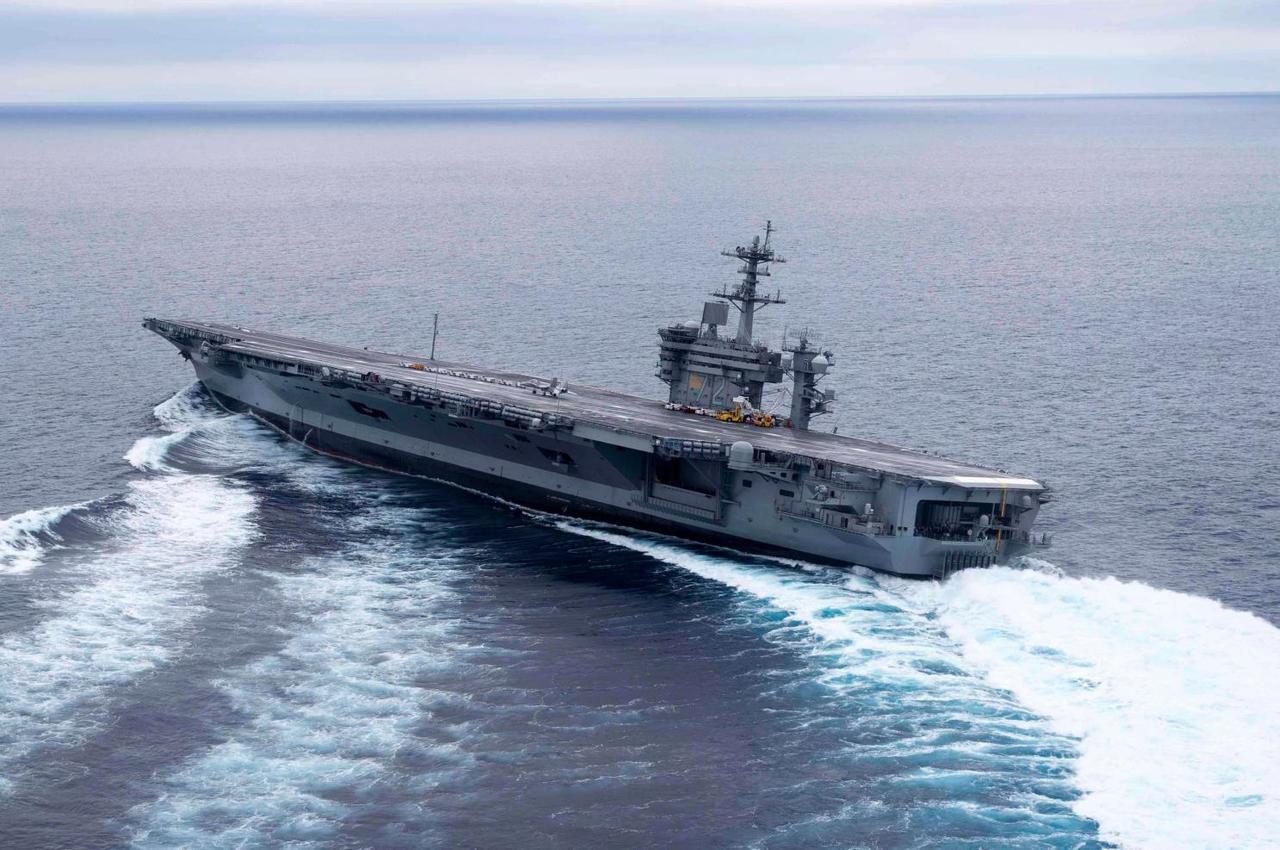
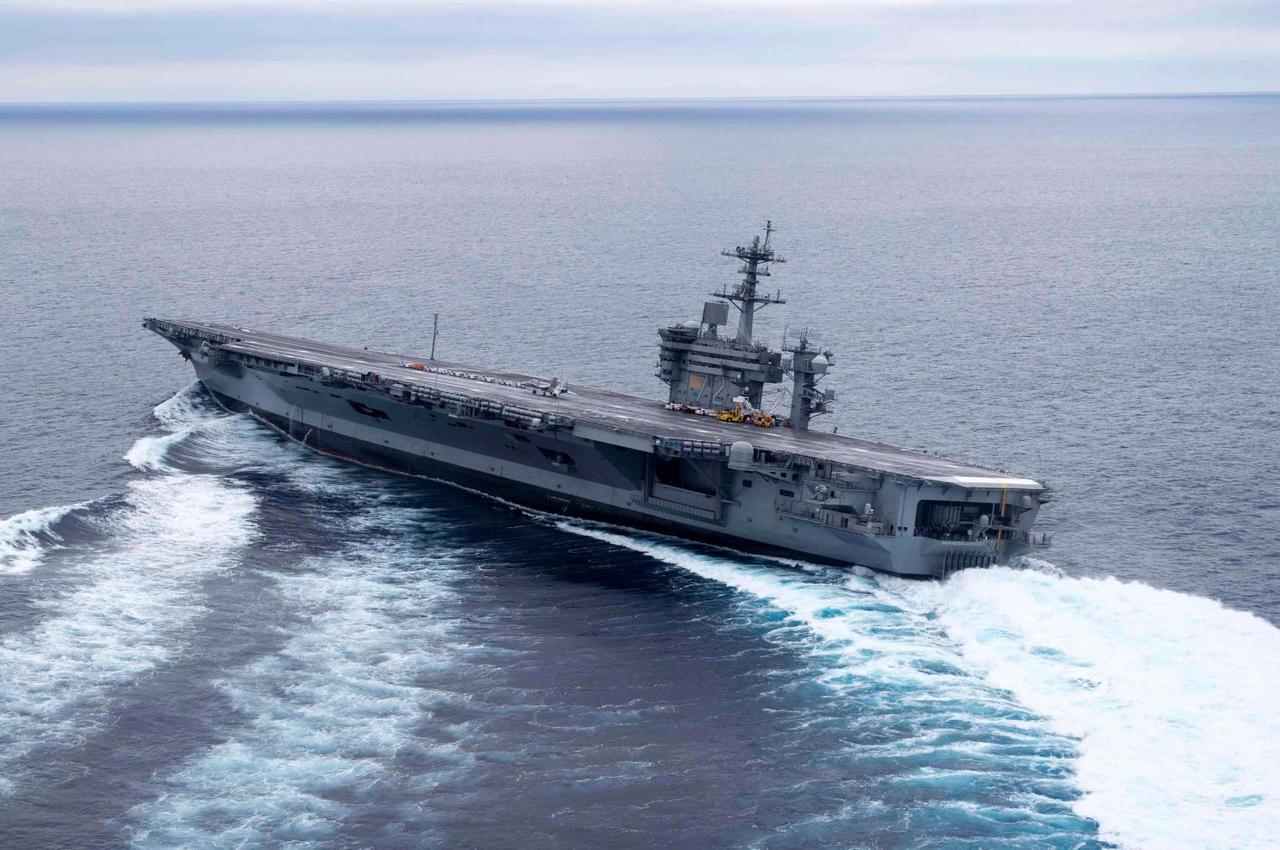
The USS Abraham Lincoln performing a high-speed turn, via US Navy video.

And separately a top Iranian military general touted “secret weapons” that are capable of sinking US warships in the Persian Gulf.

According to Reuters, citing the semi-official news agency Mizan, General Morteza Qorbani, an adviser to Iran’s military command, issued the following threat:

America… is sending two warships to the region. If they commit the slightest stupidity, we will send these ships to the bottom of the sea along with their crew and planes using two missiles or two new secret weapons.

Currently the USS Abraham Lincoln carrier strike group is operational in the region, along with B-52 bombers out of Qatar, and patriot missile batteries. 

Other than Iran’s arsenal of long-range ballistic missiles, underwater drone capabilities, and most notably recent claims of a domestic built stealth destroyer and a fleet of small stealth submarines, it is unclear what these “new secret weapons” could be, if they exist at all. 

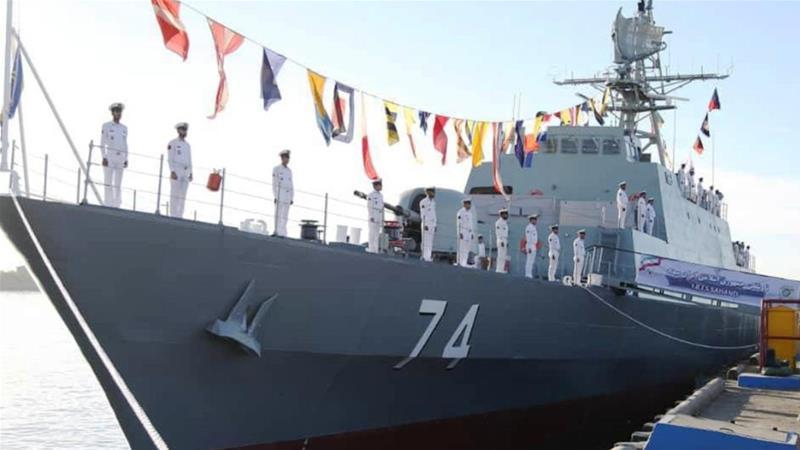
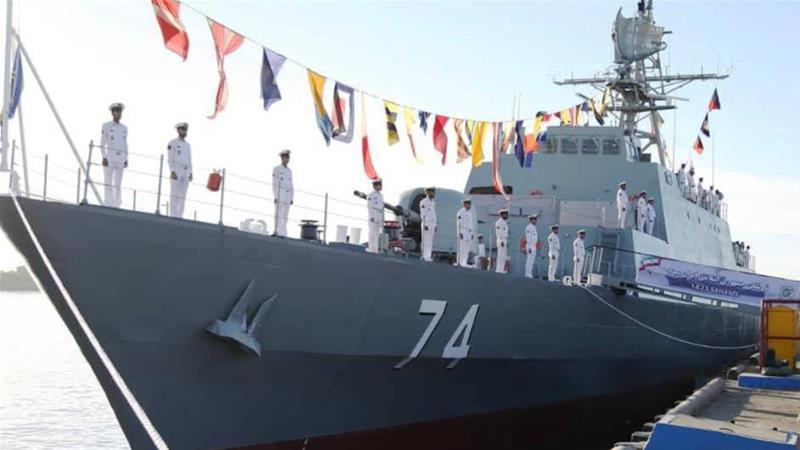
Last December Iran unveiled its first stealth destroyer in a televised ceremony wherein the warship was launched into operation in the Persian Gulf at a moment when tensions with the US were ratcheting up over new rounds of sanctions.  

The Sahand has stealth capabilities, surface-to-surface and surface-to-air missiles and electronic warfare capabilities, state TV IRNA reported of the ship’s launch late last year. 

We noted Friday of the newly ordered 1,500 force deployment that given the original Pentagon plan reportedly pitched a total troop deployment of up to 10,000 additional forces to counter Iran in the Middle East, Trump’s agreeing to a much humbler 1,500 appears a meager attempt to merely pacify the hawks without actually changing the playing field significantly. Or rather, to put up the pretense and appearance of “doing something” without actually substantively escalating at all.

The president himself seemed to all but admit this in passing remarks to reporters as he left the White House for a trip to Japan: “We want to have protection in the Middle East. We’re going to be sending a relatively small number of troops, mostly protective,” Trump said. “Some very talented people are going to the Middle East right now. And we’ll see what happens,” he added.

However, troop build-up in the region to any degree could prove explosive and extremely dangerous for the prospect of a broader conflagration, considering both the IRGC’s recent terror designation, as well as Iran ally Syria coming under new chemical weapons scrutiny over fresh claims it used poison gas in a battle near Idlib on Sunday. 

via ZeroHedge News http://bit.ly/2wmCm7m Tyler Durden

Sanctions Or Sucking Up? US Grovels In Ukraine

Authored by Tom Luongo,

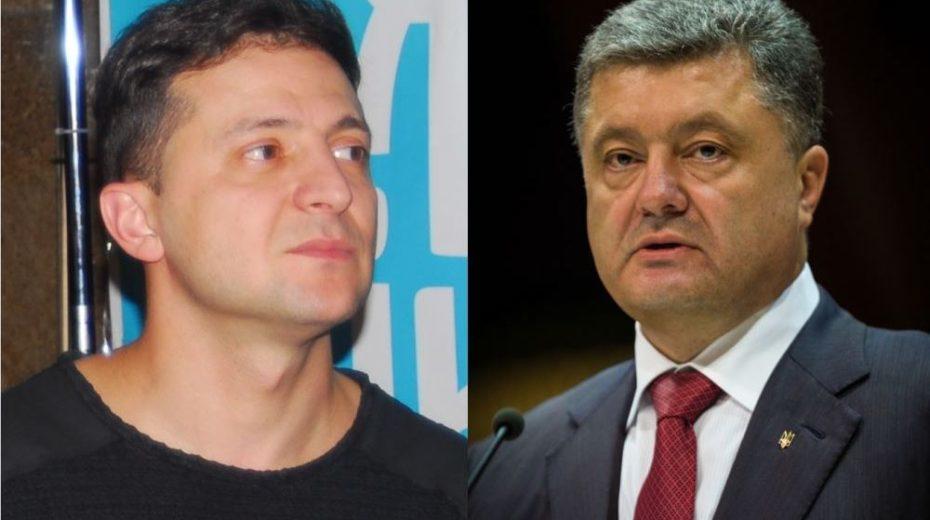
The US sent Energy Secretary Rick Perry to the inauguration of the new Ukrainian President, Volodymyr Zelenskiy, to announce the sanctions bill on Gazprom’s Nordstream 2 pipeline would pass.

I can’t tell what’s more pathetic at this point, the neocons in Trump’s administration thinking that sanctions actually achieve their goals or using them to suck up to a new president they don’t actively control yet.

Think about this. Perry goes to Kiev for nothing more than a photo op to assure Zelenskiy that the US won’t abandon the struggle stick it to the Russians. He does this with no sense of shame or irony after spending five years destroying Ukraine with an ill-advised coup which ushered in the chaos that brought Zelenskiy to power.

The hypocrisy of it all is stunning.

Outgoing US puppet Petro Poroshenko was such a disaster that Ukrainians voted 3 to 1 to get rid of him in favor of a political neophyte and television comic.

That’s how badly the US has mismanaged Ukrainian post-coup affairs. And the Russians are supposed to be the bad guys in this scenario?

And now Perry is going to virtue signal that the US will sanction Nordstream 2 to keep their access to Ukraine’s highest office? Zelenskiy may be a neophyte but he’s not stupid either.

The US’s opposition to Nordstream 2 is mainly for its own purposes. Just like its interest in Ukraine is purely selfish. President Trump wants the gas volumes slated for Nordstream 2 to go to US LNG exporters first. Ukraine isn’t all that important in the end to him.

Stopping Nordstream 2 is supposed to do two things. Force Russia to the bargaining table with Naftogaz, the Ukrainian state gas transit company, and cut a new deal since the old one is expiring at the end of this year.

It’s also meant to force Germany to buy more expensive US LNG. However, Trump can raise Germany’s costs he will. This, to him, is the way to fix them stealing from the US by building car factories in Indiana and Tennessee and selling us BMWs, Volkswagens and Porsches.

Germany is finally standing up for itself somewhat, adamantly declaring that it is ‘not a colony of the US’ even though, let’s get real, it is. Talk is cheap, however, and now is the time to act independently on major policy decisions.

Trump sending Perry to Zelenskiy’s inauguration should tell you all you need to know about how important Ukraine is in this calculus. It isn’t. Because if it were important either Trump himself would have gone or Secretary of State Mike Pompeo, not a cipher like Rick Perry.

And the truth is that Zelenskiy doesn’t need leverage to cut a deal with Gazprom. Gazprom has said on multiple occasions it would be happy to renegotiate the gas contract. It would do so as a favor to Angela Merkel and the EU to soothe fears over keeping Ukraine destabilized.

The problem was it was Poroshenko that refused to come to the table, at the behest of his US masters.

Moreover, Ukraine’s energy future is bleak now that Russia has embargoed Ukraine on oil and coal imports, including reselling through Belarus, which has also put Belarussian President Lukashenko on notice that Moscow is tired of his games as well.

Zelenskiy’s first move should be to sit down with Vladimir Putin at a moment’s notice. But he can’t do that until he has the backing of the parliament. This is why he dissolved parliament immediately upon taking office, bypassing an attempt to delay such elections until late October.

Poroshenko left him multiple poison pills to navigate but a gas transit contract with Gazprom is the easiest thing to get done. But, for Putin, this means Merkel putting to bed any more doubts about the final construction of Nordstream 2.

No gas transit deal with Ukraine gave German Chancellor Angela Merkel the excuse to keep all dialogue frozen on a number of issues, including ending sanctions against Russia. But she’s facing a major change in her political pull in Brussels in a week as the European Parliamentary elections could shift the balance of power enough to see any sanctions extension this summer vetoed.

And with Germany’s economy faltering badly and the markets finally waking up to the changes politically on the horizon, Merkel is rapidly reaching the end of her current policy quagmire with respect to Russia and the US

She will have to break the deadlock over Nordstream 2 and time is running out before Ukraine finds themselves unable to import the energy needed to keep the heat on this winter.

And that brings me to Denmark. The Danes are foot-dragging an environmental permit (due to obvious pressure behind the scenes by the US and the U.K.) to halt the last miles of the pipeline which is now two-thirds complete.

The delay is, again, temporary as Denmark has no good reasons to not issue the permit except the worst kind of politics.

The new sanctions only have power if the Danes continue refusing the permit. Because, you will notice, the sanctions aren’t going to affect the major partners of Nordstream 2, the five big oil and gas majors who put up half the funds.

It’s the pipe layers and insurance companies doing the actual construction. Because that’s all the US dares sanction. Just like the empty threats against Chinese state oil companies for buying Iranian oil, the US knows there is a limit to who and what they can sanction without collapsing the world economy.

Lastly, never underestimate the long-term effect here on the US and the further use of the dollar. Right now, the dollar is the major game in town. It’s vital to the survival of a lot of companies and banks, but it is also, ultimately, replaceable in the kinds of businesses under the threat of sanctions here.

Everywhere you look Trump is lashing out at whoever he thinks he can gain leverage over to force concessions for US interests. But all he is doing is making it clear to everyone that the dollar now carries unacceptable political risk to carry on their company’s balance sheet.

And it will only further lower the barrier both economically and politically to shift away from using it leaving the US ever more isolated. And the fact that this is happening over such a small thing like a pipeline and a failed state like Ukraine makes everyone involved look desperate and pathetic.

via ZeroHedge News http://bit.ly/2M5kBEh Tyler Durden

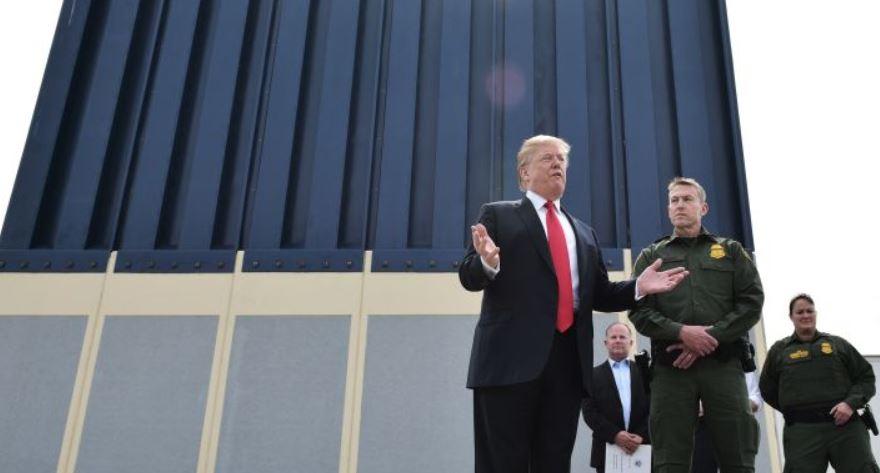
Obama Judge Blocks Trump’s Border Wall

Two-and-a-half years into his presidency, it’s looking increasingly likely that the morass of lawsuits and investigations intended to stymie President Trump and his administration’s agenda will be remembered as one of the president’s defining legacies. In this regard, few antagonists have been more effective than a cabal of San Francisco-based judges, most of whom were appointed by President Obama.

Trump

So it shouldn’t come as a surprise that one of these judges – US District Court Judge Haywood Gilliam, appointed to the bench by Obama in 2014 – sided with the ACLU, Sierra Club and the Southern Border Communities Coalition on Friday and ruled that two border-wall related construction projects shouldn’t be allowed to proceed. This, despite the fact that even Trump’s fiercest opponents in Congress have acknowledged that the crisis at the border is very, very real.

Gilliam ruled that Trump’s plan to divert Pentagon funds was unconstitutional because it was tantamount to an end-run around Congress, Fox News reports.

“In short, the position that when Congress declines the Executive’s request to appropriate funds, the Executive nonetheless may simply find a way to spend those funds “without Congress” does not square with fundamental separation of powers principles dating back to the earliest days of our Republic,” wrote Gilliam, who was appointed to the bench by former President Barack Obama.

The move was a workaround Congress, which had not given in to his demands to fund the barrier. The wall has been Trump’s signature promise. Gilliam’s ruling doesn’t prevent the Trump administration from using other sources to fund the wall.

He said Trump’s plan to divert Pentagon funds for border-wall construction was unconstitutional because the argument White House relied on applied to unforeseen needs, Politico reported.

“Defendants’ argument that the need for the requested border barrier construction funding was ‘unforeseen’ cannot logically be squared with the Administration’s multiple requests for funding for exactly that purpose dating back to at least early 2018,” the Obama nominee wrote.

The Pentagon diverted $1 billion to border-wall related accounts in March, and another $1.5 billion this month.

Since the earliest days of Trump’s presidency, judges from the District Court for the Northern District of California or the Ninth Circuit Court of Appeals have blocked immigration-related policies including Trump’s travel ban (eventually upheld by the Supreme Court) and the ‘Remain in Mexico’ policy of releasing asylum seekers to Mexico to await their court hearings, instead of allowing them to roam free inside the US (a court battle is still being waged and the fate of this policy has not yet been decided). The Ninth Circuit also mostly rejected the DoJ’s lawsuit challenging California’s ‘Sanctuary State’ policies.

Trump’s national emergency declaration, made in February after the end of a 35-day partial government shutdown, elicited lawsuits from 20 states, including California, a slew of environmental groups and civil liberties groups. Congress also tried to terminate the order before Trump could start appropriating money for the wall, prompting Trump’s first presidential veto. In his declaration, Trump tried to appropriate roughly $8 billion in DoD and Treasury Department money.

Gilliam’s order applies to two projects which had been scheduled to begin as early as Saturday. Some of the DoD money was going to be used to replace 51 miles of fence in two areas along the Mexican border.

Though the fate of Trump’s border wall remains uncertain, one thing is for sure: As the administration continues its fight to move ahead with other border wall related projects, more unfavorable rulings are likely.

via ZeroHedge News http://bit.ly/2wjiuSH Tyler Durden

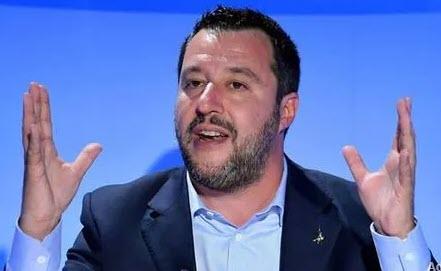
Salvini: I Want A “Trump-Style Revolution” In Italy

Matteo Salvini, the deputy prime minister of Italy and leader of the nationalist League Movement, called for a “Trump-style” revolution in his cash-strapped country.

As The Express notes, Salvini has clashed with Brussels over Italy’s budget proposals and has also enraged European Union bosses with his hardline stance on immigration. And his proposals for tax reforms inspired by those passed introduced in the US by Mr Trump’s White House administration are sure to ruffle more feathers in Europe.

“I want a Trump-style revolution for Italy.

The only way to reduce public debt is by growing and cutting taxes.

That’s why a Trump-like revolution is dear to my heart.

I won’t compromise on taxes. The whole government team must believe in this.”

Salvini dismissed reports of rifts within the coalition government.

“I have absolute trust in Conte and the government.

I carry forward decrees, I do not listen to background noise.

No one likes rows. I close my mouth and my ears and I look forward.

Today I hope to bring home the security decree, it’s my job.”

Additionally, the deputy Italian PM took credit for a clampdown on migrants trying to enter Italy illegally via the Mediterranean.

“I reduced the landings by 90 percent. There were 11,000 last year, today they are 1,100.

I don’t need to do anything else, the landings have been reduced and the expulsions are twice the amount of arrivals.

I don’t need new ideas and what I’m doing I’m doing it without Europe, alone and with this government.”

Italy goes to the polls on Sunday in the European elections but Mr Salvini would not be drawn on predictions.

via ZeroHedge News http://bit.ly/2VZxy7c Tyler Durden

North Dakota’s Food Freedom Law Dodges Another Bullet

Powerful forces in North Dakota have once again targeted the state’s popular food freedom law, but it appears the laws’ supporters have successfully beaten back these attacks from state lawmakers and regulators.

The 2017 law, found here, “allows direct sales of many foods by a producer in the state to consumers in the state,” I wrote last year. “That includes direct sales of virtually any foods—from apple slices to homemade pickles to homemade zucchini bread—except meat or raw dairy products.

In that column, I detailed how North Dakota health regulators were attempting to use the rulemaking process to undermine the law. As I explained, that effort failed in large part due to the fact the law doesn’t allow the health department to draft such rules.

But the failure led some lawmakers opposed to food freedom—led by a lawmaker who’s also a retired grocery owner and former head of the state’s grocers’ association, just in case you were wondering how the grocers’ lobby feels about a little competition—to attempt to amend the law using the legislative process. Last month, that effort also failed. After the defeat, State Sen. Jerry Klein, the former grocery lobbyist, said he’s now merely an “onlooker.”

Klein no doubt looked eagerly on as the health department proposed rules once again to neuter the law. Those proposed rules were reviewed by North Dakota’s State Health Council, which has oversight authority.

I’m happy to report the latest regulatory effort to destroy the food freedom law also failed.

Genny Dienstmann, a consumer member who chairs the council, confirmed to me by phone this week that the body had tabled the health department’s proposed rules and has no current plans to take any further action on them, a big win for food freedom proponents.

Bravo.

Food freedom laws are only growing in popularity, as I detail in my recent book, Biting the Hands that Feed Us: How Fewer, Smarter Laws Would Make Our Food System More Sustainable. Such laws are on the books in a growing number of states, including Wyoming, Utah, and Maine (though the latter differs slightly from others). Nonpartisan groups such as the National Conference of State Legislatures track these laws. ALEC’s website features model food freedom legislative language.

The spread of food freedom laws has only been limited by opponents—chiefly advocates for stricter food-safety laws.

Take Food Safety News‘s Dan Flynn. Not one to traffic in hyperbole, Flynn nevertheless painted the North Dakota legislature’s failure to amend the law as a sign that state lawmakers are willing to “risk some botulism once in a while.”

He’s right. But everyone who eats food—regulated or unregulated—also risks occasional botulism. “Everyone is at risk for foodborne botulism,” North Dakota’s health department cautions. Along these same lines, a search for the term “botulism” at the website of Marler Clark, the law firm that publishes Food Safety News, yields three search results, each of which involves botulism in foods sold in the regulated commercial marketplace. It appears all lawmakers—those that oppose food freedom laws and those that support them—”risk some botulism once in a while.”

I asked Julie Wagendorf, director of the Division of Food and Lodging in the state health department—which, again, opposes the law—if there have been any cases of foodborne illness in North Dakota involving foods sold under the law since it took effect. Wagendorf responded, but she didn’t answer that question.

A quick web search revealed that North Dakota has been dealing of late with an outbreak of foodborne illness. It’s one of eight states where sushi-grade tuna has been found to harbor Salmonella. But you can’t blame the state’s food freedom law. Tuna is subject to FDA inspection and is sold commercially, rather than under the state’s law.

That said, there’s no evidence anyone has ever been sickened by foods sold under a food freedom law.

Given that, do we really need more rules?

Wagendorf insists we do.

“Clarity is needed for what is already stated in law as not authorized under this chapter,” she told me by email.

The law’s supporters disagree.

We absolutely do not believe [state lawmakers] have legal authority to write rules for this particular section of [state law],” LeAnn Harner, a North Dakota farmer and key supporter of the state’s food freedom law, wrote to me in an email this week. “We believe the current law as passed in 2017 is working. Our producers are doing their very best to produce safe, delicious food and drink products.

“The current law provided much-needed authority to small farm and home business owners to provide healthy, wholesome food directly to their local consumers who prefer such products, and the law should continue to support such efforts,” says Alexia Kulwiec, executive director of the Farm-to-Consumer Legal Defense Fund—a nonprofit advocacy group on whose board I serve—in an email to me this week.

I support state food freedom laws because they expand choice, not because no one has ever been sickened by food sold under these laws. Even if a person were to fall ill after eating, say, a homemade pie they bought at a farmer’s market—and that will happen someday—I would continue to support such laws. Why?

It’s simple. Foods are not legal because they don’t ever sicken anyone. By which I mean, countless foods that are produced and inspected according to government regulations and sold in restaurants, groceries, and elsewhere have made people in this country sick. If we banned every last one of the regulated animal and vegetable products that have sickened or killed people over the years, there’d be nothing left to eat. Given the choice between choice and no choice—between food freedom and prohibitive rules—I’ll take the former every time.

from Latest – Reason.com http://bit.ly/2W39IaD
via IFTTT