As Facebook Crumbles, the Case for Breaking It Up Is Weaker Than Ever


brett-jordan-EefRxCpIxnA-unsplash

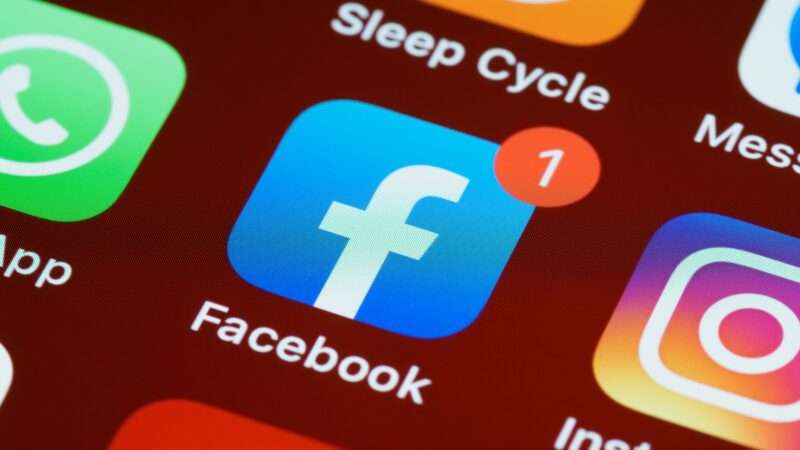
After a month of disastrous news coverage following various revelations of alleged misdeeds, Facebook reached its nadir on Monday with the site suffering a massive outage. Perhaps Facebook isn’t so dominant, after all, and thus government force is absolutely not necessary to constrain it.

All apps in the Facebook family—including Instagram and WhatsApp—went down simultaneously on Monday. By the evening, they were up and running again, though not in time to rescue Facebook’s stock, which slipped 4.9 percent in value. (CEO Mark Zuckerberg reportedly lost more than $6 billion in just a few hours.) The outage was so bad that Facebook employees couldn’t even get inside the company’s headquarters: The security systems were part of the same network.

The company’s recent woes have fueled a new wave of criticisms from tech skeptics on both the left and right who want the government to either break up Big Tech, take away its liability protection, or either prohibit—or possibly require!—so-called misinformation on the platforms. A major theme of the Big Tech battles is that former President Donald Trump, Sen. Elizabeth Warren (D–Mass.), and everyone in between wants to go after the companies, but for opposite and often conflicting reasons.

Conservatives think the platforms engage in too much moderation and have corrupted democracy in favor of 2020 election winner Joe Biden; liberals think Facebook doesn’t practice nearly enough moderation—allowing right-wing violence and faulty info about quack COVID-19 cures to spread—and also corrupted U.S. democracy in favor of 2016 election winner Donald Trump. That the most extreme and opportunistic members of both political factions like to blame all their problems on Big Tech probably tells us more about them than it does about Facebook.

If there’s one fear that unites the left and right, though, it’s moral panic about social media—Instagram, in particular—causing feelings of depression and anxiety among teenage girls. This isn’t a new fear: The psychologist Jean Twenge has been writing about it for years, and even Jonathan Haidt, co-author of The Coddling of the American Mind and a figure generally well-respected by libertarians, thinks there’s something to it. But it received a powerful narrative boost recently after a former Facebook employee came forward as a “whistleblower” and provided a series of scoops to The Wall Street Journal. The most significant of these scoops—as judged by the fact that it prompted an immediate (and, per usual, wildly embarrassing) Senate hearing—concerned Facebook’s internal efforts to gauge Instagram’s ill-effects on the mental wellness of young people.

The whistleblower, Frances Haugen, appeared on 60 Minutes on Sunday and will testify before Congress on Tuesday. Thanks to Haugen and the Journal‘s reporting, we know that Facebook attempted to survey teen users on how the platforms were impacting their mental health. Unsurprisingly, their findings were not entirely encouraging: One in five respondents said Instagram made them feel worse about themselves, and teens already struggling with mental illness said the platform was giving them a harder time.

Ostensibly, the problem with Instagram is that it promotes social competition—the race for likes and comments—among users posting artificial, filtered images of themselves, which may exacerbate body images issues. Of course, there’s absolutely nothing new about this: Glossy magazines have been accused of doing the same thing for decades, but no one talks about the existential threats of Cosmopolitan or Teen Vogue. High school is a major source of misery and depression for many teenagers, but as Mike Solana pointed out in a terrific article on the anti-Facebook crusade, no one is demanding that the secretary of education be hauled before Congress:

Among teenagers in a state of mental crisis, how many are struggling with their family? How many are struggling with their friend group, or their crush? How many are struggling in a classroom? To the question of “does high school make you want to kill yourself,” how many suicidal teenagers would answer “yes” — emphatically? Almost all of them? Next question, when are [we] dragging the Secretary of Education in front of Congress to explain why he hasn’t solved depression?

Solana pointed out that Haugen didn’t tell us anything new about Facebook and Instagram: Her achievement was really one of self-branding. Since the mainstream media is already inclined to believe the very worst about social media—a disfavored upstart competitor—anyone who comes forward and tells the media exactly what they want to hear on this subject is going to be celebrated as a hero. Thus Haugen is already being hailed as some sort of brave truth-teller, though her perspective is very much the popular one in progressive circles: Facebook emboldens hate and disinformation, and it has far too much power.

On this last charge, it’s never been more apparent that something close to the opposite is true. Far from occupying some dominant and unassailable position in modern society, Facebook’s relevance is probably fading. The company is desperate to attract the sorts of users—young people, mostly—who provide cultural cache and excite advertisers and investors. But this is increasingly a losing battle. Facebook—or “Boomerbook” as some call it—has never been less popular with the kids, and even Instagram faces tremendous competition from Snapchat, TikTok, and whatever cool new thing is coming along next.

“The truth is that Facebook’s thirst for young users is less about dominating a new market and more about staving off irrelevance,” wrote The New York Times’ Kevin Roose in an article that sounded a highly pessimistic note with respect to the company’s long-term health. “Facebook’s research tells a clear story, and it’s not a happy one.”

For the past several years, anti-tech crusaders on both the left and right have assured the public that Facebook is a menace, and can only be stopped via aggressive government action: antitrust legislation, Section 230 reform, and so on. Despite repeated threats, politicians never made good on their promises to do something—and yet Facebook is undeniably in a much weaker position. While it’s hard to predict the future, it’s even harder to picture the company mounting some massive comeback and becoming a popular trendsetter once again. Expectations that Facebook had fought its way into an unbeatable, permanent, market-dominant position suddenly look incredibly foolish.

In fact, Facebook may soon find itself in the position of needing government intervention to maintain its dominance. It’s worth remembering that the company has actually come out in favor of reforming Section 230, the federal statute that limits the legal liability that online platforms face.

“I believe that Section 230 would benefit from thoughtful changes to make it work better for people, but identifying a way forward is challenging given the chorus of people arguing—sometimes for contradictory reasons—that the law is doing more harm than good,” noted Zuckerberg during a March 2021 appearance before Congress.

Of course, tinkering with the liability protections enjoyed by social media sites could actually help Facebook stave off competition: As long as the company remains the largest social media site, its armies of moderators might be better prepared to deal with increased moderation demands than smaller rivals like Twitter. Facebook is also better positioned to lobby and steer whatever new governmental agency arises to enforce a modified version of Section 230. All those who support Facebook’s bid for ongoing relevance should want the company to hand-pick the members of a new federal bureaucracy tasked with regulating Big Tech’s policies; on the other hand, anyone who thinks the company should face free and fair competition might prefer to leave the matter out of the government’s hands.

My new book, Tech Panic, is subtitled “Why We Shouldn’t Fear Facebook and the Future.” The events of the past few weeks provide additional, concrete reasons. Zuckerberg’s platform is not in control of our lives, our economy, or our democracy, and the mainstream media’s cynical attempts to convince the public otherwise should be easier to dismiss in light of recent events.

from Latest – Reason.com https://ift.tt/3a9rLAQ
via IFTTT
The Bureaucrat in Chief

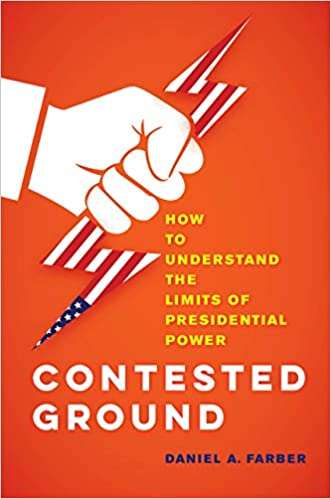
This is the second post in this series based on my new book, Contested Ground: How to Understand the Limits on Executive Power. I’m grateful to the editors for giving me the opportunity to speak to this audience. Today’s topic is presidential control of the executive branch.

We usually think of the “bureaucracy” as a creature apart from the President. But one of the President’s most important roles is to manage the bureaucracy, mostly through top-level political appointees or the sub-bureaucracy that is the Executive Office of the President. Nearly everybody important in the executive branch can be fired by the President at will. As readers of this blog know, it’s the “nearly everybody” that’s the sticking point. Are exceptions like independent agencies constitutional, or does everybody significant in the executive branch have to serve at the President’s will?

Believers in the unitary executive argue that the original understanding dictates an unlimited presidential removal power. It’s probably not necessary to rehash their arguments for readers of this blog. For some reason, the unitary executive theory has become associated with conservatism. That seems to me to be historically contingent. Liberals like FDR certainly thought the unitary executive was a better way to implement progressive policies.

It’s also a bit puzzling that people who support the unitary executive tend to be people who also support a strong nondelegation doctrine. It’s not that these positions are inconsistent but they do seem to be in some tension. Supporters of the unitary executive often argue that subordinates should heed the President’s policy agenda. The idea of the nondelegation doctrine, however, is that the executive shouldn’t have major authority over major regulatory policy—those decisions should all be made by Congress. It seems a bit incongruous to advocate presidential power to set the executive branch’s policy agenda while on the other hand denying that the executive branch should have a policy agenda in the first place.

I’m also puzzled by the argument that centralizing all executive authority in the White House protects liberty. You could easily make the argument that the rights of people regulated by the government would be better protected by providing a bit of insulation of decisionmakers from partisan politics. Indeed, that seems to me in some ways a more natural position for conservatives to take, in the interests of protecting property rights and liberty. If history had gone a little differently, we might well have seen liberals adopting the unitary executive and conservatives defending independent agencies—that just doesn’t happen to be the way things have worked out.

The presidential removal power may be the issue of presidential power where the debate has focused most heavily on the original understanding. Today’s Supreme Court has moved sharply in the President’s direction on this issue, insisting that the original understanding settles the issue. Originalists can certainly muster evidence in favor of the unitary executive, evidence the current majority on the Supreme Court seems to find conclusive.

The historical record doesn’t strike me as nearly so clear. One the key events involved the first office established by Congress, the Secretary of State. The upshot of the debates left the power of removal with the President, but the proceedings were confused and it’s not at all clear that a majority endorsed the unitary executive as a constitutional matter. (A recent paper by Jed Shugerman and Jed Handelsman takes a close look at the evidence.)

In some ways, the most striking thing is that there was any dispute about the issue. Today, we would think of the Secretary of State as the epitome of the kind of official who should be removable by the President: a cabinet official whose duties center on foreign affairs, an area in which presidential prerogatives are near their peak. Yet it seems to have been less clear then than today.

In short, if we are looking for a clear shared understanding of the constitutional issue in 1790, there doesn’t seem to have been one.

If we look earlier in history, recent research by Daniel Birk has shown the King’s power over officials was in some ways surprisingly limited. Many officials were removably only by other officials or local magistrates, not by the King, and the King did not have the power to direct many officials in their duties. Indeed, some appointments were for life or were even hereditary. The King was nonetheless clearly thought to be vested with the executive power. That makes it harder to claim that vesting the executive power in the President necessarily meant that underlings are mere sock-puppets carrying out orders.

Based on this history, I find it hard to maintain that the constitutional text, as understood in the Framing period, precludes all limits on presidential removal of officers. In some ways, the non-originalist argument for presidential removability may be stronger—or at least for a strong presumption of presidential removability. It’s true that there have been exceptions, such as the Civil Service, independent agencies, and a few others such as the post-Watergate Independent Counsel.

If we step back and ask what rule would be most appropriate in a democratic republic, history suggests a good deal of agreement with supporters of the unitary executive. Whether for constitutional reasons or otherwise, high-level officers nearly all serve at the pleasure of the President. “Unitarians” have some persuasive policy arguments on their side. They argue that unitary presidential control provides energy and coherence in government policy, while also making political accountability for decisions clear.

These are powerful arguments, but they don’t necessarily dictate a universal rule of presidential removability. Sometimes, other values may be more pressing: ensuring that people get fair hearings from impartial administrative officers, ensuring that financial regulation isn’t exploited for partisan advantage, and making sure that the government is efficiently administered rather than serving only as a source of cushy jobs for political loyalists.

You could make a reasonable textualist argument that these policy decisions are solely in the hands of Congress, given its power to make laws necessary and proper to carrying out the duties of the executive branch. As a non-originalist, however, I think both historical practice and Supreme Court precedent foreclose that position. It also seems to me that unlimited congressional control would unbalance government power too much in favor of the legislative branch.

In the book, I leave to the reader to reach a judgment about the right approach. My own views are that I see no reason to think that existing exceptions to presidential removability are unconstitutional. On the other hand, outside of the types of positions covered by existing practice, I’d want to see some cogent arguments about why officials performing specific functions need special protection from removal.

[Next up: the non-delegation doctrine.]

from Latest – Reason.com https://ift.tt/3oyTbIx
via IFTTT

FDA Vaccine Approval Delays Are Deadly


topicsscience

In August, as COVID-19 cases began rising again throughout the country, Rochelle Walensky, the director of the Centers for Disease Control and Prevention, had a simple message for Americans: Get vaccinated. “Our vaccines are working exceptionally well,” she said on CNN. “They continue to work well for [the delta variant] with regard to severe illness and death. They prevent it.”

That message was reiterated by Anthony Fauci, President Joe Biden’s top medical adviser, who has even expressed support for requiring public school teachers to be vaccinated. And it was echoed by the Food and Drug Administration (FDA), which regulates vaccines and must sign off on their use before widespread deployment.

“Getting more of our population vaccinated is critical to moving forward and past this pandemic,” said Janet Woodcock, the FDA’s acting commissioner. Woodcock also has emphasized that the FDA conducted thorough reviews of the vaccines, finding them safe and effective.

Yet for most of the year, that message was undermined by the regulatory reality. As of mid-August, the FDA still had not granted formal approval to any of the COVID-19 vaccines. Instead, they were administered under “emergency use authorizations,” a provisional status suggesting that the FDA still wasn’t sure about them.

Officially, the FDA was still collecting safety data. But given that Woodcock had clearly stated the vaccines were safe and effective, it seemed the agency’s real priority was hewing to its slow, laborious drug approval process, even if that meant sending mixed signals to the public in the midst of a pandemic, confusing people and perhaps costing lives by discouraging vaccination.

In late August, the FDA fully approved a vaccine made by Pfizer. But two others are still only authorized for emergency use, and emergency authorization to vaccinate young children is still likely months away.

In 2020, the FDA waited weeks to provisionally approve the first vaccines after the results of clinical trials were submitted for review. Faster action could have stemmed the deadly winter wave, likely saving many lives in the process. The vaccines, in other words, seem to be working well. But the FDA isn’t.

from Latest – Reason.com https://ift.tt/3aniSUt
via IFTTT

Ransomware – Death and Diplomacy

  • This is the meatiest episode in a long time, as Dmitri Alperovitch, Dave Aitel, and Mark MacCarthy go deep on the substance of a dozen stories or more. 

    First up, Dmitri and I speculate on possible outcomes from the newly announced administration plan to convene 30 countries to crack down on ransomware. We also report on what may be the first confirmed death resulting from the equipment failures caused by ransomware – a newborn strangled by its umbilical cord because the hospital’s usual electronic warnings weren’t operating. 

    Dmitri also explains a new cryptocurrency regulatory topic unrelated to its use in ransomware schemes – the move to ensure the financial stability of stablecoins. 

    Dave weighs in on two surprising provisions of the House intel authorization bill. The first would respond to the Project Raven incident by imposing new controls on ex-spies working for foreign governments. No one is against the idea, but no one thinks that the problem is limited to alumni of a few intelligence agencies. And the bill’s sweep is far broader than cases like Project Raven. I fear that as written it may criminalize ex-spies giving security advice to Airbus, or perhaps even the Atlantic Council.

    The second provision imposes requires reports on U.S. government purchases of computer vulnerabilities from foreign vendors. This leads to a discussion of which nation has the best offensive talent. Dave thinks the old champ has been decisively dethroned. 

    In other legislative news, Dmitri covers the three committee drafts on cyber incident reporting, with special emphasis on the recently leaked bill from Senate Intel. It’s a very tough bill, perhaps designed to stake out negotiating room with the Homeland committees. I ask, “What’s the difference between Europe’s staggering fines for General Data Protection Regulation (GDPR) violations and this bill’s fines for violating cyber reporting obligations?” The answer: “about two weeks,” at which point the maximum fine due to the U.S. will exceed the top European fine.

    Mark gives an overview and some prognostication about Google’s effort to overturn the EU’s $5 billion antitrust fine for its handling of Android. 

    Dmitri and I find ourselves forced to face up to the growing soft power of Russia and China, now increasingly forcing Silicon Valley companies to project Russian and Chinese power into the West. Russia, having forced Apple and Google to send it hostages in the form of local employees, is trying to use its leverage to control what those companies do in countries like Germany. And Linkedin, the last Western social media company still standing in China, is trying to keep that status by asking Americans to self-censor their accounts.

    At Dave’s request, we visit a story we missed last week and explore all the complex equities at work when the FBI decides whether to use ransomware keys for remediation or disruption.

    Mark gives an overview of the new Federal Trade Commission, where regulatory ambition is high but practical authority weak, at least until the Senate confirms a third Democratic commissioner. Waiting in the wings for that event is a even more antitrust action, possible new online privacy rules and Commissioner Slaughter’s enthusiasm for imposing racial equity quotas under the guise of algorithmic fairness.

    Dmitri offers his best guess about the recent Russian arrest of a cybersecurity executive for treason (that’s the second in five years if you’re counting) and the US decision to send a Russian scammer back to Russia after bitterly fighting to extradite him from Israel.

     In quick hits:

    • Dmitri makes a public service announcement about the ways that Two-Factor Authentication (2FA) can be subverted. 
    • I celebrate some good news for the U.S.: China is planning to encourage provincial controls on the design and use of social media algorithms. That’s bound to give US companies a new competitive advantage in a field where TikTok has surpassed them.
    • Dave and I dissect the guilty plea of former Ethereum developer Virgil Griffith, accused of violating U.S. sanctions by giving a bland speech on cryptocurrency in North Korea.
    • I give the highlights of two new and eminently contestable cyberlaw rulings:
      • In U.S. v Wilson, the Ninth Circuit decided that law enforcement needs a warrant to open files that it knows from hashes are 99.9% certain to be child porn. The decision would be unfortunate if it weren’t meaningless; the hash itself provides probable cause, so warrants will be quickly and routinely issued. Thanks for the make-work, EFF!
      • And a magistrate judge clearly gunning for promotion has written a Stored Communications Act opinion that empowers Silicon Valley’s Trust and Safety operatives to de-platform people and then turn their posts over to law enforcement without the subpoena they usually demand. I would worry more about those consequences if I thought the opinion would survive.  
    • And, finally, Dmitri is pleased to find one field where AI is succeeding without controversy, as machine learning declares a famous Peter Paul Rubens painting, Samson and Delilah, to be a fake. But how long, I wonder, before this AI is forced by the FTC to correct its notorious anti-Flemish bias?

    And More!

    Download the 377th Episode (mp3)

    You can subscribe to The Cyberlaw Podcast using iTunes, Google Play, Spotify, Pocket Casts, or our RSS feed. As always, The Cyberlaw Podcast is open to feedback. Be sure to engage with @stewartbaker on Twitter. Send your questions, comments, and suggestions for topics or interviewees to CyberlawPodcast@steptoe.com. Remember: If your suggested guest appears on the show, we will send you a highly coveted Cyberlaw Podcast mug!

    The views expressed in this podcast are those of the speakers and do not reflect the opinions of their institutions, clients, friends, families, or pets.


from Latest – Reason.com https://ift.tt/3BbPpbC
via IFTTT

FDA Vaccine Approval Delays Are Deadly


topicsscience

In August, as COVID-19 cases began rising again throughout the country, Rochelle Walensky, the director of the Centers for Disease Control and Prevention, had a simple message for Americans: Get vaccinated. “Our vaccines are working exceptionally well,” she said on CNN. “They continue to work well for [the delta variant] with regard to severe illness and death. They prevent it.”

That message was reiterated by Anthony Fauci, President Joe Biden’s top medical adviser, who has even expressed support for requiring public school teachers to be vaccinated. And it was echoed by the Food and Drug Administration (FDA), which regulates vaccines and must sign off on their use before widespread deployment.

“Getting more of our population vaccinated is critical to moving forward and past this pandemic,” said Janet Woodcock, the FDA’s acting commissioner. Woodcock also has emphasized that the FDA conducted thorough reviews of the vaccines, finding them safe and effective.

Yet for most of the year, that message was undermined by the regulatory reality. As of mid-August, the FDA still had not granted formal approval to any of the COVID-19 vaccines. Instead, they were administered under “emergency use authorizations,” a provisional status suggesting that the FDA still wasn’t sure about them.

Officially, the FDA was still collecting safety data. But given that Woodcock had clearly stated the vaccines were safe and effective, it seemed the agency’s real priority was hewing to its slow, laborious drug approval process, even if that meant sending mixed signals to the public in the midst of a pandemic, confusing people and perhaps costing lives by discouraging vaccination.

In late August, the FDA fully approved a vaccine made by Pfizer. But two others are still only authorized for emergency use, and emergency authorization to vaccinate young children is still likely months away.

In 2020, the FDA waited weeks to provisionally approve the first vaccines after the results of clinical trials were submitted for review. Faster action could have stemmed the deadly winter wave, likely saving many lives in the process. The vaccines, in other words, seem to be working well. But the FDA isn’t.

from Latest – Reason.com https://ift.tt/3aniSUt
via IFTTT

Ransomware – Death and Diplomacy

  • This is the meatiest episode in a long time, as Dmitri Alperovitch, Dave Aitel, and Mark MacCarthy go deep on the substance of a dozen stories or more. 

    First up, Dmitri and I speculate on possible outcomes from the newly announced administration plan to convene 30 countries to crack down on ransomware. We also report on what may be the first confirmed death resulting from the equipment failures caused by ransomware – a newborn strangled by its umbilical cord because the hospital’s usual electronic warnings weren’t operating. 

    Dmitri also explains a new cryptocurrency regulatory topic unrelated to its use in ransomware schemes – the move to ensure the financial stability of stablecoins. 

    Dave weighs in on two surprising provisions of the House intel authorization bill. The first would respond to the Project Raven incident by imposing new controls on ex-spies working for foreign governments. No one is against the idea, but no one thinks that the problem is limited to alumni of a few intelligence agencies. And the bill’s sweep is far broader than cases like Project Raven. I fear that as written it may criminalize ex-spies giving security advice to Airbus, or perhaps even the Atlantic Council.

    The second provision imposes requires reports on U.S. government purchases of computer vulnerabilities from foreign vendors. This leads to a discussion of which nation has the best offensive talent. Dave thinks the old champ has been decisively dethroned. 

    In other legislative news, Dmitri covers the three committee drafts on cyber incident reporting, with special emphasis on the recently leaked bill from Senate Intel. It’s a very tough bill, perhaps designed to stake out negotiating room with the Homeland committees. I ask, “What’s the difference between Europe’s staggering fines for General Data Protection Regulation (GDPR) violations and this bill’s fines for violating cyber reporting obligations?” The answer: “about two weeks,” at which point the maximum fine due to the U.S. will exceed the top European fine.

    Mark gives an overview and some prognostication about Google’s effort to overturn the EU’s $5 billion antitrust fine for its handling of Android. 

    Dmitri and I find ourselves forced to face up to the growing soft power of Russia and China, now increasingly forcing Silicon Valley companies to project Russian and Chinese power into the West. Russia, having forced Apple and Google to send it hostages in the form of local employees, is trying to use its leverage to control what those companies do in countries like Germany. And Linkedin, the last Western social media company still standing in China, is trying to keep that status by asking Americans to self-censor their accounts.

    At Dave’s request, we visit a story we missed last week and explore all the complex equities at work when the FBI decides whether to use ransomware keys for remediation or disruption.

    Mark gives an overview of the new Federal Trade Commission, where regulatory ambition is high but practical authority weak, at least until the Senate confirms a third Democratic commissioner. Waiting in the wings for that event is a even more antitrust action, possible new online privacy rules and Commissioner Slaughter’s enthusiasm for imposing racial equity quotas under the guise of algorithmic fairness.

    Dmitri offers his best guess about the recent Russian arrest of a cybersecurity executive for treason (that’s the second in five years if you’re counting) and the US decision to send a Russian scammer back to Russia after bitterly fighting to extradite him from Israel.

     In quick hits:

    • Dmitri makes a public service announcement about the ways that Two-Factor Authentication (2FA) can be subverted. 
    • I celebrate some good news for the U.S.: China is planning to encourage provincial controls on the design and use of social media algorithms. That’s bound to give US companies a new competitive advantage in a field where TikTok has surpassed them.
    • Dave and I dissect the guilty plea of former Ethereum developer Virgil Griffith, accused of violating U.S. sanctions by giving a bland speech on cryptocurrency in North Korea.
    • I give the highlights of two new and eminently contestable cyberlaw rulings:
      • In U.S. v Wilson, the Ninth Circuit decided that law enforcement needs a warrant to open files that it knows from hashes are 99.9% certain to be child porn. The decision would be unfortunate if it weren’t meaningless; the hash itself provides probable cause, so warrants will be quickly and routinely issued. Thanks for the make-work, EFF!
      • And a magistrate judge clearly gunning for promotion has written a Stored Communications Act opinion that empowers Silicon Valley’s Trust and Safety operatives to de-platform people and then turn their posts over to law enforcement without the subpoena they usually demand. I would worry more about those consequences if I thought the opinion would survive.  
    • And, finally, Dmitri is pleased to find one field where AI is succeeding without controversy, as machine learning declares a famous Peter Paul Rubens painting, Samson and Delilah, to be a fake. But how long, I wonder, before this AI is forced by the FTC to correct its notorious anti-Flemish bias?

    And More!

    Download the 377th Episode (mp3)

    You can subscribe to The Cyberlaw Podcast using iTunes, Google Play, Spotify, Pocket Casts, or our RSS feed. As always, The Cyberlaw Podcast is open to feedback. Be sure to engage with @stewartbaker on Twitter. Send your questions, comments, and suggestions for topics or interviewees to CyberlawPodcast@steptoe.com. Remember: If your suggested guest appears on the show, we will send you a highly coveted Cyberlaw Podcast mug!

    The views expressed in this podcast are those of the speakers and do not reflect the opinions of their institutions, clients, friends, families, or pets.


from Latest – Reason.com https://ift.tt/3BbPpbC
via IFTTT

Brickbat: Aww, Shoot


policegun_1161x653

A Los Angeles County sheriff’s deputy is under investigation after accidentally firing his or her weapon in a courtroom. The sheriff’s department did not issue a notice of the shooting as it typically does when a deputy fires a weapon. And it refused to answer questions from the media about the circumstances of the discharge or whether anyone was injured. The Los Angeles Times, citing unnamed sources, said the bullet struck another deputy’s radio but no one was injured.

from Latest – Reason.com https://ift.tt/3oyl7w9
via IFTTT

Brickbat: Aww, Shoot


policegun_1161x653

A Los Angeles County sheriff’s deputy is under investigation after accidentally firing his or her weapon in a courtroom. The sheriff’s department did not issue a notice of the shooting as it typically does when a deputy fires a weapon. And it refused to answer questions from the media about the circumstances of the discharge or whether anyone was injured. The Los Angeles Times, citing unnamed sources, said the bullet struck another deputy’s radio but no one was injured.

from Latest – Reason.com https://ift.tt/3oyl7w9
via IFTTT