City-Organized Veterans Parade Can Exclude Confederate Flags

So holds the Eleventh Circuit today in Leake v. Drinkard, in an opinion by Judge William Pryor joined by Judge Barbara Lagoa and District Judge Harvey Schlesinger:

We hold that the [a pro-American veterans parade funded and organized by the
City of Alpharetta, Georgia] was the City’s speech. It follows that the Sons of Confederate  Veterans “cannot force [the City] to include a Confederate battle flag” in the veterans parades it funds and organizes.

Surely correct, I think, just as the parade wouldn’t have to include a Nazi flag or a Soviet flag or for that matter a British, Mexican, or Spanish flag—or for that matter even flags of neutral countries (or banners promoting pacifism), if the city decides that those flags don’t fit the city’s message. Likewise, if the City wants to put on a pro-police parade, it needn’t include anti-police banners. Cf. Pleasant Grove City v. Summum (2009) (holding that a city may pick and choose what monuments to allow in its parks).

from Latest – Reason.com https://ift.tt/3m7z9Cf
via IFTTT

Why You Should Fear Big Government More than Big Tech


16×9

The country is currently in the throes of a moral panic over social media, says Reason Senior Editor Robby Soave in his new book, Tech Panic: Why We Shouldn’t Fear Facebook and the Future. Instagram is accused of making our daughters bulimic and YouTube is turning our sons into alt-right terrorists. Amazon is forcing us to buy stuff we don’t want while Twitter degrades political discourse into an endless series of trolling memes. Conservatives clamor that they are being systematically discriminated against while liberals say social media perpetuates electoral fraud and COVID-19 misinformation. The result of such fearmongering, he tells Nick Gillespie, is increasingly intrusive and bipartisan attempts to regulate online speech and business models.

Conservatives like Gov. Ron DeSantis (R–Fla.) and Gov. Greg Abbott (R–Texas) have signed controversial legislation banning social media platforms from suspending or moderating the accounts of political candidates. Supreme Court Associate Justice Clarence Thomas has suggested private businesses like Twitter and YouTube should be classified as common carriers, subject to strict regulation by the federal government.

Liberal legislators in Colorado have proposed creating a “digital communications commission” that would have the power to change how platforms do business in the name of fighting “hate speech” and “misinformation.” Lawmakers in at least 38 states have introduced over 100 laws in the past couple of years to regulate online speech and related issues.

In Tech Panic, Soave says such attacks are nothing more than modern-day witch hunts whose main accusations fall apart under even mild scrutiny. They are contemporary versions of past freakouts over video games, rock music, and comic books. “We shouldn’t fear Facebook and the future,” writes Soave, who criticizes social media for deplatforming people rather than supporting free speech. The bigger threat, he says, comes not from private companies but from politicians, woke mobs, social conservatives, and activists whose real goal is to limit speech they don’t like.

Interview by Nick Gillespie. Edited by Ian Keyser. Intro by Regan Taylor. Graphics by Lex Villena, Isaac Reese and Regan Taylor.

Music Credit: “Battle Drums,” by Kyle Preston via Artlist

Photo Credits: BSIP/Newscom; Photo by Alina Grubnyak on Unsplash; Stephen M. Dowell/TNS/Newscom; Bob Daemmrich/ZUMAPRESS/Newscom; Dennis Brack / DanitaDelimont.com; Akshar Dave on Unsplash; Photo by Souvik Banerjee on Unsplash; Photo by Alessandro Stigliani on Unsplash; JT Vintage Glasshouse Images/Newscom; Photo by Scott Webb on Unsplash; Photo by Brett Jordan on Unsplash; Photo by kabita Darlami on Unsplash; Saad Faruque from Bangalore, India, CC BY-SA 2.0, via Wikimedia Commons; Photo by Brett Jordan on Unsplash; CNP / Polaris/Newscom; Photo by Thiébaud Faix on Unsplash; Photo by Nsey Benajah on Unsplash; Photo by horacio olavarria on Unsplash; Photo by Akshar Dave on Unsplash; Photo by Prateek Katyal on Unsplash; Photo by Alexander Shatov on Unsplash; Photo by XVIIIZZ on Unsplash; Photo by Clem Onojeghuo on Unsplash; Photo by Alex Motoc on Unsplash; Tom Williams/CQ Roll Call/Newscom; Ken Cedeno / Pool via CNP; Martin Falbisoner, CC BY-SA 3.0, via Wikimedia Commons; jglazer75, CC BY 2.0, via Wikimedia Commons; Michael Rivera, CC BY-SA 3.0, via Wikimedia Commons; Martin Falbisoner, CC BY-SA 3.0, via Wikimedia Commons; Michael Brochstein/ZUMAPRESS/Newscom; Ken Cedeno—via CNP/Polaris/Newscom; Time Machine via archive.org, C-SPAN; Michael Brochstein/ZUMAPRESS/Newscom, Ken Cedeno / Pool via CNP

from Latest – Reason.com https://ift.tt/3iid1Uu
via IFTTT

House Passes EQUAL Act to Erase Sentencing Disparity Between Crack and Powder Cocaine


Crack-cocaine-2-grams-Wikimedia-cropped

The House of Representatives passed legislation today that would finally erase the sentencing disparity between federal crack and powder cocaine offenses.

By a wide bipartisan vote of 361-66, the House passed the Eliminating a Quantifiably Unjust Application of the Law (EQUAL) Act, H.R. 1693. The legislation would reduce the penalties for federal crack cocaine offenses to the same level as those for powder cocaine offenses, and it would make those changes retroactive, meaning federal crack offenders currently serving prison sentences will be eligible to have their sentences reduced.

Similar legislation has been introduced in the Senate by Sen. Cory Booker (D-N.J.), where it faces a less certain future. The White House endorsed the legislation in June, and if it passes Congress, the law would close the book on one of the most regrettable pieces of President Joe Biden’s legacy.

In 1986, then-Sen. Biden (D–Del.) co-sponsored the Anti-Drug Abuse Act, one of the most disastrous laws passed in the 1980s by lawmakers posturing as tough-on-crime. The law created a 100-to-1 sentencing disparity between crack and powder cocaine offenders, the former of whom were predominantly black. The result was that someone possessing five grams of crack cocaine would receive the same five-year mandatory minimum sentence as someone with 500 grams of powder cocaine, despite there being little to no pharmacological difference between the two substances. 

The U.S. Sentencing Commission reported that black people made up nearly 77 percent of all federal crack cocaine convictions in fiscal year 2020.

Criminal justice advocates have lobbied for decades to roll back the law. In 2007, Biden endorsed legislation that would have completely eliminated the disparity. A compromise bill, the Fair Sentencing Act of 2010, reduced it from 100-to-1 to 18-to-1.

In 2018, the FIRST Step Act made the Fair Sentencing Act’s reductions retroactive, leading to the release of roughly 3,000 federal crack offenders. 

One of the first to receive a sentence reduction under the FIRST Step Act was Matthew Charles, who was released from prison in 2019. Charles was sentenced in 1995 to 35 years in federal prison for a crack cocaine offense.

“If crack and powder were treated the same, my sentence could have been 15 years, not 35,” Charles testified before the Senate Judiciary Committee this June. “But the 100-to-1 disparity was in place at that time, and I honestly didn’t seem like someone who deserved a break.”

Inside prison, Charles found religion, turned around his life, and became a model inmate. He is now a criminal justice reform advocate.

The EQUAL Act, introduced by Rep. Hakeem Jeffries (D–N.Y.), benefited from broad bipartisan support in the House. Conservative Rep. Louie Gohmert (R–Tex.), a co-sponsor of the bill, said in a letter supporting the legislation that the federal sentencing disparity was “unfair and unnecessary for public safety.”

“I never saw a need for a cocaine sentencing disparity in Texas, and I see no need for a cocaine sentencing disparity federally,” said Gohmert, a former Texas state judge.

However, the legislation faces a much tougher road in the Senate. Sen. Chuck Grassley (R–Iowa), the ranking Republican on the Senate Judiciary Committee, told the Sioux City Journal last week that there’s not as much Republican support in the Senate for eliminating the sentencing disparity. He doubts that he and Sen. Dick Durbin (D–Ill.), the chairman of the Judiciary Committee, can muster the 60 votes needed to get the Equal Act to the Senate floor.

“Does that mean that there’s not some possibility for compromise? I would be open to that, but I’m going to have to get enough Republicans to go along to make sure we don’t scuttle the other good provisions we have,” Grassley told the newspaper.

Sen. Tom Cotton (R–Ark.), of the staunchest defenders of mandatory minimum sentencing in Congress, wrote an op-ed in National Review last week suggesting that the proper solution to the crack-powder cocaine sentencing disparity, if it must be changed, is to raise the sentences of powder cocaine offenses to match those of crack.

Criminal justice groups and civil liberties advocates applauded the passage of the bill in the House.

“For 35 years, the sentencing disparity between crack and powder cocaine, based on neither evidence nor science, has resulted in higher sentences that are disproportionately borne by Black families and communities,” Aamra Ahmad, ACLU senior policy counsel, said in a press release. “We applaud the House for passing the EQUAL Act, which will finally end that disparity, including for thousands of people still serving sentences under the unjust disparity who would now have the opportunity to petition courts for a reduced sentence.”

from Latest – Reason.com https://ift.tt/3ul1EjA
via IFTTT
Dems’ Plan To ‘Tax the Rich’ Might Include a Huge Tax Break for the Rich


starmax682424

Before Democrats in Congress can pass a massive spending plan that comes with huge tax increases aimed largely at wealthier Americans, they might have to approve a huge tax break that would almost exclusively benefit the wealthiest Americans.

One of the major stumbling blocks for Democrats as they try to push President Joe Biden’s $3.5 trillion reconciliation bill through Congress is the state and local tax (SALT) deduction, which was capped at $10,000 as part of the 2017 tax reforms. Lifting that cap, or repealing it entirely, has been a major priority for members of Congress who represent wealthy districts in high-tax states, and some Democrats are threatening to withhold their support for Biden’s Build Back Better plan unless it addresses the so-called “SALT cap.”

The rhetoric being used to justify repealing the SALT cap is some of the most disingenuous that you’ll hear from lawmakers debating tax policy—and that’s saying something.

“No SALT, no deal,” Rep. Tom Suozzi (D–N.Y) said in a statement earlier this month. “I simply cannot stand by while the hardworking people across all of New York are hurting because of the SALT cap.”

“These are folks that are struggling to get by,” is how Rep. Josh Gottheimer (D–N.J.) described his constituents during an interview with CNN’s Jake Tapper earlier this week. Families making $200,000 annually—more than three times the median household income in the United States, by the way—are apparently struggling to make ends meet, or at least that’s what he told Tapper.

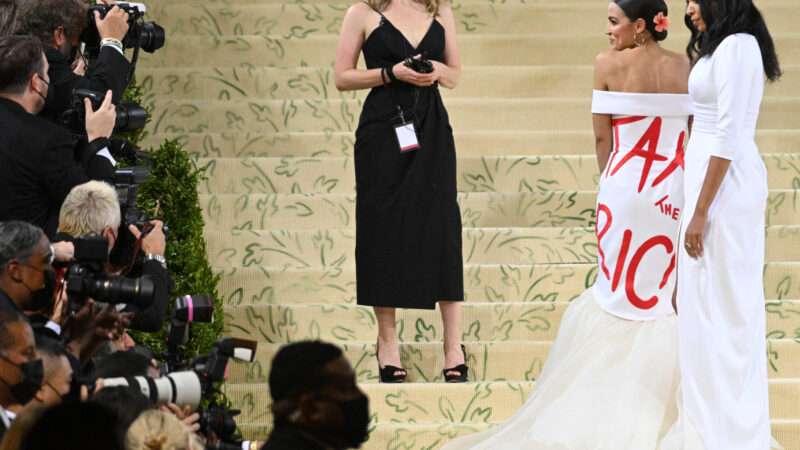
Even Rep. Alexandria Ocasio-Cortez (D–N.Y.), who recently made headlines for wearing a dress with “tax the rich” printed on it to the Met Gala—an event which, ironically, serves as a way for wealthy people to avoid taxeshas signaled a willingness to consider the SALT cap repeal. (In fairness, she’s also correctly called a full repeal of the SALT cap “a gift to billionaires.”)

While Democratic lawmakers are divided, there is little debate among left-leaning wonks about who actually benefits from the repeal of the SALT cap.

“There is no state where this is a primarily middle-class issue,” the Institute for Taxation and Economic Policy, a left-of-center think tank, declared in February.

Richard V. Reeves and 

Meanwhile, the top 5 percent of households would reap 80 percent of the benefits, and the bottom 80 percent will get just 4 percent of the overall tax breaks, according to an analysis by the Center on Budget and Policy Priorities, a progressive think tank.

To put it another way, the tax break would amount to an average of $250 for American households earning between $50,000 and $75,000 annually, according to the Tax Policy Center, a left-of-center think tank. Households earning over $1 million will get a tax break of $47,000 on average.

To be sure, it’s fine to advocate for letting wealthy Americans keep a larger share of their income. They are almost certainly going to make better decisions about how to spend that money than the federal government will. If that’s what some Democrats believe would be in the best interests of the country, then they should say so—please!—and they should work to incorporate that same philosophy into their other tax policies.

But, of course, the SALT cap repeal isn’t about principles. It’s about making sure wealthy people in high-tax states—the types of people who just so happen to donate to lots of political causes, natch—get a big tax break. All the talk about the SALT cap repeal helping struggling middle-class families is just a ham-handed, obviously false attempt to marry this policy to the Democrats’ broader policy goals.

In a letter to President Joe Biden earlier this year, seven Democratic governors urged a repeal of the SALT cap because “middle-class Americans are struggling under this federal tax burden.”

That might very well be true, but it’s worth noting that the seven governors who signed the letter oversee states—California, Connecticut, Hawaii, Illinois, New Jersey, New York, and Oregon—with above-average state tax burdens. If middle-class families in those places are struggling, those governors could probably do something more effective than writing letters to encourage the adoption of a policy that mostly doesn’t benefit middle-class families.

And if members of Congress like Suozzi and Gottheimer think their constituents are struggling to get by, here’s an idea: don’t support a bill that raises taxes.

from Latest – Reason.com https://ift.tt/3kLDGL4
via IFTTT

Dems’ Plan To ‘Tax the Rich’ Might Include a Huge Tax Break for the Rich


starmax682424

Before Democrats in Congress can pass a massive spending plan that comes with huge tax increases aimed largely at wealthier Americans, they might have to approve a huge tax break that would almost exclusively benefit the wealthiest Americans.

One of the major stumbling blocks for Democrats as they try to push President Joe Biden’s $3.5 trillion reconciliation bill through Congress is the state and local tax (SALT) deduction, which was capped at $10,000 as part of the 2017 tax reforms. Lifting that cap, or repealing it entirely, has been a major priority for members of Congress who represent wealthy districts in high-tax states, and some Democrats are threatening to withhold their support for Biden’s Build Back Better plan unless it addresses the so-called “SALT cap.”

The rhetoric being used to justify repealing the SALT cap is some of the most disingenuous that you’ll hear from lawmakers debating tax policy—and that’s saying something.

“No SALT, no deal,” Rep. Tom Suozzi (D–N.Y) said in a statement earlier this month. “I simply cannot stand by while the hardworking people across all of New York are hurting because of the SALT cap.”

“These are folks that are struggling to get by,” is how Rep. Josh Gottheimer (D–N.J.) described his constituents during an interview with CNN’s Jake Tapper earlier this week. Families making $200,000 annually—more than three times the median household income in the United States, by the way—are apparently struggling to make ends meet, or at least that’s what he told Tapper.

Even Rep. Alexandria Ocasio-Cortez (D–N.Y.), who recently made headlines for wearing a dress with “tax the rich” printed on it to the Met Gala—an event which, ironically, serves as a way for wealthy people to avoid taxeshas signaled a willingness to consider the SALT cap repeal. (In fairness, she’s also correctly called a full repeal of the SALT cap “a gift to billionaires.”)

While Democratic lawmakers are divided, there is little debate among left-leaning wonks about who actually benefits from the repeal of the SALT cap.

“There is no state where this is a primarily middle-class issue,” the Institute for Taxation and Economic Policy, a left-of-center think tank, declared in February.

Richard V. Reeves and 

Meanwhile, the top 5 percent of households would reap 80 percent of the benefits, and the bottom 80 percent will get just 4 percent of the overall tax breaks, according to an analysis by the Center on Budget and Policy Priorities, a progressive think tank.

To put it another way, the tax break would amount to an average of $250 for American households earning between $50,000 and $75,000 annually, according to the Tax Policy Center, a left-of-center think tank. Households earning over $1 million will get a tax break of $47,000 on average.

To be sure, it’s fine to advocate for letting wealthy Americans keep a larger share of their income. They are almost certainly going to make better decisions about how to spend that money than the federal government will. If that’s what some Democrats believe would be in the best interests of the country, then they should say so—please!—and they should work to incorporate that same philosophy into their other tax policies.

But, of course, the SALT cap repeal isn’t about principles. It’s about making sure wealthy people in high-tax states—the types of people who just so happen to donate to lots of political causes, natch—get a big tax break. All the talk about the SALT cap repeal helping struggling middle-class families is just a ham-handed, obviously false attempt to marry this policy to the Democrats’ broader policy goals.

In a letter to President Joe Biden earlier this year, seven Democratic governors urged a repeal of the SALT cap because “middle-class Americans are struggling under this federal tax burden.”

That might very well be true, but it’s worth noting that the seven governors who signed the letter oversee states—California, Connecticut, Hawaii, Illinois, New Jersey, New York, and Oregon—with above-average state tax burdens. If middle-class families in those places are struggling, those governors could probably do something more effective than writing letters to encourage the adoption of a policy that mostly doesn’t benefit middle-class families.

And if members of Congress like Suozzi and Gottheimer think their constituents are struggling to get by, here’s an idea: don’t support a bill that raises taxes.

from Latest – Reason.com https://ift.tt/3kLDGL4
via IFTTT

ACLU Issues Weak Apology for Erasing ‘Women’ From RBG Abortion Quote


krtphotoslive907754

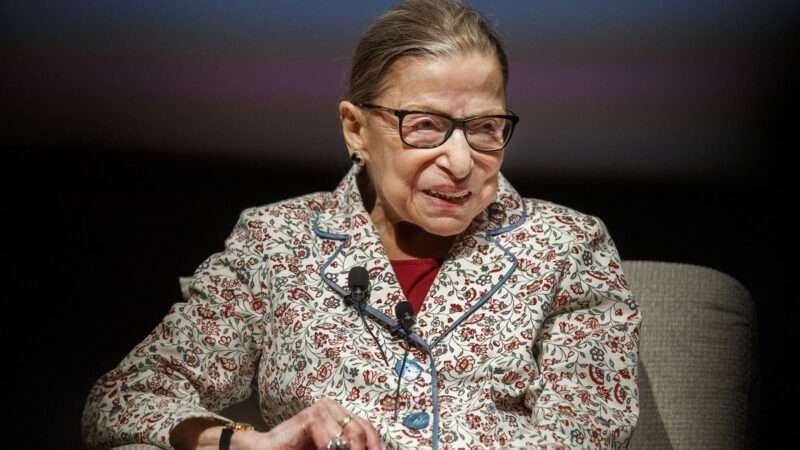
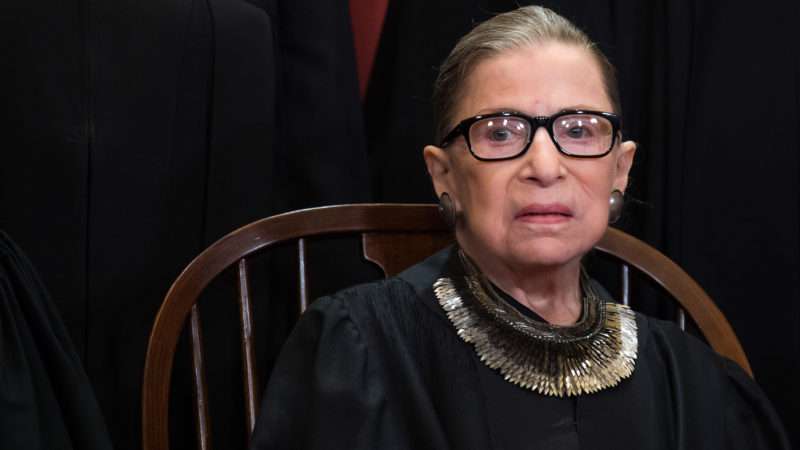
The American Civil Liberties Union (ACLU) is very sorry for rewriting a famous quote from the late Supreme Court Justice Ruth Bader Ginsburg so that it would be gender neutral.

“It was a mistake among the digital team,” said Anthony Romero, executive director of the ACLU. “Changing quotes is not something we ever did.”

Until last week, that was: On September 18, the ACLU’s Twitter feed republished one of RBG’s notable comments about abortion. The revered feminist legal icon had said “the decision whether or not to bear a child is central to a woman’s life” and that the government shouldn’t take that decision out of a woman’s hands.

But according to modern progressive parlance, it is an anachronism to assert that only women can give birth, since transgender men can become pregnant, too. The ACLU thus made some alterations:

Regardless of one’s position on trans issues and the rapidly evolving demands of progressive activists with respect to conscious language choices, it is wrong to go back in time and pretend that people used different words. Demands for greater sensitivity should not prompt a literal rewriting of history. Progressive thought leaders of the very, very recent past recognized fundamental differences between men and women—it’s absurd to pretend otherwise, and to obscure this fact by changing the speech they used.

Moreover, while this isn’t the biggest issue ever, it hardly assuages concerns that the ACLU is veering off course. This organization, renowned for its principled commitment to the defense of civil liberties, increasingly appears to have been captured by overzealous young progressives who are transforming it into just another liberal advocacy group. Whereas the old ACLU was always willing to defend the rights of unsympathetic individuals, the new ACLU is somewhat more cautious about taking cases that might offend liberal sensibilities. Similarly, it’s hard to imagine the old ACLU—or really any self-respecting non-Soviet institution—scrubbing the quotations of old heroes so that they are less offensive to the militantly woke.

At least the ACLU is admitting that the RBG tweet was a mistake, though the apology Romero offered was a weak one. He also told The New York Times‘ Michelle Goldberg that “having spent time with Justice Ginsburg, I would like to believe that if she were alive today, she would encourage us to evolve our language to encompass a broader vision of gender, identity and sexuality.” In response, Goldberg quipped: “It’s also the case that she spoke specifically about women for a reason.” If even the “notorious” RBG isn’t woke by today’s standards, progressives might need a reality check.

from Latest – Reason.com https://ift.tt/3kJIoZP
via IFTTT

ACLU Issues Weak Apology for Erasing ‘Women’ From RBG Abortion Quote


krtphotoslive907754

The American Civil Liberties Union (ACLU) is very sorry for rewriting a famous quote from the late Supreme Court Justice Ruth Bader Ginsburg so that it would be gender neutral.

“It was a mistake among the digital team,” said Anthony Romero, executive director of the ACLU. “Changing quotes is not something we ever did.”

Until last week, that was: On September 18, the ACLU’s Twitter feed republished one of RBG’s notable comments about abortion. The revered feminist legal icon had said “the decision whether or not to bear a child is central to a woman’s life” and that the government shouldn’t take that decision out of a woman’s hands.

But according to modern progressive parlance, it is an anachronism to assert that only women can give birth, since transgender men can become pregnant, too. The ACLU thus made some alterations:

Regardless of one’s position on trans issues and the rapidly evolving demands of progressive activists with respect to conscious language choices, it is wrong to go back in time and pretend that people used different words. Demands for greater sensitivity should not prompt a literal rewriting of history. Progressive thought leaders of the very, very recent past recognized fundamental differences between men and women—it’s absurd to pretend otherwise, and to obscure this fact by changing the speech they used.

Moreover, while this isn’t the biggest issue ever, it hardly assuages concerns that the ACLU is veering off course. This organization, renowned for its principled commitment to the defense of civil liberties, increasingly appears to have been captured by overzealous young progressives who are transforming it into just another liberal advocacy group. Whereas the old ACLU was always willing to defend the rights of unsympathetic individuals, the new ACLU is somewhat more cautious about taking cases that might offend liberal sensibilities. Similarly, it’s hard to imagine the old ACLU—or really any self-respecting non-Soviet institution—scrubbing the quotations of old heroes so that they are less offensive to the militantly woke.

At least the ACLU is admitting that the RBG tweet was a mistake, though the apology Romero offered was a weak one. He also told The New York Times‘ Michelle Goldberg that “having spent time with Justice Ginsburg, I would like to believe that if she were alive today, she would encourage us to evolve our language to encompass a broader vision of gender, identity and sexuality.” In response, Goldberg quipped: “It’s also the case that she spoke specifically about women for a reason.” If even the “notorious” RBG isn’t woke by today’s standards, progressives might need a reality check.

from Latest – Reason.com https://ift.tt/3kJIoZP
via IFTTT

ACLU Apologizes for Bowdlerizing Ruth Bader Ginsburg Quote


sipaphotoseleven049233

The New York Times reports:

Anthony Romero, the executive director of the American Civil Liberties Union, said Monday that he regretted that a tweet sent out recently by his organization altered the words of a well-known quote by the late Supreme Court Justice Ruth Bader Ginsburg.

The A.C.L.U. tweet, which was sent out Sept. 18, changed Justice Ginsburg’s words, replacing each of her references to women with “person,” “people” or a plural pronoun in brackets. Justice Ginsburg, who died last year, is a revered figure in liberal and feminist circles and directed the A.C.L.U.’s Women’s Rights Project from its founding in 1972 until she became a federal judge in 1980.

The tweet by the A.C.L.U. occasioned mockery and some anger on social media from feminists and others.

“We won’t be altering people’s quotes,” Mr. Romero said in an interview on Monday evening. “It was a mistake among the digital team. Changing quotes is not something we ever did.”

The original quote, from Ruth Bader Ginsburg’s 1993 Supreme Court confirmation hearing before the Senate Judiciary Committee, reads:

The decision whether or not to bear a child is central to a woman’s life, to her well-being and dignity. It is a decision she must make for herself. When government controls that decision for her, she is being treated as less than a fully adult human responsible for her own choices.

The ACLU tweet modified the quote to read:

The decision whether or not to bear a child is central to a [person’s] life, to [their] well-being and dignity. . . . When government controls that decision for [people], [they are] being treated as less than a fully adult human responsible for [their] own choices.

Progressive NYT columnist Michelle Goldberg commented:

This was a mistake for two reasons, one that’s easy to talk about, and one that’s hard.

The easy one is this: It’s somewhat Orwellian to rewrite historical utterances to conform to modern sensitivities. No one that I’m aware of used gender-neutral language to talk about pregnancy and abortion in 1993; it wasn’t until 2008 that Thomas Beatie became famous as what headlines sometimes called the “First Pregnant Man.” There’s a difference between substituting the phrase “pregnant people” for “pregnant women” now, and pretending that we have always spoken of “pregnant people.”

What’s more difficult to discuss is how making Ginsburg’s words gender-neutral alters their meaning. That requires coming to terms with a contentious shift in how progressives think and talk about sex and reproduction. Changing Ginsburg’s words treats what was once a core feminist insight — that women are oppressed on the basis of their reproductive capacity — as an embarrassing anachronism. The question then becomes: Is it?

from Latest – Reason.com https://ift.tt/3ukWXGg
via IFTTT

Federal Judges Failed to Recuse in Hundreds of Cases

Over 100 federal judges failed to recuse themselves from cases involving firms in which they held stock or other financial interests between 2010 and 2018, according to a new Wall Street Journal report. All told, the investigation identified 685 cases in which the judge or a family member owned stock in a company involved in a case before them.

A Wall Street Journal investigation found that judges have improperly failed to disqualify themselves from 685 court cases around the nation since 2010. The jurists were appointed by nearly every president from Lyndon Johnson to Donald Trump.

About two-thirds of federal district judges disclosed holdings of individual stocks, and nearly one of every five who did heard at least one case involving those stocks.

Alerted to the violations by the Journal, 56 of the judges have directed court clerks to notify parties in 329 lawsuits that they should have recused themselves. That means new judges might be assigned, potentially upending rulings.

When judges participated in such cases, about two-thirds of their rulings on motions that were contested came down in favor of their or their family’s financial interests.

The clerk’s office in each court often maintains a list of each judge’s investments and checks for conflicts before assigning cases, but this is an imperfect check, as the study indicates, and does not prevent the serious appearance problem created by judicial decisions on matters related to a judge’s investments.

The majority of the cases identified by the WSJ may have involved simple oversights, but the report highlights the need for federal judges to place their investments in index funds and equivalent instruments or place their investments in trust.

from Latest – Reason.com https://ift.tt/3F04Bef
via IFTTT

ACLU Apologizes for Bowdlerizing Ruth Bader Ginsburg Quote


sipaphotoseleven049233

The New York Times reports:

Anthony Romero, the executive director of the American Civil Liberties Union, said Monday that he regretted that a tweet sent out recently by his organization altered the words of a well-known quote by the late Supreme Court Justice Ruth Bader Ginsburg.

The A.C.L.U. tweet, which was sent out Sept. 18, changed Justice Ginsburg’s words, replacing each of her references to women with “person,” “people” or a plural pronoun in brackets. Justice Ginsburg, who died last year, is a revered figure in liberal and feminist circles and directed the A.C.L.U.’s Women’s Rights Project from its founding in 1972 until she became a federal judge in 1980.

The tweet by the A.C.L.U. occasioned mockery and some anger on social media from feminists and others.

“We won’t be altering people’s quotes,” Mr. Romero said in an interview on Monday evening. “It was a mistake among the digital team. Changing quotes is not something we ever did.”

The original quote, from Ruth Bader Ginsburg’s 1993 Supreme Court confirmation hearing before the Senate Judiciary Committee, reads:

The decision whether or not to bear a child is central to a woman’s life, to her well-being and dignity. It is a decision she must make for herself. When government controls that decision for her, she is being treated as less than a fully adult human responsible for her own choices.

The ACLU tweet modified the quote to read:

The decision whether or not to bear a child is central to a [person’s] life, to [their] well-being and dignity. . . . When government controls that decision for [people], [they are] being treated as less than a fully adult human responsible for [their] own choices.

Progressive NYT columnist Michelle Goldberg commented:

This was a mistake for two reasons, one that’s easy to talk about, and one that’s hard.

The easy one is this: It’s somewhat Orwellian to rewrite historical utterances to conform to modern sensitivities. No one that I’m aware of used gender-neutral language to talk about pregnancy and abortion in 1993; it wasn’t until 2008 that Thomas Beatie became famous as what headlines sometimes called the “First Pregnant Man.” There’s a difference between substituting the phrase “pregnant people” for “pregnant women” now, and pretending that we have always spoken of “pregnant people.”

What’s more difficult to discuss is how making Ginsburg’s words gender-neutral alters their meaning. That requires coming to terms with a contentious shift in how progressives think and talk about sex and reproduction. Changing Ginsburg’s words treats what was once a core feminist insight — that women are oppressed on the basis of their reproductive capacity — as an embarrassing anachronism. The question then becomes: Is it?

from Latest – Reason.com https://ift.tt/3ukWXGg
via IFTTT