Testifying before House Judiciary Committee on the Pardon Power

Today, I will be testifying before the House Judiciary Committee, Subcommittee on the Constitution, Civil Rights, and Civil Liberties. The topic is “Constitutional Means to Prevent Abuse of the Clemency Power.” Here is the live-stream, which will begin at 9:00 AM:

And here are my prepared statements, which will run about five minutes:

Chairman Cohen, Ranking Member Johnson, thank you for inviting me to testify. I am a constitutional law professor at the South Texas College of Law Houston.

People often think that the courts have a monopoly on interpreting the Constitution. They don’t. As we speak, the House Managers are trying President Trump for violating the Constitution. And here, we will discuss the “constitutional means to prevent abuse of the clemency power.”

In my brief opening remarks, I’d like to make three primary points. First, I will discuss an important purpose of the pardon power. Second, I will consider proposed statutory regulations of the pardon power. And third, I will talk about H.R. 4, a proposed constitutional amendment that would limit presidential clemency.

Today, people often think of the pardon power as a form of error correction. For example, the courts made an error by imposing an unjust sentence. Or prosecutors pursued an unjust charge. But as originally understood, clemency could serve a greater purpose. In Federalist No. 74, Alexander Hamilton identified the “principal argument” for the pardon power: “restor[ing] the tranquillity of the commonwealth.” Pardons do not merely help individuals. Presidents can issue pardons to advance broader public policies. Some of the most famous pardons in American history served this purpose. President Washington pardoned participants in the Whiskey Rebellion. President Jefferson pardoned those convicted under the Sedition Act. After the Civil War, President Andrew Johnson pardoned former Confederates. And President Ford pardoned people who evaded the draft. Each of these decisions was unpopular in some quarters. But, in each case, the President used his pardon power to pursue the common good, as he saw it. 

This history brings me to my second point. Last summer, this Committee marked up the Abuse of Pardon Prevention Act. I criticized this bill in a post I co-authored for Lawfare with my colleague, Seth Barrett Tillman, Lecturer at the Maynooth University Department of Law in Ireland. I will submit that post for the record. In short, this proposed bill would alter the presidency such that he would now second-guess his official actions for fear of prosecution. Congress should not empower Federal prosecutors, through the power of the criminal process, to dictate what the public interest is.

Third, this committee is considering H.R. 4, a proposed constitutional amendment that would limit whom the President can pardon. I oppose this amendment. It attempts to constitutionalize a single conception of the public interest: what is, and is not a proper pardon. The public interest is always contestable because no one has the institutional knowledge to declare a monopoly on what is in the common good. The President should be able to make important decisions with vigor, independence, and dispatch. The President should have the greatest latitude to issue pardons, precisely because the President should have the greatest latitude to pursue what he sees as the common good. Limiting the President’s power to issue pardons will limit the President’s power to promote what Hamilton referred to as “the tranquility of the commonwealth.” This amendment should not be adopted.

Thank you for your time, and I would be happy to answer any of your questions.

from Latest – Reason.com https://ift.tt/3pcBWd3
via IFTTT

Who’s Afraid of Josh Hawley?

Today, I debunk Sen. Josh Hawley’s purported victim status and First Amendment theories in an op-ed in the St. Louis Post-Dispatch with Berin Szoka, president of TechFreedom.

The First Amendment doesn’t give Sen. Hawley the right to force tech platforms to carry the speech of white supremacists and/or those who incite violence, as Berin and I break down both in the op-ed and accompanying Twitter thread.

from Latest – Reason.com https://ift.tt/36ZL5PA
via IFTTT

Testifying before House Judiciary Committee on the Pardon Power

Today, I will be testifying before the House Judiciary Committee, Subcommittee on the Constitution, Civil Rights, and Civil Liberties. The topic is “Constitutional Means to Prevent Abuse of the Clemency Power.” Here is the live-stream, which will begin at 9:00 AM:

And here are my prepared statements, which will run about five minutes:

Chairman Cohen, Ranking Member Johnson, thank you for inviting me to testify. I am a constitutional law professor at the South Texas College of Law Houston.

People often think that the courts have a monopoly on interpreting the Constitution. They don’t. As we speak, the House Managers are trying President Trump for violating the Constitution. And here, we will discuss the “constitutional means to prevent abuse of the clemency power.”

In my brief opening remarks, I’d like to make three primary points. First, I will discuss an important purpose of the pardon power. Second, I will consider proposed statutory regulations of the pardon power. And third, I will talk about H.R. 4, a proposed constitutional amendment that would limit presidential clemency.

Today, people often think of the pardon power as a form of error correction. For example, the courts made an error by imposing an unjust sentence. Or prosecutors pursued an unjust charge. But as originally understood, clemency could serve a greater purpose. In Federalist No. 74, Alexander Hamilton identified the “principal argument” for the pardon power: “restor[ing] the tranquillity of the commonwealth.” Pardons do not merely help individuals. Presidents can issue pardons to advance broader public policies. Some of the most famous pardons in American history served this purpose. President Washington pardoned participants in the Whiskey Rebellion. President Jefferson pardoned those convicted under the Sedition Act. After the Civil War, President Andrew Johnson pardoned former Confederates. And President Ford pardoned people who evaded the draft. Each of these decisions was unpopular in some quarters. But, in each case, the President used his pardon power to pursue the common good, as he saw it. 

This history brings me to my second point. Last summer, this Committee marked up the Abuse of Pardon Prevention Act. I criticized this bill in a post I co-authored for Lawfare with my colleague, Seth Barrett Tillman, Lecturer at the Maynooth University Department of Law in Ireland. I will submit that post for the record. In short, this proposed bill would alter the presidency such that he would now second-guess his official actions for fear of prosecution. Congress should not empower Federal prosecutors, through the power of the criminal process, to dictate what the public interest is.

Third, this committee is considering H.R. 4, a proposed constitutional amendment that would limit whom the President can pardon. I oppose this amendment. It attempts to constitutionalize a single conception of the public interest: what is, and is not a proper pardon. The public interest is always contestable because no one has the institutional knowledge to declare a monopoly on what is in the common good. The President should be able to make important decisions with vigor, independence, and dispatch. The President should have the greatest latitude to issue pardons, precisely because the President should have the greatest latitude to pursue what he sees as the common good. Limiting the President’s power to issue pardons will limit the President’s power to promote what Hamilton referred to as “the tranquility of the commonwealth.” This amendment should not be adopted.

Thank you for your time, and I would be happy to answer any of your questions.

from Latest – Reason.com https://ift.tt/3pcBWd3
via IFTTT

Who’s Afraid of Josh Hawley?

Today, I debunk Sen. Josh Hawley’s purported victim status and First Amendment theories in an op-ed in the St. Louis Post-Dispatch with Berin Szoka, president of TechFreedom.

The First Amendment doesn’t give Sen. Hawley the right to force tech platforms to carry the speech of white supremacists and/or those who incite violence, as Berin and I break down both in the op-ed and accompanying Twitter thread.

from Latest – Reason.com https://ift.tt/36ZL5PA
via IFTTT

Why WallStreetBets and Bitcoiners Got So Excited About GameStop

gamestop_1161x653

How perfect is it that GameStop of all things is what is revealing the cracks in our capital markets to the masses? Many of us found ourselves fielding confused communiqués from loved ones about just why everyone was talking about the memeable video game rental chain last week. Apparently, it was about to bring down our financial system?

The truth is not quite as immediately apocalyptic as the many talking head “suits” on financial TV might have conveyed, but there is no denying that the “GameStonk” episode bares real flaws on Wall Street. It’s no surprise that two groups most interested in overcoming or exploiting these weaknesses—the Bitcoin and r/WallStreetBets communities—rallied around this incident-turned-movement. Regardless of how the GameStonk saga eventually plays out, the problems it exposed need addressing, and technology may already be providing the solutions.

Most people get what Bitcoin is about by now. It’s inflation- and censorship-resistant private digital cash. People like it because it provides an escape from both monetary manipulation that enriches the few at the expense of everyone else and financial deplatforming by intermediaries. It’s a technological exit from a financial system mostly oriented to the benefit of the connected.

WallStreetBets (WSB) is a more obscure beast. It’s a Reddit community centered around picking stocks on apps like the video game-like Robinhood. They describe it as “if 4chan got ahold of a Bloomberg terminal.” They’re novice investors, younger, and obviously have much skimpier pockets than professional hedge fund and institutional wealth managers.

But they’re not idiots (well, most of them aren’t, at least). Actually, there’s a good number of professional traders that lurk and post on WSB—the infamous Martin Shkreli being one former (and level-headed) moderator.

And GameStop was not picked because it was funny. Users noticed that the stock price didn’t reflect GameStop’s otherwise decent financial position. Not only was the stock being shorted, which means that big investors were making bets that the price would go down, it looked like more stocks were being traded than even existed. This would not just be nonsensical, such apparent “naked short selling” is supposed to be illegal.

The interest surrounding GameStop actually started way back in 2019, when a user (who was later revealed to be a young professional trader) noticed some irregularities with GameStop trading. Heterodox investors like The Big Short’s Michael Burry noticed the opportunity for what’s called a “short squeeze“; slowly other posters started understanding the strategy and bought up shares, causing the price to inch up.

Hedge funds had a lot of money on the line betting that GameStop stock would fall. With some assists from a few puckish billionaires, WSB bought up the stock to keep the price high—absurdly high, actually: the stock that had coasted for around a few bucks peaked at almost $500 in late January—which would ruin the hedge funds’ positions. This is the squeeze.

Although their tongue-in-cheek rallying cry was that they “liked the stock,” of course WSB knew GameStop stock was not worth more than, say, Mastercard (~$340). And most of them knew they would probably lose money once the price eventually fell. Like Bitcoiners insist on “hodling” through bear markets, WSB posters encouraged each other to maintain their “diamond hands” and hold the stock no matter what. This was about sending a message.

The message was that Wall Street is absurd and, ultimately, weak. Insiders do whatever they want and get bailed out while normal people—like WSB posters and their parents—lose their houses and jobs. Hedge fund flaks go on TV to trash talk stocks in the process of being shorted; never mind the companies ruined in the wake. All kinds of naked shenanigans go down without anyone in the government much noticing or caring.

Here was an opportunity for WSB to beat the hedge funds at their own game and cost them a dozen billion or so in the process. Market manipulation? No, “we like the stock :^).”

This is where the short squeeze was itself squeezed a bit. Strange things started happening when the price of GameStop and other companies like AMC Theaters and Nokia started shooting up. Trading apps like Robinhood limited users’ abilities to buy the stocks. There was a forced meme about a silver squeeze. Irate billionaires showed up on TV to sputter about the peasants’ audacity in demanding a “fair share.” Communications platforms started shutting down WSB communities. Government agents seemed to threaten to investigate retail investors for “market manipulation.” Remind you of anything? It looked like the whole of the establishment was coming down to crush the new capital riots.

It’s true that platforms like Robinhood could have restricted trading if one of their friends at a hedge fund gave them a call (albeit illegally—the dog and pony show is scheduled for later this month). And it’s true that platforms like Robinhood have special relationships with some of the financial institutions that stood to lose (or win!) bigly from the GameStop saga (not everyone on Wall Street was short on GameStop). It’s also true that top regulators regularly receive handsome payouts from the firms they’re supposed to be overseeing.

But even without these possible avenues for corruption, our financial plumbing all but ensured that platforms like Robinhood would have had to clamp down on the GameStop run. This is because apps like Robinhood don’t connect buyers and sellers like a simple broker, and users aren’t really spending “their” money when they make a trade.

When a Robinhood user makes a trade, the platform is actually contracting out to a third party “market maker” (like Citadel Securities) that provides the liquidity to cover the trade. Robinhood settles up with them in a few days—two, to be precise, which is why this settlement system is called “T+2.” Businesses that participate in this kind of clearinghouse arrangement are regulated by an industry-owned organization called the Depository Trust & Clearing Corporation (DTCC), which sets things like capital requirements to make sure that companies like Robinhood have enough collateral on hand to cover the trades before they’re settled up at the clearinghouse two days later. The extreme trading volume for stocks like $GME drew down on Robinhood’s available capital, which is why the CEO says the platform had to pause those trades.

In other words, setting aside the potential for corruption, the Robinhood debacle was a problem of both business model—Robinhood users weren’t its real “customers”—and technology—the trades don’t settle immediately, so this rare event gunked up the financial plumbing of the clearinghouse system.

No wonder the cryptocurrency and WSB communities are so simpatico. When it comes to financial corruption and inefficiencies, Bitcoin and related technologies have a lot to offer.

Bitcoiners were cheering on the financial rebellion from the sidelines—some of them threw in a few satoshis at $GME to support the cause. WSB personalities started tweeting about how Wall Street can only control our finances to the extent that they are connected to the controls of currency—a common cryptocurrency refrain. There’s a good deal of overlap in the Venn diagram here: using a currency that is free from the potential for political manipulation limits the hijinks that insiders can pull in financial markets.

Blockchains can help address technological problems with settlement, too. This is the aim of the “decentralized finance” or “DeFi” movement which employs smart contracts and digital assets to facilitate peer-to-peer and instant capital settlement. It’s not magic—a poorly coded smart contract could spell disaster for financial trades. But it is very innovative, and DeFi techniques could provide a much-needed jolt to our creaky and sometimes corrupt financial markets.

One of the most exciting things about DeFi is that is provides a way to route around the financial middlemen so central to the recent friction in financial markets. With direct digital asset transfers, there is no “Robinhood” that can be pressured by the SEC or DTCC or even something like Citadel to halt trades. Your assets are yours, so long as you protect your cryptographic key. We should not be surprised to see WSB veterans migrate to the cryptocurrency and DeFi world after their eye-opening lesson in realpolitikal finance.

As I write, the GameStonk rebellion keeps chugging along, although the price is steadily flagging. It seems the energy is mostly lost. But not everyone who participated will chalk this up as a fun prank and move on with their lives. For those serious about addressing the problems with our financial system, the cryptocurrency movement has the values and tools to create lasting change. They are more than welcome to join.

from Latest – Reason.com https://ift.tt/3rAZJon
via IFTTT
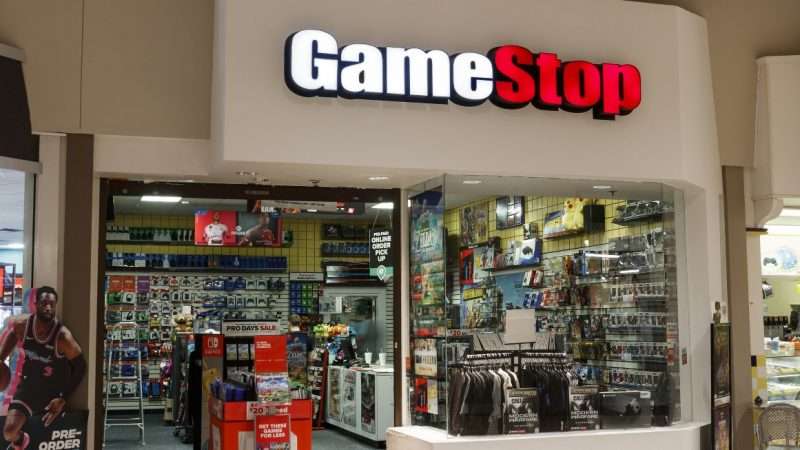
Why WallStreetBets and Bitcoiners Got So Excited About GameStop

gamestop_1161x653

How perfect is it that GameStop of all things is what is revealing the cracks in our capital markets to the masses? Many of us found ourselves fielding confused communiqués from loved ones about just why everyone was talking about the memeable video game rental chain last week. Apparently, it was about to bring down our financial system?

The truth is not quite as immediately apocalyptic as the many talking head “suits” on financial TV might have conveyed, but there is no denying that the “GameStonk” episode bares real flaws on Wall Street. It’s no surprise that two groups most interested in overcoming or exploiting these weaknesses—the Bitcoin and r/WallStreetBets communities—rallied around this incident-turned-movement. Regardless of how the GameStonk saga eventually plays out, the problems it exposed need addressing, and technology may already be providing the solutions.

Most people get what Bitcoin is about by now. It’s inflation- and censorship-resistant private digital cash. People like it because it provides an escape from both monetary manipulation that enriches the few at the expense of everyone else and financial deplatforming by intermediaries. It’s a technological exit from a financial system mostly oriented to the benefit of the connected.

WallStreetBets (WSB) is a more obscure beast. It’s a Reddit community centered around picking stocks on apps like the video game-like Robinhood. They describe it as “if 4chan got ahold of a Bloomberg terminal.” They’re novice investors, younger, and obviously have much skimpier pockets than professional hedge fund and institutional wealth managers.

But they’re not idiots (well, most of them aren’t, at least). Actually, there’s a good number of professional traders that lurk and post on WSB—the infamous Martin Shkreli being one former (and level-headed) moderator.

And GameStop was not picked because it was funny. Users noticed that the stock price didn’t reflect GameStop’s otherwise decent financial position. Not only was the stock being shorted, which means that big investors were making bets that the price would go down, it looked like more stocks were being traded than even existed. This would not just be nonsensical, such apparent “naked short selling” is supposed to be illegal.

The interest surrounding GameStop actually started way back in 2019, when a user (who was later revealed to be a young professional trader) noticed some irregularities with GameStop trading. Heterodox investors like The Big Short’s Michael Burry noticed the opportunity for what’s called a “short squeeze“; slowly other posters started understanding the strategy and bought up shares, causing the price to inch up.

Hedge funds had a lot of money on the line betting that GameStop stock would fall. With some assists from a few puckish billionaires, WSB bought up the stock to keep the price high—absurdly high, actually: the stock that had coasted for around a few bucks peaked at almost $500 in late January—which would ruin the hedge funds’ positions. This is the squeeze.

Although their tongue-in-cheek rallying cry was that they “liked the stock,” of course WSB knew GameStop stock was not worth more than, say, Mastercard (~$340). And most of them knew they would probably lose money once the price eventually fell. Like Bitcoiners insist on “hodling” through bear markets, WSB posters encouraged each other to maintain their “diamond hands” and hold the stock no matter what. This was about sending a message.

The message was that Wall Street is absurd and, ultimately, weak. Insiders do whatever they want and get bailed out while normal people—like WSB posters and their parents—lose their houses and jobs. Hedge fund flaks go on TV to trash talk stocks in the process of being shorted; never mind the companies ruined in the wake. All kinds of naked shenanigans go down without anyone in the government much noticing or caring.

Here was an opportunity for WSB to beat the hedge funds at their own game and cost them a dozen billion or so in the process. Market manipulation? No, “we like the stock :^).”

This is where the short squeeze was itself squeezed a bit. Strange things started happening when the price of GameStop and other companies like AMC Theaters and Nokia started shooting up. Trading apps like Robinhood limited users’ abilities to buy the stocks. There was a forced meme about a silver squeeze. Irate billionaires showed up on TV to sputter about the peasants’ audacity in demanding a “fair share.” Communications platforms started shutting down WSB communities. Government agents seemed to threaten to investigate retail investors for “market manipulation.” Remind you of anything? It looked like the whole of the establishment was coming down to crush the new capital riots.

It’s true that platforms like Robinhood could have restricted trading if one of their friends at a hedge fund gave them a call (albeit illegally—the dog and pony show is scheduled for later this month). And it’s true that platforms like Robinhood have special relationships with some of the financial institutions that stood to lose (or win!) bigly from the GameStop saga (not everyone on Wall Street was short on GameStop). It’s also true that top regulators regularly receive handsome payouts from the firms they’re supposed to be overseeing.

But even without these possible avenues for corruption, our financial plumbing all but ensured that platforms like Robinhood would have had to clamp down on the GameStop run. This is because apps like Robinhood don’t connect buyers and sellers like a simple broker, and users aren’t really spending “their” money when they make a trade.

When a Robinhood user makes a trade, the platform is actually contracting out to a third party “market maker” (like Citadel Securities) that provides the liquidity to cover the trade. Robinhood settles up with them in a few days—two, to be precise, which is why this settlement system is called “T+2.” Businesses that participate in this kind of clearinghouse arrangement are regulated by an industry-owned organization called the Depository Trust & Clearing Corporation (DTCC), which sets things like capital requirements to make sure that companies like Robinhood have enough collateral on hand to cover the trades before they’re settled up at the clearinghouse two days later. The extreme trading volume for stocks like $GME drew down on Robinhood’s available capital, which is why the CEO says the platform had to pause those trades.

In other words, setting aside the potential for corruption, the Robinhood debacle was a problem of both business model—Robinhood users weren’t its real “customers”—and technology—the trades don’t settle immediately, so this rare event gunked up the financial plumbing of the clearinghouse system.

No wonder the cryptocurrency and WSB communities are so simpatico. When it comes to financial corruption and inefficiencies, Bitcoin and related technologies have a lot to offer.

Bitcoiners were cheering on the financial rebellion from the sidelines—some of them threw in a few satoshis at $GME to support the cause. WSB personalities started tweeting about how Wall Street can only control our finances to the extent that they are connected to the controls of currency—a common cryptocurrency refrain. There’s a good deal of overlap in the Venn diagram here: using a currency that is free from the potential for political manipulation limits the hijinks that insiders can pull in financial markets.

Blockchains can help address technological problems with settlement, too. This is the aim of the “decentralized finance” or “DeFi” movement which employs smart contracts and digital assets to facilitate peer-to-peer and instant capital settlement. It’s not magic—a poorly coded smart contract could spell disaster for financial trades. But it is very innovative, and DeFi techniques could provide a much-needed jolt to our creaky and sometimes corrupt financial markets.

One of the most exciting things about DeFi is that is provides a way to route around the financial middlemen so central to the recent friction in financial markets. With direct digital asset transfers, there is no “Robinhood” that can be pressured by the SEC or DTCC or even something like Citadel to halt trades. Your assets are yours, so long as you protect your cryptographic key. We should not be surprised to see WSB veterans migrate to the cryptocurrency and DeFi world after their eye-opening lesson in realpolitikal finance.

As I write, the GameStonk rebellion keeps chugging along, although the price is steadily flagging. It seems the energy is mostly lost. But not everyone who participated will chalk this up as a fun prank and move on with their lives. For those serious about addressing the problems with our financial system, the cryptocurrency movement has the values and tools to create lasting change. They are more than welcome to join.

from Latest – Reason.com https://ift.tt/3rAZJon
via IFTTT

Anonymous Business Plaintiffs in Patent Knockoff Case?

From Patent Holder Identified in Exh. 1 v. Does 1-254, as Identified in Exh. 2, decided Saturday by Judge Matthew F. Kennelly (N.D. Ill.); it’s not quite my field, so I’m not sure what to think of it, but it seemed interesting enough to be worth passing along:

It has become commonplace in this district for holders of trademark and trade dress rights to file suits naming dozens or even hundreds of claimed infringers and counterfeiters, alleging that they are selling knock-off products via the Internet. The plaintiffs seek an injunction and recovery of damages. In these lawsuits, the actual identities and locations of the sellers are unknown to the trademark holder because they have used assumed names. The lawsuits are typically filed against a group of sellers whose assumed names are listed on an attachment to the complaint, usually called “Schedule A.”

In these lawsuits, the plaintiff typically requests permission to file “Schedule A” and other information that would identify the sellers under seal, to avoid tipping off the defendants that a lawsuit has been filed. Public identification of the defendants, the plaintiff contends, would lead them to hide or transfer ill-gotten gains and destroy relevant evidence.

Once the lawsuit is filed, the plaintiff typically moves ex parte for entry of a temporary restraining order that, among other things, bars further infringing sales and freezes any assets held in the defendants’ PayPal or similar accounts. The plaintiff also typically moves for permission to serve the defendants with summons via e-mail, as their addresses are unknown and often hidden, and they are typically based overseas.

Once the court enters a TRO, the plaintiff serves it along with the complaint on the defendants via e-mail; serves PayPal and other similar entities with the TRO to freeze the defendants’ assets; and takes other steps to effectuate the TRO’s terms. Due to the limited duration of a TRO, the plaintiff then seeks entry of a preliminary injunction with similar terms that will carry through to the conclusion of the case. Most cases of this type are concluded relatively quickly, after the plaintiff negotiates settlements with the defendants who make contact with the plaintiff’s attorney and obtains default judgments against those who do not respond.

The present case is similar, but there are two differences from the usual suit. The first is that the plaintiff seeks to conceal even its own name; it asks to file the case, effectively, as a “Doe” plaintiff pending issuance and service of the hoped-for temporary restraining order. In support of this request, the plaintiff has filed a one-page motion that includes only the following by way of justification:

“If Defendants were to learn of these proceedings prematurely, the likely result would be the destruction of relevant documentary evidence and the hiding or transferring of assets to foreign jurisdictions, which would frustrate the purpose of the underlying law and would interfere with this Court’s power to grant relief.

“We know it is likely Defendants will impede justice because Defendants participate in or operate a website, sellerdefense.cn, that monitors this District’s PACER filings and screens for Plaintiff counsel’s filings as well as all Trademark and Patent filings throughout the District. Without sealing these filings, Plaintiffs will have their remedies thwarted.”

The first sentence isn’t a justification; it’s a conclusion. The only justification is the second sentence, which says that the defendants participate in a website that monitors filings in this district. That might be part of a justification, but instead plaintiff asks the Court to make the inferential leap—worthy of Bob Beamon in the 1968 Olympics—that if it becomes known that the plaintiff has filed a lawsuit against someone, the defendants will all hide their assets. The Court is unwilling to draw this inference without some supporting evidence and argument. For this reason, the motion to seal is denied—to the extent it asks to conceal the plaintiff’s identity—without prejudice to filing a new motion by February 10, 2021.

The second difference between this case and the usual “Schedule A” case is that the present case is a patent infringement suit, not a trademark infringement suit. The plaintiff alleges that each of the “Schedule A” defendants (actually, in this case, they are the “Exhibit 2” defendants) is selling products that infringe a patent issued to the plaintiff. The infringement allegations in the complaint itself are relatively conclusory; they include no information about how the claimed infringing products are alleged to infringe the design patent. And none of the allegations in the complaint says anything specific about any defendant; all of the defendants are lumped together.

Without addressing at this point the sufficiency of the complaint under Federal Rules of Civil Procedure 8(a) and 12(b)(6) as to each of the two hundred fifty-four defendants, there is a threshold problem with this particular case that does not exist in the typical “Schedule A” trademark/trade dress case. Specifically, the joinder of all the defendants in a single suit appears to run afoul of a provision of the America Invents Act, adopted in 2013.

Before the AIA, it was common for patent holders to sue or attempt to sue multiple infringers in a single suit. The AIA sought to put a stop to this. Under 35 U.S.C. § 299, parties that are accused infringers of a patent may be joined in a single action as defendants only if a right to relief “is asserted against the parties jointly, severally, or in the alternative with respect to or arising out of the same transaction, occurrence, or series of transactions or occurrences” that involve making, using, importing, offering, or selling “the same accused product or process,” and only if there are questions of fact common to all defendants that will arise. Importantly, “accused infringers may not be joined in one action as defendants … based solely on allegations that they each have infringed the patent or patents in suit.”

In this case, it is questionable whether the plaintiff can clear all of the hurdles imposed by section 299. It alleges that that the defendants all sold infringing products, but that is not enough in light of section 299(b). The plaintiff also alleges that “some” of the defendants use “identical or equivalent language” to sell the products and use images taken from the plaintiff’s website; that there are unspecified “similarities and indicia of being related to one another” among the defendants; and that they offer the product at similar prices. But it would not be particularly surprising for multiple sellers to attempt to match other sellers’ prices, and it would not be at all surprising for counterfeiters of a product to copy images from the legitimate seller’s site or even from other counterfeiters’ sites.

The plaintiff also alleges that the defendants tend to post information to a “seller defense” website, but parallel action does not amount to action in concert. The Court questions whether these allegations are sufficient to satisfy the “same transaction, occurrence, or series of transactions or occurrences” requirement of section 299(a)(1), given Congress’s express determination in section 299(b) that an allegation of infringement by multiple entities is not enough to allow joining all of them in one lawsuit. In addition, the plaintiff does not allege or explain how questions of fact common to all of the defendants will arise in the case, as required by section 299(a)(2).

Finally, the plaintiff does not allege that the defendants are selling the same accused product. This is a separate requirement of section 299(a)(1) that the plaintiff does not appear to satisfy or even address, even if it could legitimately contend that the defendants’ conduct was part of the same series of transactions or occurrences and that fact questions common to all defendants will arise.

The Court notes that section 299(c) provides that an accused infringer may waive the statute’s limitations as applied to itself. But the Court is not inclined to allow a lawsuit that appears on its face to run afoul of a Congressional enactment to proceed on the possibility that the defendants may eventually waive the statute’s protections. Such an approach does not seem to the Court to be appropriate here, particularly given the manner in which lawsuits of this type typically proceed, with under-seal filing, ex parte temporary restraining orders, asset freezes, and the like.

The Court also notes that in a case like this one, the benefit to the plaintiff of naming multiple defendants in a single case is quite significant. Specifically, by suing 254 defendants in a single suit rather than 254 separate ones, the plaintiff will save, in one fell swoop, over $100,000 in filing fees.

For these reasons, plaintiff is ordered to show cause in writing by February 10, 2021 why the case should not be dismissed under 35 U.S.C. § 299….

from Latest – Reason.com https://ift.tt/2MHF0ka
via IFTTT

Anonymous Business Plaintiffs in Patent Knockoff Case?

From Patent Holder Identified in Exh. 1 v. Does 1-254, as Identified in Exh. 2, decided Saturday by Judge Matthew F. Kennelly (N.D. Ill.); it’s not quite my field, so I’m not sure what to think of it, but it seemed interesting enough to be worth passing along:

It has become commonplace in this district for holders of trademark and trade dress rights to file suits naming dozens or even hundreds of claimed infringers and counterfeiters, alleging that they are selling knock-off products via the Internet. The plaintiffs seek an injunction and recovery of damages. In these lawsuits, the actual identities and locations of the sellers are unknown to the trademark holder because they have used assumed names. The lawsuits are typically filed against a group of sellers whose assumed names are listed on an attachment to the complaint, usually called “Schedule A.”

In these lawsuits, the plaintiff typically requests permission to file “Schedule A” and other information that would identify the sellers under seal, to avoid tipping off the defendants that a lawsuit has been filed. Public identification of the defendants, the plaintiff contends, would lead them to hide or transfer ill-gotten gains and destroy relevant evidence.

Once the lawsuit is filed, the plaintiff typically moves ex parte for entry of a temporary restraining order that, among other things, bars further infringing sales and freezes any assets held in the defendants’ PayPal or similar accounts. The plaintiff also typically moves for permission to serve the defendants with summons via e-mail, as their addresses are unknown and often hidden, and they are typically based overseas.

Once the court enters a TRO, the plaintiff serves it along with the complaint on the defendants via e-mail; serves PayPal and other similar entities with the TRO to freeze the defendants’ assets; and takes other steps to effectuate the TRO’s terms. Due to the limited duration of a TRO, the plaintiff then seeks entry of a preliminary injunction with similar terms that will carry through to the conclusion of the case. Most cases of this type are concluded relatively quickly, after the plaintiff negotiates settlements with the defendants who make contact with the plaintiff’s attorney and obtains default judgments against those who do not respond.

The present case is similar, but there are two differences from the usual suit. The first is that the plaintiff seeks to conceal even its own name; it asks to file the case, effectively, as a “Doe” plaintiff pending issuance and service of the hoped-for temporary restraining order. In support of this request, the plaintiff has filed a one-page motion that includes only the following by way of justification:

“If Defendants were to learn of these proceedings prematurely, the likely result would be the destruction of relevant documentary evidence and the hiding or transferring of assets to foreign jurisdictions, which would frustrate the purpose of the underlying law and would interfere with this Court’s power to grant relief.

“We know it is likely Defendants will impede justice because Defendants participate in or operate a website, sellerdefense.cn, that monitors this District’s PACER filings and screens for Plaintiff counsel’s filings as well as all Trademark and Patent filings throughout the District. Without sealing these filings, Plaintiffs will have their remedies thwarted.”

The first sentence isn’t a justification; it’s a conclusion. The only justification is the second sentence, which says that the defendants participate in a website that monitors filings in this district. That might be part of a justification, but instead plaintiff asks the Court to make the inferential leap—worthy of Bob Beamon in the 1968 Olympics—that if it becomes known that the plaintiff has filed a lawsuit against someone, the defendants will all hide their assets. The Court is unwilling to draw this inference without some supporting evidence and argument. For this reason, the motion to seal is denied—to the extent it asks to conceal the plaintiff’s identity—without prejudice to filing a new motion by February 10, 2021.

The second difference between this case and the usual “Schedule A” case is that the present case is a patent infringement suit, not a trademark infringement suit. The plaintiff alleges that each of the “Schedule A” defendants (actually, in this case, they are the “Exhibit 2” defendants) is selling products that infringe a patent issued to the plaintiff. The infringement allegations in the complaint itself are relatively conclusory; they include no information about how the claimed infringing products are alleged to infringe the design patent. And none of the allegations in the complaint says anything specific about any defendant; all of the defendants are lumped together.

Without addressing at this point the sufficiency of the complaint under Federal Rules of Civil Procedure 8(a) and 12(b)(6) as to each of the two hundred fifty-four defendants, there is a threshold problem with this particular case that does not exist in the typical “Schedule A” trademark/trade dress case. Specifically, the joinder of all the defendants in a single suit appears to run afoul of a provision of the America Invents Act, adopted in 2013.

Before the AIA, it was common for patent holders to sue or attempt to sue multiple infringers in a single suit. The AIA sought to put a stop to this. Under 35 U.S.C. § 299, parties that are accused infringers of a patent may be joined in a single action as defendants only if a right to relief “is asserted against the parties jointly, severally, or in the alternative with respect to or arising out of the same transaction, occurrence, or series of transactions or occurrences” that involve making, using, importing, offering, or selling “the same accused product or process,” and only if there are questions of fact common to all defendants that will arise. Importantly, “accused infringers may not be joined in one action as defendants … based solely on allegations that they each have infringed the patent or patents in suit.”

In this case, it is questionable whether the plaintiff can clear all of the hurdles imposed by section 299. It alleges that that the defendants all sold infringing products, but that is not enough in light of section 299(b). The plaintiff also alleges that “some” of the defendants use “identical or equivalent language” to sell the products and use images taken from the plaintiff’s website; that there are unspecified “similarities and indicia of being related to one another” among the defendants; and that they offer the product at similar prices. But it would not be particularly surprising for multiple sellers to attempt to match other sellers’ prices, and it would not be at all surprising for counterfeiters of a product to copy images from the legitimate seller’s site or even from other counterfeiters’ sites.

The plaintiff also alleges that the defendants tend to post information to a “seller defense” website, but parallel action does not amount to action in concert. The Court questions whether these allegations are sufficient to satisfy the “same transaction, occurrence, or series of transactions or occurrences” requirement of section 299(a)(1), given Congress’s express determination in section 299(b) that an allegation of infringement by multiple entities is not enough to allow joining all of them in one lawsuit. In addition, the plaintiff does not allege or explain how questions of fact common to all of the defendants will arise in the case, as required by section 299(a)(2).

Finally, the plaintiff does not allege that the defendants are selling the same accused product. This is a separate requirement of section 299(a)(1) that the plaintiff does not appear to satisfy or even address, even if it could legitimately contend that the defendants’ conduct was part of the same series of transactions or occurrences and that fact questions common to all defendants will arise.

The Court notes that section 299(c) provides that an accused infringer may waive the statute’s limitations as applied to itself. But the Court is not inclined to allow a lawsuit that appears on its face to run afoul of a Congressional enactment to proceed on the possibility that the defendants may eventually waive the statute’s protections. Such an approach does not seem to the Court to be appropriate here, particularly given the manner in which lawsuits of this type typically proceed, with under-seal filing, ex parte temporary restraining orders, asset freezes, and the like.

The Court also notes that in a case like this one, the benefit to the plaintiff of naming multiple defendants in a single case is quite significant. Specifically, by suing 254 defendants in a single suit rather than 254 separate ones, the plaintiff will save, in one fell swoop, over $100,000 in filing fees.

For these reasons, plaintiff is ordered to show cause in writing by February 10, 2021 why the case should not be dismissed under 35 U.S.C. § 299….

from Latest – Reason.com https://ift.tt/2MHF0ka
via IFTTT