ADP Employment Gains Slow In June

ADP Employment Gains Slow In June

ADP reported the addition of 692k jobs in June (better than the expected 600k but a slow down from May’s 886k addition)…

Source: Bloomberg

Information and management services firms saw employment shrink.

“The labor market recovery remains robust, with June closing out a strong second quarter of jobs growth,” said Nela Richardson, chief economist, ADP.

“While payrolls are still nearly 7 million short of pre-COVID19 levels, job gains have totaled about 3 million since the beginning of 2021. Service providers, the hardest hit sector, continue to do the heavy lifting, with leisure and hospitality posting the strongest gain as businesses begin to reopen to full capacity across the country.”

Tyler Durden
Wed, 06/30/2021 – 08:21

via ZeroHedge News https://ift.tt/3AejlUr Tyler Durden

Shaky Futures Close Out Second Best First Half Since 1998

Shaky Futures Close Out Second Best First Half Since 1998

US stock index futures treaded water after rebounding from session lows on the last day of the quarter, one day after the S&P 500 and the Nasdaq closed at record levels, as rising renewed lockdown risks from the delta coronavirus strain overshadowed confidence in the global economic recovery. The S&P 500 has climbed about 14.3% in the first half of the year and is set for its second best first-half performance since 1998, with energy, financials, real estate and communication services stocks notching the best performance at the sectoral level. The S&P growth index which houses mega-cap FAAMG names has jumped nearly 11.9% this quarter, outperforming its value peer and narrowing the gap for the year-to-date performance.

At 715 a.m. ET, Dow e-minis were down 54 points, or 0.16%, S&P 500 e-minis were down 1.5 points, or 0.04%, and Nasdaq 100 e-minis were down 16.75 points, or 0.12%.

Wednesday’s cautious turn follows strong data from the US and Europe that show surging confidence in the economic recovery. That according to Bloomberg, suggests markets remain finely balanced between hopes for an imminent return to normal and fears that runaway inflation or Covid variants could derail the rebound.

Shares of Micron Technology, which is expected to post quarterly results after markets close, rose 1.0% as they headed for their fourth straight monthly decline. Here are some of the biggest U.S. movers today:

  • Altimmune (ALT) plunges 38% in premarket trading after the company said after the close it will discontinue its Covid-19 vaccine trials. Analysts lowered their price targets while seeing the move as the right choice to refocus the company’s efforts on ongoing obesity and liver programs.
  • Software stocks Exela Technologies (XELAU) and Powerbridge Technologies (PBTS) surge 54% and 25% respectively with the two stocks being touted on Reddit.
  • Kiromic BioPharma (KRBP) sinks 24% after announcing it priced 8 million shares of its common stock at a public offering price at $5 per share, with gross proceeds reaching $40 million.
  • Vertex Energy (VTNR) gains as much as 49% in premarket trading after Clean Harbors (CLH) agreed to buy some of the company’s assets for $140 million.
  • Cryptocurrency-exposed stocks are falling in premarket trading Wednesday as Bitcoin drops back below $35,000 following a three-day rally:  Riot Blockchain -3.6%, Marathon Digital -2.8%, Coinbase -0.4%, Ebang -1.9%, Ault -2.9%; Other crypto-exposed stocks: Tesla -0.4%, Silvergate Capital -0.5%, Square -0.5%

“The environment in Q3 should still be supportive for risky assets, though fear of bouts of persistent inflation could alter this scenario,” Sebastien Galy, senior macro strategist at Nordea Investment Funds SA, wrote in a note. “We expect to see bouts of volatility from this.”

European shares slumped with the Stoxx 600 dropping -0.6% after sliding more than 1% earlier with cyclical stocks bearing the brunt of losses. Airlines struggled as fears of the more contagious Delta variant continue to spur tourism curbs in the region. The Stoxx 600 Automobiles & Parts Index dropped as much as 2.8%, the steepest intraday decline since May 19, and is the day’s worst-performing subgroup on the wider European gauge; the SXAP is trading at the lowest level since May 26. Worst performers include: Volkswagen -3.4% and its controlling shareholder Porsche Automobil Holding SE -4.7%, Valeo -3.4%, Faurecia -2.8%, Renault -2.7%, BMW -2.5%. Here are some of the biggest European movers today:

  • GrandVision shares surged as much as 14% after EssilorLuxotticasaid it will close its EU7.3b acquisition of the Dutch eyewear retailer at the agreed-upon price, confounding investors who had expected the buyer to seek a discount following an arbitration ruling.
  • Solutions 30 shares jumped as much as 17% after shareholders voted to approve the Luxembourg- based technology-services company’s 2020 financial accounts, which its auditor Ernst & Young had refused to certify.
  • Indivior Plc shares rose as much as 11% after the company raised its full year 2021 guidance. Stifel said the upgrade to Sublocade guidance reflects the waning impact of Covid-19 on holding back growth of the product.
  • Vallourec shares gained as much as 6.9% after Jefferies upgrades the stock, saying co.’s financial restructuring has addressed concerns over its balance sheet and there remains upside risks to 2021 Ebitda guidance.
  • The Stoxx 600 Automobiles & Parts Index dropped as much as 2.8%, the steepest intraday decline since May 19, and is the day’s worst-performing subgroup on the wider European gauge; the SXAP is trading at the lowest level since May 26.
  • Worst performers include: Volkswagen -3.4% and its controlling shareholder Porsche Automobil Holding SE -4.7%, Valeo -3.4%, Faurecia -2.8%, Renault -2.7%, BMW -2.5%
  • Safilo Group shares plummeted as much as 17% in Milan trading, the steepest intraday

Asian stocks erased an early gain on Wednesday while still set to cap their longest quarterly winning streak since 2007. Chinese stocks advanced after manufacturing data suggested the economy’s recovery is stabilizing at a solid pace, and the tech-heavy ChiNext Index climbed 2.1% to a six-year high on gains in EV battery maker CATL. Notable gains were also seen in Singapore and Taiwan, while benchmarks slipped in Hong Kong and Japan. Technology stocks were the biggest boosts to the MSCI Asia Pacific Index, while a gauge of healthcare companies fell. The regional benchmark was on track for its fifth-straight quarterly gain, advancing 2.4% in April-June. That achievement comes in spite of mostly sideways trade in June as investors assess the sustainability of the more than 70% surge in the Asian stock gauge from last year’s pandemic low. Stocks rose early Wednesday after U.S. peers set a fresh record overnight and Moderna said its Covid-19 vaccine produced protective antibodies against the delta variant. “Optimism on the vaccine front to curb the delta variant may induce some relief for investors,” said Jun Rong Yeap, a market strategist at IG Asia. “That said, the vaccination progress in the region will have to see some significant pick-up in order to deal with the spreads. Otherwise, Covid-19 restrictions will remain the go-to option to curb the spreads, delivering some risks to the pace of economic recovery.”

Japanese stocks also fell as concerns over the delta variant of the virus damped investor sentiment despite Wall Street’s climb to a record. The Topix dropped for a second day, slipping 0.3% to 1,943.57 in Tokyo, while the Nikkei 225 declined 0.1% to 28,791.53. Sony Group Corp. contributed the most to the Topix’s loss. Today, 1,294 of 2,187 shares fell, while 783 rose; 25 of 33 sectors were lower, led by transportation equipment stocks. Terminal users can read more in our markets live blog. “With the delta variant infection outbreak occurring, it’s possible that reopen trade stocks — such as air transport and railway shares — will decline again,” said Norihiro Fujito, chief investment strategist at Mitsubishi UFJ Morgan Stanley Securities. “It’s possible that the delta variant spread could drag on Japan’s economic normalization into fall.” Japan’s government is planning to extend strong virus measures it has in place in Tokyo and other areas by two to four weeks to coincide with the early days of the Olympics, the Mainichi reported Monday. The Topix completed a 1.1% monthly gain, paring its loss for the quarter to 0.5%. The Nikkei 225 had a 0.2% loss for June, falling 1.3% for the quarter.

In rates, Treasuries rose as traders digested the latest Fed comments. On asset purchases, Thomas Barkin said Tuesday he wants to see much more U.S. labor market progress before slowing them, while Christopher Waller said economic performance warrants thinking about pulling back on some stimulus. Treasury yields are richer by 2bp-3bp from intermediates out to long-end of the curve, flattening 2s10s by 1bp, 5s30s by 0.5bp; bunds outperform by ~1bp in 10-year sector, flattening the German curve by a wider margin.  Month-end extensions may provide additional support Wednesday, although no signs emerged during a lackluster Asia session. EGB outperformance comes amid June euro-area inflation ebb. In Europe, core fixed income curves bull flatten. Bunds richen ~3bps at the long end, outperforming gilts and Treasuries by 1-1.5bps. Peripheral spreads tighten to core, BTP rally out of well received auctions. The focal datapoint of U.S. session is June ADP employment change.

In FX, the Bloomberg Dollar Spot Index was a tad higher, rising a third day, and the greenback was mixed versus its Group-of-10 peers, though moves were confined to tight ranges; the euro hovered around $1.19. The pound was steady even after data showed the U.K. economy shrank more than expected in the first quarter, while fears lingered over the potential impact of the delta variant on the reopening schedule. The U.K.’s GDP declined 1.6% in the first quarter, slightly worse than the 1.5% previously reported. Still, the savings ratio rose to 19.9%, adding to a cash pile that is now powering a consumer boom. Australia’s dollar erased an Asia-session gain to touch a one-week low versus the greenback; sentiment remained vulnerable with half of the population under lockdown as the authorities try to contain outbreaks of the contagious Delta strain of the coronavirus; the kiwi also slipped, in tandem with the Aussie. The yen hovered around 110.50 per dollar and headed for a secondly monthly decline.

In commodities, crude futures reverse a modest dip to trade just shy of Asia’s best levels. WTI gained 0.6% to trade near $73.40, Brent stalls near $75. Spot gold trades off worst levels, down $3 near $1,758/oz. Most base metals are in the green: LME lead outperforms, gaining as much as 1.7%; aluminum underperformed. Bitcoin slipped to trade around $34,600.

Today we got the latest mortgage applications which dropped 6.7%, the biggest decline in 5 months. We also get the latest ADP Employment report, which is expected to show 600K new private payrolls. U.S. pending home sales data for May is at 10:00 a.m. Latest crude oil inventories are at 10:30 a.m. USDA quarterly crop stocks data is at 12:00 p.m. Atlanta Fed President Raphael Bostic and Richmond Fed President Tom Barkin speak later. Constellation Brands Inc., General Mills Inc. and Bed Bath & Beyond Inc. are among the companies reporting.

Market Snapshot

  • S&P 500 futures down 0.26% to 4,271.00
  • STOXX Europe 600 down 1.06% to 451.54
  • MXAP down 0.1% to 208.30
  • MXAPJ little changed at 700.87
  • Nikkei little changed at 28,791.53
  • Topix down 0.3% to 1,943.57
  • Hang Seng Index down 0.6% to 28,827.95
  • Shanghai Composite up 0.5% to 3,591.20
  • Sensex up 0.2% to 52,664.79
  • Australia S&P/ASX 200 up 0.2% to 7,313.02
  • Kospi up 0.3% to 3,296.68
  • Brent Futures up 0.29% to $74.98/bbl
  • Gold spot down 0.16% to $1,758.44
  • U.S. Dollar Index little changed at 92.13
  •  
  • German 10Y yield fell 1.8 bps to -0.188%
  • Euro little changed at $1.1892

Top Overnight News from Bloomberg

  • Wagers on the spread between December 2022 and December 2024 Eurodollar futures — a play on how the rate hike cycle will evolve over that period — have surged in popularity this week. On Friday, Morgan Stanley strategists argued the spread could widen on both better- and worse-than-expected jobs data
  • The Biden administration is developing an executive order directing agencies to strengthen oversight of industries that they perceive to be dominated by a small number of companies, a wide- ranging attempt to rein in big business power across the economy, according to people familiar with the plans, Dow Jones reports
  • Euro-zone inflation cooled in June to temporarily ease concerns that the bloc’s economic reopening will fuel price growth, though economists expect the pressures to gather pace again in the second half of the year
  • British households saved a fifth of their disposable income in the first quarter as the U.K. returned to lockdown, adding to a cash pile that is now powering a consumer boom
  • New Bank of Japan board member Junko Nakagawa says it’s appropriate to continue with the bank’s current monetary stimulus
  • The Swiss National Bank’s foreign exchange transactions totaled just 296 million francs ($321 million) in the first quarter, the smallest sum since the onset of the pandemic
  • OPEC and its allies delayed preliminary talks between ministers by a day to allow more time for a compromise before a critical meeting on Thursday, according to two delegates
  • Oil is heading for its best half since 2009 as the rebound from the pandemic boosts fuel consumption and tightens the market ahead of a key OPEC+ meeting that’s expected to lead to an increase in supply

Quick look at global markets courtesy of Newsquawk

Asian equity markets head into month-end mostly positive but with gains capped as the early momentum and attempt to improve upon the flat performance stateside, was tempered as participants digested a slew of data releases including the latest Chinese PMIs. Nonetheless, ASX 200 (+0.2%) was led higher by telecoms after Telstra announced the sale of a 49% stake in its towers business for AUD 2.8bln and with the index also propped up by strength in most commodity-related sectors aside from energy which suffers due to hefty losses in AGL Energy following its decision to demerge. Nikkei 225 (Unch.) failed to hold on to early gains with participants indecisive amid reports Japan is considering extending its quasi-virus emergency in Tokyo by 2-4 weeks and after disappointing Industrial Production data which showed the steepest contraction in a year, while the KOSPI (+0.3%) was also influenced by data with Industrial Production showing its largest growth in more than a decade despite actually missing forecasts. Hang Seng (-0.6%) and Shanghai Comp. (+0.5%) lacked firm direction following the Chinese PMI data in which the headline Manufacturing PMI topped estimates but showed slower growth in tandem with the softer Non-Manufacturing and Composite PMI readings. There were also reports that China’s leadership is straining to dial back its country’s chest-thumping “Wolf Warrior” approach to foreign policy on concerns it could undermine the country’s interests, while focus was also on IPO news with Didi pricing its US IPO at the top of the indicated USD 13-14/shr range ahead of today’s debut. Finally, 10yr JGBs were subdued heading into month-end with price action hampered by the lack of BoJ presence in the market and after the central bank also reduced its purchase intentions across three tranches for the July-September quarter.

Top Asian News

  • Jimmy Lai’s Next Digital to Shut Down July 1 Amid China Pressure
  • AIA Agrees to Buy China Post Life Stake for $1.9 Billion
  • Married Couple Builds $2.2 Billion Fortune on Bubble Tea IPO
  • Evergrande Meets One of China’s Three ‘Red Lines’ on Debt

European equities have adopted a more pronounced downside bias (Euro Stoxx 50 -0.9%) following a relatively mixed and directionless cash open – with fresh macro news flow also on the lighter side thus far on the final day of June, Q2, and H1. US equity futures have also succumbed to the losses seen across the pond, but with losses notably less pronounced. The NQ (-0.1%) is cushioned as bond yields are pressured, whilst the YM (-0.3%) and ES (-0.2%) fare better than the RTY (-0.5%). Back to Europe, sectors are now in the red across the board with the broader sectors portraying more of a defensive bias – with Healthcare, Telecoms, and Staples among the “better” performers. Delving deeper into the sectors, Oil & Gas (-1.5%) and Banks (-1.7%) reside among the laggards amid losses in the crude and yield complexes respectively – but Autos and Parts (-2.4%) are the marked underperformers amid the ongoing chip crunch weighing on production heading into earnings and delivery releases. On that note, Renault (-2.3%) announced plans to accelerate its EV strategy, with the launch of 10 new Battery EVs (BEVs) by 2025, whilst Volkswagen (-3.8%) is lagging, with reports yesterday suggesting that Ohio’s Supreme Court green-lighted the state’s attorney general to move forward with a lawsuit against the car maker over its “Dieselgate” scandal and manipulation of emissions-control systems. On the flip side, Unipol (+3.7%) shares remain supported by Investment vehicle Koru stating that it is mulling a 3.35% stake in the Co. via reverse accelerated book building and at a 6.6% premium to Tuesday’s closing price. Morrisons (+0.6%) meanwhile is kept afloat by the broader defensive flows alongside shareholder J O Hambro (2.9% stake) stating that CD&R must hike its bid from GBP 2.30/shr to GBP 2.70/shr if it wants the takeover to succeed. In terms of equity commentary, Barclays warns that risk appetite could wane heading into the summer lull, and spikes in real rates would be a key tail risk for the equity complex. “Yet we expect the bid for equities to continue, supported by earnings fundamentals, still high bond/cash positions, and buybacks.” The bank says. Barclays also suggests that some reflation trades were reset following last month’s FOMC meeting, with cyclicals reduced and value still appearing to be well-owned.

Top European News

  • Ray-Ban Owner Goes Ahead With $8.7 Billion GrandVision Deal (2)
  • Zaoui Brothers Join Europe’s Blank-Check Rush With Odyssey SPAC
  • Macquarie Targets U.K. Rental Housing With $1.4 Billion Launch
  • Russia Conducted Cyber Attack on German Banking System: Bild

In FX, the Greenback has slipped back from Tuesday’s highs, but remains underpinned awaiting any late or final month end rebalancing flows that may apply some downside pressure around the end of the European session and/or over the NY close. However, the Dollar continues to resist the bulk of June 30’s negative signals via various bank models in the interim, and from a macro perspective will be looking towards ADP for direction along with pointers for Friday’s NFP release after the first of today’s four scheduled Fed speakers, the Chicago PMI as a proxy for tomorrow’s manufacturing ISM and then US housing data again. In index terms, 92.00 is still proving to be pivotal and the range thus far is 92.162-91.998 vs 92.194-91.852 yesterday, with one basket component in particular keeping the DXY capped. Usd/Sek is trading down near 12.0300 and Eur/Sek around 10.1200 amidst few signs of disappointment over Sweden’s Euro defeat at the knock-out stage last night, as SEB signals a strong Krona buying requirement against the Buck especially.

  • CHF – At the other end of the G10 spectrum and hardly helped by a significantly weaker than forecast Swiss KOF leading indicator or investor sentiment, the Franc is floundering and striving to contain losses under 0.9200 vs the Greenback and sub-1.0950 against the Euro, regardless of the country’s Finance Minister lowering the estimated cost of pandemic debt relief to Chf 25 bn from Chf 30 bn.
  • NZD/CAD/AUD – Very little respite for the non-US Dollars, and a marked downturn in broad risk sentiment as the month, quarter and half year draws to a close is also weighing on the Kiwi, Loonie and Aussie. Indeed, Nzd/Usd is now eyeing and relying on support circa 0.6975 to arrest a slide following a mixed NBNZ business survey overnight, while Usd/Cad has scaled 1.2400 before Canadian monthly GDP and PPI updates, and Aud/Usd is probing 0.7500 to the downside in wake of Chinese NBS PMIs that revealed a sub-consensus services print and the CBA flagging latest lockdowns as a reason why the RBA could be less inclined to halve the pace of bond purchases at next week’s policy meeting.
  • GBP/EUR/JPY – All narrowly mixed vs their US peer, but Sterling unable to regain 1.3850+ status with any real conviction or pull away from 0.8600 against the Euro in the manner that England did at Wembley when facing Germany to reach the Quarter Finals. Meanwhile, 1.1900 continues to act as the focal point for the Euro vs the Buck and 110.50 is keeping the Yen tethered with hefty option expiry interest at the strike (1.9 bn) and either side (1.6 bn from 110.25-20 and 1.5 bn from 110.70-75), irrespective Japanese ip falling over twice as much as expected in May on the m/m basis.

In commodities, WTI and Brent front-month futures are choppy as the complex attempts to balance broader market sentiment with OPEC and Iranian developments. WTI and Brent hit session lows of USD 72.82/bbl (vs high 73.61/bbl) and USD 73.93 (vs high 74.80/bbl) respectively in a move that coincided with declines across equities, whilst a base was found in conjunction with reports that Iranian nuclear talks have been postponed to an unspecified date – suggesting a smaller likelihood of Iranian oil returning to the market in the initially expected time frame. Elsewhere, the OPEC JTC on Tuesday did not provide a recommendation for ministers to consider. The JTC signalled uncertainty about the spread of COVID variants and the speed of vaccine rollouts. It also said that it is monitoring sovereign debt levels, inflation rates, and central bank actions. In fitting with the June MOMR, the JTC expects a rebound in oil demand and strong growth in H2. All-in-all, the technical committee reviewed a range of scenarios and aligned their base case with the June MOMR. Sources suggested Moscow and Riyadh have different views regarding the pace at which oil should be brought back to the market, with the latter favouring a more gradual approach. The Kuwaiti oil minister suggested the group is cautious about raising output amid challenges. The OPEC, JMMC, and OPEC+ meetings are all slated for Thursday at 12:00BST, 15:30BST and 17:00BEST respectively. The JMMC meeting was pushed back with some citing Russian Deputy PM Novak’s calendar, although sources suggested it is to allow for more time to negotiate a compromise (newsquawk’s updated primer is available here). Turning to metals, spot gold and silver are flat within tight ranges and near yesterday’s lows around the USD 1,750/oz and USD 26.75/oz respectively awaiting tomorrow’s US ISM Manufacturing and Friday’s US jobs report. In terms of base metals, LME copper is modestly firmer but in the grander scheme, the red metal is consolidating near recent lows. Dalian iron ore futures fell over 3%, with traders citing China’s continued crackdown whilst the regions Official PMIs also underwhelmed

US Event Calendar

  • 7am: June MBA Mortgage Applications, prior 2.1%
  • 8:15am: June ADP Employment Change, est. 600,000, prior 978,000
  • 9:45am: June MNI Chicago PMI, est. 70.0, prior 75.2
  • 10am: May Pending Home Sales YoY, prior 53.5%; Pending Home Sales (MoM), est. -1.0%, prior -4.4%

Tyler Durden
Wed, 06/30/2021 – 07:48

via ZeroHedge News https://ift.tt/365vzRo Tyler Durden

“Panic Porn Dressed Up As Science” – Exposing The Truth About The Delta Variant

“Panic Porn Dressed Up As Science” – Exposing The Truth About The Delta Variant

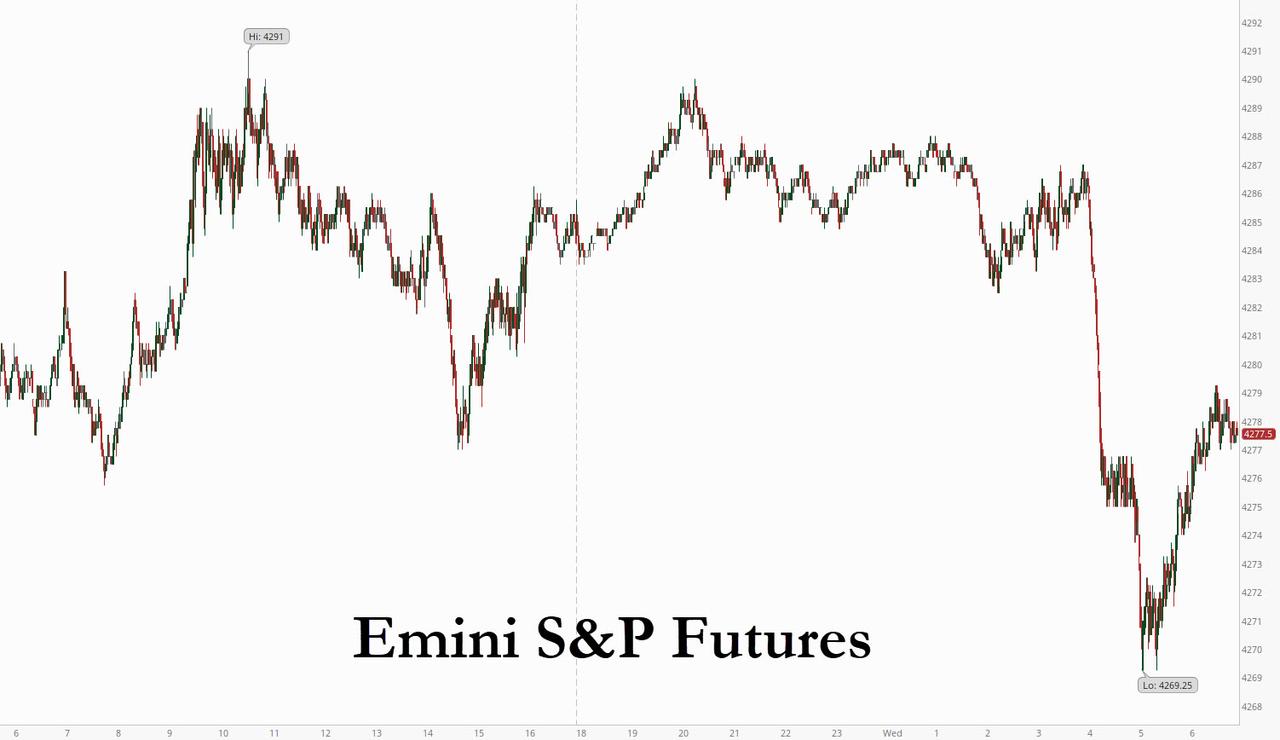
Equity futures are in the red Wednesday morning as Dr. Anthony Fauci’s warnings about the supposedly “dire threat” posed by the Delta variant continue to be dramatically amplified by the American media.

Yesterday, we delved into the issue of the Delta variant as daily COVID cases reported in the US ticked higher after touching their lowest levels since the start of the pandemic. The data set off another round of warnings about the relatively large swath of Americans who refuse to get the vaccine.

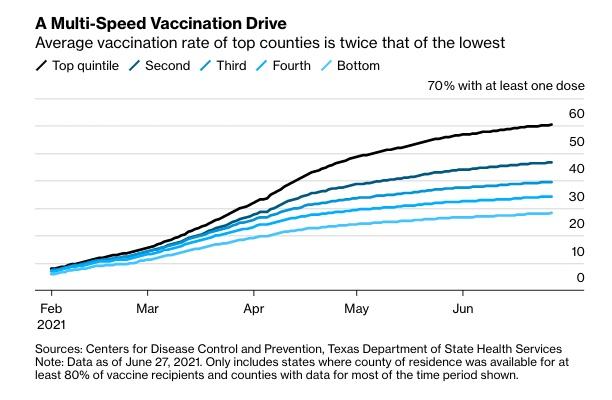
On Wednesday, Bloomberg published the latest in a series of stories effectively re-stating the same facts: the vaccination rate in a handful of deep-red states has substantially lagged the rate in the rest of the country. The lead-in for Wednesday’s story was the fact that the gap between the most- and least-vaccinated states has continued to widen. Though even Bloomberg concedes that “on a national level, the news appears good…the country’s vaccination campaign is among the most successful in the world…”

Source: Bloomberg

One academic quoted in the Bloomberg story, Timothy Callaghan, who studies rural health at Texas A&M, warned that “we’re going to have counties where vaccination is rare and nowhere close to herd immunity, and others where it’s high. We could be headed toward a divided country of haves and have nots.”

They also warned that an analysis last week of COVID cases in 700 counties found that the new delta variant first identified in India (which, according to Bloomberg, is “far more contagious”) has been found more often in less-vaccinated US counties.

But is the Delta variant really “far more contagious” than earlier iterations of SARS-CoV-2?

In a recent piece published by the Blaze, writer Daniel Horowitz explains that the existing data suggests Delta isn’t any deadlier or more infectious than other strains. Horowitz described the warnings from epidemiologists and public health bureaucrats like Dr. Fauci as “panic porn dressed up as science.”

The implication from these headlines is that somehow this variant is truly more transmissible and deadly (as the previous variants were falsely portrayed to be), they escape natural immunity and possibly the vaccine — and therefore, paradoxically, you must get vaccinated and continue doing all the things that failed to work for the other variants!

After each city and country began getting ascribed its own “variant,” I think the panic merchants realized that the masses would catch on to the variant scam, so they decided to rename them Alpha (British), Beta (South African), Gamma (Brazilian), and Delta (Indian), which sounds more like a hierarchy of progression and severity rather than each region simply getting hit when it’s in season until the area reaches herd immunity.

However, if people would actually look at the data, they’d realize that the Delta variant is actually less deadly. These headlines are able to gain momentum only because of the absurd public perception that somehow India got hit worse than the rest of the world. In reality, India has one-seventh the death rate per capita of the U.S.; it’s just that India got the major winter wave later, when the Western countries were largely done with it, thereby giving the illusion that India somehow suffered worse. Now, the public health Nazis are transferring their first big lie about what happened in India back to the Western world.

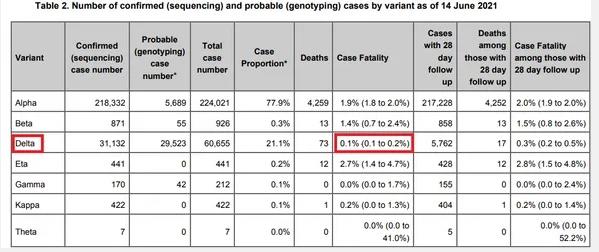
Fortunately, the U.K. government has already exposed these headlines as a lie, for those willing to take notice. On June 18, Public Health England published its 16th report on “SARS-CoV-2 variants of concern and variants under investigation in England,” this time grouping the variants by Greek letters.

As you can see, the Delta variant has a 0.1% case fatality rate (CFR) out of 31,132 Delta sequence infections confirmed by investigators. That is the same rate as the flu and is much lower than the CFR for the ancestral strain or any of the other variants. And as we know, the CFR is always higher than the infection fatality rate (IFR), because many of the mildest and asymptomatic infections go undocumented, while the confirmed cases tend to have a bias toward those who are more evidently symptomatic.

In other words, Delta is literally the flu with a CFR identical to it. This is exactly what every respiratory pandemic has done through history: morphed into more transmissible and less virulent form that forces the other mutations out since you get that one. Nothing about masks, lockdowns, or experimental shots did this. To the extent this really is more transmissible, it’s going to be less deadly, as is the case with the common cold. To the extent that there are areas below the herd immunity threshold (for example, in Scotland and the northwestern parts of the U.K.) they will likely get the Delta variant (until something else supplants it), but fatalities will continue to go down.

According to the above-mentioned report, the Delta variant represented more than 75% of all cases in the U.K. since mid-May. If it really was that deadly, it should have been wreaking havoc over the past few weeks.

You can see almost a perfect inverse relationship between hospitalization rates throughout April and May plummeting as the Delta variant became the dominant strain of the virus in England. Some areas might see a slight oscillation from time to time as herd immunity fills in, regardless of which variant is floating around. However, the death burden is well below that of a flu season and is no longer an epidemic.

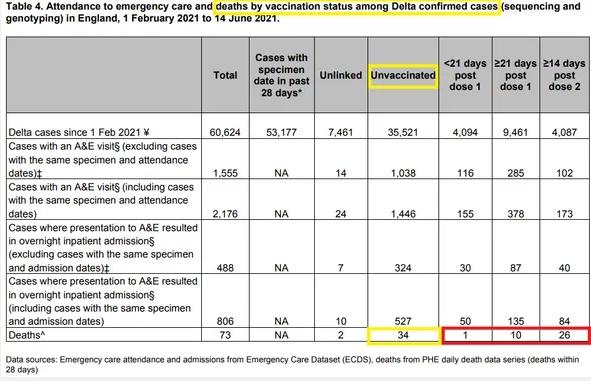
As for vaccines, there is no evidence that somehow they provide better protection than prior infection from any other strain of the virus, nor does the Delta variant justify further use of these experimental shots. If anything, the U.K. data show that, to the extent there were deaths due to the Delta variant, there were more fatalities among those already vaccinated relative to the number of confirmed cases by vaccination status.

Again, the numbers are low across the board and there is no evidence the Delta variant is anything but less deadly for anyone. But there is certainly no evidence that somehow the vaccine is a greater imperative because of this variant. India itself appears to have achieved herd immunity – with the WHO estimating infection rates between 60% and 75% in most places – with one-seventh the death rate of England, but with one-fourth the percentage of people who have receive one dose of the vaccine.

Thus, the good news is that now that most countries have reached a large degree of herd immunity, there is zero threat of hospitals being overrun by any seasonal increase in various areas, no matter the variant. The bad news is that after Delta, there are Epsilon and 19 other letters of the Greek alphabet, which will enable the circuitous cycle of misinformation, fear, panic, and control to continue. And remember, as there is already a “Delta+,” the options are endless until our society finally achieves immunity to COVID panic porn.

That being said, the US isn’t the only country falling victim to the Delta variant hysteria. Reports published Wednesday morning claimed EU leaders including Germany’s Angela Merkel and France’s Emmanuel Macron were planning to hold a call to discuss more potential travel restrictions. It’s increasingly looking like anybody with international travel plans might see them dashed due to Delta paranoia. But there’s a reason why British PM Boris Johnson plans to lift the last remaining restrictions in England on July 19, when the recent extension is set to expire.

But not everybody has been fooled. As we pointed out yesterday, Sen. Rand Paul has been one of the most vocal critics of the “Delta” variant hysteria. In a tweet sent yesterday morning, he urged the public not to let the fearmongers win.

Though judging by the sea of red on Wall Street Wednesday morning, it looks like most haven’t taken his advice.

And don’t forget – like Horowitz pointed out – if this wave of fearmongering fizzles, there are still plenty of other letters in the Greek alphabet that can be used to provoke paranoia.

Tyler Durden
Wed, 06/30/2021 – 07:39

via ZeroHedge News https://ift.tt/3AdJ7s1 Tyler Durden

Michael Pento: How Central Banks Murdered The Markets

Michael Pento: How Central Banks Murdered The Markets

Via Pento Portfolio Strategies,

The Japanese Government Bond market is nearly $10 trillion in size. It is the 2nd biggest bond market in the world. However, it comes as a shock that this humongous market barely trades any longer.

The government of Japan has systematically supplanted and killed the entire private market for its bonds. Meaning, there are almost no private investors who will touch it any more. The Bank of Japan has bought so much debt that it forced interest rates below zero percent back in 2016; and the result is the free market has subsequently died.

Investors are now refusing to buy JGBs, which are guaranteed to lose principal in nominal terms—and deeply negative results after adjusting for inflation. But at the same time, are not in any hurry to sell their existing holdings because they understand the government will be propping up bond prices.

In this same vein, the 5-year greek yield recently turned negative. This is prima facie evidence that centrals banks have committed murder-one when it comes to markets. Back in February of 2012, at the height of the European debt crisis, the Greek 5-year Bond Yield skyrocketed to 63%. The free-market deemed the nation to be insolvent and that it could never pay back its debt without returning to the Drachma; and then turning it into confetti. Hence, bond yields surged—makes perfect sense, correct? Also in 2012, the Greek National debt to GDP ratio was 160%. Today, that ratio has soared to an all-time record high of 210%; and yet, these bonds display a negative cash flow going out 5 years in duration. Only one thing has changed: central banks deemed it mandatory to step in and replace the entire demand for government debt in order to force interest rates towards zero percent. It is the only way these countries would have any semblance of solvency.

Sadly, the U.S. is headed in this exact same direction as Greece and Japan. And, that is why we can be certain central banks’ monetary tightening cycles can’t last for very long and will end in disaster–as per usual. In fact, Mr. Powell will probably torpedo markets before he is able to end his current historic and massive QE program.

If you want to know how fragile markets really are, just look at the 2.5% selloff during the week surrounding Powell’s June FOMC press conference. The fed hasn’t started to end QE yet. In fact, it hasn’t even set a date to start the taper. All the fed’s money printers have done is admit that they have begun to discuss when to think about a time for the start of tapering $120b per month in asset purchases.

Now let’s talk about the gold market because it is related to what this commentary is all about.

We issued a warning on gold back in Sept of 2020 because of what we termed “the vaccine dead zone” was approaching, which would cause real interest rates to soar. That is exactly what occurred. Gold dropped by 20% from August ’20, thru April ‘21. Now the Fed has admitted that it has begun to talk about ending QE. But this is not the start of another bear market in gold. Instead, it is most likely the end of the bear market and the incipient beginnings of a massive bull market. Why? because of what I pointed out at the start of this commentary. The fed can’t remove very much liquidity from the system before chaos reigns on Wall Street.

The simple truth is, asset values and debt levels have grown to become such enormous monstrosities that they prohibit the tightening of monetary policy much at all before the entire fragile and artificial edifice collapses.

Right now, my 20-point Inflation/Deflation and Economic Cycle model indicates there is still some room to run on this bull market. This is what prevents us from panicking out of stocks prematurely, as some are prone to do. However, the time for a massive reconciliation of asset prices is growing close.

Wall Street’s favorite mantra post the Financial Crisis was: either the economy improves enough to boost earnings and the market, or the Fed will keep printing money in order to support stocks and engender a perpetual bull market. Now, as a result of the Fed’s “success” with creating runaway inflation, the exact opposite calculation is now true: either the economy soon slows down significantly enough on its own, which will depress EPS & inflation, or the Fed will tighten monetary policy until inflation is tamed, which will cause asset bubbles to collapse.

Central banks have destroyed price discovery across the board.

As these maniac money printers begin to exit their market manipulations, the free market will demand much lower asset prices.

The challenge for investors is to actively manage your portfolio in order to maintain—or perhaps even increase–your standard of living, in spite of the carnage that is set to occur on Wall Street and Main Street.

*  *  *

Michael Pento is the President and Founder of Pento Portfolio Strategies, produces the weekly podcast called, “The Mid-week Reality Check”  and Author of the book “The Coming Bond Market Collapse.”

Tyler Durden
Wed, 06/30/2021 – 06:30

via ZeroHedge News https://ift.tt/2TckbR7 Tyler Durden

JP Morgan Makes Paris Its Post-Brexit European Trading Headquarters

JP Morgan Makes Paris Its Post-Brexit European Trading Headquarters

JP Morgan has officially moved the company’s trading hub to Europe. 

The move comes as a result of France looking to welcome more investment banking business and as finance workers from London relocate as a result of Brexit.

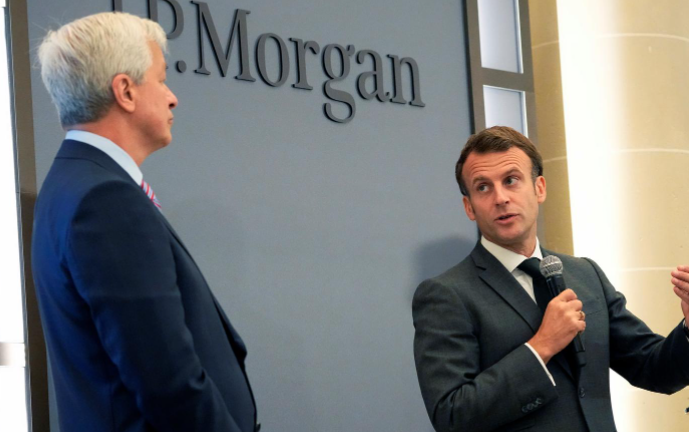
JPMorgan Chase Bank’s main trading center is now located in Paris, according to comments from Chief Executive Officer Jamie Dimon. The inauguration of the new headquarters took place on Tuesday of this week, according to Reuters. French President Emmanuel Macron was also at the ceremony. 

The new headquarters is in a seven story building that’s a “stone’s throw” away from the Louvre museum. “All European trading, which is stocks, bonds, and derivatives will be going through here,” Dimon said at the inauguration. 

The bank had previously said it wanted to employ up to 800 people in Paris by 2022, according to Reuters. 265 of those jobs could come from people who worked in France prior to Brexit, while 440 new trading and sales staff are also expected to join the company before the end of the year. 

The investment bank also has large trading hubs in Amsterdam, Dublin and Frankfurt, the report says. And while some jobs are leaving London, it also still has “firm roots” in the English city. JP Morgan employs about 19,000 people in Britain overall, with 10,000 of those employees in London alone. 

Macron, a former investment banker, is seeking re-election in 2022. 

Tyler Durden
Wed, 06/30/2021 – 05:45

via ZeroHedge News https://ift.tt/3AdrSHj Tyler Durden

Accountancy Watchdog Investigates Auditors For Greensill Capital And Gupta Lender

Accountancy Watchdog Investigates Auditors For Greensill Capital And Gupta Lender

Authored by Lily Zhou via The Epoch Times,

Investigations into the auditors of Greensill Capital and Wyelands Bank have been launched, the UK’s accountancy regulator announced on Monday.

The Financial Reporting Council (FRC) said its Enforcement Division had started an investigation into accounting firm Saffery Champness in relation to its audit of the financial statements of Greensill Capital (UK) Limited for the year ending Dec. 31, 2019, following a decision to investigate on June 15.

Greensill Capital, a supply chain finance company that filed for insolvency protection in March, has faced scrutiny over the roles played by its advisers including former Prime Minister David Cameron in lobbying the government during the CCP (Chinese Communist Party) virus pandemic.

David Cameron leaves his home ahead of giving evidence to the Commons Treasury Committee on Greensill Capital in London on May 13, 2021. (Victoria Jones/PA)

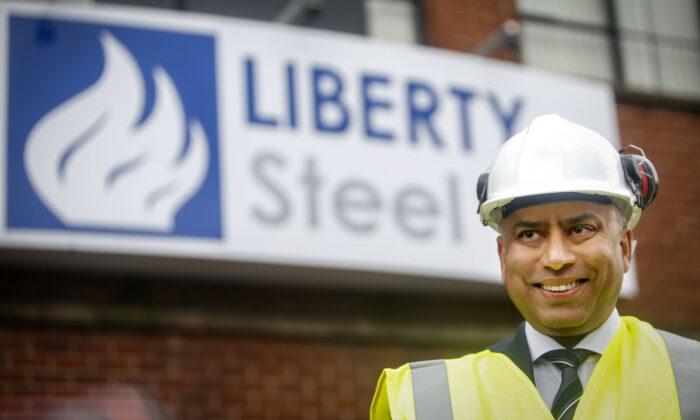
The lender also reportedly funnelled cash from the government’s Coronavirus Large Business Interruption Loan Scheme to companies owned by steel tycoon Sanjeev Gupta, according to the Financial Times.

In a separate announcement, the FRC said it’s investigating PwC in relation to its audit of the consolidated financial statements of Gupta-owned Wyelands Bank for the year ended April 30, 2019.

Wyelands is currently on the verge of collapse after Gupta said he was pulling funding from the bank having handed them a £75 million ($104 million) loan a year earlier.

Chief Executive Stephen Rose has now been authorised to speak with potential new investors in an effort to preserve its future.

The board said that it expects the bank will be “wound up on a solvent basis” if it fails to secure a sale to new backers.

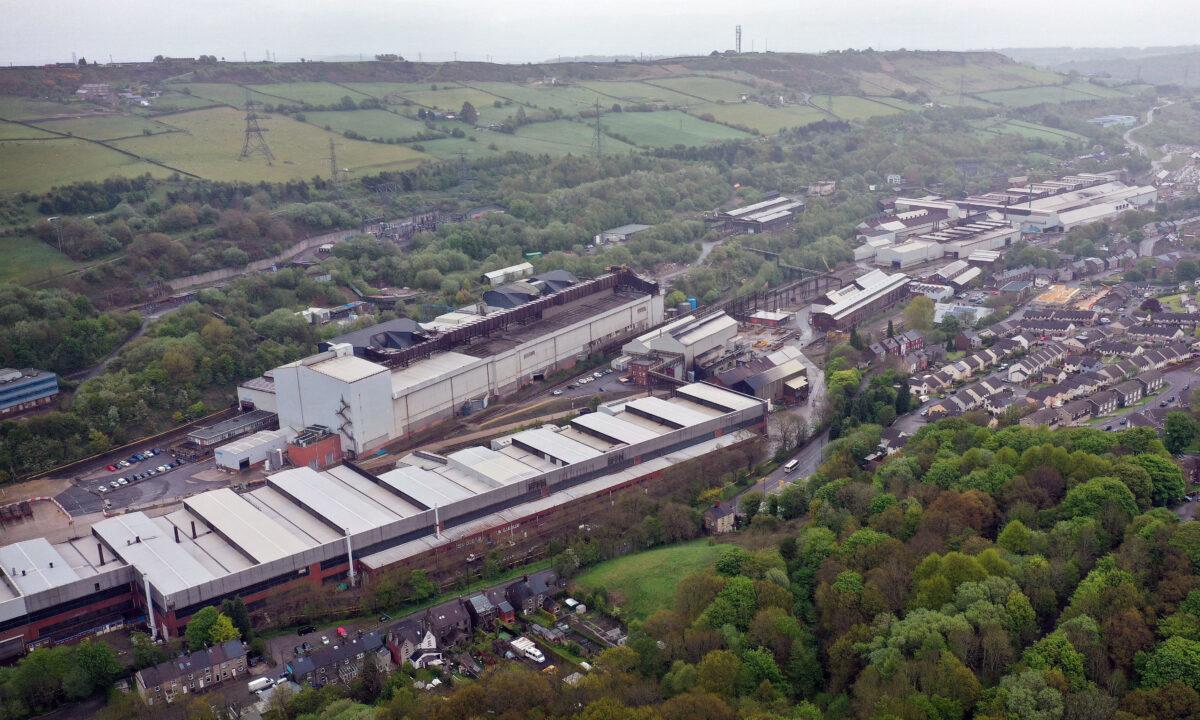
Gupta Family Group Alliance (GFG Alliance) is also looking for a buyer for its Liberty Steel plant in Stockbridge.

An aerial view shows Liberty Steel’s Stocksbridge steel plant in Stocksbridge, northern England, on May 26, 2021. (Paul Ellis/AFP via Getty Images)

The UK’s fraud watchdog in May opened an investigation into GFG Alliance over suspected fraud, fraudulent trading, and money laundering, including its links to Greensill.

A spokesperson for Saffery Champness said:

“As professional accountants we owe a duty of confidentiality to present and former clients and, with this matter the subject of investigation, it would not be appropriate to comment at this time save to say that Saffery Champness will of course be cooperating fully with the FRC.

“Audit quality is an absolute priority for Saffery Champness and we are committed to upholding the high professional standards our clients rightly expect.”

A PwC spokesperson said:

“It’s understandable that there is regulatory scrutiny in situations like this. We will cooperate fully with the FRC in its inquiries. We share the FRC’s commitment to audit quality and are two years into a wide-ranging programme to enhance audit quality across the firm.”

Tyler Durden
Wed, 06/30/2021 – 05:00

via ZeroHedge News https://ift.tt/3joWDmF Tyler Durden

Abu Dhabi Bars Unvaccinated People From Most Public Spaces

Abu Dhabi Bars Unvaccinated People From Most Public Spaces

As paranoia surrounding the “Delta” variant intensifies, inspiring new lockdowns and other measures like the revival of mask orders (in LA, the Department of Public Health just issued a statement asking the public to return to wearing masks indoors when in public) around the world, the emirate of Abu Dhabi has announced that soon people who haven’t been vaccinated will be barred from shopping centers, restaurants, colleges, recreational facilities and other places.

The city’s government said the far-reaching measure – which has been approved by the Emergency, Crisis and Disasters Committee and will take effect on Aug. 20. – will exempt children below the age of 16, and others with an official exemption.

“The committee stated [that] the decision would enhance safety in areas that have been subject to additional precautionary measures and provide enhanced protection for community members,” the Abu Dhabi Government Media Office said in a statement.

The new measures will begin on Aug. 20, giving the tiny emirate more time to inoculate its citizens. Those who haven’t been vaccinated against COVID-19 will not be allowed to enter shopping centers, restaurants, cafes, and all other retail outlets, including those which are not part of a shopping center, except supermarkets and pharmacies.

They will also be barred from gyms, recreational facilities, health clubs, resorts, museums, cultural centers, theme parks, universities, institutes, public and private schools, and nurseries.

Put another way, if you live in Abu Dhabi, and you ever want to leave your home again, you will need to accept the vaccine. To ensure adequate supplies, the emirate announced last week that it would ban foreigners from being vaccinated in the country (wealthy individuals from around the region have apparently been traveling to the emirate to get the vaccine).

The UAE has the highest vaccination rate in the world, boasting a rate of 154 doses administered per 100 people.

It also has recorded more than 607K coronavirus cases and 1,802 deaths since the start of the pandemic.

More than 2K new cases were reported on Monday, along with six new deaths.

Tyler Durden
Wed, 06/30/2021 – 04:15

via ZeroHedge News https://ift.tt/3dsqZks Tyler Durden

The Brutal Truths About UK Housing

The Brutal Truths About UK Housing

Authored by Bill Blain via MorningPorridge.com,

“Never live more than 15 minutes away from a pizza shop.”

The UK housing market is red-hot, up 13.4% over the last year. But its fuelled on stamp-duty holidays and ultra-low rates. Will it hurt? If so… how much?

I was going to write about giga-factories, lithium mining and other dinosauric investment myths this morning, but the first thing that caught my ear this morning was a very earnest young economist from some bank in the City commenting on the 13.4 % annualised rise in UK Housing Prices. He was asked to explain why, during the worst economic shock in 300 years (the Pandemic, in case anyone has forgotten), house prices were on the up he went into  behavioural analysis about couples reassessing work/life balance, deciding to upsize, moving out the conurbations, etc.

Twaddle.

Utter Twaddle. Famously, economists will never agree on anything. Put three of them in a box and expect 4 different theories on box economics.

Suffice to say, I disagree with the young man. The reason UK house prices have risen is largely a matter of distortions; over the last 12 months its been the stamp duty holiday, but longer term the absurd level of interest rates – a distorted monetary phenomenon – has been a massive factor driving the asset inflation of the housing stock.

Sure, there will be an element of the self-satisfied middle classes and company directors deciding to monetise their rising pension pots, stock portfolios, and bonuses (which rose on the back of stock buybacks). All these gains are consequences of low interest rates creating financial asset inflation. It has encouraged these fortunate holders of financial assets to scale up – explaining why it takes about 7.3 microseconds for a second home in Rock to sell.

Upper-end homes are a good example of how financial asset inflation has migrated into the real economy.

But for everyone else… there is reality.

First up, it’s a ridiculous notion to think the UK population could collectively decide to all upscale their housing simultaneously. The UK is short of housing stock. Each band of stock is limited. Its famously a ladder: to find the right home requires that home to be on sale, and to be able to sell your current home. If the middle classes all collectively decided to move to a new house with 1 more bedroom and a nice view, it would just not be possible.

(She-who-is-Mrs-Blain have thought long about the home we really want – close to the sea, an airport and train station to London, fantastic views, easy maintenance small garden but plenty of outdoor entertainment space, lock-up-and-go…etc. After 12 years we gave up looking, concluded it did not exist anywhere, and built it for ourselves. It should be finished in the next few weeks.)

Which leads to the question of who steps into buy the houses for sale as people climb the ladder?

UK property has not been this unaffordable for over 140 years. The average UK house price is now £245,432. With a £12,500 5% deposit, that would require a £60k salary to afford an optimistic 4x multiple mortgage. The average UK salary is £38,600, but median earnings are only £30k, meaning… even the average UK house is at least double the price most people in the country can possibly afford.  At 8 times earnings, the UK home market is apparently at its most unaffordable level since the 1880s! (There are a few times the number shows spikes above 8 times – but let’s not quibble.)

The sheer unaffordability sounds shocking, but home ownership is a comparatively recent thing – giving prominence by the Thatcherite privatisation of the public owned rental stock of council homes. I would argue the “blessed” Margaret Thatcher (“Milk Snatcher” as I recall Grandad branding her), is as responsible as anyone for the Global Financial Crisis of 2007-2031 after she encouraged everyone to load up on mortgage debt to buy their own home. Previously we were a nation of renters – making rentiers rich! Today, private-sector renters now outnumber social renters.

Of course, most people who own a house quickly build up significant “equity” embedded in their current home – especially when prices rise 13% per annum! The total value of the housing stock is around £7.6 trillion. Total outstanding UK residential mortgages are around £1.5 trillion – meaning there is a notional £6 trillion of housing equity.

Historical data shows any corrections in UK housing stock prices are usually quickly reversed – usually within 24 months. That £6 trillion of equity is, probably, literally safe as houses; supported by the massive demand for UK housing from those on the ladder, those trying to climb on, and by other buyers; overseas owners seeking to own assets in the politically stable UK, and buy financial asset buyers, owning housing to rent to generate returns.

It’s a pretty safe asset class – but despite the 13% gains this year, over the long-term, equity markets will typically outperform the housing market. Which is why I don’t own rental property – but do invest in property companies.

However, let me go back to my original comment – UK housing stock and prices are distorted by low interest rates, government distortions and other factors, rather than social nonsense like couples around the country deciding to go find nicer schools in the country.

The reality is when interest rates are artificially low, you’d be mad not to abuse them to acquire assets on leverage. That’s what driven stocks higher, ultra-low bond yields forcing investors to take more and more risks in other markets markets, including equities to generate returns.

Ultra-low mortgage rates (where available) encourage home-buyers to overleverage. This where the real behavioural science comes in. When an convenient excuse, like the pandemic, occurs, that has the effect of reinforcing what you want, then it suddenly becomes much easier for the home-buyer to justify to degree of overleverage they are taking on.

Think about it – what’s not to favour buying a bigger home when the devil is whispering in your ear: “You will be working from home for years”, “Interest rates will remain low for ever”, “The pandemic won’t kill your job”, “The kids will love the new school..” Etc, etc, etc..

It’s just another variation on the old theme: “The [housing] market has but one objective; to inflict the maximum amount of pain on the maximum number of participants…”

This time next year you will probably find yourself catching the least reliable 2 hour train service in the World to London each day, your partner hates you because they have to drive the kids to school each day because the local council cut bus subsidies, and your dream house is being eaten by woodworm and you can’t extend it because a newt was spotted in the dried up pond 12 years ago…

Welcome to reality…

*  *  *

Stay Updated Free Bronze subscription allows unlimited blog access, email notification and weekly round up

Tyler Durden
Wed, 06/30/2021 – 03:30

via ZeroHedge News https://ift.tt/3AdCpSL Tyler Durden

CO2 Emissions For Vehicles In EU, Iceland And Norway Fall Most In Ten Years

CO2 Emissions For Vehicles In EU, Iceland And Norway Fall Most In Ten Years

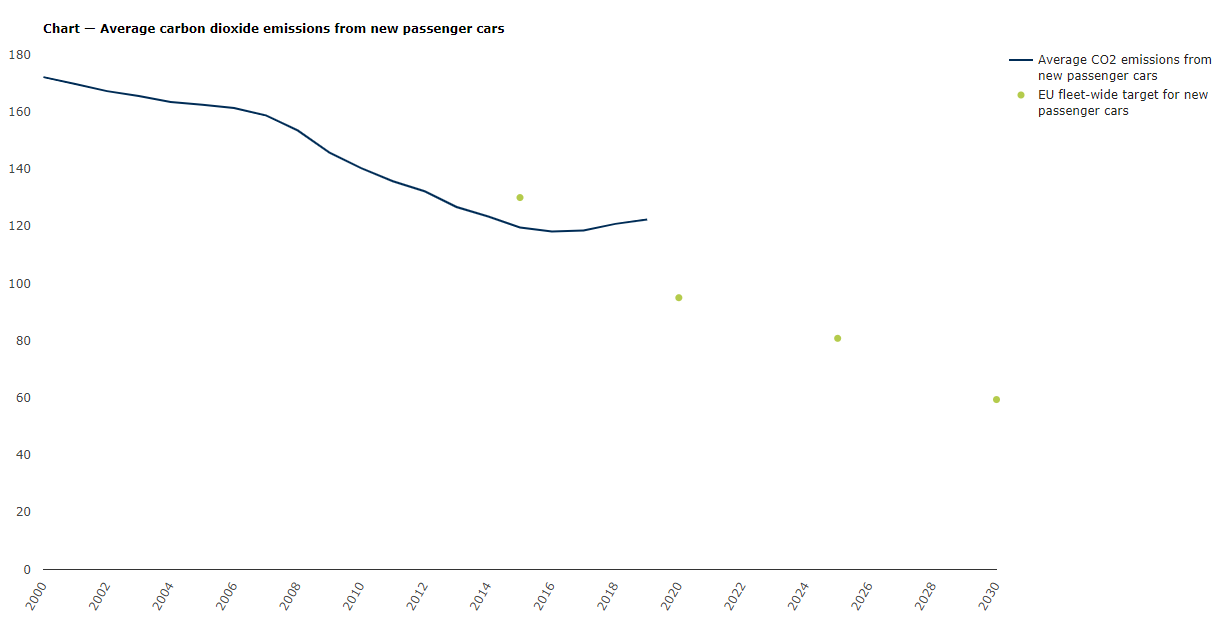
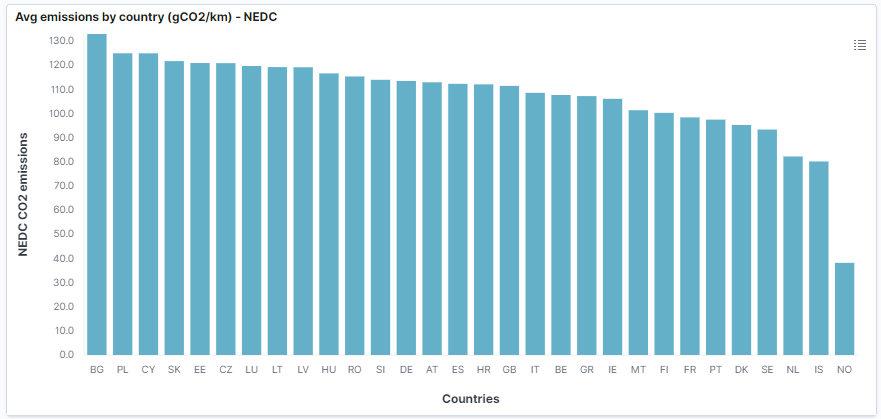
The average total emissions for new passenger vehicles registered in the EU, Iceland, Norway and the U.K. fell the steepest in ten years in 2020, according to new data provided by the European Environment Agency.

Total emissions decreased by 14.5g of CO2/km during the year, Bloomberg reported Tuesday.

The decline was attributed mostly to a “surge” in the share of plug-in hybrid and fully EV vehicle registrations, which tripled to 11% from 3.5% in 2019. The agency says that despite electric cars rising in prominence, that only “limited” progress was made in electrifying vans. 

This followed data out in 2019 which showed that car emissions had increased for the third consecutive year. In 2019, average emissions of new passenger cars registered in the European Union, Iceland, Norway and the United Kingdom (UK) were 122.3 g CO2/km, according to the European Environmental Agency

The agency said that according to its provisional data, average emissions of new passenger cars registered in 2020 were 107.8 grams of CO2/km.

Recall, we wrote back in early June that one firm, natural resource investors Goehring & Rozencwajg (G&R), a “fundamental research firm focused exclusively on contrarian natural resource investments with a team with over 30 years of dedicated resource experience,” was making the argument that EVs only offered a negligible CO2 different from ICE vehicles. 

The firm, established in 2015, posted a blog entry entitled “Exploring Lithium-ion Electric Vehicles’ Carbon Footprint” last month, where they called into question a former ICE vs. EV comparison performed by the Wall Street Journal and, while citing work performed by Jefferies, argued that there could literally be “no reduction in CO2 output” in some EV vs. ICE comparisons. 

The argument could be moot, however, as most auto manufacturers – like Audi, for instance, have already committed to phasing out all ICE vehicles in coming years.

Tyler Durden
Wed, 06/30/2021 – 02:45

via ZeroHedge News https://ift.tt/2TiEEn6 Tyler Durden

Escobar: A Sea Painted NATO Black

Escobar: A Sea Painted NATO Black

Authored by Pepe Escobar via The Asia Times,

US seeks to revamp post-WWI concept of Baltic-Black Sea Intermarium as a Cold War 2.0 iron wall against Russia…

Welcome to the latest NATO show: Sea Breeze starts today and goes all the way to July 23. The co-hosts are the US Sixth Fleet and the Ukrainian Navy. The main protagonist is Standing NATO Maritime Group 2.

The show, in NATOspeak, is just an innocent display of “strenghtening deterrence and defense”. NATO spin tells us the exercise is “growing in popularity” and now features more than 30 nations “from six continents” deploying 5,000 troops, 32 ships, 40 aircraft and “18 special operations and dive teams”. All committed to implement and improve that magical NATO concept: “interoperability”.

Now let’s clear the fog and get to the heart of the matter. NATO is projecting the impression that it’s taking over selected stretches of the Black Sea in the name of “peace”. NATO’s supreme articles of faith, reiterated in its latest summit, are “Russia’s illegal annexation of Crimea” and “support for Ukraine sovereignty”.

So for NATO, Russia is an enemy of “peace”. Everything else is hybrid war fog.

NATO not only “does not and will not recognize Russia’s illegal and illegitimate annexation of Crimea” but also denounces its “temporary occupation”. This script, redacted in Washington, is recited by Kiev and virtually the whole EU.

NATO bills itself as committed to “transatlantic unity”. Geography tells us the Black Sea has not been annexed to the Atlantic. But that’s no impediment for NATO’s goodwill – which the record shows turned Libya, in northern Africa, into a wasteland run by militias. As for the intersection of Central and South Asia, NATO’s collective behind was unceremoniously kicked by a bunch of ragged Pashtuns with counterfeit Kalashnikovs.

Meet the Bucharest 9

The White House defines its NATO eastern flank allies as the Bucharest 9.

The Bucharest 9 includes the members of the Visegrad Four (Czech Republic, Hungary, Poland and Slovakia); the Baltic trio (Estonia, Latvia and Lithuania); and two Black Sea neighbors (Bulgaria and Romania). No Ukraine – at least not yet.

When the White House refers to “strengthening transatlantic relations”, this means above all “closer cooperation with our nine Allies in Central Europe and the Baltic and Black Sea regions on the full range of challenges.” Translation: “full range of challenges” means Russia.

So welcome to the return, in style, of the Intermarium – as in “between the seas”, mostly the Baltic and Black, with the Adriatic as a side show.

After WWI, the drive for what would possibly become a geopolitical entente included the three Baltics, Yugoslavia, Czechoslovakia, Hungary, Romania, Belarus and Ukraine. That concoction was made in Poland.

Now, under the hegemon and its NATO weaponized arm, a revamped Baltic-Black Sea intermarium is being pushed as the new Cold War 2.0 Iron Wall against Russia. That’s why the definitive incorporation of Ukraine to NATO is so important for Washington – as it would solidify the intermarium for good.

Double O Seven does Monty Python

The prequel to Sea Breeze took place last week, via a farcical Britannia Rules The Waves stunt enacted like a Monty Python sketch – yet with potentially explosive overtones.

Imagine waiting at a bus stop somewhere in Kent and finding a soggy blob – nearly 50 pages – of secret documents in a trash bin detailing Ministry of Defense elaborations on the explicitly provocative deployment of the Defender destroyer off Sebastopol, in the Crimean coast.

Even a BBC journalist embedded with the destroyer smashed the official London spin that this was a mere “innocent passage”. Moreover, the Defender weapons were fully loaded – as it advanced two nautical miles inside Russian waters. Moscow released a video documenting the stunt.

It gets better. The soggy blob found in Kent revealed not only discussions about the possible Russian reaction to the “innocent passage”, but also digressions about the Brits, “encouraged” by the Americans, leaving commandos behind in Afghanistan after the troop pull out next 9/11.

That would qualify as extra evidence that the Anglo-American-NATO combo will not really “leave” Afghanistan.

A vague “member of the public” contacted the BBC when he innocently found the geopolitically radioactive materials. No one knows whether this was a leak, a trap or a silly mistake. If the “member of the public” were a true whistleblower he would have gone the Wikileaks way, not BBC.

The “innocent passage” happened only hours after London signed a deal with Kiev for the “enhancement of Ukrainian naval capabilities”.

On the Russian reaction front, Foreign Ministry spokeswoman Maria Zakharova summed it all up: “London has demonstrated yet another provocative action followed by a bunch of lies to cover it up. 007 agents are not what they used to be.”

Meanwhile, in the Mediterranean front, which NATO considers its Mare Nostrum, two Russian Mig-31k fighters – capable of carrying Khinzal hypersonic missiles – were redeployed last week to Syria. The Khinzal range encompasses the whole Mediterranean, west as well as east.

Across the Global South, NATO promoting “global peace” in the port of Odessa, in the Black Sea, is bound to evoke shades of Libya cum Afghanistan. Austin Powers, self-billed Agent Double Oh! Behave! would perfectly fit in the Kent trash bin “secret documents” caper. “Oh. Behave!” totally applies to Sea Breeze. Otherwise, the opportunity might arise to say hello to Mr. Kinzhal.

Tyler Durden
Wed, 06/30/2021 – 02:00

via ZeroHedge News https://ift.tt/3y9T0oW Tyler Durden