Get Ready For Food Rationing

Get Ready For Food Rationing

Authored by Jeffrey Tucker via DailyReckoning.com,

It was a very strange moment when this week the spokesperson for the president defended inflation as a high-class problem. She explained that higher prices are merely a sign that economic activity is picking up. People are buying things and that’s good. Of course that pushes up prices, she said. Just deal with it.

At this point, the White House will say anything. Truth, facts, morality – these things matter less and less in current-day America. Your misery is an illusion. Losing your job because you don’t want the jab? Hey, that is the price you pay for noncompliance. Expect no sympathy from anyone in charge.

The Great Rationing

It must have been this flippant dismissal that caused me to go over the top. I wrote that hyperinflation could lead not only to implicit price controls, but also to rationing. Eventually, we could see the government issuing food tickets into bank accounts that allow us only a certain amount of food for the week. One chicken. One pound of hamburger heat. Five rolls of toilet paper.

I wrote that with a worry that I might be going too far here with speculation. This is America, after all, and we don’t do things this way. And yet in the old America we didn’t close churches for Easter, or skip Christmas for fear of a virus. And so on. Yet we know now that in fact we do these things, and easily.

Fear makes anything possible.

And so right on cue — things are moving very fast these days — The Washington Post has published an article by one of its regular contributors (Micheline Maynard) with one message:

GET USED TO IT!

She says that we have come to expect too much for the economy. Ever since 1911, she says, we’ve been obsessed with getting stuff and getting it fast. That’s dumb, she says. Deprivation is not only the new normal; it’s the way things should be.

“Across the country, Americans’ expectations of speedy service and easy access to consumer products have been crushed like a Styrofoam container in a trash compactor,” she writes.

“Time for some new, more realistic expectations.”

For example, she writes of the candy shortage. The milk shortage. The everything shortage. Then she concludes: “Rather than living constantly on the verge of throwing a fit, and risking taking it out on overwhelmed servers, struggling shop owners or late-arriving delivery people, we’d do ourselves a favor by consciously lowering expectations.”

How bad can it get? She saves the best for the very end:

“American consumers might have been spoiled, but generations of them have also dealt with shortages of some kind — gasoline in the 1970s, food rationing in the 1940s, housing in the 1920s, when cities such as Detroit were booming. Now it’s our turn to make adjustments.”

You might read that again. She is defending gas lines. More astonishingly, she is going on about the glorious suffering of wartime, when food was rationed with rationing tickets! You cannot make this stuff up.

What’s worse, that The Washington Post published it reveals something about what they imagine could be our future. And by future I don’t mean distant future. I mean next year.

No One Is Safe

You will notice the growing tribalization of everything and everyone in the last 20 months. People are retreating to what is safe and known, their own kind. Their neighborhood. Their closest friends. Their families. Even those are strained, but that is all we have. The old world of integration and heterogeneity is shattered, commercial culture is dead in large parts of the country and fear and depression are taking over as the dominant emotions.

I write that and my friends in Texas, Florida and South Dakota say: “I have no idea what you are talking about. Life around here is normal. Concerts are packed. Restaurants are busy. No one is wearing masks. We are so over this!”

I’m happy for them. Truly. But there’s a problem. Many problems. We all share the same monetary unit. Supply chains are connected all over the country, and the world. Every state relies on goods from every other state. We are long past autarky. We can feel like we are safe, but we are not.

Hyperinflation will affect everyone without exception. If North Carolina can’t get milk and chicken, neither can Florida and New Mexico. The deprivation will be shared. A good example is the car shortage. Texas was not spared simply because the state has a relatively halfway decent governor who finally got wise, too late, but he finally got there. Still the car lots are empty.

It’s the same with many things. We all use the same dollar. Its destruction will hit South Dakota the same as it hits California. There will be no safe space.

Many people moved to get away from despotism during this last year. They thought they were safe. They are not. Yes, life for now is better in Miami than Chicago but when the crisis hits, it will not spare red states with reasonable governors just because the people there have not been part of the insanity for a long time. They will still pay the price.

The Great Deprivation

In the past when things went wrong, at least our leaders admitted that things were not going so well. They tried to fix the problem. It’s not clear that our current leadership in Washington even believes it is a problem. The response toward existing inflation is telling. They think it’s all fine.

Gas lines? Fine: Just switch to electric. No heating oil or it is unaffordable? That’s all the better for solving climate change.

No bags in the stores? Just bring your own. No meat? Eat veggie burgers. And so on.

These people are part of a cult. They do not oppose poverty. They think it’s about time we experienced it. Poverty is good for us. Deprivation is plenty. Inflation is prosperity. Empty shelves are a reset to the way things should be.

These are people for whom socialism was not a failure but a triumph in which people learned to become a new form of community through suffering. In fact, they are pro-suffering. It’s a new form of leftist ideology that has gained steam for decades. Now they are in charge. They get perverse pleasure out of the whole scene.

It doesn’t matter how bad it gets. Our leaders will never admit failure. They will look at the disaster they are creating and call it success. This is what is truly chilling about the unfolding crisis: They do not believe it is a crisis. They think this is a reset to the way things should work.

Tyler Durden
Wed, 11/03/2021 – 19:40

via ZeroHedge News https://ift.tt/2ZOtY37 Tyler Durden

Mysterious “Jet Pack Man” Could Actually Be A Balloon

Mysterious “Jet Pack Man” Could Actually Be A Balloon

The mystery of the “Jet Pack Man” sightings over Los Angeles may finally have been identified as an object that doesn’t require engines, fuel, or high-tech alien technology but rather a simple ballon. 

One working theory is that pilots might have seen balloons,” the FBI and FAA said in statements after NBC Los Angeles published images and a video taken by a Los Angeles Police Department helicopter that appear to show a human-shaped inflatable toy, or what resembled Jack Skellington – the main character in Tim Burton’s 1993 movie “A Nightmare Before Christmas” – ballon, flying thousands of feet above Beverly Hills. 

Government officials told NBC Los Angeles that the single balloon sighting could’ve been from a Halloween display. However, it’s becoming more plausible that sightings of a jet pack are likely to be balloons that had drifted near LAX. 

Here are the three sightings of jet pack man last year:

Retired airline pilot and aviation consultant Ross Aimer told NBC Los Angeles that balloons seem to be more in line with what pilots have reported over the last year. 

“There’s a very good possibility the previous ones were also balloons and pilots mistook them as jetpacks,” Aimer said. “This is a better explanation to the aviation community and to me.”

Still, there’s no confirmation on previous sightings, but the working theory now appears to show balloons instead of jet packs. Now it’s time for authorities to request information on Amazon customers in the LA area who purchased human-sized balloons to find possible leads. 

Tyler Durden
Wed, 11/03/2021 – 19:20

via ZeroHedge News https://ift.tt/3bC9JI2 Tyler Durden

COP26: Trudeau’s Heightened Climate Demands On Oil & Gas Sparks Criticism Back Home

COP26: Trudeau’s Heightened Climate Demands On Oil & Gas Sparks Criticism Back Home

Authored by Rahul Vaidyanath via The Epoch Times,

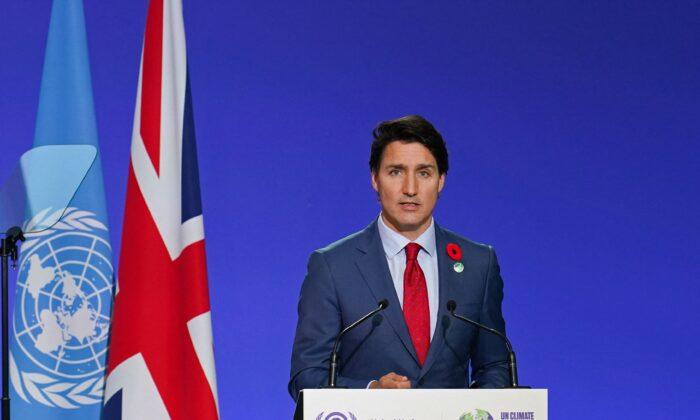
In the lead-up to COP26, the G20 was not as downbeat on oil and gas as it could have been, but Canada’s Prime Minister Justin Trudeau stood apart by ramping up talk on fighting emissions. Back home, however, his words caused some consternation for the industry that is already working toward net-zero 2050. The leader’s pledges also appear to have had no effect on some of the world’s biggest polluters.

The G20, which met in Rome on Oct. 30–31, did not commit to achieving net zero by 2050. The time frame proposed was “by or around mid-century.” Carbon-intensive countries like China, Russia, and Saudi Arabia have indicated they would aim to achieve carbon neutrality by 2060. China and Russia were not in attendance at COP26.

The G20 did not take further action to phase out fossil fuel subsidies. 

Amid an energy crisis and surge in inflation, the current demand for oil and natural gas is unmistakable. U.S. President Joe Biden had previously urged the Organization of the Petroleum Exporting Countries (OPEC) to increase production. In the push toward net-zero 2050, the International Energy Agency forecasted OPEC’s share of a much smaller global supply of oil to expand.

But Trudeau increased the pressure on Canada’s energy sector with talk of a hard cap. 

“Today, Canada moves to cap oil and gas sector emissions and ensure they decline at a pace and scale needed to achieve net-zero by 2050,” Trudeau tweeted on Nov. 1 at COP26, which runs from Oct. 31 to Nov. 12 in Glasgow, Scotland. The United Nations COP (Conference of the Parties) is the world’s highest-profile climate conference, since the Paris Agreement—a legally binding international treaty on climate change—was reached at COP21 in 2015. 

Alberta’s environment and parks minister Jason Nixon told BNN Bloomberg that the feds haven’t invested nearly enough to achieve their emission reduction goals.

“The prime minister seems to go on a regular basis and set targets but doesn’t really invest to make sure those targets will come forward,” he said.

“Their investment does not meet their ambition.”

China is the world’s top carbon emitter, producing 28 percent of global greenhouse gas (GHG) emissions, with 60 percent of its electricity coming from coal. But it is not making additional efforts to cut back on emissions. Meanwhile, Canada is responsible for less than 2 percent of GHG globally.

G20 leaders “took only baby steps” on environmental issues, said John Kirton, director of the G20 Research Group at the University of Toronto, in his Oct. 31 analysis of the Rome summit.

He noted that the G20 did “very little else” other than giving serious attention to natural carbon sinks and detailing emission sources.

Big Questions Remain

The feds issued a statement on Nov. 1 saying that “Canada is the first major oil-producing country moving to capping and reducing pollution from the oil and gas sector to net zero by 2050.”

The Canadian government will set five-year national emission reduction targets—as mandated by Bill C-12, passed in June—and also “ensure that the sector makes a meaningful contribution to meeting Canada’s 2030 climate goals.” The feds will seek the advice of the Net-Zero Advisory Body on how to best move forward on this approach.

Conservative MP Pierre Poilievre, shadow minister for jobs and industry, tweeted, “Will Trudeau’s cap on oil & gas apply to the dirty dictatorships from which we import or just to Made-in-Canada energy? Asking for several hundred thousand workers.”

To transition to a lower-carbon economy, many questions remain unanswered in Canada and globally relating to investment, carbon pricing, and employment. The expectation—and for some, hope—is that COP26 will tackle the fine print as environmental groups argue not enough is being done quickly while society’s energy demands grow and the livelihoods of thousands hang in the balance. 

“It will be incredibly important for the federal government and the natural gas and oil industry to work collaboratively to ensure we meet our environmental and social outcomes. To achieve the ambitions of the Paris Agreement the world will need increased access to lower emission natural gas and oil,” said Tim McMillan, president & CEO of the Canadian Association of Petroleum Producers (CAPP), in a statement. 

“Canada, under the right policy environment, can position ourselves as a preferred global supplier, creating jobs and prosperity for Canadians and helping to lower global greenhouse gas emissions,” McMillan said.

Alberta on Nov. 1 announced an investment of $176 million to reduce GHG emissions through 16 clean-energy projects. The initiatives are expected to cut about 7 million tonnes of emissions annually by 2030.

Tyler Durden
Wed, 11/03/2021 – 19:00

via ZeroHedge News https://ift.tt/3nUb4zG Tyler Durden

China Facing “Downward Pressure”, Premier Warns

China Facing “Downward Pressure”, Premier Warns

With the Fed supposedly telegraphing that the US economy is strong enough to withstand a modest decline in the monthly QE, China is headed in the other direction, and overnight Premier Li Keqiang said the economy faces new downward pressures and “has to cut taxes and fees to address the problems faced by small and medium-sized companies.”

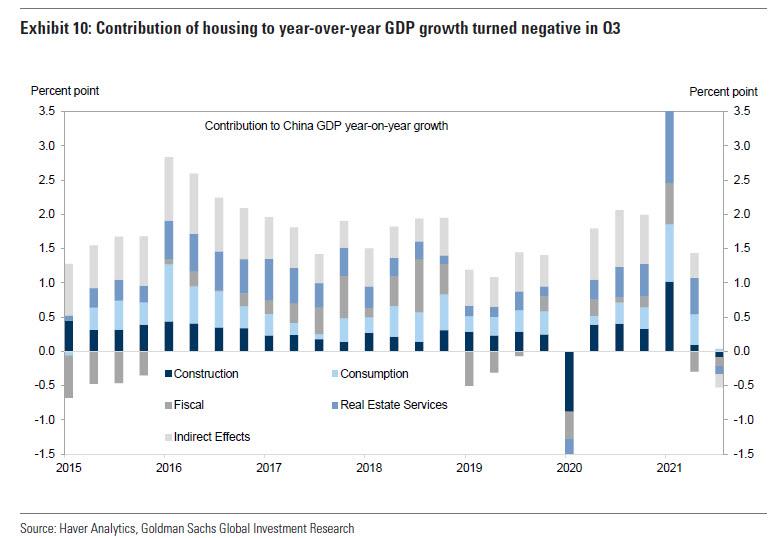
While Li did not specify the extent of the new “downward pressure” or its cause, but as Bloomberg notes, the phrase is used by Chinese officials to refer to a slowing economy, which it clearly is in China as the following chart shows; he has used the phrase before, including several times in 2019.

The economy needs “cross-cyclical adjustments” to continue in a proper range, Li said during a visit to China’s top market regulator, state broadcaster CCTV reported. That phrase is associated with a more conservative fiscal and monetary approach that focuses more on the long-term outlook instead of immediate economic performance.

While Li didn’t say anything we didn’t already know (just last week Goldman cut China’s 2022 GDP forecast to just 5.2%) the premier’s admission was surprisingly candid as Beijing has traditionally been coy about revealing economic weakness. China’s economy has been slowing in recent months due to Beijing’s push to slow growth in the real-estate sector.

Li called for the creation of a better business environment through equal treatment of all types of companies and better market oversight, mentioning efforts to combat monopolies, unfair competition and hoarding. A statement from China’s government urging local authorities to ensure there was adequate food supply during the winter and encouraging people to stock up on some essentials prompted a “panic buying” scramble on Tuesday as locals rushed to hoard whatever they could, with the Ministry of Commerce later trying to calm concerns.

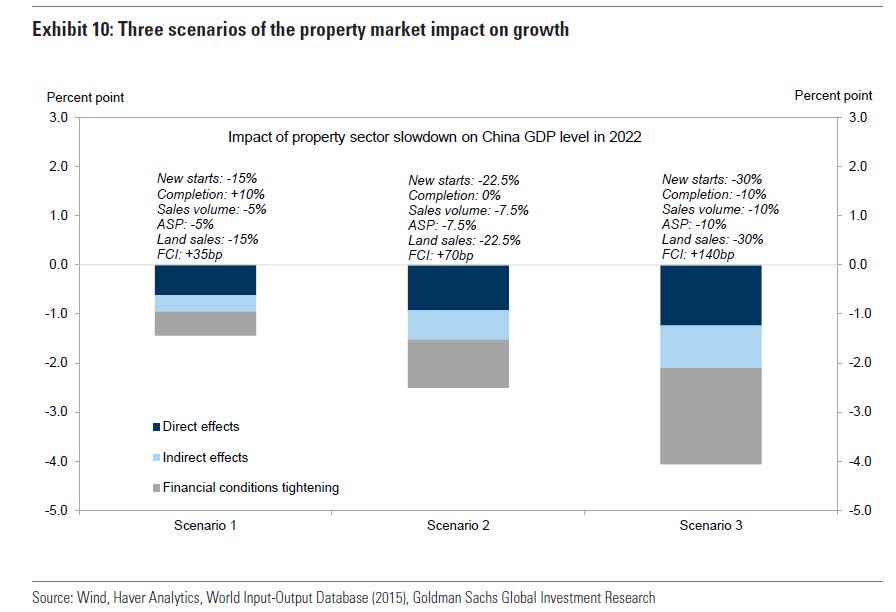
Li’s remarks came after further signs of weakness in October due to power shortages which weighed on manufacturing, and strict coronavirus controls which put a brake on holiday spending; meanwhile the unprecedented collapse in China’s housing sector is getting worse by the day (as discussed just last night in “China Junk Bond Yields Hit All Time High As Property Default Contagion Spreads, Home Sales Plunge 32%”) and the only question is how much of a hit to China’s GDP will it be. As a reminder, a little over a month ago, Goldman laid out three scenarios that saw the adverse impact on China’s GDP anywhere between 1.4% and 4.1%.

“There are no obvious growth drivers now, so the government is looking for one,” said Bruce Pang, head of macro and strategy research at China Renaissance Securities Hong Kong Ltd. “Small businesses’ investment can provide a source of healthier, longer-term growth, compared with government or property investment.”

According to Peng, in the absence of a broad-based bazooka rate cut, authorities will encourage banks to lend more to small businesses, further reduce taxes and fees for them, and look to simplify administrative procedures to encourage more entrepreneurs.
The official manufacturing purchasing managers’ index fell to 49.2, the National Bureau of Statistics said Sunday, the second month it was below the key 50-mark that signals a contraction in production.

Several investment banks have lowered their forecasts for China’s 2021 growth to below 8% in recent weeks. However, former Chinese central bank adviser Huang Yiping told Bloomberg News Tuesday that while China’s economy will slow further over the next few months, annual growth of around 8% is achievable.

Tyler Durden
Wed, 11/03/2021 – 18:40

via ZeroHedge News https://ift.tt/3bBaoJX Tyler Durden

Florida Homeowner Fined For Hanging Trump And “Let’s Go Brandon” Banners On His Own Home

Florida Homeowner Fined For Hanging Trump And “Let’s Go Brandon” Banners On His Own Home

Authored by Jonathan Turley,

There is an interesting constitutional fight brewing in Florida.

I have a column out today on the “Let’s Go, Brandon” movement.

Marvin Peavy is part of that movement and displayed a banner with the chant (with a pro Trump banner) from his home in Seagrove Beach, Florida.

Hanging from Peavy’s home is a banner proclaiming “Trump Won” and another proclaiming “Let’s Go Brandon.”  The latter chant is a euphemism for “F— Joe Biden.”

“I’m here on the beach, and I got a lot of traffic, and people needed to see what I believe in,” Peavy said.

“That’s free speech, and I wanted everyone to know that I’m a republican and I’m supporting Donald Trump.”

He is now facing a $50 a day fine for violating an ordinance against such banners.

He has pledged to continue to fight the enforcement.

The question is whether the ordinance is constitutional.

The code states that following signs are “the prohibited in the Route 30-A Scenic Corridor”:

B. Prohibited signs. In addition to the signs prohibited in Section 6.03.00, the following signs shall be prohibited in the Route 30-A Scenic Corridor:

1. Permanent off-premise outdoor advertising signs (an off-premise sign is any sign located on property other than that to which the sign relates);

2. Pole signs;

3. Water towers as commercial advertising;

4. Wall murals as commercial advertising;

5. Off-premise signs;

6. Temporary mobile or portable signs;

7. Interior lit single panel plastic or Lexan face;

8. Streamers, feather flags, pennants, ribbons, spinners and other similar devices;

9. Flashing signs;

10. Signs containing reflective elements that sparkle or twinkle in the sunlight;

11. Roof signs;

12. Signs containing moving parts.

The law is notably neutral on content. That is a key distinction given prior Supreme Court rulings like Reed v Town of Gilbert.  In that case, the court ruled unanimously that an Arizona ordinance was unconstitutional. Under the ordinance, “ideological signs” and “political signs” were subject to different limitations.

Writing for the Court in Reed, Justice Clarence Thomas stressed that “[g]overnment regulation of speech is content based if a law applies to particular speech because of the topic discussed or the idea or message expressed.”

The content-based regulation triggered “strict scrutiny” analysis requiring that the government must demonstrate that the law has been “narrowly tailored” to serve a “compelling interest.”

Here all signs are limited or banned in this area regardless of their message. What remains, however, is the denial of homeowners to be able to speak politically through signage on their own homes. The city would argue that they can still speak in other ways. Moreover, there is a general exemption in the ordinance for

“Temporary signs for political candidacy, nonprofit organizations, religious institutions and other signs conveying a non-commercial message for a one-time event provided that such signs are removed within 15 days following the campaign, drive, or event.”

Again, there is no content regulation here and political signs are allowed during campaign seasons.

But how about those who want to express political views between elections? Such sentiments are supporting ongoing movements, including “Let’s Go Brandon” which is a criticism of media bias. This is an aesthetic regulation that negates forms of political expression. While the odds may be against Peavy, he may force a reconsideration of such speech rights.

Tyler Durden
Wed, 11/03/2021 – 18:20

via ZeroHedge News https://ift.tt/3bGIUTg Tyler Durden

“Shocker”: Pentagon Review Finds ‘No Misconduct’ Or Legal Violations In Kabul Drone Strike That Killed Children

“Shocker”: Pentagon Review Finds ‘No Misconduct’ Or Legal Violations In Kabul Drone Strike That Killed Children

What’s being called an “independent” Pentagon investigation has now concluded over the Aug.29 drone strike on a car in Kabul which killed innocent civilians at a moment US troops were overseeing a desperate, chaotic evacuation from the Afghan capital’s airport. US defense officials had initially hailed it as a “successful” operation to kill ISIS-K terrorists. 

It was widely seen as a ‘revenge’ strike for the days prior ISIS suicide attack at an airport gate which killed 13 American troops and 169 Afghans. Weeks later, a New York Times investigation revealed the strike actually took out a local worker for a US humanitarian organization named Zemerai Ahmadi and his nine family members – seven of which were children. Meanwhile the Pentagon kept altering its narrative of events until belatedly admitting the mass killing of an innocent family.

“An independent Pentagon review has concluded that the U.S. drone strike that killed innocent Kabul civilians and children in the final days of the Afghanistan war was not caused by misconduct or negligence, and it doesn’t recommend any disciplinary action,” The Associated Press is reporting Wednesday. More simply, there will be no accountability. 

The review was overseen by Air Force Lt. Gen. Sami Said. The military deemed him an “independent” judge in the matter due to his not being connected to any operations in Afghanistan.

In short, based on the AP’s description of what it’s learned of the final report, the official review ultimately found no wrongdoing worthy of discipline or punitive actions against any high or low ranking official as everything can be chalked up to “good intentions” (our word choice). And there’s the classic “mistakes were made” rhetoric to boot…of course shielding anyone in the Biden administration.

According to the AP:

The review, done by the Air Force Lt. Gen. Sami Said, found there were breakdowns in communication and in the process of identifying and confirming the target of the bombing, according to a senior defense official familiar with the report. But, Said concluded that the mistaken strike happened despite prudent measures to prevent civilian deaths, said the official, who spoke on condition of anonymity to discuss a report not yet released.

And more:

Said’s review said the drone strike must be considered in the context of the moment, as U.S. forces under stress were being flooded by information about threats to troops and civilians at the Kabul airport, just days after a deadly suicide bombing. Thousands of Afghans were swarming the airport, trying to get out of the country following the Taliban takeover.

According to the official, Said found that better communication between those making the strike decision and other support personnel might have raised more doubts about the bombing, but in the end may not have prevented it.

The AP notes that the highest ranks of Pentagon leadership have signed off on the investigative review, including Defense Secretary Lloyd Austin, who has made a series of recommended changes in targeting procedures designed to mitigate “confirmation bias” – which leads to overly hasty assumptions that a target being followed must be the correct target. 

And then there’s the below surreal explanation by Gen. Said during a Wednesday press conference wherein the Pentagon is exonerating itself…

Again, here’s more of what sounds like the Pentagon is simply shrugging off this clear war crime as essentially unfortunate but justified based on mere good intentions: “Said concluded that US forces genuinely believed that the car they were following was an imminent threat and that they needed to strike it before it got closer to the airport.”

Naturally, Afghans themselves are wondering just how the Pentagon would come to such a conclusion which results in zero US accountability

It begs the question: would Washington leaders ever accept such an explanation of but they “genuinely believed” the car full of innocent civilians was a threat in similar circumstances from other countries, especially rivals like Russia or China, or official enemies like the Iranians or Assad’s Syria? 

Tyler Durden
Wed, 11/03/2021 – 18:00

via ZeroHedge News https://ift.tt/3nVzsRt Tyler Durden

Truckers Tired Of Taking Blame For Congestion Crisis At California Ports

Truckers Tired Of Taking Blame For Congestion Crisis At California Ports

By Clarissa Hawes of FreightWaves,

As Miguel Silva surveyed his truck yard just outside the Port of Oakland last week, he pointed to shipping containers filled with corn and soybean seed bound for impoverished nations in Africa and elsewhere around the globe.

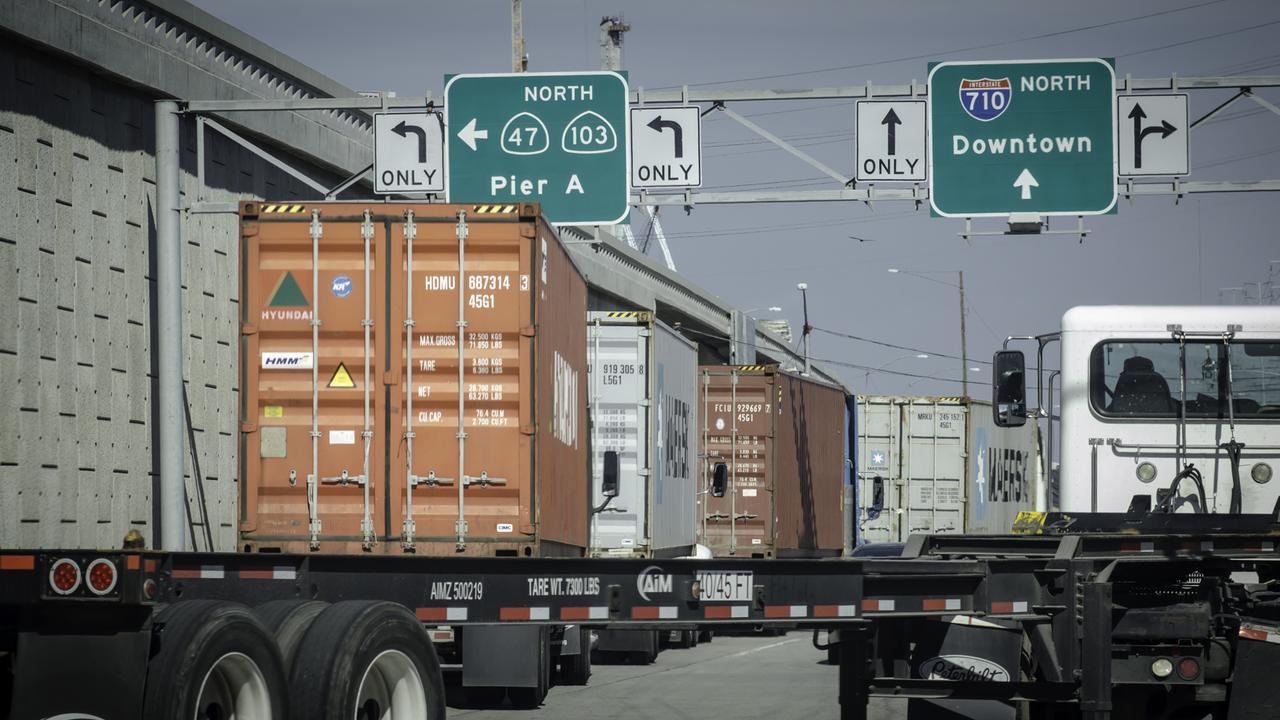
California port truckers say they aren’t to blame for supply chain chaos. Photo: Jim Allen/FreightWaves

Silva said his customers’ genetically modified seed, which can’t be reused because it’s engineered in a lab, should have been loaded on a cargo ship weeks ago to arrive in time for the planting season.

However, appointment times can be scarce. The terminal operators’ push toward automation, which Silva and other trucking company owners say isn’t always reliable, requires drivers to check for appointment times day and night and on weekends to see if more time slots open up. 

“I have customers calling me daily, telling me to name my price, that money is no object, but to please, just pull their containers,” Silva, president of Intermodal Logistics at the Port of Oakland, told FreightWaves. “I wish it was that simple.”

Driver shortage?

Silva and other trucking companies dispute the widely reported message that a driver shortage is largely to blame for the port congestion issues in California. 

During a five-day trip to the major ports in California, FreightWaves interviewed multiple company executives who said they were actually shedding drivers because of the lack of consistent work due to port congestion bottlenecks, equipment and efficiency issues.

Port truckers told FreightWaves on Monday that the Oakland International Container Terminal (OICT) website had been down since the previous day, so trucking companies weren’t able to obtain the vessel export receiving list. OICT, the  port’s largest stevedoring terminal, is owned by SSA International.

Susan Ransom, client services manager for SSA, confirmed that the OICT website was down early Monday but said it was still “operating the gate.” 

“They expect us to fly blind into their terminal,” Bill Aboudi, owner of AB Truck in Oakland, told FreightWaves.

He pays his drivers hourly to sit in line at the three remaining terminals at the Port of Oakland. Aboudi said his drivers sometimes wait four to six hours to maybe pull one container per truck each day. Prior to the congestion crisis, his drivers averaged three to four “turns” each day.

Automation isn’t always the answer

As terminal operators pushed for automation to reduce human interaction, a glitch in the system rendered crane operators and truck drivers unable to move without further instructions, Aboudi said.

“It’s the terminal operators that are not managing the workforce properly and don’t realize that they had a problem with a computer system until it’s too late,” Aboudi told FreightWaves. “It’s often the longshoremen and the truck drivers that pay the price and are forced to sit because of the terminal operators’ mistakes.”

The president of a Southern California drayage company said he’s had to shed two owner-operators and a company driver from his payroll in the past two weeks in an effort to keep his business afloat.

“What’s so frustrating is that we have plenty of work, we have the volume and the customers, but the ports are not allocating — or making that work available to my drivers on a consistent basis,” the company executive, who said he didn’t want to be identified for fear of retaliation by terminal operators, told FreightWaves.

Prior to the pandemic, the executive said he had eight drivers. He ramped up operations to include 18 drivers to handle the e-commerce boom as consumers’ spending habits changed from shopping at brick-and-mortar stores to online. He said nearly all of his drivers are paid hourly and receive health care benefits and other incentives, while a few of his owner-operators prefer to be paid per trip. Those drivers are struggling to make ends meet, he said, as he pays $150 per day for a dry run, meaning the owner-operator is sent to the port complex to wait in line but return without a container.

“If the ports were efficient and releasing my 200 containers per week, I wouldn’t have to let anybody go, but the ports are only making roughly 130 to 140 of my containers available per week so I’m overbuilt and it’s been going on for a few months now with no end in sight,” the drayage company president told FreightWaves.

While he and other drayage companies expanded operations to accommodate increased e-commerce, the ports and terminal operators in California did not develop a long-term infrastructure plan to handle the massive container volume surge.

Warehouses are also at capacity in California, he said.

“I thought that this was going to be a financial windfall, but it’s really not turning out to be that way because of the lack of equipment and all of their restrictions. The terminal operators are in essence robbing me of my true potential revenue,” he said. “But at this point, now the terminal operators need to really expand their footprint to handle all of this volume.”

Equipment shortages

The lack of chassis is also exacerbating port congestion. Steamship lines and terminal operators have relationships when it comes to which containers can be moved and which chassis provider can be used. If a trucking company or driver returns or delivers an empty container at the wrong yard or under the wrong interchange company, some chassis providers charge a “misuse fee” of more than $1,000 per occurrence.

Some truck drivers say they have been ticketed and banned from a terminal for 30 days to upward of 180 days for returning a chassis to the wrong equipment provider, failing to understand a security guard’s instructions or other minor infractions. Trucking companies say there’s no due process to appeal the tickets or bans imposed by employees at the port terminals, who scan or track drivers’ Transportation Worker Identification Credential, or TWIC, card numbers. Often, if a carrier protests a driver’s ban, more days are added to the suspension.

Owner-operator Antoine Freeman, who owns YNOT Express, was able to make three to five trips per day at the port of Los Angeles and Long Beach complex — prior to February.

That’s when he says he started noticing longer wait times and fewer trips in and out of the terminals. Now, he’s averaging around two trips a day if he’s lucky. 

“I don’t think the terminals have enough workers,” Freeman told FreightWaves. “We used to arrive early, get in line and try to get out of there before it got real busy. Now, you show up early and wait in line for hours, and if you miss your appointment time because of delays, you have to start the process all over again.”

Freeman said he previously drove long-haul for a few mega carriers before buying his own truck and getting his authority. Being home every night is the reason Freeman waits in lines for four to six hours per day to get a container or two at the ports.

“The secret is to have a lot of patience and to not give up,” he said.

Containers dumped at wrong ports adds to frustration

Recently, some of Silva’s customers’ freight, meant for the Port of Oakland, was dropped at the port of Los Angeles and Long Beach complex, which adds to the frustration with ocean carriers and terminal operators.

Silva relies on local owner-operators who follow the Federal Motor Carrier Safety Administration’s short-haul exception that allows them to travel 150 air-miles and work 14-hour shifts per day without needing an ELD.

Grabbing those misplaced containers, which is a 400-plus-mile drive each way, would add to the supply chain chaos for his port drivers and possibly put an end to his business, Silva said.

“It would take my drivers one day to get to LA, another day to get the container out of the terminal, one day to come back and another day to go back to return the empty — so that one load could deplete our workforce and probably starve our owner-operators to death and then we’ll be out of business,” Silva said.

A trucking company was recently alerted that its 800 containers that were supposed to be dropped at the ports of Los Angeles and Long Beach were to be discharged at the Port of Oakland due to “berth congestion.”

An agent for the company sent a message to a port truckers group managed by Aboudi in Oakland seeking trucking capacity to help move the containers.

“I feel for these companies, I really do,” Aboudi told FreightWaves. “These shipline direct moves are something that we choose not to do.” 

Joe Rajkovacz, director of governmental affairs for the Western States Trucking Association, told FreightWaves he’s been hearing from his port trucker members, who are tired of being blamed for the bottlenecks at the ports in California.

“I think the issues are resolvable, but it’s going to take strong leadership and giving port drivers a place at the table to air their grievances about the inefficiencies they are experiencing at the terminals to get anything accomplished,” Rajkovacz said. 

Tyler Durden
Wed, 11/03/2021 – 17:40

via ZeroHedge News https://ift.tt/3nXQNJw Tyler Durden

China Struggles To Stamp Out Worst COVID Outbreak Since Wuhan

China Struggles To Stamp Out Worst COVID Outbreak Since Wuhan

A Chinese health official warned late last month that China’s latest delta-variant-driven COVID flareup would likely continue to spread despite authorities’ best efforts to stamp it out.

Turns out, they were right.

According to Bloomberg, a growing number of provinces are battling with COVID than at any time since COVID first burst out of Wuhan in late 2019. The latest outbreak is being driven by the delta variant (which was recently found to also have a hyper-infectious sub-variant) despite the CCP’s increasingly aggressive measures adopted to try and stop the spread.

As of Wednesday, some 600 locally-transmitted cases have been confirmed in 19 of China’s 31 provinces (to be sure, just like China’s prior COVID numbers, these should also be taken with a grain of salt).

China reported 93 new local cases on Wednesday, along with 11 asymptomatic cases. Three provinces detected their first cases in this outbreak, including central Chongqing, Henan, and Jiangsu, which is situated on the eastern coast. Beijing alone reported nine infections Wednesday , bringing the capital city’s total cases in this wave to 38. In response, CPC authorities halted ticket sales for trains heading int the city at 123 train stations in 23 regions.

Source: Bloomberg

Chinese officials insist they are committed to maintaining their “COVID Zero” approach, even after Australia and New Zealand have abandoned their respective “COVID Zero” policies after sustaining massive economic damage while doing little to suppress the spread. Beijing has succeeded in the past at keeping outbreaks contained, although they’ve largely been aided by their complete control and manipulation of the media. In reality, who knows how many cases of COVID have actually afflicted the Chinese people?

But even according to the official sources, the latest outbreak has spread further while refusing to yield to containment measures that previously were successful in stopping the spread.

What’s worse, is that COVID isn’t the only problem facing the CCP right now. China’s Ministry of Commerce urged residents Tuesday to stock up on essentials like food in case the outbreak leads to another wave of lockdowns. Unsurprisingly, that announcement sparked another wave of panic buying among households. It comes after the CCP ordered utilities to stock up on supplies, causing energy prices to jump as well.

The city of Chongqing has instituted mass testing overnight Wednesday as officials aim to stamp out the virus during a “golden 24 hours” after detecting their first case.

At this point, depending on the number of infections, the CCP could go much further ordering mass testing, lockdowns and other measure, while China’s top health expert, Zhong Nanshan has insisted he is confident that China can curb the outbreak. He defended China’s “COVID Zero” approach, even as the rest of the world acknowledges that humanity needs to learn to live with COVID, because it’s not going anywhere soon.

Unless Chinese scientists have a secret cure hidden in a laboratory refrigerator somewhere…

Tyler Durden
Wed, 11/03/2021 – 17:20

via ZeroHedge News https://ift.tt/31uFCAA Tyler Durden

After Years of Complaints, the D.C. Jail Has Been Deemed Too Wretched for Some Inmates


dc jail

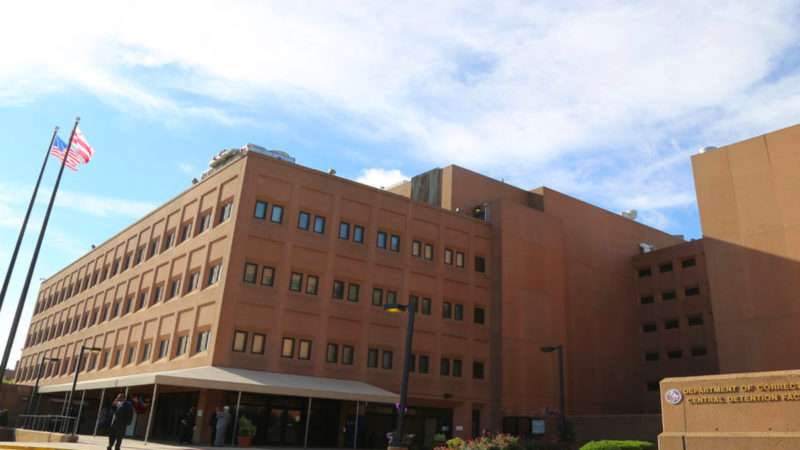
The U.S. Marshals Service announced Tuesday that it was transferring roughly 400 inmates out of the D.C. Jail due to unacceptable living conditions that reportedly included water and food being withheld as punishment.

In a press release, the Marshals Service said it found conditions at one of the D.C. Jail’s two main facilities “do not meet the minimum standards of confinement as prescribed by the Federal Performance-Based Detention Standards.” The people incarcerated there will be transferred to a federal prison in Pennsylvania.

The move follows years—more than a century, really—of complaints and reports from civil liberties groups about the wretched state of the D.C. Jail, which holds all pre-trial detainees and misdemeanor offenders in the District of Columbia. But the jail has been under more scrutiny as of late because it’s holding defendants being prosecuted for their role in the January 6 Capitol Building riot.

In a letter from acting U.S. Marshal Lamont Ruffin to the director of the D.C. Department of Corrections, obtained by The Washington Post, Ruffin said investigators conducting a surprise inspection of the D.C. Jail on the week of October 18 found that it appeared water and food were withheld from inmates as punishment. 

“The water in many of the cells within South 1 and North 1 had been shut off for days, inhibiting detainees from drinking water, washing hands, or flushing toilets,” Ruffin wrote.

As a result, many of the toilets were filled with standing sewage. “The smell of urine and feces was overpowering in several areas,” Ruffin continued.

Inspectors also observed medical neglect and correctional officers bullying inmates into not cooperating with the inspection. “One DOC staffer was observed telling a detainee to ‘stop snitching,'” the letter says.

Notably, the Marshals Service did not find substandard living conditions in the D.C. Jail’s Central Treatment Facility, the housing unit that is currently holding all of the Jan. 6 defendants. Rather, the conditions were all observed in the Central Detention Facility.

The Jan. 6 defendants, and their many supporters in conservative media and Republican politics, have claimed that they are political prisoners being held in appalling conditions for mostly nonviolent crimes and low-level charges. For example, Tucker Carlson called the D.C. lockup “one of the foulest detention centers in the country… a truly repulsive, mismanaged place.”

A week before the October inspection, U.S. District Judge Royce Lamberth held the D.C. Department of Corrections in contempt for repeatedly failing to turn over the medical records of one Jan. 6 defendant, Christopher Worrell, who had been waiting for months for a scheduled wrist surgery. Lamberth also referred the matter to the Justice Department to investigate whether inmates’ civil rights were being violated.

The truth is that those are the conditions under which D.C. residents have been regularly incarcerated. It’s just an issue that didn’t bother anyone on the FOX News primetime lineup until recently.

The antiquated jail, opened in the 1970s, has numerous structural problems. The air conditioning system barely works, leaving staff and incarcerated people to swelter during the summer. It broke earlier this year, and in 2016 the department had to move 200 inmates because of excessive heat. That same year, the department had to move inmates again because of roof leaks. A 2015 report found the facility was plagued by mold, vermin, and leaking.

Those problems became even more acute during the COVID-19 lockdowns, when jail inmates were held in their cells for 23 hours at a time.

“For years, the Public Defender Service for the District of Columbia, along with other legal and grass-roots organizations, has called out and challenged the D.C. Department of Corrections for its horrific treatment of nearly exclusively black and brown people detained at the D.C. Jail,” The D.C. Public Defender service said in a statement. “The inhumane conditions have included long-term solitary confinement for people with no disciplinary issues, lack of running water, full illumination of cells for 24-hours per day resulting in sleep deprivation, cells soiled with feces and blood, lack of air conditioning during the summer and heat during the winter, lack of proper medical care, failure to provide mental health treatment, and physical and mental abuse by correctional officers of people in their custody.”

In 2016, I wrote a cover story for Reason about the long, ignominious history of the D.C. Jail and its repeated failures to meet the low bar of basic human decency. I could cite any number of historical comments from disgusted observers, going all the way back to 1861, but here’s the late U.S. District Court Judge William Bryant, who ruled in 1976 that the conditions inside the D.C. Jail violated the Eighth Amendment’s ban on cruel and unusual punishment:

“For imprisonment under such conditions,” Bryant wrote, “where a man may be stuffed into a tiny cell with another, surrounded by the nocturnal moans or screams of mentally disturbed but untreated fellow inmates, plagued by rats and roaches, sweltering by summer and shivering by winter, unable to maintain significant contact with his family in the outside world, sometimes going for long periods without real exercise or recreation, can only have one message for him: Society does not acknowledge your existence as a fellow human being. And when that message is delivered in the D.C. Jail, whatever small chance may have existed that a person might act as though he were a member of a civilized society is obliterated, along with his decency and humanity.”

from Latest – Reason.com https://ift.tt/3BMdWDA
via IFTTT

Something Really Strange Is Happening At Hospitals All Over America

Something Really Strange Is Happening At Hospitals All Over America

Authored by Michael Snyder via TheMostImportantNews.com,

In a year that has been filled with so many mysteries already, I have another very odd one to share with you.  Emergency rooms are filled to overflowing all over America, and nobody can seem to explain why this is happening.  Right now, the number of new COVID cases in the United States each day is less than half of what it was just a couple of months ago.  That is really good news, and many believe that this is a sign that the pandemic is fading.  Let us hope that is true.  With less people catching the virus, you would think that would mean that our emergency rooms should be emptying out, but the opposite is actually happening.  All across the country, emergency rooms are absolutely packed, and in many cases we are seeing seriously ill patients being cared for in the hallways because all of the ER rooms are already full.

Let me give you an example of what I am talking about.  The following comes from an article entitled “ERs Are Swamped With Seriously Ill Patients, Although Many Don’t Have Covid”

Inside the emergency department at Sparrow Hospital in Lansing, Michigan, staff members are struggling to care for patients showing up much sicker than they’ve ever seen.

Tiffani Dusang, the ER’s nursing director, practically vibrates with pent-up anxiety, looking at patients lying on a long line of stretchers pushed up against the beige walls of the hospital hallways. “It’s hard to watch,” she said in a warm Texas twang.

But there’s nothing she can do. The ER’s 72 rooms are already filled.

Can anyone explain why this is happening?

If the number of COVID cases was starting to spike again, it would make sense for emergency rooms to be overflowing.

But at this particular hospital in Michigan, we are being told that some of the main things that are being treated include “abdominal pain”, “respiratory problems”, “blood clots” and “heart conditions”

Months of treatment delays have exacerbated chronic conditions and worsened symptoms. Doctors and nurses say the severity of illness ranges widely and includes abdominal pain, respiratory problems, blood clots, heart conditions and suicide attempts, among other conditions.

That mention of “heart conditions” immediately got my attention, because I have been seeing this so much in the news recently.

For instance, a high school senior in Pennsylvania just dropped dead from “a sudden cardiac incident”

The high school soccer manager ‘greatly enjoyed’ his team’s championship victory Saturday. Later that evening, he was dead.

Now, late student Blake Barklage’s high school is mourning his untimely death. As 6ABC in Philly reports, the tragedy occurred at La Salle College High School in Montgomery County, Pa.

In a letter to parents, the school announced that the senior died after ‘a sudden cardiac incident’ Saturday night.

Elsewhere in the same state, an otherwise healthy 12-year-old boy just suddenly died because of an issue with his coronary artery…

As family and friends grieve, the cause of death is in for a 12-year-old taken way too soon while warming up for school basketball practice.

As TribLive in Pittsburgh reports, Jayson Kidd, 12, of Bridgeville, Pa., died of natural causes involving his coronary artery, according to the Allegheny County Medical Examiner’s Office.

Heart problems kill elderly people all the time, but it is odd that so many healthy young people have been having these problems.

Over the weekend, Barcelona striker Sergio Aguero suddenly collapsed on the pitch during a match.

He was later diagnosed with “a cardiac arrhythmia”

Sergio “Kun” Aguero, a striker for the Barcelona soccer team, has been diagnosed with a cardiac arrhythmia after collapsing during Saturday’s match against Alaves.

The 33-year-old Argentinian was examined by medical staff at the stadium before being taken to a nearby hospital where he is still waiting to undergo further examination.

Just two days later, a match in Norway was brought to a screeching halt after a player experienced “cardiac arrest” right in the middle of a match…

A football match in Norway’s second division was halted on Monday after Icelandic midfielder Emil Pálsson suffered a cardiac arrest during play.

The 28-year-old Sogndal player suffered the attack as the game against Stjordals-Blink entered the 12th minute, his club said in a statement.

I have been seeing so many stories like this.

So why are so many young people suddenly having such serious problems with their hearts?

Can anyone out there explain this to me?

*  *  *

It is finally here! Michael’s new book entitled “7 Year Apocalypse” is now available in paperback and for the Kindle on Amazon.

Tyler Durden
Wed, 11/03/2021 – 17:00

via ZeroHedge News https://ift.tt/31tjSVL Tyler Durden