I have been a critic of the alarming criminalizing of speech in Great Britain through hate speech laws. Such laws create an insatiable appetite for greater and greater speech regulation and create a sense of empowerment among citizens to silence those with whom they disagree.
Now, a Scottish man has been convicted of a message that was grossly offensive, indecent or menacing. According to the Evening Express, the prosecutor (appropriately named Susan Love) cited the fact that Terry Myers, 41, called the Irish boyfriend of his ex-girlfriend a “leprechaun.”
Love declared that the mail was threatening but added that it was a racially aggravated offense due to the use of the word “leprechaun.”
His defense attorney said that the two men had a “petty and pathetic” history and that his client regretted the use of the term.
He was nevertheless found guilty and fined £280 ($350) for the offense.
We have been following (here and here and here and and and here and and here and here) the worsening situation in England concerning free speech. The problem is trying to draw such lines rather than embracing free speech as protecting not just popular but unpopular and even hateful speech. Once you start as a government to criminalize speech, you end up on a slippery slope of censorship.
What constitutes hate speech remains a highly subjective matter and we have seen a steady expansion of prohibited terms and words and gestures. We have been following (here and here and and and here and and here and here) the worsening situation in England concerning free speech. As noted in a prior column, free speech appears to be dying in the West with the increasing criminalization of speech under discrimination, hate, and blasphemy laws.
As someone of Irish (and Italian) descent I would not be insulted to be called a leprechaun. Indeed, being called a magical figure is a substantial improvement from the usual abuse that tends to follow more scatological than magical themes.
via ZeroHedge News https://ift.tt/3hPOt3v Tyler Durden
Philly Fed Report Says Central Bank Digital Currencies Could Be Dangerous To Traditional Commercial Banking Tyler Durden
Mon, 06/22/2020 – 04:15
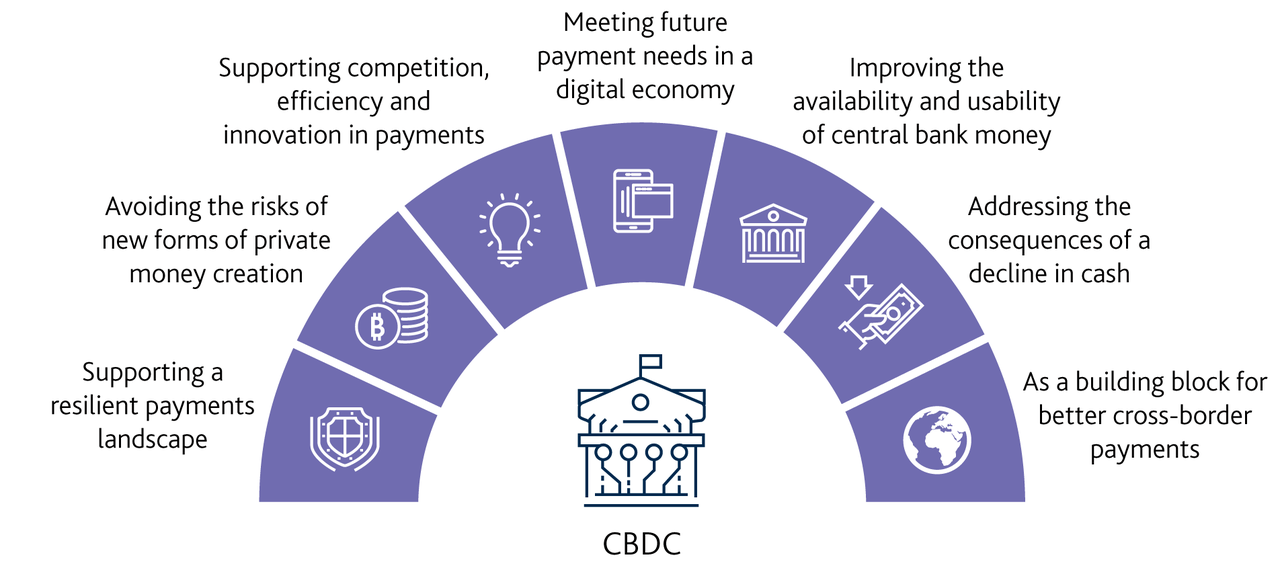
Earlier this month, the Philadelphia Fed released a report called “Central Bank Digital Currency: Central Banking for All?” that sought to look at the idea of an account-based central bank digital currency (CBDC). Ultimately, it concluded that introducing a digital currency could wind up endangering traditional commercial banking.
“The introduction of digital currencies may justify a fundamental shift in the architecture of a financial system, a central bank ‘open to all,’” the paper opens by saying.
Among the questions raised was the idea of whether a CBDC could allow individuals to have a direct account with a central bank, replacing the role of traditional commercial banks.
The paper sought to understand if a CBDC could be used to prevent panics or bank runs that are cause from the typical “maturity transformation” banking practice in use by current financial institutions. The report concludes that this way of banking remains more susceptible to bank runs and money markets drying up due to lower short-term loan liquidity.
The introduction of a central bank digital currency (CBDC) allows the central bank to engage in large-scale intermediation by competing with private financial intermediaries for deposits. Yet, since a central bank is not an investment expert, it cannot invest in long-term projects itself, but relies on investment banks to do so. We derive an equivalence result that shows that absent a banking panic, the set of allocations achieved with private financial intermediation will also be achieved with a CBDC.
At the same time, the paper acknowledges the likelihood of doing damage to traditional banking systems by introducing a CBDC to try and alleviate these issues, as it would reduce competition between commercial banks.
“Our equivalence result has a sinister counterpart. If the competition from commercial banks is impaired (for example, through some fiscal subsidization of central bank deposits), the central bank has to be careful in its choices to avoid creating havoc with maturity transformation,” the paper reads.
CBDC’s, if used to allow the borrowing of more money than is lent out, could harm money markets, the report says.
And the paper concludes that the Fed already mostly prevents runs on the bank with its contracts with banks. Further, it found that the central bank would likely deter deposits away from commercial banks.
“During a panic, however, we show that the rigidity of the central bank’s contract with the investment banks has the capacity to deter runs. Thus, the central bank is more stable than the commercial banking sector,” the report says.
“Depositors internalize this feature ex-ante, and the central bank arises as a deposit monopolist, attracting all deposits away from the commercial banking sector. This monopoly power eliminates the forces that induce the central bank from delivering the socially optimal amount of maturity transformation,” the report concludes.
Crypto experts disagree. Marshall Hayner, the CEO and co-founder of cryptocurrency firm Metal, told Cointelegraph: “I don’t believe CBDC endangers retail banks, I find it highly probable they [CBDC] will become an integral part of the US banking system, and part of the existing regulatory structure, as the [Office of the Comptroller of the Currency] recently called on public comments on the topic of updating its rules on digital activities.”
“As cash rapidly declines, the need for a digital alternative for the modern banks and fintech platforms has emerged. From fostering trust in monetary authorities, to creating competitive payment systems and enhancing money laundering enforcement, we are seeing the beginning of the global digital dollar,” he concluded.
via ZeroHedge News https://ift.tt/2VmKUbB Tyler Durden
In the first days of June 2020, the Greek industrial holding Mytilineos announced that it had concluded a long-term contract with Gazprom’s commercial arm.
The onset of continuous US LNG deliveries to Greece bears a much harsher reputational blow to Russian energy interests than Qatari or Algerian supplies.
Across the planet LNG prices in May-June 2020 have dropped to unprecedentedly low levels – landed seaborne prices still remain below $2 per MMBtu, compelling rivals of LNG to counteract the trend. In the vanguard of those affected is the Russian pipeline gas monopoly Gazprom which expects its exports to drop from the peak of 199-200 BCm per year attained in the last 2 years to some 167 BCm in 2020. Pipeline gas supplies to Europe seems somewhat paralyzed currently with little to no availability of ramping up exports despite producers curbing natural gas production concurrently to oil. With this in mind, Gazprom is looking to beat its competitors on their own field, having no liquefaction facility that could realistically target European customers.
In the first days of June 2020, the Greek industrial holding Mytilineos announced that it had concluded a long-term contract with Gazprom’s commercial arm, Gazprom Export, to import Russian natural gas. The news in and of itself should not be considered as anything surprising – Mytilineos had several short-term contracts with the Russian firm in the past couple of years and imported 0.6 BCm in 2019. Were one to examine the details of the deal though, it gets much more interesting – the tenor of the deal is for 10 years until 2030, i.e. even longer than the main import contract with Russia, the one state-owned DEPA has until 2026. Under DEPA’s contract Greece has imported an average of 2.5 BCm per year from Gazprom, via the Soviet-era TransBalkan pipeline.
Graph 1. Russian Pipeline Gas Exports to Greece (in billion cubic meters).
Source: Gazprom.
Neither of the parties provided additional information on the long-term contract, yet an increasingly manifest trend in Greece’s energy provision provides a seemingly fitting explanation as to why would the Russian gas giant act now. The thing is that this March-April 2020 LNG imports to Greece surpassed pipeline deliveries, a traditional domain of Gazprom. Landed LNG prices to Greece have started off this year at $3.5 per MMbtu, oscillated around the $2.5 per MMbtu mark in March-April and then took a plunge below $2 per MMbtu in the last days of April, remaining there ever since. Were it not for the increase of US LNG exports to Greece, this might not even trigger a response from Russia – Revithoussa has traditionally relied on a combination of Qatari, Algerian, Nigerian and Norwegian LNG deliveries.
As indicated above, the onset of continuous US LNG deliveries to Greece bears a much harsher reputational blow to Russian energy interests than Qatari or Algerian supplies. This year has already seen 13 LNG cargo arrivals to Revithoussa, a manifold increase over the 2019 end result of 3 cargoes in total. Coming from a fairly extended list of LNG hubs (Sabine Pass, Cameron LNG, Cove Point), US LNG calls into question Kremlin’s claim that the American shale gale would not be able to supplant Russian deliveries – it turns out it can, albeit at highly adverse market conditions. Thus, instead of the initial question whether US LNG can reach Southern Europe, the issue to follow through lies with American producers’ ability to withstand such low gas prices for a long-term period.
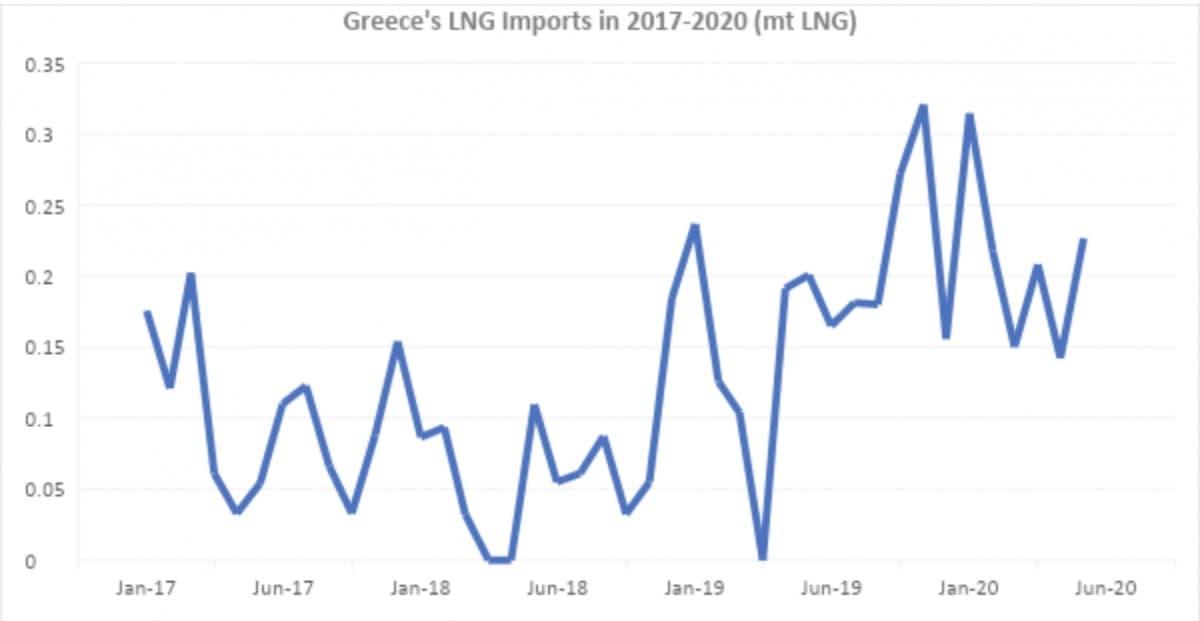
Graph 2. Greece’s LNG imports in 2017-2020 (in million tons LNG).
Source: Thomson Reuters.
The winter of 2019/2020 has seen the most intensive LNG import dynamics in Greece’s history – instead of the usual 2-3 cargoes per month, the Revithoussa LNG terminal has received 5-6 per month. Purportedly this is only the beginning of a forthcoming Greek LNG ramp-up as neighboring countries in the South Balkan region turn towards LNG supplies, the bidirectional conduits and relevant infrastructure is already in place. The 2019 utilization rate of the 7 BCm per year Revithoussa LNG plant stood at a rather meagre 40%, however this year’s statistics will be significantly better unless the LNG market takes an unforeseen twist – the Q1 2020 utilization rate already climbed to 63%, rendering LNG the main source of natural gas imports.
The Revithoussa LNG terminal, the only existing LNG plant in the Balkans as of today, lies 45km to the west of Athens and serves predominantly the needs of the capital area. Concurrently to Revithoussa’s increasing intake, Greece might see the launch of another LNG import facility, this time serving the country’s north, in the form of the 5.5 BCm per year Alexandroupolis FSRU. The development of a second LNG plant coincides with Greece and Bulgaria finishing the IGB interconnector, assumed to go onstream in 2021 to allow for the cross-border movements of TANAP-supplied Azerbaijani gas – the same route would be used for Alexandroupolis volumes (Bulgaria’s Bulgartransgaz already took a 20% stake in the project company and Romania’s Romgaz seeks to do the same).
The Mytilineos deal in and of itself will not witness any major breakthrough in the upcoming years – the metallurgy and energy-focused portfolio of the Greek company necessitated some 0.6 BCm in 2019, around 12-13% of the country’s annual gas consumption. Yet it is a testament to renewed Russian interest to the Greek market, a harbinger of things to come – be they in the form of advantageous price formulas for pipeline deliveries or even straight LNG supplies sourced from reliable sources. Hence, the struggle for Russia’s share not to decrease in the Mediterranean will encompass Turkey, the hotspot of vying so far, Greece and most probably Italy, too, as all of them have seen increased levels of LNG imports in general and US supplies in particular.
via ZeroHedge News https://ift.tt/2V7Mw8N Tyler Durden
India Seeks Rapid Purchase Of 33 Russian Fighter Jets In Response To Chinese Border Fight Tyler Durden
Mon, 06/22/2020 – 02:45
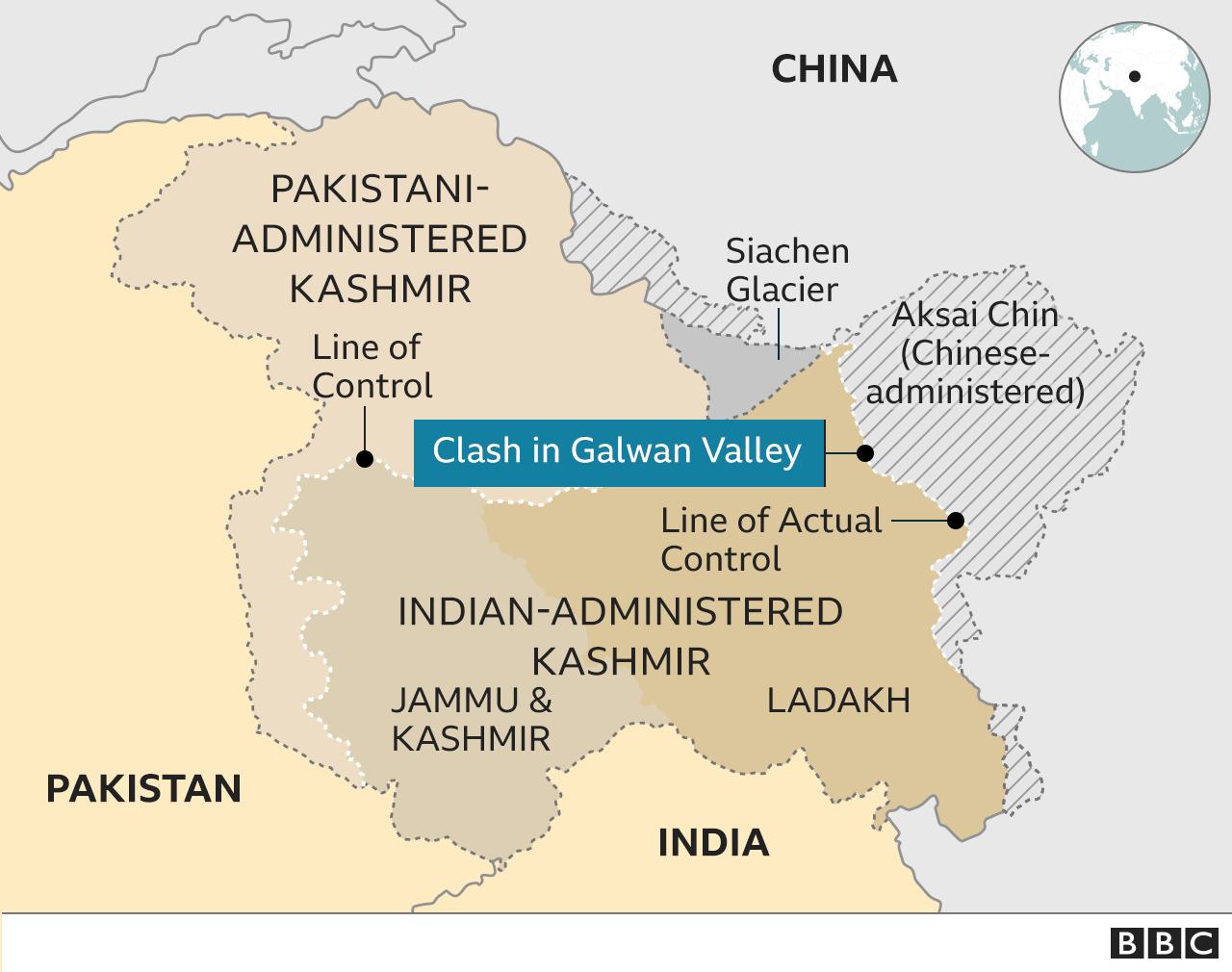
India is reportedly seeking to beef up military purchases from Russia following last week’s major border incident with China that resulted in 20 Indian Army troops killed, and an undisclosed number of Chinese PLA casualties in the disputed Galwan Valley area of East Ladakh.
Indian government sources were cited in New Delhi-based ANI News Agency as saying “the Indian Air Force (IAF) has pushed a proposal to the government for acquiring 33 new fighter aircraft, including 21 MiG-29s and 12 Su-30MKIs from Russia.”
Indian Air Force Su-30 MKI multirole fighter aircraft, via Economic Times.
“The Air Force has been working on this plan for a while, but the process took a faster curve, and a 600-crore (about 787.4 million dollars) offer will be submitted to the Ministry of Defense for final approval this week,” the report continued.
Indian has long conducted major weapons systems purchases from Russia, including recently acquiring a fleet of Su-30 fighter jets.
New Delhi now wants to speed up such acquirement as both sides reportedly build up their forces along the border.
Forbes also pointed out that the new aircraft order from Russia is in direct response to the deadly Galwan Valley border incident with China:
So it should come as no surprise that India this week reportedly placed a $780 million order with Russia for 33 fighters, enough to equip or reequip two squadrons. What’s weird is which fighter types New Delhi reportedly is buying.
The Indian order includes 21 MiG-29s and 12 Su-30s, according to press reports. But one aviation expert believes the Sukhois in particular are a poor fit for mountain patrols.
China meanwhile, has reportedly been pursuing expansion and modernizing of its high-altitude airbase at the dual use civilian/military Ngari Gunsa airport in Tibet.
Advanced PLA J-11 and J-16 fighters have recently been spotted at the base near Ladakh via satellite images.
via ZeroHedge News https://ift.tt/2ANIbko Tyler Durden
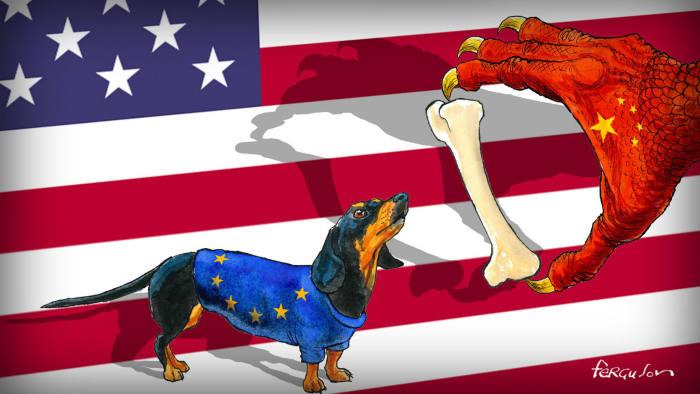
Both Trump and the EU are turning on China for very similar reasons but with different timescales ahead of them. The West still struggles with what it requires from China and whether it wants to get rich and become a big spender, or become poorer and flood western markets with cheaper and cheaper goods. Expect more devaluation of the Yuan.
EU is “rebalancing this relationship” with China. EU ambassador to the UK João Vale de Almeida tells Chatham House. It’s not about “isolating” or “ganging up” on China, but it’s about addressing issues. We have different systems of values on human rights and other areas”.
A pretty remarkable statement to make and one which could only have come from a relatively obscure EU official, if it was based on solid support from the highest echelons of the EU in Brussels – who, in turn, would not go ahead with such a bellicose policy if they didn’t have the gilt-edged backing from France and Germany.
So, in a matter of weeks, where the EU was caught red-handed redacting its own internal report which slammed China over its COVID-19 role – and media coverage – now, we seem to be in the midst of the EU waking up to its own economy imploding and a political calamity to follow which could be the end of the EU as we know it.
The EU is starting to think about protectionism and is about to develop a new relation with China, which, we should assume means cutting less slack to Beijing on its goods, by jacking up tariffs.
In the U.S., analysts are also saying that the U.S.-China trade deal is dead in the water, chiefly due to corona crashing world oil prices, which knocked a big hold in the first phase of Trump’s deal which involved China buying huge chunks of oil and gas from the U.S. at higher prices. In reality, for most of this year China’s energy needs have also been dramatically reduced due to chaos and lockdowns which are corona-related. Trump got the first phase off to a good start by forcing China’s hand on agricultural goods which were floundering in many states which supported Trump, but the ‘art of the deal’ U.S. president is actually not very good at doing trade deals. The essence of a trade deal is its rigidity and sustainability. Trump’s barely lasted weeks. Foreign Policy, the high-brow international politics magazine, put it aptly.
“Amid the collapse in oil demand and prices unleashed by the pandemic, it is now all but certain that China will fail to meet its targets for energy purchases and expose the folly of Trump’s trade strategy” it says. “While Trump was right to address China’s problematic trade practices, the administration’s approach made little sense before the pandemic—and makes even less sense now”.
And many might argue that Trump’s determination to get a trade deal with China which helped blue collar families back home, was all about getting re-elected anyway, according to John Bolton’s bombshell book which reveals that the U.S. president right from the off was positioning the Chinese premier to help him (Trump) get re-elected. Trump believed all he needed to nail a second victory was a deal with China. Remarkable.
The toughening of both rhetoric and action now from Trump as the deal falls apart was inevitable. Almost like a petulant child, as it becomes clear that Beijing can’t keep its side of the bargain, Trump goes into self-preservation mode to deflect blame. Barely within a heartbeat, U.S. media announces news of sanctions against China on its reported concentration camps against Muslim groups, which, according to Bolton, he had secretly supported all along with Xi, which the former National Security chief claims was the “right thing to do” according to Trump.
Within seconds, almost, it’s as though if China cannot serve Trump with his specific needs, then it has to become and enemy to at least generate the requisite media traffic which continues to get Trump on the front pages. And this is what is playing out now. Already Beijing sees the game and is ready to play that role.
“We again urge the U.S. side to immediately correct its mistakes and stop using this Xinjiang-related law to harm China’s interests and interfere in China’s internal affairs,” the ministry said in a statement.
“Otherwise China will resolutely take countermeasures, and all the consequences arising there from must be fully borne by the United States.”
That sounded like a pretty lucid threat from China. Remarkably, Trump, despite the losses to business and the crippling effect on U.S. companies in China, is happy to get tough with China. There is, in fact, no limit in what he can do to get re-elected – even make friends with the Taliban, if that’s what it takes.
More remarkable is that the EU seems to be following his lead with their rationale why they should be tougher on China. Its own political survival beyond the next European elections in 2024.
With the catastrophic impact on the EU economy, many member states – not only Italy and Spain which were hit particularly hard – themselves are going to have to make tough decisions which resonate with angry voters over how to hold China accountable for the pandemic. The EU will be forced to follow this trend for its own survival as, for those member states where the political establishment save their own seats, scapegoats will be required. The Blame Game will make losers of the EU and its delusional ideas of being a super power.
Some political elites will blame Brussels and will have some success with this. And it’s as though EU chiefs are already ahead of the game, if one of its “ambassadors” in London can openly make a comment to the press which talks about a new relationship with China. Xi and his ministers will patiently wait for Trump to fall on his own sword in November, as the scandal mounts up and the pressure on the Republican party reaches fever pitch. For the EU though, there is a longer game at play, with higher stakes. But will Brussels make it to 2024 though?
via ZeroHedge News https://ift.tt/3enWWc5 Tyler Durden
The coronavirus pandemic has exposed dangerous weaknesses in U.S. planning and preparation for civil defense protection and recovery, and those weaknesses surely have been noticed by our potential enemies: China, Russia, North Korea, Iran and international terrorists.
The U.S. spent decades, and billions of dollars, supposedly preparing for biological warfare. The Centers for Disease Control and Prevention, the National Institutes of Health, and the departments of Defense and Homeland Security are supposed to have contingency plans to protect the American people from lethal biological weapons such as anthrax and genetically engineered smallpox, which could have mortality rates of over 90 percent.
But our defenders have not even been able to competently cope with COVID-19, which has a mortality rate under 1 percent. The White House took over management of the pandemic, apparently to compensate for the failure of the U.S. government to have adequately stockpiled such basics as ventilators, masks and pharmaceuticals.
Hostile foreign powers surely have noticed the panicked, incompetent U.S. response to the virus that shut down a prosperous U.S. economy, self-inflicting the worst economic crisis since the Great Depression. The nationwide lockdowns brought shortages of all kinds, exposing societal and critical infrastructure fragility — and causing widespread fear.
Adversaries also have noticed the ongoing U.S. “cold civil war.” According to federal authorities, radicalized young people on both sides of the political divide and criminals have been infiltrating recent protests — rioting, toppling statues and setting fires. The swelling counter-culture anarchy and self-condemnation is reminiscent of 1968, a year of riots and anti-war protests in America that is recognized by most historians as the psychological turning point toward U.S. defeat in the Vietnam War.
North Korea applauds America’s domestic chaos as proof that democracy does not work and the future belongs to totalitarian states such as China. America looks fragile to dictators who would replace the U.S.-led world order with a new one dominated by themselves. China, for example, has been planning to defeat the U.S. with an electromagnetic pulse (EMP) and cyber “Pearl Harbor” attack for a quarter-century. As I warned the Senate Subcommittee on Terrorism, Technology and Homeland Security in 2005, Chinese military writings — such as the following excerpt — make reference to U.S. vulnerability to EMP attacks:
“Some people might think that things similar to the ‘Pearl Harbor incident’ are unlikely to take place during the information age. Yet it could be regarded as the ‘Pearl Harbor incident’ of the 21st century if a surprise attack is conducted against the enemy’s crucial information systems of command, control and communications by such means as electronic warfare, electromagnetic pulse weapons, telecommunications interference and suppression, computer viruses, and if the enemy is deprived of the information it needs as a result. Even a super military power like the United States, which possesses nuclear missiles and powerful armed forces, cannot guarantee its immunity. … In their own words, a highly computerized open society like the United States is extremely vulnerable to electronic attacks from all sides. This is because the U.S. economy, from banks to telephone systems and from power plants to iron and steel works, relies entirely on computer networks.”
As noted in a May 14, 1996, People’s Liberation Army newspaper about a surprise attack on U.S. critical information systems:
“When a country grows increasingly powerful economically and technologically… it will become increasingly dependent on modern information systems… The United States is more vulnerable to attacks than any other country in the world.”
So it is very bad news, more than a year after President Trump issued an Executive Order on Coordinating Resilience Against Electromagnetic Pulses, that the Department of Energy (DOE) and Department of Homeland Security (DHS) have done nothing to protect the national electric grid or other critical infrastructures that sustain the lives of 330 million Americans.
Instead, non-expert bureaucrats conduct endless studies and conferences to wrangle over technical issues — in effect, reinventing the wheel regarding EMP — that were resolved long ago by real EMP experts. The “coordination process” for national EMP preparedness is the same kind of bureaucratic fumbling that Washington regards as “action,” which gave us the biological warfare unpreparedness and inability to properly respond to the coronavirus pandemic.
Hopefully, the U.S. Navy is better prepared to cope with an EMP attack than are DOE and DHS. A nuclear EMP attack against U.S. aircraft carriers is the key to victory in China’s military doctrine, as noted in a Feb. 12, 2000, article in the official newspaper of the Shanghai Communist Party Central Committee:
“The weak points of a modern aircraft carrier are: 1) As a big target, the fleet is easy for a satellite to reconnoiter and locate. … 2) A high degree of electronization is like an Achilles’ heel for an aircraft carrier fleet, which relies heavily on electronic equipment as its central nervous system. These two characteristics determine one tactic.” Therefore, military strategist Ye Jian said in the article in Jiefang Ribao: “The possession of electromagnetic pulse bombs (missiles) will provide the conditions to completely destroy an aircraft carrier fleet, and the way to complete victory in dealing with aircraft carrier fleets.”
In March 2020, a panel of China’s military experts threatened to punish U.S. Navy ships for challenging China’s illegal annexation of the South China Sea by making an EMP attack — one of the options they considered least provocative because the crew would be unharmed, but most effective because the ship would be disabled. Now three U.S. aircraft carriers are in the Pacific to challenge China’s aggression in the South China Sea.
Dan Gallington, a former senior Defense Department official, asks in his recent Washington Times article, “Is America on the path to another Pearl Harbor, but with China?”
China may offer the answer soon.
via ZeroHedge News https://ift.tt/3fHVz8n Tyler Durden
New Zealand Unveils Web Safety Ad Featuring Two ‘Porn Stars’ Tyler Durden
Sun, 06/21/2020 – 23:15
A rather unusual New Zealand government online safety video advertisement featuring “porn actors” went viral in the first half of June.
In the ad, the porn stars, named Derek and Sue, greet a mother at her front door and say: “Hiya… your son’s been watching us online.”
Derek (left); Sue (right). h/t Keep It Real Online
The shocked mother, Sandra, played by comedian Justine Smith, is told by the nude couple that her son just watched them on his laptop, iPad, PlayStation, his phone, her phone, and on a smart TV.
Sue explains: “We usually perform for adults, but your son’s just a kid. He might not know how relationships work.”
The porn stars tell Sandra she must have a word with her son, Matt, about what was happening in the video, emphasizing hardcore lovemaking is not exactly real life. Sue said, “we just get straight to it” in the videos; Derek admits: “I’d never act like that in real life.”
About halfway through the ad, Sandra’s son walks in on the conversation and immediately drops a plate, realizing that, the porn stars he was just watching are at his front door.
Sandra then says: “Alright matey, it sounds like it’s time to have a talk about the difference between what you see online and real-life relationships. No judgment!”
The video ad is part of a campaign called “Keep it real online,” which raises awareness that online porn is not real-life:
“In today’s digital world, it’s very easy for children to come across pornography. This can happen by accident, as most sites are free and don’t require any type of age verification, or intentionally out of curiosity. While children might see porn for the first time by accident, teens are more likely to be seeking it out.
“It’s normal for young people to be curious about sex. The best way to support them is to have open, honest conversations about what they might see and how it’s different from real sex and relationships,” the campaign said on its website.
A recent report found youngsters in New Zealand use porn sites as a tool to learn about sex. At least a third of all porn videos in the country are non-consensual acts.
The campaign has debuted as internet porn activity exploded during months of virus lockdowns around the world. Americans used porn to cope with pandemic stress.
via ZeroHedge News https://ift.tt/2YlNoc1 Tyler Durden
We’ve lived through the most bizarre experience of human folly in my lifetime, and perhaps in generations.
Among the strangest aspects of this has been the near universal failure on the part of regular people, and even the appointed “experts” (the ones the government employs, in any case), to have internalized anything about the basics of viruses that my mother understands, thanks to her mother before who had a solid education in the subject after World War II.
Thus, for example, are all governments ready to impose new lockdowns should the infection data turn in the other direction. Under what theory, precisely, is this supposed to help matters? How does reimposing stay-home orders or mandating gym closures mysteriously manage to intimidate a virus into going away?
“Run away and hide” seems to have replaced anything like a sophisticated understanding of viruses and immunities.
So I decided to downloadMolecular and Cell Biology for Dummies just to check if I’m crazy. I’m pleased to see that it clearly states that there are only two ways to defeat a virus: natural immunity and vaccines.
The book completely left out the option that almost the entire world embraced in March: destroy businesses, force everyone to hide in their homes, and make sure that no one gets close to anyone else. The reason that the text leaves that out is that the idea is essentially ridiculous, so much so that it was initially sold as a strategy to preserve hospital space and only later mutated into a general principle that the way to beat a virus is to avoid people and wear a mini-hazmat suit.
Here is the passage:
For all of recorded history, humans have done a deadly dance with viruses. Measles, smallpox, polio, and influenza viruses changed the course of human history: Measles and smallpox killed hundreds of thousands of Native Americans; polio killed and crippled people, including US President Franklin Delano Roosevelt; and the 1918 influenza epidemic killed more people than were killed during all of World War I.
For most viruses that attack humans, your only defenses are prevention and your own immune systems. Antibiotics don’t kill viruses, and scientists haven’t discovered many effective antiviral drugs.
Vaccines are little pieces of bacteria or viruses injected into the body to give the immune system an education. They work by ramping up your own defensive system so that you’re ready to fight the bacteria or virus upon first contact, without becoming sick first. However, for some viral diseases no vaccines exist, and the only option is to wait uncomfortably for your immune system to win the battle.
A virus is not a miasma, a cootie, or red goo like in the children’s book Cat in the Hat. There is no path toward waging much less winning a national war against a virus. It cares nothing about borders, executive orders, and titles. A virus is a thing to battle one immune system at a time, and our bodies have evolved to be suited to do just that. Vaccines can give advantage to the immune system through a clever hack. Even so, there will always be another virus and another battle, and so it’s been for hundreds of thousands of years.
If you read the above carefully, you now know more than you would know from watching 50 TED talks on viruses by Bill Gates. Though having thrown hundreds of millions of dollars into cobbling together some global plan to combat microbes, his own understanding seems not to have risen above a cooties theory of run away and hide.
There is another level of virus comprehension that came to be observed in the 1950s and then codified in the 70s. For many viruses, not everyone has to catch them to become immune and not everyone needs a vaccine if there is one. Immunity is achieved when a certain percentage of the population has contracted some form of virus, with symptoms or without, and then the virus effectively dies.
This has important implications because it means that vulnerable demographics can isolate for the active days of the virus, and return to normal life once “herd immunity” has been realized with infection within some portion of the non-vulnerable population. This is why every bit of medical advice for elderly people has been to avoid large crowds during the flu season and why getting and recovering for non-vulnerable groups is a good thing.
What you get from this virus advice is not fear but calm management. This wisdom – not ignorance but wisdom – was behind the do-no-harm approach to the polio epidemic of 1949-1952, the Asian flu of 1957-58, and the Hong Kong flu of 1968-69. Donald Henderson summed up this old wisdom beautifully: “Communities faced with epidemics or other adverse events respond best and with the least anxiety when the normal social functioning of the community is least disrupted.”
And that’s what we did for the one hundred years following the catastrophic Spanish flu of 1918. We never again attempted widespread closures or lockdown precisely because they had failed so miserably in the few places they were attempted.
The cooties theory attempted a comeback with the Swine flu of 2009 (H1N1) but the world was too busy dealing with a financial crisis so the postwar strategy of virus control and mitigation prevailed once again, thankfully. But then the perfect storm hit in 2020 and a new generation of virus mitigators got their chance to conduct a grand social experiment based on computer modeling and forecasting.
Next thing you know, we had this new vocabulary shoved down our throats and we all had to obey strangely arbitrary exhortations. “Go inside! No, wait don’t go inside!” “Stay healthy but shut the gyms!” “Get away from the virus but don’t travel!” “Don’t wear a mask, wait, do wear a mask!” (Now we can add: “Only gather in groups if you are protesting Trump”)
People started believing crazy things, as if we are medieval peasants, such as that if there is a group of people or if you stand too close to someone, the bad virus will spontaneously appear and you will get infected. Or that you could be a secret superspreader even if you have no symptoms, and also you can get the virus by touching almost anything.
Good grief, the sheer amount of unscientific phony baloney unleashed in these terrible three months boggles the mind. But that’s what happens in any panic. Apparently.
Now, something has truly been bugging me these months as I’ve watched the incredible unravelling of most of the freedoms we’ve long taken for granted. People were locked out of the churches and schools, businesses were shuttered, markets were closed, governors shoved through shelter in place orders meant not for disease control but aerial bomb raids, and masks were mandatory, all while regular people who otherwise seem smart hopped around each other like grasshoppers.
My major shock is discovering how much sheer stupidity exists in the population, particularly among the political class.
Forgive a defense of my use of the term “stupid” but it is technically correct. I take it from Albert Camus and his brilliant book The Plague (1947). “When a war breaks out, people say: ‘It’s too stupid; it can’t last long.’ But though a war may well be ‘too stupid,’ that doesn’t prevent its lasting. Stupidity has a knack of getting its way.”
Indeed it is true.
It was only last February when we seemed smart. We had amazing technology, movies on demand, a smartphone in our pockets to communicate with everyone and reveal all the world’s knowledge. There was peace more or less. There was prosperity. There was progress. Our medical systems worked. It seemed that only a few months ago, we had it all together. We seemed smart. Until suddenly stupid took over, or so it seemed.
Actually we weren’t smart as individuals. Our politicians were as dumb as they ever have been, and massive ignorance pervaded the population, then as always. What was smart last February was society and the processes that made society work in the good old days.
“Please explain.”
I shall.
Consider the social analytics of F.A. Hayek. His major theme is that the workings of the social order require knowledge and intelligence, but none of this essential knowledge subsists within any individual mind much less any political leader. The knowledge and intelligence necessary for society to thrive is instead decentralized throughout society, and comes to be embedded or instantiated within institutions and processes that gradually evolve from the free actions and choices of individuals.
What are those institutions? Market prices, supply chains, observations we make from the successful or unsuccessful choices of others that inform our habits and movements, manners and mores that work as social signals, interest rates that carefully coordinate the flow of money with our time preferences and risk tolerances, and even morals that govern our treatment of each other. All these come together to create a form of social intelligence that resides not in individual minds but rather the process of social evolution itself.
The trouble is that a well functioning society can create an illusion that it all happens not because of the process but rather because we are so damn smart or maybe we have wise leaders with a good plan. It seems like it must be so, else how could we have become so good at what we do? Hayek’s main point is that it is a mistake to credit individual intelligence or knowledge, much less good governments with brainy leaders, with civilizational achievements; rather, the real credit belongs to institutions and processes that no one in particular controls.
“To understand our civilisation,” Hayek writes, “one must appreciate that the extended order resulted not from human design or intention but spontaneously: it arose from unintentionally conforming to certain traditional and largely moral practices, many of which men tend to dislike, whose significance they usually fail to understand, whose validity they cannot prove, and which have nonetheless fairly rapidly spread by means of an evolutionary selection — the comparative increase of population and wealth — of those groups that happened to follow them.”
The lockdowns took a sledgehammer to these practices, processes, and institutions. It replaced them nearly overnight with new bureaucratic and police-state mandates that herded us into our homes and arbitrarily assigned new categories: elective vs non-elective medical procedures, essential vs nonessential business, permissible vs. impermissible forms of association, even to the point of measuring the distance from which we must be separated one from another. And just like that, via executive order, many of the institutions and processes were crushed under the boot of the political class.
What emerged to take its place? It’s sad to say but the answer is widespread ignorance. Despite having access to all the world’s knowledge in our pockets, vast numbers of politicians and regular people defaulted back to a premodern cognition of disease. People did this out of fear, and were suddenly and strangely acquiescent to political commands. I’ve had friends tell me that they were guilty of this back in the day, believing that mass death was imminent so the only thing to do was to shelter in place and comply with the edicts.
The seeming intelligence that we had only in February suddenly seemed to turn to mush. A better way to understand this is all our smartest institutions and practices were crushed, leaving only raw stupidity in its place.
Truth is that we as individuals are probably not much smarter than our ancestors; the reason we’ve made so much progress is due to the increasing sophistication of Hayek’s extended orders of association, signalling, capital accumulation, and technological know how, none of which are due to wise leaders in government and industry but are rather attributable to the wisdom of the institutions we’ve gradually built over decades, centuries, and a millenia.
Take those away and you reveal what we don’t really want to see.
Looking back, I’m very impressed at the knowledge and awareness that the postwar generation had toward disease mitigation. It was taught in the schools, handed down to several generations, and practiced in journalism and public affairs. That was smart. Something happened in the 21st century to cause a kind of breakage in that medical knowledge chain, and thus did societies around the world become vulnerable in the presence of a new virus to rule by charlatans, hucksters, media howlers, and would-be dictators.
With lockdown finally easing, we will see the return of what seems to be smart societies, and the gradual loss of the influence of stupid. But let us not deceive ourselves. It could be that we’ve learned nothing from the fiasco that unfolded before our eyes. If economies come to be restored, eventually, to their former selves, it will not be because we or our leaders somehow beat a virus. The virus outsmarted everyone. What will fix what the political class has broken is the freedom once again to piece back together the institutions and processes that create the extended order that makes us all feel smarter than we really are.
via ZeroHedge News https://ift.tt/3fR4J2x Tyler Durden
China Keeps Loan Prime Rates Unchanged For Another Month, Sparking Confusion Over Beijing’s Intentions Tyler Durden
Sun, 06/21/2020 – 22:15
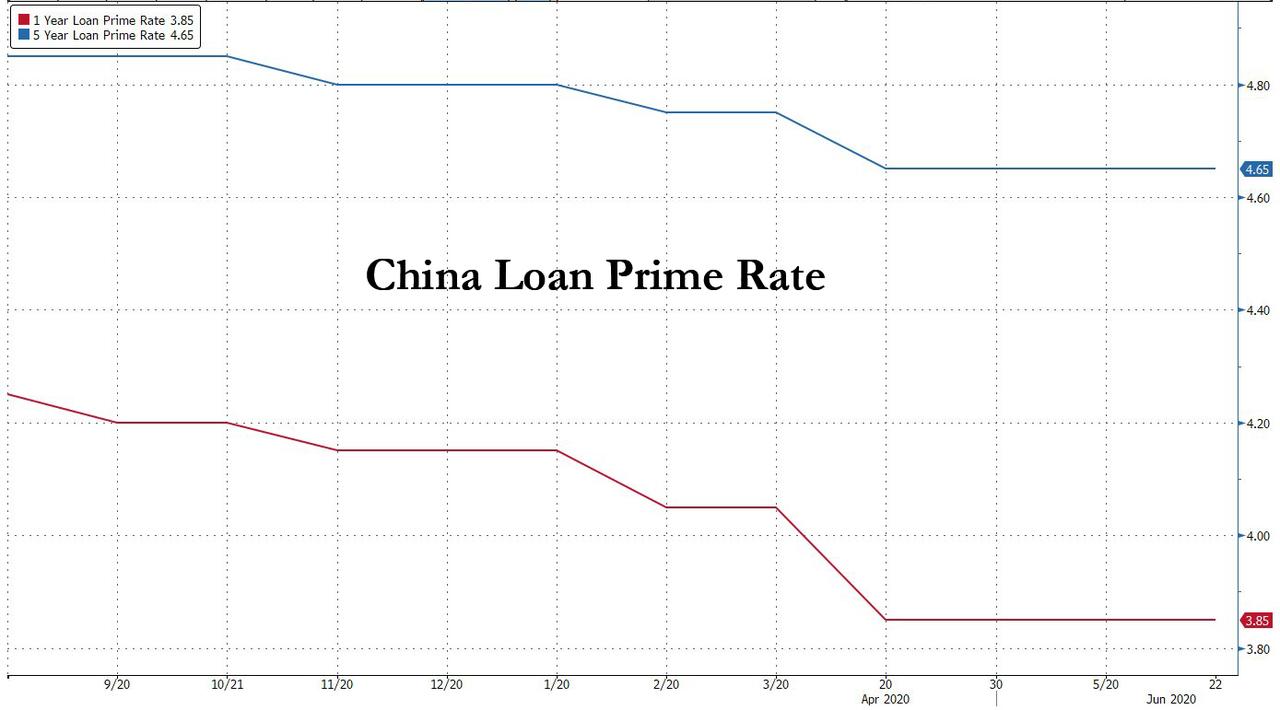
One month after unexpectedly keeping its 1 and 5-year Loan Prime Rates unchanged at 3.85% and 4.65% respectively following the April 19 rate cut (which came just as China was supposedly V-shaped recovering), moments ago Beijing did it again and kept China’s so-called Libor flat, with the benchmark LPRs for 1 and 5-year tenors unchanged at 3.85% and 4.60%.
As a reminder, the LPR is a recently launched market indicator of the price that lenders charge clients for new loans, released around the 20th day of every month.
While there was some speculation that after last month’s People’s Congress where the PBOC vowed it would ease financial conditions further including broad and RRR-based rate cuts, in its preview, SocGen correctly said that it expects “no change to China’s Loan Prime Rates, as the PBoC left the MLF rate unchanged last week.”
What the move would suggest is that while China – whose economy is still shrinking due to covid – is certainly desperate for easier funding conditions, we may have reached a critical threshold where banks may no longer be profitable should LPRs be cut further (especially now that borrowers have non-traditional, shadow sources of funding once again).
This brings up another point brought up by SocGen’s Kiyong Seong:
On top of the heavy bond supply since May, the PBoC’s reluctance to inject liquidity has also been partly accountable for the significant correction in CNY rates. To our understanding, this reluctance stemmed from the fact that abundant liquidity and easier borrowing conditions were being abused, flowing into financial products rather than the real economy. However, this development has been gradually contained by rising interest rates and regulatory action, allowing the PBoC to turn more dovish again, as the slow private-sector recovery calls for.
All this means that Beijing is stuck between a rock and a hard place, on one hand urgently needing more rate cuts, and on the other unable to implement them without causing even more bubbles (see shadow bank products and China’s nevernding housing bubble) and another round of impairments, NPL builds up and potential bank failures.
via ZeroHedge News https://ift.tt/37OV8Gn Tyler Durden
Ghislaine Does Paris: Jeffrey Epstein’s Fugitive ‘Madam’ Hiding Behind French Extradition Laws Tyler Durden
Sun, 06/21/2020 – 22:15
Jeffrey Epstein’s accused ‘madam’ is reportedly holed up in a luxury apartment on Paris’s Avenue Matignon – just a five minute drive from the dead pedophile’s $8.6 million flat, according to the Daily Mail.
Maxwell “is moving locations every month to keep private investigators off her tail and is staying at the residences of trusted colleagues and contacts,” according to a source.
“She wants to remain in France for as long as she can to take advantage of extradition laws and has a huge network of contacts willing to keep her hidden,” they added. “Under French law anyone born on French soil is safe from extradition to another country, regardless of the alleged crime.“
Maxwell is now understood to have moved into a flat on on Avenue Matignon, in Paris’s 8th Arrondissement (via the Daily Mail)
“It doesn’t mean she won’t be prosecuted for her links to Epstein but if she does end up facing charges it will be in France and not the US.“
Why is Ghislaine Maxwell so anti-interesting to our media? To our FBI? To our CIA? I mean these folks do *not* want to find her or talk to her in a HUGE way.
The French apartment is linked to a Normandy-based business contact, according to the report.
Epstein and Maxwell began dating in the early 1990s, after which she became his ‘madam’ and helicopter pilot – allegedly ferrying underage girls to his multiple properties around the world. In 2003, Epstein told a reporter with Vanity Fair that Maxwell was his “best friend.”
Maxwell’s Her new luxury abode is only a short five-minute drive from Epstein’s £7million pad on Avenue Foch (pictured)
Maxwell comes from money. Her father was publisher Robert Maxwell – who himself faced accusations of being a Mossad double (and possibly triple) agent and a “bad character” who was “almost certainly financed by Russia,” according to the British Foreign Office. Robert Maxwell died in 1991 when he fell from his yacht, the Lady Ghislaine – however the circumstances surrounding his demise have been rife with speculation (including that it was a Mossad assassination – a theory which attorney and longtime Epstein associate Alan Dershowitz slammed in a 2003 op-ed).
Ghislaine has been accused by three women of procuring and training young girls to perform massage and sexual acts on Epstein and his associates.
Virginia Giuffre (previously named Virginia Roberts), one of Epstein’s alleged victims, claimed in a civil lawsuit that Maxwell “recruited” her into Epstein’s orbit, where she was forced to have sex with Epstein and his powerful friends, including Prince Andrew.
Giuffre asserts in her complaint that Maxwell, the sole defendant in the suit and the daughter of late publishing magnate Robert Maxwell, routinely recruited underaged girls for Epstein and was doing so when she approached the $9-an-hour locker room attendant at Mar-a-Lago in 1999 about giving massages to the wealthy investment banker.
Maxwell also attended Chelsea Clinton’s wedding – and has been linked to other prominent people such as Prince Andrew, Donald Trump and Alan Dershowitz.
Here’s Ghislaine Maxwell, by many accounts Jeffrey Epstein’s “pimp” and “groomer of girls” at Chelsea Clinton’s wedding. pic.twitter.com/leBUwqoWnT