White House Picks 5 ‘Finalists’ For Vaccine Candidate Trials Tyler Durden
Wed, 06/03/2020 – 13:28
Despite a paucity of scientific evidence that has prompted many experts to warn that these decisions are dangerously premature, the White House has reportedly selected five companies as “the most likely candidates to produce a vaccine”, in keeping with “Project Warpspeed”, Trump’s White House-based initiative to start mass-innoculation by the end of the year.
The five companies mentioned are Moderna, AstraZeneca, J&J, Merck, and Pfizer. The decision will reportedly be made over the next few weeks.
The Trump administration has selected five companies as the most likely candidates to produce a vaccine for the coronavirus, senior officials said, a critical step in the White House’s effort to deliver on its promise of being able to start widespread inoculation of Americans by the end of the year.
By winnowing the field in a matter of weeks from a pool of around a dozen companies, the federal government is betting that it can identify the most promising vaccine projects at an early stage, speed along the process of determining which will work and ensure that the winner or winners can be quickly manufactured in huge quantities and distributed across the country.
The announcement of the decision will be made at the White House in the next few weeks, government officials said. Dr. Fauci apparently hinted at the coming action on Tuesday when he told a medical seminar that “by the beginning of 2021 we hope to have a couple of hundred million doses,” according to the NYT, though this isn’t the first time Dr. Fauci has made that claim. It is, after all, the stated goal of “Project Warp Speed”.
This leak is just the latest attempt by the White House to keep pumping market confidence with overhyped vaccine-linked headlines.
Hot biotech stocks like Inovio and Novavax sold off after they weren’t mentioned in the NYT report.
via ZeroHedge News https://ift.tt/3eG99IK Tyler Durden
Market pundits seem to have strong opinions about how fast or slow the economic recovery will be once it starts. Such clairvoyance is stunning given the uncertainty of the current GDP forecast, which is already two-thirds in the books.
If the world’s leading economists cannot come to any consensus about today, why should we assume anyone has clarity for tomorrow?
We do not have great clarity either, but we can provide guidance using what we know about the past and present. Our logic presented here is grounded in optimistic assumptions and historical data. The result is an outcome that is well below the hope-based forecasts of most economists.
Quite frankly, what we present today may be the best possible scenario. It strays far from the popular narrative but deserves serious consideration.
Alphabet Economy
Will the economy recover in “V”, “U” or “L” – shaped fashion?
We hope for a speedy “V”-shaped recovery, but we are realists and understand that the odds of quickly rekindling the economic growth rates from the prior decade are poor. Our stark assessment is due to numerous factors that existed well before the virus and the extreme fiscal and monetary policy responses to the virus.
The last sentence is loaded. We will follow it up in future articles explaining why a full recovery is so difficult. In the meantime, we present a simple economic model, using very optimistic assumptions showing why this recovery is likely to be measured in years, not months.
It is important to stress; the assumptions in our model are the best case. It is easy to come up with more severe scenarios.
GDP
Gross domestic product (GDP) is how economic activity and growth are quantified. GDP is the sum of personal consumption expenditures (PCE), gross business investment, net government spending, and the amount of exports less imports.
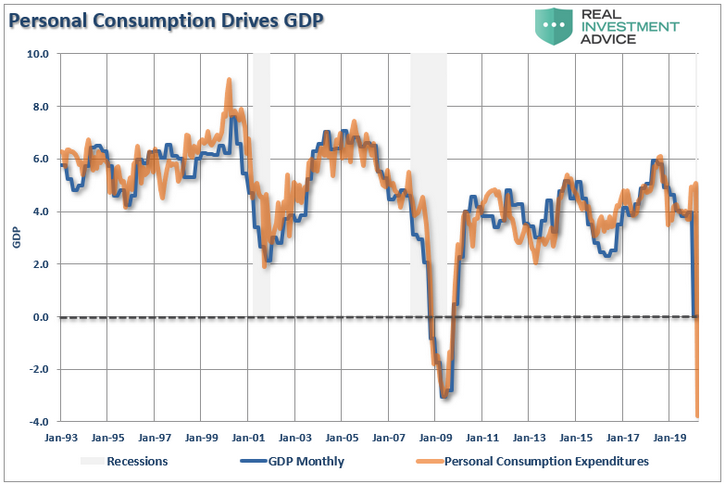
The most substantial weighting in GDP is personal consumption expenditures (PCE). Over the prior economic expansion, lasting a decade, PCE constituted 74% of GDP. Since 1948, it has averaged 65%.
The outsized significance of consumption and the secondary effect it has on the other contributors to GDP, allows economists to use PCE as a proxy to forecast economic growth. Statistically, using three-year moving averages, PCE and Real GDP have a correlation of .7789.
Jobs > PCE > GDP
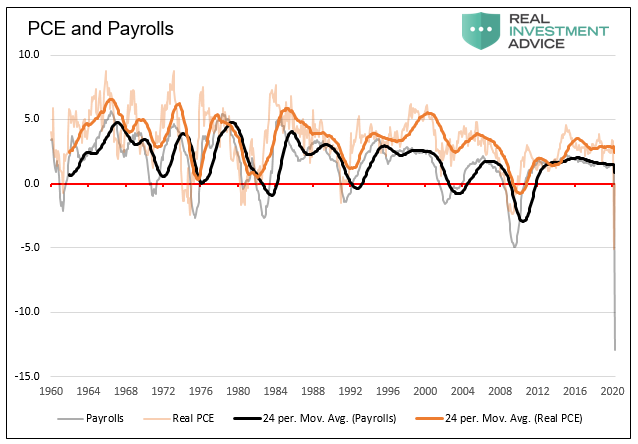
As PCE drives GDP, labor drives PCE. The vast majority of families in the U.S. work to consume. Some wealthy households can rely on investments and savings, and some poor citizens depend on the government. However, the large majority of citizens must consume its wages. Accordingly, PCE is mostly a function of employment and the size of our paychecks.
The graph below shows the year over year change in the number of employed versus the year over year change in PCE. When averaged over two years, as the darker lines show, the correlation is clear.
Forecasting Employment
Given the strong relationship between the labor market and consumption, we can use labor forecasts to arrive at PCE estimates. This is a two-step process.
First, current data and near-term expectations afford a forecast for when and at what level the labor market may trough. Second, we use prior recession data to calculate the rate at which the labor market may recover from the trough.
Step 1– As of the April 2020 BLS jobs report, the number of people counted as employed fell 13.5% to 131 million. Economists expect it to fall another 6% to 123 million when the May report is released this Friday. We aggressively presume that the May report will mark the low point in jobs and that the number of employed will increase going forward.
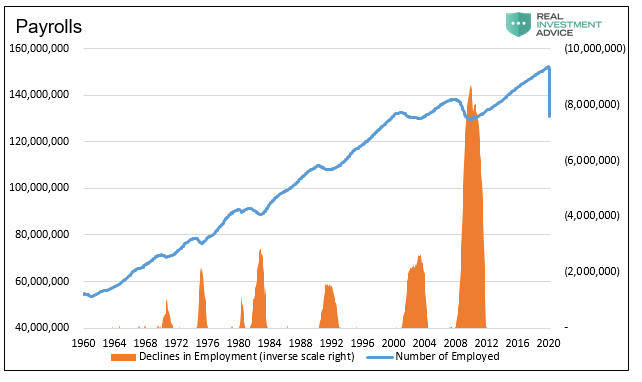
Step 2– The graph below helps illustrate the rate in which job growth might return to its prior peak. The orange bars show the depth of employment losses in terms of number and time. We invert the second y-axis for comparative purposes.
The most recent, 2008/09 recession, took 76 months for the number of jobs to go from peak to trough and back to the prior peak.
2008
When considering the last three recessions, the recession of 2008/09 is the best proxy to model future expectations. Not only was it the most recent recession, but it best captures our current mindset and economic standing.
The recession was broader based, and affected more industries, citizens, and nations, than the prior recessions of 1990 and 2001.
The 2008/09 recession and recovery also required significantly more fiscal and monetary policy to boost economic activity.
The amount of federal, corporate, and individual debt was significantly lower in 1990 and 2001 then 2008/09.
The natural economic growth rate for 1990 and 2001 was higher than the rate going into the 2008/09 recession.
Our current economy is saddled with more debt than the last recession, and the natural rate of growth has diminished over the previous ten years. As we will share in a future article, the economic growth rate going forward may be half of the already weak pace heading into the current recession.
As has progressively been the case, new debt issuance to fight the current recession will cost us in the future. Accordingly, we think the 2008 experience is an optimistic proxy to analyze the time and rate at which the labor market might recover. In fact, The 2008/09 scenario may likely be the absolute best-case scenario. The number of job losses is already much more severe than that seen in the financial crisis, and the duration of the recovery seems certain to be longer than that episode.
In the 2008/09 recession, the payrolls number troughed two years after the recession started, falling 6.3% from the prior peak. From that low point, it took over four years for the labor market to fully regain the losses. In total, the labor market required six years to recover the pre-recession peak.
2020
The number of people the BLS considers employed peaked in February 2020 at 156.463 million. It dipped by a little less than one million in March and then plummeted in April by over 25.4 million to 131.045 million.
Today, the range of estimates for the number of current employees is wide. For our analysis, we assume that the May jobs report will mark the trough. The current estimate for the number of employed is 123 million.
Putting 2 and 2 Together
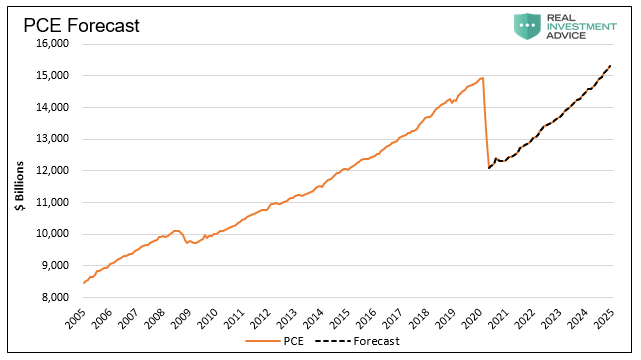
To review, our forecast assumes that jobs will trough in May. From June going forward, jobs will recover at the same rate and duration as in the aftermath of 2008. Using this assumption we create the PCE forecast shown below.
If the historical relationship between labor and PCE holds up, and consumption continues to be the predominant contributor to GDP, we should not expect GDP to regain prior highs until 2025.
Summary
The recovery we laid out above is not a “V” or “U” shape. It resembles the Nike swoosh logo with a sharp decline and a long period of recovery.
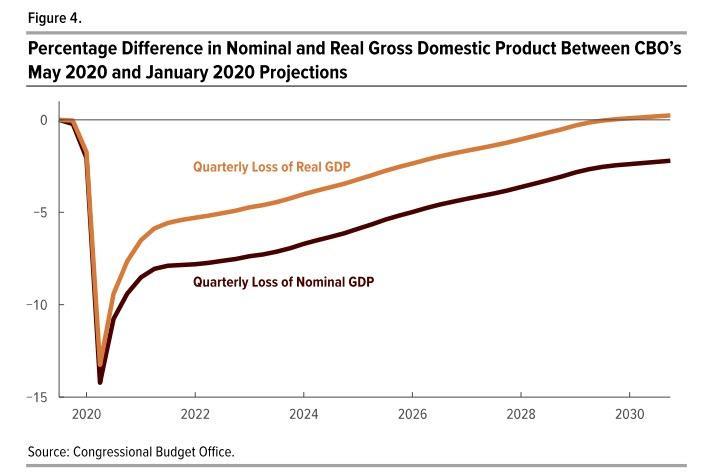
Interestingly, the Congressional Budget Office (CBO) agrees with us in that recovery will be much longer than most economists forecast. The CBO’s Nike swoosh forecast below shows the economy will not fully recover for at least a decade.
As mentioned, this analysis assumes a recovery akin to what the economy experienced in 2008. While 2008 was tough, the natural rate of economic growth at the time was more robust and the amount of debt was less.
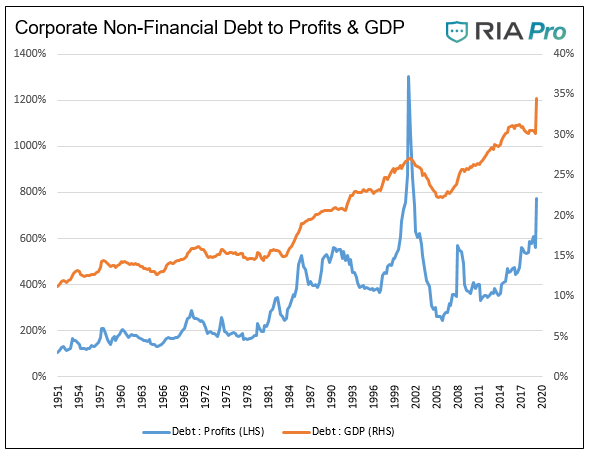
Since 2008, the ratio of Federal debt to GDP has almost doubled. It now sits close to 120%, well beyond the rate that many economists consider sustainable. Corporate debt to GDP and profits are also growing at unsustainable rates, as shown below.
The simple takeaway is that debt will weigh even more heavily on the current path of growth as the economy recovers.
Economists, when forecasting economic activity, often fail to account for the existing headwinds fully and rarely the new ones. Are they willfully ignorant, or might their employers have a vested interest in portraying a favorable outcome?
via ZeroHedge News https://ift.tt/2XuqSgA Tyler Durden
Snapchat Will No Longer Promote Trump’s Account For Inciting ‘Racial Violence And Injustice’ Tyler Durden
Wed, 06/03/2020 – 13:12
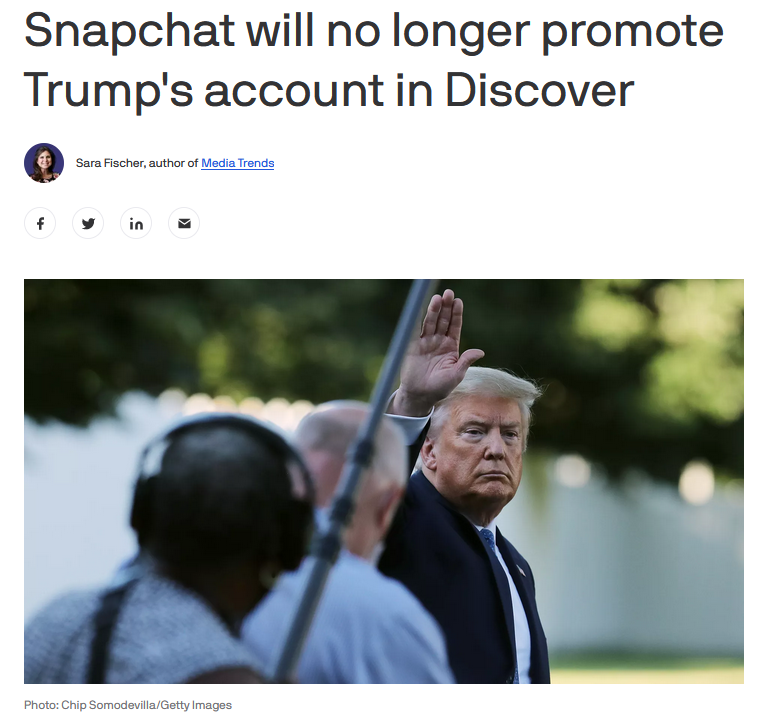
Snapchat – whose employees were busted spying on users sexting each other– has joined the digital resistance, announcing that they will no longer promoting President Trump’s account on its “Discover” page of curated content, according to Axios – which couldn’t make their disdain for Trump any more transparent if they tried.
“We will not amplify voices who incite racial violence and injustice by giving them free promotion on Discover,” the company said on Wednesday.
The ‘meddling’ move comes after Trump tweeted comments which were interpreted by some to glorify violence during protests over racial injustice.
….These THUGS are dishonoring the memory of George Floyd, and I won’t let that happen. Just spoke to Governor Tim Walz and told him that the Military is with him all the way. Any difficulty and we will assume control but, when the looting starts, the shooting starts. Thank you!
Why it matters: Snapchat is taking action on the president’s account for comments he made elsewhere. That’s going farther than other big tech firms and signals a commitment to aligning content served to users with core values, rather than making moderation decisions based narrowly on each post made on its own platform.
What they’re saying: “We are not currently promoting the President’s content on Snapchat’s Discover platform,” a spokesperson for Snapchat parent Snap tells Axios. The company made the decision over the weekend.
“We will not amplify voices who incite racial violence and injustice by giving them free promotion on Discover,” the spokesperson added.
“Racial violence and injustice have no place in our society and we stand together with all who seek peace, love, equality, and justice in America.”
Yes, but: This doesn’t mean Trump’s account is being taken down. It will remain fully accessible to the public, so people who subscribe to his Snapchat account or search for his account will still be able to find his content.
Snapchat says it will no longer promote accounts belonging to people who ‘incite racial violence and injustice, even if its done off of their platform.‘
In a Sunday memo, Snap CEO Evan Spiegel signaled his virtue, writing “Our Discover content platform is a curated platform, where we decide what we promote. We have spoken time and again about working hard to make a positive impact, and we will walk the talk with the content we promote on Snapchat.”
He added that Snapchat “may continue to allow divisive people to maintain an account on Snapchat, as long as the content that is published on Snapchat is consistent with our community guidelines, but we will not promote that account or content in any way.“
Just in time for election season to heat up…
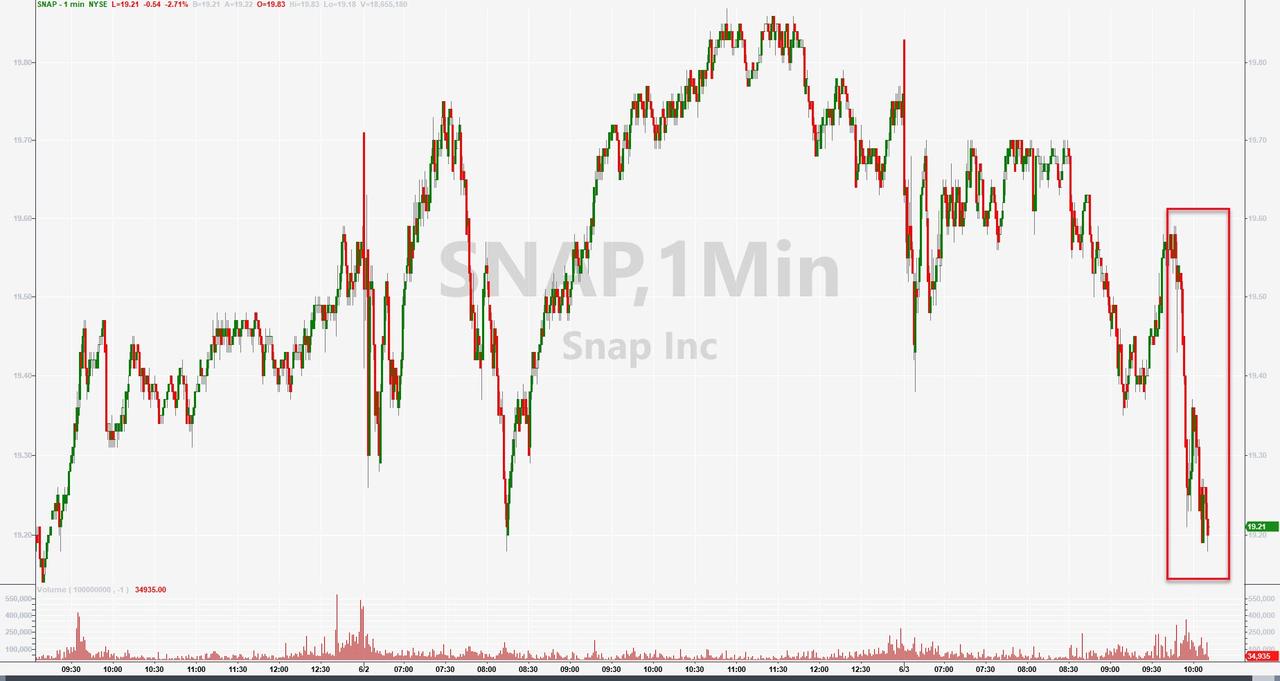
Meanwhile, virtue signaling can be expensive:
via ZeroHedge News https://ift.tt/2XYsHRP Tyler Durden
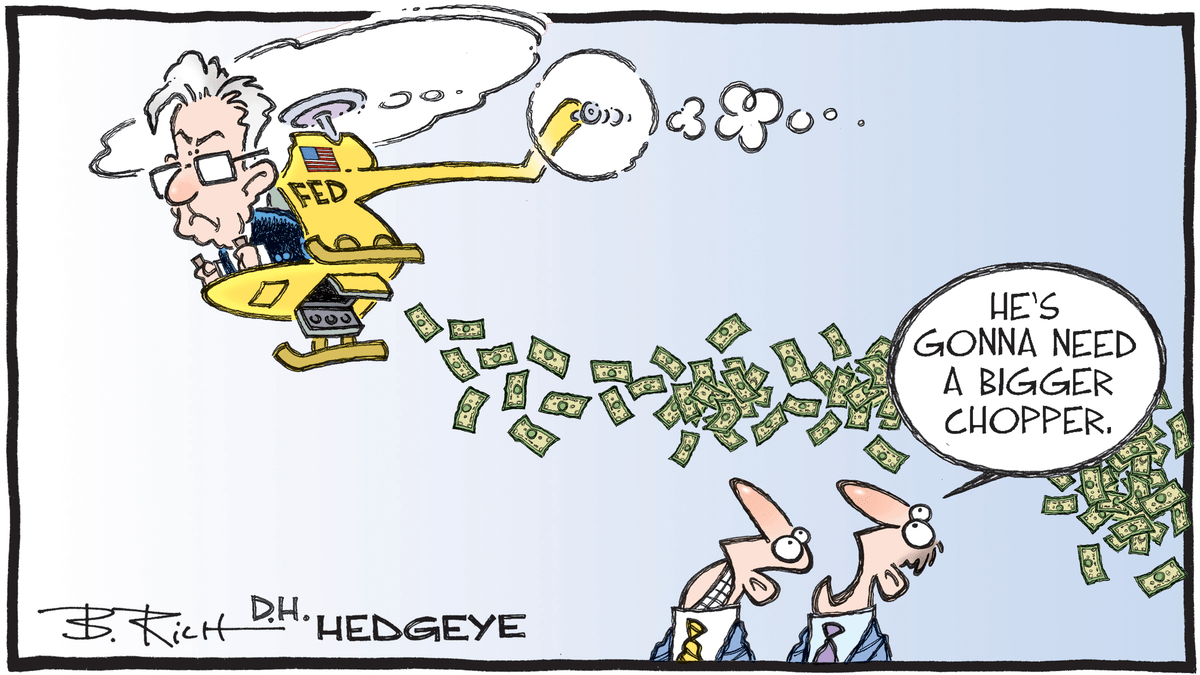
While municipalities around the nation are demanding more ‘free money’ helicopter drops from the government, The Fed has just stepped up its efforts to bailout America’s states and cities.
The Federal Reserve Board on Wednesday announced an expansion in the number and type of entities eligible to directly use its Municipal Liquidity Facility (MLF).
Under the new terms, all U.S. states will be able to have at least two cities or counties eligible to directly issue notes to the MLF regardless of population. Governors of each state will also be able to designate two issuers in their jurisdictions whose revenues are generally derived from operating government activities (such as public transit, airports, toll facilities, and utilities) to be eligible to directly use the facility.
In addition to the expanded terms outlined above, the MLF continues to be directly open to U.S. states, the District of Columbia, U.S. cities with a population of at least 250,000 residents, U.S. counties with a population of at least 500,000 residents, and certain multistate entities.
The MLF was established under Section 13(3) of the Federal Reserve Act, with approval of the Treasury Secretary. It will offer up to $500 billion in lending to states and municipalities to help manage cash flow stresses caused by the coronavirus pandemic.
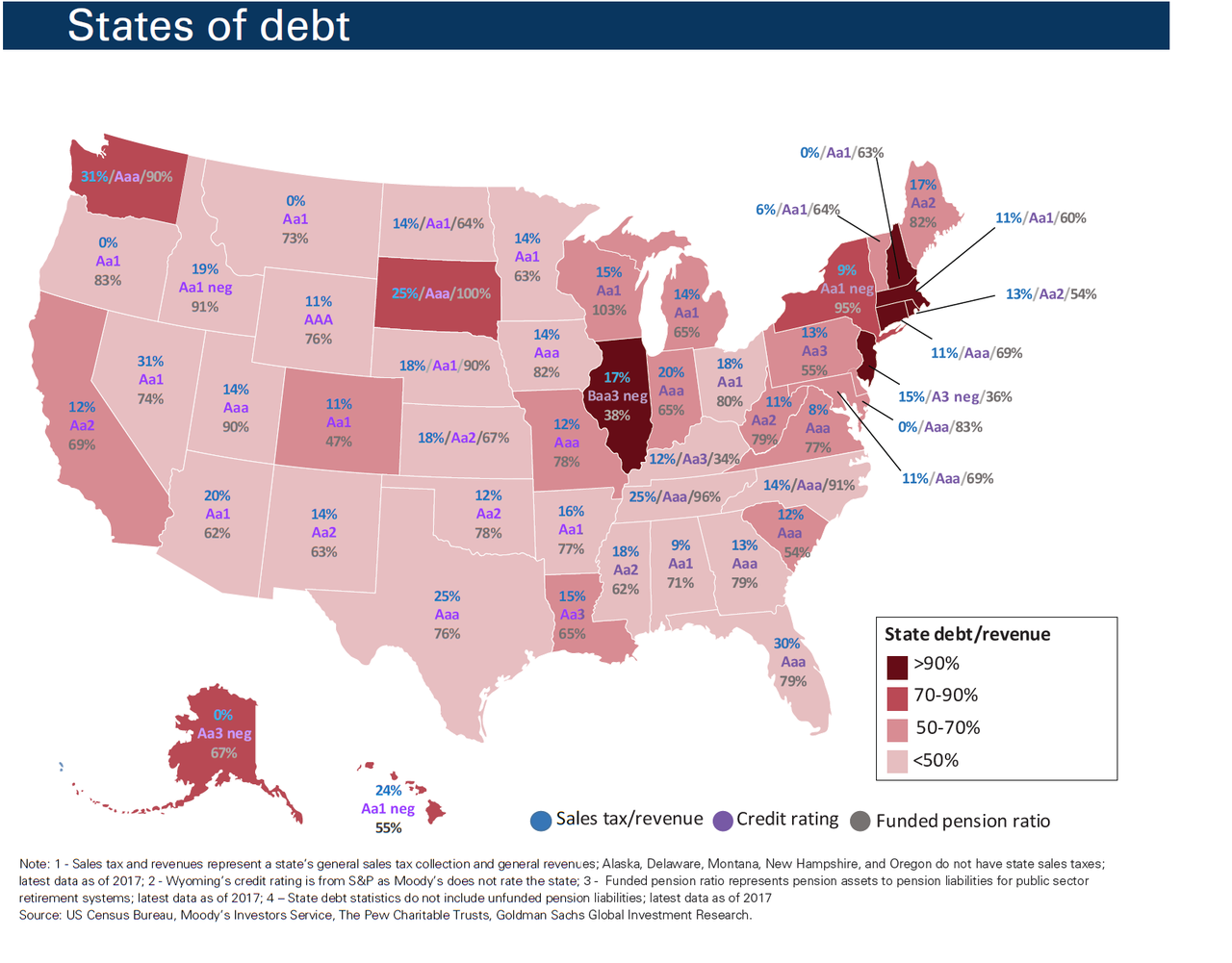
Of course, this “loan” from The Fed is not as much fun to spend on frivolous shit as “free money” from the government but it is clear that State finances are bad and getting bad-er…
And now is not the time to cut the pay of the police force, right?
via ZeroHedge News https://ift.tt/2zW3H5K Tyler Durden
Pilgrim’s Pride CEO, Three Other Executives Indicted For Price Fixing; Poultry Stocks Plunge Tyler Durden
Wed, 06/03/2020 – 13:04
One month after news that attorneys general for 11 Midwestern states urged the Justice Department on Tuesday to pursue a federal probe into potential price-fixing by US meat producers during the coronavirus pandemic, just after noon on Wednesday poultry stocks plunged on news the DOJ filed its first charges in an ongoing criminal antitrust probe accusing the CEO of Pilgrim’s Pride, one of the country’s biggest chicken producers, along with three other industry executives were indicted of participating in a “conspiracy to fix prices and rig bids for broiler chickens.”
The one-count indictment, returned by a federal grand jury in Colorado, alleges current and former senior executives at Pilgrim’s Pride and Claxton Poultry Farms fixed prices and rigged bids from 2012 to 2017.
Colorado-based Pilgrim’s is the nation’s second largest producer, and according to wire reports, its CEO Penn was charged, as was a former Pilgrim’s vice president, Roger Austin. The president of Georgia-based Claxton, Mikell Fries, and a vice president, Scott Brady, were also indicted according to the Journal.
Collusion accusations have shadowed the $65 billion U.S. chicken industry since late 2016, when restaurant companies and other poultry buyers sued major poultry producers, accusing them of illegally coordinating operations to inflate prices. The chicken companies, including Tyson Foods Inc., Pilgrim’s Pride, Sanderson Farms Inc. and Perdue Farms Inc., have denied those allegations.
Similar price-fixing lawsuits since then have been filed against chicken companies by some of the biggest sellers of food, including supermarket giants Walmart Inc., Kroger Co. and Albertsons Cos., as well as restaurant suppliers Sysco Corp. and US Foods Holding Corp., which supply meat to hundreds of thousands of food service customers.
The DOJ’s probe into chicken pricing emerged last year when government attorneys sought to intervene in that ongoing litigation, seeking evidence from plaintiffs’ attorneys and requesting a pause on further evidence-gathering to protect a grand jury’s investigation. The Justice Department later issued subpoenas to Tyson, Pilgrim’s, Sanderson and other poultry producers. The companies said they would cooperate with the government’s requests.
Ironically, in the context of some other prices, poultry price increase have been rather tame: wholesale chicken prices climbed just 11% from mid-2012, when the U.S. Department of Agriculture began calculating national prices for whole chickens, until the end of 2018. Then chicken prices fell about 27% from the start of 2019 through the end of February 2020 as chicken companies ramped up production and expanded plants, anticipating bigger exports after new trade deals were finalized.
The chicken industry is dominated by a handful of companies after decades of consolidation. The five largest companies control 61% of U.S. chicken production, according to Watt Global Media. Tyson, the largest, represents 21%. Pilgrim’s represents about 17% of the U.S. market, according to Watt, and is estimated to produces about 13 billion pounds of chicken annually. Claxton, based in Georgia, produces about 300 million pounds of chicken a year.
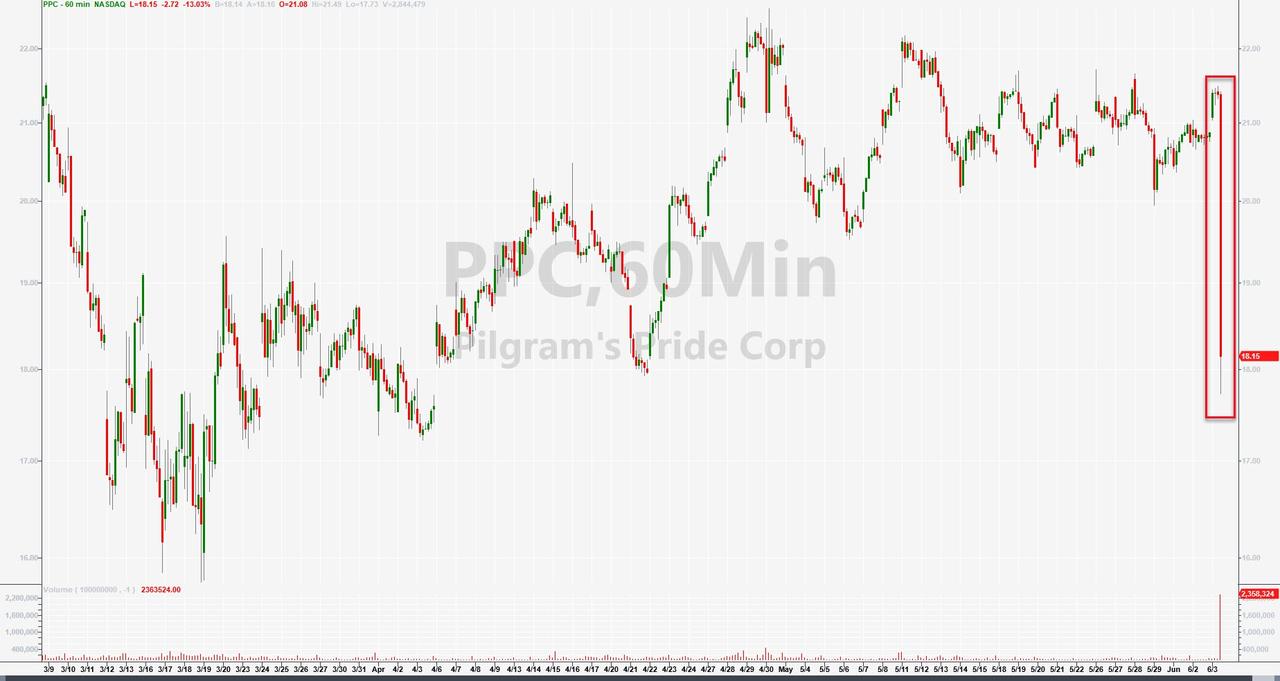
News of the probe sent shares of poultry producers tumbling, with Pilgrim’s Pride plunging to two-month lows….
… with Tyson, Sanderson Farms, and Hormel also falling.
via ZeroHedge News https://ift.tt/3dqvbPz Tyler Durden
Wal-Mart Removes Guns, Ammo From Sales Floors To Deter Looters Tyler Durden
Wed, 06/03/2020 – 12:59
Wal-Mart stores in “select locations” have a message for the looters and rioters who terrorized NYC, LA and other cities over the weekend: “no guns here!”
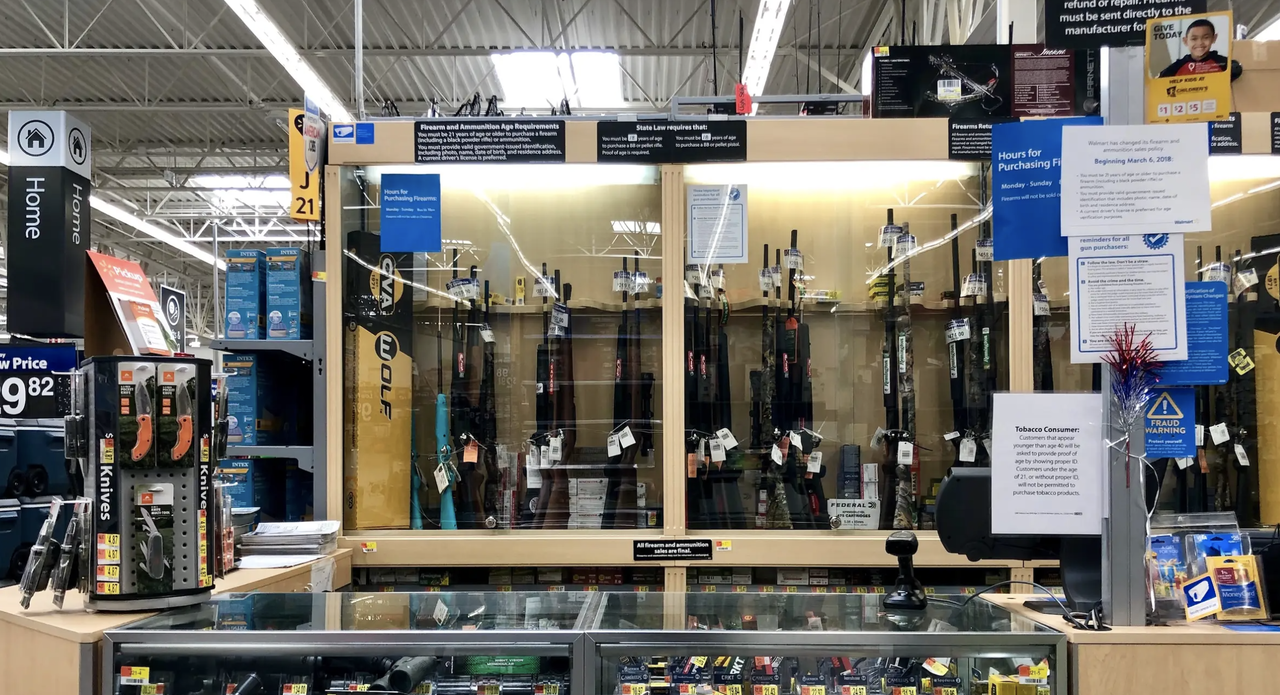
Although we tried to explain to looters why robbing a gun store probably isn’t a good idea, and not just because you might get shot by the proprietor, Wal-Mart is taking no chances, and has decided to remove guns and ammunition from sales displays and sales floors and store them instead in a “secure room” on the property. This comes after the store barred customers from openly carrying guns inside last year, BI reports.
However, we noticed one interesting detail in the story: Wal-Mart locations near where the riots are happening typically don’t sell firearms. In fact, looters even in Texas would need to travel quite a ways to reach a Wal-Mart that as them. This raises another question: Is Wal-Mart simply using this crisis as an excuse to stop selling guns, as corporations around the US burnish their progressive bona fides in solidarity with the movement for racial justice?
The company barred the sale of handguns in Alaska last year – the only state where they were still sold – and has repeatedly promised to stop selling guns, or tighten its restrictions on sales, following mass shootings like the shooting at Marjorie Stoneman Douglas on Valentine’s Day, 2018.
Then again…
Walmart Employee stacking pallets in front of entrances to protect this store from looting in Raytown Mo. Liberal politicians keep the false narrative that the protests are peaceful. FYI…we have eyes and see through your bull shit. #alllivesmatterpic.twitter.com/LqMnFFBJwF
Walmart CEO Doug McMillon said Wednesday that “our problems as a nation run much deeper than one horrible event…until we as a nation confront and address these realities we will never achieve the best of what we can be.”
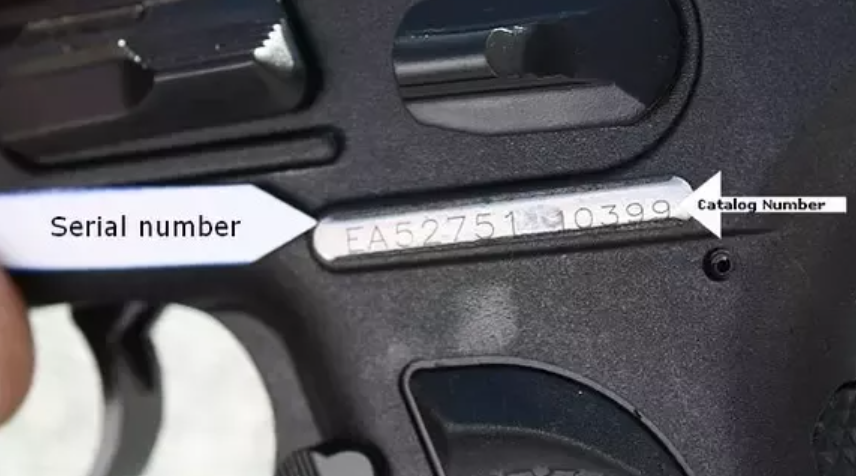
As for why looters shouldn’t steal guns if their aim is profit: serial numbers almost guarantee the “hot” merchandise will be seized and the seller arrested.
But if your aim is simply to cause mass chaos in the streets of Philly…
via ZeroHedge News https://ift.tt/2U42lNq Tyler Durden
Fed Unexpectedly Deviates From POMO Schedule, Buys Only 70% Of Scheduled Treasurys Tyler Durden
Wed, 06/03/2020 – 12:45
For nearly three months, ever since the Fed launched Unlimited QE on March 23, the New York Fed had published a weekly schedule every Friday of how many Treasurys it would purchase the coming week. In fact, just last Friday the Fed announced that this week it would purchase $22.5BN for the full week, on average $4.5BN per day (down from $5BN last week), as per the following daily breakdown.
And while the daily POMO amount has varied day by day, one thing was immutable: whatever the Fed said it would buy in any given POMO block is precisely how much it would accept from the open market.
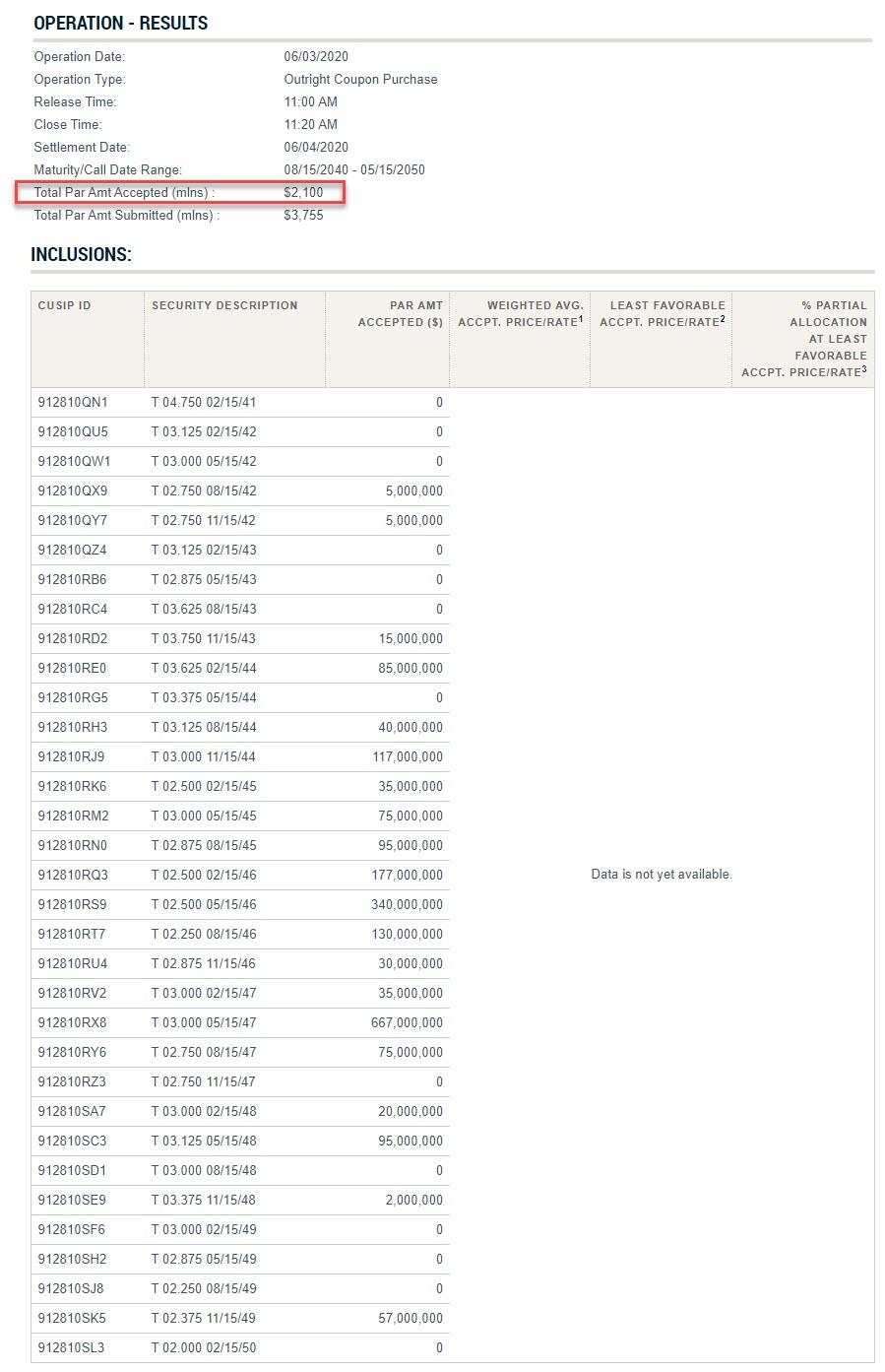
Until today, because whereas the Fed had previously said it would purchase $3 billion in 20-30 year bonds in Wednesday’s 11am POMO operation (see table above), the Fed today surprised Fed frontrunners and general market watchers, when it announced that out of the $3.755BN in bonds submitted, it accepted just $2.1BN, or 70% of the full amount.
Today’s shrunk POMO, which was the only one on the day, also meant that Wednesday’s total TSY purchases by the Fed were the lowest since the start of the Fed’s emergency operations in late March.
So far there has been no explanation for the unexpected deviation from the schedule, although a possible reason is the collapse in the Submitted to Accepted (or Offer to cover) as a result of the sharp increase in long-end bonds being purchased by the Fed, which after several weeks in the $1.5BN range ($1.450BN on May 21, $1.75BN on May 27), was nearly doubled to $3 billion, and yet there was just not enough supply, as traders balked at selling their highest yielding Treasury paper. Indeed, the offer to cover was 1.788x (and would have been 1.25x had the Fed not shrank the size of the amount of debt accepted), down from 2.13x and 2.64x in the last two 2040-2050 POMOs respectively.
Of course, this would run counter to the latent concern in the market that the Fed isn’t monetizing enough debt across the curve, especially with trillions more in issuance coming on deck to find the massive fiscal stimulus.
In any event, the surprising deviation from the POMO schedule has failed to impact the market so far, with both 10Y and 30Y yields trading near session highs, with the latter last seen at 1.550%.
via ZeroHedge News https://ift.tt/304eZQb Tyler Durden
Stocks Stumble As WHO Sees “No Evidence” Of Any Drug Reducing Mortality Tyler Durden
Wed, 06/03/2020 – 12:20
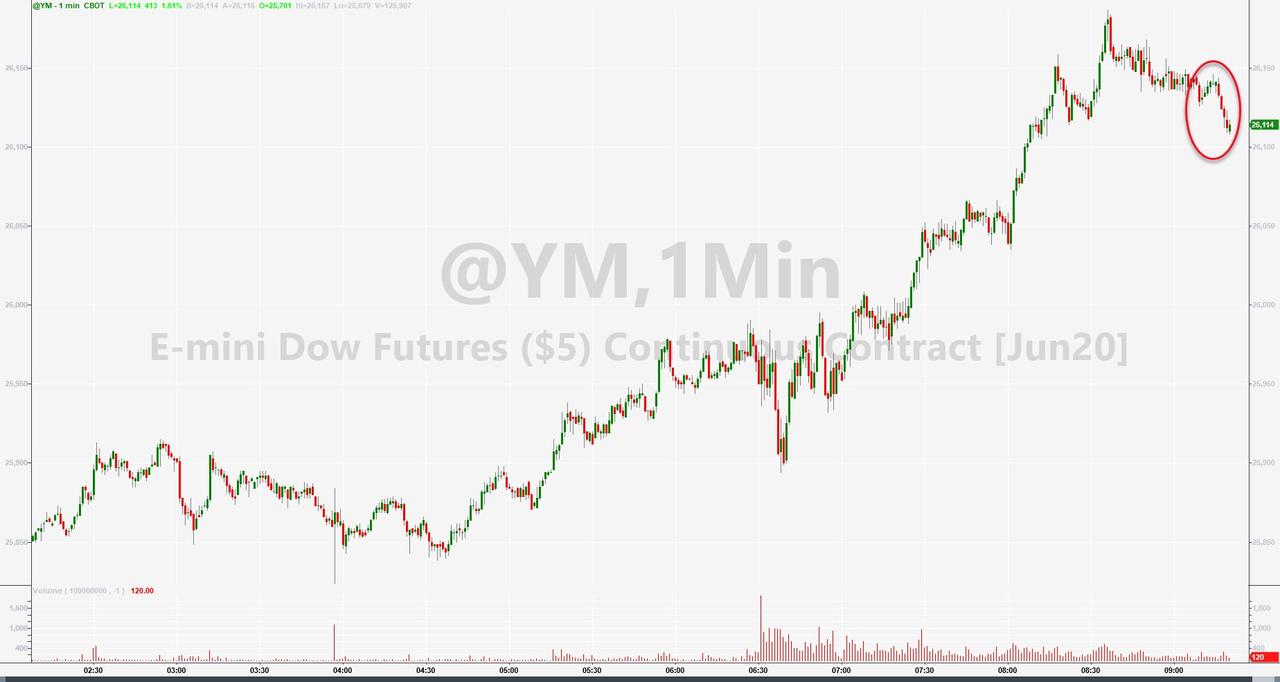
Having soared 1000s of points on the back of vaccine hopes, WHO’s just puked in the punchbowl, dismissing any hopes of a vaccine or treatment by stating that there is “no evidence that any drug is reducing mortality of patients that have COVID-19.”
The market – for now – has barely reacted…
Can the Fed print some more vaccine?
via ZeroHedge News https://ift.tt/2XvcqVO Tyler Durden
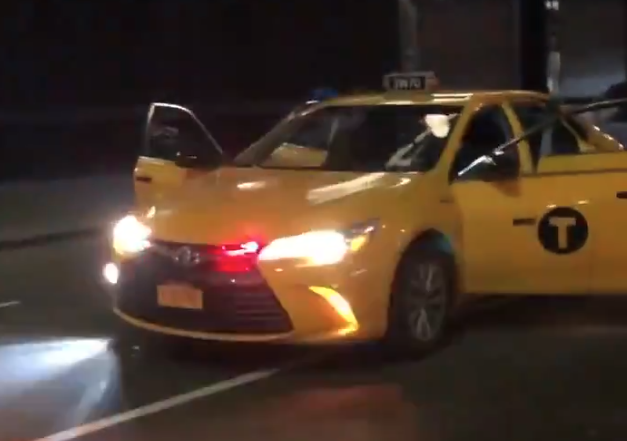
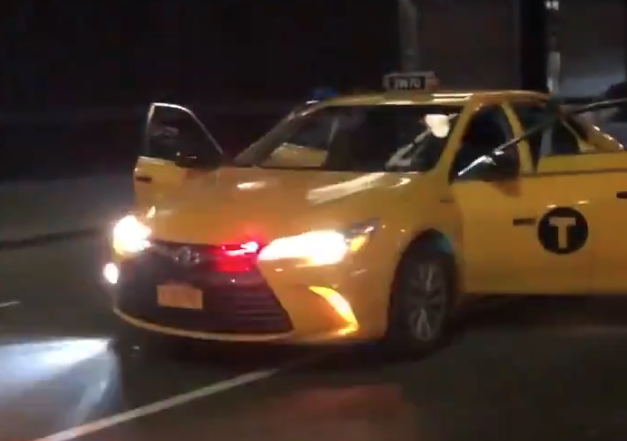
As social unrest rages in New York City, a video surfaced on social media Tuesday, showing what appears to be an “undercover” police car that resembles a Yellow Cab NYC Taxi.
The video, first posted via Twitter handle @dertyduchess, is narrated by a passerby, who spots an “NYC cab cop car.” The person went onto say, “this is the craziest shit I’ve seen.” As the person walks by the vehicle, they pointed out how “someone” was being detained inside the cab.
THE NYPD IS DISGUISING AS TAXI DRIVERS AND TRICKING PROTESTERS THAT ARE TRYING TO GO HOME!!! SPREAD THIS AND BE SAFE pic.twitter.com/hc4uV3BqXJ
One Twitter user responded to the video by saying: “Cops in NYC pretending to be taxi drivers so they can trap protesters… I have never in my life seen or heard anything as SICK and TWISTED as this….,” tweeted @hisnameiselie.
NYPD Cop Cab
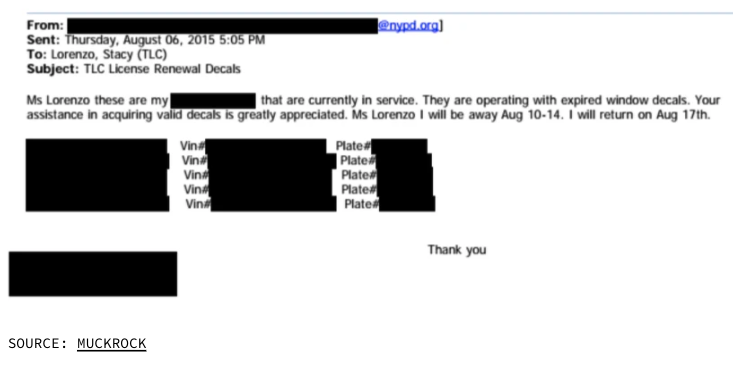
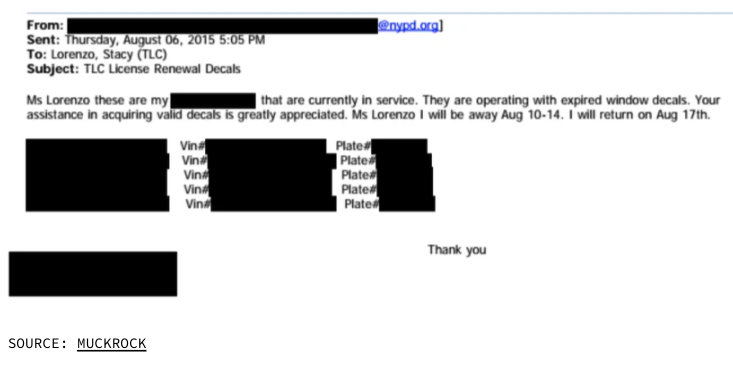
While there are no official reports that NYPD uses undercover cabs, Motherboard filed several requests to the NYPD through the Freedom of Information Act to examine the issue more in-depth back in 2015. What they found is that NYPD operated a small fleet of these cars back then. However, the fleet has grown to new taxi cab models, as shown in the video above, with what appears to be a new Toyota corolla.
h/t Motherboard
A video from 2013 shows an NYPD undercover taxi in action.
As a note to rioting Americans, something we’ve written in the last several days, the lesson to be learned today is that while fleeing a protest or store that was looted in New York City — hoping into a taxi for the great escape could result in an arrest.
via ZeroHedge News https://ift.tt/3cwe7Xc Tyler Durden
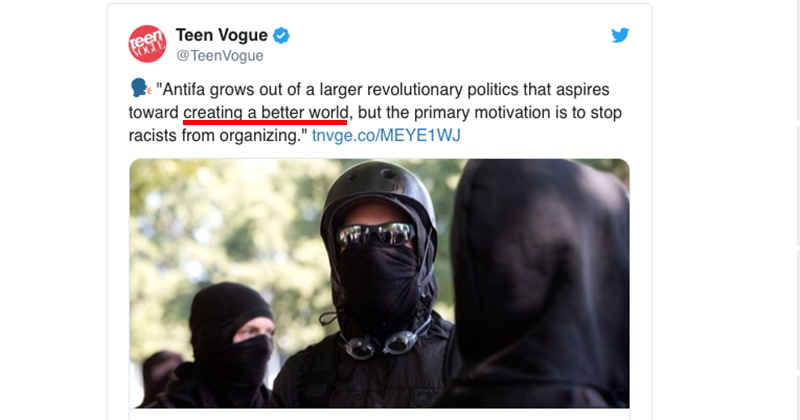
As violence, looting and rioting continue to plague almost every American city, virtue signalling leftist publication Teen Vogue told its readers that the ring leaders of the carnage, Antifa, really just wants to create a better world.
“Antifa grows out of a larger revolutionary politics that aspires toward creating a better world, but the primary motivation is to stop racists from organizing,” a tweet from the publication reads.
🗣 “Antifa grows out of a larger revolutionary politics that aspires toward creating a better world, but the primary motivation is to stop racists from organizing.” https://t.co/ShS2RPfDN2
Teen Vogue’s assertion is based on a three year old interview with then Dartmouth College ‘historian’ Mark Bray, a known Antifa sympathiser who constantly tries to defend the organisation, and has even donated the profits of a book he wrote to Antifa.
“The vast majority of what they do does not entail any physical confrontation,” Bray claimed in the interview.
Bray also claimed that most of what Antifa does is “researching white supremacists and neo-Nazis”.
In an op-ed for The Washington Post Monday, Bray, who now lectures at Rutgers, described that the looting and rioting as “‘violent’ protest tactics.” with extra quotation marks around ‘violent’.
Bray suggests that Antifa protesters are engaging in “social revolutionary self-defense” against police, further claiming that the violence is merely “the targeted destruction of police and capitalist property”.
Refusing to call the rioting what it is, Bray described it as “a variety of forms of resistance during this dramatic rebellion.”
Someone more qualified than Bray to describe exactly what Antifa really is is Former Antifa member Gabriel Nadales, who now admits that what the organisation does is the “very definition of domestic terrorism.”
via ZeroHedge News https://ift.tt/3gRycug Tyler Durden