Russia Reports 30,000 New COVID-19 Cases In 72 Hours As Explosive Spread Continues: Live Updates

Russia Reports 30,000 New COVID-19 Cases In 72 Hours As Explosive Spread Continues: Live Updates

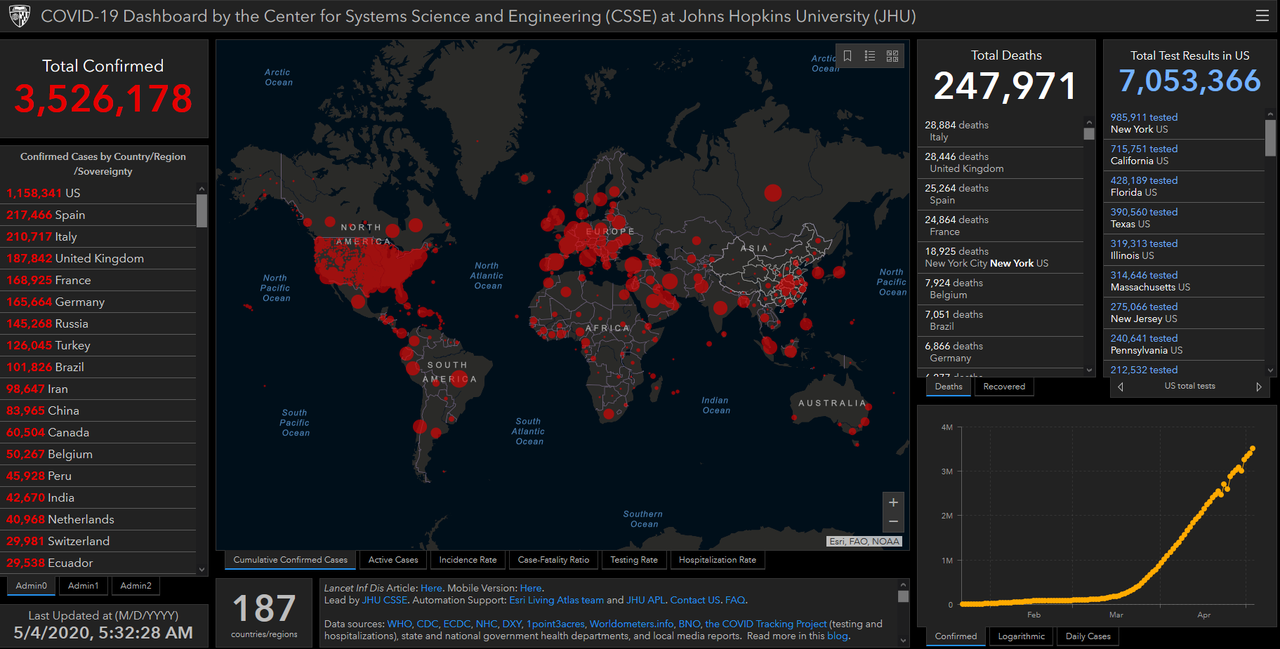
Last night, we reported that the number of confirmed coronavirus-linked deaths around the world had surpassed 250,000. The astronomical new milestones reached over the past week – the number of ‘confirmed’ cases topped 3 million while deaths topped a quarter-mil – belie the reality that from Asia, to Europe to the US, restrictions on personal movement and business activity are being rolled back.

One of the biggest news stories of the week so far is an NYT report citing ‘projections’ ordered by the CDC showing the number of deaths doubling to 3k/day by next month. The NYT cited this as evidence that the push to reopen is premature, even as the CDC and the researchers at Johns Hopkins who compiled the projections played down their importance and predictive qualities.

Expanding on those criticisms, former FDA Director Dr. Scott Gottlieb explained that the projection is mostly meaningless during an appearance on CNBC’s “Squawk Box”. Gottlieb explained that considering how far we are into this outbreak, it’s surprising how little researchers know for certain about the virus.

“What they do is they work with outside academic groups – and in this case they worked with a group at Hopkins that was under contract. This was one of a number of different runs that the Hopkins researchers came up…it’s not at all clear that this is a definitive model…of what might happen,” Gottlieb said.

On the other hand, Gottlieb added that the 3,000/day death toll projection isn’t the worst that he’s seen.

“No, from what I’ve heard is there were others that were worse. As we start to reopen the economy more – you saw airline travel pickup Friday for the first time in 30 days – they’re going to pick up. We are going to have a background of spread, and we are going to have to figure out what that looks like,” Gottlieb said.

Whether the US manages to start reopening without a massive surge in deaths is going to depend on a number of factors, Gottlieb explained.

“I think the issue going forward is going to be ‘where can you go to get tested?’ – but if you get to the point where doctors don’t want to run these tests because if you get a positive result you need to deep clean the office and quarantine your staff,” Gottlieb said.

Moreover, Dr. Gottlieb explained that the US outbreak actually hasn’t been subsiding. Most of the nationwide “progress” is largely due to the success that New York State has had bringing its outbreak – the worst of any state in the US – to heel. If one were to ‘back out’ the New York numbers from the national data, Gottlieb explained, the picture they paint is considerably less rosy. “You certainly can’t conclude that the epidemic has reached its peak…” Gottlieb said.

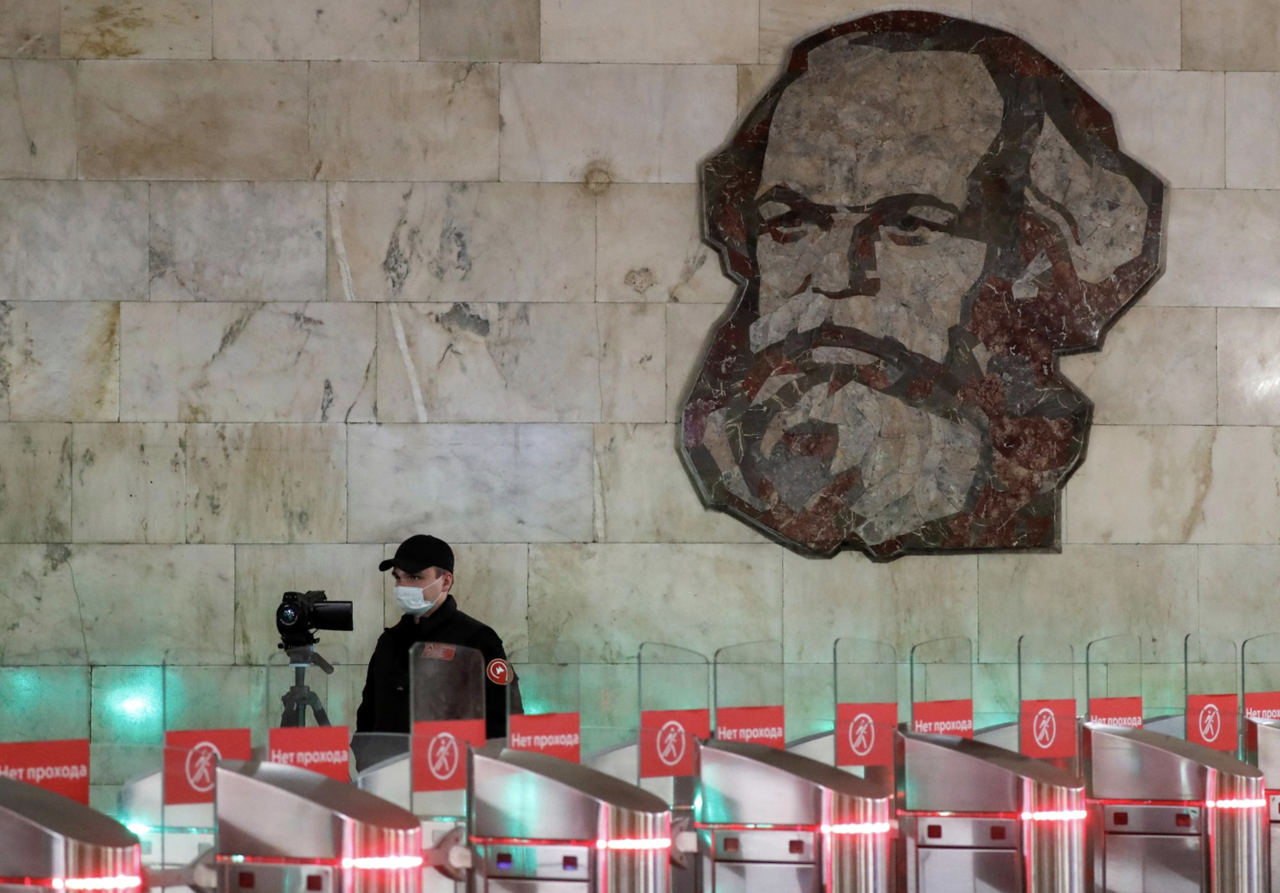
Despite worries about a ‘second wave’, the US and EU4 – Italy, Spain, France and Germany –  have continued to push toward reopening, Russia has continued to move in the opposite direction. According to Reuters, the number of new coronavirus cases reported in Russia on Tuesday has risen by 10,102 over the past 24 hours, compared with a record 10,581-case jump the previous day. Over the last 72 hours, Russia has confirmed some 30k+ cases, bringing its total confirmed caseload to 155,370, along with 1,451 deaths, with many more cases likely still unconfirmed, Reuters reported.
New York Governor Andrew Cuomo and California Gov Gavin Newsom took the public by surprise yesterday when they each announced plans to speed up the phased reopening in their states. Cuomo ordered local officials to start preparing “now” for May 15, when New York’s reopening is expected to start. In California, Gov Newsom – who just last week said it was too early to speculate about a reopening date – said that some more retail businesses in his state would reopen by the end of the week. Germany’s provincial leaders reportedly agreed during a phone call with Merkel on Tuesday to reopen more businesses and allow more students to return to class. On Tuesday, Germany reported a fifth consecutive decline in the number of new cases being confirmed.

On Tuesday morning, the biggest news out of the US pertained to a vaccine trial run by Pfizer: the drug giant said Tuesday that the first patients participating in Pfizer’s massive vaccine trial have been dosed. The study will examine the efficacy of four trial drugs.

The number of new coronavirus cases confirmed in Germany declined for the fifth day in a row on Tuesday, assuaging concerns about a recent uptick in Germany’s rate of viral spread seen after it started allowing some more businesses to reopen.

Hong Kong’s government said Tuesday it would further relax restrictions on public gatherings and allow gyms, cinemas and beauty parlors to re-open by the end of the week as the flow of new coronavirus cases slows to a trickle, with practically every new case found to be imported, rather than locally transmitted.

Australia and New Zealand said efforts to resume travel between the two countries would take some time, as they cautiously re-open their mostly shuttered economies after containing outbreaks of the novel coronavirus.

A team of analysts at Goldman Sachs published a research note yesterday arguing that Sweden’s strategy for confronting SARS-CoV-2 likely couldn’t be replicated in the EU and the US. Well, on Tuesday, Sweden’s chief epidemiologists said the country may have had its first case of the virus as early as November.

As far as we know, local authorities in Wuhan weren’t even aware of the outbreak in November.

Over the past few weeks, we’ve seen more evidence suggesting that domestic spread of SARS-CoV-2 had started in US and other countries as early as January. We can’t help but wonder: if accurate, this would cast the battle against the virus in a whole new light.


Tyler Durden

Tue, 05/05/2020 – 07:26

via ZeroHedge News https://ift.tt/3aZpN3W Tyler Durden
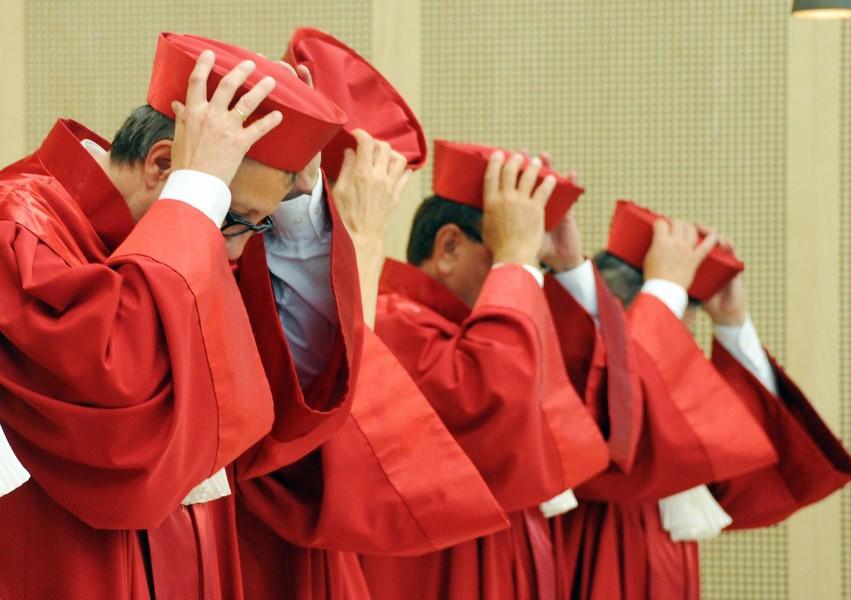
Top German Court Finds Some ECB Action Unconstitutional, Gives 3 Month Ultimatum To Fix QE Roiling European Markets

Top German Court Finds Some ECB Action Unconstitutional, Gives 3 Month Ultimatum To Fix QE Roiling European Markets

Germany’s Constitutional Court – sometimes called the Kardinals of Karlsruhe for their garb – stunned markets on Tuesday when it ruled that some actions by the European Central Bank may be unconstitutional, and that the central bank must explain its long-running stimulus program to support the European economy is “proportionate,” or else Germany’s Bundesbank will exit the scheme. The court gave the ECB a three month ultimatum to explain if the stimulus purchases of financial assets are needed (that shouldn’t be a problem) or else the Bundesbank must stop buying bonds. 

In a 7-to-1 ruling, the judges said that the quantitative easing program isn’t backed by European Union treaties. That’s why German authorities acted unconstitutionally by not challenging the €2.7 trillion plan.

The court said the ECB should have discussed a number of factors on how QE may have affected a wide swath of the economy, including shareholders, renters and insurance buyers. Reviewing those issues, and the proportionality of QE, would bring the program into compliance with EU law.

The Court found that the Federal Government and the German Bundestag violated the complainants’ rights under Art. 38(1) first sentence in conjunction with Art. 20(1) and (2), and Art. 79(3) of the Basic Law (Grundgesetz – GG) by failing to take steps challenging that the ECB, in its decisions on the adoption and implementation of the PSPP, neither assessed nor substantiated that the measures provided for in these decisions satisfy the principle of proportionality,” a press release read from the court. 

The ruling “only concerns the duty of the ECB to scrutiny its own action under a proportionality guideline and to document that. Thus, the ECB isn’t per se blocked in any way,” said court president Andreas Vosskuhle. “It depends on how the actions are being set up.”

“In short: German Constitutional Court sees no breaching of the prohibition of monetary financing of governments but German government and parliament should have challenged ECB’s decisions,” Carsten Brzeski, chief economist at ING Germany, said on Twitter, which is entertaining because if there ever was a time when the ECB is openly engaging in state financing is when it is monetizing debt and funding Eurozone deficits, as it is doing right now.

The ruling deals a blow to the ECB’s QE that has kept the euro zone’s economy afloat during several crises and raises the prospect of a new conflict between the ECB and its largest shareholder, Germany whose constitutional court has repeatedly provided drama in the ECB’s ongoing monetization of Eurozone debt, an act which is technically forbidden, over the past decade.

“The Bundesbank may thus no longer participate in the implementation and execution of the ECB decisions at issue, unless the ECB Governing Council adopts a new decision that demonstrates…the PSPP are not disproportionate to the economic and fiscal policy effects,” the judges said.

The court ruled that Bundesbank will not be allowed to participate in the ECB’s QE, called Public Sector Purchase Programme (PSPP), within the next three months “unless the ECB Governing Council adopts a new decision that demonstrates…the PSPP is not disproportionate to the economic and fiscal policy effects.”

“The economic policy effects of the PSPP furthermore include its economic and social impact on virtually all citizens, who are at least indirectly affected, inter alia as shareholders, tenants, real estate owners, savers or insurance policy holders. For instance, there are considerable losses for private savings. Moreover, as the PSPP lowers general interest rates, it allows economically unviable companies to stay on the market. Finally, the longer the programme continues and the more its total volume increases, the greater the risk that the Eurosystem becomes dependent on Member State politics as it can no longer simply terminate and undo the programme without jeopardising the stability of the monetary union,” 

The courted added: “On the same condition, the Bundesbank must ensure that the bonds already purchased and held in its portfolio are sold based on a — possibly long-term — strategy co-ordinated with the Eurosystem.” However, the court also said their decision did not apply to the ECB’s latest 750 billion euro pandemic-fighting virus stimulus program to support the regional economy. 

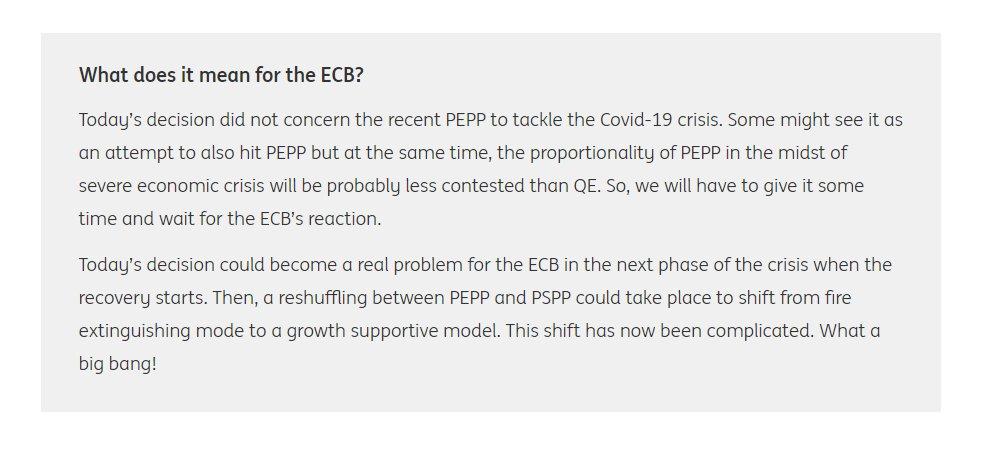
While the ruling is unlikely to have an impact on the ECB’s QE as it stands now, ING said the decision “could become a real program for the ECB in the next phase of the crisis when the recovery starts.”

The judges added the German central bank must also sell the bonds already bought, albeit based “on a – possibly long-term – strategy coordinated with” the rest of the euro zone. German bonds bought under the PSPP were worth 533.9 billion euros at the end of April.

The decision was met with dismay by policymakers, including ECB vice president Vitor Constancio who asked on twitter which law specifically prohibited the ECB’s QE:

Luis Garicano, a Spanish liberal member of the European Parliament, said the ruling posed a threat to the future of pan-European institutions.

“Very worried about the future of Europe post (the verdict). Europe cannot work if national Constitutional Courts decide unilaterally… Expect Hungary´s and Poland´s constitutional court to follow this precedent,” he said in a Twitter posting.

Amassing nearly 3 trillion euros of bonds since 2015, the ECB has long relied on bond purchases to support the economy through crises and a threat of deflation.

Tuesday’s ruling dates back three years ago when Germany’s top court raised objections to Bundesbank’s participation in the PSPP. PSPP was launched in 2015 and accounted for about 25% of the ECB’s monthly asset purchases. So far, PSPP purchases have totaled 533.9 billion euros at the end of April.

The lawsuit was filed by a group of businessmen and academics who are frequent critics of the EU. They argued that the ECB is improperly conducting economic policy instead of simply setting monetary policy.

“I assume that the ECB will follow the guidance, albeit without much enthusiasm,” said Joachim Wieland, a law professor at the University of Administrative Sciences, who sees the real challenge in the future relationship between the EU Court of Justice and national courts. “It’s an invitation for other countries to simply ignore decisions that they don’t like.”

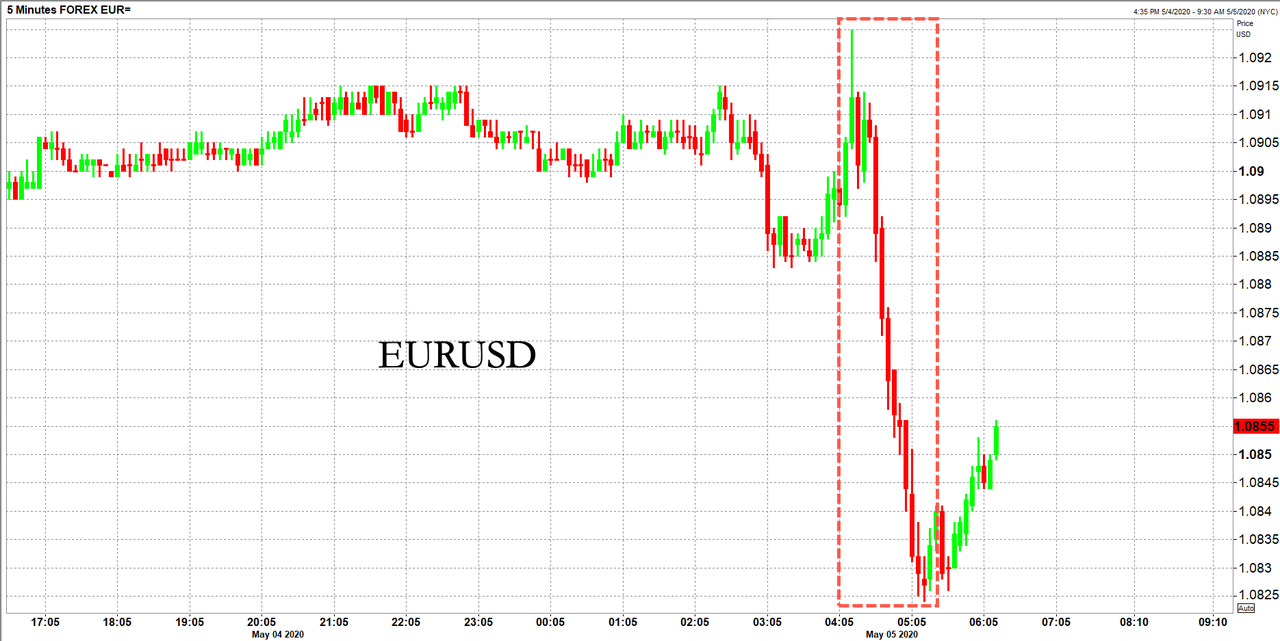
The euro tumbled about 80bps against the dollar as the market reviewed the court decision. 

The German DAX stock index plunged following the ruling, although it quickly recovered most of its losses.

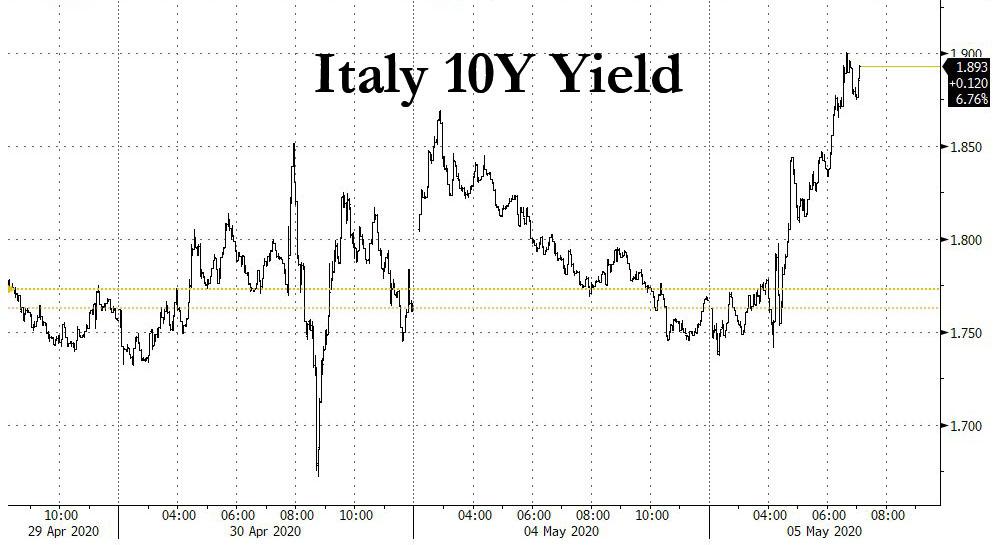
Italian bonds were hit the hardest on the ruling, with the yield on the 10Y BTP rising 15bps on the day.


Tyler Durden

Tue, 05/05/2020 – 07:05

via ZeroHedge News https://ift.tt/2YyXhUc Tyler Durden

Dollars Vs Deaths – US Equity Investors Have Now Made Over $100 Million For Every COVID Victim

Dollars Vs Deaths – US Equity Investors Have Now Made Over $100 Million For Every COVID Victim

Main Street vs Wall Street vs Blood on the Street…

Just some facts. Make of them what you will.

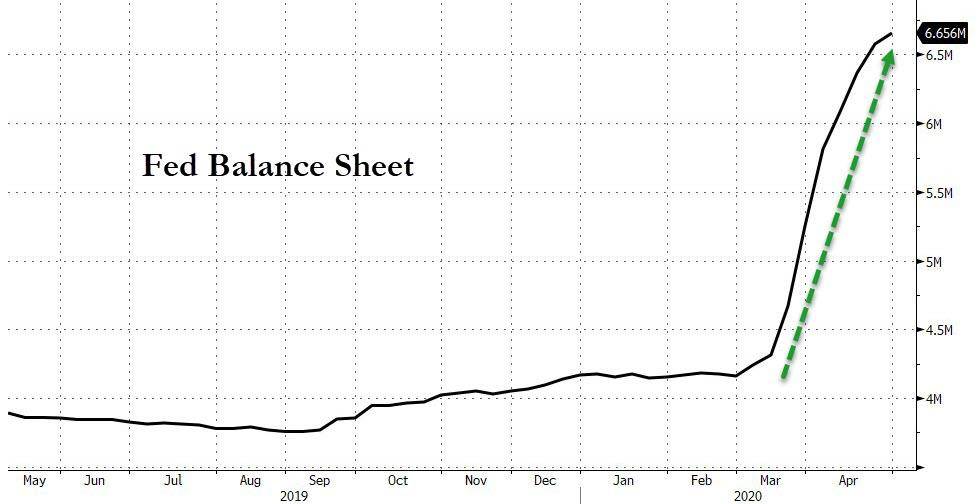
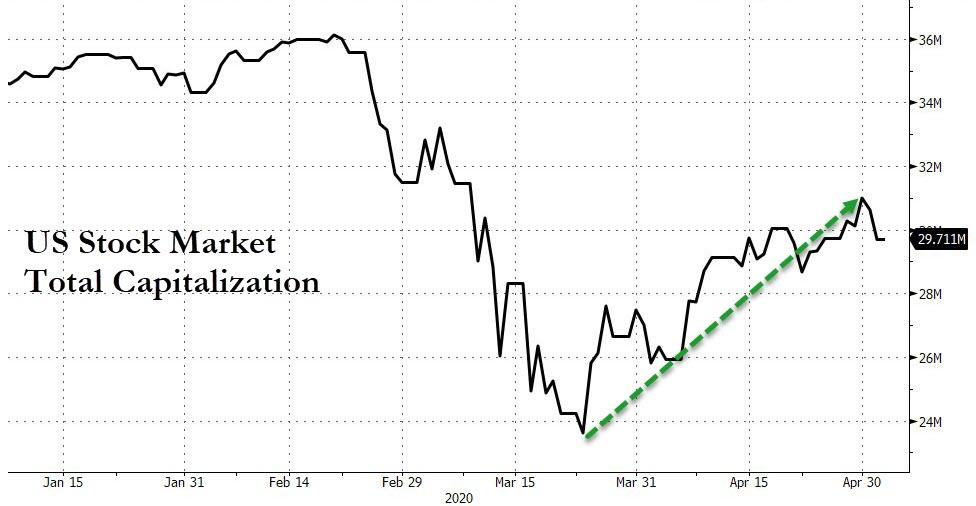
The Fed added just under $2 trillion to its balance sheet since the 3/23 lows in stocks.

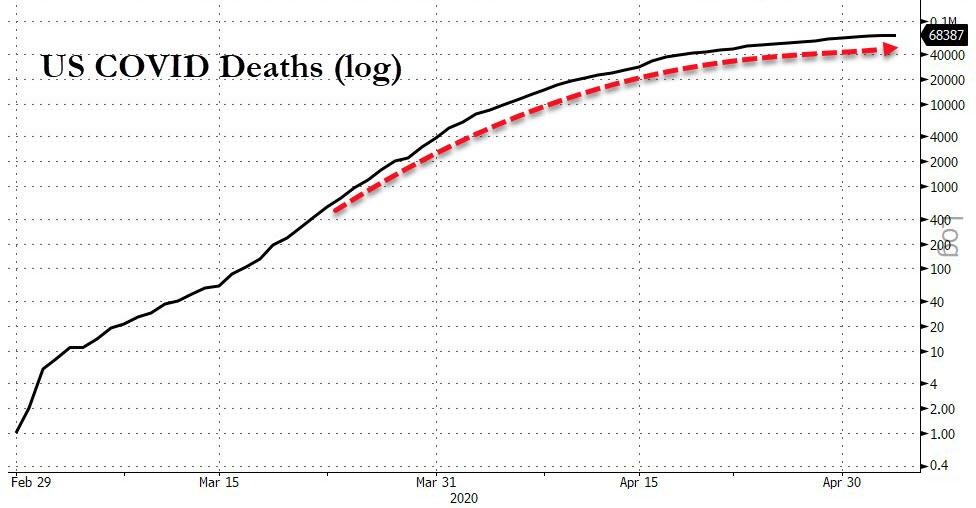
There have been 67,769 deaths from COVID-19 since the 3/23 lows in stocks.

The market capitalization of the broad US equity market has risen by $7.4 trillion.

So, US stock market investors have gained a stunning $109 million for every American that has died from COVID-19 since The Fed began its bailout.

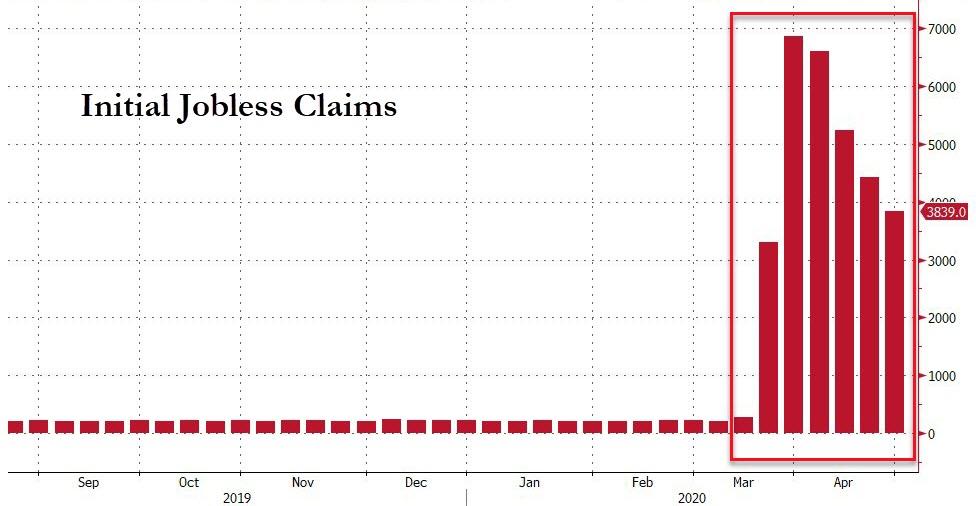
During the same period, 30.3 million Americans have lost their jobs.

This means American stocks have gained $244,000 for every furloughed, fired, and unfriended worker suffering in lockdown.

Finally, at the latest count, we have lost 434 jobs for every confirmed US death from COVID-19.

Seems like Wall Street wins… twice.


Tyler Durden

Tue, 05/05/2020 – 06:30

via ZeroHedge News https://ift.tt/2Sxv6kL Tyler Durden

China Warns Of Possible Armed Conflict With US Over Coronavirus Backlash

China Warns Of Possible Armed Conflict With US Over Coronavirus Backlash

An internal report presented to Chinese President Xi Jinping and other top leaders concludes that global anti-China sentiment is at a level not seen since the 1989 Tiananmen Square crackdown, and recommends preparing for a worst-case scenario of armed conflict with the United States, according to Reuters, citing people familiar with the content of the document.

The report, created by the China Institutes of Contemporary Internal Relations (CICIR) – which is affiliated with the Ministry of State Security – suggests that the wave of anti-China sentiment is led by the United States, which sees China’s rise as a global superpower as a threat to Western democracies.

One of those with knowledge of the report said it was regarded by some in the Chinese intelligence community as China’s version of the “Novikov Telegram”, a 1946 dispatch by the Soviet ambassador to Washington, Nikolai Novikov, that stressed the dangers of U.S. economic and military ambition in the wake of World War Two.

Novikov’s missive was a response to U.S. diplomat George Kennan’s “Long Telegram” from Moscow that said the Soviet Union did not see the possibility for peaceful coexistence with the West, and that containment was the best long-term strategy. –Reuters

Reuters, which hasn’t seen the paper, couldn’t determine to what extent the report’s grim outlook reflects positions held by China’s state leaders, nor how much it might influence policy. That said, it suggests Beijing is taking the threat of global backlash over the coronavirus pandemic – which Western intelligence agencies suspect originated at a Wuhan biolab which was experimenting with bat coronavirus, and had previous concerns raised over the pandemic potential of such research.

China’s early coverup of the outbreak – including silencing and/or disappearing whistleblowing doctors and journalists, lying about the transmissibility of the virus while hoarding personal protective equipment (PPE), quarantining Wuhan domestically while allowing international travel, and using the World Health Organization to run cover – has drawn global scorn as COVID has infected over 3.5 million and killed nearly 250,000 in five months.

Chinese officials had a “special responsibility” to inform their people and the world of the threat posed by the coronavirus “since they were the first to learn of it,” U.S. State Department spokeswoman Morgan Ortagus said in response to questions from Reuters.

Without directly addressing the assessment made in the Chinese report, Ortagus added: “Beijing’s efforts to silence scientists, journalists, and citizens and spread disinformation exacerbated the dangers of this health crisis.” –Reuters

President Trump in recent days has been ratcheting up criticism of Beijing, while threatening new tariffs on China. His administration has been considering retaliatory measures over the outbreak, according to the report – which warns that anti-China sentiment could also threaten their Belt and Road infrastructure initiatives, and that Washington could take advantage by offering financial and military support for regional allies, which would in turn make the security situation in Asia more volatile.

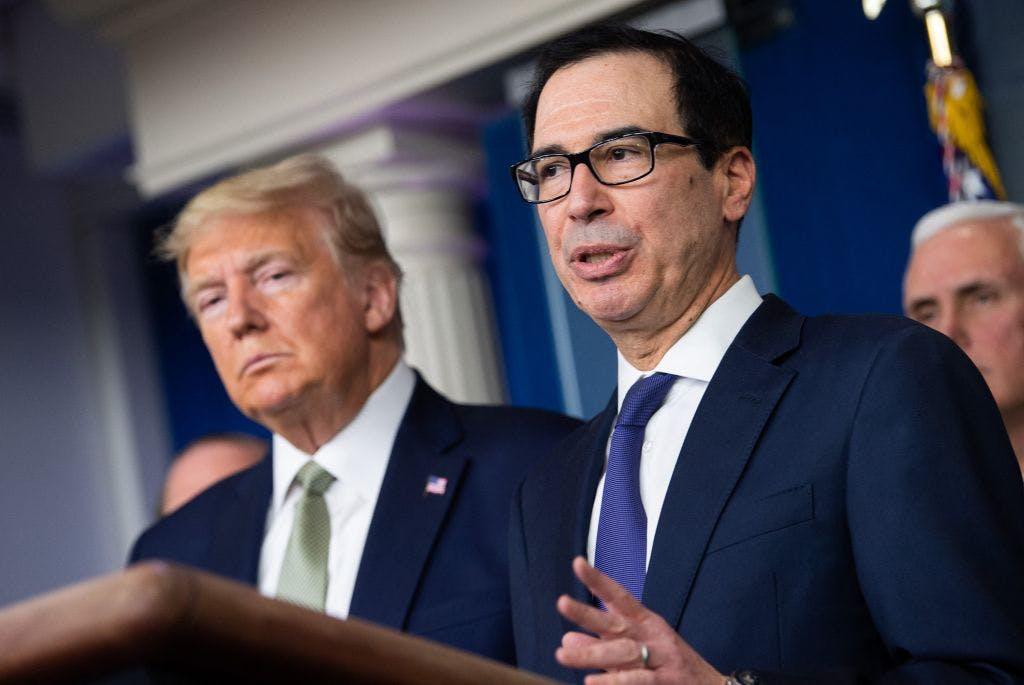
On Monday, Treasury Secretary Steven Mnuchin said that President Trump is reviewing options to penalize China, adding that he expects Beijing to meet their obligations under the phase one trade deal.

“I have every reason to expect that they honor this agreement, and if they don’t, there would be very significant consequences in the relationship and in the global economy as to how people would do business with them,” said Mnuchin.

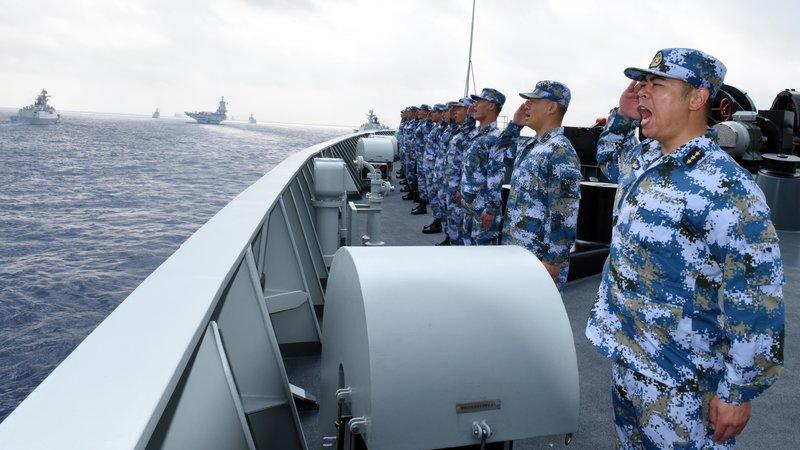
As Reuters notes, China’s Xi has shaped the country’s military into a fighting force equipped to win modern wars – expanding air and naval capabilities and reach in a challenge to over 70 years of US dominance in Asia.

China’s foreign ministry is now calling for peace and cooperation, saying “the sound and steady development of China-U.S. relations” are in the best interests of both countries and the international community, and that “any words or actions that engage in political manipulation or stigmatization under the pretext of the pandemic, including taking the opportunity to sow discord between countries, are not conducive to international cooperation against the pandemic.

Trump, meanwhile, announced that he will cut off funding for the World Health Organization (WHO) for being “very China-centric.”

And while the world focuses on China’s response to the virus, Australia – where two scientists from the Wuhan Institute of Virology conducted coronavirus experiments overseas – has called for an international investigation into the origins and spread of COVID-19, while the so-called ‘five eyes’ Western intelligence agencies explore whether coronavirus escaped from the Wuhan lab – while operating under the assumption that it’s a non-modified virus of natural origin.


Tyler Durden

Tue, 05/05/2020 – 05:12

via ZeroHedge News https://ift.tt/2KZJSww Tyler Durden

From the Archives: June 2020

15 Years Ago

June 2005

“There are fewer than 1 million professional journalists in this country. There are an estimated 8 million bloggers—and potentially 280 million more. Extending a limited profession-based privilege, one otherwise confined to priests, lawyers, and therapists, to the entire population could make the whole nation impervious to court orders. But limiting the privilege puts the government in the dicey position of deciding who is and who isn’t a journalist.”
Matt Welch
“Who Gets To Play Journalist?”

25 Years Ago

June 1995

“And yet, it’s hard to find a ‘libertarian’ who is satisfied with the name, which only came into common usage in the late 1960s. The list of complaints is a long one—it’s clumsy, it’s associated with kooky causes, it’s obscure, it’s clichéd—but it all adds up to the simple fact that libertarian just doesn’t cut it. If it’s true that ‘a good name is better than precious ointment’—and the Book of Ecclesiastes, the only book in the Bible with a #1 hit (‘Turn! Turn! Turn!’) under its belt, says it is—then we libertarians must admit that we’re stuck with the equivalent of Vick’s Vapo-Rub: It gets the job done, but it pretty much stinks up the joint.”
Nick Gillespie
“Liberating Liberal

40 Years Ago

June 1980

“The sound business practice involved here is to leverage your equity position through maximum borrowing, which carries an element of risk. Depending upon when you were born, or just how much ‘remember the depression’ philosophy your parents may have showered upon you, this could cut across your grain of thinking. But to get an economic leg up on inflation, you must become a part of our free-enterprise system. To accomplish this feat, to join the group, you will need to pay for your ticket on the way in. There are only three legitimate ways to acquire these means: earn and accumulate it (the depression-era legacy), inherit it (the lucky way), or borrow it (and that’s what we’re talking about here).”
Robert Haisman
“Make the IRS Your Partner”

“The Carter crackdown is on us, the consumers—strongly implying, of course, that our hedonism is responsible for inflation. Credit cards—that marvelous convenience of capitalism that enables us to enjoy first and pay later—have, like installment credit since the 1920s, long been the bane of Christian moralists. Now they are to be curbed and made more costly. Foreign oil is to be restricted once again, on the rather odd reasoning that inflation will be combated because the higher price will restrict consumption. On that reasoning, of course, we should hope for ever higher prices, unto the very stratosphere, as a method of ‘curbing inflation.’ Money market mutual funds, which, like credit cards, have nothing to do with generating inflation but are marvelous ways for ordinary people to try to catch up with inflation and not get wiped out, are also to be cracked down on and made far more costly. It is almost as if [President Jimmy] Carter looked around and discovered two dramatic recent innovations by which the lives of ordinary consumers and investors have been made more tolerable—credit cards and money market mutuals—and determined to punish us grievously for these sins.”
Murray Rothbard
“Carter, Pain, and Inflation”

50 Years Ago

June 1970

“It is no wonder that people scream that if the [Food and Drug Administration] were to be abolished we’d all be poisoned: if people were to continue to use so little caution and intelligence in selecting drugs and physicians to advise them, that could very well happen. Any industry needs an incentive for excellence if the thugs are not to take over. The FDA provides an incentive based on fear, via a government-backed gun. If the FDA were abolished, physicians and consumers, by means of testing labs and computerized information systems, could provide an incentive based on reputation. Doctors and patients would at last be free to make their own decisions about what risks to take in using a particular drug, free of government coercion. And one’s full ownership of his body would advance another step towards being a legal reality.”
Lynn Kinsky
“The Impact of FDA Regulation on Drug Research in America Today”

from Latest – Reason.com https://ift.tt/2W2fOXc
via IFTTT

From the Archives: June 2020

15 Years Ago

June 2005

“There are fewer than 1 million professional journalists in this country. There are an estimated 8 million bloggers—and potentially 280 million more. Extending a limited profession-based privilege, one otherwise confined to priests, lawyers, and therapists, to the entire population could make the whole nation impervious to court orders. But limiting the privilege puts the government in the dicey position of deciding who is and who isn’t a journalist.”
Matt Welch
“Who Gets To Play Journalist?”

25 Years Ago

June 1995

“And yet, it’s hard to find a ‘libertarian’ who is satisfied with the name, which only came into common usage in the late 1960s. The list of complaints is a long one—it’s clumsy, it’s associated with kooky causes, it’s obscure, it’s clichéd—but it all adds up to the simple fact that libertarian just doesn’t cut it. If it’s true that ‘a good name is better than precious ointment’—and the Book of Ecclesiastes, the only book in the Bible with a #1 hit (‘Turn! Turn! Turn!’) under its belt, says it is—then we libertarians must admit that we’re stuck with the equivalent of Vick’s Vapo-Rub: It gets the job done, but it pretty much stinks up the joint.”
Nick Gillespie
“Liberating Liberal

40 Years Ago

June 1980

“The sound business practice involved here is to leverage your equity position through maximum borrowing, which carries an element of risk. Depending upon when you were born, or just how much ‘remember the depression’ philosophy your parents may have showered upon you, this could cut across your grain of thinking. But to get an economic leg up on inflation, you must become a part of our free-enterprise system. To accomplish this feat, to join the group, you will need to pay for your ticket on the way in. There are only three legitimate ways to acquire these means: earn and accumulate it (the depression-era legacy), inherit it (the lucky way), or borrow it (and that’s what we’re talking about here).”
Robert Haisman
“Make the IRS Your Partner”

“The Carter crackdown is on us, the consumers—strongly implying, of course, that our hedonism is responsible for inflation. Credit cards—that marvelous convenience of capitalism that enables us to enjoy first and pay later—have, like installment credit since the 1920s, long been the bane of Christian moralists. Now they are to be curbed and made more costly. Foreign oil is to be restricted once again, on the rather odd reasoning that inflation will be combated because the higher price will restrict consumption. On that reasoning, of course, we should hope for ever higher prices, unto the very stratosphere, as a method of ‘curbing inflation.’ Money market mutual funds, which, like credit cards, have nothing to do with generating inflation but are marvelous ways for ordinary people to try to catch up with inflation and not get wiped out, are also to be cracked down on and made far more costly. It is almost as if [President Jimmy] Carter looked around and discovered two dramatic recent innovations by which the lives of ordinary consumers and investors have been made more tolerable—credit cards and money market mutuals—and determined to punish us grievously for these sins.”
Murray Rothbard
“Carter, Pain, and Inflation”

50 Years Ago

June 1970

“It is no wonder that people scream that if the [Food and Drug Administration] were to be abolished we’d all be poisoned: if people were to continue to use so little caution and intelligence in selecting drugs and physicians to advise them, that could very well happen. Any industry needs an incentive for excellence if the thugs are not to take over. The FDA provides an incentive based on fear, via a government-backed gun. If the FDA were abolished, physicians and consumers, by means of testing labs and computerized information systems, could provide an incentive based on reputation. Doctors and patients would at last be free to make their own decisions about what risks to take in using a particular drug, free of government coercion. And one’s full ownership of his body would advance another step towards being a legal reality.”
Lynn Kinsky
“The Impact of FDA Regulation on Drug Research in America Today”

from Latest – Reason.com https://ift.tt/2W2fOXc
via IFTTT

Why It’s Different This Time, Part 1: Bailouts Can’t Save This Fragile System

Why It’s Different This Time, Part 1: Bailouts Can’t Save This Fragile System

Authored by Charles Hugh Smith via The Daily Reckoning,

It’s obvious the global economy is painfully fragile. What is less obvious is the bailouts intended to “save” the fragile economy actually increase its fragility, setting up an inevitable collapse of the entire precarious system…

Systems that are highly centralized, i.e., dependent on a handful of nodes that are each points of failure — are intrinsically fragile and prone to collapse.

Put another way, systems in which all the critical nodes are tightly bound are prone to domino-like cascades of failure as any one point of failure quickly disrupts every other critical node that is bound to it.

Ours is an economy in which capital, wealth, power and control are concentrated in a few nodes of the network we call “the economy.”

A handful of corporations own the vast majority of the media; a handful of banks control most of the lending and capital; a handful of hospital chains, pharmaceutical companies and insurers control health care; and so on.

Control of digital technologies is even more concentrated, in virtual monopolies: Google for search and YouTube for video. Facebook/Instagram and Twitter for social media. Microsoft and Apple for operating systems and services.

The vast majority of participants in the economy are tightly bound to these concentrated nodes of capital and power, and these top-down, hierarchical dependencies generate fragility.

When unexpectedly severe volatility occurs, the disruption of a few nodes brings down the entire system. Thus the disruption of the subprime mortgage subsystem — a relatively small part of the total mortgage market and a tiny slice of the global financial system — nearly brought down the entire global financial system in 2008 because it is a tightly bound system of centralized concentrations of capital, power and control.

Currently, we’re seeing the fragility of a meat production system that has concentrated ownership and production of meatpacking into a relatively few nodes on which the entire food supply chain is totally dependent.

And so what’s the status quo “fix” when this intrinsically fragile system comes apart?

Increase its fragility by bailing out the most tightly bound, dominant nodes. This is what the monopoly on creating currency, the Federal Reserve, is doing on a vast scale.

Rather than reducing the fragility of the system, the Federal Reserve is increasing the fragility, guaranteeing a collapse of not just the financial system but the currency as well.

To better understand systemic fragility, we turn to Nassim Taleb’s description of antifragile systems:

Some things benefit from shocks; they thrive and grow when exposed to volatility, randomness, disorder and stressors and love adventure, risk and uncertainty. Yet in spite of the ubiquity of the phenomenon, there is no word for the exact opposite of fragile. Let us call it antifragile. Antifragility is beyond resilience or robustness. The resilient resists shocks and stays the same; the antifragile gets better. This property is behind everything that has changed with time: evolution, culture, ideas, revolutions, political systems, technological innovation, cultural and economic success, corporate survival, good recipes, the rise of cities, cultures, legal systems, equatorial forests, bacterial resistance… even our own existence as a species on this planet.

And we can almost always detect antifragility (and fragility) using a simple test of asymmetry: Anything that has more upside than downside from random events (or certain shocks) is antifragile; the reverse is fragile.

We have been fragilizing the economy, our health, political life, education, almost everything… by suppressing randomness and volatility. Much of our modern, structured, world has been harming us with top-down policies and contraptions… which do precisely this: an insult to the antifragility of systems. This is the tragedy of modernity: As with neurotically overprotective parents, those trying to help are often hurting us the most.

Given the unattainability of perfect robustness, we need a mechanism by which the system regenerates itself continuously by using, rather than suffering from, random events, unpredictable shocks, stressors and volatility.

Does our financial system advance via unexpected shocks, extreme volatility, unknown unknowns and ceaseless variability? You’re joking, right?

The smallest perturbation in any node brings the system to the edge of collapse. Exhibit No. 1 is last fall’s crisis in the obscure financial node known as the repo market.

This relatively modest part of the financial system almost triggered a stock market crash, so the Fed immediately printed hundreds of billions of dollars to bail out every single player in the repo market — all behind the scenes, of course, lest the extreme fragility of the entire overleveraged, speculative contraption become visible.

Making an incredibly fragile system more fragile via bailing out every node of concentrated capital, power and control guarantees the entire rotten structure will collapse.

Risk cannot be made to disappear; it can only be shifted. By bailing out the sources of systemic fragility with trillions of dollars, the Fed has shifted the risk to the entire financial system and the nation’s currency.

Simply put: The only possible output of Fed bailouts is the complete collapse of the entire financial system, including the currency the Fed is creating with such abandon.

*  *  *

In Part 2, I show you why the current collapse can’t be compared to any other, and why the collapse has only begun…


Tyler Durden

Tue, 05/05/2020 – 06:00

via ZeroHedge News https://ift.tt/2W3WsAW Tyler Durden

“Not A Bluff”: White House Might Pull US Military & Intelligence From UK Over China’s Huawei

“Not A Bluff”: White House Might Pull US Military & Intelligence From UK Over China’s Huawei

The issue of China’s Huawei and its 5G technology is creating deep tensions once again between the US and some European allies, this time threatening the usually iron-clad Anglo-American relationship and defense ties

The Telegraph Monday evening broke the explosive story that the White House is currently investigating the potential for US spy planes, as well as intelligence networks and officials who ware currently operational in the UK to be compromised by Huawei’s presence in Britain.

The report anonymously quotes half a dozen current US and UK officials saying the Trump administration’s review is active and could have huge ramifications for the “special relationship” between the historic long-term allies.

US spy plane, file image via Daily Record

Of top concern is said to be state of the art reconnaissance aircraft based in Britain, particularly the RC-135 spy planes, capable of sweeping up vast intelligence from battlefields. The sophisticated aircraft are thought to be especially vulnerable after Prime Minister Boris Johnson previously gave the formal go-ahead for Huawei to help build Britain’s 5G network.

US officials who spoke to The Telegraph emphasized it’s not a bluff:

One former official who only recently left the White House’s National Security Council (NSC), which is leading the review, said it was “likely” some assets would be removed from Britain.

The source said: “This was not a bluff. You cannot mitigate the danger Boris Johnson is exposing the UK to by letting Huawei into the network.”

“This review is not a punishment. This is the White House saying ‘okay, if they’re going to go down this path and put themselves at risk then how do we protect ourselves.’”

The review marks a significant escalation in the Huawei row, with the US now going beyond words of warning and taking concrete steps that could end up harming military and intelligence ties.

However, Johnson has lately sought to assure both key allies like the US as well as the British public that the Chinese Communist government-linked firm would be allowed nowhere near core parts of the network, including tech related to sensitive military and nuclear sites. 

President Trump, backed by the Pentagon and intelligence community, has long insisted to European allies and other global partners that Beijing would use its telecoms giants like Huawei as a ‘Trojan horse’ back-door of sorts into the West’s most closely guarded institutions and agencies

Via Reuters

The now confirmed White House ordered review is perhaps the greatest proof thus far showing Trump is not bluffing, also given the same problems with Germany opening the door to Huawei and other Chinese firms for its 5G network. Likely the review was purposefully ‘leaked’ to British press as a shot across the bow

“Every military and intelligence asset the Americans have in Britain is being assessed to understand the knock-on implications of letting Huawei, the Chinese tech giant, construct part of the new wireless network,” The Telegraph report underscores. 

The report continues, describing the vast scope of everything that could actually pulled back

“The totality of the review means everything from the more than 10,000 US military personnel in Britain to half a dozen barracks to scores of military vehicles will be looked at, not to mention intelligence operations.”

It is an inter-agency review which means all relevant parts of the US government – in this case the Pentagon, State Department and 17 different intelligence agencies – will give input to the NSC.

This could mark nothing less than a revolution in US-UK relations, possibly irreversible in terms of future defense and intelligence sharing.

No doubt it dramatically ramps up the pressure on the UK’s Johnson, already long feeling the heat from Trump on the contentious Huawei issue. The reaction to the new report out of London is sure to be interesting. 


Tyler Durden

Tue, 05/05/2020 – 05:30

via ZeroHedge News https://ift.tt/2WoIGrI Tyler Durden