There’s “Enormous Evidence” Coronavirus Originated From Wuhan Lab: Pompeo
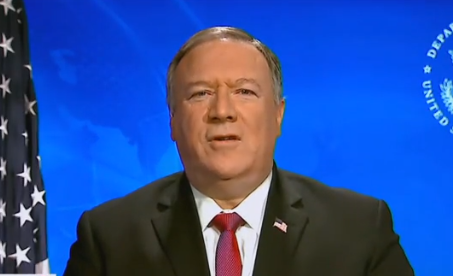
Secretary of State Mike Pompeo says there’s “enormous evidence” that the coronavirus originated in the Wuhan Institute of Virology, while agreeing with the intelligence community’s determination that the disease is “not manmade or genetically modified.”
Speaking with ABC‘s “This Week” Sunday, Pompeo said:
Martha, there’s enormous evidence that that’s where this began. We have said from the beginning, this virus originated in Wuhan, China. We took a lot of grief for that from the outset. But I think the whole world can see now. Remember, China has a history of infecting the world and they have a history of running sub-standard laboratories. These aren’t the first times that we have had the world exposed to viruses as a result of failures from a Chinese lab.
Responding to a question over whether China should suffer consequences for their handling of the outbreak, Pompeo said that the Chinese Communist Party “did all that it could to make sure the world didn’t learn in a timely fashion,” adding that “It was a classic communist disinformation effort.”
NEW: Secretary of State Mike Pompeo tells @MarthaRaddatz China “did all that it could to make sure the world didn’t learn in a timely fashion” about COVID-19.
Pompeo’s comments echoed the overall tone coming from the Trump administration, which has ratcheted up criticism of Beijing last week while demanding answers about the origin of COVID-19.
On Friday, President Trump tweeted that NBC and CNN are “Chinese puppets” who do business there, while his PAC released ads critical of the regime.
Concast (@NBCNews) and Fake News @CNN are going out of their way to say GREAT things about China. They are Chinese puppets who want to do business there. They use USA airwaves to help China. The Enemy of the People!
A violent rejection in markets following a furious rally that began on March 23. Small caps rallied 10% in 3 days only to give it all away in just 2 days.
A coincidence? Hardly. Firstly the risk levels of this rally were well advertised in advance including on March 28 in “Answers”. Technical patterns forming then were already suggesting that the price levels just reached were a distinct possibility. And a furious rally to come that would be awe-inspiring was also suggested in the 1929 redux posted on the day of the lows. No rallies are more aggressive than bear market rallies and seeing April producing one of the most aggressive rallies in decades surely fits that script.
Markets, it could be argued, just followed a historic script that was advertised well in advance despite historic interventions on the monetary and fiscal fronts.
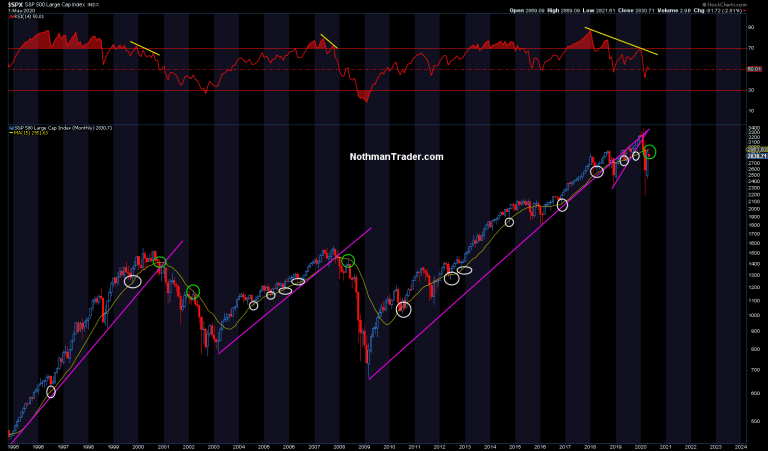
And despite all these interventions markets showed a notable technical rejection at precisely at the same end zone as during prior bear market rallies, the monthly 15MA:
The implications could be profound for these previous bear market rallies set the stage for new market lows to come.
None of this is confirmed of course for the battle between liquidity, fundamentals and technicals will continue and the market path in May and June will likely tell us a lot more.
But note what happened this week coinciding with the technical tag and subsequent rejections.
Markets galloped to a massively overvalued 138% market cap to GDP valuation:
Valuations entirely inconsistent with the economic reality and earnings picture and outlook on the ground.
One person to seemingly agree is Warran Buffett whose name has been associated in the past with the very market cap to GDP measure, hence coined the Buffett indicator.
This weekend Buffett indicated to shareholders that he’s not finding places of value to invest and has announced the selling of all airline shares with the view that the impacts of the recent crisis will not magically disappear but will take time to filter through the system:
Maybe he’s watching the Buffett indicator as stocks hit 138% market cap to GDP this past week… https://t.co/Y2UUCIdca4
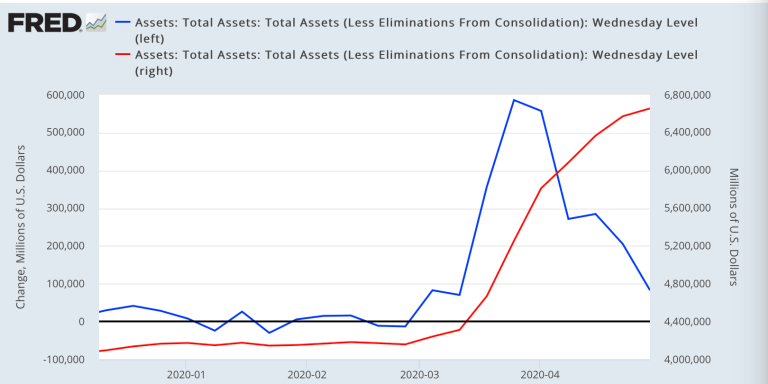
Of further note: Investors suddenly appeared to get cold feet on Thursday realizing that the Fed suddenly had drastically reduced the pace of its balance sheet expansion:
While the interventions are still historically gigantic a drastic reduction in incremental liquidity amounts to a relative tightening. Markets that have been entirely dependent on artificial liquidity have yet to prove they can do without. In fact all evidence points to the contrary, for the liquidity reduction in 2018 resulted in a massive market correction and the 2019 rally didn’t really take off until the Fed expanded its balance sheet by nearly half a trillion dollars into Q4 and Q1.
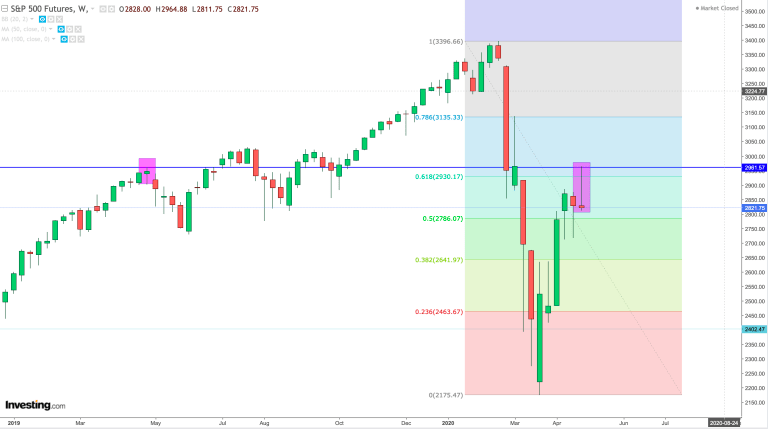
No, last week’s month end rally disappeared as quickly as it appeared leaving a massive weekly rejection candle:
A rejection that occurred ironically from the very same price and date as the the rejection in 2019 when unemployment was 3.5%. Now we have 30M newly unemployed and Q2 GDP looking to drop between 20%-30% following a 4.8% drop inQ1 GDP.
We live in a world where some believe the Fed can just magically create GDP out of thin air:
When considering recent GDP losses, don’t underestimate the @federalreserve & other central banks’ ability to put money & liquidity into the market. The liquidity & stimulus provided by the Fed is capable of making up for a lot of lost GDP. https://t.co/l3ywteUufD
Just make it up. We will soon find whether his proposition will hold true. May and June may well turn out to be pivotal months for markets. The historic script suggests some more market volatility ahead, the liquidity script, should it remain in control, will continue to elevate asset prices above their fundamental worth.
For the latest technical review including risk and support levels please see the market video below:
Please be sure to watch it in HD for clarity.
* * *
For the latest public analysis please visit NorthmanTrader. To subscribe to our market products please visit Services.
Massachusetts Walmart Ravaged By COVID, 21% Of Employees Infected, Store Closed
Nearly 21% of the 391 employees at a Massachusetts Walmart have tested positive for COVID-19, reported WCVB-TV Boston, citing statements from local officials on Saturday.
According to WCVB’s Josh Brogadir on Sunday morning, “Walmart in Worcester normally open at 7AM but remains closed after #coronavirus outbreak.”
Walmart in Worcester normally open at 7AM but remains closed after #coronavirus outbreak.
• total of 81 positive cases of 391 (20.7%) employees tested
• city inspection Tues found not all workers wore masks
• update expected at city briefing today at 4:30PM#WCVBpic.twitter.com/diUrhoImjg
Brogadir said a total of 81 employees tested positive for the virus out of 391, which equates to 20.7% of the workforce at the store have become infected. The store was shut down by Worcester health officials on Wednesday (April 29) after dozens of employees tested positive.
WCVB says Walmart hired an independent professional cleaning company to disinfect the Worcester store.
“Our inspectional services department will inspect the facility to make sure that the cleaning was done in compliance with our guidelines,” said Worcester City Manager Ed Augustus.
Augustus said the store would not reopen until “it has been professionally cleaned and all employees have been tested for coronavirus.”
He said the store had confirmed cases over the last three weeks, but a majority occurred in the previous week.
Last week, a Walmart spokesperson said the Worcester store would be closed for one day to undergo a deep cleaning. However, about five days later, the store remains closed.
Other big-box retailers and Amazon warehouses have had a rash of outbreaks over the last several months. Employees at Target and Whole Foods, as well as Amazon, Instacart, FedEx, and Walmart, walked off the job on Friday afternoon (May 1) and protested over working conditions, lack of hazard pay, and how their employers are not providing them with proper health equipment during the pandemic.
As President Trump attempts to reopen the crashed American economy, the deadliest day of the pandemic was just recorded on Friday, with more than 2900 deaths. Dozens of states have unveiled re-opening plans, as it seems a premature reopening could trigger a second coronavirus wave.
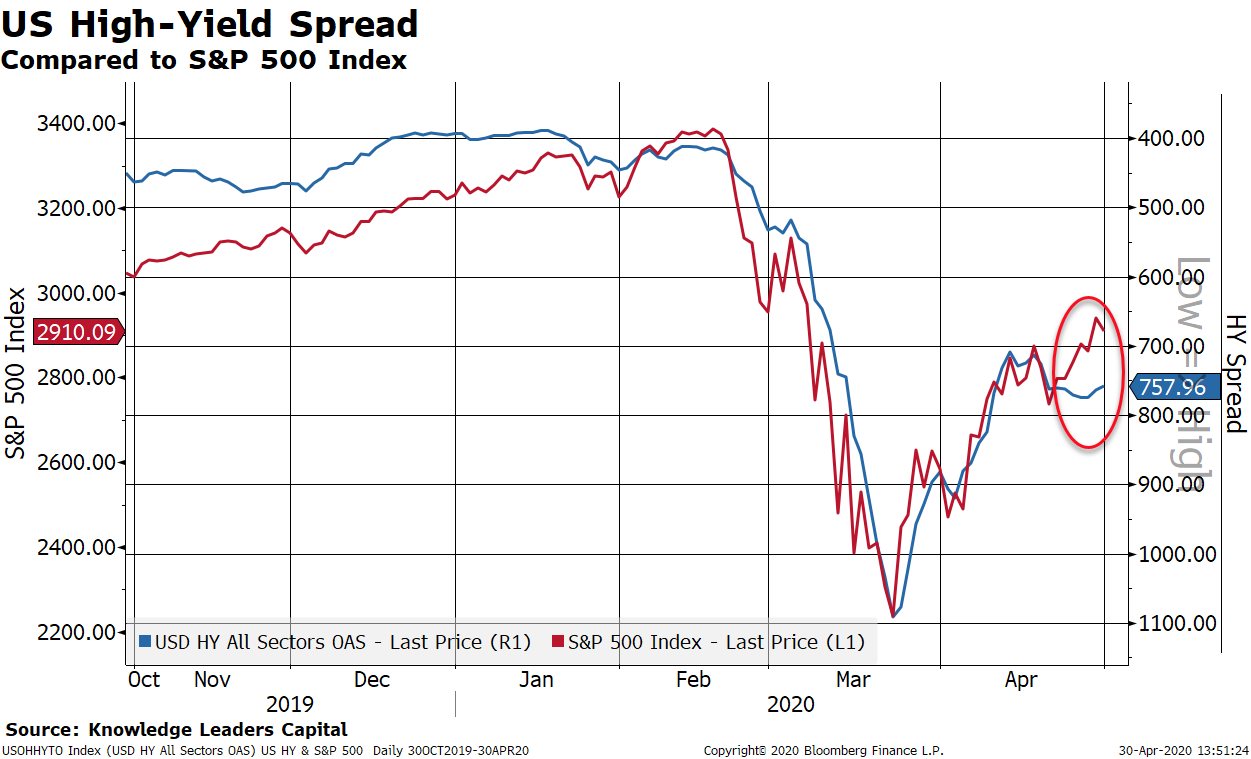
As Steve highlighted yesterday, we are beginning to see some important divergences develop between the stock market and other data that suggest we are not out of the woods yet.
…the divergence between high yield spreads and the S&P 500 suggests the possibility of a roughly 5% correction in stocks.
Unless of course one believes that HY spreads continue to contract. With economic growth falling off a cliff, the later may be the less plausible scenario.
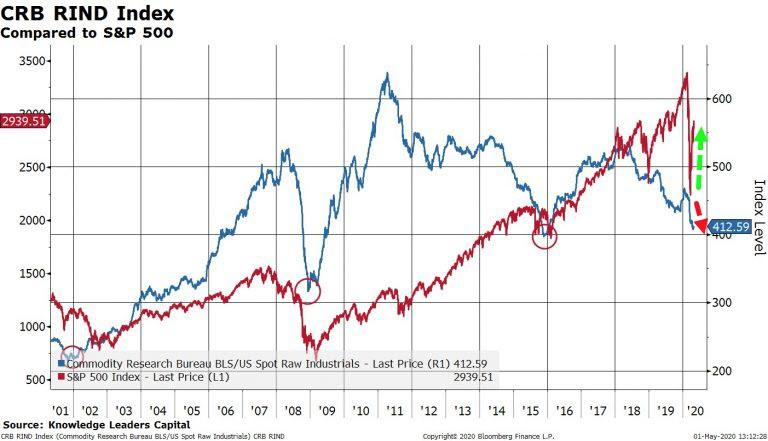
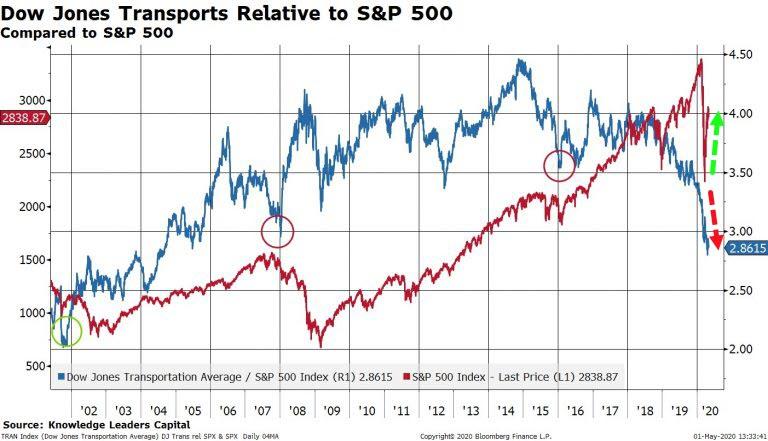
Of course, this makes complete sense since next week we may learn of an unemployment rate with a 20-handle. Recovering from this destruction is unlikely to be quick or easy or without setbacks. Certainly, that is the message from two of the most cyclical indicators we track, commodity prices and transport stocks.
As this first chart shows, industrial commodities have typically bottomed in price well before stocks have bottomed during bear markets. This was the case in 2001, 2008 and 2015. Currently, commodity prices as measured by the CRB Raw Industrial Commodity Index are at cycle lows. This is an unsettling divergence that tells us that demand for raw materials is still falling, a condition not typically seen in front of an economic rebound.
Similarly, transport stocks are healthily underperforming the broad stock market index. Transports bottomed before the overall stock market in 2001, 2008 and 2015 so new relative performance lows is concerning.
Of course, airlines are particularly impacted by COVID shutdowns, but the transport stocks should still anticipate a bottoming of economic activity by outperforming the broad market.
That would jive with evidence that the first COVID-19 death in the US might have occurred as early as Feb. 6, meaning parts of New York, California and Washington were probably already suffering from local human-to-human transmission.
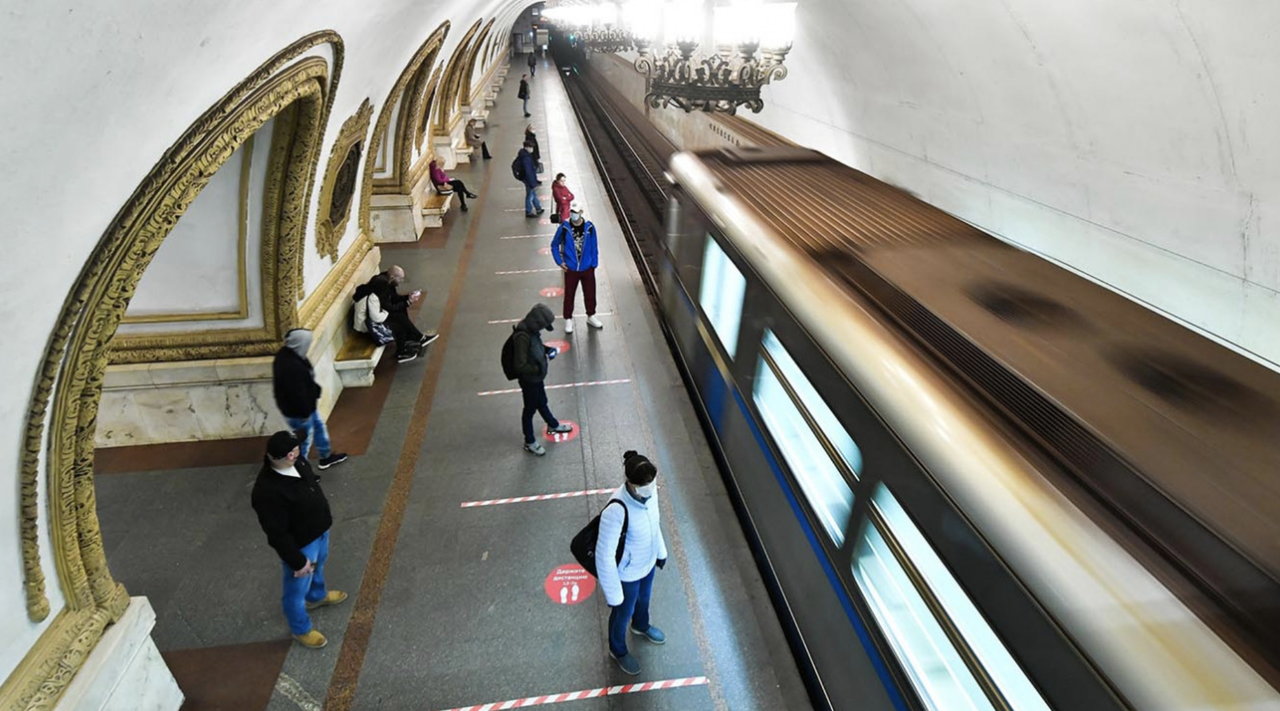
Russia added 10,633 cases of Covid-19, the highest daily number for the nation so far, increasing for a fifth day in a row. The total number of cases has risen to 134,687, according to the government’s virus response center. Around a half of the new cases are asymptomatic and Moscow accounts for nearly 56% of new infections. Russia’s total Covid-19 fatalities rose to 1,280.
As the Guardian reported, Moscow’s mayor warned on Saturday that up to 2% of Moscow’s population may be infected, as hospitals in the Russian capital were overwhelmed and another top government tested positive. If Mayor Sergei Sobyanin’s projection is correct, that would mean more than 240,000 Muscovites have already been infected, 4x the official number.
Russia confirmed 10,633 new coronavirus infections Sunday, bringing its countrywide total to 134,687and marking a new one-day record increase. Russia is now the seventh most-affected country in terms of infections, having surpassed China, Turkey and Iran last week. Roughly 1,280 deaths have been confirmed countrywide. More than half of the confirmed cases are in Moscow or the surrounding area. Sunday’s increase was Russia’s fourth record-day jump in a row.
After announcing that Russian PM Mikhail Mishustin, on Friday authorities announced the housing minister was the latest top official to test positive. Vladimir Putin has not been pictured in public for nearly a month and is working from his residence outside Moscow.
Hospitals in the capital are already at capacity, with television footage showing ambulances forced to wait for hours to deliver the infected.
Across the world, the number of ‘confirmed’ coronavirus cases has climbed to 3.5 million, with hundreds of thousands – potentially even millions – of cases likely uncounted. The number of deaths, meanwhile, is slowly approaching 250,000 (it stood at 244,239 as of Sunday morning). During it annual meeting, the IMF said it had set aside $1 trillion of lending capacity to help emerging-market member states particularly hard hit by the pandemic and some of the ramifications for global financial conditions (negative prices on oil futures, the rapidly strengthening greenback, etc.). 189 countries are members of the IMF, and so far, mostly South American states like Ecuador have asked for large bailouts.
But on Sunday, the FT reported that Zimbabwe had asked for a loan to help clear billions of dollars in debt and avoid an economic collapse. The FT cited a letter from Finance Minister Mthuli Ncube to the IMF.
Zimbabwe is about $2 billion behind on payments to lenders, including the World Bank and African Development Bank, and has been excluded from emergency loans from international institutions, the newspaper said.
Following reports that it planned to roll back some lockdown measures, Singapore said Sunday that companies with employees who can work from home will probably be asked to continue doing so even after the country’s partial lockdown ends on June 1, while sectors like manufacturing should prepare for a gradual reopening in the coming weeks, Singapore’s Trade and Industry Minister said.
After successfully blocking the president’s businesses from receiving any government assistance, political opponents of President Trump
Texas hotelier Monty Bennett, a major donor to President Donald Trump whose companies are among the biggest known recipients of rescue loans for small businesses hurt by the pandemic, said he will return the money.
Roche Holding AG said it received emergency-use authorization from the FDA for its Elecsys coronavirus antibody test. The test, designed to determine if a patient has developed antibodies against the virus, has a specificity greater than 99.8%.
There were 164 new fatalities, bringing total deaths to 25,264, according to Health Ministry data. That compared with 276 daily fatalities reported Saturday. Total infections rose by 838 to 217,466, down from the previous increase of 1,147. The figures include adjustment on how previous new cases were counted in certain regions, the ministry said.
During a Sunday morning interview with CNN’s Jake Tapper – building on Fed Chairman Jay Powell’s exhortation for the federal government to push through more stimulus – on its “State of the Union” program, Larry Kudlow was pressed to explain why Congress doesn’t just plow ahead with more stimulus.
“Waiting any further – does it make any sense?…There’s a real need, we need more money in that program,” Tapper said. The confrontational interview followed a CNN report claiming the second round of the ‘PPP’ had delivered 2.2 million small business loans worth an aggregate $175 billion.
Saudi Officials Say Whopping 70% Of Mecca’s Population Likely Infected With COVID-19
We detailed before that in late February Saudi authorities made the historically unprecedented to move to shut down the Islamic pilgrimage to Mecca due to the coronavirus pandemic. At the time they further suspended entry visas for pilgrim’s wishing to visit the kingdom’s holy sites.
By far the largest annual gathering of humans in the world is the pilgrimage to Mecca, which in 2018 alone saw about 2.4 million Muslims make the religious trip. Perhaps it was too late even by that point? A new report in Middle East Eye suggests nearly 70% of Mecca, or more than two million residents, has the virus based on recent rounds of broad testing, also amid the growing threat to the Saudi Royal family:
According to three senior Saudi medical sources, nearly 70 percent of Mecca’s more than two million residents are estimated to be carriers of the virus, according to recent random testing conducted in the holy city.
Saudi Arabia has so far recorded 21,402 cases and 157 deaths from Covid-19. These are the highest numbers in the six-member Gulf Cooperation Council (GCC).
Mecca’s Kaaba, normally site of millions of Muslim pilgrims on ‘Hajj’ sits empty, via Reuters.
“The actual spread of the disease could be three to four times higher than the declared one,” an anonymous medical official was quoted as saying in the report. “Saudi health authorities expect the peak to be sometime in June.”
A month ago the kingdom tightened restrictions further in key cities, including the imposition of a strict 24-hour curfew on the pilgrimage cities of Mecca and Medina. This after a country-wide lockdown was issued starting March 25.
Since then hospitals have reportedly become “overwhelmed” according to several international reports.
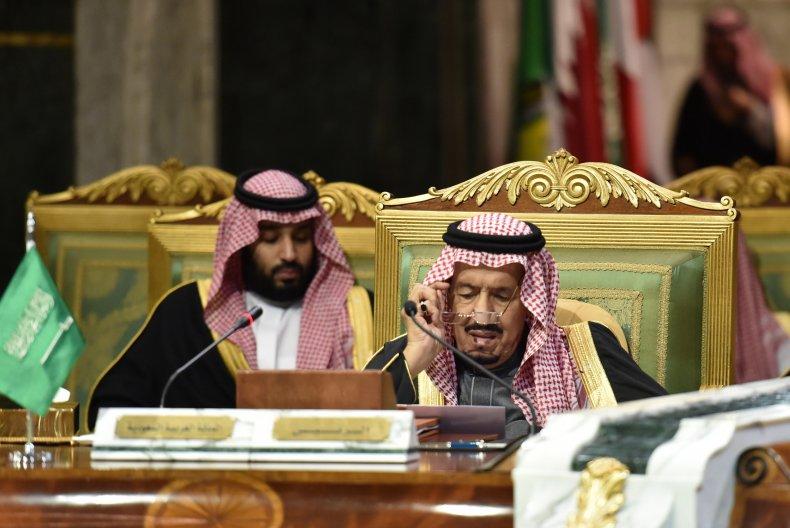
The alarming report also comes on the heels of recent New York Times reporting which said some 150 members of the royal family are being treated for COVID-19 at elite units of regional hospitals set up for that purpose.
AFP via Getty
But this week Prince Turki bin Faisal al-Saud, a Saudi royal and former intelligence chief, downplayed the NYT report in the Saudi newspaper Al-Sharq Al-Awsat.
“The truth is that only less than 20 members of the al-Saud family have been infected, and the hospital has not been allocated for them. The hospital treats all citizens and residents,” Prince Turki wrote.
The data below reflects the findings of a national survey of 3,500 American adults conducted by Azurite Consulting, a tech-enabled consulting firm that uses unique methodologies, on behalf of Peak Prosperity to reveal the specific changes in behavior and sentiment triggered by the coronavirus in US households and businesses. This online survey of the PeakProsperity.com audience was conducted April 17-24, 2020, and is subject to a +/- 1.7 percentage point margin of error at the 95 percent confidence level.
‘All-American Impact Survey’ Three Key Findings
Beyond the high cost in human life already suffered, much of American society — perhaps even the future of the Presidency itself — has fallen victim to the the microscopic covid-19 virus.
So much damage has been done to job security, social norms, and voter trust that it will be years before life returns to the way it was before, if ever. Many of the changes forced on us by the pandemic are looking to be permanent.
#1: Covid-19 Is An Existential Threat To Businesses & Jobs
Despite quick and widespread layoffs and furloughs to cut costs, many companies fear they may not survive much longer. And those that do, don’t plan to hire back the same number of workers they’ve let go:
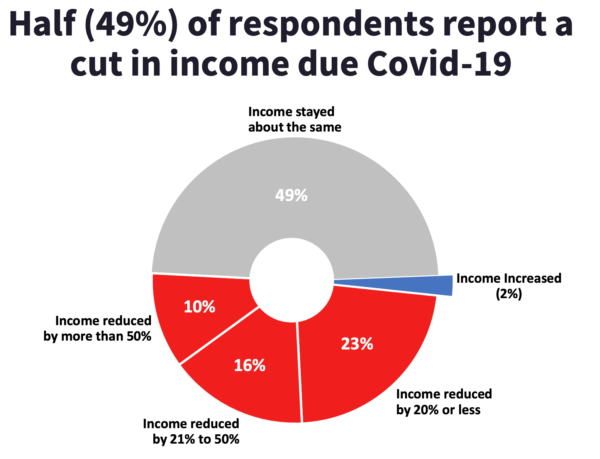
Half (49%) of all Americans report a loss income, partial or total, attributed to covid-19
If social distancing lasts until October, more than a third (36%) of US SMBs don’t believe they will survive
After the US emerges from covid-19, 70% of American c-suite executives and SMB owners plan to hire fewer employees back to perform the same work. Only 4% currently plan to hire more people than before.
#2: Covid-19 Is Pinching Budgets, Reducing Savings & Spoiling Retirement
The loss of income and reduced job security caused by the coronavirus, combined with the related recent stock market volatility, are making US households more financially insecure:
19% of Americans are having to dip into their savings accounts to cover normal monthly expenses due to the impact of covid-19
18% of retirees are considering having to return to the workforce to bolster their retirement savings
In order to make ends meet, households are cutting back on expenses. 62% of Americans have increased their home cooking and 36% are buying less “indulgent” foods. 39% have postponed larger household purchases (TVs, cars, designer clothing, home improvement, etc)
#3: Covid-19 Has Resulted In So Much Loss Of Voter Trust That It May Cost President Trump The 2020 Election
The majority of the voting public is dissatisfied with the federal government’s response to the pandemic, much more so compared to state and local levels. President Trump’s performance specifically receives the worst ratings of all, and that’s influencing a material percentage of voters in the 2020 swing states to decline to vote for him:
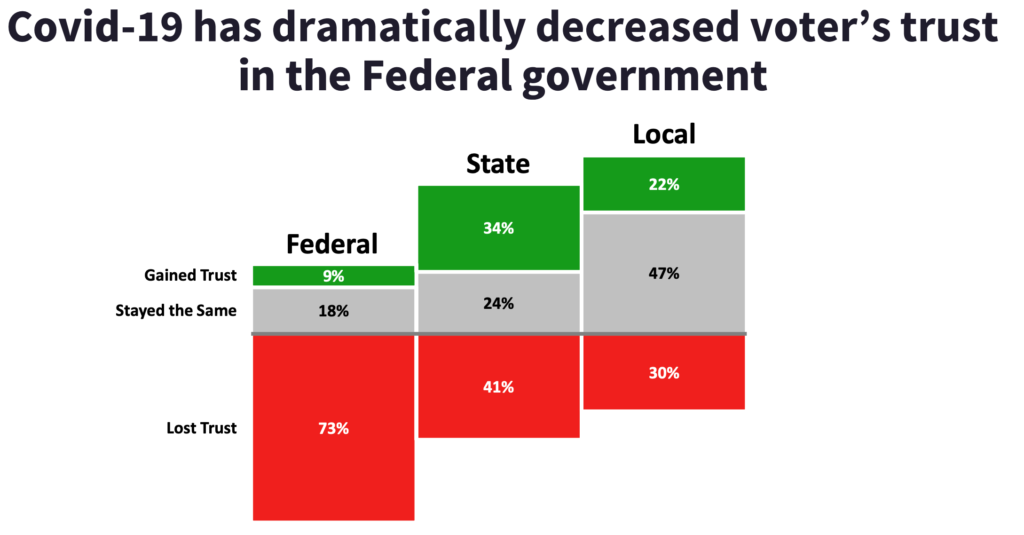
73% say they now trust the Federal government less since the covid-19 outbreak. This loss of trust is much more severe than that reported for state (41%) and local (30%) governments.
58% of all voters report themselves as dissatisfied with President Trump’s performance. 44% report themselves as “extremely dissatisfied” (0 or 1 on a 10 point scale)
Only 73% of 2016 Trump voters in the 2020 swing states are willing to say they’ll vote for him again. More than half of the remaining 27% plan to vote for another candidate or not at all.
“Four months ago, the world was unaware of covid-19,” notes Adam Taggart, president and co-founder of Peak Prosperity.
“Now the pandemic is directing nearly every decision we make while clouding our personal, professional and national prospects with an ongoing uncertainty. That’s why accurate insights of the kind Azurite has helped us obtain through this survey are so important to households and businesses right now. Without good data, how will we collectively navigate well through this challenging time in history?”
“To date, there has been a pronounced lack of statistically sound data on how Covid-19 continues to swiftly alter the world around us.” says Eli Diament, founder of Azurite Consulting. “Azurite is excited to partner with Peak Prosperity to produce one of the first studies of this scale and rigor, to help households, business leaders, the media and policymakers utilize reliable data to underpin their decision making
Further insights from the All-American Impact survey are presented below.
In addition to the insights above, the survey reveals that Americans are being forced by covid-19 to adopt more cautious behavior that will handicap economic recovery and likely strain social unity.
That said, life under lockdown isn’t all bad news.
Personal Life In The Age Of Covid-19: Caution Is King
It will take a long time for American life to return to “normal”, as people plan to refrain from many common activities for months (at least) after the lockdown is lifted, and in a number of cases, even after a vaccine is widely available:
Dining out: 53% won’t be comfortable going to a sit-down restaurant for at least 3 months after social distancing ends. 38% will wait at least 5 months. 24% won’t dine out until there’s a vaccine. 15% will wait 3 or months after a vaccine.
Gyms: 57% of gym-goers will wait 3+ months before returning after social distancing ends
Sporting event: 44% won’t attend a live game until a vaccine is issued, 63% of these people will wait at least another 3 months after the vaccine is out to attend
Travel: Air: 36% who took at least 1 international flight in 2019 will not fly internationally again until a vaccine is available
Travel: Cruise Ship: 22% of avid cruise goers say they’ll never take a cruise again. 65% will wait at least until there’s a vaccine. 55% of those waiting will delay their next cruise until at least 1 year after the vaccine is out.
Casinos: 45% don’t plan to go until a vaccine is available. 35% of these people will wait at least 6 months after vaccine release before going back.
And even once a covid-19 vaccine becomes available, Americans will not rush to get it:
52% say they will wait at least 6 months after the vaccine’s release to take it
29% (included in the above 52%) plan on never taking it
Fear of becoming infected is pushing us towards becoming a divided nation. About half of Americans believes themselves to be at higher risk (due to age and/or pre-existing condition). As a result, they take the covid-19 threat substantially more seriously, and may increasingly clash with what they see as “reckless” behavior by others as lockdowns are lifted and social activity resumes:
Those who consider themselves “At Risk” (AR) are substantially more critical than those who consider themselves “Not At Risk” (NAR) of the speed (73% AR vs 56% NAR) and forcefulness (64% AR vs 48% NAR) of the governments covid-19 response.
At Risk respondents are half as likely to eat out (19% AR vs 44% NAR) or shop in stores (11% AR vs 28% NAR) three times less likely to fly (6% AR vs 21% NAR) after social distancing ends
At Risk respondent will wait TWICE as long to do ANYTHING (go to a movie theatre, house of worship, sporting event, etc) after a vaccine becomes available than NARs
On the home front, frazzled parents have had to determine on-the-fly how best to bend, break or completely re-draw home rules during this age of forced lockdown:
49% of American parents have relaxed TV watching rules
~40% have purchased games & activities to occupy their kid’s attention
39% are encouraging additional online education
27% are alternating working hours with their spouse in order to engage with their children. 18% are simply working fewer hours in order to be able to do so.
Given the sharp market drop and subsequent damage to the economy covid-19 has caused, Americans are now more likely to invest less in “paper” assets (stocks, bonds, Treasuries) and more in hard assets
American investors plan reduce their exposure to the stock market by 15%
47% plan to increase their portfolio’s exposure to gold
Stressed out households are seeking comfort in cannabis, Consumption is increasing among marijuana smokers in lower-income households
Marijuana smokers earning <$100k are 50% more likely to have increased cannabis consumption. They are also 2x more likely to have been laid off or furloughed from the impacts of covid-19.
It’s not all fear, anxiety and struggle, though. On the more positive side, despite the uncertainty we’re all living under, the common adversary we face in the coronavirus is creating social solidarity:
29% of Americans have, for the first time, purchased or shared groceries and other essential supplies with/for their neighbors
36% of Americans report acting more friendly now to strangers
Business: Covid-19 Is Accelerating The Transition To A Remote Workforce
The digital collaboration tools (video conferencing, team communication/collaboration software, etc) being adopted during this forced ‘work from home’ period is accelerating permanent changes in the way American companies operate
Nearly half (48%) report that 50% or more of their company’s employees are currently working from home
80% expect these newly-adopted tools to be used permanently by their business going forward
83% agree or strongly agree that these tools will result in greater flexibility to work from home after covid-19
Working from home has resulted in gains in personal satisfaction and career introspection among managers & employees:
Nearly half (48%) of American managers report a better work/life balance now
36% of American employees report better work/life balance
57% of American corporate managers say they are going to prioritize job meaning (vs money) more highly for their next professional role
* * *
PeakProsperity.com publishes analysis on the macro trends most likely to impact our future and helps individuals prepare prudently for them. Its website receives over one million visits per month and over 350,000 subscribers follow its daily video reports on YouTube.
Azurite Consulting is the leading provider of unique primary research to private equity firms, hedge funds, and large enterprises. Azurite’s unique methodologies provide our clients with original primary research they can trust, allowing them to make their most critical decisions with the highest degree of conviction.
Gunfire Exchanged Between North & South Korea Declared ‘Likely Unintentional’
The world breathed a collective sigh of relief after an incredibly dangerous exchange of gunfire took place at the Korean border, a mere day after Kim Jong Un resurfaced publicly for the first time in some 20 days.
South and North Korea are reportedly talking via military resolution channels after the shots rang out across Demilitarized Zone on Sunday, said to be initiated from a North Korean post. Crucially, in the hours after the incident South Korean state media is declaring that it was likely unintentional. Yonhap news agency reports:
Several gunshots from North Korea hit a South Korean guard post inside the Demilitarized Zone (DMZ) on Sunday, prompting the South to fire back, but the North’s firings do not appear to have been intentional, an official said.
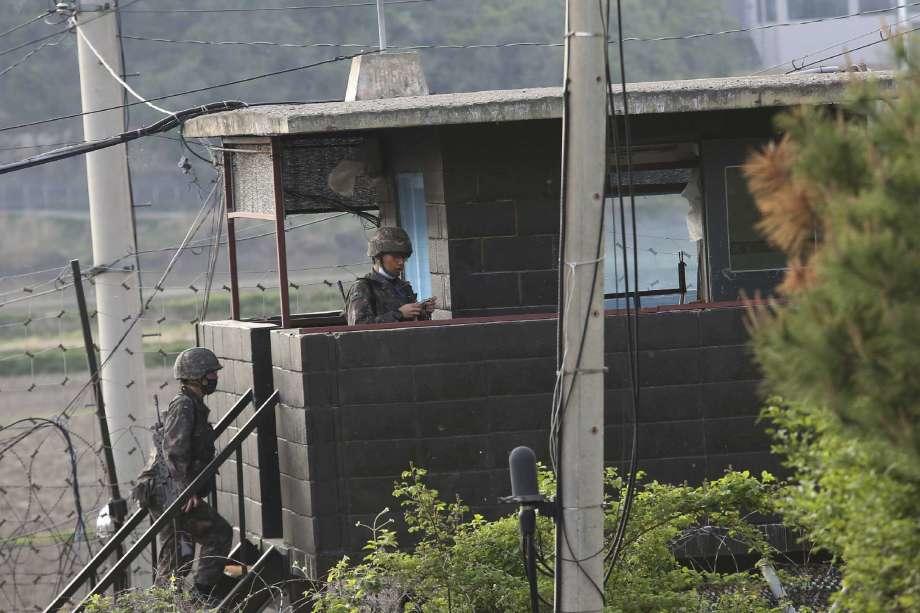
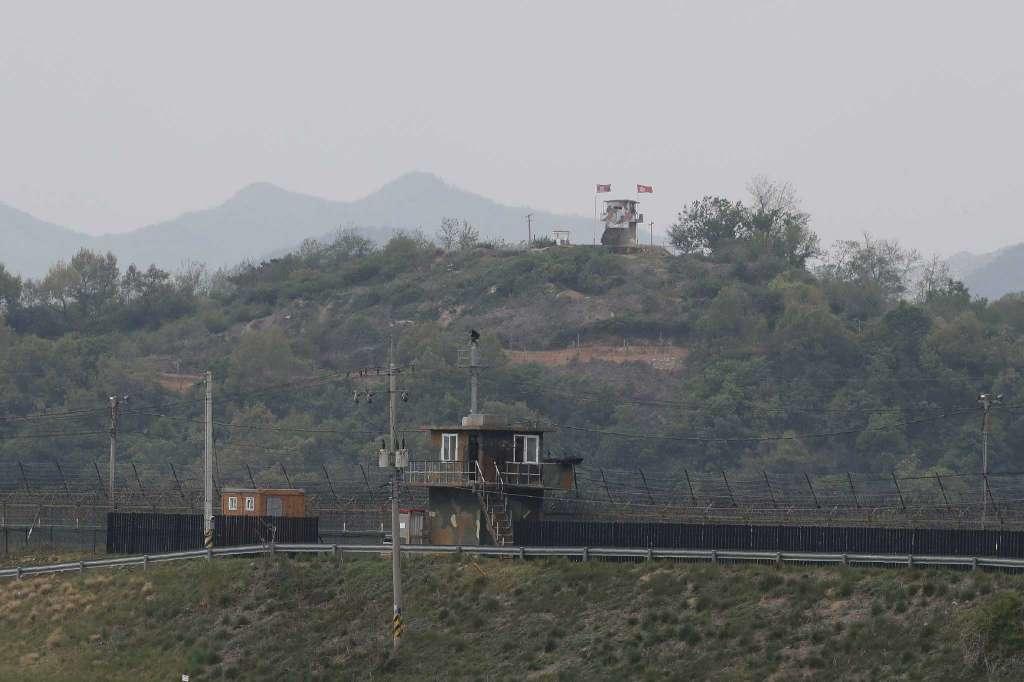
Military guard post in Paju, South Korea, near the border with North Korea, via AP.
It’s the first such direct exchange of gunfire since 2017 along what is by far the most militarized border in the world.
The DMZ is a 155-mile long buffer zone, at any given time said to have nearly two million troops on both sides, complete with guard posts and mine fields.
Yonhap continues of the alarming incident, which now appears to be calm:
South Korean soldiers on guard duty at the unit in the central border town of Cheorwon heard gunshots at around 7:41 a.m. and found four bullet marks on a wall of the guard post, according to the Joint Chiefs of Staff.
In accordance with the response manual, the military then fired a total of 20 shots in response — 10 rounds each time — and issued broadcast warnings, it added. No casualties or damage to South Korean facilities were reported.
It is not known if North Korea sustained any damage.
DMZ border posts, via AP
The frightening incident – in terms of prospects of triggering a major war on the peninsula – came a day after North Korea broadcast a video of Kim Jong Un paying a public visit to a fertilizer factory in Suncheon, ending prior rampant speculation about his health after prior reports of complications following heart surgery.
Pyongyang has vehemently denied both that he’s recently suffered any health complications or that he had heart surgery in the first place.
Pentagon Reviewing Hypersonic Program As Investments In Mach 5 Missiles Expected To Soar
The Office of the Inspector General, US Department of Defense (DoD IG) is determining if it should allocate more funds to hypersonic development programs as it seems the US is behind the hypersonic curve.
The DoD IG’s review began in April and is centered around the future allocation of funds for new weapons that can travel five times the speed of sound. The Pentagon’s emphasis on hypersonic technology started in 2017 as Russia and China ramped up their efforts.
The Pentagon’s fiscal 2021 budget earmarks approximately $3.2 billion, up from $400 million approved in 2020. Planned spending on hypersonics could reach upwards of $12.6 billion by 2025, Lieutenant Colonel Robert Carver, a Pentagon spokesman, told Bloomberg in an email.
Senator James Inhofe, a senior Republican from oil-producing Oklahoma and Senate Armed Services Chairman, explained in a Defense News op-ed in December how the military’s hypersonic testing labs were inadequate, writing “dilapidated testing infrastructure is holding us back from catching up to our enemies. Just look at hypersonic weapons: Beijing is parading around dozens of its newest weapons, and we have yet to build one.”
Mark Lewis, the DoD’s director of research and engineering for modernization, who oversees the military’s hypersonic effort, recently said a “balanced approach” to testing is needed.
“We can test something into oblivion and you never wind up building it, you never wind up using it but at the same time there are clearly tests you want to do, you have to do before you build a system,” Lewis said.
We’ve noted on several occasions that hypersonic development and testing has been a high priority by the military. In March, the DoD launched a common hypersonic glide body missile from the Pacific Missile Range Facility, Kauai, Hawaii.
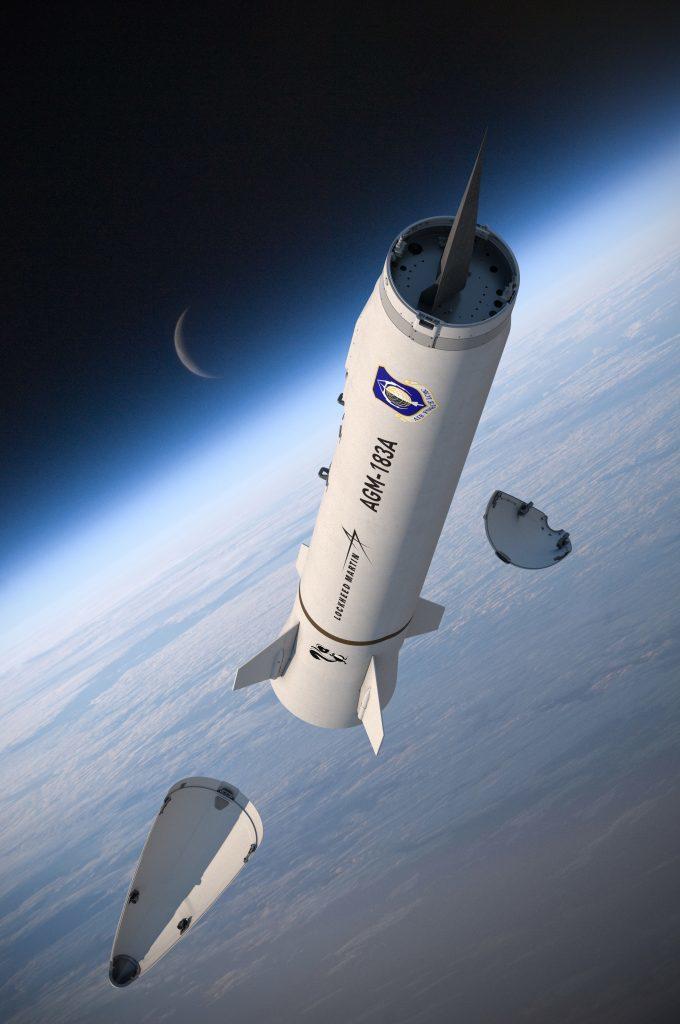
The Air The Air Force Global Strike Command made mention in April that it wants to mount hypersonic AGM-183 Air-launched Rapid Response Weapons externally on the Rockwell B-1 Lancer supersonic bomber.
With hypersonics now becoming a top priority for the DoD, here is the breakdown of spending on development programs regarding the new missiles.
Breaking Defense outlines four of the hypersonic program the DoD is working on:
Air-launched boost-glide: Air Force ARRW (Air-launched Rapid Response Weapon). The Air Force also had another program in this category, HCSW (Hypersonic Conventional Strike Weapon), but they canceled it to focus on ARRW, which the service considers more innovative and promising.
Surface-launched boost-glide: Army LRHW (Long Range Hypersonic Weapon) and Navy CPS (Conventional Prompt Strike). Both weapons share the same rocket booster, built by the Navy, and the same Common Hypersonic Glide Body, built by the Army, but one tailors the package to launch from a wheeled vehicle and the other from a submarine.
Air-launched air-breathing: HAWC (Hypersonic Air-breathing Weapons Concept) and HSW-ab (Hypersonic Strike Weapon-air breathing). Arguably the most challenging and cutting-edge technology, these programs are both currently run by DARPA, which specializes in high-risk, high-return research, but they’ll be handed over to the Air Force when they mature.
Surface-launched air-breathing: This is the one category not in development – at least not in the unclassified world. But Lewis said, “eventually, you could see some ground-launched air breathers as well. I personally think those are very promising.”
Some of the first hypersonic weapons could be deployed with the Army in 2023. Though, as we’ve previously noted, Russia has already deployed hypersonic missiles, and China has been doing many live-fire tests.
Norway’s $1 Trillion Wealth Fund Doubled Down On US Stocks During March Market Rout
Jeff Gundlach, Kyle Bass and – from the looks of it – Warren Buffett sat out last month’s market turbulence. Gundlach and Bass apparently cashed in their shorts and have repositioned for another pullback.
But at least one massive player in the “permanent capital” space apparently went all in. Amid a scandal that has rocked the Norwegian financial elite, the fund expanded its holdings of US stocks, something it has been planning to do for months, thought – fortunately for the Norwegians – waited to execute.
Interestingly enough, the fund, which is still being managed by veteran CEO Yngve Slyngstad, added to stakes in some of the worst-hit companies listed in the US, including Royal Dutch Shell (despite the fund’s decision to cut back on some oil stocks) and Carnival Corp. Apparently, Norway believes now is a good time to buy energy assets, an opinion that is shared by almost nobody.
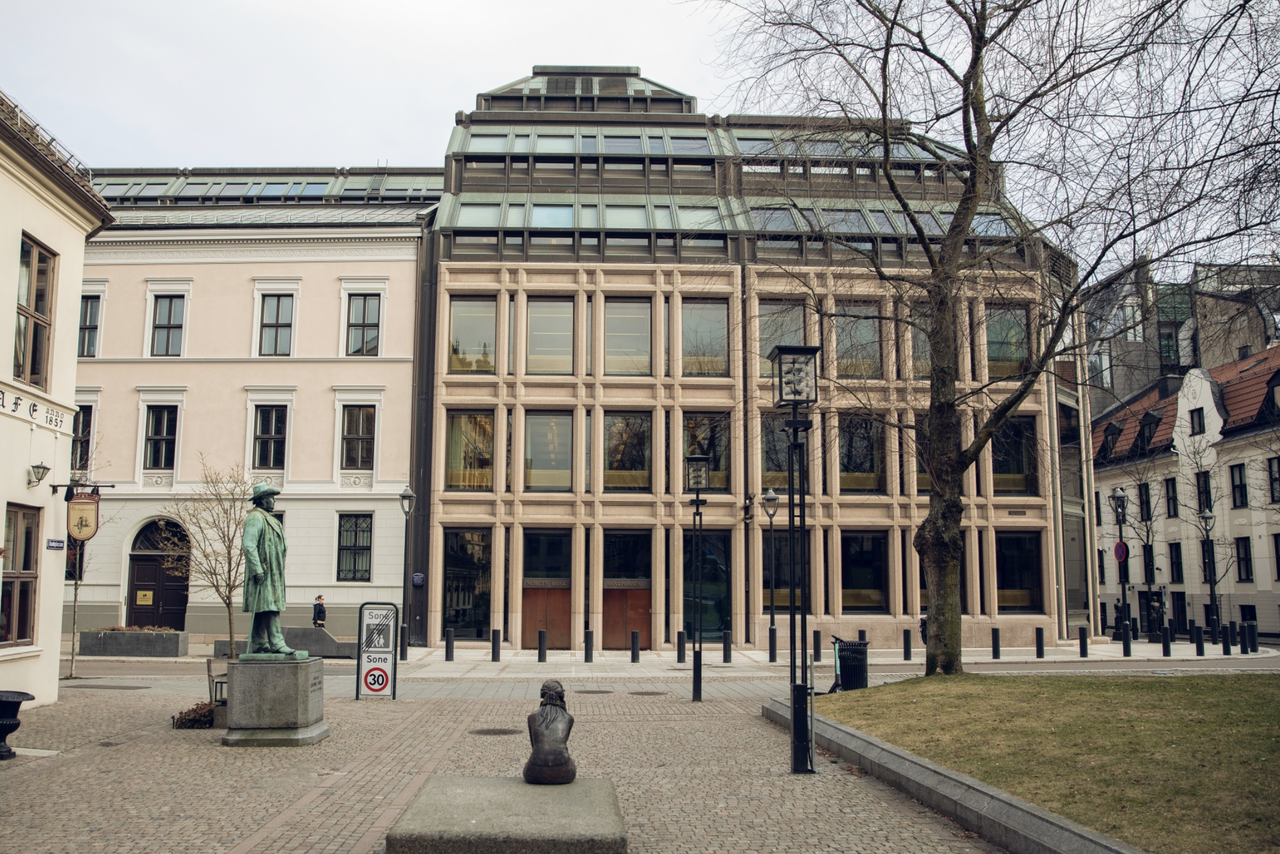
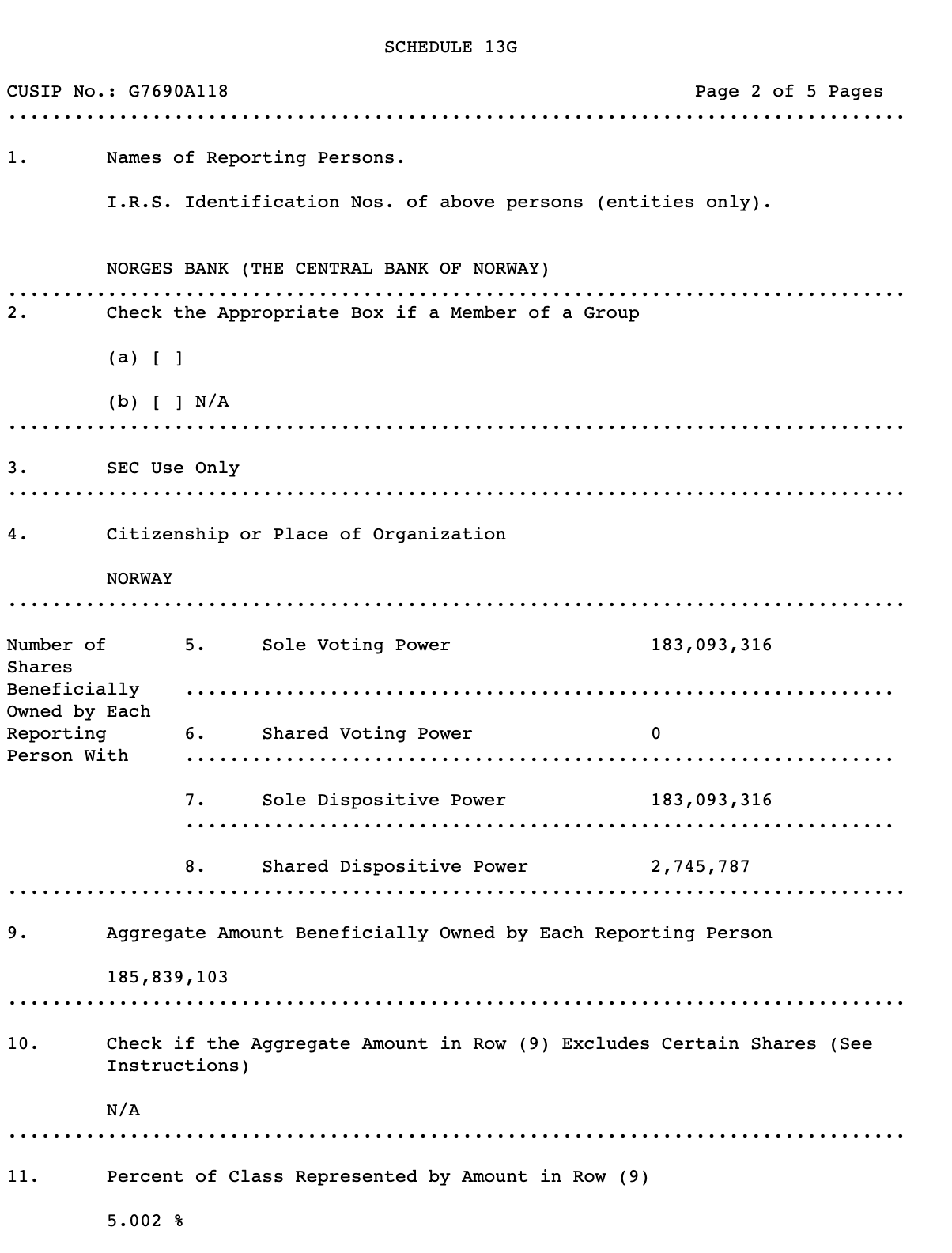
According to filings by Oslo-based Norges Bank seen by Bloomberg, the list of companies where the fund acquired a stake of 5% or more includes 7 US-listed firms, including the aforementioned two, along with Australian mining giant BHP Group and Liberty Broadband.
The fund doubled its holdings in Shell.
The Norwegians aren’t the only oil money investing in Carnival (a symbiosis that we find oddly satisfying): Saudi Arabia’s $320 billion Public Investment Fund also built up a sizable stake in the troubled cruise line, which is facing a torrent of international outrage and a criminal investigation in Australia.
The chairman of some energy advisory firm quoted by Bloomberg defended the fund’s investment in Shell, arguing that the oil giant is “positioning themselvse for a cleaner energy future.”
“There has been a lot of volatility in the last three or four months, but Norges Bank thinks long term,” said Peter Fusaro, the chairman of Global Change Associates, a New York-based energy advisory firm. “Shell is actually not only looking at oil and gas assets, but positioning themselves for a cleaner energy future.”
The Norwegian fund’s stake in Shell Class B shares reached 5.1% on March 24, according to a filing with the SEC, up from the 2.55% at the end of last year.
While Shell’s Class B ADRs have rebounded from a low of $19.58 on March 18, they’re still well below an early January price of almost $62.