After Buying DirecTV For $50 Billion In 2015, AT&T Now Seeks To Sell It For Under $20 Billion Tyler Durden
Fri, 08/28/2020 – 17:40
How do you destroy $30 billion in value in just five years? If you are AT&T, you buy DirecTV in 2015 for $50 billion and five years later you try to sell it – now renamed to AT&TTV – for less than $20 billion, a loss of 60% on the deal.
That, according to the Wall Street Journal is what AT&T hopes to do as it takes “a fresh look its DirecTV business” exploring a deal for a service wounded by cord-cutting. And by fresh look, the journal means sell.
When AT&T announced plans to acquire DirecTV in May 2014, the vision was to control some 26 million TV subscribers. However, the resulting slump in cable and satellite viewership due to the relentless encroachment of streaming services, the value of DirecTV has seen a sharp drop in recent years and the result is yet another catastrophic media deal. And since the pay-TV unit has shed 7 million U.S. video connections over the past two years, a deal could value the business below $20 billion, the WSJ sources said.
The purchase of DirecTV briefly made AT&T the biggest U.S. pay-TV provider, but as satellite customers canceled, that title was later ceded to Comcast. In 2018, a roughly $80 billion takeover of Time Warner added HBO, the Warner Bros. film studio and cable channels like CNN to AT&T’s portfolio.
AT&T hired Goldman Sachs which has been in talks with private-equity suitors about the satellite TV unit, with potential bidders including Apollo which had expressed interest last year (and whose boss Leon Black is being subpoenaed for his links to Jeffrey Epstein), and Platinum Equity.
As WSJ notes, “if a deal is reached, it would start to streamline a company that used a series of acquisitions in the last decade to shift from a phone service provider into a media conglomerate. It also left the enlarged AT&T with roughly $180 billion of net debt.”
DirecTV has also been a disappointment from a profit standpoint, as cellphone service and wired broadband remain AT&T’s biggest profit engines and account for more than half of the company’s over $180 billion of annual revenue. Those telecom units have played a key role stabilizing overall earnings this year as the coronavirus pandemic drained revenue in its satellite arm and in its WarnerMedia division. AT&T doesn’t break out revenue or profits for DirecTV.
AT&T shares are down 20% YTD, missing out on a historic rally. AT&T stock traded at around $33 when it announced the DirecTV acquisition in May 2014. It is now $30.
via ZeroHedge News https://ift.tt/3b4TEJQ Tyler Durden
The Federal Reserve system made a future financial panic or currency panic impossible. It made stable for the first time in the history of the United States the credit system of the people of the United States.
– Senate Documents, 64th Cong., 1st Sess., December 6, 1916
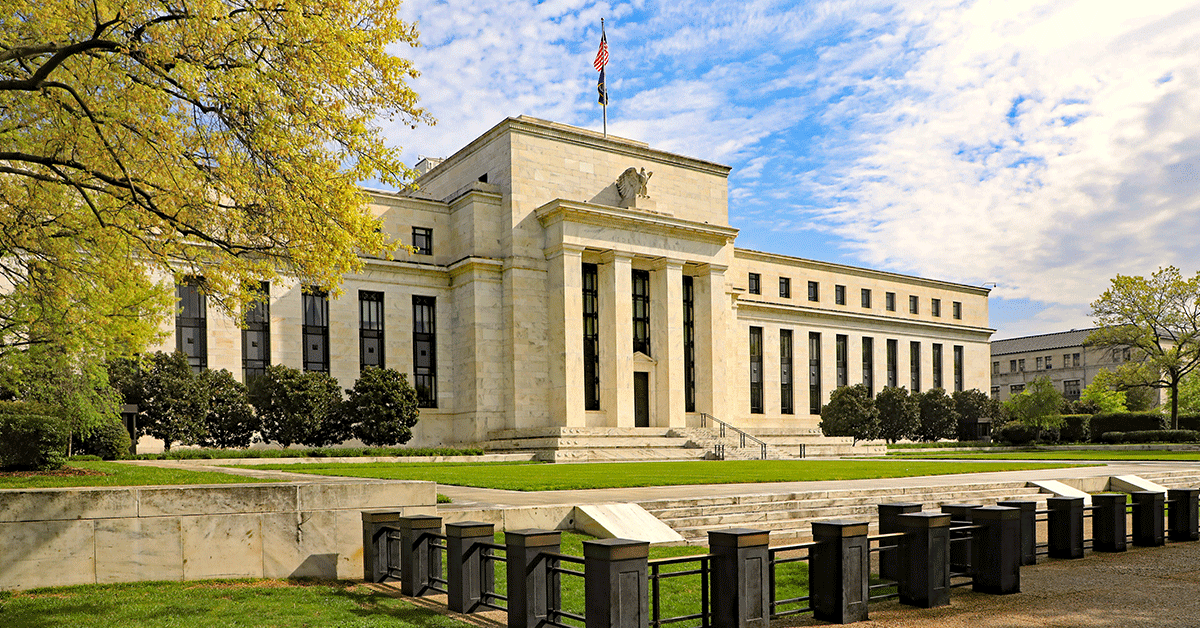
We have been watching the “shock-and-awe” bailout of the financial system by the Federal Reserve with astonishment. Never before has a central bank tried single-handedly to rescue both the financial system and a large proportion of U.S. corporations. We were taken aback then by Fed actions and are now just as worried about what it has given birth to.
We are unfortunately now in a situation where we cannot speak of “markets” anymore. The Fed has nurtured a dangerous, centrally controlled financial system, á la the Soviet Union. Like its ‘role model’, monolithic systems always fail, as the complexity of financial interactions and the economy will eventually overwhelm the central planners.
Alas, we fear that we are approaching the breaking point of the modern financial order.
The Federal Reserve
After the collapse of banks of the families Peruzzi and Bardi in 1343 and 1346, a discussion about a ‘liquidity back-stop’ of the banking system began. The idea of the modern central bank emerged.
For the same reasons, the ‘Panic of 1907’ was a game-changer in an attempt to create a central bank in the US. To put a stop to the bank runs, a coalition led by the illustrious banker J.P. Morgan repeatedly intervened to restore the solvency of several New York banks, which in turn gave more impetus to demands that the U.S. banking system required a permanent institutional source of liquidity.
However, the creation of the Federal Reserve system, in 1913, was beset by worries that it would lead to the “socialization” of the economy. To calm these fears, the authority of the Fed to issue legal tender (or “currency”) was restricted by both the ‘real bills doctrine’ and the distribution of financial power.
The regional Reserve Banks, not the Federal Reserve Board, were given the control of the creation of central bank credit or money. The real bills doctrine stated that the Fed could only extend credit and thus increase the supply of money against collateral that already had established value through a “commercial transaction”. This meant that the value of the collateral could not be in the future, effectively banning, for example, the monetization of the federal debt.
The real bills doctrine slowly faded away in the 1920s and the Banking Act of 1935 ended the autonomy of the Reserve Banks, and the Board received authority over open-market operations. In practice, by the 1920s the Fed had already assumed a larger role in the economy than its creators had intended.
A crash in high leverage
Since its inception, the Fed has consistently increased its role in the economy by manipulating the financial markets.
When the repurchase agreements (or “repo”) market blew up on the 16th of September, 2019, it sent a strong message. Leverage and risk-taking, supported by decades of recurrent—or nearly permanent—easy monetary policy and meddling of the Fed, had reached a tipping point. On the morning of the 16th, the big ‘Primary Dealer’ banks simply refused to provide overnight loans in the repo-market, and rates shot up.
The Fed naturally intervened by enacting a repo facility, which it had previously used in the depths of the Global Financial Crisis. So, emergency measures were needed again. This naturally did not solve the problem of excess leverage and risk-taking in the financial markets, but rather the contrary. With the help of the Fed, the system was kept afloat, but leverage likely kept rising until economic anxiety precipitated by fear of the coronavirus pandemic struck in March 2020.
The collapse, and the bailout
On March 16th the rates on U.S. short-term bonds, which cities and states often rely on for their short-term financing needs, shot up. Liquidity and buyers evaporated from several key parts of the capital markets, including U.S. corporate fixed-income and eventually parts of the Treasury markets, and panic ensued.
Stock markets crashed. The volatility index, VIX, reached 82.69, the highest on record. The DJIA plunged by 2997 points, the worst point-drop on record, or 12.9 percent.
On the 16th, the New York Fed announced that it would add $500 billion in overnight loans to the repo market. On Tuesday the 17th the Fed announced that it would use $1 trillion to mop-up corporate paper from issuers. On the 19th, the Fed announced that it would create a lending facility to unlock frozen money market mutual funds. There were also massive support operations launched by central banks across the globe.
These measures stemmed the fall–but at an extreme price. In the end, the Fed ended-up backstopping U.S. Treasury markets, corporate commercial-paper and municipal bond markets and short-term money-markets. It effectively became the financial markets of the US.
Those who had feared that the creation of the Fed would eventually lead to the “socialization” of the economy were proven correct.
The suffering real economy
It is a fact derived from financial history that, eventually, financial markets follow the real economy. With its ‘whatever-it-takes’ policy line, the Fed has temporarily suspended the action of this iron economic rule. For example, at the same time that U.S. corporate bankruptcies are above the peak seen during the GFC, the average yield of ‘junk bonds’ has collapsed. Of course, this does not make any sense!
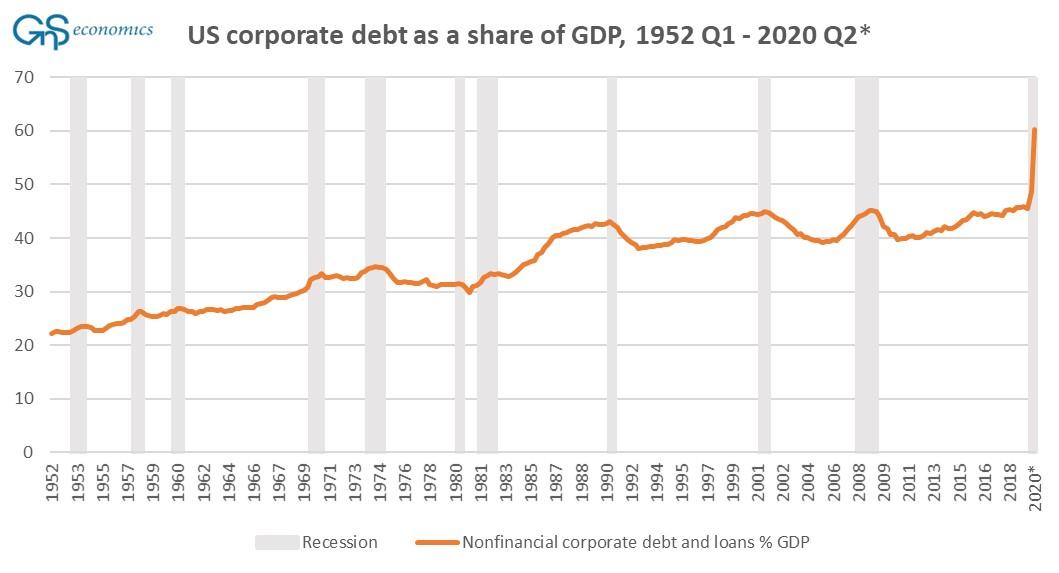
More worryingly, corporations continue to gorge on debt. U.S. corporate bond issuance is currently estimated to top (incomprehensively!) $2.5 trillion this year. At the same time that U.S. GDP has crashed, the corporate debt-to-GDP ratio has exploded (see Figure).
The share of debt and loans of US corporations as a share of GDP. 2020 Q2 figure is an estimate. Source: GnS Economics, St. Louis Fed, BoFA
This is against the backdrop of an economy which is unlikely to heal anytime soon.
The record level of corporate bankruptcies means that unemployment will not decline from extreme heights and may even revert to a rising trend. This will diminish consumption, which will hurt the profitability of corporations, and lead to growing loan defaults. This in turn will increase stress in the banking sector. Credit will diminish, consumption will fall further leading to more bankruptcies, and the cycle repeats.
Current high-frequency data shows that the U.S. economic activity is still languishing some 60 % below “normal” pre-Covid levels and that growth rates are flattening, or even declining again in some major economies.
Regrettably, we appear to be in just the first innings of this crisis.
The combination of massive central bank meddling in a suffering economy creates an extremely precarious situation for the capital markets.
The looming meltdown of the capital markets
Leverage among corporations is at an all-time high and yet they continue maniacally piling-up debt while the economy sputters. This means that mass-defaults loom, and that over-indebted corporations will be unable to invest and grow. The latter will cripple the crucial driver of economic recovery.
Most importantly, firms cannot not survive on debt alone. They need income, which the Fed cannot print. Record levels of bankruptcies mean that unemployment will not improve significantly, and the Fed cannot print jobs. Central banks also cannot print bank profitability.
What this means is that losses from corporate and household defaults and bankruptcies will mount until a point is reached where trust between over-levered investors is lost, and the banking sector implodes. Then an attempted mass-exodus from all risky debt will commence through “doors” which will by that time have quickly become extremely small. Liquidity will evaporate and the capital markets will likely face a meltdown driven by investor panic and an emerging banking crisis.
While the Fed can, in theory, buy practically every distressed financial asset and become the new Gosbank while simultaneously subjecting itself and the hapless U.S. taxpayer to gargantuan losses, it will be unable stop the banking crisis. Even more so, as the most likely point of origin of the new financial crisis lies in Europe.
There simply just is no way the Fed can win this fight. The contraction of the real economy will continue while markets keep pushing blindly to new highs. This has always been a recipe for a catastrophic asset market meltdown, and this time it is likely to engulf the capital markets in their entirety.
And then, mayhem.
* * *
Learn how to survive from the coming meltdown of the capital markets with the help of our Crisis Preparation-series. We follow the development of the economic crisis our Q-Review reports and Deprcon Service, which are available at GnS Store.
via ZeroHedge News https://ift.tt/2ErsiSt Tyler Durden
“Terminate Bush’s War”: Trump To Reduce Troops In Iraq By One-Third Just Ahead Of Election Tyler Durden
Fri, 08/28/2020 – 17:00
Republican leadership at the RNC Convention this week talked a big game when it comes to “bringing the troops home” – something Trump has been promising since 2016 – but which has not yet ultimately been realized. But can he deliver now as part of a pre-election promise? It looks like the wheels are finally in motion.
Multiple reports citing Pentagon officials on Friday sayup to one-third of all American soldiers will permanently return from Iraq over the next two to three months.
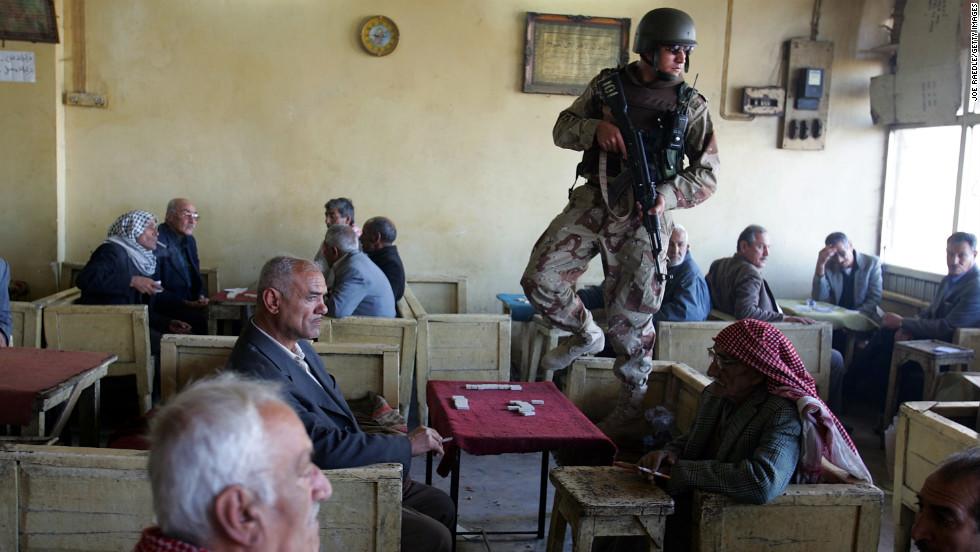
This would bring numbers down from 5,200 to about 3,500 according to Pentagon officials. Trump is in the meantime expected to tout an Iraq withdrawal as a success in ending the wasteful wars in Iraq and Afghanistan.
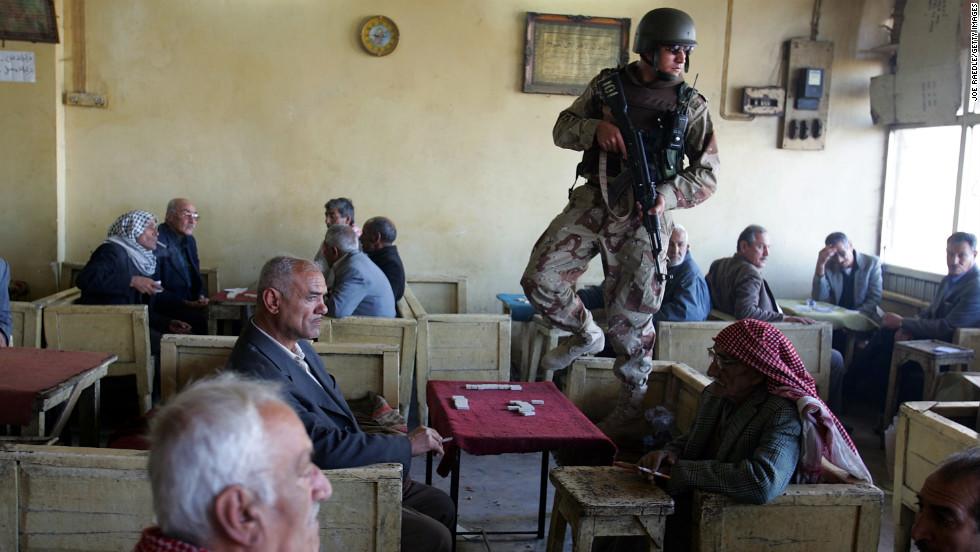
The US has occupied Iraq since Bush launched his war in 2003, via CNN.
Of course, we’ve been here before. Prior major drawdowns were stymied after ratcheting events over the past year involving Iran. Despite the official US mission still listed as “anti-ISIS operations” it’s been pro-Iranian Iraqi militias which have kept US occupying forces busy and on edge.
Senior Fellow at the Cato Institute, Doug Bandow, says this time America’s presence in Iraq is indeed finally shrinking. Writing in The American Conservative, he holds nothing back in terms of reminding the American public what’s at stake:
Hubris, hypocrisy, and sanctimony are all constants of U.S. foreign policy. All came together in George W. Bush’s invasion of Iraq. Most foreign policy analysts, other than the neoconservative war enthusiasts who dominated Bush administration decision-making, recognize that America’s unjustified aggression was a horrid bungle.
The U.S. broke international law, vilified European allies, wrecked Iraq, triggered sectarian war, victimized religious minorities, and empowered Iran. The human toll was hideous: Washington’s war killed thousands of Americans, wounded tens of thousands of U.S. personnel, killed hundreds of thousands of Iraqi civilians, and displaced millions of Iraqis. The invasion spawned murderous al-Qaeda in Iraq, which morphed into the even more brutal Islamic State. Seventeen years later Iraqis are still dealing with their broken, sectarian government, bedeviled by powerful militias allied with Iran.
Bandow underscores that the Pentagon has pushed back at every turn on every attempt of the Trump administration to pull out.
The hotly contested November election, however, presents an opportunity where success in this is much more likely, however.
“The election-minded president desperately needs some foreign policy accomplishments. Three-quarters of Americans say they want the U.S. out of Iraq. It is time to finally and completely terminate George W. Bush’s bloody blunder,” Bandow observes. But as we’ve noted recently, Trump’s reasons for being there and “justification” for pullout have been all over the map, to put it mildly:
Trump Touts “Making Very Big Oil Deals” As Condition For Rapid Troop Exit From Iraq https://t.co/RD0ROdf1NY
For all the Trump boasting that he’ll be the president to “bring our boys home”, he’ll need to show his base and the public something concrete toward this noble end, especially given the controversy surrounding his indefinite and ill-defined “oil occupation” in neighboring Syria.
via ZeroHedge News https://ift.tt/31CDUL7 Tyler Durden
Taxpayers of America, you may soon be funding a $500 billion bailout of the 50 states, all U.S. territories, and the District of Columbia. But where is this vast sum of money going?
House Speaker Nancy Pelosi’s “HEROES Act” — more accurately titled “Pelosi Throw-Money-at-the-States Bailout Bill” — vividly illustrates why transparency is crucial. If the Senate passes the legislation, taxpaying citizens of financially responsible states will bear the burden of financially irresponsible states.
At OpenTheBooks, our goal is transparency. We are nonpartisan. We believe you, the American taxpayer, should be able to access every government expense — local, state, and federal — in real-time on your mobile phone, iPad, and computer. It’s your money. You deserve to see where every dime is spent. We have posted 5 billion government expenditures online.
Last year, we filed 41,500 Freedom of Information Act requests. We documented the salaries and pensions of 23 million public employee. We sued three states that refused to give us information about how they spent your money.
Here are a few of the unlimited examples in just four “deep blue” Democratic areas — California, New York, and Illinois, along with Washington, D.C.
Here you can see how your tax dollars are wasted, which the Pelosi Bailout Bill conveniently overlooks, and why blank checks are unwise even during an economic crisis.
California
In the so-called Golden State, 341,000 state and local government employees earn more than $100,000 in salary or pension payments. If the cost of living in California necessitates such salaries, the state should tackle local government policies designed to keep housing prices high. Or begin taming the public employee unions, whose bargaining helped 44 lifeguards in Los Angeles County earn between $300,000 and $365,000. Not to mention the $501,000 per year nurse working for the university medical system.
In San Francisco alone, 9,425 employees earn total compensation exceeding $200,000 annually. The city disclosed that a sheriff in corrections made $315,000 in overtime. In San Francisco, taxpayers cough up $452,421 annually to pay a salary ($343,000) and benefits ($109,447) to Mayor London Breed — the top paid mayor in the country.
Members of San Francisco’s Board of Supervisors are also generous to themselves, but these public servants didn’t earn their steady raises by running a tight ship. According to the state controller’s government compensation website, over a five-year period from 2013 to 2018, the amount that San Francisco paid out in total wages jumped 27.6%, from $2.9 billion for 35,771 employees to $3.7 billion in total wages to 40,951 employees in 2018.
Among the new hires: The members of “poop patrol,” who are paid $184,000 a year to clean up human waste left by the city’s burgeoning homeless population. (Feel free to add your own wisecrack here.)
However, it’s no laughing matter, and it’s not strictly a local problem: Pelosi, who came of age in San Francisco politics, and Gov. Gavin Newsom, who was born and raised there, aren’t looking to local politicians to tighten their belts or enact smarter policies. Both are looking for Washington to simply bail out the city, along with the rest of the state. California would reap $48 billion from the Pelosi Bailout Bill – nearly a dollar-for-dollar bailout of its highly compensated employees.
New York
OpenTheBooks matched the New York state checkbook with Gov. Andrew Cuomo’s campaign donor disclosures. From 2014 to 2018, Cuomo solicited 377 state vendors, who gave $4.6 million in campaign cash and reaped $6.5 billion from state contracts.
In Cuomo’s Empire State, 290,000 public employee salaries and pensions exceed $100,000. Cost to taxpayers: $38 billion annually. New York would reap $35 billion from the Pelosi Bailout Bill – as in California, nearly a dollar-for-dollar bailout of their generously compensated employees.
Consider the following examples:
Plumbers working for the city of New York make $285,000 per year.
Police officers at the Port Authority of New York-New Jersey earn $423,467.
Long Island school superintendents make up to $547,049.
One 93-year old retired CUNY college professor receives a $561,754 pension.
New York’s General Assembly is not to be outdone. They recently hiked their own pay to $130,000. They are now the most highly compensated legislators in the country. Plus, 21 current representatives and state senators are double-dipping, which means they not only voted to increase their salaries, but they also they collect a salary and a pension at the same time from their same position.
Illinois
In the Land of Lincoln, a place where a young store clerk and future president once walked three miles to return six cents change to a woman he’d inadvertently overcharged, some 110,000 public employees are paid salaries or pensions in excess of $100,000. Under the Democrats’ plan, Illinois will reap $20 billion in bailout money. Despite launching the political career of “Honest Abe,” in our time Illinois is a cesspool of corruption. As a consequence of its Faustian bargain with public employee unions, the financially strapped state is flirting with junk bond status.
There, in the American heartland, Chicago’s city-employed tree trimmers make $106,663 and state correctional facility nurses take home up to $277,100. Higher education is a particularly lucrative endeavor of public service: Illinois community college presidents get nearly half-a-million dollars a year, while university doctors are compensated at packages ranging up to $2 million annually. At the state’s signature public university, the head football coach is paid $4 million – for fielding a losing team.
Thanks to such largesse, every man, woman, and child in Illinois owes $19,000 of the estimated $251 billion pension liability. An Illinois family of four now owes more in unfunded pension liabilities ($76,000) than they earn in household income ($63,585).
Washington, D.C.
The elected leaders in the nation’s capital are lobbying for a $3.2 billion bailout. But if Congress took only a cursory look, they’d see plenty of places to cut the fat. It starts at city hall, were the mayor’s $220,000 annual pay exceeds that of every governor in the country.
At a salary of $212,000, the D.C. City Council chair out-earns every member of Congress (except Speaker Pelosi, who earns $223,500). The Metropolitan Police Department chief is paid $272,156, which tops every four-star general in the U.S. military (they make $268,332). The salary for the superintendent of the underperforming D.C. public schools: $280,000 – far more than the secretary of the U.S. Department of Education ($199,700).
And so it goes: the D.C. Department of Parks and Recreation chief is paid $10,000 a year more than the secretary of the U.S. Department of the Interior, who manages one-fifth of all the land in the country.
* * *
Some “Heroes Act.” Heroes to whom? Certainly not you, the taxpayers.
Half a billion here. Half a billion there. The federal debt continues to explode. It has quadrupled in the last 20 years. Today, has surpassed $26.6 trillion and is rising rapidly. The deficit this year is unknown. It will be somewhere around $4 trillion, the equivalent of a wartime deficit. The entire federal debt in 1992 — after 216 years, two world wars, depressions, countless natural disasters — was $4 trillion.
The Pelosi state bailout bill clearly screams, “So what? It’s not my money.” By the time our country’s debt becomes so corrosive to your livelihood, to your life, that it can’t be ignored — as it will — Pelosi and the big spenders in both major political parties will be long out of office.
At OpenTheBooks, we believe that every cent of your tax dollars spent by your elected officials should be online, viewable in real-time. We believe transparency will be revolutionary. The more you, the voters, know about your elected officials’ respect (or lack thereof) for your tax dollars, the more responsible your elected officials will be, and the better our government will be.
Call your congressional representative. Call your senators. Tell them it is time they demonstrated with actions, not just words, that they are acutely conscious that they are spending your tax dollars. Tell them you are absolutely opposed to bailing out states that waste money with no fiscal sense and no care for future generations of Americans.
* * *
Thomas W. Smith is chairman of OpenTheBooks.com.
Adam Andrzejewski is the CEO/founder of OpenTheBooks.com, dedicated to posting all government spending online.
via ZeroHedge News https://ift.tt/34I5hp2 Tyler Durden
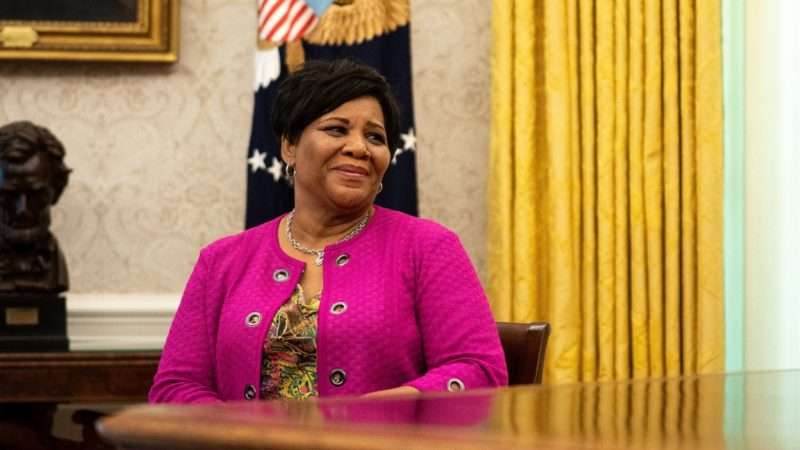
President Donald Trump has fully pardoned Alice Marie Johnson two years after commuting her sentence.
In the 1990s, Johnson was sentenced to life in prison without the possibility of parole for her non-violent involvement in a drug conspiracy. Johnson’s story was featured by CAN-DO, a clemency nonprofit. It’s here that reality TV star Kim Kardashian West heard of Johnson’s story and became a fierce advocate for her release. After West personally met with Trump, Trump commuted Johnson’s sentence in July 2018.
A commutation is but one of the clemency powers granted to the executive under Article II, Section 2 of the United States Constitution. A commutation shortens a person’s sentence, while a pardon absolves their conviction.
Since her commutation, Johnson has used her early release to call for long-overdue criminal justice reforms. On Thursday evening, Johnson spoke at the Republican National Convention.
“What I did was wrong. I made decisions that I regret. Some say, ‘You do the crime, you do the time.’ However, that time should be fair and just. We all made mistakes. None of us want to be defined forever based on our worst decision,” she said in a moving speech. She also reminded her audience of the thousands of offenders just like her in federal prison “who deserve the opportunity to come home.”
Johnson was invited to the White House on Friday afternoon, where Trump granted her a full pardon of her conviction. White House reporter Josh Wingrove said Johnson fought back tears during a prayer:
President @realDonaldTrump just signed a full pardon for Alice Johnson!
The U.S. will be reducing the number of troops it has stationed in Iraq by about a third, reportsTheWall Street Journal, leaving behind roughly 3,500 men and women. This news comes after a long series of brags at the Republican National Convention that President Donald Trump is succeeding in ending America’s foreign wars.
“Unlike previous administrations, I have kept America out of new wars, and our troops are coming home,” said Trump in his acceptance speech last night, promising that in a second term he would “strike down terrorists who threaten our people and keep America out of endless and costly foreign wars.”
The Journal reports that the departure of some 1,700 troops from Iraq will occur over the next few months. Once gone, America’s military presence in that country will be where it was in 2015.
Under Trump, America’s troop commitment to our various foreign wars has oscillated; first surging then tapering off.
PolitiFact notes that when Trump came into office there were around 8,500 troops in Afghanistan. The president increased our military presence up to 14,000 personnel but has since drawn it back down to where it was at the beginning of Trump’s term. That number is supposed to fall to 4,000 in November.
Under Trump, the Defense Department has stopped publishing troop numbers in Iraq, Afghanistan, and Syria, making it difficult to get an accurate count of how much military personnel is in those countries. The Washington Post reported in July that the number of U.S. troops stationed abroad has slightly increased under Trump.
Outside of troop levels, Trump has amped up the drone war and vetoed a resolution to end U.S. participation in the war in Yemen. He has also escalated tensions with Iran by tearing up the 2015 nuclear deal signed under the Obama administration, reapplying sanctions, and deploying additional aircraft and ships to the region in response to alleged Iranian drone attacks on Saudi oil facilities.
In January, the Trump administration assassinated Iranian general Qassem Soleimani, provoking an Iranian missile counterattack on U.S. military bases in the country.
This broader schizophrenia among the Trump administration between escalating tensions with Iran while promising to end endless wars was on full display in the president’s remarks last night. In the space of three sentences, he bragged about killing Soleimani, said he was bringing troops home, and then touted his increases in military spending.
It’s good that more U.S. troops are being pulled out of Iraq. It’s less encouraging that we still have thousands of troops in the country after nearly four years of a president who keeps promising to end forever wars.
from Latest – Reason.com https://ift.tt/2YJs9Rj
via IFTTT
Whether police officers are granted qualified immunity—the legal doctrine that makes it considerably more difficult to sue civil servants who violate your rights—largely depends on where the offense occurred, and thus where it’s litigated in court, according to a recent Reuters investigation.
But even in the courts that try to hold public servants to a higher standard, officers routinely receive qualified immunity for conduct that shocks the conscience.
The doctrine, conjured into existence by the Supreme Court rather than by legislation, requires plaintiffs to show that misconduct was “clearly established” as verboten in a court precedent prior to the alleged offense. Courts have applied a strict interpretation of that standard in which civil servants cannot be sued unless courts have expressly condemned a near-identical situation. Without such notice, the thinking goes, public employees couldn’t know their bad behavior was unlawful, as if they studying case-law texts before going to work.
The high court’s decision, which came in Harlow v. Fitzgerald (1982), directly cut against the Civil Rights Act of 1871, the law that expressly permits the American public to sue civil servants who acted unconstitutionally. In theory, the ruling was supposed to shield state actors from groundless lawsuits. But as a practical matter, it has taken away the rights of many to bring civil suits against public officials who have flagrantly trampled on their rights.
Judges in the Fifth Circuit—which covers Mississippi, Texas, and Louisiana—”are more likely to prioritize police power over citizens’ rights and liberties,” Reuters reports. That deference to the state doesn’t stop at the police. The Fifth Circuit Court of Appeals recently granted qualified immunity to a group of prison guards who forced a naked inmate, Trent Taylor, to stay in two squalid cells, one with “massive amounts of human feces” and the other with raw sewage overflowing on the floor. Though the judges on that panel acknowledged that Taylor’s Eighth Amendment rights had been violated, they granted the group qualified immunity on the basis that the precise amount of time the inmate spent in those cells—six days—had not been spelled out in pre-existing case law.
“Though the law was clear that prisoners couldn’t be housed in cells teeming with human waste for months on end, we hadn’t previously held that a time period so short violated the Constitution,” wrote Circuit Judge Jerry E. Smith. “That dooms Taylor’s claim.”
Alternatively, the Ninth Circuit, which covers California, Washington state, Alaska, Arizona, Hawaii, Idaho, Montana, Nevada, and Oregon, “has set a higher bar for police,” granting qualified immunity in 42 percent of excessive force complaints. But even that appeals court has awarded qualified immunity in some head-scratching cases.
In 2019, for instance, the Ninth Circuit gave qualified immunity to Los Angeles police officer Michael Gutierrez who, without warning, shot a 15-year-old boy as he was preparing to make his way to school. The teen’s friend was holding a plastic Airsoft gun replica. “Under the circumstances, a rational finder of fact could find that Gutierrez’s use of deadly force shocked the conscience and was unconstitutional under the Fourteenth Amendment,” the Ninth Circuit wrote. But that wasn’t enough. “Because no analogous case existed at the time of the shooting, we hold that the district court erred in denying Gutierrez qualified immunity for this claim.”
The same federal court also granted two cops from Fresno, California, qualified immunity after the pair allegedly stole $225,000 while executing a search warrant. The decision followed a similar trajectory: Though the judges agreed the officers’ conduct was unquestionably bankrupt, that didn’t matter in the context of qualified immunity, leaving the victims little recourse in seeking recompense for their lost assets. “The panel held that although the City Officers ought to have recognized that the alleged theft was morally wrong,” they wrote, “they did not have clear notice that it violated the Fourth Amendment.”
The latter case was not an excessive force complaint, and thus wouldn’t have influenced Reuters‘ investigation. It’s a good reminder that misbehavior in law enforcement involves more than excessive force. And it’s an unpleasant confirmation that civil servants are granted qualified immunity in even the most baffling circumstances, no matter what the offense or location.
from Latest – Reason.com https://ift.tt/31Aespo
via IFTTT
President Donald Trump has fully pardoned Alice Marie Johnson two years after commuting her sentence.
In the 1990s, Johnson was sentenced to life in prison without the possibility of parole for her non-violent involvement in a drug conspiracy. Johnson’s story was featured by CAN-DO, a clemency nonprofit. It’s here that reality TV star Kim Kardashian West heard of Johnson’s story and became a fierce advocate for her release. After West personally met with Trump, Trump commuted Johnson’s sentence in July 2018.
A commutation is but one of the clemency powers granted to the executive under Article II, Section 2 of the United States Constitution. A commutation shortens a person’s sentence, while a pardon absolves their conviction.
Since her commutation, Johnson has used her early release to call for long-overdue criminal justice reforms. On Thursday evening, Johnson spoke at the Republican National Convention.
“What I did was wrong. I made decisions that I regret. Some say, ‘You do the crime, you do the time.’ However, that time should be fair and just. We all made mistakes. None of us want to be defined forever based on our worst decision,” she said in a moving speech. She also reminded her audience of the thousands of offenders just like her in federal prison “who deserve the opportunity to come home.”
Johnson was invited to the White House on Friday afternoon, where Trump granted her a full pardon of her conviction. White House reporter Josh Wingrove said Johnson fought back tears during a prayer:
President @realDonaldTrump just signed a full pardon for Alice Johnson!
The U.S. will be reducing the number of troops it has stationed in Iraq by about a third, reportsTheWall Street Journal, leaving behind roughly 3,500 men and women. This news comes after a long series of brags at the Republican National Convention that President Donald Trump is succeeding in ending America’s foreign wars.
“Unlike previous administrations, I have kept America out of new wars, and our troops are coming home,” said Trump in his acceptance speech last night, promising that in a second term he would “strike down terrorists who threaten our people and keep America out of endless and costly foreign wars.”
The Journal reports that the departure of some 1,700 troops from Iraq will occur over the next few months. Once gone, America’s military presence in that country will be where it was in 2015.
Under Trump, America’s troop commitment to our various foreign wars has oscillated; first surging then tapering off.
PolitiFact notes that when Trump came into office there were around 8,500 troops in Afghanistan. The president increased our military presence up to 14,000 personnel but has since drawn it back down to where it was at the beginning of Trump’s term. That number is supposed to fall to 4,000 in November.
Under Trump, the Defense Department has stopped publishing troop numbers in Iraq, Afghanistan, and Syria, making it difficult to get an accurate count of how much military personnel is in those countries. The Washington Post reported in July that the number of U.S. troops stationed abroad has slightly increased under Trump.
Outside of troop levels, Trump has amped up the drone war and vetoed a resolution to end U.S. participation in the war in Yemen. He has also escalated tensions with Iran by tearing up the 2015 nuclear deal signed under the Obama administration, reapplying sanctions, and deploying additional aircraft and ships to the region in response to alleged Iranian drone attacks on Saudi oil facilities.
In January, the Trump administration assassinated Iranian general Qassem Soleimani, provoking an Iranian missile counterattack on U.S. military bases in the country.
This broader schizophrenia among the Trump administration between escalating tensions with Iran while promising to end endless wars was on full display in the president’s remarks last night. In the space of three sentences, he bragged about killing Soleimani, said he was bringing troops home, and then touted his increases in military spending.
It’s good that more U.S. troops are being pulled out of Iraq. It’s less encouraging that we still have thousands of troops in the country after nearly four years of a president who keeps promising to end forever wars.
from Latest – Reason.com https://ift.tt/2YJs9Rj
via IFTTT
Whether police officers are granted qualified immunity—the legal doctrine that makes it considerably more difficult to sue civil servants who violate your rights—largely depends on where the offense occurred, and thus where it’s litigated in court, according to a recent Reuters investigation.
But even in the courts that try to hold public servants to a higher standard, officers routinely receive qualified immunity for conduct that shocks the conscience.
The doctrine, conjured into existence by the Supreme Court rather than by legislation, requires plaintiffs to show that misconduct was “clearly established” as verboten in a court precedent prior to the alleged offense. Courts have applied a strict interpretation of that standard in which civil servants cannot be sued unless courts have expressly condemned a near-identical situation. Without such notice, the thinking goes, public employees couldn’t know their bad behavior was unlawful, as if they studying case-law texts before going to work.
The high court’s decision, which came in Harlow v. Fitzgerald (1982), directly cut against the Civil Rights Act of 1871, the law that expressly permits the American public to sue civil servants who acted unconstitutionally. In theory, the ruling was supposed to shield state actors from groundless lawsuits. But as a practical matter, it has taken away the rights of many to bring civil suits against public officials who have flagrantly trampled on their rights.
Judges in the Fifth Circuit—which covers Mississippi, Texas, and Louisiana—”are more likely to prioritize police power over citizens’ rights and liberties,” Reuters reports. That deference to the state doesn’t stop at the police. The Fifth Circuit Court of Appeals recently granted qualified immunity to a group of prison guards who forced a naked inmate, Trent Taylor, to stay in two squalid cells, one with “massive amounts of human feces” and the other with raw sewage overflowing on the floor. Though the judges on that panel acknowledged that Taylor’s Eighth Amendment rights had been violated, they granted the group qualified immunity on the basis that the precise amount of time the inmate spent in those cells—six days—had not been spelled out in pre-existing case law.
“Though the law was clear that prisoners couldn’t be housed in cells teeming with human waste for months on end, we hadn’t previously held that a time period so short violated the Constitution,” wrote Circuit Judge Jerry E. Smith. “That dooms Taylor’s claim.”
Alternatively, the Ninth Circuit, which covers California, Washington state, Alaska, Arizona, Hawaii, Idaho, Montana, Nevada, and Oregon, “has set a higher bar for police,” granting qualified immunity in 42 percent of excessive force complaints. But even that appeals court has awarded qualified immunity in some head-scratching cases.
In 2019, for instance, the Ninth Circuit gave qualified immunity to Los Angeles police officer Michael Gutierrez who, without warning, shot a 15-year-old boy as he was preparing to make his way to school. The teen’s friend was holding a plastic Airsoft gun replica. “Under the circumstances, a rational finder of fact could find that Gutierrez’s use of deadly force shocked the conscience and was unconstitutional under the Fourteenth Amendment,” the Ninth Circuit wrote. But that wasn’t enough. “Because no analogous case existed at the time of the shooting, we hold that the district court erred in denying Gutierrez qualified immunity for this claim.”
The same federal court also granted two cops from Fresno, California, qualified immunity after the pair allegedly stole $225,000 while executing a search warrant. The decision followed a similar trajectory: Though the judges agreed the officers’ conduct was unquestionably bankrupt, that didn’t matter in the context of qualified immunity, leaving the victims little recourse in seeking recompense for their lost assets. “The panel held that although the City Officers ought to have recognized that the alleged theft was morally wrong,” they wrote, “they did not have clear notice that it violated the Fourth Amendment.”
The latter case was not an excessive force complaint, and thus wouldn’t have influenced Reuters‘ investigation. It’s a good reminder that misbehavior in law enforcement involves more than excessive force. And it’s an unpleasant confirmation that civil servants are granted qualified immunity in even the most baffling circumstances, no matter what the offense or location.
from Latest – Reason.com https://ift.tt/31Aespo
via IFTTT