Review: Class Action Park

loder-classactionpark

Mockers of my native state of New Jersey are usually careful to acknowledge what they see as the few positive aspects of the place. It’s the home of Springsteen and Sinatra, of course, and an excellent source of big-ass tomatoes and ambrosial Taylor Pork Roll, the king of processed breakfast meats.

But naysayers always bring up the lamentable stuff, too. Not just Joe Piscopo or the ridiculous Jersey Devil, but also the Garden State’s vast number of toxic-waste dumps and homegrown goombahs like Richard “Iceman” Kuklinski, a mob assassin who claimed to have terminated 200 people and who surely served as some kind of role model for his little brother, the rapist and murderer Joseph Kuklinski.

Not easily situated in either the pro or the con category would be Action Park, an outdoor amusement attraction in northern New Jersey that from 1978 to 1996 was probably the world’s most dangerous fun venue. On one hand, the park offered the liberation of extreme, largely unchaperoned thrills to a generation of bored latchkey kids in the New York tri-state area. On the other hand, some of them left the place in body bags.

The Action Park story is related in transfixing detail in a new HBO Max documentary called Class Action Park. (“Fracture Park” was another of the site’s inevitable bynames.) Directors Seth Porges and Chris Charles Scott III have done a brisk job of interweaving sunny, soft-focus archive footage of the old park with contemporary testimony from the park’s surviving employees and patrons. (“Every member of my family was injured at that park,” says Jimmy Kimmel.)

Action Park was the creation of a Wall Street wild man named Gene Mulvihill, who found himself at loose ends after his stock operation was shut down by the SEC in the mid-1970s. He bought and combined two ski resorts near leafy Vernon Township, then realized he’d have to find some way to make it pay off in the warm-weather months, too. Thus impelled, Mulvihill created what may have been the world’s first water park. Unfortunately, says Jersey-boy comic Chris Gethard, “they didn’t consult anybody who had a background in engineering.”

Indeed, one of the park’s more terrifying rides—the Cannonball Loop—started out as a doodle on a napkin, which Mulvihill turned over to some welders to actualize. It was a huge closed tube, pitch dark inside, through which kids found themselves rocketing at uncontrollable velocities. “There’s two places you can experience 9G as a civilian,” says a veteran employee. “One is the back seat of an F-14. The other one [was] at Action Park.”

Mulvihill’s water park was an instant hit. Looking back to her youth, one woman says, “there were no rules, and for a lot of kids, that was heaven.” Indeed, many of the park’s ride attendants were underage (some as young as 14) and kids as young as six could be found perched atop an artificial bluff preparing to make a 20-foot leap into the crowded water below. In addition, among the park’s many proffered entertainments was a German beer brewery—where a kid would have to try pretty hard not to get served, apparently—and it was situated right next door to Motor World, which offered mini race cars and powerboats to tear around in. (There was also a major state highway running through the property, just to keep things interesting.)

The park’s most dangerous ride might have been the Alpine Slide—a ski-lift affair in which the schuss back down was over raw concrete. In the doc we’re told that the slide chewed up kids at a fearsome rate, leaving them with dislocated shoulders, broken arms and, in one girl’s case, a severed finger. Mulvihill took considerable pains not to report every injury—he was a man who felt that if you took your chances, you had to be ready to swallow the pain. Nevertheless, the stats that he did own up to were disturbing: At the end of the 20-week summer season of 1986, a local paper, the Sunday Herald, reported that there had been more than 330 people injured at Action Park.

This was an especially vexing problem because Mulvihill couldn’t get anyone to provide insurance for the chaotically managed park. To finesse that, he invented his own fake insurance company and incorporated it in the Cayman Islands. When the occasional Action Park customer did sue, he would never settle, but instead would keep the plaintiffs marooned in court, watching their money dribble away.

Action Park’s time was running out, however. One kid was electrocuted on a “Kayak Experience” ride, another drowned in the Wave Pool, and Mulvihill was forced to start closing down rides. “People thought that drowning in the Action Park Wave Pool was part of the experience,” says a former attendant. (We’re told that the Pool was actually a soup of dirt runoff, suntan lotion, body wastes, and blood from open wounds.)

At the end of the film, its farcical tone turns darker as we meet a woman whose son was killed at Action Park, and who got no sympathy from Mulvihill, and who is still heartbroken and angry today. It’s impossible to laugh through her tears. Still, other survivors have softened their memories over the years.

“I think the very reason people were attracted to Action Park was because they could get hurt,” says one man. “That was the allure of it. I mean, who wants to sit on a Ferris wheel?”

from Latest – Reason.com https://ift.tt/32zKy44
via IFTTT
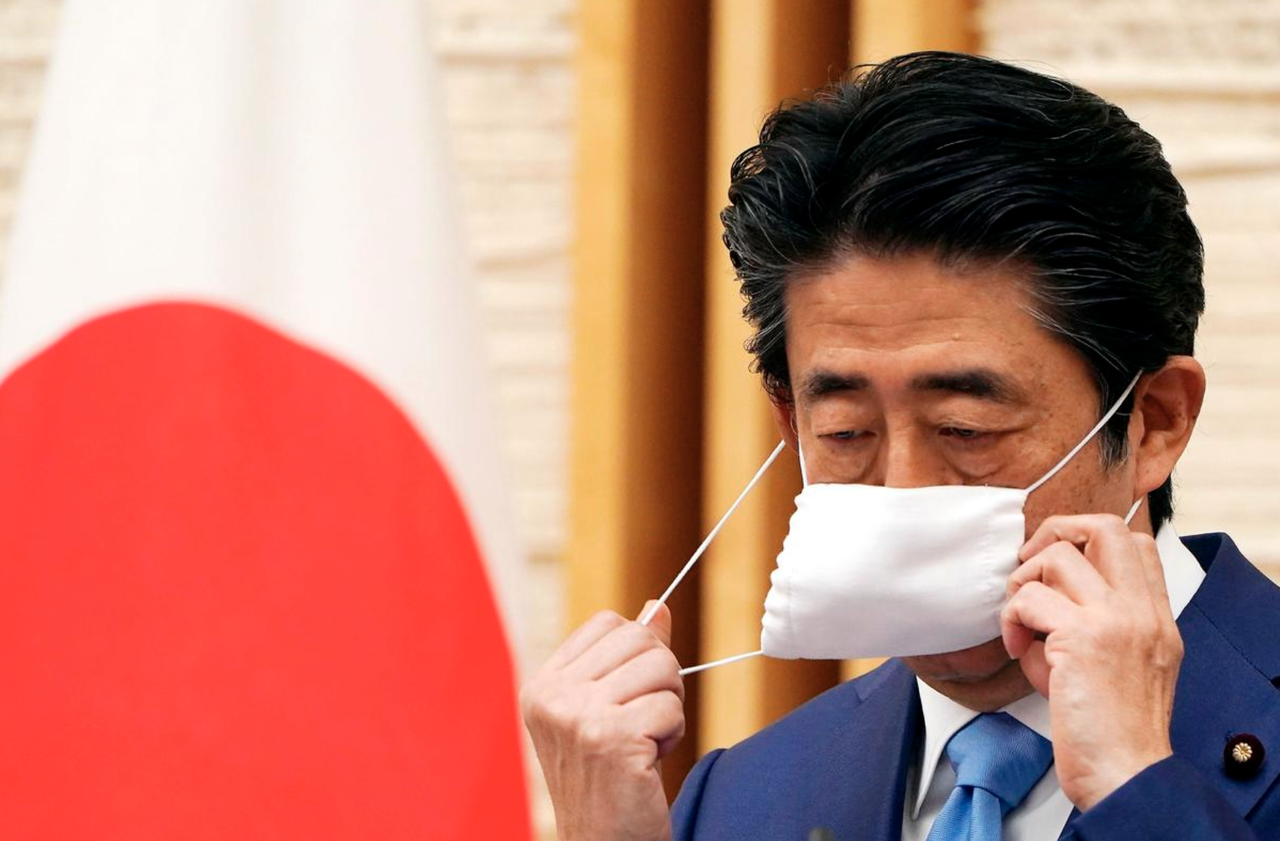
Shinzo Abe, Japan’s Longest-Serving Postwar Leader, Resigns As Health Deteriorates

Shinzo Abe, Japan’s Longest-Serving Postwar Leader, Resigns As Health Deteriorates

Tyler Durden

Fri, 08/28/2020 – 05:32

Following repeated hospitalizations over the past few weeks stemming from a flareup of his chronic ulcerative colitis (which causes the PM to have explosive, difficult-to-control, bowel movements that must be controlled with medication), Japanese Prime and Liberal Democrat Party leader Minister Shinzo Abe officially resigned Friday morning, marking the end of his reign – the longest of any postwar leader in the world’s third-largest economy.

Japanese stocks plunged on the news, with the Nikkei 225 falling from 23310 to 22678 within minutes of the first headline, before bouncing off the lows. Abe has no clear successor, and his resignation is expected to set off a heated contest for the premiership at a time when Japan is struggling from the delayed 2020 Olympics and a coronavirus outbreak that refuses to fade.

Party Secretary General for the Upper House of the Diet Hiroshige Seko said that Abe had decided to resign so his health wouldn’t “cause trouble.” The PM, whose term officially ends in September 2021, is expected to stay on until a new party leader is elected and approved by Japan’s parliament, the National Diet.

Abe famously and abruptly resigned from his first stint in office back in 2007 due to his health. But somehow, he made a political comeback years later and was reelected in 2012. Shortly after Abe’s victory in 2012, we predicted that “diarrhea” might be one of the main stumbling blocks of his tenure. And while we perhaps underestimated Abe’s staying power, it looks like, in the end, the prediction proved surprisingly prescient.

His resignation comes just days after he officially bested his great-uncle as Japan’s longest serving prime minister. On Monday, Abe officially clinched the title of Japan’s longest serving prime minister by consecutive days in office, besting the record of his uncle Eisaku Sato, who served 2,798 days from 1964 to 1972 as leader of Japan. Abe’s family has been at the apex of Japanese politics since the postwar period began: his great-grandfather, Nobusuke Kishi, also served as PM.

Abe’s decision to resign in 2007 set off a period in Japanese politics known as “the revolving door” as the country endured 7 leaders in a decade, including Abe himself, until Abe was reelected in 2012. Abe has struggled with the chronic condition since he was a teenager and has said the condition was controlled with treatment. However, after his recent hospital visits were reported, top officials from Abe’s Cabinet and ruling party spoke out to say the PM badly needed time to rest.

He’s leaving on a decidedly low note for his rule, with his approval ratings at their lowest levels ever due to his handling of the coronavirus pandemic, along with the embarrassing flight from justice engineered by Carlos Ghosn, along with a slew of political scandals that have plagued the ruling party.

Abe’s political arch-rival Shigeru Ishiba, a 63-year-old hawkish former defense minister, is favored to be the next leader according to public polling, but he’s less popular within the ruling party, where several other candidates – including Foreign Minister Fumio Kishida, Defense Minister Taro Kono, Chief Cabinet Secretary Yoshihide Suga, and economic revitalization minister Yasutoshi Nishimura (who’s responsible for coronavirus measures) are all seen as potential successors.

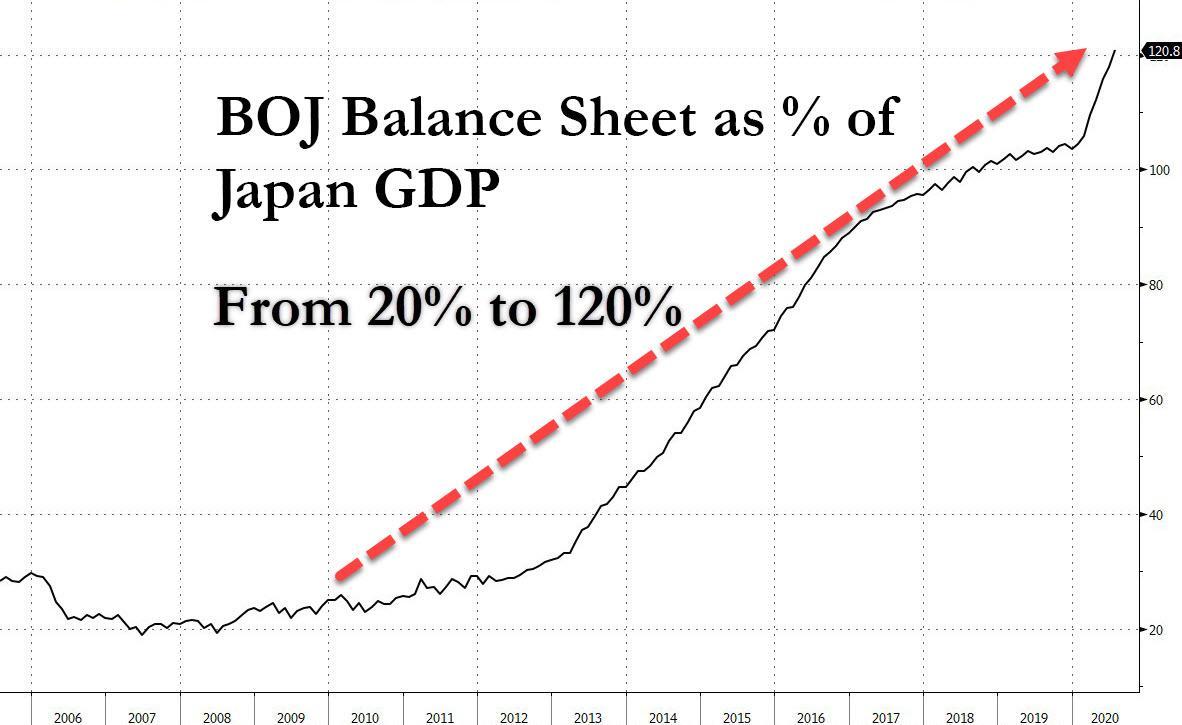
The PM’s legacy will have major consequences for the world’s third-largest economy, as the PM sought to combat a prolonged period of tepid growth with his “Abenomics” policy of ultra-loose monetary policy. Under his purview, the BoJ bought up government bonds and even Japanese equity ETFs at an alarming and unprecedented clip. But the “three arrows” of Abenomics – not only failed to stimulate inflation and boost exports via a weakened yen, but it has brought Japan’s banks to the verge of disaster, despite a recent improvement in bank lending.  The BoJ has already said that there will likely be “no change” in its monetary policy course now that Abe is gone.

Abe’s economic legacy is probably best represented by this chart.

At this point, policymakers’ focus is now more on keeping its banks on life support by paying them to boost lending, since Japanese banks can’t make any money with interest rates at current levels. To be sure, the literal wall of money printed by the BOJ in recent years has kept a lid on bankruptcies and job losses.

But the country’s prolonged battle with COVID-19 is only adding more strain to Japan’s regional banks, which can no longer survive without more life support from the BoJ.

via ZeroHedge News https://ift.tt/31yGIca Tyler Durden

Sweden Invades Tourist Island, Fearing Nearby Russian War Games

Sweden Invades Tourist Island, Fearing Nearby Russian War Games

Tyler Durden

Fri, 08/28/2020 – 05:00

Authored by Jason Ditz via AntiWar.com,

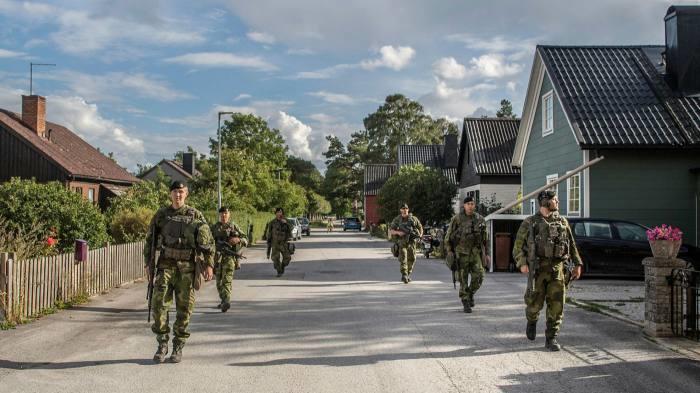
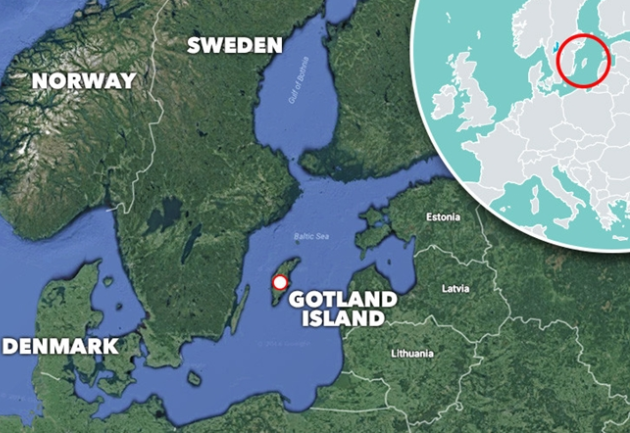
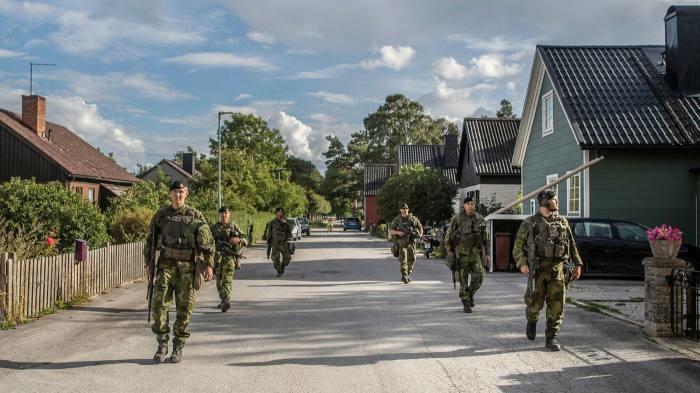
Sweden is rapidly militarizing Gotland, an island with value mostly in tourism, putting more ground troops on the island and warships in the area after Russian naval exercises in the Black Sea, which they interpreted as a regional threat.

Both NATO and Russia have been holding exercises on the island, and while there is no indication Gotland is in any way a target, it seems Sweden is taking this opportunity to bulk up its military presence along the coast.

Patrols in holiday destination of Gotland, via AP.

“Holiday makers in Sweden heading out Tuesday to enjoy summer weather on Gotland, a scenic island in the Baltic Sea, were jolted when armored personnel carriers and other military vehicles boarded their tourist ferry, which was then escorted by Swedish fighter jets and a warship,” The New York Times described this week.

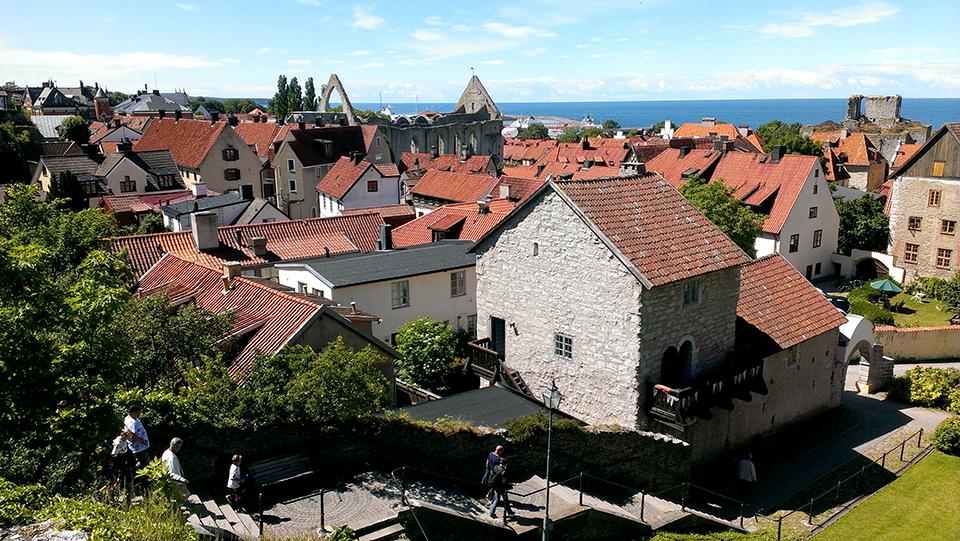
In addition to being a tourist destination, Gotland is also a strategically important site, often referred to as Sweden’s “fixed aircraft carrier.”

The Swedish military deployed four naval warships and an unspecified number of ground forces and warplanes in response to a major Russian naval exercise that has set off alarms regionally.

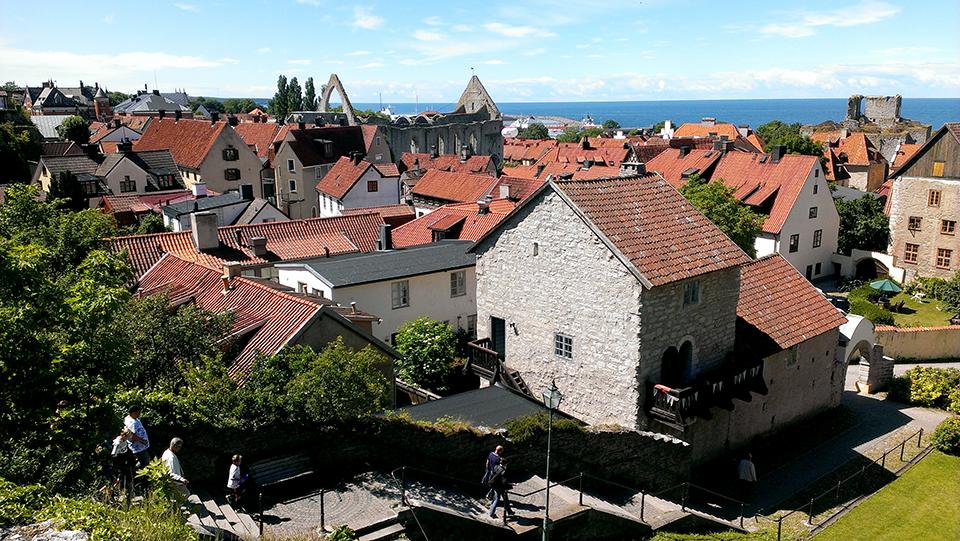
Picturesque Gotland island, file image

The only real connection is that Gotland is across the Baltic from Kaliningrad, a Russian exclave which has hosted some of the naval exercises.

While Russia wants to emphasize its naval readiness, that probably doesn’t mean ambitions in Scandinavia.

Sweden’s largest island, Gotland was briefly occupied by Russian forces in 1808 during the Finnish War. Sweden repelled the Russians less than a month later. The island has not been contested since.

via ZeroHedge News https://ift.tt/2QuZzyf Tyler Durden

Chaos Erupts After GOP Convention In DC; Rand Paul And Wife Chased Down Street By BLM Protesters

Chaos Erupts After GOP Convention In DC; Rand Paul And Wife Chased Down Street By BLM Protesters

Tyler Durden

Fri, 08/28/2020 – 04:34

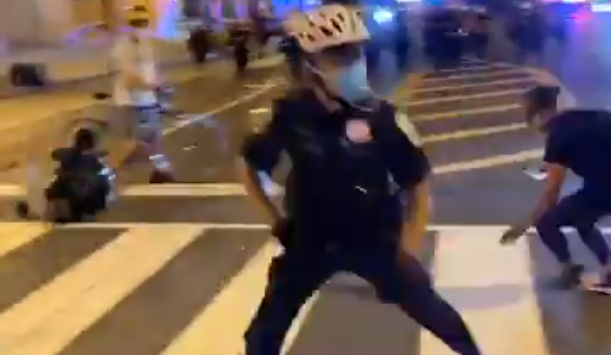
Protesters in Washington DC clashed with police Thursday night and into Friday morning, as the last night of the Republican National Convention turned into a chaotic scene down the street from the White House.

Earlier in the evening, protesters stood outside St. John’s Church chanting “If we don’t get it, burn it down.”

After the GOP convention ended with a fireworks finale, BLM protesters began confronting attendees and had several altercations with the police.

Senator Rand Paul and his wife were followed by a group of BLM protesters. After a man attempted to break through Paul’s police detail, the Kentucky Republican helped steady and officer who had been knocked off balance, before Paul’s wife began trotted down the street, pulling him by the hand.

Paul thanked the DC police following the incident.

Former combat veteran Rep. Brian Mast (R-FL) was also harassed by a group of protesters who began to aggressively ask what he thinks of police killing black men in America, to which he replied that any killing was unfortunate. To the surprise of no one, they were not satisfied with his answer.

Another GOP Convention attendee and his wife were badgered as they walked down the street towards a parking garage.

More attendees harassed:

At one point, a bus full of RNC attendees was forced to turn around, only to have protesters jump onto it, and a woman open the rear door and jump inside.

Then, a white man in blackface showed up and a police chase ensued after a BLM protester appears to have punched him.

via ZeroHedge News https://ift.tt/2Qy0tdq Tyler Durden

Brickbat: Panic at the Disco

Limadisco_1161x653

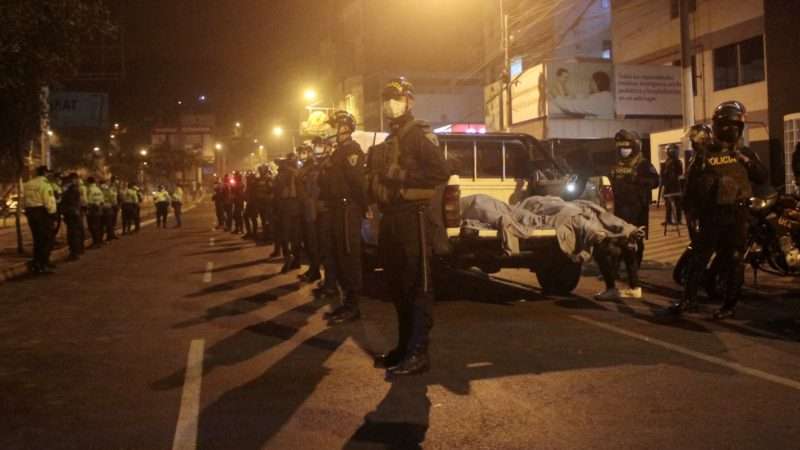
Thirteen people died after police in Lima, Peru, raided a disco that was open in defiance of restrictions the government says are needed to fight the coronavirus pandemic. The raid set off a stampede for the door, causing people to be trampled or trapped in the tight space and suffocate. Some witnesses accuse police of setting off tear gas, but police deny doing so.

from Latest – Reason.com https://ift.tt/2YHxDM8
via IFTTT

Brickbat: Panic at the Disco

Limadisco_1161x653

Thirteen people died after police in Lima, Peru, raided a disco that was open in defiance of restrictions the government says are needed to fight the coronavirus pandemic. The raid set off a stampede for the door, causing people to be trampled or trapped in the tight space and suffocate. Some witnesses accuse police of setting off tear gas, but police deny doing so.

from Latest – Reason.com https://ift.tt/2YHxDM8
via IFTTT

French Waiter Stabbed After Asking Drunken Customer To Please Put On A Mask

French Waiter Stabbed After Asking Drunken Customer To Please Put On A Mask

Tyler Durden

Fri, 08/28/2020 – 04:15

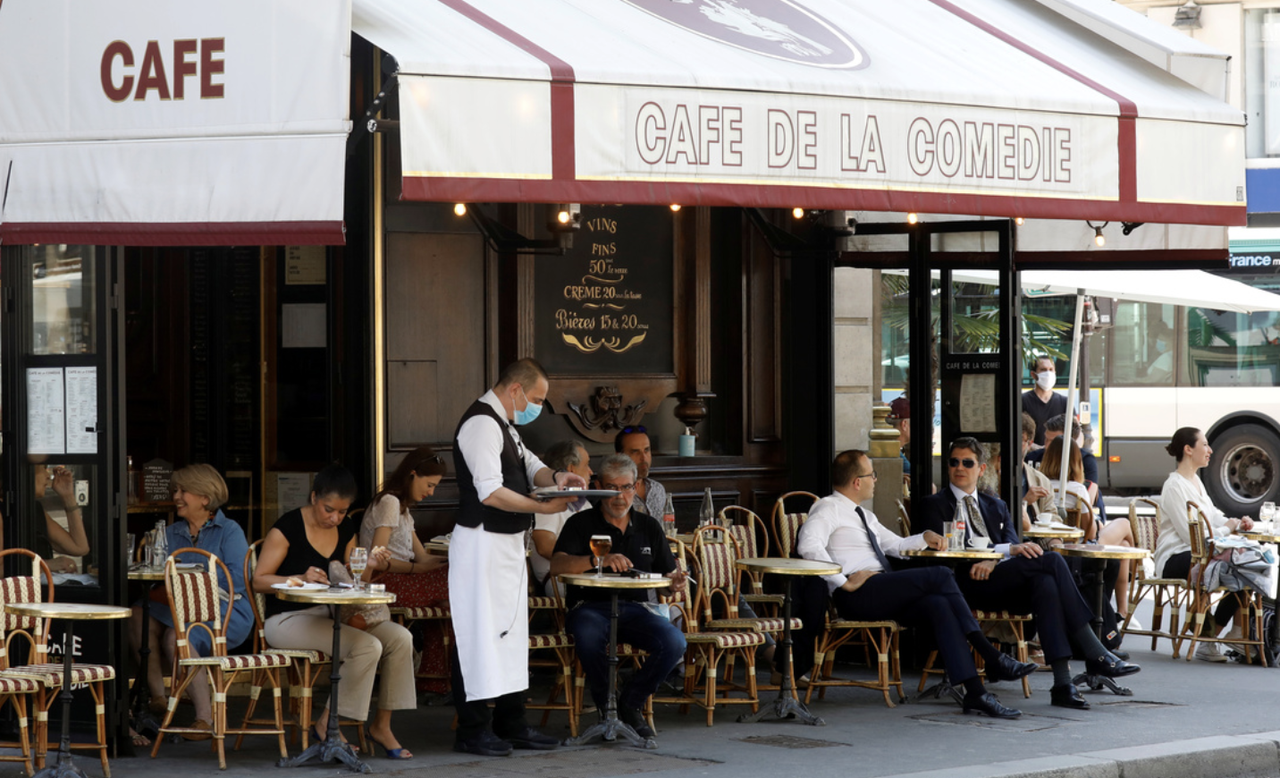
As renewed COVID-19 outbreaks plague France’s largest cities, Paris and Marseilles, officials are planning to expand requirements regarding mandatory mask wearing in public. As of Friday morning at 8 am, masks will be mandatory across all of Paris, even often when people are outdoors.

That could create problems, because apparently the US isn’t the only country where violent confrontations have resulted when angry or unstable customers have been asked by retailer security guards or restaurant waiters to please kindly put on a mask, or leave.

One incident nearly resulted in a waiter being stabbed to death after asking a 29-year-old man to put on his mask in the port city of Le Havre.

According to RT, the drunken visitor refused, and a scuffle ensued, prompting the drunkard to storm out. He later returned with a knife, and stabbed the waiter.

Fortunately, an off-duty member of CRS, France’s auxiliary police, intervened and apprehended the knife-wielding attacker, while others tended to the waiter. Ultimately, though his wound was “serious” he has survived the ordeal.

The suspect was arrested, and police are investigating.

This isn’t the first violent incident involving masks in France, which, like its European peers, typically strictly enforces its requirements.

Earlier this month, a Parisian using a launderette said he was beaten by a pair of men with baseball bats after he asked another customer to please put on a mask. In July, a bus driver in the French city of Bayonne was assaulted by a mob after he reportedly demanded that they cover their faces and show their tickets before boarding.

via ZeroHedge News https://ift.tt/3lyvjRJ Tyler Durden

Belarus’ Options In The Midst Of A Color Revolution

Belarus’ Options In The Midst Of A Color Revolution

Tyler Durden

Fri, 08/28/2020 – 03:30

Authored by Roger Harris via Counterpunch.org,

A “color revolution” is a media term for a movement based on legitimate grievances only to be co-opted into a regime change operation backed by the US and confederates.

There have been so many – Georgia in 2003, Ukraine in 2004, Kyrgyzstan in 2005 – that they have run out of colors.

Belarus is amidst the “slipper” color revolution.

The last Soviet republic

Belarus, a former constituent republic of the USSR, declared its sovereignty in 1990 with the dissolution of the Soviet Union. Under its new and now contested President Alexander Lukashenko, first elected in 1994, Belarus rejected the western-imposed “economic shock therapy” that looted the public wealth of many of the other former Soviet republics.

Earning the sobriquet of the “last Soviet republic,” Belarus retained state-run industry and agriculture, the social safety net, and the relative equality of the socialist period. Along with that came the enduring Cold War enmity of the US and its NATO epigones.

In contrast, the newly “liberated” Russian Federation, with its US-installed leader Boris Yeltsin and its cabal of nouveau riche oligarchs, was plundered by western capital. (Note: The Slavs have “oligarchs,” while the US has “philanthropists” like Turner, Gates, and Soros.) Its standard of living, social services, and life expectancy went into freefall. Initially, Belarus was more prosperous than Russia, but as the Belarusian economy slowed in the early 2000s, the Russian economy surged with the ascendance of Vladimir Putin.

The sprawling US embassy in Belarus occupies an area the size of a city block. Clearly, the Yanks do more than just issue visas. The US is preoccupied with regime change. In 2004, the US passed the Belarus Democracy Act overtly funding anti-government NGOs in Belarus and prohibiting loans.

The tribulations of triangulation

The official languages of Belarus are Belarusian and Russian. Some 80% of the population is ethnic Belarusian followed by Russian. In 2000, Belarus and Russia established the Union State, a supranational confederation for economic integration and common defense. Though the two sovereigns declared the goal of a single entity, efforts at implementation have variously been stalled by Lukashenko.

Russia sells oil and natural gas to Belarus at discounted rates. Belarus permits Russia to have a missile defense system on its territory, which is considered a critical deterrent against a NATO nuclear first strike.

Following the US-backed coup in neighboring Ukraine in 2014, Lukashenko took a more independent, nationalist tack, reflecting the predicament of Belarus as a buffer between Russia and an increasingly aggressive NATO. Lukashenko has tried to triangulate between Russia and the West. Muammar Gaddafi chose a similarly conciliatory path, which ended badly for him and his country.

Internationally, Belarus has sided mainly with Russia in addition to upholding Palestinian rights, warm relations with Venezuela, and trade with Syria. From Washington’s perspective, these have been fatal moves for Lukashenko. But the primary motivator of US foreign policy – with Lithuania, Latvia, and Estonia joining NATO in 2004 and post-coup Ukraine likely on the way – is to complete the military occupation of Russia’s western border. Hence “Europe’s last dictator” must go.

Playing both carrot and stick, US Secretary of State Pompeo visited Belarus last February to conclude an oil deal to wean Belarus from dependence on Russian-sourced petrol. Then in April, the US and Belarus reestablished diplomatic relations.

The National Endowment for Democracy (NED), the quasi-governmental US agency which does legally what the CIA does extra-legally, currently lists projects in Belarus euphemistically described as “developing civil society,” “fostering freedom of the media,” and “fostering youth activism.” They sound so good that one might wish for the NED to import some “pro-democracy measures” back to the homeland.

Legitimate protest morphs in a reactionary direction

In the run-up to the August 9 presidential election in Belarus, credible reports circulated of suppression of the opposition. Lukashenko won with a less than credible 80% of the vote. Still most observers not aligned with the regime-change project believe he carried a majority.

The runner-up candidate, Sviatlana Tsikhanouskaya, received 10% of the vote. She absconded to Lithuania after the election, where she proclaimed herself the winner and ready to lead Belarus. The West now has their puppet president in exile.

Mass protests, including a showing of industrial workers, erupted calling not only for “free and fair elections,” but for total system change. A national protest strike, centered in Minsk, is in the making.

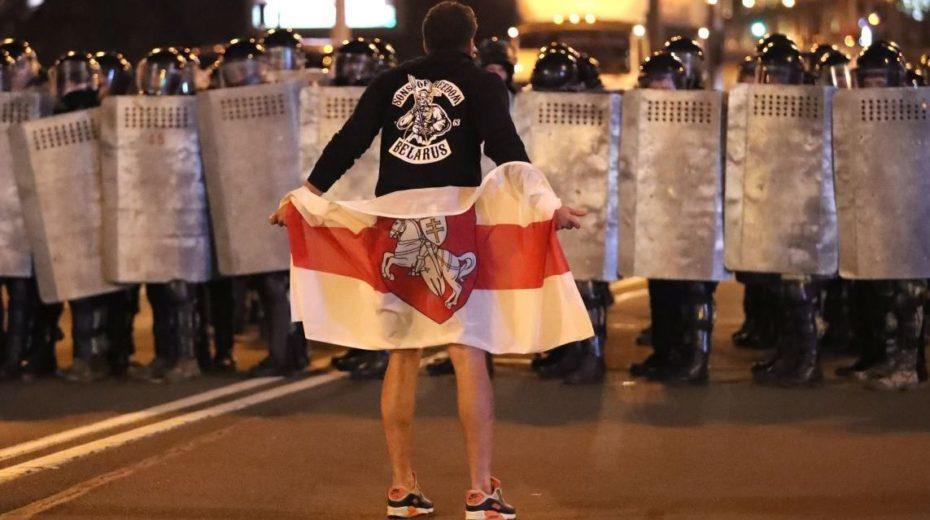
Angry young people wave the red and white flag that was flown during the Nazi occupation, as the opposition protest morphs into a force aligned with the West and against anything Russian. While the leadership of these protests is deeply anti-Russian, most of the protestors are not.

But the winds of xenophobia are being fanned. An initially legitimate protest movement is being co-opted by foreign interests.

Program for a complete reorientation of the Belarusian state and society

The call for “democracy” raises the question of democracy for whom and under what kind of system. A coalition of opposition groups published a program of the Belarusian opposition. Among the sponsors of the program is the USAID, the cover agency for the CIA. A nearly identical document had been promulgated in 2014 after the Ukrainian coup.

This published opposition program calls for a complete reorientation of the Belarusian state and society from east to west and the establishment of a neoliberal political economy.

Politically, Belarus would withdraw from the Union State and all other structures where Russia is prominent and join the European Union and NATO. In conjunction with the privatization of state enterprises and the creation of a thorough market economy, purchase of Belarusian enterprises by Russia would be prohibited while being opened to western corporate interests.

Russian media along with scientific and cultural exchanges would be suppressed. The official use of the Russian language would be banned in a nation where 70% speak Russian at home. Even the Belarusian Orthodox Church would replace the Belarusian Exarchate of the Russian Orthodox Church. The embers of reactionary nationalism would be fanned.

The situation is volatile

By just about all accounts, Lukashenko’s 26-year rule of Belarus degenerated with questionable elections, authoritarian practices, mismanagement, and corruption. Even if Lukashenko won the last election, he has lost much of his credibility with his people, certainly with the West, and even with his Russian ally.

The US involvement in Belarus is not nearly as overt as it was in the Ukraine coup and, given the circumstances, may not need to be to achieve desired outcomes. Obama’s former deputy national security advisor, Ben Rhodes, tweeted on August 11: “Americans have to recognize that the fight against Lukashenko in Belarus is our fight.”

Similarly, the UK, France, and Germany are fishing in these troubled waters along with Poland and the Baltic states. While Russia and China have recognized Lukashenko’s election, they have not more vigorously supported him publicly.

Lukashenko may have thought through the consequences of his previous stance: “There will be no other elections, unless you kill me.” He appears to have reassessed his options and is triangulating back towards the Union State with Russia in hopes of weathering the protests and, perhaps, holding elections in the new state.

The West is bent on Lukashenko’s ouster and Putin is at best lukewarm. Domestically the intelligentsia are alienated, workers discontented, and even his security services show signs of disloyalty. Lukashenko may try to save his skin and the quasi-socialist state he founded by a “phased leadership transition.”

A small fish in a superpower sea

Despite the complexity of contending interests, international law and the principle of non-intervention in the internal affairs of sovereign states must be upheld. Belarus needs to have the freedom to resolve the crisis without outside interference.

Based on the examples of Ukraine, Moldova, Romania, and Poland, Armin Fischer, a German observer, warns that a color revolution in Belarus could bring:

“the liquidation of state enterprises, mass layoffs, collapse of collective farms, mass exodus from the countryside and the death of villages…disintegration of the social infrastructure of daycare centers, hospitals, old people’s homes and the consequences for life expectancy, alcoholism and neglect…. In return, you will certainly get new oligarchs.”

“Free elections,” Fischer admonishes, would bring the “freedom” to be migrant workers competing for low-paying, undesirable jobs in Western Europe.

The leaders of the eighteen Communist parties of the former Soviet republics recall the consequences of the dissolution of the USSR in their August 18th statement on Belarus:

“In Azerbaijan, Armenia, Georgia, Moldova, Russia, and Tajikistan, a bloody conflagration of fratricidal interethnic war broke out. In the Baltic States, the neo-fascists who came to power staged a real apartheid – they divided the entire population of their ‘independent,’ ‘democratic’ States into ‘citizens’ and disenfranchised sub-humans, the so-called ‘non-citizens.’”

Belarus under Lukashenko has its faults. Even so, a neoliberal coup would be worse for the people. The economic collapse of post-coup Ukraine, now the poorest country in Europe, serves as a cautionary example. Those who condemn the excesses of the present government need also consider the greater bloodbaths that followed rightist putsches in other former Soviet republics.

George W. Bush’s declaration of “you’re either with us or with the terrorists” epitomizes the dilemma of Belarus in a world dominated by a hegemonic superpower. The playbook is familiar. Years of foreign subversion feeding on genuine domestic discontent erupts into an orchestrated regime change movement.

Belarus shows that any small state with a mildly socialist system and independent foreign policy invites subversion by the Yankee hegemon and its collaborators. Even if Belarus had met the highest standards of democracy and efficiency, a western-backed color revolution might not have been avoided.

via ZeroHedge News https://ift.tt/31ychTg Tyler Durden

Germany Imposes Fine For All Non-Mask Wearers In New National Crackdown

Germany Imposes Fine For All Non-Mask Wearers In New National Crackdown

Tyler Durden

Fri, 08/28/2020 – 02:45

It should surprise nobody that this happens first within the EU. While much of the world takes to mask-wearing more out of a social and health consciousness “most people are on board” type attitude, the government of Germany has announced fines as punishment for people not wearing them.

Chancellor Angela Merkel announced during a virtual meeting Thursday with state governors that almost the entire country will be under a 50 euros minimum ($59) fine for breaching the national mask mandate

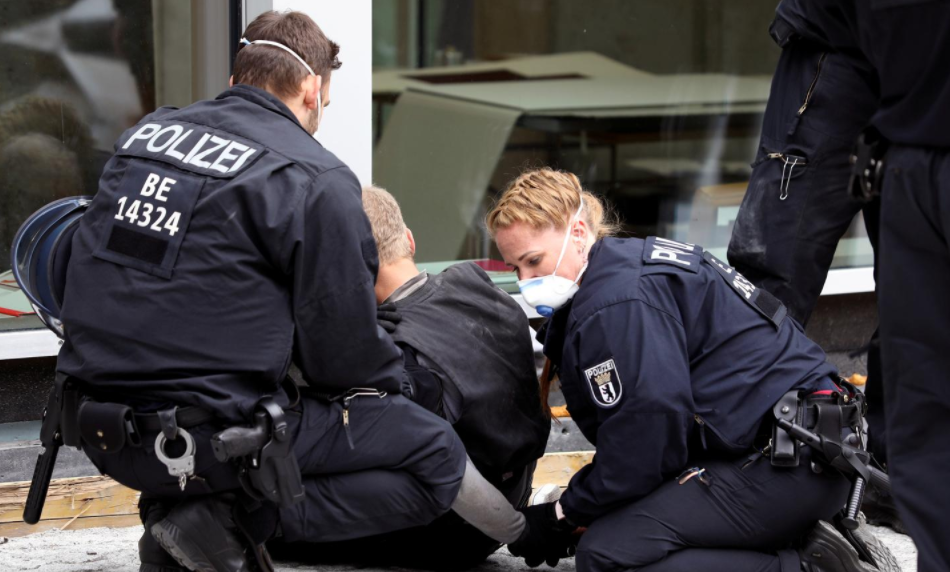
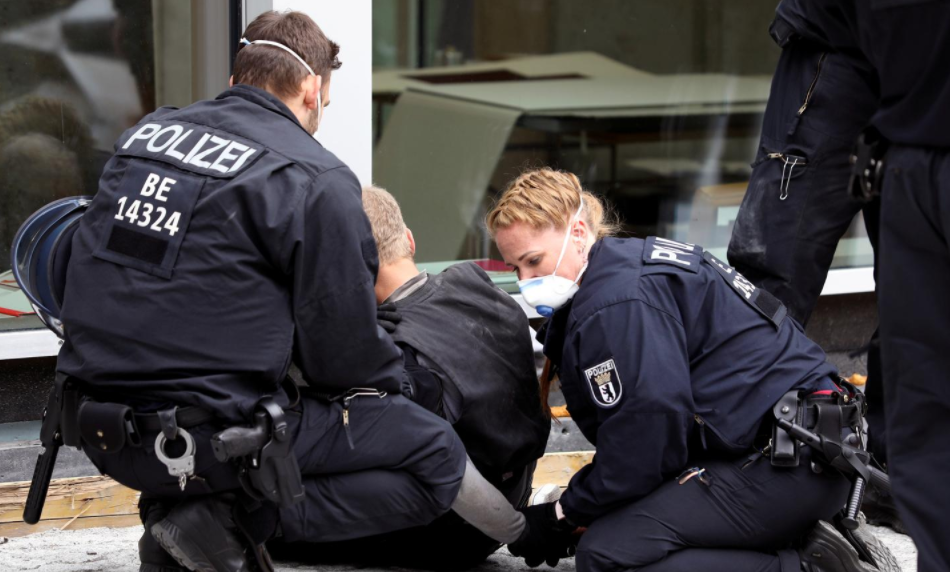
Prior anti-lockdown protest in Germany, via Reuters.

After the meeting it was announced that all federal states except the east’s Saxony-Anhalt agreed on setting a minimum fine.

In her comments Merkel also urged Germans to stay home “wherever it is possible” and avoid traveling to “hot spots” like the United States.

Berlin also agreed to impose a strict limiting on gatherings. Not only have many major public events been canceled outright, but police are enforcing a ban on private parties of more than 25 persons

Large public events will not return until 2021. The new stringent measures including the mask fines go into effect by the end of the day Thursday.

This also as most German schools are now back in session, though there’s been a handful of closures due to new coronavirus cases.

It’s part of a broader initiative proposed by German health officials to crackdown on people flouting social distancing measures amid the pandemic, even though in recent weeks authorities say coronavirus clusters are due mainly to incoming vacationers.

Germany’s confirmed COVID-19 numbers have been on the whole relatively low compared to other Western nations, at about 240,000 out of a population of 83 million.

via ZeroHedge News https://ift.tt/2Da7gXQ Tyler Durden