The Kinks vs. the People in Grey


culture1

“My gran used to live in Islington in this really nice old house, and they moved her to a block of flats, and she hasn’t got a bath now,” the rock star told the reporter. “She’s got a shower because there isn’t room for a bath. And like she’s 90 years old, she can’t even get out of the chair let alone stand in the shower. They haven’t taken that into consideration. And they knew she was going to move in because it’s a new block and they took her around and showed her where she was gonna live and she didn’t have any choice….The government people think they are taking them into a wonderful new world but it’s just destroying people.”

It was 1971. The Kinks had just released a new album, and the man who wrote and sang its songs was sitting down with Circus magazine to promote it. But explaining the L.P. apparently entailed talking about architecture. “It’s just very disturbing,” Ray Davies expounded, starting to sound like the Jane Jacobs of classic rock. “They’re knocking down all the places in Holloway and Islington and moving all the people off to housing projects in new towns. They say the houses they’re tearing down are old and decayed, but they’re not really.”

This wasn’t your ordinary rock-interview fare. But Muswell Hillbillies, which turns 50 on November 24, wasn’t an ordinary rock record. A concept album about the evils of urban renewal programs, it barely even gestured toward the pop mainstream, delving instead into country, blues, early jazz, and the British music-hall tradition. (On one track, the horn section reportedly played their instruments in a bathroom, the better to recapture the sound of an ancient recording session.) The songs’ topics weren’t your standard Top 40 fodder either, ranging from a Dixieland ditty about paranoid schizophrenia to an ode to the curative powers of tea. Small wonder that its sole single failed to crack Billboard‘s charts.

But some of us think it’s the best goddamn album ever made.

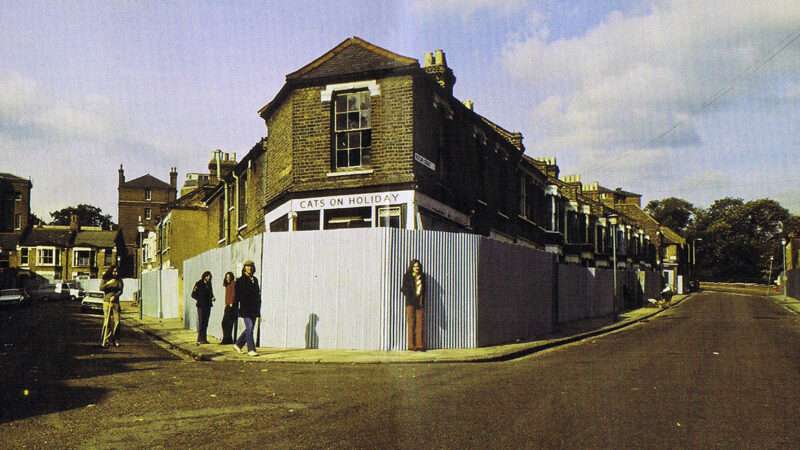
The sleeve art establishes the setting before the music even begins to play. On the front: the band enjoying some beers at an old-fashioned English pub, surrounded by drinkers old and young. On the inside: an iron fence surrounding a leftover wartime bomb site in the middle of the city. And then, when the music actually starts, you hear a song cycle about a community of particular people in a particular place, all trying to keep a grip on their lives in the shadow of the era’s enormous faceless institutions. Davies describes those characters with the same attentive detail that those planners failed to display when they gave a 90-year-old woman an apartment without a bathtub.

He sings about those planners too. In “Here Come the People in Grey,” the authorities prepare to rip down the narrator’s home: “The borough surveyor’s used compulsory purchase to acquire my domain/They’re gonna pull up the floors, they’re gonna knock down the walls, they’re gonna dig up the drains.” The singer has a reverie of resistance: “We’re gonna live in a tent, we’re gonna pay no more rent….We’re gonna buy me a gun to keep the policemen away.” But that’s just a daydream. “Some way, gonna beat those people in grey/But here come the people in grey to take me away.”

It’s a dystopian vision—but only to a point. There are cracks in this dystopia, little eruptions of color against the gray: eccentric neighbors, fussing relatives, familiar little traditions. The album’s title alludes to Muswell Hill, the North London suburb where Davies lived as a boy, and its verses are filled with references to people and places he knew growing up.

It also refers periodically to places he only imagined as he was growing up. As they lived their lives in Muswell Hill, these Londoners’ dreams kept drifting to America.

* * * * *

While Muswell Hillbillies was shipping to stores, America was listening to its own soundtrack. As the late 1960s melted into the early ’70s, the great culture-war anthem on this side of the Atlantic was Merle Haggard’s No. 1 country hit “Okie From Muskogee.”

First released in 1969, the same year Vice President Spiro Agnew called on the “silent majority to stand up for its rights,” the song seemed to draw a sharp line between Middle America and the counterculture. On one side, there was marijuana, LSD, draft card burners, swingers, long hair, hippies, San Francisco, beads, sandals, and campus rebels. On the other, there was chaste courtship, Old Glory, leather boots, football, respecting your elders, and maybe some moonshine when things got a little wild. The narrator put himself firmly in the second camp: “I’m proud to be an Okie from Muskogee/A place where even squares can have a ball.”

Some critics have argued that the song was intended as a joke. I’m inclined to understand it as a dramatic monologue: “Okie” reports how one of those Middle Americans feels about the cultural changes around him, and whether you react by nodding or laughing is up to you. But in 1971, almost everyone read “Okie” as an anti-hippie jeremiad. That’s certainly how Robert Palmer was invoking it in his New York Times review of The Kinks’ album. When he got to the L.P.’s closing track, a country-rock yawp called “Muswell Hillbilly,” Palmer declared that it “has the foot-stomping fervor of ‘Okie From Muskogee,’ but rather than aggravate existing conflicts, it stresses the unity of the disaffected young and society’s older victims in the face of an interlocking power structure bent on the destruction of human dignity and, eventually, human life.”

It’s a shrewd comparison, and not just because the songs share a shit-kicking spirit and some musical DNA. With “Muswell Hillbilly,” as with “Okie,” it’s best not to confuse the singer with the narrator. As you listen to it, ask yourself: Who’s telling this story?

The first verse sets the scene, sketching a character in a manner that’s both merciless and affectionate:

Well, I said good-bye to Rosie Rooke this morning
I’m gonna miss her bloodshot, alcoholic eyes
She wore her Sunday hat so she’d impress me
I’m gonna carry her memory til the day I die

That’s all we hear about the alcoholic in the Sunday hat. (Rosie Rooke was, apparently, a real person: a friend of Davies’ mother.) But in verse two, we learn a little more about the narrator:

They’ll move me up to Muswell Hill tomorrow
Photographs and souvenirs are all I’ve got
They’re gonna try and make me change my way of living
But they’ll never make me something that I’m not

Note the preposition: They’ll move him up to Muswell Hill. This isn’t a song about being pulled away from the community where Davies grew up. It’s about someone being resettled in that neighborhood, back before Davies was born.

Who’s telling this story? Not the man singing it. But it’s someone he knows. “My parents had grown up in Islington and Edmonston and had later moved out to the suburbs called Finchley, Highgate, Muswell Hill away from the inner city and the Victorian factories,” Davies wrote in 1994’s X-Ray: An Unauthorized Autobiography. “It must have been unrecognizable then.”

In the same paragraph, Davies said the song was about “a family similar to my own.” So maybe the narrator is one of his parents, or maybe it’s simply someone a lot like his parents. It doesn’t really matter which. It was not typical, in 1971, for a rocker to sing a verse from the POV of either his own parent or a parental stand-in, and it was even less typical for the parent to be the rebellious young star of the story. There’s more generational unity here than Palmer probably realized.

There is another song from the period that pulls off a trick like that. It was sung by a man from California whose parents had moved there, during the Depression, from Oklahoma. It’s written from the perspective of someone who is from Oklahoma, and the man who co-wrote and sang it has said it was inspired in part by people like his father—”proud people whose farms and homes were foreclosed by Eastern bankers. And who then got treated like dirt.” The song is “Okie From Muskogee.”

“Okie” still reflects a generation gap, or at least a culture gap; the narrator is full of complaints about hippies and student rebels. “Muswell” has none of that. As Palmer says, it damns a system that afflicts old and young alike. That system has already had a cameo in the song: It’s the “They” who are uprooting the narrator and plotting to change his way of living.

We’ll hear more about They in a bit. But first there’s a chorus, and the chorus turns everything upside-down:

‘Cause I’m a Muswell Hillbilly boy
But my heart lies in old West Virginia
Never seen New Orleans, Oklahoma, Tennessee
Still I dream of those Black Hills that I ain’t never seen

Wait. What?

This isn’t the United States that Haggard lived in and sang about. It’s an imaginary American vista, a landscape that an Englishman might visualize while listening to a Haggard record. Our narrator is dreaming of something he never experienced but feels like he faintly remembers, a past he thinks he recognizes in garbled images of America.

The album prepared us for this with another song, the haunting “Oklahoma U.S.A.,” about a woman who makes her neighborhood rounds lost in a Hollywood trance (“In her dreams she is far away/In Oklahoma, U.S.A./With Shirley Jones and Gordon McRea”). But the Muswell man’s daze draws on more than just a single movie—it’s a montage of fragmented impressions. West Virginia hillbillies, Oklahoma Okies, New Orleans jazzmen: together they seem to signify something old and authentic and free.

In fact, none of them (save those Black Hills) are as old as Muswell Hill, and the narrator is frank about how inauthentic his connection to them is. As for freedom: Davies was well aware that the sorts of bureaucrats that he decried in England had been tearing down homes in America too. He even recorded a song called “Mountain Woman,” left off the original album but eventually attached to a CD reissue as a bonus track, in which a pair of bona fide hillbillies—not the Muswell kind—lose their land to the U.S. government, which floods it, builds a hydroelectric power station, and moves the couple to “the thirty-third floor of a man-made concrete mountain.”

But in “Muswell Hillbilly,” Davies isn’t singing about the actual America across the ocean. He’s singing about a dream. Oppressed, he dreams of freedom; uprooted, he dreams of roots.

That dream makes him defiant:

They’re putting us in identical little boxes
No character, just uniformity
They’re trying to build a computerized community
But they’ll never make a zombie out of me

“They” are back in this verse, and their totalitarian intentions are becoming more clear. The narrator insists that They won’t succeed. And on reflection, we know he’s right, because we’ve been listening to a series of stories about the people of Muswell Hill, all persisting in their distinctive individuality.

The phrase “identical little boxes” calls to mind Malvina Reynolds’ “Little Boxes,” a rather smug song about suburban conformity (“little boxes made of ticky tacky…little boxes, all the same”). In 1960 and 1961, shortly before Reynolds wrote that song, the sociologist Herbert Gans interviewed dozens of people who had moved a few years earlier to a freshly built New Jersey suburb. He found more heterogeneity than the stereotypes of the time suggested; the town’s residents, he wrote in his 1967 book The Levittowners, “made internal and external alterations in their Levitt house to reduce sameness and to place a personal stamp on their property.” Character overcame uniformity, in Levittown and in Muswell Hill.

They’ll try and make me study elocution
Because they say my accent isn’t right
They can clear the slums as part of their solution
But they’re never gonna kill my Cockney pride

We’re back in Haggard territory here. “Listen to that line: ‘I’m proud to be an Okie from Muskogee,'” Haggard told Nat Hentoff in 1980. “Nobody had ever said that before in a song.” Okie pride and Cockney pride come together in the chorus, though the allusion to Oklahoma has been replaced by something else the second time around:

‘Cause I’m a Muswell Hillbilly boy
But my heart lies in old West Virginia
Though my hills are not green, I’ve seen them in my dreams
Take me back to those Black Hills that I ain’t never seen

On the album’s first track, Davies invoked the ghost of William Blake: “What has become of the green pleasant fields of Jerusalem?” And in the final stanza of the L.P.’s final song, we find ourselves in Blakean territory again, dreaming of green hills among these dark Satanic Mills. But now the paradise to be erected is not Jerusalem; it’s West Virginia and South Dakota. Kinks will not cease from mental fight, nor shall guitar sleep in their hands, til they have built America in England’s green and pleasant land.

* * * * *

The reference to Blake’s Jerusalem came in “20th Century Man,” a song where Davies declares: “I was born in a welfare state, ruled by bureaucracy/Controlled by civil servants and people dressed in grey/Got no privacy, got no liberty/’Cause the 20th century people took it all away from me.” Combine those lyrics, and you’re evoking Clement Attlee, prime minister from 1945 to 1951, who not only built the British welfare state but did so promising a “New Jerusalem.” And part of this New Jerusalem was the New Towns Act of 1946, which started the process of relocating Londoners from homes deemed substandard (or homes that had simply been bombed out) to planned communities outside the city limits.

That’s what Muswell was reacting against, but what was it for? Davies’ father voted for Attlee’s Labour Party, and Ray Davies found himself voting Labour too, even after he began growing disillusioned with the party. He even voted for it after it became New Labour and adopted what Davies derided as “a seamless blend of polite socialism meshed into conservative policies and a dreaded political correctness.” The party was “an outdated and somewhat ineffective force,” he explained in his 2013 book Americana, but the Tories didn’t have much appeal for him either, even if he “valued many traditional aspects of the past that are associated with conservatism.”
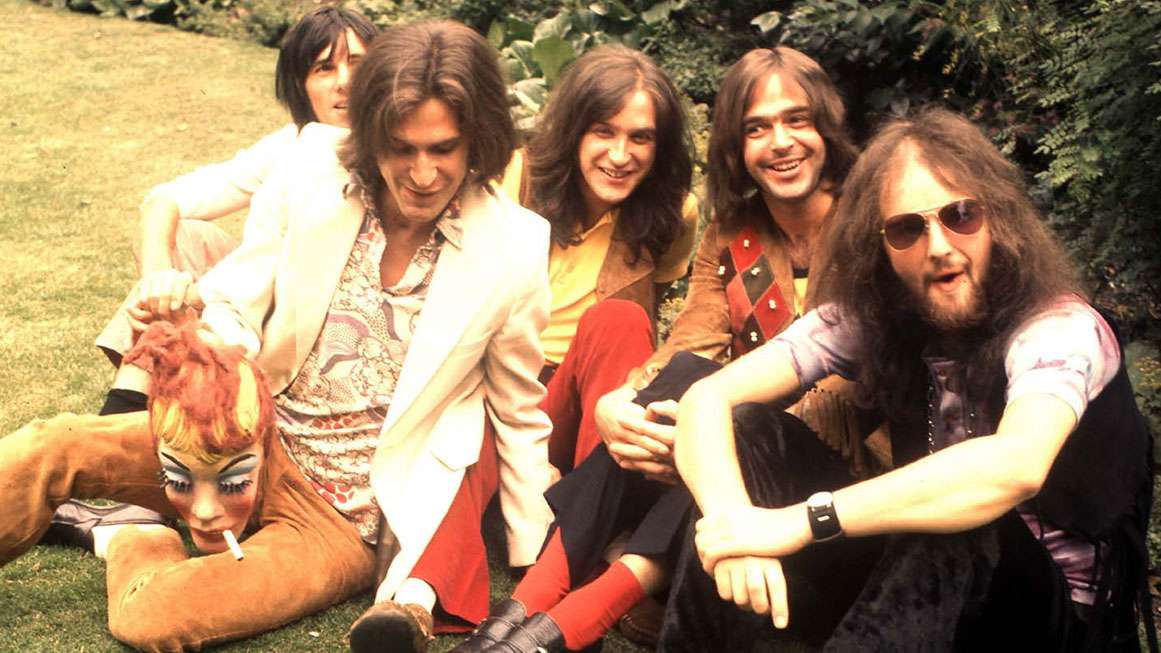
There’s a track on Muswell Hillbillies called “Uncle Son.” (The title again conjures the idea of old and young uniting, though it was apparently named for one of Davies’ actual uncles.) One of its verses recites a series of ideologies, then shifts gears and reminds the listener that some people don’t have that sort of ideology: “Liberals dream of equal rights/Conservatives live in a world gone by/Socialists preach of a promised land/But old Uncle Son was an ordinary man.” Change wasn’t worthwhile, the song suggested, unless it kept the Uncle Sons in mind. “Bless you, Uncle Son/They won’t forget you when the revolution comes.”

Muswell eschews grand visions: Its politics are rebellious, even revolutionary, but it doesn’t want a revolution that isn’t built on real families and neighborhoods, on actual individuals and their concrete freedoms and attachments. Otherwise you end up with an alleged New Jerusalem that exiles a woman from her comfortable old home and moves her to a flat where she can’t bathe.

from Latest – Reason.com https://ift.tt/31jh7X1
via IFTTT

Corpus Linguistics and the Second Amendment

Corpus linguistics is the scholarly technique of searching historic databases to gather information on the use of important words or phrases. In the pending U.S. Supreme Court on the Second Amendment to right to bear arms, New York State Rifle & Pistol Association v. Bruen, a pair of amicus brief purport to apply corpus linguistics to the Second Amendment. The briefs say that they prove that individuals have no right to bear arms, and that even if such a right exists, it is tiny. This post examines the claims in the briefs.

This post is co-authored by Campbell University law professor Gregory Wallace. Professor Wallace and I are two of the five co-authors of the just-published third edition of the textbook Firearms Law and the Second Amendment: Regulation, Rights, and Policy (Aspen, Wolters Kluwer). Professor Wallace wrote the textbook’s section on corpus linguistics and spoke at a colloquium on the subject at the Duke Center for Firearms Law.

One of the amicus briefs is on behalf of three professors of linguistics—Dennis Baron (U. Illinois), Stefan Th. Gries (U. Cal. Santa Barbara), and Jason Merchant (U. Chicago)—and one law professor, Alison LaCroix (U. Chicago), who has written about corpus linguistics and founding era documents. It was filed by attorneys for Morrison & Foerster. The other brief is by and for Washington, D.C., attorney Neal Goldfarb. Goldfarb describes himself as “an attorney with an interest and expertise in linguistics, and in applying the insights and methodologies of linguistics to legal interpretation.” His brief asks the Supreme Court to call for supplemental briefing on the corpus linguistics issues and to hold the Bruen case over to the next Term for argument on those issues. The arguments in both briefs are similar.

To be clear, we do not criticize corpus linguistics as a methodology. Volokh Conspiracy Professor Randy Barnett is, according to both the Goldfarb and Professors briefs, a pioneer in the field of corpus linguistics. But at the time, he did not identify as a corpus linguist; he just thought he was doing legal research.

Professor Barnett believes that the original meaning of the Second Amendment includes a right to bear arms for personal defense. In the New York State Rifle & Pistol Association case, he joined an amicus brief to that effect, filed by Kopel and other lawyers.

The persuasiveness of corpus linguistics claims depends on understanding words in context, considering all relevant sources, and classifying usages accurately. Some corpus linguists do so better than others.

James Madison’s meanings of “bear arms”

Goldfarb accurately cites an essay by an eminent etymologist showing that by the end of the 1600s, the French import carry largely had supplanted bear as word for personally transporting an object. Philip Durkin, Borrowed Words: A History of Loanwords in English 408 (2014).

The Goldfarb and Professors briefs report the results of their searches for the phrase “bear arms.” They say that most often, the phrase was used in some sort of military context.

According to the Professors, no evidence from the Founding Era shows an “individualized connotation” such as “bear a rifle,” “bear a musket, “bear rifles,” or “bear muskets.” They overlooked an obvious example—an example from the man who wrote the Second Amendment. In 1785, James Madison, serving as a member of the Virginia House of Delegates, introduced an anti-poaching “Bill for Preservation of Deer.” The bill had been drafted by a Committee of Revisors, whose members included Thomas Jefferson, George Wythe (signer of the Declaration of Independence and the Constitution; Chancellor of Virginia; distinguished law professor who taught Jefferson, John Marshall, and St. George Tucker), and Edmund Pendleton (previously Speaker of the House of Delegates and later first President of the Virginia Supreme Court of Appeals). The bill can be found in volume 2 of The Papers of Thomas Jefferson 443-44 (Julian P. Boyd ed., 1950).

While allowing unlimited hunting on one’s own land, the bill established seasons for deer hunting elsewhere. Upon conviction, the poacher would have to pay a fine and to post bond for good behavior. And for the next year, he would be forbidden to carry a long gun outside his property. If he did carry a long gun off his property, the bond would be forfeit, and he would have to post a new bond:

Whosoever shall offend against this act, shall forfeit and pay, for every deer by him unlawfully killed, twenty shillings, one half thereof to the use of the commonwealth, and the other half to the informer; and moreover, shall be bound to their good behavior; and, if within twelve months after the date of the recognizance he shall bear a gun out of his inclosed ground, unless whilst performing military duty, shall be deemed a breach of the recognizance, and be good cause to bind him anew, and every such bearing of a gun shall be a breach of the new recognizance and cause to bind him again. (emphases added).

At the time, “gun” meant a long gun, as distinct from a “pistol.” Noah Webster, An American Dictionary of the English Language (1828) (defining gun, and explaining, “But one species of firearms, the pistol, is never called a gun”). So the bill would not have forbidden convicted poachers to carry handguns in public.

In the poaching bill, we see how the Father of the Constitution and author of the Bill of Rights (Madison), the author of the document that created the United States (Jefferson), America’s leading law professor (Wythe), and a future chief justice of Virginia (Pendleton) understood the word “bear.” The word could mean to carry a gun for personal reasons, such as hunting. It could also mean to carry a gun while serving in the militia (“whilst performing military duty”). And it could encompass both meanings in the very same sentence.

No wonder Madison chose the word “bear” when he wrote the Second Amendment. It was the perfect word to express the right to arms for all personal use and for community service in the militia.

The Goldfarb and Professors briefs are based on the faulty premise that “bear” can only mean one thing at a time. Either it means personal use or it means community military use; it can’t mean both at once. James Madison didn’t accept the false dichotomy, and neither did the Virginia Committee of Revisors.

Counting wrong

Having created the dichotomy, the two briefs announce their quantitative results for uses of “bear arms.” The military uses are the more common. The professors classify their dichotomy as “individual” versus “collective.” In their system, plurals go into the “collective” category. An example from their brief is “Slaves were not permitted to bear arms.” This is the sort of evidence from which they conclude that “the right to keep and bear arms” is solely a “collective” right, and not an “individual” right. In fact, collectives are not exclusively militaristic, and plurals often are used to describe two or more individuals. The quoted sentence tells us that slaves, as individuals, were forbidden to bear arms, and that slaves, as a class, were forbidden to bear arms. That sentence, like the Second Amendment, is not only about collectives or only about individuals. It is about both.

The Alleged Ambiguities

We examined the four quotes from the Professors brief that they showcased as examples of ambiguity. The Professors summarize the meaning of their four quotes:

Even examples that were “at best ambiguous” still “suggest[ ] a military or quasi-military sense of bearing arms.”  Id. [Baron’s Hasting Const. L.Q. article] at 512.  More importantly, these examples

show  that  the  bearing  of  arms  was  subject  to  regulation, including limitations on where those arms might be carried.” (second brackets added).

From the renowned philosopher Samuel Clarke’s A New Description of the World (1689), the Professors brief quotes the line: “‘A Peasant in this Country (unless in time of great Danger or Invasion) is not suffered to bear Arms.'[1689].” Here’s the longer version of what Clarke wrote, describing conditions in Poland:

Towns are very scarce, the People dwell in Hutts of Straw and Loam, with Holes at the top of them to let in the Light, and give vent to the Smoak, living in miserable Poverty, as do (for the major part) the Peasants or inferiour People, being in a manner Slaves to the great ones, whose Tenants they are, though the Richer Sort are very Profuse and Expensive, rather Prodigal than Liberal, Impatient of Injuries, Delicious in Diet, and costly in Attire, often shaving their Heads, except one Lock, which they preserve with great care, being generally good Soldiers, and much Glory if they can kill a Turk in Battle, and bring off his Head, in Token of which, they wear Feathers in their Caps.

Theft in these Parts is very rare, especially to be committed by a Native Polander, and all Crimes are severely punished: As for the Religion they Profess, in Relation to the Government, it is that of the Romish Church, though the Reformed way of Worship is allowed and tolerated; and the King is of late Elective; the Women are tolerably Fair and well Proportioned, very Witty and Ingenious, great admirers, and observers, of their Husbands, and very neat in their Houses. A Peasant in this Country (unless in time of great Danger or Invasion) is not suffered to bear Arms; and when the Gospel is Read in the Churches, the Gentry and Nobility draw their Swords, in token that they are ready to defend it with their Lives.

Clarke, at 77.

According to Clarke, Polish peasants cannot bear arms in ordinary life. They only bear arms during wartime. The gentry and nobility, however, do carry swords, and show them off in church. Accustomed to routine arms bearing, the upper classes are good fighters. The tenant farmers live in squalor while their armed landlords are hot-tempered and spend their wealth ostentatiously. The peasants are “in a manner Slaves to the great ones.”

Unambiguously, Clarke uses “bear arms” for personal carry in ordinary situations, and carry during wartime. The people who cannot ordinarily bear arms are the slaves of those who do.

In the Professors brief, the Clarke quote is said to show that “bear arms” connotes lots of government control. And so it does, in an unfree nation like Poland, where most of the people are forbidden to bear arms. The Second Amendment adopts the opposite policy for the intended opposite result: When “the people” can “bear arms,” there can be “a free State.”

Here is a decree from about 1330 by King Edward III, which the Professors brief labels “ambiguous”:

“That no person shall use or bear any Arms within London, and the Suburbs, or in any place between the said City and Pallace of Westminster, nor in no other part of the Pallace by Land or by Water, except such of the Kings people, as he shall appoint to keep the Kings peace.” [1657].

The brief’s “1657” cite is misleading. The quote is from King Edward III in the third year of his reign, which began in 1327. It was reprinted in a 1657 book that collected royal historical documents. King Edward’s decree clearly tells people, as individuals, not to walk around London carrying swords or other weapons.

Again, “bear arms” includes personal carrying, and carrying while in government service. That is what the king’s broad language against “bear any Arms” needed to state an exception for people in government service.

In the purported dichotomy between personal self-defense and collective self-defense, the phrase “defence of his Family” would seem unambiguously about the former. But the Professors brief says that the next quote is ambiguous:

“That every Person who will go for Ireland on these Conditions, shall out of his first share of Money, buy for himself and every Relation and Servant that he carries with him (who are able to bear Arms,) a good Musket, or Case of Pistols for the defence of his Family.” [1690].

This comes from Sir Richard Buckley, The Proposal For Sending Back The Nobility And Gentry Of Ireland. Buckley proposed that Irish nobility living in Ireland should have to move back to Ireland. They would receive enormous financial grants from the English government, if they brought certain quantities of Irish land under cultivation. Pursuant to the rest of the quoted sentence, the Irish nobles moving back to England had to acquire their guns in England, not in Ireland:

without the producing of which Arms in Ireland, and the making Oath that he himself bought the same in England, he shall have no Right to receive any of the said Forty Five Thousand Pounds in Ireland.

Buckley also proposed inducements for ordinary English farmers to move to Ireland. Besides a financial bonus, they would receive “a good Musket or Case [matching pair] of Pistols at Chester and Bristol.”

The Buckley proposal plainly promotes the bearing of arms for personal defense. In 1689-90, the people of Ireland revolted against English control, in the Jacobite Rebellion. In Ireland, English immigrant farmers and English-allied nobles were not exactly popular, so of course they would need arms for personal defense. All their guns should come from England; the ruling country could have gun commerce, but not the colonized country.

The final example of ambiguity in the Professors brief is the 1776 Pennsylvania Constitution:

That the People have a Right to bear Arms for the Defence of themselves and the State, and as standing Armies in the Time of Peace are dangerous to Liberty, they ought not to be kept up: And that the Military should be kept under strict Subordination to, and governed by, the Civil Power.” [1776].

Justice Stevens did not think the Pennsylvania Constitution was ambiguous. In his Heller dissent, he wrote that if the Second Amendment had copied the Pennsylvania text, the Second Amendment clearly would have included a personal defense, as well as a militia right. 554 U.S. 570, 647 (2008) (Stevens, J., dissenting).

The four “ambiguous” quotes discussed above were the four that the Professors brief selected to showcase their methodology. None of the quotes is ambiguous. Every one recognizes individual bearing of arms, and three of the four also recognize collective bearing of arms. If all the Professors star examples are inaccurate, can one trust the accuracy of their other classifications?

The literal Second Amendment

The Neal Goldfarb brief acknowledges that Goldfarb’s claims were criticized in Josh Jones, Comment, The “Weaponization” of Corpus Linguistics: Testing Heller’s Linguistic Claims, 34 BYU J. Pub. L. 135, 171 (2019). However, writes Goldfarb, “when one puts aside the uses categorized by this researcher as ambiguous, one sees that he categorized only 21% of the relevant uses as unambiguously literal.”

By “unambiguously literal,” Goldfarb means individuals carrying weapons for personal reasons. This is contrasted with what Goldfarb calls the “idiomatic” use of “bear arms” to connote a military situation. Because military 79% is more than individual 21%, Goldfarb argues that the former is the sole meaning of “bear arms” in the Second Amendment.

On the other hand, it is usually reasonable in constitutional interpretation to read the text as including at least its literal meaning. The First Amendment guarantees “the freedom…of the press.” Literally, it is the freedom to own a printing press, and a rejection of earlier English law that individuals could only own a printing press if the government granted them a license. Edward  Lee,  Guns  and  Speech  Technologies:  How  the  Right  to  Bear Arms  Affects  Copyright  Regulations  of  Speech  Technologies,  17  Wm.  &  Mary  Bill of  Rts. J. 1037, 1059–64 (2009). In addition to the literal meaning, freedom of the press includes protection of many forms of communication, not only that that involve printing. For example, the First Amendment severely limits prior restraints on the distribution of all publications, including those written by hand, even though prior restraints do not all interfere with people buying and using presses. Kopel, The First Amendment Guide to the Second Amendment, 81 Tenn. L. Rev. 417 (2014)

The Fourth Amendment guarantees “The right of the people to be secure in their…houses…” Literally, the guarantee applies to houses. Additionally, the guarantee applies to places that are “houses” in a more figurative sense—such as camping tents, apartment buildings, and hotel rooms.

The unambiguously literal meaning of “the right of the people peaceably to assemble” is individuals gathering in a single location. But “assembly” also has other meanings, such as association in many locations. The millions of members of the worldwide Christian denomination known as “The Assembly of God” never all literally assemble in the same place. As members of a common faith, they are an “assembly” in a figurative sense. The U.S. Supreme Court has accurately recognized that the right of association is a necessary implication of the literal right of assembly. See NAACP v. Patterson, 357 U.S. 449, 460 (1958).

Constitutional rights language can encompass both the literal and the figurative. Scholars could search the historic databases and count how many times “press” is used literally, to refer to printing presses. Then the scholars could count how many times “press” is used figuratively, to refer to diverse forms of oral or written communication. The scholars could then announce that whichever usage comes in first is the only meaning of “press” in the First Amendment. These First Amendment scholars would be following the example set for the Second Amendment by the Goldfarb and Professors briefs.

The correct use of frequency data in corpus linguistics is different from the simplistic Professors and Goldfarb briefs. It is not just a matter of counting up uses and announcing that whatever use comes in first is the exclusive meaning. Frequency data can show the range of possible candidates for the ordinary meaning of the term, and perhaps even suggest a presumptive meaning if one sense is overwhelmingly predominant, and that sense necessarily excludes other senses. Frequency data by itself is not conclusive. Frequency data must be supplemented by relevant legal context.

Legal context

The most relevant context for the meaning of “bear arms” in the Second Amendment is contemporary state constitutions and proposals for constitutional revision. Founding Era constitutional sources used the phrase “bear arms” to describe the right to carry weapons for non-military purposes.

The Anti-Federalist dissenters report from the Pennsylvania constitutional ratifying convention in 1788 proposed an amendment to the Constitution protecting the people’s “right to bear arms for the defence of themselves and their own state or the United States, or for the purpose of killing game.” Three state constitutions—Pennsylvania, Vermont, Kentucky—written during the Founding period protected the people’s right to “bear arms in defense of themselves and the state.” Six additional state constitutions written prior to 1820 (Ohio, Indiana, Mississippi, Connecticut, Alabama, Missouri) contained protections for the right of the people to “bear arms in defense of themselves and the state” or the right of every citizen to “bear arms in defense of himself and the state.” All of these plainly understood the right to bear arms to include civilian self-defense as well as to service in the militia.

Note the difference between the state constitutions and the 1788 Pennsylvania proposal. All of them list reasons for the exercise of the right. All of them name the personal reason of personal defense, and the community reason of collective military defense. Only the 1788 Pennsylvania proposal enumerates an additional personal reason, namely hunting. So it as least plausible that in the nine states, the state constitutional right to bear arms did not include hunting.

Suppose you wanted to write a constitution that protected the right to bear arms for all purposes: self-defense, militia service, hunting, other shooting sports, and so on? Then you would just write “bear arms,” without any subsequent words of limitation. That is exactly how James Madison used bear arms in their anti-poaching bill. Convicted poachers lost their right to bear long guns anywhere off their lands, for all purposes, including hunting, target shooting, and personal defense. The ability of the convicts to bear arms in the militia was saved only because the bill included an express exemption for military service.

When the Second Amendment was being debated in the U.S. Senate, Congress rejected a proposal to add a narrowing modifier: “for the common defence.” If Congress had added the modifier, then interpretation of the Second Amendment would be more complex. Two state constitutions had similar qualifiers: Massachusetts (“for the common defence”) and North Carolina (“for the defence of the state”). Later, some new states included similar language. The main line of 19th century state interpretation of such clauses recognized an individual right of all citizens to own and carry firearms. Several cases, especially in the latter 19th century, said that the right was only for militia-suitable arms—such as large handguns, rifles, swords, or cannons—and not for arms that (in the courts’ understanding) would not be used in a militia—such as small handguns or Bowie knives. A minority of courts, such as Tennessee in Aymette v. State, said that the right to keep and bear arms for the common defense included everyone keeping arms, but bearing arms was only for the militia. See Kopel, What State Constitutions Teach about the Second Amendment, 29 N. Ky. L. Rev. 827 (2002); Kopel, The Second Amendment in the Nineteenth Century, 1998 BYU Law Review 1359.

The various state constitutions show different ways to limit, or not limit, the right to bear arms. The Second Amendment, with no qualifiers, takes the broadest approach.

Neal Goldfarb states that at least 95 percent of all uses of “bear arms” between 1760 and 1799 conveyed the idiomatic sense relating serving in the military. But Goldfarb excluded from his analysis all uses of “bear arms” when the phrase appeared in the text of a proposed or ratified constitutional provision at the federal or state level protecting that right, because he believed these uses irrelevant to his analysis.

He concedes that “[w]ith respect to the Second Amendment, the most contextually similar uses of bear arms are the state constitutional provisions.” But he goes on to say that “those uses can’t offer us much guidance” because the term “right of the people” used in those provisions may refer to a collective right, thus “in defense of themselves” could be understood as “the right of collective self-defense through service in the militia,” rather than an individual right to keep and bear arms for self-defense. However, not a single court in any state with constitutional language like “bear arms in defense of themselves and the state” interpreted the right as encompassing only militiamen.

Goldfarb’s retreat into a thinly-conceived ambiguity to dismiss the Second Amendment’s most precise context—use in constitutiona—suggests that his research may be skewed toward a particular result.

Private war

There is a final reason we doubt the accuracy of the briefs’ claims about the numbers of usages in the supposedly mutually exclusive categories of personal self-defense and collective self-defense—with the latter based on a context of war: In the usage of the time, “war” included personal self-defense.

John Locke wrote that a criminal who attempts to murder, rob, or put an individual under the criminal’s “Absolute Power, does thereby put himself into a State of War with him.” In response, the defender “may destroy a Man who makes War upon him…for the same Reason, that he may kill a Wolf or a Lion.” John Locke, Second Treatise of Government §§16-18 (1690).

In the most influential international law treatise of all time, Hugo Grotius explained:

if a Man is assaulted in such a Manner, that his Life shall appear in inevitable Danger, he may not only make War upon, but very justly destroy the Aggressor; and from this Instance which every one must allow us, it appears that such a private War may be just and lawful.

Hugo Grotius, 2 The Rights of War and Peace 397 (Richard Tuck ed., 2005, reprint of 1737 English translation) (1625). Likewise, “What we have hitherto said, concerning the Right of defending our Persons and Estates, principally regards private Wars; but we may likewise apply it to publick Wars, with some Difference.” Id. at 416 (defensive private and public war are both morally permissible; public war may be undertaken for “revenging and punishing Injuries,” but private war may not).

Swiss professor Jean-Jacques Burlamaqui was the first to declare a natural right to pursue happiness. His writings much influenced the American Founders. Burlamaqui argued that personal defense is essential to preservation of peaceful society, “otherwise the human species would become the victims of robbery and licentiousness: for the right of making war is, properly speaking, the most powerful means of maintaining peace.” Jean-Jacques Burlamaqui, 2 The Principles of Natural and Politic Law 224 (Thomas Nugent trans., 2d ed. 1763) (1747 & 1751) (Pt. IV, ch. 1, ¶11).

Thus, to keep and bear arms for personal defense meant being prepared for a type of “war.” The Goldfarb and Professors briefs give no indication that the authors have any awareness of the fact.

Corpus linguistics can be a valuable tool for legal scholars. Future scholars intending to employ corpus linguistics can usefully study the New York State Rifle & Pistol Association amicus briefs as models of errors to avoid: ignoring usages that don’t support an author’s theory, failure to understand that a words can have multiple meanings at once, separating phrases from context that clearly shows their meaning, not considering the most precisely relevant context (here, the use of words in constitutions), and imposing twenty-first century usage (e.g., “war” is national defense but not personal defense) on earlier generations who used words differently from how modern Americans do.

from Latest – Reason.com https://ift.tt/3nIdK3s
via IFTTT

The Key Precedent in United States v. Texas

The key precedent in United States v. Texas is likely to be In re Debs. Aditya Bamzai (UVA) and I have just posted a paper called Debs and the Federal Equity Power.” If you’re following the case, you’ll be interested.

(And apologies to readers who have been missing the posts on equity and United States v. Texas—writing this paper is why my blogging about the case petered out a week ago.)

from Latest – Reason.com https://ift.tt/3BxrUci
via IFTTT

Corpus Linguistics and the Second Amendment

Corpus linguistics is the scholarly technique of searching historic databases to gather information on the use of important words or phrases. In the pending U.S. Supreme Court on the Second Amendment to right to bear arms, New York State Rifle & Pistol Association v. Bruen, a pair of amicus brief purport to apply corpus linguistics to the Second Amendment. The briefs say that they prove that individuals have no right to bear arms, and that even if such a right exists, it is tiny. This post examines the claims in the briefs.

This post is co-authored by Campbell University law professor Gregory Wallace. Professor Wallace and I are two of the five co-authors of the just-published third edition of the textbook Firearms Law and the Second Amendment: Regulation, Rights, and Policy (Aspen, Wolters Kluwer). Professor Wallace wrote the textbook’s section on corpus linguistics and spoke at a colloquium on the subject at the Duke Center for Firearms Law.

One of the amicus briefs is on behalf of three professors of linguistics—Dennis Baron (U. Illinois), Stefan Th. Gries (U. Cal. Santa Barbara), and Jason Merchant (U. Chicago)—and one law professor, Alison LaCroix (U. Chicago), who has written about corpus linguistics and founding era documents. It was filed by attorneys for Morrison & Foerster. The other brief is by and for Washington, D.C., attorney Neal Goldfarb. Goldfarb describes himself as “an attorney with an interest and expertise in linguistics, and in applying the insights and methodologies of linguistics to legal interpretation.” His brief asks the Supreme Court to call for supplemental briefing on the corpus linguistics issues and to hold the Bruen case over to the next Term for argument on those issues. The arguments in both briefs are similar.

To be clear, we do not criticize corpus linguistics as a methodology. Volokh Conspiracy Professor Randy Barnett is, according to both the Goldfarb and Professors briefs, a pioneer in the field of corpus linguistics. But at the time, he did not identify as a corpus linguist; he just thought he was doing legal research.

Professor Barnett believes that the original meaning of the Second Amendment includes a right to bear arms for personal defense. In the New York State Rifle & Pistol Association case, he joined an amicus brief to that effect, filed by Kopel and other lawyers.

The persuasiveness of corpus linguistics claims depends on understanding words in context, considering all relevant sources, and classifying usages accurately. Some corpus linguists do so better than others.

James Madison’s meanings of “bear arms”

Goldfarb accurately cites an essay by an eminent etymologist showing that by the end of the 1600s, the French import carry largely had supplanted bear as word for personally transporting an object. Philip Durkin, Borrowed Words: A History of Loanwords in English 408 (2014).

The Goldfarb and Professors briefs report the results of their searches for the phrase “bear arms.” They say that most often, the phrase was used in some sort of military context.

According to the Professors, no evidence from the Founding Era shows an “individualized connotation” such as “bear a rifle,” “bear a musket, “bear rifles,” or “bear muskets.” They overlooked an obvious example—an example from the man who wrote the Second Amendment. In 1785, James Madison, serving as a member of the Virginia House of Delegates, introduced an anti-poaching “Bill for Preservation of Deer.” The bill had been drafted by a Committee of Revisors, whose members included Thomas Jefferson, George Wythe (signer of the Declaration of Independence and the Constitution; Chancellor of Virginia; distinguished law professor who taught Jefferson, John Marshall, and St. George Tucker), and Edmund Pendleton (previously Speaker of the House of Delegates and later first President of the Virginia Supreme Court of Appeals). The bill can be found in volume 2 of The Papers of Thomas Jefferson 443-44 (Julian P. Boyd ed., 1950).

While allowing unlimited hunting on one’s own land, the bill established seasons for deer hunting elsewhere. Upon conviction, the poacher would have to pay a fine and to post bond for good behavior. And for the next year, he would be forbidden to carry a long gun outside his property. If he did carry a long gun off his property, the bond would be forfeit, and he would have to post a new bond:

Whosoever shall offend against this act, shall forfeit and pay, for every deer by him unlawfully killed, twenty shillings, one half thereof to the use of the commonwealth, and the other half to the informer; and moreover, shall be bound to their good behavior; and, if within twelve months after the date of the recognizance he shall bear a gun out of his inclosed ground, unless whilst performing military duty, shall be deemed a breach of the recognizance, and be good cause to bind him anew, and every such bearing of a gun shall be a breach of the new recognizance and cause to bind him again. (emphases added).

At the time, “gun” meant a long gun, as distinct from a “pistol.” Noah Webster, An American Dictionary of the English Language (1828) (defining gun, and explaining, “But one species of firearms, the pistol, is never called a gun”). So the bill would not have forbidden convicted poachers to carry handguns in public.

In the poaching bill, we see how the Father of the Constitution and author of the Bill of Rights (Madison), the author of the document that created the United States (Jefferson), America’s leading law professor (Wythe), and a future chief justice of Virginia (Pendleton) understood the word “bear.” The word could mean to carry a gun for personal reasons, such as hunting. It could also mean to carry a gun while serving in the militia (“whilst performing military duty”). And it could encompass both meanings in the very same sentence.

No wonder Madison chose the word “bear” when he wrote the Second Amendment. It was the perfect word to express the right to arms for all personal use and for community service in the militia.

The Goldfarb and Professors briefs are based on the faulty premise that “bear” can only mean one thing at a time. Either it means personal use or it means community military use; it can’t mean both at once. James Madison didn’t accept the false dichotomy, and neither did the Virginia Committee of Revisors.

Counting wrong

Having created the dichotomy, the two briefs announce their quantitative results for uses of “bear arms.” The military uses are the more common. The professors classify their dichotomy as “individual” versus “collective.” In their system, plurals go into the “collective” category. An example from their brief is “Slaves were not permitted to bear arms.” This is the sort of evidence from which they conclude that “the right to keep and bear arms” is solely a “collective” right, and not an “individual” right. In fact, collectives are not exclusively militaristic, and plurals often are used to describe two or more individuals. The quoted sentence tells us that slaves, as individuals, were forbidden to bear arms, and that slaves, as a class, were forbidden to bear arms. That sentence, like the Second Amendment, is not only about collectives or only about individuals. It is about both.

The Alleged Ambiguities

We examined the four quotes from the Professors brief that they showcased as examples of ambiguity. The Professors summarize the meaning of their four quotes:

Even examples that were “at best ambiguous” still “suggest[ ] a military or quasi-military sense of bearing arms.”  Id. [Baron’s Hasting Const. L.Q. article] at 512.  More importantly, these examples

show  that  the  bearing  of  arms  was  subject  to  regulation, including limitations on where those arms might be carried.” (second brackets added).

From the renowned philosopher Samuel Clarke’s A New Description of the World (1689), the Professors brief quotes the line: “‘A Peasant in this Country (unless in time of great Danger or Invasion) is not suffered to bear Arms.'[1689].” Here’s the longer version of what Clarke wrote, describing conditions in Poland:

Towns are very scarce, the People dwell in Hutts of Straw and Loam, with Holes at the top of them to let in the Light, and give vent to the Smoak, living in miserable Poverty, as do (for the major part) the Peasants or inferiour People, being in a manner Slaves to the great ones, whose Tenants they are, though the Richer Sort are very Profuse and Expensive, rather Prodigal than Liberal, Impatient of Injuries, Delicious in Diet, and costly in Attire, often shaving their Heads, except one Lock, which they preserve with great care, being generally good Soldiers, and much Glory if they can kill a Turk in Battle, and bring off his Head, in Token of which, they wear Feathers in their Caps.

Theft in these Parts is very rare, especially to be committed by a Native Polander, and all Crimes are severely punished: As for the Religion they Profess, in Relation to the Government, it is that of the Romish Church, though the Reformed way of Worship is allowed and tolerated; and the King is of late Elective; the Women are tolerably Fair and well Proportioned, very Witty and Ingenious, great admirers, and observers, of their Husbands, and very neat in their Houses. A Peasant in this Country (unless in time of great Danger or Invasion) is not suffered to bear Arms; and when the Gospel is Read in the Churches, the Gentry and Nobility draw their Swords, in token that they are ready to defend it with their Lives.

Clarke, at 77.

According to Clarke, Polish peasants cannot bear arms in ordinary life. They only bear arms during wartime. The gentry and nobility, however, do carry swords, and show them off in church. Accustomed to routine arms bearing, the upper classes are good fighters. The tenant farmers live in squalor while their armed landlords are hot-tempered and spend their wealth ostentatiously. The peasants are “in a manner Slaves to the great ones.”

Unambiguously, Clarke uses “bear arms” for personal carry in ordinary situations, and carry during wartime. The people who cannot ordinarily bear arms are the slaves of those who do.

In the Professors brief, the Clarke quote is said to show that “bear arms” connotes lots of government control. And so it does, in an unfree nation like Poland, where most of the people are forbidden to bear arms. The Second Amendment adopts the opposite policy for the intended opposite result: When “the people” can “bear arms,” there can be “a free State.”

Here is a decree from about 1330 by King Edward III, which the Professors brief labels “ambiguous”:

“That no person shall use or bear any Arms within London, and the Suburbs, or in any place between the said City and Pallace of Westminster, nor in no other part of the Pallace by Land or by Water, except such of the Kings people, as he shall appoint to keep the Kings peace.” [1657].

The brief’s “1657” cite is misleading. The quote is from King Edward III in the third year of his reign, which began in 1327. It was reprinted in a 1657 book that collected royal historical documents. King Edward’s decree clearly tells people, as individuals, not to walk around London carrying swords or other weapons.

Again, “bear arms” includes personal carrying, and carrying while in government service. That is what the king’s broad language against “bear any Arms” needed to state an exception for people in government service.

In the purported dichotomy between personal self-defense and collective self-defense, the phrase “defence of his Family” would seem unambiguously about the former. But the Professors brief says that the next quote is ambiguous:

“That every Person who will go for Ireland on these Conditions, shall out of his first share of Money, buy for himself and every Relation and Servant that he carries with him (who are able to bear Arms,) a good Musket, or Case of Pistols for the defence of his Family.” [1690].

This comes from Sir Richard Buckley, The Proposal For Sending Back The Nobility And Gentry Of Ireland. Buckley proposed that Irish nobility living in Ireland should have to move back to Ireland. They would receive enormous financial grants from the English government, if they brought certain quantities of Irish land under cultivation. Pursuant to the rest of the quoted sentence, the Irish nobles moving back to England had to acquire their guns in England, not in Ireland:

without the producing of which Arms in Ireland, and the making Oath that he himself bought the same in England, he shall have no Right to receive any of the said Forty Five Thousand Pounds in Ireland.

Buckley also proposed inducements for ordinary English farmers to move to Ireland. Besides a financial bonus, they would receive “a good Musket or Case [matching pair] of Pistols at Chester and Bristol.”

The Buckley proposal plainly promotes the bearing of arms for personal defense. In 1689-90, the people of Ireland revolted against English control, in the Jacobite Rebellion. In Ireland, English immigrant farmers and English-allied nobles were not exactly popular, so of course they would need arms for personal defense. All their guns should come from England; the ruling country could have gun commerce, but not the colonized country.

The final example of ambiguity in the Professors brief is the 1776 Pennsylvania Constitution:

That the People have a Right to bear Arms for the Defence of themselves and the State, and as standing Armies in the Time of Peace are dangerous to Liberty, they ought not to be kept up: And that the Military should be kept under strict Subordination to, and governed by, the Civil Power.” [1776].

Justice Stevens did not think the Pennsylvania Constitution was ambiguous. In his Heller dissent, he wrote that if the Second Amendment had copied the Pennsylvania text, the Second Amendment clearly would have included a personal defense, as well as a militia right. 554 U.S. 570, 647 (2008) (Stevens, J., dissenting).

The four “ambiguous” quotes discussed above were the four that the Professors brief selected to showcase their methodology. None of the quotes is ambiguous. Every one recognizes individual bearing of arms, and three of the four also recognize collective bearing of arms. If all the Professors star examples are inaccurate, can one trust the accuracy of their other classifications?

The literal Second Amendment

The Neal Goldfarb brief acknowledges that Goldfarb’s claims were criticized in Josh Jones, Comment, The “Weaponization” of Corpus Linguistics: Testing Heller’s Linguistic Claims, 34 BYU J. Pub. L. 135, 171 (2019). However, writes Goldfarb, “when one puts aside the uses categorized by this researcher as ambiguous, one sees that he categorized only 21% of the relevant uses as unambiguously literal.”

By “unambiguously literal,” Goldfarb means individuals carrying weapons for personal reasons. This is contrasted with what Goldfarb calls the “idiomatic” use of “bear arms” to connote a military situation. Because military 79% is more than individual 21%, Goldfarb argues that the former is the sole meaning of “bear arms” in the Second Amendment.

On the other hand, it is usually reasonable in constitutional interpretation to read the text as including at least its literal meaning. The First Amendment guarantees “the freedom…of the press.” Literally, it is the freedom to own a printing press, and a rejection of earlier English law that individuals could only own a printing press if the government granted them a license. Edward  Lee,  Guns  and  Speech  Technologies:  How  the  Right  to  Bear Arms  Affects  Copyright  Regulations  of  Speech  Technologies,  17  Wm.  &  Mary  Bill of  Rts. J. 1037, 1059–64 (2009). In addition to the literal meaning, freedom of the press includes protection of many forms of communication, not only that that involve printing. For example, the First Amendment severely limits prior restraints on the distribution of all publications, including those written by hand, even though prior restraints do not all interfere with people buying and using presses. Kopel, The First Amendment Guide to the Second Amendment, 81 Tenn. L. Rev. 417 (2014)

The Fourth Amendment guarantees “The right of the people to be secure in their…houses…” Literally, the guarantee applies to houses. Additionally, the guarantee applies to places that are “houses” in a more figurative sense—such as camping tents, apartment buildings, and hotel rooms.

The unambiguously literal meaning of “the right of the people peaceably to assemble” is individuals gathering in a single location. But “assembly” also has other meanings, such as association in many locations. The millions of members of the worldwide Christian denomination known as “The Assembly of God” never all literally assemble in the same place. As members of a common faith, they are an “assembly” in a figurative sense. The U.S. Supreme Court has accurately recognized that the right of association is a necessary implication of the literal right of assembly. See NAACP v. Patterson, 357 U.S. 449, 460 (1958).

Constitutional rights language can encompass both the literal and the figurative. Scholars could search the historic databases and count how many times “press” is used literally, to refer to printing presses. Then the scholars could count how many times “press” is used figuratively, to refer to diverse forms of oral or written communication. The scholars could then announce that whichever usage comes in first is the only meaning of “press” in the First Amendment. These First Amendment scholars would be following the example set for the Second Amendment by the Goldfarb and Professors briefs.

The correct use of frequency data in corpus linguistics is different from the simplistic Professors and Goldfarb briefs. It is not just a matter of counting up uses and announcing that whatever use comes in first is the exclusive meaning. Frequency data can show the range of possible candidates for the ordinary meaning of the term, and perhaps even suggest a presumptive meaning if one sense is overwhelmingly predominant, and that sense necessarily excludes other senses. Frequency data by itself is not conclusive. Frequency data must be supplemented by relevant legal context.

Legal context

The most relevant context for the meaning of “bear arms” in the Second Amendment is contemporary state constitutions and proposals for constitutional revision. Founding Era constitutional sources used the phrase “bear arms” to describe the right to carry weapons for non-military purposes.

The Anti-Federalist dissenters report from the Pennsylvania constitutional ratifying convention in 1788 proposed an amendment to the Constitution protecting the people’s “right to bear arms for the defence of themselves and their own state or the United States, or for the purpose of killing game.” Three state constitutions—Pennsylvania, Vermont, Kentucky—written during the Founding period protected the people’s right to “bear arms in defense of themselves and the state.” Six additional state constitutions written prior to 1820 (Ohio, Indiana, Mississippi, Connecticut, Alabama, Missouri) contained protections for the right of the people to “bear arms in defense of themselves and the state” or the right of every citizen to “bear arms in defense of himself and the state.” All of these plainly understood the right to bear arms to include civilian self-defense as well as to service in the militia.

Note the difference between the state constitutions and the 1788 Pennsylvania proposal. All of them list reasons for the exercise of the right. All of them name the personal reason of personal defense, and the community reason of collective military defense. Only the 1788 Pennsylvania proposal enumerates an additional personal reason, namely hunting. So it as least plausible that in the nine states, the state constitutional right to bear arms did not include hunting.

Suppose you wanted to write a constitution that protected the right to bear arms for all purposes: self-defense, militia service, hunting, other shooting sports, and so on? Then you would just write “bear arms,” without any subsequent words of limitation. That is exactly how James Madison used bear arms in their anti-poaching bill. Convicted poachers lost their right to bear long guns anywhere off their lands, for all purposes, including hunting, target shooting, and personal defense. The ability of the convicts to bear arms in the militia was saved only because the bill included an express exemption for military service.

When the Second Amendment was being debated in the U.S. Senate, Congress rejected a proposal to add a narrowing modifier: “for the common defence.” If Congress had added the modifier, then interpretation of the Second Amendment would be more complex. Two state constitutions had similar qualifiers: Massachusetts (“for the common defence”) and North Carolina (“for the defence of the state”). Later, some new states included similar language. The main line of 19th century state interpretation of such clauses recognized an individual right of all citizens to own and carry firearms. Several cases, especially in the latter 19th century, said that the right was only for militia-suitable arms—such as large handguns, rifles, swords, or cannons—and not for arms that (in the courts’ understanding) would not be used in a militia—such as small handguns or Bowie knives. A minority of courts, such as Tennessee in Aymette v. State, said that the right to keep and bear arms for the common defense included everyone keeping arms, but bearing arms was only for the militia. See Kopel, What State Constitutions Teach about the Second Amendment, 29 N. Ky. L. Rev. 827 (2002); Kopel, The Second Amendment in the Nineteenth Century, 1998 BYU Law Review 1359.

The various state constitutions show different ways to limit, or not limit, the right to bear arms. The Second Amendment, with no qualifiers, takes the broadest approach.

Neal Goldfarb states that at least 95 percent of all uses of “bear arms” between 1760 and 1799 conveyed the idiomatic sense relating serving in the military. But Goldfarb excluded from his analysis all uses of “bear arms” when the phrase appeared in the text of a proposed or ratified constitutional provision at the federal or state level protecting that right, because he believed these uses irrelevant to his analysis.

He concedes that “[w]ith respect to the Second Amendment, the most contextually similar uses of bear arms are the state constitutional provisions.” But he goes on to say that “those uses can’t offer us much guidance” because the term “right of the people” used in those provisions may refer to a collective right, thus “in defense of themselves” could be understood as “the right of collective self-defense through service in the militia,” rather than an individual right to keep and bear arms for self-defense. However, not a single court in any state with constitutional language like “bear arms in defense of themselves and the state” interpreted the right as encompassing only militiamen.

Goldfarb’s retreat into a thinly-conceived ambiguity to dismiss the Second Amendment’s most precise context—use in constitutiona—suggests that his research may be skewed toward a particular result.

Private war

There is a final reason we doubt the accuracy of the briefs’ claims about the numbers of usages in the supposedly mutually exclusive categories of personal self-defense and collective self-defense—with the latter based on a context of war: In the usage of the time, “war” included personal self-defense.

John Locke wrote that a criminal who attempts to murder, rob, or put an individual under the criminal’s “Absolute Power, does thereby put himself into a State of War with him.” In response, the defender “may destroy a Man who makes War upon him…for the same Reason, that he may kill a Wolf or a Lion.” John Locke, Second Treatise of Government §§16-18 (1690).

In the most influential international law treatise of all time, Hugo Grotius explained:

if a Man is assaulted in such a Manner, that his Life shall appear in inevitable Danger, he may not only make War upon, but very justly destroy the Aggressor; and from this Instance which every one must allow us, it appears that such a private War may be just and lawful.

Hugo Grotius, 2 The Rights of War and Peace 397 (Richard Tuck ed., 2005, reprint of 1737 English translation) (1625). Likewise, “What we have hitherto said, concerning the Right of defending our Persons and Estates, principally regards private Wars; but we may likewise apply it to publick Wars, with some Difference.” Id. at 416 (defensive private and public war are both morally permissible; public war may be undertaken for “revenging and punishing Injuries,” but private war may not).

Swiss professor Jean-Jacques Burlamaqui was the first to declare a natural right to pursue happiness. His writings much influenced the American Founders. Burlamaqui argued that personal defense is essential to preservation of peaceful society, “otherwise the human species would become the victims of robbery and licentiousness: for the right of making war is, properly speaking, the most powerful means of maintaining peace.” Jean-Jacques Burlamaqui, 2 The Principles of Natural and Politic Law 224 (Thomas Nugent trans., 2d ed. 1763) (1747 & 1751) (Pt. IV, ch. 1, ¶11).

Thus, to keep and bear arms for personal defense meant being prepared for a type of “war.” The Goldfarb and Professors briefs give no indication that the authors have any awareness of the fact.

Corpus linguistics can be a valuable tool for legal scholars. Future scholars intending to employ corpus linguistics can usefully study the New York State Rifle & Pistol Association amicus briefs as models of errors to avoid: ignoring usages that don’t support an author’s theory, failure to understand that a words can have multiple meanings at once, separating phrases from context that clearly shows their meaning, not considering the most precisely relevant context (here, the use of words in constitutions), and imposing twenty-first century usage (e.g., “war” is national defense but not personal defense) on earlier generations who used words differently from how modern Americans do.

from Latest – Reason.com https://ift.tt/3nIdK3s
via IFTTT

The Key Precedent in United States v. Texas

The key precedent in United States v. Texas is likely to be In re Debs. Aditya Bamzai (UVA) and I have just posted a paper called Debs and the Federal Equity Power.” If you’re following the case, you’ll be interested.

(And apologies to readers who have been missing the posts on equity and United States v. Texas—writing this paper is why my blogging about the case petered out a week ago.)

from Latest – Reason.com https://ift.tt/3BxrUci
via IFTTT

Durham Probe Inches Closer To Hillary As Alfa Bank Hoax Plot Thickens

Durham Probe Inches Closer To Hillary As Alfa Bank Hoax Plot Thickens

Authored by Paul Sperry via RealClearInvestigations.com,

A Hillary Clinton campaign operation to plant a false rumor about Donald Trump setting up a “secret hotline” to Moscow through a Russian bank was much broader than known and involved multiple U.S. agencies, according to declassified documents and sources briefed on an ongoing criminal investigation of the scheme.

In addition to the FBI, the 2016 Clinton campaign tried to convince the Obama administration’s State Department, Justice Department and Central Intelligence Agency to look into the hoax, and continued pressing the issue even after Trump was inaugurated in January 2017.

The goal was to trigger federal investigative activity targeting her Republican rival and leak the damaging information to the media.

“The Clinton machine flooded the FBI with pressure from a number of angles until investigations of Trump were opened and reopened,” said one of the briefed sources who spoke on the condition of anonymity to discuss a sensitive law enforcement matter. “The deception was wide-ranging.”

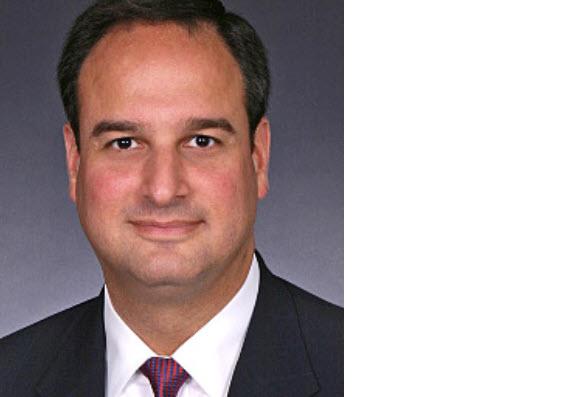
Michael Sussmann: The indicted former Clinton campaign attorney wasn’t the only one feeding the bogus Alfa Bank story to the feds. perkinscoie.com

Special Counsel John Durham outlined the FBI part of the scheme in a felony indictment of Michael Sussmann. The former Clinton campaign lawyer was charged last month with making a false statement to the former general counsel of the FBI when he claimed he was not working “for any client” in bringing to the FBI’s attention allegations of a secret channel of communication between computer servers in Trump Tower and the Alfa Bank in Russia.

According to the indictment, Sussmann was in fact acting on behalf of clients including the Clinton campaign, and an unnamed tech executive who RCI has previously reported is Rodney L. Joffe, a regular adviser to the Biden White House on cybersecurity and infrastructure policies.

Internal emails reveal the Clinton operatives knew the links they made between Trump and Russia were “weak,” even describing them as a “red herring,” but fed them to investigators anyway.

The Sussmann indictment revealed the doubts of those developing the Alfa Bank story. U.S. District Court for the District of Columbia

After Sussmann’s meeting with the FBI in September 2016, the Clinton campaign approached the State Department the following month with the same lead, this time using paid Clinton campaign subcontractor Christopher Steele to feed the rumors. A former British intelligence officer, Steele was offered as a reliable source to help corroborate the rumors. On Oct. 11, 2016, Steele gave his contact at Foggy Bottom documents alleging that a supposed hidden server at Trump Tower was pinging Moscow.

Christopher Steele: Author of the debunked dossier passed the Alfa Bank story to the State Department, which passed it along to FBI agent Peter Strzok. (Aaron Chown/PA FILE via AP)

Two days later, a State official who previously worked under former secretary Clinton funneled the information to the FBI’s then-top Eurasia/Russia counterintelligence official, Stephen Laycock, according to recently declassified notes and testimony. Laycock, in turn, forwarded the information to Peter Strzok, the FBI agent who led the investigation of Trump and his campaign and had just weeks earlier texted a bureau lawyer, “We’ll stop [Trump from being elected].”

“I informed Peter Strzok and another supervisor,” Laycock testified last year in a closed-door Senate hearing.

Telephone: After Steele fed the Alfa Bank story to State, it was passed to the FBI’s then-top Eurasia/Russia counterintelligence official, Stephen Laycock (left), who in turn passed it on to lead FBI agent on Trump-Russia, Peter Strzok (right). Facebook/Twitter

Steele, who later confessed he was “desperate” to defeat Trump, was the author of the debunked dossier claiming Trump colluded with Russia to steal the election. He even misspelled the name of the Russian bank as “Alpha.” Still, the FBI took his rumors seriously enough to interview tech vendors working for the Trump Organization and obtain warrants to search Trump Tower servers. Within days of receiving the State Department tip, Strzok also used Steele’s dossier to secure a wiretap on Trump adviser Carter Page.

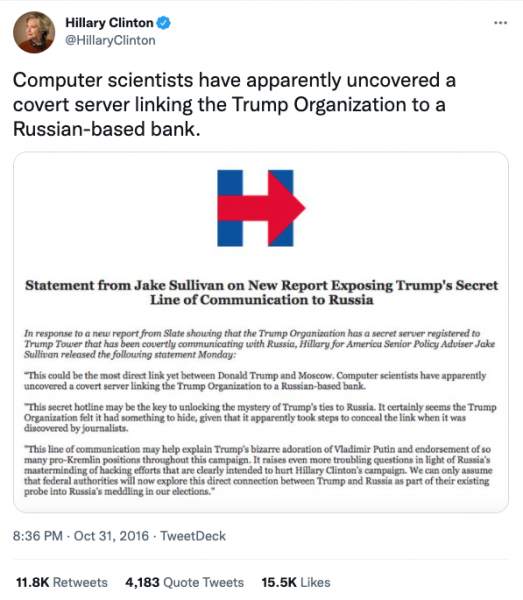
Clinton foreign policy adviser and current National Security Adviser Jake Sullivan would put out a written statement trumpeting the Trump-Alfa Bank story, which was shared by then-candidate Clinton on Oct. 31, 2016, after Slate reported on it. Fusion GPS, the Washington opposition-research group that worked for the Clinton campaign as a paid agent, and helped gather dirt on Alfa Bank and draft the materials Sussmann would later submit to the FBI, reportedly pressed Slate to publish the story by the account of its author, journalist Franklin Foer.

The Clinton campaign played up the Trump-Alfa Bank story on the eve of the 2016 election. Twitter/@HillaryClinton

“This was a highly sophisticated operation using enablers in both the media and federal agencies,” George Washington University law professor Jonathan Turley told RealClearInvestigations.

The Clinton campaign did not let up even after Trump won the election.

In mid-November 2016, it enlisted top Justice Department official Bruce Ohr – whose wife, Nellie, worked for Fusion GPS – to add credibility to the Alfa rumors. That month, Ohr advised the FBI that Steele had told him that the Alfa Bank server was a link to the Trump campaign. Then in early December, Ohr met with the FBI case supervisor who worked for Strzok at least twice. Declassified notes and other records show that during those meetings, Ohr provided him with thumb drives he had received from paid Clinton opposition researcher and Fusion GPS co-founder, Glenn Simpson, and Ohr’s wife and Simpson’s colleague, Nellie. Quoting his Clinton sources, Ohr insisted the alleged backdoor computer channel between Trump and Alfa was real.

Bruce Ohr: The Justice Department official — linked to Clinton opposition research firm Fusion GPS through his wife Nellie, a Fusion employee — brought the firm’s arguments and materials to the FBI. The Global Initiative

The FBI spent months investigating the claim, eventually dismissing it as baseless. After the FBI closed the case, Sussmann turned to the nation’s top intelligence agency for assistance, as RCI first reported.

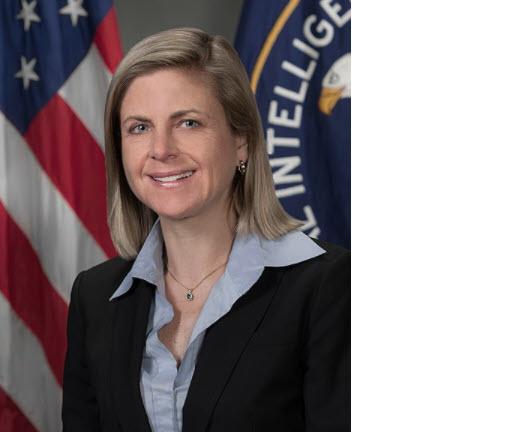
In December 2016, Sussmann called then-CIA Director John Brennan’s general counsel – Caroline Krass – to set up a meeting to brief her about the same Alfa Bank rumors. Krass expressed interest in the tip. Then in early February 2017, officials from her office formally sat down with Sussmann for more than an hour to discuss the Trump-Russian bank rumors. Sussmann provided them updated versions of the materials he had handed off to the FBI.

Caroline Krass: General counsel to then-CIA Director John Brennan welcomed Sussmann’s pitch of the Alfa Bank story, which reportedly passed from the CIA to FBI. CIA/Wikipedia

The CIA, in turn, referred the rumors to an FBI liaison for further investigation, according to the sources briefed on his case. Strzok was the lead FBI liaison to the CIA at the time.

Among the documents Durham has obtained is a CIA memo memorializing the meeting with Sussmann, according to the sources. In his grand jury indictment, Durham accused Sussmann of also misleading the CIA, which he referred to only as “Agency-2.” The special counsel alleges that Sussmann, as he did when meeting with an FBI official, had also failed to inform contacts at Langley that he was representing a client – in the latter case specifically Joffe – tied to the Clinton campaign operation and who had been promised a high-level job in a Clinton administration.

Billing the Democrat’s campaign for his work on the “confidential project,” Sussmann recruited Joffe and a team of federal computer contractors to mine proprietary databases containing vast quantities of sensitive, nonpublic Internet data for possible dirt on Trump and his advisers. In a new court document filed last week, Durham revealed his team has obtained more than 80,000 pages of documents in response to grand jury subpoenas issued to more than 15 targets and witnesses, including the computer contractors. Among others receiving subpoenas: political organizations, private firms, tech companies and other entities, including a major university — Georgia Tech — which allegedly participated in the Clinton conspiracy as a Pentagon contractor. Some witnesses have been granted immunity and are cooperating with prosecutors, the sources close to the probe said.

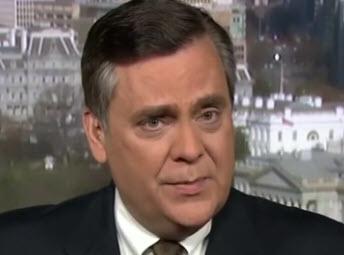
Jonathan Turley: “One would expect a CIA official to express reluctance in an investigation that would have a largely domestic focus,” says the law professor. CNN

“While Sussmann may have hidden his work for the Clinton campaign, this was obviously a useful attack on Trump,” Turley said. “One would expect a CIA official to express reluctance in an investigation that would have a largely domestic focus. But as with the FBI, the Clinton campaign found eager officials to move on any such allegation.”

The CIA is largely barred from collecting information inside the United States or on American citizens.

“The CIA has no business involving itself in a domestic political issue,” Judicial Watch President Tom Fitton told RCI. “The evidence suggests the primary purpose of the meeting was political.”

Fitton said his watchdog group has filed a Freedom of Information Act request with the CIA demanding all records generated from the contacts Sussmann had with the agency in December 2016 and February 2017.

The CIA did not return requests for comment.

For good measure, old Clinton hands tried another pressure point. In early February 2017, Clinton’s foreign policy adviser Sullivan huddled with Fusion GPS’s Simpson and Daniel Jones, an FBI analyst-turned-Democrat-operative, to reboot the same smear campaign against Trump. (As RCI previously reported, Sullivan, who spearheaded the campaign’s effort to promote the narrative of a disturbing Trump-Russia relationship via the Alfa Bank story, is under scrutiny for possibly lying to Congress about his role in the operation.) Jones, in turn, reached out to his former colleagues at the FBI, who reopened the investigation into the old allegations of a cyber-link between Trump and Alfa Bank.

Jake Sullivan played a pivotal role in the Alfa Bank story as 2016 Clinton foreign policy adviser. AP Photo/Ng Han Guan, File

The next month, acting on Jones’ recycled tip, FBI agents visited the offices of the Pennsylvania company that housed the Trump server, which was actually administered by a third-party hotel promotions firm – Cendyn, based in Florida. But their second investigation proved to be another dead end. The sinister communications Jones claimed were flowing between an alleged Trump server and Alfa Bank were found to be innocuous marketing emails. In other words, spam.

Sources say it is odd that FBI headquarters continued to pursue the allegations, because internal FBI communications reveal that the bureau’s own cyber sleuths had pooh-poohed them within days of Sussmann’s briefing, RCI has learned.

Strzok himself had been briefed on that assessment of the materials Sussman dropped off at headquarters on Sept. 19, 2016. In fact, in a Sept. 23, 2016, internal message to Strzok, an FBI official relayed his preliminary findings following an interview with Cendyn, the Florida marketing firm that managed the alleged Trump server.

“Followed up this morning with Central Dynamics [Cendyn] who confirmed that the mail1.trump-email.com domain is an old domain that was set up in approximately 2009 when they were doing business with the Trump Organization that was never used,” according to the message.

Reacting to the Durham indictment, Strzok recently tried to distance himself from the Alfa scandal, insisting in a Lawfare blog: “I had a minor role in the events in question, insofar as I transferred the material Sussman gave to Jim Baker, the FBI’s general counsel at the time, to the personnel who ultimately supervised and looked into the allegations.”

Echoing other critics, Strzok complained that Durham – who originally was tapped to investigate the origins of the Russia “collusion” investigation by Trump’s Attorney General Bill Barr – is conducting a partisan witch hunt on behalf of Trump.

Strzok’s claims notwithstanding, Barr’s successor, the President Biden-nominated Attorney General Merrick Garland, testified last week that he has renewed funding and staffing for Durham’s far-reaching investigation for the next fiscal year. “[Y]ou can readily assume his budget has been approved,” Garland assured Republicans on the House Judiciary Committee.

Tyler Durden
Sat, 10/30/2021 – 23:30

via ZeroHedge News https://ift.tt/31h94tM Tyler Durden

Russian Woman, Boyfriend Sentenced To 10 Months In Prison For Simulating Oral Sex Outside Church

Russian Woman, Boyfriend Sentenced To 10 Months In Prison For Simulating Oral Sex Outside Church

Following the fall of the Soviet Union and the disastrous reign of Boris Yeltsen, President Vladimir Putin has sought to restore Russian national pride in a number of ways, including elevating the Russian Orthodox Church to its pre-Soviet glory. This veneration has at the times taken the form of legal crackdowns: the Russians stamped out non-orthodox Christian groups like the Jehovas Witnesses. And when the members of feminist group Pussy Riot staged their “punk prayer” at Moscow’s Cathedral of Christ the Savior, they were arrested and sentenced to sentences as long as 7 years in a brutal Russian prison.

But in the latest example of how Russian authorities handle any gesture of disrespect toward the Russian orthodox church, a Tajik man and his Russian girlfriend were sentenced to 10 months behind bars after a raunchy photoshoot in front of St. Basil’s Cathedral – one of the country’s most sacred religious monuments – which featured the Russian woman simulating oral sex to her boyfriend from a very suggestive angle.

Here’s more from RT:

Ruslan Bobiev (whose real name is Ruslani Murojonzod) and Asya Akimova (Anastasia Chistova) published photos on social media taken by the iconic Red Square cathedral. The most controversial snap saw Akimova on her knees, simulating oral sex while wearing a police jacket.

The photo, shown below, was taken from the Telegram app:

The lovers were later arrested and accused of breaking a law that seeks to punish those who commit actions “with the purpose of insulting the religious feelings of believers.”

The 10-month sentence is exactly the length of time requested by the Russian prosecutors.

Bobiev and Akimova are the first to receive time behind bars under this law, with all those previously convicted being given a fine or suspended sentence.

Bobiev’s isn’t the only high-profile case of attractive women using their bodies to disrespect Orthodox Churches in recent weeks. Earlier this month, a video showing a Russian OnlyFans star went viral after she was filmed flashing her breasts near the exact same church.

The model, known as Lola Bunny, later apologized in response to an outpouring of online outrage and anger. She still faces the prospect of prosecution.

The law against insulting believers was passed back in 2013 following the “Pussy Riot” incident. The law made headlines again in 2016 when a Russian YouTuber was caught playing Pokemon Go in a church.

Tyler Durden
Sat, 10/30/2021 – 23:00

via ZeroHedge News https://ift.tt/3pR5b92 Tyler Durden

Unvaxx’d San Francisco Police “Discarded Like A Piece Of Trash”: Officer

Unvaxx’d San Francisco Police “Discarded Like A Piece Of Trash”: Officer

Authored by Ilene Eng via The Epoch Times,

Several dozen San Francisco police officers who are not vaccinated against COVID-19 have been placed on leave, a police union leader told NTD Television.

Tony Montoya, president of the San Francisco Police Officers Association, told NTD that there are 41 unvaccinated officers on paid administrative leave. Another 40 are on disability or Family and Medical leave and have yet to report their vaccination status.

San Francisco previously allowed its city employees to submit exemptions for the COVID-19 vaccine. They were approved.

Later, however, the Department of Public Health issued a health order requiring all city employees to be vaccinated by Oct. 13 or be relieved of their duties.

“DHR [Department of Human Resources] kind of bungled the situation from the onset, where they gave very strict timelines on when things were due,” Montoya said.

“My members followed those guidelines, whether it was submitting an application [or] requesting an exemption. And the city has just thrown rules to the wind, and it just really made my members distrustful. It completely lacks transparency, and the members are like, ‘What rules are we supposed to follow?’ Because it’s really unclear what the rules are at this stage.”

NTD reached out to the DHR but did not receive a response by the deadline.

“For some reason we were told they would go under a secondary review process and then we had to answer some additional questions, submit those by a deadline,” Alicia Worthington, a sergeant at the San Francisco Police Department, told NTD.

“We received paperwork that stated that our exemptions were now denied.”

Worthington was born and raised in San Francisco, and she said this is her 20th year with the San Francisco Police Department.

“It’s been really rough for all of us. I’ve been in contact with my colleagues who were impacted by the mandates and who are on leave, and we’re going through a lot of stress, a lot of heartache. We worked tirelessly through the pandemic. And just to undergo a complete 180, and to be yanked from duty and put on leave, is pretty heartbreaking,” Worthington said.

“You’re just discarded like a piece of trash.”

Officer Rebecca Schiff with her father. (Courtesy of Rebecca Schiff)

Rebecca Schiff, an officer of three years at the San Francisco Police Department, told NTD that some of the questions were combative.

“I’m a Roman Catholic. They asked questions like, well, the Pope was for the vaccines, so what makes you so different?” Schiff said.

“Very abrasive questioning like that, about our religious beliefs.”

They are not allowed to work or volunteer during this time, despite the department’s lack of resources. Montoya said it had to restructure during the last month to compensate those on paid leave.

“They were pulling officers from admin positions, so people who had been doing paperwork for the last 20 years are now being pulled out to go on the street, which they have been doing prior to terminating us because they just don’t have enough people on the streets,” Schiff said.

“They took trainers from the academy and put them back on the street. And then they hired retired people to come into the academy to make up for the training that they otherwise don’t have.”

Schiff does not think the new trainees will get the same training she did.

Her now-retired father, brother, and significant other are also officers.

“I’m never not going to be a police officer. It’s how I was raised, it’s how I see myself,” Schiff said.

“You could put a crowd of people who all look exactly the same, and the only thing that’s different about the majority of us who do this work is that when something happens, everybody else ducks and runs; we’re running towards the danger.”

“The department is going through kind of an administrative hearing right now to make a determination whether or not those members will be put on unpaid leave status after 30 days,” Montoya said.

They are requesting that the city rethink its position and present options other than vaccination.

“It’s a personal choice. But for the department to just have that kind of hard line … it really doesn’t show collaboration between the union and the city,” Montoya said. “They’ve just taken this one-size-fits-all approach, and it’ll be up to individual members to [decide] whether they want to seek any type of injunctive relief through the legal system.”

Montoya said the department is already short 400 officers and this mandate is adding to their deficit.

Some of the police on leave are eligible for retirement. Some are considering employment elsewhere.

“San Francisco is always going to be my home, even if I end up somewhere else, out of state. I took great pride. I still have a lot of pride in my profession, what I did in my years of service,” Worthington said.

“I’ve had some wonderful times, some great cases, things I can look back on, knowing that I really made a difference and I was impactful in what I did in serving my community.”

As of Oct. 5, San Francisco has 2,117 sworn police officers.

Tyler Durden
Sat, 10/30/2021 – 22:30

via ZeroHedge News https://ift.tt/3mvwLGO Tyler Durden

The Most Popular Halloween Costumes Of 2021

The Most Popular Halloween Costumes Of 2021

Halloween – it’s the time of year when kids and adults alike dress up, eat candy, and show off their spookiest selves. It’s also when the scariest home decorations are the talk of the town, and people are frightened left, right, and center.

With the help of data from Google Trends and their unique Frightgeist series, Visual Capitalist’s Anshool Deshmukh visualized the most searched Halloween costumes in the U.S. in 2021.

From spooky to sweet, these are the costumes everyone wants to dress up as this Halloween.

A Brief History of Halloween

Halloween is celebrated each year on October 31, with this year’s Halloween occurring on a Sunday. The tradition originated with the ancient Celtic festival of Samhain, where people would light bonfires and wear costumes to ward off ghosts.

The concept of Halloween didn’t gain popularity until it reached the United States. Borrowing from European traditions, Americans began to dress up in costumes and go house to house asking for food or money, a practice that eventually became today’s “trick-or-treat” tradition.

Other superstitions also started to form around the holiday. Young women believed they could divine the appearance of their future husbands by doing tricks with apple parings or mirrors.

Over time, Halloween moved away from focusing on witchcraft and ghosts to the festival we know and love today—a day focused on games, foods of the season, and festive costumes.

What Are the Most Popular Halloween Costumes?

With COVID-19 cases down compared to last year and Americans expected to spend over $10 billion on Halloween this year, much of the United States will be partaking in celebrating the spooky holiday.

From classy costumes and last-minute DIYs to pop-culture outfits and even era-inspired costumes, here are the top 10 most popular Halloween costumes in the U.S. in 2021.


Notable Trending Costumes

The Netflix show Squid Game has had a meteoric rise in popularity in recent weeks, becoming one of the most-watched shows on the streaming platform—just in time for Halloween.

Squid Game costumes are the 23rd most popular in Google’s search, and they continue to trend high, being the most searched costume idea in Detroit.

In 2020, the mobile game Among Us was the talk of the gaming world, and this year it is the 16th most popular costume, with its popularity spiking in Jacksonville, Florida.

Other notable costumes in the top 50 include Pokémon at #50, Fortnite at #44, Velma Dinkley (of Scooby-Doo fame) at #42, Poison Ivy (the comic book villain) at #33, Beetlejuice at #24 and the entire 1980s decade at #18.

Most Popular Halloween Costumes by State

When it comes to festivals, every state has its unique perspective and traditions on celebrating them. This extends to popular Halloween costumes too.

Though there might be some overlap, digging deeper into the most popular costumes in every state allows us a unique look into how diverse people’s tastes are across the country.

Here is a breakdown of the most popular costumes in the U.S. in 2020 by state:


A look at popular costumes at the state level reveals some interesting quirks. Montana, for example, is uniquely interested in The Purge, and Rhode Island trick-or-treaters are big fans of Hermione Granger of Harry Potter fame.

Traditions are Here To Stay

At its core, Halloween still remains that same old fright-inducing festival it has always been.

Even though pop culture might influence your Halloween choices, traditional costumes will always have a unique place in everyone’s heart.

Tyler Durden
Sat, 10/30/2021 – 22:00

via ZeroHedge News https://ift.tt/3BsYxI7 Tyler Durden

Over 11,000 Active-Duty Air Force Personnel Unvaccinated With Days Left Before Deadline

Over 11,000 Active-Duty Air Force Personnel Unvaccinated With Days Left Before Deadline

By Zachary Stieber of The Epoch Times

The Air Force could lose thousands of troops in the coming weeks as over 11,000 active-duty personnel remain without a COVID-19 vaccine, just days before the deadline to get one.

Some 96.4% of active-duty airmen were partially or fully vaccinated as of Oct. 25, the branch said in its latest vaccination update. That means approximately 11,462 airmen have not begun a vaccination program before the Nov. 2 deadline to become fully vaccinated.

Another nearly 12,000 reserve personnel or Space Force members remain unvaccinated, according to data released by the Air Force. Reserves have until Dec. 2 to become fully vaccinated. Fully vaccinated means getting a vaccination regimen and then at least two weeks elapsing. Members who haven’t yet started a program cannot come into compliance with the mandate.

“We don’t anticipate we will be to a 100 percent vaccination rate,” an Air Force spokeswoman told Defense One this week.

Any troops who don’t get a vaccine by the deadline and have not received or is not in the process of seeking a religious or medical exemption will be deemed in violation of a lawful order and subject to discipline under Article 92 of the Uniform Code of Military Justice. They could be court-martialed or face other disciplinary measures.

The mandate stems from Defense Secretary Lloyd Austin’s order in late August for all troops to get a vaccine unless they receive an exemption.

Each branch head decided separately on mandate details, including deadlines. The Air Force has the earliest deadlines for active-duty troops and reserves. An Air Force spokesperson told The Epoch Times earlier this month that the deadlines would not be pushed back.

Hundreds of thousands of troops across the military weren’t vaccinated in the middle of October. As of Oct. 27, over 381,000 troops remain unvaccinated, according to an analysis of Pentagon data. The vast majority, or nearly 320,000, are in the Army, the Army reserve, or the Army National Guard.

Army reserves have the most lenient deadline, by far. They have until June 30, 2022, to become fully vaccinated. Active-duty sailors and Marines have until Nov. 28, while active-duty soldiers have until Dec. 15.

It remains unclear how many religious and medical exemptions have been approved. The Pentagon previously referred requests for numbers to each branch. The Army didn’t respond to a query and the Navy declined to comment. The Marines said it had not started approving any religious accommodation requests while declining to speak about medical exemptions. The Air Force told The Epoch Times earlier this month it is not tracking exemption requests and therefore could not say how many were approved, if any.

The Air Force told news outlets this week it would start releasing approved exemption numbers after the deadline.

Pentagon spokesman John Kirby on Wednesday declined to directly address complaints from some sailors who said that leaders told them their religious exemption applications were going to be denied.

“I don’t have any direct knowledge of a situation where a member of the military was told by his or her leadership, ‘hey, go ahead and apply, but you’re going to get denied,’” he told reporters in Washington. “I go back to what the secretary expects, that there is there’s an exemption policy been in place well, before the COVID vaccine, so it’s not new. And his expectation is that if members of the military want to apply for one that they should be able to. And they should be able to make their case. And the leadership should follow the same process for that exemption request as they would for any other.”

Tyler Durden
Sat, 10/30/2021 – 21:30

via ZeroHedge News https://ift.tt/3vYaQv0 Tyler Durden