Japan’s Population In Freefall As Twice As Many People Die As Are Born

Japan’s Population In Freefall As Twice As Many People Die As Are Born

Japan’s population is in freefall.

In 2022, the number of births registered in Japan plummeted to another record low last year according to statistics released by the Ministry of Health – the latest worrying statistic in a decades-long decline that the country’s authorities have failed to reverse despite their extensive efforts.

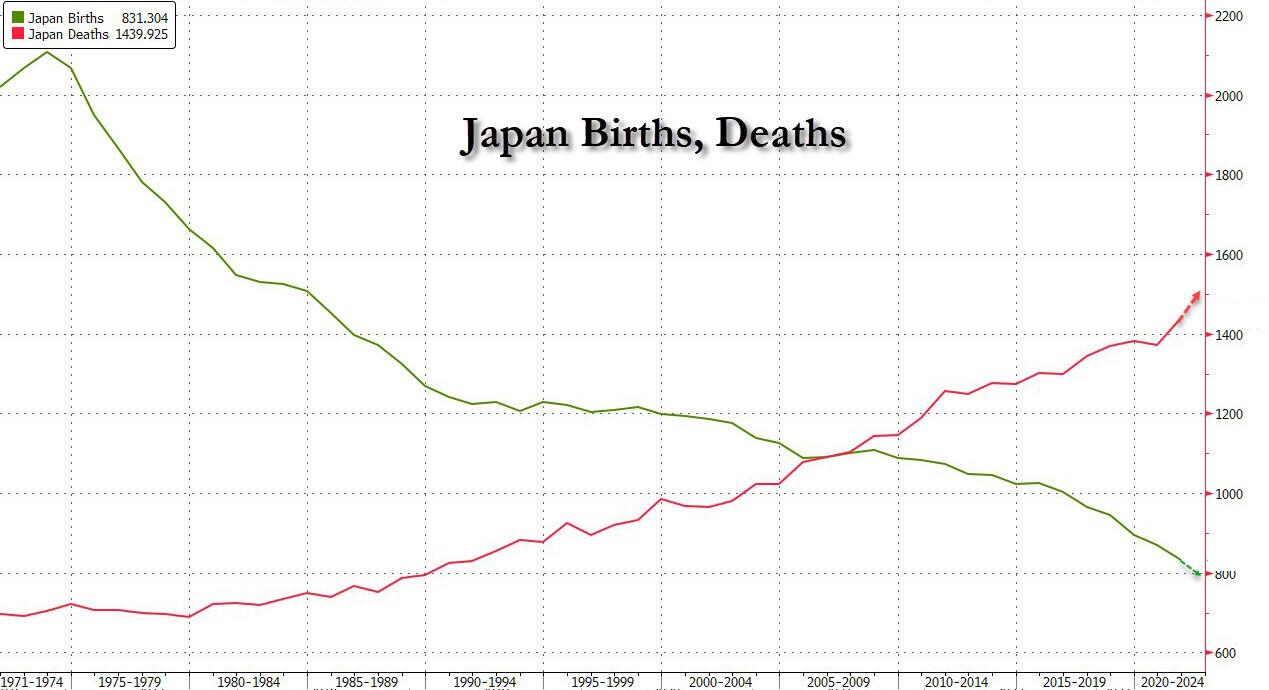
The country saw just 799,728 births in 2022 – the lowest number on record and the first ever dip below 800,000 – and about half of the number of deaths, which  at more than 1.58 million, was a record high. The number of births in Japan has nearly halved in the past 40 years: in 1982, Japan recorded more than 1.5 million births, a number which was then more than double the number of deaths. This ratio has since reversed.

As shown in the chart above, deaths have outpaced births in Japan for the past 15 years – a trend which is unlikely to reverse ever again – posing an existential problem for the (aged) leaders of the world’s third-largest economy. They now face a ballooning elderly population, along with a shrinking workforce to fund pensions and health care as demand from the aging population surges.

Japan’s population has been in steady decline since its economic boom of the 1980s and stood at 125.5 million in 2021, according to the most recent government figures.

According to CNN, Japan’s fertility rate of 1.3 is far below the rate of 2.1 required to maintain a stable population, in the absence of immigration.

The country also has one of the highest life expectancies in the world; in 2020, nearly one in 1,500 people in Japan were age 100 or older, according to government data.

These concerning trends prompted a warning in January from Prime Minister Fumio Kishida that Japan is “on the brink of not being able to maintain social functions.”

“In thinking of the sustainability and inclusiveness of our nation’s economy and society, we place child-rearing support as our most important policy,” he said, adding that Japan “simply cannot wait any longer” in solving the problem of its low birth rate.

A new government agency will be set up in April to focus on the issue, with PM Kishida saying in January that he wants the government to double its spending on child-related programs. But money alone might not be able to solve the multi-pronged problem, with various social factors contributing to the low birth rate.

Japan’s high cost of living, limited space and lack of child care support in cities make it difficult to raise children, meaning fewer couples are having kids. Urban couples are also often far from extended family in other regions, who could help provide support.

In 2022, Japan was ranked one of the world’s most expensive places to raise a child, according to research from financial institution Jefferies. And yet, the country’s economy has stalled since the early 1990s, meaning frustratingly low wages and little upward mobility: the average real annual household income declined from 6.59 million yen ($50,600) in 1995 to 5.64 million yen ($43,300) in 2020, according to 2021 data from the Ministry of Health, Labor and Welfare.

Attitudes toward marriage and starting families have also shifted in recent years, with more couples putting off both during the pandemic — and young people feeling increasingly pessimistic about the future.

In 2022, Japan was ranked one of the world’s most expensive places to raise a child, according to research from financial institution Jefferies. And yet, the country’s economy has stalled since the early 1990s, meaning frustratingly low wages and little upward mobility.

The average real annual household income declined from 6.59 million yen ($50,600) in 1995 to 5.64 million yen ($43,300) in 2020, according to 2021 data from the Ministry of Health, Labor and Welfare.

Attitudes toward marriage and starting families have also shifted in recent years, with more couples putting off both during the pandemic — and young people feeling increasingly pessimistic about the future. Who can blame them for not feeling frisky.

It’s a familiar story throughout East Asia, where South Korea’s fertility rate — already the world’s lowest — dropped yet again last year in the latest setback to the country’s efforts to boost its declining population.

Meanwhile, in January China just lost its title as the world’s most populous country to India after its population shrank in 2022 for the first time since the 1960s.

Tyler Durden
Sun, 03/05/2023 – 21:00

via ZeroHedge News https://ift.tt/NQrmbhi Tyler Durden

A Long Idea From One Of Wall Street’s Biggest Bears

A Long Idea From One Of Wall Street’s Biggest Bears

By Russell Clark, author of the Capital Flows and Asset Markets substack, and former CIO of the (very bearish) Horseman Global hedge fund.

In previous posts, I have tried to talk about how I used to manage money using a 3M process – Macro, Micro and Market. In essence I was looking for a macro change, that was supported by underlying industry data (micro) and confirmed by market trends, particularly technicals. The biggest macro trend I paid attention to was currency, which I had seen be the least understood factor in investing in my career. This stopped working in 2016, with Brexit, China and Trump, making politics far more important than macro. It took me a long time to accept that politics is more important than macro, but now that it has, my investing process is improving. I have had to rename it 4M – with the additional M is motivation, which is another way of saying politics. Paid subscribers will be aware of the ideas I have already pitched.

On the long side, I like Occidental for its commodity exposure and long term option on Direct Air Capture technology. I also like Japanese banks as an aggressive inflation trade. On the short side, I still like TLT, McDonalds, and residential REITS. All of this ideas are driven by the view that inflation is political, and the politics is now towards raising real wages. This means you have inflation, AND, tight financial conditions to protect those wage increase.

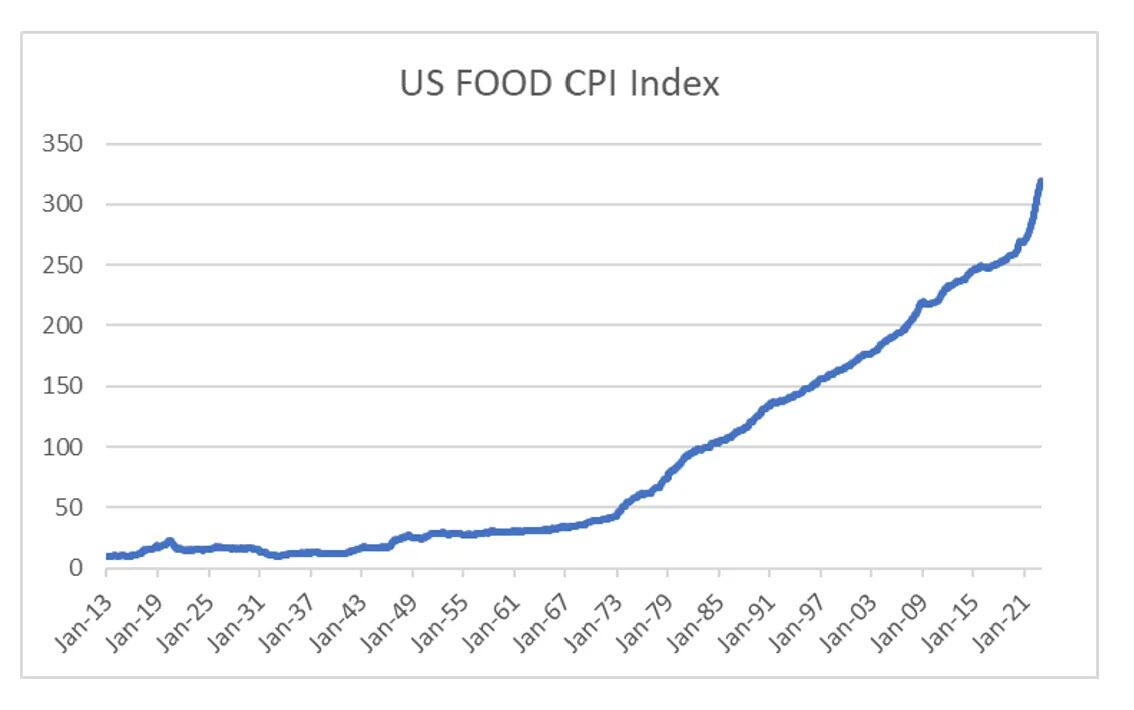
One of the ideas I have been toying with has been driven by politics, or the Motivation (the first M). One of the key ideas is that rising wages tends to push up the price of food. In a world of rising wages, food prices should rise.

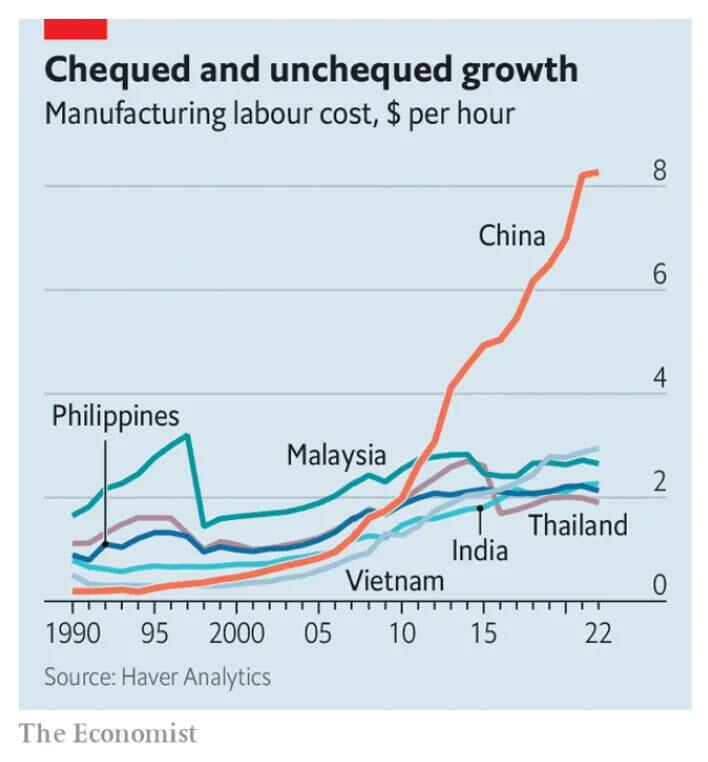
This surge in food inflation is driven by China getting wealthy, more than anything else. The success of China in driving wages higher relative to other Asian nations that industrialized earlier is truly staggering. In a pro-capital world, China would have been expected to devalue to regain competitiveness, but China has obviously chosen to promote higher wages. When economist talk about China exporting inflation, what they mean is that Chinese policy has successfully raised wages – and in stark contrast to the experience of other Asian nations.

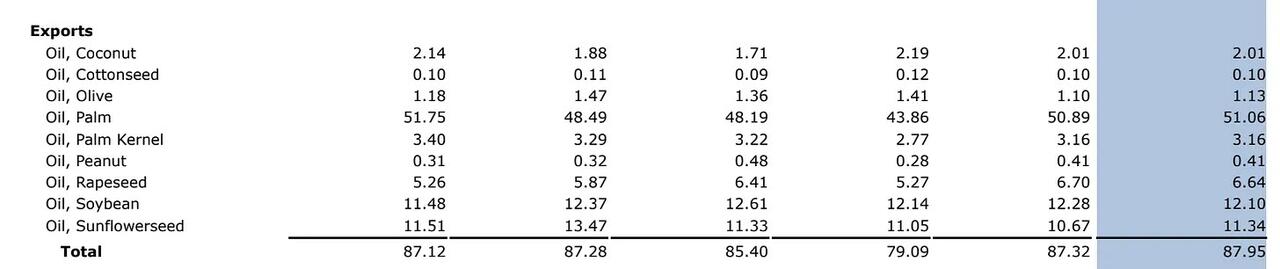
The combination of rising food prices makes me like food related companies, particularly companies that own or control farm land. Russia’s invasion of Ukraine also made me like the look of agricultural commodities that Ukraine has a large market share of exports – namely sunflower oil. In the traded vegetable oil market, palm oil dominates, with sunflower oil and soybean oil following.

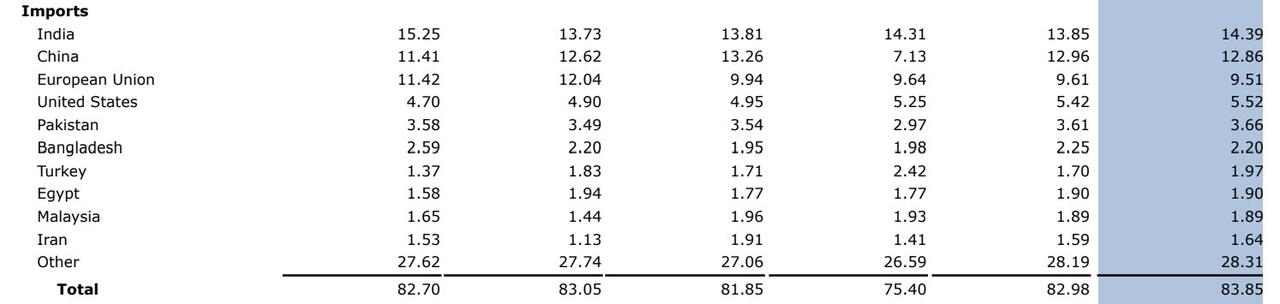
Vegetable oil imports is one commodity that India imports more than China, making its demand outlook more robust than industrial commodities.

As it happens, supply of sunflower oil was better than expected, and inventory of crude palm oil has been larger than expected. This had lead palm oil to trade at a discount to soy.

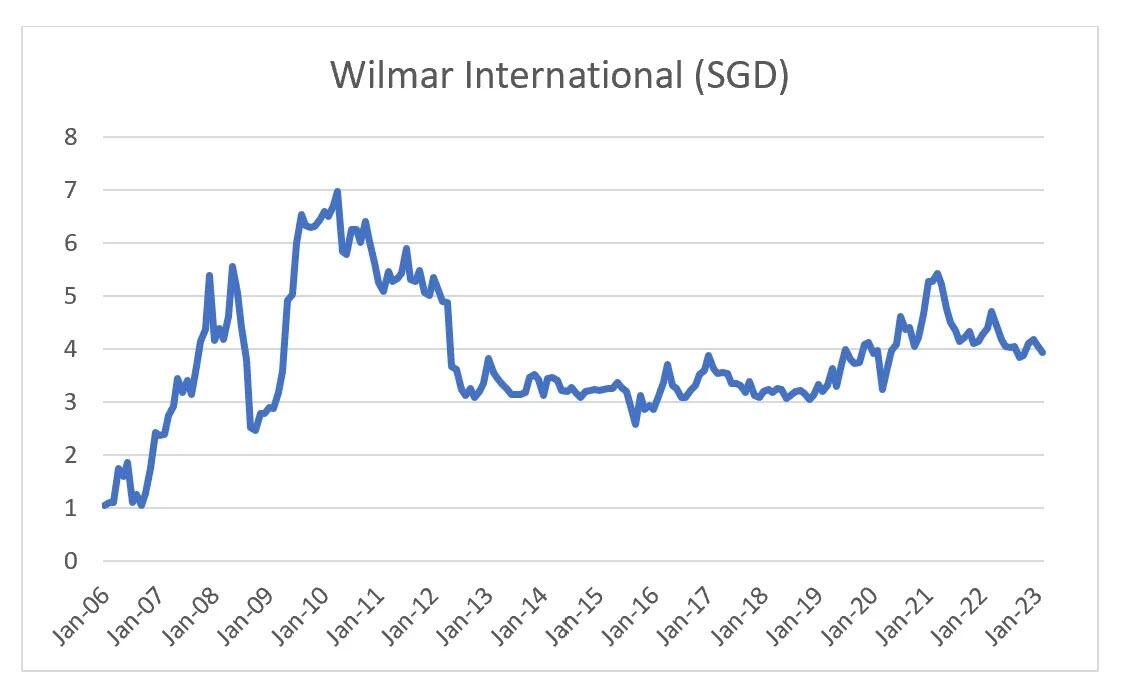
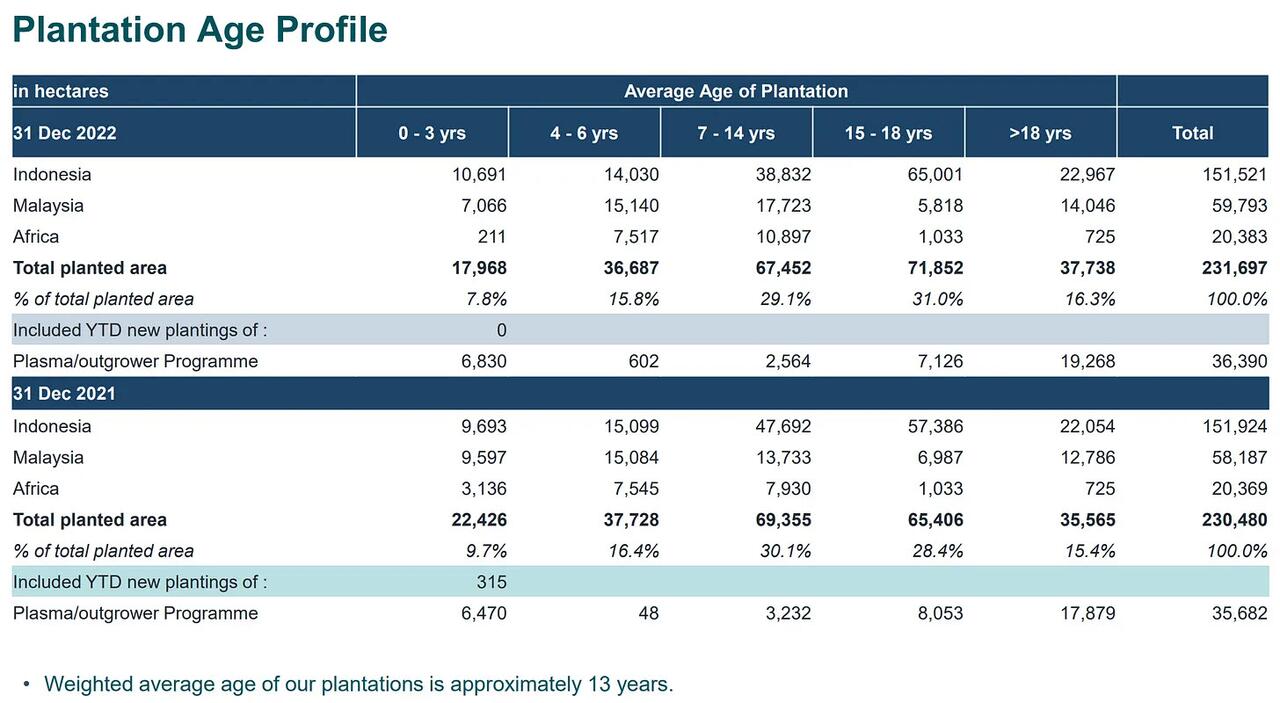
Crude palm oil production and exports are dominated by two countries, Indonesia and Malaysia. The largest plantation owner is Singapore listed Wilmar International.

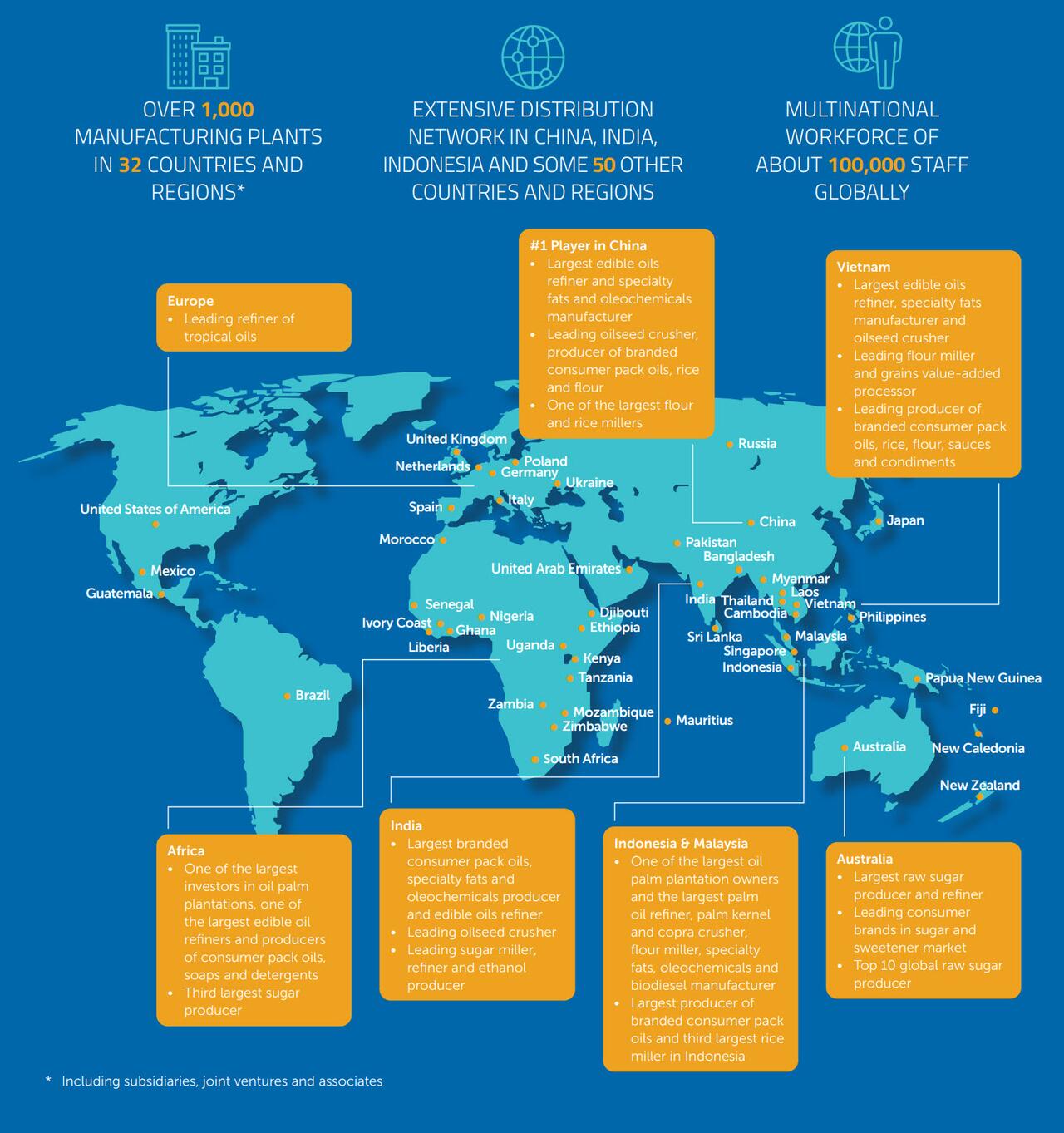
There are two things that attract me to Wilmar. Firstly, when they export palm oil to both China and India, they have built a local brand of vegetable oil as a consumer business. This has a much higher value than the plantation business, which they have attempted to monetize by listing a 10% stake in their Chinese consumer business in Shanghai. The value of their stake in Kerry Arwana has consistently been higher than Wilmar’s market cap.

The other thing that gets me very excited about Wilmar is that they have begun to expand into Africa. Still small, but this is much large than any other listed crude palm operators in Arica. Nigeria is now a a larger consumer of palm oil than the US, and has been growing rapidly. Palm oil originated in West Africa, before being introduced to Malaysia and Indonesia, so offers an attractive way to play growing African consumption.

Wilmar has a track record of building good consumer businesses, even in notoriously difficult markets like China and India.

Wilmar trades below book value with a 4% dividend yield. Why so cheap? I can give a lot of reasons, ranging from claims that palm oil cultivation destroys the environment, to the fact that other Singaporean commodity trading stocks, Noble and Olam ended up in financial trouble, and delisted. Against that, US listed trader, Archer Daniels Midland owns 25% of Wilmar. Wilmar faces the same headwinds of rising interest rates, but a cheap valuation with a long dated call option on African consumption sounds pretty good to me. Full discloser – I have a long position.

Tyler Durden
Sun, 03/05/2023 – 20:30

via ZeroHedge News https://ift.tt/liS8fj5 Tyler Durden

With Tuesday Pot Legalization Vote, OK Poised To Rake In Texans’ Money

With Tuesday Pot Legalization Vote, OK Poised To Rake In Texans’ Money

Tuesday may bring a major milestone in America’s relentless march toward marijuana legalization, as Oklahoma will likely become the most conservative state so far to approve recreational use of the plant. Trump carried the state by a 33% margin in 2020. 

Oklahomans will consider State Question 820, which offers a chance to legalize consumption by adults 21 and older — along with their possession of up to an ounce — and grant Okies the freedom to grow six mature plants and six seedlings for their own use.

A 15% tax would be imposed on sales, with proceeds flowing to student services, drug addiction programs, courts, local government and the state’s general fund. 

Backers of State Question 820 deliver petition signatures to Oklahoma’s Secretary of State in July (Yes on 820 Campaign)

With approval, Oklahoma stands to rake in tax revenue from Texans expected to cross the border to take a break from the Lone Star State’s stubborn nanny-state tyranny. Ryan Kiesel, a former Oklahoma state legislator and current legalization advocate told AP:  

“There are thousands and thousands of Texans who are increasingly coming to Oklahoma as a tourist destination. I want to be able to sell legal, regulated and taxed marijuana to those Texans over the age of 21, and take their tax dollars and invest them in Oklahoma schools and Oklahoma health care.”

Nearly 8 million people live in Dallas-Fort Worth, which is almost twice as many as live in all of Oklahoma.

Oklahoma is a standout with one of the country’s most relaxed medical marijuana regimes. About one in ten adults in the state holds a medical license. In contrast to most states that allow medical use, Oklahoma has no list of qualifying conditions and patients can receive a doctor’s recommendation over the internet. 

Okie cannabis growers are desperate to expand their market: The state’s medical marijuana market is so relatively free that low barriers to entry have sent prices into a nose-dive, with one retailer telling AP the price of a 1-gram cartridge of concentrate has collapsed from $60 to $70 in 2019 to just $20 today. 

The last public poll on the proposal — taken way back in October — had voters approving recreational legalization, 49% to 38%. The question was originally slated to appear on the November 2022 midterm ballot, but a delay in verifying petition signatures led to it being moved to March 7.

In 2018, the ballot measure to allow medical use was approved 56% to 43%. The wild card in Tuesday’s election is turnout, as SQ820 is the only statewide measure on the ballot.  

Yes on 820‘s Michelle Tilley told NonDoc that her team is feeling “pretty good” about their chances:

“I think what resonates with people is compassion for other human beings with the criminal justice reform, and I think the revenue piece is also something people have been excited about.”

The Oklahoma Sheriff’s Association opposes the measure, but plenty of cops are ready to stop wasting time and resources punishing adults who choose to intoxicate themselves with a plant nobody’s ever overdosed from.  

Tyler Durden
Sun, 03/05/2023 – 20:00

via ZeroHedge News https://ift.tt/JyHzCiA Tyler Durden

Flynn Sues DOJ, FBI For Malicious Prosecution, Wants $50 Million

Flynn Sues DOJ, FBI For Malicious Prosecution, Wants $50 Million

Authored by Petr Svab via The Epoch Times (emphasis ours),

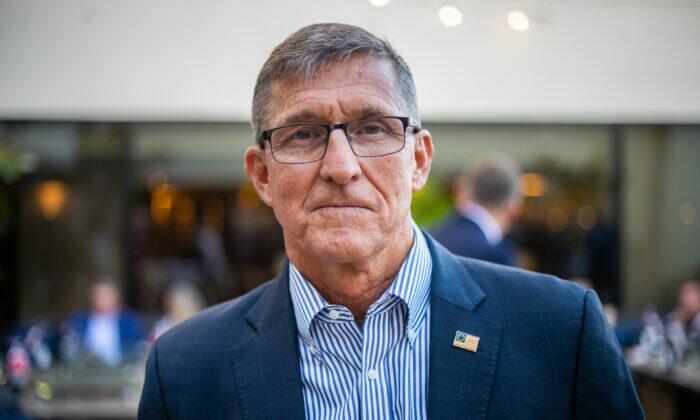
Retired Lt. Gen. Michael Flynn, former national security adviser to President Donald Trump, has filed a lawsuit against the Department of Justice (DOJ), FBI, and others, alleging he was maliciously prosecuted. He is demanding at least $50 million in compensation.

“Defendant maliciously investigated and prosecuted General Flynn by initiating and continuing a baseless counterintelligence investigation and by filing a criminal information lacking probable cause,” says the suit, filed on March 3 with the U.S. District Court for the Middle District of Florida (pdf).

Retired Lt. Gen. Michael Flynn in Huntington Beach, Calif., on Sept. 18, 2022. (John Fredricks/The Epoch Times)

The former head of the Defense Intelligence Agency (DIA) under the Obama administration was investigated by the FBI starting in August 2016 for supposed ties to Russia. In 2017, he was charged with lying to the FBI during an interview earlier that year.

The suit alleges that the FBI, and later prosecutors from the office of special counsel Robert Mueller, investigated and prosecuted him for political reasons, considering him a threat.

“General Flynn—who already had a reputation as a hands-on disruptor at DIA, who had publicly excoriated the politicization of the intelligence community, and who had made clear his desire to overhaul the national security structure and the ‘interagency process’—was a direct threat, not only to the self-interest of entrenched intelligence bureaucracies and the federal officials involved, but to exposing their prior and ongoing efforts to derail and discredit President Trump,” the suit says.

The case against Flynn was riddled with contradictions and inconsistencies. FBI agents had already decided to close his case by early January 2017, but higher-ups intervened to keep it open on the justification that Flynn may have violated an obscure and antiquated law called the Logan Act by discussing with a Russian ambassador the priorities of the incoming administration during the transition period. DOJ officials at the time rejected the legal theory. The 1799 Logan Act, which prohibits certain kinds of unauthorized diplomacy, may in fact be unconstitutional, several lawyers previously told The Epoch Times. It has never been successfully prosecuted, much less aimed at an incoming national security adviser.

The Flynn investigation, codenamed Crossfire Razor, continued “only because of Defendant’s agents and agencies’ malicious, partisan, and unethical intent to investigate their political opponents generally and to destroy General Flynn specifically,” the suit says.

Subsequent leaks to the media claimed that he may have violated the Logan Act by talking with the Russian ambassador, Sergei Kislyak, about sanctions imposed at the time on Russia by the outgoing Obama administration.

FBI top brass then meticulously prepared and arranged the interview to appear as “an informal meeting, just to put the Kislyak calls being discussed in the press to bed,” the suit says.

On Jan. 24, 2017, when two FBI agents interviewed Flynn, they asked him whether he talked with Kislyak about expulsions of Russian diplomats. He said no, which was not the truth. When asked again, he said he didn’t remember.

This exchange then formed the core of the charge brought against Flynn by Mueller, who took over his case in May 2017.

Read more here…

Tyler Durden
Sun, 03/05/2023 – 18:30

via ZeroHedge News https://ift.tt/WmdrxjF Tyler Durden

US Begins ‘Training Assessment’ For Ukrainian Pilots On F-16s

US Begins ‘Training Assessment’ For Ukrainian Pilots On F-16s

The White House has so far ruled out calls to provide the Ukrainian government with F-16 fighter jets, but clearly the idea is still on the table and Biden may be close to pulling the trigger amid intense administration discussions.

“Two Ukrainian pilots are currently in the United States undergoing an assessment to determine how long it could take to train them to fly attack aircraft, including F-16 fighter jets, according to two congressional officials and a senior U.S. official,” a weekend NBC report indicates.

“The Ukrainians’ skills are being evaluated on simulators at a U.S. military base in Tucson, Arizona, the officials said, and they may be joined by more of their fellow pilots soon,” the report continues.

Source: Shutterstock

The officials additionally said 10 more Ukrainian pilots are expected to join the program soon, and they may arrive in the US this month.

The officials emphasized that this does not yet constitute a fighter jet training program for Ukrainian pilots, and that actual aircraft will not be flown – only the advanced flight simulators. But clearly if F-16s are approved, this will form the basis of formal training on the jets.

One of the main reasons for the hold-up in approving jets for Ukraine, apart from the fact that Russia is vowing severe and unpredictable escalation, is the significant time investment of the training, which could take at least a year or years.

Colin Kahl, defense undersecretary for policy, recently told the House Armed Services Committee that the US has “not started training on F-16s” and that the delivery timeline is about 18 months. The training program for F-16s also happens to be about 18 months.

“So you don’t actually save yourself time by starting the training early in our assessment,” said Kahl. “And since we haven’t made the decision to provide F-16’s and neither have our allies and partners, it doesn’t make sense to start to train them on a system they may never get.”

So by all accounts, even if the Biden administration were to approve jets for Ukraine tomorrow, it could take years before they are piloted by Ukrainians in the skies of the conflict. 

Tyler Durden
Sun, 03/05/2023 – 18:00

via ZeroHedge News https://ift.tt/IAQqGVf Tyler Durden

“Most Important Discovery In 21st Century”: Archeologists Find Hidden Corridor In Great Pyramid Of Giza

“Most Important Discovery In 21st Century”: Archeologists Find Hidden Corridor In Great Pyramid Of Giza

Humans have spent centuries, if not longer, attempting to unlock the secrets of the 4,500-year-old Great Pyramids at Giza, located just outside of Cairo. But with modern cosmic ray scanning technology, archaeologists have discovered a hidden passageway, Reuters reported. 

Mostafa Waziri, head of Egypt’s Supreme Council of Antiquities, announced the discovery of the 30 feet in length and 6 feet wide corridor near the main entrance of the Pyramid of Khufu after a tiny snake camera was inserted through a crack. Speculation about the cavity behind the opening was first revealed via cosmic ray mapping in 2016.

Waziri told reporters that the unfinished corridor was constructed to distribute the pyramid’s weight around the main entrance, which is now being used by tourists about 21 feet away. There’s the belief another chamber could lie beneath it. 

“We’re going to continue our scanning so we will see what we can do … to figure out what we can find out beneath it, or just by the end of this corridor,” he said. 

Former Egyptian Antiquities Minister Zahi Hawass commented on the discovery of the secret passage:

“This discovery, in my opinion, is the most important discovery in the 21st century.”

As part of the Scan Pyramids project initiated in 2015, cosmic-ray mapping was utilized to uncover the mysteries within the seventh wonder of the ancient world. 

Tyler Durden
Sun, 03/05/2023 – 17:00

via ZeroHedge News https://ift.tt/BYuPCjy Tyler Durden

Thank Goodness For Friday

Thank Goodness For Friday

By Peter Tchir of Academy Securities

TGFF

Thank goodness for Friday. Or maybe I should just thank Bostic because his comments on Thursday seemed to turn the markets around.

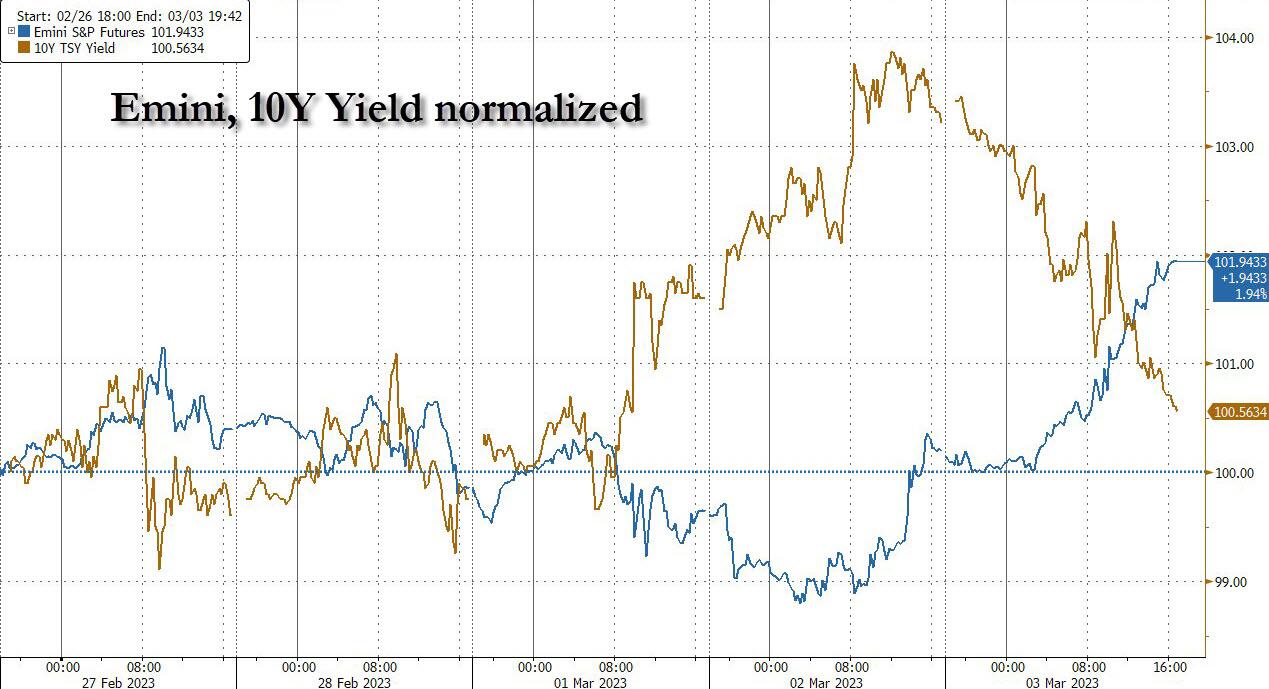
The view (presented in last week’s Surprise, Surprise and Acceptance Stage of Rate Hike Grief) that the market was getting tired of pricing in higher yields and dragging stocks down got off to an okay start, but it became pretty shaky in the middle of the week.

The 10-year Treasury ended last week at 3.95% (it got as low as 3.89% before grinding steadily higher to 4.09% on Thursday). But TGFF because it recovered and closed basically unchanged on the week. Not a win as a bond bull, but I’ll take it.

The S&P 500 followed a rate dependent path and things got a little hairy on Thursday when the S&P dipped below the 200 DMA (around 3,940). Ultimately Bostic seemed to help (along with too much bearishness). I believe that too many people were betting on more rate hikes and that caused yields to go higher (which in turn dragged stocks lower).

As we head into this week:

  • I need to do a summary of Academy’s Second Annual Geopolitical Summit West. It was very well attended and the main conversation was driven by a combination of 4 Generals and an Admiral from our Geopolitical Intelligence Group. These individuals brought a wide variety of experience and expertise to the table. Russia, China, chips, commodities, and AI all took center stage. World War v3.1 is a good piece if you haven’t read it already and the February Around the World is also germane to these discussions.
  • It is “Jobs Week”. Not as entertaining as “Shark Week”, but at least we get to do it 12 times a year. Even some Fed speakers seem to be questioning whether the jobs data has been overstated. So, I’m looking for some weaker data, which should help bonds and stocks.
  • Rate hikes. The terminal rate is up to 5.44%. There is chatter that the Fed could raise rates 50 bps at the next meeting. The market is pricing in 1.25 hikes at the meeting, so I am leaning towards 25 bps, but I am giving 50 bps a chance. That seems like a reasonable assessment to me. Fed fund futures are pricing in only a small chance of any cuts this year. The year-end rate is 5.3% versus a terminal rate of 5.44%. That seems fair because our view has been that the Fed was serious about staying “higher for longer” all along. We’ve disagreed on the pace of hikes, but have not been looking for cuts as early as the market expects. From here, a lot seems to have been priced into the bond market (and theoretically the equity market), which should help bonds and stocks this week.
  • Stocks versus bonds. The 10-year finished unchanged, but stocks finished up 2%-3% (S&P vs Nasdaq). That is decent outperformance. From a technical standpoint, not only did the S&P 500 recover to the 200 DMA, but it is also back above the 50 DMA. I suspect that a lot of shorts got added because the market was sliding and exhibiting some technical weakness and that probably leaves us with a decent short base (which is susceptible to further squeezes). Stock performance last week should help stocks into this week.
  • Credit is looking strong! CDX IG (investment grade CDS index) tightened from 77 to 71 and never went much above 77, even with stocks swooning. CDX IG tends to be more correlated with stocks than other measures of credit quality. It’s a “macro fan favorite” to trade SPX vs CDX and many of the CDX market making algos are linked to the S&P 500. All that “jargon” just means that as we dig deeper, it is even more impressive how well CDX did compared to how it seemed on the surface. Even the Bloomberg Corporate Bonds spread went from 123 to 120 (peaking at 125). That occurred even with decent new issue activity. LQD, a longer-dated IG ETF which tracks bond markets in real-time better than the indices, went from a spread of 159 to 152 (though it did get to 166 at Wednesday’s close). It is important, at least to me, that it is trading at a premium to NAV because that typically indicates that there is more strength to come. Corporate credit was very strong and is poised to do very well on any slowing of the calendar! You could argue that this is part of a trend of re-allocating money out of stocks and into bonds, but I’m going with the “credit markets often lead the way” story and they are pointing to more potential strength for equities.
  • Temperance is good. This clearly has nothing to do with our Summit. It is, however, a reflection that any sign of cost controls out of tech is being rewarded with higher stock prices. This will hurt the economy and ultimately stocks (I don’t think the lows are in), but for now I expect more announcements since they are relatively easy to make (especially given how well the stocks respond).
  • 0DTE. Some people are addicted to the MOSO function on Bloomberg. Others laughed (or questioned my sanity) for writing A Day in the Life of a 0DTE Option. Many people followed our more serious writing on the topic in Is 4,000 More than a Number and Zero Dark Thirty. That being said, I’m convinced that 0DTE is changing our market structure in ways that are difficult to assess and it can dramatically amplify moves.

Bottom Line

I see no reason to change last week’s bottom line (accept for adding more on credit).

Bonds can do well with the 10-year having a 3.7% target.

Risk assets can do well with a 4,200 target for the S&P 500 and CDX IG heading towards 60 (the semi-annual roll should be another factor that helps push spreads tighter). If the new issue calendar remains robust, credit could lag for a bit. However, if there are any signs of issuance slowing, the rally should be strong.

Despite the Summit starting on a day where San Diego was having worse weather than Chicago (the hail/30 mph winds made it an “experience”), the San Diego weather came through in the end!

Good luck this week and jobs are going to be interesting. I’m more worried that the jobs data could be bad (downward revisions, etc.) than I am that the data will be too strong, though both of those extremes would hurt my position on risk assets.

Maybe this Friday will give another reason to proclaim “Thank Goodness for Friday (TGFF)”!

Tyler Durden
Sun, 03/05/2023 – 16:30

via ZeroHedge News https://ift.tt/6NGuxrK Tyler Durden

Fauci ‘Prompted’ Scientists To Fabricate ‘Proximal Origins’ Paper Ruling Out Lab-Leak: House GOP

Fauci ‘Prompted’ Scientists To Fabricate ‘Proximal Origins’ Paper Ruling Out Lab-Leak: House GOP

Dr. Anthony Fauci – who offshored banned gain-of-function research to make bat coronaviruses more transmissible to humans – has been accused by Congressional investigators of having ‘prompted’ the fabrication of a paper by a cadre of scientists aimed at disproving the Covid-19 lab-leak theory.

On February 1, 2020, Fauci and his boss, NIH Director Dr. Francis Collins, and at least eleven other scientists participated in a conference call during which several of them warned that COVID-19 may have leaked from a lab in Wuhan, China – may have been intentionally genetically manipulated.

Three days after the call, four participants from the call (Scripps Research virologist Kristian Andersen, University of Sydney virologist Edward Holmes, Tulane School of Medicine virologist Robert Garry, University of Edinburgh virologist Andrew Rambaut and Columbia University virologist Ian Lipkin) seemingly discarded their concerns over a lab-leak, and drafted “The Proximal Origin of SARS-CoV-2,” which they sent to Fauci and Collins.

Also heavily involved (yet not credited) was Dr. Jeremy Farrar, the current Chief Scientist at the World Health Organization.

As a related aside – the Washington Examiner revealed last week that two authors of “Proximal Origin” who initially expressed concerns over a lab-leak and then changed their tune (Anderson and Garry), received millions in NIH grants under Fauci.

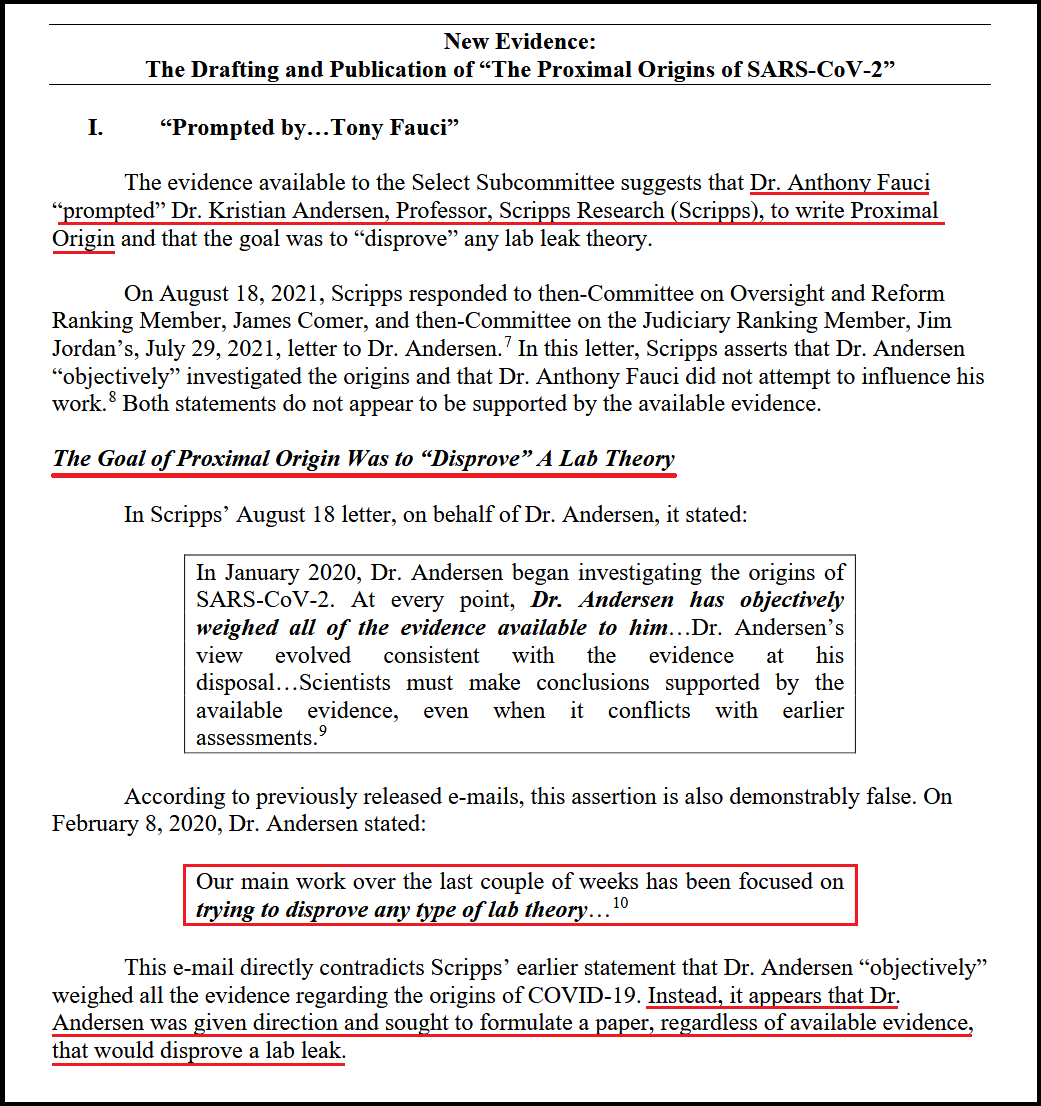
Now, according to the House Select Subcommittee on the Coronavirus Pandemic, Fauci ‘prompted’ the creation of the paper;

“New evidence released by the Select Subcommittee today suggests that Dr. Fauci “prompted” the drafting of a publication that would “disprove” the lab leak theory, the authors of this paper skewed available evidence to achieve that goal, and Dr. Jeremy Farrar went uncredited despite significant involvement.”

More:

So, for those following the bouncing ball…

The US was doing risky gain-of-function research on US soil until 2014, when the Obama administration banned it. Four months before the ban, Dr. Fauci offshored it to Wuhan, China through New York nonprofit, EcoHealth Alliance.

After Sars-CoV-2 broke out down the street from the Wuhan Institute of Virology, Fauci engaged in a massive campaign to deny the possibility of a lab-leak from the lab he funded, and instead pin the blame on a yet-to-be discovered zoonotic intermediary species.

And if you’d like to dig even deeper, this is perhaps the best, most comprehensive summary of the “proximal origin” timeline.

Read the entire letter below:

Further reading:

Tyler Durden
Sun, 03/05/2023 – 16:00

via ZeroHedge News https://ift.tt/1nYMTDH Tyler Durden

Goldman: The Big Near-Term Risk Here Is If The Fed Opens Up 50s

Goldman: The Big Near-Term Risk Here Is If The Fed Opens Up 50s

By Tony Pasquariello,Goldman head of hedge fund coverage

Coming out of a week that brought a somewhat uninspiring data set, yet interesting price action … and, headed into a very important week (payrolls, Powell and the BOJ) … What follows from here reflects the themes that come up in client conversations.

My view in one line: rates should keep chopping higher, volatility is to be owned, and don’t get carried away on non-dollar trades.

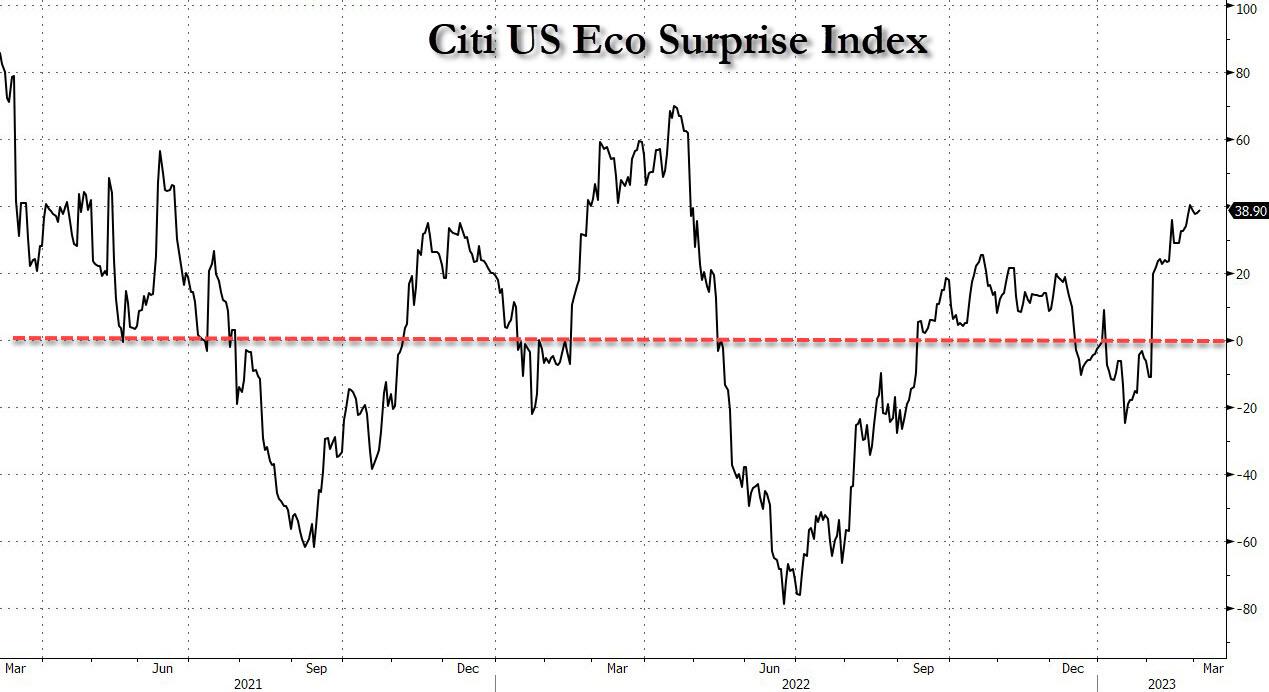
1. While not breaking news, and at the risk of serious over-reduction, I’d describe the core macro backdrop in 2023 as follows: US inflation has been stickier-than-expected; US growth has been stronger-than-expected.  To be clear, I’d stop short of describing the domestic economy as “running hot,” but the broad trend of the hard data would argue the US is generally chugging along (here I’d point you towards the recent jump in our US economic surprise index).  Taken together, this invites an obvious question on whether peak rates are, once again, still in front of us — it’s not a reach to say it, but my bet is they still are, particularly in the belly and back end.  
2. The macro ecosystem I just described is NOT necessarily what many people expected as we came into the new year.  Remember, the consensus view centered around a messy first half, and there was plenty of recession talk as recently as early January. On one hand, it feels like that tactical opportunity set of higher front end rates, a stronger dollar and a rip in NDX wasn’t broadly captured (and, if one made money in January, they likely gave it back in February, or vice-versa). On the other hand, there are plenty of folks still seemingly content in adding to lower-risk carry strategies … 6-month T-bills are kicking off 5% yields right now (which now exceeds the carry on a 60/40 portfolio) and US 2-year notes are trading at levels not seen since 2007.  For further reading: link.  

3. I received a lot of pushback last week on my comment that I think the back end of the US rates curve is vulnerable.  Here’s what I was trying to articulate (I should have just quoted Dominic Wilson directly): higher US rates along the curve is the direction of travel for now.  Why? The longer we live with a 5-handle on the terminal rate … and the US economy maintains broad momentum … the more evidence we have that the equilibrium rate is higher … so, the more likely it is the market contemplates seriously a 6-handle on the terminal rate … and therefore the harder it is to believe the Fed’s ~ 2.50% assumption for the neutral rate (which, one could argue, has anchored much of the curve).  related reading: link.

4. Following from there, here’s one exceedingly simple way to frame things,. starting from the perspective that I have seen a Fed Funds rate north of 6% in my (Gen-X) career:

  • headline CPI, May 2000 :: 3.2%
  • target Fed Funds rate, May 2000 :: 6.5%
  • headline CPI, Feb 2023 :: 6.4%
  • target Fed Funds rate, Feb 2023 :: 4.5%

5. Now, are there 444,000 distinctions between the global economy of today versus back then?  Yes.  So, one should only go so far with these compare-and-contrasts.  Nonetheless, from the cheap seats, it simply feels to me like parts of the market — and this Fed — are still too anchored to the post-GFC world.  Perhaps that’s not surprising, given that anyone who lived through the aftermath of 2008 has the experience hardwired into their DNA, but my point is this: shouldn’t we be increasingly open-minded to the argument that the post-GFC years were more an exception than a lasting new normal? 

6. In that spirit, again I find the Jason Furman content on Twitter to be, if nothing else, cause for contemplation: “the economy is very overheated … we have made little if any progress on inflation … there is little if any reason to expect a large slowdown going forward … a wide range of measures of ‘underlying’ inflation are telling the same story … supply chains unfreezing were supposed to bring down inflation, they didn’t … 6% inflation is much more likely than 2%.”   I come out somewhere in-between his angle (link) our forecasts (link), with the ongoing intuition that inflation won’t magically disappear when the labor market is this tight. Related, I also admit that I’m surprised that breakevens took so long to get going again.

7. A few additional takes on things from an informal exchange I had with Dominic Wilson in GIR:

  • i. I think Furman is overdoing it. 
  • ii. I think the big near-term risk here is if the Fed opens up 50s. If they don’t, I suspect markets can manage it.  If they do, we aren’t priced for it.  That’s overly reductive, but I think that’s the basic risk here.
  • iii. Near-term volatility pricing in lots of places looks too low given the event risk.  In under 3 weeks we get payrolls, US CPI, Powell, BOJ, ECB, Fed, BoE, China activity data and their Two Sessions policy meetings.  That data set could set us on potentially very different paths, but vol overall isn’t particularly high given this event risk in many places (Chinese equities; EUR; major DM indices) and there are pockets of vol (Topix with an 11-handle) that are low even on a long history. Options look cheap.

8. A few additional takes on the week from an informal exchange I had with Mike Cahill in GIR:

  • i. The market pricing of 31 bps for the March FOMC (that will settle at 25 or 50 bps) is not a stable equilibrium.  Rather than quiet markets in a quiet week, it’s been jumpy markets clinging to every little piece of news (e.g. I haven’t seen Fed Funds respond to a durable goods report in a while).
  • ii. The global coordination is a clear difference between now and most of 2022, when US exceptionalism ruled the day and Europe and China were mired down with wars of their own. That makes things a lot trickier in FX land, but it probably all pushes in the same direction for rates.  
  • iii. Markets spent February mostly reversing the trends and narratives in January, so we’re close to unchanged since mid-Dec / early-Jan on a number of major asset classes.  But, one key thing hasn’t changed — as of now, the Fed is still locked into the 2-3 x 25 bps hikes pace that it established at the start of February.  Maybe they will say that things are still broadly on track, but that deserves a mention if you’re making a list of things that haven’t yet corrected for January’s exuberance.
  • iv. As it relates to point #3 up top on the neutral Fed Funds rate: so we’ve had (potentially) two distinct cycles: a too-low reading from 2012-2019 (the funds rate is low but the economy is weak — the neutral must be low) and a much higher reading now (we’ve hiked a lot but the economy hasn’t slowed — neutral must be high). Maybe the real answer though is that the economy, especially post-2008 housing crash, isn’t all that responsive to the funds rate.

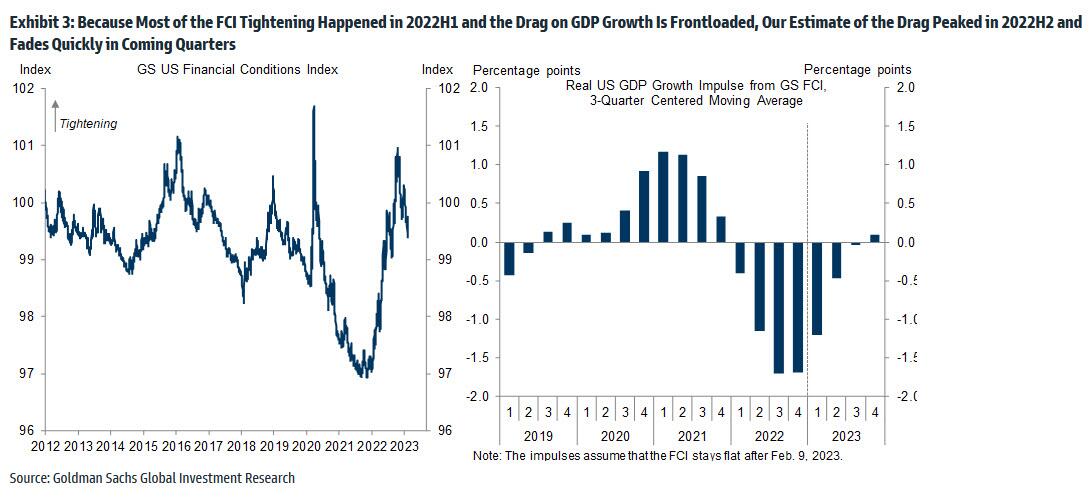
9. I still believe this is our most important, if distinct house view: “there appears to be some confusion about the phrase ‘long and variable lags,’ which actually referred to the time until the peak impact on the level of GDP, not the peak impact on the growth rate of GDP.  all prominent macroeconomic models that we are aware of agree with our FCI growth impulse model that the peak drag on GDP growth is frontloaded.  these points explain why our estimate of the drag on GDP growth from the tightening in financial conditions last year peaked in 2022H2 and fades fairly quickly in 2023.”  see exhibit 3, link.
10. Switching gears a bit: I’m normally of the view that geopolitics are exceptionally difficult variables to consistently trade, and after the initial shock and shakeout, markets usually surprise in their ability to find coping mechanisms and become inured to the nightly news. That said, it feels to me like geopolitical tension is rising significantly right now — with growing risk of miscalculation — to an extent that seems greater than what I encounter in client dialogue.  I further admit I’m not totally sure what to do with this, particularly given my bias on interest rates, but it underscores Dominic’s take on the attractiveness of vol.

11. Perhaps relevant to that last point: Europe has been the fastest horse in the global equity race this year, and it really hasn’t been close.  Alongside ongoing structural issues, the formal start of ECB QT and higher-than-expected inflation that’s lengthening the string of 50 bps rate hikes (we added another this week) I can easily see a scenario where a return of geopolitical worries knocks the momentum off course.  so, even as someone who respects the local draw of cheap relative valuation and a cyclical-heavy index, count me as skeptical that SX5E can hold this pace for the rest of the year. 

12. As noted previously, the month of January saw record hedge fund buying of Chinese equities (this via GS PB data, link). Price action since then — across the entire China complex, including credit and commodities — was disappointing (until this week’s PMI boom, anyway). Looking forward, the big flow-of-funds question is this: What will strategic real money do with the Chinese equity market?  I’m inclined to believe they will be reticent to commit until the shareholder challenges of 2021 are long past us, which makes me worry about lasting and significant sponsorship (this may explain poor price action following decent earnings).  

13. A non-sequitur: our industry devotes too much ink to the activity of the CTA community.  While admitting that I’m guilty of referencing this crowd, remember this level set: CTAs comprise about 8% of total hedge fund assets … in S&P futures, about 6% of total open interest … and — at peak activity — around 4% of daily volume (thanks to Paul Leyzerovich for the data).  I’m not saying that CTAs don’t matter — they do, and their footprint can be epically important at occasional market inflection points — I’m simply saying they get outsized attention relative to other market actors and fundamental forces.    

14. In the context of higher interest rates, this note is a high quality check-down of some clear trends that are taking shape beneath the equity hood – for example, cyclical industrials and inflation winners/losers are doing what they should: link.    

15. Finally, the annual Berkshire Hathaway letter is worth the quick read: link.  I reckon there’s a bit of wisdom in here:

thus began our journey to 2023, a bumpy road involving a combination of continuous savings by our owners (that is, by their retaining earnings), the power of compounding, our avoidance of major mistakes and — most important of all — the American Tailwind … our satisfactory results have been the product of about a dozen truly good decisions — that would be about one every five years — and a sometimes-forgotten advantage that favors long-term investors. 

More in the full note available to pro subs.
Tyler Durden
Sun, 03/05/2023 – 15:30

via ZeroHedge News https://ift.tt/n7FZGqe Tyler Durden

Court Strikes Down Biden’s ‘Ghost Gun Rule’

Court Strikes Down Biden’s ‘Ghost Gun Rule’

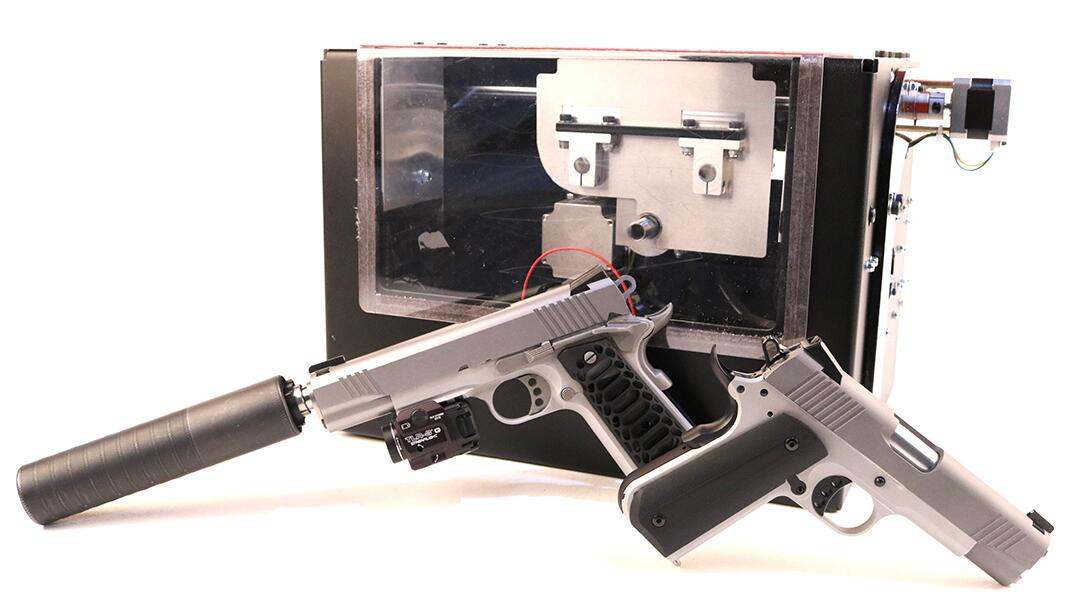
Defense Distributed’s Case in US District Court, VanDerStrok v. Garland was just granted a preliminary injunction. The lawsuit is challenging the scope of ATF’s ability to change the definition of firearms.

According to court documents, ATF did not analyze their “Frame or Receiver Rule,” also known as Biden’s Ghost Gun Rule, under the Supreme Court’s NYSRPA v. Bruen decision.

For those unaware, the Bruen decision completely changed the legal landscape of firearms law in the US by requiring statutes regulating firearms to be rooted in the text, history, and tradition of the Second Amendment.

The Judge in the case concurred with the statement and granted Defense Distributed a preliminary injunction. The case now heads to the 5th Circuit, where ATF will have to defend its position.

The 5th Circuit has recently ruled against the ATF in similar cases, including Cargill v. Garland. In that case, a panel of judges decided that ATF did not have the power to determine bump stocks were in fact machine guns contrary to ATF’s 2019 Bump Stock rule. That rule effectively banned bump stock devices by classifying them as machine guns.

The decision in VanDerStok v. Garland could have major effects on the self-manufacturing of firearms and the ATF’s rulemaking and regulatory abilities as ATF has rewritten the federal statute to enforce their rulemaking. According to the court filings, the plaintiffs argue that only congress can rewrite federal statue to make law, not regulatory agencies like ATF.

Defense Distributed had this to say:

“This is not just a blow to ATF, who pushed a new definition of ‘firearm’ at their peril. It is also a defeat for Giffords, who were the agents of this illegal attempt to expand the Gun Control Act through the APA process. Their lobbying and regulatory laundry has now spectacularly backfired.”

Defense Distributed has a history of victory against the Federal Government. In 2018, they won their case Defense Distributed v. US Dept. of State, effectively creating the current legal landscape with 3D-printed firearms and their respective CAD files shared online.

Gun rights activists should watch this case as it goes through the courts.

Tyler Durden
Sun, 03/05/2023 – 15:00

via ZeroHedge News https://ift.tt/zrFZlp9 Tyler Durden