German Transport Crippled By Inflation-Sparked “Mega Strike”

German Transport Crippled By Inflation-Sparked “Mega Strike”

The transportation network of Europe’s largest economy has ground to a halt as German unions begin a 24-hour “mega strike.” Workers flooded the streets of German cities as they demanded higher wages in response to the worst inflation in decades. The strike contributes to the ongoing social unrest in France, where millions protested last week against the government’s unpopular pension reform.

The strike, which started just after midnight on Sunday, follows increasing protests seen across Europe over recent months as rising prices decimate household budgets. 

“It is a matter of survival for many thousands of employees to get a considerable pay rise,” Frank Werneke, who heads the Verdi labor union, told told Bild am Sonntag.

In February, German consumer prices surprised analysts, rising 9.3% year-over-year, slightly accelerating from the pace observed in January. 

The striking workers are members of two of Germany’s largest unions. Verdi boasts some 2.5 million members across the public sector, including public transport such as airports. EVG comprises nearly a quarter-million workers at national rail operator Deutsche Bahn, as well as bus lines. 

… and this is also increasing recession threat. 

Verdi seeks a 10.5% across-the-board pay raise, while EVG is asking for 12%, according to BBC. German postal workers scored an 11.5% pay hike in March. 

The union strikes have the potential to alienate the general public. Even before the strikes commenced, cancellations filled airport flight monitors. At Frankfurt — Germany’s largest airport — all arriving and departing flights were cancelled for the entirety of Monday. 

Germany’s airport association estimated 380,000 air travelers will feel the effects, to say nothing of the burden on local and long-distance rail and bus users. Last week, Deutsche Bahn proactively cancelled all long-haul rail service for Monday. 

The shutdown of planes, trains, buses and subways is expected to cause higher car traffic and accompanying road delays. Even the roads won’t be fully spared, as Werneke says some highway tunnels will be affected. 

“A labor struggle that has no impact is toothless,” he added.

Central-banking-created price inflation has hit Germany particularly hard, thanks to the compounding effect of the country’s reliance on Russian gas — the supply of which has evaporated in the wake of Russia’s invasion of Ukraine and Western efforts to curtail Russian exports.

Even if peace breaks out, that supply is likely to be impaired for some time, thank to the destruction of Russia’s Nord Stream 2 gas pipeline, an act that — if investigative journalist Seymour Hersh’s detailed account is correct — was carried out by the United States government. 

Tyler Durden
Mon, 03/27/2023 – 08:35

via ZeroHedge News https://ift.tt/k8Up4ye Tyler Durden

Joan Biskupic’s Barely-There Exclusives

On Wednesday, I attended oral argument at the Supreme Court. While on the security line, I bumped into Joan Biskupic. She mentioned that she was publishing a new book, titled Nine Black Robes. I asked what it was about. She said the Roberts Court. I asked her to send me more information about the book. Biskupic then made it through the magnetometer and hustled to the press room. I went upstairs.

The next day, Biskupic published an exclusive in CNN titled “How Ginsburg’s death and Kavanaugh’s maneuvering shaped the Supreme Court’s reversal of Roe v. Wade and abortion rights.” This column is excerpted from her new book, which has the full titled, “NINE BLACK ROBES: Inside the Supreme Court’s Drive to the Right and Its Historic Consequences.” In the old days, when Biskupic published a bombshell, it went kaboom. We learned things that we couldn’t figure out on our own. Now, her exclusives are barely there. At most, she confirms things that are fairly obvious. Or she tells us things that are sort of novel, but do not get to the heart of the Court’s decision-making process.

Let’s walk through the new column. First, Biskupic recounts that shortly after RBG’s death, the Chief’s office moved all of her belongings to the theater on the Supreme Court’s ground floor:

Within days of Justice Ruth Bader Ginsburg’s memorial service in late September 2020, boxes of her files and other office possessions were moved down to a dark, windowless theater on the Supreme Court’s ground floor, where – before the ongoing pandemic – tourists could watch a film about court operations. Grieving aides to the justice who’d served 27 years and become a cultural icon known as the “Notorious RBG” sorted through the chambers’ contents there. The abrupt mandate from Chief Justice John Roberts’ administrative team to clear out Ginsburg’s office and make way for the next justice broke from the common practice of allowing staff sufficient time to move and providing a new justice with temporary quarters if needed while permanent chambers were readied. But the confirmation of then-President Donald Trump’s chosen successor, Indiana-based US appeals court Judge Amy Coney Barrett, was as much a fait accompli at the court as in the political sphere.

In September 2020, the Supreme Court building was a full house. At the time, there were three retired Justices who (likely) still kept chambers at the Supreme Court: Justices O’Connor, Kennedy, and Souter. (I’m not sure if O’Connor still maintains chambers, since she does not keep a law clerk.) Justice Stevens had died in April 2020. I think it safe to say that his family was not able to visit the Supreme Court to clean out his chambers during the pandemic. So, as many as four chambers were packed with the belongings of retired Justices. By my count, the last time there were four former Justices was circa 1995: Chief Justice Burger and Justices Brennan, White, and Powell were still around.

Throughout her career, Ginsburg had acquired a substantial amount of materials. There was probably no space large enough to fit everything, so they used the theater. (Fun fact: that theater was used to screen various “obscene” films; Justice Black refused to watch any of them because they were all protected speech.) Plus there was a pandemic, so staffing was short. And the Chief knew that a Trump appointee would arrive very shortly. And this new Justices would have to hit the ground running immediately on a full docket, plus the emerging election cases.

Biskupic tries to spin this administrative decision as a metaphor for Dobbs:

That behind-the-scenes drama and internal tensions over cases that followed, accelerated by all three Trump appointees, led to a new level of distrust and discord among the justices that lingers today.  Almost as abruptly as Ginsburg’s possessions were cast out, the court’s 6-3 conservative majority began ravaging the vestiges of Ginsburg’s work on women’s rights and access to abortion.

The metaphor falls flat. Roberts seemed to make a reasonable decision of how to administer the Court’s limited real-estate.

Next, Biskupic repeats the well-worn claim that Justice Kavanaugh tries to make himself appear “conciliatory”:

The abortion controversy also surfaced a pattern of double-signaling to colleagues and people beyond the court by Justice Brett Kavanaugh, Trump’s second appointee. Kavanaugh has long been concerned with appearances. He remains torn between his allegiance to conservative backers from his 2018 nomination fight and his desire for acceptance among the legal elites who shunned him. Since Kavanaugh joined the bench, a documented pattern reflects the lengths that he goes to in order to appear conciliatory.

I would state the issue a bit differently. I don’t think Kavanaugh desires acceptance from legal elites. He probably knows that ship has sailed. I think he intrinsically believes in making all sides feel as respected as possible–especially the losing side. Kavanaugh’s saccharine jurisprudence infuriates me. But this is who he is. And he behaved this way long before his Supreme Court confirmation. Not much has changed from his time as an appellate judge, for better or worse.

Biskupic does bring forth one new piece of evidence to back up this “conciliatory” claim:

A previously unreported example occurred in 2019, when Kavanaugh joined a dissent denigrating a US district judge for rejecting the Trump administration’s attempt to add a citizenship question to the 2020 census form. A Supreme Court source revealed that Kavanaugh then quietly sent the judge a personal note saying he actually respected him. . . . The later Kavanaugh note to Furman showed his efforts to appear conciliatory: He joined an opinion challenging Furman’s integrity but then wrote the judge a note that pleaded the opposite.

Here, Biskupic is writing about Department of Commerce v. New York. Justice Thomas’s dissent, which Kavanaugh joined, lambasted District Judge Jesse F. Furman’s rulings.

The District Court’s lengthy opinion pointed to other facts that, in its view, supported a finding of pretext. 351 F. Supp. 3d, at 567–572, 660–664 (discussing the statements, e-mails, acts, and omissions of numerous people involved in the process). I do not deny that a judge pre-disposed to distrust the Secretary or the administration could arrange those facts on a corkboard and—with a jar of pins and a spool of string—create an eye-catching con-spiracy web. Cf. id., at 662 (inferring “from the various ways in which [the Secretary] and his aides acted like people with something to hide that they did have some-thing to hide”). 

At the time, I immediately thought of the Always Sunny in Philadelphia meme:

Back to Biskupic. Kavanaugh sent a letter to Judge Furman saying he respected him. Big deal! This may come as a surprise, but judges do privately correspond with each other. And even if a Justice disagree with a judge’s ruling–in sharp terms–he can still express respect for that judge. Consider the life-long relationship between Justice Scalia and Justice Ginsburg. No matter how sharp Scalia’s rhetoric was in opinions, he always expressed admiration for Ginsburg in public speeches as well as in private correspondences. Moreover, Kavanaugh is a nice guy. Believe it or not, he and I actually used to get along quite well. He even volunteered to judge the high school moot court competition I run. From time to time, Kavanaugh would send me gracious notes about this or that. Sending this letter to Furman is entirely in keeping with who Kavanaugh is as a person. Another non-story, spun up to make a broader point.

The closest thing we have to a scoop concerns the fetal heartbeat case. Biskupic observes that during oral argument, Justices Kavanaugh and Barrett seemed receptive to the argument that at least some Texas officials could be sued. (I responded to that position, vigorously, here.)

Kavanaugh particularly questioned whether, if states could block abortion rights, they could do the same for firearm rights and free speech. Barrett sounded troubled that the Texas law was written in a way that would deny any challenger a “full constitutional defense.” Their remarks were widely interpreted by outside observers to suggest they were ready to rule against Texas and to allow abortion clinics to challenge the law preventing abortions after about six weeks. More importantly, some of the justices who believed that law blatantly unconstitutional interpreted their colleagues’ comments that way, too, and believed there would be a turning point in the Texas case. But when the votes were cast in private, the justices on the left realized they had been misled by what they had heard in public.

I don’t know what to make of this sourcing. Biskupic seems to be reflecting on what some of the Justices “believed.” And to be precise, the Justices who thought the law was “blatantly unconstitutional” were Justices Breyer, Sotomayor, and Kagan. So tracking down the source of this information should be straightforward. But there is no sourcing! No “Supreme Court source” or “sources close to the Court” or anything. We have no basis to support this claim. And the second sentence seems implausible. Would Justice Breyer, Sotomayor, or Kagan really claim to be “misled” based on what questions a Justice asks during oral argument? Did they not live through the Obamacare case? Justices can change their minds. This entire claim strikes me as too thin to give much attention.

Next, Biskupic reflects on how the leak “froze” the votes in place:

The leak also had the effect of hindering internal debate among the justices in the Dobbs case. Justices later privately revealed that public disclosure of the 5-4 split and the tone of the opinion outright rejecting Roe v. Wade effectively froze the votes. That eliminated the opportunity for compromise, as can happen with hard-fought cases in the final weeks of negotiation.

I speculated that this was a likely consequence of the leak. We don’t know who the Justices (plural) “privately revealed” this fact to, but Biskupic received such hearsay, indirectly. And nothing here is particularly revealing.

Is there drama and tension inside the Court? Who knows. Nothing in this column backs up those claims. Gone are the days that Biskupic told us things we didn’t already know. I pre-ordered a copy of the book on Kindle. I’ll let you know if there is anything newsworthy.

The post Joan Biskupic's Barely-There Exclusives appeared first on Reason.com.

from Latest https://ift.tt/kFJy3ZE
via IFTTT

Twitter Source Code Leaked Online, Musk Hunts Perpetrator; Values Firm At $20 Billion

Twitter Source Code Leaked Online, Musk Hunts Perpetrator; Values Firm At $20 Billion

Authored by Tom Ozimek via The Epoch Times,

Parts of Twitter’s source code have been leaked and the social media platform owned by billionaire Elon Musk is seeking information on the person responsible, according to legal filings.

The March 24 document filed with the U.S. District Court of the Northern District of California, indicates that “various excerpts” of Twitter’s source code, which is used to run the company online, were posted on Github by a user named “FreeSpeechEnthusiast.”

Twitter said the leak included the “[p]roprietary source code for Twitter’s platform and internal tools.”

Github, which is a Microsoft-owned platform for sharing code for software development, said that it had taken down the code at Twitter’s request.

Twitter has asked for a subpoena to force Github to disclose who was behind the leak.

The Epoch Times has reached out to Github and Twitter for comment but received no immediate response.

“GitHub does not generally comment on decisions to remove content,” a Github spokesperson told the BBC.

“However, in the interest of transparency, we share every DMCA [Digital Millennium Copyright Act] takedown request publicly.”

The DMCA is a law dating back to 1998 that is aimed at protecting copyrighted material on the internet.

Tesla CEO Elon Musk leaves the Phillip Burton Federal Building in San Francisco, Calif., on Jan. 24, 2023. (Justin Sullivan/Getty Images)

Musk to Reveal Recommendation Algorithms

The leak comes after Twitter CEO Elon Musk said he would make public the social media giant’s algorithms that are used to recommend content.

“Twitter will open source all code used to recommend tweets on March 31st,” Musk said in a March 17 post.

The move to disclose the algorithms is unprecedented, as they’re usually closely guarded trade secrets.

Social media algorithms can connect users with various people or posts or other relevant content.

Critics have warned that these algorithms can be used to promote certain ideologies or viewpoints over others.

Musk’s decision to release Twitter’s recommendation algorithm follows a Senate Commerce, Science, and Transportation Committee probe into the issue led by Sen. Ted Cruz (R-Texas).

Cruz has warned that recommendation algorithms can impact political views and outcomes.

“In a world where seven out of ten Americans receive their political news from social media, the manner in which content is filtered through recommendation systems has an undeniable effect on what Americans see, think, and ultimately believe,” Cruz said in a recent letter to tech executives.

The Republican lawmaker said that such algorithms can fuel social media addiction and boost exposure to harmful content, or that they can be redirected for partisan ends.

During the last Congress, the Senate heard whistleblower testimony from a former Meta employee who revealed how social media can guide users and young children to potentially harmful or biased content.

In his announcement, Musk did not state whether the move was in response to Cruz’s investigation.

Musk Values Twitter stock at $20 Billion

Twitter employees will be granted stock awards based on ~$20B valuation which is less than half of the $44B price that he acquired the company for in 2022.

Seeking Alpha reports that the awards will start to vest after six months and will vest over four years; company plans to offer a liquidity event roughly a year from now, in which employees can cash out some of their equity.

Published reports cited a mail by Tesla CEO Elon Musk which said, “I see a clear, but difficult, path to a >$250B valuation,” meaning stock granted now would be worth 10 times more.

Mr. Musk also said in the email that Twitter is being reshaped so rapidly that the company can be thought of as an inverse startup. He said radical changes have been necessary in part to ensure that Twitter didn’t go bankrupt.

Tyler Durden
Mon, 03/27/2023 – 08:17

via ZeroHedge News https://ift.tt/HVFWgZ4 Tyler Durden

Futures, Yields And Bank Stocks Storm Higher As Bank Crisis Fears Recede

Futures, Yields And Bank Stocks Storm Higher As Bank Crisis Fears Recede

US equity index futures stormed higher to start the week as concerns about the bank crisis faded – if only for the time being –  amid stronger risk appetite boosted by bank sector M&A, higher bond yields, a weaker USD and the prospect for further support from US authorities for the troubled regional banking sector. The stock of Friday’s bank freakout – Deutsche Bank – rose and its CDS tightened, while in the US First Citizens Bank agreed to buy Silicon Valley Bank amid news that US authorities are considering expanding an emergency lending facility for banks in ways that would give First Republic Bank more time to shore up its balance sheet, BBG reported. Still, fears of a US slowdown damped investor sentiment after Minneapolis Fed President Neel Kashkari said recent bank turmoil has increased the risk of a US recession.

S&P 500 futures rose 0.7% to 4,030 at 7:45am ET while Nasdaq 100 futures gained 0.4%. The tech-heavy benchmark has rallied nearly 20% from its December lows as investors rotate into technology and shift out of banks, as expectations for rate cuts increase. The risk-on tone is evident elsewhere with bonds, gold and the Japanese yen all in the red.  Oil rose while Bitcoin rose for a second day in a row.

In premarket trading, First Republic Bank led a rally across regional lenders in US premarket trading as sentiment improves following a Bloomberg report that US authorities are considering more support for banks. First Republic shares jump 27%, with peers Western Alliance +5.2%, PacWest Bancorp +9.1%. KeyCorp shares rise 7.4% after the lender is upgraded to buy from neutral at Citi along with peer M&T Bank (MTB US). Citi analysts stress-test regional banks following SVB’s demise, saying that the risk-reward for the pair looks “very appealing.” Here are some other notable movers:

  • US-listed Chinese stocks fall in premarket trading, with Baidu shedding as much as 2.9% before paring decline as the search engine operator postponed a media briefing related to its closely watched AI chatbot.
  • Shares of Alibaba erase an earlier loss of 1.8% to rise as much as 5.5% after Jack Ma visited Yungu School in China on Monday and talked with staff on topics including ChatGPT.
  • It’s unclear how long Ma plans to stay in China, the rest of his agenda in the country or how long he had been planning the Hangzhou visit
  • Corning stock gains 2.4% on low volumes after it was raised to buy from hold at Deutsche Bank, with the broker saying the telecoms and electronics equipment maker is “turning a corner.”
  • Keep an eye on Frontier Communications (FYBR US) as the stock was cut to underweight from equal-weight at Morgan Stanley, which notes the telecommunication company’s premium valuation to peers and the risk to its fiber growth targets.
  • Wingstop (WING US) is cut to underperform from hold at Jefferies, with the broker giving the chicken wing restaurant operator its only sell-equivalent rating on skepticism that the stock offers any further upside.
  • Piper Sandler upgrades two US asset managers, Virtus Investment Partners (VRTS US) and Victory Capital Holdings (VCTR US), to overweight from neutral and underweight, respectively, with the broker saying the stocks are undervalued versus peers.

Among the most recent developments for the banking sector, First Citizens BancShares agreed to buy Silicon Valley Bank which was seized by regulators following a run on the lender. Meanwhile, Bloomberg reported US authorities are considering expanding an emergency lending facility for banks in ways that would give First Republic Bank more time to shore up its balance sheet. Its shares soared over 25% in premarket trading.

Investors continue to monitor turmoil among US regional banks, while growing increasingly concerned over the possibility of a recession. Even the Fed’s reformed permahawk, Minneapolis Fed President Neel Kashkari, admitted that risk has increased due to a credit crunch from the bank crisis, but said that it was too soon to judge what it means for the economy and monetary policy.

“We are in the camp that the economy is set to slow. We’ve been there since the start of the year and some of the pieces are falling into place,” said Manpreet Gill, Standard Chartered’s chief investment officer for Africa, the Middle East and Europe. “Clearly now is the tail end of what’s been a very rapid and sizable Fed hiking cycle, and naturally one would think that will lead to conditions that slow the economy,” he told Bloomberg Television.

“Volatility still remains high amid banking sector stress and the implications for the Fed and dollar rates,” said Marvin Chen, a strategist at Bloomberg Intelligence.

Meanwhile, Morgan Stanley’s undaunted permabear Michael Wilson said turmoil in the banking sector has left earnings guidance looking too high, putting sanguine stock markets at risk of sharp declines. The strategist said that’s partly due to the divergence in stock and bond market action this month.

European stocks rebounded from Friday’s rout, led by Deutsche Bank: the German lender is up 4% as credit defaults swaps retreat, while the Stoxx 600 gains 1.0%. While banks recoup some recent losses, healthcare stocks lead gains as Novartis releases positive new drug results. Here are some of the biggest movers on Monday:

  • Deutsche Bank shares jump as much as 7.1%, rebounding from a selloff on Friday, as analysts reassure that the German lender’s financial health is sound
  • Novartis gains as much as 5.9% after releasing positive results from its highly awaited Natalee breast cancer trial using the drug Kisqali
  • Orange rises as much as 4.1% after being upgraded to overweight at Morgan Stanley on the “compelling” free cash flow growth and yields the French telecoms group offers
  • BP rises as much as 2.9%, Shell 2.1%, and Harbour Energy 5.1% after reports that the UK government may offer oil-and-gas companies relief from a windfall tax
  • Sanofi gains as much as 2.7% after Barclays upgraded the pharmaceuticals firm to overweight, citing its improving earnings trajectory
  • Pharming Group rises as much as 38% after announcing Friday it received FDA approval of its Joenja drug for the treatment of a rare immunodeficiency disease
  • TIM surges as much as 31% to highest since Aug. 2007, after Wurth Group offered a 34% premium in a tender offer for the Polish electrical equipment distributor
  • DNO falls as much as 11.6%, Gulf Keystone 25% and Genel 16%, after an arbitration ruling in favor of Iraq against Turkey for transporting Kurdish oil without prior approval from Baghdad
  • IDS shares fall as much as 5%, the most since January, as JPMorgan cuts its PT on the Royal Mail parent as a deal with unions to avoid further strike action proves elusive

Earlier in the session, Asian stocks fell for a second day as traders continued to monitor the health of the global financial sector, while a slew of lackluster earnings dragged down Chinese technology firms. The MSCI Asia Pacific Index dropped as much as 0.6%, with Hong Kong leading the slump. A gauge of Chinese tech shares slid 2.8% after Meituan and Xiaomi’s earnings disappointed the market. Alibaba pared losses after founder Jack Ma returned to China. Onshore Chinese stocks also fell after official data showed profits at industrial firms plunged in the first two months of the year as factories had yet to fully recover from a Covid-induced slump. Shares in Japan and Australia rose. Investors took profits after Asia’s equity benchmark completed a 1.4% weekly advance amid US and European efforts to stabilize the banking sector. US authorities are considering expanding an emergency lending facility for banks in ways that would give First Republic Bank more time to shore up its balance sheet, according to people with knowledge of the situation. Still, fears of a US slowdown damped investor sentiment after Federal Reserve Bank of Minneapolis President Neel Kashkari said recent bank turmoil has increased the risk of a US recession. “Volatility still remains high amid banking sector stress and the implications for the Fed and dollar rates,” said Marvin Chen, a strategist at Bloomberg Intelligence.

Japanese stocks rose as investors weighed the risk of a US recession and the impact that could have on interest rates. The Topix rose 0.3% to close at 1,961.84, while the Nikkei advanced 0.3% to 27,476.87. Hitachi contributed the most to the Topix gain, increasing 2.1%. Out of 2,159 stocks in the index, 1,462 rose and 590 fell, while 107 were unchanged. Federal Reserve Bank of Minneapolis President Neel Kashkari said recent bank turmoil has increased the risk of a US recession but that it was too soon to judge what it means for the economy and monetary policy. “The Japanese market has calmed down as the uncertainty surrounding US financial institutions receded,” said Hitoshi Asaoka, strategist at Asset Management One. “Some traders are buying for the dividends, but market movement is limited amid strong yen and lingering worries over financials.”

Key stock gauges in India ended higher on Monday, outperforming most of their emerging market peers in Asia, as pharmaceutical and consumer goods companies advanced. The S&P BSE Sensex ended 0.2% higher to close at 57,653.86 in Mumbai, after rising as much as 0.9% following a strong open for European equities. The NSE Nifty 50 Index also advanced by a similar amount to finish at 16,985.70. The MSCI Asia-Pacific index fell 0.7%, while the MSCI Emerging Market Index declined 0.8%.  The Indian equity market surrendered early gains as lingering uncertainties around the global banking system, the outlook for interest rates in developed economies and the rising threat of a US recession weighed on risk appetite. Mid- and small-sized companies saw heavy losses, with the Nifty Midcap 100 and Nifty Smallcap 100 gauges ending a volatile Monday, falling 0.5% and 1.6% respectively. Reliance Industries contributed the most to the Sensex’s gains, increasing 1.5%. Out of 30 shares in the index, 16 rose, while 14 fell

Australian stocks rose: the S&P/ASX 200 index edged 0.1% higher to close at 6,962.00, boosted by health care and real estate shares. Markets across Asia fluctuated in cautious trading as investors weighed the risk of recession and its impact on interest rates. Shares of Australian energy companies declined as the government is expected to win approval for its flagship climate policy after agreeing to rules that could limit development of new coal and gas projects. In New Zealand, the S&P/NZX 50 index rose 0.3% to 11,612.86.

In FX, the dollar rose 0.5% versus the yen, while the Bloomberg Dollar Spot Index was little changed after falling 0.8% last week. Investors focus on speeches by several Fed officials this week, which could provide more clues on the US interest rate trajectory.

“The resurgence in banking stress in Europe forces some softening of our bearish dollar view for the moment, at least until we can get more clarity on the stability of the EU banking sector,” ING strategists write, though they still see policy differencials between the Fed and the European Central Bank pointing to a higher EUR/USD. “We continue to see the Fed as mostly carrying downside risks for the greenback, as the lack of clear communication leaves the door open for dovish speculation as the US regional crisis remains unresolved and is keeping the monetary policy outlook in the US in stark contrast (for now) to that of most European central banks.”

In rates, treasuries extended losses into early US session with front-end leading the move lower, leaving 2-year yields cheaper by 16bp on the day, pulling away from a six-month low around 3.55% hit on Friday and paced by bear-flattening in core European rates. US 10-year yield around 3.47%, cheaper by ~10bp vs Friday’s close, with bunds and gilts trading 1.5bp and 3bp cheaper in the sector; front-end-led losses flatten 2s10s, 5s30s spreads by 8bp and 7bp on the day. Treasury auction cycle beings with 2-year note sale at 1pm New York time and 5- and 7-year sales Tuesday and Wednesday. WI 2-year yield around 3.88% is ~80bp richer than February’s stop-out and below auction stops since August.

In commodities, crude futures advance with WTI up 1.3% to trade back above $70. TotalEnergies said 33% of operational staff at its French refineries and depots were on strike on Sunday, according to a Co. spokesperson cited by Reuters. Spot gold is softer given the constructive European tone and as the USD retains an underlying bid with the DXY above 103.00, action which has pressured the yellow metal to a $1965/oz intraday low.

It’s a quiet start to the week, with just the March Dallas Fed manufacturing activity at 10:30am on Monday’s calendar; the US will sell $57 billion of 13-week and $48 billion of 26-week bills at 11:30 a.m., and $42 billion of two-year notes at 1 p.m. Fed Governor Philip Jefferson is due to speak at 5 p.m.; This week we get consumer confidence, final 4Q GDP revision, personal income and spending (with PCE deflators) and University of Michigan sentiment.

Market Snapshot

  • S&P 500 futures up 0.8% to 4,031.00
  • STOXX Europe 600 up 0.9% to 444.19
  • MXAP down 0.5% to 158.85
  • MXAPJ down 0.8% to 510.29
  • Nikkei up 0.3% to 27,476.87
  • Topix up 0.3% to 1,961.84
  • Hang Seng Index down 1.7% to 19,567.69
  • Shanghai Composite down 0.4% to 3,251.40
  • Sensex up 0.6% to 57,847.93
  • Australia S&P/ASX 200 little changed at 6,961.98
  • Kospi down 0.2% to 2,409.22
  • German 10Y yield little changed at 2.19%
  • Euro up 0.1% to $1.0771
  • Brent Futures up 0.5% to $75.33/bbl
  • Gold spot down 0.4% to $1,970.07
  • US Dollar Index little changed at 103.03

Top Overnight News

  • First Citizens snapped up SVB in a deal that includes about $72 billion of assets at a discount of $16.5 billion, the FDIC said. It’ll absorb all SVB loans and deposits. The estimated cost of the collapse to the Deposit Insurance Fund is about $20 billion. The FDIC will receive equity appreciation rights in First Citizens worth as much as $500 million and hold on to about $90 billion in assets. BBG
  • Jack Ma, Alibaba Group Holding Ltd.’s billionaire co-founder, has returned to mainland China after spending roughly a year overseas.  The whereabouts of Mr. Ma—who was known for his flamboyant style until late 2020 when he largely disappeared from the public eye following brushes with Chinese regulators—have been the subject of intense speculation. WSJ
  • The ECB is determined to continue fighting inflation while also standing ready to respond to any potential stress in markets, according to Bundesbank President Joachim Nagel. The latest turmoil around banks has highlighted the importance of financial stability, Nagel said in a speech in Karlsruhe, Germany. He called Europe’s banking system strong, saying it can lean on the ECB and national central banks for support if needed. BBG
  • The chair of Saudi National Bank, Ammar Alkhudairy, has resigned citing personal reasons after the kingdom’s largest lender was thrust into the limelight amid turmoil at Credit Suisse. The chief executive, Saeed Al Ghamdi, will replace Alkhudairy as chair, the bank said on Monday. Talal Al-Khereiji becomes acting chief executive. FT
  • Israeli politics descended into turmoil, with Benjamin Netanyahu’s hardline government facing a spiraling backlash to its bitterly contested plans to overhaul the judiciary, and members of his coalition deeply divided on whether or not to back down. FT
  • Federal Reserve Bank of Minneapolis President Neel Kashkari said recent bank turmoil has increased the risk of a US recession but that it was too soon to judge what it means for the economy and monetary policy. BBG
  • First Republic led a premarket rally across regional lenders after US officials were said to consider more support for banks. Authorities would consider expanding an emergency lending facility that would give the bank more time to prop up its balance sheet, though watchdogs say it’s stable. BBG
  • Elon Musk offered Twitter employees new equity grants valuing the company at $20 billion, The Information reported, less than half the $44 billion Musk paid. The firm’s proprietary source code were leaked online on GitHub until last week. It’s now hunting for the perpetrator. BBG
  • The New York grand jury hearing testimony about Donald Trump’s role in paying hush money to a porn star heads into a new week amid public anticipation about a potential indictment of the former president, who has escalated his rhetorical attacks on prosecutors. The panel is expected to reconvene Monday, according to people familiar with the matter, after it last heard testimony in the Trump investigation a week ago. WSJ
  • The European Central Bank is determined to continue fighting inflation while also standing ready to respond to any potential stress in markets, according to Bundesbank President Joachim Nagel: BBG
  • China’s central government is borrowing at the fastest pace on record to finance more spending and to ease the debt burden in provinces: BBG
  • China’s economic recovery was mixed in March with business confidence and the housing market improving but the global outlook darkening amid heightened financial market turmoil: BBG

A more detailed look at global markets courtesy of Newsquawk

Asia-Pac stocks were mixed in mostly rangebound trade as markets took a breather from recent banking sector jitters and with risk appetite also restricted amid lingering geopolitical tensions and heading into quarter-end. ASX 200 eked slight gains with the index supported by strength in utilities and real estate although the upside was capped by weakness in the commodity-related sectors. Nikkei 225 reclaimed the 27,500 level but with further upside limited after firmer than expected Services PPI data from Japan and a fresh round of missile launches by North Korea. Hang Seng and Shanghai Comp. were pressured despite the PBoC’s RRR cut taking effect today, as the attention turned to earnings releases with energy leading the downturn in Hong Kong following a decline in Sinopec’s profits and certain tech stocks also weakened after Xiaomi’s quarterly smartphone shipments fell 18.6% Q/Q, while the latest data showed that February YTD Industrial Profits declined by 22.9% Y/Y.

Top Asian News

  • Cinese Foreign Minister Qin Gang said China’s attitude towards developing a healthy, stable and constructive Sino-US relationship remains unchanged, while he hopes US and China can work together to promote bilateral relations to overcome difficulties and return to healthy and stable developments. Furthermore, he welcomes US companies to continue expanding investments in China and said China is willing to provide a better business environment for companies across the world including the US, according to Reuters.
  • Chinese Vice Premier Ding Xuexiang said Premier Li will meet with key foreign guests attending the China Development Forum and that major economic indicators have improved following the smooth transition away from epidemic control. Ding said opening up to the outside world is an indispensable major national policy and China will actively expand imports of high-quality goods and services, while he added China will further reduce tariffs, continue to expand market access and attract foreign investment, according to Reuters.
  • Chinese Finance Minister Liu Kun said will intensify the implementation of proactive fiscal policy and fiscal expenditure, while China will introduce increased tax reduction measures to support market entities and will improve residents’ income through multiple channels. Furthermore, China is to continue to give priority to scientific and technological innovation, as well as increase investment, according to Reuters.
  • Chinese Commerce Minister said China’s import and export volumes are expected to continue on a growth trajectory and that they will focus on government procurement, intellectual property rights and serving foreign investors, according to Reuters.
  • China NDRC head Zheng Shanjie said China’s economic development faces challenges and they are implementing effective solutions. Zheng said China’s economy is resilient and dynamic with long-term fundamentals unchanged, while they will strengthen coordination of fiscal, monetary, employment, industrial, consumption and other policies, according to Reuters.
  • China Communist Party senior official Han Wenxiu said China is confident of reaching the annual economic growth target of around 5% and there is currently no apparent inflation nor deflation in China, while he added there is a relatively large room to manoeuvre monetary policy and China will respond strongly to negative population growth and population ageing, according to Reuters.
  • IMF’s Georgieva said risks to financial stability have increased and vigilance is still needed, while the IMF is paying close attention to vulnerable countries, especially low-income nations with high-debt growth. Georgieva also stated that China’s economy is seeing a strong rebound fuelled by private consumption and that reforms to boost productivity could lift China’s GDP by up to 2.5% by 2027 and by 18% by 2037.
  • Honduras said it is breaking diplomatic relations with Taiwan and it established diplomatic ties with China, while China and Honduras agreed to develop relations on the basis of principles of mutual respect for sovereignty and territorial integrity, according to state media.
  • Taiwan’s Foreign Minister confirmed the cutting of ties with Honduras and is withdrawing its embassy, while Taiwan’s Foreign Minister noted that Honduras demanded a larger amount of money and reiterated that China does not follow through on its promises, according to Reuters.
  • US State Department said that while Honduras’s action to sever ties with Taiwan is a sovereign decision, it is important to note that China often makes promises that remain unfulfilled and the US strongly encourages all countries to expand engagement with Taiwan, according to Reuters.

European bourses are in the green across the board, Euro Stoxx 50 +0.9%, with banking names outperforming initially after the concerns at the tail-end of last week. Specifically, SX7P +1.0% with Deutsche Bank among the best performers as the weekend was devoid of any significantly negative developments with updates generally limited.
Stateside, futures are more tentative with the ES +0.4% firmer and back above 4k after it incrementally lost the figure in the European morning. FRC +24% is bolstered in the pre-market amid reports that the US is considering giving them more  time, with banks generally under consideration for additional support from the US. China Commerce Ministries Wentao met with Apple (AAPL) CEO Cook; exchanged views on Cos progress in the region, stabilisation of industry and supply chains. Salesforce (CRM) and Elliott Investment Management issue joint statement; Elliott will not proceed with director nominations.

Top European News

  • ECB’s de Guindos said the question now is how the events in the US banking system and Credit Suisse (CSGN SW) will impact the eurozone economy and need to assess whether they will give rise to an additional tightening of financing conditions which could perhaps feed through to the economy in terms of lower growth and lower inflation, according to Business Post.
  • ECB’s de Cos says that decisions must be prudent amid bank uncertainty; tensions in financial markets have generated a further tightening of financial conditions, affecting the outlook for economic activity and inflation.
  • ECB’s Simkus says that financial stability is an important factor, bank liquidity and capitalisation are high in the Euro Area.
  • ECB’s Nagel says QT should be accelerated from the summer and inflation is still too high. Adds, recent financial developments make it even more important that decisions are taken meeting-by-meeting.
  • S&P affirmed Germany at AAA; Outlook Stable, while Fitch affirmed Malta at A+; Outlook Stable.

FX

  • DXY solid around 103.000 axis as firm rebound in US Treasury yields offset loss of safety premium.
  • Franc outperforms amidst further relief rally from CS collapse as USD/CHF eyes 0.9150 and EUR/CHF trades mainly under 0.9900.
  • Sterling firm on the 1.2200 handle vs Dollar ahead of latest comments from BoE Governor Bailey.
  • Yen reverses through 131.00 from circa 130.50 at best as risk appetite improves and UST/JGB spreads widen.
  • PBoC set USD/CNY mid-point at 6.8714 vs exp. 6.8703 (prev. 6.8374)

Fixed Income


  • Core benchmarks are pressured given the modestly constructive risk tone in European trade, Bund dipping further below 137.00
  • Specifics have been slim with ECB speak and Ifo not markedly moving the dial with the risk tone dictating action instead; as such, EGBs are at the lower-end of circa. 150 tick parameters.
  • Gilts are in-fitting and incrementally softer as they seemingly lead the latest move lower ahead of BoE’s Bailey at the LSE.
  • Stateside, USTs are in-fitting with focus still on the banking sector and officials response to it ahead of US 2yr supply and Fed’s Jefferson.
  • Japan’s 10yr bond has not traded all day, for the first time in one month, via Bloomberg.

Commodities

  • Commodities are diverging modestly with overall action fairly tentative as the complex and markets more broadly await fresh catalysts, particularly on the banking front.
  • WTI and Brent are firmer by circa. USD 0.30/bbl but reside towards the lower end of USD 1/bbl range parameters which are well within Friday’s and by extension recent ranges.
  • Spot gold is softer given the constructive European tone and as the USD retains an underlying bid with the DXY above 103.00, action which has pressured the yellow metal to a USD 1965/oz intraday low.
  • Saudi Aramco CEO affirmed the Co.’s support for China’s long-term energy security and it was separately reported that Aramco JV Hapco is to commence construction of a major refinery and petrochemical complex in China with construction to begin in Q2 and the complex is expected to be fully operational by 2026, according to Reuters.
  • Iraq won an arbitration case against Turkey regarding Kurdish oil exports, while Turkey informed Iraq it will respect the arbitration ruling and halted Kurdish crude exports, according to officials cited by Reuters.
  • TotalEnergies (TTE FP) said 33% of operational staff at its French refineries and depots were on strike on Sunday, according to a Co. spokesperson cited by Reuters.
  • A major incident was declared due to an oil leak from the Wytch Farm Oil Field in Dorset.

Geopolitics

  • Israeli PM Netanyahu fired the defence minister for not supporting the judicial reform plan which prompted protests in Tel Aviv, while it was later reported that all universities across Israel will declare a strike from Monday and that Israeli police used a water cannon to push back protestors who broke barricades near PM Netanyahu’s house in Jerusalem. Furthermore, the IDF raised the alert level amid the unrest.
  • Israeli broadcaster says that PM Netanyahu has told coalition heads that he will pause the judicial overhaul. *Following protest from coalition members on this and the announcement/commencement of widespread of
  • Russian President Putin said Moscow will station tactical nuclear weapons in Belarus and has moved 10 aircraft to Belarus capable of carrying tactical nuclear weapons, while he noted that this does not violate nuclear non-proliferation agreements and that they are not transferring nuclear weapons to Belarus but will station them there as the US does in Europe, according to TASS.
  • White House said it has seen the reports of Russia’s nuclear announcement but has not seen a reason to adjust the nuclear posture nor indications that Russia is preparing to use a nuclear weapon, while a US official said Russia and Belarus have talked about nuclear stationing for some time and the move could be political signalling on Belarus Independence Day, according to Reuters.
  • NATO said Russia’s nuclear rhetoric is dangerous and irresponsible, while it is closely monitoring the situation but has not seen any changes in Russia’s nuclear posture that would lead to NATO adjusting its own, according to Reuters.
  • EU’s Foreign Policy Chief Borrell said Belarus hosting Russian nuclear weapons would mean an irresponsible escalation and threat to European security, while he added that Belarus can still stop it and the EU stands ready to respond with further sanctions.
  • Ukraine’s Foreign Ministry slammed Russian President Putin’s provocative nuclear plans and called for a UN Security Council session, while Lithuania’s Foreign Ministry said it will call for new sanctions in response to Russia’s plan to place tactical nuclear weapons in Belarus, according to Reuters.
  • Ukraine’s Central Bank Governor said Ukraine will no longer resort to dangerous money printing to fund the war against Russia, according to FT.
  • An explosion occurred that injured two people in a town in Russia’s Tula region and was caused by a Ukrainian drone packed with explosives, according to TASS.
  • Russia’s Parliament Speaker Volodin proposed to ban the activities of the International Criminal Court in Russia, after the ICC issued an arrest warrant for Russian President Putin and accused him of war crimes, according to Reuters.
  • Russian Kremlin denies reports in Turkish media that President Putin intends to visit Turkey.
  • North Korea fired two suspected ballistic missiles towards the East Sea which landed outside of Japan’s exclusive economic zone, according to Reuters. Furthermore, South Korea’s military said it strongly condemns North Korean missile launches as a grave act of provocation, while it will continue field exercises with the US as planned and maintain readiness to respond to any provocations.
  • Japanese Chief Cabinet Secretary Matsuno says North Korea is likely to step up provocative activities including nuclear tests, according to Reuters.

US Event Calendar

  • 10:30: March Dallas Fed Manf. Activity, est. -10.0, prior -13.5

Central Banks

  • 17:00: Fed’s Jefferson Discusses Monetary Policy

DB’s Jim Reid concludes the overnight wrap

Obviously matters in the banking sector will continue to set the pace this week. In an age of social media, misinformation can spread like wildfire so you’re never sure where the next incredulous story is going to come from alongside the genuine issues. Investors in financials have had their confidence knocked by recent events which has allowed those betting against the sector a free run. If anything some rampant misinformation and fear on Friday morning allowed for an examination of the facts and fundamentals of the large banks and buyers stepped back in with European banks well off the lows by the end of Friday’s session with the US bank index turning positive (+0.42%) just before the US close. With the worst of the irrational scare stories around European banks seemingly running out of momentum over the weekend, some reappraisals of the facts should continue this week. Indeed Euro Stoxx futures are up +1.1% in Asia trading with S&P and Nasdaq futures up around +0.5%.

One of our big themes of the last couple of weeks is that medium term corporates are more at risk than financials on the credit side as they are the more levered entities in this cycle. Indeed Steve Caprio in my team has just put out a piece (link here) where we overweight US banks against corporates. Today’s $IG credit market is pricing substantial banking sector stress, with little negative spillover to leveraged corporates. On a relative value basis, $IG financials are trading at mid-2008 levels vs. $IG non-financials. The primary reason? Deposit outflows at small US banks. A secondary reason? Investor concerns over bank loan losses, particularly in commercial real estate.

While these dual fears have merit, they may be lacking the nuance needed to appropriately position $IG portfolios in today’s environment. And they don’t take into account that while banks are trading at 2008 levels vs. corporates, it is corporate leverage that is substantially higher this cycle. So see the piece for more.

Back to Asia, and Treasury yields are little changed with 10yr yields -0.7bps lower while 2yr yields (+1.4bps) are up a bit as we go to print. Asian equities are catching down with Friday’s early DM losses with the Hang Seng (-1.25%), Shanghai Composite (-1.05%), the CSI (-0.96%) and KOSPI (-0.21%) trading in the red. Elsewhere, the Nikkei (+0.31%) is bucking the regional negative trend.

Early morning data showed that China’s industrial profits contracted -22.9% in the first two months of 2023 compared to a year ago indicating that factories are yet to fully come out of the Covid-induced slump. Revenues couldn’t keep up with costs as the reopening trade emerged. For the whole of 2022, industrial profits declined -4%.

Looking forward, the banking sector will clearly set the scene this week as we approach month-end on Thursday. The data will be a bit secondary as it’ll be too early to judge any impact from the mini crisis so far. However there are some important releases with the PCE in the US (Friday), CPIs for Germany (Thursday), the Eurozone and Tokyo (both Friday) keeping inflation data top of mind for investors this week. They’ll probably care a little less than they did before the banking crisis hit though. In addition, an array of consumer and business confidence indicators in the US and Europe are also due and China PMIs on Friday will be important. Perhaps more interesting with be hearing from a deluge of Fed officials as they were on blackout for the SVB crisis up until last week’s FOMC. They are back in force this week and we’ll therefore get a better idea of the deliberations around last week’s 25bps hike and the future of this hiking cycle. See the day by day week ahead at the end for a list of the speaker and data highlights. We’ll expand on the main events below.

We’ll have to wait until the end of the week for the most important datapoint and that’s the Fed’s preferred inflation gauge, the PCE, on Friday. Our economists see a +0.36% advance for the core PCE in February (+0.57% in January) and MoM declines for both income (-0.1% vs +0.6% in January) and consumption (-0.6% vs +1.8%). Earlier in the week, a pulse check on the US consumer will come from Conference Board’s consumer confidence measure on Wednesday (DB estimates 102.1 vs 102.9 in February).

Over in Europe, all eyes will be on the preliminary inflation readings across the Eurozone. March data for Germany will be out on Thursday, followed by reports for the Eurozone and France on Friday, among others. In terms of forecasts, the team sees March headline at 7.1% (+1.1% MoM) and core at 5.8% (+1.4% MoM). As a reminder, the latest 5.6% core inflation reading is the highest on record. Our team don’t expect it to peak until the 6.0% they expect in July.

Apart from the inflation data, there will be an array of sentiment indicators across the bloc as well, with potential preliminary impact of the banking turmoil in focus. Among the gauges are the Ifo survey (today) and consumer confidence (Wednesday) in Germany, as well as manufacturing (tomorrow) and consumer confidence (Wednesday) in France.

Turning to Asia, this week will be a busy one for Japan as well, with one of the key releases being the Tokyo CPI on Friday. Elsewhere in the region, markets will be closely following China’s PMI releases on Friday to assess the speed and magnitude of economic recovery. Current median estimates on Bloomberg are pointing to a slight deceleration in both manufacturing (51.8 vs 52.6 in February) and non-manufacturing (54.3 vs 56.3) indicators.

Looking back on last week now, US and European markets diverged on Friday as the US market continued normalising as sentiment improved in the latter half of the week. Meanwhile renewed jitters concerning the stability of the banking sector in Europe gripped markets on Friday. Friday also saw the release of the March flash PMIs for both the US and Europe. The US composite PMI beat expectations at 53.3 (vs 49.5 expected) to land well into expansionary territory, as both manufacturing (49.3 vs 47 expected) and services (53.8 vs 50.3 expected) surpassed forecasts. For the Euro Area, the March composite PMI likewise beat expectations at 54.1 (vs 52 expected). While manufacturing remained in contraction (47.1 vs 49 expected), services demonstrated strength (55.6 vs 52.5 expected) as the energy shock that developed through autumn last year continued to ease.

Despite the strong beats implying latitude for further rate hikes, markets are more focused on the strains from the banking sector and what it might imply for overall economic health. Therefore fed futures ended last week just pricing in a 1 in 4 chance of a +25bps rate hike at the Fed’s May meeting, with the implied rate hike falling -3.9bps on Friday to 6.1bps. For the final Fed meeting of the year in December, the expected rate fell -9.4bps to 3.91% on Friday (+7.8bps on the week) as markets are pricing in over -88bps of rate cuts by year-end.

Against this backdrop, US equity markets once again whipsawed between gains and losses last week, and continued to demonstrate a significant level of dispersion. The S&P 500 closed up +1.39% on the week overall, after ending Friday up +0.56%. Regional banks recovered on Friday led by recent laggards Western Alliance Bancorp (+5.7%), KeyCorp (+5.2%), and Zion Bancorp (+4.1%), while large-cap banks like JPMorgan (-1.5%) and Wells Fargo (-1.0%) fell. Embattled First Republic (-1.4% Friday) closed down -46% on the week, just off its Monday lows, and is now down nearly -90% MTD. Overall in weekly terms, the KBW bank index fell -0.52% (+0.42% on Friday). The testimony of TikTok CEO Shou Zi before the US Congress last week saw the US information technology sector outperform. For example, Meta moved up +5.32% (+0.85% on Friday) and Pinterest up +4.17% (-0.51% on Friday) in weekly terms.

While US assets ended the week with a risk-on tone, European equity markets closed lower as weakness in European banks weighed on sentiment overall. The STOXX 600 was down -1.37% Friday (+0.87% on the week), with the retreat in the banking sector on concerns about financial stability, causing European banks to close down -4.61% (-1.08% in weekly terms). The CAC and DAX also fell back on Friday by -1.74% and -1.66%, but on the week finished up +1.30% and +1.28% respectively.

Sovereign bonds on both sides of the Atlantic outperformed on Friday. 10yr Treasury yields fell -5.0bps on Friday, and down -5.2bps on the week, slipping to their lowest levels since January. Yields on US 2yrs were at their lowest levels since September after falling -7.1bps last week (-6.6bps on Friday). 10yr bund yields similarly retreated on Friday, having fallen -6.6bps, but were up modestly by +2.1bps in week-on-week terms. German 2yrs outperformed on Friday, as yields fell -13.3bps to 2.39% but closed the five days just higher than unchanged (+0.5bps).

Turning to commodity markets, WTI Crude contracts were up +2.77% last week to $69.26/bbl (-1.00% on Friday) and Brent crude up +2.77% to $74.99/bbl (-1.21% on Friday). Copper also had a strong week, up +4.80% (-1.07% on Friday). Finally, the prevailing risk-aversion sentiment failed to penetrate crypto markets, as Bitcoin strongly outperformed, closing up +30.25% on the week (-2.52% on Friday).

Tyler Durden
Mon, 03/27/2023 – 08:05

via ZeroHedge News https://ift.tt/InczgKG Tyler Durden

First Citizens Acquires Failed Silicon Valley Bank; Regional Bank Shares Jump

First Citizens Acquires Failed Silicon Valley Bank; Regional Bank Shares Jump

Following an unsuccessful auction and a few postponements, Silicon Valley Bank has ultimately secured a buyer. 

The Federal Deposit Insurance Corp. said on Sunday night that North Carolina-based First Citizens Bank & Trust Co. is acquiring all of SVB’s deposits, loans, and branches, and all 17 branches of the California-based bank will reopen under the new ownership. 

“The 17 former branches of Silicon Valley Bridge Bank, National Association, will open as First–Citizens Bank & Trust Company on Monday, March 27, 2023. 

“Customers of Silicon Valley Bridge Bank, National Association, should continue to use their current branch until they receive notice from First–Citizens Bank & Trust Company that systems conversions have been completed to allow full–service banking at all of its other branch locations,” FDIC said in a statement. 

The acquisition includes $119 billion in deposits and approximately $72 billion of SVB’s loans at a discount of $16.5 billion. Around $90 billion of SVB’s securities will remain under FDIC receivership. 

FDIC also said it entered into a “loss–share transaction” on all commercial loans it purchased from SVB. 

“The FDIC as receiver and First–Citizens Bank & Trust Company will share in the losses and potential recoveries on the loans covered by the loss–share agreement. The loss–share transaction is projected to maximize recoveries on the assets by keeping them in the private sector. The transaction is also expected to minimize disruptions for loan customers. In addition, First–Citizens Bank & Trust Company will assume all loan–related Qualified Financial Contracts,” the statement said. 

The FDIC seized control of SVB on March 10 following a run on deposits. The bank’s failure will cost the Deposit Insurance Fund around $20 billion. 

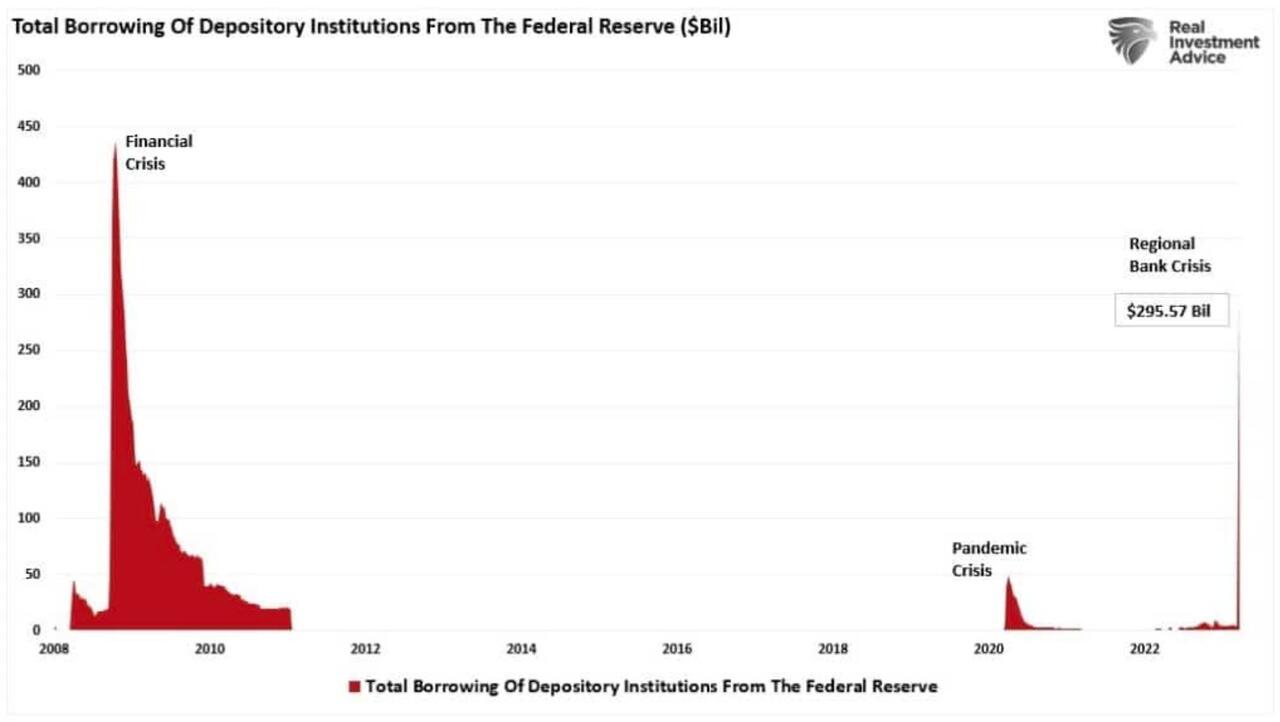
This transaction represents a swift action taken by regulators to tackle one of the most significant banking collapses since the financial crisis of 2007-2008.

“With Silicon Valley Bank’s deposits and loans now housed in longer-term accommodation in the US, a calm of sorts has descended on the banking sector.

“Shunting parts of the failed bank off to a new owner may give the regulator more capacity to deal with problems still threatening to pop up elsewhere,” Susannah Streeter, head of money and markets at Hargreaves Lansdown, told Bloomberg. 

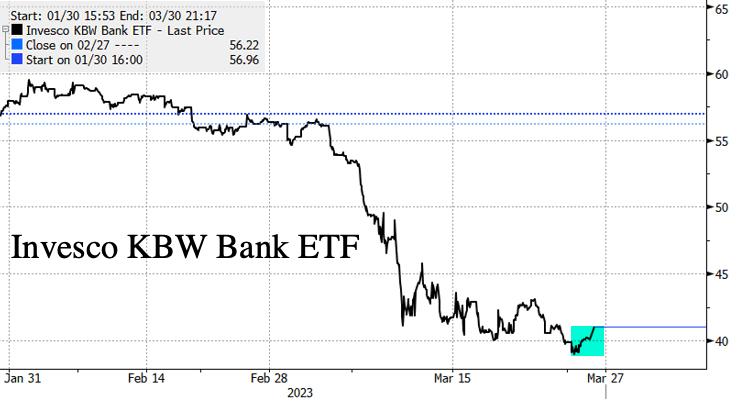
Shares of US regional banks are sharply higher this morning after the news. First Citizens shares are up 11%, First Republic jumped 28%, and Invesco KBW Bank ETF is up more than 2%. 

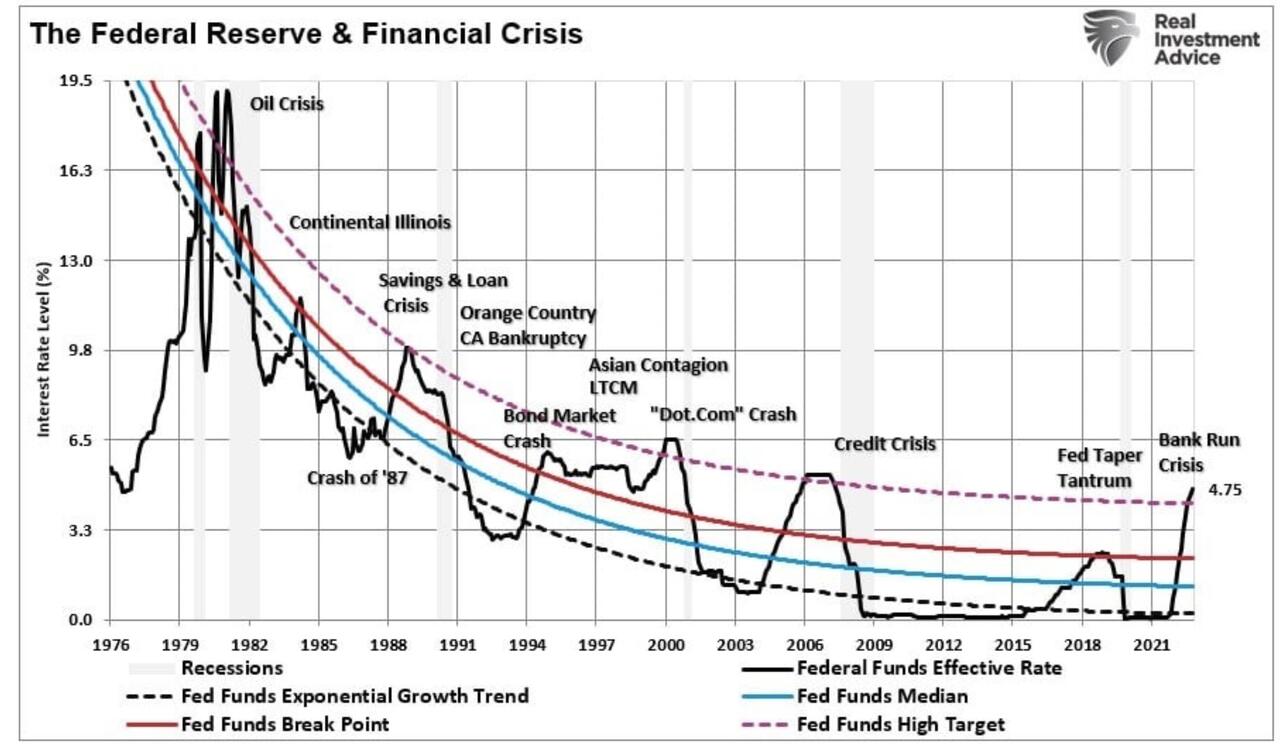
However, banks might not be out of the clear yet, as they might crumble under the pressure of higher interest rates. Contagion spread last Friday as Deutsche Bank shares plunged. And there are still many concerns around the recent marriage of Swiss bank Credit Suisse and UBS

Tyler Durden
Mon, 03/27/2023 – 07:46

via ZeroHedge News https://ift.tt/NE6rMWt Tyler Durden

Private Enforcement in the States, by Prof. Diego Zambrano (Stanford) et al.

Prof. Diego Zambrano (Stanford) and Stanford students Neel Guha, Austin Peters, & Jeffrey Xi have an extremely interesting article with this title, forthcoming in the University of Pennsylvania Law Review; and they were kind enough to pass along this guest-post summarizing their analysis:

One of the most interesting and unique features of the U.S. legal system is also puzzling: unlike most countries, the U.S. relies on private litigants to enforce our most important statutes. You’d be wrong to think we just do that in False Claims Act or qui tam litigation. Not at all. At the federal level, we do it across the board: civil rights, antitrust, environmental law, employment, and nearly every other area.

Not only do we adopt private rights of action, but we also partner them with fee shifting, treble damages, and, of course, class actions. This means that often, when the federal government wants to address a problem, it creates a private right of action alongside public enforcement. And private parties eagerly employ these rights, filing more than 90% of the claims in antitrust, employment, and environmental law (while government officials file the remaining 10%). Nowhere else in the world do we see this much reliance on private litigation. So why does the U.S. legal system rely on private claims?

To make progress on solving the puzzle of private enforcement, we turned to the sub-national level in our paper, “Private Enforcement in the States.” Previous research on this question had focused exclusively on federal private rights of action. No work had looked at the states. What we found is a world of private rights of action even more sprawling than the federal system.

As we describe in the piece: “Even by very conservative estimates, there are more than 3,500 private rights of action provisions in state law, ranging from traditional areas like antitrust and employment, all the way to privacy violations, lawsuits against police, grave-digging, veterinary care, and waste disposal.” Our upper bound estimate pegs the true number of private rights of action at around 10,000. For context, scholarship by Sean Farhang had identified around 300 such clauses at the federal level. Relative to that, our finding shows that state private enforcement is large, significant, and maybe even a bit chaotic.

To our surprise, the states leading the pack on growth of private enforcement provisions are Utah, New Hampshire, Connecticut, Nebraska, and Wisconsin. Private enforcement appears widespread across states with different political cultures, population sizes, and geography.

Some of these private enforcement provisions look similar to federal private rights of action in substance and structure. As we discuss in the paper, “nearly every state has a private right of action for antitrust claims, wages-and-hours, and a wealth of environmental violations.”

Take, for instance, the New Jersey Environmental Rights Act (NJERA). This Act provides that “‘any person’ may sue to enforce an existing environmental statute, ordinance, or regulation” and sets forth a hybrid enforcement regime. Before commencing a private claim, a person seeking to sue must give 30-days’ notice to public authorities. The legislative history suggests the private right of action was the product of thoughtful calculation about the importance of complementing public enforcement with private claims. The bill’s sponsor emphasized the importance of enabling “citizens to have ready access to the courts to resolve environmental disputes.” Further, the legislature noted that several other states had adopted statutes that allowed private enforcement with favorable results.

So if you focus just on NJERA and similar statutes, you may get the wrong impression that state private enforcement is similar to the federal system. That’s not right. It turns out to be radically different in a variety of unexpected ways.

To begin, states use private claims in subject areas falling under the traditional purview of state lawmaking power, including intriguing private rights of action in veterinary care, pet services, and grave digging, just to name a few. But beyond that, states frequently eliminate private enforcement, tinker with private rights provisions, and even shoehorn private rights into already-existing legislation. While many federal private rights of action have endured in their original form, this apparently is not the case in the states.

Consider the history of a Mississippi provision allowing “[a]ny person whose confidential record” of driving under the influence to sue when the record “has been disclosed.” In 2012, a Mississippi court decided a case unrelated to this private right of action. The private rights’ validity was not questioned in the case. But shortly after the case, the Mississippi Legislature eliminated this provision, seemingly in response to the court decision. Our conclusion is that the private right vanished without much legislative debate and any press coverage. As far as we can tell, this type of abrogation—swift and silent—has never happened in federal legislation. And we find similar “‘disappearances’ of private enforcement across the states.”

To develop this trove of descriptive insights, we had to overcome data access and methodological hurdles that likely explain the lack of focus on state private enforcement in existing scholarship. One issue was that comprehensive data on statutory codes was non-existent. Another challenge was that even if one could get access to all state statutes, limitations in data processing and modeling made it nearly impossible to sift through such large volumes of text and convert them into insightful measures.

In this study, we demonstrated a path to overcoming both challenges. To solve the data access challenge, we partnered with an up and coming legal technology company to gain access to a database of all state statutory codes from 2003-2020. Turning to the measurement obstacle, we relied on recent advancements in computer science and machine learning to comb through these statutory codes. In a nutshell, we trained a supervised machine learning model to guide our identification of these private rights of action. Between tuning the model and carefully reviewing the findings, this process took more than a year.

Not only did this data allow us to provide the first ever look into the world of private rights of action, it also allowed us to test whether prominent theories of private enforcement apply in the states. In particular, we focused our attention on the well-known “separation of powers” theory developed by Sean Farhang. This theory posits that Congress adopts private enforcement when the executive is controlled by another political party. Legislators do this in order to insulate enforcement power from an ideologically distant executive.

While this theory has robust explanatory power at the federal level, it does not appear to explain patterns of private enforcement in the states. Whether looking at the raw data or regression analyses, we find no correlation between divided government and private enforcement adoption.

Our empirical results suggest that the political economy of private enforcement in the states diverges radically from the federal government. But, more broadly, this project breaks new ground by opening up an entirely new area of research that has remained thus far unexplored. At the end of our paper, we sketch out some initial hypotheses as starting blocks for this new field of comparative research.

One potential theory concerns the role of model codes in state lawmaking. As we discovered, many model acts come with private enforcement provisions. The model Athlete-Agents Act–which arms student athletes with a private right to sue other athletes or students violating the act —has been adopted by more than 40 states. Another popular model act, the Securities Act, equips shareholders and investors the right to recover damages for fraud and other securities violations. There are many other examples, spanning controlled substances, animal welfare, and tele-health. This divergence in reliance on model codes, again, underlies how federal and state private enforcement co-exist within radically distinct institutional dynamics.

We also offer other hypotheses grounded in differences between the federal government and states in enforcement capacity, agency quality, and constitutional design. The thread connecting these explanations is our attempt to think through why the relative value of private enforcement might be higher for state lawmakers.

One obvious concern is constrained budgets. If there are fewer resources for public enforcements generally in the states, private enforcement might be a more attractive option.

Yet there are other reasons to think state lawmakers, when compared to their federal counterparts, may trust public enforcement less. On the whole, state agencies are less sophisticated than the federal administrative state. As others have pointed out, this may be because they enjoy a lower level of constitutional independence. Many state agencies also employ a workforce with less secure civil service protections.

A related concern is lack of citizen oversight. While there are countless watch dogs of various political persuasion engaging in “civil society oversight” of federal agencies, these grassroot sources of accountability are often lacking in the states.

At the end of the day, private enforcement is an even more crucial part of the American system than we thought. Our work draws attention to the “black box” of private enforcement in the fifty states. With the box now “open,” we sketch a future comparative research agenda to study the federal-state divergence and the broader intricacies of state private rights. The discoveries we present in this paper alone reaffirm the need to place private enforcement front and center in procedural scholarship and teaching.

The post Private Enforcement in the States, by Prof. Diego Zambrano (Stanford) et al. appeared first on Reason.com.

from Latest https://ift.tt/78vB934
via IFTTT

A Town Without Zoning Fights To Stay Free


zoning

At the end of 2021, John Morse hoped he could breathe a well-earned sigh of relief after two very tough years.

The pandemic had pushed Celebrations—the wedding venue he and his wife Laurie had owned and operated for the past two decades in rural Caroline, New York—to the brink of ruin. But with public health restrictions disappearing fast, and brides and grooms planning nuptials once again, Morse and his wife were ready to resume business.

“We have a beautiful piece of property. But we’re not a castle on the lake with marble columns,” he says. “There [are] wedding venues out there that are booked three, four years in advance. That’s not us. We’ve always had to work hard for the business that we have.”

Morse hoped that 2022 would be a normal, relatively drama-free year. That hope was dashed in November, when a little blue postcard arrived in the mail. The card was from Caroline’s zoning commission, which was inviting him to an informational meeting on its draft zoning code.

The postcard took Morse completely by surprise. He wasn’t aware that the town had a zoning commission. Indeed, Caroline had no zoning code to speak of.

That makes it an extreme outlier in the United States.

Almost every other community in the country has a zoning code that assigns each property in town to a zoning district and then lays out a long list of rules describing the kinds of buildings and activities allowed (or not allowed) there.

Proponents see zoning as an uncontroversial means of keeping glue factories away from homes, strip clubs away from schools, and generally protecting those things everyone likes: open space, property values, the environment, and more.

But ever-mounting home prices, and a growing number of stifled small business owners, are prompting a critical rethink of just how useful or necessary this mess of red tape and regulation really is.

Once an afterthought, zoning has become the hot-button issue in city halls and state capitals across the country. The debate is increasingly about how best to liberalize the rules that are on the books.

But in Caroline, that national debate is now playing out in reverse.

This was ostensibly a dispute about traffic, environmental protection, sightlines, and neighborhood character. It quickly became a conflict over class and class aesthetics. The pro-zoning residents were, in many cases, current and former employees of nearby Cornell University. They had a very specific vision of what the town should look like, and that vision often clashed with what people were doing, or might one day do, with their property. If Caroline’s special character needed legal protections or legal limits on landowners’ property rights, then so be it.

For Morse, however, the freedom to do what he wants on his own land is what makes Caroline special. Far from protecting the town’s character, zoning is a threat to it. He’s not the only one to feel this way.

After receiving the blue postcard, he started to call around to other businesses in the area to see what they’d heard and what they were thinking. “Most didn’t know about it, none of them wanted it,” says Morse. “People are going to lose their freedoms on their properties.”

Within a few weeks, he’d helped organize a coalition of hundreds of Caroline farmers, business owners, builders, and ordinary residents who saw nothing but threats to their plans and freedoms in the proposed zoning code.

Their opposition would turn what could have been a dry planning exercise into a high-stakes, often highly emotional fight. For many anti-zoners, it was a struggle that was about a lot more than simple politics. On road signs and at frigid winter protests, they’ve been repeating a refrain and a motto: “Zoning kills dreams.”

Saying No

Whether to adopt a zoning code has become a debate that’s consumed the whole of Caroline. The debate was sparked by a dispute over a single property.

That property was an unused patch of farmland belonging to Ken Miller, a hay farmer and Marine veteran who owns about 30 acres of land in town.

In 2019, Miller was approached by real estate firm Franklin Land Associates, which asked if he’d be willing to sell some of his acreage for a potential commercial development.

“Things were pretty tight when they came to us,” Miller tells Reason. The always-precarious farming business was getting harder and harder to manage for the septuagenarian Miller, both financially and physically. He’d recently had knee surgery and had been working at a nearby hardware store to help make ends meet.

His situation is common for many farmers in the area. Agricultural consolidation, particularly in the dairy business, has made most small, locally owned farms unprofitable. A way these farmers manage to stay in business is by selling off some of their marginal acreage for development. That gives them enough money to pay their property taxes while still keeping their prime farmland under plow.

That was Miller’s plan. If Franklin was willing to pay commercial real estate prices for the land, he’d even be able to retire with a bit of a nest egg. He and his wife could afford to take long-deferred trips together.

The trouble for Miller was that the ultimate party interested in his land was also a controversial one: Dollar General.

The low-cost grocery store is a fixture in poorer rural areas, where it’s often the only food store around. For the people who shop there, it can be an essential source of daily necessities. Having one in Caroline would save people the need to drive farther to shop at a store that was more expensive.

Dollar General has also attracted a lot of criticism for driving out local competitors, selling unhealthy food, paying low wages, and generally diminishing an area’s character. These criticisms, particularly that last one, resonated with one set of Caroline residents.

For most of its 200-year history, Caroline has been a small agricultural town. But a large segment of its population is current or former faculty and staff at Cornell University, located just up the road in nearby Ithaca.

Many of these residents like Caroline precisely because it doesn’t have lots of chain stores and commercial strips. They saw in Dollar General a harbinger of future suburban sprawl they had moved to town to avoid. And they were determined to stop it.

In February 2020, Franklin, under contract to buy Miller’s land, submitted the necessary documents to the town government to get approval for a Dollar General.

While Caroline doesn’t have a zoning code, it does have a comprehensive plan—sort of a vision document for the town—that calls for protecting local businesses and farmland. It also has a review board that is tasked with ensuring larger developments conform to that comprehensive plan.

On the board at the time of Franklin’s application was Ellen Harrison, an environmental scientist and former director of a waste management institute at Cornell. She said Franklin’s proposal for a large commercial development presented a major dilemma. Dollar General wasn’t a local business and it would be paving over existing farmland.

“I could not affirm that it was consistent with the comprehensive plan…I couldn’t say yes,” she says. “On the other hand, I couldn’t say no. Without zoning, there is no way to say no.”

Harrison says that the Dollar General proposal served as something of a wake-up call for many residents, who felt they had to act fast if they were going to keep the store and others like it out of town.

The March 2020 meeting where the review board would consider the Dollar General was canceled because of COVID-19. By April, the town board was drafting a development moratorium that would halt approvals of any commercial projects for 180 days. In June 2020, the town board approved the moratorium.

Town Supervisor Mark Witmer, an ornithologist and occasional Cornell lecturer, stressed to the local Tompkins Weekly paper at the time that the moratorium wasn’t about the Dollar General per se. Rather, it was about giving the town breathing room to finish a comprehensive plan update that was underway.

Still, an undeniable effect of the moratorium was that the Dollar General in Caroline was effectively dead.

Franklin Land Associates certainly felt that its project was being singled out. An April 2020 letter from the firm’s lawyers to Witmer called the moratorium “stupefying” and potentially illegal.

It was a big loss for Miller too, who had to forfeit the $150,000 he would have gotten from selling his land. The fight took a heavy toll on his and his wife’s relationship with some of their neighbors, several of whom had signed a petition opposing the Dollar General.

“We were hurt, and we were hurt financially. That’s a lot of money,” he says.

The moratorium also presented a problem for the town’s growth critics. The building freeze was only supposed to last 180 days while a new comprehensive plan was finalized. But it wasn’t as if that plan was going to stop future Dollar Generals. For that, the town needed zoning.

So in December, the town board extended the moratorium for another 180 days. It’s since been extended twice more and won’t lapse until May. In January 2021, the updated  comprehensive plan was finally adopted. And in February, the town board voted to create a zoning commission to get to work drafting a zoning code.

Drafting Errors

Over the next two years, the Caroline zoning commission’s draft code would go through lots of tweaks and revision. But the substance remained largely unchanged.

The plan was to separate the town into three types of districts.

Caroline’s pockets of existing development were to be zoned as “hamlets” where housing, home businesses, and limited commercial uses were allowed. There would also be a “focused commercial” district where formula retail (a.k.a. chain stores), storage facilities, and other larger businesses would be permitted. Then the vast majority of the town’s land was grouped into a rural/agriculture district where both residential development and nonfarm businesses were strictly curtailed.

For the people on the zoning commission, this represented a well-crafted balance between protecting the town from rampant development and letting people use their land as they always had.

“We are trying to craft a zoning plan that is appropriate for Caroline that puts some important safeguards in place but does not put undue burdens on land owners,” says Bill Podulka, a retired physicist at Cornell and member of Caroline’s zoning commission.

In relative terms, the 137-page draft code is a lot simpler than what you might find in a major city, where the zoning code runs for thousands of pages and creates dozens of special districts.

Caroline’s draft code was nevertheless 137 pages of regulations that didn’t exist before.

“When you look at the restrictions that come into play, there’s a whole giant table of what you’re allowed to have or [not] have,” Morse says. “You can have this kind of business because we like it, you can’t have this kind of business because we don’t like it.”

One thing Morse had always planned for his business was building rental cabins on a vacant field he owned next to his venue, where wedding parties could stay after the ceremony. But “campgrounds” are flatly prohibited in the focused commercial area that would cover his property.

As Morse got out the word about the zoning code, more people realized their own plans for their land would be banned or subject to a lot more rules going forward.

That included Hannah Wylie, whose family had maintained a 1,000-acre farm in Caroline for the past 175 years. One idea her family had to prop up their always-precarious ag business would be setting aside some unfarmable land for a small campground or R.V. park.

Today, Wylie could just go ahead and do that. Under the draft zoning code, she’d have to get a special use permit. And that’s no small order.

Getting that permit would require Wylie to file applications with the town’s review board, which would hold a public hearing, where neighbors would have an opportunity to come complain about the project. After a hearing, the board would have months to decide whether Wylie’s campground would disturb the character of the neighborhood, be consistent with the comprehensive plan, damage the environment, impact adjacent property owners, or strain public services. At the end of that process, the board could put a lot of expensive conditions on the proposed campground to mitigate its impact on that long list of things. Or the board could just say no.

Podulka stresses that the review process isn’t intended to be a roadblock.

“Review doesn’t mean you can’t do it, it just means a meeting, or two, or three, yes,” he says. “You may or may not have to make some adjustments to meet some of the desires of the rest of the community.”

Wylie says that the time and expense of the review process could be enough to deter her from even applying for a permit in the first place. She could end up spending a few hundred (or a few thousand) dollars and several months getting permission to start a business that might not work.

Without the ability to easily and cheaply experiment with new ideas, her family’s continued operation and ownership of their farmland was imperiled.

“We have something so beautiful to take care of and we’d like to keep it,” she says.

Planning boards and commissions that enforce zoning laws unsurprisingly often become dominated by people who have pretty restrictive views of what people should be allowed to do on their properties.

Caroline already got a taste of that when the town stopped the Dollar General project.

The town’s anti-zoning activists like to point out that the store would have been built just a few hundred yards from a review board member’s house, which they say is evidence of how personalized these things can become.

“You have to ask permission from people you don’t like and who don’t like you,” says Bruno Schickel, a local developer and member of Caroline’s anti-zoning coalition.

Even when personal feelings or self-interest don’t creep into the zoning process, unintended consequences will still abound, Schickel argues.

He gives the example of the village of Boiceville he’s built in Caroline, a development of 140 closely spaced, fairytalelike tiny homes whose design was inspired by the children’s book Miss Rumphius.

The clustered development of the cottages means Boiceville shelters about 10 percent of Caroline’s population on just 40 acres. The economical use of land and lack of entitlement costs also keeps Boiceville more affordable than it otherwise would be.

In many ways, Boiceville is in keeping with the spirit of much of Caroline’s draft zoning code, which calls for the preservation of open space and affordable housing. The village’s design would be prohibited by the letter of the code, which limits residential development in rural areas to an average of one dwelling unit per three acres. If Boiceville were built today, it would have to consume 10 times as much land. The more land development requires, the more it ends up costing.

As 2022 wore on, the zoning commission continued its work of refining its draft code. Meanwhile, in the town, anti-zoning residents spun up a guerrilla activist campaign against the commission’s work.

Signs went up declaring “Zoning Kills Dreams,” “Grandma Hates Zoning,” “Caroline Forever Unzoned,” and so on. Residents held protests at the town hall where farmers brought their horses painted with similar anti-zoning slogans.

It would all get pretty personal pretty quickly in the small town.

When Harrison put up a sign supporting zoning in her yard, she says someone defecated on it. The Ithaca Voice reported that the chair of the zoning commission received an emailed death threat.

On the flip side, anti-zoning residents argued that the zoning commissioners and town board members were being openly contemptuous of their concerns and flatly unwilling to listen.

The town board, they noted, stuck to Zoom meetings in a town where many residents didn’t have high-speed internet.

During one meeting where anti-zoning residents invoked their families’ long history in the town, a town board member said they were sick of hearing about people’s heritage. In response, Wylie put up a road sign saying, “Piss on zoning, not our heritage.”

When anti-zoning people raised general concerns about zoning, they were told by pro-zoners they needed to be specific about their complaints. When they did raise specific concerns about the draft zoning code, the response was often that it was only a draft and the offending provisions might not end up being included. Anti-zoning activists could be forgiven for feeling gaslighted.

The pro- and anti-zoning camps generally grafted onto preexisting political differences. Supporters of the draft code skewed liberal, while the town’s conservatives were more likely to oppose it.

The class dynamic of the zoning fight nevertheless scrambled these neat partisan lines. The anti-zoning coalition included folks like Morse, whose wedding venue was hosting a fundraiser for a crisis pregnancy center the week this reporter was there. It also included Tonya VanCamp, a nonprofit worker, whose home sported a gay pride flag and a “Black Lives Matter” sign. Both were united by a fear of what zoning would prevent them from doing with their single biggest asset—their land.

On the flip side, people who might have made common cause with the anti-zoners in different circumstances decided to stay on the sidelines. Sara Bronin, a Cornell law professor who founded the zoning reform group Desegregate CT, said in an email she was approached about getting involved in Caroline’s debate but declined.

The town’s debate had less to do with the specifics of a zoning code, and more to do with “rural stubbornness,” she wrote.

Yet the hypothetical concerns opponents of zoning were raising were also critiques that a growing number of academics, policy wonks, and activists were making about the very real effects of zoning in communities across the country. Caroline’s seemingly parochial fight brought the town into a very national conversation.

Straitjackets 

Caroline’s pro-zoning officials and residents frequently complained that the town’s zoning critics were exaggerating how burdensome the draft code was, when they even bothered to raise specific complaints at all.

The anti-zoners’ objections all seemed reasonable enough to Nolan Gray.

Gray doesn’t live in Caroline. He lives in Los Angeles, where he works as research director for the housing advocacy group California YIMBY. (He’s also an occasional contributor to Reason.)

It’s one of the organizations to grow out of the original “yes in my backyard” (YIMBY) movement of San Francisco Bay Area residents who got fed up with spending more and more of their money on increasingly scarce housing. Beginning in the mid-2010s, they launched a crusade against the zoning restrictions they blamed for the Golden State’s astronomical rents and home prices.

YIMBYs face an uphill battle in most American cities, where long and extensive zoning codes ban apartment buildings across most of the city. The movement has nevertheless won over a lot of converts in these expensive cities with a message that housing would be cheaper if it were legal to build more of it.

Policy makers across the country are increasingly talking like they agree with that idea, and even adopting policy reforms designed to allow for more building.

Three states, including California, so far have passed laws legalizing at least duplexes statewide. A handful of other states will probably follow suit this year. Joe Biden’s White House has called out restrictive zoning laws in strong terms. (Its actual policies don’t do much to address the problem.)

Gray himself wrote a book on why zoning shouldn’t just be liberalized, but abolished completely. That’s a radical position, even within the larger YIMBY movement. It can seem hopelessly utopian when one considers how expansive and restrictive the average city’s zoning code already is.

But it’s a message that resonated in Caroline, where residents don’t live under zoning now and many want to keep it that way.

After discovering Gray’s book, some of the town’s anti-zoning activists reached out and asked if he’d take a look at Caroline’s proposed draft code. What Gray saw was a restrictive mess that would bring to Caroline problems that zoning had created everywhere else.

“It’s untethered from any actual impact that’s facing Caroline,” he says.

The code’s requirements for site plan review and special use permits would be incredibly burdensome for the low-impact small businesses that would likely open in the town. The minimum lot sizes and density restrictions would drive up housing costs. Even if a restriction wasn’t in the code now, it could easily be added later.

“Once these codes are adopted, it’s a one-way ratchet that only gets stricter, that only gets more exclusionary, that puts jurisdictions in a tighter and tighter straitjacket,” says Gray.

At the invitation of Caroline’s anti-zoners, Gray went out to the town in November 2022 to make the case for why adopting zoning would be a mistake.

The night before the 2022 midterms, he gave a presentation to a packed community center where he laid out the general case against zoning and what it would do to Caroline specifically.

He pulled up a map of the town dotted with red-colored parcels. Members of the audience gasped when he explained that each red parcel was a property that would be made nonconforming by the draft code. That meant even minor changes to the property would have to go through site plan review and more substantial expansions or changes of use might be banned entirely.

Next, he brought up pictures of businesses and buildings in town, and explained how the draft zoning code would make their various features illegal too.

“So much of what’s in this code is stuff other cities are trying to get rid of,” said Gray during his talk. Caroline needn’t make the same mistakes.

Gray’s talk was meant to be a calm presentation of zoning’s problems. It quickly became a venting session for the assembled crowd of mostly anti-zoning residents.

The first question in a Q&A session was from one man who asked Gray what the penalties would be for “civil disobedience” with the zoning code. Another woman asked whether you could keep zoning code officers off your property if they didn’t have a warrant.

When Katherine Goldberg, a town board member considered to be a moderate on the zoning code, stood up to urge people to trust the process, she received angry shouts from people in the room.

Caroline’s anti-zoning activists had planned to have Gray speak during public comment at the town board meeting a few days later. That meeting was abruptly canceled just before his visit. The explanation was that Witmer, the pro-zoning town supervisor, was taking a long-planned trip to Hawaii, but had neglected to inform the town clerk ahead of time.

For anti-zoning residents, it was just one more piece of evidence that their government was totally uninterested in hearing their concerns.

On the night of the now-canceled board meeting, they braved the freezing cold weather to make their case heard in front of the empty town hall.

Morse got in front of the crowd and hoisted a thick petition of 1,200 signatures demanding that any vote on a zoning code be delayed until after Caroline’s 2023 municipal elections. Zoning was not what people wanted, he said.

Next came Schickel, who earned cheers when he informed the crowd that two anti-zoning town board candidates had won their election in the nearby town of Hector, which was having a similar fight over whether to adopt a zoning code.

The crowd periodically broke out in chants of “no zoning.” Some of the people in the back cracked open beers. Across the street, a large trailer bore a huge display of lights and illuminated letters reading, “Caroline Forever Unzoned.”

It was an oddly emotional scene for a rally about zoning.

Most people save their passionate advocacy for things like abortion or gun control, not special use permits and setback requirements. The general view of zoning as a dry, technical, apolitical issue is one reason it’s persisted unquestioned for so long. That probably explains why Caroline’s officials were blindsided by the massive counterreaction to their zoning code proposal. To this day, it seems like they don’t quite understand the emotions they’ve kicked up.

One person at the town hall rally who did understand them was Amy Dickinson, even if she thought some of the anger expressed by anti-zoners wasn’t always productive.

Dickinson is a nationally syndicated advice columnist who makes a living helping people work through interpersonal problems. She’s also married to Schickel, and like her husband, she’s deadset against zoning.

Dickinson grew up on a dairy farm in a nearby town where, like in Caroline, most of the farms gradually went out of business. For farmers losing their livelihood, the ability to hold onto their property and leave it to their children becomes all the more important, she explained. So, the idea that the town would then slap a bunch of rules on the one thing you do still control was both threatening and offensive.

“People take it personally,” she says. “Your land is all you have.”

Zoning Kills Dreams

Houston, Texas, is the one major city in the United States that never adopted a zoning code. Three times Houston has put zoning up to a referendum, and three times voters have rejected it.

In Gray’s anti-zoning book, Arbitrary Lines, there’s a picture of a Houston activist during one referendum campaign marching with a sign that reads “Zoning Kills Dreams.” It’s a message that would become Caroline anti-zoners’ rallying cry, much to the frustration of those who support zoning.

“There’s a sign that says ‘Zoning Kills Dreams.’ Well, what is the dream you have that you think is not allowed? They don’t say,” says Harrison, the review board member.

It speaks to a difference in mentality and material circumstances of the two sides.

Caroline’s zoning supporters are typically either active or retired professionals. They live in the town and love it as much as anyone. But they also have no need to make a living there. It’s a position that lends itself to more restrictive notions of what should be allowed in Caroline: some homes, some businesses, some farms, and a lot of protected views and open space.

For them, a zoning code is a pretty straightforward way of protecting the things they like about Caroline while banning the things they think will spoil it. And if anti-zoners are worried about losing the ability to do something on their land, they should say as much, and come to the table to get protections included in the draft code.

Things aren’t so simple for Caroline’s anti-zoners. The necessity of making a living from their land means they have to be pretty open and adaptable to change. They often don’t know what the future will bring. It’s impossible for them to say how they might want to use their properties in the future.

Morse notes that his wedding venue had a couple of slow years right before the pandemic. If business dries up, he’ll have no choice but to sell Celebrations and move on. The more restrictions a zoning code puts on the use of his property, the fewer buyers there will be for it. That will tank the sale price of his land, leaving him with less to start a new business or retire on.

Freedom to do what he wants on his property is a valuable asset all on its own, and that freedom can’t coexist with zoning.

Caroline’s zoning debate is ongoing. The zoning commission is currently holding public hearings on their final draft code. They will then make a report to the town board, which will make the ultimate decision about whether to adopt it. 

New York state law forbids zoning from being put before voters as a referendum. Peter Hoyt, a former town board member who opposes zoning, tells Reason that if a referendum were possible, it would probably be a pretty close vote.

Whatever the outcome, the zoning debate raging in Caroline is revealing. It shows how even in a small community without major enterprises or serious growth pressures, planners can’t adequately capture and account for everything people might want to do with their land.

There’s a gap between what zoners can do and what they imagine they can design. That knowledge problem hasn’t stopped cities far larger and more complex than Caroline from trying to scientifically sort themselves with zoning. They’ve developed quite large and complex problems as a result.

Caroline’s anti-zoners see the problems zoning has created elsewhere and want none of it in their town. They’re committed to fighting tooth and nail to preserve a freedom the rest of the country has lost.

They have dreams, and zoning might kill them.

The post A Town Without Zoning Fights To Stay Free appeared first on Reason.com.

from Latest https://ift.tt/kurhfbq
via IFTTT
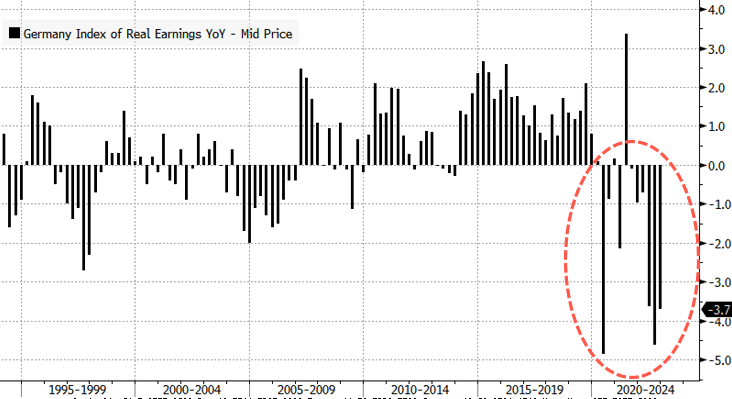
How Bad Are Your State’s Occupational Licensing Requirements?


Two businessmen shaking hands in front of a blue and grey map of the United States.

If you work in a licensed trade or know somebody who does, you understand the enormous expense and hassle occupational licensing represents, creating barriers to making a living and to moving across state lines where you might have to jump through hoops all over again. Of course, some people like those barriers since they limit the competition they face, but those folks are part of the problem. Reasonable people recognize licensing as a deterrent to prosperity and mobility and so encourage reform around the country. Now, a new report compares state licensing regimes so we can see who is making progress and who needs to try harder.

“Occupational licensing affects more than 20 percent of workers in the United States. The extent of occupational licensing greatly differs across states,” write co-authors Edward Timmons and Noah Trudeau, both of the Knee Center for the Study of Occupational Regulation at West Virginia University, in the Washington, D.C.-based Archbridge Institute’s 2023 State Occupational Licensing Index, published last week. “From both a research and public policy standpoint, it is important to have a comprehensive measure of occupational licensure across states and occupations.”

Growing Evidence of the Damage Done by Licensing

Timmons and Trudeau acknowledge the extensive work done in this field by researchers including those at the Institute for Justice and the Cato Institute, both of which advocate for lower barriers to work to benefit those seeking to make a living as well as the general public which would enjoy the lower prices and improved quality driven by increased competition. They might also have mentioned that reform is a bipartisan issue, with the damage done by occupational licensing recognized by the Obama, Trump, and Biden administrations. The authors’ goal is to build on earlier work by making it easier to compare licensing requirements by state (plus D.C.) as well as by trade. The short individual state summaries offer interesting details.

“In 2023, the state with the highest occupational licensing burden is Arkansas (#1), followed by Texas (#2), Alabama (#3), Oklahoma (#4), and Washington (#5); the state with the lowest occupational licensing burden is Kansas (#51), preceded by Missouri (#50), Wyoming (#49), Indiana (#48), and Colorado (#47),” according to Timmons and Trudeau.

My state, Arizona, is ranked as having the 31st most burdensome licensing requirements in the country (first place is most burdensome and 51st is least).

“In 2019, Arizona passed a comprehensive universal licensing recognition law. The law does not recognize other states’ licenses automatically; individuals must still apply for licenses, pay applicable fees, and meet requirements. However, it makes it easier to obtain a license by removing duplicate requirements such as education and training.”

Arizona’s (significant) reform improves mobility by easing barriers for those already licensed. But it doesn’t end the requirement for licensing, leaving in place high hurdles of time, rules, and expense.

In total, Arizona imposes 175 barriers to entry (meaning that tasks associated with an occupation require a license even if the occupation itself isn’t licensed) and explicitly licenses 146 trades. Among Arizona’s quirks is requiring licenses for specialty residential contractors, a requirement in only two states (South Carolina is the other).

By contrast, first-ranked (most burdensome) Arkansas imposes 212 barriers to work and licenses 180 occupations. Least-burdensome Kansas imposes 147 barriers and licenses 133 occupations. These are substantial but not huge differences, and Timmons and Trudeau acknowledge that their rankings differ from those in the Institute for Justice’s License to Work report or in Cato’s Freedom in the 50 States. That can be accounted for by methodological differences.

“This index ranks based on a simple count of barriers known through the Knee Center Database. License to Work, on the other hand, focuses exclusively on low- and moderate-income occupations,” the authors note. “Finally, Freedom in the 50 States uses a weighted sum based on 64 occupations and their proportion of total employment. As noted earlier in the report, the [State Occupational Licensing Index] uses the most occupations of the three rankings.”

So, don’t get too hung up on specific numbers. What is important is the hurdles to work, prosperity, and competition they represent, and just how ridiculous they are. To demonstrate the arbitrariness of these occupational licensing rules, Timmons and Trudeau tally up 18 occupations that are licensed in just one state each. You can work at these jobs for anybody who will hire you in all but a single jurisdiction (which varies by occupation); that one state will charge you with a crime if you don’t first get government permission.

And what do you get for those arbitrary rules? Not much.

High Costs, Few Benefits

“This study finds no evidence that licensing raises quality and some evidence that it can reduce it,” Kyle Sweetland and Dick M. Carpenter II wrote in a 2022 Institute for Justice paper on the effects of occupational licensing. “In seven of nine comparisons, there was no statistically significant difference in quality between licensing regimes. In the other two comparisons, quality was higher in the less burdensomely licensed state than in the more burdensomely licensed ones.”

Licensing often makes life more difficult for everybody involved.

“There is evidence that licensing requirements raise the price of goods and services, restrict employment opportunities, and make it more difficult for workers to take their skills across State lines,” the Obama White House cautioned in a 2015 report.

As mentioned above, Arizona-style universal license recognition (since adopted by Ohio and other states) reduces mobility barriers by making licensing portable. Once licensed, you can take your permission slip with you. But if licensing reduces quality and raises prices, why require it at all?

You Shouldn’t Need Permission to Make a Living

“The analysis of the benefits and costs of licensing may find that some occupations would benefit from lesser forms of regulation, such as certification or registration, or even no regulation,” the University of Minnesota’s Morris Kleiner wrote in 2015 for the Brookings Institution.

With certification, anybody could work in a field, but those who voluntarily submit to third-party exams and standards could advertise their credentials. That makes particular sense given that most occupations are unlicensed in at least one state, and many are licensed in only a few (or one!) with no clear benefit from restrictive regimes. But there is plenty of downside to requiring permission to work.

“States nationally are struggling with a skilled worker shortage,” add Timmons and Trudeau. “Licensing erects barriers to entering many of these skilled trades and is making these shortages worse than what they should be.”

This study joins a growing body of research documenting the damage that occupational licensing does to opportunity, prosperity, human well-being, and our fundamental freedom to make our own choices.

The post How Bad Are Your State's Occupational Licensing Requirements? appeared first on Reason.com.

from Latest https://ift.tt/8IdBuWe
via IFTTT

Banking Crisis Is How It Starts, Recession Is How It Ends

Banking Crisis Is How It Starts, Recession Is How It Ends

Authored by Lance Roberts via RealInvestmentAdvice.com,

As the Fed tightens monetary policy, a banking crisis is historically the first evidence that something is breaking. As noted recently in “Not QE,”

Last week, amid a rash of bank insolvencies, government agencies took action to stem a potential banking crisis. The FDIC, the Treasury, and the Fed issued a Bank Term Lending Program with a $25 billion loan backstop to protect uninsured depositors from the Silicon Valley Bank failure. An orchestrated $30 billion uninsured deposit by eleven major banks into First Republic Bank followed. I suggest those deposits would not occur without Federal Reserve and Treasury assurances.

Banks quickly tapped the program, as shown by the $152 billion surge in borrowings from the Federal Reserve. It is the most significant borrowing in one week since the depths of the Financial Crisis.”

Since last week, that number has surged to almost $300 billion.

RealInvestmentAdvice.com (St. Louis Federal Reserve/Refinitiv)

Since then, UBS entered into a “shotgun marriage” with Credit Suisse, and the Federal Reserve reopened its dollar swap lines to provide liquidity to foreign banks.

The Bank of Canada, the Bank of England, the Bank of Japan, the European Central Bank, the Federal Reserve, and the Swiss National Bank announced on March 19 “a coordinated action to enhance the provision of liquidity via the standing U.S. dollar liquidity swap line arrangements.”

To improve the swap lines’ effectiveness in providing U.S. dollar funding, the central banks currently offering U.S. dollar operations have agreed to increase the frequency of 7-day maturity operations from weekly to daily. These daily operations began on March 20 and will continue at least through the end of April.

Historically, once the Fed opens dollar swap lines, further monetary accommodations follow from rate cuts to “quantitative easing” and other liquidity operations. Of course, such is always in response to a banking crisis, credit-related event, recession, or a combination.

RealInvestmentAdvice.com (St. Louis Federal Reserve/Refinitiv)

While the “pavlovian response” to a reversal of monetary tightening is to buy risk assets, investors may want to take some caution as recessions tend to follow a banking crisis.

Banking Crisis Cause Recessions

An obvious consequence of a banking crisis is a tightening of lending standards. Given the “lifeblood” of the economy is credit, both consumer and business, the tightening of lending standards reduces that economic flow.

Not surprisingly, when banks tighten lending standards on loans to small, medium, and large firms, liquidity constriction ultimately results in a recessionary drag. Many businesses rely on lines of credit or other facilities to bridge the gap between manufacturing a product or service and collecting revenue.

RealInvestmentAdvice.com  (St. Louis Federal Reserve/Refinitiv)

For example, my investment advisory business provides services to clients for a fee of which we collect one-fourth of the annual fee during each quarterly billing cycle. However, we must meet payroll, rent, and all other expenses daily or weekly. When unexpected expenses arise, we may need to tap a line of credit until the next billing cycle. Such is the case for many firms where there is a delay between the sale of a product or service and the billing cycle and collection.

If lines of credit are withdrawn, businesses must lay off workers, cut expenses, and take other necessary actions. The economic drag intensifies as consumers cut spending, further impacting businesses due to reduced demand. This cycle repeats until the economy slips into a recession.

Currently, liquidity is getting extracted across all forms of credit, from mortgages to auto loans to consumer credit. The current banking crisis is likely the first warning sign of a worsening economic situation.

RealInvestmentAdvice.com (St. Louis Federal Reserve/Refinitiv)

The last time we saw lending standards contract this much was during the pandemic-driven economic shutdown.

Many investors hope a Fed “pivot” to loosen monetary policy to combat recession risks will be bullish for equities.

Those hopes may be disappointed as recessions initially cause “repricing risk.”

Recessions Cause Repricing Risk

As noted, the bullish expectation is that when the Fed makes a “policy pivot,” such will end the bear market. While that expectation is not wrong, it may not occur as quickly as the bulls expect. When the Fed historically cuts interest rates, such is not the end of equity “bear markets,” but rather the beginning.

RealInvestmentAdvice.com (St. Louis Federal Reserve/Refinitiv)

Notably, most “bear markets” occur AFTER the Fed’s “policy pivot.”

The reason is that the policy pivot comes with the recognition that something has broken either economically (aka “recession”) or financially (aka “credit event”). When that event occurs, and the Fed initially takes action, the market reprices for lower economic and earnings growth rates.

Forward estimates for earnings remain elevated well above the long-term growth trend. During recessions or other financial or economic events, earnings regularly revert below the long-term growth trend.

RealInvestmentAdvice.com (St. Louis Federal Reserve/Refinitiv)

A better way to understand this is by looking at the long-term exponential growth trend of earnings. Historically, earnings grow roughly 6 percent from one peak earnings cycle to the next. Deviations above the long-term exponential growth trend are corrected during the economic downturn. That 6 percent peak-to-peak growth rate is derived from the roughly 6 percent annual economic growth. As we showed just recently, and of no surprise, the yearly earnings change is highly correlated to economic growth.

RealInvestmentAdvice.com (St. Louis Federal Reserve/Refinitiv)

Given that earnings are a function of economic activity, current estimates into year-end are unsustainable if the economy contracts. That deviation above the long-term growth trend is unsustainable in a recessionary environment.

RealInvestmentAdvice.com (St. Louis Federal Reserve/Refinitiv)

Therefore, given that earnings are a function of economic activity, valuations are an assumption of future earnings. Therefore, asset prices must reprice lower for earnings risk, particularly during a banking crisis.

RealInvestmentAdvice.com (St. Louis Federal Reserve/Refinitiv)

There are two certainties facing investors.

  1. The Fed’s rate hikes started a banking crisis that will end in a recession as lending contracts.

  2. Such will force the Fed to eventually cut rates and restart the next “Quantitative Easing” program.

As noted, the first cut in rates will be the recognition of the recession.

The last rate cut will be the one to buy.

Tyler Durden
Mon, 03/27/2023 – 07:20

via ZeroHedge News https://ift.tt/RYlythW Tyler Durden