Kremlin: We’ll Attack Any Country That Tries To Arrest Putin

Kremlin: We’ll Attack Any Country That Tries To Arrest Putin

There’s been a number of new developments including tit-for-tat warnings and threats following the International Criminal Court’s (ICC) last Friday issuance of an arrest warrant for Russian President Vladimir Putin.

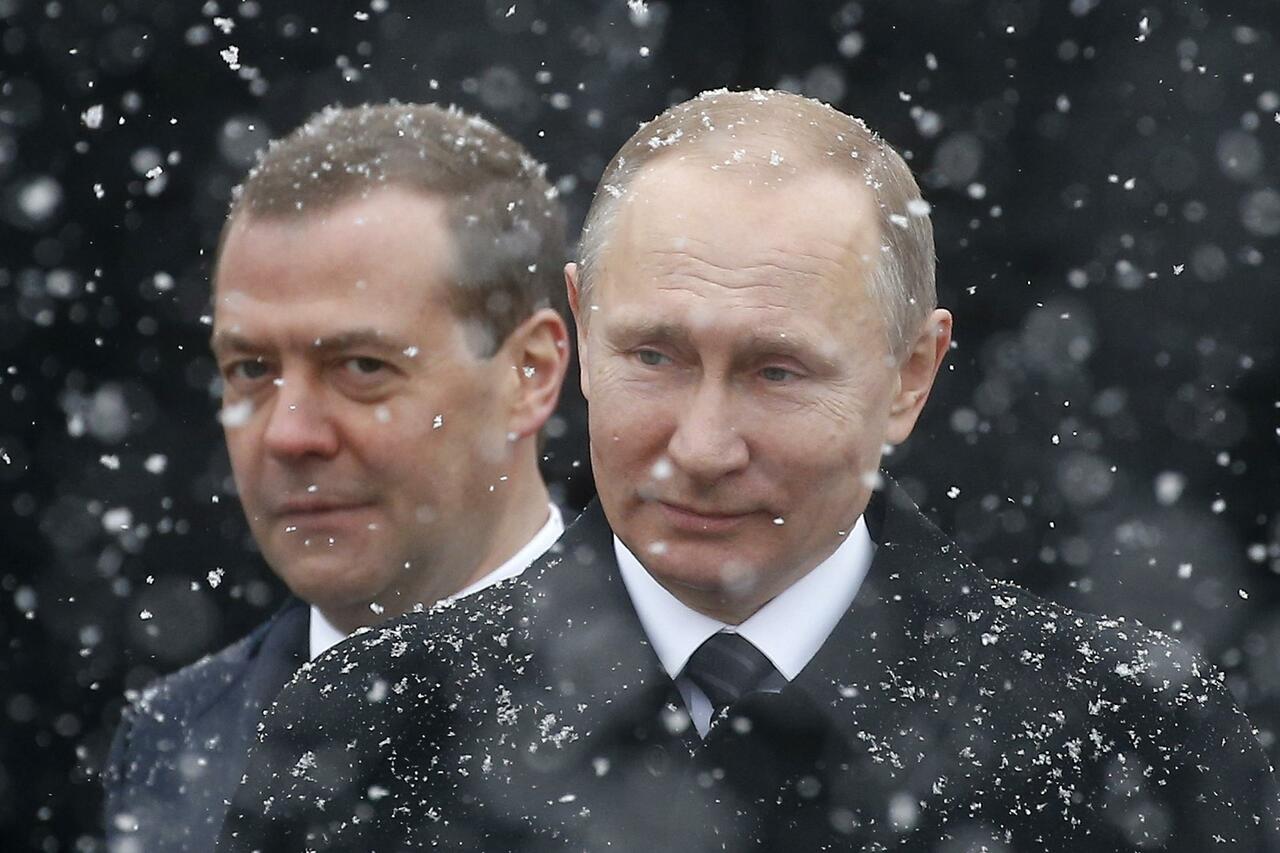
The most blistering and alarming attack on the Hague-based court this week has been from former Russian president and current deputy chairman of the security council Dmitry Medvedev, who said any attempt to actually arrest Putin would be an act of war.

Image source: EPA/The Times

First, on Monday he said, “It’s quite possible to imagine a hypersonic missile being fired from the North Sea from a Russian ship at The Hague courthouse.” He added as part of the warning: “Everyone walks under God and rockets… Look carefully to the sky…”

In follow-up on Wednesday he said in a video statement posted to Telegram that any “arrest” would surely spark world war 3

“Let’s imagine — obviously this situation which will never be realized — but nevertheless lets imagine that it was realized: The current head of the nuclear state went to a territory, say Germany, and was arrested,” Medvedev said.

“What would that be? It would be a declaration of war on the Russian Federation,” he continued. “And in that case, all our assets — all our missiles et cetera — would fly to the Bundestag, to the Chancellor’s office.”

Medvedev was responding to Germany saying it plans to cooperate with the ICC and arrest Putin if he were to ever fly to German soil.

Given the ICC doesn’t have a police force, any actual attempt to detain Putin would be the decision of a government, so needless to say it could not possibly be enforced. However, it does complicate Putin’s ability to travel to European or other capitals which cooperate with the ICC. This also means it could hinder peace efforts in the scenario Putin might choose to personally engage in negotiations or diplomacy in a European city. 

It should be recalled amid the media outrage over Medvedev’s bombastic words that the Bush administration long ago said something similar… that the US would invade the Hague if a top US official were ever arrested to sent to the ICC:

As for hindering the possibility of peace negotiations further, Kiev has seized on the ICC move, saying it has made negotiations with the Russian leader pretty much impossible.

Mykhailo Podolyak, an advisor to Ukrainian President Volodymyr Zelensky, said in the wake of the warrant: now that Putin is “an obvious international criminal” this “directly means there will be no negotiations with the current Russian elite.”

Tyler Durden
Fri, 03/24/2023 – 05:45

via ZeroHedge News https://ift.tt/LeSHhGl Tyler Durden

84% Of Failed Asylum-Seekers In Ireland Not Deported, Status Is Unknown

84% Of Failed Asylum-Seekers In Ireland Not Deported, Status Is Unknown

Authored by Thomas Brooke via Remix News,

Almost 4,000 failed asylum seekers who have been issued deportation orders in Ireland over the past five years currently have an “unknown status” in the country, the latest figures have revealed.

Following a Freedom of Information request, government data seen by the NewsTalk media outlet showed that 4,631 deportation orders were issued to failed asylum seekers between 2018 and 2022.

Of those, the Office of the Garda National Immigration Bureau (GNIB) enforced just 314 orders, or 7 percent, while the Department of Justice provided assistance in 430 other cases (9 percent) for people who voluntarily left Irish territory.

The remaining 84 percent, some 3,887 people, currently have unknown status in the country.

Delving into the figures from last year makes for dim reading, with the Irish state successfully deporting just 26 individuals who had been issued with a deportation order, amounting to 5 percent.

Opposition parties have chastised the government’s recent handling of the asylum crisis enveloping the nation. In 2022, Ireland experienced a record year for asylum cases at 13,651 applications, with Department of Justice figures recording the total as six times higher than in 2021. Immigration into Ireland also hit a 15-year high in 2022.

Opposition leaders were quick to jump on the latest figures as evidence of further, deep-rooted incompetence or unwillingness by political leaders to effectively secure the country’s borders.

President of the Irish Freedom Party Hermann Kelly told Remix News: “For all intents and purposes, Ireland has no border and no immigration policy beyond, ‘Let them all in and let them all stay.’

It’s quite outrageous rewarding with citizenship those who have entered our country illegally, as Justice Minister McEntee did recently. 

“For the safety and security of our children, it’s imperative that this government is voted out of office and Irish Freedom Party TDs replace them so they can put an end to welfare tourism and rampant criminality caused by this dangerous ‘No Borders, Ireland for All’ nonsense.

“The least the state could do is enforce deportation orders, as the state is happy to enforce court orders against Irish people.

“The necessary State response to this current debacle is a question followed by an action: ‘Here illegally? Deport immediately!’”

Aontú leader Peadar Tóibín told NewsTalk: “It is an incredible situation that those who have failed in their asylum application, that the vast majority of those are either still in the country or the government doesn’t know where they are.”

“That there is no process at the airports or at the ferry ports to identify when a person has left the country and, in many ways, the government’s deportation system is a voluntary system. People will be shocked by that.”

“Deportation means that the government issues you with an order but does not follow through in making sure that it is delivered upon,” he added.

The new figures follow the latest statistics showing that 237,000 PPS numbers were allocated to foreign nationals last year by Ireland’s Department of Social Protection. A PPS, or Personal Public Service number, is a unique identifier required before an individual can access social welfare benefits and public services.

The asylum crisis in Ireland also made the headlines last month when government figures revealed that 40 percent of new arrivals at Dublin Airport, who applied for international protection in Ireland last year, had either lost or destroyed their travel documents between taking off and arriving at immigration control, a statistic opposition party leaders called a considerable security risk.

Tyler Durden
Fri, 03/24/2023 – 05:00

via ZeroHedge News https://ift.tt/2huW39T Tyler Durden

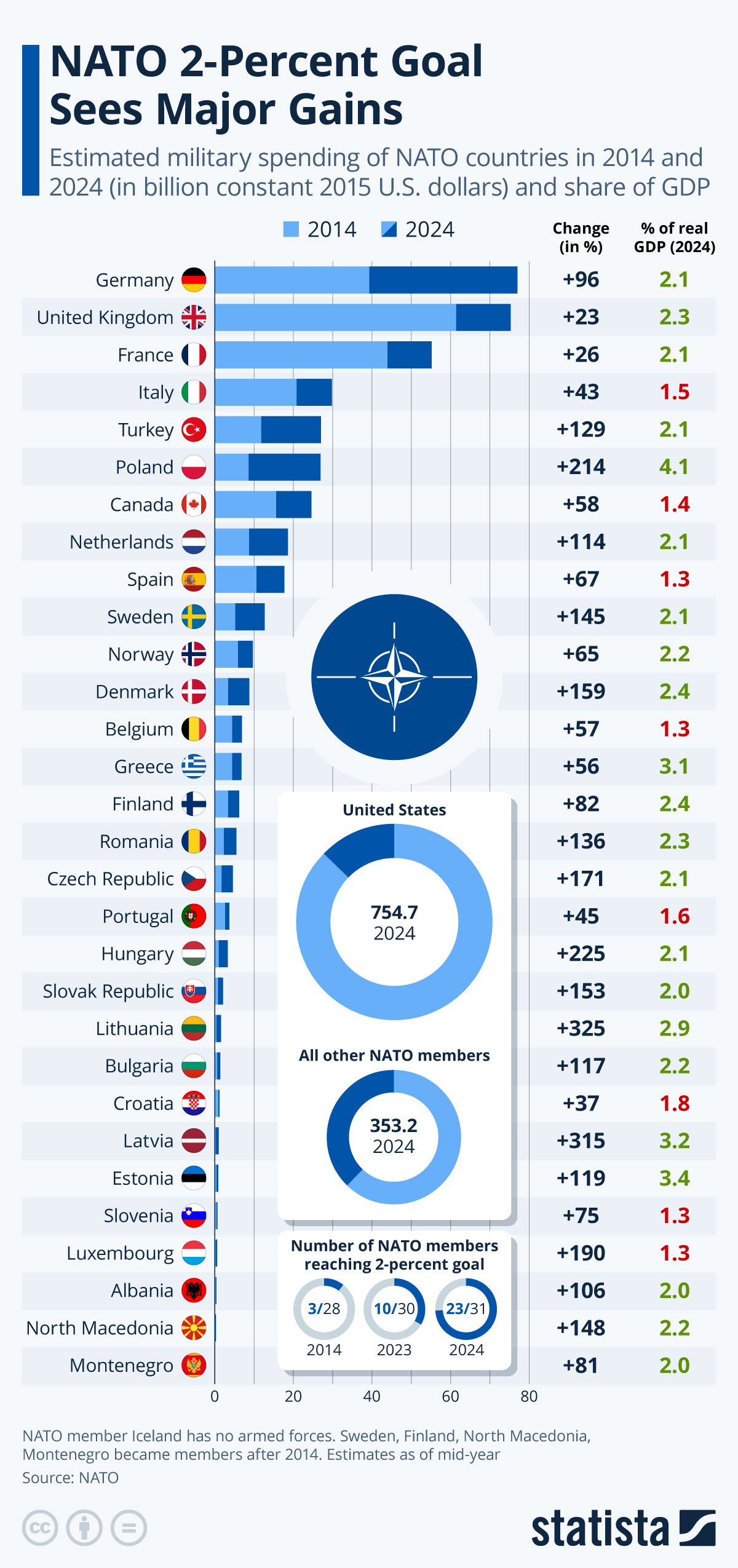
Only 7 Out Of 30 NATO Members Hit 2% GDP Defense Spending Target In 2022

Only 7 Out Of 30 NATO Members Hit 2% GDP Defense Spending Target In 2022

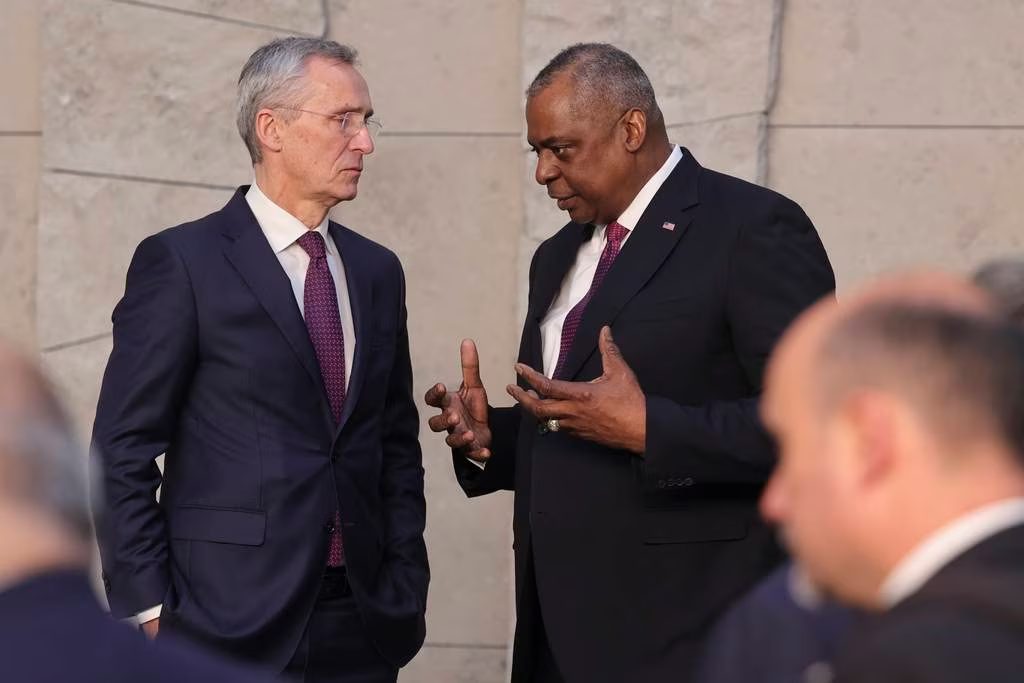
NATO Secretary General Jens Stoltenberg is this week urging member nations to boost their collective defense spending after an annual report issued by the alliance found that merely seven out of 30 member states fulfilled the 2% spending requirement last year. NATO had projected that nine would reach the spending goal in 2022, but the report confirms the alliance fell short.

“We actually expected the number to be slightly higher but because GDP has increased more than expected for a couple of allies, two fell below 2%,” Stoltenberg commented from Brussels Tuesday. “There’s no doubt that we need to do more and we need to do it faster,” he told the press briefing. “The pace now, when it comes to increases in defense spending, is not a high enough,” he said.

Image: AP

“My message to allies is that we welcome what they’ve done but they need to speed up, they need to deliver more in a more dangerous world.” It was expected that the Russia-Ukraine war would be a catalyst spurring more members states to ramp up spending to the current target.

The seven countries that reached the 2% defense spending goal are as follows:

  • US
  • UK
  • Greece
  • Poland
  • Estonia
  • Latvia
  • Lithuania

Those falling short included France, while NATO’s annual report identified Turkey and Canada as actually lagging further behind where defense spending was for the prior year.

Last summer as the war in Ukraine raged, Stoltenberg asserted the alliance was undergoing “the biggest overhaul of collective defense and deterrence since the Cold War.” But apparently that overhaul may have stalled given the new numbers.

As Statista’s Katharina Buchholz reported previously, even before war on the European continent became a reality again in 2022, tensions had been running high about the state of NATO’s military infrastructure as most European nations had adopted a lackluster approach to defense spending in peace times.

U.S. President Donald Trump in 2018 brought the issue to the forefront once more as he criticized a number of NATO member states, especially Germany, for not meeting the 2-percent-of-GDP spending threshold agreed upon at the 2014 NATO summit in Wales.

Since then, a number of NATO members have upped their defense spending. 

Infographic: Where NATO Defense Expenditure Stands in 2022 | Statista

You will find more infographics at Statista

Larger and wealthier NATO members stayed behind the goal in 2022 – often by a large margin. This includes Germany, Canada, Italy and Spain.

Tyler Durden
Fri, 03/24/2023 – 04:15

via ZeroHedge News https://ift.tt/zBHLPkG Tyler Durden

Leading Economist: “Net Zero Means Higher Interest Rates”

Leading Economist: “Net Zero Means Higher Interest Rates”

Authored by Rupert Darwall via The Epoch Times (emphasis ours),

Politicians and climate activists portray net zero climate policies as a win–win: good for the planet, good for the economy. A recent example is “Mission Zero,” a supposedly independent review of Britain’s net zero target led by the former minister who signed net zero into law. “Net zero is the economic opportunity of the 21st century,” it breathlessly proclaims. “We must act decisively to seize the opportunities in a global race.” Economics isn’t about races or moon shots but about comparative advantage and allocative efficiency. Nonetheless, the message we’re given is that the faster an economy decarbonizes, the wealthier it becomes. Through green alchemy, costs are transmuted into benefits.
In Britain, this is known as cakeism, defined by the Cambridge dictionary as “the wish to have or do two good things at the same time when this is impossible.” Normally, economists would deride such thinking. The concept of opportunity cost says that the cost of choosing one thing is represented by the highest-value option of what is not chosen. But when it comes to climate, to adapt Richard Nixon, “We’re all cakeists now” – and that includes economists, at least when it comes to their public pronouncements. 

That may finally be changing. Writing in the Financial Times last week, former chief economist at the IMF and Harvard professor Kenneth Rogoff says that a factor pushing up long-term real interest rates is “the massive costs of the green transition.” In any field other than climate, this wouldn’t be news. The trade-off involved in climate policy is higher costs in the near term for a better climate some decades in the future. Thus climate policy makes us poorer (the cost) than we would otherwise be for the sake of a better future (the benefit). Politicians pushing action on climate aren’t going to admit this, but one might expect better of economists. Instead, much of the economics profession has been complicit in the spinning of this fairy tale and has forsaken the tools of its science to disabuse politicians and the public of the net zero goldilocks story.

Following the first oil price shock of the 1970s, the International Energy Agency (the IEA) was created to protect the interests of Western energy consumers. When it sketches out various policy scenarios – including net zero by 2050 – the IEA uses the same global growth rate as an input assumption. This practice misleads the credulous by implying that net zero has no negative impacts on economic growth. The IEA’s net zero roadmap foresees rapidly falling demand for oil, causing oil prices to drop to $35 a barrel by the end of the decade. This is fantasyland economics.

Less than two years ago, the IMF was telling governments to embark on a huge green stimulus program, amounting to one percent of GDP, to stave off “catastrophic” climate change. It was terrible advice that would have meant even higher inflation than the inflation we’re now experiencing. IMF economists have also produced misleading estimates of the scale of fossil fuel subsidies, which a 2019 paper estimated at an implausible $4.7 trillion in 2015. Dig deeper, and the definition used by the IMF for fossil fuel subsidies would include delays to EVs caused by traffic congestion and EV tire wear resulting in PM2.5 particulate pollution. Based on the IMF’s misleading definition of fossil fuel subsidies, if the world went 100 percent EV, there would still be fossil fuel “subsidies” caused by EVs stuck in traffic jams, involved in fatal accidents, and from PM2.5 pollution.

Were the IMF’s fossil fuel subsidy estimates the product of a good-faith exercise, progressively eliminating fossil fuels would throw up large and growing fiscal surpluses. That’s not what the British Treasury found in its October 2021 review of the impact of net zero on the public finances. Net zero, it reckons, results in “a large and relatively rapid structural shrinking of the tax base as motorists move away from using petrol and diesel vehicles. This leads to a significant and permanent fiscal pressure.” How come the elimination of fossil fuels doesn’t lead to the disappearance of government subsidies for fossil fuels? Far from being an objective analysis – though it’s widely quoted and cited, it’s wholly misleading – the IMF’s fossil fuel subsidy estimates are little more than IMF-branded climate propaganda. 

The Treasury review concedes that Britain is unlikely to be directly affected by the physical effects of climate change. Rather, the effect is likely to be indirect via global supply chains, with reduced production pushing up the cost of imported goods. Ironically, the threat to the global trading system turns out not to be from climate change, but climate policy, such as the European Union’s carbon border adjustment mechanism (i.e., tariffs) and the United States’ Inflation Reduction Act – $370 billion of subsidies and trade privileges designed to decarbonize electricity generation. Inflation reduction? Residential electricity prices in Britain more than doubled in a decade, increasing from 8.08p (9.91¢) per kWh in 2009 to 17.98p (22.04¢) in 2019, thanks largely to climate policies. 

In its assessment of the fiscal risks of climate change, Britain’s Office of Budget Responsibility (OBR), which plays a role similar to that of the Congressional Budget Office, uses the Intergovernmental Panel on Climate Change’s RCP8.5 scenario and its off-the-wall assumption of a six-fold growth in global per capita coal consumption to 2100, which the OBR reckons would cause public debt to explode to 289 percent by the end of the century. If climate change were all that it’s hyped up to be, there would be no need to use extreme and implausible scenarios that have lost touch with economic reality – not that you’d learn that from mainstream economists. 

Stanford economist John Cochrane is a rare exception who has called out the notion that climate change represents a risk to the financial system. Economists’ colleagues in business and finance schools have shown much greater commitment to scientific objectivity. True, some business schools are seeking to close down debate, notoriously the University of Pennsylvania’s Wharton School, whose dean told RealClear Investigations that he did not see “substantive academically grounded debate” on climate financial risk. Despite the political and commercial momentum behind Environmental, Social and Governance (ESG) investing, there is debate.

In 2020, the University of California Los Angeles’s Bradford Cornell and NYU Stern School of Business’s Aswath Damodaran wrote a paper unpacking the central ESG claim of doing well by doing good. Harvard Law School’s Lucian Bebchuk and Roberto Tallarita have written articles showing that the Business Roundtable’s statement on stakeholderism is little more than a PR exercise. In 2022, London Business School’s Alex Edmans called time on ESG in a paper titled “The End of ESG,” followed by a second earlier this year applying insights from mainstream economics to test fashionable claims made for ESG investing.

By contrast, the silence of economists on the downsides of net zero climate policies for economic growth is a manifestation of intellectual cowardice. A fundamental tenet of environmentalism is hostility to economic growth. Dating back to the limits-to-growth debates of the early 1970s, environmentalism views economic growth as unsustainable and a threat to planetary boundaries (an ill-defined concept without empirical validation).

This green anti-growth sentiment is leaching into mainstream economics. A 2020 “Green Swan” paper on central banking and climate change published by the Bank for International Settlements (BIS) and the Banque de France argues that the notion of “endless economic growth” needs to be questioned, going on to suggest that biogeochemical cycles apart from the carbon cycle “may present even higher risks than climate change.” 

So, on one side, we have environmentalists, including some at the Banque de France and the BIS, who believe economic growth is bad for the planet and who support net zero because it suppresses growth; on the other, we have economists touting net zero as a growth elixir or preferring silence to pointing out the awkward trade-offs inherent in it. Perhaps with Roggoff’s example before them, they will  find the courage to speak up so that the public is better informed about the likely costs and consequences of net zero. As can be seen on this twentieth anniversary of the Iraq war and its nonexistent weapons of mass destruction, a policy misrepresented and deceptively sold to the public poisons democracy.

Rupert Darwall is a senior fellow of the RealClear Foundation and author of Climate-Risk Disclosure: A Flimsy Pretext for a Green Power Grab.
Tyler Durden
Fri, 03/24/2023 – 03:30

via ZeroHedge News https://ift.tt/SbezKws Tyler Durden

Brickbat: Don’t Forget To Look Inside


Overhead shot of a car being loaded onto a tow truck.

The body of Adam “A.J.” Blackstock was found in the storage area of his SUV, which was parked at a Kansas City police station. It had been towed there after his family did not hear from him and tracked the vehicle down through a GPS device to a stranger’s home, where it was covered with a tarp. The homeowner said it belonged to her uncle and gave the police the number of a man who said it was his. But Blackstock’s father showed the insurance was in his name, and police convinced the homeowner to allow them to tow it. As the vehicle was being moved, they noticed a bottle of cleaning fluid on the ground next to it, an apparent bullet hole in the driver’s seat, and what appeared to be blood on the floorboard. But they did not search it at that time. Police department policy calls for all vehicles to be searched before they are towed.

The post Brickbat: Don't Forget To Look Inside appeared first on Reason.com.

from Latest https://ift.tt/6MqB4ZN
via IFTTT

Do Norwegian Muslims ‘Suffer’ The Most During Ramadan?

Do Norwegian Muslims ‘Suffer’ The Most During Ramadan?

Ramadan started yesterday, Thursday, March 23.

The date was determined as the first moon of a new lunar cycle was unable to be seen in Mecca Tuesday, determining Thursday as the start of the Muslim fasting month.

While the length of Ramadan is the same for all Muslims observing it, as Statista’s Katharina Buchholz details below, the length of the daily fast certainly is not.

Because Muslims vow to abstain from eating and drinking during daylight hours, those living further north have to go without food and drink for much longer than their counterparts living closer to the equator or even in the Southern hemisphere which is celebrating Ramadan during winter.

Infographic: How Long Do Muslims Fast For Ramadan Around the World? | Statista

You will find more infographics at Statista

Muslims fasting for Ramadan in Oslo theoretically have to do so for almost 16.5 hours, according to website islamicfinder.com. 

Muslims in Jakarta, Indonesia, fast only for approximately 13 hours and 10 minutes. Finally, Melbourne in the Southern Hemisphere has just under 13 daylight hours depending on the exact day of the Ramadan month.

Some Muslims in Northern countries seem to feel unfairly treated by the lunar forces that govern Ramadan and found alternative solutions. According to reporting by Der Spiegel, the town of Tromsø in the very north of Norway has adopted the fasting hours of Mecca (just under 14 hours in 2023).

Tyler Durden
Fri, 03/24/2023 – 02:45

via ZeroHedge News https://ift.tt/DR4ZWp7 Tyler Durden

US Offers Slovakia Helicopters For Sending MiG-29s To Ukraine

US Offers Slovakia Helicopters For Sending MiG-29s To Ukraine

Authored by Dave DeCamp via AntiWar.com,

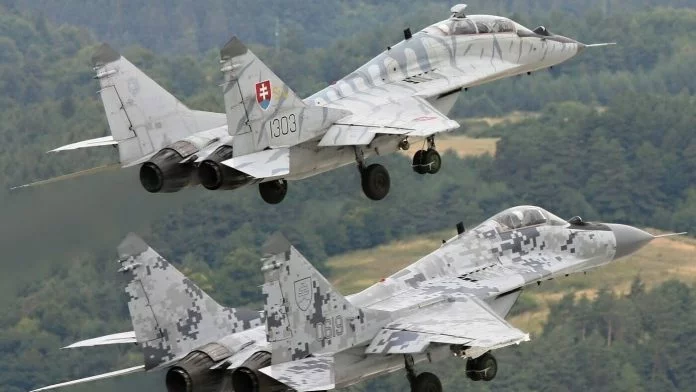
The US has offered Slovakia attack helicopters and Hellfire missiles as a reward for sending Ukraine Soviet-made MiG-29 fighter jets.

Slovak Defense Minister Jaroslav Nad said the deal would be for 12 Bell AH-1Z attack choppers, 500 AGM-114 Hellfire II missiles, and training. The sale is worth about $1 billion, and under the offer, the US would provide $660 million in financing, and Slovakia would pay $340 million.

Slovak Air Force MiG 29s

Separately, the EU will compensate Slovakia with $213 million for providing Ukraine with the MiG-29s. Nad said the offer was still being considered but added acquiring the helicopters would “significantly increase the defense capability of Slovakia.”

Without its MiG-29s, Slovakia doesn’t have an air force, and Poland and the Czech Republic are now monitoring the land-locked country’s airspace. Slovakia signed a deal in 2018 to purchase 14 US-made F-16 fighter jets, but they aren’t expected to be delivered until 2024.

The US offer means that Washington must have been involved in Slovakia’s decision to send its 13 MiG-29s to Ukraine, which came after Poland announced it would provide Kyiv with the Soviet-made jets.

The move makes Poland and Slovakia the first NATO members to arm Ukraine with fighter jets.

In March 2022, the Pentagon ruled out sending Polish MiG-29s to Ukraine over concerns that it could escalate the war. NATO officials believed the provision of fighter jets could be viewed in Moscow as the alliance directly entering the war. But one year later, the escalation concerns waned.

Tyler Durden
Fri, 03/24/2023 – 02:00

via ZeroHedge News https://ift.tt/KWbgMHV Tyler Durden

Seymour Hersh: CIA Planted Nord Stream Cover-Up Story

Seymour Hersh: CIA Planted Nord Stream Cover-Up Story

Authored by Dave DeCamp via Antiwar.com,

Investigative journalist Seymour Hersh published an article on Substack on Wednesday that said the CIA was instructed to come up with a cover story for the Nord Stream bombings that was fed to The New York Times and the German newspaper Die Zeit.

The cover-up story was created to shift blame from the US after Hersh’s bombshell report published on February 8 that said President Biden ordered the attack on the Nord Stream natural gas pipelines, which connect Russia to Germany. “It was a total fabrication by American intelligence that was passed along to the Germans, and aimed at discrediting your story,” Hersh was told by a source within the American intelligence community.

Image source: AP

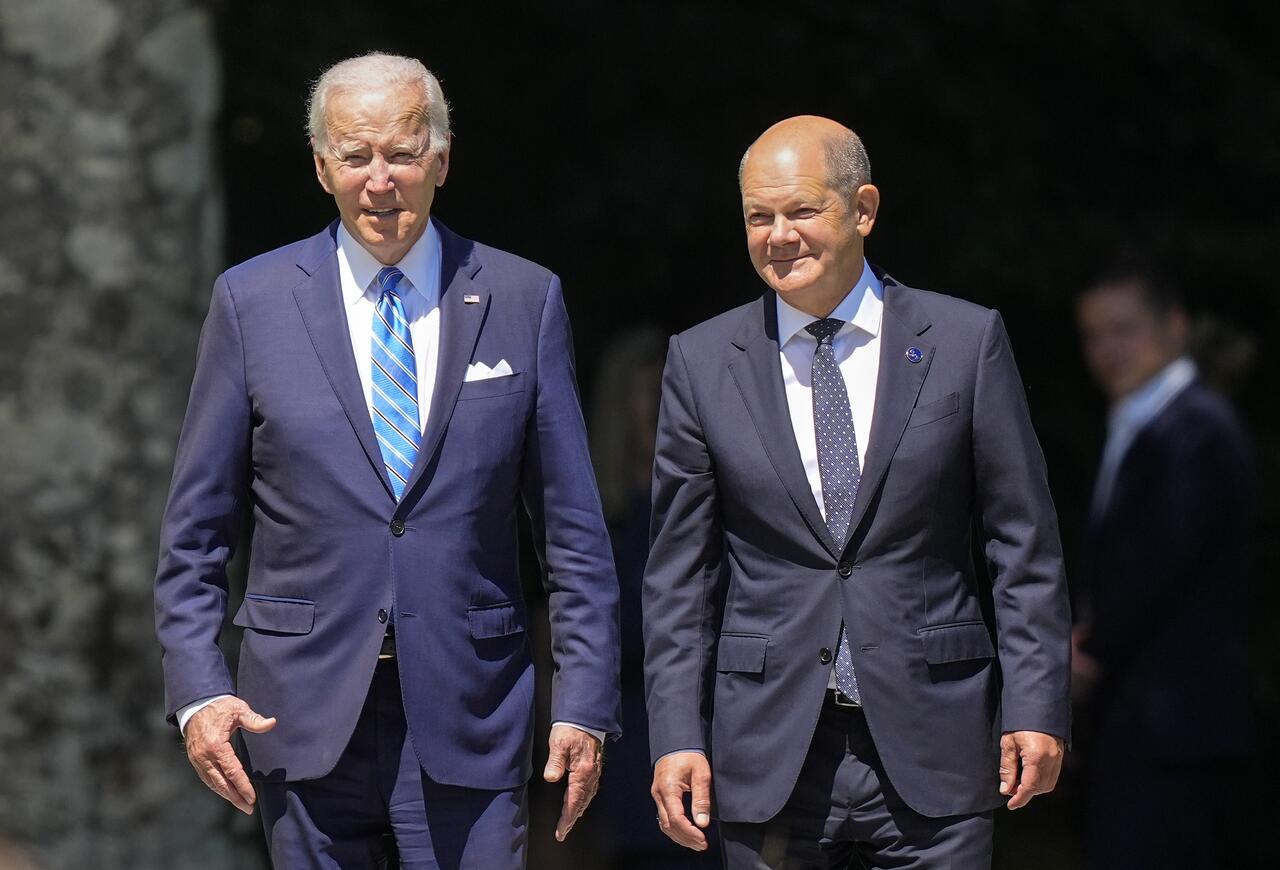
Hersh said that the CIA was ordered to come up with a cover story after President Biden met with German Chancellor Olaf Scholz in Washington on March 3. Scholz’s visit was very brief and did not include the routine joint press briefing that usually follows a meeting between the president and another world leader. Hersh was told that his report detailing how the US took out Nord Stream was discussed by Biden and Scholz.

Hersh writes: “I was told by someone with access to diplomatic intelligence that there was a discussion of the pipeline exposé and, as a result, certain elements in the Central Intelligence Agency were asked to prepare a cover story in collaboration with German intelligence that would provide the American and German press with an alternative version for the destruction of Nord Stream 2.”

The result of the CIA’s work was published in The New York Times and Die Zeit on March 7. The New York Times report was very vague and said US officials are now claiming the Nord Stream bombings might have been carried out by a “pro-Ukrainian group.”

The Die Zeit report claimed German investigators believe it was carried out by six people using a yacht rented in Poland that was owned by two Ukrainians. Other Western media outlets published similar articles reinforcing the cover story in the following days.

Hersh said the information The New York Times received “originated with a group of CIA experts in deception and propaganda whose mission was to feed the newspaper a cover story—and to protect a president who made an unwise decision and is now lying about it.”

The cover story offers a radically different narrative than what Hersh’s February 8 report alleges. Using anonymous sourcing, Hersh reported that the Nord Stream pipelines were destroyed by explosives planted by US Navy divers in June 2022 under the cover of NATO drills in the Baltic Sea. The operation was done in coordination with Norway, and a Norwegian spy plane detonated the explosives by dropping a sonar buoy on September 26, 2022.

The last time Scholz visited Washington was on February 7, 2022. Biden vowed during a press conference that day that if Russia invaded Ukraine, he would “bring an end” to the Nord Stream 2 pipeline. According to Hersh, the plot to destroy the pipelines was already underway at that time, and the plotters took Biden’s comment as a blatant threat.

On Scholz’s possible complicity in the operation, Hersh said in his new article: “At this point, it must be noted that Chancellor Scholz, whether or not he was alerted of the destruction of the pipeline in advance—still an open question—has clearly been complicit since last fall in support of the Biden Administration’s cover-up of its operation in the Baltic Sea.”

Tyler Durden
Thu, 03/23/2023 – 23:40

via ZeroHedge News https://ift.tt/uy09oxh Tyler Durden

US Firms No Longer Safe In Mexico? Army Commandeers US-Owned Marine Terminal

US Firms No Longer Safe In Mexico? Army Commandeers US-Owned Marine Terminal

We’ve heard many heartbreaking stories of American tourists venturing into Mexico only to be kidnapped or, worse, killed in crazy cartel drug war battles. It appears these days, no one is safe across the southern border, not even US-owned companies. 

Bloomberg reported that Mexican marines and police officers seized US construction firm Vulcan Materials’ port terminal near Playa del Carmen in southern Mexico.

Footage from the seizure showed a long line of police and military units entering the property last Tuesday. 

In a statement, Vulcan Materials claimed that Mexican officials did not possess any legal documentation to warrant the seizure of the terminal.

“It should be clear that the rule of law is no longer assured for foreign companies in Mexico,” the Alabama-based company said in a statement. “This invasion, unsupported by legal warrants, violates Vulcan’s commercial and property rights.”

AP News pointed out that President Andrés Manuel López Obrador and the company have been in a multi-year dispute: 

López Obrador needs the dock to get cement, crushed stone and other materials into the area to finish his pet project, a tourist train known as the Train Maya. The president shut down Vulcan’s stone quarries last May, arguing the company had extracted or exported stone without approval.

US lawmakers, including Republican Senator Bill Hagerty of Tennessee, voiced concern about the forced takeover of the terminal. He said this “adds to the trend of misguided and counterproductive behavior” by the Mexican president. 

This presents a significant concern for US companies considering relocating production from China to Mexico – how can they be sure their businesses will be safe from government seizure?

Tyler Durden
Thu, 03/23/2023 – 23:20

via ZeroHedge News https://ift.tt/izdl4Vy Tyler Durden

The Road To A More Global Yuan Runs Through Moscow

The Road To A More Global Yuan Runs Through Moscow

By George Lei, Bloomberg Markets Live reporter and analyst

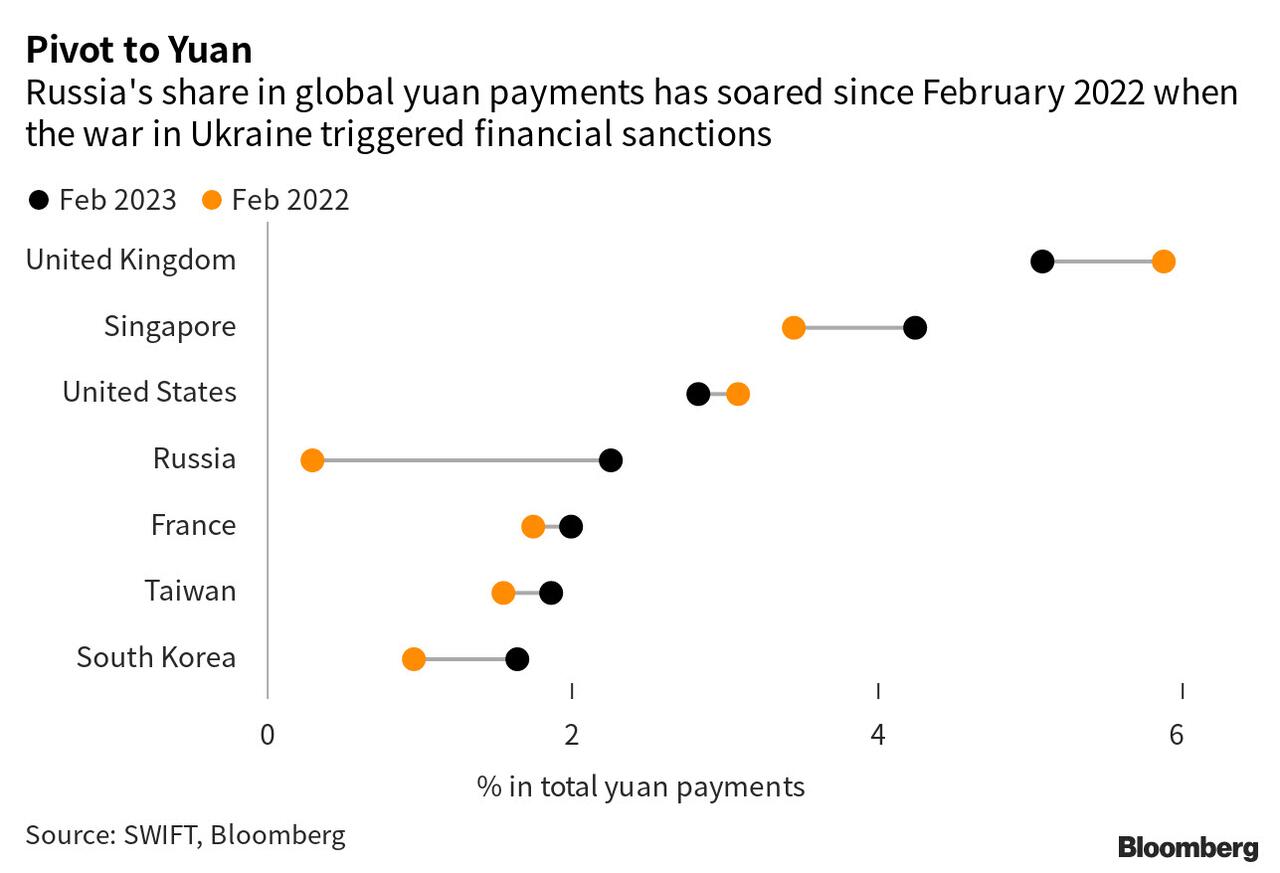
Chinese President Xi Jinping concluded his Russian visit on Wednesday without much progress on peace in Ukraine. China, however, has pushed for deeper trade and investment links with its northern neighbor using its own currency. That suggests the path of least resistance for yuan internationalization now runs through Moscow instead of London or Singapore.  

China and Russia are committed to “significantly” increasing trade volumes by 2030 and pledged to steadily boost the proportion of local currency settlement, according to a joint statement released Tuesday. That might sound like cheap political talk, though a closer look at developments since the war in Ukraine shows the Chinese currency is already making major inroads in all walks of Russian financial life.

The share of yuan in Russian export payments surged 32-fold in 2022 to 16% by year-end, according to the Bank of Russia. Its use in Russian imports also jumped to 23% from 4%. Yuan savings accounted for 11% of Russia’s total FX deposits as of January, compared with practically zero when the war broke out. The Chinese currency has also overtaken the dollar and euro as the most traded FX on the Moscow Exchange.

Never before has the yuan — which is not fully convertible — been so widely used for trade, private savings and FX transactions in a trillion-dollar economy that regularly ranks among the world’s biggest. “Market logic mostly prevails over geopolitics until one day it does not,” wrote Alexander Gabuev, a senior fellow at the Carnegie Endowment for International Peace.

Western sanctions that sharply curtailed Russia’s dollar and euro access acted as a push factor, while booming trade with China served as a pull. Russia overtook Saudi Arabia to become China’s biggest oil supplier in February while Beijing’s total energy purchases ballooned to $88b over the past 12 months, surging more than 50% from the period ending February 2022. Chinese businesses have also expanded in its northern neighbor, filling the void left by departing Western brands.

Russia is now the 5th biggest user of the Chinese currency, with 2.3% of global yuan payments, behind Hong Kong, the UK, Singapore and the US, according to SWIFT. A year ago, the country didn’t even make the cut for the top 15: Its share in worldwide yuan payments was less than 0.3%. At this speed, Russia is poised to become the biggest yuan user outside Hong Kong in the next couple years.

This week, the Russian central bank made it more costly for commercial lender to have liabilities in dollar and euro by raising the mandatory reserve requirements on “unfriendly” currencies. The longer the war and sanctions drag on, the more entrenched yuan gets in Moscow’s financial ecosystem. Should the current trajectory persist, Russia will probably become the first major economy where the Chinese currency has an equal standing with its American and European counterparts.

Tyler Durden
Thu, 03/23/2023 – 23:08

via ZeroHedge News https://ift.tt/ARUbchP Tyler Durden