Preparing For The Unexpected: The Bug-Out Bag

Preparing For The Unexpected: The Bug-Out Bag

Authored by Emma Suttie D.Ac, AP via The Epoch Times (emphasis ours),

It’s the middle of the night. You wake from a deep sleep and smell smoke. When you come to, you see flames in the next room and realize your house is on fire.
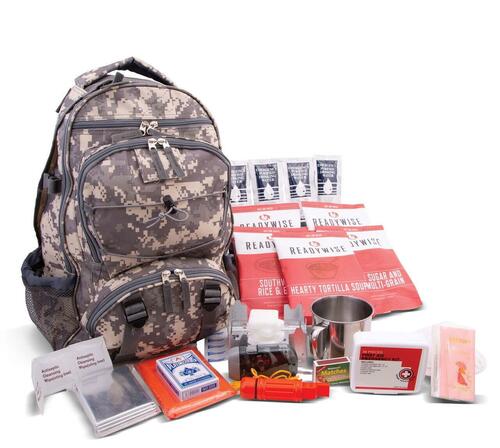
This is just one of many scenarios that can happen—at any time—to anyone. You may need to act in an instant, and having a bug-out bag prepared can help you mitigate the challenges emergencies present and ensure you have what you need to survive during—and after—the emergency.

Bug-Out Bags Defined

Bug-out bags go by many different names:

  • Go bag
  • 72-hour bag
  • Evacuation bag
  • Disaster survival kit
  • Emergency kit

These kits equip you with essential tools and supplies to handle a variety of emergencies and disasters. Backpacks are typically used for portability, which becomes crucial if you need to evacuate your home quickly or travel long distances on foot.

Creek Stewart is a survival expert, instructor, and author who incorporates practical survival skills, resilience, and personal growth in his teaching. In a previous interview with The Epoch Times, he spoke about emergency preparedness.

Stewart, author of “Build the Perfect Bug-Out Bag,” said he’s learned from survival that the darkest times can provide our greatest resources—physical and psychological.

“All the good resources in life that build character and integrity and resilience, they’re all found in the worst places of life. God uses hard times to build character and integrity, and those are built in the dark times and tested on the mountain peaks,” he added.

Your bug-out bag should not be too heavy to carry long distances during an emergency. For example, if your car breaks down, or you need to flee on foot because of a forest fire or other natural disaster.

Preparing in advance allows you the time to decide what you’ll need to survive in various worst-case scenarios. Without this preparation, you could be scrambling to gather supplies as a storm approaches or during an emergency—when you’re likely to be stressed and overwhelmed.

Stewart says there’s no need to make it complicated, and having a bug-out bag tucked away can give you peace of mind.

It doesn’t have to cost thousands of dollars—it can be really simple, and you get to touch on a lot of different elements of survival,” he said.

A well-thought-out bug-out bag can mean the difference between being afraid and overwhelmed and calm and collected—enabling you to better handle the challenges ahead.

Example Situations

Having one bag packed with essentials and ready to go is crucial in a wide variety of situations. Some examples include:

  • An evacuation is ordered due to a coming storm—you grab your bag and leave quickly.
  • You wake up to a house fire or a wildfire headed your way.
  • A robber breaks into your house, and you need to get out fast.
  • A family member is critically injured in an accident, and you need to get to the hospital as soon as possible.
  • A natural disaster forces you from your home, and you and your family spend weeks in a shelter.
  • Your city is attacked by bombing or a bioweapon.
  • A dam breaks near your community, and you need to leave before your home floods.
  • One of your children falls out of a tree in your yard, and you grab your bag (which contains medical supplies) to help them.
  • Riots break out near your home, and you want to leave to avoid potential problems.

Contents

Although it may initially seem overwhelming when planning what you may need in an emergency, Stewart says there are five main categories to consider when putting together your bug-out bag:

  1. Shelter
  2. Water
  3. Fire
  4. Food
  5. First-aid

Don’t forget supplies for your pets.

Resources such as Ready.gov and the American Red Cross have lists of supplies to include in your emergency preparedness kit. Some examples are:

  • Water (one gallon per person per day)
  • Non-perishable food (several days worth)
  • Flashlight and extra batteries
  • Battery-powered or hand-crank radio
  • First-aid-kit
  • Lighters, matches, and candles kept in containers or resealable bags to keep them dry
  • Medications (at least a 7-day supply)
  • Whistle (to signal for help)
  • Multi-purpose tool, wrench, pliers (to turn off utilities if needed)
  • Tarps or plastic sheeting, scissors, and duct tape (for shelter)
  • Personal sanitation/hygiene items (wet wipes, toilet paper, pads/tampons, garbage bags, plastic ties)
  • Can opener
  • Cell phones and chargers
  • Maps
  • Copies of important documents like driver’s licenses, passports, birth certificates, insurance policies, and medical records/medication lists, sealed in a waterproof, resealable bag (in case of rain or flooding)
  • Blankets
  • A clean change of clothing, including an outer layer, like a rain jacket (in winter, have gloves, hat, scarf, and heavy socks)
  • Comfortable running shoes or hiking boots (as you may need to walk long distances)

Stewart recommends additional items in his book “Disaster Survival 101” that include:

  • Backpacking tent big enough for everyone in your household
  • Sleeping bags and sleeping pads
  • Rain gear/poncho
  • Emergency survival blanket (these are pocket-sized)
  • Camping water filter
  • 1-liter metal canteen filled with fresh drinking water
  • 1–2 collapsible plastic water containers
  • Sillcock key (for accessing commercial water spigots)
  • Ferrocerium rod fire starter, disposable lighter, fire tinder
  • Open-and-eat meals (tuna packs, Spam, power bars, beef jerky, and dried snacks)
  • Small camp stove
  • Utensils and serving bowls
  • Bar of soap in a resealable bag
  • Toothbrush and toothpaste
  • Fixed-blade knife
  • Small folding saw
  • Rechargeable headlamp
  • Personal firearms, pepper spray for self-defense
  • Permanent marker
  • Duct tape
  • Entertainment items like a deck of cards or portable games, which are great for kids

Each capable adult should have a bug-out bag, and some of the above items don’t need to be included for each person (for example, you only need one tent). Children should only carry lightweight essentials.

Because you don’t know where you will be when an emergency strikes, it is advisable to have bug-out bags in different locations, like home, work, and in your car.

Bug-out bags should be reviewed every few months to ensure foods haven’t expired and to swap out clothing for the appropriate season. Stewart suggests taking your fully loaded bag and hiking for several miles to ensure it’s comfortable and not too heavy.

According to The Prepared, a highly regarded resource for practical survival skills, the optimal weight of your bag is about 20 percent of your body weight or 45 pounds (whichever is less) if you don’t exercise regularly. Those who are physically fit can go up to 30 percent of their body weight (or 60 pounds, whichever is less).

Personal Safety

Self-defense is also something to think about when planning your bug-out bag. Stewart says that crime spikes are inevitable during natural disasters and that looting and home invasions are common. Self-defense items are a personal choice, with multiple options—both lethal and non-lethal. These include, but are not limited to:

  • Firearms
  • Pepper spray
  • Tasers (shoots two metal prongs into attackers’ skin to deliver an electric charge)
  • Stun guns (require direct contact and deliver a high-voltage shock)

Know your state’s gun laws and licensing requirements when considering self-defense options. States also have laws and regulations regarding tasers and stun guns. Additionally, consider that weapons in untrained hands can be more dangerous to the user than the intended target.

If you include firearms, take a training course (or several), have the relevant paperwork, and know the laws in your state for carrying and using firearms. Stewart advises adding a self-defense tool you are comfortable with to your emergency preparedness plan. This measure enhances your safety and your family’s security in a crisis.

Some self-defense options for your bug out bag. Courtesy of Creek Stewart

Common Mistakes

There is much to think about when preparing for an emergency, and there are common mistakes people make when packing their bug-out bags—which can be costly in an emergency. Some examples, according to The Prepared, are:

  • Making bags too heavy—Be sure to test your bag with all its contents to ensure you can carry it comfortably.
  • Forgetting water—remember, you can only survive three days without it.
  • Not testing your gear—An emergency is not the time you want to be figuring out how to use your camping stove or water filter, so test your gear beforehand.
  • Packing contents for specific scenarios—It’s important to pack for a variety of potential disasters.
  • Having too many of one type of item—Have a well-rounded bag of items for more resiliency, for instance, don’t pack more weapons than food.
  • Overlooking your feetYou may have to do a lot of walking with a heavy pack in a worst-case scenario, so comfortable shoes and a few pairs of socks are critical.
  • Buying cheap gear—It’s better to buy fewer quality items that you can depend on rather than cheap gear that could fail in an emergency.
  • Taking things out of your bag to use when camping or hiking—Keep your bug-out bag intact at all times. Borrowing from it for other events could compromise your bag and, ultimately, your resilience in an emergency.

Final Thoughts

Planning for emergencies and worst-case scenarios can feel overwhelming, but it doesn’t have to be. Preparing in advance allows you the time to think logically and make thoughtful decisions—before a crisis hits. In the middle of an emergency, when chaos reigns and clear thinking is difficult, having a plan in place can make all the difference.

Go through any supplies you already have on hand for your bug-out bag, and keep it simple. Anything you can do preemptively will increase your resilience.

Communicate with those in your household about what you would do in an emergency, know the location of your bug-out bags, and where you would meet if you got separated and had to leave your home.

The time and effort you invest in planning and building your bug-out bag will pay dividends in an emergency—and could even save your life. As Stewart said in a Ted Talk, when it comes to sudden and unexpected survival scenarios, it’s not a matter of if they happen but when.

Resources

Tyler Durden
Sat, 12/07/2024 – 22:10

via ZeroHedge News https://ift.tt/Xh7qUWH Tyler Durden

Asia-Pacific Struggling To Regain Tourism Momentum

Asia-Pacific Struggling To Regain Tourism Momentum

Data from the UN Tourism dashboard shows that 1.3 billion international tourist arrivals were recorded worldwide for 2023, roughly 160 million short of 2019 levels.

Tourism receipts, however, surpassed pre-pandemic levels by around $40 million. This potentially traces back to price increases rather than increased tourist activity.

As Statista’s Florian Zandt details below, with 707 million international arrivals, Europe remained the region with the highest tourist volume this past year. While some world regions have already surpassed their 2019 levels, one area in particular hasn’t regained momentum.

Infographic: Asia-Pacific Struggling to Regain Tourism Momentum | Statista

You will find more infographics at Statista

African countries are short 2.6 million of the 69 million international arrivals recorded in 2019, while the Americas are behind 19 million inbound tourists.

The Middle East surpassed its 2019 levels by 22 million, which underlines the importance of airports like Dubai International Airport and Hamad International Airport as travel hubs and the attractiveness of the Arabian Peninsula as a tourism destination.

Asia and the Pacific is only at 65 percent of the 2019 figure for international arrivals, which translates to 237 million for 2023.

Looking at total passenger throughput, the International Air Transport Association (IATA) recorded 4.4 billion scheduled passengers across 36 million flights for 2023, slightly below 2019 levels, in their most recent factsheet.

By 2025, the combined revenues of all IATA members are expected to cross the one trillion dollar threshold, while passenger levels are estimated to rise above five billion.

Tyler Durden
Sat, 12/07/2024 – 21:35

via ZeroHedge News https://ift.tt/gFEwXbc Tyler Durden

The Hunt For The Best Christmas Tree Ever

The Hunt For The Best Christmas Tree Ever

Authored by John Haughey via The Epoch Times (emphasis ours),

Americans will buy at least 25 million fresh-cut Christmas trees this year but the best one of them—the pinnacle in pine perfection—is the 8-foot Fraser Fir from Laurel Springs, North Carolina, that sold for $145 about 12:30 p.m. Nov. 30 on a church lawn in Lakeland, Florida.

A “sold” Christmas tree is seen at Tree Riders NYC in front of St. Mark’s Church-in-the-Bowery in New York City on Dec. 14, 2023. Michael M. Santiago/Getty Images

So decreed yule arborists Mason Hayes, 14, and his brother, Jackson, 11—the specialists who found their perfect Christmas tree after an hour of foraging through Booger Mountain’s trees at Ardella Baptist Church on a sunny Saturday in central Florida.

It has to be fat—no gaps at the top or the bottom,” Mason said, rejecting one tree after another.

It has to be skinny and have no gaps anywhere,” Jackson said, tugging gently on branches to assess tree needle quality.

Following her sons in the shifting sun-speckled shade of live oaks, Amy Hayes could only wait until the experts agreed on what tree would exude Christmas cheer through their living room windows for all the world to see.

When they found it—a fat and skinny fir without gaps but with tenaciously anchored needles—they agreed it was “The One.”

At $145, it’s expensive, Amy said, but The One is worth it.

“We’ve been coming here for five, six years,” she said, noting she believes Booger Mountain’s trees are better quality than those sold in parking lots by Walmart, Home Depot, Lowe’s, and grocery chains.

Booger’s trees “last longer, smell better,” Amy said. “And I like to support local small business when I can.”

That’s small business with a big ‘B,’ according to the National Christmas Tree Association (NCTA), which projects 100,000 seasonal workers will sell between 25 million and 30 million trees for a cumulative $1.38 billion in the United States during the 2024 holiday season.

When including artificial trees, wreaths, lighting, and other accessories, the 2024 Christmas tree market projections top $5.6 billion, according to Market Research Pulse and the American Christmas Tree Association (ACTA), which primarily represents artificial tree retailers.

Mason Hayes, 14, and his brother, Jackson, 11, ferret through a forest of fresh-cut firs from North Carolina for the perfect Christmas tree at Booger Mountain Christmas Trees at Ardella Baptist Church, in Lakeland, Fla., on Nov. 30, 2024. John Haughey/The Epoch Times

NCTA spokesperson Jill Sidebottom said 2024 is shaping up “like a pretty normal season” with a healthy tree crop ready for trimming.

The 2024 harvest across the country, in different places … there are issues,” she told The Epoch Times. “It was very wet in the spring and it was a dry summer in the Northeast. That affected [trees] in Pennsylvania and Maine. In North Carolina, we had this storm and a lot of young trees died. But for the most part, the taller trees were not damaged.”

North Carolina is second only to Oregon in Christmas tree production, according to the NCTA, followed by Michigan, Pennsylvania, Wisconsin, and Washington.

NCTA, which represents about 15,000 tree farms, 38 state and regional associations, and more than 4,000 businesses, selected a North Carolina Fraser Fir from a farm damaged by Hurricane Helene as the “national tree” for the White House, Sidebottom said.

The great news is [North Carolina] trees came through, in most cases, in really great shape,” Real Christmas Tree Board Executive Director Marsha Gray told The Epoch Times.

“Several farms in low-lying areas did receive a lot of damage,” she said. “The majority are grown on the sides of mountains so the water was below them. [Growers] had some issues and concerns with infrastructure” but roads and railways recovered rapidly.

The Real Christmas Tree Board, which represents the industry before the United States Department of Agriculture (USDA), surveys growers nationwide every September to forecast supply for the coming season.

“They gave us a very positive response,” Gray said, noting that these growers sell two-thirds of Christmas trees bought across the United States. “The quality was good, no concerns with shipping, and 60 percent said they did not plan to raise wholesale prices this year.

We are ready,” she added, “and we are excited.”

Growing Christmas trees are seen in high water from flooding of the New River in Ashe County, N.C., on Sept. 27, 2024. Melissa Sue Gerrits/Getty Images

Industry in Transition

The biggest issue with the 2024 holiday season is the calendar, Sidebottom said. “The oddest thing about this season is Thanksgiving is so late this year. A lot more places opened the weekend before Thanksgiving.”

The future of the industry faces potential disruption from tariffs if President-elect Donald Trump follows through with proposed levies on imported goods, including from Canada, which produces nearly 30 percent of Christmas trees sold in the United States, and from the same corporate pressures that are driving independents and family-run farms out of the agriculture industry.

Oh gosh, I have no idea” how tariffs could affect tree prices next year, Sidebottom said. “We have a group from Canada that is part of our association and are represented on the [USDA] board. They’ve been shipping trees since the 1950s.

Gray said the board is “not allowed to comment on public policy” but noted that Trump’s tariffs are on growers’ minds. “We’re all going to watch and see what happens,” she said.

Rocco Malanga, owner of Cedar Grove Christmas Trees, a South Florida tree wholesale distributor and retailer, had no such reservations.

We fully support President Trump’s proposal to shift toward a tariff-based economic system, which we believe will be transformative for the Christmas tree industry and countless other sectors,” he told The Epoch Times.

For years, he said, Canadian imports benefitted from the weaker Canadian dollar, allowing them to undercut U.S.-grown trees in price.

A tariff on imported Christmas trees would help level the playing field, redirecting demand toward American growers and empowering local farms and businesses,” Malanga said.

Cedar Grove Christmas Trees has longstanding relationships with growers in Wisconsin, Michigan, and Pennsylvania, who have “faced some of their toughest years recently” and would benefit from Trump’s tariffs, he predicted.

It will likely take more than tariffs for independent, family-owned growers to survive in a market increasingly dominated by corporations.

Read the rest here…

Tyler Durden
Sat, 12/07/2024 – 21:00

via ZeroHedge News https://ift.tt/5TkaJtj Tyler Durden

IRS Expands Its Armed Wing To Highest Level In Nearly A Decade

IRS Expands Its Armed Wing To Highest Level In Nearly A Decade

The Internal Revenue Service Criminal Investigation (IRS-CI) division, the armed enforcement wing of the IRS tasked with combating financial crimes, has expanded its workforce by nearly 11 percent, bringing staffing levels to their highest in nearly a decade and boosting the division’s conviction rate to 90 percent, according to the IRS-CI’s latest annual report.

As Tom Ozimek reports, via The Epoch Times, the fiscal year 2024 report, released on Dec. 5, outlines a year of intensified enforcement for the IRS-CI, which serves as the tax agency’s law enforcement branch that focuses on tax violations that cross into criminal territory.

The report shows that the division achieved several firsts over the past year, including the first sentencing for syndicated conservation easement schemes, the first cryptocurrency tax fraud indictment, and a record-setting financial settlement with Binance, the world’s largest cryptocurrency exchange, for anti-money laundering violations.

IRS-CI special agents, who are authorized to carry guns and use lethal force, now number 2,290 after a hiring spree added 146 employees to its ranks over the fiscal year. The division’s overall workforce expansion is the largest in nearly a decade, bringing total headcount to 3,474 employees. Between 2010 and 2020, the division’s staffing numbers fell from 4,017 to 2,858.

IRS-CI Chief Guy Ficco said in the report that the demands on the division’s workforce have increased as “criminals utilize new venues, revise their techniques, and use emerging technologies to facilitate financial crimes.”

A turnaround in hiring in recent years across both the criminal investigations unit and the IRS more broadly has been fueled by the $80 billion funding boost under the 2022 Inflation Reduction Act, around $20 billion of which was later clawed back. Roughly $46 billion of the funding boost was designated for enforcement, a contentious part of the package that drew opposition from some Republican lawmakers, who argued it could lead to increased tax audits on lower- and middle-income Americans.

According to the fiscal year 2024 report, the IRS-CI launched 2,667 criminal investigations, leading to 1,571 convictions. The division raised its conviction rate from 88.4 percent in the 2023 fiscal year to 90 percent in 2024, which ended Sept. 30.

The division also uncovered $9.1 billion in fraud from tax and financial crimes, obtained $1.7 billion in court-ordered restitution, and seized approximately $1.2 billion in criminal assets.

The IRS-CI also expanded its international footprint by launching a new attaché post in Nassau, Bahamas, and a cyber attaché post in Singapore.

Ficco said in the report that the division’s focus heading into 2025 is to leverage its expanded resources and expertise to pursue financial crimes and protect the integrity of the U.S. tax system.

Tyler Durden
Sat, 12/07/2024 – 20:25

via ZeroHedge News https://ift.tt/LsC5MTI Tyler Durden

“Next Few Weeks”: FDA On Verge Of Possible Toxic Red Dye Ban Across America’s Food Supply Chain 

“Next Few Weeks”: FDA On Verge Of Possible Toxic Red Dye Ban Across America’s Food Supply Chain 

The Food and Drug Administration is considering a potential ban on a carcinogenic food dye derived from petroleum, commonly found in beverages, snacks, cereals, and candies, according to NBC News.

On Thursday, FDA Deputy Commissioner for Human Foods Jim Jones stated at the Senate Health, Education, Labor and Pensions Committee hearing that his agency will finalize the decision to eliminate food dye FD&C Red No. 3, known as Red 3, from America’s food supply chain

“So, (In) Red 3, we have a petition in front of us to revoke the authorization for it, and we are hopeful that within the next few weeks, we will be acting on that petition, and a decision should be forthcoming,” Jones said. 

The FDA has stated that it has reviewed the safety of Red 3 in snacks, beverages, candy, and other foods – multiple times since its initial approval in 1969. However, the current petition calls for the additive to be reviewed again. 

Republican Sen. Tommy Tuberville stated: “Let me say this: Red 3 has been known to cause cancer in cosmetics, but we still allow it to be put in our food. . . I don’t understand that.”

According to Food Safety News, Connecticut Democratic Rep. Rosa DeLauro and 22 Congress members asked the FDA to ban Red Dye No. 3. 

“A ban on Red 3 is not only statutorily required, but it is also feasible – alternatives are widely available,” the lawmakers wrote, adding, “Thirty-four years of inaction is far too long. We are calling on the FDA to use its regulatory authority to ban Red 3 from our nation’s food supply before the end of this Congress.”

The letter noted that the carcinogenicity of Red 3 is very clear. The National Toxicology Program, the European Commission’s Scientific Committee for Food, and the World Health Organization have all stated that petroleum-based food dye causes cancer in animals. Even California has said Red 3 causes neurobehavioral issues in children

Now that President-elect Donald J. Trump has nominated Robert F. Kennedy Jr. to lead the Department of Health and Human Services – his ability to rid the food supply chain of toxic dyes and highly processed food could soon become a reality.

Recall RFK Jr. spotlighted food manufacturer Kellogg’s Fruitloops cereal for children, which has “18 or 19 ingredients” in the US formula but only “2 or 3” ingredients in Canada. 

Americans are just now realizing that mega-corporations have been selling them poisonous foods containing petroleum-based dyes and other harmful additives, contributing to the obesity crisis and early death

Our readers know our stance on the urgent need to eliminate toxic processed foods from diets and return to basics by sourcing from small mom-and-pop farms. Better yet, liberate yourself and become ungovernable by taking control of your food supply chain by reviving a small farm. 

Tyler Durden
Sat, 12/07/2024 – 19:15

via ZeroHedge News https://ift.tt/7GIEZHz Tyler Durden

The Miserable Cost Of An Open Border

The Miserable Cost Of An Open Border

Authored by Seth Barron via RealClearPolitics,

The Biden-Harris experiment in dissolving the U.S. border has wrought massive changes to American society, most of which will not be understood for years, if not decades. Since 2021, U.S. border officials have had at least 10 million “encounters” with migrants, many of whom were allowed to enter the country. There is no telling how many more aliens entered the country without encountering enforcement agents. The population of the United States may have increased by as much as 15 million people in just a few years.

This massive flow of humanity crosses multiple national borders, involves every mode of transportation, accounts for billions of dollars paid in fees to smugglers, and describes a fantastically complex economy of suffering and hope. In an effort to get a handle on this human tide, noted muckraker James O’Keefe – known for his hidden camera “gotcha” interviews with abortionists, media executives, progressive nonprofit executives, and other degenerate types – traces the migrant onrush from its source, and seeks to trace the machinery of profit and influence that is conducting it from great removes.

“Line In The Sand,” the resulting documentary, is a remarkable and humane exposition, revealing perspectives and images American audiences have mostly been prevented from seeing. O’Keefe and his intrepid team begin on the U.S. side of the Mexican border, where we witness migrants crossing the border through holes that their guides have cut in a fence that serves as a target as much as a barrier. Infrared cameras show dozens of illegal aliens streaming toward “pick-up” vehicles on the U.S. side while smugglers – presumably cartel members – a few feet away taunt O’Keefe and his group. “What if I were to run up to them right now, what would happen?” O’Keefe asks his guide. “I would highly advise you against that,” he is told, in a classic understatement.

The fact that coyotes and other human traffickers are paid to assist northbound migrants with their passage is no scandal; we all know what their motivations are and why they are doing what they do. But O’Keefe documents multiple examples of U.S. Border Patrol agents standing idly by while illegal aliens cross, virtually under their noses. “Why aren’t you doing anything?” he asks. “Have a good day, guys,” a border agent desultorily responds before driving off in the general direction of the episode. Later, a migrant stands in front of a Border Patrol truck, clearly trying to alert the agents of his intention to surrender, but is studiously ignored until O’Keefe and his team call their attention to him.

There is a kind of sad comedy in the operations of U.S. border security, and O’Keefe is not unsympathetic to the absurd position that border agents have been put in. Trained to defend the national border and to serve as the first line of defense of American soil, these agents have been recommissioned as a perverse Welcome Wagon for illegal aliens, charged with making their undocumented and uninvited entrance to the United States as commodious as possible.

Looking to get deeper into the heart of this migratory avalanche, O’Keefe went deep into Mexico, to the city of Irapuato, about 150 miles northwest of Mexico City. Irapuato is a popular railway junction where thousands of migrants climb aboard “La Bestia,” or “The Beast,” a cargo train that chugs northward toward the United States. In the film’s most remarkable footage, O’Keefe and his team join with migrants, mostly from South and Central America, to ride The Beast, also known as “el Tren del Muerto,” or the Train of Death. O’Keefe talks to the migrants without condescension, asking them their destinations and what they plan to do when they get there, and their concerns about the perilous nature of the journey. We see the film crew race to jump on a moving train and clamber on top to sit in a pile of coal; O’Keefe is shocked at how truly dangerous this small element of the trip is and sympathizes with the migrants’ difficult choices. These scenes are among the film’s most affecting, along with the crew’s random encounter with a little girl who had just crossed the border after journeying from Guatemala by herself. There is a human dimension to illegal immigration, and O’Keefe does not ignore it. 

However, there is also an impersonal dimension to this massive population transfer, and O’Keefe determinedly aims to uncover it – to put a face to the institutions and administrators that benefit from the rough injection of millions of people into American society. From government agents to bus companies to nonprofit resettlement groups to private contractors running huge, walled compounds housing thousands of children, O’Keefe doggedly tries to penetrate the mechanics of a system that resolutely hides itself behind a screen of silence, usually in the name of “safety” and “privacy.”

Some of the film’s more comical moments pertain to these segments, such as when the team follows some just-arrived Chinese migrants in San Diego to an employment agency, where other Chinese aliens, already in the country for several months, complain that it’s much harder to live in the United States than they had imagined. O’Keefe tries to sniff out a connection between the owner of the agency and more powerful actors, but it emerges that there really isn’t much going on; in fact, the owner asks O’Keefe if he knows of a way to apply for government grants.

Elsewhere, O’Keefe tries to get information about the operations of several huge residential centers for unaccompanied minors and tries to spin their refusal to give him access to the centers or submit to interviews as evidence of the existence of vast, government-funded child sex trafficking networks. But it seems more likely, though no less troubling, that the open borders policy of the last four years has created a tremendous humanitarian crisis of alien children roaming the continent by themselves, and the government is probably trying to keep them from becoming prey to sex traffickers while they sort out where to send them. Though O’Keefe does not uncover a salacious network of child predators, his vigorous pursuit of the truth does reveal the existence of a large, shadowy, government-funded, and lucrative system of child “welfare.”

So, “Line In The Sand” is correct in the larger sense that billions of dollars are being spent managing this human flow, and many people are getting rich off of it. The last thing these parasitical administrators of the nonprofit industrial complex want is for the border to close. O’Keefe does a great job of capturing in real time the corruption of a local New York City nonprofit called La Jornada, whose leader, Pedro Rodriguez, evidently perpetrates fraud, demanding fees for services that the city provides for free. O’Keefe also sends a Spanish-speaking reporter undercover into the Roosevelt Hotel, New York City’s main processing center for newly-arrived migrants, which offers him free housing, medical care, and even airplane tickets, even though the reporter explains that he has no identification of any sort. How, O’Keefe asks, in our post 9/11 security-obsessed era, are we to make sense of a system that admits millions of unvetted foreigners into the country, and then offers to fly them anywhere they care to go?

“Line In The Sand” is rough in parts, but intentionally so. Its subject is so sprawling and tangled that a neat and clean representation would be a lie. Even with a nine-figure budget – which this film assuredly did not have – a documentary about the border and the 30 million-footed human swarm that has crossed it would be messy and incomplete. But James O’Keefe and his small team have done something remarkable. They have taken on the decade’s biggest story, given it form, and preserved the humanity of its subjects. It is worth watching.

Seth Barron is a writer in New York and author of the forthcoming “Weaponized from Humanix.”

Tyler Durden
Sat, 12/07/2024 – 17:30

via ZeroHedge News https://ift.tt/Mwkf5LD Tyler Durden

Gaetz, Hegseth, Gabbard, Then RFK Jr: Megyn Kelly Warns ‘Deep State Is Coming For Them All’

Gaetz, Hegseth, Gabbard, Then RFK Jr: Megyn Kelly Warns ‘Deep State Is Coming For Them All’

As Pete Hegseth – president-elect Trump’s pick for SecDef – runs the gauntlet of the nomination process, amid a cornucopia of media amplified unsubstantiated accusations against him, Sirius XM host Megyn Kelly has warned that the political establishment, both Democrats and Republicans, are attempting to derail Trump’s second term before it has even begun by targeting his cabinet picks.

As Steve Watson writes at Modernity.news, Kelly pointed to Pete Hegseth, who who is fighting to stay in the running for Secretary of Defense amid a cornucopia of media amplified unsubstantiated accusations against him. 

Kelly warned that if Hegseth falls like Matt Gaetz did, then RFK Jr., Tulsi Gabbard and anyone else Trump picks will likely be next.

“If you don’t think they’re going to do this to RFK Jr., you haven’t been paying attention,” Kelly urged.

“I realize that Pete has his belly exposed. He has not led a perfect life, and there’s plenty if you want to start attacking his character in terms of his marital history and so on,” Kelly noted. 

“But as he said to me yesterday, he found around 20, I think it was 18 or so, he found his two J’s: his wife, Jen and Jesus, and started changing his life in a profound way,” she further explained.

The host continued, “Let’s say they get Pete’s scalp like they got Matt Gates’s scalp, Bobby Kennedy’s history makes Pete look like the consummate Boy Scout. He looks like he’s ready to enter the priesthood.”

“He’s a lot older, with a lot more of a checkered past… It’s not going to be pretty at all. So we are really at a crossroads here about whether we are going to sacrifice these nominees because of checkered personal pasts or not. It’s not going to get easier after Pete,” Kelly emphasized.

But, as Gery Berntsen writes at American Greatness, when Pete Hegseth is confirmed as Secretary of Defense, he will be a forceful agent of change for the betterment of the United States of America.

The abridged version of a famous Machiavelli quote, “Nothing is more difficult or dangerous than to attempt to change the order of things,” is in full view as we watch the process of confirming President Trump’s Secretary of Defense. When Pete Hegseth is confirmed as Secretary of Defense, he will be a forceful agent of change for the betterment of the United States of America.

President-elect Trump’s nominee, retired Army National Guard Major and Fox News host Peter Hegseth, is receiving considerable fire amid allegations of misconduct while CEO of Concerned Veterans for America (CVA).

I am writing this article because I was one of the founding members of CVA. I am an Air Force veteran and retired senior operations officer and chief of station in the Central Intelligence Agency. While at the CIA, I held major field command positions and was a senior manager in the CIA’s Counter-Terrorism Center (CTC). I led the CIA’s largest paramilitary element on the ground during the invasion of Afghanistan in 2001, seizing Kabul, initiating the battle of Tora Bora, and leading teams around the globe in several dangerous crises. I worked hand in glove with the most important elements of the National Security Council, the Department of Defense, the Department of Justice, and the FBI to secure and safeguard American interests. Based on 30 years of this experience and my personal knowledge of Pete Hegseth, I have no doubt that he will excel as Secretary of Defense.

CVA Backstory

Concerned Veterans for America (CVA) was created by a small group of veterans and one non-veteran who had all worked together in the failed 2008 presidential campaign of Senator John McCain. In 2011, a member of that team contacted me and told me he had funding to create a nationwide veterans organization focused on addressing veteran needs, educating the public, and building support for those ideas.

CVA was created as a 501(c)(3), and I was asked to be its first CEO. I did not accept the position, as it would have required me to relocate to the Washington, D.C., area and I had just bought a home in Florida. I was also busy managing a security company in Afghanistan. I was then asked whether I would agree to become the Southeast Coordinator for CVA and work under Pete Hegseth. He was twenty years my junior but had served in Iraq, Afghanistan, and GITMO.

I read some articles by Hegseth, had seen him interviewed on television, and went to Washington, D.C., to meet him and the team. He was humble, direct, and smart. It was clear to me that he was policy-driven and capable, though only in his mid-30s. He was familiar with my published work and that of many others involved in counterterrorism and the war against Islamic radicalism. And critically, in our earliest discussions, he made it clear that he understood that taking care of our veterans’ medical needs was paramount.

He made healthcare the immediate focus of CVA. His vision matched the core values of the organization. While I was focusing on building out a solid ground game, Pete was challenging VA shortcomings, holding their feet to the fire on behalf of American veterans. As a concerned veteran, I was impressed.

Pete recruited other veterans like me who had significant national security backgrounds to build out the national organization. This was the very thing required of his position. He met with policymakers and funding sources who could move our organization forward.

We held dozens of events together over several years. We drank coffee by the gallon, but I never witnessed any performance impaired by alcohol. In fact, he handled a situation well that involved an employee who did have an alcohol-related incident. That man had a drinking problem and had made a pass at a female coordinator under his supervision. As I addressed the situation, I called Pete. After I described what happened, Pete was decisive. He asked me to place the employee in rehab, reassign him, and counsel him against ever doing that sort of thing again. We placed a letter in the employee’s personnel file and protected the female employee’s privacy and interests. This demonstrates Pete’s decisiveness, concern, and responsibility for CVA and its personnel. These decisions were made in a single day.

Senators interested in the moral compass of CVA should consult other senior managers from the organization. I will provide any interested senator with the names and contact information of people who conducted dozens of events and worked closely with Pete Hegseth for several years.

One policy issue addressed by Hegseth garnering much attention is his stated opposition to women in combat. Looking to the Afghan conflict ‘Operation Enduring Freedom’ as a recent example, women made up approximately 10 percent of the force on the ground. They are in theatre and add great value as pilots, medical personnel, and intelligence personnel. Their work is high quality, but using them in combat arms needs to be addressed honestly.

The reality is very few men are capable of serving in a line infantry and combat arms-oriented unit. The demands on soldiers and Marines in terms of strength and physical endurance are beyond what civilians can comprehend. In college football or NFL practice, participants arrive fresh, work out for three to five hours, then take a shower and go home and sleep. In a line infantry element, significant and exhausting physical efforts go on day after day, hour after hour, with almost no sleep. Soldiers and Marines may be in battle for extended periods of time fighting for their very lives. There surely are a minuscule number of women in the country with the ability and desire to serve in the arduous conditions of battle; however, this number is so small that it makes writing policy on the matter difficult. Pete Hegseth’s view on the matter is formed by recent deployments. It better represents reality than the current Secretary of Defense, Lloyd Austin, the SecDef who helped surrender Afghanistan disgracefully and needlessly to an untrained and unorganized gang. Pete Hegseth would never have allowed such a surrender.

In 2016, I endorsed candidate Donald J. Trump. I was the fourth and final speaker before Sarasota County GOP Chairman Joseph Grutters would present candidate Trump at his first Florida rally at the Sun Dome in Tampa. Endorsing Trump created a conflict with the 501(c)(3) status of CVA, so I resigned in order to campaign freely for Trump.

I have held senior positions in the national security apparatus during times of combat and crisis. I have seen what is required of an effective leader, and I know Pete Hegseth will be an effective leader. Though not seeking employment, I would have no hesitation serving under Pete Hegseth if he were the Secretary of Defense. He has sound judgment on policy, management, and national security priorities. When making policy, he will remember the lessons of Armed Forces veterans who recently served in combat zones. Members of the U.S. Senate, I recommend you vote to confirm him.

Trump reaffirmed support for Hegseth Thursday, issuing a statement defending him.

“Pete Hegseth is doing very well. His support is strong and deep, much more so than the Fake News would have you believe. He was a great student – Princeton/Harvard educated – with a Military state of mind,” Trump said.

“He will be a fantastic, high energy, Secretary of Defense, one who leads with charisma and skill. Pete is a WINNER, and there is nothing that can be done to change that!!!” the president-elect further urged.

Hegseth has committed to staying in contention as the defense secretary.

Tyler Durden
Sat, 12/07/2024 – 16:55

via ZeroHedge News https://ift.tt/R6GUjhO Tyler Durden

EPA Ends Shortcut Approvals For So-Called ‘Forever Chemicals’

EPA Ends Shortcut Approvals For So-Called ‘Forever Chemicals’

Authored by Caden Pearson via The Epoch Times (emphasis ours),

The Environmental Protection Agency (EPA) updated regulations on Dec. 3 that will prevent PFAS, often referred to as forever chemicals, from being fast-tracked for approval through an exemption process.

Equipment used to test for perfluoroalkyl and polyfluoroalkyl substances, known collectively as PFAS, in drinking water at Trident Laboratories in Holland, Mich., on June 18, 2018. Cory Morse/The Grand Rapids Press via AP

PFAS, or per- and polyfluoroalkyl substances, a family of forever chemicals used in a variety of products, are known to resist breaking down and therefore persist in the environment. They have also been linked to serious health problems.

The new rule ends the eligibility of PFAS for the Low Volume Exemptions process, which allowed certain chemicals to bypass the full review if they were to be produced in limited quantities. This exemption rule has historically applied to more than 600 PFAS compounds.

The updated rules are designed to ensure that PFAS undergo a comprehensive safety review before they can be manufactured. According to the EPA, this change is designed to protect public health and the environment by subjecting PFAS to the agency’s full risk assessment process.

Senior EPA official Michael Freedhoff said in a statement that the agency’s review of new chemicals should encourage innovation while ensuring safety before new chemicals “enter commerce.”

“Today, we’ve modernized our chemical reviews and continued to protect people from unsafe new PFAS,” said Freedhoff, the EPA’s assistant administrator for the Office of Chemical Safety and Pollution Prevention.

PFAS are used in a wide range of products, from cookware to firefighting foam. They have also been linked to health problems, including some cancers, kidney issues, and reduced fertility. PFAS have accumulated in the environment and in human and animal tissue, sparking widespread concern.

Under the updated rule, manufacturers must provide detailed information about a chemical’s uses, exposure potential, and health effects before approval.

The rule also expands the EPA’s oversight of chemicals classified as persistent, bioaccumulative, and toxic, ensuring stricter controls for substances that pose significant risks.

The changes are part of broader efforts by the EPA to strengthen its chemical review process following the 2016 amendments to the Toxic Substances Control Act. These amendments require the agency to conduct a comprehensive risk assessment for new chemicals before they can enter the market.

The rule will take effect 30 days after its official publication in the Federal Register.

Tyler Durden
Sat, 12/07/2024 – 16:20

via ZeroHedge News https://ift.tt/vURM36D Tyler Durden

China Is The World’s Manufacturing Superpower

China Is The World’s Manufacturing Superpower

According to data published by the United Nations Statistics Division, China accounted for 31 percent of global manufacturing output in 2022.

As Statista’s Felix Richter shows in the chart below, that puts the country almost 15 percentage points ahead of second-placed United States, which used to have the world’s largest manufacturing sector until China overtook it in 2010.

Infographic: China Is the World's Manufacturing Superpower | Statista

You will find more infographics at Statista

With total value added by the Chinese manufacturing sector amounting to more than $5 trillion in 2022, manufacturing accounted for nearly 30 percent of the country’s total economic output.

The U.S. economy is much less reliant on manufacturing these days: in 2022, the manufacturing sector accounted for just over 10 percent of the country’s gross domestic product.

China’s global manufacturing dominance is so large that the value added in its manufacturing sector roughly matches the combined output of the next seven largest manufacturing countries in the world.

Tyler Durden
Sat, 12/07/2024 – 15:45

via ZeroHedge News https://ift.tt/fO6Tia7 Tyler Durden

Now What? A GOP Governing Agenda

Now What? A GOP Governing Agenda

Authored by Guy Ciarrocchi via RealClearPennsylvania,

Trump returns to the White House. The GOP has majorities in the Senate and House. Now what?

It’s time to make America great again. To fix what “they” broke. To flip the narrative, so that government works for us – not the other way around. Yet, where to begin?

Inflation. Cleaning-up the Justice Department – including directives targeting parents attending school board meetings, “pro-lifers,” and Catholics who like Latin Mass. The hostages held by Hamas, and Israel’s fight with Hamas and other terror groups. Men playing women’s sports. The Ukrainian-Russian war. Securing the border and doing something about our many million illegal immigrants. Closing down the failed Department of Education. Unleashing American energy – oil, natural gas, and nuclear. Holding higher education accountable. Protecting American farmland from the Chinese. Dealing with the insanity of the United Nations. Rebuilding our military and refocusing it on national security. Stopping “climate crisis” madness. Making America healthy. Fighting anti-Semitism. Combating violent crime in our cities.

The Biden/Harris administration and its counterparts in many cities and states leave behind a mess. They have misused and abused the powers of government.

For those more focused on governing than campaigning, the bigger thrill is not Election Night celebrations but undoing harmful policies and enacting good ones. Now the heavy lifting starts.

A smart, effective roadmap has to be a marriage of MAGA and conservative political priorities with “kitchen-table” issues. In short, prioritize the legislative agenda around the coalition that helped Republicans win Pennsylvania and other swing states.

With a narrow House majority and the inevitable Chuck Schumer-led filibusters in the Senate, this kind of focus will be critical to pushing issues over the finish line. Plus, these policies – and the legislators supporting them – must withstand the inevitable resistance from special interests and the legacy media, many already beginning their assault against the Trump agenda. All the more reason to maintain the diverse but fragile coalition that prevailed on November 5.

Trying to do everything at once, however, will drain resources and confuse the public, leaving Republicans vulnerable to obstruction from Democrats and their allies. Unifying priorities, effective messages, and well-executed legislative plans are essential to making progress and improving the lives of Americans. Success will offer opportunities to grow public support – and to accomplish even more. And yes, to win future elections, too.

What unites MAGA, conservative Republicans, first-time voters in rural Pennsylvania, and black and Hispanic voters in Philadelphia, Reading, and elsewhere who supported Trump for the first time? The “kitchen-table issues” that the GOP talked about. The practical things that matter to those of us focused on reality, rather than trying to advance an ideology or seek “revenge.”

Priority one must be fighting inflation – making life more affordable. As Ronald Reagan explained: “Inflation is the cruelest tax.” It eats away at every paycheck, every week, every day.

This will take time, but the reversal begins with a few vital steps. Start by clawing back the unspent billions allocated for the so-called Inflation Reduction Act (how Orwellian a name!).

Next, the United States must be energy-independent. This lowers the cost of everything. Permits for drilling must be approved so that American oil and natural gas can be unleashed to lower prices, raise our quality of life, and improve national security. Additionally, the holds on oil and gas leases must be lifted. Lastly, we should allow Pennsylvanians – and our friends in Ohio and West Virginia – to sell liquified natural gas to our European allies. We will make money and create jobs, while helping Germany, France, Poland and others get out from under Vladimir Putin’s thumb.

Be prepared to implement as many of Elon Musk and Vivek Ramaswamy’s DOGE recommendations as possible. We must not only stop the growth and reduce the power of the federal government; we must also eliminate wasteful spending, regulations, and even whole agencies that make it harder for businesses to operate.

Next, secure our borders and address the illegal immigration crisis. Most of these people are being entirely subsidized by taxpayers. Start with the known criminals, then move on to those who have no jobs or host family here. We need to restore our borders and respect for the law – and stop encouraging people to sneak in, live for free, and falsely claim “amnesty.”

Next, peace. Work to get our hostages home and to stabilize the firefights around the world that drain our resources, divert our energies, and pull American service members into wars. Support Israel in its effort to rescue the hostages and eliminate terrorists, their masterminds, and their funders. Work to bring the Ukraine-Russia war to an end.

Make life more affordable and strengthen our economy. Secure our border and protect Americans and those respecting the rule of law. Strengthen our resolve with allies, support our military, and build peace through strength.

These are the goals and promises that unified the Trump coalition and won the election. From here, they can move on to other worthy and important goals – everything from school choice to tax reform, from the mess at the UN to protecting American farmland and rooting out the waste and inefficiencies of our bureaucracies and agencies.

But first, focus on kitchen-table issues that unite voters. Show voters that you’ve listened. Prove that you share their priorities. Gain their trust, grow the cause, and go on from there. It’s an approach that makes sense not just politically but more importantly, for the good of the nation. 

Tyler Durden
Sat, 12/07/2024 – 15:10

via ZeroHedge News https://ift.tt/7CrsgNa Tyler Durden