‘Not Our Fight!’: Trump Weighs In On Syria’s Unraveling
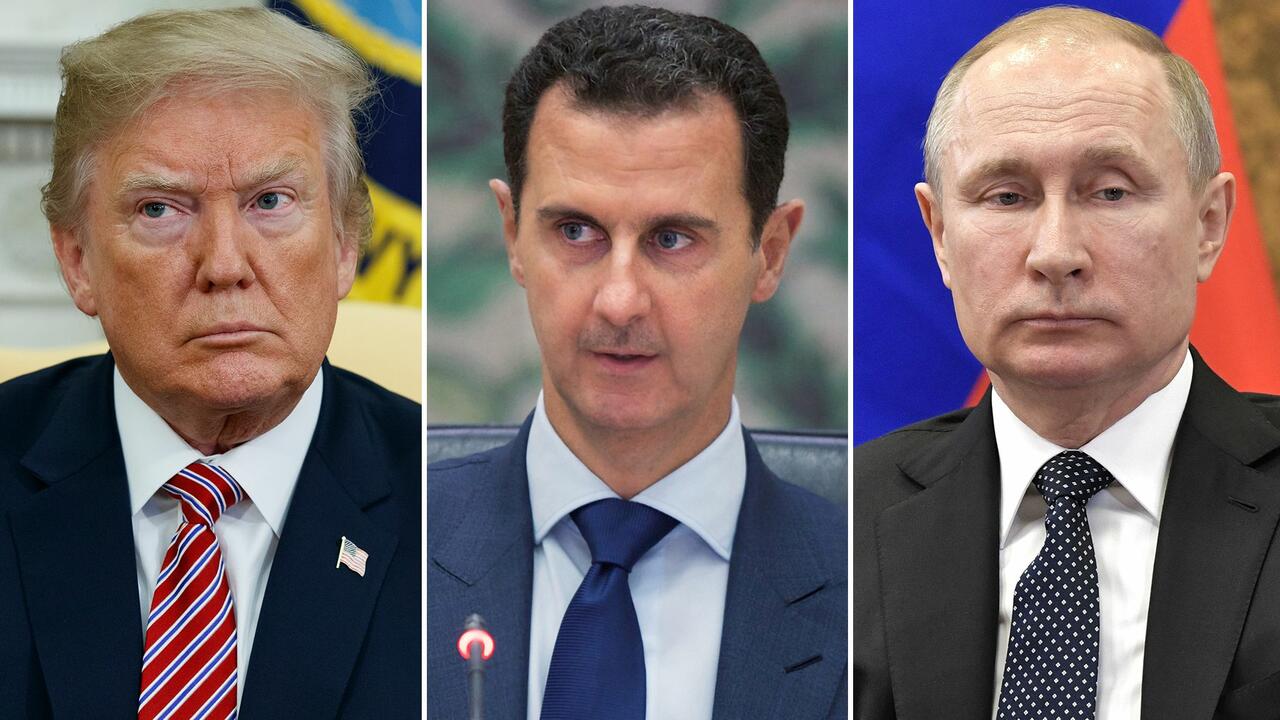
President-elect Donald Trump has weighed in on the rapid-moving events in Syria, where jihadist groups backed by Turkey are entering the outside environs of the capital of Damascus. The embattled President Bashar al-Assad still appears to be in residence, but his future is far from certain.
“Opposition fighters in Syria, in an unprecedented move, have totally taken over numerous cities, in a highly coordinated offensive, and are now on the outskirts of Damascus, obviously preparing to make a very big move toward taking out Assad,” he began the statement on Truth Social.
Trump emphasized that Washington should stay completely out, calling the situation a “mess” and that it is “not our fight”. He posted the same message on X.
It alludes to Russia’s inability to continue protecting Syria, given it is bogged down in the nearly three year long Ukraine war, while also blasting former President Obama’s past Syria policies and that he laid down ‘red lines’.
Below is the full statement:
Russia, because they are so tied up in Ukraine, and with the loss there of over 600,000 soldiers, seems incapable of stopping this literal march through Syria, a country they have protected for years. This is where former President Obama refused to honor his commitment of protecting the RED LINE IN THE SAND, and all hell broke out, with Russia stepping in. But now they are, like possibly Assad himself, being forced out, and it may actually be the best thing that can happen to them. There was never much of a benefit in Syria for Russia, other than to make Obama look really stupid.
Syria is a mess, but is not our friend, & THE UNITED STATES SHOULD HAVE NOTHING TO DO WITH IT. THIS IS NOT OUR FIGHT. LET IT PLAY OUT. DO NOT GET INVOLVED!”
Opposition fighters in Syria, in an unprecedented move, have totally taken over numerous cities, in a highly coordinated offensive, and are now on the outskirts of Damascus, obviously preparing to make a very big move toward taking out Assad. Russia, because they are so tied up…
It must be remembered that Hayat Tahrir al-Sham (HTS), the group backed by NATO member Turkey and leading this anti-Assad onslaught, is a US-designated terror organization.
A big question is: what comes next? While HTS has morphed from Syrian Al-Qaeda, it is trying to present to the West a softer image, claiming that it will protect minorities including Christians. However, its recent past clearly demonstrates that it rules territories under its control with Taliban-style force and brutality.
Much of the nation’s population until now has stuck with Assad given the alternative is Somalia-style fracturing and rule by competing jihadist warlords. One thing is for sure: Trump will inherent dealing with an absolute tragic mess in Syria, the heartland of the Middle East, upon his opening days in office.
Except the US has backed these Islamic rebels, for the very purpose of removing Assad who has protected the Christians in Syria and for that purpose, we should remove all support from the rebels. #orthodoxhttps://t.co/eG7dbsYaKb
Currently, US forces still occupy one-third of Syria, in the oil and gas areas of the northeast. During Trump’s first term he expressed an effort to “bring the troops home” but it’s widely reported he was stymied by his generals and national security officials
After a screaming match between acting Secret Service Director Ron Rowe and Texas Rep. Pat Fallon erupted at a Thursday House hearing on the attempted assassination attempts against President-elect Donald Trump, new details are emerging about the circumstances that sparked the outburst.
Several Secret Service sources question whether Rowe has perjured himself during the explosive exchange.
The face-off occurred during the final meeting of the House Task Force on the Attempted Assassination of Trump when Fallon produced a photo of Rowe standing behind President Joe Biden and Vice President Kamala Harris at a 9/11 memorial event in New York City in September. Trump and Vice President-elect J.D. Vance appeared on the right side of the photo.
The congressman, a Texas Republican, pressed Rowe on why he had positioned himself behind Biden when normal Secret Service protocol would place the most senior member of the president’s detail in that position to provide the best protection to the president. The event took place on Sept. 11, just days before the second assassination attempt against Trump at one of the president-elect’s golf courses in Florida.
At the time, the outcome of the election was still unknown, and Rowe was trying to prove that he could quickly rehabilitate the agency’s image after the cataclysmic failures during the July 13 Butler rally that nearly led to Trump’s assassination and did result in the death of Corey Comperatore, a retired local fireman.
Fallon accused Rowe of endangering Biden’s and Harris’ lives by taking their top two agents out of position because he “wanted to be visible because you were auditioning for the job.”
Homeland Security Secretary Alejandro Mayorkas promoted Rowe from deputy director to interim chief of the agency in the wake of the Butler rally. The previous director, Kimberly Cheatle, had resigned after disastrous testimony before the House Oversight and Government Reform Committee.
Rowe responded swiftly and angrily to Fallon’s line of questions.
“Congressman, what you’re seeing is the [Special Agent in Charge of the Detail] out of the picture’s view,” Rowe said. “And that is a day where we remember the more than 3,000 people that died on 9/11,” Rowe added. “I actually responded to Ground Zero. I was there going through the ashes of the World Trade Center. I was there at Fresh Kills,” Rowe added, referencing a Staten Island landfill where debris was taken.
Fallon quickly interjected: “I’m not asking you that.”
“I was there, congressman!” Rowe bellowed while pointing aggressively at Fallon before accusing him of acting like a “bully” and politicizing 9/11.
BREAKING: All h*ll breaks loose as USSS Director Rowe and GOP Rep Fallon get in a shouting match over assass*nation attempts on Trump.
Fallon was sharing a photo of Biden with Trump at the 9/11 commemoration to criticize Rowe.
Rowe was already on edge from Fallon’s pointed questioning just minutes before. The congressman asked Rowe whether he knew that Trump was facing a threat from a foreign actor while the Secret Service advance team was preparing for the Butler rally, a likely reference to assassination plots by Iran against Trump’s life. If he did know, the congressman asked why he didn’t intervene to provide a counter-surveillance unit or a full Counter Assault Team, top Secret Service security assets, in addition to the counter snipers the agency provided These additional assets, Fallon asserted, could have prevented the assassination attempt from taking place.
An eyewitness to the 9/11 memorial this year tells RealClearPolitics that Rowe’s decision to take the place of the top two agents in charge of the president’s and vice president’s detail spurred resentment among the ranks. The source said there were toe marks placed on the ground with every attendee’s name and title. Rowe’s original toe mark was three rows back.
Instead of simply standing where he was designated, Rowe disregarded the arrangement and placed himself behind Biden and Harris. The leaders of those details then had to squeeze in so they could be within arm’s reach of the president and vice president if they faced any threats. The source also noted that Rowe’s wife, a longtime Secret Service employee, was the photographer for the event that day and was snapping “a ton of action shots of Ron standing in his place of prominence.”
During Thursday’s testy shouting match, Fallon demanded to know whether Rowe had a gun and radio on him during the ceremony, an apparent reference to whether he was operational and equipped to respond to a threat against Biden’s or Harris’ lives if any arose.
Rowe retorted that he did have a radio and a gun on him at the ceremony and insisted that the protective mission was not compromised by his decision to move to a more prominent position. The Secret Service press office provided a lengthy explanation of his Secret Service roles in New York City after the 9/11 attacks but didn’t respond to a follow-up question from RealClearPolitics on whether he stood by those remarks about having a gun and radio on him during the ceremony.
Rank-and-file agents were incensed over Rowe’s screaming match and said they doubted the acting director’s testimony that he had a radio during the 9/11 ceremony this year because he wasn’t wearing an earpiece to hear the intelligence chatter on a radio. They also said top Secret Service officials usually do not wear earpieces or ballistic missile vests to ceremonies like the one on 9/11 because they spend most of their time meeting with other officials, not monitoring radio traffic for threats.
After the blow-up went viral on social media, the Secret Service provided a statement clarifying Rowe’s work in the aftermath of the Sept. 11 attacks.
“Acting Director Ronald Rowe volunteered to support the U.S. Secret Service’s official response efforts in New York following 9/11,” Guglielmi said in a statement. “He was a part of the second response rotation, which occurred in mid-October 2001. As part of his duties, he worked to support recovery efforts at both Fresh Kills Landfill and Ground Zero.”
“Acting Director Rowe joined the U.S. Secret Service in 1999 and was working as a shift agent assigned to protect a visiting foreign dignitary in Washington, D.C. on the day of the 9/11 attacks,” Guglielmi added.
“In reference to your questions about the 9/11 memorial, all detail personnel were present and had complete access to their protectees during the memorial,” he concluded.
While most of the hearing recycled previous revelations about the agency’s failures during the Butler rally, Rep. Mark Green, who chairs the House Homeland Security Committee, also expressed outrage in expletive-laced questions over how the agency missed such obvious security vulnerabilities.
Green said the agency’s conduct during the July shooting seemed “lackadaisical” and slammed the agents in charge of the Butler rally, whom he said showed up to the event and “didn’t give a shit.”
The Tennessee Republican who previously served as an Army doctor argued that the Secret Service has a “command-climate” problem. “There was apathy and complacency, period, and that’s your mission,” Green told Rowe.
Rowe provided a vague response to Green’s concerns.
“So, we are reorganizing, reimagining the organization that includes making sure that we are developing leadership programs,” he said.
In his opening statement, Rowe said he spent the months since the assassination items focused on implementing reforms to ensure that the failures at Butler never happen again.
“I have reflected extensively on the agency’s substandard performance during the advance for the Butler rally,” he said. “It has been my singular focus to bring much-needed reform to the Secret Service, to be an agent of change, to challenge previous assumptions – [to ensure that] the brave men and women of the Secret Service have the resources, leadership, and assets that they need to be successful in carrying out our protective mission.”
Addressing criticism that the agents involved in the poor planning for and execution of the Butler rally, have not been held accountable, Rowe expressed frustration with the length of time it takes to provide “accountability” for the failures.
“Let me be clear: There will be accountability, and that accountability is occurring,” he said. “It is an extensive review that requires time to ensure due process and the pace of this process, quite frankly, it does frustrate me, but it is essential that we recognize the gravity of our failure.”
Argentine Energy Companies Issue US Debt As Milei’s Favor Grows On Wall Street
Confidence in Argentina, and its economy, looks to be picking up steam.
So much so that Argentine energy companies are tapping U.S. debt markets, according to Bloomberg.
Shale driller Vista Energy raised $600 million in its first foreign bond sale, while Pampa Energia is planning another market return this year amid growing output in Argentina’s Vaca Muerta shale. MSU Energy also secured $177 million to refinance debt.
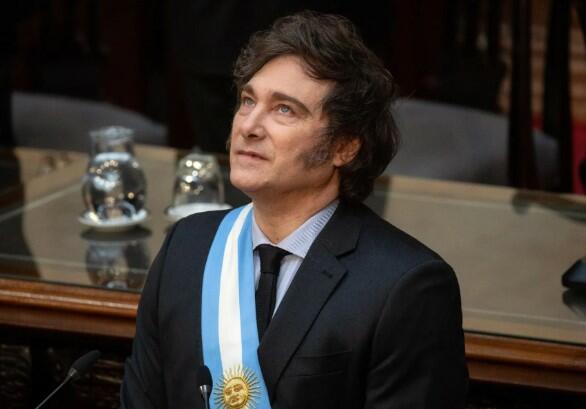
It’s hard to say that these efforts to access global lenders do anything but underscore Wall Street’s growing confidence in President Milei as he nears the end of his first year in office.
Milei has stayed committed to his agenda of economic deregulation and addressing chronic government budget deficits.
Alexander Robey, portfolio manager for emerging-market debt at Allianz Global Investors GmbH, commented: “The positive momentum on the macroeconomic side is opening the door for corporates to raise capital and refinance existing debt in the markets.”
He added: “Issuers are making the most of this opportunity given market sentiment can turn just as quickly.”
Bloomberg writes that Argentina’s sovereign debt spread is at a five-year low of 757 basis points, creating a favorable environment for issuers.
Vista Energy secured an 11-year bond at a 7.6% yield, lower than the 8%-9% range seen in earlier market activity this year.
It’s amazing what actually embracing free market solutions can do, isn’t it?
Jihadists Reach Outskirts Of Damascus Amid Likely Transition Of Power Deal, Assad’s Fate Uncertain
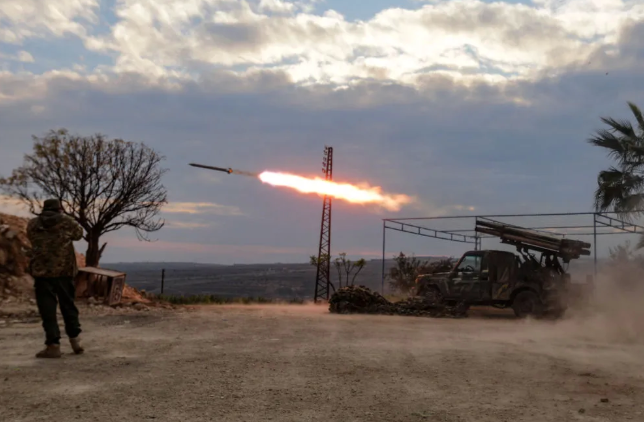
There are widespread reports that jihadist forces under Hayat Tahrir al-Sham and which are backed by Turkey have entered key districts of Homs in central Syria, and other convoys have already reached the outskirts of Damascus.
Very little fighting has actually taken place, with the Syrian Army peeling back from position after position, and with heavy equipment including tanks seen being transported to the capital or in other instances to the coast. ZeroHedge’s contacts in Damascus strongly suggest a transition of power deal has already been made.
External discussions are centered in Doha, and some premature and unverified reports have claimed President Bashar al-Assad has already flown out of the country; however, Syrian state SANA on Saturday sought to refute these reports, saying he is still in Damascus.
Iranian advisers and IRGC officers have departed Damascus. This also partly explains why Syrian national forces have not put up much of a fight.
Unverified social media reports further say that anti-Assad forces have essentially been able to walk into suburban or countryside areas of the capital with no resistance. Again, what points to the likely reality of a secret deal which allows Assad’s safe exit and that of his top officials is the fact that all of this is happening without much bloodshed.
Below is the latest on the jihadist convoy locations according to The Guardian:
Syrian insurgents have reached the suburbs of Damascus, opposition activists and a rebel commander said on Saturday, as a rapidly moving offensive in which they have taken over some of Syria’s largest cities continued.
Rami Abdurrahman, who heads the UK-based Syrian Observatory for Human Rights, an opposition war monitor, said insurgents were active in the Damascus suburbs of Maadamiyah, Jaramana and Daraya.
He said opposition fighters were also marching from eastern Syria towards the Damascus suburb of Harasta.
Hassan Abdul-Ghani, an insurgent commander, posted on Telegram that opposition forces had started to encircle Damascus in the “final stage” of their offensive. He said fighters were heading from southern Syria towards Damascus.
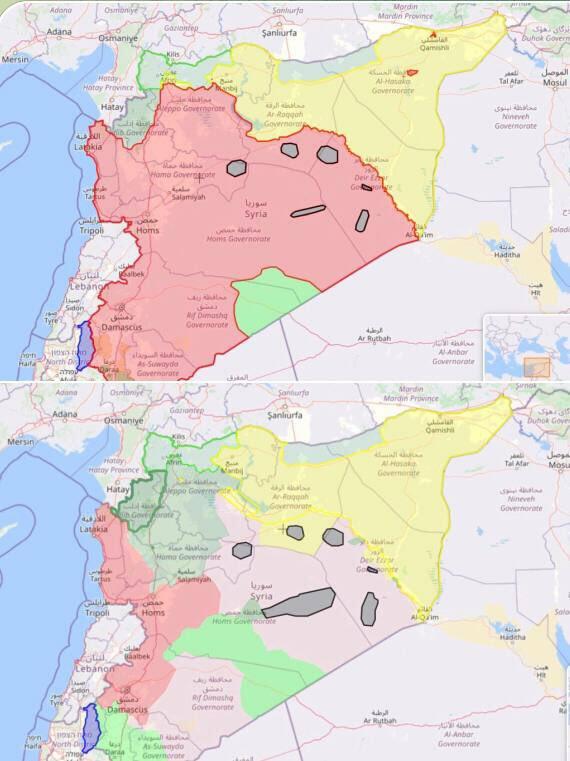
Map: The collapse of Syria over the last 10 days
Whatever happens next, it is becoming clear that the Baathist Syrian state under the Assad family, which goes back to 1970 when Hafez Assad first emerged in power, will never be the same again – and is coming to a fast end.
Many Christian, Alawite, and Sunni ruling families in the capital area are fleeing to the Lebanese border, not waiting around to take their chances under Taliban-style rule, despite dubious claims that HTS plans to respect ‘diversity’ and pluralism.
Footage from a key suburbs outside the capital [note: cannot be independently verified]…
SYRIA: Anti-Assad protestors bring down Hafez Assad statue in middle of Jarmana (20 min from Damascus). The protests and rebel offensive are only spreading, gradually approaching capital… pic.twitter.com/kkBhGsOlj2
— Jordan Embassy in Washington D.C. (@JorEmbUS) December 6, 2024
Regional war correspondent Elijah Magnier observes, “It looks like what will remain of the old Syria will be limited to Homs, for now, and on longer term Latakia – Tartous only. Lebanon should think about defended its borders. People in Damascus should think of their future in the next 24-48 hours.”
Meanwhile the Syrian Interior Minister Major General Al-Rahmon vows that “there is a very strong security cordon on the outskirts of Damascus and no one can break it.”
CEO Murder Update: Backpack Found In Central Park, Suspect May Have Immediately Left City By Bus
An intensive search of New York City’s Central Park seems to have yielded an important break in the hunt for the assassin of UnitedHealthcare CEO Brian Thompson: Police think they’ve found a backpack that the killer ditched as he fled the murder scene. Meanwhile, police have released a detailed timeline of his movements around the city, and say the suspect the mystery man fled the city by bus very soon aftercarrying out his premeditated crime on Wednesday morning.
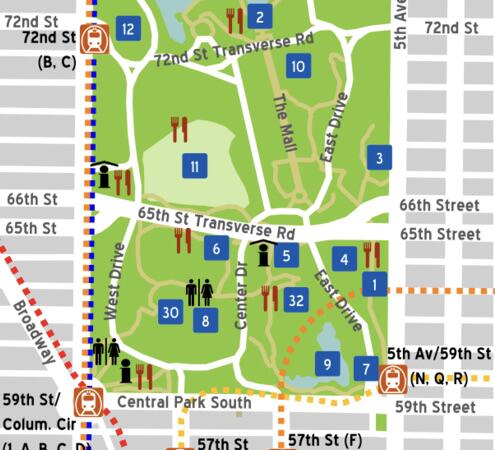
At 6:44 am, the suspect shot the 50-year-old Thompson — who was arriving at the New York Hilton Midtown for an investors’ meeting — in the back and leg before leaving first by foot, then using an e-bike he rode through Central Park. Police think he entered the park by riding north up 6th Avenue, and then exited the park at West 77th Street — minus the backpack he wore before and during the killing and as he rolled into the park.
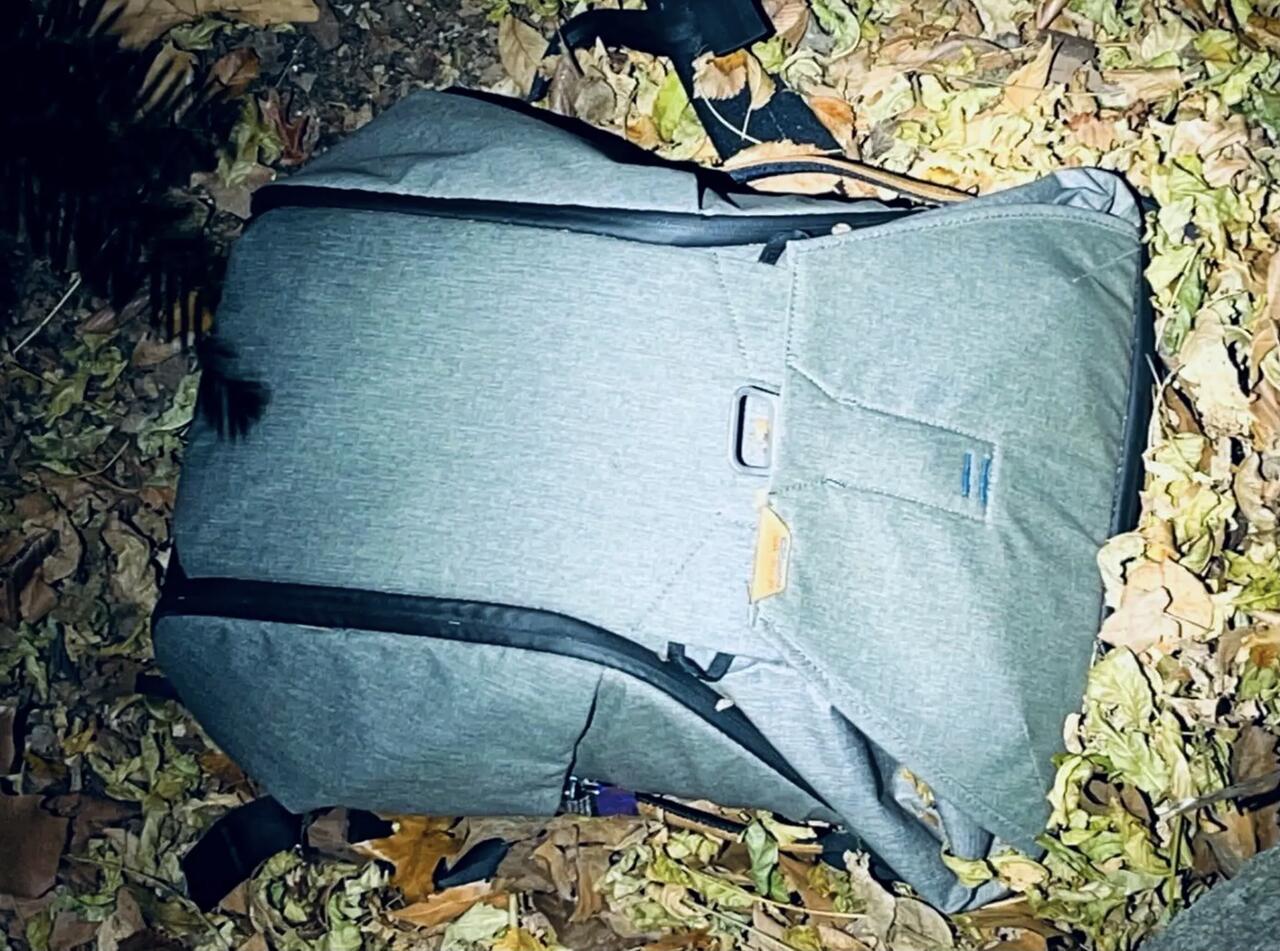
Concluding the pack was likely somewhere in the park — and within it, perhaps the murder weapon — NYPD assigned more than 100 police officers to comb the 840-acre expanse. They hit paydirt, with the New York Post reporting that cops found the apparent backpack in a treed area south of the Carousel near Heckscher Playground near Central Park South.
So far, police haven’t leaked anything about the contents of the backpack, which appears to be an Everyday Backpack sold by Peak Designs between 2016 and 2019. Marketed for use by photographers but also used by others, the latest version goes for about $250. Police have yet to find the killer’s getaway bike, which he seems to have abandoned somewhere after he exited Central Park and before he made his way to a bus station.
On Friday, police provided their most detailed accounting yet of the suspect’s moves around New York City since he arrived on a Greyhound bus 10 days before carrying out the killing — along with what they’ve learned from questioning of witnesses, including people who stayed at the same hostel he did:
Friday, Nov 24: The Killer Arrives
Suspect arrives in New York City at 10:11 pm on a Greyhound bus that originated in Atlanta and made six or seven stops along its journey. Police are unsure where he got on. He immediately takes a cab to the site of the assassination — the New York Hilton Midtown — and walks around the area for a half hour before heading to theHI New York City Hostel at Amsterdam Avenue and West 103rd Street, on the Upper West Side near Central Park.
5:30 am: Suspect leaves the hostel, likely via bike, and arrives at the Hilton 11 minutes later.
5:41 am: After wandering in the hotel’s vicinity and strolling back and forth along West 54th, he goes to a Starbucks and purchases water and a Kind snack bar.
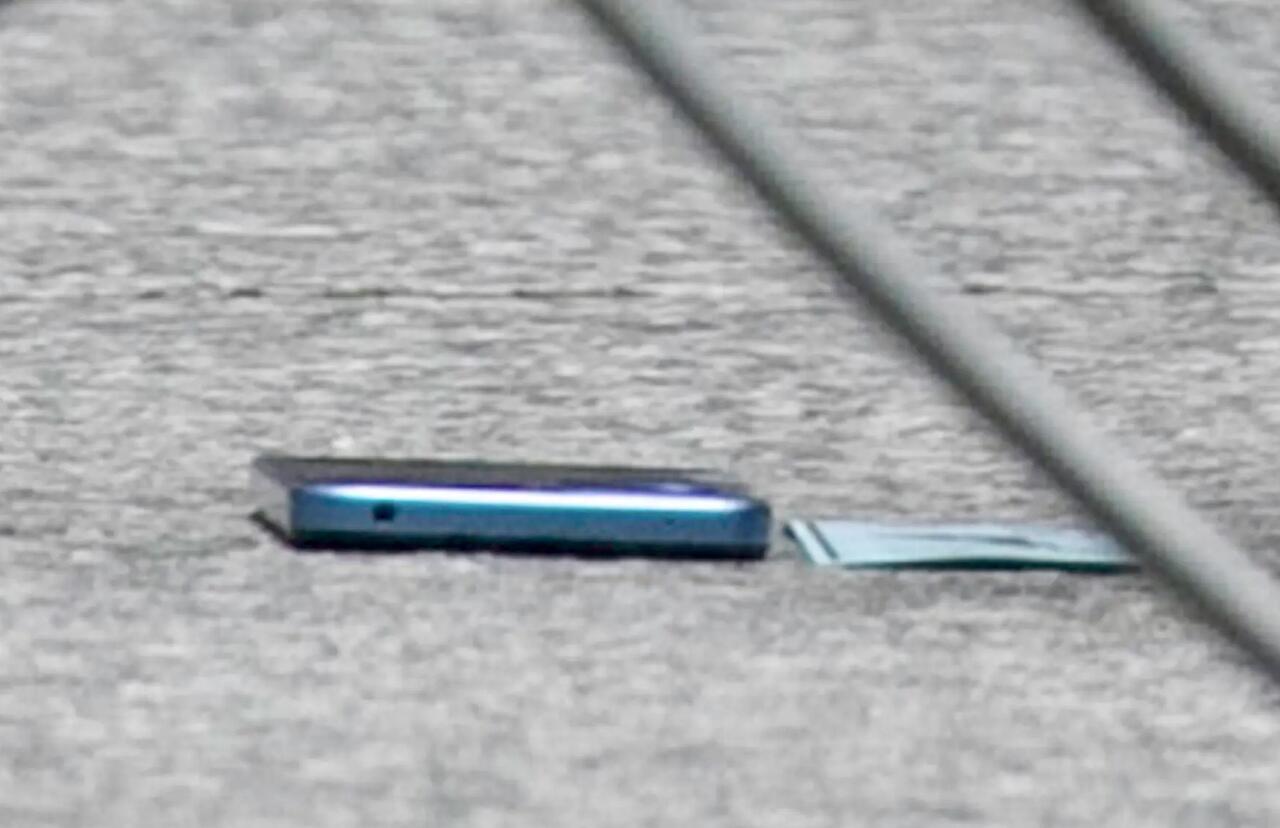
6:30 am: Suspect appears to be talking on a cell phone; police later recover a phone in a nearby alley
6:44 am: He fatally shoots UnitedHealthcare CEO Thompson — who had walked from his lodging at the Marriott across the street — in the back and leg. The suspect flees into an alley where he apparently stashed his bike.
6:48 am: He enters Central Park at 60th Street — still wearing the backpack — and rides onto Center Drive
6:56 am: Suspect exits the park close to West 77th Street — now without the backpack
6:58 am: Suspect captured on security camera video biking at 86th Street and Columbus Ave.
7:00 am: Now on foot, he’s walking on 86th Street. Next, he hails a cab close to West 85th and Columbus Avenue, and heads for the George Washington Bridge Bus Station, which provides interstate service to Philadelphia, Boston and Washington, DC.
7:30 am: Suspect has arrived at the bus station, with video capturing him entering but not leaving, leading police to think he may have left the city very shortly after his crime.
NYPD chief of detectives Joseph Kenny also gave new insight into how the suspect conducted himself during the several nights he stayed a the hostel:
At the hostel, he stayed under fake identification, always using cash, avoiding conversation and hiding his face with his mask even during meals, the chief said. He never spoke with anyone and lowered his mask once to speak, smiling, to the hostel clerk when he first checked in, the chief said. — New York Times
“From every indication we have from witnesses, from the Starbucks, from the hostel, he kept his mask on at all times except for the one instance where we have him photographed with the mask off,” said Kenny. Police didn’t find any clues in the room he shared with strangers — who tell police he never spoke to them.
As we detailed on Friday, CBS News reported that scrutiny of the video of the shooting has led police to believe the murderweapon is a B&T Station SIX-9, a highly unusual weapon which comes equipped with a sound-suppressor and retails for around $2,100. However, at Friday’s briefing Kenny saidpolice were considering if the killer may have used a veterinary pistol, which he said is often used in agricultural settings for quiet euthanasia of animals.
The killer used a sharpie to write “deny,” “defend” and “depose”onshell casings recovered at the scene of the crime.Given the words’ similarity to the title of Jay Feinman’s book, “Delay Deny Defend:Why Insurance Companies Don’t Pay Claims And What You Can Do About It,” there’s reason to think the assassination may have been sparked by animus over UnitedHealthcare’s business practices — either from a customer or an employee.
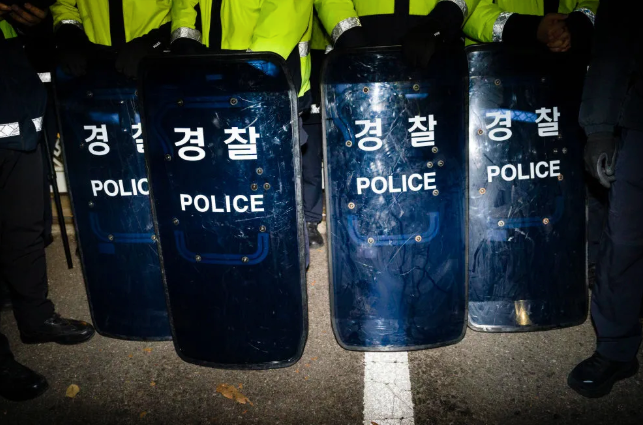
South Korea’s President Survives Impeachment Vote As Protests Erupt
Days after President Yoon Suk Yeol declared a brief state of emergency martial law (probably the shortest on record), an opposition party’s attempt to impeach him failed when most lawmakers from his conservative ruling party boycotted the vote.
The Democratic Party’s move to impeach Yoon was thwarted on Saturday by the president’s People Power Party, which announced shortly before the assembly session that it had decided to oppose the bill.
Impeaching the president requires a two-thirds majority in the 300-member assembly – or about 200 votes. However, the opposition party fell short of the threshold, as members of the president’s party largely abstained from voting.
AP News cited National Assembly Speaker Woo Won Shik, who called the failed impeachment vote “very regrettable” and a national “embarrassment.”
“The failure to hold a qualified vote on this matter means we were not even able to exercise the democratic procedure of deciding on a critical national issue,” the speaker said.
Earlier in the day, Yoon apologized to the South Korean people for the emergency martial law, admitting he acted out of ‘desperation.’ He made no mention of resigning or impeachment, stating that he would leave that decision to his party.
Opposition parties could push through a new impeachment motion after the new parliamentary session opens next Wednesday.
“There are worries that Yoon won’t be able to serve out his remaining 2 ½ years in office because his leadership took a huge hit,” AP noted, adding, “Many experts say some ruling party lawmakers could eventually join opposition parties’ efforts to impeach Yoon if public demands for it grow further.”
Protests gathered outside the National Assembly building shortly after the motion to impeach Yoon failed.
“Tens of thousands of protesters massed outside South Korea’s National,” NYTimes wrote in a running blog.
JUST IN – Massive crowd gathers before the National Assembly plenary session to vote on South Korea President Yoon Suk Yeol’s impeachment motion pic.twitter.com/IF7SFXR3kj
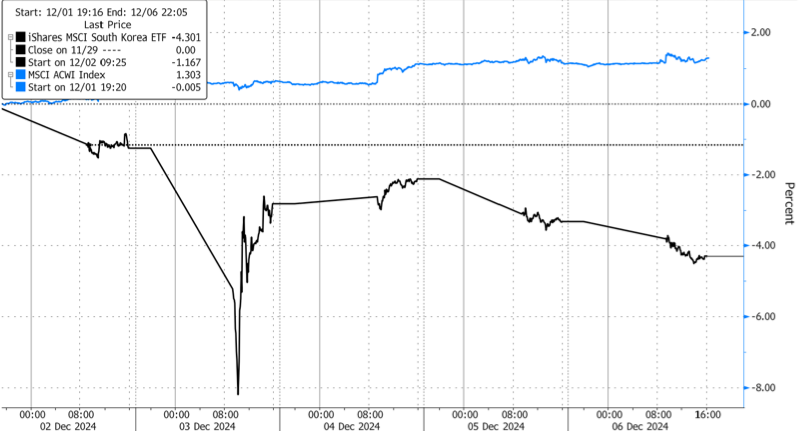
In markets, the MSCI All Country World Index (ACWI) was up 1.3% on the week, Ishares MSCI South Korea ETF (EWY) fell 4.3%.
Meanwhile, Graham Ambrose, managing director of Goldman Sachs’ equity franchise sales team in London, told clients late Tuesday that there could be “buying opportunities in Seoul in coming days.”
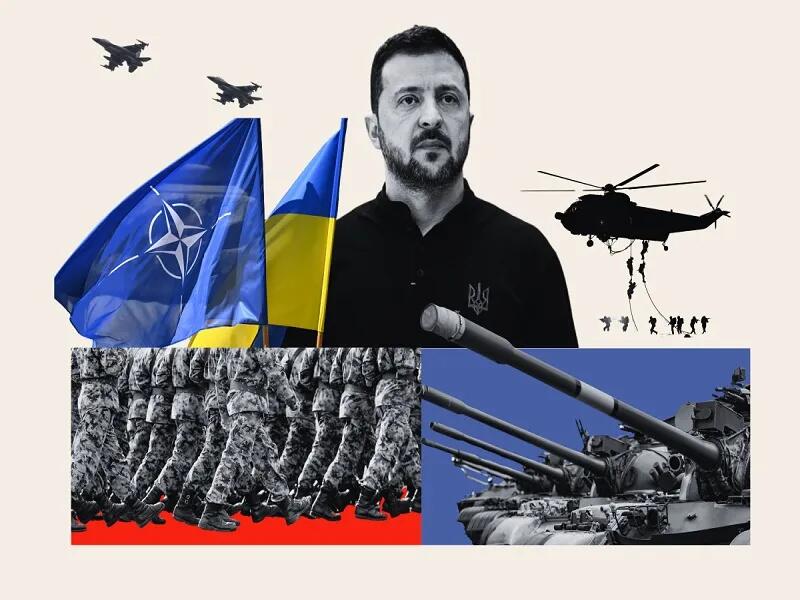
Ukraine will still remain a de facto member of NATO so long as its security guarantees with the bloc’s members remain in effect.
Zelensky recently flip-flopped on ceasefire terms by signaling that he’d accept a cessation of hostilities in exchange for Ukraine being admitted to NATO, though without Article 5 applying to all the territory that he claims as his own while the conflict remains ongoing. The Ukrainian Foreign Ministry then released a statement about how their country won’t accept any alternative to NATO membership. The Kremlin predictably described this demand as unacceptable.
This coincided with NATO Secretary General Rutte clarifying that his bloc’s focus right now is on arming Ukraine, which corroborated reports from Le Monde that several members such as Hungary, Germany, and even the US oppose Ukraine joining at this time. The larger context concerns Putin finally climbing the escalation ladder after authorizing the historic use of the hypersonic medium-range MIRV-capable Oreshnik missile in combat after the US let Ukraine use its ATACMS inside of Russia’s pre-2014 territory.
Nevertheless, what’s lost amidst the latest news about Zelensky’s flip-flop on ceasefire terms is the fact that this is actually just a faux concession since there isn’t any chance that he’ll capture all of his country’s lost territory, plus he’s still demanding NATO membership, which is at the root of this conflict. At the same time, Ukraine is already arguably a de facto member of NATO after clinching a spree of security guarantees with many of its members over the past year, which resemble Article 5 in spirit.
About that, this clause is popularly misportrayed as obligating countries to dispatch troops in support of allies that are under attack, though it only actually obligates them to provide whatever support they deem necessary. The security guarantees that it clinched institutionalize those countries’ existing support for Ukraine in the form of arms, intelligence sharing, and other aid, which is essentially the same as Article 5 but without any implied (key word) pressure to dispatch troops like full membership carries.
So long as these agreements remain in force, then freezing the conflict even without Ukraine formally joining NATO would still represent Russia’s acceptance of its de facto membership as explained, though it’ll be very difficult for Russia to get Ukraine to terminate these pacts and for its partners to accept that. Germany’s and the UK’s allow for termination within six months of notification without any strings attached, while Poland’s the US’ specify that ongoing and implementing agreements will remain in force.
Per the first, “The termination will not affect the implementation of ongoing activities or projects, which have been decided prior to the date of its termination, unless Ukraine and Poland decide otherwise”, while the second states that “any implementing agreement or arrangement entered into between the Parties consistent with the terms of this Agreement shall continue to remain in effect under its own terms, unless otherwise specified in the terms of the specific implementing agreement or arrangement.”
In other words, even in the unlikely event that Russia coerces Zelensky or whoever his successor might be into terminating these pacts, Poland and the US might still unilaterally implement parts of them per their legal interpretations. This could hypothetically take the form of them carving out a proxy state in Western Ukraine on national security pretexts in order to prevent the deployment of Russian troops on NATO’s borders if the national government somehow falls under the Kremlin’s influence.
Granted, they’d have to have the political will to actually deploy troops to the country and it’s unclear whether they’d be willing to risk World War III over this if the Kremlin signaled that it has the political will to strike those of their troops that might officially enter Ukraine, but it still can’t be ruled out. Accordingly, most emerging scenarios of this conflict’s endgame lean towards Ukraine’s security guarantees with NATO remaining in effect, thus amounting to its continued de facto membership.
The only way in which this can be avoided is if Russia achieves a military breakthrough that enables it to coerce Zelensky or whoever his successor might be into terminating these pacts and the West (chiefly the US and Poland) is either deterred from staging a conventional military intervention, retreats under Russian attack if they go through with it, or are decisively defeated there in a hot war that somehow doesn’t go nuclear. This sequence of events is unlikely to unfold barring some unforeseen development.
Accordingly, even if Russia achieves its four maximalist aims of restoring Ukraine’s constitutional neutrality, demilitarizing that country, denazifying it, and having Kiev recognize the loss of its five former regions, Ukraine will still remain a de facto member of NATO if these security guarantees remain in force.
Zelensky therefore isn’t conceding anything significant by flip-flopping on ceasefire terms. Russia will either accept this new military-strategic reality or it’ll have to resort to brinksmanship to try to change it.
By Stefan Koopman, senior macro strategist at Rabobank
First 100 Days
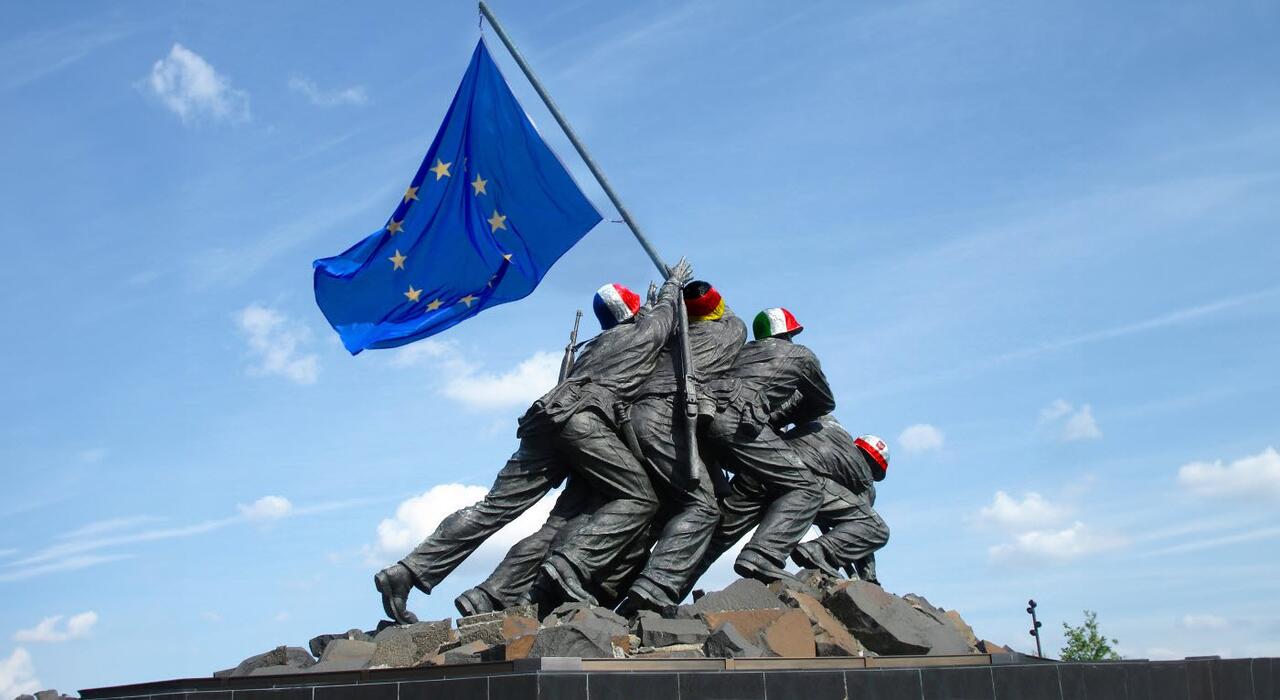
Franklin Roosevelt was the first to mark the symbolic importance of “the first 100 days”, reflecting on his early progress toward the New Deal. In the EU’s case, the first 100 days of a new administration often define the agenda as well. The focus is now fully on competitiveness through strategic autonomy – following up on the recent the Letta and Draghi reports.
On defense, the urgency is evident. The escalating risk environment has pushed European nations to increase defense budgets after decades of underinvestment. However, bridging the gap will take years. Commission President Von der Leyen estimated that Europe needs EUR 500bn in extra defense investment just to catch up. And beyond sheer spending, the EU also wants to pursue efficiencies: greater coordination on what this money will be spent on, while also addressing the highly fragmented and national European defense industry.
Against this backdrop, the Financial Times reports that EU Defense Commissioner Kubilius has proposed a joint borrowing mechanism for military spending. This plan would help finance the bloc’s EUR 500bn target. However, there’s less to it than the headlines suggest. While the proposal helps to streamline funding, its scope and impact may disappoint. The mechanism merely enables and frontloads borrowing, while the funds must still be repaid by individual member states. It neither provides grants, nor does it guarantee EUR 500bn in additional spending, undercutting the headline’s ambition.
Structurally, the proposal faces familiar hurdles. Any joint borrowing initiative would likely encounter resistance from fiscally conservative states, even though this setup seems to revolve around a coalition of the willing and could also include non-EU countries, such as the UK. Still, unanimity remains a significant challenge, as it will likely mean that each disbursement needs to be approved by national parliaments, including the Bundestag. This echoes previous issues with EU-wide ‘borrow-to-lend’-schemes such as the EFSF and the ESM.
There’s also the strategic challenge. Coordinating cross-border defence projects requires shared priorities and operational alignment, which the EU often struggles with. While discussions on project financing may foster some coordination, national interests could still dominate as long as the fund can’t provide grants. If the fund only reduces borrowing costs for some member states but still adds to all member states’ own debt levels, countries will prioritize their own spending choices.
Meanwhile, as Kubilius floated his trial balloon, his boss Von der Leyen traveled to Uruguay. Reports indicate that she is set to finalize the EU-Mercosur trade deal today. This would mark the EU’s largest trade agreement in terms of population and trade volume. The agreement, 25 years in the making, appears poised for completion just two days after the collapse of the French government, giving Von der Leyen a strategic moment to bypass France’s long-standing objections. France remains firmly opposed to the deal and is actively seeking to form a blocking minority to prevent its ratification, despite the new market opportunities it offers Europe at a time when US President-elect Donald Trump is threatening a 10% tariff on EU goods. Additionally, the EU cannot pursue its strategy of de-risking and diversifying away from China without opening new markets in other economies. In this context, an EU-Mercosur deal represents the EU’s best opportunity to align the continent with its own regulatory framework rather than China’s.
Elsewhere, OPEC+ has once again delayed the revival of its oil production, marking the third deferral as crude prices struggle amid a looming surplus. This latest delay pushes the return of the halted 2.2 million barrels to September 2026, a full year later than initially planned when the roadmap was announced in June. This move underscores how much weaker the oil market has turned out to be compared to OPEC+’s initial expectations. The decision to add some barrels in the first half of next year has been perceived as mildly bearish, with the first Brent contract now hovering at USD 71.8/bbl. Despite this, the market remains rangebound, with crude prices trading well within the 6-dollar band seen since mid-October.
The ‘Axis of Upheaval‘ is on the march—and the U.S. must figure out how to respond.
If it feels like the world is on fire right now, that’s because it is. From Ukraine to Syria to the Korean Peninsula, a widening array of conflicts is raising questions among defense experts: Is it 1914 again? 1939? Has World War III already started and we’re just now figuring it out?
For retired Lieutenant General H.R. McMaster, who served as Donald Trump’s second national security adviser from 2017–2018, the answer is clear.
“I think we’re on the cusp of a world war,” McMaster told The Free Press. “There’s an economic war going on. There are real wars going on in Europe and across the Middle East, and there’s a looming war in the Pacific. And I think the only way to prevent these wars from cascading further is to convince these adversaries they can’t accomplish their objectives through the use of force.”
That won’t be easy. Consider the facts:
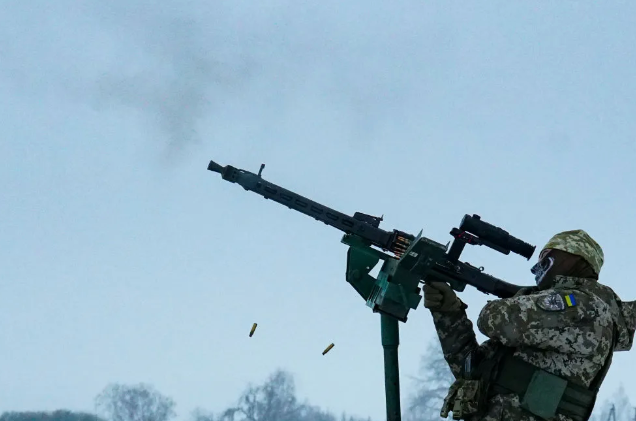
In Ukraine, thousands of North Korean soldiers have recently joined Russian ground troops to bolster President Vladimir Putin’s invasion of the country. Meanwhile, Russia has opened up a new front in the war by entering the northeast Kharkiv region, as it continues to assault Ukraine’s cities and block its ports.
A U.S.-brokered ceasefire in Lebanon that forced terror group Hezbollah to retreat from Israel’s northern border is showing signs of unraveling. Meanwhile, the Jewish state is still fighting a war in the Gaza Strip, where around 60 Israeli and U.S. hostages remain. And last month, Israel’s air force destroyed much of Iran’s air defense systems, leaving Tehran’s nuclear facilities exposed to future attacks.
Rebels in Syria have recently seized key areas of the country that had been controlled for years by dictator Bashar al-Assad and his Russian and Iranian backers. Now that these insurgents have taken Aleppo, they are vowing to march on Damascus.
In the Baltic Sea, investigators suspect a Chinese ship of sabotaging critical underwater data cables that linked NATO states. Concerns about CCP aggression are mounting amid an emerging consensus in Washington that China would defeat the U.S. in a Pacific war, largely due to Beijing’s naval superiority.
And on Tuesday, South Korea’s president briefly declared martial law, alleging he needed to fend off a North Korean–backed coup led by the opposition party. Massive protests caused him to back down, and he is now facing impeachment proceedings.
These wars, rebellions, and spy tales may appear disconnected. But in reality, they all point to a widening global conflict that is pitting the U.S. and its allies against China, Russia, Iran, and North Korea—nations all fixated on toppling the West. Strategists have even come up with catchy nicknames for this anti-American coalition, dubbing the bloc the “Axis of Aggressors” or the “Axis of Upheaval.”
Philip Zelikow, who served as executive director of the 9/11 Commission and counselor to Secretary of State Condoleezza Rice from 2005 to 2007, is among those who think these conflicts are related. “I think there is a serious possibility of what I call worldwide warfare”—meaning a world war that is not as coordinated as past global conflagrations. “It’s not hard to see one of these conflicts crossing over into another.”
As Trump prepares to enter office next month, his primary foreign policy task should be to prevent an actual full-blown World War III, sources told The Free Press—or to stop it from metastasizing if it’s already here.
To do this, the president-elect will have to fortify alliances with NATO, South Korea, and Japan—partnerships Trump has already shown he’s skeptical of. And he will need to stare down a number of American adversaries, including Putin, Chinese president Xi Jinping, and North Korean dictator Kim Jong Un—a despot for whom Trump has expressed both scorn and admiration.
At the same time, Trump benefits from his willingness to break from past U.S. policies and institutions that have helped foment these current conflicts. This includes a defense industry that doesn’t produce the right weapons to compete with China or enough munitions to arm Ukraine. Defense strategists in previous U.S. administrations have been blind to the Axis of Aggressors’ moves to expand their global power, sources told me—placing too much faith in global institutions, such as the United Nations, that were incapable of checking them.
Trump, with his nontraditional advisers such as Elon Musk and Vivek Ramaswamy, could potentially revolutionize the way the U.S. builds and projects power, sources told me. SpaceX CEO Musk, in particular, could marry America’s military establishment with Silicon Valley’s start-up culture to produce, at scale, the types of smart airplanes, drones, and submarines needed to deter Washington’s enemies, they said.
But Trump’s desire to shake up Washington and dismantle many of its national security institutions comes with enormous risk. The disruption of the Pentagon, State Department, and FBI could make the U.S. and its allies more vulnerable if these institutions become inoperable or less efficient, current and former officials told The Free Press.
“What he’s gonna need is some agenda to bring the world back together after he pulls things apart,” said David Asher, senior fellow at the Hudson Institute, who oversaw U.S. government operations against Russia, China, North Korea, and Iran in the George W. Bush, Obama, and Trump administrations.
The threat of a widening global conflict is being driven by factors reminiscent of events before the start of World War I, sources told me. This includes the breakdown in alliances and trading systems and the arrival of disruptive technologies like airplanes, telephones, and mechanized weapons. Today, there is no longer a consensus that free trade will bring countries closer together and forestall future wars. And the Covid-19 pandemic revealed the dangers of reliance on China for medical supplies. Trump’s threats to slap high tariffs on China and other countries also raise the specter of greater conflict.
“What you learn when you study economic history is that long cycles do end and when they do, they end with war,” said Asher, who’s worked on Wall Street and said he has recently briefed financial institutions on the threat of a global conflict.
Both McMaster and Zelikow said that the Syrian civil war that started nearly 15 years ago should have been a major wake-up call to the U.S., Europe, and NATO. The Obama administration tried to oust al-Assad through diplomacy and talks that included Russia and Iran, the strongman’s primary patrons. But then the U.S. and Europe were blindsided in 2015 when Moscow and Tehran propped up al-Assad with both air and ground troops.
“We started talking about great power rivalry and all of that, but we didn’t really do anything to arrest these trends,” said Zelikow, who’s now a senior fellow at Stanford University’s Hoover Institution.
This Syrian playbook can now be seen in Ukraine. Iran, North Korea, and China have all been supplying weaponry or technologies to Russia, while Iranian-backed Houthi fighters are now reported to be on the Ukrainian battlefield alongside North Korean troops.
The war in the Middle East, sparked by Hamas’s invasion of Israel on October 7, 2023, has also attracted this broader axis. The Houthis, in support of Hamas, have been attacking international ships in a critical transit strait of the Red Sea. And they’ve been getting guidance from both Tehran and Moscow, according to current and former U.S. officials.
On the north side of the strait, an Iranian general is “directing the Houthis using Russian intelligence,” McMaster told The Free Press. On the south side, “you have an Iranian surveillance ship. And you have a Chinese [naval] port, you know? I mean, that’s not by mistake.”
How will the Trump administration confront this emboldened axis? A significant divide among foreign policy strategists may prove difficult to bridge. In one corner are hawks and traditional Republican conservatives—such as incoming National Security Adviser Mike Waltz, Secretary of State nominee Marco Rubio, and UN Ambassador designee Elise Stefanik—who have called for a muscular defense of Pax Americana. They’re expected to press Trump to continue arming Ukraine, Israel, and Taiwan, and even amp up our military support to preserve the Western order.
On the opposing side is an isolationist wing reflected in the public musings of Trump’s eldest son, Don Jr., who tweeted on November 17 about the Biden administration’s decision to provide long-range missiles to Ukraine:
The Military Industrial Complex seems to want to make sure they get World War 3 going before my father has a chance to create peace and save lives. Gotta lock in those $Trillions. Life be damned!!! Imbeciles!
Trump’s vice president J.D. Vance, and his advisers, including Tucker Carlson to Tulsi Gabbard, also believe U.S. military overreach led to catastrophic U.S. wars in Iraq and Afghanistan, and needless Western provocations of Putin that sparked his invasion of Ukraine. They argue that stepping back, rather than expanding, is the key to global peace.
Some Trump confidantes told The Free Press they’ve been studying U.S. policies that led up to the past two world worlds as guidance for today. They have concluded that Washington was too lenient on Hitler’s Germany leading into World War II, but too committed to European allies in the early 1900s ahead of World War I. And they believe Trump will need to strike a balance between these two postures.
“I think you have to learn the lessons of both wars,” Peter Thiel, the tech investor and close Trump ally, told The Free Press last month. “You can’t have excessive appeasement, and you also can’t go sleepwalking into Armageddon. In a way, they’re opposite lessons.”
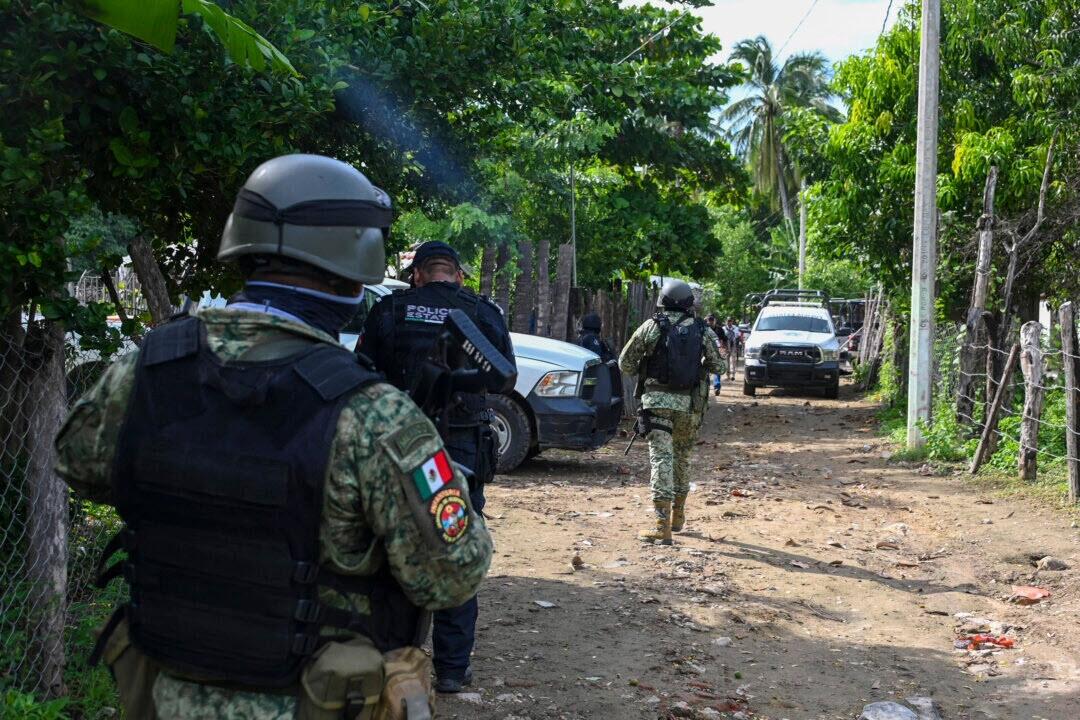
Mexican security forces said on Dec. 4 that they had made the largest fentanyl seizure in the country’s history, impounding 1,100 kilograms (1.2 tons) of the synthetic opioid in the state of Sinaloa.
Mexico’s top security official, Omar García Harfuch, said in a statement that more than a ton of fentanyl was seized by officials in Sinaloa state. Several guns were also seized, and two men were arrested, he said.
“This is an investigation that has been going on for a long time, and yesterday, it gave these results,” Mexican President Claudia Sheinbaum said at a press conference on Dec. 4, referring to the fentanyl seizures.
Violence has worsened recently in Sinaloa, where factions of the Sinaloa Cartel have been engaged in bitter fighting that flared after the capture of kingpin Ismael “El Mayo” Zambada in July.
“These actions will continue until the violence in the state of Sinaloa decreases,” Harfuch said.
Sinaloa is home to the powerful drug cartel that bears the same name and was formerly headed by longtime drug lord Joaquín “El Chapo” Guzmán, who is currently incarcerated at the ADX Florence federal prison in Colorado.
Security forces found the fentanyl at two properties in the municipality of Ahome after intelligence work and tip-offs from the public led them to investigate there.
In one building, law enforcement found 800 kilograms (1,763 pounds) of fentanyl, some precursor chemicals, and four vehicles. In the other, they discovered 11 packages totaling about 300 kg (660 pounds) of fentanyl, as well as precursors, scales, and industrial mixers.
Former Mexican President Andrés Manuel López Obrador, who handed over power to Sheinbaum in October, repeatedly denied that Mexico was a center for the production of fentanyl despite significant evidence to the contrary.
U.S. President-elect Donald Trump recently threatened to levy a 25 percent tariff against Mexico and Canada if either country didn’t do enough to curb illegal immigration and fentanyl trafficking into the United States.
His warning prompted a phone conversation with Sheinbaum, with the Mexican president later saying that caravans of migrants will be stopped before they reach the U.S.–Mexico border. However, she denied Trump’s claim last week that the Mexican border was closed down.
This week, activists and a Mexican agency said a migrant caravan heading north was dissolved. The Mexican National Migration Institute denied claims that the agency used deceptive tactics and said it had not received “any complaints” from members of the caravan.
Meanwhile, Canadian Prime Minister Justin Trudeau met with Trump at his Mar-a-Lago residence in Palm Beach, Florida, before several top Canadian officials assured reporters that the country would improve its border security with the United States.