Soaring Electricity Demand Meets Gas Turbine Shortage

Soaring Electricity Demand Meets Gas Turbine Shortage

Authored by Irina Slav via OilPrice.com,

  • AI-driven power demand is surging far faster than expected, but a shortage of heavy-duty gas turbines is creating a bottleneck.

  • Turbine makers like Siemens, GE Vernova, and Mitsubishi are ramping up production, but expansion projects could take up to 5 years.

  • Without enough gas capacity, AI growth could slow or grids may turn back to coal, potentially delaying coal plant retirements.

The surge in electricity demand in the world’s AI hotspots has prompted a comparable surge in the demand for reliable supply. That surge was not expected. There are not enough gas turbines to secure that supply. This means the AI revolution would either have to slow down, or the grid would have to increase its reliance on coal.

Natural gas has in recent years been marketed as a so-called bridge fuel between coal and oil, on the one hand, and wind and solar, on the other. When it became clear that “bridge” is in fact its own country of low-emission baseload generation, natural gas became the object of vilification from activists, to the point that some claimed it was even more harmful for the atmosphere than coal. Then came the AI race.

As Big Tech majors rush to expand their artificial intelligence capabilities and applications, demand for electricity is going through the roof. That jump, however, comes after decades of modest to no growth, reflected in gas turbine makers’ flat production.

Now, they are having to boost this really fast, really high. In the meantime, those with the insatiable electricity demand are having to make do with alternatives—including repurposed jet fuel engines.

Siemens Energy, one of the world’s top three gas turbine makers, earlier this month reported that its gas services business had seen a record quarter in orders, with a total of 102 new turbines in the backlog.

As much as 40% of these new orders came from the United States, and another 35% came from Europe. The report came after Siemens announced plans to invest $1 billion in grid equipment production.

GE Vernova, another turbine major, will be spending $600 million on turbine manufacturing capacity expansion, with an annual target of up to 80 heavy-duty turbines, equal to some 20 GW in generation capacity.

The company announced those plans a year ago, saying, “These strategic investments and the jobs they create aim to both help our customers meet the doubling of demand and accelerate American innovation and technology development to boost the country’s energy security and global competitiveness.”

Mitsubishi, the third Big Turbine manufacturer, said last year it would double its turbine production capacity in response to soaring demand.

The company’s chief executive noted that “We were working towards boosting production capacity by 30%, but that’s not enough to meet growing demand. Fulfilling those orders is our top priority.”

Yet all these plans take time to materialize, and industrial electricity consumers need it now, so they are converting jet engines to gas turbines. The Wall Street Journal reported earlier this month that the conversion of jet engine turbines to power generation turbines was a growing business enjoying a lot of investor interest. One such converting company, FTAI Aviation, had seen its shares gain 42% since it announced this new business, which takes just 30-45 days to convert a Boeing 737 jet engine into a power generation gas turbine.

Time is of the essence for the AI racers. The waiting lists for the big turbine makers are years long. But they need the electricity now because if momentum lets up, investors will flock out, or such appears to be the general perception in the AI space. Still, the turbine supply constraints may affect that momentum, according to some analysts.

“In the five-year period to 2030 that will supposedly be critical for the development of advanced AI, gas-fired plants will make a significant contribution to meeting increased US power demand,” Wood Mackenzie’s Vice Chair for the Americas, Ed Crooks, wrote in a recent opinion piece.

“But the availability of equipment, particularly heavy-duty gas turbines, is likely to remain a constraint on electricity supply growth, despite the new capacity being added by manufacturers,” Crooks also said.

He noted that the current wait time for new gas turbines was five years. This is definitely not fast enough for AI data center operators. Aircraft jet engines converted into gas turbines cannot be a complete substitute due to their much smaller capacity. And this means that either Big Tech loses momentum in AI, or it gets electricity right now, from somewhere else.

That ‘somewhere else” could be solar, for instance, at least according to pro-transition analysts. Yet even those analysts admit that this choice would also involve major investment in batteries—and backup generation capacity. To cut out the middle man, so to speak, tech companies may simply opt for the most readily available baseload capacity besides natural gas: coal. And this means that plans for the retirement of coal power plants are likely to be revised, according to Wood Mac.

Even with all that baseload generation, the AI racers may have to revise their own growth plans because there will not be enough electricity to go around, simply because of the physical laws of the world we all inhabit. And this, in turn, means that the race’s momentum will inevitably slow at some point.

Tyler Durden
Fri, 02/27/2026 – 19:15

via ZeroHedge News https://ift.tt/vnH7sUx Tyler Durden

Vance Says ‘No Chance’ Strikes On Iran Would Become A Prolonged War

Vance Says ‘No Chance’ Strikes On Iran Would Become A Prolonged War

Just to underscore how close we are to witnessing an American military attack on Iran, this is the current scene at Israel’s Ben Gurion International Airport…

On Thursday Vice President JD Vance issued some curious and eyebrow-raising comments to The Washington Post regarding the looming prospect of unprovoked attack on Iran.

Vance asserted that there’s “no chance” military strikes on Iran would result in the United States becoming involved in a prolonged war.

Speaking with The Washington Post on Air Force Two, he explained Trump is weighing military and diplomatic options to prevent Iran from obtaining a nuclear weapon – but Vance also sought to defend repeat promises previously given on the campaign trail which decried America’s prior addiction to regime change wars and foreign quagmires.

“The idea that we’re going to be in a Middle Eastern war for years with no end in sight – there is no chance that will happen,” Vance said.

But if there’s one thing the American public has learned after 20+ years of the so-called Global War on Terror, it’s not to trust a politician when he says “trust me” concerning a ‘limited’ attack not becoming a disastrous entanglement.

Political leaders might say one thing, but Americans by and large hear another…

Vance is a Marine Corp combat veteran who has himself admitted he was “lied to” over the Iraq war, the architects of which were the Bush Neocons. Vance has at times even described himself as a “skeptic of foreign military interventions.”

The VP further told the Post that “I think we all prefer the diplomatic option” – however, “it really depends on what the Iranians do and what they say,” he explained.

And yet there’s no controlling Iran’s response should the US send missiles on Tehran or its nuclear sites. The Iranians have vowed to retaliate hard and with no limits should attacks be unleashed. It has warned no US base in the region will be safe. So once it’s bombs away, there’s no putting the genie back in the bottle.

Tyler Durden
Fri, 02/27/2026 – 18:50

via ZeroHedge News https://ift.tt/9VwQhtS Tyler Durden

Bernie Sanders Is Lying About AI Data Centers

Christian Britschgi is back this week, and you won’t want to miss the incredibly true story of what happened to him. From there, the boys tackle mounting opposition to AI data centers, President Donald Trump’s State of the Union address, and why more libertarians ought to be concerned about the Epstein files fallout.

Cultural items discussed this week include A Knight of the Seven Kingdoms finale and Black Mirror. Robby Soave also has a lot to say about card games, board games, and playing mafia online.

0:00—Christian returns

3:22—Joy of data centers

18:56 —The Epstein Files and cancel culture

33:20 —Ayn Rand would have disliked Jeffrey Epstein

48:24—Card games, board games, and more

1:00:52—We loved A Knight of the Seven Kingdoms

1:07:50—Black Mirror is too depressing

1:21:58—Dying to avoid Canada

The post Bernie Sanders Is Lying About AI Data Centers appeared first on Reason.com.

from Latest – Reason.com https://ift.tt/kFBOG1D
via IFTTT

Trump Thinks Any Judge Who Rules Against Him Is in League With the ‘Radical Left’


President Donald Trump speaking at a lectern | CNP/AdMedia/Newscom

During his State of the Union address on Tuesday, President Donald Trump described the Supreme Court’s rejection of his “emergency” tariffs as a “very unfortunate ruling.” That was mild compared to what the president said immediately after the Court’s decision in Learning Resources v. Trump.

On the day of that ruling, Trump condemned the Republican appointees who voted against him as “fools and lapdogs for the RINOs and the radical-left Democrats.” He was especially angry at two of his own nominees, Justices Neil Gorsuch and Amy Coney Barrett, saying they were “very unpatriotic and disloyal to our Constitution,” “an embarrassment to their families,” and cowardly pawns of his political opponents, whom he describes as “Marxists and communists and fascists.”

That episode illustrated Trump’s habit of deploying wildly inaccurate ideological labels against people who disagree with him. The purpose of these epithets is not to describe the actual views of those people but to cast them as extremists whose opinions are not worth considering. Although Trump ostensibly is talking about the politics of his opponents, the terms he uses are so detached from reality that they communicate nothing beyond his personal revulsion.

In that respect, Trump’s ideological labels are no different from his other ad hominem attacks. Trump diagnoses his foes as “sick,” “crazy,” and “deranged” (a tactic echoed by many of his critics). He calls them “sinister” and “evil” people who are “trying to destroy our country” because they “hate our country.” He deems them a “disgrace to our nation” because “they’re against anything that makes America strong, healthy, and great again.” He says they “live like vermin within the confines of our country,” constituting “the enemy from within.” Although Trump’s ideological characterizations might seem more substantive, they are no more informative than his allegations of mental illness, malign motives, disloyalty, or kinship with cockroaches. 

“We cannot allow a handful of communist radical left judges to obstruct the enforcement of our laws and assume the duties that belong solely to the president of the United States,” Trump declared at a rally in Michigan last April. “Judges are trying to take away the power given to the president to keep our country safe, and it’s not a good thing.”

Trump did not specify exactly which decisions he had in mind. But it hardly matters, because he reflexively portrays rulings against him as a reflection of leftist bias, even when that charge makes no sense.

Consider what Trump said after the U.S. Court of Appeals for the Federal Circuit ruled against his tariffs in September. He described the court as “Highly Partisan,” implying that its reasoning was driven by political affiliation, and said the majority was “a Radical Left group of judges,” implying that the result was dictated by ideology rather than a careful consideration of the facts and the law.

While it is true that six of the judges who thought Trump had exceeded his legal authority were appointed by Democratic presidents (Bill Clinton, Barack Obama, and Joe Biden), the majority also included Alan D. Lourie, who was nominated by George H.W. Bush in 1990. Notably, Lourie was one of four judges who went further than the majority, arguing that the International Emergency Economic Powers Act (IEEPA), the 1977 law on which Trump was relying, “does not authorize the President to impose any tariffs.”

Meanwhile, the dissent was written by Judge Richard Taranto, an Obama appointee who was conspicuously sympathetic to the Trump administration during oral argument. Taranto’s opinion was joined by another Obama appointee and two judges nominated by George W. Bush.

In Learning Resources, the Supreme Court upheld the Federal Circuit’s decision, siding with the four judges who concluded that IEEPA does not authorize tariffs at all. True to form, Trump accused the three Republican appointees in the majority of catering to “radical-left Democrats,” even though their conclusions were faithful to conservative principles.

Trump maintained that IEEPA empowers the president to impose any taxes he wants on any imports he chooses from any country he decides to target for any length of time he considers appropriate whenever he deems it necessary to “deal with” an “unusual and extraordinary threat” from abroad that constitutes a “national emergency.” And according to Trump, the only way to restrain that power would be the veto-proof congressional majority required to terminate the supposed emergency.

That was a bold claim, to say the least, and there were plenty of reasons to question it, starting with the fact that IEEPA does not mention tariffs and had never before been used to impose them. Trump’s power grab raised obvious concerns about the rule of law and the separation of powers.

Chief Justice John Roberts, who wrote the principal opinion in Learning Resources, thought Trump’s reading of IEEPA ran afoul of the “major questions” doctrine, which says the executive branch can exercise delegated powers of “vast ‘economic and political significance'” only with clear congressional approval. Gorsuch agreed, and so did Barrett, although she reframed that doctrine as “an ordinary application of textualism.”

The other three justices—the ones Trump said were “an automatic no” because “they’re against anything that makes America strong, healthy, and great again”—saw no need to rely on the major questions doctrine. But they agreed that IEEPA cannot reasonably be read as conferring the untrammeled authority that Trump perceived.

There was nothing remotely “radical left” about any of that reasoning. In particular, the major questions doctrine has been championed by the Supreme Court’s conservative wing (including the three dissenters, who implausibly argued that it did not apply in this case). The Court’s conservative majority had implicitly or explicitly relied on the doctrine to reject assertions of power by Democratic presidents, including the Biden administration’s workplace vaccine mandate, nationwide eviction moratorium, and mass cancellation of student debt. If the justices were applying the doctrine consistently, there was no reason to think Republican presidents would be immune from its implications.

Trump’s invocation of the Alien Enemies Act (AEA) against alleged members of the Venezuelan gang Tren de Aragua likewise presented a question of statutory interpretation. And as with his IEEPA tariffs, there was ample reason to question his reading of the law. Yet after James Boasberg, chief judge of the U.S. District Court for the District of Columbia, granted the temporary restraining order sought by detainees threatened with summary deportation under the AEA, Trump condemned him as a “Radical Left Lunatic of a Judge, a troublemaker and agitator” who “should be IMPEACHED!!!”

One issue in that case was whether it belonged in Boasberg’s court to begin with. The Supreme Court ultimately decided it did not, saying AEA detainees had to seek relief by filing habeas corpus petitions in Texas, where they were held. But the justices also noted that the detainees were entitled to due process, including “judicial review” addressing “questions of interpretation and constitutionality.”

A month after that ruling, Fernando Rodriguez Jr., a Trump-appointed federal judge in Texas, rejected the president’s interpretation of the AEA, saying “the historical record renders clear that the President’s invocation of the AEA…exceeds the scope of the statute and is contrary to the plain, ordinary meaning of the statute’s terms.” Did Trump accidentally nominate a “Radical Left Lunatic” to the U.S. District Court for the Southern District of Texas?

Four months later, the U.S. Court of Appeals for the 5th Circuit likewise rejected Trump’s use of the AEA, saying he had asserted a nonexistent “invasion or predatory incursion.” The 5th Circuit has a reputation as the country’s most conservative federal appeals court, and the majority opinion in that case was written by Judge Leslie H. Southwick, a George W. Bush appointee who faced intense opposition from Democrats when he was nominated in 2007.

John C. Coughenour, whom Ronald Reagan appointed to the U.S. District Court for the Western District of Washington in 1981, likewise does not seem like a “Radical Left Lunatic.” Yet he was the first judge to push back against Trump’s attempt to unilaterally restrict birthright citizenship.

“I’ve been on the bench for over four decades,” Coughenour remarked when he granted a temporary restraining order against Trump’s decree three days after it was issued. “I can’t remember another case where the question presented [was] as clear as this one is. This is a blatantly unconstitutional order.” In a case that the Supreme Court will consider on April 1, Joseph Laplante, a federal judge in New Hampshire who was appointed by George W. Bush, likewise concluded that Trump’s executive order “contradicts the text of the Fourteenth Amendment and the century-old untouched precedent that interprets it.”

On Monday, Trump predicted that the Supreme Court, for which he said he has “a complete lack of respect,” will rule against him in that case. Why? Not because he is wrong on the merits, Trump said, but because the justices are so determined to oppose him that they will “find a way to come to the wrong conclusion,” presumably because they are in thrall to the “radical-left Democrats” whose influence he blamed for the tariff decision.

Trump’s underlings take their cues from him. On Thursday, Patrick Schiltz, the chief judge of the U.S. District Court for the District of Minnesota, renewed his complaint about the Justice Department’s failure to obey judicial orders in immigration cases, threatening to hold federal officials in criminal contempt. Tricia McLaughlin, the assistant secretary for public affairs at the Department of Homeland Security (DHS), described Schiltz’s beef as a “diatribe from this activist judge,” adding that “we will not be deterred by activists either in the streets or on the bench.”

Schiltz is a George W. Bush appointee who clerked for conservative icon Antonin Scalia on the U.S. Court of Appeals for the D.C. Circuit, helped Scalia prepare for his Supreme Court confirmation hearings, and again served as Scalia’s clerk after he was confirmed. But as McLaughlin tells it, Schiltz is in league with the “anti-ICE agitators” and “rioters” threatening DHS employees who are only trying to protect Americans from “the worst of the worst criminal aliens.”

The Trump administration’s reflexive tarring of its critics as crazy leftists may have reached its apogee when the Federal Trade Commission described the Chamber of Commerce, which is not known for its radicalism, as “a left-wing, open borders supporting activist group.” The provocation, as Reason‘s Jack Nicastro notes, was the organization’s criticism of a regulation regarding pre-merger notifications.

The post Trump Thinks Any Judge Who Rules Against Him Is in League With the 'Radical Left' appeared first on Reason.com.

from Latest – Reason.com https://ift.tt/ytzUeD6
via IFTTT

Bad Bets: Massive EV Subsidies Not Paying Off

Bad Bets: Massive EV Subsidies Not Paying Off

Authored by James Varney via RealClearInvestigations,

The future was supposed to have arrived this year in a cluster of counties just east of Atlanta in the form of a state-of-the-art factory that would churn out 400,000 electric vehicles a year. But when JoEllen Artz looks about her lifetime neighborhood, all she sees are holes.

“Those shovel holes they made in the ground? That’s it,” she said of the planned site of a Rivian manufacturing plant. “It’s awful, awful.”

The problem is not a lack of funds. On the promise of thousands of jobs, elected officials in Washington, D.C., and Atlanta have pledged some $8 billion to the project, including a $6.5 billion loan the Biden administration green-lit in its final hours

Those loans are just two of the huge public bets, or investments, that state capitals and Washington, D.C., have made on EVs. While no one has calculated exactly how many federal and state dollars both Republican and Democratic elected officials have sent to that green sector, experts RealClearInvestigations consulted fixed the total north of $100 billion.

Overhanging that massive spending, however, is the issue of demand for EVs, or more precisely, the lack of it. In 2025, Rivian said it sold 25,000 EVs in the U.S., far below estimates of 40,000 to 51,000 vehicles. The company’s revenues were flat in 2024 and 2025, coming in around $5 billion. The Georgia plant was supposed to open this year, but the ribbon-cutting is now slated for 2028, according to the company. 

When it comes to electric vehicles, the U.S. consumer has spoken, as Ford CEO Jim Farley said earlier this month. Tesla is one of the few profitable manufacturers, and even its numbers are falling. But while people may not be opening their private wallets for EVs, the public purse for them is bulging. An RCI analysis has identified tens of billions of dollars in federal, state, and local subsidies to support EVs in recent years. Now, in light of market headwinds that show tepid consumer interest in the product and looming competition from China, the likelihood that the taxpayer loans will be repaid is diminishing. Experts say this may result in multiple, costly debacles of public “investments” in green energy projects like the Solyndra loan debacle during the Obama administration, which drew headlines at $500 million.

“This has been a colossal mistake,” said Thomas Pyle, president of the Institute for Energy Research. “This has been one of the worst examples of the government trying to impose its will on carmakers and the public.”

Federal Commitments

Public spending on green energy projects, including EVs, began in earnest in May 2009 when President Obama, flanked in the Rose Garden by Detroit and United Auto Workers executives, unveiled his National Fuel Efficiency Policy. It was, the crowd insisted, “good for consumers, good for the economy, and good for the country.” 

There has been bipartisan support for many EV initiatives, and the sector got a huge boost during the Biden administration when funding linked to a NetZero future spread throughout the federal government. The bill goes well beyond the billions of dollars in tax credits the federal government provided to EV buyers until that program was ended last September, and includes school buses, postal delivery vehicles, charging stations, and the big manufacturing loans.

The Energy Department, for example, has spent more than $30 billion. That chunk comes from the Advanced Technology Vehicle Manufacturing division. Prior to 2019, the ATVM, as it is known, had issued around $8 billion in loans to five different companies. Of those, Nissan repaid its $1.4 billion loan, while Tesla repaid its $465 million loan years ahead of schedule. A $5 billion loan to Ford remains active, but taxpayers lost nearly $210 million on loans to Fisker Automotive and Vehicle Production Group, both of which defaulted, according to the department. 

Since 2019, however, and especially after the new loan authority contained in the Inflation Reduction Act Biden and congressional Democrats pushed through via reconciliation in 2022, more than $21 billion has been approved for EV-related projects, records show. The $6.6 billion to Rivian was not the largest loan in that portfolio. Instead, a $9.6 billion loan to Blue Oval SK, a joint venture with Ford, for EV batteries and the EV supply chain production topped the bill.

At the Environmental Protection Agency, EV-related spending has topped $6.7 billion, with the lion’s share of that, $5 billion, in grants from its Clean School Bus Program to school districts to buy EV buses. 

The EPA has paid between $225,000 and $375,000 per EV school bus, which is roughly three times more expensive than a traditional internal combustion engine bus, and at those prices, it would cost more than $200 billion to replace the nation’s fleet. Such taxpayer largesse has been a boon to the bottom line of school bus manufacturer Blue Bird, but the EPA’s expensive program has suffered myriad setbacks, such as delayed deliveries, bus fires, route distances, and heating the buses in cold weather.

The U.S. Postal Service has spent an estimated $3 billion for EV vehicles in its fleet. A spokesperson said the Postal Service is in the midst of a $9.6 billion “investment” launched in 2022, but they declined to say how much of the remaining $6.6 billion has or would go to buying EVs. At the end of 2025, however, the Postal Service’s proposed EV fleet was running far behind schedule, with Republican Sen. Jodi Ernst ripping the plan as a “boondoggle.”

States Jump In

Some states have labored to force EVs into the market. More than a dozen of them have followed California’s lead, requiring at least 35% of cars offered for sale there annually be “ZEVs,” or “zero emission vehicles,” with all cars being ZEVs by 2035. This complicated, opaque system has made all cars more expensive, according to economists. Congress voted last year to kill California’s plan, but President Trump has not acted on that, and state officials have vowed to sue if he signs it.

On top of the costs of those market manipulations, which can be difficult to compute, are billions in direct state spending on EVs and EV-related projects. Both Republican and Democratic elected officials supporting these moves have done so on the grounds that it would provide an economic boost and be good for the environment.

Rivian, whose corporate communications did not respond to RCI’s request for comment, hasn’t only benefited from the Biden administration’s last-minute loan. In 2022, the state’s Republican leadership in Atlanta pledged up to another $1.5 billion – one of the largest incentive packages in Georgia history – including tax incentives, abatements, support programs, and more than $175 million for land acquisition and improvements. There has been an estimated $25 million in local incentives provided, too.

Georgia Gov. Brian Kemp and House Speaker Jon Burns, both Republicans, attended the groundbreaking ceremony there last September.

Today is another milestone in bringing quality, good-paying jobs to Georgians in this part of the state,” Kemp said.

The plan has seen repeated delays, however. Currently, Rivian builds its EVs at an Illinois plant, but the company has been losing roughly $39,000 per EV it sells.

Oversight of the sputtering EV project, which was announced in 2021 and is now slated to come online in 2028, has been given to the Joint Development Authority of Jasper, Morgan, Newton, and Walton counties, which did not respond to a request for comment. Opponents said that the maneuver protected the 2,000-acre site from local zoning restrictions.

The delayed timetable of factory construction, along with Rivian’s flat revenue and struggling sales, has led a group of six residents, including Artz, to step up their opposition to the project. They argue the massive construction could damage their water table, but their lawsuit against the plant lost in 2024, although they successfully battled Georgia’s attempt to make them pay legal fees.

We’re frustrated as taxpayers,” Artz told RCI. “They’ve spent hundreds of millions of dollars on this plant that doesn’t exist.

In December, Tennessee lawmakers said they might renegotiate a $500 million payment they had offered the Blue Oval SK battery factory in Haywood County after Ford scaled back its EV venture. The joint venture’s new plans will likely involve 1,000 fewer jobs than initially announced in 2021.

In addition, the Tennessee Department of Environment and Conservation noted another $8.5 million spent on EV buses and charging stations, although some of that money may have come from federal grants.

At Volkswagen’s Chattanooga EV factory, a labor dispute erupted with union workers last year after shifts were cut due to low sales numbers, although a tentative agreement on that was announced by the company this month.

The Wrong Incentives

EV supporters insist the vehicles are the future, and that American businesses and citizens need robust incentives to embrace technologies that will stave off the apocalyptic consequences of climate change. As with many other aspects of climate policy, backers have not only argued for the environmental benefits of EVs but have cast them as an economic boon that will create jobs and save consumers money. 

The key is designing incentives that convert new buyers, not subsidizing people who were going to buy an EV anyway,” said Mike Murphy, CEO of EVs for All America, a nonprofit public-education group working to ensure the benefits of electric vehicles reach every community. “A first-time ‘conquest credit’ is simply a smarter use of taxpayer dollars because once somebody switches to electric, data shows 80% stay with EVs. That’s the win for preparing the US auto makers to be competitive in the future car business, which will be dominated by EVs.”

Ingrid Malmgren, senior policy director of Plug In America, said the move away from EVs will have dangerous long-term consequences as it “favors a return to fossil fuels over the growth of a clean energy economy.” Malmgren said, “This essentially will shift taxpayer liabilities from funding clean energy and manufacturing jobs to funding fossil fuel subsidies.”

Critics of Biden’s policies counter that the promised benefits of such policies – in a world where China is now by far the largest emitter of greenhouse gases – are dubious. What is clear is that tabulating all the ways the federal government props up the EV industry is a “herculean task,” the American Energy Institute concluded in a report last year, saying “the federal government is running roughshod over sound public policies.”

Institute CEO Jason Isaac said an accounting of the spending is long overdue.

Taxpayers have spent tens of billions of dollars subsidizing electric vehicles through direct tax credits, manufacturing incentives, charging infrastructure grants, and a web of regulatory mandates that shift additional costs onto consumers,” he told RCI. The dense web of regulations and credits has made spending opaque and “allowed regulators to game the standards in ways that masked the true costs.”

Huge Losses

Outside of government work, the market for EV makers is grim. On Feb. 6, Stellantis announced a $26 billion loss on its EV business. Ford has never been able to entice buyers to an electric version of its F-150 pickup, which for many years has been the best-selling car in America, and two months ago announced it will absorb losses of $19 billion on its EV ventures through 2027. In an earnings call this month, Honda revealed big 2025 EV losses, which have now cost the company close to $5 billion.

In between those staggering hits came General Motors, whose Chief Executive Mary Barra has been an outspoken booster of EVs. Last month, General Motors announced a $6 billion write-off, which, added to previous losses, brings GM’s EV hit to $7.6 billion. The German carmaker Volkswagen has seen declining sales of its EV cars in the U.S. – they fell off a cliff in the last quarter of 2025 after federal payments for buyers ended. VW executives said last year the company remained committed to spending $180 billion on its EV ventures, a slight reduction from initial estimates, but its flagship model, the ID4, is the slowest-selling car in the United States.

The Trump administration would seem to be opposed to massive spending on EVs, as it has said repeatedly that it wants energy policy focused on resilient, reliable, and less expensive energy sources than the renewables that comprise NetZero plans. On Feb. 12, Trump announced he was revoking the Obama-era decree that classified greenhouse gases as a public health issue that should be regulated. That finding has been the main regulatory arch supporting the green energy policies that followed.

Yet it is still not clear what action, if any, the Trump administration will take regarding EVs.

At the Department of Energy, which the Biden administration repurposed as a spearhead in the NetZero drive, a spokesperson suggested little has changed as yet. As always, it can be difficult to pluck specific threads from a quilt of federal spending, but when it comes to EVs and EV-related projects, 

Trump energy officials did not identify any specific changes they have made to the Advanced Transportation and Vehicle Manufacturing program, although they indicated some could be in the offing. 

 “(The Office of Energy Dominance Financing) has completed the thorough review of each project in its portfolio, ensuring that every taxpayer dollar is used to advance the interests of the United States. The review is complete – the actions of de-obligating or revising loans and conditional commitments are still ongoing,” a spokeswoman told RCI. EPA officials said they were “actively reviewing and revamping the Clean School Bus Program.”

Although Biden’s Transportation Department had received wide criticism when news broke last year that it had constructed only eight charging stations as part of its $7.5 billion National Electric Vehicle Infrastructure (NEVI) plan, the Trump administration seems intent on spending that money.  

“In just five months since issuing revised NEVI guidance, Secretary (Sean) Duffy was able to obligate 39% more NEVI funds than the Biden Administration obligated in three years,” a spokesman said.

The most recent NEVI stats show some three dozen stations and 148 ports across 12 states, according to tracking by North Carolina State University.

The experts RCI spoke with said a tally of just what taxpayers have provided the EV industry should be made, but agreed that no one has successfully done so.

Similarly, just how much of this spending could be wasted in an industry that has enjoyed government support remains to be seen. But if some of the projects fail, the $500 million lost on Solyndra, which created a scandal at the time, will seem like small beer.

“There have been massive, mounting losses that are going to have to be made up somewhere,” Pyle said. “Washington bludgeoned carmakers into a timetable of efficiency standards and the carmakers went along with it. People should be vehemently opposed to anything mandatory, which in effect is what the government is doing.”

Tyler Durden
Fri, 02/27/2026 – 18:25

via ZeroHedge News https://ift.tt/LMeJgvf Tyler Durden

Democrats Slam Democrats For ‘Rigging’ Democrat Primaries

Democrats Slam Democrats For ‘Rigging’ Democrat Primaries

The party that won’t stop lecturing America about democracy is once again rigging its own primary by endorsing – thereby biasing voters – towards certain candidates over others. On Monday, the Democratic Congressional Campaign Committee (DCCC) endorsed 12 candidates through its “Red to Blue” program to help Democrats win back the majority in the House of Representatives.

“Today, the DCCC announced the first slate of 12 top-tier candidates added to its highly competitive ‘Red to Blue’ program for the 2026 cycle,” the committee said in a statement. “This initial group of candidates will receive strategic guidance, staff resources, training, and fundraising support to ensure they are in the best possible position to win in November.”

The committee describes the “Red to Blue” program as a “highly competitive and battle-tested DCCC program that arms top-tier candidates with organizational and fundraising support to help them continue to develop strong campaigns.” 

Candidates earn spots in the program by hitting aggressive benchmarks for grassroots engagement, local support, and fundraising. 

Now, 17 Democratic congressional candidates are accusing the party’s own campaign arm of torching the integrity of the 2026 primary process by interfering with the primary.

According to a joint statement from the snubbed candidates, this early backing by the DCCC “carries significant influence in the primary process —often shaping fundraising pipelines, access, and perceived viability before voters have had the opportunity to evaluate the full field.”

The statement highlighted mounting frustration among Democratic candidates nationwide, who are concerned about the increasingly aggressive pattern of early primary intervention by the DCCC, “a trend they say risks weakening voter trust and diminishing the role of voters in selecting their own nominees.”

 “Primaries are not an inconvenience, they are the foundation of democratic legitimacy,” the candidates said. 

In multiple states and districts, party leadership has signaled preferred candidates well before voters have had the opportunity to evaluate the full field. Through early infrastructure support, fundraising advantages, and institutional backing, these actions show that outcomes are being shaped before ballots are cast.

[…] 

Candidates emphasize that their concern is not opposition to party infrastructure or general election strategy. Rather, they argue that legitimacy in the primary depends on fairness and openness in the months prior. 

“You cannot argue that democracy is on the ballot in November while narrowing democracy in the primaries from now through August,” the candidates who were passed over argue. “If a candidate is strong, they should be able to earn support in open competition. Protecting them from competition is not confidence.”

DCCC Chair Rep. Suzan DelBene defended the committee’s picks with an answer that probably made the dissidents even angrier. “These are all strong candidates, they’re the ones who are going to be the general election candidate and they’re the ones that we think can win the general election,” she said. 

“We are just six months away from the primary,” Knapp pointed out. “And it’s incredibly frustrating.”

He added. “This is precisely what we’ve been voicing concerns about as Democrats for years, and it appears we are repeating the same mistakes.” 

Democrats have faced accusations of rigging elections for years. Last year, Bernie Sanders (I-VT) blasted his own party, accusing Democratic leaders of rigging elections and shutting down any semblance of a fair primary process. He even agreed with the assessment that the party has become “a threat to democracy.”

Sanders showed real grassroots momentum in his 2016 and 2020 presidential bids, but party effectively blocked his path to victory both times. The perception that entrenched establishment figures moved to stop him from upending the status quo has never really gone away — and Sanders himself all but confirmed it. 

Tyler Durden
Fri, 02/27/2026 – 18:00

via ZeroHedge News https://ift.tt/PnACI1x Tyler Durden

Border, Ballots, Birthrights: Top Supreme Court Cases To Watch

Border, Ballots, Birthrights: Top Supreme Court Cases To Watch

Authored by Joseph Lord, Stacy Robinson, Troy Myers via The Epoch Times (emphasis ours),

The Supreme Court is poised to hear arguments on major constitutional and legal issues over the next several months.

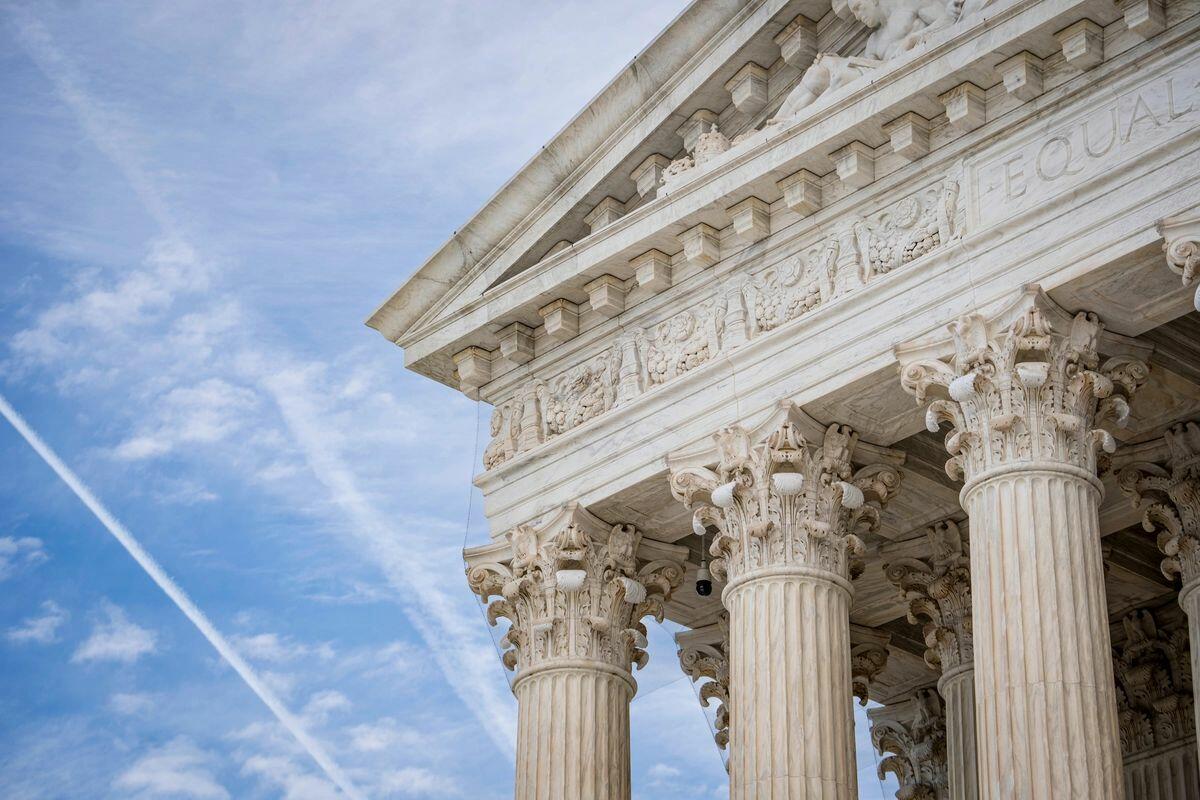
The Supreme Court in Washington on Feb. 21, 2026. Madalina Kilroy/The Epoch Times

Birthright Citizenship

One of the term’s most consequential cases arises from a class-action lawsuit alleging that the president violated the 14th Amendment by withholding citizenship for children of illegal immigrants. The case, Trump v. Barbara, is set for oral argument on April 1.

The clause of the 14th Amendment at issue guarantees citizenship to people “born or naturalized in the United States, and subject to the jurisdiction thereof.”

Trump, on his first day back in office, issued an executive order that calls for officials to deny citizenship documents to children if their mothers were unlawfully or temporarily present in the United States, and their fathers were not citizens or lawful permanent residents.

In 2025, multiple lower courts issued rulings blocking implementation of the executive order, titled “Protecting the Meaning and Value of American Citizenship.” The courts said that it violated the amendment and the Supreme Court’s decision in United States v. Wong Kim Ark.

In the 1898 case, the Supreme Court said the amendment guaranteed citizenship for a Chinese man whose parents were permanently domiciled in the United States but were not U.S. citizens.

Lower courts have said that the decision’s reasoning lent itself to guaranteeing citizenship for the children of illegal immigrants. The administration disagreed, arguing that the decision and the 14th Amendment indicated parents should have some kind of allegiance to the United States.

Attorneys also told the Supreme Court that even if Trump’s order complied with the 14th Amendment, it violated the Immigration and Nationality Act. That law uses the amendment’s language to guarantee citizenship for people “born in the United States, and subject to the jurisdiction thereof.”

The attorneys said that law was understood in the 20th century to include the children of illegal immigrants. The Justice Department said instead that the law’s meaning “depends on what the Citizenship Clause actually means, not what Congress thought it meant.”

The entrance to the U.S. Citizenship and Immigration Services location where a New York City Council data analyst and Venezuelan national was detained by Immigration and Customs Enforcement while making an immigration appointment, in the Long Island town of Bethpage, N.Y., on Jan. 14, 2026. Shannon Stapleton/Reuters

Mail-In Ballots

In Watson v. Republican National Committee (RNC), the Supreme Court will consider whether states can count mail-in ballots received after Election Day.

This case has its origins in 2020, when Mississippi amended its state law to authorize counting mail-in ballots received up to five days after Election Day, so long as they were postmarked by that day. In 2024, the RNC and others alleged Mississippi violated a federal law that defines “Election Day” as “the Tuesday next after the first Monday in November.”

Mississippi Secretary of State Michael Watson, meanwhile, argued that the Elections Clause of the Constitution—which broadly allows states to choose the “manner” of their elections—protected the law.

After the RNC’s initial suit in 2024, a district court ruled in favor of Mississippi. Later, the U.S. Court of Appeals for the Fifth Circuit overturned that ruling, prohibiting Mississippi from accepting late-received ballots.

The Supreme Court accepted Mississippi’s appeal and scheduled oral arguments for March 23.

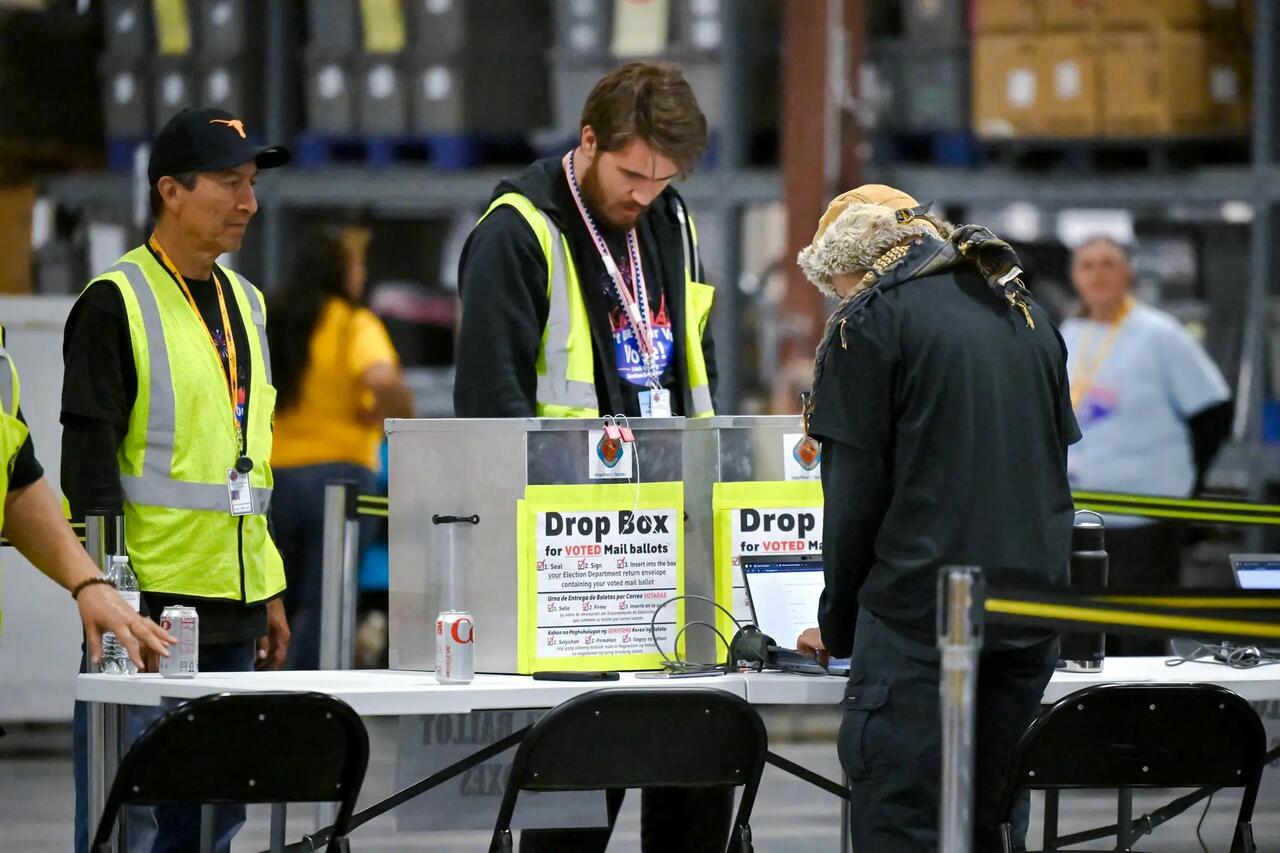
Election workers receive drop boxes for hand delivered mail-in ballots for processing at the Clark County Election Department after polls closed in North Las Vegas on Nov. 5, 2024. David Becker/Getty Images

Gun Rights for Drug Users

Ali Danial Hemani was charged in 2023 with violating a federal law that prohibited firearm possession by individuals who unlawfully use controlled substances.

Hemani, who admitted to smoking marijuana approximately every other day, challenged his indictment, arguing that the wording of the statute was too vague and violated the Second Amendment.

In the case U.S. v. Hemani, the Supreme Court is set to reexamine its 2022 precedent in New York State Rifle and Pistol Association v. Bruen. There, the court said laws restricting the right to bear arms are constitutional only when they are “consistent with the Nation’s historical tradition of firearm regulation.”

The government has argued that the law at issue in Hemani’s case is “analogous to founding-era laws restricting the rights of drunkards.” Hemani’s attorneys disputed that comparison, arguing that “habitual drunkard” laws targeted people who regularly abused alcohol, not people who regularly drugs or alcohol, such as Hemani.

Oral arguments for the case are scheduled for March 2.

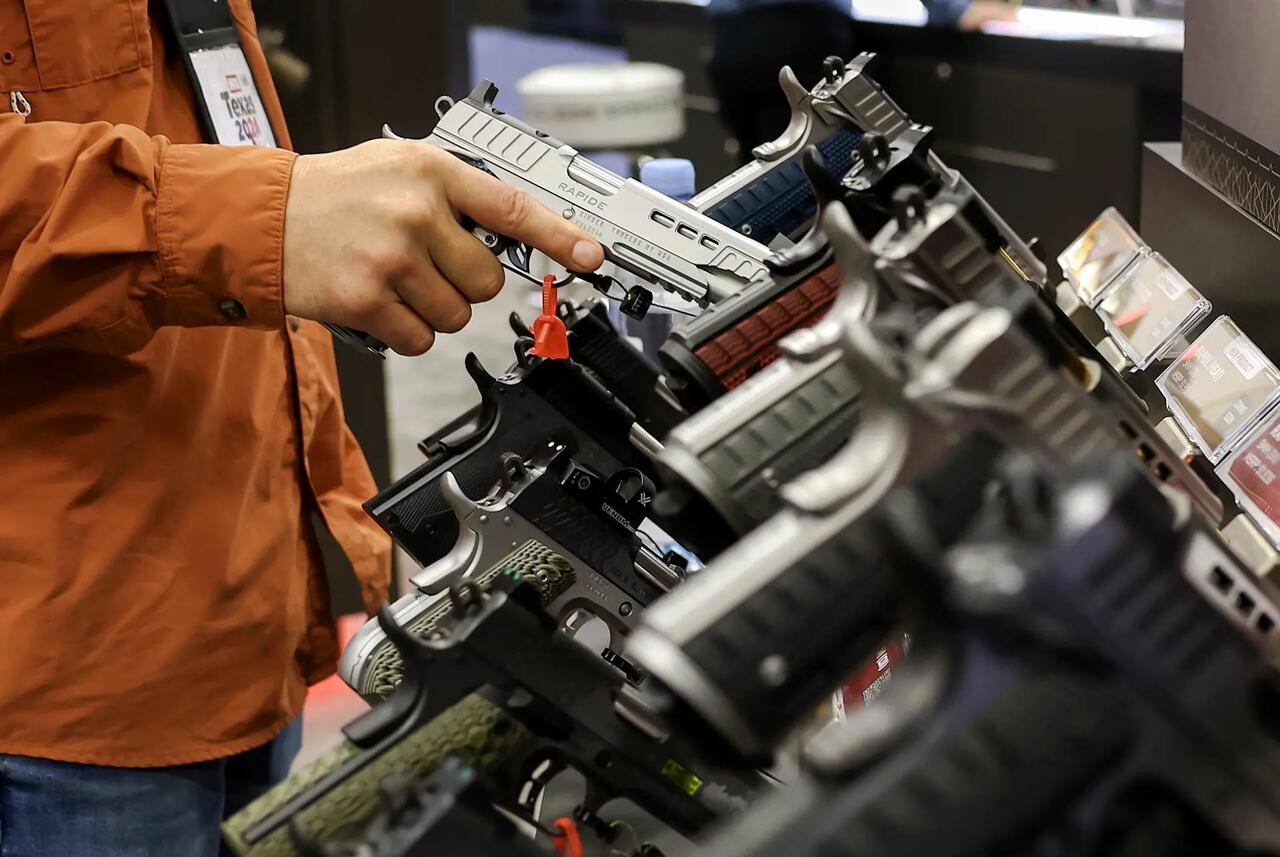
A visitor inspects a gun at the National Rifle Association Annual Meeting & Exhibits at the Kay Bailey Hutchison Convention Center in Dallas on May 17, 2024. Justin Sullivan/Getty Images

Asylum at US–Mexico Border

The Supreme Court is set to hear oral argument on March 24 over the Obama administration’s policy of turning away asylum-seekers before they cross the southern border.

Although the Biden administration rescinded that policy, the Supreme Court is reviewing the results of prior litigation with consequences for future border enforcement. The main question in the case, Noem v. Al Otro Lado, is whether migrants have officially arrived in the United States if they stop on the Mexican side of the border.

A group of 13 asylum-seekers and an immigrants’ rights organization sued in 2017. They  alleged the policy violated federal laws allowing migrants to apply for asylum and to be inspected by an immigration officer if they arrive in the country.

One of the laws states that “any alien who is physically present in the United States or who arrives in the United States” can apply for asylum regardless of his or her legal status.

The Justice Department told the Supreme Court that the plain meaning of arrival meant physical presence. It is asking the justices to reverse a 2024 decision by the U.S. Court of Appeals for the Ninth Circuit.

In a 2–1 decision, it ruled that noncitizens are considered to have arrived if they encounter a border official. The court said, among other things, that one of the relevant laws distinguished between physical presence and arrival, suggesting that some arrivals might not be physically present.

U.S. Border Patrol agents process illegal immigrants from Central America near Roma, Texas, on Aug. 17, 2016. John Moore/Getty Images

FCC Penalties

The Supreme Court will hear two cases on April 21 involving the Federal Communications Commission (FCC) imposing fines on wireless carriers for sharing customer location data without consent.

In 2024, the FCC imposed nearly $200 million in fines on major telco firms, including $57 million on AT&T and nearly $47 million on Verizon.

The companies argued that the fines, which were investigated, decided, and ordered in-house at the FCC, violate their right to a jury trial under the Seventh Amendment.

Their cases—FCC v. AT&T and Verizon Communications v. FCC—are building off of a landmark decision from 2024. In that case, the Supreme Court said the Securities and Exchange Commission had to provide a jury trial if it wanted to impose civil penalties.

For the FCC, federal law allows the agency to issue a forfeiture order with a penalty. In response, the company can either pay the penalty and seek review in an appeals court, or it may refuse to pay, prompting the agency to potentially refer the issue for prosecution in a jury trial.

Because Verizon chose the first option, the U.S. Court of Appeals for the Second Circuit said its rights weren’t violated. Rather, it passed on its opportunity for exercising those rights. AT&T similarly paid the penalty, but the Fifth Circuit said the prospect of a future trial wasn’t enough.

Read the rest here…

Tyler Durden
Fri, 02/27/2026 – 17:40

via ZeroHedge News https://ift.tt/ANuItnd Tyler Durden

SpaceX Readies IPO Paperwork For March, Targeting $1.75 Trillion Valuation

SpaceX Readies IPO Paperwork For March, Targeting $1.75 Trillion Valuation

SpaceX is preparing to confidentially file for an initial public offering as early as next month, people familiar with the matter said, advancing plans for what could become the largest listing ever, according to Bloomberg.

The Starbase, Texas-based rocket and satellite company is expected to submit draft IPO paperwork to the US Securities and Exchange Commission in March, potentially positioning it for a June debut. That timing would make it the first in a possible wave of mega-offerings, with OpenAI and Anthropic PBC possibly following.

Deliberations are ongoing and plans could shift, the people cautioned, noting the filing could still be postponed.

Bloomberg writes that some of the people said SpaceX may pursue a valuation above $1.75 trillion, speaking anonymously because discussions are private. The company recently acquired xAI, Elon Musk’s AI venture, in a February deal valuing the combined business at $1.25 trillion, Bloomberg News reported. A confidential filing would allow SpaceX to receive regulatory feedback and revise disclosures before they are made public. A representative for the company did not immediately comment.

The IPO could raise as much as $50 billion, which would exceed Saudi Aramco’s record $29 billion offering in 2019. At a $1.75 trillion valuation, SpaceX would rank behind only five members of the S&P 500 Index — Nvidia Corp., Apple Inc., Alphabet Inc., Microsoft Corp. and Amazon.com Inc. — and would surpass Meta Platforms Inc. as well as Musk’s Tesla Inc. by market value.

In a memo, SpaceX said it is preparing for a possible 2026 IPO to finance an “insane flight rate” for its developing Starship rocket, space-based artificial intelligence data centers and a lunar base. The company has tapped Bank of America Corp., Goldman Sachs Group Inc., JPMorgan Chase & Co. and Morgan Stanley for senior underwriting roles and is weighing a dual-class share structure that could grant insiders, including Musk, enhanced voting control, Bloomberg News has reported.

The most prolific rocket launcher globally, SpaceX leads the industry with its Falcon 9 vehicle, transporting satellites and astronauts into orbit. It is also building toward a lunar foothold before ultimately pursuing Musk’s long-stated goal of sending humans to Mars.

Through Starlink — a vast network of low-Earth orbit satellites — the company has become the dominant provider of space-based internet, serving millions worldwide.

Tyler Durden
Fri, 02/27/2026 – 17:20

via ZeroHedge News https://ift.tt/KsQS8ux Tyler Durden

‘Sense-Making Seems Impossible…’

‘Sense-Making Seems Impossible…’

Authored by James Howard Kunstler,

The Man Who Might Wreck the Country

“That a government’s primary responsibility is to its citizens should not be a controversial proposition.”

– Coddled Affluent Professional on X

The zeitgeist is a rough beast, hard to ride as it slouches into the unknown.

Our country is trying to hang on while a party of goblins vexes and needles the beast from behind, and you cannot make them stop.

Sense-making gets to seem impossible.

We don’t have an explanation from Senate Majority Leader John Thune as to why he will not do what is within his power to do: pass election reform, known as the SAVE Act, by changing the filibuster procedure. At midweek Sen. Thune said Republicans were “not unified on pursuing a talking filibuster.” Understand that bringing back a real filibuster, with continuous speech in the well of the Senate, only requires the Majority Leader’s say-so, meaning Mr. Thune is prevaricating, concealing the truth.

Senator Mitch McConnell shadows Majority Leader John Thune

Which might be that he does not want to pass election reform. It appears he wants to set up the midterm elections with the now-familiar kit of unverifiable mail-in ballots, millions of non-citizen motor-votes, and dragged-out vote-counting so that Democrats will seize control of the House (if not the Senate) in order to crank-up the impeachment machine again and finally get rid of President Trump. It does not look like anything else, certainly not any kind of cunning game.

What might change that would be an FBI analysis of the 2020 election year ballots, voter rolls, and vote tabulation tapes recently extracted from the Fulton County, Georgia, Elections Hub, leading to indictments. They’ve had this mass of material for a month. There was already plenty of preliminary evidence of fraud from earlier investigations — which is how come U.S. Magistrate Judge Catherine Salinas of the U.S. District Court for the Northern District of Georgia found probable cause to approve a search warrant for the FBI.

They must have an idea by now of what the evidence shows. It’s not that complicated.

There’s no fixed statutory timeline for a referral. The FBI can pass along the matter to the DOJ for prosecution whenever they determine the evidence is sufficient. Referrals are customarily secret, as they occur during ongoing investigations and involve sensitive, non-public information. DOJ policies emphasize confidentiality in pre-charging stages to protect investigations, potential witnesses, sources, and the integrity of any future prosecution. In general, the public learns of an FBI referral only indirectly — through later developments like indictments, or news media reporting via “sources.”

Criminal referrals on the Fulton County case might have already been made, and indictments might be forthcoming. That would have to prompt some kind of attitude adjustment for Senate Majority Leader Thune on behalf of election reform. It could happen at any time. It would at least put Senator Thune between a rock and a hard place. It’s well-understood that at least 80-percent of people polled want the SAVE Act passed.

There is no debating position that reasonably argues against it. You might have noticed that Mayor Mamdani of New York City called for volunteers to shovel snow in the latest blizzard, and that anyone who stepped-up was required to show two types of photo ID to work the job. Yet, Mamdani, a member of the Democratic Socialists of America (DSA), aligns with the party’s longstanding opposition to voter ID laws, including the SAVE Act. No need to go figure on that. It’s just arrant dishonesty.

The president emphasized clearly why the Democrats are against election reform in this week’s State of the Union speech: because the party can only win elections by cheating, by employing massive systematic fraud. He said it so that everybody tuned-in could hear it, and the Democrats just sat stone-faced on their side of the chamber — and that was only minutes after they refused to stand for the proposition that the government’s main job was to act in the interest of American citizens.

It’s unlikely that the president can alter election procedure himself, through executive order or by declaring some kind of national emergency. Any attempt would be instantly litigated and shut down by the judiciary. The Constitution assigns primary authority over the “times, places and manner” of elections to the states (with only Congress able to alter them by law).

Either Senator Thune will do his duty or not. He must have some self-awareness that he risks going down as the greatest villain in our history, the man who wrecked the country. Does anything like personal honor still exist in this land?

Views expressed in this article are opinions of the author and do not necessarily reflect the views of ZeroHedge.

Tyler Durden
Fri, 02/27/2026 – 17:00

via ZeroHedge News https://ift.tt/fTqFQen Tyler Durden

Bernie Sanders Is Lying About AI Data Centers

Christian Britschgi is back this week, and you won’t want to miss the incredibly true story of what happened to him. From there, the boys tackle mounting opposition to AI data centers, President Donald Trump’s State of the Union address, and why more libertarians ought to be concerned about the Epstein files fallout.

Cultural items discussed this week include A Knight of the Seven Kingdoms finale and Black Mirror. Robby Soave also has a lot to say about card games, board games, and playing mafia online.

0:00—Christian returns

3:22—Joy of data centers

18:56 —The Epstein Files and cancel culture

33:20 —Ayn Rand would have disliked Jeffrey Epstein

48:24—Card games, board games, and more

1:00:52—We loved A Knight of the Seven Kingdoms

1:07:50—Black Mirror is too depressing

1:21:58—Dying to avoid Canada

The post Bernie Sanders Is Lying About AI Data Centers appeared first on Reason.com.

from Latest – Reason.com https://ift.tt/kFBOG1D
via IFTTT