Maryland Blames Data Centers For $1.6 Billion Power Bill Shock, Omits Green Energy Mess
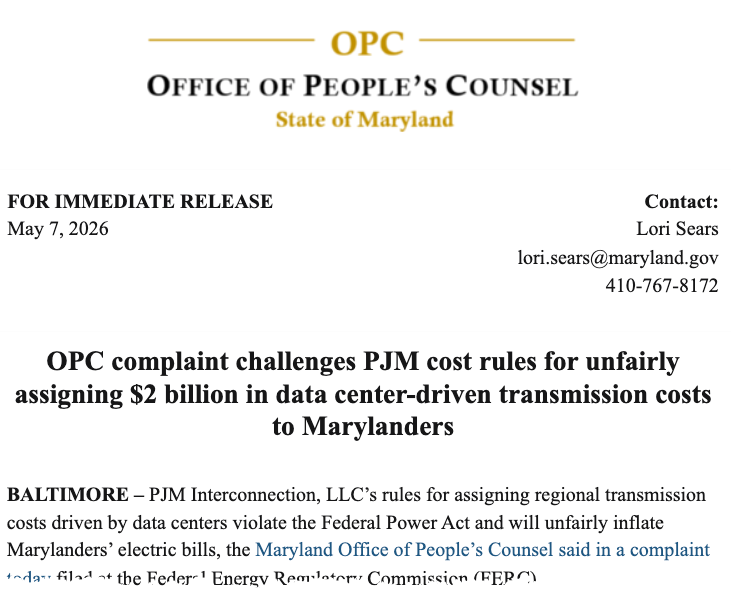
Maryland’s Office of People’s Counsel released a new report warning that homeowners in the state could face $1.6 billion in additional power bill costs over the next decade to subsidize transmission line upgrades, largely due to data center demand outside Maryland, more specifically from data centers in Northern Virginia.
OPC filed a complaint with the Federal Energy Regulatory Commission (FERC) arguing that PJM Interconnection, the largest U.S. grid operator, is forcing Maryland power customers to shoulder costs for grid expansion projects that feed into Northern Virginia. The complaint was titled “OPC complaint challenges PJM cost rules for unfairly assigning $2 billion in data center-driven transmission costs to Marylanders.”
People’s Counsel David Lapp said Maryland residents neither caused the need for the transmission line projects nor will they meaningfully benefit from them:
“Without FERC action, Maryland customers face paying billions for transmission infrastructure that PJM is advancing to benefit data centers. PJM’s cost allocation rules are broken. Maryland customers have neither caused the need for these billions in new transmission projects nor will they meaningfully benefit from them.”
The complaint comes as the Mid-Atlantic region, specifically Maryland, is locked in a power bill crisis, with a confluence of bad “green” energy policies colliding with the AI data center boom.
Not mentioned by the OPC or the one-party-ruled state of Democratic Party kings and queens is that Maryland is structurally dependent on imported power through PJM. It does not produce enough electricity inside the state to cover its own load, which makes power customers more exposed to regional grid costs, transmission upgrades, electricity price spikes, and data-center-driven demand growth outside of Maryland.
How did Maryland get to the point where it has to import roughly 24 million megawatt-hours of electricity a year, using 2024 EIA data, or about 40% of in-state electricity demand?
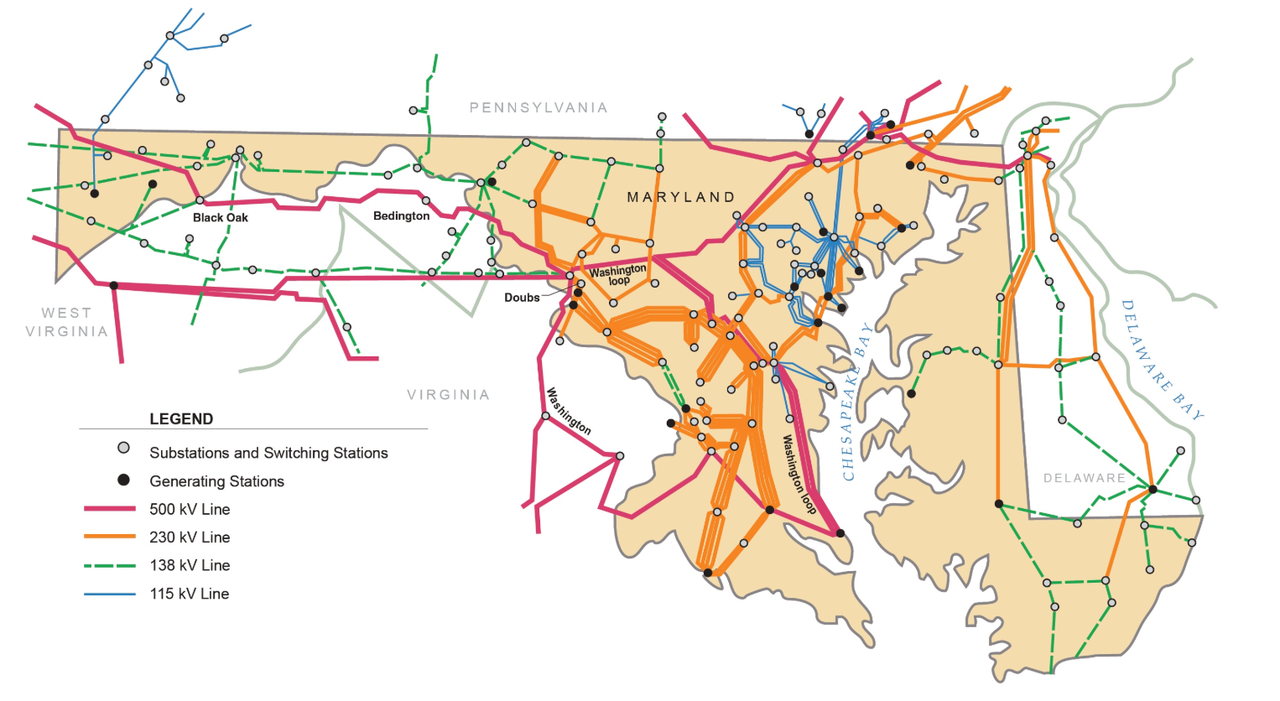
It is due to poor state-level management by politicians and their ‘green’ energy policies, which led to the early retirements of coal power plants and to a failure to prioritize new, reliable power to increase baseload.
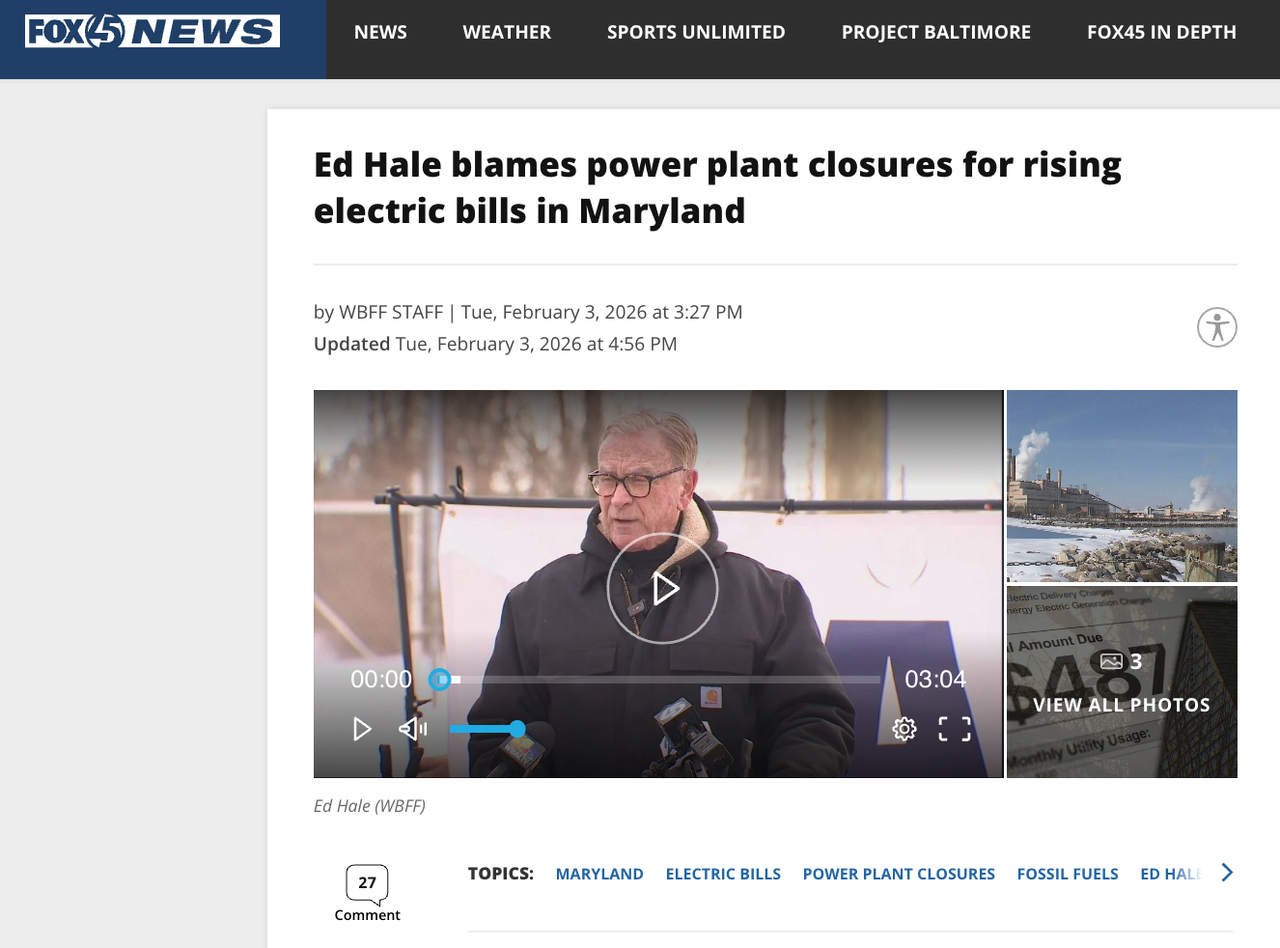
Local outlet Fox Baltimore recently quoted Ed Hale, the Republican candidate for governor, who blamed the state’s green energy policies and the early retirement of fossil-fuel power plants for the power bil mess.
“We have a lot of fossil fuels here that burn a lot easier and cleaner than in the old days,” Hale said earlier this year. “I’m thinking that we have to do better, and we have to reopen the plants that have been not torn down, and just get them open again and reenergize them.”
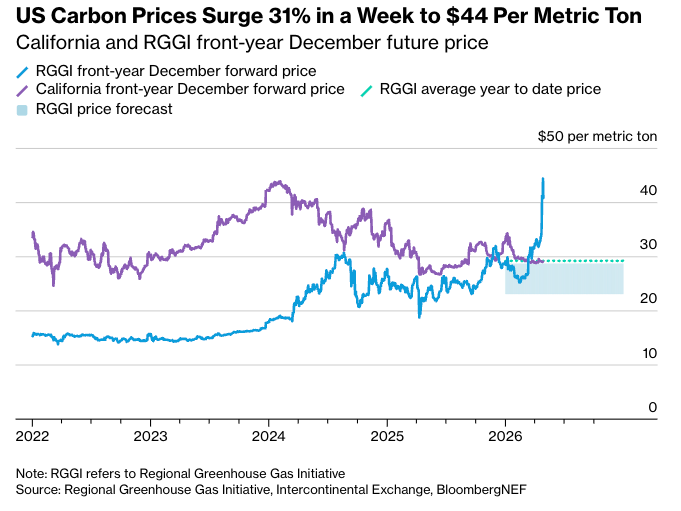
Beyond Maryland, but still in the Mid-Atlantic and Northeast regions, there is a hidden cost to the AI buildout: surging carbon prices are pushing up CO2 costs across the region past California levels, raising the prospect of higher energy costs for consumers, according to Bloomberg.
The price to emit a so-called short ton of CO2 into the atmosphere under the Regional Greenhouse Gas Initiative, a market covering 10 states, including New York, jumped 12% on Monday to $53.50, adding to a 31% gain last week. Traders are betting that Virginia’s planned return to the market in July will boost demand for permits, as the state is the world’s largest hub for data centers.
Whether through misguided green policies at the state level, such as charging companies for CO2 emissions, the prior ‘everything green’ framework has miserably failed consumers.
If the U.S. wants to win the AI race, progressive states like Maryland must build out new power generation and consider reactivating coal plants, while recognizing that becoming ‘greener’ could result in becoming poorer – Europe is finding that out (read here).
Tyler Durden
Fri, 05/08/2026 – 14:00
via ZeroHedge News https://ift.tt/tn9WrG5 Tyler Durden