Since a Democratic trifecta took control of Virginia’s government in the 2025 election, two longtime progressive labor policy priorities have been front and center: repealing the state’s right-to-work law and mandating public sector collective bargaining. Now, less than six months into the Democratic reign in Richmond, pro-union forces have come away empty handed. While unions may be disappointed, Virginia taxpayers have new reason to celebrate.
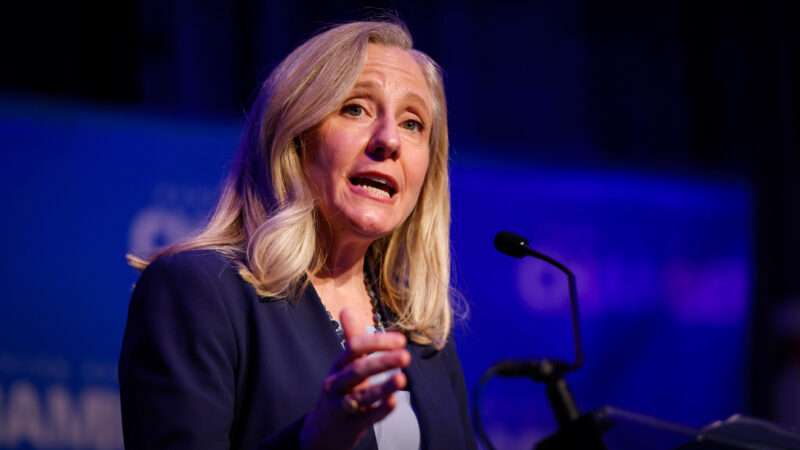
They also have an unlikely person to thank, at least for the moment: Gov. Abigail Spanberger, who vetoed collective bargaining legislation last week.
The drama traces back to the campaign trail. Then-candidate Abigail Spanberger secured the Democratic nomination amid strong support for unions. She even managed to secure the endorsement of the Virginia Police Benevolent Association—a police union that had largely supported GOP candidates in recent elections—over Republican candidate Winsome Sears, further underscoring Spanberger’s pro-union appeal.
Despite her strong affiliation with organized labor, Spanberger said several times during her campaign that she did not support a “full” repeal of Virginia’s right-to-work law, which has existed in the state for close to 80 years. This led many observers—including yours truly—to try to read the tea leaves behind her statements, including whether she might still support some version of a “partial” right-to-work repeal.
Yet there was much less ambiguity when it came to public sector collective bargaining. During the campaign, Spanberger answered “yes” on a candidate questionnaire that asked if she would “champion and sign legislation to ensure collective bargaining rights for all public employees.”
Virginia is one of a handful of states that bans public sector collective bargaining, having done so since a 1977 state supreme court decision. In 2021, when former Gov. Ralph Northam was in office, Democrats changed the law to an opt-in system, whereby localities could pass ordinances to allow public sector collective bargaining. (Only a small fraction have opted in).
The goal of Virginia Democrats in 2026 was to turn collective bargaining into a statewide mandate, not a local choice. Earlier this year, Democratic lawmakers introduced a bill to make this mandate a reality. The bill cleared the state legislature and went to Spanberger’s desk, where union interests were confident it would be signed by the governor.
But Spanberger surprised many by sending a revised version of the bill back to the Legislature. The governor’s amended version made material changes to the bill, including changing “shall” language—as in, the scope of collective bargaining “shall include” bargaining over wages, hours, and benefits—to “may,” thereby cutting back on the prescriptive text. It also delayed the law’s implementation for localities from 2028 to 2030 and opted for advisory arbitration, rather than binding, to settle contract disputes.
Perhaps most significantly, Spanberger’s version gave more power to a new government agency that would be created under the legislation, known as the Public Employee Relations Board. An analysis by the Economic Policy Institute noted that the original bill contained detailed rules about union elections and contract negotiation timelines, while Spanberger’s version left these matters up to the body’s discretion.
Unions argued that this amounted to a regulatory death sentence given that the board’s five members are appointed by the governor, raising fears that a future Republican leader could stock the board with anti-union members. Spanberger’s revised version also eliminated a requirement that two of the board’s members must be union representatives, further watering down union influence over the process.
Faced with this revised bill, the state assembly bowed to union pressure and rejected Spanberger’s amendments. This put the ball back in the governor’s court, daring her to veto the original bill or acquiesce. Spanberger chose the veto.
Predictably, union interests cried foul, viewing it as a bait and switch and likening Spanberger to her Republican predecessor Gov. Glenn Youngkin. Despite her veto, Spanberger maintains that she supports public sector collective bargaining and that she will “continue to look forward to a place where we’ll have a bill that I’ll sign into law.” Virginia Democrats will retain their trifecta through at least the 2027 state elections, perhaps providing enough time for them to iron out the dispute before the balance of power in Richmond potentially changes.
In the meantime, Virginians can enjoy the reprieve—because public sector collective bargaining continues to be a bad bet from a policy standpoint. Research has found that mandatory bargaining raises state and local government spending anywhere from $600 to $750 per person annually, which could amount to a substantially larger tax burden for a small family. It is estimated that the proposed Virginia legislation would have cost the state $50 million annually, while the costs for localities could have ranged anywhere from $50,000 to $403 million over a two-year period.
Virginia taxpayers, in other words, dodged a bullet with Spanberger’s veto. They’ll have to hope she continues holding the line.
The post Abigail Spanberger Vetoes Mandatory Collective Bargaining, Defying Virginia Unions appeared first on Reason.com.
from Latest – Reason.com https://ift.tt/ToK1l0P
via IFTTT