Gamestop Spikes After Broker Webull Unrestricts Trading, Others To Follow?

Gamestop Spikes After Broker Webull Unrestricts Trading, Others To Follow?

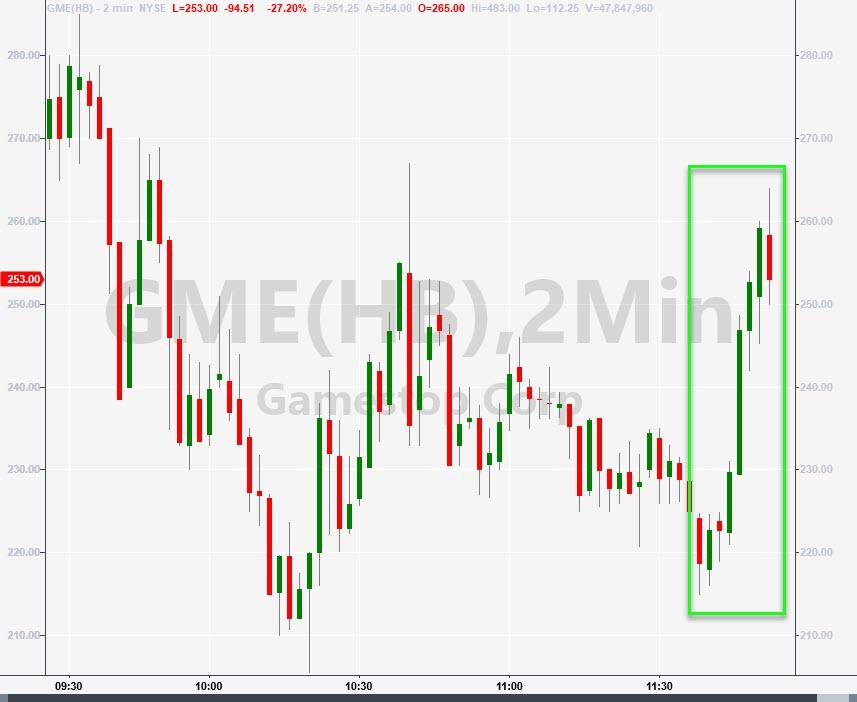
Having traded near session lows, Gamestop stock spiked $40 in minutes following an announcement from brokerage WeBull that trading in GME, AMC and KOSS was no longer restricted.

While good news for those daytraders/redditors who wanted to buy GME and were prevented by their existing broker, it’s terrible news for Robinhood which is now seeing an exodus of clients, who are instead going to foreign brokers like UK’s Trading 212…

… and now WeBull, which, yes, is Chinese.

Amusingly this happens as yet another US broker is hoping to lose more clients:

  • *E*TRADE RESTRICTS PURCHASES OF GAMESTOP, AMC SHARES

Meanwhile, now that GME buyers are once again allowed to do whatever they want with their money, the stock has spiked higher in response…

… and one can only imagine what will happen to GME’s stock once all other exchanges realize they have made a terrible mistake and reverse the trading ban.


Tyler Durden
Thu, 01/28/2021 – 14:57

via ZeroHedge News https://ift.tt/2Yrhytm Tyler Durden

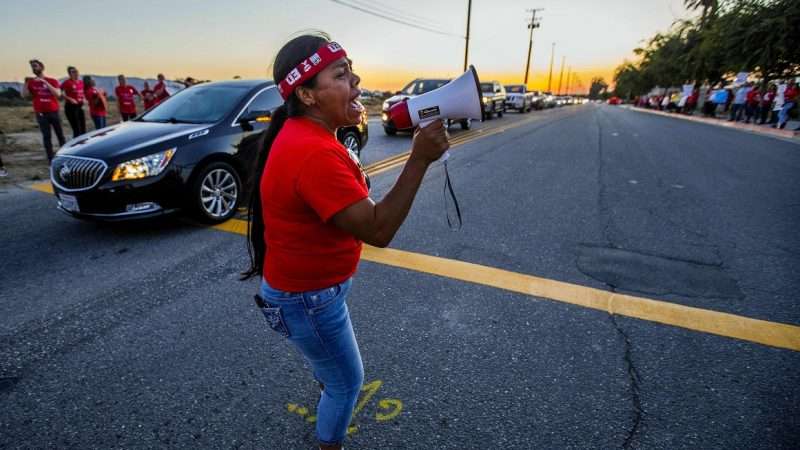
A Rigged System Is Keeping a California Charter School Under Union Rule

zumaamericastwentyfive407667

In 2004, Vincent Riveroll became the principal of Gompers Middle School in San Diego. On his first day, he was approached by a student who was puzzled by his outfit. “Why are you wearing a suit?” the child asked. “It’s just going to get ripped when you break up a fight.”

Gompers was part of an all too familiar pattern of inner-city schools suffering from routine violence, low attendance, and poor academic performance. It had been that way for years, creating a sense of hopelessness that wore down even the most committed teachers.

Every year, Gompers lost more than half its staff. Parents and reform-minded faculty wanted to keep standout teachers from leaving by rewarding them for their performance, but San Diego Education Association (SDEA) union officials fiercely opposed any changes to the pay structure, which was based strictly on seniority.

With union officials unwilling to give in, and with falling performance threatening to shut its doors, Gompers had few options. As current teacher Jessica Chapman put it, “Gompers faced three choices: close, be taken over by the state, or transition to a charter school.”

A majority of Gompers parents and teachers joined together and won approval from the school board in 2005 to convert Gompers into a charter school. Free from union control and intransigence, Gompers finally flourished. Test scores rose, the violence was curtailed, and teachers dedicated to the charter school’s mission were hired.

In the years since, the teacher retention rate at Gompers Preparatory Academy has been above 85 percent. It attracts teachers who want to work at a charter school free from the constraints of a contract dictated by union bosses. Despite these encouraging results, California Teachers Association (CTA) officials never accepted the decision of teachers and parents to transition Gompers to a public charter school, which freed it from union control.

Teachers union officials, including many at the CTA, have long opposed charter schools, lobbying against them with countless millions in dues money. Charter schools like Gompers threaten union officials’ control over the taxpayer-funded education system, in which the government grants union officials monopoly bargaining power over all teachers, even those opposed to unionization, to impose a one-size-fits-all contract.

So despite the success Gompers had achieved since shedding the union, union officials turned to a controversial tactic known as “card check” to reimpose its monopoly control over teachers and the school. Under California law, union organizers can bypass any secret ballot election by pressuring, and often misleading, enough of the employees to sign union cards that are then counted as “votes” for the union.

According to Chapman, union agents “got signatures using deceptive tactics and ambushed the rest of us with their sudden introduction letter.…Thanks to laws pushed by the same unions, our [school] leadership was denied the right to get involved. So in January 2019 unionization was forced upon us – we were never even given the respect of a vote.”

Chapman was hardly alone in her opposition to the sudden imposition of the union without an actual vote. Kristie Chiscano, a teacher who left a career as a surgeon to serve Gompers students, sought a school that wasn’t unionized: “I chose to work at a school that didn’t have a union and now they’ve come in and they’re running everything about my contract and my work.”

Chiscano and many of her fellow teachers wanted a secret-ballot vote to remove the union. Under California law, enforced by the Public Employment Relations Board (PERB), public employees must wait one year to request a decertification vote after a union is certified. Chiscano and others collected enough signatures from teachers (over the 30 percent needed) and planned to file the petition with the PERB soon after the one-year waiting period expired.

But when the union got wind of the teachers’ push for that vote, SDEA lawyers preemptively filed “blocking charges” against the school, leading to the PERB’s regional attorney blocking the decertification petition from moving forward. Now, a year after the petition, the election is still blocked because the board’s rules favor union officials over independent-minded employees.

Under PERB policy, public employees’ right to decertify can be blocked even if the employees who signed and filed the petition are not alleged to have done anything wrong. In deciding whether to block a vote, proof of the union officials’ allegations is irrelevant because the PERB must treat them as true. So when Chiscano appealed the regional attorney’s ruling blocking the decertification election, the PERB in Sacramento upheld the block because the regional official was right to assume the veracity of the union’s allegations with no independent investigation.

With free legal aid from National Right to Work Legal Defense Foundation staff attorneys, Chiscano and her fellow teachers continue to fight for a vote, now two years after the union was installed without a vote and over a year after the teachers requested the decertification election. Further, foundation attorneys recently filed charges against SDEA officials for illegal retaliation against Chiscano and Chapman, after union officials published social media posts attacking the teachers for seeking a vote to remove the union.

The teachers’ struggle would likely infuriate one famous union official, their school’s namesake. Samuel Gompers, founder of the American Federation of Labor, believed in voluntary unionism, not coercion. He said: “The workers of America adhere to voluntary institutions in preference to compulsory systems which are held to be not only impractical but a menace to their rights, welfare and their liberty.”

Yet today, rather than working to win the voluntary support of teachers, union officials have fully embraced the compulsion Gompers abhorred, even going so far as to block teachers’ request to simply hold an up-or-down vote on whether they want union representation at all.

from Latest – Reason.com https://ift.tt/39oSYjl
via IFTTT
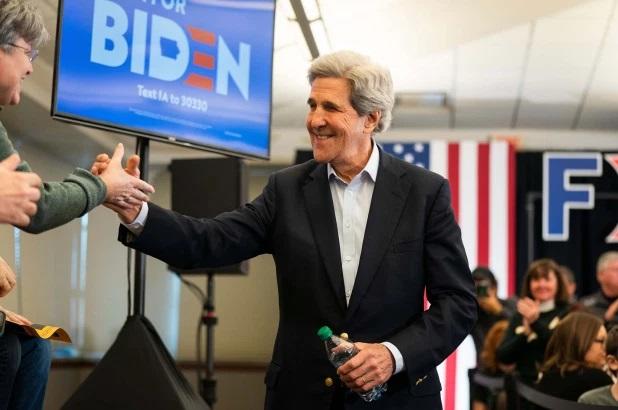
While John Kerry Masquerades As Biden’s Climate Crusader, His Family Tools Around In Private Jet

While John Kerry Masquerades As Biden’s Climate Crusader, His Family Tools Around In Private Jet

In less than half-a-decade, John Kerry has gone from helping oil-rich Iran sell more fossil fuels, to the Biden administration’s so-called Special Climate Envoy.

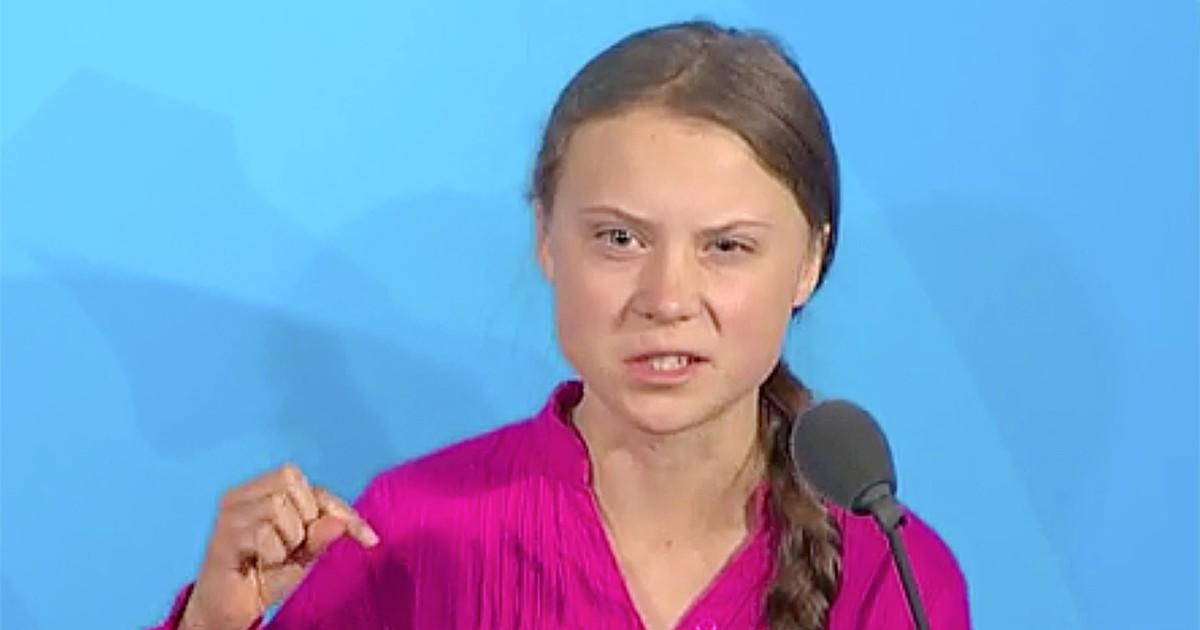
Yet, while the Yale Bonesman may have gone full Greta in his newfound climate advocacy, his ultra-liberal ketchup-empire family is still tooling around in a carbon-spewing private jet.

According to Fox News, the FAA’s registry shows that his wife’s private charter jet company, Flying Squirrel LLC, owns a Gulfstream IV jet which emits up to 40x more carbon per passenger than a commercial plane.

We look forward to the anti-carbon lectures from a guy who travels the globe on private jets and luxury yachts,” noted the New York Post editorial board last November. The Post also reported that during Kerry’s 2004 failed presidential run, his campaign made 60 payments to his wife’s charter jet company, totaling $273,171.

As late as 2013, his executive branch personnel financial disclosure showed Kerry owning “over $1,000,001” in assets for “Flying Squirrel LLC” through his wife. -Fox News

Shouldn’t Biden’s new climate czar and his ultra-liberal family set an example by ridding themselves of their gross polluting methods of transportation? They couldn’t possibly be virtue signaling while insisting the rest of us adopt, and pay for, ‘green’ lifestyles.

What would Greta say?

Tyler Durden
Thu, 01/28/2021 – 14:44

via ZeroHedge News https://ift.tt/3chYWUT Tyler Durden

The Constitutional Argument Against Trump’s Senate Trial Is Convenient. Is It Also Wrong?

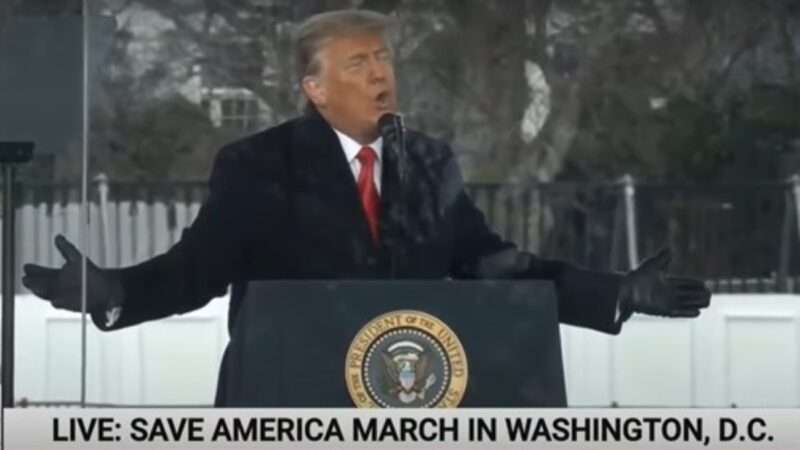
Trump-DC-rally-1-6-21

Forty-five Republican senators voted this week against trying Donald Trump on the charge that he incited the Capitol riot, maintaining that it is unconstitutional to consider the article of impeachment against him now that he is no longer president. That argument is very convenient for Republicans who do not want to alienate Trump’s supporters but also do not want to defend the conduct that led to his impeachment. But the fact that the argument is convenient does not necessarily mean it is wrong. While many prominent legal scholars think Trump’s trial is perfectly constitutional, the dissenters make some interesting points that are bound to come up again during the trial.

As Reason‘s Damon Root has noted, there is historical precedent for impeaching or trying federal officials after they leave office. William Blount was tried in 1799 after he had been impeached and expelled from the Senate, and former Secretary of War William Belknap was impeached in 1876, after he resigned. The House conducted an impeachment investigation of Vice President John C. Calhoun in 1827 based on his conduct as secretary of war, a position he no longer held. As a congressman in 1846, former President John Quincy Adams said he was “amenable to impeachment by this House for everything I did during the time I held any public office.”

Last week 150 legal scholars, including Federalist Society co-founder Steven Calabresi and several Volokh Conspiracy bloggers, signed a statement arguing that trying a former president is consistent with the text of the Constitution and the purposes of impeachment. Although Trump can no longer be “removed from Office,” they noted, he can still be disqualified from “hold[ing] and enjoy[ing] any Office of honor, Trust or Profit under the United States” if he is convicted by the Senate.

“The Constitution’s impeachment power has two aspects,” the statement says. “The first is removal from office, which occurs automatically upon the conviction of a current officer. The second is disqualification from holding future office, which occurs in those cases where the Senate deems disqualification appropriate in light of the conduct for which the impeached person was convicted. The impeachment power must be read so as to give full effect to both aspects of this power.”

Limiting the option of disqualification in the way that critics of Trump’s trial suggest, the legal scholars warn, would create perverse incentives. “If an official could only be disqualified while he or she still held office,” they say, “then an official who betrayed the public trust and was impeached could avoid accountability simply by resigning one minute before the Senate’s final conviction vote. The Framers did not design the Constitution’s checks and balances to be so easily undermined.”

The statement also notes that the Framers worried about “the danger of a power-seeking populist of the type they referred to as a ‘demagogue’ rising to the highest office and overthrowing republican government.” They “understood that the source of such a person’s power does not expire if he or she is expelled from office; so long as such a person retains the loyalty of his or her supporters, he or she might return to power.” They “devised the disqualification power to guard against that possibility, and would surely disagree that a person who sought to overthrow our democracy could not be disqualified from holding a future office of the United States because the plot reached its crescendo too close to the end of his or her term.”

George Washington University law professor Jonathan Turley, by contrast, thinks the constitutionality of trying a former president is “a close question upon which people of good faith can disagree.” He concedes that the Belknap case shows “a majority [of senators] viewed impeachment as extending beyond removal for the purposes of a trial,” although he notes that Belknap was acquitted. As for Blount, Turley says, he “did not even show up because he contested the very basis for an impeachment trial of a private citizen,” and “the Senate refused to hold a trial.”

Turley suggests that trying a former president creates some puzzles. “The primary stated purpose of the trial is to determine whether ‘the President…shall be removed,'” he writes. “At the second Trump impeachment trial, the president will be Joe Biden, not Donald Trump. So the Senate will hold a rather curious vote to decide whether to remove a president who has already gone. Moreover, Chief Justice John Roberts is not expected to be present to answer these questions because there is no president to try. Article I states ‘When the President of the United States is tried, the Chief Justice shall preside.’ So the Senate will get someone else. The question is who is being tried. Is he a president? Obviously not. Is he a civil officer? No, he is a private citizen. A private citizen is being called to the Senate to be tried for removal from an office that he does not hold.”

Former 4th Circuit Judge J. Michael Luttig thinks such textual difficulties show that “the Senate’s only power under the Constitution is to convict—or not—an incumbent president.” Turley, who describes the question as “an unresolved issue of constitutional interpretation,” is not so sure. But he is skeptical of the idea that disqualification should be viewed as a remedy independent from removal.

“Removal is stated as the question for the Senate to answer in the trial of ‘the President,'” Turley says. “The Senate may, in its discretion, add disqualification after a president has been removed. The second optional penalty language was expressed as a limitation on the authority of the Senate and again references removal: [The judgment] ‘shall not extend further than to removal from Office, and disqualification.’ Since the Senate does not have to disqualify, it would not seem to be an interchangeable or equal consideration in that respect.”

Leaving the constitutional question aside, Turley worries that allowing impeachment and trial after a president has left office will invite partisan vendettas. “These scholars are arguing that Nixon could still have been impeached and removed after he left office,” he writes. “Indeed, there is no time limit to such retroactive trials, which could come years later as easily as [they] could come weeks later….Under this approach, any new Congress could come into power and set about disqualifying opponents from public office despite their being private citizens. A Republican Congress could have retroactively impeached Barack Obama or retried Bill Clinton. They could insist that there is no escaping impeachment by merely leaving office.  That is why, even if the Senate does not view this as extraconstitutional, it should view this trial as constitutionally unsound.”

Stanford law professor Michael McConnell, a former 10th Circuit judge, is not impressed by these objections. “Whether a former officer can be impeached is beside the point,” he says. “Donald Trump was President of the United States at the time he was impeached by the House of Representatives. The impeachment was therefore unquestionably permissible.” He notes that the Constitution says “the Senate shall have the sole Power to try all Impeachments.” Since that clause “contains no reservation or limitation,” McConnell argues, it is clear that the Senate has the authority to try Trump.

Whatever you make of these arguments, it is not exactly clear what a Senate trial is meant to accomplish in this case. Trump’s impeachment, which was backed by 10 Republicans in the House and gave him the dubious distinction of being the only president ever to be impeached twice, already has served as a strong rebuke that will always be a stain on his record. If a handful of Republicans in the Senate vote to convict him, that stain will be a bit darker. But given that 45 senators did not even want to hold a trial, it seems clear that Trump will not be convicted and therefore will not be disqualified from seeking the presidency again.

There was initially some hope that Trump’s trial would catalyze a Republican repudiation of him, helping to free the GOP from his malign influence. But it now looks like all but a few Republican senators have decided that their careers still depend on kowtowing to Trump and his many ardent followers. Even Senate Minority Leader Mitch McConnell (R–Ky.), who just last week said Trump “provoked” the deadly attack on the Capitol with “lies,” voted against taking up the article of impeachment. McConnell, who reportedly thinks his party’s continued viability depends on distancing itself from Trump, apparently has concluded that will not happen anytime soon.

from Latest – Reason.com https://ift.tt/3pu3g7t
via IFTTT

The Constitutional Argument Against Trump’s Senate Trial Is Convenient. Is It Also Wrong?

Trump-DC-rally-1-6-21

Forty-five Republican senators voted this week against trying Donald Trump on the charge that he incited the Capitol riot, maintaining that it is unconstitutional to consider the article of impeachment against him now that he is no longer president. That argument is very convenient for Republicans who do not want to alienate Trump’s supporters but also do not want to defend the conduct that led to his impeachment. But the fact that the argument is convenient does not necessarily mean it is wrong. While many prominent legal scholars think Trump’s trial is perfectly constitutional, the dissenters make some interesting points that are bound to come up again during the trial.

As Reason‘s Damon Root has noted, there is historical precedent for impeaching or trying federal officials after they leave office. William Blount was tried in 1799 after he had been impeached and expelled from the Senate, and former Secretary of War William Belknap was impeached in 1876, after he resigned. The House conducted an impeachment investigation of Vice President John C. Calhoun in 1827 based on his conduct as secretary of war, a position he no longer held. As a congressman in 1846, former President John Quincy Adams said he was “amenable to impeachment by this House for everything I did during the time I held any public office.”

Last week 150 legal scholars, including Federalist Society co-founder Steven Calabresi and several Volokh Conspiracy bloggers, signed a statement arguing that trying a former president is consistent with the text of the Constitution and the purposes of impeachment. Although Trump can no longer be “removed from Office,” they noted, he can still be disqualified from “hold[ing] and enjoy[ing] any Office of honor, Trust or Profit under the United States” if he is convicted by the Senate.

“The Constitution’s impeachment power has two aspects,” the statement says. “The first is removal from office, which occurs automatically upon the conviction of a current officer. The second is disqualification from holding future office, which occurs in those cases where the Senate deems disqualification appropriate in light of the conduct for which the impeached person was convicted. The impeachment power must be read so as to give full effect to both aspects of this power.”

Limiting the option of disqualification in the way that critics of Trump’s trial suggest, the legal scholars warn, would create perverse incentives. “If an official could only be disqualified while he or she still held office,” they say, “then an official who betrayed the public trust and was impeached could avoid accountability simply by resigning one minute before the Senate’s final conviction vote. The Framers did not design the Constitution’s checks and balances to be so easily undermined.”

The statement also notes that the Framers worried about “the danger of a power-seeking populist of the type they referred to as a ‘demagogue’ rising to the highest office and overthrowing republican government.” They “understood that the source of such a person’s power does not expire if he or she is expelled from office; so long as such a person retains the loyalty of his or her supporters, he or she might return to power.” They “devised the disqualification power to guard against that possibility, and would surely disagree that a person who sought to overthrow our democracy could not be disqualified from holding a future office of the United States because the plot reached its crescendo too close to the end of his or her term.”

George Washington University law professor Jonathan Turley, by contrast, thinks the constitutionality of trying a former president is “a close question upon which people of good faith can disagree.” He concedes that the Belknap case shows “a majority [of senators] viewed impeachment as extending beyond removal for the purposes of a trial,” although he notes that Belknap was acquitted. As for Blount, Turley says, he “did not even show up because he contested the very basis for an impeachment trial of a private citizen,” and “the Senate refused to hold a trial.”

Turley suggests that trying a former president creates some puzzles. “The primary stated purpose of the trial is to determine whether ‘the President…shall be removed,'” he writes. “At the second Trump impeachment trial, the president will be Joe Biden, not Donald Trump. So the Senate will hold a rather curious vote to decide whether to remove a president who has already gone. Moreover, Chief Justice John Roberts is not expected to be present to answer these questions because there is no president to try. Article I states ‘When the President of the United States is tried, the Chief Justice shall preside.’ So the Senate will get someone else. The question is who is being tried. Is he a president? Obviously not. Is he a civil officer? No, he is a private citizen. A private citizen is being called to the Senate to be tried for removal from an office that he does not hold.”

Former 4th Circuit Judge J. Michael Luttig thinks such textual difficulties show that “the Senate’s only power under the Constitution is to convict—or not—an incumbent president.” Turley, who describes the question as “an unresolved issue of constitutional interpretation,” is not so sure. But he is skeptical of the idea that disqualification should be viewed as a remedy independent from removal.

“Removal is stated as the question for the Senate to answer in the trial of ‘the President,'” Turley says. “The Senate may, in its discretion, add disqualification after a president has been removed. The second optional penalty language was expressed as a limitation on the authority of the Senate and again references removal: [The judgment] ‘shall not extend further than to removal from Office, and disqualification.’ Since the Senate does not have to disqualify, it would not seem to be an interchangeable or equal consideration in that respect.”

Leaving the constitutional question aside, Turley worries that allowing impeachment and trial after a president has left office will invite partisan vendettas. “These scholars are arguing that Nixon could still have been impeached and removed after he left office,” he writes. “Indeed, there is no time limit to such retroactive trials, which could come years later as easily as [they] could come weeks later….Under this approach, any new Congress could come into power and set about disqualifying opponents from public office despite their being private citizens. A Republican Congress could have retroactively impeached Barack Obama or retried Bill Clinton. They could insist that there is no escaping impeachment by merely leaving office.  That is why, even if the Senate does not view this as extraconstitutional, it should view this trial as constitutionally unsound.”

Stanford law professor Michael McConnell, a former 10th Circuit judge, is not impressed by these objections. “Whether a former officer can be impeached is beside the point,” he says. “Donald Trump was President of the United States at the time he was impeached by the House of Representatives. The impeachment was therefore unquestionably permissible.” He notes that the Constitution says “the Senate shall have the sole Power to try all Impeachments.” Since that clause “contains no reservation or limitation,” McConnell argues, it is clear that the Senate has the authority to try Trump.

Whatever you make of these arguments, it is not exactly clear what a Senate trial is meant to accomplish in this case. Trump’s impeachment, which was backed by 10 Republicans in the House and gave him the dubious distinction of being the only president ever to be impeached twice, already has served as a strong rebuke that will always be a stain on his record. If a handful of Republicans in the Senate vote to convict him, that stain will be a bit darker. But given that 45 senators did not even want to hold a trial, it seems clear that Trump will not be convicted and therefore will not be disqualified from seeking the presidency again.

There was initially some hope that Trump’s trial would catalyze a Republican repudiation of him, helping to free the GOP from his malign influence. But it now looks like all but a few Republican senators have decided that their careers still depend on kowtowing to Trump and his many ardent followers. Even Senate Minority Leader Mitch McConnell (R–Ky.), who just last week said Trump “provoked” the deadly attack on the Capitol with “lies,” voted against taking up the article of impeachment. McConnell, who reportedly thinks his party’s continued viability depends on distancing itself from Trump, apparently has concluded that will not happen anytime soon.

from Latest – Reason.com https://ift.tt/3pu3g7t
via IFTTT

Elizabeth Warren and the SEC Should Let the GameStop Lulz Go On

xnaphotostwo190501

If you follow video game news, you’ve probably seen reports of solved puzzles, unlocked secrets, and game-breaking stunts meant to test the limits of a game’s design. 

Sometimes these feats, which can range from speed runs to accessing game areas never meant to be explored, can take years of effort. Other times, they take hours or days, with puzzles meant to take months (or secrets meant to stay hidden forever) unlocked with unexpected rapidity. In every case, the secret is players working together, usually in an ad hoc fashion, loosely—and I mean very loosely—coordinating via online forums. 

These exploits have varying purposes: to beat intentionally designed in-game challenges, to map the vulnerabilities and quirks of a game’s architecture, to secure loot drops or other high-level prizes, or just to brag about what you and your community have done online. Why climb the mountain? Because it’s there. 

So one way of looking at the crowdsourced escalation of stock prices for GameStop, AMC Theaters, and other companies over the last few days—coordinated largely but not exclusively through the meme- and profanity-laced Reddit forum WallStreetBets—is as an inevitable advancement of online video game culture, and the prankish, puckish spirit of both earnest and mock heroism that flows through so many of these efforts. This was a meme-managed, crowdsourced effort to exploit a quirk in the financial system, to test its limits, and, in a way, to break the game. 

The “players” involved did it for any number of reasons. There was a belief that it would afflict the powerful by causing hedge funds that bet heavily on GameStop’s decline to lose money. There was a desire for personal gain—not loot drops, but the real money that at least some of these investors are earning. And failing that, there was a sense of camaraderie and communal purpose: The real treasure was the memes they made along the way. 

It’s also born out of a persistent desire apparent in so much online crowd behavior, from flash mobs to Boaty McBoatface: to simply cause amusing chaos, to see how far things can go. If you could organize a bunch of message board shitposters to bid up the price of a struggling relic of mall-era America and maybe collapse a multi-billion-dollar hedge fund in the process…why wouldn’t you? Do it for bragging rights. Do it for money. Do it for the community. But mostly, do it for the lulz

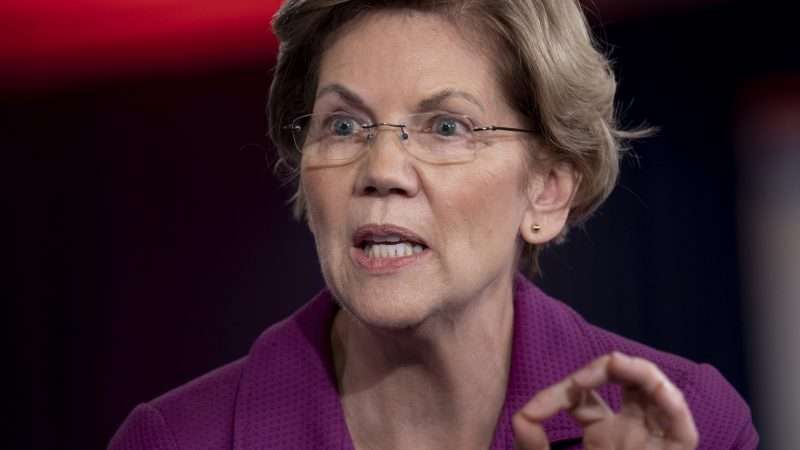
Of course, if there’s one thing America’s national political class does not like or understand, it is lulz. Lulz are inherently chaotic and disorderly, and that tends to cause headaches for most anyone with a bureaucratic bent. But it also produces reactions like one we saw yesterday, in which Sen. Elizabeth Warren (D–Mass.) used the GameStop episode to call for intervention by the Securities and Exchange Commission (SEC). 

It’s not at all clear what the SEC could do to stop what is essentially a financial market flash mob, aside from ensure that no large institutional investors are secretly in on the WallStreetBets side of the trade. If that’s the case (and it may well be, though who knows), then the SEC will probably end up taking some sort of action based on existing rules designed to prohibit fraudulent pump-and-dump schemes, where stocks are artificially boosted and sold off. 

But mostly it just goes to show the limits of Warren’s technocratic brand of populism. For years, she’s positioned herself as a defender of average Americans and a critic of big finance. And in this case, she frames her argument as an indictment of the “hedge funds, private equity firms, and wealthy investors dismayed by the GameStop trades.” Yet if the SEC were to intervene in the GameStop trades, it’s more likely it would end up doing so in a way that benefited the big hedge funds who bet on the game retailer’s fall. It would be to tip the scales against a movement that sees itself as a populist uprising.

I say “sees itself,” because the populist valence of this particular form of guerilla financial warfare has probably been at least somewhat overstated. Some of the retail investors battling the hedge funders will probably make out like bandits; others are likely to lose money.

Some of the money losers are probably prepared to take financial hits, and are effectively paying to consume the experience, like gamblers who come into a casino prepared to lose a certain amount of money in order to have a good time. But there may well be others for whom that isn’t true. This episode won’t end without some sort of consequences. 

That’s not to take Warren’s side; the SEC has no call to intervene in a market tug-of-war that is freely chosen and entered into by all. On the contrary, this context and complexity highlight the ways Warren’s bright-line, heroes-and-villains approach tends to fail as a justification for regulatory intervention.

Besides, it is pretty funny. Let the lulz play out.

from Latest – Reason.com https://ift.tt/3pFwa4J
via IFTTT

70.87 Billion Reasons Why The Retail Brokers Just Betrayed Their Customers

70.87 Billion Reasons Why The Retail Brokers Just Betrayed Their Customers

Yesterday, when TD Ameritrade became the first exchange to impose “unprecedented” restrictions on GME trading, we predicted what would happen next: “expect many more exchanges to follow suit, because hedge funds clearly need to be protected when faced with the retail daytrading mob.”

24 hours later, we were proven correct when first Robinhood (an “orderflow” cash cow for Melvin Capital owner Citadel), then IB, then Schwab and countless other brokerages announced – as if on preagreed terms – to halt trading in GME, AMC, BB, BBY, EXPR, KOSS, NAKD, NOK, SNDL, ALL and various other names.

This crackdown on retail trading has sparked a firestorm, with retail investors rightfully demanding to know just why were these stocks (and associated options) put on some ad hoc restricted list and threatening to take their money and go to more hospitable brokers, politicians warning that hearings are coming, regulators threatening lawsuits, and everyone generally shocked at just how openly broken the market is.

But what was the reason for this unprecedented crackdown? After all, during countless episodes of market turmoil before brokers had never taken it upon themselves to become the market’s regulator and to suspend trading in one or more shares.

It appears that there are several reasons, the first of which may have to do with some backroom collusion.

First, consider that Citadel, which as regular readers know is the biggest source of revenue for Robinhood…

… is also now a part-owner of the insolvent bearish hedge fund Melvin Capital (which as recently as last week had $12BN in AUM) which would have collapsed and been forced to liquidate its longs, had it not received $2 billion from Citadel and another $750MM from Steve Cohen. In other words, while nobody has called it that yet, we just lived through a mini LTCM.

Here’s the problem: with the r/wasllstreetbets crowd continuing to press the shorts, we were about to have a second, not so mini LTCM, because as CNBC’s David Faber earlier today noted, Melvin Capital “is in trouble” after suffering “massive losses” and the infusion from Citadel and Point72 “is probably gone.”

Said otherwise, if the squeeze had continued Citadel and Point72 would have had to bail out Melvin Capital again (which is odd since it was CNBC that also reported yesterday that the hedge fund had closed its shorts… which apparently was not exactly true). And while $2.75 billion may be pocket change for Ken and Steve, $5 billion starts to look like real money. And what if it has to be followed by $10 billion, $20… and so on. On the other hand, if they did not throw more good money after bad, not only would their initial investment be wiped out, but once Mevlin was forced to start selling its longs to fund its margin calls – which also happen to be the names contained in the Goldman Sachs Hedge Fund VIP basket biggest longs for Citadel and Point72 – that’s when the real carnage would take place as everyone would scramble to frontrun the upcoming liquidation. The result would have been billions in losses for Citadel and Point72.

Steve Cohen in his natural habitat.

Surely the best outcome – for Melvin’s forced owners – would be to simply stop the firehose of liquidity whichever way possible, and after a few back door phone calls, which we hope to learn all about during the upcoming Congressional hearings, that’s precisely what happened.

But Citadel and SAC Point72 were not the only ones on the firing line. As Faber also said earlier,  “any number of large of large hedge funds have suffered significantly.”

How much? According to financial data analytics firm Ortex, short-sellers – mostly hedge funds – are sitting on estimated losses of $70.87 billion from their short positions in U.S. companies just in 2021 alone! Add puts and other underwater derivatives, and the real loss will be even greater. And just as striking: Ortex data showed that as of Wednesday, there were loss-making short positions on more than 5,000 U.S. firms.

This means that virtually every hedge fund that had short positions on was getting hammered. So when dozens of these giant asset managers sat down and decided to polite call one broker after another what do you think happened.

That’s right: Joe Sixpack was quickly sold down the river.

Why? Because the so-called “retail clients” are nothing but a cost center to the “retail brokers” thanks to the recently introduced $0 commission pay scheme. In fact, brokers would be delighted to dump all but their biggest whales clients. So who pays the fees? Well, just take a look at Robinhood’s form 606: Citadel, Virtu, G1X, Wolverine, and countless hedge funds which, like Citadel, are tightly interwoven in the fabric of the market. It’s they that made a few phone call and just put dozens of stocks on a market-wide restricted list.

There’s more. While unconfirmed, there is speculation that that “Citadel reloaded their shorts before they told Robinhood to stop trading GME.” As the source notes, if true the people behind this should be in jail.

Perhaps this is true, perhaps not. We’ll find out soon.

But what we really want to find out is when the brokers will again allow trading in GME, AMC, and so on. What will be the catalyst? Will it be when hedge funds have finally covered their shorts, at which point there will be no further need for a squeeze.

If that’s indeed the case, it’ll tell us all we need to know about who truly runs the erroneously called “free markets.”

Tyler Durden
Thu, 01/28/2021 – 14:15

via ZeroHedge News https://ift.tt/3ptvBe6 Tyler Durden

Elizabeth Warren and the SEC Should Let the GameStop Lulz Go On

xnaphotostwo190501

If you follow video game news, you’ve probably seen reports of solved puzzles, unlocked secrets, and game-breaking stunts meant to test the limits of a game’s design. 

Sometimes these feats, which can range from speed runs to accessing game areas never meant to be explored, can take years of effort. Other times, they take hours or days, with puzzles meant to take months (or secrets meant to stay hidden forever) unlocked with unexpected rapidity. In every case, the secret is players working together, usually in an ad hoc fashion, loosely—and I mean very loosely—coordinating via online forums. 

These exploits have varying purposes: to beat intentionally designed in-game challenges, to map the vulnerabilities and quirks of a game’s architecture, to secure loot drops or other high-level prizes, or just to brag about what you and your community have done online. Why climb the mountain? Because it’s there. 

So one way of looking at the crowdsourced escalation of stock prices for GameStop, AMC Theaters, and other companies over the last few days—coordinated largely but not exclusively through the meme- and profanity-laced Reddit forum WallStreetBets—is as an inevitable advancement of online video game culture, and the prankish, puckish spirit of both earnest and mock heroism that flows through so many of these efforts. This was a meme-managed, crowdsourced effort to exploit a quirk in the financial system, to test its limits, and, in a way, to break the game. 

The “players” involved did it for any number of reasons. There was a belief that it would afflict the powerful by causing hedge funds that bet heavily on GameStop’s decline to lose money. There was a desire for personal gain—not loot drops, but the real money that at least some of these investors are earning. And failing that, there was a sense of camaraderie and communal purpose: The real treasure was the memes they made along the way. 

It’s also born out of a persistent desire apparent in so much online crowd behavior, from flash mobs to Boaty McBoatface: to simply cause amusing chaos, to see how far things can go. If you could organize a bunch of message board shitposters to bid up the price of a struggling relic of mall-era America and maybe collapse a multi-billion-dollar hedge fund in the process…why wouldn’t you? Do it for bragging rights. Do it for money. Do it for the community. But mostly, do it for the lulz

Of course, if there’s one thing America’s national political class does not like or understand, it is lulz. Lulz are inherently chaotic and disorderly, and that tends to cause headaches for most anyone with a bureaucratic bent. But it also produces reactions like one we saw yesterday, in which Sen. Elizabeth Warren (D–Mass.) used the GameStop episode to call for intervention by the Securities and Exchange Commission (SEC). 

It’s not at all clear what the SEC could do to stop what is essentially a financial market flash mob, aside from ensure that no large institutional investors are secretly in on the WallStreetBets side of the trade. If that’s the case (and it may well be, though who knows), then the SEC will probably end up taking some sort of action based on existing rules designed to prohibit fraudulent pump-and-dump schemes, where stocks are artificially boosted and sold off. 

But mostly it just goes to show the limits of Warren’s technocratic brand of populism. For years, she’s positioned herself as a defender of average Americans and a critic of big finance. And in this case, she frames her argument as an indictment of the “hedge funds, private equity firms, and wealthy investors dismayed by the GameStop trades.” Yet if the SEC were to intervene in the GameStop trades, it’s more likely it would end up doing so in a way that benefited the big hedge funds who bet on the game retailer’s fall. It would be to tip the scales against a movement that sees itself as a populist uprising.

I say “sees itself,” because the populist valence of this particular form of guerilla financial warfare has probably been at least somewhat overstated. Some of the retail investors battling the hedge funders will probably make out like bandits; others are likely to lose money.

Some of the money losers are probably prepared to take financial hits, and are effectively paying to consume the experience, like gamblers who come into a casino prepared to lose a certain amount of money in order to have a good time. But there may well be others for whom that isn’t true. This episode won’t end without some sort of consequences. 

That’s not to take Warren’s side; the SEC has no call to intervene in a market tug-of-war that is freely chosen and entered into by all. On the contrary, this context and complexity highlight the ways Warren’s bright-line, heroes-and-villains approach tends to fail as a justification for regulatory intervention.

Besides, it is pretty funny. Let the lulz play out.

from Latest – Reason.com https://ift.tt/3pFwa4J
via IFTTT

Liquid Nitrogen Accident Kills Six In Georgia At Poultry Plant 

Liquid Nitrogen Accident Kills Six In Georgia At Poultry Plant 

Six people are dead after a liquid nitrogen leak at a northeast Georgia food processing plant Thursday, according to Associated Press News.

A spokesperson for Northeast Georgia Health System said five people died at a Gainesville poultry plant following the nitrogen leak, while one person died at the hospital. 

Hall County Fire Department Division Chief Zach Brackett said the leak began Thursday morning at Prime Pak Foods. He said firefighters arrived on the scene to find workers “milling around outside, some with injuries.”

At least four firefighters were taken to the hospital with respiratory issues after entering the facility. 

Brackett said 130 workers at the plant were bussed to a church down the street where they were examined for injuries. He added that some were also taken to the hospital. 

To mitigate respiratory issues with the surrounding community, 1.5 miles of road the runs in front of the plant has been shut down.

*This story is developing. 

Tyler Durden
Thu, 01/28/2021 – 13:55

via ZeroHedge News https://ift.tt/3iUUTiJ Tyler Durden

​​​​​​​Industrial Metals Run Out Of Steam; Is This Seasonal Or The Start Of Next Slowdown?

​​​​​​​Industrial Metals Run Out Of Steam; Is This Seasonal Or The Start Of Next Slowdown?

Chinese iron ore futures plunged 5%, and copper prices fell to one-month lows on Thursday, as demand for industrial metals weakened before the Chinese New Year.

The selloff in the industrial metals comes as sluggish downstream consumption is expected ahead of the holidays beginning on Feb. 12. 

Iron ore futures contracts on the Dalian Commodity Exchange plunged nearly 5% to 986 yuan ($152.14) per ton. Construction rebar on the Shanghai Futures Exchange was down 2%. Comex copper prices tagged one-month lows to $3.51. 

Adding to the downward pressure on industrial metals was a stronger U.S. dollar and weaker global equities following liquidity and volatility concerns in financial markets. 

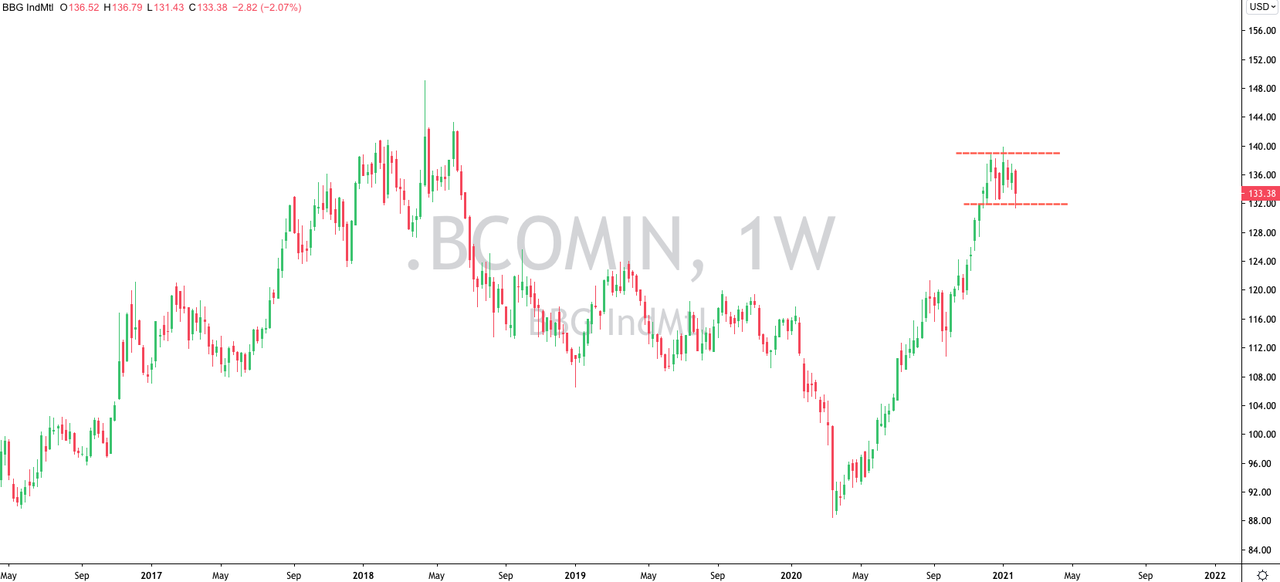
Bloomberg Industrial Metals Index has hit overhead resistance after a monster run from the lows in March 2020. 

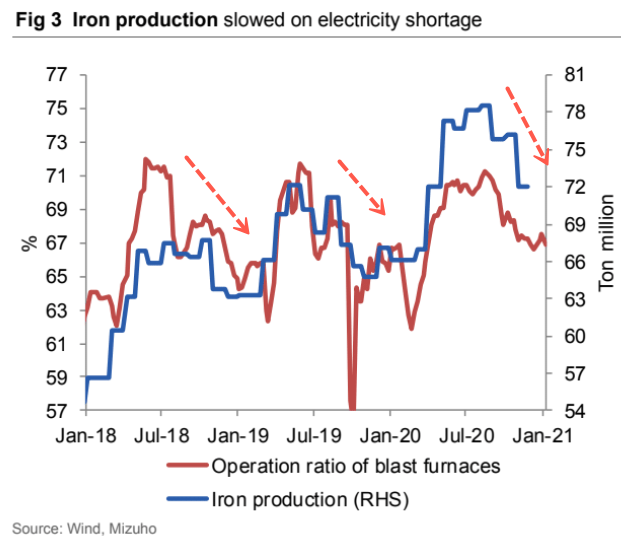
The Mizuho Bank Weekly China Outlook showed Chinese iron production slowed into the new year. 

It remains to be seen if declines in industrial metal prices are a seasonal phenomenon due to the Chinese New Year next month or if this is the beginning of the next global slowdown. 

Tyler Durden
Thu, 01/28/2021 – 13:50

via ZeroHedge News https://ift.tt/2McAHNo Tyler Durden