Should We End the Lockdowns? A Soho Forum Debate

soho thumbnail 3

Should the COVID-19 lockdowns be replaced with a more targeted strategy?

On October 4, 2020, epidemiologists from Harvard, Oxford, and Stanford authored the Great Barrington Declaration, which advocates for ending the COVID-19 lockdowns and turning to a strategy of protecting elderly and vulnerable populations while allowing everyone else to resume their normal lives.

Critics of the Declaration issued a counter-petition called the “John Snow Memorandum,” stating, “Any pandemic management strategy relying upon immunity from natural infections for COVID-19 is flawed. Uncontrolled transmission in younger people risks significant morbidity and mortality across the whole population.”

In an online Soho Forum debate on December 13, Martin Kulldorff, a Harvard biostatistician and epidemiologist and coauthor of the Great Barrington Declaration, debated Andrew Noymer, an associate professor of population health and disease prevention at the University of California, Irvine, who signed the John Snow Memorandum.

It was an Oxford-style debate, and in this case, the contest ended in a tie: Both debaters convinced 5.56 percent of audience members to switch to their side over the course of the debate.

The Soho Forum, sponsored by Reason Foundation, is a monthly debate series typically held at the SubCulture Theater in Manhattan’s East Village, but which has gone remote during the pandemic.

Narrated by Nick Gillespie. Edited by John Osterhoudt and Regan Taylor.

Photos: Travis Wise/Flickr/Creative Commons; Travis Wise/Flickr/Creative Commons; Travis Wise/Flickr/Creative Commons; Travis Wise/Flickr/Creative Commons; Steve Sanchez/Sipa USA/Newscom; David Cliff/ZUMAPRESS/Newscom; Johnny Louis/JL/Sipa USA/Newscom; tMartha Asencio Rhine/ZUMAPRESS/Newscom; Dinendra Haria/ZUMAPRESS/Newscom; Chris Urso/ZUMA Press/Newscom; JIM RUYMEN/UPI/Newscom; John Marshall Mantel/ZUMA Press/Newscom

from Latest – Reason.com https://ift.tt/3p4epLB
via IFTTT

Space Force Personnel Will Be Called “Guardians” (Of The Galaxy?)

Space Force Personnel Will Be Called “Guardians” (Of The Galaxy?)
Tyler Durden
Sat, 12/19/2020 – 10:40

“…henceforth the men and women of the United States Space Force will be known as guardians.”


via ZeroHedge News https://ift.tt/2J3dA6g Tyler Durden

SEC Warns Ponzi Scheme Complaints See “Significant Uptick” In COVID World 

SEC Warns Ponzi Scheme Complaints See “Significant Uptick” In COVID World 
Tyler Durden
Sat, 12/19/2020 – 10:40

The agency warned against “frauds like Ponzi schemes, fake CD scams, bogus stock promotions, and community-based financial scams.” 


via ZeroHedge News https://ift.tt/3rbPBDd Tyler Durden

Should We End the Lockdowns? A Soho Forum Debate

soho thumbnail 3

Should the COVID-19 lockdowns be replaced with a more targeted strategy?

On October 4, 2020, epidemiologists from Harvard, Oxford, and Stanford authored the Great Barrington Declaration, which advocates for ending the COVID-19 lockdowns and turning to a strategy of protecting elderly and vulnerable populations while allowing everyone else to resume their normal lives.

Critics of the Declaration issued a counter-petition called the “John Snow Memorandum,” stating, “Any pandemic management strategy relying upon immunity from natural infections for COVID-19 is flawed. Uncontrolled transmission in younger people risks significant morbidity and mortality across the whole population.”

In an online Soho Forum debate on December 13, Martin Kulldorff, a Harvard biostatistician and epidemiologist and coauthor of the Great Barrington Declaration, debated Andrew Noymer, an associate professor of population health and disease prevention at the University of California, Irvine, who signed the John Snow Memorandum.

It was an Oxford-style debate, and in this case, the contest ended in a tie: Both debaters convinced 5.56 percent of audience members to switch to their side over the course of the debate.

The Soho Forum, sponsored by Reason Foundation, is a monthly debate series typically held at the SubCulture Theater in Manhattan’s East Village, but which has gone remote during the pandemic.

Narrated by Nick Gillespie. Edited by John Osterhoudt and Regan Taylor.

Photos: Travis Wise/Flickr/Creative Commons; Travis Wise/Flickr/Creative Commons; Travis Wise/Flickr/Creative Commons; Travis Wise/Flickr/Creative Commons; Steve Sanchez/Sipa USA/Newscom; David Cliff/ZUMAPRESS/Newscom; Johnny Louis/JL/Sipa USA/Newscom; tMartha Asencio Rhine/ZUMAPRESS/Newscom; Dinendra Haria/ZUMAPRESS/Newscom; Chris Urso/ZUMA Press/Newscom; JIM RUYMEN/UPI/Newscom; John Marshall Mantel/ZUMA Press/Newscom

from Latest – Reason.com https://ift.tt/3p4epLB
via IFTTT

Pompeo Claims Russia “Pretty Clearly” Behind Major Cyberattack On US Agencies

Pompeo Claims Russia “Pretty Clearly” Behind Major Cyberattack On US Agencies
Tyler Durden
Sat, 12/19/2020 – 09:50

First high administration official to point finger at the Kremlin as Trump under pressure to “do something”…

via ZeroHedge News https://ift.tt/2WxH0fU Tyler Durden

Tom Vilsack Is the Wrong Person To Lead the Department of Agriculture

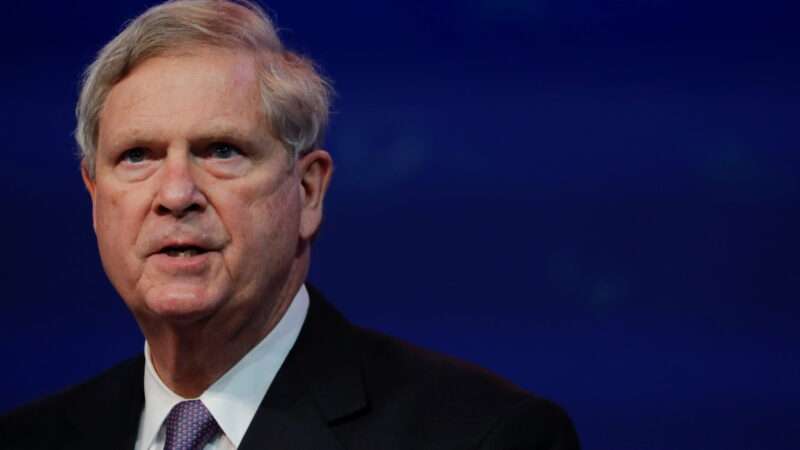
Vilsack

Last week, President-elect Joe Biden confirmed rumors he would pick Tom Vilsack to lead the U.S. Department of Agriculture (USDA). Vilsack served in the same role for nearly the entirety of the Obama administration.

Biden said this week that he had to talk a reluctant Vilsack into returning to the job. Many wish Biden hadn’t done so; Vilsack is a divisive choice.

“I wanted someone new,” said John Boyd, president of the National Black Farmers Association and a Biden supporter and transition advisor.

Darvin Brantledge, a Missouri farmer who raises cattle and grows corn and who also supported Biden in the 2020 election, told Tulsa’s KOSU he’s “not impressed with Vilsack,” who he says promotes “more corporate control” of agriculture.

In the same KOSU piece, a farmer who supported Trump in the election was equally nonplussed by Biden’s selection, citing Vilsack’s support for stricter regulations during the Obama administration.

These and other critics are right.

Vilsack has a compelling personal story. An orphan who was adopted as an infant, Vilsack became a lawyer, then a mayor, and eventually served as Iowa’s governor before landing the top job at USDA when President Barack Obama first took office.

Under his leadership at USDA—as I detail in my stocking-stuffer book, Biting the Hands that Feed Us—farm subsidies grew to record amounts. (Those cash payments grew further still under the Trump administration.)

Among many other problems, those ballooning farm subsidies encouraged growers to overproduce, which led to needless waste and environmental damage. It also drove down prices paid to farmers.

“When he exited the USDA in early 2017,” The Wall Street Journal reported this week, “the U.S. farm economy was on the skids, with net farm income down 40% from a record high four years earlier because of successive bumper crops that swelled supplies and pushed down prices.”

Vilsack exited the USDA in the waning days of the Obama administration to lead the U.S. Dairy Export Council, part of the government-created entity Dairy Management, which takes money from dairy farmers—via the absolutely awful mandatory dairy checkoff program—and spends it promoting the interests of America’s largest dairies.

While Dairy Management is the brains behind the long-running “Got Milk?” ad campaign, it also wastes money in more subtle ways. As I explained in a 2017 piece on the use of checkoff funds to encourage pizza chain Domino’s to add more cheese to its pizzas and similar pointless efforts to pad corporations’ pockets, “opponents of government waste, supporters of indie pizza joints that have to compete against giants like Domino’s, groups that oppose government promotion of animal products, and opponents of dietary saturated fat continue to fume over [Dairy Management’s] activities, secrecy, and very existence.”

Many critics are lining up to pan the choice of Vilsack.

Claire Kelloway, writing for The Intercept, called Biden’s choice of Vilsack for the USDA job a symbol of “everything that’s wrong with the Democratic Party.” She singled out Vilsack’s “pro-corporate policies,” which she says help “drive rural communities away from the Democratic Party.”

Critics who argue Vilsack took credit for addressing historic USDA racism while doing little or nothing to address claims of racist practices by the agency during his time in the Obama administration—including some inside the agency—call Biden’s choice to return Vilsack to the USDA a slap in the face.

Rep. Marcia Fudge (D–Ohio), who campaigned for the top USDA job that went to Vilsack and who would have been the first Black woman to lead the agency, said this week that despite Vilsack being a “somewhat controversial” choice for the job, she’s reasonably optimistic Vilsack is willing to listen to critics.

Vilsack does have his supporters. Pork lobbyists applauded the move. Top farm lobbies, commodity farmers, supporters of wasteful ethanol subsidies, and others are pleased with the choice.

Some advocates on the left are confident Vilsack can help reverse the devastating farm-policy excesses of the Trump administration, including Trump’s awful tariffs and attacks on free trade agreements. (I hope that he does.)

But even some supporters sound tepid. While noting Vilsack’s experience, the Center for American Progress, a progressive think tank, used some variation of the expression “has the opportunity” four times in a three-paragraph statement to identify various actions the group thinks Vilsack should take. (I “have the opportunity” to win the lottery.)

Some optimism about the Vilsack pick seems wholly misplaced on its face. For example, the head of the Iowa Organic Association, Roz Lehman, said last week that Vilsack—who has an outside shot to be the longest-serving USDA secretary in history—may just be the one to shift the USDA away from “a decades-old system that maintains the status quo.”

Nay, Vilsack is evidence both of that system and that status quo.

In 2016, Democratic Party presidential nominee Hillary Clinton was rumored to be considering Vilsack to be her running mate. (Clinton ultimately picked *checks notes* someone named Tim Kaine.)

At the time, Vilsack was seen as the type of person who’s going to guide the ship, not rock the boat.

“He is solid,” a political operative said of Vilsack in 2016. “He is steady. He is experienced.”

That’s the image Vilsack’s supporters are using today, too, to characterize what he’ll bring back to the agency in 2021 and beyond.

The Center for Science in the Public Interest, which has collaborated with large corporations to promote food-safety rules that squeeze out smaller competitors without measurably improving food safety, lauded Biden’s choice of Vilsack, calling his return to the USDA a victory for “steadiness, sobriety, and sound science.”

Vilsack is probably all of those things—steady, sober, experienced, solid. And those are all character traits that have been sorely lacking during the Trump era. I get it.

But right now, the USDA needs a visionary leader who is willing to address all of what ails the agency: Out-of-control farm subsidies. Programs that are wasteful and damage the environment. Corporatism and economic protectionism. Backbreaking livestock-processing rules. Lingering systemic racism. Struggling farmers.

The USDA needs a new vision and fundamental changes. Vilsack won’t bring either.

from Latest – Reason.com https://ift.tt/3nE6eVW
via IFTTT

Tom Vilsack Is the Wrong Person To Lead the Department of Agriculture

Vilsack

Last week, President-elect Joe Biden confirmed rumors he would pick Tom Vilsack to lead the U.S. Department of Agriculture (USDA). Vilsack served in the same role for nearly the entirety of the Obama administration.

Biden said this week that he had to talk a reluctant Vilsack into returning to the job. Many wish Biden hadn’t done so; Vilsack is a divisive choice.

“I wanted someone new,” said John Boyd, president of the National Black Farmers Association and a Biden supporter and transition advisor.

Darvin Brantledge, a Missouri farmer who raises cattle and grows corn and who also supported Biden in the 2020 election, told Tulsa’s KOSU he’s “not impressed with Vilsack,” who he says promotes “more corporate control” of agriculture.

In the same KOSU piece, a farmer who supported Trump in the election was equally nonplussed by Biden’s selection, citing Vilsack’s support for stricter regulations during the Obama administration.

These and other critics are right.

Vilsack has a compelling personal story. An orphan who was adopted as an infant, Vilsack became a lawyer, then a mayor, and eventually served as Iowa’s governor before landing the top job at USDA when President Barack Obama first took office.

Under his leadership at USDA—as I detail in my stocking-stuffer book, Biting the Hands that Feed Us—farm subsidies grew to record amounts. (Those cash payments grew further still under the Trump administration.)

Among many other problems, those ballooning farm subsidies encouraged growers to overproduce, which led to needless waste and environmental damage. It also drove down prices paid to farmers.

“When he exited the USDA in early 2017,” The Wall Street Journal reported this week, “the U.S. farm economy was on the skids, with net farm income down 40% from a record high four years earlier because of successive bumper crops that swelled supplies and pushed down prices.”

Vilsack exited the USDA in the waning days of the Obama administration to lead the U.S. Dairy Export Council, part of the government-created entity Dairy Management, which takes money from dairy farmers—via the absolutely awful mandatory dairy checkoff program—and spends it promoting the interests of America’s largest dairies.

While Dairy Management is the brains behind the long-running “Got Milk?” ad campaign, it also wastes money in more subtle ways. As I explained in a 2017 piece on the use of checkoff funds to encourage pizza chain Domino’s to add more cheese to its pizzas and similar pointless efforts to pad corporations’ pockets, “opponents of government waste, supporters of indie pizza joints that have to compete against giants like Domino’s, groups that oppose government promotion of animal products, and opponents of dietary saturated fat continue to fume over [Dairy Management’s] activities, secrecy, and very existence.”

Many critics are lining up to pan the choice of Vilsack.

Claire Kelloway, writing for The Intercept, called Biden’s choice of Vilsack for the USDA job a symbol of “everything that’s wrong with the Democratic Party.” She singled out Vilsack’s “pro-corporate policies,” which she says help “drive rural communities away from the Democratic Party.”

Critics who argue Vilsack took credit for addressing historic USDA racism while doing little or nothing to address claims of racist practices by the agency during his time in the Obama administration—including some inside the agency—call Biden’s choice to return Vilsack to the USDA a slap in the face.

Rep. Marcia Fudge (D–Ohio), who campaigned for the top USDA job that went to Vilsack and who would have been the first Black woman to lead the agency, said this week that despite Vilsack being a “somewhat controversial” choice for the job, she’s reasonably optimistic Vilsack is willing to listen to critics.

Vilsack does have his supporters. Pork lobbyists applauded the move. Top farm lobbies, commodity farmers, supporters of wasteful ethanol subsidies, and others are pleased with the choice.

Some advocates on the left are confident Vilsack can help reverse the devastating farm-policy excesses of the Trump administration, including Trump’s awful tariffs and attacks on free trade agreements. (I hope that he does.)

But even some supporters sound tepid. While noting Vilsack’s experience, the Center for American Progress, a progressive think tank, used some variation of the expression “has the opportunity” four times in a three-paragraph statement to identify various actions the group thinks Vilsack should take. (I “have the opportunity” to win the lottery.)

Some optimism about the Vilsack pick seems wholly misplaced on its face. For example, the head of the Iowa Organic Association, Roz Lehman, said last week that Vilsack—who has an outside shot to be the longest-serving USDA secretary in history—may just be the one to shift the USDA away from “a decades-old system that maintains the status quo.”

Nay, Vilsack is evidence both of that system and that status quo.

In 2016, Democratic Party presidential nominee Hillary Clinton was rumored to be considering Vilsack to be her running mate. (Clinton ultimately picked *checks notes* someone named Tim Kaine.)

At the time, Vilsack was seen as the type of person who’s going to guide the ship, not rock the boat.

“He is solid,” a political operative said of Vilsack in 2016. “He is steady. He is experienced.”

That’s the image Vilsack’s supporters are using today, too, to characterize what he’ll bring back to the agency in 2021 and beyond.

The Center for Science in the Public Interest, which has collaborated with large corporations to promote food-safety rules that squeeze out smaller competitors without measurably improving food safety, lauded Biden’s choice of Vilsack, calling his return to the USDA a victory for “steadiness, sobriety, and sound science.”

Vilsack is probably all of those things—steady, sober, experienced, solid. And those are all character traits that have been sorely lacking during the Trump era. I get it.

But right now, the USDA needs a visionary leader who is willing to address all of what ails the agency: Out-of-control farm subsidies. Programs that are wasteful and damage the environment. Corporatism and economic protectionism. Backbreaking livestock-processing rules. Lingering systemic racism. Struggling farmers.

The USDA needs a new vision and fundamental changes. Vilsack won’t bring either.

from Latest – Reason.com https://ift.tt/3nE6eVW
via IFTTT