Can Six Myths Keep The Market Going?

Can Six Myths Keep The Market Going?

Authored by Patrick Hill via RealInvestmentAdvice.com,

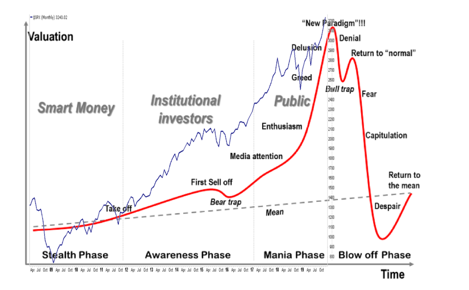
Piper Jaffray forecasts by year end 2020, the S&P 500 (SPX) will hit 3600, a 12.8 % increase. Of eighteen analysts interviewed by Marketwatch only three forecasters expect a decline for the SPX. Will the SPX reach 3600?  The SPX has soared over 400 % from a low of 666 in 2009 to over 3200 at the close of 2019. Mapping the SPX ten year history onto a psychology market cycle map of growth and decline phases poses interesting questions. As the market has zoomed over 400% upwards over ten years, it is clearly in the Mania Phase. Yet, the US economy is growing at the slowest rate of any economic recovery since WWII at 2.2 % GDP per year, why the disconnect?
Source: Patrick Hill – 12-31-19

One reason for the disconnect is investment analysts and the media lead investors to believe there is no downside risk. On New Year’s Eve, Goldman Sachs released a prediction for 2020 claiming that the ‘tools of the Great Moderation’ (Fed policy shift) begun 30 years ago low-interest rates, low volatility, sustainable growth and muted inflation are still in place and were only interrupted by the 2008 financial crisis. Plus we would add the Dotcom crash. GS concluded that the economy ‘was nearly recession-proof.’

The mainstream financial media also feed the Mania Phase with stories like Goldman Sachs declaring the Great Moderation is working with our economy in a ‘new paradigm’. We are to believe there will not be a recession because our policymakers have the economy under control.  Really?  With over $17 trillion of negative debt worldwide to keep the world economy going, central banks have succeeded in sustaining worldwide GDP at 1 – 2 % and falling as of late! For the SPX market to not descend into the Blow Off phase, investors will need to continue to believe in six economic myths:

  1. The Growth Phase of the Economic Cycle is Continuing

  2. Consumers Will Bailout the Economy

  3. The Fed Will Keep the Economy Humming

  4. If the Fed Fails Then the Federal Government Will Provide Stimulus

  5. The Trade War Won’t Hurt Global Growth

  6. The Economy and Markets Are Insulated from World Politics

Let’s look at each myth that is likely to affect portfolio and market performance in the next year.  This analysis is based on research data of economic, social, government, business trends and observation of markets and the economy. If markets are to continue to climb, either policymakers must solve difficult issues or investors must continue to believe these myths are true. The first myth establishes a critical framework for viewing all economic activity. We are actually at the end of the growth phase of the economic cycle; here is why.

Myth 1. The Growth Phase of the Economic Cycle is Continuing

The Fed has reported that the economy is still in ‘mid-cycle’ phase.  We differ with this position as several indicators show the economy is reaching the end of its growth cycle and ready to revert to the mean. As GDP is driven 70 % by consumers, let’s look at what is really happening to consumers.  The ratio of current consumer conditions minus consumer expectations is at levels seen just before prior recessions not mid-stage growth economies.
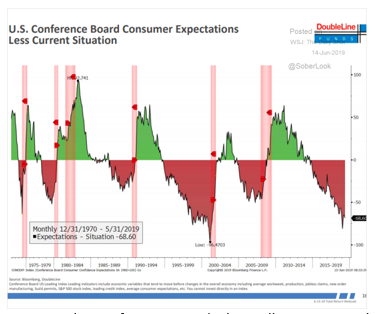
Sources: The Conference Board, The Wall Street Journal, The Daily Shot – 6/14/19

In the chart below, consumers are stretched as loan default rates are rising despite a 50-year low unemployment rate. Rising delinquencies tend to signal rising unemployment and economic decline is likely in the near future.
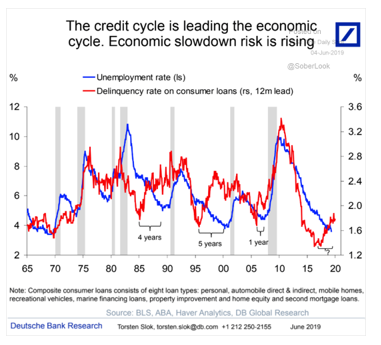
Sources: Deutsche Bank, Bureau of Labor Statistics, The Wall Street Journal, The Daily Shot – 6/4/19

Of major concern is that the manufacturing sector is now in a recession based on five months of ISM reports below the 50 % economic expansion benchmark. The overall contraction is validated as 70 % of manufacturing sub-sectors are contracting as noted in the report below.  While the US economy is primarily driven by services, the manufacturing sector has a multiplier effect on productivity, support services, and employment with high paying jobs. Note the contraction in sub-sectors is reaching levels last seen before recessions.

Sources Oxford Economics, The Wall Street Journal, The Daily Shot – 12-20-19

There are other indicators pointing to the end of the growth phase.  For example, the inversion of the 2 – 10 yield curve last summer is now steepening – often seen before an economic slowdown. Another indicator is the number of firms with negative earnings launching IPOs in 2019 was at levels not seen since 2000. Finally, productivity and capital investments are at ten year lows.

Myth 2.  Consumers Will Bailout the Economy

Market pundits have been quick to rely on the consumer to continue spending at growth sustaining rates.  Yet, budgets for the middle class are squeezed as consumers cope with student loan debt payments, new car payments, health care bills, and credit card debt.  The Bloomberg Personal Finance Index dropped significantly in October:
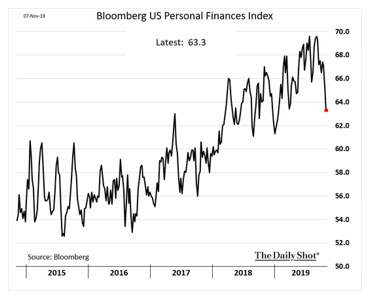
Source: Bloomberg, The Wall Street Journal, The Daily Shot – 11/10/19

Car loans now span seven years on average versus five years a few years ago. Further, the new loans ‘roll in’ debt from previous car purchases due to negative equity in the owner’s trade-in vehicle.  Vehicle price increases up to 10 % over the last year for both cars and trucks add to the debt burden.  Car debt is beginning to weigh on consumers as delinquencies are climbing:
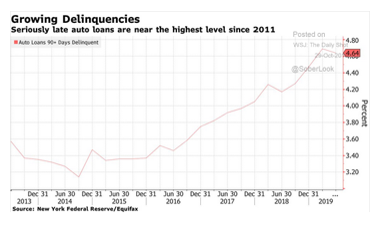
Sources: NY Federal Reserve, The Wall Street Journal, The Daily Shot – 10/29/19

Today, credit card rates are running at a ten-year peak of 17 – 22 % have seen no relief despite the Fed cutting rates.  There is a record spread between the Federal Funds rate and credit card rates as banks seek new revenue sources beyond making loans. Many consumers are turning to credit cards to pay bills to sustain their lifestyle as their wages are not keeping up with rising living costs.

In addition, consumers are increasingly working at more than one job to be sure they can pay their bills.
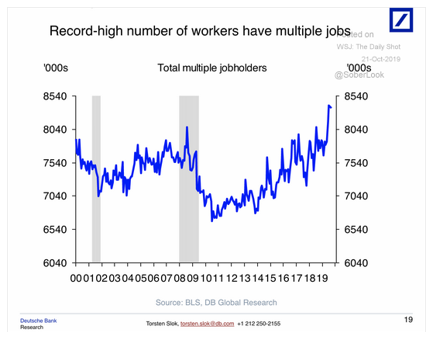
Sources: Deutsche Bank, Bureau of Labor Statistics, The Wall Street Journal, The Daily Shot – 10/21/19

Workers need to take on multiple jobs in the gig economy. McKinsey & Company estimates that 52 million people are gig workers or a third of the 156 million person workforce. Contractors have no job security.  Gig workers often receive hourly wages with no health, retirement or other benefits. The lack of benefits means they have limited or no financial safety net in the event of an economic slowdown.

There are other key indicators of consumer financial distress, for example, consumer spending on a quarter over quarter basis has continued to decline, Bankrate reports that 50 % of workers received no raise in the last year.  Real wages (taking into account inflation) for 80 % of all workers have been stagnant for the past twenty years.  Uncertain economic forces are putting consumers in a financial bind, for more details, please see our post: Will the Consumer Bailout the Economy?

Myth 3.  The Fed Will Keep the Economy Humming

The Fed has said it will do whatever necessary to keep the economy growing by keeping interest rates low and injecting liquidity into the financial system. However, a survey on Fed actions shows that 70 % of economists interviewed believe the Fed is running out of ammo to turnaround the economy.
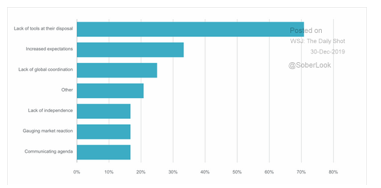
Sources: The Wall Street Journal, The Daily Shot – 12-30-19

We agree with their perspective that the Fed is entering an economic space where no central bank has gone before.  In the past, the Fed lowered rates when an economic downturn was evident. Just prior to earlier recession’s interest rates were at a higher starting level of at least 4 – 5 %.  Plus, today the Fed has returned to pumping liquidity into the economy via its repo operation and QE as shown below.

Sources: The Federal Reserve of St. Louis, The Wall Street Journal, The Daily Shot – 12/30/19

The International Bureau of Settlements (BIS) disclosed in their analysis of recent Fed repo operations that funding supported not only banks but hedge funds. A key concern is the nature of the hedge fund bailout. How steep is the loss being mitigated? Is there a possibility of contagion? Is more than one hedge fund involved?  Should the Fed be bailing out hedge funds that are overextended due to speculation? The Fed is already using its tools at the height of the current economic growth cycle. The Fed financial tools are too stretched to turnaround an economy in a recession from multiple financial bubbles bursting.

The Fed continues to declare that inflation is at 2.1 %, missing the reality of what consumers are actually paying for goods and services.  We find from industry research that finds inflation is likely in the 6 – 10% range. Inflation should be defined as price increases of goods and services that consumers buy, not inflation defined by a formula to suit political needs. Using inflation lifestyle ‘cost of living’ data, which is not transparent or available for audit does not meet the foundational data needs of investors.  Gordon Haskett Research Advisors conducted a study by purchasing a basket of 76 typical items consumers frequently buy at Walmart and Target.  Their study showed that from June 2018 to June 2019, prices increased by about 5.5%. 

Other industry research supports inflation running at a much higher level than government figures. On a city by city basis, Chapwood has developed an index for 500 items in major metropolitan areas of the US.  Chapwood reports the average national inflation level to be about 10 %.  Note inflation is compounded; for example, in San Jose a five year average price increase of 13% is for each year. An item costing $1.00 would cost $1.13 the next year and then $1.28 the third year and so forth. It is likely workers caught in a squeeze between stagnant wages and 10 % inflation will not be able to continue to sustain present levels of economic growth.

Real inflation at 6 – 10 % has major policy, portfolio, and social implications.  For example, with the ten year Treasury Bond at 1.90% and inflation at 6 %, we are actually living in a ’de facto negative interest’ economy of – 4.10 %.  Higher inflation levels fit the financial reality of what workers, portfolio managers, and retirees are facing in managing their finances.  Many workers must take multiple jobs and develop a ‘side hustle’ to just keep up with inflation much less get ahead. For portfolio managers, they must grow their portfolio at much higher rates than was previously thought just to maintain portfolio value.  Finally, for retirees on a fixed income portfolio it is imperative they have additional growth income sources or part-time work to keep up with inflation eating away at their portfolio. For more details on our analysis of a variety of inflation, categories see our post: Is Inflation Really Under Control?

One additional assumption about Fed intervention repeated by many analysts is the Fed liquidity injections mean that corporate sales and profits will bounce back.  For some financially sensitive industries this argument may be true. For other firms with excellent credit ratings, they may be able to obtain low-interest loans to ride out falling sales. But, the reality is that corporations build and sell products based on demand. If demand falls, low-interest loans will not increase sales.  Only new products, new channels, reduced pricing, marketing and other initiatives will revive sales.

Myth 4.  If the Fed Fails Then the Federal Government Will Provide Stimulus

European Central Bank leaders have called on European governments to provide economic stimulus for their markets.  Picking up on this idea, analysts have proposed the US government move on infrastructure and other spending programs. However, tax cuts, low-interest rates, stock buybacks, and record corporate debt offerings have shifted a huge balance of world-wide wealth to the private sector.  For 40 years, there has been a significant increase in private capital worldwide while public wealth has declined. In 2015, the value of net public wealth (or public capital) in the US was negative -17% of net national income, while the value of net private wealth (or private capital) was 500% of national income. In comparison to 1970, net public wealth amounted to 36% of national income, while net private wealth was at 326 %.
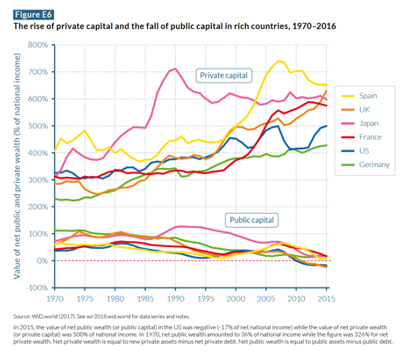
Source: World Inequality Lab, Thomas Piketty, Gabriel Zucman et al. – 2018

Essentially, central banks, Wall Street, and governments have built monetary and economic systems that have increased private wealth at the expense of public wealth.  The lack of public capital makes the creation of major levels of public goods and services nearly impossible. The US government is now running $1 trillion yearly deficits with public debt at record levels not seen since WWII and total debt to GDP at all-time highs. The development of public goods and services like basic research and development, education, infrastructure, and health services are necessary for an economic rebound. The economy will need a huge stimulus ‘lifting’ program and yet the capital necessary to do the job is in the private sector where private individuals make investment allocation decisions.  Congress may pass an ‘infrastructure’ bill in 2020 but given the election, it is likely to be lightly funded to pass both houses of Congress and receive the president’s signature.

Myth 5.  The Trade War Won’t Hurt Global Growth

By closing the Phase One trade deal, the market has been sighing with relief with observers declaring that trade will resume a growth track.  Yet, the Phase One deal is not a long term fix. If anything, the actions on the part of both governments have been to dig in for the long term.  The Chinese government has taken several key actions in parallel to the deal to move their agenda ahead.

China has quietly raised the exchange rate of their currency to offset some of the impact of still in place tariffs on the U.S. economy.  The government made a major move to block US and foreign companies from providing key technical infrastructure. The technology ministry has told government agencies that all IT hardware and software from foreign firms are to be replaced by Chinese systems within three years. If the Chinese government decides to establish ‘China only’ network standards it may be difficult for US firms to even work with state-sponsored companies or private businesses that must meet China’s only standards. Apple and Microsoft would have to build two versions of their products. One version for the Chinese economy and one for the world.  A critical change is taking place in world trade which is the establishment of a two-block trading world.  China is a key growth market at a 20 % – 30 % increase in sales annually for US multinational companies. For these corporations navigating the trade war will be problematic even with the Phase One agreement.  Our post characterizing this major change in world trade can be found at: Navigating a Two Block Trading World.  

The U.S. has placed sanctions on Chinese sponsored network provider Huawei, effectively limiting the network vendor from US government and private networks.  The Phase One agreement includes the US canceling planned tariffs for December 15th in 2019 and rolling back tariffs to 7.5 % on $120 billion of goods imposed on September 1st of last year. Yet, tariffs of 25 % remain in place on $250 billion of Chinese goods.  The Chinese have canceled retaliatory tariffs planned for December 15th and plan to increase purchases of US goods and services by $200 billion over two years. In addition, China will purchase US agriculture products at a $40 billion rate per year from a baseline of $24 billion in 2017.  If the Chinese follow through on their purchase commitments US companies should see increased sales.  However, history on Chinese purchases shows they forecast large purchases but small purchases are made.

A major trade issue has been created when the US decided not to appoint any new judges to the World Trade Organization court for disputes. The court cannot hear or make decisions on any disputes any longer; meaning countries will resort to free-for-all negotiations on trade disputes.  We expect as economies falter, nationalist policies on trade will gain more popularity and world trade will continue to decline after a slight blip up from the U.S.-China Phase One deal.
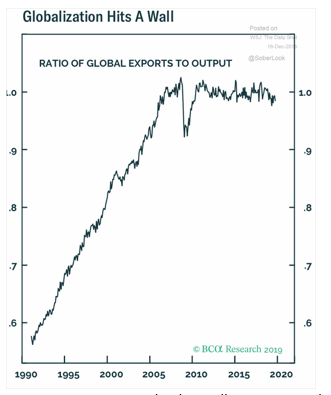
Sources: BCOT Research, The Wall Street Journal, The Daily Shot – 12/16/19

Finally, prior to the trade war global trade has been facing major headwinds. Since 2008, global firms have looked to open more international markets to sell their goods, but have met sales resistance causing revenue and profits to be flat or decline.  We expect the flattening of global sales to output to continue and eventually decline as overall world trade falls.

CEOs in a Conference Board survey rate trade as a major concern as they look at a highly uncertain economic picture.  Marc Benioff, CEO of Salesforce, described his concerns at a company all hands meeting last November:

 “Because that issue (trade) is on the table, then everybody has a question mark around in some part of their business,” he said.

“I mean, we’re in this strange economic time, we all know that.”

Myth 6. The Economy and Markets Are Insulated from World Politics

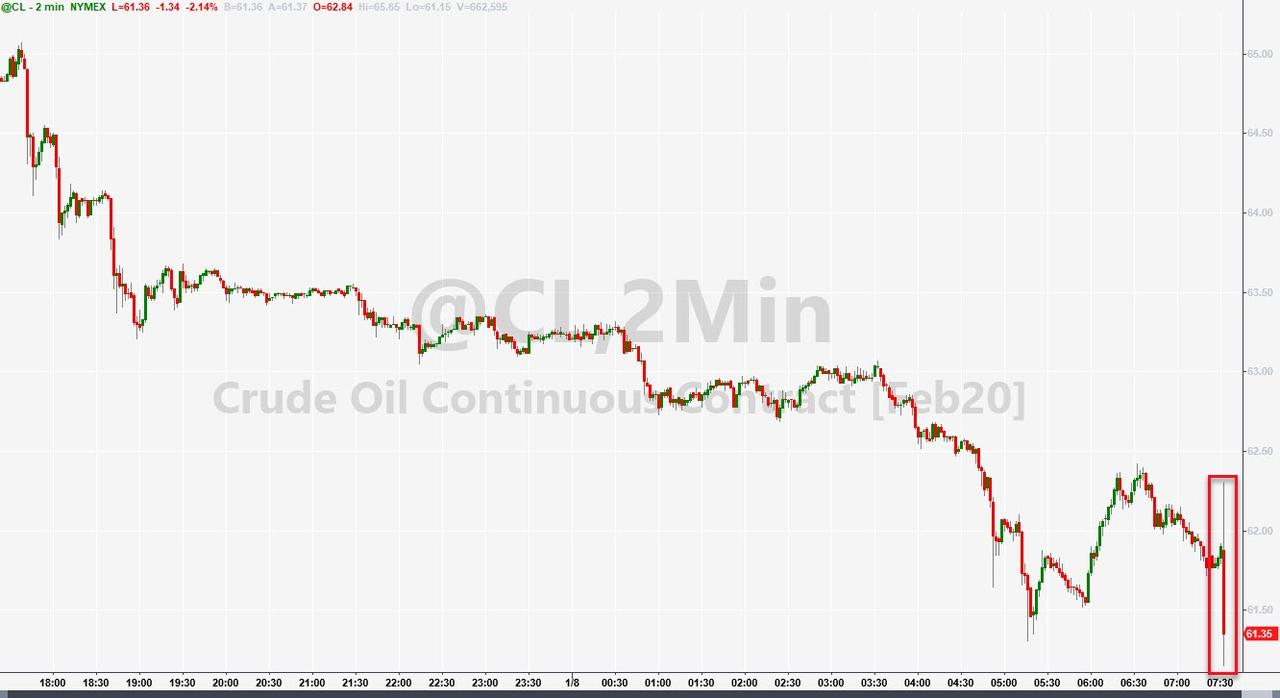
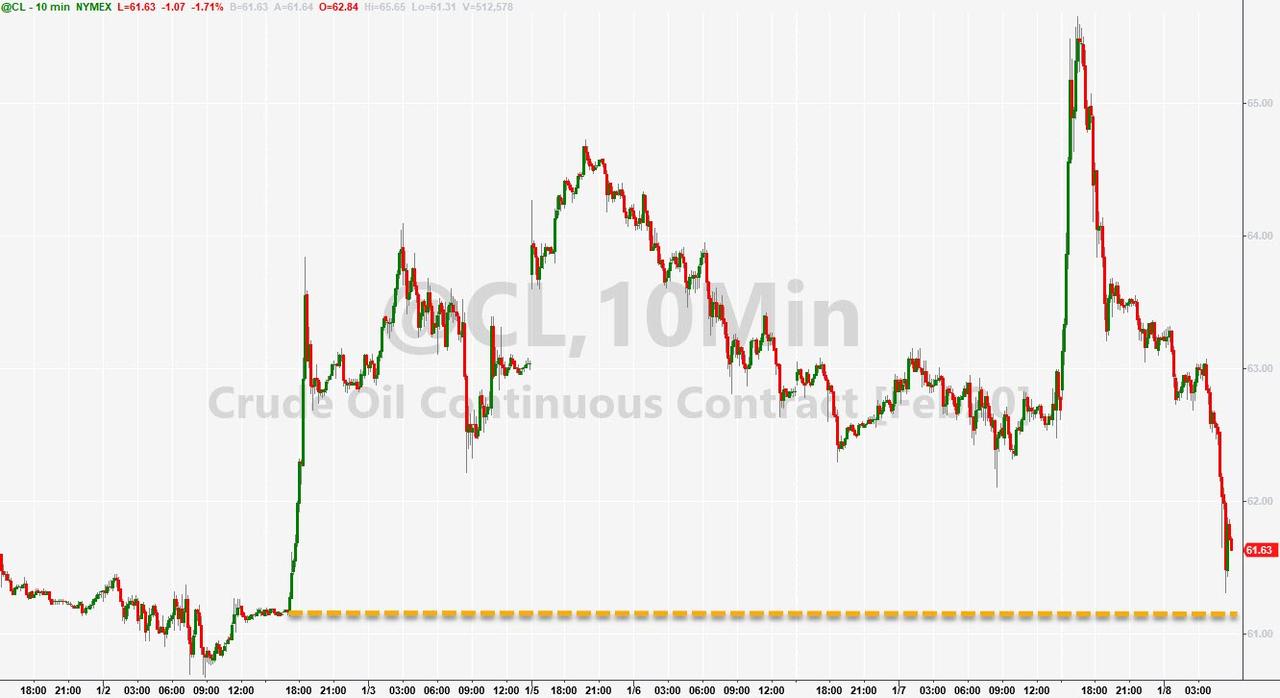
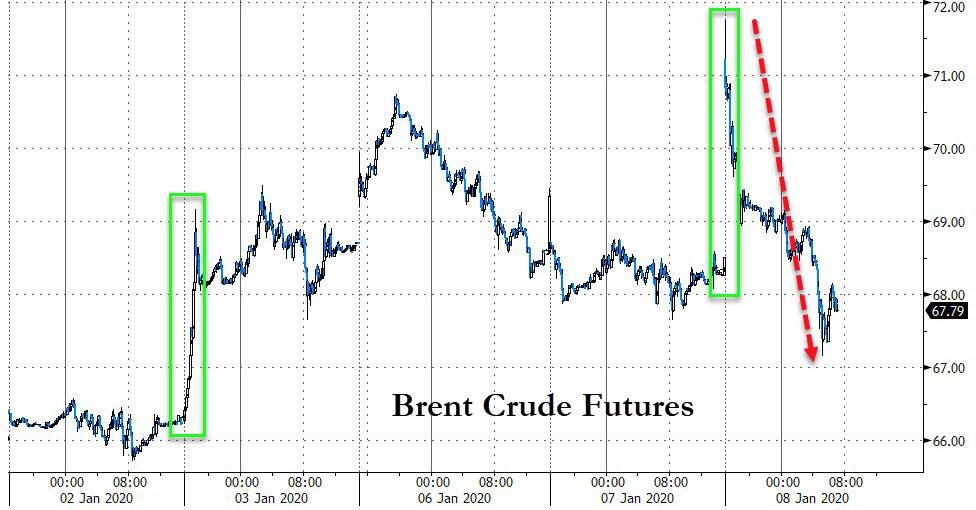
Protests have broken out in Hong Kong, Iraq, Iran, Chile, and other world cities while stock markets continue their climb.  Yet, when the U.S. killed a key Iranian general the overnight S &P futures market fell 41 pts before recovering and closing 23 pts lower. The VIX soared 22 % overnight before settling back to close for a 12 % increase at 14.02.  The U.S. – Iran conflict does not seem to be under control with most Middle East analysts predicting a major retaliation by the Iranian government. The price of oil spiked 4 % before settling to a 3.57 % increase on fears the Iranians may attack oil tankers in the Gulf.  An escalating conflict will drive oil prices higher, disturb supply chains and likely tip the world economy into a recession.

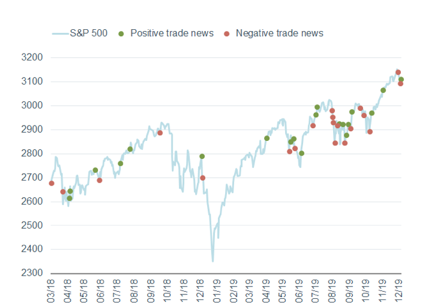
We saw during the negotiations for the Phase One trade deal how rumors both in China and the U.S. would send the S & P futures market up or down by 10 – 15 points depending upon whether the news was positive or negative. Algo traders would drop 30k contracts in a matter of seconds to make huge moves in SPX price, while the VIX was at 12.50, supposedly a calm market. The chart below shows how positive and negative news whipsawed the market.
Source: Liz Ann Sonders – Schwab – 12-7-19

Political news not only moves markets but the economy as well.  When the president tweets a tariff threat, consumers and industry move swiftly to buy those goods before their prices go up.  Businesses have to build the product quickly, sell it and they are left with falling sales as future purchases are pulled forward.  Business to business deals are caught up in this constant flip flop on trade policies as well. CEOs must make investment decisions to build a plant in a particular country 1 – 3 years in advance. They must calculate their allocation plans based on inadequate information and in a highly uncertain policy environment.  Often, rather than make an investment decision, executives will wait for the economic clouds to clear.

Summary:

The current bull market run has set record highs continuously.  Yet, as the saying goes: markets go up in stair steps and down in an elevator.  As a selling panic sets in the market goes into a free fall. If an economic myth is revealed by market action, corporate results, economic reports or an event the loss of belief causes the market to fall much faster than a slow stair step up.

The prudent investor will recognize the end of the business cycle is likely underway. It is time to prepare for an economic slowdown and a resulting equity market reversion to the mean. A reversion to the mean quite often requires that markets swing beyond the mean.

The wary investor will ask hard questions of their financial advisor and review corporate reports with an eye on fundamentals. Financial success is likely to result from good risk management and implementation combined with agility to make mid-course corrections.  Investors should test their assumptions based on breaking trends that may impact portfolio performance.  At the same time, constantly flipping investments will lead to poor performance. Allocate funds to different portfolio groups based on long, medium and short term goals to keep from being emotionally swept up in temporary market swings. The key is to be prepared for the unknown, or a black swan event.  Expect the unexpected and consider the advice of market legends like Bernard Baruch:

Some people boast of selling at the top of the market and buying at the bottom – I don’t believe this can be done. I had bought when things seemed low enough and sold when they seemed high enough. In that way, I have managed to avoid being swept along to those wild extremes of market fluctuations which prove so disastrous.”


Tyler Durden

Wed, 01/08/2020 – 12:04

via ZeroHedge News https://ift.tt/2tFEXvj Tyler Durden
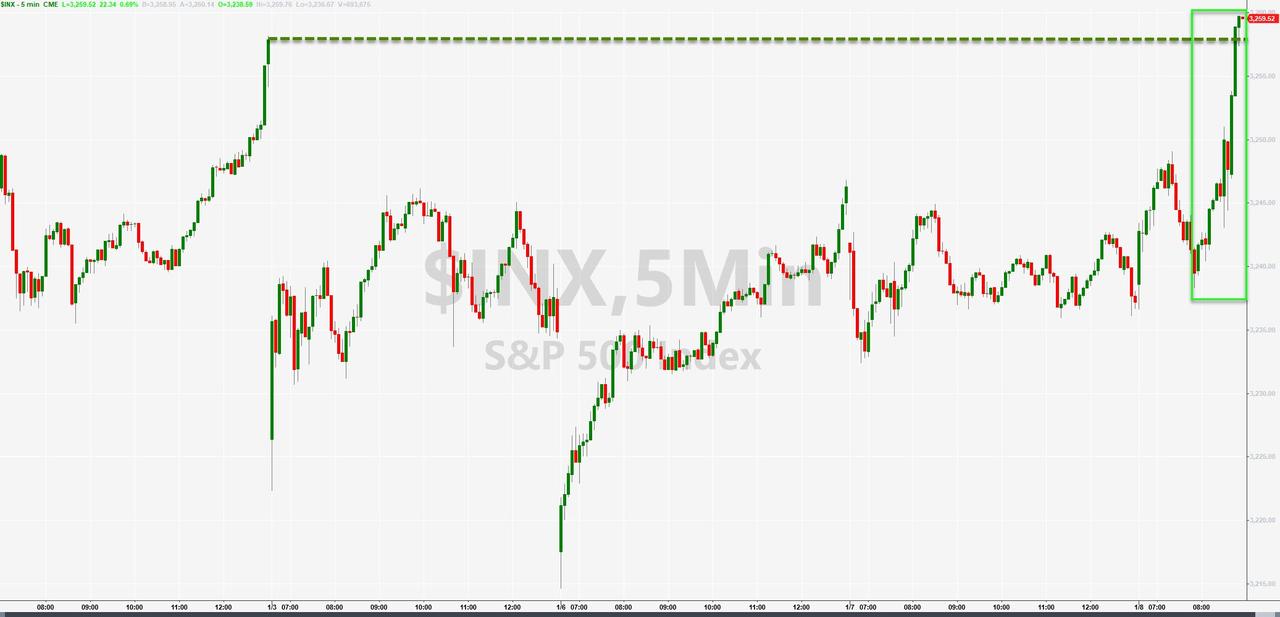
S&P Soars To Record High After Trump Speech; VIX, Oil, & Gold Plunge

S&P Soars To Record High After Trump Speech; VIX, Oil, & Gold Plunge

And just like that, it never happened!

The S&P 500 just broke to a new record high…

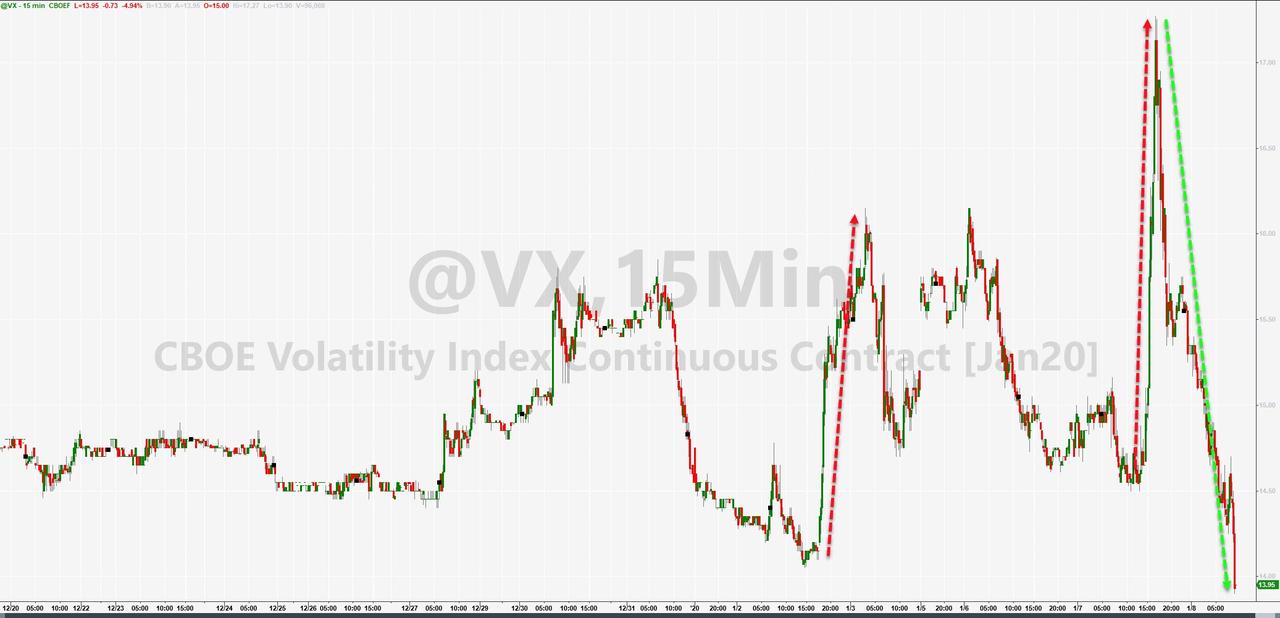
VIX has crashed back to a 12 handle (VIX futures a 13 handle after nearing 18 overnight)…

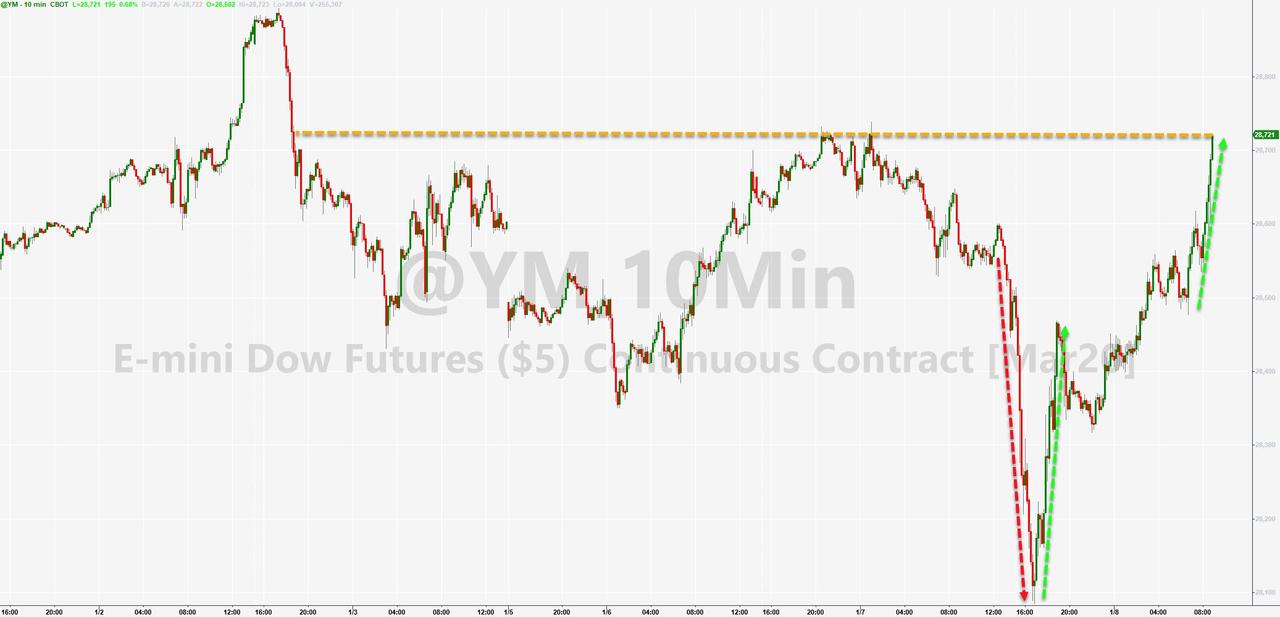
Dow futures are up over 600 points from overnight lows…

And WTI Crude crashed back below Soleimani levels below $60…

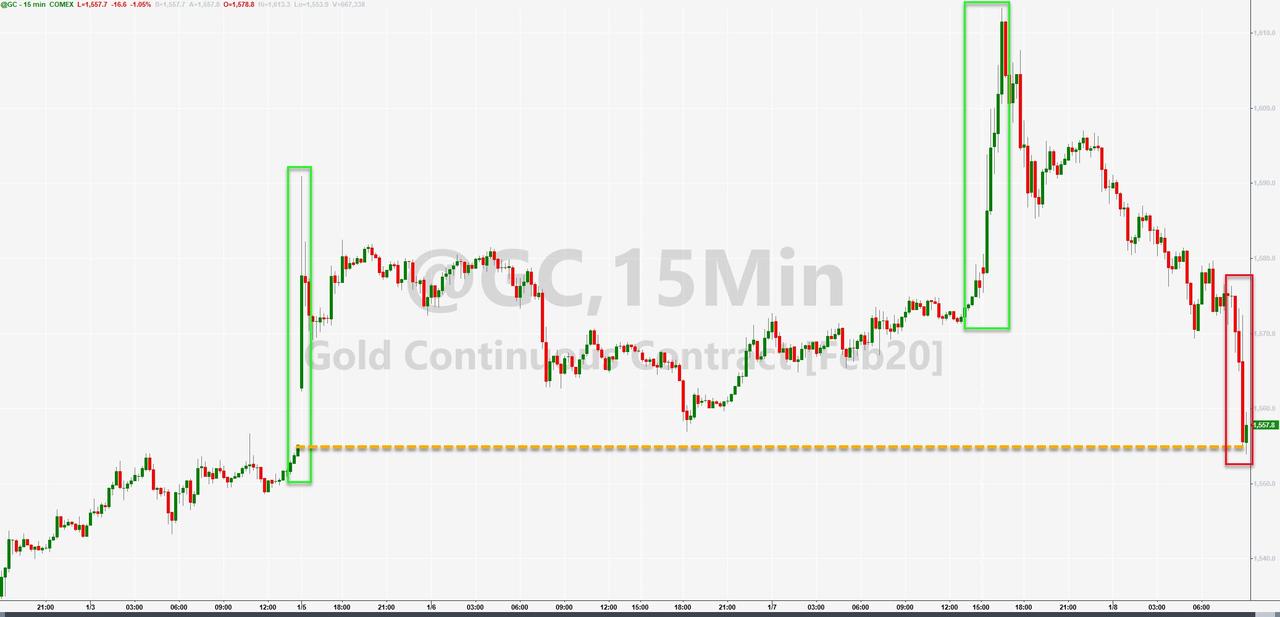
As gold gives back its sanctuary flow gains…

The invincible market strikes again.


Tyler Durden

Wed, 01/08/2020 – 11:50

via ZeroHedge News https://ift.tt/39MXypD Tyler Durden

Gold Versus Bitcoin Debate Is Distracting Us From An Unfortunate Economic Truth

Gold Versus Bitcoin Debate Is Distracting Us From An Unfortunate Economic Truth

Authored by Justin O’Connell via ValueWalk.com,

Bitcoin has long been heralded as digital gold.

“This is like better gold than gold,” said Gavin Andresen, who became lead engineer on Bitcoin after Satoshi Nakamoto, the pseudonymous founder of Bitcoin, handed over the reins.

Hal Finney, the first person to receive a bitcoin transaction, which was sent by Satoshi Nakamoto, compared bitcoin to gold, too.

“I see Bitcoin as ultimately becoming a reserve currency for banks, playing much the same role as gold did in the early days of banking,” Finney wrote on BitcoinTalk, the forum created by Nakamoto to discuss Bitcoin. “Banks could issue digital cash with greater anonymity and lighter weight, more efficient transactions.”

Gold versus bitcoin debate

Billionaire investor Peter Thiel, who said in 2018 he would bet on Bitcoin over all other cryptocurrencies, sees Bitcoin as a store of value, too. “I’m not talking about a new payments system,” Thiel said, adding that bitcoin is too cumbersome for that use case.

“It’s like bars of gold in a vault that never move, and it’s a sort of hedge of sorts against the whole world going falling apart.”

Yet, if you spend time on Crypto Twitter, you’ve perhaps seen the contempt Bitcoiners hold for goldbugs…and vice versa.

“Bitcoin bugs claim that Bitcoin is superior to gold as a store of value,” as Euro Pacific Capital CEO Peter Schiff highlights. He and other gold bugs feel the same way about gold versus Bitcoin.

Schiff and Anthony Pompliano, a staunch proponent of Bitcoin and co-founder & Partner at Morgan Creek Digital, interminably debate on Twitter the virtues of their respective assets of choice.

Hodlers miss the point?

“Bitcoin is a more popular currency than gold is today,” tweets Pomp, who believes gold has a place in one’s portfolio.

And:

“Bitcoin is up more this year than gold is in the last decade”

Source: Twitter

And:

“Central banks bought more than $15 billion of gold in the first 6 months of the year.

They are trying to hedge their risk to the US dollar.

Wait till they find out about the non-correlated, asymmetric upside profile of Bitcoin.

Every central bank will be buying Bitcoin.”

Source: Twitter

Schiff, who believes Bitcoin can’t recreate the usability of gold in jewelry, electronics, et cetera, might riposte something along the lines of:

“Unlike gold, Bitcoin has no value to store. Gold has worked great as money in the past, and will again in the future. Bitcoin never has.”

Source: Twitter

Or:

“Bitcoin has again failed the safe haven test. On Friday, as escalating trade tensions sent global stock markets plunging, investors sought refuge in monetary safe havens. The Japanese yen, Swiss franc, and especially gold all moved higher. Yet Bitcoin plunged by more than stocks!”

Source: Twitter

Or:

“Looks like the #Bitcoin pumpers are right about one thing.  Bitcoin is indeed a non-correlated “asset.”  When investors are taking risk off, they are likely to sell Bitcoin.  But when they are putting risk back on, they are just as likely to keep selling Bitcoin.”

Source: Twitter

These two are so entrenched, they’ve even made a $100,000 bet about which is the better asset.

Source: Coingape

Gold versus bitcoin and competing economic theories

If a Martian came to Earth, however, he or she might think gold and Bitcoin are, in fact, synergistic, not at odds. Proponents of both these assets are deeply suspicious of central banks, fiat currencies, and, in many cases, come from conservative, libertarian and Austrian economic pasts.

There is a fundamental difference between gold and Bitcoin, which suggests they are so totally different that comparing them is an exercise in futility, like comparing apples to oranges. The former has history, while the latter does not. Bitcoin is only eleven years old. Early Bitcoin developers cautioned about Bitcoin’s nascence and its experimental nature.

“From the start, I’ve always said the same thing: Bitcoin is an experiment and like all experiments, it can fail,” wrote early Bitcoin developer Mike Hearn, who once declared Bitcoin a failure, and left to code blockchain consortium R3’s Corda ledger.

“So don’t invest what you can’t afford to lose. I’ve said this in interviews, on stage at conferences, and over email. So have other well known developers like Gavin Andresen and Jeff Garzik.”

In a portfolio of Bitcoin, gold and silver, therefore, Bitcoin (and other crypto assets) is an investment in which you don’t invest more than you are willing to lose, like the stock market, gold is your savings account, and silver is your cash. They’re synergistic.

Gold versus bitcoin? They are both economic hedges

In the big picture, the gold versus bitcoin debate is distracting us from an unfortunate economic truth of our time: that printing presses have devalued fiat currencies the world over. In 1926, U.S. federal government expenditures were $3 billion and there was a surplus, by fiscal year 1946 expenditures increased to $55 billion, and there was a deficit of $16 billion. By fiscal year 1978, expenditures skyrocketed to $451 billion, with the deficit at $49 billion. Government expenditures in 2019 were $4.45 trillion, and the deficit today is $804 billion.

The money stock increased during this time, as well. In 1947, there were $113 billion of demand deposits plus currency outside of banks. In August 1978, there was $357 billion. Today, that number is about $10.5 trillion. Increased money supply leads to increased consumer prices. In 1946, the consumer price index was 58.5 billion and in September 1978 it was 199.3. The CPI today is 254.950.

If any debate is to be had at all, therefore, it is not gold versus bitcoin, for this is a distraction from far more pressing problems. The debate is rather Keynesians, New Dealers, and, now, Modern Monetarists versus conservatives, libertarians, and other defenders of free enterprise, including the Austrian economics endorsed by gold and Bitcoin-bugs alike.

With the advent of Bitcoin and crypto assets, we enjoy the liberty to keep our money outside of dominant financial institutions. These two assets, therefore, should not be seen as competing with each other for market share, but, rather, as allies in the battle for financial choice.


Tyler Durden

Wed, 01/08/2020 – 11:31

via ZeroHedge News https://ift.tt/2R1a3FL Tyler Durden

US Military Contractor Whose Death Led To Soleimani Strike Finally Identified

US Military Contractor Whose Death Led To Soleimani Strike Finally Identified

The US administration identified as its casus belli for the drone strike on IRGC Quds chief Qasem Soleimani  which in turn led to the overnight Iranian ballistic missile attack on US bases in Iraq  the late December killing of a US contractor by an Iran-backed militia rocket strike on a base in Kirkuk (additionally citing that more such attacks were being planned by the Iranian general).

On Tuesday night, The Sacramento Bee finally identified the contractor whose death has nearly sparked a war. Sacramento resident, 33-year old Nawres Waleed Hamid was laid to rest on Saturday after being killed in the Dec.27 attack blamed on Kataeb Hezbollah. 

33-year old Iraqi-American Nawres Waleed Hamid. Image via The Daily Mail.

An Iraqi-American, Hamid served as a translator for Herndon, Virginia-based company security firm Valiant, which contracts with the Army Intelligence and Security Command, and according to its website assists with operations ranging from counterintelligence to support to special operations personnel. 

Immediately after his death, the US had taken the unprecedented action of conducting a major bombing on Kataeb Hezbollah in Iraq and Syria, killing 25. 

However, the Pentagon remained mum for over a week as to the identity of the US contractor killed. Hamid’s family subsequently learned the news through his employer

Noor Alkhalil, Hamid’s wife, spoke with The Sacramento Bee from her Arden Arcade apartment. She felt something was wrong when Hamid stopped responding to her phone messages. Shortly after, she received a knock on her door. Hamid’s employer, Valiant Integrated Services, broke the news of his death.

And Valiant confirmed his death on Tuesday. “We are deeply saddened by the tragic death of Nawres Hamid,” Valiant said in a statement. “Mr. Hamid was a consummate professional and highly committed member of the Valiant team who was cherished and valued by his colleagues.”

The security firm did not release any further details as the precise nature of his work in Iraq, however, U.S. Rep. Doris Matsui (D-Sacramento) identified him as a linguist: “Our U.S. military has relied on the expertise and professionalism of linguists in almost every mission around the globe, especially in Iraq,” she said.

Hamid became a naturalized US citizen in 2017 after he and his family first came to the United States in 2011. He was laid to rest at the Greater Sacramento Muslim Cemetery in a service paid for by his company, Valiant. 


Tyler Durden

Wed, 01/08/2020 – 11:10

via ZeroHedge News https://ift.tt/2T6xdNo Tyler Durden

Watch Live: President Trump To Make Statement On Iran Missile Attack

Watch Live: President Trump To Make Statement On Iran Missile Attack

President Trump will deliver a statement to the American people on Wednesday morning at 11 am est. about the Iranian missile strikes that targeted two U.S. military bases in Iraq on Tuesday night.

As a preview to Trump’s speech, Senior White House reporter for Bloomberg News Jennifer Jacobs tweeted Wednesday morning that there were “no American casualties from last night’s Iranian missile strikes that targeted two airbases in Iraq that host U.S. troops.”

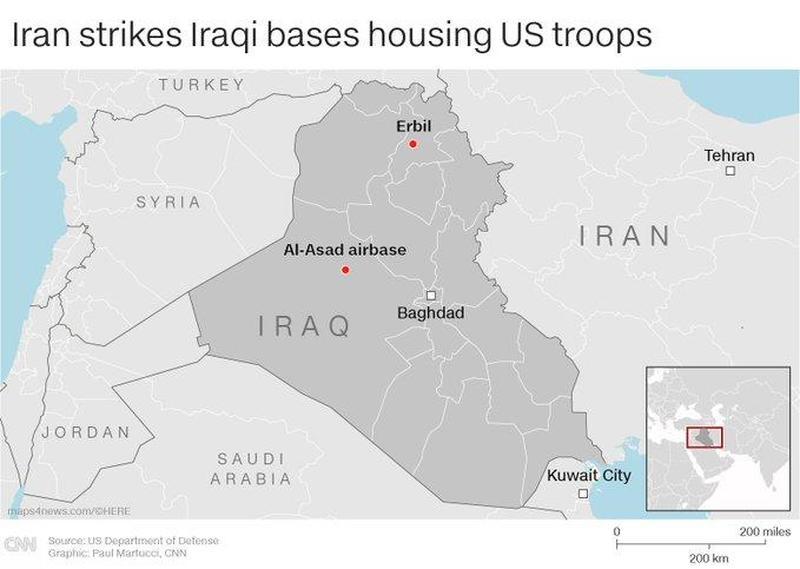
Iran launched a missile strike on Tuesday night against two Iraqi military bases housing U.S. troops in retaliation for the airstrike that killed top Iranian General Qassem Soleimani last Friday.

President Trump is likely to give his remarks to the increasing tension in the Middle East after Iran attacked two U.S. military bases. He’s expected to provide the public with a Department of Defense’s assessment of no U.S. casualties after the attack.

President Trump tweeted late Tuesday that “All is well! Missiles launched from Iran at two military bases located in Iraq. Assessment of casualties & damages taking place now. So far, so good! We have the most powerful and well-equipped military anywhere in the world, by far! I will be making a statement tomorrow morning.”

Watch here: Trump makes a statement on Iran missile attack via NBC News


Tyler Durden

Wed, 01/08/2020 – 10:55

via ZeroHedge News https://ift.tt/39PNGvs Tyler Durden

Trader Mocks Markets “Behaving As If Middle East Tensions Are Yesterday’s News”

Trader Mocks Markets “Behaving As If Middle East Tensions Are Yesterday’s News”

Authored by Richard Breslow via Bloomberg,

This is crazy stuff. The market wants to conclude that honor has been served in the Middle East and we can all stand down and move along. The central bank can keep its powder dry for the next upset. Fed funds futures are back to flat, so there must not be anything to concern ourselves with. Such is the enduring influence of a world that turns on low rates forever. And lower pro re nata.

Extraordinary.

Now we are being told, traders were “prepared” for the latest episode so they were able to take it in stride. I assure you, when the events of last night were taking place, no one in the market knew where all this was headed. And it seems doubtful that the matter is now closed. But for the moment, it is what it is, and traders will have to deal with it.

Once again it has been demonstrated that prudence doesn’t pay in an environment where all of the incentives are geared toward encouraging taking on more risk.

The talk about asset bubbles and over-leverage is cheap. Investors know what they are supposed to do. And if they think the message needs to be reinforced, the six Fed speakers still to come this week will no doubt be prepared to soothe our nerves.

Ten-year Treasury yields certainly bent but did not break. They ran down to 1.70% which is a picture perfect technical place for them to have stopped. Remember that level going forward. North America looks to be starting the day with yields back above trend line support and caught between close Fibonacci support and resistance levels. How that plays out, the market seems unprepared to decide. One of the more interesting trades overnight was through options targeting a move higher to 1.90%. A modest move, but perhaps directionally informative.

S&P 500 futures have behaved more than impressively. They had every reason to crack when they briefly broke near-term support but have held up like champions. They trade like people need them. Now we’ll have to see if the index can reward the bulls by building up some upside momentum. In any case, it’s obvious that it is the strong hands that are long. Now we’ll see if they have infinite patience.

The dollar, perhaps second only to the yuan, makes currencies a very important asset to keep a close eye on today. It’s demise has been predicted by many, but it certainly doesn’t look like it’s ready to oblige. The Dollar Index is pushing up against meaningful resistance that will either be a multiple top or signs of a potential next leg higher. It’s definitely in play. Given how the euro and yen are trading, it seems hard to fade the move just yet, if so inclined. So far, so much, for this being the year Europe was going to be the star of the show. The entire spectrum of currencies trade like the market has just been the wrong way around and their positions are being sorted out for them. They are fortunate that the overall moves have been somewhat modest.

Emerging market currencies as a broad asset class have been a very tough trade so far this year. Investors want to be long. December certainly put that notion in their heads. The thing to watch is if the lack of momentum causes a rotation into the high yielders and they become overly subscribed and riskier than they look.

The market is behaving as if events in the Middle East are yesterday’s news. We’ll see if that continues to be the case.


Tyler Durden

Wed, 01/08/2020 – 10:45

via ZeroHedge News https://ift.tt/2tCTk3o Tyler Durden

Is Climate Change Making Australia’s Bushfires Worse?

“Australia is committing climate suicide,” declares the headline of a New York Times op-ed. An op-ed in The Washington Post similarly admonishes, “Australia’s apocalyptic fires are a warning to the world.” Apocalyptic as a descriptor is not far off for the folks experiencing the fires in southeastern Australia that have burned 15.6 million acres (an area about the size of West Virginia) and killed 24 people so far.

“Australia is a fire continent,” states Arizona State University environmental historian Stephen Pyne in his (2015) book World Fire: The Culture of Fire on Earth. A 2009 report to the Australian Senate confirmed Pyne’s moniker when it noted that “about 50 million hectares [123 million acres] of land are burned across Australia each year on average and about 80% of fire-affected areas are in northern savanna regions.”

In any case, is man-made climate change a significant contributor to the current conflagration?

Certainly, the last year in Australia has been one of the hottest and driest on record.

Hot enough for you?
Fire weather

Australia’s weather patterns are driven in part by the Indian Ocean Dipole—a phenomenon in which hotter and cooler water sloshes back and forth between the east coast of Africa and the western islands of Indonesia. During its positive phase warmer water near east Africa produces lots of rain there while cooler water near Indonesia dries out Australia. In the past year or so, the IOD has been in an unusually strong positive phase, reaching record values for at least the past 60 to 80 years. The result has been widespread drought Down Under.

Not a drop to drink
Widespread drought

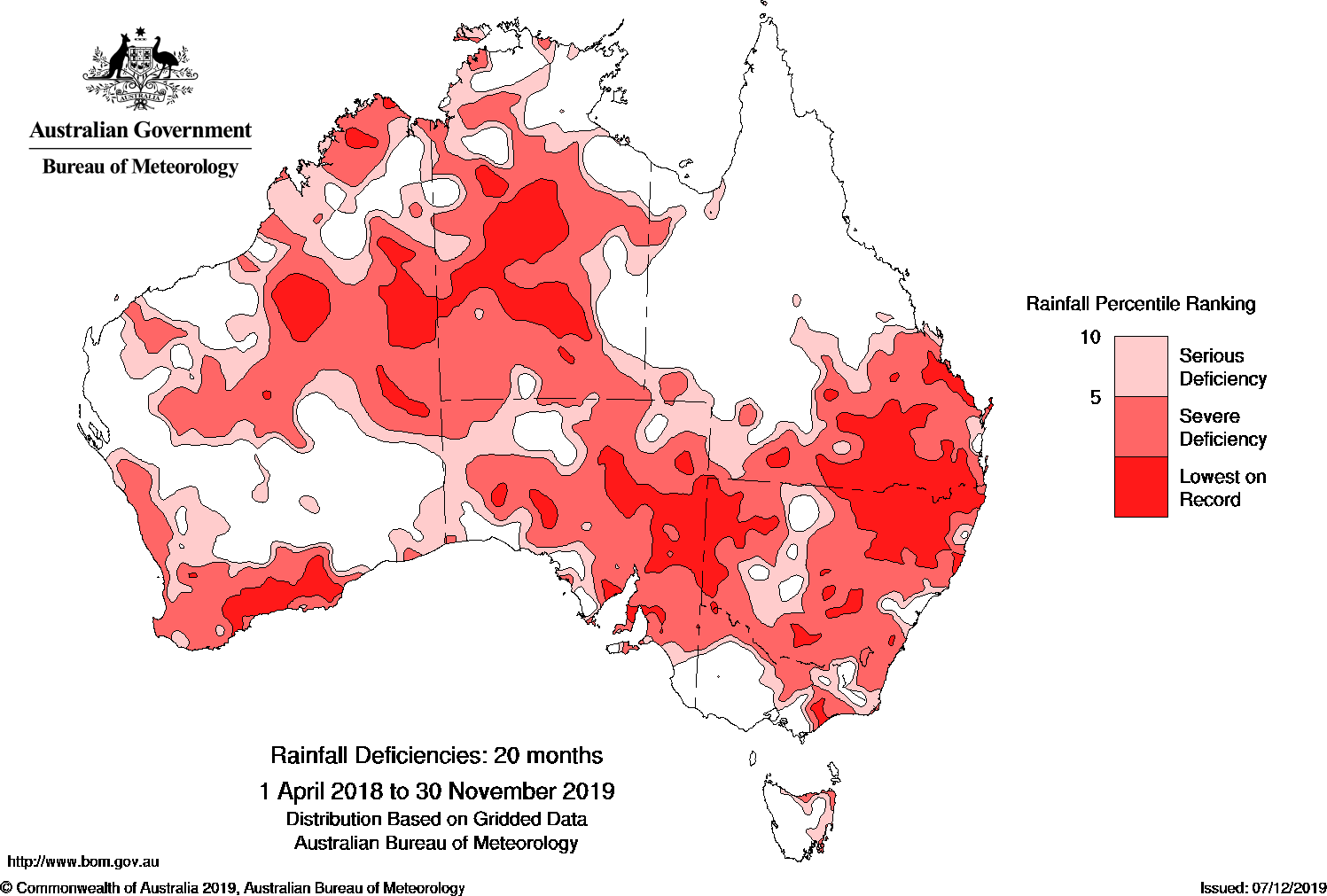
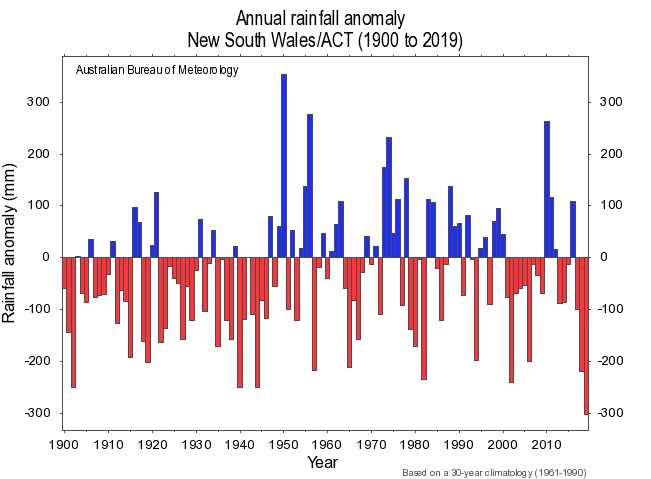
November rainfall was the lowest on record for Australia, according to the country’s Bureau of Meteorology. The southeastern state of New South Wales experienced record low rainfall in 2019.

Water water nowhere
New South Wales Drought

Is climate change contributing to the current outbreak of fires? A September 2019 article by two Australian researchers in the journal PLoS One notes that the trend in the McArthur Forest Fire Danger Index has been rising since 1973. The index assesses dryness, based on rainfall and evaporation, along with temperature, humidity, and wind speed. After taking into consideration the effects of various global weather oscillations, the researchers propose that “anthropogenic climate change is the primary driver of the trend, through both higher mean temperatures and potentially through associated shifts in large-scale rainfall patterns.” They specifically note that rise in the fire danger index is strongest in southeastern Australia, and that is exactly where the fires have been worst this year.

Of course, fires need fuel. Landscape management for fire prevention, specifically using prescribed burning to reduce fuel loads in the Australian bush, is controversial. In the wake of devastating fires in 2009, a royal commission issued a report that recommended raising the target of burning across all public lands from 1.7 to 5 percent annually in the southeastern state of Victoria where massive fires are currently burning. The state never met that goal. The current outbreak has torched around 3 million acres in that state so far.

As Wired observes there is an ongoing “tension in Australia between pro-fire foresters and urban environmentalists who lamented the destructive potential of fire, for wildlife in particular.” Sadly, University of Sydney environmental scientist Chris Dickman estimates that at least 480 million animals have been killed by the fires.

The fire disaster has predictably been used by climate activists to cudgel Australian politicians, including Prime Minister Scott Morrison, who oppose deep cuts in their country’s greenhouse gas emissions. (And it certainly didn’t help that Morrison went on vacation to Hawaii as the fire emergency intensified.) But as the politicians correctly point out, man-made global warming is a global commons problem. Australia’s greenhouse gas emissions amount to only about 1.3 percent of the annual global total, so cutting all of them would have essentially no impact on warming trends. On the other hand, as politicians like Morrison observe, the economic impacts of steep immediate emissions cuts would not be negligible.

The good news is that some rain has now fallen in southeastern Australia as the IOD has shifted into its neutral phase. However, Australian authorities expect only a brief reprieve from the recent rains and cooler temperatures.

As the world likely continues to warm over the course of this century, it is clear that Australians will need to be more vigorously proactive in managing their wild landscapes to ameliorate future fire risks.

from Latest – Reason.com https://ift.tt/2tCT30m
via IFTTT

Is Climate Change Making Australia’s Bushfires Worse?

“Australia is committing climate suicide,” declares the headline of a New York Times op-ed. An op-ed in The Washington Post similarly admonishes, “Australia’s apocalyptic fires are a warning to the world.” Apocalyptic as a descriptor is not far off for the folks experiencing the fires in southeastern Australia that have burned 15.6 million acres (an area about the size of West Virginia) and killed 24 people so far.

“Australia is a fire continent,” states Arizona State University environmental historian Stephen Pyne in his (2015) book World Fire: The Culture of Fire on Earth. A 2009 report to the Australian Senate confirmed Pyne’s moniker when it noted that “about 50 million hectares [123 million acres] of land are burned across Australia each year on average and about 80% of fire-affected areas are in northern savanna regions.”

In any case, is man-made climate change a significant contributor to the current conflagration?

Certainly, the last year in Australia has been one of the hottest and driest on record.

Hot enough for you?
Fire weather

Australia’s weather patterns are driven in part by the Indian Ocean Dipole—a phenomenon in which hotter and cooler water sloshes back and forth between the east coast of Africa and the western islands of Indonesia. During its positive phase warmer water near east Africa produces lots of rain there while cooler water near Indonesia dries out Australia. In the past year or so, the IOD has been in an unusually strong positive phase, reaching record values for at least the past 60 to 80 years. The result has been widespread drought Down Under.

Not a drop to drink
Widespread drought

November rainfall was the lowest on record for Australia, according to the country’s Bureau of Meteorology. The southeastern state of New South Wales experienced record low rainfall in 2019.

Water water nowhere
New South Wales Drought

Is climate change contributing to the current outbreak of fires? A September 2019 article by two Australian researchers in the journal PLoS One notes that the trend in the McArthur Forest Fire Danger Index has been rising since 1973. The index assesses dryness, based on rainfall and evaporation, along with temperature, humidity, and wind speed. After taking into consideration the effects of various global weather oscillations, the researchers propose that “anthropogenic climate change is the primary driver of the trend, through both higher mean temperatures and potentially through associated shifts in large-scale rainfall patterns.” They specifically note that rise in the fire danger index is strongest in southeastern Australia, and that is exactly where the fires have been worst this year.

Of course, fires need fuel. Landscape management for fire prevention, specifically using prescribed burning to reduce fuel loads in the Australian bush, is controversial. In the wake of devastating fires in 2009, a royal commission issued a report that recommended raising the target of burning across all public lands from 1.7 to 5 percent annually in the southeastern state of Victoria where massive fires are currently burning. The state never met that goal. The current outbreak has torched around 3 million acres in that state so far.

As Wired observes there is an ongoing “tension in Australia between pro-fire foresters and urban environmentalists who lamented the destructive potential of fire, for wildlife in particular.” Sadly, University of Sydney environmental scientist Chris Dickman estimates that at least 480 million animals have been killed by the fires.

The fire disaster has predictably been used by climate activists to cudgel Australian politicians, including Prime Minister Scott Morrison, who oppose deep cuts in their country’s greenhouse gas emissions. (And it certainly didn’t help that Morrison went on vacation to Hawaii as the fire emergency intensified.) But as the politicians correctly point out, man-made global warming is a global commons problem. Australia’s greenhouse gas emissions amount to only about 1.3 percent of the annual global total, so cutting all of them would have essentially no impact on warming trends. On the other hand, as politicians like Morrison observe, the economic impacts of steep immediate emissions cuts would not be negligible.

The good news is that some rain has now fallen in southeastern Australia as the IOD has shifted into its neutral phase. However, Australian authorities expect only a brief reprieve from the recent rains and cooler temperatures.

As the world likely continues to warm over the course of this century, it is clear that Australians will need to be more vigorously proactive in managing their wild landscapes to ameliorate future fire risks.

from Latest – Reason.com https://ift.tt/2tCT30m
via IFTTT

WTI Extends Losses After Surprise Crude Build

WTI Extends Losses After Surprise Crude Build

Oil prices exploded overnight after the initial leg from API and then the Iranian missiles strikes, but thanks to a pair of tweets from Trump and Zarif that “all is well” and “operations are concluded,” prices reverted back to unchanged.

“Not a single drop of oil supply has been lost due to the recent incidents and that is why the oil price so quickly has fallen back down again,” said Bjarne Schieldrop, Oslo-based chief commodities analyst at SEB AB.

Last night’s API data did move the crude market, before the Iranian chaos started, so we suspect – after the overnight rollercoaster – that this morning’s official data will spark some notable reaction.

API

  • Crude -5.95mm (-3.6mm exp)

  • Cushing -1.0mm (-660k exp)

  • Gasoline +6.70mm (+2.7mm exp)

  • Distillates +6.4mm (+3.9mm exp)

DOE

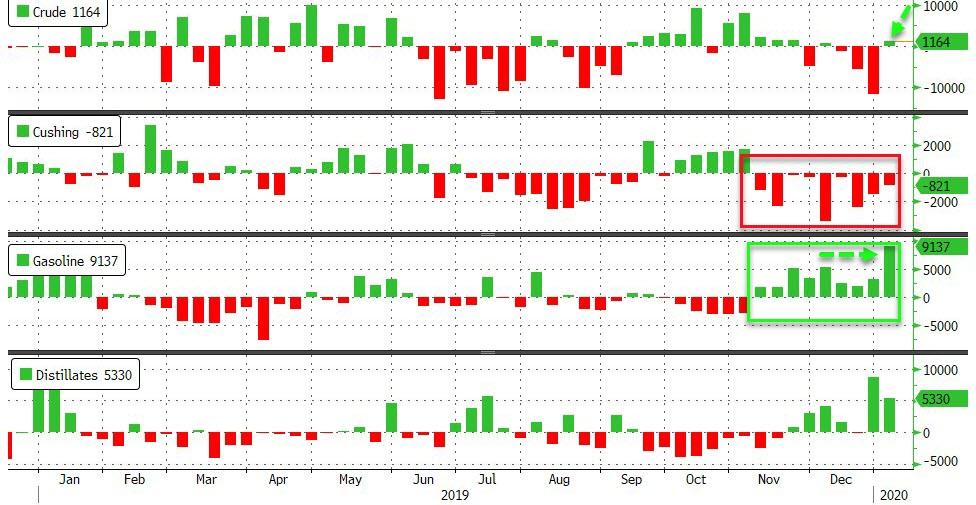
  • Crude +1.164mm (-3.6mm exp)

  • Cushing -821k (-660k exp)

  • Gasoline +9.137mm (+2.7mm exp) – biggest build since Jan 2016

  • Distillates +5.33mm (+3.9mm exp)

A big draw in the prior week, and big draw reported by API, were blown away by a surprise crude inventory build and huge product builds…

Source: Bloomberg

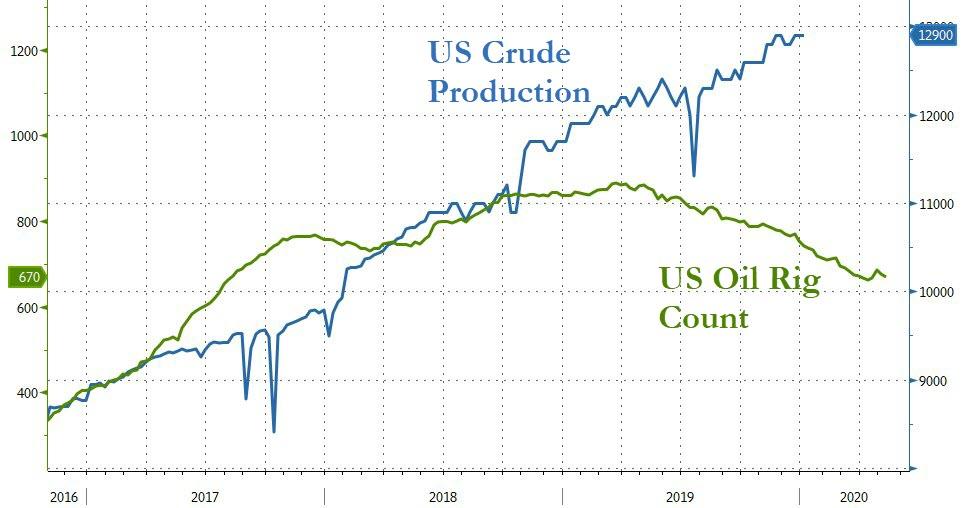
US Crude production was unchanged on the week, remaining near record highs…

Source: Bloomberg

WTI was trading just below $62 ahead of the DOE data and dropped to the day’s lows on the surprise build…

WTI Crude prices have not only erased last night’s surge but almost entirely erased all of the post-Soleimani-death spike…

And Brent, which exploded over 5% last night, is plunging back…

Source: Bloomberg

The market’s relatively muted response is another sign that global supplies are in an era of abundance, largely powered by the American shale-oil revolution.

“We are not forecasting a shortage of supply unless we have a catastrophic escalation, which we don’t see,” United Arab Emirates Energy Minister Suhail Al Mazrouei said in Abu Dhabi.

OPEC Secretary-General Mohammad Barkindo said he was “confident that our leaders are doing everything possible to restore normalcy.”

But, “if Iran seeks further targets for retaliation to the killing of Soleimani, but without crossing declared U.S. red lines that would prompt a military response, energy infrastructure may be appealing,” said Jason Bordoff, a former Obama administration official who now works at Columbia University.

An actual supply disruption would send prices soaring, depending on the magnitude and expected duration of the outage, he said.


Tyler Durden

Wed, 01/08/2020 – 10:34

via ZeroHedge News https://ift.tt/2sYe59M Tyler Durden

British Man Lights His Head On Fire In Attempt To Burn Down Synagogue

British Man Lights His Head On Fire In Attempt To Burn Down Synagogue

Via JonathanTurley.org,

There have been a highly disturbing increase in anti-Semitic attacks around the world.

Not surprisingly, those carrying out such attacks tend to be disturbing or extremist elements.

Tristan Morgan fits that profile and showed that his overwhelming hate is combined with an underwhelming intellect. Morgan succeeded in lighting his own head on fire in trying to burn down a synagogue and then walked away laughing in front of witnesses.

A CCTV video shows Morgan, 52, casually walking to the back of the synagogue and breaking a window with an axe. He then returns with a gas can and pours gas into opening. He then lit the gas which blew back on him and left him putting out his own flaming head:

He was arrested at his home where he was found smelling of gas with burns on his hands, forehead and hair. Morgan has reportedly admitted arson and has a long history of extremist and anti-Semitic views.

Morgan works as a hospital X-ray technician and performs as a folk singer on the side.


Tyler Durden

Wed, 01/08/2020 – 10:25

via ZeroHedge News https://ift.tt/37KcOBS Tyler Durden