Fake News: Headlines Paint False Picture Of Ukraine Aid Freeze

Fake News: Headlines Paint False Picture Of Ukraine Aid Freeze

Authored by Graham Noble via LibertyNation.com,

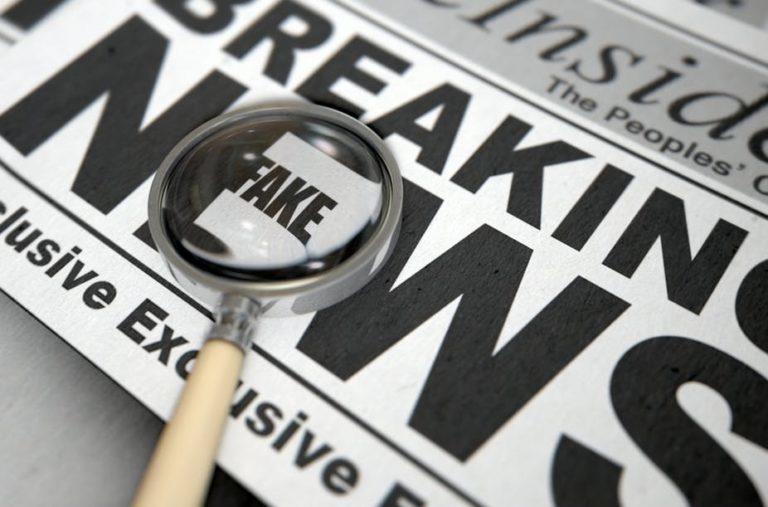
Following the court-ordered release of heavily redacted emails concerning the temporary hold of U.S. financial aid to Ukraine, press bias against President Trump was on full display. The media breathlessly reported that the aid was frozen immediately after Trump’s now-famous July 25 phone call with the Ukrainian president. That all sounds terribly incriminating – if only it were true.

Misleading headlines appear to have been deliberately written to imply a sequence of events that might incriminate the president but, in fact, the articles beneath those headlines concede that a hold was placed on the aid well before the Trump-Zelensky phone call. In each case, that one, vital fact is buried several paragraphs into the respective reports.
Playing Head Games With Headlines

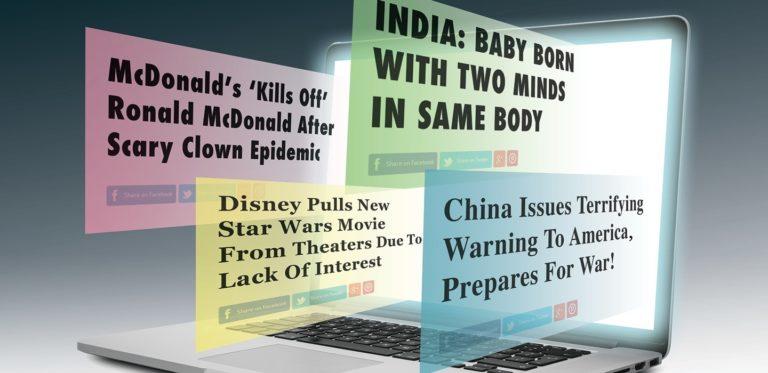
In the age of click-bait, journalists and editors know very well that people who get their news via constantly-shifting social media newsfeeds often do not even read complete articles; they glance at a headline and apply confirmation bias to it. If the headline echoes a political or social position they support, these attention-challenged readers will like, share, repost, upvote and so on. If they don’t like what the headline says, they will give it a thumbs down and perhaps attach to it a snarky or hostile comment.

This is all well and good. Consumers of media products may do as they wish, after all, but the problem is often that the headline itself is the only thing many are taking away from the article. No matter what information the article contains, it is that one statement in bigger, bolder font that influences the thinking of so many.

It becomes easy, then, for a news outlet with a political agenda to devise a headline which creates a false impression. Exhibit A: CNN’s Dec. 22 headline on the subject of Ukraine: “Effort to freeze Ukraine aid began about 90 minutes after call between Trump and Zelensky.”

The news network claims that this is what the newly-released emails reveal.

It appears entirely likely that CNN is assuming the bulk of its readers will get no further than this arguably explosive headline, much less read down as far as the eighth paragraph, in which a spokeswoman for the Office of Management and Budget (OMB) is quoted.

“It’s reckless to tie the hold of funds to the phone call. As has been established and publicly reported, the hold was announced in an interagency meeting on July 18,” the agency’s Rachel Semmel told CNN. 

That statement – which happens to be a true and accurate reflection of established fact – entirely contradicts the story’s headline. In fact, as Semmel goes on to point out, the media picked out one line from an email and chose to interpret it in a certain way.
The reality is that the emails – or what can be extracted from them, given the many redactions – paint a different picture. Government officials were anxiously trying to get the aid released in the face of questions about where and how the money would be spent, how much of it – if any – would go to U.S. companies, and how much money Ukraine was receiving from other nations.

In context, then, the emails support the Trump administration’s account of why aid was being held up in the first place: The president was skeptical about sending aid to a foreign country without knowing how the funds would be used. Additionally, he was loathe to have the U.S. shoulder the burden of aiding Ukraine if the Europeans were not sufficiently pitching in.

The opening paragraph of an NBC News article on the same subject claimed that “a request to withhold funds came less than two hours after President Donald Trump’s July phone call with the Ukrainian president…”

Five paragraphs further down, though: “The administration put a hold on critical defense aid for Ukraine as early as the week of July 18, one week before the phone call between Trump and Zelenskiy…”

A Dec. 21 headline from The Hill screamed: “Ukraine funding freeze ordered hours after Zelensky call.” This article doesn’t even mention the fact that aid was put on hold before the call. It appears likely that, as has happened many times in the past, the Democratic Party issued a request – or, perhaps, a decree – to its media minions that they report this story in a way that supports the party’s political agenda: In this case, to support the effort to ensure the Senate convicts President Trump of the non-crimes for which he has now been impeached.

An Inconvenient President

Aside from media malpractice – which is now so common that it is barely worth reporting – the emails in question hint at one very likely reason for the disdain felt for Trump within the so-called “deep state.”

The holding up of aid was, of course, giving a lot of bureaucrats heartburn. They are not used to being this closely scrutinized by politicians. They are used to having members of Congress and presidents casually sign off on multi-million-dollar packages and then leaving it to these bureaucrats to manage the distribution of funds. What a marvelous job that is to have: Being tasked with throwing hundreds of millions of dollars around with barely any real oversight, save from one’s fellow bureaucrats.

Along comes a president who wants to know where this money is going, wants to know on what the money is being spent and does not really like the idea of throwing this money around in the first place. Little wonder the unelected government desk-jockeys do not much care for him and would like to see him gone. Why, it is almost enough to make one of them don the mantle of “whistleblower” and file a complaint about something this inconvenient president said to a foreign leader.


Tyler Durden

Mon, 12/23/2019 – 10:15

via ZeroHedge News https://ift.tt/2MmOw8O Tyler Durden

Andrew Yang Is Wrong About Prostitution

Entrepreneur and 2020 Democratic presidential hopeful Andrew Yang said Sunday that “we should consider decriminalizing sex work on the part of the seller,” as this would be “helpful in combating human trafficking.” Presumably, Yang is talking about prostitution—the form of sex work that is illegal in the U.S. even when all parties involved are consenting adults.

Sex workers, human rights organizations, and criminal justice reformers around the world have been fighting to decriminalize prostitution in places where it remains illegal or where restrictions on legal prostitution are so intense that most sex workers end up criminalized anyway. These activists argue—with both a lot of data and a lot of personal experiences on their side—that relegating prostitution to the black market only puts the people involved in more danger and allows more abuses to be perpetrated against them. The only way to truly protect sex workers and cut down on coercive, forced, or underage prostitution (a.k.a. “sex trafficking”) is “rights, not rescue,” as one popular rallying cry goes.

Lately, a coalition of old-school moral crusaders (includings both the Christian right and certain retrograde feminists) has taken to co-opting the language of the sex worker rights movement to push their anti-sex work agenda. This means many of them say they are for prostitution “decriminalization” while still pushing to keep prostitution between consenting adults as a crime.

They get away with this linguistic malpractice by saying that they would decriminalize the act of offering paid sex as long as it is still illegal to purchase such services.

Obviously, this is not decriminalization within any normal meaning of the word.

Yang’s preferred model would still mean devoting law enforcement resources to catching people attempting to pay for sex—and that would mean monitoring and conducting stings on sex workers. Sex workers would still be unable to advertise openly, to band together for safer working conditions, or to screen clients in an efficient manner, among other things that could actually “be helpful in combating human trafficking” and sexual violence.

Yes, sex workers would, under select circumstances, be able to avoid arrest and jail. But their business would remain in the black market, nullifying almost any practical benefits of decriminalization.

This bad idea has taken root in centrist political circles as calls for decriminalizing prostitution grow louder and sex worker rights becomes more of a mainstream issue. Endorsing this asymmetric criminalization model—which has gone through a slew of rebrandings and is known variously as the Swedish Model, the Nordic Model, the Equality Model, and End Demand—lets politicians, particularly Democrats, pay lip service to sex worker concerns while still appeasing those convinced that the U.S. is in the midst of a “human trafficking epidemic.”

When she was running for president, Sen. Kamala Harris (D–Calif.) repeatedly said she was for decriminalization while still talking about the need to arrest “johns” (that is, prostitutes’ customers). Now Yang is taking up this banner.

Proponents of partial criminalization tend to frame it as a feminist and sex-worker-friendly solution. But consider that a large majority of sex workers are women and their customers men, a breakdown that grows even more pronounced in police and political discourse on prostitution, where “sellers” and “buyers” are basically always gendered as female and male, respectively. That gives you a frame in which men and women can participate in the same consensual sexual exchange, with the men criminalized for their participation and the women not. This so-called “Equality Model” considers adult women’s sexual consent as it does that of children: invalid.

Adults are rightfully barred from sexual activity with minors because we recognize that a child’s consent to sex is not meaningful. (The child, of course, is not criminalized in this scenario.) Do we really want to apply the same standard to grown women? To consider them less than fully adult, lacking the full mental capacity to meaningfully consent?

Sex workers on Twitter have been telling Yang this.

“You are wrong in every way that it’s possible to be wrong,” tweeted the Seattle dominatrix Mistress Matisse. “Sexworkers want rights, not rescue.”

“NO Andrew, you should not consider this,” said another dom, Mistress Scarlet. “Sex workers do NOT want the Nordic/Swedish model. We do NOT want our clients arrested. Listen to US!!! We want full decriminalization of all adult consensual sex work!!” 

“You should consult with sex workers because the language here is all wrong. We want FULL decrim, not just for the seller, but the buyer too,” wrote the writer, activist, and porn performer Sydney Leathers. “There’s no situation where criminalizing clients is good for sex workers (& we’re not all victims!)”

The comments like this go on and on.

Let’s hope that Yang—who has built a reputation for outside-the-swamp thinking—will actually listen to what sex workers and their allies are telling him right now. Yang is right that “we should consider decriminalizing sex work,” but not  only “on the part of the seller.” We should decriminalize sex work across on the part of all parties involved so long as everyone is a consenting adult. Only by doing that do we have any chance of helping sex sellers who fall outside that category.

from Latest – Reason.com https://ift.tt/2sX6doq
via IFTTT

Andrew Yang Is Wrong About Prostitution

Entrepreneur and 2020 Democratic presidential hopeful Andrew Yang said Sunday that “we should consider decriminalizing sex work on the part of the seller,” as this would be “helpful in combating human trafficking.” Presumably, Yang is talking about prostitution—the form of sex work that is illegal in the U.S. even when all parties involved are consenting adults.

Sex workers, human rights organizations, and criminal justice reformers around the world have been fighting to decriminalize prostitution in places where it remains illegal or where restrictions on legal prostitution are so intense that most sex workers end up criminalized anyway. These activists argue—with both a lot of data and a lot of personal experiences on their side—that relegating prostitution to the black market only puts the people involved in more danger and allows more abuses to be perpetrated against them. The only way to truly protect sex workers and cut down on coercive, forced, or underage prostitution (a.k.a. “sex trafficking”) is “rights, not rescue,” as one popular rallying cry goes.

Lately, a coalition of old-school moral crusaders (includings both the Christian right and certain retrograde feminists) has taken to co-opting the language of the sex worker rights movement to push their anti-sex work agenda. This means many of them say they are for prostitution “decriminalization” while still pushing to keep prostitution between consenting adults as a crime.

They get away with this linguistic malpractice by saying that they would decriminalize the act of offering paid sex as long as it is still illegal to purchase such services.

Obviously, this is not decriminalization within any normal meaning of the word.

Yang’s preferred model would still mean devoting law enforcement resources to catching people attempting to pay for sex—and that would mean monitoring and conducting stings on sex workers. Sex workers would still be unable to advertise openly, to band together for safer working conditions, or to screen clients in an efficient manner, among other things that could actually “be helpful in combating human trafficking” and sexual violence.

Yes, sex workers would, under select circumstances, be able to avoid arrest and jail. But their business would remain in the black market, nullifying almost any practical benefits of decriminalization.

This bad idea has taken root in centrist political circles as calls for decriminalizing prostitution grow louder and sex worker rights becomes more of a mainstream issue. Endorsing this asymmetric criminalization model—which has gone through a slew of rebrandings and is known variously as the Swedish Model, the Nordic Model, the Equality Model, and End Demand—lets politicians, particularly Democrats, pay lip service to sex worker concerns while still appeasing those convinced that the U.S. is in the midst of a “human trafficking epidemic.”

When she was running for president, Sen. Kamala Harris (D–Calif.) repeatedly said she was for decriminalization while still talking about the need to arrest “johns” (that is, prostitutes’ customers). Now Yang is taking up this banner.

Proponents of partial criminalization tend to frame it as a feminist and sex-worker-friendly solution. But consider that a large majority of sex workers are women and their customers men, a breakdown that grows even more pronounced in police and political discourse on prostitution, where “sellers” and “buyers” are basically always gendered as female and male, respectively. That gives you a frame in which men and women can participate in the same consensual sexual exchange, with the men criminalized for their participation and the women not. This so-called “Equality Model” considers adult women’s sexual consent as it does that of children: invalid.

Adults are rightfully barred from sexual activity with minors because we recognize that a child’s consent to sex is not meaningful. (The child, of course, is not criminalized in this scenario.) Do we really want to apply the same standard to grown women? To consider them less than fully adult, lacking the full mental capacity to meaningfully consent?

Sex workers on Twitter have been telling Yang this.

“You are wrong in every way that it’s possible to be wrong,” tweeted the Seattle dominatrix Mistress Matisse. “Sexworkers want rights, not rescue.”

“NO Andrew, you should not consider this,” said another dom, Mistress Scarlet. “Sex workers do NOT want the Nordic/Swedish model. We do NOT want our clients arrested. Listen to US!!! We want full decriminalization of all adult consensual sex work!!” 

“You should consult with sex workers because the language here is all wrong. We want FULL decrim, not just for the seller, but the buyer too,” wrote the writer, activist, and porn performer Sydney Leathers. “There’s no situation where criminalizing clients is good for sex workers (& we’re not all victims!)”

The comments like this go on and on.

Let’s hope that Yang—who has built a reputation for outside-the-swamp thinking—will actually listen to what sex workers and their allies are telling him right now. Yang is right that “we should consider decriminalizing sex work,” but not  only “on the part of the seller.” We should decriminalize sex work across on the part of all parties involved so long as everyone is a consenting adult. Only by doing that do we have any chance of helping sex sellers who fall outside that category.

from Latest – Reason.com https://ift.tt/2sX6doq
via IFTTT

Indian Prime Minister Modi’s Useful Idiots in America Should Now Condemn Him

Indian Prime Minister Narendra Modi is using an iron fist to smash protests over his latest effort to erode the citizenship rights of Indian Muslims. He, and many of the state governments that his party controls, have suspended the internet in many cities, dispatched paramilitary forces to storm Muslim colleges and beat up students, and imposed a ban on protests, including in Bangalore, where police roughed up and arrested one of India’s most renowned historians, Ramachandra Guha. The death toll of the protesters has now reached 25.

Modi is out of control. Even China’s authoritarian rulers have shown more restraint in dealing with the Hong Kong protesters.

It is high time that Modi’s admirers in the West—politicians, business leaders, and Hollywood celebrities who fawned over him—admit that they made a profound mistake. They embraced him despite clear warnings that his high-minded talk about turning India into an economic and technological powerhouse masked a sinister Hindu nationalist agenda.

He is not a hero of progress and development but a blood-and-soil nativist arguably more dangerous than any in the West.

Let us remember what we once knew but seem to have forgotten: Modi cut his political teeth in the RSS, the militant wing of a party obsessed with avenging historic slights—real and imagined—that Hindus endured under Muslim rule centuries ago. One of the RSS’s members assassinated Mahatma Gandhi, whom some Hindu nationalists regard as a Muslim “appeaser.” Modi himself has a long history of anti-Muslim animus. In 1992, he rode a chariot in the Hindu procession that marched to the iconic Babri mosque and razed it. His feelings morphed into actual bloodletting in 2002, when he was the chief minister of the state of Gujarat. Hindu thugs, some connected with his party, went on a rampage and slaughtered 1,000 Muslim men, women, and children as the state police stood by.

Modi expressed not an iota of remorse for the events in Gujarat when he ran for the prime minister’s office in 2012, even comparing the murdered Muslims to “puppies” run over by a careless driver.

Yet after he became prime minister, the world gave him the benefit of the doubt. The man who had been banned from many Western countries, including America, because of his role in the Gujarat pogrom became an international sensation.

A campaign-style extravaganza that Modi held in Madison Square Garden to celebrate his victory was attended not only by 18,000 gushing Indian Americans but also 40 U.S congressmen. Hugh Jackman introduced him, and he applauded heartily when Modi recited Sanskrit shlokas or verses calling for world peace.

President Barack Obama went beyond ordinary diplomatic protocol in welcoming Modi during that visit. He hosted a White House dinner for Modi and invited him to stroll to the Martin Luther King memorial with him. A year later, when Obama went with first lady Michelle to India for a state visit, he commended Modi’s “legendary work ethic” and his fashion sense, even joking about wearing a kurta shirt to imitate Modi’s sartorial style.

The silencing effect that Obama’s chumminess had on Modi’s critics cannot be overstated. If the first black American president who fully understood the struggle for minority rights could endorse Modi, they reasoned, then Modi naysayers were just paranoid hysterics whose hatred was blinding them to his manifold virtues.

President Donald Trump, who isn’t shy about hobnobbing with odious leaders, has unsurprisingly taken things to a whole new level in a naked bid for the Indian American vote. At the #HowdyModi rally held in Houston this summer to celebrate Modi’s re-election, Trump warmed up the crowd for Modi, calling him “his friend” and “a great man and a great leader.” A whole throng of Texas leaders from both parties, including Republican Sen. Ted Cruz and Democratic Rep. Sheila Jackson, stood behind Modi on stage like a hallelujah chorus.

Even more disheartening has been the reaction of U.S. industry leaders. Facebook’s Mark Zuckerberg got the ball rolling five years ago when he enthusiastically served up Modi agitprop, holding a townhall event for him at his company’s headquarters. Zuckerberg asked Modi such pointed questions as how much he loved his mother and how he planned to use his mastery of social media to transform India. Two weeks after this lovefest, India experienced the first in what was to become an epidemic of beef lynchings under Modi. Hindu cow vigilantes stormed a Muslim family’s home in Dadri, a village not far from Modi’s home in New Delhi, and pulled the old patriarch from his bed and bludgeoned him to death. Modi the transformative leader’s response? Days of silence.

Zuckerberg was unfazed. He reiterated during Modi’s #HowdyModi visit that he “deeply appreciates PM Modi’s commitment to Digital India.” This was one month after Modi shut down the internet in Kashmir and imposed central rule on this Muslim-dominated state, arresting its leaders and scrapping its constitutionally guaranteed autonomy. That shutdown is now in its fourth month, earning Modi, the vaunted digital leader, the great distinction of engineering the longest internet shutdown in a democracy.

That still hasn’t deterred Zuckerberg’s fellow tech luminaries from piling encomiums on Modi.

Microsoft founder Bill Gates bestowed his foundation’s prestigious “Global Goalkeeper Award” on Modi this September for his “Swaatch (Clean) India” campaign and for expanding access to toilets in the country. This elicited howls of protest from human rights groups. Muslim artists Riz Ahmed and Jameela Jamil pulled out of the awards ceremony. But Gates defended the award, calling Modi “brave” for tackling the issue of toilets.

Then there is Bridgewater Associates co-founder Ray Dalio, who opined last month, after India’s economic growth hit a 10-year low and unemployment a 45-year high, that “Prime Minister Modi is one of the best, if not the best, leaders in the world.” And Qualcomm Chairman Paul Jacobs proclaimed that Modi’s leadership is “really moving in the right direction.” And Unilever CEO Paul Polman declared that he was “very confident about the Modi government.”

The effect that such endorsements have in emboldening Modi and undermining the internal points of resistance to him is incalculable. Try criticizing Modi to his supporters, and they’ll instantly throw all his international awards and accolades in your face. But whatever the excuse of these leaders for issuing such deluded statements in the past, there can’t be any now that Modi is taking the gloves off. Just because a fanatic has changed his tune doesn’t mean he has changes his mind.

The least these leaders can do now is condemn Modi’s campaign of persecution. It has been painful for many of us who believe in India’s pluralism and democracy to watch Modi transform himself from an international pariah to an international star with the help of Western elites. He may be unstoppable at this stage. But he is also a profoundly vain man, a publicity hound who craves international attention and respectability. So their condemnation now may well make a difference. Who knows how far he is prepared to go to advance his Hindu nationalist project?

The protesters in India are putting their lives on the line to stick up for their constitution and the nation’s minorities. It is their fight and they are fighting it. But it is not too much to ask that Modi’s useful idiots in the West acknowledge their mistake.

A version of this column appeared in The Week.

from Latest – Reason.com https://ift.tt/2SmJGMr
via IFTTT

US New Home Sales Disappoint As Median Price Soars

US New Home Sales Disappoint As Median Price Soars

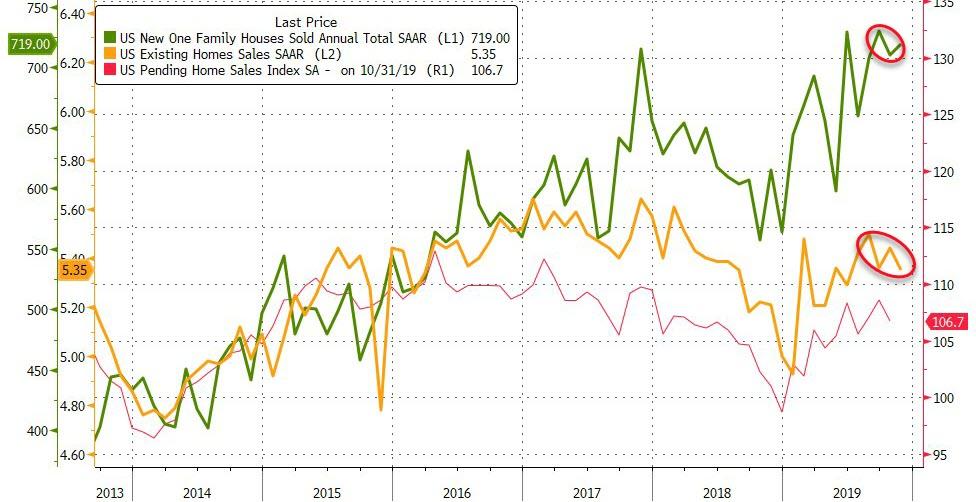
Despite homebuilder sentiment soaring to 20-year highs, existing home sales slipped unexpectedly in November and new home sales are also expected to decline marginally MoM, but instead surprised to the upside with a 1.3% MoM.

However, the beat was due to a major downward revision from -0.7% MoM to -2.7% MoM for October.

Year-over-year, new home sales growth slowed to +16.9%…

Source: Bloomberg

Due to the downward revisions, new home sales are following the trend of existing home sales lower…

Source: Bloomberg

In the three months through November, purchases averaged a 720,000 pace, the strongest in 12 years.

Purchases of new homes rose in two of four U.S. regions, led by a 52.4% surge in the Northeast and a 7.5% gain in the West, which recorded its highest sales level in two years.

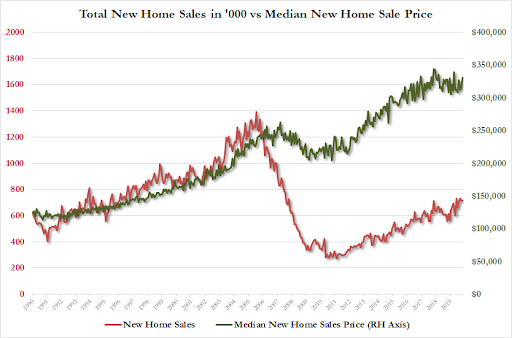
But, more problematically, the median home price soared 7.2% to $330.8k – the highest since April…

21% of new homes sold in Nov. cost more than $500,000, up from 19% prior month.

Affordability remains an issue.


Tyler Durden

Mon, 12/23/2019 – 10:08

via ZeroHedge News https://ift.tt/2PR20fl Tyler Durden

Stocks Are Sexy, Bonds Are Boring, Right?

Stocks Are Sexy, Bonds Are Boring, Right?

Authored by Lance Roberts via RealInvestmentAdvice.com,

Flip on CNBC, pick up a financial paper, or scroll a financial website and you will find a great range of materials discussing the stock market, hot stocks, bad stocks, stock trading tips, and stock investment strategies.

Why? Because stocks are sexy, and the Wall Street casino — with all its flickering lights, screaming patrons, and carnival barkers — makes money for the purveyors of products ranging from IPOs to mutual funds and investment research.

On the other hand, you don’t hear much about bonds. Why? Because bonds are boring? Maybe so. Historically, however, discounting bonds has constituted an investment mistake, and the inevitable cooling down and possible volatility of the stock market in the next decade will make bonds a crucial part of your portfolio.

recent BNY Mellon Investment Management survey underscored the lack of understanding about bonds and the bond market.

“A BNY Mellon Investment Management national survey on fixed-income investing was stunning: A measly 8% of Americans were able to accurately define fixed-income investments.

The 29-question online survey of just more than 2,000 adults, conducted in July, clearly shows that many Americans admit to having little knowledge about various fixed-income markets and how to invest in them. Here’s a rundown of those who answered “I do not understand it at all” with regard to the following types of bonds: Treasuries, 39%; municipal bonds, 45%; high-yield bonds, 46%; corporate bonds, 51%; structured products, 53%; Treasury Inflation Protected Securities, 63%. Of the 849 respondents who don’t own fixed income or don’t have any investment portfolio, 44% said they don’t buy bonds because they don’t understand the different types of securities.”

This is fascinating but not surprising. Since the financial media focuses only on headline-grabbing corporate news, the minute-by-minute price change of the markets, or what some investment guy with a product to sell you has to say, bonds don’t get much attention.

But, as BNY states, if you don’t understand what bonds are — and more importantly, what they can do for your portfolio — you may be missing out on something really big: And not just if you’re a retiree either.

Bonds can play a vital role for investors of any age because they reduce overall portfolio volatility. The less volatility a portfolio has, the less likely an investor will be to act emotionally during market declines and panic-sell investments to reduce losses.

Bonds also provide the third leg to the total return of a portfolio. Equities offer the first two legs, capital appreciation and dividends. Bonds offers stability by providing investors with both a safety-of-principal function (by returning the initial principal at maturity) and interest income.

Adding bonds to portfolios create better diversification and asset allocation for investors, which can lead to better returns over time, particularly during periods of increased volatility.

Is It The Right Time To Invest In Bonds?

Because interest rates are currently low, concerns about a recession in the U.S. economy have risen. This has led many media commentators to suggest the bonds are now wildly overvalued. For example:

“When evaluating the desirability of government bonds as a long-term investment, it’s imperative to compare the prevailing yields of bonds with the earnings yields for stocks.”

While this is a common comparison, it is also wrong.

Let’s compare the two:

Earnings Yield

  • “Earnings yield” is the inverse of P/E ratios and tells you only what the yield is currently, not what it will be in the future.

  • Investors do not “receive” an “earnings yield” from owning stocks. There is no “yield payment” paid out to shareholders; it is merely a mathematical calculation.

  • There is no protection of principal.

Treasury Yield

  • Investors receive a specific yield, calculable to the penny, which is paid to the holder.

  • Holders also have a government-guaranteed return of principal at maturity.

As we have written previously, it is essential to align expectations and investing requirements. Stocks have liquidity, and potential return (or loss), but no safety of principal. Treasuries have a stated return and a high degree of safety. However, to guarantee the stated return, Treasuries must be held to maturity and may not be liquid, if liquidity is part of your goal.

For most investors, completely discounting the advantage of owning bonds over the last 20 years has been a mistake. By reducing volatility and drawdowns, investors were better able to withstand the eventual storms that wiped out large chunks of capital.

Some may look at the graph below and see that bonds and stocks are at the same level. While this is true, bonds gave you the same amount of return as stocks with much less risk (and, needless to say, stress) during two major bear markets.

It is also worth pointing out that stocks are once again grossly overvalued, and a significant drawdown is probable in the coming years.

Over the next decade, the prospect of low stock market returns, possibly approaching zero, seems much less appealing than the positive return offered by risk-free asset.

Given that we are in the most extended bull market cycle in history, combined with high valuations and weakening fundamentals, it might be time to pay more attention to what bonds can offer you.

They could turn out to be one of the best-performing assets in your portfolio during the next cycle.


Tyler Durden

Mon, 12/23/2019 – 09:55

via ZeroHedge News https://ift.tt/34Qdm7B Tyler Durden

Tesla Picks Pockets Of Chinese Banks As It Borrows Another $1.4 Billion

Tesla Picks Pockets Of Chinese Banks As It Borrows Another $1.4 Billion

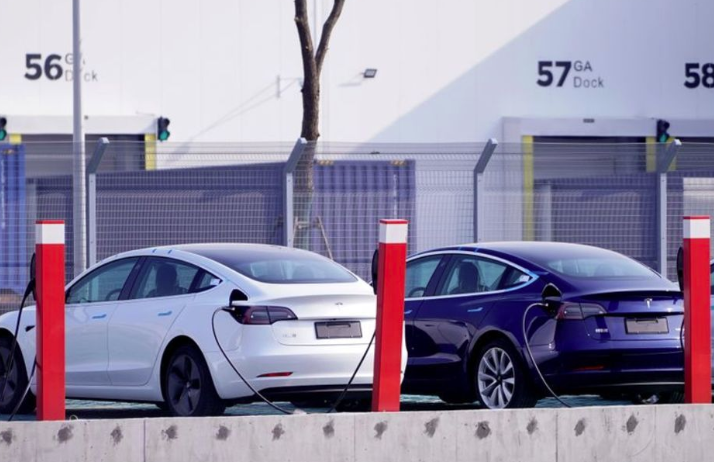
Tesla, which supposedly has lots of cash in the bank and tons of working capital (just ask David Einhorn), is tapping a group of Chinese banks for a relatively small $1.4 billion USD, five year loan, for the company’s Shanghai plant. Part of the loan will be used to roll over an existing loan, according to Reuters

Among the banks participating in the loan are China Construction Bank, Agricultural Bank of China, Industrial and Commercial Bank of China and Shanghai Pudong Development Bank. 

Earlier this year the banks had offered Tesla an even smaller 12 month facility of 3.5 billion yuan (about $475 million USD) that comes due in March of 2020. The new loan will help Tesla roll over the previous debt and the rest will be used on Tesla’s “China operations”. 

Tesla broke ground on its Shanghai plant in January and has started vehicle production. The factory is the cornerstone to Tesla’s ambitions of expanding globally and avoiding higher import tariffs imposed on U.S. made cars. The Shanghai government has been supportive of the project, for whatever reason, which marks China’s first wholly foreign owned car plant. 

The new loan’s interest rate will be 90% of China’s one-year benchmark, the same as the 12 month facility. It’s an attractive interest rate and one that Chinese banks offer to “their best clients”. it was not immediately clear how or why Tesla qualified for this preferential rate.


Tyler Durden

Mon, 12/23/2019 – 09:42

via ZeroHedge News https://ift.tt/376GLfh Tyler Durden

Indian Prime Minister Modi’s Useful Idiots in America Should Now Condemn Him

Indian Prime Minister Narendra Modi is using an iron fist to smash protests over his latest effort to erode the citizenship rights of Indian Muslims. He, and many of the state governments that his party controls, have suspended the internet in many cities, dispatched paramilitary forces to storm Muslim colleges and beat up students, and imposed a ban on protests, including in Bangalore, where police roughed up and arrested one of India’s most renowned historians, Ramachandra Guha. The death toll of the protesters has now reached 25.

Modi is out of control. Even China’s authoritarian rulers have shown more restraint in dealing with the Hong Kong protesters.

It is high time that Modi’s admirers in the West—politicians, business leaders, and Hollywood celebrities who fawned over him—admit that they made a profound mistake. They embraced him despite clear warnings that his high-minded talk about turning India into an economic and technological powerhouse masked a sinister Hindu nationalist agenda.

He is not a hero of progress and development but a blood-and-soil nativist arguably more dangerous than any in the West.

Let us remember what we once knew but seem to have forgotten: Modi cut his political teeth in the RSS, the militant wing of a party obsessed with avenging historic slights—real and imagined—that Hindus endured under Muslim rule centuries ago. One of the RSS’s members assassinated Mahatma Gandhi, whom some Hindu nationalists regard as a Muslim “appeaser.” Modi himself has a long history of anti-Muslim animus. In 1992, he rode a chariot in the Hindu procession that marched to the iconic Babri mosque and razed it. His feelings morphed into actual bloodletting in 2002, when he was the chief minister of the state of Gujarat. Hindu thugs, some connected with his party, went on a rampage and slaughtered 1,000 Muslim men, women, and children as the state police stood by.

Modi expressed not an iota of remorse for the events in Gujarat when he ran for the prime minister’s office in 2012, even comparing the murdered Muslims to “puppies” run over by a careless driver.

Yet after he became prime minister, the world gave him the benefit of the doubt. The man who had been banned from many Western countries, including America, because of his role in the Gujarat pogrom became an international sensation.

A campaign-style extravaganza that Modi held in Madison Square Garden to celebrate his victory was attended not only by 18,000 gushing Indian Americans but also 40 U.S congressmen. Hugh Jackman introduced him, and he applauded heartily when Modi recited Sanskrit shlokas or verses calling for world peace.

President Barack Obama went beyond ordinary diplomatic protocol in welcoming Modi during that visit. He hosted a White House dinner for Modi and invited him to stroll to the Martin Luther King memorial with him. A year later, when Obama went with first lady Michelle to India for a state visit, he commended Modi’s “legendary work ethic” and his fashion sense, even joking about wearing a kurta shirt to imitate Modi’s sartorial style.

The silencing effect that Obama’s chumminess had on Modi’s critics cannot be overstated. If the first black American president who fully understood the struggle for minority rights could endorse Modi, they reasoned, then Modi naysayers were just paranoid hysterics whose hatred was blinding them to his manifold virtues.

President Donald Trump, who isn’t shy about hobnobbing with odious leaders, has unsurprisingly taken things to a whole new level in a naked bid for the Indian American vote. At the #HowdyModi rally held in Houston this summer to celebrate Modi’s re-election, Trump warmed up the crowd for Modi, calling him “his friend” and “a great man and a great leader.” A whole throng of Texas leaders from both parties, including Republican Sen. Ted Cruz and Democratic Rep. Sheila Jackson, stood behind Modi on stage like a hallelujah chorus.

Even more disheartening has been the reaction of U.S. industry leaders. Facebook’s Mark Zuckerberg got the ball rolling five years ago when he enthusiastically served up Modi agitprop, holding a townhall event for him at his company’s headquarters. Zuckerberg asked Modi such pointed questions as how much he loved his mother and how he planned to use his mastery of social media to transform India. Two weeks after this lovefest, India experienced the first in what was to become an epidemic of beef lynchings under Modi. Hindu cow vigilantes stormed a Muslim family’s home in Dadri, a village not far from Modi’s home in New Delhi, and pulled the old patriarch from his bed and bludgeoned him to death. Modi the transformative leader’s response? Days of silence.

Zuckerberg was unfazed. He reiterated during Modi’s #HowdyModi visit that he “deeply appreciates PM Modi’s commitment to Digital India.” This was one month after Modi shut down the internet in Kashmir and imposed central rule on this Muslim-dominated state, arresting its leaders and scrapping its constitutionally guaranteed autonomy. That shutdown is now in its fourth month, earning Modi, the vaunted digital leader, the great distinction of engineering the longest internet shutdown in a democracy.

That still hasn’t deterred Zuckerberg’s fellow tech luminaries from piling encomiums on Modi.

Microsoft founder Bill Gates bestowed his foundation’s prestigious “Global Goalkeeper Award” on Modi this September for his “Swaatch (Clean) India” campaign and for expanding access to toilets in the country. This elicited howls of protest from human rights groups. Muslim artists Riz Ahmed and Jameela Jamil pulled out of the awards ceremony. But Gates defended the award, calling Modi “brave” for tackling the issue of toilets.

Then there is Bridgewater Associates co-founder Ray Dalio, who opined last month, after India’s economic growth hit a 10-year low and unemployment a 45-year high, that “Prime Minister Modi is one of the best, if not the best, leaders in the world.” And Qualcomm Chairman Paul Jacobs proclaimed that Modi’s leadership is “really moving in the right direction.” And Unilever CEO Paul Polman declared that he was “very confident about the Modi government.”

The effect that such endorsements have in emboldening Modi and undermining the internal points of resistance to him is incalculable. Try criticizing Modi to his supporters, and they’ll instantly throw all his international awards and accolades in your face. But whatever the excuse of these leaders for issuing such deluded statements in the past, there can’t be any now that Modi is taking the gloves off. Just because a fanatic has changed his tune doesn’t mean he has changes his mind.

The least these leaders can do now is condemn Modi’s campaign of persecution. It has been painful for many of us who believe in India’s pluralism and democracy to watch Modi transform himself from an international pariah to an international star with the help of Western elites. He may be unstoppable at this stage. But he is also a profoundly vain man, a publicity hound who craves international attention and respectability. So their condemnation now may well make a difference. Who knows how far he is prepared to go to advance his Hindu nationalist project?

The protesters in India are putting their lives on the line to stick up for their constitution and the nation’s minorities. It is their fight and they are fighting it. But it is not too much to ask that Modi’s useful idiots in the West acknowledge their mistake.

A version of this column appeared in The Week.

from Latest – Reason.com https://ift.tt/2SmJGMr
via IFTTT

A Trend Worth Considering – The Price Of Gold Since 1971

A Trend Worth Considering – The Price Of Gold Since 1971

Authored by Michael Maharrey via SchiffGold.com,

As we approach the end of 2019, gold is on track for a healthy yearly gain. To date, the yellow metal is up over 16% on the year.

It’s always interesting talking about gains in the price of gold because when you get down to it, it all depends on when you got into the market. If you bought an ounce of gold on Jan. 1 of this year and sold it this morning, you’d have pocketed around $208 (less any taxes and fees). But if you bought your gold at the peak price this year and sold it this morning, you’d be out about $68.

So, when we say gold is up or down, you always have to ask a second question: since when? The price can be simultaneously up and down at the same moment depending on the answer to that question.

I occasionally get comments on articles posted on the SchiffGold Facebook page by people complaining that they’ve lost a lot of money in gold because they bought when the market was at its absolute peak in 2011 and the yellow metal nearly hit $1,900. I can certainly understand their frustration, but I don’t buy their argument that their experience proves gold is a bad investment. While eight years seems like a long time, it’s not in the big scheme of things.

As I said, where you begin when you talk about a trend is key. Plucking an arbitrary date out of thin air doesn’t necessarily tell us a whole lot. It’s important to begin at a key moment in history.

When it comes to gold, that key moment is August 15, 1971.

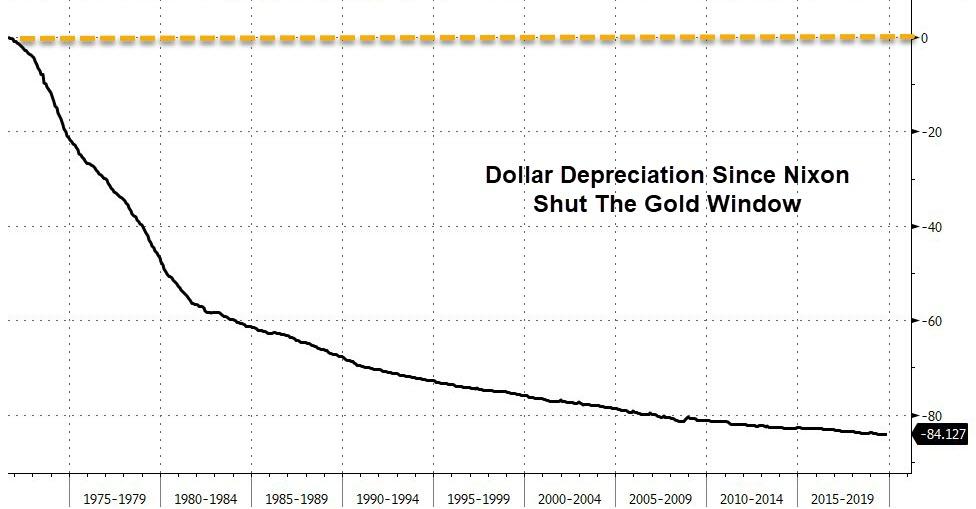
Source: Bloomberg

That’s the day that Richard Nixon slammed shut the gold window and eliminated the last vestige of the gold standard. From that date, the US — and the world — has been on a pure fiat money system. Governments have taken advantage of it by inflating the money supply relentlessly. As a result, the price of gold has skyrocketed from that moment.

What Exactly Happened in 1971?

Nixon ordered Treasury Secretary John Connally to uncouple gold from its fixed $35 price and suspended the ability of foreign banks to directly exchange dollars for gold. During a national television address, Nixon promised the action would be temporary in order to “defend the dollar against the speculators,” but this turned out to be a lie. The president’s move permanently and completely severed the dollar from gold and turned it into a pure fiat currency.

Nixon’s order was the end of a path off the gold standard that started during President Franklin D. Roosevelt’s administration. June 5, 1933, marked the beginning of a slow death of the dollar when Congress enacted a joint resolution erasing the right of creditors in the United States to demand payment in gold. The move was the culmination of other actions taken by Roosevelt that year.

In March 1933, the president prohibited banks from paying out or exporting gold, and in April of that same year, Roosevelt signed Executive Order 6102. It was touted as a measure to stop hoarding, but was, in reality, a massive confiscation scheme. The order required private citizens, partnerships, associations and corporations to turn in all but small amounts of gold to the Federal Reserve at an exchange rate of $20.67 per ounce. In 1934, the government’s fixed price for gold was increased to $35 per ounce. This effectively increased the value of gold on the Federal Reserve’s balance sheet by 69%.

The reason behind Roosevelt’s executive order and the congressional joint resolution was to remove constraints on inflating the money supply. The Federal Reserve Act required all Federal Reserve notes have 40% gold backing. But the Fed was low on gold and up against the limit. By increasing its gold stores through the confiscation of private gold holdings, and declaring a higher exchange rate, the Fed could circulate more notes.

While American citizens were legally prohibited from redeeming dollars for gold, foreign governments maintained that privilege. In the 1960s, the Federal Reserve initiated an inflationary monetary policy to help monetize massive government spending for the Vietnam War and Pres. Lyndon Johnson’s “Great Society.” With the dollar losing value due to these inflationary policies, foreign governments began to redeem dollars for gold.

This is exactly how a gold standard is supposed to work. It puts limits on the amount the money supply can grow and constrains the government’s ability to spend. If the government “prints” too much money, other countries will begin to redeem the devaluing currency for gold. This is what was happening in the 1960s. As gold flowed out of the US Treasury, concern grew that the country’s gold holdings could be completely depleted.

Instead of insisting on fiscal and monetary discipline, Nixon simply severed the dollar from its last ties to gold, allowing the central bank to inflate the money supply without restraint.

So What About Gold?

When he announced the closing of the gold window, Nixon said, “Let me lay to rest the bugaboo of what is called devaluation,” and promised, “your dollar will be worth just as much as it is today.”

This was also a lie.

According to the Consumer Price Index data released by the Bureau Labor of Statistics, the dollar has lost more than 80 percent of its value since Nixon’s fateful decision. Meanwhile, the dollar value of gold has gone from $35 an ounce to nearly $1,500.

Source: Bloomberg

Looking at it another way, the purchasing power of gold has increased dramatically since Nixon closed the gold window. When Nixon made his announcement, gold was official $35 an ounce, but the actual market price was around $45 per ounce. If you take the recent price which has been hovering between $1,450 and $1,500 per ounce, the price has increased by 3122%.

That is not a typo.

This is much greater than the dollar prices of goods and services. The GDP deflator index has increased roughly five-fold since 1971. So, not only has gold served as an inflation hedge since the dawn of the pure fiat money era, it has actually outpaced prices.

As Nick Giambruno put it in an article published by the International Man, “This is all a predictable consequence of the U.S. abandoning sound money.”

By every measure—including stagnating wages and rising costs—things have been going downhill for the American middle class since the early 1970s. August 15, 1971, to be exact. This is the date President Nixon killed the last remnants of the gold standard. Since then, the dollar has been a pure fiat currency. This allows the Fed to print as many dollars as it pleases. And—without the discipline imposed by some form of a gold standard—it does precisely that. The U.S money supply has exploded 2,106 percent higher since 1971. The rejection of sound money is the primary reason inflation has eaten up wage growth since the early 1970s—and the primary reason the cost of living has exploded.”

Practically speaking, this means that if you stashed an ounce of gold worth $35 alongside thirty-five one-dollar bills under your bed in 1971. Today, you would be sitting on gold that would buy you an expensive tailored suit. The $35 in cash wouldn’t get you a pack of fancy boxer shorts.

This is a trend worth considering, given that there is zero chance that the fiat monetary regime is going to end any time soon.


Tyler Durden

Mon, 12/23/2019 – 09:30

via ZeroHedge News https://ift.tt/2PRMPCg Tyler Durden

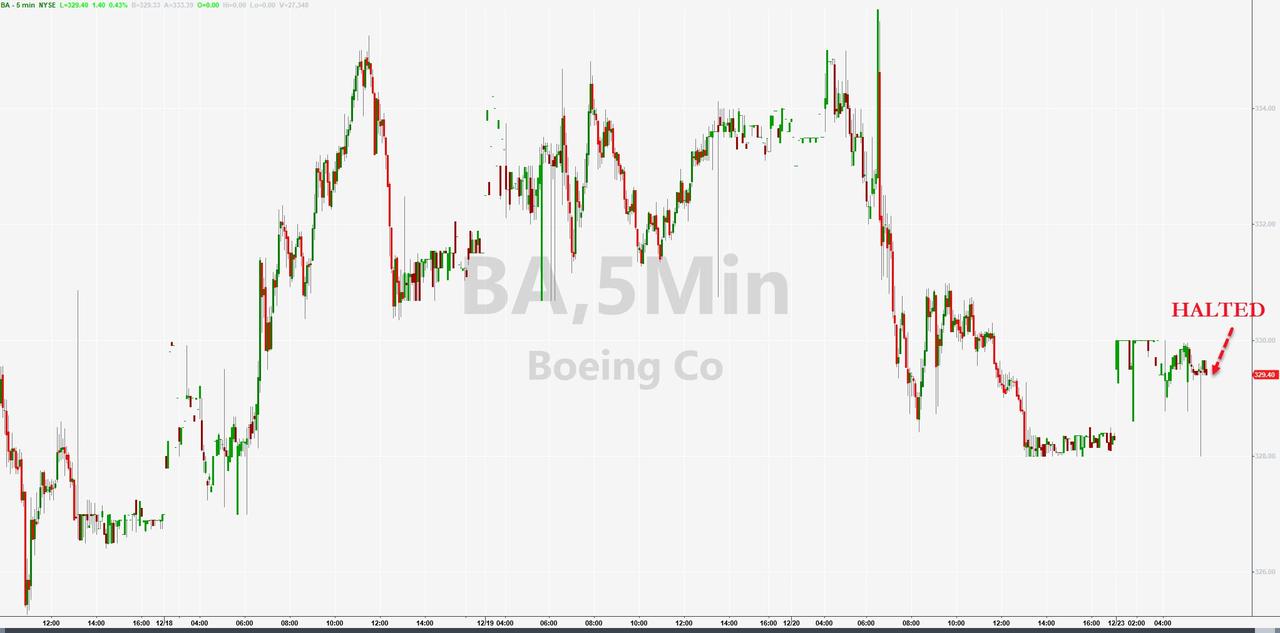
Boeing Halted As Muilenberg Out As CEO

Boeing Halted As Muilenberg Out As CEO

In what was not entirely surprising, Boeing CEO Dennis Muilenberg has “resigned” and will be replaced by current Chairman David Calhoun.

Boeing shares are currently halted…

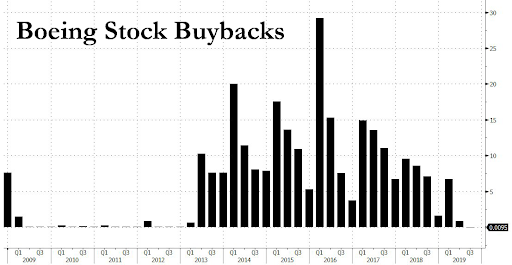
Over the 3-year period 2016 through 2018, Boeing employees received newly issued stock that’s worth $4.9 billion today. There was another $3.5 billion worth of stock issued to the Boeing pension plan, which was immediately sold into the open market.

h/t @fxmacro

*  *  *

Full Statement

Boeing announced today that its Board of Directors has named current Chairman, David L. Calhoun, as Chief Executive Officer and President, effective January 13, 2020. Mr. Calhoun will remain a member of the Board. In addition, Board member Lawrence W. Kellner will become non-executive Chairman of the Board effective immediately. 

The Company also announced that Dennis A. Muilenburg has resigned from his positions as Chief Executive Officer and Board director effective immediately. Boeing Chief Financial Officer Greg Smith will serve as interim CEO during the brief transition period, while Mr. Calhoun exits his non-Boeing commitments.

The Board of Directors decided that a change in leadership was necessary to restore confidence in the Company moving forward as it works to repair relationships with regulators, customers, and all other stakeholders.

Under the Company’s new leadership, Boeing will operate with a renewed commitment to full transparency, including effective and proactive communication with the FAA, other global regulators and its customers.

“On behalf of the entire Board of Directors, I am pleased that Dave has agreed to lead Boeing at this critical juncture,” Mr. Kellner said.  He added, “Dave has deep industry experience and a proven track record of strong leadership, and he recognizes the challenges we must confront. The Board and I look forward to working with him and the rest of the Boeing team to ensure that today marks a new way forward for our company.”

Mr. Calhoun said, “I strongly believe in the future of Boeing and the 737 MAX. I am honored to lead this great company and the 150,000 dedicated employees who are working hard to create the future of aviation.”


Tyler Durden

Mon, 12/23/2019 – 09:10

via ZeroHedge News https://ift.tt/2s4VF6X Tyler Durden