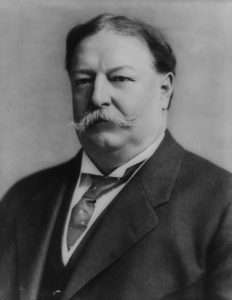
7/11/1921: Chief Justice William Howard Taft takes oath.
The post Today in Supreme Court History: July 11, 1921 appeared first on Reason.com.
from Latest – Reason.com https://ift.tt/5IVpyLc
via IFTTT
another site
7/11/1921: Chief Justice William Howard Taft takes oath.
The post Today in Supreme Court History: July 11, 1921 appeared first on Reason.com.
from Latest – Reason.com https://ift.tt/5IVpyLc
via IFTTT

Over a decade ago, Sen. John Fetterman (D–Pa.) looked like the future of Bernie Sanders–style populism, championing higher minimum wages, criminal justice reform, and social welfare spending. After 13 years as mayor of deeply impoverished Braddock, Pennsylvania, and then a term as the state’s lieutenant governor, he won his Senate seat in 2022.
Since coming to Washington, Fetterman has charted a unique path. He routinely criticizes his own party for “catering to the fringe and agitated parts of our base,” accuses fellow Democrats of Trump Derangement Syndrome, and praises capitalism as the one system that has consistently improved living standards.
In May, Fetterman joined The Reason Interview With Nick Gillespie to argue that the socialist politics of such Democrats as Seattle Mayor Katie Wilson and New York City Mayor Zohran Mamdani are alienating moderates and spell long-term doom for the party. He denounced former President Joe Biden’s failure to control the southern border and President Donald Trump’s antipathy toward legal immigration, called the national debt a “ticking bomb,” and advocated legalizing marijuana and psychedelics.
Reason: You recently wrote in The Washington Post that you’re not going to be changing parties. Yet you also have critical words for your own party. You told Fox News that the Democratic Party is turning into “an orgy of socialism.” And in your Post piece, you said that Democrats are “catering to the fringe and agitated parts of our base.” What do you think is driving that?
Fetterman: Extremism is driving it, without a doubt. Look at the primaries all across in the Senate and in the House, and look at the kinds of people that have already been elected.
For example, the mayor in Seattle, she’s an absolute socialist, if not more. And now people [say], “Hey, I’m leaving,” and she’s like, “Bye.” And then, of course, New York, that’s its own situation too. I thought [Florida Republican Gov. Ron] DeSantis had a great line saying, “Mamdani is my favorite real estate agent now.” It’s driving people away. People can move, and they can vote with their feet. That explains why Florida continues to flourish. But a lot of these states like New York and other blue states, we’ve read that $2 trillion have migrated out of these states too.
The Democratic Party is the problem, except they love the billionaires that fund those kinds of causes and those kinds of organizations that are actually driving a part, a lot, of the protesting. That’s where that energy is as well. Look at some of the views now that people are espousing. It’s moving more and more in socialism and communism.
In Maine, for example, [Democratic Senate candidate] Graham Platner: avowed communist. He described himself as a communist. “Antifa”—that’s not a slur from me. That’s his own words, how he described that.
What about your own personal evolution? In 2016, you endorsed Sen. Bernie Sanders (I–Vt.) in the presidential primaries for the Democratic Party. He’s an avowed democratic socialist. What is it that rubbed you the wrong way about socialists or communists since then?
In 2016, it was much more about the minimum wage and some other very basic kinds of things. Now that’s just turned into much more standing with Cuba, standing with Venezuela, standing with the Iranian regime, and turn that into becoming more increasingly anti-American.
My views really haven’t changed that much, things that I supported. I was very supportive about gay rights. Back in 2013, I was officializing a gay marriage when that was illegal. I was happy to get arrested on that. My views really haven’t changed; what’s really changed is the party. In 2024, I was campaigning for Kamala Harris as a Democrat. It was very clear we were going to lose, and a lot of the excesses that we’ve had in 2020 came back to revisit, and that really, I think, cost us that election in 2024. The excess of the party back then summoned the second term of the Trump administration.
.@SenFettermanPA endorsed Bernie Sanders for president in 2016. Now he's blasting fellow Democrats for embracing socialism.
What changed?
"My views really haven't changed. What's really changed is the party," Fetterman tells @nickgillespie on The Reason Interview podcast. pic.twitter.com/M2OjvyidQE
— reason (@reason) May 16, 2026
You’ve said that the Democratic Party has become anti-men. What forms does that take? What’s driving the lurch to the far left, both in terms of economic policy and identity politics?
If you make someone feel uncomfortable or unwelcome, they will leave. They’ve done that. Back in 2016, I witnessed that. I lived directly across the street from a steel mill and the union hall. I was doing an event for Secretary [of State Hillary] Clinton at that time. I was asking the union president, “Where’s your people on that?” And he’s like, “At least half, half if not more, are [for] Trump.” And just coincidentally, a guy in a big truck drove by and he honked, “Ha ha ha, go Trump, go Trump.” He had truck nuts on the trailer and had a Trump sticker. Clearly that’s what’s already well underway. I think we effectively can count that a lot of those traditional union members have already left the Democratic Party. That’s where we are. It’s been a serious realignment of parts of our base. And that’s driving some of the more extreme things of our party now too.
You have said Trump is plainspoken. That’s a charitable way of saying it. When he announced he was running for president, he launched into a diatribe against Mexicans being rapists and drug dealers.
He uses and engages in things that I would never engage on that. Just a couple of hours before this conversation, he put an image of Democrats in sewage in the reflecting pool here in Washington, D.C. I don’t do those kinds of things. I don’t support those things. But I also think it’s ridiculous to heckle him over $13 million to rehab that. That’s just kind of small ball, for me.
But let’s talk about immigration. We absolutely, the Democratic Party, became an open-border party. That used to be a GOP slur. But then you realize those numbers. It really was—you had 300,000 people showing up at our border every month. That’s the size of Pittsburgh, [near] where I live. I try to describe that to my party. This is a serious problem. People are angry. All of our blue cities have become overwhelmed. New York, Chicago, Denver, Boston: All those were overwhelmed with migrants. I was a Democrat being very, very pro-immigration, as I remain that. But we have to secure our border and deport all the criminals.
This draws a distinction not just between Trump and the Democrats but between you and many Democrats. Biden, in his last year, basically secured the southern border. Trump has cut legal immigration. He is exceptionally anti-immigrant. What is a better policy, once we presume that the border is secure?
Not a single Democrat could identify what’s the solution. What do you do with 300,000 people showing up at the border every month? People were living at the airport in Boston. New York City spent $8 [billion], $9 billion to house and take care of those people and secure the border. The Biden administration finally made some changes. They should have already had them in place. Why not secure the border? Because I think they were afraid of the party, and that would be anti-immigration or racist for those other kinds of things. We think what’s appropriate: secure the border, deport all the criminals. I was the Democratic lead for the Laken Riley bill. I grieve for Renée Good or Alex Pretti, but I also grieve for Laken Riley or Miles Young and other people that were victimized by people that should have never been here or already should have been deported after they broke the law.
It’s easy to say that someone here illegally who commits a violent crime should be deported or imprisoned. But communities like western Pennsylvania need new people moving in. What would a good, viable legal immigration system look like, one that will help American communities, businesses, and the economy thrive?
We have the most generous and the largest immigration program of any country in the world already. People and immigrants are coming to Pennsylvania. In parts of Pennsylvania, like in Reading and the Lehigh Valley, across our state, the immigrant community is actually driving a lot of those economies. Agriculture is our top industry in Pennsylvania. Targeting and going after these workers is absolutely wrong. I’ve spoken out against that. Don’t harass and target otherwise lawful people that are just working hard. I agree with that. We should protect our Dreamers too. My wife was a Dreamer. You reference what’s easy. No, that’s common sense; it’s not easy. We betrayed those basic kinds of standards as a party. And now the Republicans, Trump has betrayed those same commonsense standards, and you have the kind of calamity in Minneapolis.
I became the only Democrat that voted for Markwayne Mullin for the next secretary [of the Department of Homeland Security]. [Kristi] Noem was a disaster. I called for her to go. I’m working with Markwayne. Markwayne promised, “I’m not going to be the guy in the headlines.” There aren’t any headlines.
What do you say to Republicans, including senators like Eric Schmitt from Missouri, who talk about how the real Americans are the people who can trace their heritage here back to sometime before the Civil War? Is that any way to build a viable nation?
We all have our own different views for that. For me, my family is a product of immigration, illegal immigration. My views on that haven’t changed ever. That’s why we have to find a way forward. Twenty-seven years ago, I had Alan Simpson as a professor at [Harvard Kennedy School]. He said you are never going to have any meaningful immigration legalization, because both sides use it and they weaponize it. That was absolutely true. So finding a way forward, it’s too valuable for the extremists to blame the immigrants or to say that we could just open up our border. It’s necessary to find a commonsense approach and reject the extreme things.
Do you support a path to citizenship for people who enter the country illegally but have been living here and have not been arrested for any kind of serious crime?
Yeah. I think that was part of a deal years ago, and that was derailed too. Right now, the base in our respective parties punish people that want to have a serious conversation about that. That’s where we constantly are now. I absolutely knew we were going to get rolled for the bipartisan border deal back in ’23 and ’24, because there’s no way you’re going to provide that—it was too valuable on both sides. That’s what happened about immigration. And here we are. That’s where we are right now. Thankfully, they are coming back and they’re taking more reasonable advice.
In your recent Washington Post piece you said you remain strongly pro-choice and pro-weed. Are you going to introduce legislation, or is there any federal movement to legalize marijuana or change drug laws so states can experiment more freely?
I am very, very libertarian in a lot of ways and for those circumstances. If you check my record, I’ve been for legal weed for forever. Politically, that was toxic or certainly not popular. And also psychedelics too. Back then too, when I was [lieutenant governor]. Pennsylvania, that’s the mushroom king in the world. That is the fact. I said, “My goodness, why? Couldn’t this be a really a great opportunity for agriculture and helping people feeling better about that?” Thankfully, I think we could all agree [with] everything that President Trump has done about liberalizing marijuana and psychedelics. As a libertarian, I don’t judge or knock anyone for whatever they [use to] knock their edge off to just make it through in this world.
I absolutely support Zyn and those things as long as it’s safe. I think that’s important. That’s a choice that every American of legal age deserves to have and to participate in a way that doesn’t turn them into a criminal, or for those things make it as safe as possible. I think that’s sacred too. Whatever that is, a glass of wine or scotch or a little weed, sitting in front of the firepit in your backyard, whatever that is. Your path for wellness, psychedelics, whatever, I think it all should be legal without judgment and without punishment or a criminal record. I’ve been very consistent about that and sharing those things. I do hope it continues to liberalize overall.
Tell me what you dislike about Trump. What is it about Trump that most gets you mad? What are the Republicans doing most wrong, as far as you’re concerned?
He invited me to have dinner and sat down with him in January of 2025. He just came back from the most remarkable political comeback in American history, as far as I’m aware of. He was sitting, his power was peak, and he could have done a lot of big, big important things. He got a second chance in every kind of way. My God, he was shot in the head. Half an inch over, that could have turned that into a Zapruder tape. Thank God.
I don’t know why he chose some of these choices when he could have done so much more. Technically, he did make [it] about revenge and those things. The strongest of these small petty kinds of cases, the strongest one I can cite is the guy that threw the sandwich at the [Customs and Border Protection agent]. I don’t know why you engage in that. There’s no upside for those things. Those cases never go anywhere. But I absolutely support, I was proud. I stand with Israel, and that’s why I follow him now too.
Last year, federal spending was the equivalent of 23 percent of gross domestic product, while tax revenue, overall revenue was 17 percent. We had a $1.78 trillion deficit last year. The national debt is bigger than the annual economy. You are a proponent of spending lots of money or having the government be very robust and muscular and helping people. Is the national debt or federal annual deficits a problem? How do we close that gap?
Without a doubt, the national debt is a ticking bomb. Without a doubt, we are going to have to address that. We are going to have to deal with entitlements. We have to do all these kinds of honest conversations. That’s going to require bipartisanship. That’s going to demand that we remember we’re all Americans. We have to find solutions here. Unfortunately, here in this town right now, we are doing just dumb, pointless things. Shutting down our government. I was the only Democrat that said that’s dumb and terrible. Why would you shut down our entire government because we aren’t able to win enough elections to make the kind of changes that we all want to?
Do you support ending the Senate filibuster? Trump wants to get rid of it, and I believe you have spoken positively about getting rid of the filibuster.
We Democrats, we were so wrong about eliminating the filibuster. I was wrong too. I’ll be the first person to say we were so wrong. Thank God people prevailed. I think history vindicated someone like [former Sens. Kyrsten] Sinema [I–Ariz.] and [Joe] Manchin [I–W.Va.] to stand for that. If the Senate becomes a smaller version of the House, that would have profound changes that are going to damage our nation.
So we need the filibuster? The filibuster should stay in place?
Absolutely, 100 percent. Same Democrats—we seem to forget we all wanted to get rid of it. But now we love that shit. We love the filibuster. Thank God, the filibuster. I’m not surprised that the president is going to come for the filibuster, because that’s the one thing that stands in the way before they lose the majority. Without a doubt, the House is going to change. The Senate’s possible, perhaps—I don’t know. But the backlash, the chaos, and without a doubt, there is going to be a lot of churn.
Social Security and Medicare are the main drivers of the national debt and annual budget deficits. Should these programs be cut back to function more as a safety net, or should taxes be raised to fund them? What is your preferred solution to entitlement reform?
When I was at grad school, they had a comprehensive, two-week node to study Social Security. It was solvent through 2037. Way, way back in 1998, that felt like we’d be living on the moon and other things. Now that’s starting to approach. It just required very small, small actuarial kinds of changes for that. Insolvent does not mean broke; it just means at that point you could pay 75 percent of current benefit levels. Just agreeing as a Democrat, Republican, I’m not going to weaponize this conversation against one another, and we’re not going to scare the elderly Americans. Congress has to be the adult in the room. We refuse to do that. People are running right now—”Fuck Trump, fuck Trump,” that is their campaign. They are producing these kinds of videos to do that thing. It’s both sides. Congress, we have to be the adult in the room and solve these serious problems. I’m here to be in that conversation as a Democrat that’s been isolated in my party for some of these views, and the same guy that doesn’t engage in some of the extreme AI slop in social media things from the other side too. That’s where I’m at: having conversations with the left, the right, and here with you too. I’m all thrilled to just have a real conversation about where we are.
Braddock, Pennsylvania, is a town of about 1,500 or 1,700 people. You were its mayor. You told me in 2011 that you were administering palliative care, that the town probably wasn’t coming back. Can you bring us up to date? What is Braddock like now? What policies would actually help people there live with dignity and give their children and grandchildren thriving lives?
When you and I met all those years ago [on Real Time With Bill Maher], I still lived there. I have three children, and they live there. They were all born in Braddock. And we [were] working—both the Biden administration and the Trump administration—to save the American steel way of life here. We were able to save a lot of the buildings in town too. We created some more affordable housing.
It’s not a renaissance. When I arrived, 90 percent of all that stuff was gone already. During my time as mayor, I was very proud to address gun violence, and we were successful in achieving those things too. Giving a shit about these kinds of abandoned places, that really became my argument. It was never about money, power. No one ever showed up in a place like Braddock trying to help kids get GEDs. I never thought I would be ending up here in the United States Senate, for now, but that’s where I am.
That’s still my home. I could have moved. I could’ve moved at any point, but I live there and things are better than they were when I arrived. Significantly. But it’s never going to be a gentrification. It’s abandonment, and that remains a significant problem.
I think you would consider yourself a “big government liberal.” Do you think government should be heavily involved in people’s lives and provide money and opportunities?
No. I would never describe myself in that way. There are important problems that a government is necessary to address. Government is not the solution for all things. I’m a capitalist. I absolutely revere the market and how it’s able to correct and redirect these kinds of resources. I think things continue to get better and better despite the churn and a lot of the chaos.
Is there a tension between protectionism and the creative destruction that is always happening? The industries that you were born into are not going to exist forever. How do you minimize the disruption without blocking the changes necessary to renew towns, regions, and whole countries?
That’s a complicated answer. But for me, I’m a very pro-capitalist Democrat. I refuse to engage in the extreme rhetoric and support the kinds of extremism and throw around those stupid terms like end-stage capitalism. Without a doubt in human history, capitalism has been the only system that has proven to raise the quality of life across the globe. That’s a fact. And now, thankfully, we were able to prevail here in our nation.
This interview has been condensed and edited for style and clarity.
The post John Fetterman Says He's 'Very Libertarian in a Lot of Ways' appeared first on Reason.com.
from Latest – Reason.com https://ift.tt/6FfwVg0
via IFTTT
Over a decade ago, Sen. John Fetterman (D–Pa.) looked like the future of Bernie Sanders–style populism, championing higher minimum wages, criminal justice reform, and social welfare spending. After 13 years as mayor of deeply impoverished Braddock, Pennsylvania, and then a term as the state’s lieutenant governor, he won his Senate seat in 2022.
Since coming to Washington, Fetterman has charted a unique path. He routinely criticizes his own party for “catering to the fringe and agitated parts of our base,” accuses fellow Democrats of Trump Derangement Syndrome, and praises capitalism as the one system that has consistently improved living standards.
In May, Fetterman joined The Reason Interview With Nick Gillespie to argue that the socialist politics of such Democrats as Seattle Mayor Katie Wilson and New York City Mayor Zohran Mamdani are alienating moderates and spell long-term doom for the party. He denounced former President Joe Biden’s failure to control the southern border and President Donald Trump’s antipathy toward legal immigration, called the national debt a “ticking bomb,” and advocated legalizing marijuana and psychedelics.
Reason: You recently wrote in The Washington Post that you’re not going to be changing parties. Yet you also have critical words for your own party. You told Fox News that the Democratic Party is turning into “an orgy of socialism.” And in your Post piece, you said that Democrats are “catering to the fringe and agitated parts of our base.” What do you think is driving that?
Fetterman: Extremism is driving it, without a doubt. Look at the primaries all across in the Senate and in the House, and look at the kinds of people that have already been elected.
For example, the mayor in Seattle, she’s an absolute socialist, if not more. And now people [say], “Hey, I’m leaving,” and she’s like, “Bye.” And then, of course, New York, that’s its own situation too. I thought [Florida Republican Gov. Ron] DeSantis had a great line saying, “Mamdani is my favorite real estate agent now.” It’s driving people away. People can move, and they can vote with their feet. That explains why Florida continues to flourish. But a lot of these states like New York and other blue states, we’ve read that $2 trillion have migrated out of these states too.
The Democratic Party is the problem, except they love the billionaires that fund those kinds of causes and those kinds of organizations that are actually driving a part, a lot, of the protesting. That’s where that energy is as well. Look at some of the views now that people are espousing. It’s moving more and more in socialism and communism.
In Maine, for example, [Democratic Senate candidate] Graham Platner: avowed communist. He described himself as a communist. “Antifa”—that’s not a slur from me. That’s his own words, how he described that.
What about your own personal evolution? In 2016, you endorsed Sen. Bernie Sanders (I–Vt.) in the presidential primaries for the Democratic Party. He’s an avowed democratic socialist. What is it that rubbed you the wrong way about socialists or communists since then?
In 2016, it was much more about the minimum wage and some other very basic kinds of things. Now that’s just turned into much more standing with Cuba, standing with Venezuela, standing with the Iranian regime, and turn that into becoming more increasingly anti-American.
My views really haven’t changed that much, things that I supported. I was very supportive about gay rights. Back in 2013, I was officializing a gay marriage when that was illegal. I was happy to get arrested on that. My views really haven’t changed; what’s really changed is the party. In 2024, I was campaigning for Kamala Harris as a Democrat. It was very clear we were going to lose, and a lot of the excesses that we’ve had in 2020 came back to revisit, and that really, I think, cost us that election in 2024. The excess of the party back then summoned the second term of the Trump administration.
.@SenFettermanPA endorsed Bernie Sanders for president in 2016. Now he's blasting fellow Democrats for embracing socialism.
What changed?
"My views really haven't changed. What's really changed is the party," Fetterman tells @nickgillespie on The Reason Interview podcast. pic.twitter.com/M2OjvyidQE
— reason (@reason) May 16, 2026
You’ve said that the Democratic Party has become anti-men. What forms does that take? What’s driving the lurch to the far left, both in terms of economic policy and identity politics?
If you make someone feel uncomfortable or unwelcome, they will leave. They’ve done that. Back in 2016, I witnessed that. I lived directly across the street from a steel mill and the union hall. I was doing an event for Secretary [of State Hillary] Clinton at that time. I was asking the union president, “Where’s your people on that?” And he’s like, “At least half, half if not more, are [for] Trump.” And just coincidentally, a guy in a big truck drove by and he honked, “Ha ha ha, go Trump, go Trump.” He had truck nuts on the trailer and had a Trump sticker. Clearly that’s what’s already well underway. I think we effectively can count that a lot of those traditional union members have already left the Democratic Party. That’s where we are. It’s been a serious realignment of parts of our base. And that’s driving some of the more extreme things of our party now too.
You have said Trump is plainspoken. That’s a charitable way of saying it. When he announced he was running for president, he launched into a diatribe against Mexicans being rapists and drug dealers.
He uses and engages in things that I would never engage on that. Just a couple of hours before this conversation, he put an image of Democrats in sewage in the reflecting pool here in Washington, D.C. I don’t do those kinds of things. I don’t support those things. But I also think it’s ridiculous to heckle him over $13 million to rehab that. That’s just kind of small ball, for me.
But let’s talk about immigration. We absolutely, the Democratic Party, became an open-border party. That used to be a GOP slur. But then you realize those numbers. It really was—you had 300,000 people showing up at our border every month. That’s the size of Pittsburgh, [near] where I live. I try to describe that to my party. This is a serious problem. People are angry. All of our blue cities have become overwhelmed. New York, Chicago, Denver, Boston: All those were overwhelmed with migrants. I was a Democrat being very, very pro-immigration, as I remain that. But we have to secure our border and deport all the criminals.
This draws a distinction not just between Trump and the Democrats but between you and many Democrats. Biden, in his last year, basically secured the southern border. Trump has cut legal immigration. He is exceptionally anti-immigrant. What is a better policy, once we presume that the border is secure?
Not a single Democrat could identify what’s the solution. What do you do with 300,000 people showing up at the border every month? People were living at the airport in Boston. New York City spent $8 [billion], $9 billion to house and take care of those people and secure the border. The Biden administration finally made some changes. They should have already had them in place. Why not secure the border? Because I think they were afraid of the party, and that would be anti-immigration or racist for those other kinds of things. We think what’s appropriate: secure the border, deport all the criminals. I was the Democratic lead for the Laken Riley bill. I grieve for Renée Good or Alex Pretti, but I also grieve for Laken Riley or Miles Young and other people that were victimized by people that should have never been here or already should have been deported after they broke the law.
It’s easy to say that someone here illegally who commits a violent crime should be deported or imprisoned. But communities like western Pennsylvania need new people moving in. What would a good, viable legal immigration system look like, one that will help American communities, businesses, and the economy thrive?
We have the most generous and the largest immigration program of any country in the world already. People and immigrants are coming to Pennsylvania. In parts of Pennsylvania, like in Reading and the Lehigh Valley, across our state, the immigrant community is actually driving a lot of those economies. Agriculture is our top industry in Pennsylvania. Targeting and going after these workers is absolutely wrong. I’ve spoken out against that. Don’t harass and target otherwise lawful people that are just working hard. I agree with that. We should protect our Dreamers too. My wife was a Dreamer. You reference what’s easy. No, that’s common sense; it’s not easy. We betrayed those basic kinds of standards as a party. And now the Republicans, Trump has betrayed those same commonsense standards, and you have the kind of calamity in Minneapolis.
I became the only Democrat that voted for Markwayne Mullin for the next secretary [of the Department of Homeland Security]. [Kristi] Noem was a disaster. I called for her to go. I’m working with Markwayne. Markwayne promised, “I’m not going to be the guy in the headlines.” There aren’t any headlines.
What do you say to Republicans, including senators like Eric Schmitt from Missouri, who talk about how the real Americans are the people who can trace their heritage here back to sometime before the Civil War? Is that any way to build a viable nation?
We all have our own different views for that. For me, my family is a product of immigration, illegal immigration. My views on that haven’t changed ever. That’s why we have to find a way forward. Twenty-seven years ago, I had Alan Simpson as a professor at [Harvard Kennedy School]. He said you are never going to have any meaningful immigration legalization, because both sides use it and they weaponize it. That was absolutely true. So finding a way forward, it’s too valuable for the extremists to blame the immigrants or to say that we could just open up our border. It’s necessary to find a commonsense approach and reject the extreme things.
Do you support a path to citizenship for people who enter the country illegally but have been living here and have not been arrested for any kind of serious crime?
Yeah. I think that was part of a deal years ago, and that was derailed too. Right now, the base in our respective parties punish people that want to have a serious conversation about that. That’s where we constantly are now. I absolutely knew we were going to get rolled for the bipartisan border deal back in ’23 and ’24, because there’s no way you’re going to provide that—it was too valuable on both sides. That’s what happened about immigration. And here we are. That’s where we are right now. Thankfully, they are coming back and they’re taking more reasonable advice.
In your recent Washington Post piece you said you remain strongly pro-choice and pro-weed. Are you going to introduce legislation, or is there any federal movement to legalize marijuana or change drug laws so states can experiment more freely?
I am very, very libertarian in a lot of ways and for those circumstances. If you check my record, I’ve been for legal weed for forever. Politically, that was toxic or certainly not popular. And also psychedelics too. Back then too, when I was [lieutenant governor]. Pennsylvania, that’s the mushroom king in the world. That is the fact. I said, “My goodness, why? Couldn’t this be a really a great opportunity for agriculture and helping people feeling better about that?” Thankfully, I think we could all agree [with] everything that President Trump has done about liberalizing marijuana and psychedelics. As a libertarian, I don’t judge or knock anyone for whatever they [use to] knock their edge off to just make it through in this world.
I absolutely support Zyn and those things as long as it’s safe. I think that’s important. That’s a choice that every American of legal age deserves to have and to participate in a way that doesn’t turn them into a criminal, or for those things make it as safe as possible. I think that’s sacred too. Whatever that is, a glass of wine or scotch or a little weed, sitting in front of the firepit in your backyard, whatever that is. Your path for wellness, psychedelics, whatever, I think it all should be legal without judgment and without punishment or a criminal record. I’ve been very consistent about that and sharing those things. I do hope it continues to liberalize overall.
Tell me what you dislike about Trump. What is it about Trump that most gets you mad? What are the Republicans doing most wrong, as far as you’re concerned?
He invited me to have dinner and sat down with him in January of 2025. He just came back from the most remarkable political comeback in American history, as far as I’m aware of. He was sitting, his power was peak, and he could have done a lot of big, big important things. He got a second chance in every kind of way. My God, he was shot in the head. Half an inch over, that could have turned that into a Zapruder tape. Thank God.
I don’t know why he chose some of these choices when he could have done so much more. Technically, he did make [it] about revenge and those things. The strongest of these small petty kinds of cases, the strongest one I can cite is the guy that threw the sandwich at the [Customs and Border Protection agent]. I don’t know why you engage in that. There’s no upside for those things. Those cases never go anywhere. But I absolutely support, I was proud. I stand with Israel, and that’s why I follow him now too.
Last year, federal spending was the equivalent of 23 percent of gross domestic product, while tax revenue, overall revenue was 17 percent. We had a $1.78 trillion deficit last year. The national debt is bigger than the annual economy. You are a proponent of spending lots of money or having the government be very robust and muscular and helping people. Is the national debt or federal annual deficits a problem? How do we close that gap?
Without a doubt, the national debt is a ticking bomb. Without a doubt, we are going to have to address that. We are going to have to deal with entitlements. We have to do all these kinds of honest conversations. That’s going to require bipartisanship. That’s going to demand that we remember we’re all Americans. We have to find solutions here. Unfortunately, here in this town right now, we are doing just dumb, pointless things. Shutting down our government. I was the only Democrat that said that’s dumb and terrible. Why would you shut down our entire government because we aren’t able to win enough elections to make the kind of changes that we all want to?
Do you support ending the Senate filibuster? Trump wants to get rid of it, and I believe you have spoken positively about getting rid of the filibuster.
We Democrats, we were so wrong about eliminating the filibuster. I was wrong too. I’ll be the first person to say we were so wrong. Thank God people prevailed. I think history vindicated someone like [former Sens. Kyrsten] Sinema [I–Ariz.] and [Joe] Manchin [I–W.Va.] to stand for that. If the Senate becomes a smaller version of the House, that would have profound changes that are going to damage our nation.
So we need the filibuster? The filibuster should stay in place?
Absolutely, 100 percent. Same Democrats—we seem to forget we all wanted to get rid of it. But now we love that shit. We love the filibuster. Thank God, the filibuster. I’m not surprised that the president is going to come for the filibuster, because that’s the one thing that stands in the way before they lose the majority. Without a doubt, the House is going to change. The Senate’s possible, perhaps—I don’t know. But the backlash, the chaos, and without a doubt, there is going to be a lot of churn.
Social Security and Medicare are the main drivers of the national debt and annual budget deficits. Should these programs be cut back to function more as a safety net, or should taxes be raised to fund them? What is your preferred solution to entitlement reform?
When I was at grad school, they had a comprehensive, two-week node to study Social Security. It was solvent through 2037. Way, way back in 1998, that felt like we’d be living on the moon and other things. Now that’s starting to approach. It just required very small, small actuarial kinds of changes for that. Insolvent does not mean broke; it just means at that point you could pay 75 percent of current benefit levels. Just agreeing as a Democrat, Republican, I’m not going to weaponize this conversation against one another, and we’re not going to scare the elderly Americans. Congress has to be the adult in the room. We refuse to do that. People are running right now—”Fuck Trump, fuck Trump,” that is their campaign. They are producing these kinds of videos to do that thing. It’s both sides. Congress, we have to be the adult in the room and solve these serious problems. I’m here to be in that conversation as a Democrat that’s been isolated in my party for some of these views, and the same guy that doesn’t engage in some of the extreme AI slop in social media things from the other side too. That’s where I’m at: having conversations with the left, the right, and here with you too. I’m all thrilled to just have a real conversation about where we are.
Braddock, Pennsylvania, is a town of about 1,500 or 1,700 people. You were its mayor. You told me in 2011 that you were administering palliative care, that the town probably wasn’t coming back. Can you bring us up to date? What is Braddock like now? What policies would actually help people there live with dignity and give their children and grandchildren thriving lives?
When you and I met all those years ago [on Real Time With Bill Maher], I still lived there. I have three children, and they live there. They were all born in Braddock. And we [were] working—both the Biden administration and the Trump administration—to save the American steel way of life here. We were able to save a lot of the buildings in town too. We created some more affordable housing.
It’s not a renaissance. When I arrived, 90 percent of all that stuff was gone already. During my time as mayor, I was very proud to address gun violence, and we were successful in achieving those things too. Giving a shit about these kinds of abandoned places, that really became my argument. It was never about money, power. No one ever showed up in a place like Braddock trying to help kids get GEDs. I never thought I would be ending up here in the United States Senate, for now, but that’s where I am.
That’s still my home. I could have moved. I could’ve moved at any point, but I live there and things are better than they were when I arrived. Significantly. But it’s never going to be a gentrification. It’s abandonment, and that remains a significant problem.
I think you would consider yourself a “big government liberal.” Do you think government should be heavily involved in people’s lives and provide money and opportunities?
No. I would never describe myself in that way. There are important problems that a government is necessary to address. Government is not the solution for all things. I’m a capitalist. I absolutely revere the market and how it’s able to correct and redirect these kinds of resources. I think things continue to get better and better despite the churn and a lot of the chaos.
Is there a tension between protectionism and the creative destruction that is always happening? The industries that you were born into are not going to exist forever. How do you minimize the disruption without blocking the changes necessary to renew towns, regions, and whole countries?
That’s a complicated answer. But for me, I’m a very pro-capitalist Democrat. I refuse to engage in the extreme rhetoric and support the kinds of extremism and throw around those stupid terms like end-stage capitalism. Without a doubt in human history, capitalism has been the only system that has proven to raise the quality of life across the globe. That’s a fact. And now, thankfully, we were able to prevail here in our nation.
This interview has been condensed and edited for style and clarity.
The post John Fetterman Says He's 'Very Libertarian in a Lot of Ways' appeared first on Reason.com.
from Latest – Reason.com https://ift.tt/6FfwVg0
via IFTTT
The post Open Thread appeared first on Reason.com.
from Latest – Reason.com https://ift.tt/xeQAX0t
via IFTTT
The post Open Thread appeared first on Reason.com.
from Latest – Reason.com https://ift.tt/xeQAX0t
via IFTTT
Why Trump Is Right To Warn Americans About Communism
Authored by William Brooks via The Epoch Times,
Early this month, U.S. President Donald Trump delivered increasingly forceful warnings about what he sees as a growing communist threat within the United States.

During what will be his final years in office, Trump appears more determined than ever to defend the principles of American liberty against the influence of Marxist ideas. Employing rhetoric reminiscent of the Cold War, he declared on July 3: “There is now a resurgence of the communist menace in our land.”
On Independence Day, the president reinforced his message, stating:
“The communist system is the opposite of the American system, and the communist system has never worked.
“Our warriors did not fight communism on battlefields across the world, only to have that menace rear its ugly head right back here in America. We’re not going to let it happen. It’s like a cancer—you’ve got to cut it out, you’ve got to cut it out fast.”
Predictably, Trump’s remarks were greeted with widespread cynicism by political opponents and media pundits. For decades, establishment intellectuals have dismissed concerns about communism as misguided rhetoric designed only to gin up a public reaction. Some implied that Trump was stoking ideological division and indiscriminately branding progressives, social democrats and advocates of government intervention as communists. Others argued that there is no significant communist movement in America and that the real threat to democracy is the president himself.
Yet dismissing Trump’s warnings would compel us to ignore some of the most important lessons in modern history.
First, communism has the worst human rights record of any political ideology in the world. From the Soviet Union to the Republic of China, Cambodia, North Korea, Cuba, and elsewhere, communist regimes have imprisoned, tortured, and executed millions of their own citizens.
Repression of political opponents was not just an unfortunate side effect of the transition to communism; it became an essential feature of regimes that concentrated absolute power in a single party. Recent episodes of political violence in the United States should remind us that revolutionary transformation is not necessarily a peaceful process.
Second, socialist economic systems have consistently failed to produce prosperity. Karl Marx envisioned a society in which the abolition of private ownership would eliminate exploitation and create abundance.
The historical record tells a very different story. Central planning repeatedly produced shortages, inefficiency, and stagnation. The Soviet Union eventually collapsed under the weight of its own economic contradictions. Mao Zedong’s Great Leap Forward contributed to one of history’s worst famines. Even today, North Korea remains among the poorest and most isolated countries on Earth.
Third, Marxist ideology is fundamentally incompatible with the liberties guaranteed by the American Constitution. Freedom of speech, freedom of religion, private property, an independent judiciary, and a free press all place limits on state power.
Classical communist theory, by contrast, envisions a society in which the state ultimately controls the major institutions of economic and social life. History demonstrates that governments seeking such control rarely tolerate independent churches, schools, universities, newsrooms, enterprises, or political opposition.
Fourth, failed communist ideas are constantly reintroduced wearing attractive new clothes. Few progressives openly advocate establishing a Soviet-style state. But fashionable concepts, such as capitalist exploitation, class struggle, revolutionary transformation, and the unfair division of society between oppressors and oppressed, have enormous influence in American schools and universities.
Marxist critical theory should shape intellectual debates in ways that require careful examination rather than automatic assent.
Fifth, experience shows that free societies become most vulnerable when they forget history. As the generation that experienced the Cold War dies away, younger Americans have little knowledge of communist repression. To many students, communism appears to be an interesting philosophical theory rather than a tyranny that governed one-third of humanity throughout the twentieth century.
Surveys have suggested that younger people often express favorable attitudes toward socialist ideas with almost no knowledge of the record of communist governments. A society that fails to gain insight through history always risks repeating it.
Finally, strong warnings against communism have seldom come from play-it-safe Western politicians. More often, it is people who lived under communist rule who have been willing to speak out. Soviet and Eastern European dissidents, Cuban refugees, survivors of Mao’s Cultural Revolution, and victims of the Chinese Communist Party’s takeover of Hong Kong have all described similar experiences: censorship, fear, corruption, economic hardship, and the destruction of civil society.
Perhaps better than anyone, the late Soviet dissident Aleksandr Solzhenitsyn understood the essential paradox of communism. Reflecting on its horrors, he observed, “To do evil a human being must first of all believe that what he’s doing is good.” The architects of communist regimes never thought of themselves as villains. They believed history was on their side, and that any sacrifice—including the lives of ordinary people—was justified in pursuit of a utopian future.
History has taught us that destructive ideas must be exposed, explained, understood, and confronted. Trump has been one of the few Western leaders willing to take on this task.
Communists promise equality, fairness, and liberation, but they have always delivered power into the hands of a political elite. The 20th century demonstrated that communist systems consistently produce political repression, economic failure, and immense human suffering. These lessons should not be forgotten simply because they are coming from a man who is particularly unpopular in progressive media and academic circles.
The U.S. president has often employed provocative language, and reasonable people might disagree with his style or some of his policies. But common sense requires us to separate the message from the messenger. As ideas rooted in Marxist ideology gain increasing influence in Western cultural and political life, Americans would be wise to examine the well-documented horrors of communism with open minds.
The resurgence of what the late American scholar Lionel Trilling once called an “adversary culture” warrants more serious attention than Trump’s critics are willing to admit.
Tyler Durden
Fri, 07/10/2026 – 23:10
via ZeroHedge News https://ift.tt/78lKZmw Tyler Durden
The Day The Grid Failed: The Seventeen Minutes That Exposed The Fragile Foundations Of Modern Civilization
Authored by Milan Adams via Preppgroup,
This is a fictionalized scenario exploring a hypothetical grid collapse.
By the time the first official statement reached the public, the statement itself no longer mattered. Television networks were already off the air across much of the continent, mobile networks had fragmented into isolated pockets, and the internet – once assumed to be nearly indestructible – had become a collection of disconnected islands separated by an invisible wall of silence. Rumors traveled farther than verified information, speculation outran evidence, and for the first time in generations millions of people discovered how completely their understanding of the world depended on a stream of data they had always taken for granted. Historians would later argue over the precise moment the crisis began, but among engineers and emergency planners there was remarkably little disagreement. The collapse did not start when cities lost power. It started hours earlier, hidden inside measurements so small that they resembled ordinary background noise rather than the opening chapter of the largest infrastructure failure in modern history.
Three months before the blackout, engineers working at several independent transmission operators had submitted technical reports describing unusual synchronization anomalies affecting equipment connected to long-distance high-voltage networks. None of the incidents resulted in service interruptions. Most lasted only seconds before disappearing, leaving behind little more than incomplete diagnostic logs and confused maintenance teams. Similar anomalies occur every day somewhere in the world, usually explained by faulty sensors, timing errors, firmware bugs, or brief disturbances caused by weather. On paper, nothing justified escalating the reports beyond routine analysis. Yet a handful of specialists noticed an uncomfortable coincidence. Facilities separated by hundreds of kilometers, operated by different companies using different hardware, were documenting nearly identical irregularities with surprising consistency. Individually, each report looked insignificant. Viewed together, they formed a pattern that nobody could adequately explain.
Among the few people attempting to connect those isolated observations was electrical systems analyst Dr. Elena Varga, whose career had been built on studying failures that most people never noticed. She was not the kind of scientist who chased extraordinary theories. Colleagues often described her as frustratingly cautious, the sort of researcher who preferred saying “we don’t know yet” over making bold predictions. Her office shelves held decades of technical journals instead of trophies, and she had spent more time inside substations than conference halls. When the anomaly reports began arriving from different operators, she did not suspect sabotage or some revolutionary new technology. She assumed someone had discovered an obscure software defect hidden inside synchronization protocols used by aging infrastructure. What concerned her was not the disturbance itself but the remarkable geographical distribution. Independent systems are supposed to fail independently. When they begin exhibiting nearly identical behavior over enormous distances, experienced engineers stop asking what is broken and start asking what every affected system has in common.
The answer, at least initially, appeared disappointingly ordinary. Every installation relied on highly accurate timing signals to coordinate power flowing across thousands of kilometers of transmission lines. Modern electrical grids function less like isolated power plants and more like orchestras whose musicians never meet. Every generator must maintain frequency within extremely narrow tolerances while responding continuously to changing demand. Tiny timing discrepancies can ripple through protective systems in unexpected ways, which is precisely why grid operators invest enormous resources monitoring them. Elena spent weeks comparing datasets from operators across multiple regions, convinced the evidence would eventually point toward a mundane explanation. Instead, every new dataset deepened the mystery. The disturbances did not spread like conventional faults. They appeared almost simultaneously, lingered briefly, then disappeared without damaging equipment or triggering emergency shutdowns. Whatever produced them behaved less like a malfunction and more like an external influence brushing against the grid before vanishing.
Her preliminary findings attracted little attention outside a small circle of specialists. Infrastructure warnings rarely make headlines because successful infrastructure is almost invisible. Society notices bridges only after they collapse, water systems only after taps run dry, and electrical networks only after lights fail to turn on. Government agencies acknowledged receiving technical briefings but found no evidence suggesting an immediate threat. Manufacturers reviewed equipment logs and concluded that no common hardware defect could account for every reported anomaly. Several academic reviewers argued that Elena’s statistical model overstated the similarities between unrelated events. Others suggested increased solar activity as a possible explanation, although observatories monitoring space weather found nothing unusual during the relevant periods. By early autumn, the conversation had quietly faded. Budgets shifted toward more immediate priorities, research meetings were postponed, and another unexplained technical curiosity seemed destined to disappear beneath the endless flow of newer concerns.
Looking back after the disaster, investigators would discover that the most revealing evidence had been available from the beginning. It simply existed in places that rarely communicate with one another. Satellite operators had recorded fleeting disturbances affecting orientation sensors. Long-haul fiber operators noticed synchronization errors too brief to interrupt service but too consistent to dismiss completely. Maritime navigation systems documented isolated timing discrepancies that captains attributed to equipment calibration. Radio observatories logged bursts of interference that did not resemble known atmospheric phenomena. Each organization filed its own reports, reached its own conclusions, and archived its own data. No single institution possessed enough information to recognize that these isolated anomalies were fragments of a much larger picture.
Weeks later, when investigators finally reconstructed the timeline, one uncomfortable realization emerged again and again. The catastrophe had not arrived without warning. It had arrived with hundreds of warnings scattered across dozens of industries, each too small to trigger alarm on its own and too fragmented for anyone to assemble before it was too late.
The first indication that the event extended far beyond a conventional infrastructure failure did not come from a dramatic explosion or the sudden loss of an entire city. Instead, it emerged from dozens of control rooms that had never been designed to communicate with one another in real time. Electrical operators were watching frequency deviations, telecommunications engineers were troubleshooting synchronization faults, air traffic specialists were trying to understand disappearing radar returns, and satellite controllers were documenting brief anomalies that seemed too insignificant to justify escalating. Each organization believed it was confronting an isolated technical problem, and each followed procedures that had been refined over decades of responding to localized failures. Only much later, after millions of log entries had been reconstructed, did investigators realize that these seemingly unrelated incidents represented different perspectives of the same unfolding crisis.
Inside the National Energy Coordination Centre, conversations remained remarkably calm during those opening minutes. Nobody raised their voice. Nobody spoke about catastrophe. Engineers compared readings, requested confirmation from neighboring transmission operators, and assumed the irregularities would eventually reveal a familiar explanation. Modern electrical grids are constantly correcting themselves, balancing production against consumption with astonishing precision. Minor deviations are expected, and operators spend their careers distinguishing harmless fluctuations from genuine threats. What unsettled the room that morning was not the size of the disturbance but its consistency. Independent monitoring systems, separated by hundreds of kilometers and built by different manufacturers over different decades, were reporting nearly identical timing behavior. It was an outcome so statistically unusual that several technicians initially suspected a software fault affecting the monitoring platform itself rather than the infrastructure it was observing.
As additional reports arrived, the pattern grew increasingly difficult to dismiss. Regional substations that had no direct operational relationship began exhibiting synchronized protective responses within fractions of a second. Some transmission corridors automatically disconnected before reconnecting moments later. Others remained online but reported conflicting measurements that prevented automated balancing systems from determining whether the surrounding network was stable. None of these individual actions represented a malfunction. Every relay, breaker, and protection device performed exactly as it had been engineered to perform when confronted with uncertain operating conditions. The difficulty arose because thousands of perfectly functioning safety mechanisms were now responding simultaneously to a disturbance that existed outside the assumptions upon which those systems had been designed.
When the International Infrastructure Commission reconstructed the event months later, investigators established a sequence that became central to understanding why recovery proved so difficult. Although individual timestamps varied slightly across different regions, the broader progression remained remarkably consistent.
| Time | Infrastructure Activity | Immediate Consequence |
| 08:43 | Grid synchronization anomalies detected across multiple transmission operators. | Automated monitoring classified the disturbance as low priority. |
| 08:45 | Satellite timing irregularities affected precision synchronization services. | Network timing drift began appearing across communications infrastructure. |
| 08:47 | Protective relays isolated sections of the transmission network. | Regional balancing capacity declined significantly. |
| 08:50 | Telecommunications providers reported widespread routing instability. | Emergency services experienced delayed digital communications. |
| 08:56 | Multiple regional grids entered self-protection mode simultaneously. | Cascading instability spread faster than manual intervention could contain it. |
The timeline appears almost orderly when reduced to a table, yet the lived reality was anything but. Across countless cities, ordinary routines continued because almost nobody could perceive the invisible processes occurring beneath the surface of daily life. Financial institutions processed transactions more slowly than usual, hospitals switched briefly between redundant communication channels without interrupting patient care, and transportation networks quietly activated contingency software that had rarely been used outside controlled simulations. Even where warning indicators appeared, they were interpreted through the lens of previous experience. A railway dispatcher who had encountered signaling faults hundreds of times before saw no immediate reason to suspect that the issue belonged to a continental emergency. Likewise, a telecommunications engineer investigating unstable timing signals naturally searched for faults within his own network rather than imagining that identical symptoms were emerging across several countries at precisely the same moment.
Dr. Elena Varga would later describe those seventeen minutes as the most deceptive phase of the entire disaster. In her testimony before investigators, she argued that modern infrastructure had become exceptionally resilient against individual failures while simultaneously growing vulnerable to disturbances capable of affecting multiple sectors at once. The grid itself did not simply collapse; it attempted to preserve itself. Every protective decision made by automated systems reduced immediate risk within its own area of responsibility, but those local decisions gradually deprived neighboring regions of the stability they depended upon. It resembled thousands of watertight doors closing aboard a damaged ship. Each compartment protected itself exactly as intended, yet every sealed section made the vessel increasingly difficult to stabilize as a whole.
Beyond the control rooms, the first visible signs remained subtle enough that most people dismissed them as temporary inconveniences. Digital departure boards at railway stations displayed outdated schedules before freezing completely. Contactless payment terminals occasionally rejected valid cards despite functioning internet connections moments earlier. Navigation applications began calculating impossible routes as positioning data drifted beyond acceptable tolerances. In office buildings, secure access systems briefly denied entry to employees whose credentials had worked only minutes before. None of these incidents appeared alarming in isolation. Together, however, they reflected a common problem unfolding deep beneath the software that modern society depended upon but rarely acknowledged.
The situation changed irrevocably shortly after nine o’clock. Operators who had spent the previous twenty minutes attempting to understand scattered anomalies suddenly found themselves confronting a far more dangerous reality. Independent regions that normally exchanged enormous quantities of electrical power every second were no longer behaving as parts of a single synchronized network. Instead, they had begun separating into isolated electrical islands, each struggling to balance its own supply and demand without the support of neighboring systems. Some managed to stabilize temporarily through local generation. Others exhausted their available reserves within minutes, triggering automatic shutdown sequences designed to prevent catastrophic equipment damage. From that moment onward, the objective was no longer preventing the crisis. It was preventing the crisis from becoming irreversible.
At first light, the scale of the disaster became impossible to ignore.
From elevated highways overlooking major metropolitan areas, the familiar rhythm of morning traffic had disappeared. Thousands of vehicles remained exactly where they had stopped the previous evening, abandoned after drivers realized fuel could no longer be purchased and navigation systems had become unreliable. Office towers that normally reflected the first rays of sunlight stood silent, their glass facades concealing floors without lighting, ventilation, or functioning communications. The silence itself was unsettling. Modern cities are rarely quiet, yet without electric trains, traffic signals, industrial machinery, advertising displays, or the constant background hum of air-conditioning systems, entire districts seemed strangely detached from the world that had existed only a day earlier.
Emergency services quickly discovered that the greatest challenge was no longer the loss of electricity but the disappearance of coordination. Local police departments continued operating, hospitals remained open wherever backup generation could be maintained, and firefighters responded to emergencies as they always had. What had changed was the invisible network connecting those institutions. Dispatch centers could no longer exchange live information with neighboring regions. Fuel deliveries became unpredictable because logistics companies had lost access to centralized routing systems. Medical supplies accumulated in some cities while hospitals elsewhere struggled to obtain essential equipment. The crisis was no longer technological alone; it had become logistical, and logistics had always been the foundation upon which modern civilization quietly depended.
Inside government emergency headquarters, officials faced decisions unlike any they had rehearsed during previous exercises. Most continuity plans assumed that unaffected regions would assist those experiencing difficulties. This event offered no such luxury. Every province, every state, and every neighboring country was confronting variations of the same problem simultaneously. Resources still existed, but moving them efficiently had become increasingly difficult as transportation, communications, and energy systems continued operating at only a fraction of their normal capacity.
The first formal investigation began less than seventy-two hours after the initial failures. Engineers understood that memories fade quickly during disasters, and electronic records are often incomplete once systems begin shutting themselves down. Teams were dispatched to substations, telecommunications exchanges, satellite control facilities, airports, and power stations with a single objective: preserve every available log before damaged hardware deteriorated or backup storage systems exhausted their remaining power.
Contrary to early speculation, there was no indication that a conventional cyberattack had initiated the cascade. Security analysts found no malicious software capable of explaining the synchronized failures across independent infrastructure. Likewise, forensic examinations revealed no evidence of coordinated physical sabotage against transmission equipment. Individual components had behaved largely as their manufacturers intended. The failure had emerged from the interaction between systems rather than the destruction of any single one.
As additional datasets became available, investigators noticed another remarkable pattern. Equipment installed decades earlier often continued functioning long after newer digital systems had entered protective shutdown. Older relay mechanisms, mechanical switching equipment, and analog communication devices demonstrated a resilience few engineers had expected. The discovery prompted difficult questions about the unintended consequences of pursuing efficiency above all else. Modern infrastructure had become faster, more interconnected, and significantly more capable than previous generations, but it had also developed dependencies so intricate that relatively small disturbances could propagate farther than anyone had anticipated.
Several universities later collaborated on extensive simulations attempting to reproduce the sequence of failures described throughout the investigation. None produced identical results, yet they shared a common conclusion: the catastrophe was not inevitable. Small differences in infrastructure design, timing architecture, redundancy, and operational procedures frequently altered the outcome. Some simulated networks stabilized successfully after temporary disruptions, while others fragmented almost immediately. The lesson was uncomfortable but valuable. Resilience depended less on possessing the most advanced technology and more on ensuring that critical systems could continue functioning independently when every surrounding layer became unreliable.
In the months that followed, recovery became less about rebuilding damaged equipment than rediscovering forgotten ways of operating. Municipal governments restored paper maps to emergency vehicles. Hospitals expanded manual record-keeping procedures that had gradually disappeared from daily practice. Utility companies commissioned analog communication links alongside their digital networks, accepting that technological diversity could itself become a form of protection. Engineers who had spent decades optimizing efficiency now found themselves discussing concepts that previous generations would have considered ordinary: mechanical redundancy, local autonomy, and graceful degradation rather than absolute dependence on centralized coordination.
Communities adapted more quickly than many experts had predicted. Neighborhood organizations emerged spontaneously to distribute food, share information, and assist vulnerable residents. Amateur radio operators established communication corridors between isolated towns. Local workshops began repairing equipment that would previously have been discarded. Schools became supply centers during the day and community meeting places after sunset. The event revealed not only the fragility of infrastructure but also the resilience of ordinary people once they understood that recovery depended as much on cooperation as technology.
Months later, when electricity had returned to nearly every affected region and communication networks once again carried billions of messages each day, researchers noticed an unexpected social change. Public confidence in technology had not disappeared, but it had become more measured. Infrastructure was no longer viewed as an invisible certainty existing somewhere beyond public attention. Citizens who had rarely considered where their electricity originated or how digital networks synchronized across continents began asking questions that had once been confined to engineering conferences. Governments responded by publishing resilience strategies in far greater detail than before, while universities reported increased enrollment in electrical engineering, emergency management, and critical infrastructure research.
The commission responsible for documenting the event concluded its report with observations that extended beyond transformers, satellites, or transmission lines. Modern civilization, it argued, had achieved extraordinary complexity by connecting countless systems into a seamless whole. That achievement remained one of humanity’s greatest accomplishments, but it also carried responsibilities that had too often been overlooked. True resilience was not measured solely by speed, efficiency, or automation. It depended equally on diversity, transparency, and the ability to continue functioning when assumptions that had remained unquestioned for decades suddenly ceased to hold true.
The final archive assembled by investigators occupied thousands of pages, preserving technical analyses, personal diaries, engineering logs, emergency broadcasts, handwritten notes, and countless individual accounts from those who had experienced the blackout firsthand. Some readers searched those documents hoping to identify a single decisive mistake that could explain everything. They found none. Instead, the archive documented something more profound: a civilization that had spent generations perfecting interconnected systems, only to discover that its greatest strength could also become its greatest vulnerability.
Long after cities returned to life and the familiar glow of illuminated skylines erased memories of those unusually dark nights, one question continued to appear in scientific conferences, parliamentary hearings, and engineering classrooms alike. It was not whether such a catastrophe could happen exactly as described again, but whether future societies would recognize the warning signs of the next crisis before they became visible to everyone else.
Tyler Durden
Fri, 07/10/2026 – 22:00
via ZeroHedge News https://ift.tt/DkaxVEu Tyler Durden
With Friday Treasury Action, There Goes The ‘No New Sanctions’ Clause Of The MOU
The United States unveiled new sanctions on Iran Friday, an act which crucially breaks a key aspect of the Memorandum of Understanding (MoU) agreement signed last month – namely that no new sanctions can be imposed while the warring sides negotiate to reach a lasting peace.
The ceasefire itself is already out the window, President Trump has said late this week, amid contradictory reports over indirect talks being back on. The new US Treasury action specifically targets an Iranian businessman accused of managing a global financial network for the country’s Supreme Leader Mojtaba Khamenei
The US is also going after multiple exchange houses that Washington says seek to get around sanctions and maintain access to foreign currency. The three entities named are Mohammad Darbani and Partners, Lavasani and Partners, and Mohsen Khandan and Partners – along with their managing partners.
After earlier boasting that he helped engineer a currency collapse in order to get masses into the streets – related to the last January protests – Treasury Secretary Scott Bessent now says he cares about the “Iranian people”…
The so-called Supreme Leader is hiding in seclusion while his regime crumbles. Treasury will continue using every tool at its disposal to isolate him and other regime elites from the global financial system. We will preserve these assets for the Iranian people. https://t.co/cAtlx2Pplv
— Treasury Secretary Scott Bessent (@SecScottBessent) July 10, 2026
The new Friday action is perhaps the single biggest indicator that the United States is ready to abandon the MoU, and that it is already in effect crumbling and defunct, following a couple nights of major tit-for-tat attacks between the US, Iran, and involving strikes on Gulf countries by Iranian forces. But the bombs have stopped as of Thursday night through Friday.
There are a couple of key MoU points which deal with the question of sanctions on Iran during the negotiating process. Number seven of the 14-points reads as follows [emphasis by ZH]:
The United States of America undertakes to terminate all types of sanctions against the Islamic Republic of Iran, including the United Nations Security Council resolutions, IAEA Board of Governors resolutions, and all unilateral US sanctions, primary and secondary, in an agreed upon schedule as part of the final deal. The Islamic Republic of Iran and the United States of America acknowledge the critical importance of the sanctions termination issue above mentioned, and expressed their intentions to immediately address these issues in the negotiations in order to achieve mutual agreement on them.
And point number nine spells out no new sanctions:
Pending the final deal, the United States of America and the Islamic Republic of Iran agree to maintain the status quo. The Islamic Republic of Iran will maintain the current status quo of its nuclear program, and the United States of America will not impose any new sanctions and will not deploy additional forces in the region.
It is not only the ceasefire that’s now effectively dead, but the MoU itself is clearly on life-support.
Both sides have already repeatedly accused the other of violating the terms of the MoU, but in many ways these new sanctions are confirmation that a ‘new MoU’ will have to be worked out, if there is a way forward.
Tyler Durden
Fri, 07/10/2026 – 21:25
via ZeroHedge News https://ift.tt/ZL2wYXy Tyler Durden
Self-Flagellation Nation
Authored by Frank Filocomo via RealClearBooks,
You’ve probably heard the refrain before, but it bears repeating: The West is the best.
As I write this, it’s nearly one hundred degrees Fahrenheit here in Brooklyn. Thank God for air conditioning.
The air conditioner, by the way, was invented by the New York-born Willis Carrier in the early part of the twentieth century. Willis was, without question, a product of Western Civilization.
Before the AC – which we, no doubt, take for granted nowadays – our ancestors, when faced with the dog days of summer, would have no choice but to sit on ice blocks, drink cold beverages, and fan themselves to stay cool.
Many non-Western countries still resort to these old methods.
The computer in which I am typing this article is also a product of Western innovation. After I finish writing this, I’ll use it again later today to schedule a doctor’s appointment, wherein I’ll likely be prescribed Western medicine.
Okay, okay. What am I getting at here? Well, simply, I am proud to be a product and inhabitant of Western Civilization.
Not all, however, feel such gratitude.
In his latest book, Suicidal Empathy: Dying to Be Kind, Gad Saad documents the myriad ways in which Westerners today engage in ethno-masochism and self-flagellation.
“The suicidally empathetic person,” Saad writes, “feels guilty that they were born in the West, whereas others were not as fortunate.”
To be sure, we do indeed have it good here. And there’s nothing wrong with having empathy for those who’ve never experienced Western living.
Under Maduro’s rule in 2017, starving Venezuelans were literally stealing animals from the Zoo with the intention of eating them.
That’s not a problem we have here in the West. It’s natural to pity such people.
It is when our pity becomes excessive, to the point where we are hurting our own in the pursuit of altruistic ends, that we encounter civilizational decay.
While reading Saad’s book, which relates dozens of stories of “privileged” white Westerners forgoing their own welfare to appear morally virtuous, I recollected the now-famous tiff between Trump advisor Stephen Miller and then-CNN journalist Jim Acosta, wherein Acosta basically argues that our immigration policy should be dictated by the Emma Lazarus poem tacked onto the Statue of Liberty.
“Give me your tired, your poor, your huddled masses yearning to breathe free…”
I don’t know, Emma. I’m not sure that’s always such a good idea.
As Saad rightly notes throughout the book, non-Western immigration has fundamentally altered the identities of many once-great European nations, rendering them nearly unrecognizable.
That Islamists come here with the intention of bringing with them their illiberal and theocratic cultural attitudes is of no concern to the wide-eyed liberal, who is more fearful of coming off as “Islamophobic” than they are of being sexually assaulted by Muslim grooming gangs.
“Suicidal empathy,” Saad writes, “leads to caring more about the rights of rapists and felons than their victims.”
Right-wing shock jock and host of Get Off My Lawn Gavin McInnes once quipped that the Left is so tolerant that they tolerate the intolerant.
Truer words have never been spoken.
Equipped with a sardonic wit, Saad plays the Left’s language game. Just as we’ve been coached to say “undocumented immigrant” when referring to illegal aliens – the correct term – Saad, in a dark but humorous attempt to demonstrate his Suicidally Empathetic bona fides, refers to rapists as “undocumented lovemakers.”
To be sure, some readers might find this dark humor to be flippant and distasteful. I’m a bit ambivalent about it myself. Still, the point holds: to the Suicidally Empathetic Left, it is more important to demonstrate tact and
Tyler Durden
Fri, 07/10/2026 – 20:50
via ZeroHedge News https://ift.tt/4hYvGEc Tyler Durden
China Shuts The Helium Valve As Qatar Outage Deepens Global Supply Squeeze
China has abruptly banned helium exports, a key component in semiconductors, which adds yet another serious constraint to a global market already reeling from the loss of production in Qatar.
In a two-sentence Friday announcement, China’s Ministry of Commerce and General Administration of Customs said helium covered by customs code 2804290010 was subject to a temporary prohibition on exports, effective immediately. The agencies cited China’s Foreign Trade Law but provided no explanation, expiration date, transition period or exemptions. Any future adjustments, they said, would be announced separately. See the official Chinese government announcement.
The decision is more restrictive than an export-licensing requirement. It appears to prevent covered shipments to all foreign destinations, regardless of buyer or intended use. The announcement does not explain how customs officials will treat previously signed contracts, cargo awaiting departure or helium originally imported into China and subsequently repackaged for re-export.
Nor does it carve out exceptions for hospitals, scientific laboratories, semiconductor manufacturers or humanitarian users.
The physical volume removed from the international market may be relatively small. China accounted for an average of 5 percent of U.S. helium imports between 2021 and 2024, compared with 47 percent from Canada, 28 percent from Qatar and 10 percent from Algeria, according to the U.S. Geological Survey’s 2026 helium commodity summary – but the significance of the move lies in its timing.
China produces only a fraction of the helium it consumes and imports roughly 85 percent or more of its requirements, according to reporting by Reuters, with the Associated Press places China’s domestic production at no more than ~ 15 percent of its needs. This suggests the ban is principally an effort to conserve helium for domestic industry rather than a measure capable, by itself, of depriving foreign buyers of large quantities. It also implies that Beijing expects the present shortage to persist.
Chinese companies have increasingly acted as intermediaries – importing some Russian helium and re-exporting volumes to overseas markets, including Europe. The ban could therefore remove more internationally traded material than China’s domestic production figures alone would suggest.
The global helium market was already under severe pressure before China’s announcement. Helium is generally recovered as a byproduct of natural-gas processing. When a large gas complex stops operating, helium production cannot simply continue independently. That vulnerability became evident after attacks forced QatarEnergy to stop production of liquefied natural gas and associated products at its Ras Laffan complex – causing them to subsequently declared force-majeure on affected contracts.
Further missile attacks damaged LNG Trains 4 and 6. QatarEnergy said the damaged facilities could take between three and five years to repair and estimated that the attacks had removed 17 percent of Qatar’s LNG export capacity. See the company’s statement on the damage and repair timetable.
Qatar produced an estimated 63 million cubic meters of helium in 2025, close to one-third of estimated world production, according to the USGS. A disruption there is therefore a worldwide rather than regional problem.
Helium prices reacted quickly. Spot prices doubled after the Middle East conflict began, according to industry participants interviewed by Reuters. Some market specialists warned that an extended disruption could push prices toward levels last seen during previous severe shortages.
The problem is compounded by the peculiar logistics of the helium trade. Liquid helium must remain at extraordinarily low temperatures and gradually evaporates during transportation. One industry executive told Reuters that suppliers effectively have about 45 days to move liquefied helium to the end user.
Unlike oil, helium lacks a large and transparent spot market. Most volumes are sold under private, long-term contracts, making real-time prices difficult to observe. Supply stress often emerges through customer allocations, surcharges and force-majeure notices rather than through a widely quoted futures contract.
China’s exposure to Qatar is not accidental. In February 2025, QatarEnergy signed a 20-year agreement to deliver 100 million cubic feet of high-purity helium annually to China. It was the first direct, long-term helium supply agreement between Qatar and a Chinese buyer.
The new ban therefore raises an important question: Is China merely stopping helium produced domestically, or is it also preventing imported Qatari, Russian and other foreign-origin helium from being resold abroad?
Tyler Durden
Fri, 07/10/2026 – 20:15
via ZeroHedge News https://ift.tt/jGxkHeq Tyler Durden