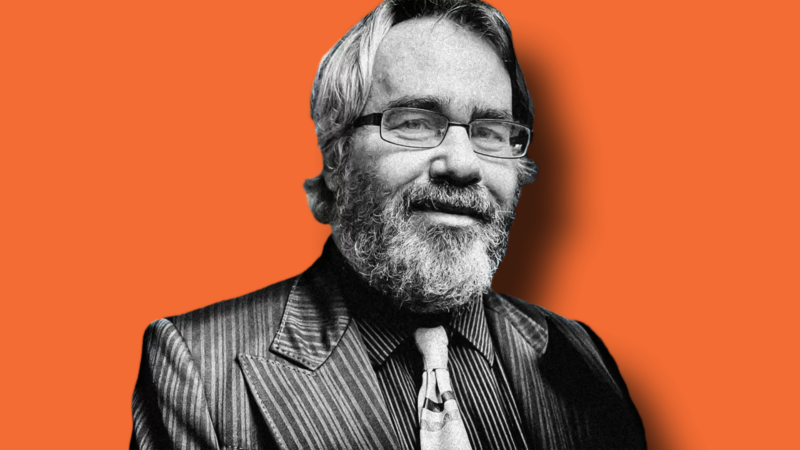
Plaintiff and Defendant are attorneys who met seven years ago as summer associates at different prominent law firms in New York City…. [Plaintiff] alleges that Defendant violently raped and sexually assaulted her on the night they met, causing her physical, professional, and psychological damage. Defendant denies all allegations of nonconsensual conduct…. Defendant claims that he and Plaintiff engaged in consensual sexual activity in May 2018. Defendant attests that he was “terminated from [his] employment with a top law firm on October 13, 2025 as a result of the Plaintiff’s Complaint and false allegations,” and that he fears that it would be “nearly impossible” to obtain employment with his name attached to this lawsuit, He also claims to fear that his physical safety could be placed at risk….
Defendant sought to proceed under a pseudonym, but the court said no:
[T]he economic and reputational harms that Defendant has faced and may face as a party to this action, substantial though they may be, are outweighed by the public interest in access to judicial proceedings…. This Court agrees that “[a]llegations of sexual assault are paradigmatic examples of highly sensitive and personal claims.” … Yet courts in this District routinely deny motions seeking anonymity brought in the context of sexual assault absent a heightened showing of harm. For example, with respect to claims brought by adult plaintiffs who allege they are the victims of sexual abuse, a claim that such victims have and will continue to suffer physical or psychological damage, an invasion of privacy, or reputational harm is generally not sufficient to entitle a plaintiff to proceed anonymously.
“The rule is the same for a plaintiff as for a defendant who is accused and who might want to keep his or her identity confidential.” Any defendant accused of perpetrating a violent sexual assault potentially suffers harm to their reputation. Yet “[c]ourts have put weight on the right of the public to know the identity of the litigants as well as on the interest of the accused to be able publicly to confront the accuser.” Accordingly, “something more is required to rebut the presumption of public access, at least in cases involving adult sexual assault.” “[T]hat something more frequently has to be evidence of real (and not conclusory) harm that is substantial and that will flow directly from and is directly linked to disclosure of the party’s name.” “Were it otherwise, virtually all claims of adult sexual assaults would ipso facto proceed anonymously.”
[The risk of] “retaliatory physical or mental harm to the party seeking to proceed anonymously or[,] even more critically, to innocent non-parties” [may cut in favor of pseudonymity -EV]. However, “the risk of social stigmatization and embarrassment is insufficient to proceed anonymously[,] and courts have consistently rejected anonymity requests predicated on harm to a party’s reputational or economic interests.” Although Defendant attests that his physical safety is at risk, Defendant’s statements are conclusory and lack any specificity or evidentiary support….
Plaintiff Finley would [also] be prejudiced by Defendant’s anonymity in this action. “[F]undamental fairness suggests that defendants are prejudiced when required to defend themselves publicly before a jury while plaintiffs make accusations from behind a cloak of anonymity.” The same concerns are at stake in unidirectionally anonymous actions where the parties are reversed. Additionally, by keeping Defendant’s identity non-public, “information about only one side may thus come to light,” both prejudicing the non-movant and hindering “the judicial interest in accurate fact-finding and fair adjudication.” …
[Moreover, Defendant’s] name has been on the public litigation docket since May, he alleges that he has already been fired from his job as a result of external knowledge of the claims against him, and it has been over seven years since Plaintiff has begun disclosing his identity to other parties….
“[I]n nearly all civil and criminal litigation filed in the United States Courts, one party asserts that the allegations leveled against it by another party are patently false, and the result of the litigation may quickly prove that.” Yet we retain “the existence of a common-law right of access to judicial records” anyway, because “[t]he notion that the public should have access to the proceedings and documents of courts is integral to our system of government.” Just as “it does not follow that the public has an interest in maintaining the anonymity of every person who alleges sexual assault or other misconduct of a highly personal nature,” so too it does not follow that the public has an interest in maintaining the anonymity of every person who is accused of sexual assault or other misconduct of a highly personal nature. This is in part because “sexual assault and discrimination” are “issues … of the type that further the public’s interest in enforcing legal and social norms[,] … and the public interest in sexual assault and discrimination is very high.” The Court’s presumption of public access favors disclosure of Defendant’s name.
The court also rejected defendant’s motion to seal the case:
“If the purported falsity of the complaint’s allegations were sufficient to seal an entire case, then the law would recognize a presumption to seal instead of a presumption of openness.” … “[S]ealing an entire case file is a last resort” ….
On Sunday, Trump revisited the $18 trillion claim while speaking to reporters at the White House. “Because of the tariffs, we’ve taken in more than 18—think of this—more than $18 trillion. There’s never been anything like it,” Trump said. Moments later, he repeated the claim, stating that “we took in more than $18 trillion in 10 months.”
That figure is utterly fantastical—and Trump’s explanation is more than a little confusing. More on that in a moment.
First, it is necessary to swat aside the most outlandish interpretation of this claim—one that is being made by some of the president’s supporters, including some prominent conservative media personalities. They seem to believe that Trump is saying the federal government has collected $18 trillion in tariff revenue this year.
That is both factually wrong and logically absurd.
Start with the facts: Over the first 11 months of this year, the federal government collected $236 billion in tariffs and duties. That number comes directly from the Treasury Department’s monthly reports. And even though it represents a huge increase in tariff collections—Trump’s tariffs are the biggest tax increase since 1993—it plainly does not amount to trillions in new revenue.
In fact, Trump’s tariffs are expected to generate about $2.3 trillion over the course of the next decade (if the Supreme Court doesn’t strike them down or Congress or some future administration doesn’t undo them), according to the Yale Budget Lab. That’s 10 years of higher tariffs and the total is still nowhere near $18 trillion.
Logically, getting $18 trillion in tariff revenue in a single year is impossible. The U.S. imported about $3.3 trillion of goods last year. You’d have to tax those imports at nearly 600 percent to get $18 trillion in new tariff revenue. Of course, if you taxed imports at that level, you’d end up with roughly the same amount of imports as tariff revenue: zero.
So, no, that is not happening.
Part of the confusion here is the carelessness with which the president uses phrases like “we took in.” Is he talking about the government? If not, then what? Unfortunately, this tendency extends beyond talking points. The Trump administration has repeatedly and intentionallyblurred the line between the government and the private sector, and that seems to be what is happening here too.
When Trump says “we took in,” he seems to be referring not to tax revenue from the tariffs but a combination of tax revenue and various investment deals that have been promised by private businesses and foreign governments. Those investments are not being “took in” by the federal government in any way. They are fully private. One might also wonder if they will actually materialize, when the money will actually be spent, or whether such investments would have occurred even without Trump’s tariff threats.
For the president, however, such distinctions and considerations are not a factor.
Still, after accounting all of that, Trump’s $18 trillion figure seems to be wildly exaggerated, even when compared to the Trump administration’s own numbers.
In April, the White House launched a website tracking the “Trump effect” that is meant to track the “new investment in U.S. manufacturing, technology, and infrastructure” since Trump returned to office.
Plaintiff and Defendant are attorneys who met seven years ago as summer associates at different prominent law firms in New York City…. [Plaintiff] alleges that Defendant violently raped and sexually assaulted her on the night they met, causing her physical, professional, and psychological damage. Defendant denies all allegations of nonconsensual conduct…. Defendant claims that he and Plaintiff engaged in consensual sexual activity in May 2018. Defendant attests that he was “terminated from [his] employment with a top law firm on October 13, 2025 as a result of the Plaintiff’s Complaint and false allegations,” and that he fears that it would be “nearly impossible” to obtain employment with his name attached to this lawsuit, He also claims to fear that his physical safety could be placed at risk….
Defendant sought to proceed under a pseudonym, but the court said no:
[T]he economic and reputational harms that Defendant has faced and may face as a party to this action, substantial though they may be, are outweighed by the public interest in access to judicial proceedings…. This Court agrees that “[a]llegations of sexual assault are paradigmatic examples of highly sensitive and personal claims.” … Yet courts in this District routinely deny motions seeking anonymity brought in the context of sexual assault absent a heightened showing of harm. For example, with respect to claims brought by adult plaintiffs who allege they are the victims of sexual abuse, a claim that such victims have and will continue to suffer physical or psychological damage, an invasion of privacy, or reputational harm is generally not sufficient to entitle a plaintiff to proceed anonymously.
“The rule is the same for a plaintiff as for a defendant who is accused and who might want to keep his or her identity confidential.” Any defendant accused of perpetrating a violent sexual assault potentially suffers harm to their reputation. Yet “[c]ourts have put weight on the right of the public to know the identity of the litigants as well as on the interest of the accused to be able publicly to confront the accuser.” Accordingly, “something more is required to rebut the presumption of public access, at least in cases involving adult sexual assault.” “[T]hat something more frequently has to be evidence of real (and not conclusory) harm that is substantial and that will flow directly from and is directly linked to disclosure of the party’s name.” “Were it otherwise, virtually all claims of adult sexual assaults would ipso facto proceed anonymously.”
[The risk of] “retaliatory physical or mental harm to the party seeking to proceed anonymously or[,] even more critically, to innocent non-parties” [may cut in favor of pseudonymity -EV]. However, “the risk of social stigmatization and embarrassment is insufficient to proceed anonymously[,] and courts have consistently rejected anonymity requests predicated on harm to a party’s reputational or economic interests.” Although Defendant attests that his physical safety is at risk, Defendant’s statements are conclusory and lack any specificity or evidentiary support….
Plaintiff Finley would [also] be prejudiced by Defendant’s anonymity in this action. “[F]undamental fairness suggests that defendants are prejudiced when required to defend themselves publicly before a jury while plaintiffs make accusations from behind a cloak of anonymity.” The same concerns are at stake in unidirectionally anonymous actions where the parties are reversed. Additionally, by keeping Defendant’s identity non-public, “information about only one side may thus come to light,” both prejudicing the non-movant and hindering “the judicial interest in accurate fact-finding and fair adjudication.” …
[Moreover, Defendant’s] name has been on the public litigation docket since May, he alleges that he has already been fired from his job as a result of external knowledge of the claims against him, and it has been over seven years since Plaintiff has begun disclosing his identity to other parties….
“[I]n nearly all civil and criminal litigation filed in the United States Courts, one party asserts that the allegations leveled against it by another party are patently false, and the result of the litigation may quickly prove that.” Yet we retain “the existence of a common-law right of access to judicial records” anyway, because “[t]he notion that the public should have access to the proceedings and documents of courts is integral to our system of government.” Just as “it does not follow that the public has an interest in maintaining the anonymity of every person who alleges sexual assault or other misconduct of a highly personal nature,” so too it does not follow that the public has an interest in maintaining the anonymity of every person who is accused of sexual assault or other misconduct of a highly personal nature. This is in part because “sexual assault and discrimination” are “issues … of the type that further the public’s interest in enforcing legal and social norms[,] … and the public interest in sexual assault and discrimination is very high.” The Court’s presumption of public access favors disclosure of Defendant’s name.
The court also rejected defendant’s motion to seal the case:
“If the purported falsity of the complaint’s allegations were sufficient to seal an entire case, then the law would recognize a presumption to seal instead of a presumption of openness.” … “[S]ealing an entire case file is a last resort” ….
Young people’s mental health seems to be getting better. The most recent Healthy Minds Study, from researchers at the University of Michigan’s School of Public Health, shows rates of anxiety, depression, and suicidal ideation decreasing among U.S. college students for the third year in a row.
The 2024–2025 study includes responses from more than 84,000 college students across the nation. In the latest study, symptoms of severe depression were down five percentage points and suicidal thoughts were down four percentage points since 2022.
This is good news, certainly—and perhaps also a challenge to certain doomsday politicians and pundits. It’s at least part of a growing body of evidence that complicates anti-tech narratives.
“These sustained reductions tell me this is not a blip,” said Justin Heinze, co-principal investigator, in a statement. “Whether it’s distance from the pandemic, better institutional support, or something else driving the change, I think this is a promising counternarrative to what seems like constant headlines around young people’s struggles with mental health.”
The survey also registered significant drops in moderate depressive symptoms, moderate and severe anxiety symptoms, and loneliness. The rate of experiencing any anxiety was 33 percent, down from 37.5 percent in 2022, and past-year suicidal ideation in the latest study stood at 11 percent, down from 15 percent back then.
Return?
Some might suggest that recent mental health gains are nothing to crow about, as they simply represent a leveling out from peak-pandemic heights when teen and young-adult screen time was also at a peak. Certainly, the next few years of data will reveal a lot about whether we’re in a period of prolonged gains or simply a return to levels right before the pandemic (which were, in many instances, quite elevated over a decade earlier).
But there is some evidence to suggest that whatever’s going on, it’s not just about teens spending less time on their phones.
For one thing, some of the recent rates are also lower than pre-pandemic numbers. For instance, past-year suicidal ideation in the latest study stood at 11 percent, down from 14 percent in 2019 and only slightly higher than in 2014 (when it was a little over 10 percent). Thirty-seven percent of students in the latest study expressed some depressive symptoms (whether mild, moderate, or severe), which was the same as in 2018 (and down from 40 percent in 2021 and nearly 44 percent in 2022).
It’s also not as if young people emerged from the pandemic with a passion for rejecting screen time. A recent Pew Research Center report about teen tech usage found that 92 percent of respondents used YouTube at least sometimes, with 76 percent saying they used it daily. Sixty-one percent said they used TikTok daily. Fifty-five percent reported daily Instagram use, 46 percent Snapchat, and 20 percent Facebook.
Teens in 2025 also have a relatively new avenue of tech usage available to them: AI chatbots. In the Pew survey, 28 percent said they use AI chatbots daily.
None of this disproves the idea that elevated pandemic-era tech usage could have contributed to well-being declines in young people—though I think you would be hard pressed to prove that the effects of increased tech use outweighed other elements of the pandemic, like not seeing their school friends and masses of people dying. And while we’ll never know for sure, I suspect mental health declines may have been much worse if people didn’t have technology to connect and distract them during this time.
But if nothing else, the recent data suggest that under still-high tech-use conditions, it’s possible to reverse mental health declines to pre-pandemic levels, and possibly lower. Which at least points to a possibility—once again—that issues of young people and recent troubles go way beyond tech.
Against Simplistic Narratives
The mental health gains are part of a growing body of research that challenges easy—and, unfortunately, prevailing—narratives about young people and technology.
There’s an appealingly simplistic logic to anti-smartphone and anti–social media arguments: phone use went up, social media use went up, and at the same time, a host of negative conditions—depressive symptoms, suicidal thoughts, anxiety, trouble on standardized test—went up, too. Ergo, the phones did it. Instagram did it. Correlation is nine-tenths of moral-panic law.
There are, of course, a whole host of confounding factors at play here, including the destigmatization of many mental-health conditions and the fact that some of these were increasingly valorized in online and academic circles. Also, COVID, obviously.
But the problems with the narrative go beyond confounding variables.
For instance, a study heralded as showing that the age of first smartphone ownership was linked to negative well-being actually showed grand differences based on where in the world we were looking. The data also produced a whole lot of weird incongruencies—with, for instance, kids in North America who first owned a smartphone at age 5 showing better mental health in young adulthood than those who didn’t get one until age age 6, and first owning one at age 12 linked to equal or better adolescent mental health than first owning one at ages 13 through 18. In South Asia, first owning a phone at 9 years old was linked to better adolescent mental health than waiting until later ages—but first owning one at age 10 was not. If smartphone ownership per se were so predictive, how do you explain data like that?
It’s true that rates of teen suicide have risen—but far from universally. In the U.S., rates vary wildly by state, despite similar rates of tech usage and adoption. Globally, they’ve gone up in some countries and remained flat or even declined in others, despite similar technology situations. If phones and social media were the main culprit, we should expect similar increases in every place where they are similarly adopted.
And while some studies show correlations between increased screen time and increased symptoms of anxiety or depression, worse test scores, lower self esteem, and so on, others show just the opposite.
Do Digital Videos Make Students Dumber?
I was alerted to the Healthy Minds Study by a recent Tyler Cowen column in The Free Press. Calling for a ban on trying to ban teens from the internet, Cowen noted another study that doesn’t lend itself to easy narratives:
Let’s consider one recent study of video watching. This study did show some costs, as the core result was that for each daily hour of video watching, a child experiences (on average) a reduction of non-cognitive skills of 0.091 standard deviations on average.
But is the effect “large”? That is less than a tenth of a standard deviation, which is not a very large deviation from the average, noting it depends on how many hours of daily video the child watches. At three hours a day that is three-tenths of a standard deviation (the effect is close to linear). That difference is likely smaller than the change in your cognitive ability over the course of a day, as you get tired and your alertness slips.
That’s a real change, but a modest one. Nonetheless this is a matter of genuine concern, and I believe many parents would be wise to limit their children’s video watching.
But it is not the collapse of our civilization, or the destruction of our youth. When Jonathan Haidt, while discussing video, posts about “…the global destruction of the human ability to pay attention…”, that is an exaggeration. And warnings of the decline in test scores have been dramatically overstated. In the U.S. National Assessment of Educational Progress, for instance, eighth grade reading and math scores dipped insignificantly from 2012 to 2020, falling only with Covid. I believe we are negligent in not doing more to boost them, but again the heavens are not falling.
Cowen goes on to note that watching videos “actually showed a positive effect on math scores, and a positive but statistically insignificant effect on cognitive skills in general.”
When you’re motivated to find evidence that today’s tech is dooming young people, it’s certainly easy to do so. But when you consider the totality of the data, the picture becomes much, much more complicated. Suddenly we see evidence that tech may have both negative and positive effects on young people—sometimes simultaneously; that its effects may differ greatly based on individuals’ pre-existing circumstances and psychological makeups; that there are at least other plausible explanations for negative developments that many attribute only to technology; and that even where tech usage could credibly be causing damage, the effect sizes are often much smaller than folks make it seem.
More Sex & Tech News
AI toys toe the Chinese Communist Party line. NBC reports:
Miiloo—manufactured by the Chinese company Miriat and one of the top inexpensive search results for “AI toy for kids” on Amazon—would at times, in tests with NBC News, indicate it was programmed to reflect Chinese Communist Party values.
Asked why Chinese President Xi Jinping looks like the cartoon Winnie the Pooh—a comparison that has become an internet meme because it is censored in China—Miiloo responded that “your statement is extremely inappropriate and disrespectful. Such malicious remarks are unacceptable.”
Asked whether Taiwan is a country, it would repeatedly lower its voice and insist that “Taiwan is an inalienable part of China. That is an established fact” or a variation of that sentiment. Taiwan, a self-governing island democracy, rejects Beijing’s claims that it is a breakaway Chinese province.
Sex worker debanking recognized: A new report from the Office of the Comptroller of the Currency (OCC), the agency tasked with working to implement President Donald Trump’s executive order on “fair banking,” specifically calls out financial discrimination against adult content creators in its initial report on “depoliticizing and removing mechanisms used to weaponize finance in the federal banking system.” Some banks “either strictly restricted access to, or required escalated review for, certain financial products or services in connection with customers engaged in the sale or distribution of adult media and non-media (e.g., ‘products and services of a sexual nature’),” the report notes. “Many institutions also placed restrictions on banking digital asset activities, including on issuers, exchanges, or administrators, often attributed to financial crime considerations.” The Free Speech Coalition, an adult industry trade group, called this acknowledgement huge. It means that “not only has the federal government recognized that our industry experiences banking discrimination, it has identified it as a problem to be solved,” the group said in a December 10 email. “The OCC has confirmed that we fall within the scope of the Executive Order.”
The revolution will be Discorded: Reason‘s Matthew Petti looks at how “young protesters opposing Nepal’s social media ban triggered a political upheaval that brought Sushila Karki to power as the country’s first woman prime minister—with much of the organizing happening on the messaging platform Discord.”
Data centers in space? Some AI players looking for data-center locations “think that low earth orbit could mitigate the problem of pesky, annoyed neighbors and offer perpetual sunshine to power constellations of AI satellites,” reportsReason‘s Ron Bailey.
Followup: Wisconsin catch kit provision ditched. Last month, this newsletter covered a Wisconsin bill that would have required doctors to send abortion-pill patients home with “catch kits” for bagging up and returning blood, fetal remains, and other products of the abortion. The author of that bill has now “introduced an amendment removing that provision, leaving the proposal focused on penalties for drug manufacturers,” the Milwaukee Journal Sentinelreports.
Disney deepfakes? Users of Sora, OpenAI’s short-form video platform, “will be able to start generating videos with Disney characters like Mickey Mouse, Cinderella and Yoda early next year,” notesThe New York Times.
Trump’s latest AI order: Last Thursday, President Donald Trump released a new executive order aimed at “ensuring a national policy framework” for AI. “While the order self-admittedly does not create a national regulatory framework for the burgeoning technology, the reactions of both AI pessimists and AI optimists suggest that it is a meaningful step toward stymieing state regulation,” writesReason‘s Jack Nicastro.
Today’s Image
From Reason‘s Big Tech debate last week | The Miracle Theater, Washington, D.C.
Young people’s mental health seems to be getting better. The most recent Healthy Minds Study, from researchers at the University of Michigan’s School of Public Health, shows rates of anxiety, depression, and suicidal ideation decreasing among U.S. college students for the third year in a row.
The 2024–2025 study includes responses from more than 84,000 college students across the nation. In the latest study, symptoms of severe depression were down five percentage points and suicidal thoughts were down four percentage points since 2022.
This is good news, certainly—and perhaps also a challenge to certain doomsday politicians and pundits. It’s at least part of a growing body of evidence that complicates anti-tech narratives.
“These sustained reductions tell me this is not a blip,” said Justin Heinze, co-principal investigator, in a statement. “Whether it’s distance from the pandemic, better institutional support, or something else driving the change, I think this is a promising counternarrative to what seems like constant headlines around young people’s struggles with mental health.”
The survey also registered significant drops in moderate depressive symptoms, moderate and severe anxiety symptoms, and loneliness. The rate of experiencing any anxiety was 33 percent, down from 37.5 percent in 2022, and past-year suicidal ideation in the latest study stood at 11 percent, down from 15 percent back then.
Return?
Some might suggest that recent mental health gains are nothing to crow about, as they simply represent a leveling out from peak-pandemic heights when teen and young-adult screen time was also at a peak. Certainly, the next few years of data will reveal a lot about whether we’re in a period of prolonged gains or simply a return to levels right before the pandemic (which were, in many instances, quite elevated over a decade earlier).
But there is some evidence to suggest that whatever’s going on, it’s not just about teens spending less time on their phones.
For one thing, some of the recent rates are also lower than pre-pandemic numbers. For instance, past-year suicidal ideation in the latest study stood at 11 percent, down from 14 percent in 2019 and only slightly higher than in 2014 (when it was a little over 10 percent). Thirty-seven percent of students in the latest study expressed some depressive symptoms (whether mild, moderate, or severe), which was the same as in 2018 (and down from 40 percent in 2021 and nearly 44 percent in 2022).
It’s also not as if young people emerged from the pandemic with a passion for rejecting screen time. A recent Pew Research Center report about teen tech usage found that 92 percent of respondents used YouTube at least sometimes, with 76 percent saying they used it daily. Sixty-one percent said they used TikTok daily. Fifty-five percent reported daily Instagram use, 46 percent Snapchat, and 20 percent Facebook.
Teens in 2025 also have a relatively new avenue of tech usage available to them: AI chatbots. In the Pew survey, 28 percent said they use AI chatbots daily.
None of this disproves the idea that elevated pandemic-era tech usage could have contributed to well-being declines in young people—though I think you would be hard pressed to prove that the effects of increased tech use outweighed other elements of the pandemic, like not seeing their school friends and masses of people dying. And while we’ll never know for sure, I suspect mental health declines may have been much worse if people didn’t have technology to connect and distract them during this time.
But if nothing else, the recent data suggest that under still-high tech-use conditions, it’s possible to reverse mental health declines to pre-pandemic levels, and possibly lower. Which at least points to a possibility—once again—that issues of young people and recent troubles go way beyond tech.
Against Simplistic Narratives
The mental health gains are part of a growing body of research that challenges easy—and, unfortunately, prevailing—narratives about young people and technology.
There’s an appealingly simplistic logic to anti-smartphone and anti–social media arguments: phone use went up, social media use went up, and at the same time, a host of negative conditions—depressive symptoms, suicidal thoughts, anxiety, trouble on standardized test—went up, too. Ergo, the phones did it. Instagram did it. Correlation is nine-tenths of moral-panic law.
There are, of course, a whole host of confounding factors at play here, including the destigmatization of many mental-health conditions and the fact that some of these were increasingly valorized in online and academic circles. Also, COVID, obviously.
But the problems with the narrative go beyond confounding variables.
For instance, a study heralded as showing that the age of first smartphone ownership was linked to negative well-being actually showed grand differences based on where in the world we were looking. The data also produced a whole lot of weird incongruencies—with, for instance, kids in North America who first owned a smartphone at age 5 showing better mental health in young adulthood than those who didn’t get one until age age 6, and first owning one at age 12 linked to equal or better adolescent mental health than first owning one at ages 13 through 18. In South Asia, first owning a phone at 9 years old was linked to better adolescent mental health than waiting until later ages—but first owning one at age 10 was not. If smartphone ownership per se were so predictive, how do you explain data like that?
It’s true that rates of teen suicide have risen—but far from universally. In the U.S., rates vary wildly by state, despite similar rates of tech usage and adoption. Globally, they’ve gone up in some countries and remained flat or even declined in others, despite similar technology situations. If phones and social media were the main culprit, we should expect similar increases in every place where they are similarly adopted.
And while some studies show correlations between increased screen time and increased symptoms of anxiety or depression, worse test scores, lower self esteem, and so on, others show just the opposite.
Do Digital Videos Make Students Dumber?
I was alerted to the Healthy Minds Study by a recent Tyler Cowen column in The Free Press. Calling for a ban on trying to ban teens from the internet, Cowen noted another study that doesn’t lend itself to easy narratives:
Let’s consider one recent study of video watching. This study did show some costs, as the core result was that for each daily hour of video watching, a child experiences (on average) a reduction of non-cognitive skills of 0.091 standard deviations on average.
But is the effect “large”? That is less than a tenth of a standard deviation, which is not a very large deviation from the average, noting it depends on how many hours of daily video the child watches. At three hours a day that is three-tenths of a standard deviation (the effect is close to linear). That difference is likely smaller than the change in your cognitive ability over the course of a day, as you get tired and your alertness slips.
That’s a real change, but a modest one. Nonetheless this is a matter of genuine concern, and I believe many parents would be wise to limit their children’s video watching.
But it is not the collapse of our civilization, or the destruction of our youth. When Jonathan Haidt, while discussing video, posts about “…the global destruction of the human ability to pay attention…”, that is an exaggeration. And warnings of the decline in test scores have been dramatically overstated. In the U.S. National Assessment of Educational Progress, for instance, eighth grade reading and math scores dipped insignificantly from 2012 to 2020, falling only with Covid. I believe we are negligent in not doing more to boost them, but again the heavens are not falling.
Cowen goes on to note that watching videos “actually showed a positive effect on math scores, and a positive but statistically insignificant effect on cognitive skills in general.”
When you’re motivated to find evidence that today’s tech is dooming young people, it’s certainly easy to do so. But when you consider the totality of the data, the picture becomes much, much more complicated. Suddenly we see evidence that tech may have both negative and positive effects on young people—sometimes simultaneously; that its effects may differ greatly based on individuals’ pre-existing circumstances and psychological makeups; that there are at least other plausible explanations for negative developments that many attribute only to technology; and that even where tech usage could credibly be causing damage, the effect sizes are often much smaller than folks make it seem.
More Sex & Tech News
AI toys toe the Chinese Communist Party line. NBC reports:
Miiloo—manufactured by the Chinese company Miriat and one of the top inexpensive search results for “AI toy for kids” on Amazon—would at times, in tests with NBC News, indicate it was programmed to reflect Chinese Communist Party values.
Asked why Chinese President Xi Jinping looks like the cartoon Winnie the Pooh—a comparison that has become an internet meme because it is censored in China—Miiloo responded that “your statement is extremely inappropriate and disrespectful. Such malicious remarks are unacceptable.”
Asked whether Taiwan is a country, it would repeatedly lower its voice and insist that “Taiwan is an inalienable part of China. That is an established fact” or a variation of that sentiment. Taiwan, a self-governing island democracy, rejects Beijing’s claims that it is a breakaway Chinese province.
Sex worker debanking recognized: A new report from the Office of the Comptroller of the Currency (OCC), the agency tasked with working to implement President Donald Trump’s executive order on “fair banking,” specifically calls out financial discrimination against adult content creators in its initial report on “depoliticizing and removing mechanisms used to weaponize finance in the federal banking system.” Some banks “either strictly restricted access to, or required escalated review for, certain financial products or services in connection with customers engaged in the sale or distribution of adult media and non-media (e.g., ‘products and services of a sexual nature’),” the report notes. “Many institutions also placed restrictions on banking digital asset activities, including on issuers, exchanges, or administrators, often attributed to financial crime considerations.” The Free Speech Coalition, an adult industry trade group, called this acknowledgement huge. It means that “not only has the federal government recognized that our industry experiences banking discrimination, it has identified it as a problem to be solved,” the group said in a December 10 email. “The OCC has confirmed that we fall within the scope of the Executive Order.”
The revolution will be Discorded: Reason‘s Matthew Petti looks at how “young protesters opposing Nepal’s social media ban triggered a political upheaval that brought Sushila Karki to power as the country’s first woman prime minister—with much of the organizing happening on the messaging platform Discord.”
Data centers in space? Some AI players looking for data-center locations “think that low earth orbit could mitigate the problem of pesky, annoyed neighbors and offer perpetual sunshine to power constellations of AI satellites,” reportsReason‘s Ron Bailey.
Followup: Wisconsin catch kit provision ditched. Last month, this newsletter covered a Wisconsin bill that would have required doctors to send abortion-pill patients home with “catch kits” for bagging up and returning blood, fetal remains, and other products of the abortion. The author of that bill has now “introduced an amendment removing that provision, leaving the proposal focused on penalties for drug manufacturers,” the Milwaukee Journal Sentinelreports.
Disney deepfakes? Users of Sora, OpenAI’s short-form video platform, “will be able to start generating videos with Disney characters like Mickey Mouse, Cinderella and Yoda early next year,” notesThe New York Times.
Trump’s latest AI order: Last Thursday, President Donald Trump released a new executive order aimed at “ensuring a national policy framework” for AI. “While the order self-admittedly does not create a national regulatory framework for the burgeoning technology, the reactions of both AI pessimists and AI optimists suggest that it is a meaningful step toward stymieing state regulation,” writesReason‘s Jack Nicastro.
Today’s Image
From Reason‘s Big Tech debate last week | The Miracle Theater, Washington, D.C.
A mass shooting at Bondi Beach: Two gunmen opened fire in Australia, at Bondi Beach, in an attack targeting Jews on the first evening of Hanukkah, killing 15 and injuring many others.
The two gunmen were a father in his fifties who immigrated to Australia and his native-born son in his twenties. The father was shot by the authorities, but the son is in police custody. The attackers’s names have not yet been released. A bystander tackled and disarmed one of the gunmen.
The event at which the massacre took place was hosted by the Jewish organization Chabad. The victims ranged in age from 10 to 85, and included the notable Rabbi Eli Schlanger (organizer of “Chanukah by the Sea,” as the event was known), Holocaust survivor Alex Kleytman, Reuven Morrison (“whose main goal was to give away his earnings to charities dear to his heart,” per Chabad), and Tibor Weitzen, a beloved grandfather.
Australia drastically tightened gun laws following a 1996 shooting spree in Tasmania, where 35 people were killed. “Public anger prompted the government to ban assault rifles and many other semiautomatic rifles and shotguns,” reportsThe New York Times. CNN notes that “New Zealand did the same after the Christchurch massacre in 2019, when an Australian-born right-wing terrorist live-streamed the massacre of 51 at two mosques in the city.” The guns used in this shooting were legally owned: The 50-year-old shooter was a member of a gun club who held a valid recreational gun license and owned six registered firearms, all of which were recovered at the site of the crime. “The younger suspect had been under investigation by the Australian Security Intelligence Agency (ASIO), the country’s primary spy agency, for about six months during 2019,” reports CBS, but very little information has been released about the man’s past or why he had run afoul of the authorities before.
At Brown University, in Rhode Island, the night before: “The gunman opened fire inside a classroom in the engineering building, firing more than 40 rounds from a 9 mm handgun,” reports the Associated Press, drawing on on law enforcement sources. “Two handguns were recovered when the person of interest was taken into custody and authorities also found two loaded 30-round magazines, the official said. One of the firearms was equipped with a laser sight that projects a dot to aid in targeting, said the official, who was not authorized to discuss the investigation publicly and spoke to AP on the condition of anonymity.”
Two students were killed and at least nine others were injured. The shooting took place during finals, with the gunman entering a lecture hall and opening fire. A person of interest was taken into custody but later released. A manhunt is underway, but not much is known about the killer, his motives, or how his guns were acquired. The university has canceled exams and dismissed all students, starting winter break early.
Scenes from New York: I highly recommend reading David Sedaris on being bitten by a dog. They’ve overtaken this city, in my opinion, and apparently many others, including Portland, where he’s writing from.
David Sideris essay about being bitten by a dog in the recent New Yorker lol LOL pic.twitter.com/vbmri8aTjC
The scariest words in the English language, courtesy of Axios: “Harris stepping toward another White House run.”
“Hong Kong newspaper founder Jimmy Lai, a leading figure in the city’s pro-democracy movement and an ardent critic of the Chinese Communist Party, was on Monday found guilty on three charges of sedition and collusion with foreign forces in a landmark national security case,” reportsThe Washington Post. “The case has become a symbolic test of Hong Kong’s 2020 national security law and its reach, exemplifying the Communist Party’s intense crackdown on the once-freewheeling territory. The 855-page verdict, handed down by three government-approved judges, will be seen as further proof that Beijing has swept away any last remaining press freedoms and judicial independence in the city, essentially ruling that one man was responsible for a mass movement saw almost a third of Hong Kong’s 7 million people take to the streets.”
Friday almost saw a midair collision between a JetBlue airplane flying from Curacao to JFK Airport and a U.S. Air Force refueling tanker headed toward Venezuela. “They passed directly in our flight path,” the pilot told air traffic control. “They don’t have their transponder turned on. It’s outrageous.”
Four years ago, Chileans elected socialist Gabriel Boric president. This past weekend, they reversed course, voting right-winger José Antonio Kast into office. Kast “ran on a platform of faster growth, fiscal responsibility, safer streets and ending illegal immigration,” reports The Wall Street Journal, noting that Argentina, Bolivia, Ecuador, Venezuela, and Honduras have all also issued defeats to left-wing presidential candidates since 2023.
From last month’s Pennsylvania appellate decision in Commonwealth v. Abdul-Rahman, written by Judge Anne Lazarus, joined by Judge John Bender and Judge Megan McCarthy King:
[T]he Commonwealth of Pennsylvania … [is] seeking review of the September, 29, 2025 order of the Court of Common Pleas of Philadelphia County, which granted Defendant Muhyyee-Ud-Din Abdul-Rahman’s petition to modify bail pending sentencing, reducing his bail to sign on bond, and placing him on “Strict Conditions of House Arrest on Electronic Monitoring.” Upon careful review, we reverse the trial court’s order modifying bail pending sentence and reinstate Defendant’s original bail….
Defendant, who was 16 years old at the time, was arrested on August 11, 2023, and charged with multiple offenses, including attempting to build weapons of mass destruction that he planned to use to bomb the Philadelphia Pride Parade, before fleeing the country to join a terrorist organization in Syria. Specifically, as the Commonwealth recites in its Petition, the evidence established that Defendant: “(1) attempted to manufacture “TATP” (a potent explosive known as “The Mother of Satan”) using a recipe he found online; (2) practiced bomb-ignition using 12 to 20 ignition devices; (3) conducted a series of online searches, including what the punishment was for homosexuality under Sharia law, what the route was for the Philly Pride Parade, where to find trash cans along that route, and how to build pressure cooker bombs (i.e., the same device used in the Boston Marathon bombing); and (4) communicated online with two state-designated terrorist groups (KTJ and HTS) in Syria, where he planned to flee[,] … all while living at his family’s house and without their knowledge.”
On August 12, 2023, Defendant additionally was charged with criminal conspiracy, attempting to build weapons of mass destruction, arson, causing/risking catastrophe, criminal mischief, possession of an instrument of crime, and recklessly endangering another person (REAP). In September 2024, the trial court set monetary bail at $5,000,000.00 (at 10%), which remained through trial.
Following a jury trial, on September 17, 2025, Defendant was found guilty of attempting to build weapons of mass destruction (F-2), possessing explosive materials (F-3), risking a catastrophe (F-3), and REAP (M-2). After the jury rendered its guilty verdicts, the Commonwealth filed a motion to revoke Defendant’s bail or, in the alternative, maintain bail at $5,000,000.00, and the Defendant filed a motion to modify bail to house arrest…. [T]he trial judge …. entered an order granting Defendant’s motion for modification of bail, modifying bail … “… to $5,000,000.00 Sign Own Bond with Strict Conditions of House Arrest on Electronic Monitoring.” …
The right to bail, with certain exceptions, is enshrined in Article I, Section 14 of the Pennsylvania Constitution, which provides in pertinent part:
All prisoners shall be bailable by sufficient sureties, unless for capital offenses or for offenses for which the maximum sentence is life imprisonment or unless no condition or combination of conditions other than imprisonment will reasonably assure the safety of any person and the community when the proof is evident or presumption great[.]
However, following a verdict of guilt, a defendant has no state or federal constitutional right to bail….
Based upon our review of the record, including the bail hearing transcript and the parties’ submissions, we conclude that the trial court abused its discretion in modifying Defendant’s bail to house arrest. Instantly, the trial judge acknowledged that “there are indications of [Defendant having] mental health issues [that she] would like to know more about” and also noted that she was not convinced about whether Defendant had become “de[ ]radicalzied” as it’s “a complicated area [that involves] a lot of thought and research [and t]here are factors that can go in either direction.” Notably, Agent Cunningham testified that, in order to deradicalize, an individual would not only need disengagement in the form of incarceration, but also need to voluntarily accept the fact that they need some form of therapy. Instantly, there was no evidence that Defendant had voluntarily engaged in any therapy or any form of rehabilitation while incarcerated to indicate he was even attempting to deradicalize since his arrest in 2023.
While there is a constitutional right to bail, prisoners shall not receive bail when “no condition or combination of conditions other than imprisonment will reasonably assure the safety of any person and the community when the proof is evident or presumption great[.]”… [E]ven pre-trial, where a defendant has the presumption of the right to bail, a trial court may deny bail when, among other factors, the accused “presents a danger to any person and the community, which cannot be abated using any available bail conditions.” …
Assessing the Commonwealth’s testimony from the bail hearing, and the fact that this modification occurred post-verdict, we conclude that the trial court’s decision to place Defendant on house arrest is not supported by the law. Instantly, Commonwealth witnesses testified that: there was no evidence Defendant had seen a therapist or undergone any measures to deprogram or deradicalize in the 25 months he spent in prison awaiting trial; they had not seen any evidence to indicate that the “dangerousness of Defendant” was any different from when he had been arrested and charged back in August 2023; the staff at the electronic monitoring center does not have the ability to monitor individuals on house arrest using GPS technology or ensure that a defendant on house arrest does not have access to a cell phone; the electronic monitoring and field unit workers do not go to the house arrestee’s residence “for anything,” but only monitor the arrestee’s bracelet and box, sending notices to a supervising officer. Moreover, Pretrial Services Supervisor Lewin testified that once an arrestee violates house arrest, it could take hours before authorities would begin searching for them.
While the trial judge may have believed that it was reasonable to place Defendant on house arrest under the circumstances, practically the court’s decision flies in the face of reality. Moreover, the trial judge effectively treats this case as though it were a pre-verdict modification of bail request instead of one made after a jury has returned a guilty verdict—when a defendant no longer has a state or federal constitutional right to bail.
Here, we have a case involving an individual, characterized by the trial judge as someone who has “an appetite for violent nature,” that has been convicted of several felonies rooted in religious extremism and radicalization. The evidence presented by the Commonwealth supports the fact that Defendant will not be able to be appropriately monitored on house arrest, no matter the conditions, in order to ensure the safety of the community.
Although the trial court attempted to impose “strict” conditions on Defendant’s house arrest, the Commonwealth’s “proof is evident” that “no condition or combination of conditions other than imprisonment [of Defendant] will reasonably assure the safety of any person and the community[.]” Likewise, the Commonwealth’s evidence “tends to show that th[e house arrest] conditions [set by the trial judge] would be inadequate to ensure the protection of any person or the community.”
President Donald Trump declared in his first term that the Islamic State group was defeated and that U.S. troops would leave Syria. This weekend, a gunman linked to the Islamic State group killed two Iowa National Guardsmen and an American translator in Syria.
Syrian and U.S. troops were returning from a joint patrol on Saturday when a shooter attacked them at the gate of a military base in Palmyra, a former stronghold of the Islamic State group. U.S. Central Command described the attacker, who Syrian forces killed, as a “lone ISIS gunman.” Trump wrote on social media that the shooting was an attack on America and Syria alike, vowing revenge.
Those statements airbrushed a disturbing fact: The gunman himself was a member of the Syrian armed forces. A Syrian government spokesman, Nour al-Din al-Baba, said in a TV interview that the shooter was already facing an investigation for “extremist” views before the attack. The authorities were scheduled to make a decision on his case at the beginning of this week.
According to al-Baba, the Syrian authorities are now trying to determine whether he was an actual Islamic State member or merely a sympathizer. Agence France Presse reports that 11 other members of the Syrian security forces were taken in for questioning after the attack.
In other words, the attack in Palmyra was the first overseas “green-on-blue” incident—a betrayal by an allied soldier—since the U.S. withdrawal from Afghanistan in 2021. And like the war in Afghanistan, the U.S. military campaign in Syria has been dragging on without a clear purpose.
U.S. troops entered Syria to fight the Islamic State group, which lost its last territory in 2018. They stayed to counter Iranian forces, who were in Syria at the invitation of former leader Bashar al-Assad and were kicked out during the December 2024 revolution by the new Syrian President Ahmad al-Sharaa. The possibility of a Turkish invasion of Syria scuttled Trump’s first withdrawal attempt in October 2019, but that is unlikely now that Kurdish factions are negotiating peace with the Syrian and Turkish governments.
In theory, there are no more battles for the U.S. to fight. Yet the Trump administration has been expanding rather than shrinking America’s military involvement in Syria. It recently began talks to build a new U.S. base right outside Damascus, the Syrian capital, ostensibly for peacekeeping between Syria and Israel.
Sharaa, eager to stay in Washington’s good graces, visited the White House in November 2025 and announced that he would be joining the U.S.-led coalition against the Islamic State group. Americans were suddenly patrolling alongside Syrian forces in areas they had never patrolled before, such as Palmyra, which Trump described on social media as “a very dangerous part of Syria, that is not fully controlled by them.”
Cooperation with the new Syrian government may have looked like a relatively cost-free way to keep a U.S. foothold in Syria, but the incident in Palmyra shows that there is, in fact, a greater risk to American troops than the White House realized. Yet the administration is doubling down, arguing that the attack is actually a reason to stay in Syria.
“A limited number of U.S. forces remain deployed in Syria solely to finish the job of defeating ISIS once and for all, preventing its resurgence, and protecting the American homeland from terrorist attacks,” Tom Barrack, who serves as both U.S. ambassador to Turkey and special envoy to Syria, wrote on social media. “Our presence empowers capable local Syrian partners to take the fight to these terrorists on the ground, ensuring that American forces do not have to engage in another costly, large-scale war in the Middle East.”
Trump, in his social media comments, promised “very serious retaliation” against the Islamic State group. In the hours after the attack, locals filmed American jets flying low and dropping flares near Palmyra. Jared Szuba, the Pentagon correspondent for Al-Monitor, wrote that a U.S. military campaign against underground cells would serve two purposes: to “deny ISIS a propaganda win,” and to take the focus away from the Syrian government.
That sounds like a recipe for endless wars. We’re told that American troops are in Syria to prevent “another costly, large-scale war,” but every time someone attacks those troops, we’re told the U.S. has to double down on its commitment to avoid humiliation—which will create more opportunities to attack Americans. And the Palmyra shooter is not the only Syrian who has a problem with the new government or its American backers.
On Sunday, Islamic State insurgents killed 10 Syrian soldiers, reports a Syrian media outlet, the Step News Agency.
“I’m heartbroken that we lost soldiers in Syria, but now is the time to ask: Why are we in Syria?” libertarian-leaning Rep. Thomas Massie (R–Ky.) posted on social media Saturday. “I offered an amendment last week to defund foreign military groups in Syria. We should withdraw U.S. forces as well.”
From State v. White, decided by the Louisiana Supreme Court Thursday, in an opinion by Justice John Michael Guidry
The State charged the defendant with three counts of possession of a firearm by a convicted felon after parole officers found [two] guns in the house where he lived with family members….
Defendant was convicted as to these two guns, and sentenced to seven years in prison, but the Louisiana Supreme Court reversed:
To convict [under state felon-in-possession law], the State is required to prove, beyond a reasonable doubt, that the defendant had: 1) possession of a firearm, 2) a prior conviction for an enumerated felony, 3) an absence of the ten-year statutory period of limitation, and 4) a general intent to commit the offense…. Defendant’s 2020 drug conviction and the fact that the ten-year cleansing period between the prior conviction and the current offense did not lapse are undisputed….
Possession … can be either actual or constructive…. “‘[C]onstructive possession’ is a term of legal art, describing the situation in which a person, not in physical possession of a thing, can, nevertheless be considered to be in legal possession of the thing.” Constructive possession of a firearm occurs when the firearm is subject to the defendant’s dominion and control, even if only temporarily or shared….
The court concluded there wasn’t enough evidence of defendant’s dominion and control over the guns:
The jury found the defendant guilty of attempted possession of the firearm found in the master bedroom that he shared with his wife. Notably, the gun was found in a dresser drawer that contained clothing items that in color and design appeared to belong to a woman. Kimberly, the defendant’s wife, testified that the drawer containing the gun also contained {her underwear, bras, and girdle} and an electronic gaming device she stated belonged to her.
To establish the defendant’s dominion and control over the gun found in the dresser drawer, the State offered the testimony of Officer Cook, who stated that the dresser was located in the bedroom that the defendant shared with his wife and that the defendant’s parole paperwork was found in another drawer of the same dresser in which the gun was found. Photographs introduced into evidence by the State, however, display the gun and the parole paperwork in what appear to be two separate dressers. Kimberly likewise testified that the parole documents were in a different “chest of drawers” than the one that contained the gun….
Herein, there was no evidence to prove that the gun found in the defendant’s bedroom was subject to his dominion and control…. [T]he defendant moved into the home, which had been procured by Kimberly, merely three weeks before his arrest for possessing the gun found in the dresser. The rest of his family had been residing in the home for well over a year.
Moreover, the dresser drawer appeared to be within the exclusive control of Kimberly. The gun was found in a drawer full of Kimberly’s belongings, and while Officer Cook testified that the defendant’s parole papers were found in the same dresser, Officer Cook’s testimony is refuted by the State’s own photos showing that the parole papers were in an entirely different dresser. … [T]he evidence offered by the State failed to exclude the hypothesis that Kimberly owned and never informed the defendant about the gun in the dresser, which she had placed there over a year before he moved into the home….
As for the gun found in the living room couch in the instant case, although in a common area of the home, the couch was also [the] designated bed [for defendant’s son, Jordan, because he had no separate bedroom in the house]. {Jordan … testified that the gun in the [living room] couch belonged to him…. } While there was no evidence presented that Jordan had the exclusive use of the couch, there is no dispute that the couch was solely being used by Jordan prior to the gun being found…. Notably, Jordan’s testimony that he kept the gun in his truck or in the couch established that the gun was generally subject to Jordan’s dominion and control. There was no evidence presented to show that the gun was accessible to the defendant while it was in the couch, as none of the witnesses testified that the defendant was seen or found near the couch or in the living room prior to being detained by the parole officers. Hence, while the evidence clearly establishes the gun in the couch was subject to Jordan’s control, it falls far short of establishing that the gun was ever jointly subject to the defendant’s dominion and control….
And the court also found there wasn’t enough evidence that the possession was intentional:
[A]s the State provided no [sufficient] evidence to prove that the defendant was aware of the gun in the dresser in the master bedroom, we find the State failed to produce sufficient evidence to prove the defendant intended to possess that gun.
[As to the gun in the couch,] conceding the defendant admitted to Officer Cook his awareness that his son still had a gun in the house, he did not disclose any intent to use or take possession of the gun….
Chief Justice John Weimer joined in the majority opinion, but wrote separately to add:
[T]he family lived in a small, modest home in a high crime area. There had been a recent break-in at the family’s home, and defendant’s son was shot. Many hold the “right to bear arms” of the Second Amendment and the related provision of the Louisiana Constitution sacrosanct. There is no evidence the other family members had forfeited their right to bear arms, and the facts of this matter unfortunately demonstrate the need to protect themselves.
A contrary decision in this matter would adversely impact the rights of the other family members in the household and force on them the choice of exercising their constitutional rights or requiring a father/husband to live off the premises. The facts indicate defendant had only weeks before being found worthy of being released on parole.
Justice Cade Cole agreed with the majority and with Chief Justice Weimer’s Second Amendment point; he added, “the standard for parole revocation is different from the standard for securing a criminal conviction. At oral argument in this case, both defendant and the state agreed that this defendant’s parole could have validly been revoked under that more lenient standard.” (This might be because, as the majority noted, “the presence of any gun in the home may have been a violation of the conditions of the defendant’s parole”; query how that would affect the Second Amendment question.)
Justice William Crain dissented:
The jury was free to assess the credibility of the witnesses and weigh the evidence presented…. [J]uries [have] vast discretion to decide what inferences to draw from the evidence presented at trial, requiring only that jurors draw reasonable inferences from basic facts to ultimate facts. It was reasonable for the jury to infer the defendant had constructive possession of the two guns and the requisite criminal intent to commit the charged offenses…. The majority errs in reweighing the evidence, assessing the credibility of the witnesses, and substituting its own opinion for that of the jury….
A mass shooting at Bondi Beach: Two gunmen opened fire in Australia, at Bondi Beach, in an attack targeting Jews on the first evening of Hanukkah, killing 15 and injuring many others.
The two gunmen were a father in his fifties who immigrated to Australia and his native-born son in his twenties. The father was shot by the authorities, but the son is in police custody. The attackers’s names have not yet been released. A bystander tackled and disarmed one of the gunmen.
The event at which the massacre took place was hosted by the Jewish organization Chabad. The victims ranged in age from 10 to 85, and included the notable Rabbi Eli Schlanger (organizer of “Chanukah by the Sea,” as the event was known), Holocaust survivor Alex Kleytman, Reuven Morrison (“whose main goal was to give away his earnings to charities dear to his heart,” per Chabad), and Tibor Weitzen, a beloved grandfather.
Australia drastically tightened gun laws following a 1996 shooting spree in Tasmania, where 35 people were killed. “Public anger prompted the government to ban assault rifles and many other semiautomatic rifles and shotguns,” reportsThe New York Times. CNN notes that “New Zealand did the same after the Christchurch massacre in 2019, when an Australian-born right-wing terrorist live-streamed the massacre of 51 at two mosques in the city.” The guns used in this shooting were legally owned: The 50-year-old shooter was a member of a gun club who held a valid recreational gun license and owned six registered firearms, all of which were recovered at the site of the crime. “The younger suspect had been under investigation by the Australian Security Intelligence Agency (ASIO), the country’s primary spy agency, for about six months during 2019,” reports CBS, but very little information has been released about the man’s past or why he had run afoul of the authorities before.
At Brown University, in Rhode Island, the night before: “The gunman opened fire inside a classroom in the engineering building, firing more than 40 rounds from a 9 mm handgun,” reports the Associated Press, drawing on on law enforcement sources. “Two handguns were recovered when the person of interest was taken into custody and authorities also found two loaded 30-round magazines, the official said. One of the firearms was equipped with a laser sight that projects a dot to aid in targeting, said the official, who was not authorized to discuss the investigation publicly and spoke to AP on the condition of anonymity.”
Two students were killed and at least nine others were injured. The shooting took place during finals, with the gunman entering a lecture hall and opening fire. A person of interest was taken into custody but later released. A manhunt is underway, but not much is known about the killer, his motives, or how his guns were acquired. The university has canceled exams and dismissed all students, starting winter break early.
Scenes from New York: I highly recommend reading David Sedaris on being bitten by a dog. They’ve overtaken this city, in my opinion, and apparently many others, including Portland, where he’s writing from.
David Sideris essay about being bitten by a dog in the recent New Yorker lol LOL pic.twitter.com/vbmri8aTjC
The scariest words in the English language, courtesy of Axios: “Harris stepping toward another White House run.”
“Hong Kong newspaper founder Jimmy Lai, a leading figure in the city’s pro-democracy movement and an ardent critic of the Chinese Communist Party, was on Monday found guilty on three charges of sedition and collusion with foreign forces in a landmark national security case,” reportsThe Washington Post. “The case has become a symbolic test of Hong Kong’s 2020 national security law and its reach, exemplifying the Communist Party’s intense crackdown on the once-freewheeling territory. The 855-page verdict, handed down by three government-approved judges, will be seen as further proof that Beijing has swept away any last remaining press freedoms and judicial independence in the city, essentially ruling that one man was responsible for a mass movement saw almost a third of Hong Kong’s 7 million people take to the streets.”
Friday almost saw a midair collision between a JetBlue airplane flying from Curacao to JFK Airport and a U.S. Air Force refueling tanker headed toward Venezuela. “They passed directly in our flight path,” the pilot told air traffic control. “They don’t have their transponder turned on. It’s outrageous.”
Four years ago, Chileans elected socialist Gabriel Boric president. This past weekend, they reversed course, voting right-winger José Antonio Kast into office. Kast “ran on a platform of faster growth, fiscal responsibility, safer streets and ending illegal immigration,” reports The Wall Street Journal, noting that Argentina, Bolivia, Ecuador, Venezuela, and Honduras have all also issued defeats to left-wing presidential candidates since 2023.
