Trump Threatens To Revoke ABC and NBC Licenses for Not Broadcasting His Election Speech


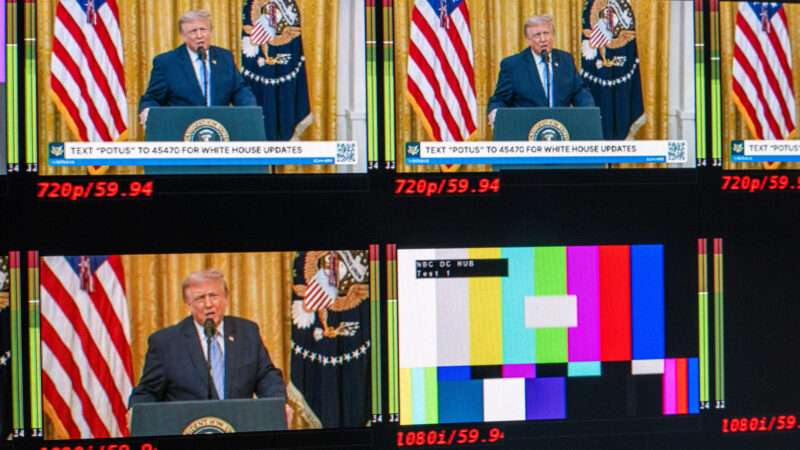
President Donald Trump addresses the nation, as depicted on multiple simultaneous broadcast screens, with one of them showing a test pattern. |  Aaron Schwartz - Pool via CNP/picture alliance / Consolidated News Photos/Newscom

On Thursday night, President Donald Trump delivered a primetime address to the nation on one of his favorite topics: the 2020 election.

Over 25 minutes, Trump aired a familiar list of grievances, inveighing against the media, China, and a nebulous collection of conspirators who allegedly stole the 2020 election from him. The allegation has long been debunked, and even the newly declassified evidence Trump touted in the speech didn’t make the case he claimed.

But not every channel aired the speech, and the president threatened them with reprisal as a result. This, too, is a common refrain from the president, and it’s just as meritless as his complaints about the election.

Broadcast networks ABC and NBC announced ahead of time that they would not air Trump’s speech live—instead airing their regularly scheduled programming—though they would air it on their streaming platforms.

CBS did air the speech, with anchor Tony Dokoupil saying that while “much of” Trump’s commentary on the subject “has been false,” the network would still air it. “This speech will be made, it will be news, and it’s our job to cover the news,” he added. CBS also cut away from the speech with about five minutes left.

In the speech, Trump addressed the networks that refused to put him on the air. “In a rare move, NBC and ABC, fake news, have both said that they would not cover this speech,” he griped. “Fraud like this should mean a revocation of their licenses. They use our public multi-billion-dollar in value airwaves for absolutely no money. “

Trump is apparently referring to their broadcast licenses, which are issued by the Federal Communications Commission (FCC) and allow broadcast over public airwaves.

Going as far back as his first term in office, Trump has threatened to pull networks’ licenses for reporting news that displeases him, and he has ramped up those threats in his second term.

Someone should have explained to him by now that that isn’t how it works. ABC and NBC don’t have broadcast licenses; their affiliates do. The networks create content, but it’s the local affiliates—most of which are owned by someone other than the network—that actually broadcast it and require a license to do so.

But Trump’s suggestion that the networks must carry his speech is also wrong under the law.

Requiring broadcasters to air certain programming, and pulling one’s license at will, is not a feature of American government; in fact, it’s part of authoritarian regimes, like Venezuela.

And Trump is also not the first president to be preempted by a network.

In September 2022, President Joe Biden spoke in Philadelphia, where he warned that “Donald Trump and the MAGA Republicans represent an extremism that threatens the very foundations of our republic.” ABC, NBC, and CBS all declined to air the speech, seeing it as less of a presidential address than a partisan effort leading into that year’s midterms.

And when President Barack Obama announced new immigration actions at the southern border in November 2014, the networks declined to air the address, deeming it more political than newsworthy.

In this day and age, there are vanishingly few people who had no access to see the president speak, if they so choose. The speech aired in its entirety on cable news, on YouTube, on social media, and even on the White House website.

For that matter, the president has no authority to demand that anyone—even licensed broadcasters—air what he wants them to, nor to threaten them with reprisal if they don’t.

This is hardly the first time major networks have declined to carry a presidential address live,” Greg Lukianoff, CEO of the Foundation for Individual Rights and Expression, wrote on X. “Threatening broadcasters’ licenses because of an editorial decision is yet another direct attack on the First Amendment.”

The post Trump Threatens To Revoke ABC and NBC Licenses for Not Broadcasting His Election Speech appeared first on Reason.com.

from Latest – Reason.com https://ift.tt/N6ul1sX
via IFTTT

My New Jotwell Review of Anna Law’s Book “Migration and the Origins of American Citizenship”


Anna Law Book | Oxford University Press.
Oxford University Press.

Today, the Jotwell website (to which I am a regular contributor) published my review of Anna Law’s important new book Migration and the Origins of American Citizenship: African Americans, Native Americans, and Immigrants.  Here is an excerpt:

Political scientist Anna O. Law is one of the leading experts on the history and development of American immigration policy…. Her new book builds on her previous scholarship and that of others to bring together three interlinked topics that are usually considered separately: the development of immigration law and policy in the early republic, policies on slavery and internal migration, and policy towards Native Americans.

Law makes the by-now familiar point that, during the first century of American history, power over international migration overwhelmingly resided in the hands of state governments, rather than the federal government. In a more novel and distinctive move, she links this to the desire of many Founding-era Americans and subsequent generations to preserve state authority over internal migration, slavery, and dealings with Native Americans.

Southern slave states sought to retain control over importation of slaves and in-migration of free Blacks—ensuring a steady supply of the former, while restricting the latter, lest they upset the system of racially based slavery. Some northern states also sought to keep out or at least restrict free Blacks, out of racism. Many states further tried to restrict entrance by “paupers”—people believed likely to become dependent on welfare and charity….

All of this helped lead to a Constitution that did not give the federal government much, if any, control over migration, at least in peacetime. States wanted to retain that control for themselves. As Law points out, the Constitution doesn’t clearly assign power over migration to any level of government. But the historical evidence suggests the general understanding in the Founding era was that international and domestic migration were largely under state control.

One can put the point even more strongly: Given the extensive and detailed enumeration of other federal powers in the Constitution—including such relatively minor ones as “fix[ing] the standard of weights and measures” and establishing “post roads”—it would be extremely surprising if the Founders gave the federal government so major a power as that of immigration restriction without making it explicit….

Law concludes that federalism largely failed to enhance liberty when it comes to international and internal migration. She correctly emphasizes the many restrictionist aspects of state control, often motivated by racial or ethnic bigotry. She notes, also, that neighboring states sometimes imitated each other’s restrictive policies rather than countering them.

Law is certainly right that state policy on both internal and international migration during the first century of American history was far from a paragon of virtue and inclusion. But other aspects of her account strongly suggest that leaving this policy area under state control was still likely better than federalization would have been.

Variation between states often worked to the advantage of migrants. As Law describes, ship owners and employers often arranged to land new immigrants in states with less restrictionist polices. From there, they could move on to other states—including those with tighter restrictions on landing. Moreover, as Law outlines in one of the more insightful and original parts of her account, the state of New York—which, in the nineteenth century as now, had the single biggest East Coast port—had very open policies, with few restrictions on migration. Immigrants and shipping lines took advantage of that….

Law also may somewhat overstate the extent to which racial and ethnic discrimination guided immigration policy. Undoubtedly, there was a great deal of that. But many of the Founders also took Enlightenment liberal ideology seriously, and recognized that it implied an open immigration policy.

In his General Orders to the Continental Army, issued at the end of the Revolutionary War in 1783, George Washington stated that one of the reasons the United States was founded was to create “an Asylum for the poor and oppressed of all nations and religions….”  Jefferson, Madison, and others said similar things. This talk was backed by actual policy at the federal level, and in more liberal-minded state governments.

When it comes to non-white immigrants, as Law notes, the Naturalization Act of 1790, and succeeding legislation until after the Civil War, limited citizenship to whites. That was undoubtedly caused by a combination of racism and fear that an increasing population of Black immigrants would imperil racially based slavery. But this restriction did not prevent non-white migrants from coming to the US and living and working here….

In sum, leaving immigration policy largely to state governments likely led to substantially more open immigration than might otherwise have been the case, and the Founders’ liberal Enlightenment ideals had some real impact. At the same time, Law is right to point to the many severe deviations from those ideals, especially at the state level and with respect to Blacks….

Law’s new book is essential reading for anyone interested in the constitutional and political history of American migration policy.

The post My New Jotwell Review of Anna Law's Book "Migration and the Origins of American Citizenship" appeared first on Reason.com.

from Latest – Reason.com https://ift.tt/Ig0QhpV
via IFTTT

D.C. Circuit Upholds 5-Year Sentence for Leaker of Trump’s and Others’ Tax Returns

From U.S. v. Littlejohn, decided today by D.C. Circuit Judge Justin Walker, joined by Judges Neomi Rao and Judith Rogers:

In 2017, Charles Littlejohn obtained a job as a consultant to the Internal Revenue Service so that he could steal and leak the tax returns of President Donald Trump. He says he “felt that the American people should have the opportunity to see the tax returns of the sitting president before they decided on how they were going to vote.” … Two years into his elaborate scheme, in 2019, Littlejohn gave President Trump’s tax return and return information to a reporter for the New York Times…. [J[ust weeks before the 2020 presidential election, the New York Times began publishing articles based on what Littlejohn had stolen.

That was, however, only one of Littlejohn’s grand plans. He says he “also felt that taxpayers as a whole deserved to know just how easy it was for the wealthiest among us to avoid paying into our system.” So he used his “skills to systematically violate the privacy of thousands of innocent people” by stealing the tax returns and return information of about 600 entities and about 7,600 of the wealthiest Americans. He then leaked what he stole to ProPublica, which used data regarding at least 152 of his victims in about 50 articles.

As a result of Littlejohn’s crime, his victims lost business. They were disparaged countless times. And their families were physically threatened. See A 199–201 (letters on behalf of victims who described “great distress” to “me and my family”; “reputational damage”; “economic impact”; “patently false assertions about the tax payer’s tax compliance”; personal “threat[s]” to “our family”; “disparage[ment] countless times”; “lost business”; “reputational damage”; putting “our family’s safety” in “jeopard[y]”; “very real threats”; “mental, emotional, and reputational consequences”).

To this day, ProPublica is sitting on the private, as-yet-unpublished data of other taxpayers stolen by Littlejohn. But those taxpayers continue to fear that ProPublica will publish their data in the future….

In 2023, the Government and Littlejohn notified the district court that he intended to plead guilty to one count of disclosing without authorization tax returns and return information in violation of 26 U.S.C. § 7213(a)(1).

A day before Littlejohn’s plea hearing, the district court held an off-the-record meeting in chambers with counsel for the Government and Littlejohn. The court said it was “perplexed” by the Government’s decision not to charge Littlejohn with “multiple charges carrying a much higher possible sentence.” Littlejohn’s counsel did not object to anything about the meeting.

After Littlejohn pleaded guilty, the Government filed a memorandum arguing for the maximum sentence—five years in prison. In response, the district court emailed counsel for the Government and Littlejohn, again without objection, to request that they prepare to address whether it is “per se unreasonable to impose a sentence of a maximum term, outside the guidelines, to a defendant that pled guilty, cooperated with the Government, and accepts responsibility.” The court said it had “not made a sentencing decision and will of course hear all argument on the appropriate sentence, including the appropriate impact of Mr. Littlejohn’s cooperation and acceptance of responsibility.”

In 2024, at the start of Littlejohn’s sentencing hearing, the district court told him, “I know that this may well be the worst morning of your life or one of them. And I want you to know that I know that and I’m sympathetic to it.” The court added:

I wish more than you can possibly know that we were meeting under different circumstances, because I have read the 29 letters from your friends and family. And they uniformly speak to a person of immense intelligence, deep caring, and unwavering loyalty. And I think anyone who has read those letters knows that to call you a friend is a privilege.

The court then continued to address Littlejohn directly and said, “I want you to know that I have studied and thought and struggled deeply about your sentence. And there have been very few days since I took your plea that I have not thought about your sentence in some way.” The court circled back to its belief that Littlejohn had “repeatedly answered the call to help others” and added that his “actions were guided, however misguided the thought was, by a genuine belief of doing the right thing.” But the court also said that, “whatever the motivation,” Littlejohn had “target[ed] the sitting President of the United States,” which “was an attack on our constitutional democracy.” So the court intended to impose a sentence “with a firmness of purpose that such an attack demands.”

The court imposed the statutory maximum five-year sentence (which was an upward departure from the sentence recommended by the Sentencing Guidelines, which was “one year to one-and-a-half years”). The D.C. Circuit held the sentence was reasonable; some excerpts of the analysis:

Littlejohn has not shown that the district court predetermined his sentence. Rather, the record reflects that the court approached its decision with an “open mind.” At the sentencing hearing, the court expressed sympathy for Littlejohn and discussed “the 29 letters from [his] friends and family” that “uniformly [spoke] to a person of immense intelligence, deep caring, and unwavering loyalty.” The court later said it had “studied and thought and struggled deeply about [Littlejohn’s] sentence,” even revealing that there had “been very few days since [his] plea that [the court had] not thought about [his] sentence in some way.” And throughout the hearing, the court showed it “was listening to what [the parties] were saying,” by asking probing questions that would have been unnecessary if the sentence had been predetermined.

It is true that the court expressed “strong feelings” about Littlejohn’s crime and likely arrived at the sentencing hearing with a “preliminary idea” about an appropriate punishment. But that is neither unusual nor untoward, especially when the court’s words and actions indicated a “mind[ ] open to new facts, new arguments, and new choices.” …

[Littlejohn] notes that the district court repeatedly pressed the Government about why it brought only one felony charge against him when far more charges were possible. But that is hardly evidence of a predetermined sentence. When the district court asked about the charging decision before the plea hearing, the district court was likely weighing the reasons for and against accepting the plea bargain (which is a judicial responsibility). Then, when the court asked about it again at sentencing, the court was likely giving the Government an “opportunity to make it clear to the public” why Littlejohn didn’t face more charges.

Littlejohn argues that the district court based his “sentence on its mistaken belief that his crime was politically motivated, ‘targeted’ a sitting President, ‘attacked’ constitutional democracy, and was intended to cause harm to thousands of individuals whose tax records he disclosed to investigative reporters.” But those four findings were not clearly erroneous.

First, his crime was politically motivated, at least in part because one of his motives was to change tax policy by (in Littlejohn’s words) showing “just how easy it was for the wealthiest among us to avoid paying into our system.” Second, his crime was an attack on a sitting president because he wanted to inform voters about (in his words) “the tax returns of the sitting president before they decided on how they were going to vote.” Third, his crime was an attack on our constitutional democracy because his goal was to influence an election through illegal activity and because (in his words) his crime “undermined the fragile faith that we place in the impartiality of our government institutions.” And fourth, his crime was intended to harm thousands of taxpayers because (again in his words) he “systematically violate[d] the privacy of thousands of innocent people.” …

The district court did not abuse its discretion when it understood the statutorily mandated sentencing factors in 18 U.S.C. § 3553(a) to require a five-year sentence…. Here, the offense was far more serious than most unlawful disclosures of tax records. Littlejohn “target[ed] the office of the President of the United States,” which meant he “target[ed] democracy.” Plus, he launched “an intolerable attack on the personal lives of thousands of Americans” on a scale “unparalleled in the IRS’s history.” And “because Mr. Littlejohn unlawfully disclosed the tax return information of thousands more individuals” than the 152 victims whose information has already been published, more “individuals’ information could be published in the future. In other words, the scope of the harm is not necessarily done or even known.” …

Littlejohn [also] “made a series of calculated decisions, over two to three years, to willfully violate the law. Most stunning, Mr. Littlejohn has admitted that he sought to work as an IRS consultant with the hope and expectation of accessing and disclosing then President Trump’s tax information.” It was therefore reasonable for the district court to conclude that only the statutory maximum would sufficiently “deter government officials and contractors from making those same deliberate decisions to take the law into their own hands.” …

William C. Winn (DoJ) argued on behalf of the government.

The post D.C. Circuit Upholds 5-Year Sentence for Leaker of Trump's and Others' Tax Returns appeared first on Reason.com.

from Latest – Reason.com https://ift.tt/36CblW8
via IFTTT

Trump Threatens To Revoke ABC and NBC Licenses for Not Broadcasting His Election Speech


President Donald Trump addresses the nation, as depicted on multiple simultaneous broadcast screens, with one of them showing a test pattern. |  Aaron Schwartz - Pool via CNP/picture alliance / Consolidated News Photos/Newscom

On Thursday night, President Donald Trump delivered a primetime address to the nation on one of his favorite topics: the 2020 election.

Over 25 minutes, Trump aired a familiar list of grievances, inveighing against the media, China, and a nebulous collection of conspirators who allegedly stole the 2020 election from him. The allegation has long been debunked, and even the newly declassified evidence Trump touted in the speech didn’t make the case he claimed.

But not every channel aired the speech, and the president threatened them with reprisal as a result. This, too, is a common refrain from the president, and it’s just as meritless as his complaints about the election.

Broadcast networks ABC and NBC announced ahead of time that they would not air Trump’s speech live—instead airing their regularly scheduled programming—though they would air it on their streaming platforms.

CBS did air the speech, with anchor Tony Dokoupil saying that while “much of” Trump’s commentary on the subject “has been false,” the network would still air it. “This speech will be made, it will be news, and it’s our job to cover the news,” he added. CBS also cut away from the speech with about five minutes left.

In the speech, Trump addressed the networks that refused to put him on the air. “In a rare move, NBC and ABC, fake news, have both said that they would not cover this speech,” he griped. “Fraud like this should mean a revocation of their licenses. They use our public multi-billion-dollar in value airwaves for absolutely no money. “

Trump is apparently referring to their broadcast licenses, which are issued by the Federal Communications Commission (FCC) and allow broadcast over public airwaves.

Going as far back as his first term in office, Trump has threatened to pull networks’ licenses for reporting news that displeases him, and he has ramped up those threats in his second term.

Someone should have explained to him by now that that isn’t how it works. ABC and NBC don’t have broadcast licenses; their affiliates do. The networks create content, but it’s the local affiliates—most of which are owned by someone other than the network—that actually broadcast it and require a license to do so.

But Trump’s suggestion that the networks must carry his speech is also wrong under the law.

Requiring broadcasters to air certain programming, and pulling one’s license at will, is not a feature of American government; in fact, it’s part of authoritarian regimes, like Venezuela.

And Trump is also not the first president to be preempted by a network.

In September 2022, President Joe Biden spoke in Philadelphia, where he warned that “Donald Trump and the MAGA Republicans represent an extremism that threatens the very foundations of our republic.” ABC, NBC, and CBS all declined to air the speech, seeing it as less of a presidential address than a partisan effort leading into that year’s midterms.

And when President Barack Obama announced new immigration actions at the southern border in November 2014, the networks declined to air the address, deeming it more political than newsworthy.

In this day and age, there are vanishingly few people who had no access to see the president speak, if they so choose. The speech aired in its entirety on cable news, on YouTube, on social media, and even on the White House website.

For that matter, the president has no authority to demand that anyone—even licensed broadcasters—air what he wants them to, nor to threaten them with reprisal if they don’t.

This is hardly the first time major networks have declined to carry a presidential address live,” Greg Lukianoff, CEO of the Foundation for Individual Rights and Expression, wrote on X. “Threatening broadcasters’ licenses because of an editorial decision is yet another direct attack on the First Amendment.”

The post Trump Threatens To Revoke ABC and NBC Licenses for Not Broadcasting His Election Speech appeared first on Reason.com.

from Latest – Reason.com https://ift.tt/N6ul1sX
via IFTTT

My New Jotwell Review of Anna Law’s Book “Migration and the Origins of American Citizenship”


Anna Law Book | Oxford University Press.
Oxford University Press.

Today, the Jotwell website (to which I am a regular contributor) published my review of Anna Law’s important new book Migration and the Origins of American Citizenship: African Americans, Native Americans, and Immigrants.  Here is an excerpt:

Political scientist Anna O. Law is one of the leading experts on the history and development of American immigration policy…. Her new book builds on her previous scholarship and that of others to bring together three interlinked topics that are usually considered separately: the development of immigration law and policy in the early republic, policies on slavery and internal migration, and policy towards Native Americans.

Law makes the by-now familiar point that, during the first century of American history, power over international migration overwhelmingly resided in the hands of state governments, rather than the federal government. In a more novel and distinctive move, she links this to the desire of many Founding-era Americans and subsequent generations to preserve state authority over internal migration, slavery, and dealings with Native Americans.

Southern slave states sought to retain control over importation of slaves and in-migration of free Blacks—ensuring a steady supply of the former, while restricting the latter, lest they upset the system of racially based slavery. Some northern states also sought to keep out or at least restrict free Blacks, out of racism. Many states further tried to restrict entrance by “paupers”—people believed likely to become dependent on welfare and charity….

All of this helped lead to a Constitution that did not give the federal government much, if any, control over migration, at least in peacetime. States wanted to retain that control for themselves. As Law points out, the Constitution doesn’t clearly assign power over migration to any level of government. But the historical evidence suggests the general understanding in the Founding era was that international and domestic migration were largely under state control.

One can put the point even more strongly: Given the extensive and detailed enumeration of other federal powers in the Constitution—including such relatively minor ones as “fix[ing] the standard of weights and measures” and establishing “post roads”—it would be extremely surprising if the Founders gave the federal government so major a power as that of immigration restriction without making it explicit….

Law concludes that federalism largely failed to enhance liberty when it comes to international and internal migration. She correctly emphasizes the many restrictionist aspects of state control, often motivated by racial or ethnic bigotry. She notes, also, that neighboring states sometimes imitated each other’s restrictive policies rather than countering them.

Law is certainly right that state policy on both internal and international migration during the first century of American history was far from a paragon of virtue and inclusion. But other aspects of her account strongly suggest that leaving this policy area under state control was still likely better than federalization would have been.

Variation between states often worked to the advantage of migrants. As Law describes, ship owners and employers often arranged to land new immigrants in states with less restrictionist polices. From there, they could move on to other states—including those with tighter restrictions on landing. Moreover, as Law outlines in one of the more insightful and original parts of her account, the state of New York—which, in the nineteenth century as now, had the single biggest East Coast port—had very open policies, with few restrictions on migration. Immigrants and shipping lines took advantage of that….

Law also may somewhat overstate the extent to which racial and ethnic discrimination guided immigration policy. Undoubtedly, there was a great deal of that. But many of the Founders also took Enlightenment liberal ideology seriously, and recognized that it implied an open immigration policy.

In his General Orders to the Continental Army, issued at the end of the Revolutionary War in 1783, George Washington stated that one of the reasons the United States was founded was to create “an Asylum for the poor and oppressed of all nations and religions….”  Jefferson, Madison, and others said similar things. This talk was backed by actual policy at the federal level, and in more liberal-minded state governments.

When it comes to non-white immigrants, as Law notes, the Naturalization Act of 1790, and succeeding legislation until after the Civil War, limited citizenship to whites. That was undoubtedly caused by a combination of racism and fear that an increasing population of Black immigrants would imperil racially based slavery. But this restriction did not prevent non-white migrants from coming to the US and living and working here….

In sum, leaving immigration policy largely to state governments likely led to substantially more open immigration than might otherwise have been the case, and the Founders’ liberal Enlightenment ideals had some real impact. At the same time, Law is right to point to the many severe deviations from those ideals, especially at the state level and with respect to Blacks….

Law’s new book is essential reading for anyone interested in the constitutional and political history of American migration policy.

The post My New Jotwell Review of Anna Law's Book "Migration and the Origins of American Citizenship" appeared first on Reason.com.

from Latest – Reason.com https://ift.tt/Ig0QhpV
via IFTTT

Journal of Free Speech Law: “A Cure Worse than the Disease: Why the EU’s Proposal to Criminalize Hate Speech Violates Freedom of Expression—and Won’t Reduce Intolerance or Extremism,” by Jacob Mchangama & Natalie Alkiviadou

The article is here; the Introduction:

In Germany, an artist and activist was arrested multiple times, once for wearing a Palestinian flag and again for holding a sign that read “from the river to the sea, we demand equality.” In France, a mayor was held criminally liable, not for what he said, but for failing to remove Islamophobic comments posted by others beneath one of his Facebook posts. In Finland, a member of Parliament faced criminal charges for criticizing her church’s support for gay pride events, citing a Bible verse.

Such cases are not exceptional among European Union member states. In many places, they are standard practice.

Yet despite already possessing some of the democratic world’s most expansive and actively enforced hate‑speech laws, the European Commission has proposed adding hate speech to the EU’s list of “EU crimes” under Article 83(1) of the Treaty on the Functioning of the European Union. In 2020, the European Commission (Commission) President Ursula von der Leyen proposed making hate speech and hate crime European Union (EU)-level offenses. The proposal is framed as part of the Union’s broader efforts to promote equality, inclusion, and non-discrimination. Yet it also forms part of a wider trend within EU institutions and Member States, namely a growing belief that expansive restrictions on expression are necessary to protect democratic values, counter extremism, and address social harms.

Since 2021, the Commission has reaffirmed the initiative in formal communications and public statements, with strong support from the European Parliament and other EU bodies, although unanimity in the Council of the European Union has not yet been secured. In its 2026–2030 Anti-Racism Strategy, the Commission signaled that, given the lack of progress, it is considering a legislative initiative to harmonize definitions of online hate offences by drawing on existing areas of crime covered by Article 83(1) of the Treaty on the Functioning of the European Union (TFEU). The shift from treaty expansion to reliance on the existing legal authority of Article 83 reflects not a retreat from harmonization, but a change in legal technique. Where unanimity failed, pursuing similar objectives through digital or computer-crime competences warrants scrutiny as a potential competence-stretching bypassing Member State resistance.

At the time of this report, the proposal has stalled due to a lack of unanimity in the European Council. But the Commission has signaled a narrower, “online‑only” route: a legislative initiative under existing Article 83(1) crime categories (e.g., computer crime) to harmonize definitions of online hate offences. In practice, this would still embed criminal prohibitions more deeply into national criminal law and EU digital enforcement frameworks. It also raises questions about whether speech that might be considered legal when said online suddenly becomes subject to criminal penalties if posted online.

The Commission seeks to justify the new initiative by pointing to an increase in hate speech and hate crimes across the EU. It also highlights divergent national definitions and enforcement practices, arguing that fragmentation undermines victim protection, creates enforcement gaps, and sends “mixed messages” about the seriousness of hate speech. It thus frames the proposal not as a novel expansion but as the logical next step in building a coherent European response that would enable the EU to address serious forms of hate speech more effectively, particularly online.

While it may be unclear how a EU-wide criminalization of hate speech will ultimately take shape, the Commission’s proposal fails to meet the foundational requirements of legality, necessity, and proportionality under both European and international human rights law. It further finds that the empirical assumptions underpinning the initiative are unsubstantiated and, in some respects, contradicted by available evidence.

Legality: The principle of legality requires that criminal offenses be formulated with sufficient clarity and precision to enable individuals to regulate their conduct and to foresee, to a reasonable degree, the legal consequences of their actions. This requirement is especially stringent in the case of speech, because uncertainty itself chills expression.

The European Commission’s proposal offers no conceptualization of “hate speech.” Instead, it relies on broad, vague, and varying moral, identity-based, and sociological categories. The European Parliament has further encouraged the adoption of an open-ended list of protected characteristics, creating a system in which virtually any political, social, or ideological group could invoke criminal law to shield itself from alleged hate speech. If such definitional vagueness is adopted in any subsequent directive, then it will be incompatible with legal certainty, invite arbitrary enforcement, and risk chilling democratic debate on topics of public interest across all 27 Member States.

Necessity: Necessity requires showing that criminalization at the EU level is indispensable, and that less intrusive measures are insufficient to address the identified harm.

The Commission has not demonstrated that EU-level criminalization or harmonization of online hate offences is necessary. Member States already rely on extensive criminal and regulatory tools, including national speech offences, the 2008 Framework Decision on combating racism and xenophobia through criminal law, and the Digital Services Act.

Moreover, the political rationales underpinning the initiative have shifted over time, from the COVID-19 pandemic to post-October 7 tensions, suggesting a sense of urgency driven by the prevailing political climate rather than by a demonstrable legislative need. And empirical research provides little evidence that the criminalization of hate speech reduces hatred or violence. The empirical literature does not establish that broader criminalization reduces hatred or violence in stable democracies, and it identifies plausible counterproductive dynamics (polarization, grievance narratives, displacement). Conversely, stronger expressive freedoms are associated with higher tolerance and lower social conflict in democratic settings.

Proportionality: Proportionality requires that restrictions on expression pursue a legitimate aim using the least intrusive means available. Criminal sanctions represent the most severe form of state interference with speech and therefore demand especially compelling justification. Even under the European Court of Human Rights’ comparatively deferential approach to national hate speech laws, criminal sanctions must remain proportionate and narrowly tailored.

While the Commission’s Communications briefly acknowledge the importance of freedom of expression, they omit core safeguards required under International Human Rights Law, including intent, imminence, and likelihood of harm. The proposal thus falls short of the strict incitement standard set out in Article 20(2) of the International Covenant on Civil and Political Rights, which must conform with the strict requirements for restricting freedom of expression under Article 19. Article 20(2) mandates only the prohibition of any advocacy of national, racial, or religious hatred that constitutes incitement to discrimination, hostility, or violence, as interpreted by the Rabat Plan of Action.

As a result, the proposal risks criminalizing even “shocking, offensive, or disturbing” speech that is protected under Article 10 of the European Convention on Human Rights (the right to freedom of expression). In practice, this could expose journalists, academics, artists, politicians, activists, and others to criminal liability for expression that is currently lawful in many Member States. And because the Digital Services Act defines “illegal content” by reference to EU and national law, an EU-wide regime harmonizing hate speech or online hate offences would expand platform removal and risk mitigation duties at scale, strengthening incentives to over remove lawful but controversial speech—especially where automated systems struggle with context (satire, minority speech, political critique).

An online-only offence would also risk creating a two-tier criminal regime: Speech that is lawful when delivered offline could trigger criminal liability once posted online. Because many contemporary prosecutions concern online comments, Member States would face strong legal and political pressure to align their general criminal codes with the online definition, effectively achieving the criminal law harmonization that some States have resisted. If they do not, the result is unequal treatment and “digital disappearance.” For instance, a lecture could be lawful in a hall and reportable in the press yet be removed from social media (and even expose the speaker or person posting the lecture on social media to prosecution) when uploaded.

International Effects: The proposal also risks reshaping global norms. European approaches to online speech and hate-speech regulation already exert significant influence on countries with weak rule-of‑law protections. Laws in Russia, Turkey, Venezuela, and other jurisdictions have explicitly cited European models when criminalizing or suppressing dissent—even when the effect of implementing the European models in the political systems of those countries is much more speech-restrictive than it would be in Europe. Through the so‑called “Brussels Effect,” an EU‑level regime harmonizing online hate offences would further entrench this dynamic, irrespective of the European Union’s pro‑democratic intentions.

A More Effective and Rights-Compatible Alternative: Considering the broad range of legal tools already available to Member States to address harmful speech, the European Union should prioritize non-punitive interventions such as counterspeech. This method can foster social resilience without compromising the right to freedom of expression, which underpins democratic life and serves as a safeguard against government overreach, even when pursued with well-intentioned aims.

At a time of heightened political polarization and democratic backsliding, the European Union must reaffirm its commitment to open debate, pluralism, and restraint as a cornerstone of democratic society. The Commission’s proposal risks normalizing a model of speech governance that suppresses democratic debate rather than strengthening it. The European Union should regard freedom of expression as an essential safeguard of freedom and democracy—not a “risk” to be managed.

* * *

Rather than strengthening democratic resilience, EU-level criminalization of hate speech or harmonization of online hate offences risks entrenching overbroad enforcement, chilling lawful expression, and amplifying the very social tensions it purports to address. Accordingly, the EU should focus on strengthening rather than weakening freedom of expression and ensure that the criminalization of hate speech is used only as a last resort and in ways that complies strictly with the requirements of legality, necessity and proportionality. The EU should also refocus its crucial efforts to combat hatred and discrimination with an increased emphasis on using non-restrictive means such as counterspeech and education.

Our analysis proceeds from the basic premise that all member states of the EU criminalize certain forms of hate speech and that such criminalization, subject to balancing against the human right to freedom of expression, is both required and compatible with EU law and International Human Rights Law. Accordingly, we assume for our purposes that the repeal of European hate speech laws is both legally and politically unfeasible, even if there are compelling normative and empirical arguments in favor of such a maximalist position. Instead, we examine the proposal through the foundational principles governing restrictions on freedom of expression in European and International Human Rights Law (IHRL): legality, necessity, and proportionality. We assess whether EU-level criminalization is compatible with these standards, whether the need for such a proposal is supported by evidence, and the proposal’s implications for democratic debate, online expression, and Europe’s broader global influence.

In the following Parts, we situate the initiative’s institutional trajectory (Part I); assess its legality, necessity, and proportionality under European and international human rights standards (Part II); analyze Europe’s existing hate-speech landscape and escalation dynamics, including the DSA multiplier (Part III); test the proposal’s empirical premises (Part IV); examine external diffusion through the “Brussels Effect” (Part V); and develop rights-compatible alternatives (Part VI).
The post Journal of Free Speech Law: "A Cure Worse than the Disease: Why the EU's Proposal to Criminalize Hate Speech Violates Freedom of Expression—and Won't Reduce Intolerance or Extremism," by Jacob Mchangama & Natalie Alkiviadou appeared first on Reason.com.

from Latest – Reason.com https://ift.tt/Am8uXgt
via IFTTT

One Federal Agency’s Unused Office Space Costs ‘Hundreds of Millions of Dollars’ Per Year


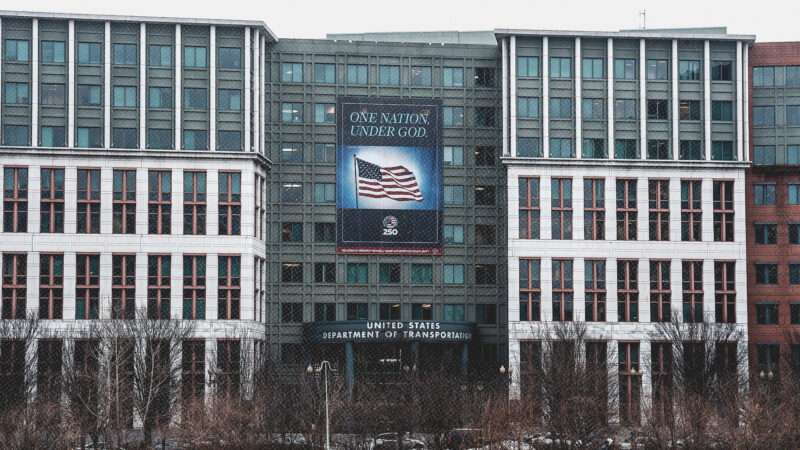
The U.S. Department of Transportation headquarters building in Washington, D.C. | Andrew Leyden/ZUMAPRESS/Newscom

In one of his day-one acts, President Donald Trump ordered all executive branch agencies to “terminate remote work arrangements and require employees to return to work in-person at their respective duty stations on a full-time basis,” barring individual exemptions.

Despite that, a new report found that one department’s office spaces are “significantly underutilized,” and it’s costing taxpayers a fortune.

“The Department of Transportation (DOT) and its component agencies are
underutilizing their office space department-wide,” according to the Government Accountability Office (GAO).

The Utilizing Space Efficiently and Improving Technologies (USE IT) Act, passed in 2023, set a required minimum 60 percent occupancy rate for all federal agencies and empowered the government to “consolidate federal agency headquarters buildings in the National Capital region,” if necessary, to hit that benchmark.

According to the report, when GAO auditors checked DOT facilities between August 25 and September 19, 2025, they “found that 89 percent of DOT’s 189 office buildings, including the DOT and the Federal Aviation Administration (FAA) headquarters complexes, were underutilized,” based on that 60-percent threshold.

It turns out they were not just underused, but drastically so: “Our analysis found that average utilization rates among owned and leased buildings were similar, at 37 and 41 percent, respectively.”

The DOT and FAA headquarters buildings are by far the department’s largest and most expensive: Combined, they total 1.8 million square feet and have an estimated capacity of more than 12,000 employees, with over $100 million in annual rental costs and nearly $25 million in annual operations costs. And yet when surveyed, each building was only about one-third full on any given day.

The DOT’s third most expensive building is One Aviation Plaza in Queens, New York. Despite having an estimated capacity under 1,000 people, the building carries over $15 million in annual rental costs, and yet during the GAO’s survey period, it was only 13 percent occupied.

The report divided all DOT buildings into four categories based on size; of those, the only category that averaged more than 50 percent occupancy was the very smallest facilities, with an average capacity of just 16 people.

This is about more than just sparsely populated offices, though: As with most things that involve the federal government, it’s about huge wastes of taxpayer money.

“DOT’s underutilized office space costs hundreds of millions of dollars annually to lease, operate, and maintain,” the GAO found. “Of the 189 DOT buildings included in our analysis, we found 168 buildings were underutilized, totaling $370 million in annual rental, operations, and maintenance costs.”

Unfortunately, this issue is not new, nor is it confined to just the DOT. In 2023, the GAO surveyed the 24 agencies that use most of the federal government’s buildings, constituting about $2 billion in annual operating costs. It found average occupancy rates between 25 percent or less on the low end, and 49 percent on the high end.

At that time, the DOT was in the second-lowest quartile of agencies that used only around 16 percent of their available space, on average.

One thing the report notes is that the DOT has made no efforts to maximize its existing space, particularly at any of its secondary locations. For example, the DOT operates a number of inferior agencies, but none of them currently share office space with each other. In practice, this means a number of similar agencies in the same department occupy separate, half-empty offices.

The report also notes that certain DOT offices could adopt a desk-sharing system. Even though agencies are required to work in person, many employees in DOT field offices “conduct investigations or inspections at offsite locations, such as airports or airplane manufacturing facilities,” and as a result, they “spend roughly half of their time working offsite.” And yet, the department provides each of them with a dedicated desk that is empty half the time. The GAO notes that a desk reservation system, which the department has resisted, could free up space that currently sits empty.

Granted, the DOT has taken some steps to address the issue. Last year, the department announced plans to move FAA staff into the DOT headquarters and return the FAA’s building to the General Services Administration (GSA). Doing so, the GAO noted, “will allow DOT to avoid paying $56 million annually to GSA for rent, operations and maintenance,” plus “an estimated $131 million in deferred maintenance costs,” depending on what the GSA does with it next. (Ideally, it would sell the building, and many others, freeing up valuable commercial real estate for use in the private sector and saving taxpayers money in the process.)

But right now, those savings are theoretical: The GAO notes that not all FAA staff would move into the DOT building, leaving 950 FAA staffers whom the department hasn’t figured out where to put yet.

Considering the FAA employs more than 45,000 people in total, perhaps they could be relocated into the private sector too?

The post One Federal Agency's Unused Office Space Costs 'Hundreds of Millions of Dollars' Per Year appeared first on Reason.com.

from Latest – Reason.com https://ift.tt/0ejWfo1
via IFTTT

Journal of Free Speech Law: “A Cure Worse than the Disease: Why the EU’s Proposal to Criminalize Hate Speech Violates Freedom of Expression—and Won’t Reduce Intolerance or Extremism,” by Jacob Mchangama & Natalie Alkiviadou

The article is here; the Introduction:

In Germany, an artist and activist was arrested multiple times, once for wearing a Palestinian flag and again for holding a sign that read “from the river to the sea, we demand equality.” In France, a mayor was held criminally liable, not for what he said, but for failing to remove Islamophobic comments posted by others beneath one of his Facebook posts. In Finland, a member of Parliament faced criminal charges for criticizing her church’s support for gay pride events, citing a Bible verse.

Such cases are not exceptional among European Union member states. In many places, they are standard practice.

Yet despite already possessing some of the democratic world’s most expansive and actively enforced hate‑speech laws, the European Commission has proposed adding hate speech to the EU’s list of “EU crimes” under Article 83(1) of the Treaty on the Functioning of the European Union. In 2020, the European Commission (Commission) President Ursula von der Leyen proposed making hate speech and hate crime European Union (EU)-level offenses. The proposal is framed as part of the Union’s broader efforts to promote equality, inclusion, and non-discrimination. Yet it also forms part of a wider trend within EU institutions and Member States, namely a growing belief that expansive restrictions on expression are necessary to protect democratic values, counter extremism, and address social harms.

Since 2021, the Commission has reaffirmed the initiative in formal communications and public statements, with strong support from the European Parliament and other EU bodies, although unanimity in the Council of the European Union has not yet been secured. In its 2026–2030 Anti-Racism Strategy, the Commission signaled that, given the lack of progress, it is considering a legislative initiative to harmonize definitions of online hate offences by drawing on existing areas of crime covered by Article 83(1) of the Treaty on the Functioning of the European Union (TFEU). The shift from treaty expansion to reliance on the existing legal authority of Article 83 reflects not a retreat from harmonization, but a change in legal technique. Where unanimity failed, pursuing similar objectives through digital or computer-crime competences warrants scrutiny as a potential competence-stretching bypassing Member State resistance.

At the time of this report, the proposal has stalled due to a lack of unanimity in the European Council. But the Commission has signaled a narrower, “online‑only” route: a legislative initiative under existing Article 83(1) crime categories (e.g., computer crime) to harmonize definitions of online hate offences. In practice, this would still embed criminal prohibitions more deeply into national criminal law and EU digital enforcement frameworks. It also raises questions about whether speech that might be considered legal when said online suddenly becomes subject to criminal penalties if posted online.

The Commission seeks to justify the new initiative by pointing to an increase in hate speech and hate crimes across the EU. It also highlights divergent national definitions and enforcement practices, arguing that fragmentation undermines victim protection, creates enforcement gaps, and sends “mixed messages” about the seriousness of hate speech. It thus frames the proposal not as a novel expansion but as the logical next step in building a coherent European response that would enable the EU to address serious forms of hate speech more effectively, particularly online.

While it may be unclear how a EU-wide criminalization of hate speech will ultimately take shape, the Commission’s proposal fails to meet the foundational requirements of legality, necessity, and proportionality under both European and international human rights law. It further finds that the empirical assumptions underpinning the initiative are unsubstantiated and, in some respects, contradicted by available evidence.

Legality: The principle of legality requires that criminal offenses be formulated with sufficient clarity and precision to enable individuals to regulate their conduct and to foresee, to a reasonable degree, the legal consequences of their actions. This requirement is especially stringent in the case of speech, because uncertainty itself chills expression.

The European Commission’s proposal offers no conceptualization of “hate speech.” Instead, it relies on broad, vague, and varying moral, identity-based, and sociological categories. The European Parliament has further encouraged the adoption of an open-ended list of protected characteristics, creating a system in which virtually any political, social, or ideological group could invoke criminal law to shield itself from alleged hate speech. If such definitional vagueness is adopted in any subsequent directive, then it will be incompatible with legal certainty, invite arbitrary enforcement, and risk chilling democratic debate on topics of public interest across all 27 Member States.

Necessity: Necessity requires showing that criminalization at the EU level is indispensable, and that less intrusive measures are insufficient to address the identified harm.

The Commission has not demonstrated that EU-level criminalization or harmonization of online hate offences is necessary. Member States already rely on extensive criminal and regulatory tools, including national speech offences, the 2008 Framework Decision on combating racism and xenophobia through criminal law, and the Digital Services Act.

Moreover, the political rationales underpinning the initiative have shifted over time, from the COVID-19 pandemic to post-October 7 tensions, suggesting a sense of urgency driven by the prevailing political climate rather than by a demonstrable legislative need. And empirical research provides little evidence that the criminalization of hate speech reduces hatred or violence. The empirical literature does not establish that broader criminalization reduces hatred or violence in stable democracies, and it identifies plausible counterproductive dynamics (polarization, grievance narratives, displacement). Conversely, stronger expressive freedoms are associated with higher tolerance and lower social conflict in democratic settings.

Proportionality: Proportionality requires that restrictions on expression pursue a legitimate aim using the least intrusive means available. Criminal sanctions represent the most severe form of state interference with speech and therefore demand especially compelling justification. Even under the European Court of Human Rights’ comparatively deferential approach to national hate speech laws, criminal sanctions must remain proportionate and narrowly tailored.

While the Commission’s Communications briefly acknowledge the importance of freedom of expression, they omit core safeguards required under International Human Rights Law, including intent, imminence, and likelihood of harm. The proposal thus falls short of the strict incitement standard set out in Article 20(2) of the International Covenant on Civil and Political Rights, which must conform with the strict requirements for restricting freedom of expression under Article 19. Article 20(2) mandates only the prohibition of any advocacy of national, racial, or religious hatred that constitutes incitement to discrimination, hostility, or violence, as interpreted by the Rabat Plan of Action.

As a result, the proposal risks criminalizing even “shocking, offensive, or disturbing” speech that is protected under Article 10 of the European Convention on Human Rights (the right to freedom of expression). In practice, this could expose journalists, academics, artists, politicians, activists, and others to criminal liability for expression that is currently lawful in many Member States. And because the Digital Services Act defines “illegal content” by reference to EU and national law, an EU-wide regime harmonizing hate speech or online hate offences would expand platform removal and risk mitigation duties at scale, strengthening incentives to over remove lawful but controversial speech—especially where automated systems struggle with context (satire, minority speech, political critique).

An online-only offence would also risk creating a two-tier criminal regime: Speech that is lawful when delivered offline could trigger criminal liability once posted online. Because many contemporary prosecutions concern online comments, Member States would face strong legal and political pressure to align their general criminal codes with the online definition, effectively achieving the criminal law harmonization that some States have resisted. If they do not, the result is unequal treatment and “digital disappearance.” For instance, a lecture could be lawful in a hall and reportable in the press yet be removed from social media (and even expose the speaker or person posting the lecture on social media to prosecution) when uploaded.

International Effects: The proposal also risks reshaping global norms. European approaches to online speech and hate-speech regulation already exert significant influence on countries with weak rule-of‑law protections. Laws in Russia, Turkey, Venezuela, and other jurisdictions have explicitly cited European models when criminalizing or suppressing dissent—even when the effect of implementing the European models in the political systems of those countries is much more speech-restrictive than it would be in Europe. Through the so‑called “Brussels Effect,” an EU‑level regime harmonizing online hate offences would further entrench this dynamic, irrespective of the European Union’s pro‑democratic intentions.

A More Effective and Rights-Compatible Alternative: Considering the broad range of legal tools already available to Member States to address harmful speech, the European Union should prioritize non-punitive interventions such as counterspeech. This method can foster social resilience without compromising the right to freedom of expression, which underpins democratic life and serves as a safeguard against government overreach, even when pursued with well-intentioned aims.

At a time of heightened political polarization and democratic backsliding, the European Union must reaffirm its commitment to open debate, pluralism, and restraint as a cornerstone of democratic society. The Commission’s proposal risks normalizing a model of speech governance that suppresses democratic debate rather than strengthening it. The European Union should regard freedom of expression as an essential safeguard of freedom and democracy—not a “risk” to be managed.

* * *

Rather than strengthening democratic resilience, EU-level criminalization of hate speech or harmonization of online hate offences risks entrenching overbroad enforcement, chilling lawful expression, and amplifying the very social tensions it purports to address. Accordingly, the EU should focus on strengthening rather than weakening freedom of expression and ensure that the criminalization of hate speech is used only as a last resort and in ways that complies strictly with the requirements of legality, necessity and proportionality. The EU should also refocus its crucial efforts to combat hatred and discrimination with an increased emphasis on using non-restrictive means such as counterspeech and education.

Our analysis proceeds from the basic premise that all member states of the EU criminalize certain forms of hate speech and that such criminalization, subject to balancing against the human right to freedom of expression, is both required and compatible with EU law and International Human Rights Law. Accordingly, we assume for our purposes that the repeal of European hate speech laws is both legally and politically unfeasible, even if there are compelling normative and empirical arguments in favor of such a maximalist position. Instead, we examine the proposal through the foundational principles governing restrictions on freedom of expression in European and International Human Rights Law (IHRL): legality, necessity, and proportionality. We assess whether EU-level criminalization is compatible with these standards, whether the need for such a proposal is supported by evidence, and the proposal’s implications for democratic debate, online expression, and Europe’s broader global influence.

In the following Parts, we situate the initiative’s institutional trajectory (Part I); assess its legality, necessity, and proportionality under European and international human rights standards (Part II); analyze Europe’s existing hate-speech landscape and escalation dynamics, including the DSA multiplier (Part III); test the proposal’s empirical premises (Part IV); examine external diffusion through the “Brussels Effect” (Part V); and develop rights-compatible alternatives (Part VI).

The post Journal of Free Speech Law: "A Cure Worse than the Disease: Why the EU's Proposal to Criminalize Hate Speech Violates Freedom of Expression—and Won't Reduce Intolerance or Extremism," by Jacob Mchangama & Natalie Alkiviadou appeared first on Reason.com.

from Latest – Reason.com https://ift.tt/Am8uXgt
via IFTTT

One Federal Agency’s Unused Office Space Costs ‘Hundreds of Millions of Dollars’ Per Year


The U.S. Department of Transportation headquarters building in Washington, D.C. | Andrew Leyden/ZUMAPRESS/Newscom

In one of his day-one acts, President Donald Trump ordered all executive branch agencies to “terminate remote work arrangements and require employees to return to work in-person at their respective duty stations on a full-time basis,” barring individual exemptions.

Despite that, a new report found that one department’s office spaces are “significantly underutilized,” and it’s costing taxpayers a fortune.

“The Department of Transportation (DOT) and its component agencies are
underutilizing their office space department-wide,” according to the Government Accountability Office (GAO).

The Utilizing Space Efficiently and Improving Technologies (USE IT) Act, passed in 2023, set a required minimum 60 percent occupancy rate for all federal agencies and empowered the government to “consolidate federal agency headquarters buildings in the National Capital region,” if necessary, to hit that benchmark.

According to the report, when GAO auditors checked DOT facilities between August 25 and September 19, 2025, they “found that 89 percent of DOT’s 189 office buildings, including the DOT and the Federal Aviation Administration (FAA) headquarters complexes, were underutilized,” based on that 60-percent threshold.

It turns out they were not just underused, but drastically so: “Our analysis found that average utilization rates among owned and leased buildings were similar, at 37 and 41 percent, respectively.”

The DOT and FAA headquarters buildings are by far the department’s largest and most expensive: Combined, they total 1.8 million square feet and have an estimated capacity of more than 12,000 employees, with over $100 million in annual rental costs and nearly $25 million in annual operations costs. And yet when surveyed, each building was only about one-third full on any given day.

The DOT’s third most expensive building is One Aviation Plaza in Queens, New York. Despite having an estimated capacity under 1,000 people, the building carries over $15 million in annual rental costs, and yet during the GAO’s survey period, it was only 13 percent occupied.

The report divided all DOT buildings into four categories based on size; of those, the only category that averaged more than 50 percent occupancy was the very smallest facilities, with an average capacity of just 16 people.

This is about more than just sparsely populated offices, though: As with most things that involve the federal government, it’s about huge wastes of taxpayer money.

“DOT’s underutilized office space costs hundreds of millions of dollars annually to lease, operate, and maintain,” the GAO found. “Of the 189 DOT buildings included in our analysis, we found 168 buildings were underutilized, totaling $370 million in annual rental, operations, and maintenance costs.”

Unfortunately, this issue is not new, nor is it confined to just the DOT. In 2023, the GAO surveyed the 24 agencies that use most of the federal government’s buildings, constituting about $2 billion in annual operating costs. It found average occupancy rates between 25 percent or less on the low end, and 49 percent on the high end.

At that time, the DOT was in the second-lowest quartile of agencies that used only around 16 percent of their available space, on average.

One thing the report notes is that the DOT has made no efforts to maximize its existing space, particularly at any of its secondary locations. For example, the DOT operates a number of inferior agencies, but none of them currently share office space with each other. In practice, this means a number of similar agencies in the same department occupy separate, half-empty offices.

The report also notes that certain DOT offices could adopt a desk-sharing system. Even though agencies are required to work in person, many employees in DOT field offices “conduct investigations or inspections at offsite locations, such as airports or airplane manufacturing facilities,” and as a result, they “spend roughly half of their time working offsite.” And yet, the department provides each of them with a dedicated desk that is empty half the time. The GAO notes that a desk reservation system, which the department has resisted, could free up space that currently sits empty.

Granted, the DOT has taken some steps to address the issue. Last year, the department announced plans to move FAA staff into the DOT headquarters and return the FAA’s building to the General Services Administration (GSA). Doing so, the GAO noted, “will allow DOT to avoid paying $56 million annually to GSA for rent, operations and maintenance,” plus “an estimated $131 million in deferred maintenance costs,” depending on what the GSA does with it next. (Ideally, it would sell the building, and many others, freeing up valuable commercial real estate for use in the private sector and saving taxpayers money in the process.)

But right now, those savings are theoretical: The GAO notes that not all FAA staff would move into the DOT building, leaving 950 FAA staffers whom the department hasn’t figured out where to put yet.

Considering the FAA employs more than 45,000 people in total, perhaps they could be relocated into the private sector too?

The post One Federal Agency's Unused Office Space Costs 'Hundreds of Millions of Dollars' Per Year appeared first on Reason.com.

from Latest – Reason.com https://ift.tt/0ejWfo1
via IFTTT

Are the Epstein Files a Moral Panic?

Journalist Michael Tracey and Pace University’s Marcella Szablewicz debate the resolution, “The Jeffrey Epstein scandal has become a case of moral panic.”

Taking the affirmative is Tracey, an independent journalist, political commentator, and media critic known for his skepticism of the Epstein narrative and what he calls the surrounding “mythology” and hysteria.

Taking the negative is Szablewicz, an associate professor of communication and media studies at Pace University’s Dyson College of Arts and Sciences. Her research focuses on digital media and media moral panics.

The debate is moderated by Soho Forum Director Gene Epstein.

The post Are the Epstein Files a Moral Panic? appeared first on Reason.com.

from Latest – Reason.com https://ift.tt/iIEbptX
via IFTTT