Funding College Sports With Private Equity Is Way Better Than Hitting Students With Higher Fees


University of Utah mascot Swoop holding a football and sitting on top of a pile of cash, in front of a black and white background overlooking Rice–Eccles Stadium and the surrounding area. | Illustration: Eddie Marshall | Nano Banana

Hello and welcome to another edition of Free Agent! Keep your helmets on this week, it could be a bumpy ride.

Let’s talk about everyone’s favorite evil bogeyman, private equity funding, and how it’s slowly making its way into college sports. Then we’ll talk about a fun way to make the NBA Cup more interesting and close with a quick hit on World Cup ticket prices, again.

Locker Room Links

Insane Fees

When the University of Utah announced that it would spin off assets from its athletic department into a new for-profit entity, with a private equity firm owning a minority, the reactions were predictable.

Eye-roll-inducing jokes were aplenty. One person said: “Pretty soon Utah football will be eating Costco hotdogs and flying Spirit. Players will get one helmet but must purchase rest of pads on their own.” Another joked that the head coaching job was being outsourced “to a remote dude in India.” Maybe the football stadium will even be sold off:

What all the reactions seemed to miss was that the deal might be great for a certain group of people: Utah students (or the parents who pay for their tuition and fees, anyway).

A full-time undergraduate student at Utah must currently spend $83 a semester in fees to support the athletic department. That’s not so bad, considering a year at the school can reach up to $40,000 including direct and indirect costs. Most schools, from the Power Four conferences to mid-majors, do the same. The fees are seemingly higher at less athletically successful schools, though, and sometimes nonexistent at frequent winners like Alabama. A full-time student at the University of Maryland is paying a $199.50 athletics fee per semester because a “healthy and sustainable Department of Intercollegiate Athletics (ICA) is an essential part of the University community.”

Meanwhile, at James Madison University (who I root for vicariously through my alumna wife), students pay a whopping $1,518 fee per semester for athletics, providing nearly three-quarters of the athletic department’s revenues. That may have helped JMU go from the Football Championship Subdivision (FCS) to the College Football Playoff in just four seasons, but that fee is higher than every other student athletics fee in the playoff combined—even when you multiply the rest by four.

“JMU is essentially taxing its students to help fund its big-time college athletic ambitions — and that clearly seems to be paying off, at least in terms of this year’s playoff,” as Dwayne Yancey wrote while reporting on the fees. “Why, though, must students be forced to pay for that? If deep-pocketed boosters (the adjective knocks me out) or the free market don’t supply the funds for JMU to play at that level, why must my alma mater shake down teenagers (or their parents) to make up the difference?”

Even students at some FCS schools are paying through the nose. At William & Mary, students pay $1,170.50 per semester for intercollegiate athletics, plus $180.50 per semester for their arena’s operations and $16.50 per semester for their tennis center. Thankfully, that’s down from the $1,992 per semester they were paying for intercollegiate athletics in the 2018–19 school year.

College sports basically serve as marketing tools to woo more applicants, who pay more tuition and fees, whose fees partially go toward athletics, and so on and so forth (I touched on this more here). A longrunning funding race has schools looking for more and more ways to bankroll the best players, coaches, and facilities that money can buy. If school administrators are going to be in that race, it’s far better for the money to come from private equity than milking it out of poor students year after year.

Cup It Up

While the NBA Cup final is Tuesday night, the league is already considering some changes to its in-season tournament. It won’t be going away anytime soon because of its inclusion in the league’s agreement with the players union and Amazon’s media rights deal. But the league is moving semifinal games back to home venues and weighing which cities other than Las Vegas could host the final (I wonder what dissatisfaction with the arena atmosphere in Vegas means for the city’s expansion team hopes).

But tinkering around the edges of the tournament won’t give the league the supercharged results it’s hoping for. Three big changes might, though: expanding the tournament to non-NBA teams, shortening games to 40 minutes, and going to single elimination.

Consider what we love about March Madness, contrary to Joel Klatt’s awful take: the upsets and buzzer beaters.

Even the best NBA team losing to the worst isn’t really a huge upset. That’s like if a bad SEC team upsets Duke. What we really want to see is 15-seed Lehigh beating Duke. Add in G League teams so we can watch the Sioux Falls Skyforce play against the NBA. Better yet, make every G League’s first-round matchup against their NBA affiliate. Or go really big, like 128 teams big, and throw in the 20 EuroLeague teams, 10 teams from Australia’s National Basketball League, 10 more from the Canadian Elite Basketball League, and 14 more from Mexico’s Liga Nacional de Baloncesto Profesional and you’re getting close. (Bet you didn’t know some of those leagues existed.) Imagine the global media rights deal if the rest of the world got to watch their basketball teams go up against NBA stars—even if they’re probably going to get crushed.

Of course, the talent gap between NBA teams and everyone else is large. That’s where shortened games come in (those also help get the players union on board). One reason we see more upsets in college basketball than the NBA is the shortened clock. Having 8 fewer minutes in a game makes the score more random and gives the better team less time to come back if they fall behind early. Less time in the game also means a closer score at the end, making tight scores and buzzer beaters more likely.

None of that matters, though, unless the tournament is single elimination. We love to see Lehigh beat Duke because it means Duke is eliminated and Lehigh goes on, not because it’s just a ding to Duke in group standings.

If the NBA can do all that, I’ll tune in instead of just paying attention when I happen to be in a sports bar when my Pistons are playing.

Feeling Lucky?

The World Cup’s high ticket prices are in the news—again. Even though I thought I’d said everything I have to say about it here, here, and here, let’s go at it again.

When I posted on X that “I would rather have a passionate traveling fan pay $500 to get in than a casual person from the local area pay $50,” I got a load of responses displeased with me and FIFA (who, clearly, I’m not a big fan of). Some said fans from local areas weren’t going to go, some said traveling fans from abroad weren’t going to go, some said the stadiums will be empty, some said wealthier people aren’t passionate about sports, and some said FIFA should have designated more tickets to a given game to fans from the participating countries (totally fair, in my opinion).

Apparently my contention that willingness to sacrifice more money is a sign of more passion did not come across very well, nor did the idea that a high ticket price is only a small marginal cost to a foreign traveler who’s already paying thousands of dollars for flights and hotels.

Despite all that, the issue is really simple. If FIFA isn’t going to charge high prices for matches, then the tickets will largely get distributed by random lottery. Everyone who’s unhappy with ticket prices seems to think they’d be lucky enough to win those tickets. In reality, if FIFA is going to get 5 million ticket requests in 24 hours, most of them wouldn’t.

Replay of the Week

Just a 44-year-old grandfather with 10 kids throwing a touchdown pass, no big deal. (Completing 18 of 27 with just one interception is not too shabby.)

That’s all for this week. Enjoy watching the real game of the weekend, Commanders against Eagles on Saturday (shoutout to subscribers Tony and Santoine).

The post Funding College Sports With Private Equity Is Way Better Than Hitting Students With Higher Fees appeared first on Reason.com.

from Latest – Reason.com https://ift.tt/DI6Pi8q
via IFTTT

ISIS Gunmen


Flowers laid in memorial at Bondi Beach | Anna Arkayeva/ZUMAPRESS/Newscom

Gunmen in Sydney appear to have been motivated by ISIS: Australian Prime Minister Anthony Albanese said yesterday in a news conference that the Bondi Beach shooters—who murdered more than a dozen Jews celebrating Hanukkah out on the beach—appear to have been radicalized by the Islamic State. “Radical perversion of Islam is absolutely a problem,” said Albanese. The car believed to be driven by the suspects, Indian national Sajid Akram and his Australian-born son Naveed, had multiple homemade ISIS flags in it, as well as improvised explosive devices that were not detonated.

“Australian officials said Tuesday that both the father and son had traveled to the Philippines last month, and that the reasons for that trip were being investigated,” per The New York Times. It’s not clear yet whether that trip had anything to do with their radicalization or their planning of this horrific crime, but it seems possible, given where in the country they traveled. (“The Philippine Bureau of Immigration said they had arrived in the country together on Nov. 1, reporting their final destination as Davao, a city considered the gateway to the south of the country. Parts of the southern Philippines remain a center for Islamic State militant activity. The two men left the country on Nov. 28.”)

Back in 2019, the son, Naveed, came under substantial police scrutiny. “Naveed Akram was closely connected to Isaac El Matari, who was arrested that year and later jailed for planning an IS insurgency as the self-declared Australian commander of the terrorist group,” reports an Australian network. “Matari was part of an IS cell with several other Sydney men who have since been convicted of terrorist offences and were also close to Naveed Akram, according to sources with close knowledge of the matter.” Naveed apparently tried to study Arabic and learn Koranic recitation back in 2019.

Sajid Akram was a licensed gun owner in Australia due to his membership in a shooting club.


Scenes from New York: As Zohran Mamdani, the mayor-elect of New York City, prepares to go to battle in the State Capitol over his campaign promise to provide universal government-funded child care, he appears to have New Yorkers on his side,” reports The New York Times. “A new poll released by Siena University on Tuesday found that nearly two in three voters across the state favor the new benefit and would support Mr. Mamdani’s plan to pay for it by increasing taxes on those earning more than $1 million a year.”

This is both predictable and disappointing. People love free things (or, rather, things they perceive to be free). I have a forthcoming magazine feature and video essay on why Mamdani’s child care plan is doomed to fail, in part because Bill de Blasio’s universal child care plan has been so roiled by inefficiency and bad seat allocation. But one thing that New Yorkers just seem totally unable to grasp: Child care is expensive because human labor is expensive.

“Child care is a prime example of the Baumol effect,” writes economic policy analyst Jordan McGillis in The Washington Post, “in which prices for labor-intensive services rise even when worker productivity stays flat. What makes this possible is that wages in those sectors have to increase for employers (here, parents) to compete for workers who might otherwise be enticed to sectors further up the wage table.” Worker pay alone tends to be about 60 percent to 80 percent of a standard day care’s operating budget. 

And Mamdani hopes to expand the existing universal child care plan to the youngest age groups—infants 6 weeks and older—which will require the highest caregiver-to-child ratios. There’s just no way to make the math work, and there’s no reason why the absolute richest people should subsidize the also-rich people, which is what the universal nature of the system leads to. But de Blasio said the quiet part out loud several years ago, when chatting with a reporter from The Atlantic: “Anything that has a broad constituency will also have more sustainability.” This has become, in some sense, the mantra of the modern Democratic party: The wealthyish, highly educated based likes universal child care because they too stand to benefit from it (blissfully unaware of how this might drive prices up). Means-tested is out; universal social welfare programs are in.


QUICK HITS

  • Catch me on this week‘s Reason Roundtable:

Forgive the puffy 38-weeks-pregnant face and don’t yell at me for my, um, slight interest in Venezuelan regime change or my Jesus-y entertainment recommendation. He is the REASON FOR THE SEASON after all!

  • What a sad, mean, ugly post:

  • More details on the victims lost in the Brown University shooting: “Ella Cook, a math whiz from Alabama with a deep Christian faith and plans to study in Paris next year, and Mukhammad Aziz Umurzokov, the son of doctors from Uzbekistan with dreams of becoming a neurosurgeon, were shot in a lecture hall during a review for an economics final,” per The Wall Street Journal.
  • The Brother I Lost,” by Megan McArdle at The Dispatch. Long, worthwhile musing on abortion and dying parents:

  • The generational dynamics at play during the DEI years:

The post ISIS Gunmen appeared first on Reason.com.

from Latest – Reason.com https://ift.tt/4xVs2eQ
via IFTTT

Funding College Sports With Private Equity Is Way Better Than Hitting Students With Higher Fees


University of Utah mascot Swoop holding a football and sitting on top of a pile of cash, in front of a black and white background overlooking Rice–Eccles Stadium and the surrounding area. | Illustration: Eddie Marshall | Nano Banana

Hello and welcome to another edition of Free Agent! Keep your helmets on this week, it could be a bumpy ride.

Let’s talk about everyone’s favorite evil bogeyman, private equity funding, and how it’s slowly making its way into college sports. Then we’ll talk about a fun way to make the NBA Cup more interesting and close with a quick hit on World Cup ticket prices, again.

Locker Room Links

Insane Fees

When the University of Utah announced that it would spin off assets from its athletic department into a new for-profit entity, with a private equity firm owning a minority, the reactions were predictable.

Eye-roll-inducing jokes were aplenty. One person said: “Pretty soon Utah football will be eating Costco hotdogs and flying Spirit. Players will get one helmet but must purchase rest of pads on their own.” Another joked that the head coaching job was being outsourced “to a remote dude in India.” Maybe the football stadium will even be sold off:

What all the reactions seemed to miss was that the deal might be great for a certain group of people: Utah students (or the parents who pay for their tuition and fees, anyway).

A full-time undergraduate student at Utah must currently spend $83 a semester in fees to support the athletic department. That’s not so bad, considering a year at the school can reach up to $40,000 including direct and indirect costs. Most schools, from the Power Four conferences to mid-majors, do the same. The fees are seemingly higher at less athletically successful schools, though, and sometimes nonexistent at frequent winners like Alabama. A full-time student at the University of Maryland is paying a $199.50 athletics fee per semester because a “healthy and sustainable Department of Intercollegiate Athletics (ICA) is an essential part of the University community.”

Meanwhile, at James Madison University (who I root for vicariously through my alumna wife), students pay a whopping $1,518 fee per semester for athletics, providing nearly three-quarters of the athletic department’s revenues. That may have helped JMU go from the Football Championship Subdivision (FCS) to the College Football Playoff in just four seasons, but that fee is higher than every other student athletics fee in the playoff combined—even when you multiply the rest by four.

“JMU is essentially taxing its students to help fund its big-time college athletic ambitions — and that clearly seems to be paying off, at least in terms of this year’s playoff,” as Dwayne Yancey wrote while reporting on the fees. “Why, though, must students be forced to pay for that? If deep-pocketed boosters (the adjective knocks me out) or the free market don’t supply the funds for JMU to play at that level, why must my alma mater shake down teenagers (or their parents) to make up the difference?”

Even students at some FCS schools are paying through the nose. At William & Mary, students pay $1,170.50 per semester for intercollegiate athletics, plus $180.50 per semester for their arena’s operations and $16.50 per semester for their tennis center. Thankfully, that’s down from the $1,992 per semester they were paying for intercollegiate athletics in the 2018–19 school year.

College sports basically serve as marketing tools to woo more applicants, who pay more tuition and fees, whose fees partially go toward athletics, and so on and so forth (I touched on this more here). A longrunning funding race has schools looking for more and more ways to bankroll the best players, coaches, and facilities that money can buy. If school administrators are going to be in that race, it’s far better for the money to come from private equity than milking it out of poor students year after year.

Cup It Up

While the NBA Cup final is Tuesday night, the league is already considering some changes to its in-season tournament. It won’t be going away anytime soon because of its inclusion in the league’s agreement with the players union and Amazon’s media rights deal. But the league is moving semifinal games back to home venues and weighing which cities other than Las Vegas could host the final (I wonder what dissatisfaction with the arena atmosphere in Vegas means for the city’s expansion team hopes).

But tinkering around the edges of the tournament won’t give the league the supercharged results it’s hoping for. Three big changes might, though: expanding the tournament to non-NBA teams, shortening games to 40 minutes, and going to single elimination.

Consider what we love about March Madness, contrary to Joel Klatt’s awful take: the upsets and buzzer beaters.

Even the best NBA team losing to the worst isn’t really a huge upset. That’s like if a bad SEC team upsets Duke. What we really want to see is 15-seed Lehigh beating Duke. Add in G League teams so we can watch the Sioux Falls Skyforce play against the NBA. Better yet, make every G League’s first-round matchup against their NBA affiliate. Or go really big, like 128 teams big, and throw in the 20 EuroLeague teams, 10 teams from Australia’s National Basketball League, 10 more from the Canadian Elite Basketball League, and 14 more from Mexico’s Liga Nacional de Baloncesto Profesional and you’re getting close. (Bet you didn’t know some of those leagues existed.) Imagine the global media rights deal if the rest of the world got to watch their basketball teams go up against NBA stars—even if they’re probably going to get crushed.

Of course, the talent gap between NBA teams and everyone else is large. That’s where shortened games come in (those also help get the players union on board). One reason we see more upsets in college basketball than the NBA is the shortened clock. Having 8 fewer minutes in a game makes the score more random and gives the better team less time to come back if they fall behind early. Less time in the game also means a closer score at the end, making tight scores and buzzer beaters more likely.

None of that matters, though, unless the tournament is single elimination. We love to see Lehigh beat Duke because it means Duke is eliminated and Lehigh goes on, not because it’s just a ding to Duke in group standings.

If the NBA can do all that, I’ll tune in instead of just paying attention when I happen to be in a sports bar when my Pistons are playing.

Feeling Lucky?

The World Cup’s high ticket prices are in the news—again. Even though I thought I’d said everything I have to say about it here, here, and here, let’s go at it again.

When I posted on X that “I would rather have a passionate traveling fan pay $500 to get in than a casual person from the local area pay $50,” I got a load of responses displeased with me and FIFA (who, clearly, I’m not a big fan of). Some said fans from local areas weren’t going to go, some said traveling fans from abroad weren’t going to go, some said the stadiums will be empty, some said wealthier people aren’t passionate about sports, and some said FIFA should have designated more tickets to a given game to fans from the participating countries (totally fair, in my opinion).

Apparently my contention that willingness to sacrifice more money is a sign of more passion did not come across very well, nor did the idea that a high ticket price is only a small marginal cost to a foreign traveler who’s already paying thousands of dollars for flights and hotels.

Despite all that, the issue is really simple. If FIFA isn’t going to charge high prices for matches, then the tickets will largely get distributed by random lottery. Everyone who’s unhappy with ticket prices seems to think they’d be lucky enough to win those tickets. In reality, if FIFA is going to get 5 million ticket requests in 24 hours, most of them wouldn’t.

Replay of the Week

Just a 44-year-old grandfather with 10 kids throwing a touchdown pass, no big deal. (Completing 18 of 27 with just one interception is not too shabby.)

That’s all for this week. Enjoy watching the real game of the weekend, Commanders against Eagles on Saturday (shoutout to subscribers Tony and Santoine).

The post Funding College Sports With Private Equity Is Way Better Than Hitting Students With Higher Fees appeared first on Reason.com.

from Latest – Reason.com https://ift.tt/DI6Pi8q
via IFTTT

ISIS Gunmen


Flowers laid in memorial at Bondi Beach | Anna Arkayeva/ZUMAPRESS/Newscom

Gunmen in Sydney appear to have been motivated by ISIS: Australian Prime Minister Anthony Albanese said yesterday in a news conference that the Bondi Beach shooters—who murdered more than a dozen Jews celebrating Hanukkah out on the beach—appear to have been radicalized by the Islamic State. “Radical perversion of Islam is absolutely a problem,” said Albanese. The car believed to be driven by the suspects, Indian national Sajid Akram and his Australian-born son Naveed, had multiple homemade ISIS flags in it, as well as improvised explosive devices that were not detonated.

“Australian officials said Tuesday that both the father and son had traveled to the Philippines last month, and that the reasons for that trip were being investigated,” per The New York Times. It’s not clear yet whether that trip had anything to do with their radicalization or their planning of this horrific crime, but it seems possible, given where in the country they traveled. (“The Philippine Bureau of Immigration said they had arrived in the country together on Nov. 1, reporting their final destination as Davao, a city considered the gateway to the south of the country. Parts of the southern Philippines remain a center for Islamic State militant activity. The two men left the country on Nov. 28.”)

Back in 2019, the son, Naveed, came under substantial police scrutiny. “Naveed Akram was closely connected to Isaac El Matari, who was arrested that year and later jailed for planning an IS insurgency as the self-declared Australian commander of the terrorist group,” reports an Australian network. “Matari was part of an IS cell with several other Sydney men who have since been convicted of terrorist offences and were also close to Naveed Akram, according to sources with close knowledge of the matter.” Naveed apparently tried to study Arabic and learn Koranic recitation back in 2019.

Sajid Akram was a licensed gun owner in Australia due to his membership in a shooting club.


Scenes from New York: As Zohran Mamdani, the mayor-elect of New York City, prepares to go to battle in the State Capitol over his campaign promise to provide universal government-funded child care, he appears to have New Yorkers on his side,” reports The New York Times. “A new poll released by Siena University on Tuesday found that nearly two in three voters across the state favor the new benefit and would support Mr. Mamdani’s plan to pay for it by increasing taxes on those earning more than $1 million a year.”

This is both predictable and disappointing. People love free things (or, rather, things they perceive to be free). I have a forthcoming magazine feature and video essay on why Mamdani’s child care plan is doomed to fail, in part because Bill de Blasio’s universal child care plan has been so roiled by inefficiency and bad seat allocation. But one thing that New Yorkers just seem totally unable to grasp: Child care is expensive because human labor is expensive.

“Child care is a prime example of the Baumol effect,” writes economic policy analyst Jordan McGillis in The Washington Post, “in which prices for labor-intensive services rise even when worker productivity stays flat. What makes this possible is that wages in those sectors have to increase for employers (here, parents) to compete for workers who might otherwise be enticed to sectors further up the wage table.” Worker pay alone tends to be about 60 percent to 80 percent of a standard day care’s operating budget. 

And Mamdani hopes to expand the existing universal child care plan to the youngest age groups—infants 6 weeks and older—which will require the highest caregiver-to-child ratios. There’s just no way to make the math work, and there’s no reason why the absolute richest people should subsidize the also-rich people, which is what the universal nature of the system leads to. But de Blasio said the quiet part out loud several years ago, when chatting with a reporter from The Atlantic: “Anything that has a broad constituency will also have more sustainability.” This has become, in some sense, the mantra of the modern Democratic party: The wealthyish, highly educated based likes universal child care because they too stand to benefit from it (blissfully unaware of how this might drive prices up). Means-tested is out; universal social welfare programs are in.


QUICK HITS

  • Catch me on this week‘s Reason Roundtable:

Forgive the puffy 38-weeks-pregnant face and don’t yell at me for my, um, slight interest in Venezuelan regime change or my Jesus-y entertainment recommendation. He is the REASON FOR THE SEASON after all!

  • What a sad, mean, ugly post:

  • More details on the victims lost in the Brown University shooting: “Ella Cook, a math whiz from Alabama with a deep Christian faith and plans to study in Paris next year, and Mukhammad Aziz Umurzokov, the son of doctors from Uzbekistan with dreams of becoming a neurosurgeon, were shot in a lecture hall during a review for an economics final,” per The Wall Street Journal.
  • The Brother I Lost,” by Megan McArdle at The Dispatch. Long, worthwhile musing on abortion and dying parents:

  • The generational dynamics at play during the DEI years:

The post ISIS Gunmen appeared first on Reason.com.

from Latest – Reason.com https://ift.tt/4xVs2eQ
via IFTTT

Franklin the Turtle Sues in the Court of Federal Claims for a Reasonable Licensing Fee (Well, Not Yet)

There’s been some talk about whether the Administration’s use of Franklin the Turtle in various memes (e.g., “Franklin Becomes a Deportation Judge,” shown above) is copyright infringement. My sense is that it probably would be: It uses a copyrighted character, and it likely isn’t a fair use, despite its noncommercial character.

To oversimplify vastly, use of a work to make fun of the work itself (or to otherwise comment on it) generally tends to be fair use, see Campbell v. Acuff-Rose Music (1994): You just can’t have an effective parody or commentary on a work without including enough of the underlying work. But use of a work to comment on something else, even in a humorous way, generally tends not to be fair use. See, e.g., Dr. Seuss Enterprises v. Penguin Books (9th Cir. 1997). The question for parody fair use purposes is generally whether the use is “reasonably necessary to achieve the user’s new purpose” and “‘needs to mimic [the] original to make its point,'” see Andy Warhol Foundation v. Goldsmith (2023); that seems not to be so here. To be sure, the fair use inquiry is notoriously mushy, so it’s hard to predict for certain; but that’s my best guess.

At the same time, even if this is an infringement and not a fair use, the usual panoply of copyright remedies that would normally be available—including injunctions, potentially massive statutory damages, and potential attorney fees—will be largely unavailable. A federal statute, 28 U.S.C. § 1498(b), provides that the exclusive remedies for this are just actual damages (or, if the owner elects, the minimum statutory damages, which will likely be $750), and that the plaintiff has to sue in the Court of Federal Claims to get them. No injunctions; no recovery of attorney fees or costs. And actual damages would likely just be a reasonable license fee:

Normally, a copyright owner proves its entitlement to damages under the Copyright Act through evidence of lost sales or diminished copyright value. But when, as here, copyright infringement has not produced lost sales or opportunities or diminished the copyright’s value, damages are instead calculated based on a reasonable license fee, which we determine using a hypothetical negotiation. We use this method to prevent the “infringer [from] get[ting] his taking for free” and to ensure that copyright owners are not “left uncompensated for the illegal taking of something of value.” …

We must assume that this negotiation is between a willing buyer and a willing seller. This means that sellers cannot charge what they would like to as if “unconstrained by reality,” and buyers cannot simply name a price that they “would prefer to pay.” While we need not assess the license fee with “mathematical exactness,” we must be able to reasonably approximate it. Still, “[s]ome difficulty in quantifying the damages attributable to the infringement should not bar recovery.” …

Essentially, the statute lets the government implement a sort of taking of the nonexclusive rights to use a copyrighted work: The government can use this intellectual property, but has to pay just compensation, which will likely be fairly modest in this case. To quote the Court of Federal Claims as to the similar question of patent infringement (covered by 28 U.S.C. § 1498(a)),

The government’s unauthorized “use or manufacture” [of a patented work] under Subsection 1498(a) is analogous to a taking of property under the Fifth Amendment to the Constitution. The government “takes” a non-exclusive and compulsory license to a United States patent “as of the instant the invention is first used or manufactured by the [g]overnment.”

Analogously, when the government uses a copyrighted work in a way that isn’t a fair use, it takes a nonexclusive and compulsory license to the work, and must pay actual damages or $750, whichever is higher.

It also seems to me that there’d be no traditional trademark infringement claim because there’s no real likelihood of confusion as to source or endorsement. And a trademark dilution claim would fail because the use is noncommercial. Finally, I don’t think that the fact that the copyrighted work or trademark was created in Canada affects the analysis.

So whatever one might think of the ethics or taste of what the government is doing here, it appears to be essentially authorized under American law, but with the requirement of modest compensation.

The post Franklin the Turtle Sues in the Court of Federal Claims for a Reasonable Licensing Fee (Well, Not Yet) appeared first on Reason.com.

from Latest – Reason.com https://ift.tt/CnqbUIp
via IFTTT

Franklin the Turtle Sues in the Court of Federal Claims for a Reasonable Licensing Fee (Well, Not Yet)

There’s been some talk about whether the Administration’s use of Franklin the Turtle in various memes (e.g., “Franklin Becomes a Deportation Judge,” shown above) is copyright infringement. My sense is that it probably would be: It uses a copyrighted character, and it likely isn’t a fair use, despite its noncommercial character.

To oversimplify vastly, use of a work to make fun of the work itself (or to otherwise comment on it) generally tends to be fair use, see Campbell v. Acuff-Rose Music (1994): You just can’t have an effective parody or commentary on a work without including enough of the underlying work. But use of a work to comment on something else, even in a humorous way, generally tends not to be fair use. See, e.g., Dr. Seuss Enterprises v. Penguin Books (9th Cir. 1997). The question for parody fair use purposes is generally whether the use is “reasonably necessary to achieve the user’s new purpose” and “‘needs to mimic [the] original to make its point,'” see Andy Warhol Foundation v. Goldsmith (2023); that seems not to be so here. To be sure, the fair use inquiry is notoriously mushy, so it’s hard to predict for certain; but that’s my best guess.

At the same time, even if this is an infringement and not a fair use, the usual panoply of copyright remedies that would normally be available—including injunctions, potentially massive statutory damages, and potential attorney fees—will be largely unavailable. A federal statute, 28 U.S.C. § 1498(b), provides that the exclusive remedies for this are just actual damages (or, if the owner elects, the minimum statutory damages, which will likely be $750), and that the plaintiff has to sue in the Court of Federal Claims to get them. No injunctions; no recovery of attorney fees or costs. And actual damages would likely just be a reasonable license fee:

Normally, a copyright owner proves its entitlement to damages under the Copyright Act through evidence of lost sales or diminished copyright value. But when, as here, copyright infringement has not produced lost sales or opportunities or diminished the copyright’s value, damages are instead calculated based on a reasonable license fee, which we determine using a hypothetical negotiation. We use this method to prevent the “infringer [from] get[ting] his taking for free” and to ensure that copyright owners are not “left uncompensated for the illegal taking of something of value.” …

We must assume that this negotiation is between a willing buyer and a willing seller. This means that sellers cannot charge what they would like to as if “unconstrained by reality,” and buyers cannot simply name a price that they “would prefer to pay.” While we need not assess the license fee with “mathematical exactness,” we must be able to reasonably approximate it. Still, “[s]ome difficulty in quantifying the damages attributable to the infringement should not bar recovery.” …

Essentially, the statute lets the government implement a sort of taking of the nonexclusive rights to use a copyrighted work: The government can use this intellectual property, but has to pay just compensation, which will likely be fairly modest in this case. To quote the Court of Federal Claims as to the similar question of patent infringement (covered by 28 U.S.C. § 1498(a)),

The government’s unauthorized “use or manufacture” [of a patented work] under Subsection 1498(a) is analogous to a taking of property under the Fifth Amendment to the Constitution. The government “takes” a non-exclusive and compulsory license to a United States patent “as of the instant the invention is first used or manufactured by the [g]overnment.”

Analogously, when the government uses a copyrighted work in a way that isn’t a fair use, it takes a nonexclusive and compulsory license to the work, and must pay actual damages or $750, whichever is higher.

It also seems to me that there’d be no traditional trademark infringement claim because there’s no real likelihood of confusion as to source or endorsement. And a trademark dilution claim would fail because the use is noncommercial. Finally, I don’t think that the fact that the copyrighted work or trademark was created in Canada affects the analysis.

So whatever one might think of the ethics or taste of what the government is doing here, it appears to be essentially authorized under American law, but with the requirement of modest compensation.

The post Franklin the Turtle Sues in the Court of Federal Claims for a Reasonable Licensing Fee (Well, Not Yet) appeared first on Reason.com.

from Latest – Reason.com https://ift.tt/CnqbUIp
via IFTTT

Privacy, Doxing, Stalking, and People Who Love Dogs Too Much

Wednesday’s opinion in Davidson v. State, by Texas Court of Appeals (Tyler) Chief Justice James Worthen joined by Justice Brian Hoyle, upholds the stalking conviction of animal rights activist Davidson for actions targeting Hicks.

Hicks owned dogs, and was also a “county extension agent [for Texas A&M],” whose job “entails advocating for agriculture, and his job duties include engaging with the public and encouraging members of the public regarding best agricultural practices, such as caring for animals. Davidson thought Hicks’ dogs lacked adequate shelter in a severe winter storm, so she complained to the local police department. The department checked on the dogs several times, concluded that all was well, concluded Hicks wasn’t violating the law, and “informed Appellant that Hicks was providing the dogs with adequate shelter.”

But Davidson was apparently unsatisfied. She posted items on Facebook and sent private messages “comments, and private messages.” She also apparently “drove past Hicks’s residence and took photographs,” as did other people. The police got 20 calls about Hicks, most apparently not from Davidson. “Hicks reported receiving an anonymous package in the mail that ‘was a glitter bomb, like a prank package[ ]’ that contained penis-shaped confetti and a card that said, ‘you have a small penis.'” “Hicks told Smith that ‘people were trying to contact his employer trying to get him fired.'”

During this time, someone stole Hicks’ dogs. “Appellant was not the perpetrator, and the perpetrator did not mention Appellant’s name when police interviewed him,” but Appellant praised the thefts in a Facebook post, and “stated that someone saw over 3,000 shares of her Facebook post, drove to Crockett, and stole Hicks’s four dogs from his yard.” There were more incidents as well; see the (long) opinion for more details.

Davidson was convicted of stalking; “the trial judge assessed punishment at ten years of imprisonment, but suspended imposition of sentence and placed Appellant on community supervision for ten years.” The relevant part of the stalking statute, as limited by the indictment (with some oversimplification by me), made it a crime to

on more than one occasion and pursuant to the same scheme or course of conduct that is directed specifically at another person, knowingly engage[] in conduct that:

(1) … the actor knows or reasonably should know the other person will regard as threatening … that an offense will be committed against the other person’s property;

(2 [& 3]) causes the other person [or] a member of the other person’s family or household … to be [reasonably] placed … in fear that an offense will be committed against the other person’s property, or to feel harassed, annoyed, alarmed, abused, tormented, embarrassed, or offended ….

The appellate court, among other things, rejected Davidson’s as-applied First Amendment challenge to the conviction. It didn’t rely on the “true threats” First Amendment exception, perhaps because the relevant part of the statute didn’t call for a showing of recklessly threatening speech (as the Supreme Court required in Counterman v. Colorado (2023)), but instead upheld the conviction on the grounds that “Even if a statute is content based, the legislature may regulate speech if it invades substantial privacy rights in an essentially intolerable manner”:

[E]ven after the Chief of Police informed Appellant in February 2021 that Hicks’s dogs had adequate shelter, told her that Hicks was not violating any laws, and advised her to leave Hicks alone, Appellant continued to (1) drive by Hicks’s home while recording video and taking photographs, (2) disseminate Hicks’s home address to others, (3) encourage others to drive by Hicks’s home, (4) contact law enforcement regarding Hicks’s dogs, and (5) encourage others to contact law enforcement. Hicks and [his wife] testified that they felt threatened, alarmed, and annoyed by Appellant driving past their home and taking photographs or video, their children were afraid, the family’s sleeping patterns were affected, they worried that something might be taken from their property, and their dogs were stolen from their home.

We conclude that … (1) Hicks and his family were a captive audience in their home, (2) Hicks and his family could not avoid Appellant’s conduct, and (3) Appellant’s conduct invaded Hicks’s substantial privacy interests in an essentially intolerable manner…. “[T]he right to avoid unwelcome speech has special force in the privacy of the home[.] ” … Furthermore, … some of the conduct with which Appellant was charged, such as repeatedly driving by Hicks’s home, does not implicate the First Amendment because it is nonspeech conduct…. [And] Appellant’s continued, repeated conduct after being informed in February 2021 that Hicks was not violating any laws and his dogs had adequate shelter … removes her actions from protection under the First Amendment ….

We agree with the broad proposition that the First Amendment protects the right to report and to document potentially criminal conduct, as well as to encourage others to do so. However, because Appellant learned in February 2021 that criminal charges against Hicks were unwarranted, we conclude that the First Amendment does not protect her subsequent conduct. Lastly, we conclude that, to the extent the stalking statute as applied to Appellant included some constitutionally protected speech, the legislature’s compelling interest in protecting citizens from the invasion of their substantial rights to privacy in their homes in an essentially intolerable manner justified incidental limitations on Appellant’s First Amendment freedoms….

The post Privacy, Doxing, Stalking, and People Who Love Dogs Too Much appeared first on Reason.com.

from Latest – Reason.com https://ift.tt/EFr2Xgz
via IFTTT

Epstein Wanted To Turn His Island Into a Resort for Paying Customers


Jeffrey Epstein's former home on the island of Little Saint James in the U.S. Virgin Islands. | Emily Michot/TNS/Newscom

Jeffrey Epstein was shopping around an idea to turn his private islands into a luxury resort with the help of a well-connected Dubai businessman, leaked emails show.

Epstein, a financial manager for the ultra-wealthy, had owned Little Saint James in the U.S. Virgin Islands since 1998. Locals have described it as a place where Epstein, who pleaded guilty to soliciting a minor for prostitution in 2008 and was indicted for sex trafficking in 2019, would bring teenagers. Federal authorities, the government of the Virgin Islands, and several accusers have said that Epstein molested girls on the island.

In 2016, Epstein purchased neighboring Great Saint James in a deal designed to look like the buyer was the Dubai businessman Sultan Ahmed bin Sulayem. (Sultan is his name, not his title.) When the purchase came to light after Epstein’s death in 2019, bin Sulayem implied to the Miami Herald that Epstein had used his name without his consent.

But a leaked email from December 2016 shows someone using bin Sulayem’s email helping pitch a business idea for both islands. “Mr Jeffry [sic] Epstein is very dear friend and a business associate of mine he owns two beautiful islands at US Virgin Islands he wants to develop a private resort only for his , his customers and friends private use,” he wrote in an email to the architecture firm Creative Kingdom, also CC’d to Epstein.

DDoSecrets

It’s not clear what came of the contact. There is a gap of more than two years until the next email with Creative Kingdom, which sent Epstein a “project package” with samples of other architectural work in early 2019, a few months before Epstein died in jail. Creative Kingdom specializes in tourism projects, having worked on high-end resorts in Dubai and elsewhere in the United Arab Emirates.

DDoSecrets

The emails show that a person using bin Sulayem’s email also reached out to Epstein and his assistant to schedule visits to the island in 2014 and 2016. It’s unclear whether Epstein followed through.

DDoSecrets
DDoSecrets

Bin Sulayem is the CEO of Dubai Ports World, a logistics firm close to the Emirati government. He enjoyed a friendly relationship with Epstein, who kept a photo of bin Sulayem in his New York home and referred to bin Sulayem as “the right hand of maktoum,” the ruling family of Dubai. Epstein introduced bin Sulayem to two of his business associates, American businessman Leslie Wexner and former Israeli Prime Minister Ehud Barak

Materials from Epstein’s estate released by the House Oversight Committee last week include photos of bin Sulayem seated on a boat and at an Asian restaurant, although Epstein himself is not in the photos.

The leaked emails come from Distributed Denial of Secrets, a nonprofit organization widely seen as a successor to WikiLeaks. It obtained around 20,000 emails and attachments from the inbox jeeproject@yahoo.com from an unnamed source and distributed them to journalists and other researchers. Drop Site News, which covered the Wexner connection, was able to verify some of the emails using cryptographic signatures.

Earlier this year, Bloomberg obtained a similar set of emails from the same Yahoo account and verified their authenticity. Distributed Denial of Secrets’ source had insisted they are not the source of the Bloomberg story.

This leak to Distributed Denial of Secrets does not appear to include every single message sent to jeeproject@yahoo.com during the years covered. The leak does not include Epstein’s other Yahoo or Gmail accounts—most of the recent House Oversight Committee disclosures came from jeevacation@gmail.com—or his private email servers.

Epstein and bin Sulayem’s dream of turning the two islands into a resort may eventually come to fruition, though without either man’s involvement. After Epstein’s death, his estate sold the islands to businessman Stephen Deckoff, who plans to turn them into a “world-class destination.” As part of a settlement with Epstein’s estate, the government of the U.S. Virgin Islands will take half the proceeds of the sale to support survivors of sexual abuse. 

Dubai Ports World and Creative Kingdom did not respond to repeated email requests for comment.

The post Epstein Wanted To Turn His Island Into a Resort for Paying Customers appeared first on Reason.com.

from Latest – Reason.com https://ift.tt/lZ2MASX
via IFTTT

When Originalism Undermines Trump


Donald Trump, with an image of the Constitution behind him | Illustration: Eddie Marshall | Samuel Corum | via CNP | Polaris | Newscom

If you describe yourself as a liberal or a progressive, that probably means you have a low opinion of originalism, the school of constitutional thought that is closely identified with the conservative legal movement. The prominent liberal law professor Erwin Chemerinsky, for instance, undoubtedly spoke for many when he denounced originalism as a “dangerous fallacy” that only serves to mask results-oriented judging by the right. “Originalist justices pretend to be doing something different,” Chemerinsky has argued, “but they are just as likely to impose their values and views as non-originalist ones.”

However, like it or not, originalism is currently the theory to beat in constitutional cases at the U.S. Supreme Court, which is composed of four self-described originalists (Justices Clarence Thomas, Neil Gorsuch, Brett Kavanaugh, and Amy Coney Barrett), plus two others (Chief Justice John Roberts and Justice Samuel Alito), who will sign on to ostensibly originalist decisions while disavowing the label for themselves.

In other words, there are practical reasons for liberals to develop or maintain some fluency in originalism, given the theory’s high value these days at SCOTUS.

But might there also be some philosophical reasons for liberals to give originalism a chance?

Here’s one way to think about it. The original meaning of many constitutional provisions runs counter to the political agenda of President Donald Trump. So why would liberals want to abandon the historical meaning of those provisions in the face of Trump’s modern misreading of those provisions?

Or, if you prefer to phrase it more tactically: Why would liberals want to preemptively surrender a portion of the legal battlefield on which the anti-Trump forces hold an advantage?

Take the looming Supreme Court showdown over Trump’s executive order purporting to abolish the constitutional guarantee of birthright citizenship for millions of U.S.-born children.

Originalism undermines Trump’s position in the birthright citizenship case because the text, history, and original public meaning of the 14th Amendment all point in the opposite direction from Trump’s executive order. If you want to stop Trump’s illegal decree from going into effect, originalism may help you do it.

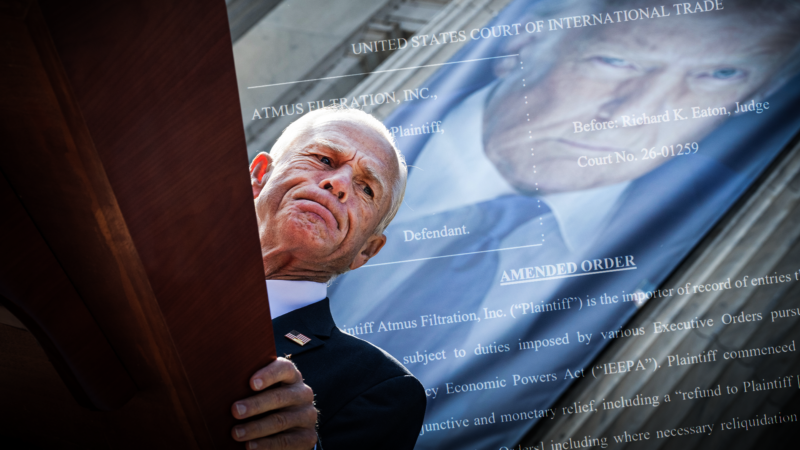
Originalism also undermines Trump’s position in the tariffs case. Why? Because the framers and ratifiers of the original Constitution placed great weight on the importance of dividing federal power among three separate branches of government.

Yet Trump seeks judicial permission in the tariffs case to unilaterally wield a type of power that the Constitution specifically assigned to the legislative branch, not to the executive. An originalist view of the constitutional authority over tariffs would be fatal to Trump’s signature policy.

Of course, all this talk about Trump losing on originalist grounds assumes that the Supreme Court’s originalists will practice what they preach. Chemerinsky, the liberal law professor, would call that assumption foolish. He would tell you that those justices will just warp the constitutional text in Trump’s favor.

If the main storyline of the current Supreme Court term is the fight over executive power, a secondary storyline centers on the question of whether the Court’s conservative justices will emerge with their credibility diminished or enhanced.

The post When Originalism Undermines Trump appeared first on Reason.com.

from Latest – Reason.com https://ift.tt/wFlgOWQ
via IFTTT