“I Have A Message For You”: NSA Leaks Tucker Carlson Emails To Journalists, Fox Host Claims In Update

“I Have A Message For You”: NSA Leaks Tucker Carlson Emails To Journalists, Fox Host Claims In Update

Last week, Fox News host Tucker Carlson said in a bombshell broadcast that an NSA whistleblower had approached him with evidence that the National Security Agency has been spying on his communications, with the intent to leak his emails to the press and ‘take this show off the air.’
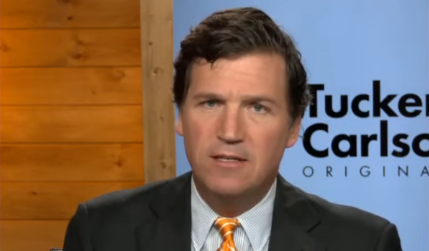
Today, Carlson told Fox Business’ Maria Bartiromo that the emails have in fact been leaked to journalists – at least one of whom has contacted him for what we presume is an upcoming article on their contents.

“I was in Washington for a funeral last week and ran into someone I know well, who said ‘I have a message for you,’ and then proceeded to repeat back to me details from emails and texts that I sent, and had told no one else about. So it was verified. And the person said ‘the NSA has this,’ and that was proven by the person reading back the contents of the email, ‘and they’re going to use it against you.’

To be blunt with you, it was something I would have never said in public if it was wrong, or illegal, or immoral. They don’t actually have anything on me, but they do have my emails. So I knew they were spying on me, and again, to be totally blunt with you – as a defensive move, I thought ‘I better say this out loud.'”

“Then, yesterday, I learned that – and this is going to come out soon – that the NSA leaked the contents of my email to journalists in an effort to discredit me. I know, because I got a call from one of them who said ‘this is what your email was about.’

So, it is not in any way a figment of my imagination. It’s confirmed. It’s true. They aren’t allowed to spy on American citizens – they are. I think more ominously, they’re using the information they gather to put leverage and to threaten opposition journalists, people who criticize the Biden administration. It’s happening to me right now…”

This is the stuff of banana republics and third-world countries,” replied Bartiromo.

Watch:


Tyler Durden
Wed, 07/07/2021 – 13:40

via ZeroHedge News https://ift.tt/3jSeGlx Tyler Durden

FOMC Minutes Preview: All About The Tapering

FOMC Minutes Preview: All About The Tapering

Submitted by Newsquawk

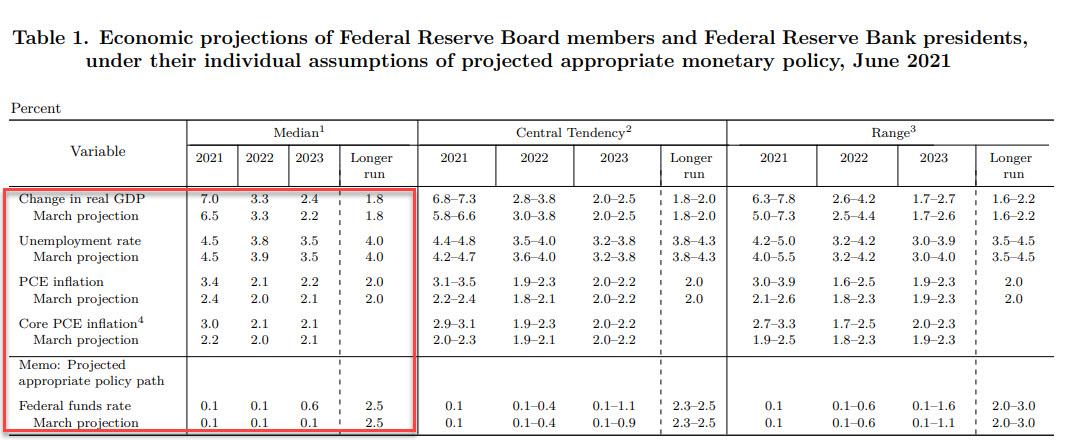
The June FOMC caught the market by surprise after the accompanying Dot Plot saw multiple 25bps hikes penciled in for 2023 via the median dot, and an increasing number of dots forecasting a hike as soon as 2022 from the current Zero Lower Bound.

The Core PCE inflation forecast was unsurprisingly bumped up to 3.0% from 2.2% following a string of hot inflation prints, although the Fed still sees that fading into next year.

The statement was little changed, although did acknowledge progress on vaccinations, whilst continuing to express the need for support until its “average 2% over the longer run” and maximum employment goals have been met.

Market participants are looking out for when the QE tapering process would begin and in what manner. Chair Powell said in his Q&A that this was the “talking about talking about” tapering meeting, noting that progress has been made, but there is still a ways to go; said it will be appropriate to consider a plan for tapering at the coming meetings if progress continues.

In wake of the meeting, most of the core Fed members (permanent voters) have stressed that the labor market is not close to “substantial further progress” and have been cautious not to express urgency in tapering ambitions. However, there has also been a fair amount of regional Fed Presidents which have shown more urgency to get purchase tapering underway, and given Powell’s comments at the Q&A, the Minutes should reflect the common view that tapering discussions should begin in the coming meetings.

A talking point among some officials in recent weeks has been on the mechanics of tapering, and whether or not it should be completed before rate lift-off, although a large majority agree any hikes should not take place until there are no more asset purchases.

Nonetheless, the Minutes could give us some more details around the tapering debate:

  • a timeline;
  • the pace of tapering (i.e. USD 10/bln per month);
  • whether to reduce MBS purchases first given the booming housing market.

Finally, the June meeting saw the IOER and RRP (administered rates) hiked by 5bps each in an effort to address money market issues as many STIRs had been flirting with negative rate territory, despite the target EFFR holding relatively firm.

The Minutes should provide some color around the decision, which was also somewhat unexpected, as the Fed appears to be showing some greater concern about where other money market rates trade aside from its benchmark EFFR.

Tyler Durden
Wed, 07/07/2021 – 13:28

via ZeroHedge News https://ift.tt/3hIfcQm Tyler Durden

Judge Frees 76-Year-Old Woman Sent Back to Federal Prison After Missing a Phone Call from Officials


inmate_1161x653

A judge’s mercy has kept the federal Bureau of Prisons from needlessly sending a 76-year-old Baltimore woman back behind bars because she left home to attend a computer class and missed a call from authorities looking for her.

Gwen Levi served 16 years of her federal sentence for dealing heroin before being released last summer to home confinement as part of the Trump administration’s effort to reduce the federal prison population to slow the spread of COVID-19. She was one of 4,500 federal prisoners to be sent home.

In late June, the Washington Post reports, Levi attended a class in-person to learn word processing. This trip triggered her ankle monitor. When prison officials called her, she didn’t answer the phone, and so this was all treated as an “escape.” She was picked up and taken back to jail for transfer back to federal prison for this minor, nonviolent violation.

But Levi was doing the exact sort of thing we want prisoners to do when we release them early—learn skills that will help them become gainfully employed. Dragging her back to prison is a particularly egregious example of how post-release monitoring sometimes leads to people being punished for technical rule violations which are completely disconnected from harmful, illegal behavior. There’s been a push by criminal justice activists, supported by some friendly politicians, to reform the system by which people under supervised release get thrown back in jail for “technical violations” of rules that aren’t criminal in nature.

On Tuesday, the Post reports, Judge Deborah K. Chasanow of the U.S. District Court for the District of Maryland ordered Levi freed under compassionate release guidelines, writing, “the court concludes it would do little to serve the goals of sentencing to require her to return to full custody.” She’ll still have to serve five years of parole, though she can request that her parole be suspended after one year.

“Sending her back to prison for going to a computer class was shameful,” Kevin Ring, president of justice reform organization FAMM, said in a prepared statement. “She deserves to be home. But this fight is far from over. It’s time for the Biden administration to ensure that the 4,000 people on home confinement get to stay home with their families, too.”

Ring is referring to the unclear future of all those other federal prisoners sent home last year. The COVID-related early releases were not intended to be permanent; as the Trump administration ended, the Justice Department announced that those prisoners would have to return back to prison after the pandemic has concluded.

It’s been a year since these releases, and so far, according to the Post, only 185 of these released prisoners have been returned to federal custody, and only five of them had committed new crimes. Now criminal justice reformers are attempting to pressure the Justice Department under President Joe Biden to rescind the memo and allow these people to remain on monitored release after the pandemic ends.

So far, the administration has been reluctant to commit to this. A spokesperson for the Department of Justice told The New York Times that the Bureau of Prisons would have the discretion to allow released inmates to remain at home if they are close to the end of their sentences.

But does “discretion” actually mean anything given what happened to Levi? If the vast majority of these released inmates have been causing no problems on supervised release, is there any criminal justice purpose served by forcing them back into jail cells that isn’t just a punitive response? If the goal of prison is rehabilitation, the appropriate response to those who have been released, but who continue to abide by the law, is to continue this experiment. Perhaps there’s even a valuable lesson here about the excessive lengths of some of our federal sentences.

from Latest – Reason.com https://ift.tt/3jTYrUW
via IFTTT

How Big Business Uses Big Government To Kill Competition


Screen Shot 2021-07-07 at 9.25.31 AM

Politicians say they pass laws to “protect Americans from big business.”

People like hearing that. Many don’t like big business.

Unfortunately, most people don’t realize that those laws often help big business while hurting consumers.

“Big business and big government are not enemies like a lot of people think they are,” says American Enterprise Institute fellow Tim Carney in my new video. “When government gets bigger, whether it’s through spending or taxes or regulation, the big guys, big business benefits.”

Consider the $15 minimum wage. People think of that law as pro-worker. But big companies like Walmart, Costco, and Amazon lobby in favor of it. Why?

Because big business can afford robots. Their competitors often cannot.

“Capitalism is a cutthroat thing,” says Carney. “But this isn’t capitalism. When you turn to government to regulate your competitors out of business, that’s where we need to say this is wrong.”

“Maybe you’re too cynical,” I suggest. “Maybe [Amazon founder Jeff] Bezos really just does want people to be paid more.”

“If Jeff Bezos wants people to be paid more,” Carney responds, “he can pay people more! But what Bezos is trying to do is outlaw competing business practices.”

He’s not alone.

When the big toymaker Mattel was caught selling toys that contained lead, its lobbyists got Congress to force all toymakers to do expensive lead testing.

That sounds like they just want to protect children, I tell Carney.

“If you’re trying to test 1,000 Barbie dolls,” he replies, “that might be fairly efficient. But if you are a grandpa making little wooden handmade toys, you’d have to hire some third-party tester. That could cost you $1,000, and you’re not going to sell your wooden toy for $1,000. It effectively outlawed handmade toys.”

After small toymakers screamed about that, Congress exempted toymakers that make fewer than 7,500 toys per year. So small toymakers must stay small.

“Maybe what [Mattel] did,” says Carney, “is say, ‘This is our opportunity through regulation to kill some of our competitors!'”

Facebook tries to do that, too.

At an international conference, Facebook founder Mark Zuckerberg said, “We don’t want private companies making so many decisions about how to balance social equities without a more democratic process.”

In other words: “Government, please regulate all of us.”

That sounds noble.

Carney points out the catch.

“He’s calling for a mandate that platforms impose some sort of artificial intelligence to weed out misinformation or hate speech. Facebook can afford that, but Zuckerberg’s smaller competitors [like Odysee, Rumble, Parler]…would struggle to pay the thousands of content moderators and the expensive artificial intelligence that Congress may require. New social media sites may never even start.”

That last sentence is a key point that we often miss.

“Regulation doesn’t just kill existing businesses,” says Carney. “It keeps new businesses from ever entering.”

Big business has always pushed for regulation.

More than 100 years ago, Henry Heinz, founder of Heinz Ketchup, started using refrigerated rail cars because, says Carney, “he could get fresher tomatoes, and therefore he could make a ketchup that didn’t rely on sodium benzoate as an artificial preservative.”

“Everybody loved Heinz ketchup, and it rose up to be about half of the market,” Carney continues. “But sometimes people who are half of the market want to be all the market. So Heinz himself started lobbying to outlaw sodium benzoate.”

Sodium benzoate is a preservative that Heinz’s competitors used. Heinz claimed it wasn’t safe, but it is safe. It’s still used in Sprite, Jell-O Kool-Aid Gels, and other foods.

Henry Heinz almost got those products banned, says Carney. “He almost got Teddy Roosevelt on board, which would have outlawed all of his competition. Sometimes businessmen hate nothing more than competition.”

Not “sometimes.” Usually. Almost all businesses hate competition.

But competition is what helps us consumers most.

When big government colludes with big business to kill competition, we all pay the price.

COPYRIGHT 2021 BY JFS PRODUCTIONS INC.

from Latest – Reason.com https://ift.tt/3wmgKVl
via IFTTT

Judge Frees 76-Year-Old Woman Sent Back to Federal Prison After Missing a Phone Call from Officials


inmate_1161x653

A judge’s mercy has kept the federal Bureau of Prisons from needlessly sending a 76-year-old Baltimore woman back behind bars because she left home to attend a computer class and missed a call from authorities looking for her.

Gwen Levi served 16 years of her federal sentence for dealing heroin before being released last summer to home confinement as part of the Trump administration’s effort to reduce the federal prison population to slow the spread of COVID-19. She was one of 4,500 federal prisoners to be sent home.

In late June, the Washington Post reports, Levi attended a class in-person to learn word processing. This trip triggered her ankle monitor. When prison officials called her, she didn’t answer the phone, and so this was all treated as an “escape.” She was picked up and taken back to jail for transfer back to federal prison for this minor, nonviolent violation.

But Levi was doing the exact sort of thing we want prisoners to do when we release them early—learn skills that will help them become gainfully employed. Dragging her back to prison is a particularly egregious example of how post-release monitoring sometimes leads to people being punished for technical rule violations which are completely disconnected from harmful, illegal behavior. There’s been a push by criminal justice activists, supported by some friendly politicians, to reform the system by which people under supervised release get thrown back in jail for “technical violations” of rules that aren’t criminal in nature.

On Tuesday, the Post reports, Judge Deborah K. Chasanow of the U.S. District Court for the District of Maryland ordered Levi freed under compassionate release guidelines, writing, “the court concludes it would do little to serve the goals of sentencing to require her to return to full custody.” She’ll still have to serve five years of parole, though she can request that her parole be suspended after one year.

“Sending her back to prison for going to a computer class was shameful,” Kevin Ring, president of justice reform organization FAMM, said in a prepared statement. “She deserves to be home. But this fight is far from over. It’s time for the Biden administration to ensure that the 4,000 people on home confinement get to stay home with their families, too.”

Ring is referring to the unclear future of all those other federal prisoners sent home last year. The COVID-related early releases were not intended to be permanent; as the Trump administration ended, the Justice Department announced that those prisoners would have to return back to prison after the pandemic has concluded.

It’s been a year since these releases, and so far, according to the Post, only 185 of these released prisoners have been returned to federal custody, and only five of them had committed new crimes. Now criminal justice reformers are attempting to pressure the Justice Department under President Joe Biden to rescind the memo and allow these people to remain on monitored release after the pandemic ends.

So far, the administration has been reluctant to commit to this. A spokesperson for the Department of Justice told The New York Times that the Bureau of Prisons would have the discretion to allow released inmates to remain at home if they are close to the end of their sentences.

But does “discretion” actually mean anything given what happened to Levi? If the vast majority of these released inmates have been causing no problems on supervised release, is there any criminal justice purpose served by forcing them back into jail cells that isn’t just a punitive response? If the goal of prison is rehabilitation, the appropriate response to those who have been released, but who continue to abide by the law, is to continue this experiment. Perhaps there’s even a valuable lesson here about the excessive lengths of some of our federal sentences.

from Latest – Reason.com https://ift.tt/3jTYrUW
via IFTTT

Bill Gates May Buy Out Melinda French’s Share Of Gates Foundation

Bill Gates May Buy Out Melinda French’s Share Of Gates Foundation

Could a schism at the Gates Foundation eventually lead to Melinda French Gates launching her own rival philanthropic giant?

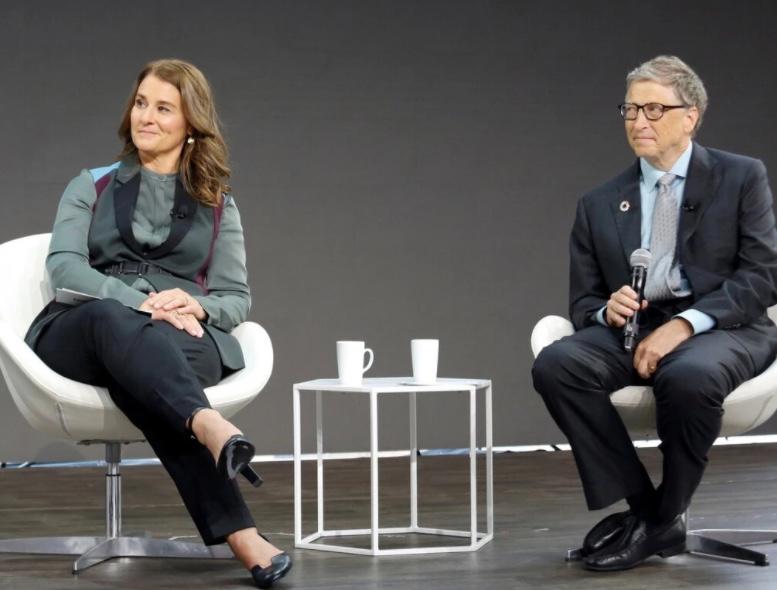
In its latest update on the negotiations happening between Bill Gates and his ex-wife, the New York Times reports that Gates will likely get full custody of the foundation that bears his name. As the NYT points out, the Gates’ have referred to the foundation as their “fourth child.”

Mark Suzman, the CEO of the Gates Foundation (which is the largest charitable foundation in the world) broke the news to a group of reporters on Wednesday during a briefing that had been called to announce details about the future of America’s largest charitable foundation. He also revealed that the foundation had been gifted an additional $15 billion in assets to be added to the $50 billion previously amassed in its endowment over two decades.

Suzman added that if French decides she can’t continue to work with Gates after two years, that she would be gifted her own pool of capital to start her own foundation. In other words, if the two decide they can’t peaceably co-parent the foundation, Bill will buy out his ex-wife.

“They have agreed that if after two years either one of them decides that they cannot continue to work together, Melinda will resign as co-chair and trustee,” Mr. Suzman said in a message to foundation employees Wednesday. If that happens, he added, Ms. French Gates “would receive personal resources from Bill for her philanthropic work” separate from the foundation’s endowment.

In a statement to the NYT, Melinda French focused on the important governance changes underway at the Gates Foundation, including expanding its board of directors beyond their close circle (longtime director Warren Buffett recently resigned from the board).

While Suzman said he couldn’t say exactly how much Melinda Gates would receive in the event of a buyout, he acknowledged it would be a “significant” sum.

The NYT also raised more questions about governance at the foundation, citing the arguments of former employees of the foundation who cited the substantial tax benefit these foundations receive. This benefit means they are, in a way, responsible to the public, and therefore oversight should suit the public’s interest, not solely those of the founder.

“Given that founders receive a substantial tax benefit for their donations, the assets the board oversees should be regarded as belonging to the public, with the board being held accountable to a fiduciary standard of care,” wrote Alex Friedman, the former chief financial officer, and Julie Sunderland, the former director of the foundation’s Strategic Investment Fund.

He also said that the changes at the foundation are being directed with an eye toward the long term, suggesting that the foundation isn’t going anywhere.

“We’re trying to do this in a very careful and deliberate manner, thinking for the long term,” Mr. Suzman said in an interview.

Melinda Gates already has her own separate business entity, Pivotal Ventures, to pursue her own investments, apart from her husband’s group, Gates Ventures (the bulk of the Gates’ wealth is invested under Cascade Ventures, Bill Gates private family office, which incidentally is America’s largest owner of private farmland).

As far as improving oversight at the foundation, their first post-divorce task will be approving changes to the foundation’s governance structure by the start of next year.

Tyler Durden
Wed, 07/07/2021 – 12:59

via ZeroHedge News https://ift.tt/3r0gyu0 Tyler Durden

How Big Business Uses Big Government To Kill Competition


Screen Shot 2021-07-07 at 9.25.31 AM

Politicians say they pass laws to “protect Americans from big business.”

People like hearing that. Many don’t like big business.

Unfortunately, most people don’t realize that those laws often help big business while hurting consumers.

“Big business and big government are not enemies like a lot of people think they are,” says American Enterprise Institute fellow Tim Carney in my new video. “When government gets bigger, whether it’s through spending or taxes or regulation, the big guys, big business benefits.”

Consider the $15 minimum wage. People think of that law as pro-worker. But big companies like Walmart, Costco, and Amazon lobby in favor of it. Why?

Because big business can afford robots. Their competitors often cannot.

“Capitalism is a cutthroat thing,” says Carney. “But this isn’t capitalism. When you turn to government to regulate your competitors out of business, that’s where we need to say this is wrong.”

“Maybe you’re too cynical,” I suggest. “Maybe [Amazon founder Jeff] Bezos really just does want people to be paid more.”

“If Jeff Bezos wants people to be paid more,” Carney responds, “he can pay people more! But what Bezos is trying to do is outlaw competing business practices.”

He’s not alone.

When the big toymaker Mattel was caught selling toys that contained lead, its lobbyists got Congress to force all toymakers to do expensive lead testing.

That sounds like they just want to protect children, I tell Carney.

“If you’re trying to test 1,000 Barbie dolls,” he replies, “that might be fairly efficient. But if you are a grandpa making little wooden handmade toys, you’d have to hire some third-party tester. That could cost you $1,000, and you’re not going to sell your wooden toy for $1,000. It effectively outlawed handmade toys.”

After small toymakers screamed about that, Congress exempted toymakers that make fewer than 7,500 toys per year. So small toymakers must stay small.

“Maybe what [Mattel] did,” says Carney, “is say, ‘This is our opportunity through regulation to kill some of our competitors!'”

Facebook tries to do that, too.

At an international conference, Facebook founder Mark Zuckerberg said, “We don’t want private companies making so many decisions about how to balance social equities without a more democratic process.”

In other words: “Government, please regulate all of us.”

That sounds noble.

Carney points out the catch.

“He’s calling for a mandate that platforms impose some sort of artificial intelligence to weed out misinformation or hate speech. Facebook can afford that, but Zuckerberg’s smaller competitors [like Odysee, Rumble, Parler]…would struggle to pay the thousands of content moderators and the expensive artificial intelligence that Congress may require. New social media sites may never even start.”

That last sentence is a key point that we often miss.

“Regulation doesn’t just kill existing businesses,” says Carney. “It keeps new businesses from ever entering.”

Big business has always pushed for regulation.

More than 100 years ago, Henry Heinz, founder of Heinz Ketchup, started using refrigerated rail cars because, says Carney, “he could get fresher tomatoes, and therefore he could make a ketchup that didn’t rely on sodium benzoate as an artificial preservative.”

“Everybody loved Heinz ketchup, and it rose up to be about half of the market,” Carney continues. “But sometimes people who are half of the market want to be all the market. So Heinz himself started lobbying to outlaw sodium benzoate.”

Sodium benzoate is a preservative that Heinz’s competitors used. Heinz claimed it wasn’t safe, but it is safe. It’s still used in Sprite, Jell-O Kool-Aid Gels, and other foods.

Henry Heinz almost got those products banned, says Carney. “He almost got Teddy Roosevelt on board, which would have outlawed all of his competition. Sometimes businessmen hate nothing more than competition.”

Not “sometimes.” Usually. Almost all businesses hate competition.

But competition is what helps us consumers most.

When big government colludes with big business to kill competition, we all pay the price.

COPYRIGHT 2021 BY JFS PRODUCTIONS INC.

from Latest – Reason.com https://ift.tt/3wmgKVl
via IFTTT

“Sadly, It Starts With Two Lies”: Peter Daszak’s Latest Wuhan Screed Shredded

“Sadly, It Starts With Two Lies”: Peter Daszak’s Latest Wuhan Screed Shredded

Peter Daszak, the guy who landed a lucrative NIH contract to study bat COVID in Wuhan four months before the Obama administration banned gain-of-function research on US soil, has penned yet another screed in The Lancet in an obvious attempt to put a ‘science’ bow on the natural origin theory, while once again dismissing the possibility of a lab-leak.

Peter Daszak (right) toasts with Zhengli Shi (Wuhan’s ‘Bat Lady’)

Recall Daszak was behind a now-infamous February 2020 Lancet letter signed by 27 authors – many of whom have since distanced themselves or retracted – which claims COVID-19 could have only evolved in nature, and that the lab-leak hypothesis was virtually impossible. Daszak has since ‘recused’ himself from the Lancet‘s COVID-19 commission due to his overwhelming conflict of interest, but has still been provided a platform to reiterate his defense.

“We believe the strongest clue from new, credible, and peer-reviewed evidence in the scientific literature is that the virus evolved in nature, while suggestions of a laboratory-leak source of the pandemic remain without scientifically validated evidence that directly supports it in peer-reviewed scientific journals,” Daszak writes.

He also claims that his own compensation is “paid solely in the form of a salary from EcoHealth Alliance,” his nonprofit which received the NIH contract (among tens of millions received from the US Government), and that he, nor EcoHealth, have never received funding from the People’s Republic of China – a lie you’ll read about below.

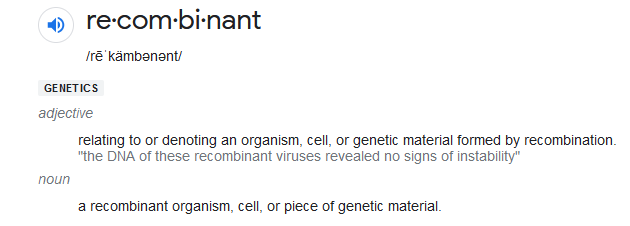
What’s more, Daszak casually discloses that his worked on bat coronaviruses “includes the identification of viral sequences in bat samples, and has resulted in the isolation of three bat SARS-related coronaviruses that are now used as reagents to test therapeutics and vaccines. It also includes the production of a small number of recombinant bat coronaviruses to analyse cell entry and other characteristics of bat coronaviruses for which only the genetic sequences are available.”

Nothing to see here – just a regular guy genetically engineering a few bat coronaviruses to check out how they can enter cells – which Daszak says the NIH reviewed and determined didn’t warrant oversight by its Potential Pandemic Pathogen Care and Oversight (P3CO) committee – which, as the Daily Caller noted in April, was shielded from review.

Daszak’s letter was utterly shredded yesterday by balena.io CEO Alexandros Marinos in a must-read Twitter thread:

(Continued, emphasis ours)

Second, the intent of the letter was not to “express solidarity with our professional colleagues in China”. The thrust of that letter was the following statement: “We stand together to strongly condemn conspiracy theories suggesting that COVID-19 does not have a natural origin.”

As such, it is puzzling that when they do discuss the original letter, the only thing they reaffirm is the solidarity that nobody asked about: “The answer is clear: we reaffirm our expression of solidarity with those in China who confronted the outbreak…”

It gets better though: “The second intent of our original Correspondence was to express our working view that SARS-CoV-2 most likely originated in nature and not in a laboratory”. It’s worth wondering why an expression of solidarity had to be paired with a “working view”.

In that paragraph, they chide themselves for getting ahead of the scientific method: “Opinions, however, are neither data nor conclusions. Evidence obtained using the scientific method must inform our understanding and be the basis for interpretation of the available information”

“We believe the strongest clue from new, credible, and peer-reviewed evidence in the scientific literature is that the virus evolved in nature”. This is the only new claim, but clearly this whole letter could not have been a way to do a literature review.

If it was, leaving out the many “new, credible, and peer-reviewed evidence in the scientific literature” should have gotten this paper thrown out in said peer review. In addition, contradictory statements from the first signatory, as well as one other, deepen public confusion.

Charles Calisher, first signatory in this letter, told ABC that “there is too much coincidence” and “it is more likely that it came out of a lab”. Which is it?

Stanley Perlman told the Washington Post that “On both sides, there’s really a lack of information. That’s why we have such extensive discussions and, in some cases, vituperative discussions. There’s really no data. It’s really just opinions.” Which is it?

“Allegations and conjecture are of no help, as they do not facilitate access to information and objective assessment of the pathway from a bat virus to a human pathogen that might help to prevent a future pandemic.” – This is clearly self-criticism for publishing a “working view”

In any case, other than highlighting for the whole world how a small cabal of deeply conflicted experts pretended that scientific consensus had been reached in 25 days, it is unclear what they point of this statement is, unless to muddle the waters further. It’s too late.

Tyler Durden
Wed, 07/07/2021 – 12:26

via ZeroHedge News https://ift.tt/3woxEm8 Tyler Durden

Janet Yellen Thinks A Little Inflation Is A Good Thing

Janet Yellen Thinks A Little Inflation Is A Good Thing

Via SchiffGold.com,

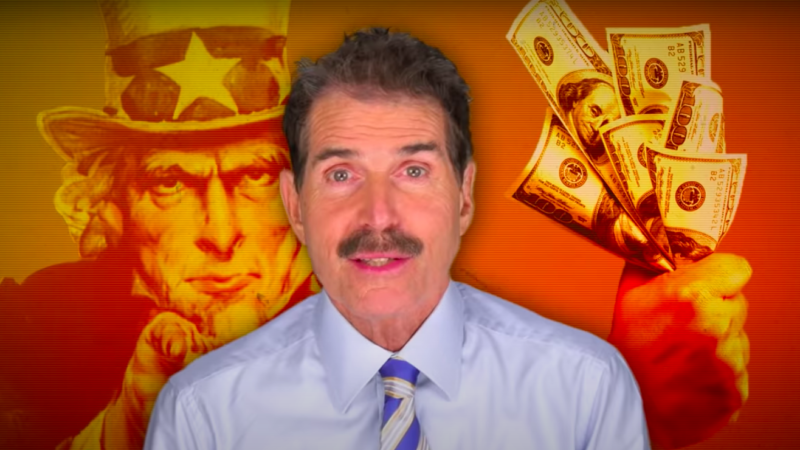
Treasury Secretary Janet Yellen has conceded that we may well get more inflation than originally expected with all of this government stimulus. But she said if we do end up with higher inflation and higher interest rates, it’s a good thing. It will be good for society, and it will be good for the Federal Reserve.

Peter Schiff talked about it in this clip from a recent podcast.

Yellen said inflation will eventually necessitate higher interest rates. “If we ended up with a slightly higher interest rate environment it would actually be a plus for society’s point of view and the Fed’s point of view,” Yellen said during an interview with Bloomberg News last month.

Peter Schiff summed it up this way.

So, instead of basically just saying we’re not going to have any inflation, or saying inflation is transitory, now she’s just saying, ‘OK, we’re going to have inflation, but it’s a good thing.’”

Peter has said that inflation is really a tax on Americans and he asks the operative question: how is an even bigger increase in the cost of living good for society?

Does she mean by society ‘high society,’ like the super-rich? Is that who’s going to benefit because high society is loaded up with assets and has a lot of debt on those assets? Is that what she means? High society? But if she means all the people, like the middle class and the working poor, a lot of the people who voted for Biden, if by society, she means the common man, who is she kidding? How is a bigger increase in inflation good for the common man?”

It isn’t. Higher inflation is a disaster for society.

Of course, there are some winners in an inflationary environment. Big debtors – including the US government – will prosper because they can pay off those debts with less valuable dollars. But overall, society loses when the value of its money decreases.

Peter asked another interesting question: if inflation is good for society, why does the Fed have a mandate to keep it under control? If inflation is good, isn’t more inflation better?

Of course, Yellen just thinks there will be “a little bit” more inflation and “slightly higher” interest rates.

Well, we’re not going to have slightly higher interest rates. Ultimately, we’re going to have much higher interest rates. Now, I agree with Janet Yellen that higher interest rates, not slightly higher, but significantly higher interest rates, will be good for society in the long run. In the short, run it’s going to be a disaster because it’s going to prick the bubble. Now, of course, the bubble needs to be pricked. The sooner the better. But we’re going to have to deal with a lot of problems that we have been sweeping under the rug of kicking down the road.”

Peter said Yellen doesn’t understand that. She thinks we can just have slightly higher interest rates and everything will be fine, even with the enormous amount of debt in the economy.

It won’t be fine. And we won’t just have slightly higher rates. We’re going to have much higher rates because look at where we’re starting from. Rates are at zero, right?”

Peter said rates need to double or triple in order to restore “normalcy” and return long-term structural balance to the economy. We need higher rates to incentivize saving and capital investment. And that’s where rates would go were it not for the interference from the Federal Reserve.

We need to have interest rates reflect reality, not manipulated by government. So yes, in the long run, higher interest rates will benefit society. But in the short run, society is going to be in for a world of hurt as we have to finally address the problems that we have refused to address in the past. It’s like the novocaine is finally wearing off and now we’ve got to feel the pain of whatever we were being numbed from by the novocaine.”

But this isn’t what Janet Yellen is suggesting at all.

In fact, higher interest rates scare the hell out of the Federal Reserve and the US government.

That’s why the government and the Fed are doing everything they can to artificially suppress interest rates and now keep them at zero because even a slight increase in interest rates is more than the economy can bear.”

As you will recall, interest rates rose “slightly” to 2.5% in 2018 and all hell broke loose. The stock market crashed, and the Fed was forced back to loose monetary policy.

If we couldn’t handle that back then, we clearly can’t handle it now, because the level of debt is so much greater than it was then. And so, the more debt you have, the lower interest rate is required to be able to service that debt. So, if two-and-a-half percent was too much when the national debt was significantly lower than it is today, then that threshold is much lower. I don’t even think we could survive a move to one percent from the Fed.”

And the Fed has to keep printing money – creating inflation – as it manipulates the bond market creating artificial demand to keep yields low so the US government can continue to service its debt. So, Yellen is acknowledging inflation but claiming it’s a good thing.

At some point, it’s going to be obvious that we’ve got too much of a good thing.”

Tyler Durden
Wed, 07/07/2021 – 12:09

via ZeroHedge News https://ift.tt/2UuGcuy Tyler Durden

Five Attacks In Less Than 72 Hours: Injuries Reported After 14 Rockets Hit US Base In Iraq

Five Attacks In Less Than 72 Hours: Injuries Reported After 14 Rockets Hit US Base In Iraq

The pace of attacks on Americans in Iraq is picking up after Biden’s airstrikes along the Iraq-Syria border late last month were meant precisely as deterrence and as a response to prior drone attacks. Clearly it didn’t work, but only served as but the next escalation portending more to come. 

At least 14 rockets hit Ain Assad base Wednesday in the second such attack on the installation in as many days. US, Iraq, and other Western allied forces operation from the large base in western Anbar province. It’s unclear whether the two injured are Americans or partner forces (the coalition spokesman initially assessed three injured before revising down to two).

This week alone has now seen multiple brazen assaults on based hosting US troops, including a prior Monday rocket attack on Ain Assad, followed with a Tuesday attack on a US base in Erbil, and now on Wednesday the latest included a large volley of rockets. There was also the intercept of an inbound armed drone over the US embassy in Baghdad on Tuesday.

Mideast regional correspondent Joyce Karam writes that this latest makes five attacks on American forces in Iraq and Syria in less than 72 hours. They include:

  • Mon, July 5: Ain Al Assad, Iraq

  • Tue, July 6: Union III, Iraq

  • Tue, July 6: Erbil Airport, Iraq

  • Wed, July 7: Ain Al Assad, Iraq 

  • Wed, July 7: Deir Zour, Syria

The Syria incident, meanwhile, is recapped in Reuters as follows: “In Syria, the U.S.-backed Syrian Democratic Forces said no damage was done by the drone attack on the Al Omar oil field in eastern Syria, an area bordering Iraq where U.S. forces came under rocket fire but escaped injury on June 28.”

Ain Assad, file

This week’s incidents mark about 50 attacks in 2021 so far against US interests in Iraq at a moment it’s believed less than 3,000 American troops remain (not counting the abundant contractors and intelligence personnel).

Though the perpetrators of these latest attacks are as yet unknown, the incidents are being widely viewed as part of broader revenge attacks for the aforementioned June 27 series of US airstrikes on Iran-backed militia groups along the Iraq-Syria border, which killed and wounded multiple fighters as well as reports of civilians. 

Tyler Durden
Wed, 07/07/2021 – 11:40

via ZeroHedge News https://ift.tt/2VgnKGy Tyler Durden