“The Financial System Will Have To Be Reset”: How The World’s Most Powerful And Influential People See The World After The Pandemic

“The Financial System Will Have To Be Reset”: How The World’s Most Powerful And Influential People See The World After The Pandemic

While nobody really knows what the world will look like on the other side of of the coronavirus pandemic, everyone has an opinion from economists, financiers, executives, all the way to policymakers? Bloomberg asked a variety of leaders from around the world for their best guess on how our lives will be fundamentally changed.

* * *

The Economists: While some forecasters say a bottom is near in the greatest economic recession since the Great Depression, few expect the economy to snap back to the way it was before the pandemic. Get ready for massive debt relief, more government intervention, heightened China-U.S. tensions, and more women in the workforce.

Chen Zhiwu: Director of the Asia Global Institute, economics professor at the University of Hong Kong, and a former adviser to China’s cabinet.

After the pandemic stabilizes, the New Cold War will be more visible between China and the U.S.-led West. The blame game has already started. But it will get worse once the economic hardship from the pandemic materializes in the coming months or years, to decouple China further from the developed West. As a result of the crisis, China will shift further back to its Communist roots and the Maoist era in terms of worldview and policy mindset.

James Galbraith: Professor of government at the University of Texas

There will be a vast tangle of unpaid debts that cannot be cleared, and—what is different from 2008 and 2009—the model of foreclosures, evictions, and repossessions to deal with them is going to be absolutely unacceptable. People sheltering at home without income are in no way responsible for their circumstances and will refuse to accept the terms of those contracts. So the contracts will have to be suspended, and the debts cleared away, or there will be a confrontation on a vast scale. This is similar to the farm foreclosure confrontations of the 1890s and 1930s in this country, but on a much larger scale, and in many cases urban and suburban. The right model is that of the treatment of inter-allied war debts after World War II: They were canceled, because dealing with the common enemy was a common effort. So the whole financial system will have to be reset. This is not an ideological point but a practical necessity for reestablishing a functioning economic system.

Stephen Jen: Former economist at the International Monetary Fund and Morgan Stanley who now runs Eurizon SLJ Capital, a hedge fund and advisory firm

Essentially the coronavirus will make the world look more like China, in terms of the state’s involvement in private-sector activities. It is the U.S. converging to China, not the other way around.

Kathy Matsui: Chief Japan equity strategist at Goldman Sachs Group Inc.

The pandemic has proved the extent to which we can still be effective and create value away from our office desks. For a country like Japan, where there is still a tendency to measure performance by hours spent at the office, I believe there could be important implications for gender diversity in the workplace. If Japan embraces greater flexibility in working styles, and if the unprecedented amount of time some Japanese men are currently spending at home encourages them to take on a greater share of housework, then I hope we will see more women being liberated to pursue full-time careers. These are big “ifs.” But the economic boost could be substantial; at Goldman Sachs we estimate that closing the gender employment gap could lift Japan’s GDP by 10%, and in a “blue-sky scenario” where the ratio of female vs. male working hours rises to the OECD average, the GDP boost could expand further to 15%.

* * *

Ray Dalio says money managers should get used to near-zero interest rates. They should also stop hoping for a V-shaped recovery, argues real estate billionaire Sam Zell. Banking titans James Gorman and Mike Corbat see more and more of the financial industry going digital. One upshot: Firms like Morgan Stanley and Citigroup may not need all that office space.

Ray Dalio: Founder and co-chief investment officer of Bridgewater Associates

The second-order consequences of the coronavirus will be big. The large monetizations of debt and the pushing of bond yields to around 0% (while necessary) will reduce the appeal of holding dollar- and other reserve-currency-denominated debt. The wealth and political gaps and the conflicts from them will influence the distribution of wealth and power. The differences in how the United States and China handle this crisis will influence changes in the world order.

Alan Patricof: Venture capitalist and managing director of Greycroft who helped build and grow companies including Office Depot, Apple, and Audible

We’re all learning about each other as family groups. The family meal is a tradition that maybe will be restored again. There may be a kinder, better world—and I don’t mean to be too schmaltzy—but I think that’s a very probable outcome. Another thing which is probably not as good—we’re going to become more and more nationalistic. We’re becoming more isolated and less globalist. It comes at a time when we need cooperation for the climate. There will be less importing, more of a trend to manufacture at home and not depend on other people, whether it’s oil or electronic components.

Mike Corbat: Chief executive officer of Citigroup Inc.

In our industry, financial activities viewed as inviolably “high client touch” are moving online by necessity. From putting letters of credit on blockchains, digitally onboarding clients, and conducting virtual roadshows for IPOs, bankers are ripping up some of the last paper trails we have left. Consumers who might have not done a lot digitally until now are engaging remotely. Many of those core activities will never go analog again. All that puts even more responsibility on financial institutions to help close the digital divide, for people, communities, and clients in the public and private sectors. We’ll need to do more to bring more people into the formal economy, because increasing free and low-cost access to digital services is going to be key to the coming recovery.

Susan Lyne: Managing partner at BBG Ventures

I can’t imagine companies are going to go back to spending as much on business travel. Everyone has been forced to figure out how to do business across country using Zoom or whatever video products. And there’s a ton you can get done, there’s no question, and it can be very intimate, in fact. I hope it’s going to have a lasting impact on things like co-parenting. That would be a beautiful thing. There’s a lot of men out there who are realizing there’s great pleasure in doing a lot more with their families than maybe they were able to do when they were working 16 hours a day. There’s a lot of jobs that can be done remotely.

Joe Lonsdale: Partner at 8VC and co-founder of Palantir

Does this change how we hire around the world? Unfortunately it probably pushes outsourcing a lot more for certain types of jobs in the U.S., because you can hire someone just as well who doesn’t have to necessarily live in your town. So in some ways it’s positive for the world, creating a more dynamic economy. In other ways it could be another pressure on the middle class, which I’m a little bit worried about.

Peter Gleysteen: CEO of AGL Credit Management

There are so many unintended consequences that we don’t understand yet. The markets will continue to be very volatile, because with this degree of unprecedented uncertainty, analysts and others can’t really create the dimensionality around which you can create models for valuation purposes. There are just too many variables and interacting differently. They defy being modeled.

Bill Stromberg: Chairman and CEO of T. Rowe Price Group Inc.

The impacts will be societal, economic, political, and personal, from smaller things such as being more mindful of personal hygiene and closer scrutiny of cultural norms like handshakes, to larger things such as the way elections and mass gatherings like sports events may be held and attended. We have already seen some changes that appear to have real potential to be long-lasting, including the accelerated use of technology to facilitate remote work and distance learning, and a greater reliance on experts in all walks of life for facts, insight, and guidance.

James Gorman: CEO of Morgan Stanley

Clearly we’ve figured out how to operate with much less real estate. Do I think everyone is going to be working from home? No. The mentoring, the connection, the team bonding, the brainstorming, the creativity that comes from being in groups of individuals, like-minded and not like-minded, that’s how great organizations thrive. But can I see a future where part of every week, certainly part of every month, a lot of our employees will be at home? Absolutely. People have been functioning extremely well. We will have less footprint.

Jim Chanos: Founder of Kynikos Associates

The biggest change will be how businesses look at the supply-chain issue. That’s the 1,000-pound gorilla. Will companies that are dependent upon China for essential parts for their businesses move production out of China or at least second-source out of China? That’s going to come back to the fore as businesses and people in the financial markets try to figure out, “OK, how much exposure should I have to the Chinese economy?”

Sam Zell: Founder of Equity Group Investments

Too many people are anticipating a kind of V-like recovery. We’re all going to be permanently scarred by having lived through this pandemic. How soon will anybody get on an airplane? How soon will anybody stay in a hotel? How soon will anybody go to a mall? The fact that these places may be open doesn’t necessarily mean that they’ll be doing business.

* * *

The Executives: The travel industry won’t disappear, but it may look a lot different. Ditto for fashion, shopping malls, sports, and digital payments, to name just a few.

Tadashi Yanai: Founder and CEO of Uniqlo clothing’s Fast Retailing Co.

People will go out less, be at or near their homes, and spend more time with their families. We will think about our clothes in this way, so that people feel less stress. When the world changes, clothing will change accordingly.

Al Kelly: CEO of Visa Inc.

The new global consciousness about the migration of germs—not just within a household, but within a community, state, country, and across the world will continue to impact the way societies at large go about their daily lives. We now understand how the actions of a single person can impact literally thousands of others globally. The underappreciated role of hand-washing and being careful about what your hands touch—especially outside your home—is and will continue to be top of mind. We are rethinking how to push an elevator button, open a door, or greet a friend. And adjusting the way we shop, too—how we inspect produce, where we place our phone, how close we stand to one another on line, and even how we pay.

Glenn Fogel: President and CEO of Booking Holdings Inc. and Coronavirus survivor

You’re going to see fever checks in all airports. They’re going to try to catch anyone who’s coming through who may be infected. Certain jurisdictions are going to ask you to download an app to track where you are. Because they want to know—if you’ve come from another country—and you turn sick, they’re going to want to know who you’ve been close to. People may have to give up some of their privacy if they want to go to certain countries that are going to be more hesitant about letting people in.

Meg Whitman: CEO of video-streaming service Quibi and former chief of EBay and Hewlett-Packard

Don’t you wonder whether work from home has changed forever? I think it may have. We’ve all learned how to do this. I’ve been going into an office for 40 years, and all the sudden I’ve had to figure this out. Which, you know, it’s been pretty easy. I happen to be a tech exec, but still. It’s pretty efficient. I wonder if this will change how families communicate. Every weekend now we’re on with both my husband’s family and my family for an hour and a half, doing a Zoom call. We never did that before!

Jaime Augusto Zobel de Ayala: Chairman of Ayala Corp., the oldest Philippine conglomerate

People will interact in a different way, and products and services will move. For example, we have a lot of malls where people visit. I’m sure that the whole e-commerce side of the business is going to grow and become the new normal after Covid-19.

Jon Wertheim: Executive editor of Sports Illustrated

Usually in times of crisis, sports bring us together. Whether it’s 9/11 or Katrina or a war, sports have this unifying quality. In this case, I can’t think of anything worse than sports. You’ve got this communicable infectious disease, you’ve got this terrible virus. What could be worse than putting 60,000 people in one place and telling them to all stand in tight quarters? It’s really problematic. The big question is how creative are sports willing to get? Sports have really been moving toward the viewer at home, the viewer on their phone and away from the arena. Media rights matter more than ever. Maybe this will accelerate. But even if there are no fans in the stands, you’ve got players, officials, someone’s got to operate the camera, someone’s got to be in the broadcast truck. Even without selling a single ticket, you’re still talking about hundreds and hundreds of people on the ground. The threshold for when is it healthy enough, and when are we economically desperate enough, is going to be really interesting to monitor.

Eric Yuan: CEO of Zoom Video Communications Inc.

After this crisis, the way we work will be very, very different. To work from home might become very common. Now is like a stress test to see if working from home works or not. I think it does to some extent. Also for Zoom, the boundary between the consumer use case and business use case is not very clear anymore. We need to rethink how on the one hand, we keep serving our big business customers and—given there are so many consumer use cases—make sure we balance that and really focus on privacy and really focus on security.

Jennifer Morgan: Former co-CEO of SAP SE

We have to reinvigorate the mental health conversation around the world as we look to manage the long-term implications of loss, loneliness, and financial strain. It will take time, but we will come through this stronger together.

The Policymakers: While the virus has emboldened nationalist politicians, it’s also sparking hope among some policy wonks that global leaders will be reminded how important it is to work together. More collaboration would be good news for some of the world’s most daunting challenges, everything from fighting climate change to strengthening supply chains.

Stanley McChrystal: Retired four-star U.S. Army general who is overseeing Boston’s response to the virus

The pandemic stresses us. It reminds us that we are connected. It reminds us that global supply chains, personal relationships, everything is connected. We don’t win alone. We don’t even win as small groups or nations. We win more broadly than that. We start to think a little more broadly about problems like global warming, like income inequality, and other things that dog society. Our way of working is going to be different. It was sort of a shock to a lot of organizations and people to have to work from home. But a lot of people are finding that they can stay connected. Businesses are going to migrate to a new normal that’s sort of a hybrid from what we used to be. We won’t do away with offices entirely, but we’re going to do a lot more connected. It’s going to widen our reach. The most aggressively networked organizations, whether military or businesses or governments, are going to come out really well.

Robert Reich: Secretary of labor for President Bill Clinton and now studies public policy at the University of California at Berkeley

I hope I’m not looking at it through rose-colored glasses, but it’s possible we may understand that at least with regard to minimum safety nets, and minimum health care, we need to do much more for our country and each other than we are doing now. We can’t ever afford to find ourselves so unprepared and lacking in the basics. The richest country in the world can’t even make sure all its people are safe. That makes no sense. Americans as a whole are gaining a deeper appreciation of how important government is. When government does not really function as it should, most of the time for most of us it’s just an irritation. Now it’s a matter of life and death. That changes the calculation. It changes the stakes. Americans emerging from this may say to themselves: We really do have to have a government that works well. And we’ve got to have a public-health system that is the best in the world. Why not?

Jean-Claude Trichet: Former president of the European Central Bank

A lesson of the crisis would be to increase resilience of all economies and entities, public and private, and prepare for what we’re seeing now—namely, a sudden stop of part of both production and demand in many economies of the world. We shouldn’t be depending on only one source for any particular service or manufactured good just because it keeps down costs. The idea of risk management and risk diversification at the level of the planet will be a key part of the concept of sustainable globalization.

Anne Krueger: Former IMF official now at the Johns Hopkins School of Advanced International Studies in Washington

There is a compelling case for international cooperation and coordination in addressing the crisis and keeping its devastation to a minimum. If that coordination takes place and is successful, it could provide the basis for the next stage of international cooperation, integration, and economic growth. If, however, many countries choose to insulate themselves from the rest of the world and fail to act with others, the crisis will last longer and the chances for increased nationalism and diminished integration will greatly increase to the detriment of the entire world.

Source: Bloomberg


Tyler Durden

Tue, 05/12/2020 – 17:45

via ZeroHedge News https://ift.tt/2Ws8GU8 Tyler Durden

Lockdown Lawsuits Ask How Long a Public Health Emergency Can Last

The longer COVID-19 lockdowns last, Texas Supreme Court Justice James Blacklock suggested last week, the more legally vulnerable they may be. “As more becomes known about the threat and about the less restrictive, more targeted ways to respond to it,” Blacklock said, “continued burdens on constitutional liberties may not survive judicial scrutiny.”

Lockdown resisters are testing that hypothesis in state courts, arguing that the public health emergencies governors cited when they ordered businesses to close and told people to stay at home no longer exist. An Illinois lawsuit made that case based on a statute that limits the length of a governor’s emergency declarations—an argument that last month persuaded a judge to issue a temporary restraining order. A New Hampshire lawsuit filed this week claims new circumstances have eliminated the statutory rationale for that state’s lockdown.

Illinois resident Darren Bailey sued Gov. J.B. Pritzker on April 23, noting that his March 20 lockdown order was based on a March 9 COVID-19 disaster declaration.  Under the Illinois Emergency Management Agency Act, which says such proclamations can last no longer than 30 days, the public health emergency declared by Pritzker would have expired on April 8. But on April 1, Pritzker declared a “continuing public health emergency” and extended his lockdown order until April 30. Three weeks later, Pritzker said he planned to further extend the lockdown.

Contrary to the law, Bailey said, Pritzker is “utilizing the emergency powers for more than 30 days from the declaration of disaster.” Instead of respecting that limit, he argued, “Pritzker is issuing redundant proclamations” aimed at “reenergizing the emergency provisions of The Act for the sole purpose of rendering the statutory 30-day limitation placed on his emergency powers meaningless.”

In an April 27 ruling, Clay County Circuit Judge Michael McHaney sided with Bailey, issuing a temporary restraining order (TRO) that enjoined Pritzker from enforcing his stay-at-home order against Bailey. “Plaintiff has shown he has a clearly ascertainable right in need of immediate protection, namely his liberty interest to be free from Pritzker’s executive order of quarantine in his own home,” McHaney wrote. “Plaintiff has a reasonable likelihood of succeeding on the merits.”

Pritzker asked the Illinois Appellate Court to vacate McHaney’s TRO. He also asked the Illinois Supreme Court to intervene, which it declined to do yesterday. But Bailey already had asked the appeals court to vacate the TRO, saying he planned to file an amended lawsuit.

Hair salon owner Mary Rivard is trying a similar approach in New Hampshire, where she sued Gov. Chris Sununu this week. While businesses like Rivard’s were allowed to reopen yesterday, she objects to the restrictions imposed on them, which she calls “nonsensical, illogical, and inefficient.” Among other things, the new rules ban blow drying, require that customers as well as stylists wear face masks, dictate a 1-to-1 ratio of employees to customers, and mandate that customers be screened for COVID-19 symptoms.

Rivard argues that Sununu has achieved the official goal of his lockdown, which aimed to “slow the spread of COVID-19” enough to avoid a hospital crisis. “‘Emergency’ measures that appeared to be Constitutionally appropriate in March are less appropriate now,” her complaint says, “given the wealth of information available that demonstrates New Hampshire’s healthcare system never came close to reaching capacity, and the Coronavirus is not as deadly as previously thought.”

While that appears to be true, the complaint underestimates the lethality of COVID-19 by describing it as “nothing more than a more serious strain of the flu.” The main thrust of Rivard’s argument, however, is that stopping the spread of the virus was never a realistic goal, given the lack of a vaccine and the absence of wide immunity, while the more modest goal of preventing a hospital crisis has been reached.

“There is no ‘state of emergency’ in New Hampshire,” the complaint says. “The original need for shutting down the New Hampshire economy no longer exists, and there exists no basis for Governor Sununu’s recent orders extending that ‘state of emergency’ and the resulting shutdown of ‘non-essential’ businesses….The continuing shutdown is preventing the New Hampshire population from achieving ‘herd immunity,’ which would ultimately eradicate the virus much more quickly than ‘slowing the spread’ by forcing the shutdown of businesses and ordering people to stay home. It is also destroying the state’s economy.”

In Michigan, meanwhile, a 77-year-old barber who defied Gov. Gretchen Whitmer’s business closure order will get a chance to challenge the state’s claim that he poses “an imminent danger to public health.” Shiawassee County Circuit Judge Matthew Stewart yesterday refused to approve a TRO against Karl Manke, who this month reopened his barber shop in Owosso, without a hearing.

Owosso is a small city about 30 miles northeast of Lansing. It is part of Shiawassee County, which has a population of 68,000 and so far has reported 214 COVID-19 cases, including 18 deaths. Manke said he was taking precautions such as wearing a mask, maintaining social distancing when he is not cutting hair, and sanitizing his tools with ultraviolet light.

“The Court wanted to provide Mr. Manke with an opportunity for a hearing on the request for an injunction, despite the clear public health dangers that continued operation of his business creates,” a spokesman for Michigan Attorney General Dana Nessel complained. Manke still faces two misdemeanor charges, each punishable by a $500 fine and up to 90 days in jail, for violating Whitmer’s order.

from Latest – Reason.com https://ift.tt/2SUhjoz
via IFTTT

How The Bitcoin-Halving Went Down (And The Hidden Message To The Fed)

How The Bitcoin-Halving Went Down (And The Hidden Message To The Fed)

Authored by Stephen O’Neal via CoinTelegraph.com,

Monday may have been uneventful for Bitcoin’s price, but it was a historic moment nonetheless.

image courtesy of CoinTelegraph

Bitcoin’s (BTC) third block halving has finally taken place. The year’s most talked-about crypto event happened at 3:23 p.m. EST on Monday, May 11, as block number 630,000 was successfully mined.

The Bitcoin block reward has now gone down from 12.5 BTC to 6.25 BTC, which will likely have many repercussions on the industry. But here’s how the historic event went down.

Bitcoin halving 101

First, the definition of Bitcoin’s halving states that every four years producing BTC becomes more difficult, as block rewards get cut in half by a precoded blockchain protocol. As a result, miners begin receiving 50% less BTC for verifying transactions.

This was coded in as a deflationary measure and happens because Bitcoin’s supply is limited: Once 21 million coins are generated, the network will stop producing more. Thus, the halving regulates the supply by delaying the moment that all 21 million coins (Bitcoin’s total cap) get into the market. Currently, about 18.3 million BTC has been mined, which is roughly 85% of the total cap.

The final block contained a message

F2Pool, the miner responsible for the extraction of block 629,999, printed a New York Times headline onto the blockchain just before the halving occurred. Titled “NYTimes 09/Apr/2020 With $2.3T Injection, Fed’s Plan Far Exceeds 2008 Rescue,” the transaction referenced a New York Times article by Jeanna Smialek and Peter Eavis that compares the current financial crisis to the 2008 collapse, the time when Satoshi Nakamoto published the original Bitcoin white paper.

“During times of inflation, the key to preserve wealth is to hold real assets,” Kristin Boggiano, a co-founder of the Digital Asset Regulatory and Legal Alliance, told Cointelegraph. She elaborated: “Bitcoin is inherently a store of value because by its design it cannot exceed 21 million, and therefore it’s a natural hedge to an inflationary dollar.”

There was no rally, but all eyes are still on the price

The halving day itself went uneventfully for Bitcoin’s price, which stayed around the $8,500–$8,700 mark throughout Monday. That confirmed the assumption that the halving event was already “priced in,” which was shared by a substantial part of cryptocurrency commentators. Nonetheless, crypto Twitter celebrated the event in full force. 

Data from The Tie, a data provider for digital assets, showed that yesterday, tweets from cryptocurrency-related accounts saw a spike in keyword mentions for the halving and Bitcoin. As the firm’s CEO, Joshua Frank, told Cointelegraph, conversations on Bitcoin grew by 72% compared to the 30-day moving average, while Bitcoin surpassed 50,000 daily tweets for the first time since June 2019.

Indeed, the idea that Bitcoin would become more scarce has aroused the public’s interest, as Google searches for “Bitcoin halving” hit an all-time high earlier this month, exceeding the surge associated with the previous halving event by as much as 350%.

Crypto services are also witnessing a surge in new registrations, as recently revealed by Binance CEO Changpeng Zhao. According to Zhao, the level of renewed interest could be compared to the peak of the 2017 bull run.

YouTube busts Cointelegraph’s party

Cointelegraph was also celebrating the momentous happening by holding a seven-hour livestream featuring prominent industry figures such as Tim Draper, Roger Ver and Meltem Demirors.

However, as the party was coming to a close, it was suddenly interrupted by YouTube. The viewing platform deemed the livestream to be “harmful content” for an unknown reason, once again highlighting the censorship problem that affects practically all crypto-related content on YouTube.

More than 2,000 Cointelegraph viewers were locked out of our coverage as a result, with the livestream having amassed more than 124,000 views by that time. The situation is still unclear, and more updates will follow.

Bull or bear? Experts’ opinions on what’s next are divided

So, where does Bitcoin’s price move from here? That is arguably the most popular halving-related question right now, and there is no straight answer to that. Still, the price of BTC has been seeing a lot of positive action lately, which has likely been influenced by the halving event — at least in part.

Since bleeding by nearly 50% on the so-called “Black Thursday” exactly two months ago, Bitcoin has bounced back to the $8,800 mark and even briefly traded above $10,000 at the start of May. Nonetheless, once the rejection of $10,200 became apparent on Sunday, one day before the halving, Bitcoin’s price fell by 20%. It has stayed around the same level since, albeit a minor correction of 5%.

As for where the price is headed next, traders remain divided, as the latest analysis by Cointelegraph shows. Some experts believe that Bitcoin could soon see an upswing to the $14,000–$15,000 resistance area, while others suggest that a pullback to the $6,000 region is also a likely scenario in the short term.

Hash rate is expected to go down but rebound

Another important aspect affected by the halving is Bitcoin’s mining hash rate, or the amount of computing power miners are using to validate the blockchain. Like Bitcoin’s price, the hash rate has been seeing major volatility ahead of the halving, reaching an all-time high and then swinging down. As for now, experts predict the hash rate will go down. As Marc Fresa, the founder of United States-based Asic.to — a company that specializes in producing firmware for mining machines — previously told Cointelegraph:

“You can expect the hashrate to decrease as profitability for miners across the board are slashed. This result will cause the older generation miners to be unplugged unless they can find a new home with extremely cheap or free power.”

Indeed, many unprofitable miners have already left the network due to the decreased block reward, as Alejandro De La Torre — the vice president of major mining pool Poolin — said in a Monday interview with Cointelegraph, predicting that up to 30% of the hash rate could be lost as a result. 

However, the situation is likely to change for the better once the new generation of ASIC units is shipped out later this month, as the new machines have been designed with post-halving conditions in mind. “Just give it a little bit of time and the hashrate will be at a new all-time high,” Fresa told Cointelegraph.


Tyler Durden

Tue, 05/12/2020 – 17:25

via ZeroHedge News https://ift.tt/2LpHC1z Tyler Durden

Actor Kevin James Demolishes Lockdown Absurdity & ‘COVID-Snitches’ In Short Film

Actor Kevin James Demolishes Lockdown Absurdity & ‘COVID-Snitches’ In Short Film

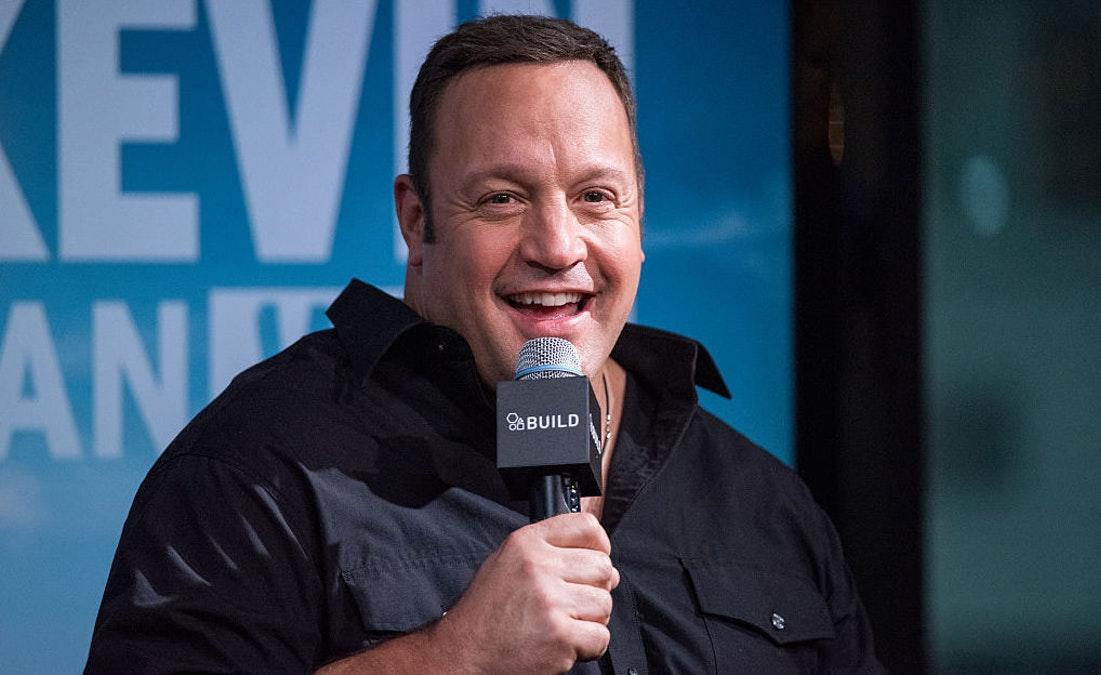
Actor and comedian Kevin James has just released a short film absolutely shredding the rise of corona-snitches in spectacular fashion

We and others have increasingly documented the unique phenomenon of neighbors so easily turning on each other over COVID-regulations conformity and differing interpretations and perceptions of ‘social distancing’. This as the pandemic has seen pundits and politicians compete in a new wave of fear-mongering and panic.

Kevin James, who became famous for playing Doug Heffernan on the CBS sitcom The King of Queens released his new short film “Out of Touch” on YouTube days ago, and it’s since gone viral.

As Fox News described, it “directly mocks people who are harshly judging others for not wearing masks or practicing social distancing in public spaces amid the ongoing COVID-19 pandemic.”

While the just under 2-minute film is clearly sarcastic, hyperbolic, and frankly hilarious  its brilliance lies in exposing the extreme atmosphere of psychological fear that many are living in.

The current climate seems to have newly empowered a whole class of busybodies, eaves droppers, and people who it seems simply can’t go through life without being in others’ business

Even the Associated Press recently noticed enough of a rising trend to profile the emerging numbers of what it bluntly dubbed “snitches” last month:

Snitches are emerging as enthusiastic allies as cities, states and countries work to enforce directives meant to limit person-to-person contact amid the virus pandemic that has claimed tens of thousands of lives worldwide. They’re phoning police and municipal hotlines, complaining to elected officials and shaming perceived scofflaws on social media.

“In some places, investigators are patrolling the streets, looking for violators,” AP notes.  “In some cases, residents are turning on neighbors.”

In James’ new clip, the end result of a COVID-snitcher catching two men casually shaking hands in a park is that following a dramatic nighttime chase, one is ripped apart by police dogs, while another is cornered by a police helicopter with gun-drawn cops shouting orders to get on the ground. 

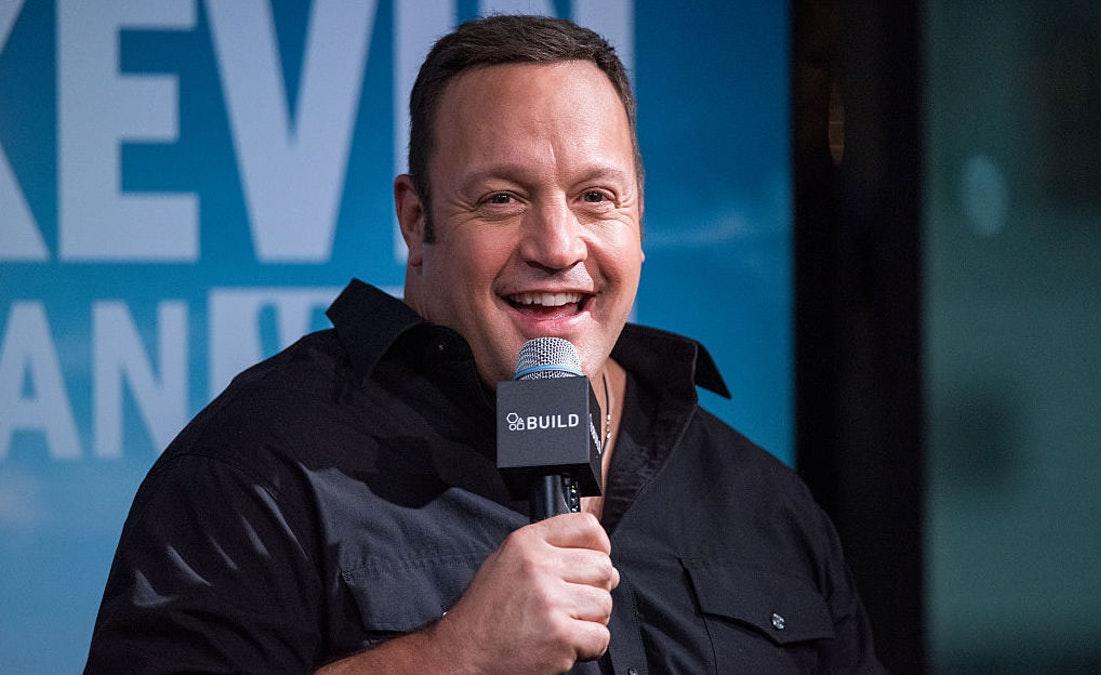
Actor and comedian Kevin James

The short film has been further presented as ultimately mocking the lockdown absurdity that overtook the country starting in late March. It’s now approaching one million views.


Tyler Durden

Tue, 05/12/2020 – 17:05

via ZeroHedge News https://ift.tt/3ctl8sq Tyler Durden

Loans For The Little Darlings: Strip Clubs Win Another Ruling For Pandemic Relief

Loans For The Little Darlings: Strip Clubs Win Another Ruling For Pandemic Relief

Authored by Jonathan Turley,

We have been discussing litigation of strip clubs denied pandemic relief, including a recent ruling in favor of such clubs in Nevada.  I have been highly critical of such denials.  Now, another judge, has ruled correctly in favor of these businesses. District Judge Matthew Leitman in Flint, Michigan, issued a preliminary injunction barring the Small Business Administration from excluding businesses that present live performances or sell products of a “prurient sexual nature” from loans under the Paycheck Protection Program. Businessman Jason Mohney who owns various clubs including Little Darlings (left) brought the action. 

The Trump Administration is dead wrong in litigating these cases to use the pandemic funds to impose a moral judgment on certain lawful businesses.

Moheny runs an array of clubs and noted that this is an $8 billion industry that includes thousands of strip clubs nationwide with more than 57,000 employees.  This is discrimination based on objections over the morality of a legal business supported by consenting adults. As many on this blog know, I have been a critic for decades of morality legislation that seeks to impose the majority’s view of proper morals on those who do not share those morals.

This is only the latest such ruling against the Administration, which deserves to lose each and every appeal.  What is interesting in this decision is the discussion of Chevron.  I have repeatedly testified on the Chevron doctrine and my objections to its expansive interpretation. (e.g,. here and here).  The court “concludes under step one of Chevron that the PPP Ineligibility Rule conflicts with the PPP and is therefore invalid.”

While the court concludes that it is not necessary to address the underlying constitutional claims (under the doctrine of avoidance), Judge Leitman rejects the threshold claims against this industry:

“Defendants are correct that it would ordinarily be absurd to conclude that Congress meant to provide financial assistance to, among others, certain sexually oriented businesses and private clubs that discriminate. But these are no ordinary times, and the PPP is no ordinary legislation. The COVID-19 pandemic has decimated the country’s economy, and the PPP is an unprecedented effort to undo that financial ruin. More importantly, the PPP is an effort to protect American workers – as noted above, it is located within a Title of the CARES Act named the “Keeping American Workers Paid and Employed Act” – and Congress could rationally have concluded that those workers need protection no matter the line of business in which they work. From this perspective, Congress’s decision to expand funding to previously ineligible businesses is not an endorsement or approval of those businesses.”

The opinion is DV Diamond Club of Flint LLC et al v U.S. Small Business Administration et al, U.S. District Court, Eastern District of Michigan, No. 20-10899. It is a solid and detached analysis that reaches the correct decision — a decision consistent with similar rulings across the country.

Here is the opinion: Diamond Club v. United States Small Business Administration


Tyler Durden

Tue, 05/12/2020 – 16:45

via ZeroHedge News https://ift.tt/3fSxIUq Tyler Durden

WTI Holds Big Gains Despite Bigger-Than-Expected Crude Build

WTI Holds Big Gains Despite Bigger-Than-Expected Crude Build

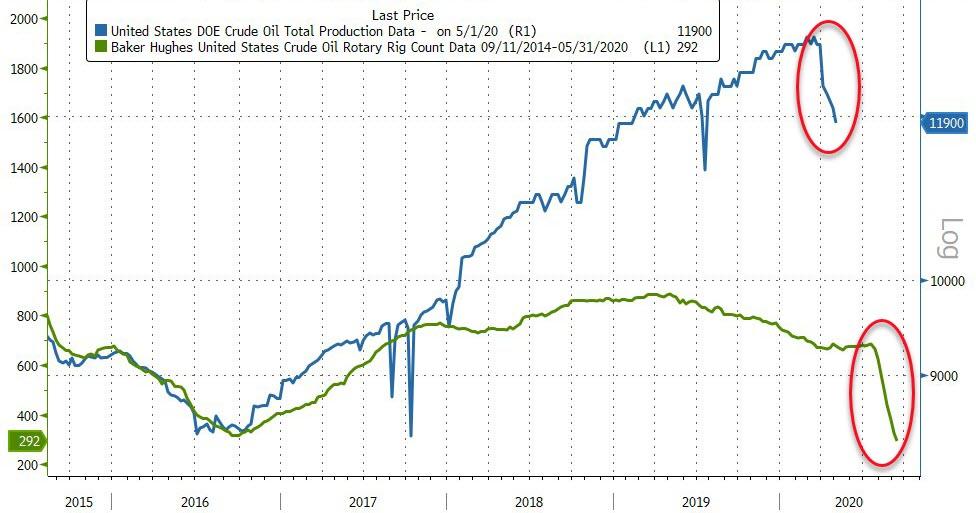
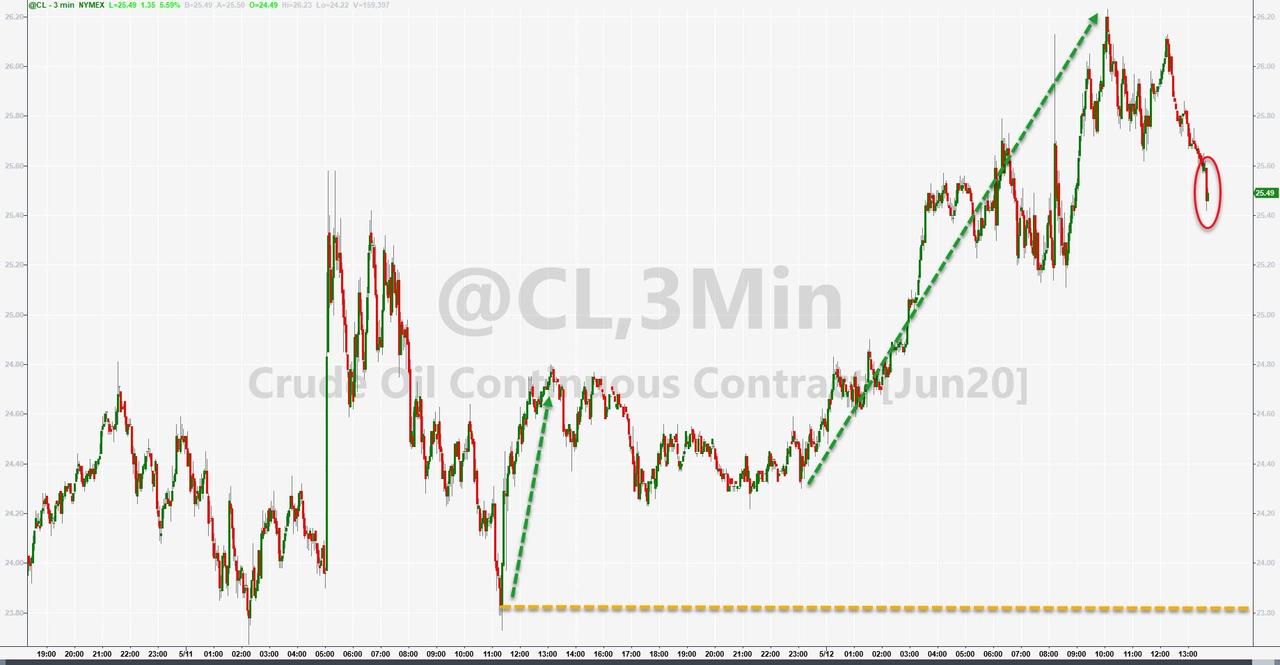
Oil prices rallied (despite equity weakness) to their highest since early April today with WTI tagging a $26 handle after the Energy Information Administration revised down its 2020 and 2021 crude output forecasts in its monthly Short-Term Energy Outlook.

“Production is indeed dropping and it might stay down for longer than people thought,” Bart Melek, head of commodity strategy at Toronto Dominion Bank said.

“U.S. crude oil production has not declined for two years in a row since the 17-year period of declines beginning in 1992 and running through 2008,” the agency said in its report.

“Typically, price changes affect production after about a six-month lag. However, current market conditions will likely reduce this lag as many producers have already announced plans to reduce capital spending and drilling levels.”

But the huge global glut remains and algos ‘eyes’ will be glue to API’s data tonight…

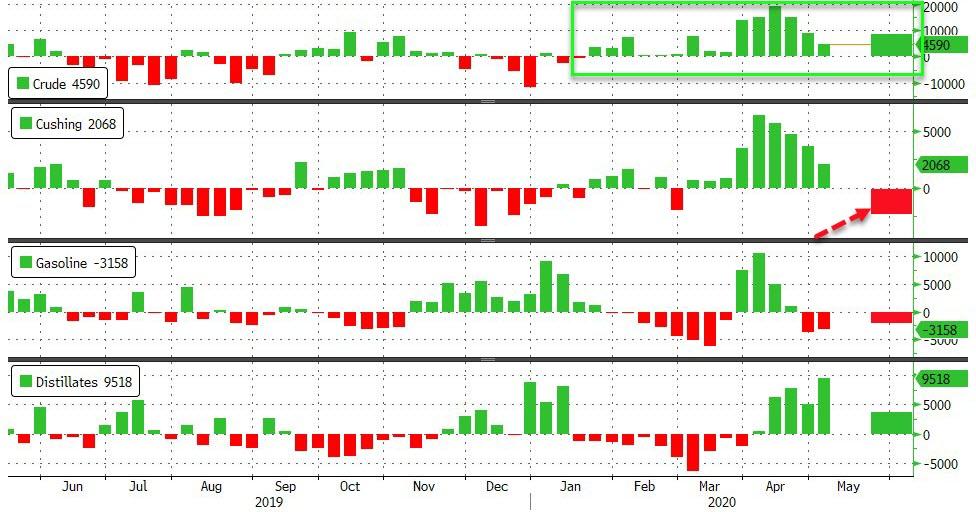
API

  • Crude +7.6mm (+4.3mm exp)

  • Cushing -2.216mm (-1.00mm exp)

  • Gasoline -1.911mm

  • Distillates +4.712mm

This is the 16th weekly crude build in a row…but Cushing saw its first draw in 10 weeks…

Source: Bloomberg

“On the demand side there’s probably a view that the worst may be behind us, in terms of the peak damage point. If we do see a second wave, that would hurt demand and hurt pricing,” said Commonwealth Bank’s Dhar.

EIA expects global liquid fuels inventories will fall by 1.9 million b/d in 2021.

“Entrepreneurs are getting inventive finding alternative storage as U.S. oil production is falling sharply,” Phil Flynn, a senior market analyst at Price Futures in Chicago, said in a note.

WTI traded just above $26 and slipped lower into the API print.

Finally, we remind readers that President Trump seems more than happy for prices (of oil) to rise…

“The road to an oil price recovery will likely be choppy and plagued with stop-and-go rallies and selling cycles until some level of price certainty is restored,” said Roger Diwan, vice president of financial services at IHS Markit.


Tyler Durden

Tue, 05/12/2020 – 16:36

via ZeroHedge News https://ift.tt/2Ai2NjP Tyler Durden

The Faithless Electors Case

On Wednesday, the U.S. Supreme Court will hear oral arguments in two cases involving challenging the authority of the state to control how individual presidential electors cast their ballots when the Electoral College assembles in December. Both cases, one from Colorado and one from Washington, emerged from the 2016 presidential contest and the so-called Hamilton Electors movement that encouraged presidential electors to break their pledges and refuse to give Donald Trump the majority of the electoral votes that he had won when the general electorate had gone to the polls in November. The issue confronting the justices is novel, and political consequences are hard to predict but potentially significant.

I have noted before that I believe “the existence of living, breathing presidential electors is a dangerous flaw in the constitutional system that can create only mischief.” The Hamilton Electors were playing with fire in lobbying their colleagues to overturn the presidential election results as determined by the popular ballot and in attempting to elevate some other individual to the White House based on their own personal judgment of who might best fulfill the duties of the office of the presidency.

They also badly misread our constitutional history. Although the Hamilton Electors were right that the framers in Philadelphia expected that the electors would cast independent ballots to determine the presidency, their constitutional design did not require that result and our constitutional practice immediately shifted to a system of pledged electors. Presidential electors as we know them are not the best men of the state who are uniquely informed about the quality of possible presidential candidates and entrusted by their states to evaluate potential candidates and endorse the most qualified. They are instead anonymous party apparatchiks who are unknown to the electorate and designated simply to mechanically perform an honorary task. Electors are required to pledge themselves to voting for a specific candidate for a reason, and we properly condemn those who break their pledge as “faithless.”

The question before the Court is a narrow but potentially consequential one. Many state legislatures have tried to reinforce the significance of the presidential electors’ pledge to support a specific candidate by putting in place statutory mechanisms to replace electors who can no longer be trusted to adhere to their pledge (Colorado) or sanction electors who broke their pledge (Washington). The Constitution simply specifies that presidential electors are chosen in a manner that the state legislature directs. The states argue that the Constitution does not prohibit the states from replacing electors or directing how they must conduct their duties, and so the states should be understood to have such powers. The electors argue that electors are not mere extensions of the state legislature and that the authority of the state ends once electors are chosen.

It might well be the case that the best course of action for the Court would be to dismiss the suits and vacate the rulings of the lower courts. The question of whether the ballot of a faithless elector should be counted might more properly be resolved in Congress, which is the institution charged with counting the votes and determining a winner of the presidential contest. These cases exist less as actual legal controversies than as artificially constructed vehicles for teasing out a judicial ruling on the contested constitutional question. The courts should generally decline such invitations.

The danger of the Court accepting the invitation to needlessly pontificate on this particular constitutional question is that the justices might only destabilize the workings of the constitutional system. There is a good case to be made that the states have exceeded their constitutional authority in claiming the power to regulate how presidential electors cast their ballots. The states have generally had the good sense not to try to enforce those regulations against faithless electors (and 2016 was unusual in that a set of presidential electors publicly announced beforehand that they intended to break their pledges, creating an unusual dilemma for state officials). It would be better if the states were to quietly repeal those statutes.

These state laws have not historically been an important force for reducing the incidence of faithless electors. Social pressure and careful vetting of prospective electors have been far more important to insuring that they generally adhere to their pledges. But if the Court were to publicly declare that the presidential electors are free agents, it might have the effect of shifting the political culture and encouraging future lobbying campaigns to influence the electors. It would be a disaster if presidential electors ever took it upon themselves to change the outcome of a presidential election (historically the electors pledged to losing candidates have been far more likely to go rogue than the electors pledged to winning candidates). The states might not have the constitutional authority to prevent presidential electors from casting their ballots for whomever they want, but presidential electors should understand the very limited and purely ceremonial nature of their role within our modern constitutional democracy.

The difficulty for the Court is how to get the Constitution right without encouraging more faithless electors. The best option might be to not say anything at all.

from Latest – Reason.com https://ift.tt/2WU5i3u
via IFTTT

The Libertarian Party Critique of Justin Amash

With less than two weeks left before 1,000 or so Libertarian Party delegates select their 2020 presidential and vice presidential nominees in an unprecedented online-only vote, you could probably forgive Jacob Hornberger for being a little irritable.

Hornberger, the 70-year-old founder of the Future of Freedom Foundation, has, after all, won a clear majority of the party’s presidential primaries and caucuses, nonbinding though they may be. He has been in and out and back in Libertarian politics for more than two decades now. And yet ever since Rep. Justin Amash (L–Mich.) threw his hat into the ring on April 28, Hornberger has been all but ignored by the mainstream media, while Amash galivants on cable news networks and HBO’s Real Time with Bill Maher.

So it came as little surprise Saturday night that when the formerly Republican and independent congressman participated in his first Libertarian presidential debate, it was Hornberger—author of an eight-part blog series titled, “Justin Amash, LP Interloper“—who came out swinging hardest.

“Even the libertarian-leaning conservative members of Congress have websites that direct children to the website of the CIA—the most evil agency in U.S. history,” Hornberger charged in his opening statement, reiterating his critique of a student resource page at amash.house.gov. “Conservatives love free enterprise, but have long supported the evil, immoral, socialist, central-planning, Republican/Democratic system of immigration controls, which has brought death and suffering to countless people, as well as a brutal police state consisting of highway checkpoints and other initiations of force against innocent people.”

Running as he is a “campaign of principle for the party of principle,” in a cycle where many Libertarians seem particularly eager to shed their image as a refuge for ideologically alienated and/or politically opportunistic ex-Republicans, Hornberger portrayed Amash as someone merely tinkering around the edges of the welfare/warfare state.

“Conservatives love to ‘reform,'” he said. “But reform of tyranny is not freedom. Freedom is a dismantling of tyranny….In this election Libertarian Party members are asked to trade away our principles for a conservative/progressive/libertarian mush, all for the sake of big publicity and the hopes of garnering votes. If we make that trade, we become like them. We become conservatives and progressives. We become the party of expediency.”

Those who assume Amash will waltz to a first-ballot nomination over Memorial Day weekend should take a look at the Libertarian Party of Kentucky’s post-debate voting exercise among one-quarter of confirmed L.P. convention delegates. In the first round of polling, Amash received just 33.3 percent of the vote, compared to runner-up Hornberger’s 21 percent. (The party requires winning candidates to earn 50 percent plus one vote, using an instant runoff process in which the last-place finisher in each round, and everyone under 5 percent, gets lopped off for the next.)

Amash eventually won the informal vote, but it took him six rounds. Here’s how the totals went, as reported:

Round 1: Amash 33.3 percent, Hornberger 21 percent, Jo Jorgensen 16.6 percent, Vermin Supreme 7.7 percent, Judge Jim Gray 6.6 percent, Adam Kokesh 6.2 percent, John Monds 5 percent, Arvin Vohra 1.5 percent.

Round 2: Amash 35.1 percent, Hornberger 23.3 percent, Jorgensen 18.5 percent, Supreme 9.3 percent, Kokesh 7.7 percent, Gray 7 percent.

Round 3: Amash 37.3 percent, Hornberger 22.4 percent, Jorgensen 21.6 percent, Supreme 10.1 percent, Kokesh 8.6 percent.

Round 4: Amash 39.3 percent, Jorgensen 24.8 percent, Hornberger 22.9 percent, Supreme 13 percent.

Round 5: Amash 43.8 percent, Jorgensen 30.5 percent, Hornberger 25.7 percent.

Round 6: Amash 55.6 percent, Jorgensen 44.4 percent.

Jorgensen, the 1996 Libertarian vice presidential nominee who caught Hornberger from behind in Round 4 and eventually elbowed him out, is campaigning in a sort of third lane between the no-holds-barred radicalism of Hornberger and anarchist Adam Kokesh, and the more pragmatic approach favored by Amash and Judge Jim Gray. “I’m offering something that’s principled and practical,” she said in her closing statement Saturday night.

Jorgensen was the only other debate participant to significantly challenge Amash, albeit in a much less abrasive way than Hornberger (who said that he could not commit to endorsing the congressman should he win the nomination). In her opening statement, she asked Amash a series of questions, most of which he didn’t address.

“Would you use your authority as commander-in-chief to end our involvement in foreign wars, stop subsidizing the defense of wealthy allies, and bring our troops home? I will,” Jorgensen said. “Would you…use your pardon power to free people convicted of exposing government corruption, violating unconstitutional laws, or committing so-called crimes when there’s no victim? I will. Would you immediately stop construction on President Trump’s border wall boondoggle, and work to eliminate quotas on immigration so that anyone who wishes to come to America could do so legally? I will. And last, where do you stand on one of the most divisive issues in America: abortion? Do you support the Libertarian Party platform? I do. It’s not enough to be better than Trump or Biden. Our nominee must be deeply principled with a long commitment to our party.”

Amash did address abortion in the debate, saying at first: “I’m pro-life. I believe that the pro-life position is a Libertarian position, and my goal is to work outside of the Libertarian Party to convince people of that. I work with pregnancy resource centers, for example, here in West Michigan, to try to get the message out and spread the message about life. I don’t think that the government is most effective at doing that sort of thing. As a president, the Libertarian Party supports the idea of not funding abortion providers. So, the Libertarian Party is aligned with my position on that.”

Hornberger then grilled the congressman further:

Hornberger: … You of course pride yourself on being a strict constitutionalist, a supporter of the Constitution. And you supported a bill that called—I think it was in the past couple of years—that called for a nationwide criminal ban on abortion, in which people who were caught engaging in an abortion would be convicted of a federal felony involving a five-year jail sentence. Can you tell me where in the Constitution you rely on to support this federal felony offense for abortion?

Amash: So I’m not sure about the particular bill you’re referencing, because it was in the past and I don’t know exactly which bill—

Hornberger: It’s House bill 36.

Amash: But I can answer the question. The 14th Amendment provides the power to have the federal government address state violations of people’s rights. And as someone who’s pro-life, I believe that a baby inside the womb is a life. And if I believe that that person is a life, then I think it’s appropriate for the federal government to tell states that it is not okay to discriminate against these lives.

Now, as a presidential candidate, as a presidential nominee, I won’t be making the legislation; the legislature will decide that. Congress decides on the legislation and sends things to my desk. With the parties very divided over this issue, nothing’s going to come to my desk that does that.

That’s my view of it, and when I’m voting in Congress, that’s how I would vote. But as a presidential candidate, with respect to people who are concerned within the party because there is a split within the party between pro-life people and pro-choice people, the president will have very little opportunity for that kind of thing, because there is a huge divide within the party. So the only thing that is likely to come to my desk as president is a bill to not fund abortion providers, no federal funding for abortion providers, and that is something that all Libertarians within the party agree on. At least, the vast majority of them agree on that.

Hornberger’s most influential backers, at the Libertarian Party Mises Caucus and on the podcasting airwaves, have dinged Amash for backing the “Deep State” in the impeachment of President Donald Trump (despite Amash’s lead role in nearly de-funding the National Security Agency’s domestic surveillance operations back in 2013), and for potentially being another in a lengthening line of ex-Republicans who fail to ignite a lasting ideological fire.

“I even think that in some scenarios 1 percent might be better than 4 percent,” libertarian comedian Dave Smith said to Hornberger on an episode of his Part of the Problem podcast last month. “I think those votes are worthless if you didn’t actually convert people or introduce them to liberty or change their way of looking at the world at all.”

Or as Ludwig von Mises Institute senior fellow and popular podcaster Tom Woods, with whom Smith taped an Amash-criticizing podcast last week, said at a Mises Caucus-sponsored event down the street from the 2018 Libertarian National Convention: “So yeah, we won’t get the 70 million votes, but maybe we get 1 million people who say, ‘I never looked at the world the same way again after I listened to those people.'”

Amash’s answer to the broad critique is to remind people that most Americans are not self-identified libertarians, no matter how intrinsically libertarian they may be without knowing it, and that political actors wishing to have any kind of influence need to acknowledge the fallen world around them.

“I’ve been a libertarian my entire life, a small-l libertarian,” Amash said Saturday. “And I believe that when you work within government, you have to make those changes that will convince people to come to your side….You have to present libertarianism to them with the issues that they care about or are concerned about right now. It can’t be some kind of overnight experiment where we re-work all of society or re-work all of our government.”

“In fact,” Amash continued, “that’s arrogance in the form of central planning of another sort, to come in and say, ‘We’re just going to throw out everything we have overnight and start anew.’ We have to do things gradually and carefully, and we have to trust the people to make decisions through our constitutional system of government.”

from Latest – Reason.com https://ift.tt/3fJ2Q8J
via IFTTT

“This President” v. “The Presidency”

On the eve of oral arguments in Trump v. Hawaii, reporter Robert Barnes aptly summarized the case in a pithy headline for the Washington Post: “In travel ban case, Supreme Court considers ‘the president’ vs. ‘this president.'” The Court chose the former. “[W]e must consider not only the statements of a particular President,” Chief Justice Roberts explained, “but also the authority of the Presidency itself.” Shortly after the case was decided, I asked how the Court would treat “this President” as opposed to “the President” in future cases.

Today, the Supreme Court heard a marathon of oral arguments in the two tax-return: Trump v. Mazars and Trump v. Vance. The former case considers congressional subpoenas and the latter case considers state grand jury subpoenas.

During Mazars, the advocates expressly contrasted “this president” with “the presidency.” First, Patrick Strawbridge, who represented President Trump:

MR. STRAWBRIDGE: Now it is no secret the relationship between the House of Representatives and the President is frayed, but this is neither the first nor the last time that one House of Congress will be at odds with the President. The rule that the Court applies here will affect not only this President but the presidency itself. The Court should deny the committees the blank check they seek and reverse the decisions below.

Second, Deputy Solicitor General Jeff Wall:

MR. WALL: So, yes, we are saying that these subpoenas, and certainly these subpoenas taken in the aggregate, once the House has this weapon, will harm and undermine the presidency of the United States, not just this President, the institution of the presidency going forward.

Justice Ginsburg raised this issue, indirectly:

JUSTICE GINSBURG: Counsel, in so many of these prior cases, there was a cooperation, for example, tax returns. Every President voluntarily turned over his tax returns. So it gets to be a pitched battle here because President Trump is the first one to refuse to do that. And, initially, he said because an audit was ongoing. Now it seems to be broader than that.

Justice Ginsburg made similar remarks in 2016 before Trump was ever elected:

“He is a faker,” she said of the presumptive Republican presidential nominee, going point by point, as if presenting a legal brief. “He has no consistency about him. He says whatever comes into his head at the moment. He really has an ego. … How has he gotten away with not turning over his tax returns? The press seems to be very gentle with him on that.”

Later, during oral arguments in Vance, Justice Gorusch raised this precise issue:

JUSTICE GORSUCH: Well, I –I know you think you win no matter what. I’m –I’m just –we have to write a rule that’s presumptively of –of some value going forward and isn’t just about one President but it’s about the presidency.

Will the Tax Return cases yield decisions for “this President” or “the Presidency”? I don’t have a firm prediction here. I will flesh out my thoughts in a few other posts.

from Latest – Reason.com https://ift.tt/2zxsNYl
via IFTTT

Jeffrey Epstein’s Victims Receive Amicus Support in the Eleventh Circuit

Last week I blogged about Courtney Wild, one of Jeffrey Epstein’s sex abuse victims, who is seeking rehearing en banc before the Eleventh Circuit.  Her petition asks the full Eleventh Circuit to rehear its earlier divided (2-1) ruling, rejecting Epstein’s victims’ appeal challenging a secret non-prosecution agreement giving immunity to Epstein and his coconspirators–a ruling I previously blogged about here.

The key issue at this point in this long-running litigation is whether the Crime Victims’ Rights Act (CVRA) extends any  protections to crime victims before the formal filing of federal criminal charges. Ms. Wild has argued that, for example, the CVRA’s right to confer with prosecutors can apply before the filing of an indictment–a position supported by the Fifth Circuit and the district court in this case, as well as by a law review article I co-authored on the subject six years ago.

Today Ms. Wild received some significant amicus support for her petition for rehearing en banc. The congressional co-sponsors of the CVRA–Senator Dianne Feinstein and former Senator Jon Kyl, joined by former Senator Orrin Hatch–filed a brief stating directly that they had drafted the CVRA to provide rights to victims like Ms. Wild:

If anything, the Crime Victims’ Rights Act is even more vitally important today than when it was first signed into law. But if permitted to stand, the panel decision will regrettably roll back the clock to the days before the Act, when “victims, and their families, were ignored, cast aside, and treated as non-participants in a critical event in their lives.” 150 Cong. Rec. at 7296 (Sen. Feinstein). Rehearing en banc is needed to avoid that tragic result, restore nationwide uniformity on an exceedingly important issue of federal law, and vindicate the rights of crime victims across the Nation.
To its credit, the panel majority regrets that its decision does nothing to “prevent federal prosecutors from negotiating ‘secret’ plea and non-prosecution agreements, without ever notifying or conferring with victims.” 955 F.3d 1196, 1221 (11th Cir. 2020). But respectfully, statutory text, legislative history, and judicial precedent all confirm that this miscarriage of justice is precisely what the Act prevents. See In re Dean, 527 F.3d 391, 395 (5th Cir. 2005) (“In passing the Act, Congress made the policy decision—which we are bound to enforce—that the victims have a right to inform the plea negotiation process by conferring with prosecutors before a plea agreement is reached.”).

In addition to the support from congressional leaders, Ms. Wild also received support from the National Crime Victims’ Law Institute (NCVLI) and allied victims’ organizations.  The NCVLI brief explains:

This case involves a question of exceptional importance—whether the Crime Victims’ Rights Act (CVRA), 18 U.S.C. § 3771, can attach before formal charges are filed. In the nearly 16 years since the CVRA’s enactment, the panel decision is the first federal circuit to have held that the rights cannot attach. The panel decision is directly opposed to the only other federal circuit to have addressed this question. See In re Dean, 527 F.3d 391 (5th Cir. 2008) (per curiam).
The CVRA’s plain language makes clear that it can attach pre-charging, a reading that aligns with Congress’ intent to “correct, not continue, the legacy of poor treatment of crime victims in the criminal process.” 150 Cong. Rec. S4269 (daily ed. Apr. 22, 2004) (statement of Sen. Feinstein). The panel’s contrary decision rests on strained interpretation of the text and is premised on speculation that a contrary construction would produce impracticalities. Policy concerns are, however, best left to Congress. See Magwood v. Patterson, 561 U.S. 320, 334 (2010) (stating that the judiciary “cannot replace the actual text with speculation as to Congress’ intent”). Further, the last twelve years belie the panel’s fear of “risking a landslide”. Op. 52. As the dissent correctly observed, “since the Fifth Circuit’s 2008 decision and the District Court’s 2011 decision, there has been no flood of civil suits by victims, no evidence of victims’ abuse of their CVRA rights, and no prosecutors’ complaints about impairment of their prosecutorial discretion.” Op. 65 (Hull, J., dissenting).
Given the plain language, the panel’s acknowledgment that it “is not implausible” that the CVRA attaches pre-charge, the clear legislative intent, and the undisputed reality that the victims endured “unspeakable horror” and were then “left in the dark—and, so it seems, affirmatively misled—by government lawyers,” the panel’s assessment that it was “constrained” to deny the petition strains credulity. Op. 2, 18. As the panel decision is in contradiction to both plain language and clear legislative intent—and creates a circuit split on an exceptional question of law—this Court should rehear this case en banc.

Of course, as Ms. Wild’s attorney (along with my friend, Brad Edwards), I hope that these briefs attract the attention of the Eleventh Circuit and lead it to grant rehearing en banc in this very important crime victims’ rights case.

from Latest – Reason.com https://ift.tt/2LqZ71q
via IFTTT