Humor? NBA Now Requiring All Players To Stand For Chinese National Anthem

Humor? NBA Now Requiring All Players To Stand For Chinese National Anthem

Fact or Fiction?

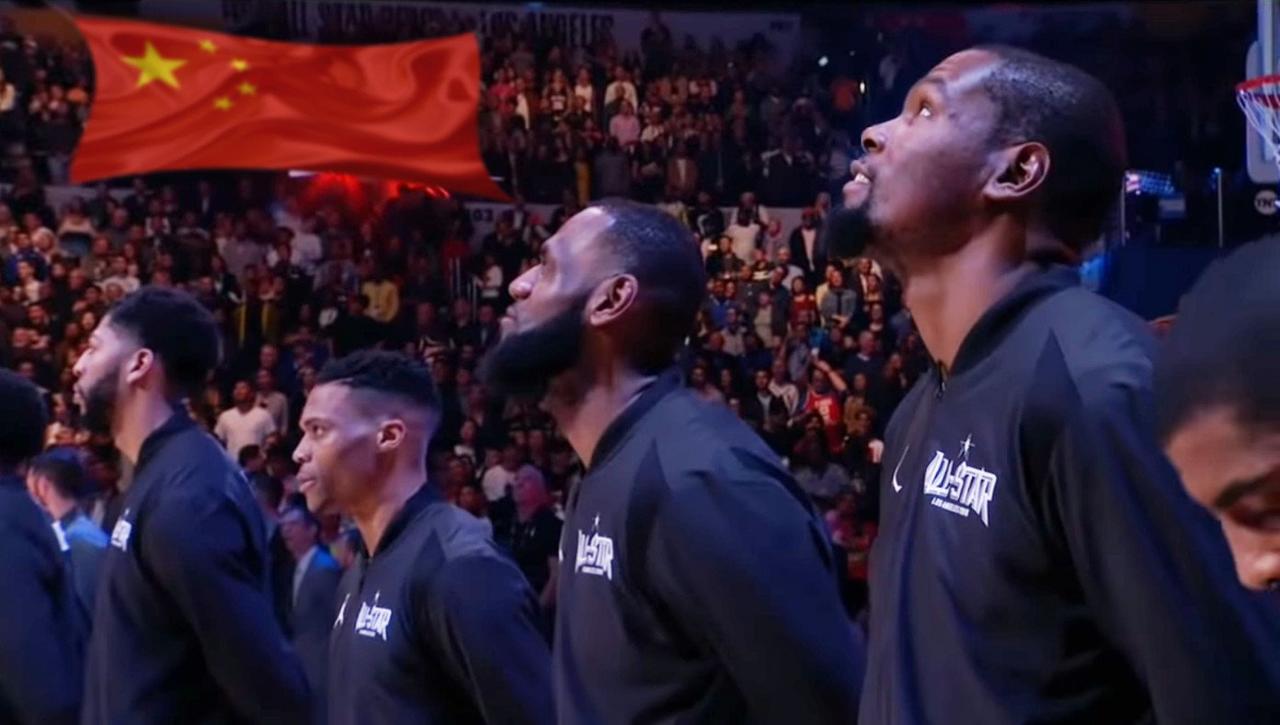
In an effort to salvage its relationship with China, the NBA is now requiring all players to stand for the Chinese national anthem at the beginning of every game.

The official song of the People’s Republic of China, “March of the Volunteers,” will be played at the start of all professional basketball games, whether at home or abroad. All players, fans, coaches, and employees will be required to stand and solemnly sing lyrics including the following:

Millions of but one heart we run towards the Communist tomorrow!

Build our homeland, guard our homeland, and fight gallantly.

March on! March on! March on!

We, for tens of thousands of generations to come,

Hold high the Flag of Mao Zedong, march on!

“We hope this gesture of goodwill will show China that we love them and there is no need for our multi-billion-dollar deal to fall through,” said NBA Commissioner Adam Silver. “March on, Mao!”

Silver then performed a soft jazz rendition of the tune and bowed low to the ground to show President Xi Jinping that he is very sorry.

Anyone who doesn’t comply will be shot, a beloved Chinese custom that should further smooth things over with the authoritarian regime.

Source: The Babylon Bee


Tyler Durden

Thu, 10/10/2019 – 15:10

Tags

via ZeroHedge News https://ift.tt/315FTUK Tyler Durden

Another Disaster? FAA Finds Cracks On Wings In 5% Of Older Boeing 737s 

Another Disaster? FAA Finds Cracks On Wings In 5% Of Older Boeing 737s 

At this rate, maybe President Trump is right, Boeing should change their name and rebrand the company. 

A new problem for Boeing has developed in the last several weeks, and it’s not related to the 737 MAX, but rather an earlier 737, called the 737 Next Generation, or 737NG.

After a comprehensive inspection of 737NGs across the world, Boeing has said 36 737NGs have developed cracked wing supports, resulting in emergency groundings of the damaged planes with pending repairs, USA Today reported.

The 36 planes only represent 5% of the 686 planes inspected. From 1997, Boeing produced 7,043 of the aircraft (as of Aug. 29, 2019 figures), there is no report on how many of these planes are currently flying and or how many Boeing plans to inspect. 

Several major carriers have already been affected by the major design flaw. 

Brazilian carrier GOL grounded 11 planes with pending repairs. Southwest Airlines grounded two planes with pending repairs, as well. 

“Boeing regrets the impact this issue is having on GOL, as well as our 737NG customers worldwide,” the company said in a statement. “We are actively working with our customers with inspection findings to procure parts, develop repair and replace plans, and provide all the technical support needed to safely return every impacted airplane to service as soon as possible.” 

USA Today says the cracks were discovered when several 737NGs were converted from passenger planes, stripped down to bare bones for future use in the air freight industry. What engineers found when they deconstructed the airplanes was surprising. 

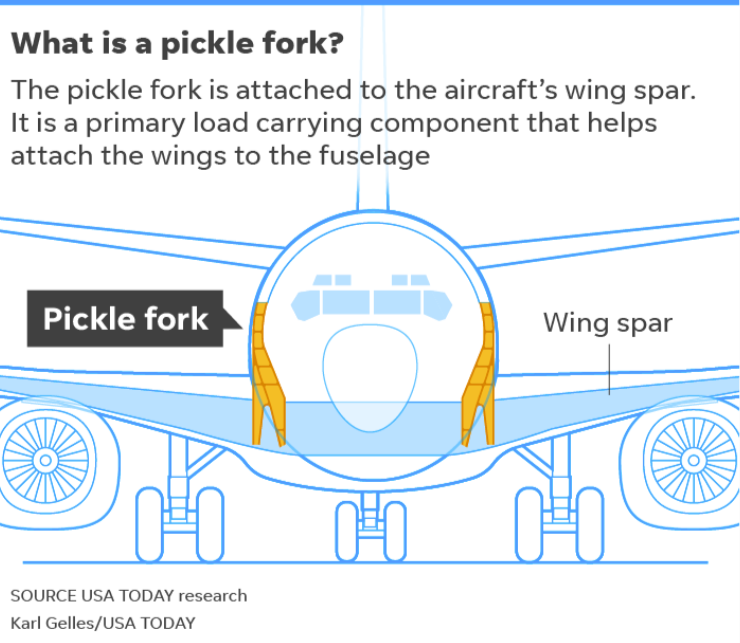
The damaged component is called the pickle fork, and it looks exactly like it sounds — a fork that attaches the wings to the fuselage. The cracks were discovered on 737NGs that were heavily flown. The FAA warns the cracks could “adversely affect the structural integrity of the airplane and result in loss of control of the airplane” if not fixed immediately. 

The news of cracked wings comes several days after European flight regulators raised new concerns about the flight-control system of the Boeing 737 MAX. 


Tyler Durden

Thu, 10/10/2019 – 14:55

via ZeroHedge News https://ift.tt/2VufrTm Tyler Durden

Does Volodymyr Zelenskiy’s Take on His Chat With Trump Show the President ‘Did Absolutely Nothing Wrong’?

“There was no blackmail,” Ukrainian President Volodymyr Zelenskiy said today, referring to his July 25 telephone conversation with Donald Trump, the focus of allegations that the president committed an impeachable offense by trading military aid for a Ukrainian investigation of former Vice President Joe Biden and his son. “They blocked the military aid before we had our conversation, but we did not discuss it. Later we discussed it with the defense minister and he said, ‘We have a problem. They’ve blocked this money.'”

Zelenskiy’s take on the conversation is relevant to the impeachment inquiry but not necessarily dispositive, as Trump unsurprisingly argues. “The President of the Ukraine just stated again, in the strongest of language, that President Trump applied no pressure and did absolutely nothing wrong,” Trump tweeted this morning. “He used the strongest language possible. That should end this Democrat Scam, but it won’t, because the Dems & Media are FIXED!”

Zelenskiy, who is counting on U.S. support against the military threat from Russia, understands that Trump is likely to remain president until January 2021 at least, and possibly for another four years after that. His benign interpretation of Trump’s conduct therefore should be taken with a grain of salt. It is exactly what you would expect him to say, especially if he believes Trump is using foreign policy to advance his own personal and political interests. But even if Zelenskiy is being completely candid, his impression of Trump’s intent does not prove that the president “did absolutely nothing wrong,” that he is not guilty of “high crimes and misdemeanors,” or even that did not violate any federal statutes.

Taking that last part first, a federal official can be guilty of soliciting a bribe under 18 USC 201 even if he is unsuccessful. That bribery statute applies to any official who “corruptly…seeks…anything of value…in return for…being influenced in the performance of any official act.” Receiving the bribe is not a necessary element of the offense.

Would it matter if Trump had in mind a quid pro quo that Zelenskiy himself did not infer? That’s hard to say.

A bribery conviction under 18 USC 201, the Supreme Court said in the 1999 case United States v. Sun-Diamond Growers of California, requires “a quid pro quo—a specific intent to give or receive something of value in exchange for an official act.” But it’s not clear how explicit that quid pro quo has to be.

Interpreting a different anti-corruption statute, the Hobbs Act, in the 1991 case McCormick v. United States, the Supreme Court said soliciting a campaign contribution amounts to extortion “only if the payments are made in return for an explicit promise or undertaking by the official to perform or not to perform an official act.” But in another Hobbs Act case decided the next year, Evans v. United States, the Court held that “the Government need only show that a public official has obtained a payment to which he was not entitled, knowing that the payment was made in return for official acts.” In a concurring opinion, Justice Anthony Kennedy explained that “the official and the payor need not state the quid pro quo in express terms, for otherwise the law’s effect could be frustrated by knowing winks and nods.”

These decisions have created some confusion in lower courts. “The Court did not explain whether Evans established a separate standard for prosecuting bribery outside of the campaign contribution context or whether Evans modified the standard set forth in McCormick,” notes a 2015 Journal of Constitutional Law article. “In addition, it remains unclear whether the explicit quid pro agreement as interpreted in McCormick and Evans applies to other federal bribery statutes.”

Depending on the answers to those questions, Zelenskiy’s understanding of Trump’s intent could be important. If the Supreme Court’s analysis of the Hobbs Act also applies to 18 USC 201, and if dirt on Biden, a leading contender to oppose Trump as the Democratic nominee in the 2020 presidential election, qualifies as a campaign contribution, the absence of an “explicit promise” would seem to preclude a bribery conviction, assuming that requirement still holds after Evans.

But if compromising information about Biden does count as a campaign contribution, that raises an issue under 52 USC 30121, which makes it a crime to solicit “a contribution or donation of money or other thing of value…in connection with a Federal, State, or local election” from a foreign national. Then again, treating information as a campaign contribution raises troubling First Amendment issues.

Another possibly relevant federal statute, George Mason law professor Ilya Somin notes in a Volokh Conspiracy postis 18 USC 1601. That law applies to someone who “knowingly causes or attempts to cause any person to make a contribution of a thing of value (including services) for the benefit of any candidate or any political party, by means of the denial or deprivation, or the threat of the denial or deprivation, of…any payment or benefit of a program of the United States” if that payment or benefit “is provided for or made possible in whole or in part by an Act of Congress.”

In this case, the “thing of value” would be dirt on Biden, which would clearly benefit Trump’s re-election campaign. The “payment or benefit” would be congressionally approved military aid. And since the offense includes attempts, it would not seem to matter whether Trump got what he wanted, or even whether Zelenskiy understood what Trump was trying to do.

The question of whether Trump broke the law, while relevant to the impeachment inquiry, is by no means the only factor in deciding whether his conduct qualifies as “high crimes and misdemeanors.” Some federal offenses—say, picking up an eagle feather or making an “unreasonable gesture” at a passing horse in a national park—might be minor enough that they do not justify impeachment. Conversely, some abuses of power might be outrageous enough to justify impeachment even if they are technically legal.

The president’s own lawyer has conceded that, even though the Constitution imposes no limits on Trump’s pardon power, “pardoning himself would just be unthinkable” and “would lead to probably an immediate impeachment.” In other words, a president can be guilty of impeachable conduct even if he couldn’t be convicted of a crime. The question is whether trading military aid for opposition research—assuming that is in fact what Trump tried to do—falls into the same category as a pre-emptive self-pardon.

from Latest – Reason.com https://ift.tt/2q38o8H
via IFTTT

Does Volodymyr Zelenskiy’s Take on His Chat With Trump Show the President ‘Did Absolutely Nothing Wrong’?

“There was no blackmail,” Ukrainian President Volodymyr Zelenskiy said today, referring to his July 25 telephone conversation with Donald Trump, the focus of allegations that the president committed an impeachable offense by trading military aid for a Ukrainian investigation of former Vice President Joe Biden and his son. “They blocked the military aid before we had our conversation, but we did not discuss it. Later we discussed it with the defense minister and he said, ‘We have a problem. They’ve blocked this money.'”

Zelenskiy’s take on the conversation is relevant to the impeachment inquiry but not necessarily dispositive, as Trump unsurprisingly argues. “The President of the Ukraine just stated again, in the strongest of language, that President Trump applied no pressure and did absolutely nothing wrong,” Trump tweeted this morning. “He used the strongest language possible. That should end this Democrat Scam, but it won’t, because the Dems & Media are FIXED!”

Zelenskiy, who is counting on U.S. support against the military threat from Russia, understands that Trump is likely to remain president until January 2021 at least, and possibly for another four years after that. His benign interpretation of Trump’s conduct therefore should be taken with a grain of salt. It is exactly what you would expect him to say, especially if he believes Trump is using foreign policy to advance his own personal and political interests. But even if Zelenskiy is being completely candid, his impression of Trump’s intent does not prove that the president “did absolutely nothing wrong,” that he is not guilty of “high crimes and misdemeanors,” or even that did not violate any federal statutes.

Taking that last part first, a federal official can be guilty of soliciting a bribe under 18 USC 201 even if he is unsuccessful. That bribery statute applies to any official who “corruptly…seeks…anything of value…in return for…being influenced in the performance of any official act.” Receiving the bribe is not a necessary element of the offense.

Would it matter if Trump had in mind a quid pro quo that Zelenskiy himself did not infer? That’s hard to say.

A bribery conviction under 18 USC 201, the Supreme Court said in the 1999 case United States v. Sun-Diamond Growers of California, requires “a quid pro quo—a specific intent to give or receive something of value in exchange for an official act.” But it’s not clear how explicit that quid pro quo has to be.

Interpreting a different anti-corruption statute, the Hobbs Act, in the 1991 case McCormick v. United States, the Supreme Court said soliciting a campaign contribution amounts to extortion “only if the payments are made in return for an explicit promise or undertaking by the official to perform or not to perform an official act.” But in another Hobbs Act case decided the next year, Evans v. United States, the Court held that “the Government need only show that a public official has obtained a payment to which he was not entitled, knowing that the payment was made in return for official acts.” In a concurring opinion, Justice Anthony Kennedy explained that “the official and the payor need not state the quid pro quo in express terms, for otherwise the law’s effect could be frustrated by knowing winks and nods.”

These decisions have created some confusion in lower courts. “The Court did not explain whether Evans established a separate standard for prosecuting bribery outside of the campaign contribution context or whether Evans modified the standard set forth in McCormick,” notes a 2015 Journal of Constitutional Law article. “In addition, it remains unclear whether the explicit quid pro agreement as interpreted in McCormick and Evans applies to other federal bribery statutes.”

Depending on the answers to those questions, Zelenskiy’s understanding of Trump’s intent could be important. If the Supreme Court’s analysis of the Hobbs Act also applies to 18 USC 201, and if dirt on Biden, a leading contender to oppose Trump as the Democratic nominee in the 2020 presidential election, qualifies as a campaign contribution, the absence of an “explicit promise” would seem to preclude a bribery conviction, assuming that requirement still holds after Evans.

But if compromising information about Biden does count as a campaign contribution, that raises an issue under 52 USC 30121, which makes it a crime to solicit “a contribution or donation of money or other thing of value…in connection with a Federal, State, or local election” from a foreign national. Then again, treating information as a campaign contribution raises troubling First Amendment issues.

Another possibly relevant federal statute, George Mason law professor Ilya Somin notes in a Volokh Conspiracy postis 18 USC 1601. That law applies to someone who “knowingly causes or attempts to cause any person to make a contribution of a thing of value (including services) for the benefit of any candidate or any political party, by means of the denial or deprivation, or the threat of the denial or deprivation, of…any payment or benefit of a program of the United States” if that payment or benefit “is provided for or made possible in whole or in part by an Act of Congress.”

In this case, the “thing of value” would be dirt on Biden, which would clearly benefit Trump’s re-election campaign. The “payment or benefit” would be congressionally approved military aid. And since the offense includes attempts, it would not seem to matter whether Trump got what he wanted, or even whether Zelenskiy understood what Trump was trying to do.

The question of whether Trump broke the law, while relevant to the impeachment inquiry, is by no means the only factor in deciding whether his conduct qualifies as “high crimes and misdemeanors.” Some federal offenses—say, picking up an eagle feather or making an “unreasonable gesture” at a passing horse in a national park—might be minor enough that they do not justify impeachment. Conversely, some abuses of power might be outrageous enough to justify impeachment even if they are technically legal.

The president’s own lawyer has conceded that, even though the Constitution imposes no limits on Trump’s pardon power, “pardoning himself would just be unthinkable” and “would lead to probably an immediate impeachment.” In other words, a president can be guilty of impeachable conduct even if he couldn’t be convicted of a crime. The question is whether trading military aid for opposition research—assuming that is in fact what Trump tried to do—falls into the same category as a pre-emptive self-pardon.

from Latest – Reason.com https://ift.tt/2q38o8H
via IFTTT

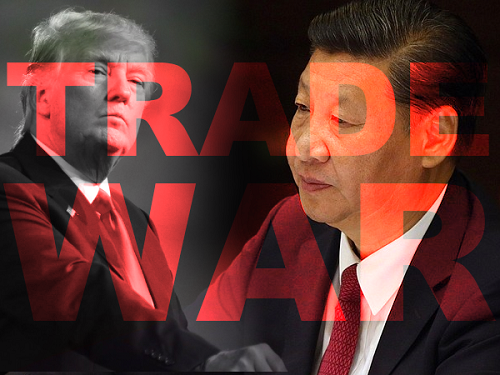
Here’s How The New US-China Trade Talks May End

Here’s How The New US-China Trade Talks May End

Authored by Brandon Smith and originally published at Birch Gold Group,

With the U.S. and China in the midst of a new round of high level trade talks, this Thursday marks 22 months since tariffs were launched and the trade war began.

Far from being “easy to win”, the trade war has lasted far longer than most analysts in the mainstream and alternative media predicted. In past articles, I have warned that the trade war itself is probably not meant to be won at all; rather, it is a massive distraction and a convenient scapegoat as global banks set the implosion of the Everything Bubble in motion. I continue to stand by this assessment, which is why I think it is unlikely that the current talks with China will accomplish much of anything.

This conclusion runs in stark contrast to all the hype we heard in the investment community in September. The way stock markets levitated, one would have thought a deal was assured. Never underestimate the power of blind optimism, I suppose. I believe there are a very limited number of end games to the meeting, none of which will result in an actual “deal”. However, it’s important to understand the dynamics at play here.

First and foremost, if we are to approach the trade war from a mere surface examination, there is really no incentive for China to capitulate to Trump’s demands. There is only one year left until the 2020 elections, and while BOTH economies are certainly seeing a downward plunge, China is hardly crippled by tariffs on exports to the U.S. China can simply bide its time, waiting to see how the U.S. election unfolds. The more unstable the U.S. economy is in 2020, the less likely it will be that Trump will win a second term. Trump has tied himself so completely to the performance of the economy and stock markets that whatever happens, he now owns the end result.

The U.S. only accounts for 18% of total Chinese exports, which is not a small amount to be sure, but nowhere near enough leverage to push China into long-term concessions. China has already begun replacing U.S. agricultural products by turning to alternative markets in countries like Brazil and Mexico. The meme six months ago among trade war cheerleaders was that “the Chinese people would be starving within months without U.S. soy and pork”, and the Chinese government would “have a revolution on its hands.” I hope these people now see how ridiculous this assertion is. The U.S. is not the only game in town, there are plenty of other agricultural markets in the world.

China is the largest exporter/importer in the world and the largest manufacturing hub. With such infrastructure and a cheap labor force, the nation is much more economically durable than many analysts give them credit for. The issue of China’s debt creation is often brought up as evidence that their economy is on the verge of collapse. I would point out, though, that China’s debt bonanza was actually planned. In fact, China’s inclusion in the IMF’s Special Drawing Rights basket in 2016 REQUIRED them to circulate vast amounts of debt instruments in order to increase the liquidity of their markets and their currency.

Beyond foreign trade, China has been increasing their reliance on domestic consumption over exports. Domestic consumption accounted for 78% of China’s GDP growth in 2018 and around 40% of total GDP. The loss of the U.S. consumer is not enough to undo China’s economy. Period.

China’s holdings of U.S. Treasuries are still declining, and the nation has increased the pace of its gold purchases for the tenth straight month. This shows that the Chinese are hedging for a long haul conflict with the U.S.

It is important to note here that I’m not endorsing the way the Chinese government runs the economy or how they manage their society. They are, for all intents and purposes, collectivist monsters. The problem is that other collectivist monsters in the west have deemed China useful. As George Soros once publicly admitted, China is going to become the “economic motor” of the “new world order”, replacing the U.S. consumer. The fall of China is simply not in the cards as they see it.

So, here is the bottom line:

Even when we set aside all the geopolitical obstacles to a trade deal, including such problems as the protests in Hong Kong or the breakdown of denuclearization talks with North Korea, there is nothing compelling China to make a deal in the near term, and this makes the trade talks this month rather predictable.

The idea that establishment figures within the Trump White House are completely unaware of these factors is a bit absurd. And so, along with the various advantages the trade war presents as a distraction for global banks, I can only conclude that the trade war is nothing more than Kabuki theater. The ongoing pattern of U.S.-China tariff announcements supports this theory, and this presents us with two possible outcomes.

The first likely outcome is that trade talks will very quickly fall apart. The U.S. recently added 28 Chinese firms to the “Entity List”, which restricts their ability to do business in the U.S. Rumors of potential restrictions on Chinese purchases of U.S. equities have also caused heightened tensions. China has also narrowed the parameters of what they are willing to discuss in terms of concessions only days before the meeting, indicating that serious talks will not be taking place.

This scenario will probably result in an immediate selloff in global stocks, though it’s possible that the investment community may buy in the short term under the assumption that, in order to quell market fears, the Federal Reserve will respond with more rate cuts or promises of Quantitative Easing. In the longer term (the next two months) under this outcome, I expect stocks to plummet and for gold to resume its upward trend established this summer. (Once China’s “Golden Week” ends and the nation returns to business, the rally will return; a lost trade deal will only accelerate matters further.)

A breakdown in talks would also spur on more tariffs, or cause both Trump and China to make pending tariffs official. Renewed talks will be suggested, but no dates will be confirmed, and this time the wait for another meeting will be much longer.

The second likely scenario is the sudden announcement by both sides of a “positive discussion” and a potential deal. This will be yet another head fake, and there will be no deal, but it will certainly add enthusiasm in the markets for a few weeks; at least, until people realize that the optimism was all a farce. This has been a common cycle in the trade dispute, with Chinese and U.S. officials injecting rumors of an inevitable deal, only to dash hopes around a month later with abrupt tariff increases and angry rhetoric.

In this case, look for equities to levitate for a short time. If the Fed holds rates steady as Powell has said the central bank would this month, then there will be a slower moving downtrend until the Brexit event is either decided or postponed at the end of October. Precious metals will still climb as the Chinese reenter the market and continue to buy.

The trade war is a boon for global banks, as it hides their culpability for the crash of the biggest financial bubble in modern history. There are only two ways it will end: After the ongoing crash hits peak pain and a Lehman moment ensues, or another even bigger distraction (such as a shooting war somewhere in the world) takes its place. What is less certain is how the public will react to this fiscal earthquake. Will the majority believe the mainstream narrative that it was the trade war that caused the crash instead of the central and international banks? Or, will they see through the ruse?

For those that already have their eyes open, I suggest ample preparation to protect your savings as well your ability to provide for your family’s security. The end of 2019 is about to get even more interesting.


Tyler Durden

Thu, 10/10/2019 – 14:40

via ZeroHedge News https://ift.tt/2Bcj3QV Tyler Durden

Restrictions Make Vaping the Next Lucrative Product Line for Cigarette Smugglers

Minnesota is poised to join the panic-driven crusade against vaping, a move that’s guaranteed to drive even more business through well-established smuggling channels.

In Minnesota, as elsewhere, cigarette smuggling is well established. In a 2012 article, Tax Foundation economist Patrick Fleenor traced the black market import of smokes right back to the imposition of a tax in 1947.

“By the mid-1950s, official figures show, the sale of legal, tax-paid cigarettes had plunged 20 percent below the national level,” Fleenor wrote. “Frustrated by the inability to collect the taxes due, the state’s chief cigarette tax administrator quipped that ‘even the attorneys who come into my office are smoking untaxed cigarettes.'”

Decades later, the Minnesota Department of Revenue touts new law enforcement efforts intended to recover “hundreds of thousands of dollars” in lost tobacco taxes because of cigarettes smuggled from elsewhere. The sources include Indiana, where the 99.5 cent per pack tax offers real savings to Minnesota consumers who balk at paying their state’s $3.59 per pack take.

Well, good luck with that. As Fleenor pointed out in 2012, officials have been trying to collect all of the revenue they believe they’re due since the middle of the last century. And as they’ve pushed the tax rate ever-further, the gap has widened between what they want to collect and what they actually take in.

The Mackinac Center for Public Policy, which tracks tobacco smuggling nationally, estimates that illegally imported smokes now account for 34.62 percent of all cigarettes sold in Minnesota. That takes about a $300 million dollar bite out of revenue.

“Lawmakers often think that raising cigarette taxes are a ‘win-win’—generating more revenue for state government and improving public health by making it harder to legally purchase cigarettes,” note Mackinac’s Michael D. LaFaive and Todd Nesbit. “Studies suggest, however, that states with high excise taxes are more likely to have high cigarette smuggling rates.”

Minnesota has fueled a highly lucrative black market in tobacco products simply by raising taxes high enough to make it extremely profitable for small entrepreneurs and big criminal networks alike to smuggle in smokes from places where tobacco can be purchased more cheaply. That means Indiana, of course. But with enough money at stake, there’s now a booming trade in counterfeit cigarettes from overseas.

If high taxes on readily available goods create illegal markets, just imagine what happens under restrictions and outright bans that make products available only from illegal sources. As we’ve seen during Prohibition and with the War on Drugs, it drives willing consumers to underground dealers.

And it’s about to happen around the country again, with Massachusetts and Michigan already imposing tough restrictions on e-cigarettes, and Minnesota’s Governor Tim Walz favoring a ban on all flavored vaping products.

The legal changes are largely a perverse panic-driven response to health dangers posed by black-market vaping products containing THC as well as a witches’ brew of other, potentially dangerous, ingredients. By banning legal vaping products, officials seem set on driving people back to the already-smuggled tobacco that they abandoned for safer e-cigarettes, and to create a new black market for underground vaping products.

“Smuggling of vaping products would likely become a new profit source for today’s large-scale cigarette smugglers,” warned Mackinac’s LaFaive when the anti-vaping panic set in among politicians last month. “They’ve already established networks in the state; adding supplies of small, flavored vaping cartridges or liquids to their supply chain would be all too easy.”

Evidence of increased demand for smuggled vaping products didn’t take long to surface.

“Smoke shops in New Hampshire say they’ve seen a surge in business after Massachusetts implemented a four-month ban on the sale of vaping products,” WBUR reported this week.

“I think it’s stupid that they banned it, and I’m going to keep vaping anyways,” one cross-border customer told reporters.

That’s the sort of motivated consumer who has already driven a quarter of the Bay State’s highly taxed cigarette market into the hands of criminal networks. Now politicians seem destined to hand a whole new product line to smugglers, while strengthening demand for their usual goods.

Actually, when we remember that the driving force behind vaping restrictions are health dangers associated with black market products containing THC, smuggled e-cigarettes and associated products aren’t a new line at all. They’re just an extension of an existing one.

“It seems there’s too much conflating these tragic lung injuries with store bought brands of regulated, legal e-cigs like Juul and NJOY; and far too little blaming THC, CBD, and bootleg nicotine vapes,” said former FDA commissioner, Scott Gottlieb.

Yup. And by conflating legal vaping products with black market ones, and e-cigarettes with tobacco, for the purposes of restrictions and bans, officials are delivering a large and lucrative market to underground operators who have a proven track record of defying laws and frustrating enforcers. Building that black market will very likely increase the dangers associated with goods produced and distributed by criminals rather than by legitimate businesses.

Whatever officials in Minnesota and elsewhere think they’re doing through endless press releases about the latest doomed effort to crack down on smuggled cigarettes—now joined by vaping products—they’re really just demonstrating their impotence. They long ago demonstrated that they’re not up to the task of fighting the black markets that their excessive taxes and restrictions create.

from Latest – Reason.com https://ift.tt/2MvMmD1
via IFTTT

Google Caves To China: Pulls “Revolution Of Our Times” Hong Kong Game From App Store

Google Caves To China: Pulls “Revolution Of Our Times” Hong Kong Game From App Store

Google is the latest U.S. company caving into China’s demands for removing any content that incorporates support for pro-democracy protestors in Hong Kong.

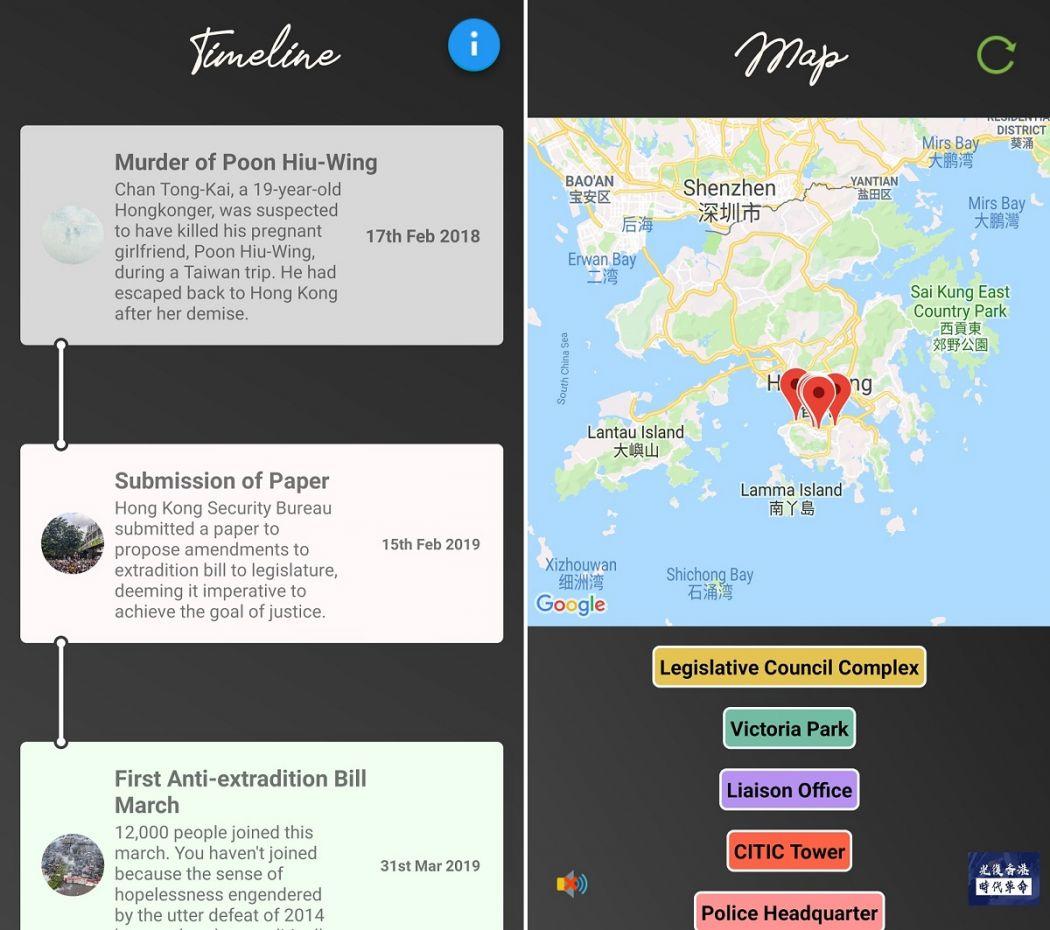
Reuters published a series of headlines around 11 am est. Tuesday, that details how Google removed a role-playing mobile app game called The Revolution of Our Times from the Google Play app store, which supports and aids pro-democracy protestors. 

  • FOUND ‘THE REVOLUTION OF OUR TIMES’ APP TO BE VIOLATING POLICY PROHIBITING DEVELOPERS FROM CAPITALIZING ON SENSITIVE EVENTS, & SUSPENDED IT – GOOGLE SPOKESMAN

  • ALPHABET’S GOOGLE SAYS HAS PULLED FROM APP STORE A GAME RELATED TO HONG KONG PROTESTS

  • GOOGLE SAYS PULLED HONG KONG GAME DUE TO POLICY THAT PROHIBITS MAKING PROFIT FROM ONGOING CONFLICTS – Reuters News

According to the Hong Kong Free Press (HKFP), the game was pulled from the Google Play app store earlier this week after it went viral on Hong Kong’s Reddit-like forum. As shown in the headlines above, Google banned the game for violating the platform’s “sensitive events policy.”

The app is “a choice-based story game where the player takes on the role of a Hong Kong protester,” said HKFP. 

Players of the game can purchase protective gear and weapons to battle government personnel. While playing the game, there’s a constant risk of being arrested by police, and even the chance of death, similar to what is seen in the real protests. 

The developer of the game told HKFP that 80% of the game’s earnings are being diverted to a defense fund for arrested protestors. 

He hopes social media can make the game go viral across the world. This would allow the app to generate enough revenue that would feed the defense fund. 

The app also has a live events map that details current Hong Kong protests. 

The game was only available on the app store for three days, and it was on Tuesday evening when Google Play suspended the app. 

“Before suspending me, Google Play did not give any warning,” the developer told HKFP. “But I noticed that for three days after it was published, I couldn’t search for it by name on Play Store, but only access the app via the app ID.”

“So it felt strange, and I wondered whether they would eventually censor me.”

The developer isn’t sure whether the game was taken down by user complaints, or if the Chinese government forced Google to remove the game. “I only saw a handful of ‘blue-ribbons’ [pro-Beijing supporters] criticize it and rate it one star.”

An alarming trend has been developing, one where U.S. companies are caving into the demands of the Chinese government. This is because if companies lose their ability to participate in the Chinese economy — they would incur devastating losses. 

China’s ban on NBA broadcasts earlier this week was a wake-up call for U.S companies who support Hong Kong protestors


Tyler Durden

Thu, 10/10/2019 – 14:25

via ZeroHedge News https://ift.tt/2IzFSSz Tyler Durden

Restrictions Make Vaping the Next Lucrative Product Line for Cigarette Smugglers

Minnesota is poised to join the panic-driven crusade against vaping, a move that’s guaranteed to drive even more business through well-established smuggling channels.

In Minnesota, as elsewhere, cigarette smuggling is well established. In a 2012 article, Tax Foundation economist Patrick Fleenor traced the black market import of smokes right back to the imposition of a tax in 1947.

“By the mid-1950s, official figures show, the sale of legal, tax-paid cigarettes had plunged 20 percent below the national level,” Fleenor wrote. “Frustrated by the inability to collect the taxes due, the state’s chief cigarette tax administrator quipped that ‘even the attorneys who come into my office are smoking untaxed cigarettes.'”

Decades later, the Minnesota Department of Revenue touts new law enforcement efforts intended to recover “hundreds of thousands of dollars” in lost tobacco taxes because of cigarettes smuggled from elsewhere. The sources include Indiana, where the 99.5 cent per pack tax offers real savings to Minnesota consumers who balk at paying their state’s $3.59 per pack take.

Well, good luck with that. As Fleenor pointed out in 2012, officials have been trying to collect all of the revenue they believe they’re due since the middle of the last century. And as they’ve pushed the tax rate ever-further, the gap has widened between what they want to collect and what they actually take in.

The Mackinac Center for Public Policy, which tracks tobacco smuggling nationally, estimates that illegally imported smokes now account for 34.62 percent of all cigarettes sold in Minnesota. That takes about a $300 million dollar bite out of revenue.

“Lawmakers often think that raising cigarette taxes are a ‘win-win’—generating more revenue for state government and improving public health by making it harder to legally purchase cigarettes,” note Mackinac’s Michael D. LaFaive and Todd Nesbit. “Studies suggest, however, that states with high excise taxes are more likely to have high cigarette smuggling rates.”

Minnesota has fueled a highly lucrative black market in tobacco products simply by raising taxes high enough to make it extremely profitable for small entrepreneurs and big criminal networks alike to smuggle in smokes from places where tobacco can be purchased more cheaply. That means Indiana, of course. But with enough money at stake, there’s now a booming trade in counterfeit cigarettes from overseas.

If high taxes on readily available goods create illegal markets, just imagine what happens under restrictions and outright bans that make products available only from illegal sources. As we’ve seen during Prohibition and with the War on Drugs, it drives willing consumers to underground dealers.

And it’s about to happen around the country again, with Massachusetts and Michigan already imposing tough restrictions on e-cigarettes, and Minnesota’s Governor Tim Walz favoring a ban on all flavored vaping products.

The legal changes are largely a perverse panic-driven response to health dangers posed by black-market vaping products containing THC as well as a witches’ brew of other, potentially dangerous, ingredients. By banning legal vaping products, officials seem set on driving people back to the already-smuggled tobacco that they abandoned for safer e-cigarettes, and to create a new black market for underground vaping products.

“Smuggling of vaping products would likely become a new profit source for today’s large-scale cigarette smugglers,” warned Mackinac’s LaFaive when the anti-vaping panic set in among politicians last month. “They’ve already established networks in the state; adding supplies of small, flavored vaping cartridges or liquids to their supply chain would be all too easy.”

Evidence of increased demand for smuggled vaping products didn’t take long to surface.

“Smoke shops in New Hampshire say they’ve seen a surge in business after Massachusetts implemented a four-month ban on the sale of vaping products,” WBUR reported this week.

“I think it’s stupid that they banned it, and I’m going to keep vaping anyways,” one cross-border customer told reporters.

That’s the sort of motivated consumer who has already driven a quarter of the Bay State’s highly taxed cigarette market into the hands of criminal networks. Now politicians seem destined to hand a whole new product line to smugglers, while strengthening demand for their usual goods.

Actually, when we remember that the driving force behind vaping restrictions are health dangers associated with black market products containing THC, smuggled e-cigarettes and associated products aren’t a new line at all. They’re just an extension of an existing one.

“It seems there’s too much conflating these tragic lung injuries with store bought brands of regulated, legal e-cigs like Juul and NJOY; and far too little blaming THC, CBD, and bootleg nicotine vapes,” said former FDA commissioner, Scott Gottlieb.

Yup. And by conflating legal vaping products with black market ones, and e-cigarettes with tobacco, for the purposes of restrictions and bans, officials are delivering a large and lucrative market to underground operators who have a proven track record of defying laws and frustrating enforcers. Building that black market will very likely increase the dangers associated with goods produced and distributed by criminals rather than by legitimate businesses.

Whatever officials in Minnesota and elsewhere think they’re doing through endless press releases about the latest doomed effort to crack down on smuggled cigarettes—now joined by vaping products—they’re really just demonstrating their impotence. They long ago demonstrated that they’re not up to the task of fighting the black markets that their excessive taxes and restrictions create.

from Latest – Reason.com https://ift.tt/2MvMmD1
via IFTTT
Our Time/Labor Is Finite, But Money Is Infinite

Our Time/Labor Is Finite, But Money Is Infinite

Authored by Charles Hugh Smith via OfTwoMinds blog,

Once we understand this mechanism, we understand that labor can never get ahead.

I’ve been pondering a comment longtime correspondent Drew P. emailed me in response to my post, What’s Holding Up the Market?“Our time/labor is finite, but money is infinite.” Drew explained that creating new fiat currency and injecting it into a closed system (our financial system) controls and restrains the value of our time and labor, past, present and future.

This is a profound insight into why our financial system is inherently exploitive and why it is unsustainable.

As citizens of Venezuela and other nations have discovered, the power to create infinite sums of currency devalues the fruits of our labor in the past, present and future. As new currency is injected into a stagnating economy, the purchasing power of labor’s earnings declines. The only way to keep from sinking is to borrow money, which siphons off labor’s earnings via debt service to those who get the new fiat currency: the banks, financiers and corporations.

The near-infinite creation of new currency devalues past labor by destroying the value of pensions and savings, devalues the value of today’s labor and of labor’s future earnings.

Labor is stripped of value in two ways: the purchasing power of labor’s earnings are steadily devalued, and much of the remaining earnings are devoted to servicing debt that was taken on to stay afloat financially.

Meanwhile, those receiving the central banks’ free money for financiers can use this new currency (i.e. low-cost credit) to buy up income-producing assets and leverage speculations that reap enormous capital gains, as assets are never allowed to drop in value because “the Fed has our backs.”

And why does “the Fed has our backs”? Because the system implodes once debt and currency creation stop expanding.

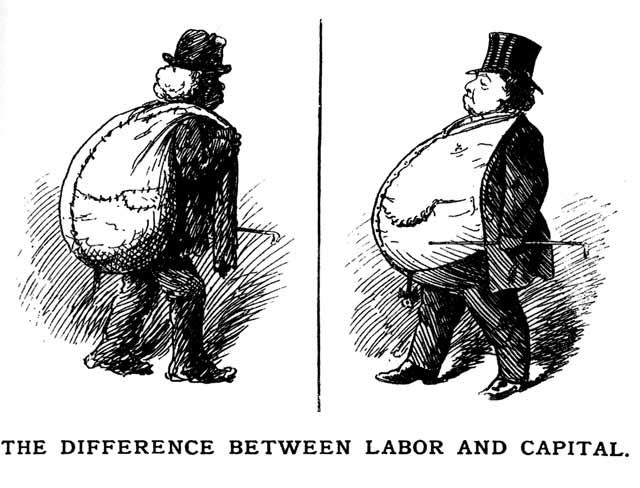
Once we understand this mechanism, we understand that labor can never get ahead. No matter how hard one works, or how much one saves, the amount of “money” (fiat currency) that can be created and distributed to those at the top of the wealth-power pyramid will always be near-infinite, and the more credit / debt / currency that’s issued, the greater the loss of labor’s purchasing power.

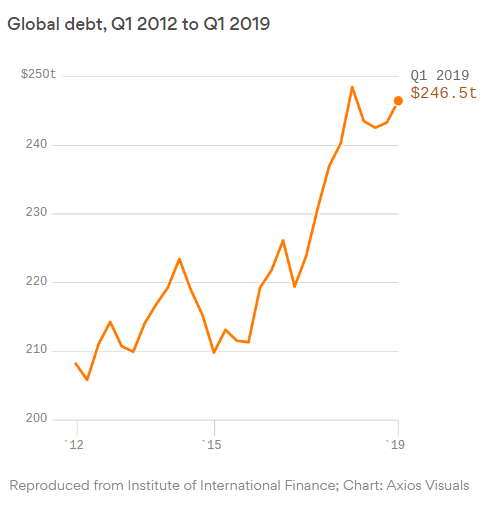
This simple mechanism–labor is finite but money is infinite–is driving the world’s social, political and financial unraveling. Global debt now totals $246 trillion, a staggering 320% of global GDP, and there is nothing restraining it from climbing to $300 trillion, $400 trillion and $500 trillion, while labor’s earnings are stealthily and relentlessly stripped of purchasing power.

The global debt binge begins anew

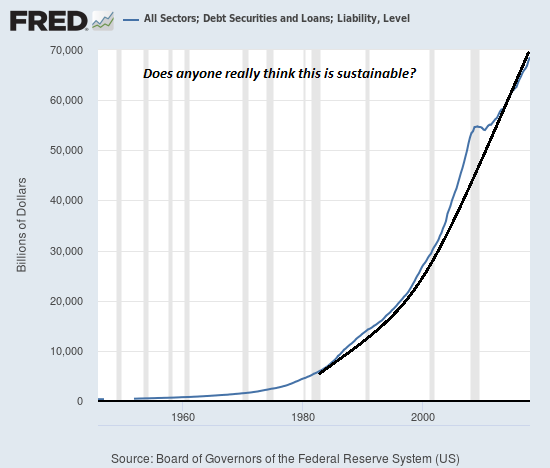
Here’s America’s debt binge, rising geometrically in near-infinite expansion:

Here is global debt, a jagged line that moves ever higher:

Drew reminded me that without finite money, i.e. sound money, labor will continue to be enslaved to debt and a steady depreciation of the purchasing power of labor’s earnings.

Thank you, Drew, for reminding me with such an impactful, succinct explanation: “Our time/labor is finite, but money is infinite.”

My proposed solution is a labor-backed cryptocurrency which can only created by labor and only distributed to labor. I outline how this would work in my books A Radically Beneficial World and Money and Work Unchained.

*  *  *

Pathfinding our Destiny: Preventing the Final Fall of Our Democratic Republic ($6.95 ebook, $12 print, $13.08 audiobook): Read the first section for free in PDF format. My new mystery The Adventures of the Consulting Philosopher: The Disappearance of Drake is a ridiculously affordable $1.29 (Kindle) or $8.95 (print); read the first chapters for free (PDF). My book Money and Work Unchained is now $6.95 for the Kindle ebook and $15 for the print edition. Read the first section for free in PDF format. If you found value in this content, please join me in seeking solutions by becoming a $1/month patron of my work via patreon.com. New benefit for subscribers/patrons: a monthly Q&A where I respond to your questions/topics.


Tyler Durden

Thu, 10/10/2019 – 14:11

via ZeroHedge News https://ift.tt/322gc8U Tyler Durden

Watch: CNN Reporter Abruptly Muzzled While Asking NBA Stars About China

Watch: CNN Reporter Abruptly Muzzled While Asking NBA Stars About China

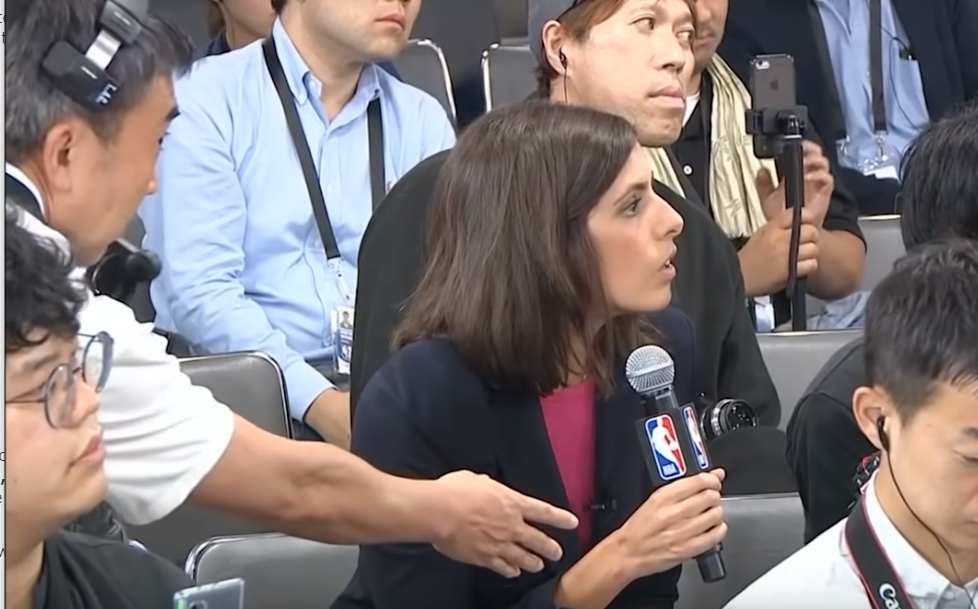
While asking a question during a press conference in Japan, CNN’s Christina Macfarlane was abruptly cut off by an NBA spokeswoman after asking Houston Rockets stars James Harden and Russell Westbrook what they thought about freedom of expression in light of this week’s controversy over a now-deleted pro-Hong Kong tweet made by general manager Daryl Morey. 

“The NBA has always been a league that prides itself on its players and coaches being able to speak out openly about political and social affairs. I just wonder after the events of this week, and the fallout we’ve seen, whether you would both feel differently about speaking out in that way in the future?” Mcfarlane asked – only to be promptly intercepted by an NBA staffer who insisted on “basketball questions only.” 

It’s a legitimate question,” Mcfarlane replied as a man moved to yank her microphone away, adding “This is an event that happened this week.” 

“I understand that. It’s a question that’s already been answered,” replied the NBA rep. 

Neither Harden nor Westbrook weighed in on the matter. 

The NBA has been tight-lipped after bending the knee to communist China – which pulled nearly all sponsorship of the league after a now-deleted pro-Hong Kong tweet by Morey resulted in outrage. 

After Morey’s tweet triggered Beijing, Harden profusely apologized, proclaiming “We apologize. You know, we love China. We love playing there” in an awkward video while standing next to Westbrook, adding “For both of us individually, we go there once or twice a year. They show us the most important love.” 

(h/t Breitbart’s Josh Caplan)


Tyler Durden

Thu, 10/10/2019 – 13:55

Tags

via ZeroHedge News https://ift.tt/2pdz4mx Tyler Durden