“Things Are Deteriorating Quite Fast”: Europe Emerges As World’s “Weakest Link”

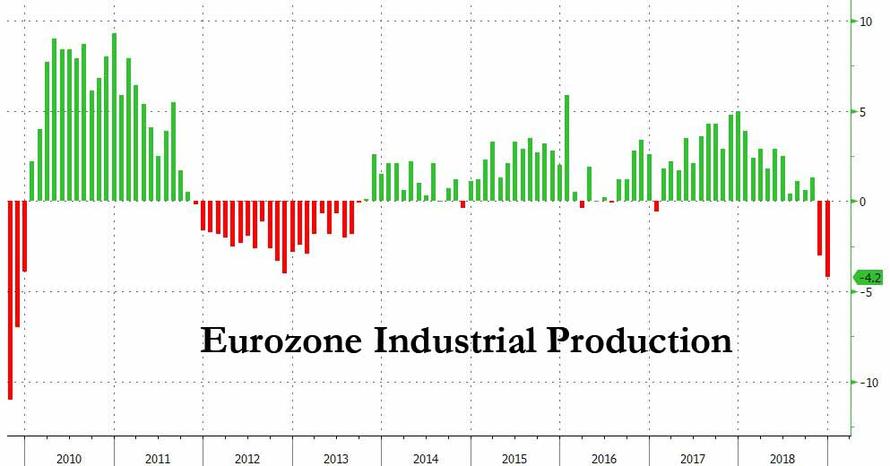
Last week, when looking at the latest regional Industrial Production figures out of European nations, we made a simple observation: while GDP has yet to confirm, Europe is now in a recession.

And according to Bloomberg, just a few days later, Europe has indeed emerged as the world’s weakest link, and perhaps more so than the outcome of the US-China trade war, “it is Europe that increasingly looks like the biggest threat to global growth.”

As evidence, Bloomberg cites the same data that we highlighted last week, namely that industrial production across the 19-nation euro area is “falling at the fastest pace since the financial crisis, and deteriorating demand is evident as the region finds itself squeezed between international and domestic drags.” According to Wednesday data, industrial output for the Euro area slumped 0.9% in December from November, double the forecast, while the annual decline was the steepest since 2009.
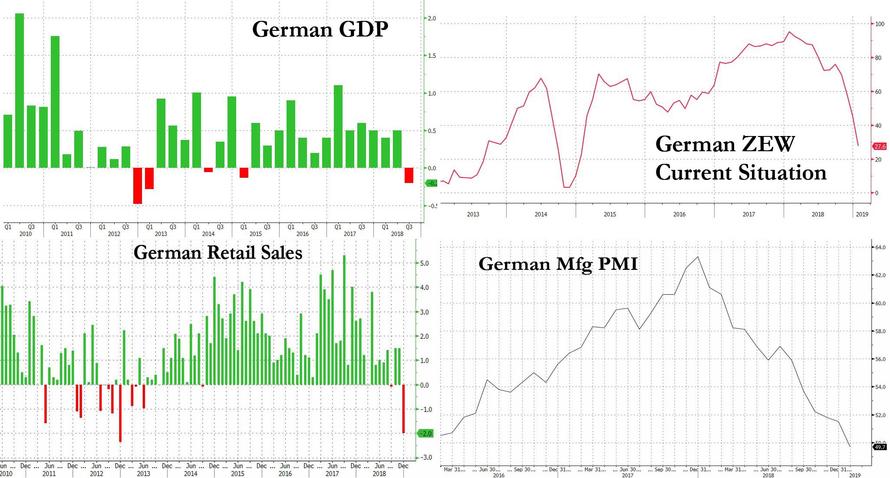
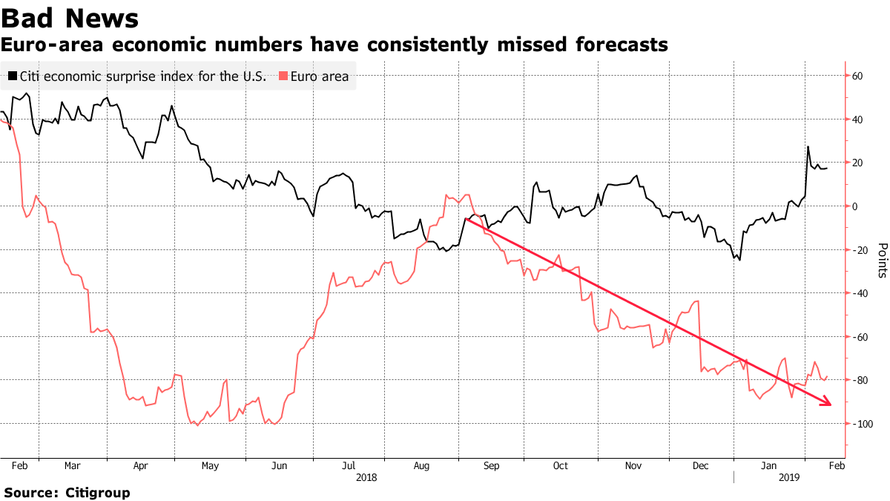
That leaves Europe’s GDP at risk of barely reaching 1% in 2019, a sharp slowdown from 2018, with even continental powerhouse Germany in trouble. That, of course, is a polite way of saying that Europe is on the verge of a recession, if not already in one – as we claimed previously – and as seen in the following chart showing the recent series of disappointments in European economic data relative to expectations.
Making matters worse, Europe is sliding into contraction at the worst possible time: just as the ECB has ended its QE, although the silver lining is that any speculation for a rate hike by Mario Draghi have been permanently crushed, and like in the US, the only question now is when will QE return.

As a result, the Bloomberg euro index is near its lowest since mid-2017 and European stocks have never been cheaper relative to bonds in terms of yield gap. And investors are not happy.

“The concern I have right now is in Europe,” said Salman Ahmed, chief investment strategist at Lombard Odier. “Its clear China is going through a slowdown, but there’s also a strong amount of stimulus in the pipeline. However, in Europe, things are deteriorating quite fast.”

While Europe is no stranger to sluggish growth, the extent and suddenness of the latest bout of weakness is different, as unlike previous episodes, it “reflects that the slowdown is hitting the core of the region.

As Bloomberg notes, while the likes of Greece were at the root of past sluggishness, this time Germany’s prospects are crumbling after a protracted slump in manufacturing. Household spending has also ground to a halt in France, which is beset by the Yellow Vest protests.

“Together those two countries account for about half the euro-area economy”, and any coordinated contraction in the two assures a Eurozone recession, best summarized by the following quote from Ludovic Subran, deputy chief economist at Allianz.: “If France stops consuming and Germany stops producing you have a major problem in the euro zone.”

It’s not just the economy, however, as Europe’s demons that were previously stuffed under the rug, are once again starting to re-emerged: Italian bond yields, after a torrid burst of buying in the past few months, have once again started to creep higher amid doubts over fiscal management, the health of banks is questionable and Brexit remains unresolved. Yesterday’s decision by Santander not to call a contingent convertible note only adds to the woes plaguing Europe’s banks. Oh, and just one more observation: Deutsche Bank. Nuff said.

And speaking of the devil, Deutsche Bank’s chief economist David Folkerts-Landau said this month that “downside risks have risen sharply in Europe” (he did not discuss his employer’s key role therein).

As for the reasons behind Europe’s collapsing economy, they have been widely discussed previously, and revolve mostly around China’s economic slowdown, with automakers such as Fiat citing weaker demand in the world’s second-largest economy. That’s filtering through to other companies, “with Brussels-based Umicore saying last week that profit will be held back by the global automotive slowdown.”

Even companies reporting resilience in China are wary. L’Oreal chief Jean-Paul Agon said this month the economic backdrop will remain “volatile and unpredictable,” though the French cosmetics giant also posted forecast-beating sales helped by the “dynamism of Chinese consumers.”

All of this is known; what is not known is what Europe can or will do if its slowdown fails to reverse: “If it does get worse, there’s a question over how authorities could respond, and the European Central Bank has little left in the tank.”

Yet another unprecedented central bank intervention may still be needed. According to Bloomberg, Germany’s downside may be limited by “record-low unemployment along with modest fiscal stimulus. And Bloomberg Economics research suggests that spillovers from Germany to other euro nations is usually containable. That’s partly because it has a different structure and its shocks are country-specific.”

Unless, of course, this time is different, with it is because even with a slumping Euro, Germany’s export powerhouse is unable to capitalize on this export subsidy.

Meanwhile, like Deutsche Bank, Goldman recently downgraded its near-term euro-area expectations, although it remains optimistic on the longer-term outlook, and sees an improvement later this year, thanks to a boost from lower oil prices and fiscal policy. ABN Amro economist Aline Schuling shares the view: “The domestic economy is quite resilient. You could very well have a negative first quarter and a weakish second, but after that it should pick up again. I don’t expect a deep or prolonged recession.”

Which is bad news for traders, now that the world is back in a global race to the rates bottom, because the deeper and more prolonged the recession, the more assured yet another major intervention by the ECB.

via ZeroHedge News http://bit.ly/2IccdRE Tyler Durden

Macro Frost, Markets Hot: “Makes You Wonder Who’s Doing All The Buying”

Authored by Sven Henrich via NorthmanTrader.com,

Markets are red hot, but it keeps getting downright frosty in macro land. Bulls will say none of this matters because an easy Fed trumps fundamentals. And that may turn out to be correct, but it’s too early to tell.

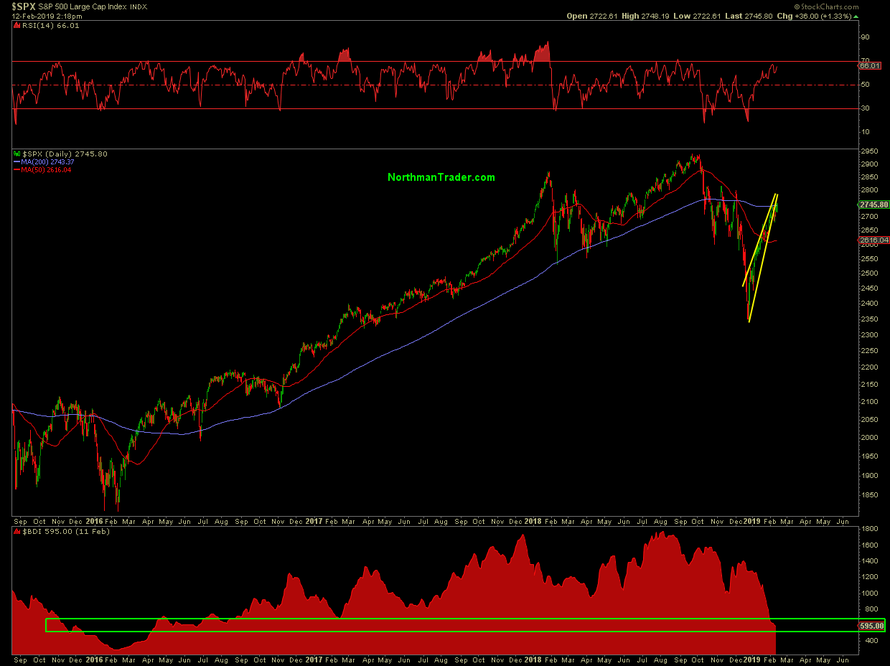
Fact is stocks are on their 8th week of uninterrupted gains since the December lows and as of this writing are poking above their 200MA. The pervasive belief is that the Fed will be able to engineer a soft landing once again.

What has changed since the Decembers lows other than the Fed? Nothing, things keep getting more frosty on the macro front and I’ll show you some charts that have been making the rounds on twitter in the past few days.

Earnings expectations have been sinking hard which is ironically what bears predicted would happen during the red hot tax cut optimism phase of 2018:

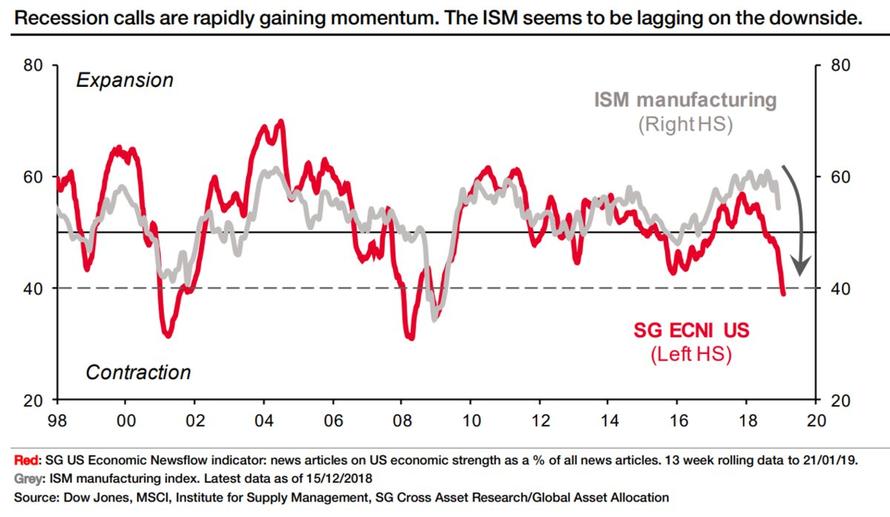
This data goes right in line with ISM manufacturing which shows significant slowing:

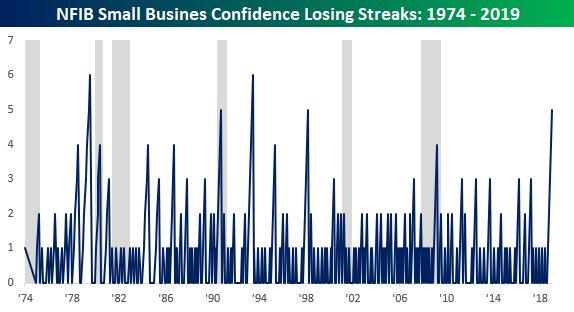
As is small business confidence which has now dropped 5 months in a row, the largest back to back drop since 1998 via Bespoke:

How does this translate into confidence to expand business investments? Not very well apparently:

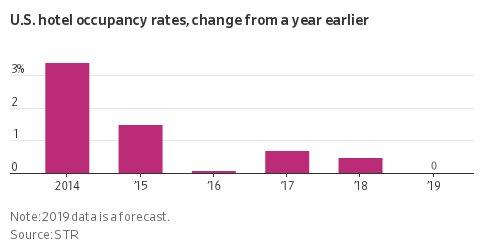
Also sinking: Slowing Hotel Growth Could be Worst in 10 Years

“Growth in the booming U.S. hotel industry is cooling off, data tracker STR forecasts, setting the stage for the lodging industry’s worst stretch since 2009”:

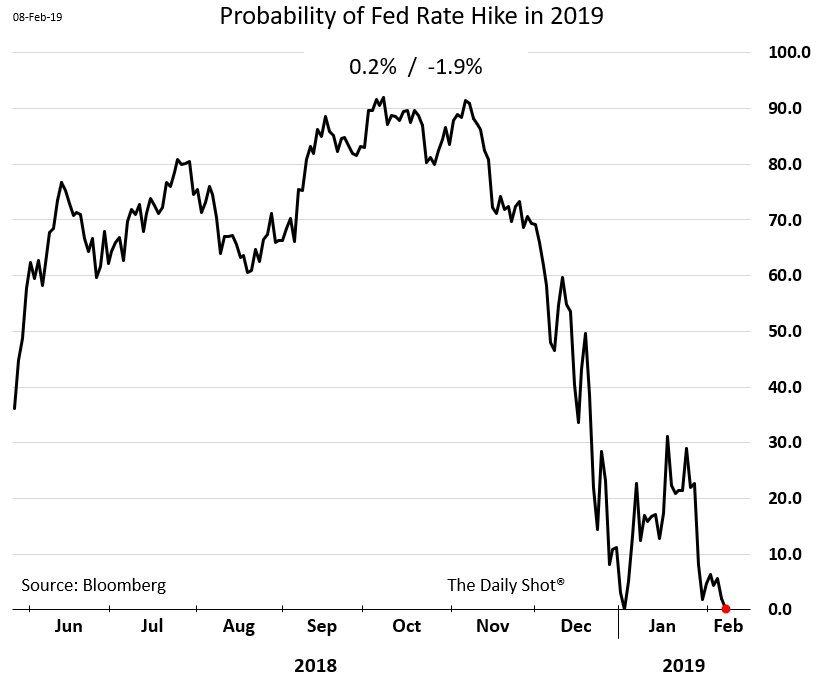
All of this of course explains the real reason why the Fed stopped rate hikes:

It’s not because the economy is as great as Jay Powell once again proclaimed today. He has to say that as he has to project confidence.

It’s because the economy is not as good as advertised. Otherwise yields would be rising with this rally but they’re not.

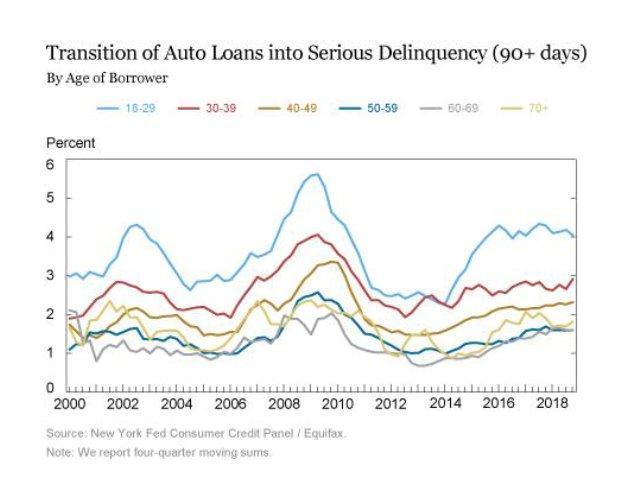
I tell you though what is rising: Delinquencies in car loans, as good as a red flag as any. A record 7 million Americans are 90 days+ behind on their auto loan payments, a red flag for the economy, says who? Says the New York Fed:

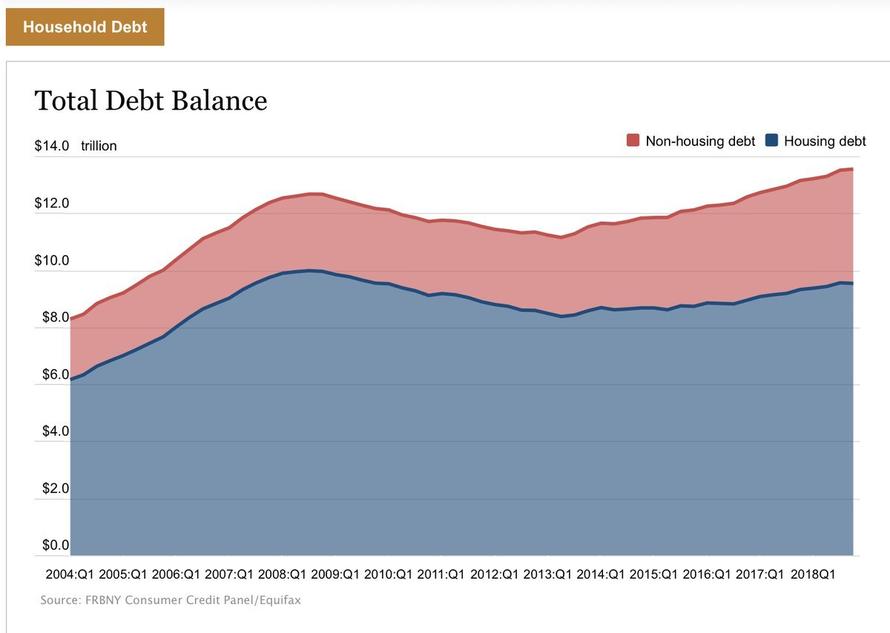
What can I say the New York Fed is on a roll: Household Debt Closes 2018 at $13.54 Trillion. The total is now $869 billion higher than the previous peak of $12.68 trillion in the third quarter of 2008 and 21.4 percent above the post-financial-crisis trough reached in the second quarter of 2013:

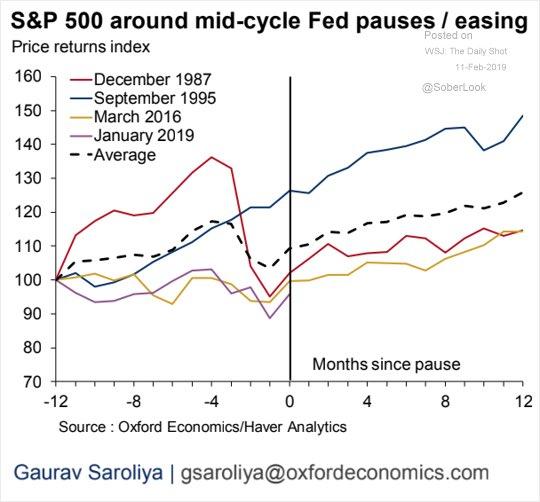
But none of this matters to bulls who are relying on a dovish Fed to save the day and are looking to historic precedent to come through:

With that history load up the truck right?

Who cares that the Baltic Dry Index is now down to levels not seen since the 2016 lows when $SPX was trading in the 1800-2000 range:

The macro winds may be frosty, but don’t worry the Fed will keep you warm.

So Jay Powell says the economy is good, recession risk is non existent, in fact things are so good he stopped all rate hikes.

Problem is investors don’t believe him and that raises the confidence question.

Investors are thinking stagflation:

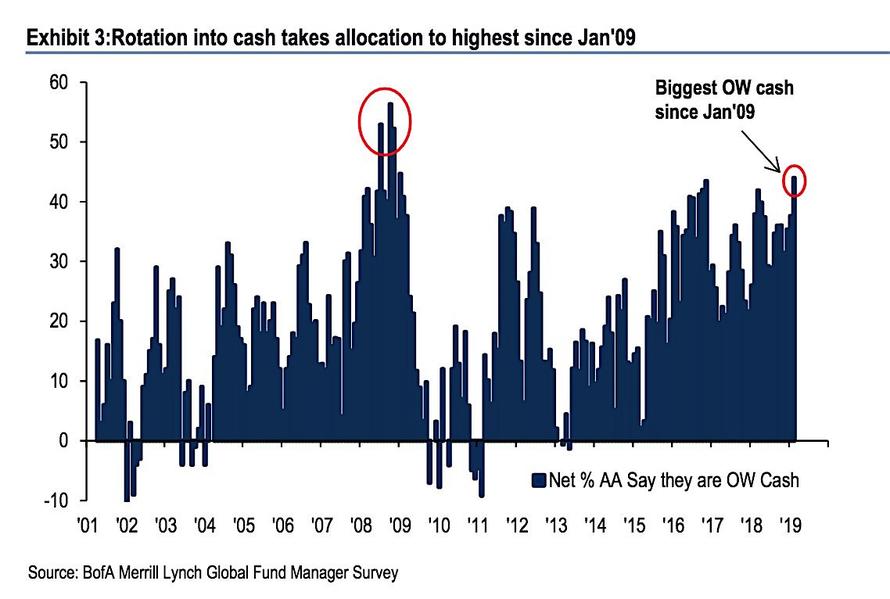
Perhaps that’s why they’re sitting in cash:

Makes you wonder who’s doing all the buying. Markets are blazing hot, but there’s a macro frost in the air.

*  *  *

For the latest public analysis please visit NorthmanTrader. To subscribe to our market products please visit Services.

via ZeroHedge News http://bit.ly/2BCTtF7 Tyler Durden

It Looks Like Trump Will Sign Border Deal and Dodge Another Government Shutdown

President Donald Trump will likely sign a compromise border deal that would avoid another partial government shutdown, several outlets reported Wednesday morning.
Two unnamed sources told CNN that the president intends to sign the deal, which would keep the government open beyond Friday. The Wall Street Journal reported the news as well, also citing anonymous sources.

What comes next remains unclear. The deal in question has the support of Republican and Democratic leaders in Congress, who are eager to avoid another shutdown. It provides Trump with $1.375 billion for physical barriers on the border, according to Politico, not the $5.7 billion he’s been demanding for months.

As I pointed out yesterday, it’s still possible the president could sign the border deal and still get his way. While the bill funds just 55 of the 215 miles of border wall that the administration wants, Trump could conceivably take executive action to divert Defense or Treasury Department funds to build the wall, according to CNN. He could do this even without declaring a state of emergency.

Speaking to reporters prior to a cabinet meeting yesterday, Trump expressed his misgivings over the deal, but suggested he’s “using other methods” to get his wall money.

“Am I happy at first glance?” he said. “I just got to see it. The answer is no, I’m not. I’m not happy.”

“It’s not going to do the trick, but I’m adding things to it and when you add whatever I have to add, it’s all going to happen where we’re going to build a beautiful big strong wall,” Trump said. He also said he doesn’t expect there to be another shutdown.

Ultimately, signing this border deal is probably the right thing to do. While government shutdowns might sound good in theory to those who love liberty and hate government overreach, the reality is much more complicated. As Reason‘s Eric Boehm noted last month, the last shutdown did nothing to actually reduce the federal government’s power or cost. (Though it did highlight the intrusive and inappropriate role government plays in industries such as air traffic control and beer-labeling.)

Signing the border deal and then immediately taking executive action to obtain money for the wall would also be a bad idea. That’s because building the wall would actually cost tens of billions of dollars and involve seizing private property to provide an ineffective solution to a problem that doesn’t really exist.

from Hit & Run http://bit.ly/2DDuB0f
via IFTTT

US Consumer Price Growth Slowest Since Sept 2016 As Gas Prices Plummet

While headline and core CPI slowed in December, the print was still boosted by outsized gains in a few specific categories so it wouldn’t be a great surprise to see some payback in January (and expectations were for a slowdown).

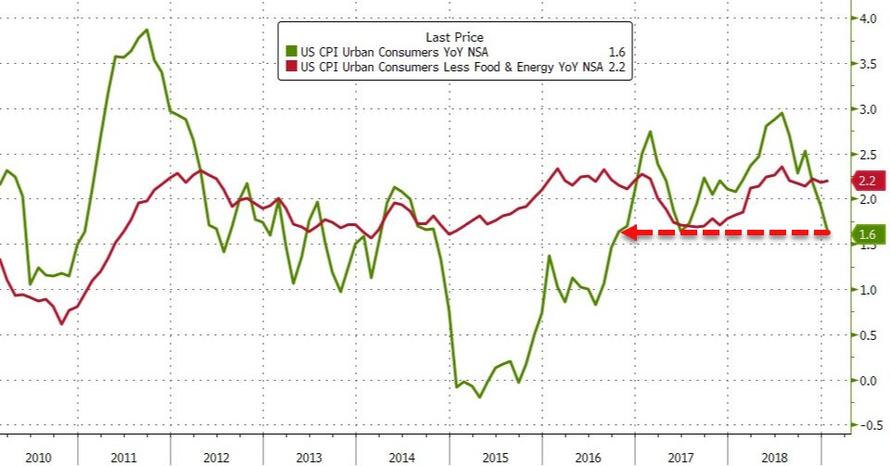
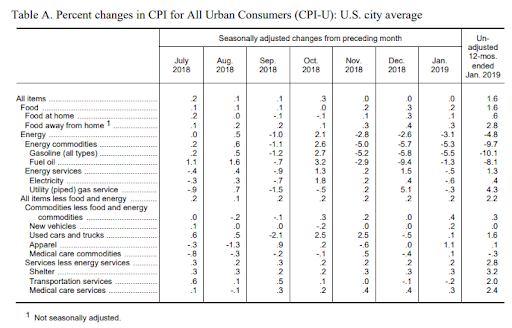
But – that did not work out – headline and core CPI YoY growth topped expectations (+1.6% vs +1.5% exp and +2.2% vs +2.1% exp respectively)…

However, headline CPI YoY slowed to its weakest since September 2016.

As Bloomberg reports, the CPI report had a few quirks, including a 1.1 percent rise in apparel prices that was the biggest in almost a year. Apparel prices reflected outsize gains in footwear, which had the biggest increase since 1988, and women’s clothing.

The report showed new car prices rose 0.2 percent from the prior month for the first increase since July. Used car prices were up 0.1 percent after declining in December.

Energy prices also had an outsize impact on the headline number with a 3.1 percent monthly drop that was the most in almost three years. Gasoline prices fell 5.5 percent from the prior month and were down 10.1 percent from a year earlier.

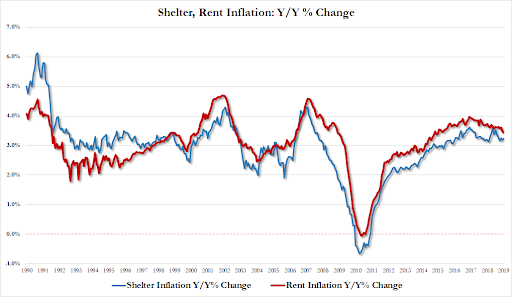
Another silver lining in the inflation slowdown is the drop in the growth of rent costs to its slowest since Jan 2015…

Notably, Deutsche Bank points out that January prints have tended to be higher than in other months, suggesting some residual seasonality. Over the past five years, January prints have averaged about 5bps higher than the prints in the other months of the year, though the recent methodological revisions are supposed to reduce this discrepancy by around half.

Of course, this adds to the goldilocks narrative – as Powell signaled at his last press conference in late January that rates are unlikely to rise until inflation accelerates.

“I would want to see a need for further rate increases, and for me, a big part of that would be inflation,” he said. “It wouldn’t be the only thing, but it would certainly be important.”

So, forget collapsing earnings expectations and slumping global growth – weak US inflation means The Fed is on the sidelines so BTFD!

via ZeroHedge News http://bit.ly/2RYG4wr Tyler Durden

National Debt Hits a New Record High: $22 Trillion

The national debt hit a new record high of $22 trillion this week, according to figures released by the Treasury Department. That works out to about $66,000 for every man, woman, and child in the country.

It’s a record that likely won’t stand for long. We’re less than a year removed from surpassing the $21 trillion threshold, and just a little over 17 months have passed since the debt climbed above $20 trillion for the first time. The Congressional Budget Office (CBO) expects the federal government to run a $900 billion deficit this year, and by next year, the government will be adding more $1 trillion to the national debt every 12 months.

Hitting the $22 trillion threshold this week is “another sad reminder of the inexcusable tab our nation’s leaders continue to run up and will leave for the next generation,” said former New Hampshire Gov. Judd Gregg and former Pennsylvania Gov. Edward Rendell, co-chairs of the Campaign To Fix The Debt, a bipartisan group pushing for fiscal responsibility in Washington, D.C.

“The fiscal recklessness over past years has been shocking,” the former governors said in a statement.

Look a few more years into the future and things really start to accelerate. Unlike a decade ago, when the so-called Great Recession (and the questionable federal policies crafted in response to it) caused deficits to spike, the current increase is not a short-term problem that will be solved as soon as the economy rights itself. Instead, we’re now at the beginning of a long upwards climb that has no end in sight—unless significant policy changes are enacted.

Here’s how the CBO projects the national debt to grow, relative to America’s gross domestic product—which roughly represents the size of the national economy—over the next few decades.

Under current law—which assumes, among other things, that the 2017 tax cuts will expire in 2025 and not be extended—the national debt will double from 78 percent of gross domestic product (GDP) this year to 160 percent of GDP by 2050. It would hit 360 percent of GDP, and still be climbing, by the end of the CBO’s 75-year projection window in 2093.
In the so-called “alternative fiscal scenario,” which assumes current policies (such those tax cuts) are kept in place, the debt would hit 225 percent of GDP by 2050 and more than 600 percent of GDP by 2093.

Either way, that sort of trajectory should inspire immediate action. But President Donald Trump completely ignored the national debt issue in last week’s State of the Union address, and he’s previously shrugged off worries about the national debt because things won’t get really bad until he’s out of office. Mick Mulvaney, the president’s acting chief of staff and a former congressional budget hawk, now says “nobody cares” about the debt.

The thing is, he seems to be right. In Washington, much of the discussion over the past week has focused on Democratic plans to spend untold piles of cash on a “Green New Deal” that would require a mobilization of the entire economy to fight climate change. Republicans, meanwhile, spent the past two years with full control of the federal government and used that opportunity to increase spending and cut taxes, which is not a formula for deficit reduction. Those tax cuts were defensible in many ways—the reduction in the corporate tax rates makes America competitive with the rest of the world—but it is undeniable that they added to the debt.

Indeed, a $22 trillion national debt is not the result of any single bad decision. Entitlement programs—Social Security, Medicare, and Medicaid—are the main drivers of the long-term deficit, but endlessly expensive (and just plain endless) foreign wars, the 2017 tax cuts, and a bipartisan consensus that spending should keep growing faster than revenues have played important roles too.

The other problem is that the national debt isn’t just getting bigger—it’s getting more expensive too. Already, interest on the national debt consumes about $390 billion annually. That’s more than any federal department or agency except the Pentagon, and it is only going to keep getting bigger.

As Brian Riedl, a senior fellow at the Manhattan Institute, told Reason last year:

The danger is that if the debt keeps growing, at a certain point investors will stop lending us money at reasonable interest rates. They will be reasonably concerned that the debt is growing beyond our ability to finance it. They will demand higher interest rates, and every one percentage point increase in interest rates will add $13 trillion in interest costs over 30 years. As interest rates go up, we will have to borrow even more to make the interest payments, which causes the debt to go even higher. At a certain point, the investors will demand that we get our fiscal house in order. It will likely start with low-hanging fruit—tax hikes for the rich, for example—but those won’t be enough.

Eventually, you’ll be left with two choices. Either significantly raise taxes on the middle class or significantly cut benefits to current seniors. If we do neither, you will have a major financial crisis.

Hitting the $22 trillion threshold is just one step towards that future debt crisis, but it will take a long time to reverse these trends. The time to start is now, while the economy is still growing—because another recession will only make these problems more intractable. Unfortunately, there’s little reason to expect Congress or the current president to take meaningful steps to defuse the long-term debt crisis before we hit the next milestone along the road—which won’t take long at the rate we’re going.

from Hit & Run http://bit.ly/2N86QBS
via IFTTT

Venezuelan Opposition Receives First Blocked Aid Shipments In Defiance Of Maduro

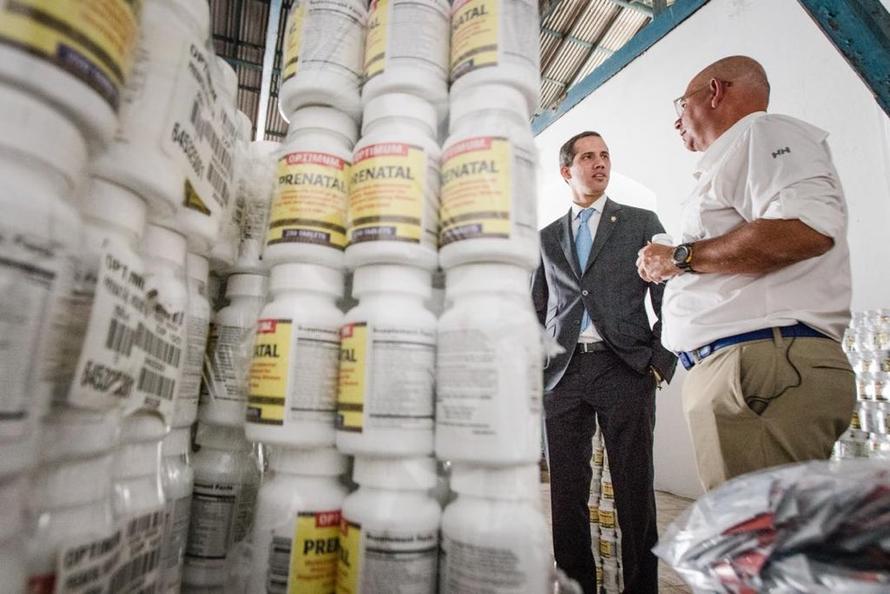
As part of the continued jostling over the contentious issue of the US intent to deliver foreign aid to Venezuela, which embattled president Nicolas Maduro has controversially banned — going so far as to post troops along potential border access points opposition leader Juan Guaido announced on Monday that his team had received its first shipment of external humanitarian aid cargo, yet he didn’t specify how it was received or which country or organization was the source. 

US-backed opposition leader Juan Guaido standing with humanitarian cargo from an unknown external source. via Guaido’s official Twitter account

As self-declared and US-recognized “Interim President” Guaido further said he delivered it to opposition areas in an online statement included with a tweeted photo of himself standing amidst stacks of containers of vitamin and nutritional supplements. But given the timing, he appears to be signaling his previously stated intent to defy Maduro’s blockade of such US aid entering the country. 

In televised remarks in Caracas on Monday evening, also published to Twitter, Guaido said, “Today we delivered the first donation, or the first cargo of humanitarian aid, albeit on a small scale, because you know they have blocked the border for the time being.”

Maduro, for his part, has repeatedly slammed the US aid efforts as a “political show” and as part of American-led efforts at facilitating a coup. Last week Venezuelan officials said authorities had seized of a large shipment of American weapons found in an airport container that were purportedly shipped from Miami, which they said further were bound for anti-Maduro “terrorist groups”. Pro-Maduro officials have worried “humanitarian aid” will be used as a smokescreen for “financing terrorist groups that seek to undermine the peace of the people of Venezuela.” 

In recent weeks since large scale anti-Maduro protests began, there’s been extremely tightened security at all ports of entry and customs checkpoints throughout the country, and as a military build-up ordered by Caracas continues along the the border with Colombia, considered a close ally of the United States and potential staging ground for US assets.  

Guaido has personally appealed to the military to allow the aid in, while also issuing a general amnesty order for any military officer who defects from Maduro, something which the opposition currently doesn’t have the power to enforce. 

Reuters reports that US humanitarian supplies and cargo are currently amassing along a Colombian border town, but there doesn’t appear to be confirmation that any of it has entered Venezuela:

Senior U.S. officials last week heralded their country’s efforts to move aid to Venezuela’s doorstep, after U.S. supplies were among those delivered to the first collection point established, in the Colombian border town of Cucuta.

There has been no sign of the aid that is being stockpiled in Cucuta leaving the warehouse.

Brazil is also reportedly being used as an aid transit point, however, Brazilian authorities have yet to comment on any specific shipping points. 

Notably, just two days before Guaido announced his team is facilitating the transfer of humanitarian cargo a high ranking military doctor called on soldiers to resist orders to block US shipments and to instead facilitate its entry into the country.

Defected Colonel Rubén Paz Jimenez posted a short video to social media on Saturday declaring his support for US-backed opposition leader Juan Guaidó. “Ninety per cent of us in the armed forces are really unhappy,” he said in the video message. “We are being used to keep them in power.” 

But so far military defections have not gained momentum, and it’s widely agreed upon that the loyalty of the military to Maduro will be the deciding factor in whether or not he rides out the current storm of internal and external pressures. 

via ZeroHedge News http://bit.ly/2X23wfS Tyler Durden

Furious China Accuses US Of Fabricating Threats, Slams Huawei Boycott As “Hypocritical And Immoral”

The U.S. (and other countries, ahem Canada) have not presented any conclusive evidence that Chinese telecom giant Huawei threatens their national security and are merely stirring fears out of self-interest, a Chinese government spokeswoman said on Wednesday.

According to Foreign Ministry spokeswoman Hua Chunying, Huawei’s critics are conjuring up threats and misusing state power to “suppress the legitimate development rights and interests of Chinese enterprises” and are “using political means to intervene in the economy.”

Hua continued his slam of the US saying that “all countries should deal with relevant matters in an objective, comprehensive, rational, and correct manner, rather than fabricating excuses of all kinds for one’s own pursuit of interest at the cost of others, which is quite hypocritical, immoral, and unfair.”

Needless to say, Hua’s comments – coming just as US trade negotiators are in Beijing with president Xi unexpectedly set to join the discussions – at a daily briefing were “some of the sharpest yet” in the growing feud over Washington’s drive to convince other nations to shut Huawei out of their markets due to national security concerns, Reuters reported.

Huawei – the world’s biggest supplier of network gear used by phone and internet companies and the leaders in 5G technology – insists that it is independent and poses no threat to the security of others, but has long been seen by some as a front for spying by the Chinese military or security services. It’s also why the United States, Australia, Japan and some other governments have imposed curbs on use of Huawei technology, including smart phones.

US warnings about the risks of Chinese telecom technology come as governments are choosing providers for the rollout of 5G wireless internet, where Huawei is among the global leaders.

Escalating the growing boycott of Chinese telecom, on Tuesday in Poland, Secretary of State Mike Pompeo repeated a warning that the United States may be forced to scale back certain operations in Europe and elsewhere if countries continue to do business with Huawei. Pompeo said the U.S. had strong concerns about Huawei’s motives in Europe, especially in NATO and European Union member states, as well as its business practices.

“We’ve made known the risks that are associated with that, risks to private information of citizens of the country, risks that comes from having that technology installed in network systems,” he said.

The US has argued that under Chinese security laws companies such as Huawei or ZTE could be compelled to hand over data or access to Chinese intelligence. However, Hua responded that such concerns were based on provisions of China’s national intelligence law that differ little from similar legislation in other countries.

“It is an international practice to maintain national security with legislation and to require organizations and individuals to cooperate with national intelligence work,” Hua said.

And, in the angriest retort to Washington yet, Hua accused the US of creating “conspiracy theories” backed by nothing but hearsay, and that lacking solid evidence, the U.S. “keeps making up crimes and churning out various threat theories.”

“We believe that this is very hypocritical, unfair and immoral,” she said. All nations, Hua said, have an obligation to “abide by the market principle of free and fair competition and truly safeguard the market environment of fairness, justice and non-discrimination.”

via ZeroHedge News http://bit.ly/2I96kEU Tyler Durden

One Cheer for Kamala’s Cannabis Candor: New at Reason

How much credit should a politician get in 2019 for admitting that she smoked pot in college? Not much, says Jacob Sullum, especially if she only recently came around to the view that people should not be arrested for doing what she did.
But Kamala Harris did say something noteworthy when she was asked about marijuana during a radio interview on Monday, Sullum says: She acknowledged the importance of fun, a point that should be made more often in discussions of drug policy.

View this article.

from Hit & Run http://bit.ly/2TQYh0U
via IFTTT

Blain: “Santander Slides Into A Circle Of Hell Previously Reserved For Deutsche Bank”

Blain’s Morning Porridge, submitted by Bill Blain

Its officially: “Take a Pop at Banco Santander Day”!

Yesterday Banco Santander didn’t make an anticipated call an old Euro 1.5 bln Tier 1 Contingent Capital issue. They’ve cited an “obligation to assess the economics and balance the interests of all investors” – which translates as shareholders first. As I’ve said before this week: at Santander you’re either a Botin or a Botone. (As Spanish banking proverb meaning you’re either part of the Botin family or nothing more than a mere servitor like a butler..)

Santander’s call was optional, but not calling it creates potential reputational damage for the bank – according to a slew of press stories this morning. Some say it puts them into a particular Circle of Hell (not the same one as Boris Johnson, Dodgy Davis and Farrage) of bad banks, previously reserved for Deutsche Bank.

I remember that day well.. Back in 2008 Deutsche Bank – then a leading European investment bank, was batting in the big leagues against the Americans, was the place everyone wanted to work for, to be banked by, and to own – decided the deteriorating financial situation meant they would not make the expected call on a Lower Tier 2 capital deal. The market was gob-smacked. They did it again in 2013 – missing a call on a Tier 1 deal, and further peeving investors. Deutsche Bank’s reputation took a massive spanking – I’d argue its current travails and loss of premier status stems from these events. 

Back in 2008 I’d warned clients holding the Deutsche deal the call might not be made because of the extraordinary market circumstances, but that was because I was then already very old and remembered what happened during the great perp bond crash of 1986 when investors made the similar mistake of thinking banks were honourable, virtuous and would call their capital issues and not allow them to become perpetual debt. (I believe much of the callable subordinated debt that funded bank capital at Libor plus 25 issued in the mid 1980s are still around (and largely held by Japanese investors.)

Germans don’t do Financial PR particularly well.

The Spanish? Probably less so – but they don’t care. They don’t pretend to want to hug their debt investors. Their DNA is simple: make decisions based on the brutal pragmatic facts and assume the market has no long-term memory. Investors who found themselves holders of the bond, and expected them to call, made a very stupid schoolboy error – assuming Santander would a make a call when it made little economic sense to do so.

Most banks do care about their reputations and would have made the call – if you held Santander and expected it to call, then you didn’t understand the phsycology of the bank you were holding. Your mistake, not theirs.

Santander is not stupid. It proved itself good at acquisitions, and a nimble little dancer when it dodged the ABN/RBS disaster in 2008, by dumping its Italian acquisition while everyone else was looking elsewhere. Now it’s showing pragmatic credentials.

It’s cheaper for Santander to not make the call. The non-called deal currently yields 6.25% but will switch to a lower floating rate around 5.50% after the call expires. That means it’s costing them less than refinancing – the bank did a new $1.5 bln dollar deal at 7.5% last week.

Back when I was a Financial Institutions Group banker I once had the Spanish beat. I’d traipse down to see the Spanish banks to win bond mandates from them – and the conversation basically went: “How much are you (the banker) willing to pay us for the privilege of leading a bond issue for our bank.” The idea banks could actually make money  in fees from financing them was heresy. They treat investors with pretty much the same regard – caveat emptor. Which is entirely proper…

Does Santander’s failure to call put another nail in the AT1 CoCo market? You have to remember that CoCos and AT1 have been a stumbling solution to bank capital since the 2008 crisis. Regulators were furious they’d had to step in and bail out banks by injecting equity – debt holders largely weren’t touched. Because the banks didn’t go bust, losses were confined to equity.

So, the regulators they came up with a curious solution that turned the debt subordination ladder on its head. From then on debt investors would take the first losses by being bailed in if the bank faced a capital crisis! That was a truly bizarre moment – it meant debt investors took all the downside in a crisis, but received none of the upside. Yet, investors love them – taking the view higher coupons more than compensate these risks. Its now a $350 bln market.

A few years ago I wrote a note on AT1/CoCo bonds calling them “Demodium spawned bastard offspring of demented regulators and deranged banks”. Whatever, they yield enough to be investible.

Now that Santander has set a precedent, some pundits think all banks will follow suite, and not call their AT1 deals – triggering a likely sell off across the sector. Yet this morning the market is higher – Why? Because investors are being more selective, and looking for bargains in the names they think care more about keeping investors happy. Even Santander’s recent US$ AT1 is higher!

via ZeroHedge News http://bit.ly/2GGnzLg Tyler Durden

Trump To Sign Border Deal , Averting 2nd Shutdown: CNN

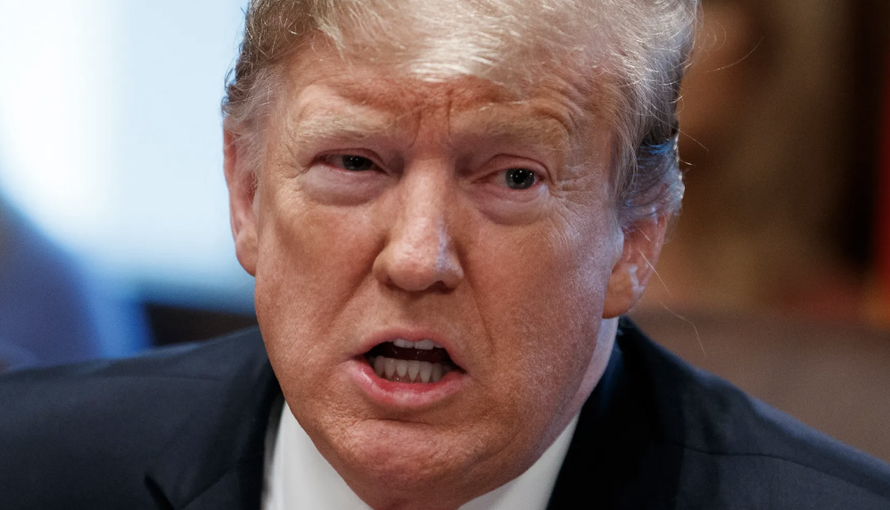
After telling reporters that he was “not happy” with the compromise border-security bill (which reportedly included some funding for “a barrier”), President Trump will reportedly set aside his dissatisfaction and vote for the bill anyway, according to CNN.

Trump

To avert another shutdown, Congress must pass – and the president must sign – the deal by Friday.


via ZeroHedge News http://bit.ly/2N4A2JT Tyler Durden